Legislative Programme
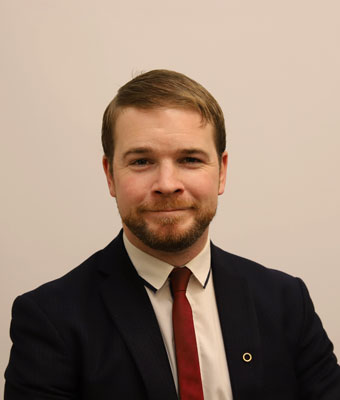
1. Deputy Donnchadh Ó Laoghaire asked the Tánaiste and Minister for Foreign Affairs for an update on the progress of the Control of Economic Activity (Occupied Territories) Bill 2018. [4844/25]
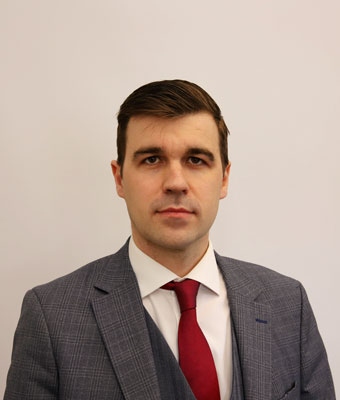
2. Deputy Duncan Smith asked the Tánaiste and Minister for Foreign Affairs for an update on the Government’s plan to introduce the Control of Economic Activity (Occupied Territories) Bill 2018; and if he will make a statement on the matter. [4852/25]
As this is our first question time in our new roles, I wish the Tánaiste well in his new role. While I will hold him to account, I also look forward to co-operation where appropriate.
We had a lengthy debate on the occupied territories Bill last week. There was a fair bit of discussion about the vehicle but, to my mind, a change of substance is afoot in what the Government is proposing. I will put the question simply because I do not think it was really answered. Is it the intention of the Government to ensure an effective ban on services from occupied territories?
I propose to take Questions Nos. 1 and 2 together.
I thank the Deputy. I wish him well in his new role and look forward to working with him and other members of the Opposition constructively at an important time in the world for Ireland's position on a range of foreign affairs matters.
I am conscious we are meeting against a backdrop of great fragility when it comes to the ceasefire, and I know that all sides of this House will agree on the importance of the ceasefire being maintained. It was long awaited and quite frankly took far too long, with far too many civilian deaths and far too many children having died. It has been the most horrific situation and we now need the ceasefire to hold. I am rather alarmed and concerned at some of the language I have heard in recent hours and days in respect of that situation. Everybody in the world needs to put their shoulder to the wheel to make sure that this ceasefire holds, that the hostages are released and that humanitarian aid flows.
As the Deputy is very much aware, the situation in Israel and Palestine is a major priority for the Government, as I know it is for the Oireachtas and people throughout Ireland. Our engagement is guided by our long-standing and principled position, notably respect for international law, respect for the equal right to self-determination, peace security and dignity for Israelis and Palestinians alike, and unwavering support for the two-state solution. I did set out the Government's approach on this issue in a detailed statement during Sinn Féin's Private Members' time in the Dáil last week, on 5 February. The immediate focus of the Government, and I hope that of the world, must continue to be the full implementation of the ceasefire and the hostage release deal. I welcome the release of hostages held in captivity by Hamas that has taken place to date, including the three hostages released last weekend. All hostages must be returned to their families.
We are at a critical moment for the ceasefire and the hostage release deal. A resumption of conflict in Gaza would be disastrous and everything should be done to avert this. Our focus must also be on supporting a significant and meaningful surge in humanitarian aid into Gaza at this critical time, and the Deputy will note the announcement I made in recent days in respect of the €20 million in funding for the United Nations Relief and Works Agency for Palestine Refugees in the Near East, UNRWA, to support its vital work.
As the House and the Deputy are aware, in light of the July 2024 advisory opinion of the International Court of Justice, ICJ, and the subsequent advice I sought from the Attorney General, the Government decided to review the occupied territories Bill, working with Senator Black. The Government's analysis, which was stated clearly, was that substantive amendments would be required to most, if not all, of the Bill's provisions to bring it into line with the Constitution and to reduce the risk of EU infringement procedures. Our programme for Government sets out a commitment to progressing legislation prohibiting goods from the occupied Palestinian territory and these considerations will remain central to our work in this regard.
In parallel, Ireland continues to press for action at EU level in light of the ICJ advisory opinion and discussions on the EU's legal position remain ongoing in this regard. While this House will be aware there are significant policy differences among EU member states, Ireland has been consistent in recalling that, in its relations with the wider world, the EU is required by its founding treaty to contribute to "the strict observance and the development of international law, including respect for the principles of the United Nations Charter."
We are clearly at a critical moment for the Middle East and for the prospects of the two-state solution. I am determined to continue Ireland's leadership and effective engagement and to focus Ireland's efforts on the areas that will have most impact at this time.
My overarching priority is to contribute to a co-ordinated and consolidated effort by the international community as a whole to support the ceasefire and hostage release agreement and the surge of humanitarian access into Gaza that it makes possible; to safeguard the two-state solution; to work towards the return of the Palestinian Authority to Gaza in accordance with UN Security Council Resolution 2735; and to uphold the equal right to self-determination, peace, security and dignity for Israelis and Palestinians alike.
We will work in line with the programme for Government commitment on legislation in relation to the occupied territories. We will work constructively with the Opposition. I look forward to sitting down with Senator Black in the coming days on this matter.
I share the Tánaiste's concern about the ceasefire. I might say some more on that, as I have another question later about Palestine and the Middle East. I urge people on all sides of the conflict to step back from the brink. With the limited time I have, I will return to the legislation. It seems that there is an attempt to obscure issues of substance with technical issues. There may be technical issues that can be worked through. That argument was not advanced by the Department of Foreign Affairs in discussion with Senator Black in advance of the election. It was felt that it was possible to make those changes within the body of the existing Bill. The Minister's position in political debate and discussion in advance of the election was to pass the occupied territories Bill. In order to clarify, I ask the Minister to set aside the vehicle for a moment and answer the clear question. In terms of the programme for Government commitment, is it the Government's intention to have a legislative ban on trading of services with occupied territories?

I am looking for an update on the Government's plan to introduce the occupied territories Bill. It is good to get the opportunity. I thank Deputy Duncan Smith for the opportunity to raise this issue. Do I have 30 seconds?
You have 40 seconds left, Deputy.
I am new to the Chamber so I am trying to learn the logistics. Our leader, Deputy Bacik, met the Palestinian ambassador this morning. I share the concerns Deputy Smith expressed last week and those our party leader shared in relation to the amendments the Government proposes and what they mean for the occupied territories Bill. As a young person, it comes up constantly in conversation with my friends. It is close to our debate. I ask the Minister to clarify the amendments, if possible.
I welcome Deputy Kenny. I share Deputy Ó Laoghaire's sentiments on the need to step back from the brink in protecting the fragile ceasefire in place. We will have an opportunity to engage on that shortly.
To be clear, the Government and I, as the Tánaiste and leader of my party, still believe in legislating in relation to trade with the occupied territories. We gave that commitment during the election. In fairness to the now Taoiseach, he was clear at the foreign affairs committee, which the Deputy was probably at, that the Bill as currently constructed would require radical changes to make sure it was compliant with European law and the Constitution. He showed a willingness to work constructively on the issue with the Opposition and the sponsor of the Bill, Senator Black, who has been very constructive. My priority is to advance the programme for Government commitment, which states, "Progress legislation prohibiting goods from Occupied Palestinian Territories..." Deputy Kenny's question about timelines and amendments is not unfair but my first approach in this new role is to meet Senator Black as the sponsor of the current Bill. I will then revert to the House.
I understand Senator Black has been in contact with the Minister and has not been able to get an appointment as of yet. I hope that will happen very shortly. I will keep asking the question. This has not been addressed; I have not been given an answer. I raised it numerous times in the course of the last debate. I have raised it twice here already. Technical issues can be overcome. They are overcome frequently. God knows how many amendments came into the planning Act on Committee Stage during the last few months of the previous Dáil. That kind of stuff happens regularly. Is it possible to engage with the Bill and adjust? Technical issues were advanced with the drafter of the Bill but they were not huge. There were technical issues and technical reviews from the Department of Foreign Affairs but they were entirely reachable. The point is that technical issues are being used as a ruse or distraction from the fact that the policy of the Government has changed since the election. The Government's policy is now to ban only goods. If it was Ireland, 30% of our trade is in goods. I will put the question again simply. Does the Government intend to have a ban on the trading of services with the occupied territories? That is a very clear question; the Minister has an opportunity to answer it.
I appreciate that the Tánaiste said his next step is to meet Senator Black. Is it possible to get a timeline on when he will meet the Senator? The original question was to get an update on the plan. It is important that this country takes a stance on this issue at European and UN level. Words are meaningless without significant action. I think the Minister would agree with me on that. We now have an opportunity to pass the occupied territories Bill. It should not be watered down in any sense but brought before the House to send a clear message to the people of Palestine that we stand with them and see the ongoing suffering.
I have been clear; I am not trying to be in any way evasive. The Government's position is to legislate prohibiting goods from the occupied Palestinian territory. That is our position. We are happy to engage constructively as we go through this process. More broadly, that means-----
That does not clarify my question.
I think I have answered the question directly. The Deputy asked if it is goods or services and I said "goods".
Is the Minister saying precisely goods alone?
I am saying that at the moment our focus is on progressing legislation to prohibit goods as we bring forward proposals. I am happy to engage with the Deputy in relation to other issues but the programme for Government-----
That is not a clear answer.
It is crystal clear.
No, it is not.
The Deputy might not like the answer but it is very clear. Give me one moment-----
(Interruptions).
We will have plenty of time here.
Confirming an affirmative is not the same as denying a negative.
The programme for Government sets out the commitment to progress legislation prohibiting goods from the occupied Palestinian territory. That is the mandate I received and what I am now progressing. The mandate concerns what is in the programme for Government.
That is a change in the policy.
I take the point Deputies Kenny and Ó Laoghaire made in good faith about not wanting to see a watered down Bill. The only Bill that would be watered down would be one we would pass knowing it was not in compliance with law, the Constitution or EU law. I am not in the business of passing things I know are not lawful. That is an irresponsible act of government and of legislators.
Uncontested.
Our position is that we will pass a Bill that is strengthened due to the fact that it can stand up to scrutiny at an EU level. That is important because we have to pass laws that are compliant. I will meet the Palestinian Prime Minister and Foreign Minister in Munich this weekend where I will continue to discuss with them all of the efforts Ireland, the Irish Government and the Irish people are making to support the people of Palestine and international law. I made the point before that the only place on earth where it seems the work of the Irish Government in support of the people of Palestine is not recognised is here in the Dáil.
Passport Services
3. Deputy Donnchadh Ó Laoghaire asked the Tánaiste and Minister for Foreign Affairs how the Government intends to ensure adequate capacity within the passport service this summer. [4847/25]
I commend the staff in the Passport Office. They are often extremely busy and do an important job. Sometimes they have to produce passports under difficult circumstances and at very short notice. We have all here probably added to their burden at times, dealing with urgent cases. It is early in the year yet but I am sure the office will get busy. Will the Tánaiste ensure there is sufficient staff in the Passport Office to deal with demand during the busy summer period?
I will. That is the short answer. I join the Deputy in thanking my officials and staff in the passport service for the excellent work they have carried out. Often, I point to the passport service as an example of good practice when it comes to public service reform as regards the work that has been done with the use of technology and online service. The passport service issued over 1 million passport books and cards in 2024.
That was a milestone. Forecasts for this year indicate continued strong demand, with around 940,000 applications expected.
The passport service is successfully meeting the high demand, with turnaround times currently ahead of target for virtually all application types. The majority of online adult renewal applications issue within two working days - people are often surprised at how quickly a passport can arrive - and more than 100,000 passports have already been issued this year.
The passport service's programme of reform will continue through this year and next year, with the delivery of a number of highly complex and transformational projects that are necessary to future-proof service delivery, enhance the customer experience, ensure business continuity, and, crucially, safeguard the integrity of the Irish passport. Successful delivery of these projects will ensure that Ireland remains at the forefront of passport processing worldwide.
The passport online service already offers Irish citizens the ability to apply online for their passports 24 hours a day, seven days a week. It is user friendly. It is an efficient service that is now available to 99.9% of all applicants across the world.
In terms of personnel, the passport service is well staffed, with 855 officers currently assigned. An additional 20 officers will be assigned in the coming weeks, meaning that the passport service believes it is in an excellent position to deliver the demand forecast for the rest of this year. Ensuring that we have enough staff to respond to demand is a priority for my Department and is kept under constant review.
We are running a multimedia campaign reminding citizens to apply for their passports on time and, if at all possible, online. The campaign focuses on the benefits of applying online, as 93% of applicants did last year, and encourages citizens to check their passports in advance of booking foreign travel in 2025.
I echo that. The sooner people check, the less likely there are to be difficulties. In most instances, the passport service works quite well. It can be very efficient at times, with a significant improvement in recent years, especially for renewals. People are often impressed at the speed at which the passport arrives. This is a huge credit to the staff and the development that has gone in there in recent times.
The issue is that, when problems arise, they can be devastating. Sometimes they can arise in the context of holidays. More severely, it can result in people missing weddings or, most particularly of all, there are issues in circumstances of severe illness, funerals or other things that, unfortunately, happen in the course of life. We need to ensure we have a system that is as close to perfect as possible. There may be a bit of an issue at times in terms of the feedback loop when communicating with Garda stations, but I will return to this point. I would like an update on how the Passport Office responds in these circumstances.
I agree with Deputy Ó Laoghaire that great credit is due to the staff. The Deputy will come back in a moment to the issue of the feedback loop, which is an important piece that we should continue to work on. Sometimes, I hear stories about it.
Deputy Ó Laoghaire's question is how to get a passport urgently. We should all check our passports, keep them in date and check them before we book foreign travel, but things can happen and people could need to travel unexpectedly for reasons of tragedy and the likes. Customers who need to have their passports renewed urgently can book an appointment at the public counter at the offices in Mount Street or Cork. The passport service offers a one-day or four-day renewal service in Dublin and a four-day renewal service in Cork. There are 220 one-day renewal appointments and 265 four-day renewal appointments available in Dublin every week and, Deputy Ó Laoghaire will be glad to know, 240 four-day renewal appointments in Cork every week. In the case of genuine emergencies, such as a sudden bereavement or serious illness of a family member abroad, citizens can contact the Passport Office directly through the customer service hub and the passport service will give absolute priority to those applications.
I thank the Tánaiste. Most of the instances we deal with - I am sure it is the same throughout the House - relate to people who submit an application but receive notification from the Passport Office that something is not right or, very often, that the person who provided a signature on a consent form is not contactable. Typically, that is a garda. This can be an issue. We have Garda stations that are open 24-7 but we also have many Garda stations that are only open for certain office hours and the landline is answered for only a couple of hours a week. This can cause an issue when somebody gets a form signed at one of these locations, with something that was not urgent at the start then becoming urgent. It is a bit like snakes and ladders, with people ending up right back at square one. The Department of Justice has a job to do with Garda opening hours in that regard, and there is also a legislative case for allowing civilian Garda staff to be part of this process, freeing up gardaí. In the meantime, though, there should be some mechanism for the Passport Office to ensure people are not starting right at the start again in order to fix the issue that arises because a witness, that is, the garda, is not contactable.
I thank Deputy Ó Laoghaire. It is a fair point. I know from memory and from previous postings that quite a bit of work has been done to try to improve the feedback loop, as Deputy Ó Laoghaire correctly referred to it, but based on this discussion, I will undertake to speak to the Minister for Justice on this to see whether more can be done or needs to be done. I know Deputy Ó Laoghaire agrees on the point about the integrity of the process and the importance of valid photographs, valid verification processes, signatures and so on to protect the integrity of the Irish passport. That is important, but we must also make sure that bureaucracy is kept to an absolute minimum. In fairness to the passport service, it has been a real leader in the public service in terms of being willing to transform and move services online, and we are seeing the benefits of this for all our constituents now. I will take away the point Deputy Ó Laoghaire has made and I will come back to him in writing on it.
Departmental Bodies
4. Deputy Sinéad Gibney asked the Tánaiste and Minister for Foreign Affairs the composition of the new US-based strategic economic advisory panel; if the members will be remunerated; to outline the scope of the new US-based strategic economic advisory panel; if it has a terms of reference; and if he will make a statement on the matter. [4820/25]
I wish the Tánaiste well in his role and I look forward to collaborating with him. I worked very well with his brother in my previous role as chief commissioner of IHREC and I hope to collaborate with the Tánaiste similarly.
My question relates to the announcement from the Department last week of the establishment of the strategic economic advisory panel, a US-based group that will advise the Government on trade issues. Will the Tánaiste please elaborate on the composition of this new US-based group? Will the members be remunerated? Will the Tánaiste outline the scope of the group and whether it has terms of reference?
I thank Deputy Gibney and I congratulate her formally on her election to the House. I look forward to working with her collaboratively also. I thank her for the question.
The United States is in a period of change in its economic and trade policy as the new Administration establishes itself. Ireland had a good working relationship with President Trump's Administration during his previous term in office and we look forward to trying to build on that to support strong bilateral and economic ties in the coming years.
In this context, the Government needs to ensure we have structures in place to ensure we have access to expertise to identify the opportunities and navigate the challenges in our economic relationship. As part of this effort, I will be establishing a US-based strategic economic advisory panel. This panel will bring together a number of very senior US-based business people, at the invitation of the Taoiseach and myself, to provide their perspectives to the Government as we navigate a complex global economic environment. What is envisaged is that the Taoiseach and I, and other senior members of the Government as appropriate, will engage periodically with the group, either in person or virtually. As the seventh-largest investor in the US, with the top ten Irish companies in the US alone employing 115,000 people, this is very much a two-way partnership.
By way of information, the Government will use a similar model for the panel as we have in the past to draw on expertise and experience from our diaspora. The Global Irish Network is one such example. There are no plans for remuneration for participants.
In addition, I will chair a consultative group on international trade policy, which is being established. This is an important forum in which the Government will engage with key stakeholders in Ireland, including the private sector. The first meeting of that group will take place this month.
I should make two points. The strategic economic advisory panel is a panel as opposed to having a strict membership. The members will be invited to the panel by the Taoiseach and I by way of letter. The letter will set out the mandate or purpose of the panel rather than formal terms of reference. The membership will be drawn largely from recommendations of our embassy network and our State agencies working in the United States, but we are open to ideas and suggestions in that regard.
I thank the Tánaiste. It is good to hear remuneration will not be part of it. I am still keen to hear more details about the terms of reference and membership. I appreciate the invitation will give details. For clarity and transparency for us as elected representatives in the Dáil, and for the Irish public, it is important that we know exactly on what conditions the group is being convened. It is very important that we have clarity on who these people are and in what context they will influence Irish trade policy. Public officials are democratically accountable to us but corporate executives are not. In the context of big business in the US encroaching even further on the democratic process, this is a challenge to be met, not a path to follow. The interests of these corporate executives, for example, may not align with those of the Irish people.
It is important to know who is speaking and acting on behalf of Irish policy and what level of influence and access they will get to decision-makers such as the Minister and the Taoiseach. Further detail is required.
I largely agree with the Deputy's last point in terms of it being important that people know who has been invited to participate in that panel. An indicative list of proposed participants is currently being finalised in consultation with our embassy in Washington, our eight consulates general of Ireland across the United States and our relevant State agencies. Attendees will be drawn from a range of businesses and strategically important sectors with due consideration to a range of issues, including regional diversity, gender balance and so forth. I would make the point - I do not think we disagree on this - that our diaspora is a hugely important asset to harness. In a country in which we have so many people who are well aligned or well attuned to Ireland and Irish needs and indeed to our diaspora, it makes sense at this moment in time to bring them together to provide insight. Policy will, of course, continue to be made by the Government for which I will continue to account to the House. Certainly, once we write the letter of invitation which will set out the purpose, I am happy and, I believe, obligated to provide that information to the House.
To reiterate, I believe a formal terms of reference would be helpful in this case, again watching out for, within that membership, the interests of big business and how much it is going to influence the policy development of this country. I appreciate the points about the diaspora and it is important that we harness that network as much as we can. It is in the context that I have mentioned where corporations are increasing their influence on democratic processes all over the globe. We need to resist that path instead of following it.
It is important in an environment in which we know there is going to be significant policy change that could have a real impact on trade and investment and on jobs and growth, that we harness every possible avenue that we can in terms of getting the best possible information. That is why I will chair this new consultative forum that will bring all the relevant Departments together and indeed business representatives and others in this country. We will have the first meeting of that in Government Buildings this month.
This piece is about participants, inviting people who have business expertise to share insights and information. These are some of the biggest employers, perhaps from very large Irish companies that are working in the US. They certainly have a perspective on how to navigate this challenge. That perspective is valuable. Of course, that is what it is - it is a perspective and ultimately it is up to Government to make policy. Certainly, sharing information with this House and being transparent in relation to it is something I am very happy to do.
Middle East
5. Deputy Donnchadh Ó Laoghaire asked the Tánaiste and Minister for Foreign Affairs his response to the latest Israeli offensive against the occupied West Bank. [4846/25]
We touched on this briefly. It is a grave situation. The Israeli Prime Minister is threatening to end the ceasefire and reopen a conflict that has claimed the lives of tens of thousands of people. Hamas is threatening not to release hostages. Both threats are to be condemned. It is a very worrying situation.
My question relates to the West Bank. I invite the Minister’s commentary in relation to that because off the back of the ceasefire there was almost a sense that the world was looking the other way. Much has been happening in the West Bank that is unacceptable as well as breaches of the ceasefire in Gaza.
I thank the Deputy. I reiterate my strong concerns as to where we find ourselves in relation to the ceasefire agreement that is fragile. It is so important that all parties to that ceasefire agreement adhere to its terms. It is absolutely vital that Hamas releases the hostages and that Israel continues to observe the ceasefire. A return to violence and to conflict is almost unimaginable in terms of the scale of devastation it could bring at a time when we are finally beginning to see humanitarian aid getting into Gaza. That needs to be the focus. That is where Ireland's focus will continue to be, on speaking up and speaking out in favour of a ceasefire, peace and ultimately a two-state solution.
I will travel to the Munich Security Conference in the coming days and meet with the Palestinian Prime Minister, the Jordanian foreign minister, the Egyptian foreign minister and other actors in the region to continue to make that case and do all that we can to help. I am deeply concerned by the large-scale military operations conducted by Israel in the West Bank in recent weeks, in particular in Jenin, Tulkarm and Tubas, with the stated objective of suppressing militant groups. I am concerned about the use of air strikes and other disproportionate measures resulting in casualties, damage to civilian infrastructure and the displacement of many thousands of Palestinian people. The UN High Commissioner for Human Rights, Volker Türk, has made it clear that Israeli forces' operations in the occupied West Bank need to abide by international human rights standards on the use of force; these standards remain regardless of the motivation of the operation. I share doubts expressed regarding the appropriateness of this type of military response, to put it mildly. I also question the wisdom of undertaking operations of this scale at a time when efforts are focused on the implementation of the ongoing ceasefire and the hostage release deal.
The shocking rise in settler violence that we have witnessed over recent months is also of deep concern. I welcome that the European Union has adopted successive rounds of sanctions against violent Israeli settlers under its global human rights sanctions regime. We have seen more instances of settler violence in recent weeks and it is important that further listings are also considered.
The sanctions that have been there are necessary but it is vitally important the EU as a whole politically raises its concerns. I urge the Minister in his role to encourage the EU to make strong statements against what has been happening in the West Bank since 30 January. UNRWA no longer has any contact with the Israeli authorities because of their ban. It has made it impossible for UNRWA - a UN agency, lest we forget - to raise concerns about civilian suffering in the Palestinian territory which is putting the lives of Palestinian refugees and UNRWA staff at risk. I welcome the increase in funding by the Irish Government. I said last week I do not have a problem recognising where the Government does the right thing. I said that last week. That does not mean that I will not say if I am dissatisfied with certain areas, but I have said it recently.
What is happening there at the minute where some 40,000 people have been evacuated in recent times and the scale of movement from the West Bank in the context of the violence is very considerable and is not properly getting the attention internationally that it ought to.
The Deputy is right. We will absolutely continue to speak out in relation to this at an EU level and at every possible forum we have because we have seen more instances of settler violence in recent weeks. While I have welcomed the fact that the EU has adopted successive rounds of sanctions against violent Israeli settlers, it is really important that further listings are considered and that further action is taken. It is also important that at an EU level we finally see happening something for which Ireland has been calling for a long time and that there is a meeting in regard to the EU-Israel Association Agreement. I am pleased to say that that meeting will take place this month in Brussels. I expect to be in attendance at it. In March there will be engagement between the European Union and Palestine. It is important that we have those two engagements because Ireland continues to do all we can, or at least continues to debate here what we can do at a bilateral level and at a national level. However, working at a European level on this issue is vital too.
I agree with that. I welcome that meeting in relation to the association agreement which is something we have been raising here for the past two years or more. I will return to the debate we had earlier to make the point that for a long time the issue has been the challenge in trying to hold Israel to the norms of international law. It has acted with impunity and because of that has breached international law further. The settlements are contrary to international law. The International Court of Justice, ICJ, made a very clear declaration on that. The ICJ did not make any distinction between goods and services. The Minister gave me something of an answer earlier, so I will now ask why. Why is it the case that the Irish Government no longer wishes to pursue a ban on services from the occupied territories, including the West Bank?
What I have clearly said in relation to the Irish Government's position is that we will bring forward legislation in relation to the occupied territories and that we will fulfil the commitment in the programme for Government which focuses on goods. I said we will also constructively engage on other issues, including the issues the Deputy is raising. However, we are going to have to look at everything through the prism of law and of how things can be operationalised and work. This is a complex area. I was the Taoiseach who asked the Attorney General to review again the possibility of legally being able to do something in relation to occupied territories and trade in the context of the ICJ advisory opinion.
We got legal advice that it may now be possible to do something. We should not, though, fool ourselves as to the breadth of that ability. This is a very narrow path in terms of making sure any law the Oireachtas passes is, exactly as it should be, lawful. To do anything else would be, not intentionally but accidentally, symbolic rather than meaningful.
It is a change of substance.