Official Engagements
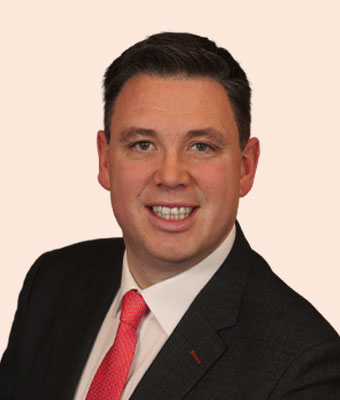
7. Deputy Paul McAuliffe asked the Tánaiste and Minister for Foreign Affairs if he will report on his recent conversation with the UK Foreign Secretary; and if he will make a statement on the matter. [4360/25]
Will the Tánaiste report to the House on the recent conversations he has had with UK Foreign Secretary Lammy?
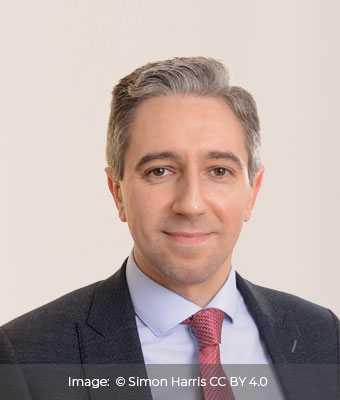
I thank Deputy McAuliffe and formally congratulate him on his re-election to the House. I was pleased to have an opportunity to speak with UK Foreign Secretary David Lammy on 27 January. It is important that this was one of the first calls I had an opportunity to make on taking office because the relationship between Ireland and the UK is of fundamental importance. This is reflected in our many close people-to-people links, our significant levels of two-way trade and the depth and breadth of our shared interests and values in many areas. I welcomed, in my conversation with the Foreign Secretary, the renewed warmth in our bilateral relationship. That warmth is real. The term "reset" is often used but I genuinely believe the reset in Anglo-Irish relations is real and meaningful. It has allowed our Governments to work together to rebuild relations between our countries, relations which had gone through a very rocky patch, to put it mildly, in recent years. It allows us to realise this ambition of good close neighbours working together with a common purpose and to our full potential. Our roles and responsibilities as co-guarantors of the Good Friday Agreement remain a bedrock of the relationship and a solemn duty both Governments have.
My call with the Foreign Secretary was, equally, an important opportunity to discuss the common global and security challenges that we face. We focused in particular on Ukraine, the Middle East and Sudan. Not to digress but the issue of Sudan is still not given nearly enough attention in terms of the scale of devastation there. We also shared perspectives on the transatlantic relationship and working with the new Administration in the United States. The Foreign Secretary and I agreed to meet in person soon to engage further on these and other important issues. I think we will both be at the Munich Security Conference and in South Africa at the G20. During our call, I welcomed the UK's renewed positive engagement on EU-UK relations. The current global environment is a challenging one. As partners with many shared interests and values, there is real potential to work together on pressing global and security challenges. I look forward to working with the Foreign Secretary on these matters.
I intend to note at each Oral Questions session from now on the disproportionate, unbalanced and unfair priority which some parties in the House have to hold the Government to account, given the allocated amounts of time. I hope the Government and the Opposition will follow through on their words to allocate more time to people representing one of the largest groups in the House, namely, backbenchers. We have as much right to ask Priority Questions to our Ministers as anybody else in the House. I acknowledge the Tánaiste's appointment and that of the Minister of State, Deputy Richmond, who was a healthy contributor on foreign affairs as a backbencher. It is great to see him in the post and I think he will have great grá for it.
My interest in this question dates back to the 1997 opportunity for peace, when Northern Ireland was going to join a world of prosperity and peace and a multinational rules-based order. Much of that has been eroded over the years and I am concerned about trade policy and how both trading blocks - the UK and the EU - may differ in the face of US tariffs.
Not to digress from the question, I share the Deputy's view. I will always stand up for the right of my colleagues in Fine Gael and Fianna Fáil to participate in the Dáil and will respect their mandate to the fullest. I thank the Deputy for the kind words about the appointment of my colleague, the Minister of State. I am pleased to have him as my co-pilot at this busy time.
The Deputy is right about the importance of the EU and UK working together. I do not like Brexit - we all opposed it but we respect the sovereign decision taken. Obviously, this country would like to see a closer relationship between the UK and the EU. That is in the first instance a matter for the UK Government but Ireland, which will always be a member of the EU in how we approach this, will be constructive. I know from my conversations with the Prime Minister, the Foreign Secretary and the Secretary of State for Northern Ireland that there is a real eagerness to explore a closer practical relationship. That is, as the Deputy suggests, in the interests of all of us who have come since the Good Friday generation. We have peace on the island and between the two islands; it is the prosperity we now need to see fully harnessed.
We saw with Brexit that a huge amount of work went into preparing Irish business for the impacts of the divergence between the two parts of the island on trade, customs and tariffs. As we head into more uncertain times in terms of the transatlantic relationship regarding trade and tariffs, I ask the Tánaiste's Department and the Department of Enterprise, Trade and Employment to engage more with business. That is unlike members of the Opposition, who seem to pour water on engaging with businesses on trade. Of course, the Government should have an ethical framework and avoid any suggestion of oligarchy and so on, but if it is to deal with trade and tariffs, the people it should talk to are Irish businesses and people carrying out business in Ireland. We need to look at what the unintended consequences for those might be, most immediately in terms of aluminium and steel. We do not know where this will go but more engagement with businesses and for them to inform our position is a positive step and something we should not discourage. Some people in this House are better at creating jobs than others.
I agree. The Government should and unapologetically will talk to those who create jobs, investment and growth in our country and economy. The point I have been trying to make and will make to the Trump Administration is that the relationship is now two-way. There is not a state in the United States of America that does not have jobs created by Irish-owned companies. The top ten companies are responsible for around 115,000 jobs in the United States. The investment level by companies is around $323 million in the last full year for which we have figures. We bring real benefits for people who voted for President Trump. They might be working in Irish-owned companies and benefiting from that investment. We need to keep making that point.
The Deputy is right on carefully monitoring and analysing recent trade developments. He referenced steel and aluminium. Tomorrow I will attend an unscheduled meeting of EU trade ministers on this issue. It is important that we share information and insights and continue to monitor this.
On the all-island approach and working in the spirit of the Good Friday Agreement, when I met the First Minister and deputy First Minister of Northern Ireland, I made the point that we should continue across the island to share information and perspectives. The Northern Ireland office has a presence in Washington; we have an embassy. We should be working together to make the island-of-Ireland argument.
International Relations
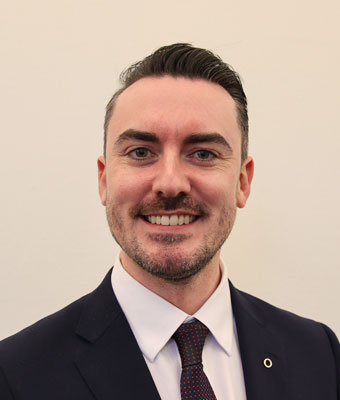
8. Deputy Naoise Ó Cearúil asked the Tánaiste and Minister for Foreign Affairs if he will report on any discussion of EU-US relations at the recent Foreign Affairs Council; and if he will make a statement on the matter. [4381/25]
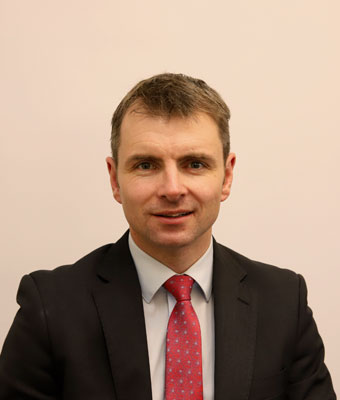
Tá an Teachta Martin Daly ag glacadh Ceist Uimh. 8 faoi choinne an Teachta Ó Cearúil.
I congratulate the Tánaiste and the Minister of State. President Trump was elected on a platform of isolationism and protectionism. It is not clear whether he is using tariffs for crude political leverage or engaging in a true trade war. Neither is it clear if the traditional American guarantee to European defence is secure. Given the consequent economic and security instability and Ireland's unique exposure to the threat of tariffs, I ask the Tánaiste and Minister for Foreign Affairs and Trade to report on any discussions on EU-US relations at the recent Foreign Affairs Council.
I thank the Deputy for the question and congratulate him on his election to the House. I look forward to working constructively with him. This question is timely because it is important to work together at an EU level on our approach to the transatlantic relationship. The European Union and the US share a strong, mutually beneficial partnership. That was true before the US presidential election and is equally true after the election. This is a partnership which has for decades underpinned global stability, sustainability and prosperity. The transatlantic relationship is essential and must be supported by broad and robust institutional frameworks and bipartisan engagement.
I attended, as the Deputy alluded to, the Foreign Affairs Council meeting in Brussels on 27 January, during which Ministers held a discussion on European Union relationships with the US. While it was clear that some of the new US Administration's policies will have a potentially challenging implication for the EU, it was agreed that we need to rigorously assess the impact of any actions by the Administration and work in a united way to engage as constructively as possible with it.
The EU and US are stronger and safer when they work together. Ministers noted that Europe is itself an economic heavyweight but that the EU needs to improve its competitiveness. I really believe this. It is not the job of the European Union to commentate on elections in other countries. Of course we need to monitor them, but it is also our job to control what we can control. The European Union is an economic heavyweight but we need to do more with respect to being competitive, innovative, responsive and agile. It is important to focus on the new US Administration’s actual policy decisions and their implications for Ireland and the EU. Ireland and the EU will need in particular to focus on the factors I referenced that are within our control, such as investing in infrastructure to enhance our competitiveness.
In addition to the discussion on EU-US relations at the Foreign Affairs Council last month, EU Heads of State and Government also discussed the issue at their informal retreat in Brussels on 3 February. An important focus of that discussion was the need for EU unity, especially in responding to any decision by the US Administration to impose tariffs on EU goods or services.
Deputy Ó Laoghaire has a supplementary question on this matter.
I think Deputy Martin Daly is first. Is that how it works?
Yes, Deputy Daly is first.
I thank the Tánaiste for his answer. It is critical for a country as small as ours, with a small economy very much exposed to the tariffs coming from the United States or any change in the economic climate affecting the relationship between the United States and the European Union, to work through the European Union, which is a powerful economic bloc, to advance our interests. I thank the Tánaiste for his answer.
This is an area that will require a great deal of careful consideration. I understand the point the Tánaiste made that pronouncements and policy are not always the same thing with this Administration. Nonetheless, preparation will be crucial. There are two elements to it. It is important we are clear-sighted without being defeatist. There are undoubtedly vulnerabilities. Notwithstanding that, there is no need to be alarmist without having seen any actions. Clearly, we need to do what we can, primarily at a European level because engaging with the US Administration on tariffs is a European competency. In terms of preparedness, however, we need to support businesses to potentially seek out new markets. One of the lessons that needs to be learned from Brexit preparedness, some of which worked and some of which could have been better, is that we need to support small businesses better in seeking out markets, including non-English speaking markets, for example, in southeast Asia. Supporting businesses, especially small and medium businesses, to reach non-English speaking markets is an area we need to work on.
Since the discussion at the Foreign Affairs Council, President Trump has announced his decision to implement tariffs at 25% on steel and aluminium imports to the United States, commencing in March. Tomorrow, I will attend a virtual meeting of EU trade ministers, where ministers from all 27 member states, along with the European Commission, will discuss this development and consider appropriate responses. Ireland's and the EU's view is clear, however: tariffs hurt businesses and consumers. They are not in the interests of the EU or Ireland and we do not believe they are in the interests of the United States either.
I agree with Deputy Ó Laoghaire that we need to be prepared and not to be alarmist or fatalistic. We have to work our way through this. Donald Trump is the democratically elected President of the United States of America and will be for four years. We have to look at how we can respond, deal with the challenges and seek opportunities where we can. I take the point on having to be prepared to support businesses, especially small and medium businesses, in any turbulence that may arise. That is one of the reasons we have established the consultative trade forum, which I will chair, to be able to bring that into the room and be able to engage on these matters.
Passport Services
9. Deputy Aisling Dempsey asked the Tánaiste and Minister for Foreign Affairs the number of passport books and cards issued to Meath applicants in 2024; the estimated number expected to issue in 2025; and if he will make a statement on the matter. [4384/25]
I wish the Tánaiste well in his role as Minister for Foreign Affairs at this turbulent time. What was the number of passport books and cards issued to applicants from County Meath in 2024? What is the estimate for the number that is expected to be issued in 2025 and will he make a statement on the matter?
I thank Deputy Dempsey for the question, congratulate her on her election to the Dáil and look forward to working constructively with her.
The passport service issued more than 1 million passport books and cards in 2024. There were 16,792 adult passports and 12,474 child passports issued to residents of County Meath in 2024, bringing the total number of passports issued to Meath residents to 29,266. The passport service forecasts that more than 940,000 passport applications will be submitted in 2025. Based on these figures, the Passport Office estimates there will be approximately 26,000 applications from residents of County Meath in 2025.
The passport service continues to be in an excellent position to meet the demand forecast for 2025, with 855 staff officers currently assigned to it. Customers who need to have their passports renewed urgently can book an appointment at the public counter in Mount Street or in Cork. The passport service offers a one-day or four-day renewal service in Dublin and a four-day renewal service in Cork. There are currently 220 one-day renewal appointments available in Dublin every week, which may be of use to the Deputy's constituents. There are 265 four-day renewal appointments available in Dublin and 240 four-day renewal appointments available in Cork every week.
In the case of genuine emergencies, such as a bereavement or serious illness of a family member abroad, citizens can contact the Passport Office directly. The passport service gives priority to these applications. I ask the Deputy to encourage her constituents who are travelling this year, particularly those with young children who require their first passport, to apply online and in plenty of time.
I thank the Tánaiste for his reply. As a councillor and now as a TD, like many others, a good percentage of queries I receive from constituents relate to issues with passports. It can be an emotive issue in a stressful time for them. We see a lot of criticism of public services, such as the Passport Office, but it has excelled in recent years and it is a different situation from the one we found ourselves in four years ago. The issuing of 1 million passports in 2024 is a huge milestone to mark. Does the Tánaiste have the current processing times, compared with 2022, for simple online renewals, for complex or child online renewals and for first-time applications online and through the An Post passport express service?
I join Deputy Dempsey in thanking the passport service for the huge amount of work it has done and the reforms it has undergone. Let us consider that it has come through the Covid-19 pandemic and Brexit turbulence with the impact that had on passport application numbers and the general significant demand for passports. I often meet constituents who are pleasantly surprised about how quickly the passport arrives. It seems like only yesterday that they took the picture to send off online and the passport arrives the next day or day after that. That is the experience of many people. We can never be complacent about this. We must continue to work on it.
I will send the breakdown of those figures to the Deputy but I can tell her we are very much ahead of target for this year for turnaround times of passport applications.
I will share some Meath-specific information because, as the Deputy will be aware, we are bringing the new design to life for a new redesigned passport book. Residents of Meath will be fond of the fact that Newgrange was prevalent in the current book and I can assure the Deputy that Newgrange will continue to feature in the new one.
Middle East
6. Deputy Ruairí Ó Murchú asked the Tánaiste and Minister for Foreign Affairs if he will provide an update on any recent engagement his Department has had with the EU regarding Palestine; and if he will make a statement on the matter. [4541/25]
I wish the Tánaiste and the Minister of State, Deputy Richmond, well in their roles. Sinn Féin will hold them to account. When we see what is happening geopolitically, there is no shortage of issues that need to be dealt with. The Tánaiste spoke earlier about Sudan and the issues Donald Trump has spoken about that relate to tariffs. I am asking specifically about governmental engagement on the ongoing issues in Palestine. We know about the dangers in relation to the ceasefire, the commentary from America that has not been helpful and the attacks that are ongoing in the West Bank at this time.
I thank Deputy Ó Murchú and congratulate him on his re-election. I have always enjoyed our sparring with him on a variety of issues and working constructively on other issues. I do not expect any change in that service, so I will look forward to it.
I thank the Deputy for raising an important question. In the current context, the situation in Israel and Palestine remains a standing agenda item on the Foreign Affairs Council each month. This enables me to exchange with EU counterparts on this key priority on a monthly basis. Ireland’s engagement at EU level is guided by our long-standing and principled position, notably respect for international law, respect for the equal right to self-determination, peace, security and dignity for Israelis and Palestinians alike and, as the Deputy will be aware, unwavering support for the two-state solution.
Ireland has consistently called for a ceasefire, the release of hostages and humanitarian access at scale to Gaza. At January’s Foreign Affairs Council, I welcomed the ceasefire and hostage-release deal, as well as the release of hostages to date, and underlined to my EU counterparts the need to focus on urgent humanitarian needs in Gaza while also taking a longer-term perspective that prioritises the two-state solution, including addressing threats to its very viability.
Palestinian Authority governance will be crucial in this regard and working with the Palestinian Authority to support its efforts to reform and build its institutional capacity has been a key pillar of our response at a European level. I welcome in this regard that the EU remains the largest international donor of aid to the Palestinians and discussion of a further significant package of assistance will be an important area of our ongoing engagement in the coming months.
I welcome that our co-operation at EU level has also yielded very tangible and immediate benefits. The medical evacuation of sick children from Gaza for healthcare treatment in Ireland last December was a very positive example of co-operation under the EU civil protection mechanism. I also welcome that the EU border assistance mission has now been redeployed to the Rafah crossing point. This means this, as well as the EU police mission, are playing an important role in building the capacity of the Palestinian Authority in these areas. I will come back in a moment.
Gabhaim buíochas leis an Tánaiste. Obviously, anything that helps the people who have been under absolute genocidal slaughter is to be welcomed. I accept that the Government has spoken strongly and probably, at times, has been among very few with regard to the plight of the Palestinian people. We have stated explicitly that we believe we have to do everything we can as a State. We would much prefer that action was taken at a European level, particularly when you talk about holding Israel to account.
I do not think there is any doubt but that we need to follow through with the occupied territories Bill. I am somewhat worried, with regard to the Tánaiste's commentary, in the sense that the only promise at this point in time is on goods but we have to look at services. We cannot have people profiting from modern-day colonisation and genocide. It is just not acceptable in any way, shape or form.
I would like to know how the communication with our European partners goes on. I understand they are coming from a different place.
I thank the Deputy. He can come in again.
I do not necessarily buy the whole excuse regarding the Holocaust, particularly when we are dealing with this issue. I would like to know how that engagement goes on.
There is a lot of engagement at European level in this regard. It is obviously important that this continues and I welcome the fact that this month, there will be that meeting I referenced to the Deputy's colleague, Deputy Ó Laoghaire, of the EU-Israel association agreement. Ireland has been arguing that for a long time. It should have happened a long time ago and will happen this month.
I also welcome that in the following month, March, crucially, there will be a high-level political dialogue with Palestine in the European Union. Despite the differences of opinion - there are stark differences between member states on certain issues regarding the Middle East and we have to be honest about that - there are some fundamental things on which people agree, that is, a cessation of violence, a ceasefire, the release of the hostages and, overwhelmingly, a two-state solution. That is where the European Union's focus has to remain, particularly at a time when others are making comments that seem to threaten the very viability of that proposition.
I should also say that we already support both the EU border assistance mission and the EU police mission through the provision of a civilian staff member. I have now asked my officials to see if we can do more in this area.
We all agree that we want to see the release of all hostages and that we want to ensure the ceasefire is maintained. Whatever happens, we are incredibly afraid that we are getting further and further away from the room and space for a two-state solution for peace, freedom and democracy, which basically will both benefit the Palestinians and provide real security, as Israel often talks about. We recall in our own peace process and earlier stages of the Middle East peace process that there was, at times, beneficial American involvement. There is nothing to be seen in that sense at the minute and our fears are that circumstances are going to get worse.
We have spoken many times on the EU-Israel association agreement. What are the chances and possibilities of moving this on? There are humanitarian conditions which are being breached every day of the week-----
I thank the Deputy. I call on the Tánaiste to respond.
-----and we do need to see movement because it is a failure by the European Union.
I have been very clear on the EU, and I have said it many times. I said it in my previous role as well that I think the European Union, in many parts of the world, could have done even more to apply more pressure to bring about a ceasefire. However, I am very conscious, in the context in which we are talking tonight, that there is a ceasefire in place but the ceasefire is extraordinarily fragile. There have been remarks in the past number of hours that are alarming, concerning and threaten to further undermine that ceasefire. We need the hostages released. They need to be back with their families. We need the aid to flow and an ability to get humanitarian aid at scale into Gaza. Any return to hostilities, conflict and violence would be unbearable.
The agreement on a hostage release and ceasefire deal was long awaited. It was much welcomed. Too many innocent people have been killed in Gaza and in Israel since the conflict commenced. The US has played an important role in helping to secure the ceasefire and I really believe there is a role for everybody in the international community to do everything humanly possible to keep that ceasefire in place. That must be our immediate priority.
I welcome the association agreement meeting. I will speak up very strongly with regard to Ireland's views on all these matters but maintaining the ceasefire has to be the immediate priority.
EU Presidency
10. Deputy Pádraig O'Sullivan asked the Tánaiste and Minister for Foreign Affairs the status of preparations to ensure a successful EU Presidency in 2026; if the Government will publish plans for Ireland's upcoming Presidency to deliver against strategic priorities for Europe and Ireland; and if he will make a statement on the matter. [4445/25]
12. Deputy James Geoghegan asked the Tánaiste and Minister for Foreign Affairs to report on the preparatory work within his Department in advance of Ireland assuming the Presidency of the European Council in 2026. [4436/25]
I ask the Tánaiste and Minister for Foreign Affairs the status of preparations to ensure a successful EU Presidency in 2026; if the Government will publish plans for Ireland's upcoming Presidency to deliver against strategic priorities for Europe and Ireland; and if he will make a statement on the matter.
I propose to take Questions Nos. 10 and 12 together. I thank Deputy O'Sullivan for his question. I congratulate him on his re-election and wish him well for this term in the Dáil.
As the Deputy rightly says, Ireland will hold the Presidency of the Council of the European Union from 1 July to 31 December 2026. Our preparations for Ireland’s Presidency are now intensifying across both policy and operational strands of planning. These are being led by my Department, in close co-operation with the Department of the Taoiseach and with input from all Departments across Government.
Currently, two cross-departmental groups, chaired by my Department, are co-ordinating this preparatory work. The interdepartmental group on Presidency policy planning and the interdepartmental group on operational Presidency planning - we do lots well but not names of groups - have now met a combined total of 24 times, with participation from senior officials from across all Departments.
The interdepartmental group looking at policy has been actively following significant policy developments at an EU level and this will help shape the context for Ireland’s 2026 Presidency. My Department is currently taking forward initial work, in consultation with other Departments, to develop our Presidency priorities and policy programme. This will be developed against the backdrop of the EU strategic agenda for 2024 to 2029 and the range of legislative initiatives proposed by the European Commission, including those set out in its work programme, which is expected to be published shortly. Of course, this work will also be shaped by our own priorities with regard to the EU.
We are consulting other EU member states and the EU institutions as the process of programme development continues. We will ensure that relevant stakeholders in this country, including both business and civil society representatives, are consulted. That is going to be really important. This will help ensure that the programme addresses issues of national importance felt by citizens across the country.
The evolution of the Council’s legislative agenda through successive Presidencies over the next 18 months will also, of course, have a bearing on the specific priorities we will get to take forward in 2026. We expect that our programme and priorities will be finalised shortly before the start of our Presidency.
Overall, I assure the Deputy that our Presidency priorities will reflect the areas in which it is judged by the Government that we can best advance a positive policy agenda for the Union and for all its citizens.
I thank the Tánaiste. I asked that question originally in the last Dáil, back in June or July of last year, because there is some excitement about the Presidency coming to Ireland for 2026. Unfortunately, the response is kind of similar to what the Tánaiste gave then. I understand that there is certain stuff he cannot reveal and we are 12 months out from the Presidency but at the same time, the Tánaiste has said that the cross-departmental committee group that was established has met 24 times. Is there anything the Tánaiste can elicit that has been discussed at those meetings with respect to priorities?
I understand as well that while Ireland is in the Presidency, we must be conscious of the fact we are representing Europe first and foremost, and not just being parochial and national in our own self-interest. However, after 24 meetings I hope the Tánaiste could maybe reveal something or that he could even reflect tonight on key priorities for himself that, as he would see it, might dominate with regard to us publishing our own agenda.
I take the point the Deputy makes but I assure him it is long-standing practice that we publish our proposal much closer to the Presidency. That is done for a variety of reasons, including the fact that we need to see where the legislative agenda in the European Commission is at at that stage.
Let me say this. We will want to do a number of things but crucially, we will want to be efficient and effective at progressing the legislative priorities that are set out at a European level at that stage.
We will want to put a focus on issues that matter here in Ireland, such as agriculture, the Common Agricultural Policy and where that would be at during that stage and playing an important role in competitiveness and economic priorities. Of course, for all of the reasons we have discussed, so much of Europe's bandwidth has been focused, quite correctly, on defence and security, which I understand. We also need to carve out space around competitiveness, jobs and investment because that in and of itself is an issue in terms of the security of the Union, economic security and well-being. The Deputy can expect a focus on agriculture and the economy. It is early. We will come back to the Deputy closer to the time. We welcome his thoughts.
I appreciate the Minister making those suggestions. Maybe I can throw one in as well. The Polish Presidency is in place at the moment and it, as the Minister said, has understandably prioritised security and defence, the protection of people and borders, resistance to foreign interference and disinformation and so on. It has prioritised the issues that are most pertinent to it.
When the Irish Presidency starts in 2026, I would like to make the case for our pharmaceutical industry, in particular. It is important to us in the south. I have discussed with the Minister on numerous occasions rare diseases, orphan drugs and how we improve accessibility to drugs for patients. We seem to be caught in an archaic system. Regarding the proclamations that have come from the United States in recent weeks, in terms of possibly putting tariffs on the pharma sector, I would like to highlight that as part of our list of priorities.
The Deputy is right. The pharmaceutical sector is obviously of huge economic importance to our country. I hope and expect it will continue to be. So too is the benefit to patients, not just in Ireland but across the world. I agree with the Deputy that we should make it our business to be better in terms of innovative ways of accessing new medicines and willing to work more at an EU level with other member states in terms of joint procurement. Some of that has been done through the BeNeLuxA initiative, but probably not nearly enough. Who knows, perhaps we might even get to have a few Presidency-related meetings in Cork so that we can all experience in real time the very positive impact the pharmaceutical sector has had in terms of economic well-being, jobs and investment in that region.
Before I move to the next question, I am very sorry for cutting Deputy Dempsey's time short. I apologise. It was my mistake.
International Relations
11. Deputy Martin Daly asked the Tánaiste and Minister for Foreign Affairs if he will report on his plans for the establishment of a new US-based body that will be specifically tasked with further strengthening US-Irish relations; and if he will make a statement on the matter. [4462/25]
13. Deputy James Geoghegan asked the Tánaiste and Minister for Foreign Affairs the measures being taken to weather any economic storms which may be triggered by trade and tax policies implemented by the new Administration in the United States. [4435/25]
Given the possibility of reduced access to the highest levels of the US Administration, that international forces may well be working against us in the US because of our stance on human rights in respect of Gaza and Palestine and the commencement of a trade war by the Administration of the United States against the European Union, can the Minister report on his plans for the establishment of a new US-based body that will specifically be tasked with further strengthening US-Irish relations? I realise he gave a comprehensive answer to Deputy Gibney. Does he have anything to add to that?
I propose to take Questions Nos. 11 and 13 together.
I thank Deputy Daly. I will endeavour to give an equally comprehensive answer to him. I want to thank him for highlighting this issue because, truthfully, we cannot talk about this enough. As I said, I passionately believe that the relationship between the United States and Ireland is mutually beneficial. It is a deep relationship with many ties which are personal, cultural and historical, but it is also an economically important relationship. As we engage with the new Trump Administration, we need to make the point that it is a two-way relationship.
There are about 115,000 people who got out of bed in the United States this morning and went to work in the top ten Irish-owned companies in every single one of the 50 states of the United States. It is a relationship worth hundreds of millions of euro in terms of investment by those companies alone to the US. Of course, this country benefits massively from US companies which have found a home here and, I believe, see the benefits of locating here not just for access to Ireland and our talented workforce, but also the access we provide to the European Union.
We cannot be alarmist or fatalistic about what happens in other countries. We have to look at how we can engage in a constructive way. When we live in an economy that is open, highly globalised and, therefore, more sensitive to shifts in the global trading environment, it is important that we try to maintain a strategic focus on maintaining competitiveness, especially at a time when we are seeing increased protectionism and US strategic considerations shaping policy on international trade.
That is why we took a decision in government last week to establish a consultative group on international trade policy in Ireland, which I will chair. It will bring together all relevant Government Departments, but also stakeholders, including in the business community. Alongside that, a US-based strategic economic advisory panel will be established. This panel will bring together a small number of very senior US-based business people. They will provide their analysis and perspectives to Government as we navigate a complex global economic environment. They can also assist us in ensuring that our message on what I have described as our mutually beneficial economic relationship is well understood and communicated.
Question No. 14 taken with Written Answers.
Passport Services
16. Deputy Noel McCarthy asked the Tánaiste and Minister for Foreign Affairs the staff numbers employed by the passport service in each of the years from 2020 to 2024, inclusive; the steps being taken by his Department to reduce the turnaround times for a decision on first-time and renewal passport applications; and if he will make a statement on the matter. [4446/25]
23. Deputy Noel McCarthy asked the Tánaiste and Minister for Foreign Affairs the number of first-time and renewal passport applications received in each of the years from 2020 to 2024, inclusive; the number of applications approved and passports issued over the same period, in tabular form; and if he will make a statement on the matter. [4449/25]
I want to congratulate the Minister and Minister of State on their appointments. I want to inquire about the staff numbers employed by the passport service in each of the years 2020 to 2024, inclusive, and the steps being taken by the Department to reduce the turnaround times for a decision on first-time and renewal passport applications. I would also like to know the number of first-time and renewal passport applications received in each of the years 2020 to 2024, inclusive, and the number of applications approved and passports issued over the same period.
I propose to take Questions Nos. 16 and 23 together.
I congratulate Deputy McCarthy on his election to Dáil Éireann. I very much look forward to working with him constructively. I am pleased to tell the Deputy that the passport service is an excellent position to deliver the demand forecast for the rest of the year. Ensuring that we have enough staff to respond to demand is a key priority for my Department and is kept under constant review. The number of officers employed by the passport service from 2020 to 2024, inclusive, on 31 January for each of these years, is as follows: in 2020 there were 615 staff employed; in 2021 that dipped to 465 staff; in 2022 there were 723 staff; in 2023 there were 742 staff; and in 2024 there were 789 staff.
The passport service is well-staffed for this year, with 825 officers, a significant increase in staffing. In recent months, 61 officers have been assigned to the Passport Office in Balbriggan, 41 officers have been assigned to our Dublin 2 offices and the Deputy will be pleased to know that 12 officers have been assigned to the Passport Office in Cork. An additional 50 members of staff will be assigned later this month and into next month to ensure that the passport service is fully staffed to meet demand throughout the year.
With regard to the Deputy's query on turnaround times, the passport service, I am pleased to say, is successfully meeting high demand for passports with turnaround times well ahead of target and no backlogs. Passport turnaround times are ten working days for simple adult online renewals, 15 working days for complex or child online renewals, 20 working days for first-time online applications and eight weeks for Post Passport paper applications. It is important to note that processing times do not begin when the applicant applies online. Processing time is calculated once the Passport Office receives any supporting documentation - it is important to note it can only process the application when it has the documentation it needs.
With regard to the Deputy's questions about the number of first-time and renewal passport applications received in each of the years 2020 to 2024, inclusive, in the interests of time, I might send that information to him in writing. In 2020, there were 118,827 first-time applications, which rose to 276,574 in 2024.
I thank the Minister for his reply. I welcome staff increases and a reduction in the turnaround times for a passport. Many people have been in touch with me regarding passports during my time as a councillor and now as a Deputy. While things can sometimes be very touch and go in respect of whether people can travel on time, I have always found the passport service very accommodating when it can be. Does the Department hire additional staff at peak times of potential demand for passports, such as during Easter break or the summer holidays?
I thank the Deputy. The short answer is that we do. We are trying to get to a sustainable position where we do not see peaks and troughs, but rather a consistent, good and high-quality service with turnaround times that are at least in line with the office's expectation. I am pleased to say that at the moment, the times are ahead of expectations. Of course, and I say this respectfully to all of our constituents and the people of Ireland, people can help us by checking their passports before booking foreign travel and trying to apply in plenty of time.
Things can happen in anybody's life, including the need for people to travel urgently for a variety of reasons, sometimes very tragic reasons. We have processes in place to help people in Dublin and Cork with those in-person appointments. There are a number of slots available each day.
That would be a source of assistance to the Deputy's constituents, too.
With a certain number of passports printed in the Passport Office in Mount Street, Dublin, and the majority processed in the printing facility in Balbriggan, is the Tánaiste considering the possibility of establishing another printing service in the Cork Passport Office? This would greatly benefit those attending the Cork Passport Office rather than the Dublin one and reduce the burden on the other offices in the capital.
The short answer is we will keep this under review. I am pleased to see that so many applications are being made online. Regardless if someone lives in Cork, Dublin or anywhere else in this great country, he or she is able to apply for a passport. More than 93% of applications came that way last year and people can get passports in a time-efficient manner.
In terms of the office we have in Cork, which plays a valuable part, we will continue to keep under review any additional infrastructural supports for it.
Middle East
15. Deputy Cathal Crowe asked the Tánaiste and Minister for Foreign Affairs if he will provide an update on his plans to pass the Control of Economic Activity (Occupied Territories) Bill 2018; and if he will make a statement on the matter. [4363/25]
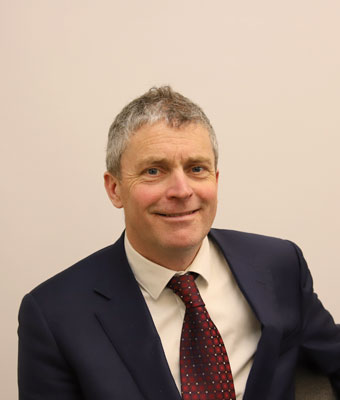
20. Deputy Pa Daly asked the Tánaiste and Minister for Foreign Affairs the Government's position on the Control of Economic Activity (Occupied Territories) Bill 2018; the timeline for when he expects this Bill to be passed; and if he will make a statement on the matter. [4385/25]
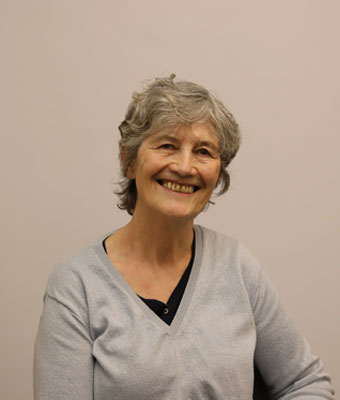
37. Deputy Catherine Connolly asked the Tánaiste and Minister for Foreign Affairs the timeline for the passage of the Control of Economic Activity (Occupied Territories) Bill 2018 that incorporates a ban on imports and services from these areas, supported by the advisory opinion on the illegality of Israel's occupation and settlements issued on July 19 2024 by the International Court of Justice; and if he will make a statement on the matter. [4514/25]
I welcome the opportunity to ask for an update on the occupied territories Bill, more formally called the Control of Economic Activity (Occupied Territories) Bill 2018, which incorporates a ban on imports and services from the occupied areas. I would like a robust and honest exchange on this matter. Slaughter is happening daily in Gaza and the occupied territories. The occupied territories Bill speaks for itself - it is dated 2018. The programme for Government talks about progressing it. When will it be enacted?
I propose to take Questions Nos. 15, 20 and 37 together.
I thank Deputy Connolly. It is an honest question and let me give an honest answer, which is, I do not know yet. I want to engage in the first instance. I take the point that Senator Black is looking to sit down with me. I will make sure that happens in the coming days. I have been meeting my officials on this issue, too.
The decision we will have to make is on whether it is possible to amend the current Bill or is it more likely that we will need to introduce a new Bill. All of the advice available to me - I am being honest - is that the level of change required to the Bill, as highlighted by my predecessor, the now Taoiseach, at the foreign affairs committee, is such that a new Bill may actually be the appropriate vehicle in which to take this matter forward.
I am happy to meet opposition TDs on this and to engage constructively with the Opposition but the most appropriate and important thing I want to do first is meet the sponsor of the current Bill, Senator Black, whom I acknowledge has engaged in good faith with my Department.
The Deputy knows what I am going to say about it because I have said it already, so in the interests of time, I will not repeat it. Our immediate priority is making sure the ceasefire is maintained, the hostage release deal continues and humanitarian aid into Gaza is increased significantly. That is why we allocated €20 million more to UNRWA last week through my Department.
I need to be honest, in that I was the Taoiseach who sought legal advice from the Attorney General to see if it was possible to look at the occupied territories Bill again. I did so in light of the July 2024 advisory opinion. The legal advice was that there was a narrow path to try to take legislation forward. The Deputy and I may have different views or we may even have the same view, but in terms of the legality of this, the path forward is very narrow. As we all are, I am in the business of making sure that any legislation we pass is meaningful in terms of its impact.
This and the previous Governments have had ample time since 2018 to enact the occupied territories Bill. It is a matter of great disappointment to everybody in the Opposition that the programme for Government talks about progressing it. The Government will change the triple lock but it will progress this Bill some time in the future, ignoring completely the reality on the ground and the new reality of President Trump talking about turning it into a Riviera.
I wonder what kind of world we are living in when there is a trampling on international law on every level. The Government hid behind the law with its Attorney General and the advice that said this was not possible, then it changed its mind when the advisory opinion arrived, yet still nothing has happened. The Tánaiste promised the people of Ireland before the election that the Government would enact this Bill.
We have to be accurate. I do not believe it was legally possible in 2018 to pass this Bill. The Deputy says we have had ample time since 2018, but the moment that created a potential legal path forward - it was no more than a potential legal path forward - was the ICJ advisory opinion. I find it odd in this Dáil that it is suggested that Ireland and the Irish Government are not supportive of the people of Palestine, a two-state solution or standing up for international law. When I will meet the Palestinian Prime Minister on Friday and Saturday in Munich, he will say the opposite to me. He will talk about how this country is one of the most supportive in the world of the Palestinian people and the two-state solution. The characterisation that is presented of this Government is not in any way reflective of the views of the President or Prime Minister of the Palestinian Authority.
I disagree fundamentally with the Tánaiste on this and I take no comfort that we are ahead in terms of our condemnation of what is happening. We need a lot more than condemnation. We need to stand in solidarity with the people of Palestine. Their country has been destroyed. Genocide, in my opinion, is under way as we trade words across the Dáil. There is a case before the highest court in the world regarding the genocidal actions of the Israeli Government and its army-----
We have joined that case.
We are beyond trading words, taking credit for standing with the Palestinian people or recognising Palestine, which I fully praised the Government for at the time. There is no Palestine left to recognise on the ground. Some 80% to 90% of it has been destroyed. What is on the ground is the resilience of the Palestinian people, who have failed to give up at any stage. As an independent republic and sovereign state with a particular background that gives us an understanding, it is time to make our words mean something.
Hear, hear.
I believe our words do mean something. They mean that, at a time when many countries were turning their backs on UNRWA, the humanitarian agency that gets assistance to the very people the Deputy wants to help, we pledged €20 million more.
It has been declared illegal by Israel.
Yes, and I deplore the decision of the Knesset on that, but instead of backing away, we supported UNRWA with €20 million more. The Deputy referenced the ICJ case. We have sought to join it and have made a submission, something that many in the House said we would not do. We have seen how other countries have responded negatively to our decision, but I believe we are on the right side of history by doing it.
Every avenue we can explore, we are exploring. Regarding the occupied territories Bill, we have a clear commitment in the programme for Government and we will progress legislation. I will bring legislation----
The Government must also enact it.
-----and work with the Deputy, and that legislation will need to be enacted. However, I need to make sure that anything we do is lawful. I am happy to work constructively with the Deputy on that.
Questions Nos. 17 to 19, inclusive, taken with Written Answers.
Question No. 20 answered with Question No. 15.
Questions Nos. 21 and 22 taken with Written Answers.
Question No. 23 answered with Question No. 16.
Question No. 24 taken with Written Answers.
Northern Ireland
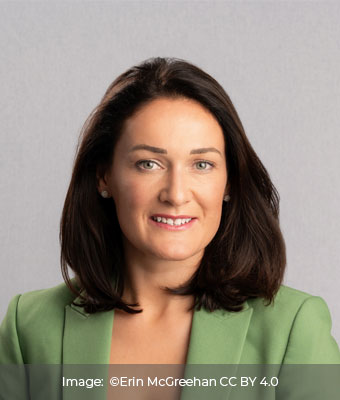
25. Deputy Erin McGreehan asked the Tánaiste and Minister for Foreign Affairs if he will report on his visit to Belfast last month; and if he will make a statement on the matter. [4238/25]
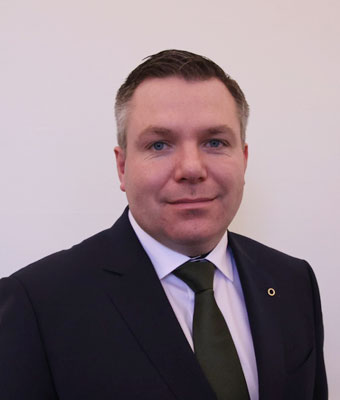
29. Deputy Shane Moynihan asked the Tánaiste and Minister for Foreign Affairs if he will report on any recent engagement with political leaders in Northern Ireland; and if he will make a statement on the matter. [4361/25]
Gabhaim buíochas leis an gCeann Comhairle. I dtosach, is mian liom gach rath a ghuí ar an Tánaiste agus é ag toiseacht amach mar Aire Gnóthaí Eachtracha. I look forward to working with the Tánaiste and to many engagements in the House.
My question is on the Tánaiste's recent engagement with political leaders in Northern Ireland. I note his optimism about the first meetings of the new North-South Ministerial Council. A particular issue I would love for the Tánaiste to make sure is on the agenda for the North-South Ministerial Council is the need to finalise the funding arrangements for Foras na Gaeilge. The Tánaiste will be aware that there is some dispute about them at Executive level in Northern Ireland.
In the spirit of the Good Friday Agreement, the all-island bodies should be enacted and protected. In particular, Foras na Gaeilge's funding should be protected and its approach to the Irish language should be an all-island one. I welcome any interventions the Tánaiste and his Government colleagues can make on this matter to ensure we get a resolution to it.
I propose to take Questions Nos. 25 and 29 together.
Chomhghairdeas and congratulations to Deputy Moynihan on his election to the Dáil. I look forward to working with him constructively. I will undertake to pursue the issue of Foras na Gaeilge and revert to him directly on it, as I share his views on the importance of it having funding certainty.
I was delighted to make an early visit in my role as Tánaiste and Minister for Foreign Affairs to Belfast on 28 January. While there, I met First Minister Michelle O'Neill and deputy First Minister Emma Little-Pengelly, building on my initial calls with them on the weekend of 25 February shortly after receiving my seal of office.
I also met with the Speaker of the Northern Ireland Assembly, Edwin Poots; with the leader of the Alliance Party, Naomi Long, and a delegation from that party; and with the leader of the SDLP, Claire Hanna, and a delegation from that party. Finally, I had phone calls with both Gavin Robinson, leader of the DUP, and Mike Nesbitt, leader of the UUP. The tone of these engagements, coming close to the first anniversary of the restoration of the institutions, was positive and forward-looking. Throughout, I stressed that this Government fulfilling its role as co-guarantor of the Good Friday Agreement and continuing to invest in reconciliation will be a priority for us. Effective North-South co-operation is a vital part of that commitment. The immediate backdrop of Storm Éowyn provided a vivid illustration of some of the shared challenges we face and of the need to do more together across the island. Like the Deputy, I emphasised the essential role of the North-South Ministerial Council. I also highlighted the renewed commitment to the shared island initiative in the programme for Government, with pledges to strengthen human and financial resources, including a further €1 billion, up to 2035.
Addressing the legacy of the Troubles came up in a number of my meetings and is going to be a major priority for me during my time in office. I made clear in my engagements the Government's commitment to develop a fit-for-purpose mechanism to seek truth and justice for victims and for their families. My first visit took place on the day that the commemorative hearings of the Omagh Bombing Inquiry began. In that context I underlined our commitment to facilitating and supporting the inquiry in full. I have also in recent days met with Northern Ireland victims and survivors groups on the issue of legacy. The implementation of the Windsor Framework also featured in my conversation. While this was my first visit, I visited on a number of occasions as Taoiseach and will be a regular visitor in the period ahead.
I thank the Tánaiste for that reply. I am very encouraged by the commitment he has made to follow up on the funding for Foras na Gaeilge and indeed all the all-island bodies established under the Good Friday Agreement. I am particularly optimistic now that we have the restoration of the institutions in Northern Ireland that we will see the full mechanisms of the Good Friday Agreement, and subsequent agreements, come into their own. This is necessary in realising the many challenges we face between Britain and Ireland but also with respect to the issues the Tánaiste rightly raised, including the legacy issues that need to be dealt with and the truth and justice that is necessary for survivors of the Troubles. I am particularly enthused by the strong focus on the shared island initiative as part of the programme for Government. That pursues a very practical approach to co-operation, as we saw in the co-operation that followed Storm Éowyn as well. I look forward to further updates from the Tánaiste on this and thank him for his answer.
I thank Deputy Moynihan. As he knows, the Taoiseach and I are really committed to the shared island initiative. The good news is we are now seeing what was a concept delivering very practical results on the ground, with so many projects progressing. I could mention the restoration of the Ulster Canal, as one example I visited recently, or the transformative education project at the Magee College campus of the Ulster University in Derry. There are all-island research projects and so many others. We need to continue to invest in that initiative. We need to make sure the North-South Ministerial Council is now continuing to function on a very regular and frequent basis. We lost a bit of time in the scheduling due to our own general election and we are very eager to make sure we catch up on that lost time.
We really need to work together on the issue of legacy. I look forward to meeting the Northern Ireland Secretary of State this month to see if we can find a common way forward. The Irish Government's position is clear. It has to be able to bring victims, families and survivors with us and it has to be compliant with the European Convention on Human Rights.
I thank the Tánaiste. I re-emphasise the very practical examples he has shown from the shared island unit. These initiatives will set the foundations that were originally envisaged by the Good Friday Agreement all those years ago. I am particularly encouraged by the strong approach the Government is taking with regard to victims and legacy issues and ensuring that those things are compliant with international law. As the Tánaiste has said, it is most important for these initiatives to bring victims' families with them so they actually address the hurt and division caused by the Troubles. I look forward to further updates.
We have a supplemental question from Deputy McGuinness before the Tánaiste completes his reply.
Sular toghadh mé anseo go dtí Dáil Éireann, bhí onóir orm a bheith mar chomhalta boird ar Fhoras na Gaeilge. Prior to my election to this House, I was vice-chairperson of the board of Foras na Gaeilge so I share the concerns raised by Deputy Moynihan regarding the crisis of funding that is threatening €800,000 of cuts to community language projects all across this island. During my time as vice-chair of Foras na Gaeilge, I had occasion to meet and engage with the Tánaiste's predecessor, the current Taoiseach when he was Minister for Foreign Affairs, alongside board members and chief executives of the various all-Ireland bodies set up under the Good Friday Agreement. As a supplementary to Deputy Moynihan's question, will the Tánaiste continue that engagement? It was a very worthwhile one. I raise the Foras na Gaeilge ceist-----
Thanks Deputy.
-----because the Irish language is enjoying a moment at present. It is crucially important that we address this crisis.
In answer to both Deputies' questions, I absolutely will. I congratulate Deputy McGuinness on his election too. He can take it as read that I am very happy to continue that engagement and to work with him on a cross-party basis on this issue.
In the brief time available to me, I will return to the issue of the Omagh inquiry because I want to be very clear on this. When I was in Belfast - this was on the first day of the commemorative hearings of the Omagh inquiry - I noted that the Government took a very clear decision to assist the Omagh inquiry when we communicated publicly at the preliminary hearing last July. I further note on the record of the House that the programme for Government repeats that commitment, stating explicitly that we will play our full part in the legacy process including facilitating and supporting the Omagh inquiry. The cross-Border nature of the assistance which is being provided to the inquiry requires some work but I wish to be very clear that we will not be found wanting. We will assist the inquiry and will make sure the people get access to truth and information.
Is féidir teacht ar Cheisteanna Scríofa ar
www.oireachtas.ie
.
Written Answers are published on the Oireachtas website.