General Practitioner Services

Is the Minister of State taking the first Topical Issue?

I am taking all four.
Okay. I call Deputy Pádraig O'Sullivan.

I thank the Minister of State for coming in and taking the Topical Issue. As I mentioned to him a while ago, I might start by reading a letter I received from a constituent, who is a patient of one of the GPs affected by the issue I am highlighting this evening. He is a deeply respected GP:
who has dedicated over four decades of his life to serving the people of ... [his] community ... [and he is now being] compelled, against his own wishes, to cease accepting Medical Card holders. The reason is not a lack of compassion, nor a change in his values - it is solely due to age-based restrictions imposed by indemnity insurance providers, which effectively penalise experienced doctors for the very attribute that makes them invaluable: their years of service.
He is a physician of extraordinary dedication and record:
At 72 years of age, this doctor brings with him a wealth of knowledge, clinical expertise, and human understanding that cannot be taught in a lecture hall or replicated overnight. He has served not just individuals, but entire families across multiple generations - delivering care with consistency, compassion, and a personal touch that has become increasingly rare in an overstretched modern health system.
[...]
His record speaks for itself - decades of service marked by trust, clinical excellence, and an unbroken commitment to those most vulnerable in our society. He knows his patients by name, by history, by circumstance. That depth of continuity of care is not merely a comfort; it is medically significant, reducing misdiagnoses, unnecessary referrals, and costly emergency interventions.
What we are saying here tonight is that the system is essentially punishing this man's patients:
Medical Card holders are, by definition, among the most economically vulnerable members of our society. They depend on access to free GP care as a lifeline. When a trusted, long-established doctor is forced out of their reach by an insurance policy that discriminates on the basis of age - not competence, not patient complaints, not clinical record - the consequences fall hardest on those least able to absorb them.
Many of these patients are elderly themselves, or suffer from chronic conditions that require ongoing, familiar care. Being told to find a new doctor - often in a climate where GP lists are closed and waiting times are lengthy - is not a minor inconvenience. For some, it represents a genuine health risk.
[...]
The loss of Medical Card access through this doctor does not simply affect individual patients - it damages the social fabric of ... [the community involved]. A trusted local GP is more than a medical professional; he is a cornerstone of community health and wellbeing.
His absence from the Medical Card system will place increased pressure on already overburdened emergency departments, out-of-hours services, and neighbouring practices, many of which are themselves at capacity.
What the constituent is asking for here tonight is engagement "with the HSE, the Irish Medical Council, and indemnity insurance providers to explore immediate interim solutions that would allow this doctor to continue accepting medical card patients without undue personal or professional risk". We are also asking that a further review would be commissioned "of how current insurance and regulatory frameworks may be inadvertently excluding experienced GPs from public health participation". We are also asking to publicly "acknowledge the invaluable contribution of long-serving GPs and commit to policy that supports, rather than sidelines, their continued service to communities that rely on them".
That is the correspondence I received from a constituent. It is happening in an area where we are already overstretched with GP services. There are two main things I would to point out. First, we are not confident that we can actually source alternative GP cover for those patients affected. Second, this man is still at the top of his game albeit he might be 72 years of age. As is outlined in the letter I received, he is well got in the community, well renowned, and I think his service would be lost to those medical card patients if this service were to be withdrawn from them.
I thank the Deputy. The letter from the constituent clearly describes a man who is absolutely dedicated to his profession, well respected in his community and has for decades provided healthcare for the people of that community. The Deputy has explained well how restrictions, especially in terms of indemnity being provided from private insurers but also the HSE policy he referenced, can impact his wanting to provide further healthcare for the community.
I have been asked by the Minister, Deputy Carroll MacNeill, to outline the current policy and I hope we can have a further discussion after that. GPs are private practitioners, most of whom hold contracts with the HSE for the provision of public health services. Currently, 3,243 GPs hold at least one contract with the HSE, including 2,608 GPs who hold a General Medical Services, GMS, contract for the provision of GP services without charge to medical card and GP visit card holders.
As private practitioners, GPs themselves are responsible for obtaining professional indemnity insurance from private medical insurance providers. Although the HSE contributes to GMS GPs' medical indemnity costs, neither the Department of Health nor the HSE has a role in the provision of medical indemnity to GPs. In that aspect, there is very little we can do in terms of intervention. Under the GMS scheme, GPs may hold their GMS contract until 72 years of age. This was recently extended from the age of 70 in 2015. That speaks to the point the Deputy makes about the case of the GP he has outlined, who is 72. The HSE can grant an extension on a case-by-case basis, where considered necessary and appropriate, to allow a GP to continue to see their GMS patients after reaching 72 years. After the age of 72, GPs can continue to provide services other than to medical card and GP visit card holders under the GMS.
The HSE is actively involved in recruiting a replacement GP where a GMS vacancy arises. The HSE advertises GMS positions in advance of known upcoming vacancies, and every effort is then made to fill the GMS vacancy. Locum GP cover is provided in the interim for most cases, while in a small number of cases, the retiring GP is requested to remain in practice temporarily until the vacancy is filled or an alternative option is finalised. As of the beginning of April, there are only 20 GMS vacancies, with no GMS vacancies in County Cork. This equates to less than 1% of the total number of GMS panels.
The Government is committed to increasing the number of GPs working across the country, and several measures have been undertaken in recent years to increase GP capacity and improve access to services for all patients. Investment in general practice has been increased by over €340 million under the 2019 and 2023 GP GMS agreements. The agreements provide for increased fees for participating GPs, improved and additional supports for practices, and new services for patients such as the GP chronic disease management programme.
There is further text in the response but, just to summarise in terms of the Deputy's specific ask, the indemnity that a GP gets is very much between them and the indemnity provider. In the GMS contract, that age limit of 72 is clearly an issue. Certainly it is something on which I am willing to go back to the Minister for Health, give the Deputy's feedback and relay his concerns. That is the current state of affairs.
Like all good answers, maybe the door is slightly ajar there in the reply, "The HSE can grant an extension on a case-by-case basis, where considered necessary and appropriate, to allow a GP to continue to see their GMS patients after reaching 72 years." That begs the question as to what is deemed necessary and appropriate. I do not expect the Minister of State to have an answer to that given he is not in the Department of Health. Perhaps somebody could provide clarity on what is considered necessary and appropriate. Is it a cognitive assessment or some kind of medical assessment? I am not sure. Maybe clarity could be sought from the Department afterwards.
I get why we have a cut-off in age. The various studies I have looked at in relation to this show that, cognitively, in terms of practice and so on, once people reach the age of 65, there is a reduced adaptability. Tests have proven and evidence suggests that older doctors may be less likely to adapt to new clinical standards, and I get that. Definitely in the case of this doctor at 72, it is not a case of not being able to teach an old dog new tricks. This guy is well renowned, quite able and ready to adapt. What he is asking for is fair play. Referring back to the Minister of State's answer, if it does require some kind of assessment to get him back into that bracket of his case being considered necessary and appropriate, I would like to tease that out. I do not expect the Minister of State to have the answer here, but that clarity would be sought, especially in a climate where we are extending the number of patients eligible for medical cards with every budget. The system is already under considerable pressure. If it is truly a case-by-case assessment that is allowable, I would ask that it be teased out to its fullest.
I picked out the same sentence the Deputy highlighted there, that the HSE can grant an extension on a case-by-case basis where considered necessary and appropriate. I guess the first part is where it is considered necessary. Does that come back to demand and vacancy in an area or lack of or challenges with GP cover? Certainly if it comes down to cognitive ability, of course surely that can be done on a case-by-case basis. It would seem like a simple thing to undertake. There is a saying down in west Cork that 80 is the new 60. Certainly we are living older and there are many 73-, 74- and 75-year-olds who are sharp as a razor, much sharper than I am in that regard. I guess that is the chink of light the Deputy is seeing in the answer there. Maybe this is a case where we can tease that out further. Is this a situation where the HSE might allow the GMS contract to go past the age of 72?
Going back to the issue of indemnity, that is very much between the GP and the provider. Fair play to the Deputy for raising this, and to the constituent who so eloquently outlined why this particular GP should still have a GMS contract.
Legislative Measures

The racing of horse-drawn vehicles on public roads is totally unacceptable and represents a clear and present danger, not just to the operator of the horse-drawn vehicle but also to motorists, pedestrians and the horse itself. A recent incident in Clonmel shocked not just the citizens of Clonmel but also citizens around the country and resulted in a significant public and road safety issue and loss of life, as a horse died on that occasion.
It intersects with multiple Departments. It involves the Department of justice from an enforcement perspective, and God knows we need enforcement of existing legislation. It also intersects with the Department of agriculture from the point of view of the Animal Health and Welfare Act 2013 and the Control of Horses Act 1996. I support any measure taken by local authorities around the country that follow Kilkenny County Council's lead to create exclusion zones not only in terms of the racing of horse-drawn vehicles but also the leisurely use of horse-drawn vehicles in town centre areas. It also involves the Department of Transport in the context of existing road traffic legislation.
Existing legislation bans the leisurely use and the racing of horse-drawn vehicles on motorways but, incredibly, it allows for the racing of horse-drawn vehicles on all other roads in certain circumstances. I refer to section 74 of the Roads Act 1993 and I am calling for the complete abolition of this section. On 24 April, in my role as Chair of the Oireachtas Joint Committee on Transport, I wrote to the Ministers with responsibility for transport, agriculture and justice requesting an interdepartmental group on this very issue. The purpose of this working group would be to conduct a comprehensive review of the current legislative and regulatory framework, examine road safety risks associated with such horse-drawn vehicles on public roads, strengthen animal welfare protections, assess enforcement powers, consider the introduction of national standards, explore the potential of a licensing and regulatory framework - and I believe they should also be insured - and look at the minimum age in existing legislation. There is no minimum age for driving a horse-drawn vehicle which can travel at up to 50 km an hour with a horse that might weigh up to 400 kg.
What I have said reflects the seriousness and the need for urgency in terms of this work. We need co-ordinated action. The committee on transport is available and ready to facilitate this work. This is so serious. I do not say this lightly but if we do not act, we will see loss of life. I ask the Minister of State, if he can, to bring back what I have said to the Minister for Transport and I appreciate him taking this issue tonight.
I thank Deputy Murphy from the bottom of my heart for raising this issue. It is such an important one to raise in Dáil Éireann. The behaviour and the actions of some of the people driving these sulkies is deplorable. It is disgusting. We have all seen the videos. We have seen the sad footage of horses losing their lives in the cruellest of ways. We can imagine the pain those animals go through. That is the worst we have seen but excessive use of the whip is always common. A lot of these animals appear undernourished as it is. There are big animal welfare issues. Of course, there is also the whole issue of road safety, where people's lives are put at risk. This has to be clamped down and I completely agree with Deputy Murphy.
It is very important that we do not confuse this with legal harness racing which is licensed. It happens on tracks and is done in a professional way where animal welfare is paramount and the animals are looked after in the best way. I can tell Deputy Murphy that sector is disgusted with what it sees on some of the roads in Ireland. I thank Deputy Murphy for raising this.
It is important to note that the drivers of all vehicles used on public roads, including horse-drawn carriages, are required to comply with road traffic legislation and to behave in a safe manner paying due care to other road users. The enforcement of such road traffic legislation is first and foremost a matter for An Garda Síochána. The Deputy will be aware that the Roads Act 1993 includes provisions for road races involving persons, vehicles or animals, and the temporary closure of public roads to facilitate a road race. Under section 74 of the Act, any person intending to hold, organise, or promote a road race on a public road must notify and obtain the approval of the local authority and the superintendent of An Garda Síochána within whose district the race is to be held. A race which is not licensed is illegal, with penalties for the organiser. However, the offence applies only to the organiser and I understand that in many cases of sulky races there is no identifiable organiser.
Enforcing the Roads Act where a road race takes place unlawfully without the permission of the local authority, as the roads authority, is a matter of enforcement for An Garda Síochána. In a situation where there is an illegal race, with no notice given, it is a matter for gardaí to enforce section 74(4) of the Roads Act 1993. Participants in sulky racing are liable for any road traffic offence they may commit during the races. In many cases of sulky racing there is also considerable danger caused by vehicles following the race and, in some cases, driving alongside on the other side of the road. In these cases too, the drivers can be held liable under the Road Traffic Acts.
Other legislation is in place in relation to animal welfare matters, which are a matter for the Minister for agriculture. I understand that the Control of Horses Act 1996 includes provisions in relation to An Garda Síochána's powers of seizure and detention, the minimum age to obtain a horse licence and the selling of a horse to a person under the age of 16 years. The Act also provides that An Garda Síochána may compel individuals in control of horses to obtain necessary attention from a vet if the horse is in pain, distress, neglect or is severely injured, diseased or in need of attention. Failure to comply is an offence.
In addition, under the Animal Health and Welfare Act 2013, people in possession of a protected animal, including horses, must ensure the animal is kept and treated in a manner that safeguards their health and welfare. Failure to do this is considered an offence under that Act.
I thank the Minister of State. The response confirms that under section 74 of the 1993 Act, with the permission of An Garda Síochána and the local authority, a race can be held. Section 74 should be removed from the 1993 Act. It is so difficult to enforce because the legislation allows only for the organiser of the particular race to be prosecuted and it is impossible to identify the organiser. These are matters the committee on transport will follow up.
As I mentioned, we have no clear national licensing system. I am really concerned about the minimum age and I will explore with the Minister for agriculture whether it can be dealt with under the Control of Horses Act 1996. There is no equivalence in terms of insurance requirements. The incident in Clonmel resulted in two third-party cars being significantly damaged and those individuals had no comeback.
What we have at the moment is a patchwork of old legislation. In the context of Dublin, it goes back to legislation prior to the foundation of the State, which covers the Dublin metropolitan area. It is legislation from the 1850s. We have local by-laws and limited enforcement powers. There is no coherent modern national framework governing the use of horse-drawn vehicles. This is why we need an interdepartmental working group, where we can get officials from the Departments of justice, Transport and agriculture into a room. If somebody gets behind the wheel there are clear rules around age, competency, insurance and enforcement. Unfortunately, similar clarity does not apply to horse-drawn vehicles. As I said, I am sorry to have to say I am convinced, as Chair of the Oireachtas Joint Committee on Transport, that with a failure to act we will see the loss of human life and the continuing loss of equine life.
Deputy Murphy has highlighted some very important aspects of this. The law is old and it probably has not been reviewed in a while. The legislative programme is jam packed and very busy but his suggestion of an interdepartmental group, certainly with the Departments of agriculture, Transport and justice in particular, to review the legislation would be very important. Clearly, and I can say this not being in any of those Departments but as a TD, that it does not seem fit for purpose, especially if only the organiser can be prosecuted under the legislation.
It is certainly something we need to look at. In the meantime, I appeal to the better nature of anyone involved in this first of all not to do it. There are legal organised events out there on field tracks and purpose-built race tracks. They are done legally and run professionally. What is happening and what I have seen happen on the roads is nothing short of a disgrace and it needs to be clamped down on. I urge those involved to think of people and the potential road traffic accidents, but also to think of the shocking pain. It is heartbreaking to hear these animals scream in their final breath. It is something I think has touched the hearts of the entire nation when I see it. The hunger and appetite from the general public for this to be addressed is very strong. I say well done again for raising it.
Beef Sector

I believe I speak for many across Ireland when I say how welcome the European Commission's decision to ban Brazilian beef and other food products is. This is a welcome step. It vindicates the serious concerns we in Sinn Féin have raised along with countless others like the IFA, the Irish Farmers' Journal, the ICMSA, the ICSA and many more regarding public health risks posed by Brazilian beef. However, it is deeply disappointing that when I and other Members of the Oireachtas Joint Committee on Agriculture and Food raised these concerns directly with the Commission, we were flatly ignored. When I raised with the Minister the shocking low levels of testing at 1.7% on Brazilian beef coming into Ireland, my concerns over inadequate testing were dismissed. Let me be clear. If a farm in Kilkenny were found to be using banned antibiotics in its herd, the entire herd would be sealed off and put down due to the risk to public health. However, when Brazilian farms are clearly shown to be using banned drugs they are allowed to continue business as usual for another three months. How is this double standard acceptable? Antimicrobial resistance is projected to directly cause over 1.2 million deaths in 2026, with studies suggesting it contributes to nearly 5 million deaths annually. AMR infections are increasing by up to 15% yearly. The World Health Organization, WHO, classifies antimicrobial resistance as one of the top global public health threats. How can the Minister of State and the Government stand over the sale of Brazilian beef for three more months knowing it poses a risk to public health?
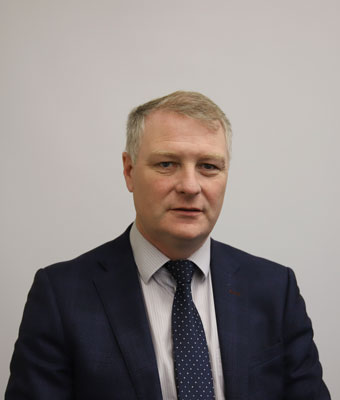
It is welcome that the Commission has decided it wants to ban Brazilian beef and other food products coming into Europe in spite of the Mercosur trade agreement. It has come to this late in the day. Many of us have been calling out Mercosur and the situation we have with the trade agreement for decades. Deputy Carthy, as an MEP, led the charge in the European Union. At one stage Phil Hogan accepted that they hoped to see foodstuffs taken off the table with regard to the Mercosur trade agreement because of concerns about Brazilian beef. However, it was not taken off. In 2019 we had a motion in the Dáil, one of the few motions the Opposition got through before the most recent election, and all of the Dáil supported ensuring we would mandate the Government to stand firm and put pressure on to ensure the Mercosur trade agreement did not go through because of the concerns outlined with regard to Brazilian beef in particular, but other food products from Brazil as well because of the very low standards. We also had a motion this year about this and there was a battle between farmers, consumers and environmentalists across Europe to ensure people in the European Commission would sit up and listen to the realities on the ground with regard to Brazilian beef and other food products coming from Brazil. We are now at a situation where they have recognised the reality so many of us have been pointing out for so long. They say they will ban this product coming into Europe. However, they are not going to do it for another three months. It makes no sense whatsoever. We want an assurance from Government that it will put maximum pressure on the Commission to ensure any ban going to happen with regard to Brazilian beef happens now, and they do not wait any longer for it. If this food product is dangerous, as has been proven, and is not meeting European standards it should not be given a three-month reprieve before we ensure it stops coming into the European Union. We have to stand firm and ensure consumers are protected and that the farming community meets the same standards everywhere for food coming into anywhere in Europe but particularly in Ireland.
I thank both Deputies for raising this issue, and I share their concerns with regards to antimicrobial medicinal products being used and the impact that would have. Deputy Newsome Drennan highlighted well the potential health impacts in that regard. As Minister of State with responsibility for nature, I know the level of deforestation in Brazil. The production of beef is the biggest cause of deforestation in Brazil. That is something that does not sit well with me. That is just to add my personal view.
On 12 May, the standing committee on plants, animals, food and feed voted in favour of a draft Commission implementing regulation amending implementing Regulation (EU) 2021/405 as regards the restrictions of the prohibition on the use of certain antimicrobial medicinal products and repealing implementing Regulation (EU) 2024/2598. The annex of the draft implementing the regulation includes an updated list of countries that have demonstrated compliance with EU restrictions on the use of antimicrobials in animals. Under EU rules, such substances cannot be used to promote growth or increase production in livestock and other food-producing animals. Brazil has been excluded from the list, meaning that it can no longer export to the EU commodities such as bovine, equine, poultry, eggs, aquaculture, honey and casings, with effect from 3 September 2026. This includes both food producing live animals and derived products. This is a clear example of the importance of maintaining the EU's sanitary and phytosanitary standards.
The Government will continue to advocate for the strict monitoring of imports in order to reflect the concerns of our farmers and consumers. The Deputies also referenced the EU-Mercosur trade deal. As Government, we have raised concerns in relation to the EU-Mercosur agreement over a number of years, particularly its potential impact on the beef sector, the strength of its climate and sustainability commitments and the food safety and environmental standards enforced by Mercosur countries. Our focus is on ensuring rigorous monitoring by the Commission of the agreement’s market impacts and the robust enforcement by the Commission, where necessary, of the provisions of the recently agreed safeguards regulation. The Government will also continue to engage closely with the Commission to ensure that it follows through on its additional commitments. This includes those in relation to food safety and environmental standards, as well as its stated intention to better align the production standards of imported products with EU production standards particularly with regard to pesticides and animal welfare. All of this work is crucial to fully addressing the concerns of our farmers and our consumers.
I understand the Commission has said the three month delay is to give Brazilian farmers an opportunity to get their house in order. I do not know if the Minister saw the joint report by the IFA and the Irish Farmers' Journal on how brazen and widespread drugs are in Brazilian beef farming. For someone like me from a farming background it is shocking. How the Commission could think the use of banned drugs could be brought under control in a matter of months is beyond me. Once these drugs have been injected into a herd that is it. They are not simply going to fade out of the animals' system. The damage is done and let us not forget that there is no proper tagging or traceability of the herds. I hope we do not see the Commission trying to row back on this decision. It has taken Irish and EU farming decades to reach the standards we have today. Three months will not cut it for Brazil.
We appreciate that there has been some progress made but we still have a situation where there is no traceability whatsoever with animals, particularly in Brazil. When a calf is born in Ireland it has to be tagged almost immediately. There have to be full checks and records of any medicine or antibiotics it receives. Everything has to be written down and accounted for. They have to meet all the standards. In fact, even the foodstuffs have to be recorded. A farmer told me recently that more records are kept on your calf than on your child in this country to ensure their safety. We recognise that European farmers are meeting a high standard.
The farms in Brazil do not meet those standards. Tagging is practically unknown and in some cases, if one of the small number of animals that are tagged dies, the tag is removed from its ear and put on another's. That is the way the system works. It is a complete wild west, as far as anyone can see. To suggest that somehow or other Brazilian farmers are going to meet the standard in the short term is ridiculous. It is not going to happen. I ask again that the Government commit that the date in September is brought forward and that we ban this substance now.
I come from a farming background and I know all about it. The Deputies mentioned the paperwork, the bureaucracy and the headaches those give. Farmers just want to farm. They want to get on with doing what they are good at instead of filling out forms, but it means they reach incredibly high standards and that is why our produce is famous worldwide. I commend the investigative work of the IFA and the Irish Farmers Journal because there is no doubt it was one of the highlighting factors that really brought this to attention and put it to the fore in terms of highlighting the issue in Brazil. They must be commended on that. I get the Deputies' anxiety and call for urgency in bringing the date forward. I cannot, obviously, give any guarantee the date of 3 September will be brought forward but as I said in the initial response, all pressure will be put on by the Department and the Minister to ensure that is upheld and the best standards are upheld. It is really up to Brazil to sort out its own affairs.
That is not going to happen.
I do not expect that will happen. That is just my own feeling on it. I agree with the Deputies we need to keep our standards high. If there is any hint of a possibility that people's health will be impacted, as outlined by Deputy Newsome Drennan, then that is something we cannot stand for. Getting back to my original point about the deforestation rates, it just does not sit well with me and that is something I am proud of here in Ireland in terms of our produce.
Childcare Services
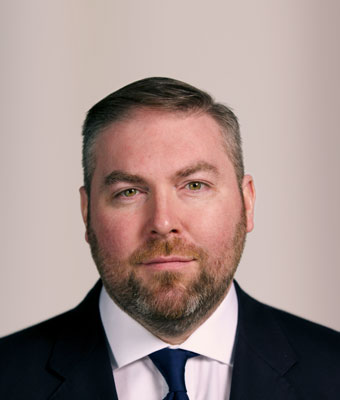
Gabhaim buíochas leis an Aire Stáit as teacht isteach chun déileáil leis an gceist seo. In the election in 2024 his party and mine made a commitment to reduce the cost of childcare. This is an important tenet and in the Dún Laoghaire constituency childcare was one of the major issues people were talking to me about. They were essentially paying a second mortgage to put their children into childcare. It is an enormous cost and an enormous burden on households. The proposed reduction we promised in the election was therefore welcome. It was proportionate and also doable. I recognise the work that has gone into putting this scheme in place to reduce the cost to €200 in line with that commitment. I recognise progress has been made in that area, yet we still see a situation where many schools are exciting the scheme. It is not working for them. The childcare providers are telling us they cannot operate the service they want to operate in line with the subsidies the Government is giving them.
I want to draw particular attention to a school called Sharavogue in Glenageary in my constituency. It is a really good school that has been built up over a number of years by the owner, Betty Allen. A letter was sent out by her and Gillian Dawson, who is the manager of the school, to parents saying the school was exiting the scheme. This is a massive blow to the parents who have children in that facility. It is a crèche and a Montessori and provides a number of different levels of care to children. These are people who are dedicating to providing childcare. It is a facility that is based on quality and the team wants to provide a quality service to parents. They also want to be part of the scheme and to make the service as affordable as they possibly can. However, they have written to parents saying that on 28 August, Sharavogue will have to exit the scheme. It cannot survive with the scheme the Government is putting together. It is not that the management team have not engaged with the Department, as they have. They have brought their problems and their issues to the Government but for whatever reason those have not been addressed. We now have a situation where the children who are in Sharavogue, and more importantly their families and households, will not be able to avail of the scheme. To give an example of that what means, for Montessori from 7:45 a.m. to 6:30 p.m. the current fee per month is €1,332 and when the school leaves the scheme that will go up to €1,725. That is just one fee I have picked but it is a massive increase for a household and that is for one child, so where a family has more children in Sharavogue it will go up more. The school provides discounts and help where someone has multiple children in the facility but the point is these are people who are committed to providing childcare and providing quality.
The management team have talked about the reasons they have to leave. Salaries is a big one. I have raised it with the Minister, Deputy Foley, in here before that running a childcare facility in Dún Laoghaire is more expensive than it is in much of the rest of the country because the living costs there are higher. She said there was no way to establish that but I totally disagree. Rents and property prices are higher and therefore the cost of living in the area is higher for staff. The school also talked about the cost of insurance, which has gone up and up. The cost of utilities was also raised. The cost of heating and of running the kitchen that provides food for the kids have gone up, as has the cost of cleaning and maintenance, the cost of food itself, the administrative cost and transport costs. All of these have gone up and the problem the management faces – and I can understand where they are coming from – is the scheme the Government has put in place is not reflecting that. They are not alone in thinking that as I could name four other facilities in the Dún Laoghaire constituency that are leaving the scheme for the same reasons.
If we are serious about delivering on that commitment what are we going to do to keep them in this scheme? What provisions are we putting in place for childcare providers in Dún Laoghaire and the rest of the country to ensure they stay within the scheme – which they want to do – and deliver childcare at affordable prices for households and families across the country?
I thank Deputy Ward for raising this. I will try to answer to best of my ability on behalf of the Minister, Deputy Foley. It was a pre-election commitment by both our parties but massive inroads have been made into reducing the cost of childcare. I remember hearing debates in here where it was frequently described as a second mortgage. We have significantly reduced the cost of childcare in most instances. Clearly the Deputy is describing anomalies and outliers there but certainly the feedback we received was this intervention worked. In my constituency, with the changes in core funding, there were some issues and some providers left but that seems to have cooled off a bit in my part of Ireland. Obviously the Deputy is describing a genuine situation that clearly needs to be looked at but I will just outline the inroads that have been made.
When first introduced in 2022, core funding had an annual allocation of €259 million, of which €210.8 million was entirely new funding to the sector. That annual allocation has increased each year since and exceeds €390 million for year 4 of the scheme, which started in September. This represents an increase of over 50% in core funding in three years. The allocation for core funding for year 5 of the scheme will increase again by 23% to over €480 million. This will support a range of important priorities, including maintaining fees at 2021 levels in year 5, supporting further improvements in pay to staff and supporting services in adhering to fee management conditions, which will ensure affordability for families and sustainability and stability for staff.
Uptake of core funding remains strong. As of 4 May 2026, there were 4,633 services signed up to the fourth year of core funding, which represents a 93% uptake by eligible services. This is the highest number of partner services in core funding at any point since the scheme was launched in 2022. The Minister, Deputy Foley, is encouraged by this rate of participation. It shows the vast majority of families will continue to benefit from the scheme’s fee management conditions. The Minister is aware a small number of services have regrettably chosen to withdraw from core funding. The Department, through the local childcare committees, CCCs, engages directly with any such service to highlight the benefits of staying in core funding, not only for their service but also for the families who avail of them. The Minister remains hopeful these providers may reconsider their decision, as many have previously.
Core funding is a supply-side grant to early learning and childcare providers towards their operating costs. It is designed to promote affordability for parents and sustainability for providers through increased funding to the sector, paid on a consistent and equitable basis. As core funding is an optional scheme, providers have the autonomy to withdraw from or choose not to participate in the scheme. It is a matter for providers to decide whether they wish to sign up to core funding and benefit from the significant financial supports it offers to providers and the certainty it gives to parents through the associated fee management measures. The Department has a list of all core funding partner services which is updated regularly on the Department’s website.
Regardless of whether the early learning and childcare service which a child attends is participating in core funding, both the early childhood care and education, ECCE, programme and the national childcare scheme, NCS, are currently available to parents. The local childcare committee can provide contact information for parents should they need help to secure alternative places. Parents and guardians can also use the dedicated NCS website to find core funding partner services in their area.
Those statistics highlight that the year-on-year increase in core funding has been a success. We have a 93% participation rate. This is not to take away from the example the Deputy has given, where clearly this has not worked. Clearly, in the area where the Deputy is, costs remain high and viability remains difficult for some of the providers.
I thank the Minister of State. I do not doubt his bona fides on this topic. I started by acknowledging the work that has been done. I believe the commitment to reduce the cost of childcare was a serious and sincere one. Insofar as I have had any dealings with the people who fund the programme for Government, I believe that. I recognise the progress, the increased funding and all the rest.
However, I will say two things. First, the Minister of State said a small number of facilities have exited the scheme. I would be very interested in seeing an analysis as to where those facilities are. Are they predominantly in urban areas? I suspect they are, because as I said, I feel the costs in urban areas are higher because of the costs of property, rent, insurance, etc., and there is a greater demand on those providers. I previously asked for a situation where the level of subsidies paid to facilities would reflect the real cost for them of doing business, but it seems the Department is unwilling to engage on that level.
The second thing is that remaining hopeful they will join is not enough. They actually have to be given an incentive. By the same token, there is no need to show Betty Allen and Gillian Dawson the merits of being in the scheme. They understand the merits. They want to be in the scheme. They were in the scheme and they want to continue in the scheme, but they cannot do so. There is no point in remaining hopeful that they might rejoin if nothing is being done to facilitate their rejoining. They do not want to leave the scheme but they are looking at a situation where it is unsustainable for them to stay in it. This is why, while I acknowledge the work that has been done, it is useless if there are facilities providing a quality service in an area where they are serving lots of households and people in communities and all the rest but they cannot sustain it. We need to look at the scheme again to make sure that exactly this kind of facility, like Sharavogue, is facilitated in continuing. We do not need to show this facility the merits of the scheme. We need to meet the problems this childcare centre has and address the legitimate, identifiable and verifiable concerns raised about the cost of doing business.
I was going to repeat the point about engagement with the city and county childcare committees to show facilities the merits of being in the scheme, but obviously the people the Deputy is talking about are, first of all, educators. This is 100% why they are in this area. They have a passion for it and they want to educate young kids. Second, they are also businesspeople. Obviously, they have gone through this, have gone up and down and in and out and decided - probably a very tough decision to make - that this was not for them.
Clearly, however, considering the 93% uptake and the year-on-year increase, the scheme has been a success. As I said to the Deputy, while there were similar issues in my area and providers were dropping out of the scheme, that is no longer the case. It is an interesting question about urban areas that the Deputy is talking about. Perhaps this is a question on which we could go back to the Minister, Deputy Foley, in respect of where the 7% of facilities are that we are missing out on. That is a very valid question to ask.
I totally agree with the Deputy that we need to plough on and continue this momentum in reducing childcare fees. It is a commitment we gave and we need to continue with this work. I thank the Deputy again for raising this issue on behalf of his constituents.
Cuireadh an Dáil ar athló ar 10.53 p.m. go dtí 9 a.m., Dé Céadaoin, an 20 Bealtaine 2026.
The Dáil adjourned at 10.53 p.m. until 9 a.m. on Wednesday, 20 May 2026.