School Accommodation
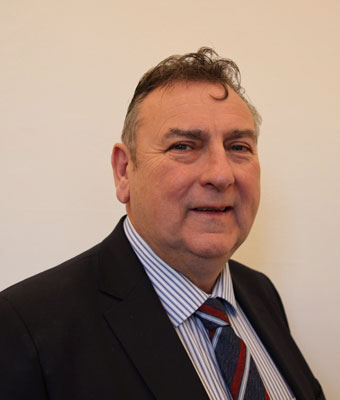
7. Deputy Noel McCarthy asked the Minister for Education and Youth if further consideration will be given by her Department to a refused additional school accommodation scheme application for a school in light of the school’s projected increase in enrolment numbers and if she will make a statement on the matter. [51363/26]
Will further consideration be given by the Department to a decision to refuse an application for the additional school accommodation scheme from a school in light of the school's projected increase in enrolment numbers?
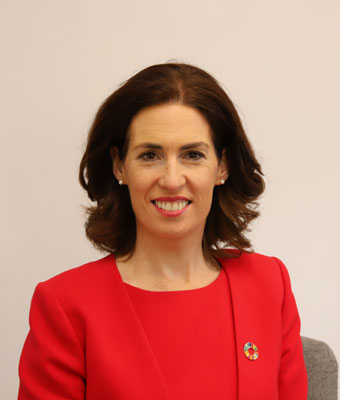
The school referred to by the Deputy submitted an application under the additional school accommodation, ASA, scheme for an additional temporary classroom in 2025. This school had previously been approved for a permanent extension under the ASA scheme in 2021 for a two-classroom special education needs unit and one mainstream classroom. The project is devolved to the school for delivery and my Department is currently awaiting a submission of the stage 1 design report from the school. The school subsequently applied in 2024 for reconfiguration of an existing classroom to cater for a second special class pending completion of the permanent extension project. The Department approved this application and it has already been delivered. The NDP implementation plan for the education and youth sector 2026 to 2030 was published in January 2026. This NDP implementation plan includes a strong focus on maximising existing school capacity across the school estate and also ensuring that schools' admissions policies and processes are targeted at meeting local mainstream and special class requirements. Available funding must be prioritised where local capacity across schools in the area is insufficient along with ensuring delivery that is affordable, offers value for money and meets functional needs.
The school's application for interim classroom accommodation is parallel to the delivery of its traditional building project that has been assessed, including in the context of available capacity in the local area. It is the Department's position that the school has sufficient accommodation within the existing school buildings to cater for its local demand through the management of its enrolments, in line with its current capacity. In the Youghal school planning area, where the school referenced is located, there are 23% fewer junior infants than there were in 2020. All 14 primary schools in the school planning area indicate capacity to enrol more pupils. The proposal for interim accommodation in this context is not therefore an effective prioritisation of NDP funding. This position has been explained to the school.
I thank the Minister for her response. I am unsure if she is familiar with the history of Kilcredan National School. It has been the central point of three smaller parish schools - Ladysbridge, Kilcredan and Ballyburden - since they merged in the 1970s. Kilcredan is a popular rural school catering for the families of several local parishes. The population of these parishes continues to increase, with recent development of many new housing estates and more planned. Due to the increased enrolment, an extra teacher but not an extra classroom was sanctioned last September. As a result, 14 children were accommodated in a learning support room which had a knock-on effect on the school's SEN provision. This summer, 31 children finished in the school, with 48 expected to start in September.
An additional school accommodation scheme application was refused on the basis that Kilcredan national school has sufficient accommodation within the existing school buildings to cater for its local demand. The school itself disagrees and has raised serious concerns that children entering the school will likely have to be accommodated in the hall. This would have a negative impact on the well-being and physical activity and the movement breaks of the children in the school's special classes. Therefore, can the Minister and her Department officials liaise with the school to see what can be done to ensure adequate space for Kilcredan pupils?
The Department funded a substantial extension and refurbishment in 2014 of this school. This included six new classrooms, special education rooms, a GP hall, a new basketball court and a new carpark. The existing building was also completely refurbished. The school was subsequently approved for a further extension under the ASA scheme in 2021, to provide a two SEN classroom unit and one additional mainstream classroom. This project is devolved to the school authority for delivery and is at stage 1 of architectural design and planning. As the Deputy knows, the school was also approved for an SEN repurposing project in 2024, to reconfigure an existing room to cater for a second special education class, pending the provision of that new permanent extension. A further application for rental of interim accommodation to cater for a mainstream class was refused in May of this year, on the grounds that there is already sufficient capacity in the area and the responsibility of the school to manage its enrolments to suit its capacity in that context. In the Youghal area, we have to look at the capacity within the planning school area as part of our prioritisation process.
I thank the Minister for her response. There have been some positive developments recently with the approval of a safe routes to school programme application. This was good news for the school as it will greatly help its future expansion. However, the problem is the expansion and extra development within the parishes I was speaking about, and the need for local children to go to those schools. The Minister mentioned there is a space in Youghal but, as she knows, people like to attend the school they live close to. However, with legitimate space concerns and a steady increase in enrolment numbers, this case requires the particular attention of the Department in the short term. The school is understandably disappointed at the Department's position on providing additional accommodation as it awaits proposed expansion. I have written directly to the Minister to highlight this. With this in mind, I ask her to provide an update on the progress of the long-term proposal for Kilcredan National School, which would see the construction of one much-needed mainstream classroom and two SEN classes.
The information I have to date is the project is devolved to the school authority for delivery and it is currently at stage 1 of the architectural design and planning. I can give the Deputy more detail if he needs it. Since 2020, the Department has provided more than €796 million in capital funding for Cork schools. Over this period a total of 168 schools have been upgraded, either through the provision of a new school building, a large-scale extension or the provision of modular accommodation. Some 12 school projects to go to tender or construction this year or next were included in the NDP implementation plan. There are currently 18 school projects in Cork under construction. This summer we have 35 schools which were approved to undergo works as part of the climate action summer works programme. In addition, since 2020, 306 special classes have been sanctioned in Cork, and the Minister of State beside me is very aware of this. Some 66 were sanctioned for September 2026.
Question No. 8 taken with Written Answers.
Education Schemes
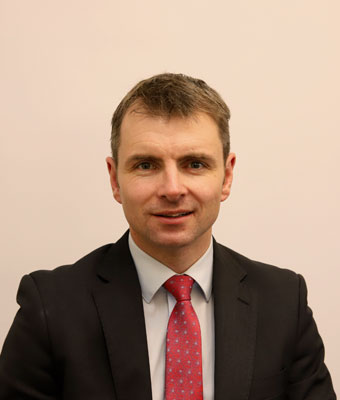
9. Deputy Ruairí Ó Murchú asked the Minister for Education and Youth in relation to grants for assistive technology for students, whether there are plans to increase the funding for this scheme, update or change the criteria for this scheme; and if she will make a statement on the matter. [53968/26]
In relation to grants for assistive technology for students, are there plans to increase the funding for the scheme or to update or change its criteria? The Minister is aware of what brought this to my attention. It is a ten-year-old boy from north County Louth with dyslexia. Following assessment, it was found he would benefit from a computer and assistive technology but who is not eligible for the grant. I have discussed this with the Minister. We need to find a solution and to look at the overall criteria. There are wider issues as regards AAC also.
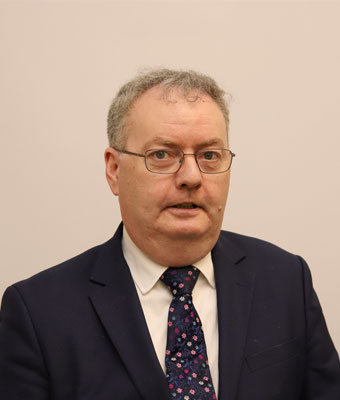
I thank the Deputy for his engagement in relation to this issue. The assistive technology scheme supplements the overall funding provided to schools for digital technology and equipment. It supports children who require essential specialised equipment to access the school curriculum.
Assistive technology is a critical enabler for students with special educational needs, allowing them to benefit fully from the modern, technological-focused education system. The Department of Education and Youth recognises the significant benefits of assistive technology in school settings, particularly for students with more complex needs. It supports access to the curriculum and encourages classroom participation and positive educational outcomes. Under the current scheme, schools receive funding towards computers and specialised equipment required for educational purposes. To qualify, a student must have a diagnosis of a physical or commutative disability and a professional assessment confirming the equipment is essential to access the curriculum. The review of the assistive technology scheme is at its final stages and has culminated in a new circular which I expect to announce in September 2026.
A key outcome is a planned move from a diagnosis-based model to a needs-based approach. This will give schools greater autonomy to determine when assistive technology is required, reduce administrative burdens and improve timely access to supports. A streamlined application process is also being developed for implementation. These changes aim to deliver a more responsive, effective and child-centred scheme. The Department will continue to routinely examine the level of grant aid payable under the assistive technology scheme to ensure that the level remains appropriate and aligned with the needs of children who require assistance. Ultimately, any child who needs assistive technology to access the curriculum will receive it. In line with the policy and funding parameters of the scheme, promoting assistive technologies is a programme for Government commitment and a key ministerial priority.
We will all be very interested to see what the new circular is. The Minister of State said it will be announced in September. A needs-based system is what we need. I would like to think the young boy I talked about would be able to avail of this. I will use him as an example. The correct assessments were carried out. The Wechsler abbreviated scale of intelligence stated that his verbal comprehension was very low, perceptual reasoning was low average and full-scale IQ was very low. The Wechsler individual assessment test ranked his word reading as extremely low. It stated that he was presented with a list of words to read, he should be commended on his hard work and that this task was very difficult for him. His word reading skills were in the extremely low range for his age.
This does not make a lot of sense to me. I would say the Minister of State would agree. It is about ensuring that we have a more fit-for-purpose grant scheme and that the likes of this boy will be sorted by it.
By way of background, 85% of the applications processed for assistive technology between January and June have been approved. We are always conscious of those who fall outside the scheme. Hence, the drawing up of the new circular to ensure that we are taking into account students and children who are outside of the scheme but who would greatly benefit from it. The Deputy has spoken to me a number of times about the child in question. I understand the challenges that are there as well. The aim of the new circular the Department is creating is to ensure that we will accommodate every child who would benefit greatly from the scheme, that the administrative burden on schools and school communities is reduced and that we make the scheme more streamlined. We expect to issue the circular in September 2026.
We just need to make sure that the circular is fit for purpose and that the young primary school child to whom I refer will be given the supports he requires.
I will just finish reading from the communication to which I referred earlier. It states:
[His] attainments and cognitive profile do not confer eligibility for an application for an Assistive Technology grant. However, he would benefit from availing of a laptop or device in school or indeed at home. [He] should be encouraged to develop his typing skills as this will be of huge support to him when he transitions to secondary school in a few years' time. He should also be encourage to use the 'dictate' function in Word, and this will also be useful for him when completing school projects.
That is the reality of the assistive technology fund. Assistive technology would be of real benefit. We also know that it must be authorised by the Department in order that it can be availed of for exams and all the rest of it. At this point, he would require that to avail of the curriculum, which is what the assistive technology grant scheme is there for. The Minister of State says the scheme is being updated. Could he outline the level of funding that will be in it?
We are very conscious of the issue. A huge number of groups that I have met over the past while, particularly on the dyslexia side, have all been discussing assistive technologies. That is also the case for children who are non-communicative and non-verbal. Assistive technologies are extremely important for them.
The Department set out to compile a new curriculum because of the challenges and parameters within the old curriculum to ensure that we are reaching as many students as possible. We fundamentally believe that this is hugely important. Funding right across the Government is subject to discussion not just on Question Time; we have to also discuss it in the context of the forthcoming budget. We are quite well aware of the impact that funding through the assistive technology scheme has on young people. It enables them to go to primary school and then on to post-primary school as well.
Will it be in operation from September?
Yes, from September.
Educational Disadvantage
10. Deputy Sorca Clarke asked the Minister for Education and Youth the status of the DEIS plus appeal by a school (details supplied); when this school can expect to be notified of the outcome; and if she will make a statement on the matter. [54075/26]
When DEIS plus schools were announced in May, St. Joseph's and St. Michael's in Longford town were rightly included. However, Sacred Heart school in Granard, despite sharing the same DEIS history and facing significant educational disadvantage, was excluded and is now awaiting the outcome of an appeal. Could the Minister please outline how the appeal is being considered and when Sacred Heart school, Granard can expect a decision?
Addressing educational disadvantage and ensuring that every child and young person can reach their full potential is a key priority for me as Minister for Education and Youth. The introduction of the DEIS plus scheme will provide enhanced supports to a small cohort of schools with the very highest concentration of students at risk of educational disadvantage.
Schools were identified for inclusion in DEIS plus through a nationally consistent, evidence-based identification model which drew on a range of indicators associated with persistent and intergenerational disadvantage. The model was applied uniformly across all eligible schools to ensure a fair and objective process.
Recognising the importance of accuracy and fairness, schools that were not satisfied with the outcome were afforded an opportunity to appeal in line with the arrangements set out by the Department. The appeal process allowed schools to correct inaccuracies in enrolment data or seek verification that the DEIS plus identification model had been correctly applied to their data. All appeals submitted by schools, including the one referred to by the Deputy, are undergoing a detailed technical review in accordance with the published criteria. The outcomes of the review are independently verified by an appeals panel with expertise in data analysis, education policy and educational disadvantage, providing an additional layer of assurance regarding the integrity and consistency of the process.
It would be inappropriate for me to comment on the result of any individual appeal in advance of the completion of that process. That process will be completed in the coming days and schools will be notified of the outcome of their appeal. I do also recognise however, that some schools are operating in the context of complex local pressures that cannot currently be fully reflected in the DEIS plus identification model. At present, the model must use data from the online enrolment databases and the HP index in order to be based on data that are available nationally and consistently for all schools. I will come back in again.
This is about fairness and equity. The Minister mentioned the HP deprivation index. In the HP index, Granard scores higher than seven out of the ten areas that have been chosen in Longford. This does not make sense. Sacred Heart has been a DEIS band 1 school for 20 years. Since then, the demand on the school has increased dramatically. There are now 255 pupils, three autism classes, an early intervention class, a large number of pupils learning English as an additional language and many families experiencing significant disadvantage, as reflected in the HP deprivation index. The principal, Francis Gray, and the staff do extraordinary work but they are truly stretched to the limit. The additional supports that would come with DEIS plus, the extra leadership, enhanced family supports and the additional educational resources would make a real and tangible difference to the children that this school educates. Could the Minister confirm that the criteria that are being applied to this appeal includes both the current circumstances of the school alongside the historical data?
The identification model has to be applied consistently right across the country to have fairness and transparency around it. Under the DEIS strategy to 2035, work is under way in my Department, with colleagues in the Central Statistics Office and across other Departments, to utilise other administrative data sources to help improve how we can resource schools in a targeted way to support children and young people at risk of disadvantage.
The appeals process allows schools to correct any inaccuracies in enrolment data or to seek verification that the DEIS plus identification model had been correctly applied. It was limited to the enrolment data. If there is other information that might be relevant to that particular locality, they could not take that on board because it would not have been consistently applied right across the country. We need to make sure that we have a sense of fairness.
I hear concerns, and not just in relation to that particular school. We all know there is educational disadvantage right across the country. My Department is working with the CSO to look at even better ways to capture this data. I would love to be in a position to maybe not call a school a DEIS school but to be able to apply the supports as needed and as intensively as required right across the country.
I agree with the Minister on the issue of consistency. I do not believe anybody in this House would argue against schools with the greatest need having the greatest level of support. However, the issue in Granard is that this school has faced the same challenges as every other school in Longford that has been chosen as a DEIS school for the past 20 years, yet it is not being considered as part of the scheme. There is a lack of consistency and fairness. This school has been left waiting while the other schools have moved ahead, despite facing the same, if not more and greater challenges than those which have progressed to DEIS plus.
I know the Minister is going to say "No" when I ask her this but I am going to ask her. Will the Minister personally have a look at this file? Are there some learnings the Minister and her Department can take from this situation so that no other school is left in this position? If Sacred Heart meets that threshold for DEIS plus, can the Minister ensure it receives that designation without any further unnecessary delay? This is causing profound concern across not just the town of Granard but across the towns this school in very rural north Longford serves and for the parents of the kids they know need those additional supports and could benefit from those additional supports.
The appeals process is underway at the moment. It will be announced shortly. I am not involved in that. It is independently being assessed. There is an identification model. It has to be done fairly and transparently. For that reason, the appeal process was limited to enrolment data which underpins the model. That is through the primary online database, POD, system and the post-primary online database, P-POD, system. That appeals process does not allow for the submission of contextual information. A rules-based national model has to consider all schools on the same basis. It cannot substitute locally held knowledge for data that are not available or comparable nationwide. Incorporating local level indicators or qualitative submissions where such information is not nationally available could create challenges around consistency, transparency and equality of treatment. The Department is committed to ensuring that all schools are treated equally.
I hear the Deputy's concerns. I will come back to this question. This is the first phase of this DEIS plus programme. We are going to be looking at how this is rolled out from September onwards. I want to make sure - and that is why I set up a pilot as part of this - that certain schools that are not DEIS would access to a home school liaison co-ordinator. I appreciate there are schools that have educational disadvantage. We need to be able to respond to that with the evidence and data.
Question No. 11 taken with Written Answers.
Schools Building Projects
12. Deputy Shane Moynihan asked the Minister for Education and Youth for an update on existing school building projects in Dublin Mid-West which are not yet approved; the current stage of each; and if she will make a statement on the matter. [54070/26]
The schools I intend to address are St. Thomas Junior National School and Scoil Aíne Naofa in Lucan and Divine Mercy junior and senior national schools and St. Kevin's Community College. What is the current status of the Lucan Community College project and Scoil Chrónáin? I ask the Minister to make a statement on the matter.
I thank the Deputy. My Department is delivering significant projects in Dublin Mid-West and continues to progress further important projects. There are currently eight projects onsite across Dublin Mid-West, including new school buildings for Coláiste Pobail Fola, Gaelscoil na Camóige, Gaelscoil Chluain Dolcáin and Holy Family Community School. Gaelscoil Lír was substantially completed and handed over to the school at the end of last week. A further four projects are at tender stage, including a new school building for Scoil Chronáin and deep energy retrofit works at Coláiste Bríde, Deansrath Community College and Collinstown Park Community College. In addition, 20 large-scale and additional accommodation projects are progressing through the design pipeline. Ten are at preliminary design, which is stage 1. One is at developed design, which is stage 2a. Nine are at detailed design, which is stage 2b. One of these stage 2b projects - the new school building for Adamstown Castle Educate Together National School - has been included in the priority tranche of projects published in January as part of national development plan, NDP, roll-out.
There are also a further 12 projects being progressed under the modular programme and the climate action summer works scheme. It is important to note that only projects already at tender stage, or close to being tender-ready, were considered and prioritised for the first tranche of projects approved to proceed under the Department's NDP implementation plan. However, priority projects at earlier stages of the pipeline continue to be advanced, with particular emphasis on special schools, schools operating entirely in interim accommodation, projects providing significant special education capacity, additional accommodation to meet demographic growth, and schools with the most pressing building condition issues. The Department is targeting 2027 for the publication of the next tranche of priority projects to proceed to tender. To be considered, projects will have to be at an appropriate stage of readiness. Prioritisation will be informed by departmental analysis, engagement with patrons and schools, available funding, and, where relevant, findings from the Department's school estate energy and condition survey.
I thank the Minister for her very comprehensive answer. I see first hand the progress that is being made with school buildings across the constituency but there are also buildings that need to be addressed as a matter of urgency. The Minister mentioned Scoil Chrónáin. In answers she has given me in parliamentary questions, she is aware there is a delay on the tender with that particular school. I would very much welcome any urgency we can apply to make sure we break ground by quarter 4 of this year because that is contingent on the planning permission not having to be extended and for the delivery of the school building for Scoil Chrónáin that is so important.
Similarly, for Lucan Community College, that is being delivered under phase one through a modular framework and there is now an intention to secure planning for the remaining phase, so that does not delay the delivery of phases two and three of Lucan. I also wish to draw attention to Devine Mercy junior and senior national schools. I went Devine Mercy Junior National School. It still the same building that was built in the 1980s. It is not fit for purpose and it is one that should be prioritised. Similarly, with St. Thomas's and Scoil Aíne in Lucan. There are cramped conditions for a rapidly growing part of Lucan. They need to be urgently prioritised. In my supplementary question, I will speak about the pipeline the Minister mentioned.
There has been a lot of correspondence in relation to Scoil Chrónáin in Rathcoole. The Minister of State, Deputy Higgins, along with the Deputy have raised concerns around this. I reassure the Deputy in regard to Scoil Chrónáin, which is an all-Irish co-educational primary school under the patronage of the Archbishop of Dublin. The brief for the permanent project is to provide a new 16-classroom primary school and accommodation, including two classrooms for children with special educational needs on the permanent site in Rathcoole, County Dublin. That project will be delivered under my Department's employer-led design programme which uses a professional external project manager to co-ordinate and drive the design team to achieve the best possible timeframe for the project through the stages of architectural planning to tender and construction. That project progressed to tender on 25 February 2025. The tender returns were received on 2 May 2025. The tenders were evaluated by the design team. Following due diligence being carried out and discussions with the preferred tender, the company withdrew its tender. The Department's design team is now carrying out due diligence in relation to the next placed tender with the view to submitting a tender assessment report for my Department's consideration. The Deputy raised concerns around the planning permission. If necessary, we will prepare the documentation for an application to extend that.
Hopefully, we will not need to extend the planning. That is the intention of all. Similarly for Lucan Community College, we need to get the planning right now for phases two and three. I wish to speak about the pipeline because it is important that the message we get out to parents is that there is a pipeline and that we are not taking a stop-start approach to prioritising schools. I wish to emphasise how important it is that the likes of Devine Mercy Junior National School, which is a very proud school in Balgaddy, gets approved for the building it has been waiting for quite a long time. The standard response I have got back for the past two years is that there will be a meeting of stakeholders in the near future and nothing past that. I am very keen to see progress on that.
Similarly for St. Thomas's and Scoil Aíne junior and senior national schools in Lucan, they are immediately adjacent to Adamstown, which is one of the rapidly growing areas in the country right now. They are in the same building they were in when the school was opened. That needs to be addressed as a matter of urgency. For St. Kevin's Community School in Clondalkin, the buildings are very much the same as they were when I was there. It was considered an old building then. The prefabs and the building are not in the condition they should be in. That needs to be prioritised for that next list. I am pleased to hear there is a pipeline but I am keen to see we make sure the right schools get on it in terms of their prioritisation.
I am conscious if I go into one school I am going to run out of time but I heard the schools the Deputy raised. To be eligible for inclusion in the first tranche of projects to proceed, projects needed to be ready and be at the appropriate stage of readiness. Stage 3 is tender and stage 2b is detailed design and pre-tender. Within this context, priority was afforded to special schools, and we will be having a focus on that for the next tranche, schools that are fully in interim accommodation across the country and with an urgent requirement for permanent accommodation and projects delivering significant special education capacity. We are looking at the existing accommodation when we are looking at expanding schools or the NPD where it is possible we can use the existing school capacity. Another weighting we give is additional accommodation required to cater for demographic growth in an area and projects dealing with the most significant condition issues. That is our condition and energy survey. For the first time, the Department will have information and good data on the energy and condition of all our school estates across the country. That will feed into the next prioritisation.
Scoileanna Gaeilge agus Gaeltachta
13. D'fhiafraigh Deputy Mairéad Farrell den Minister for Education and Youth maidir le ceist 40786/26 ar an 28 Bealtaine 2026, an dtabharfaidh sí an t-eolas is déanaí maidir le hoibreacha atá á ndéanamh ar scoil an Tuairín i mBéal an Daingin; an bhfuil aon athrú ar an stádas don tionscnamh; agus an ndéanfaidh sí ráiteas ina thaobh. [54054/26]
Céard go díreach atá ag tarlú leis an scoil ar an Tuairín i mBéal an Daingin? Is é an t-eolas is déanaí maidir leis na hoibreacha atá á lorg againn. An bhfuil aon uasdátú ar stádas an tionscnaimh? Is é sin an t-eolas atá de dhíth ar dhaoine. Will the Minister give an update on an Tuairín i mBéal an Daingin?
Tá an síneadh atá le cur leis an scoil, ar thagair an Teachta dó, ceadaithe le dul isteach i bpíblíne thionscadail mo Roinne chun seomra ranga príomhshrutha amháin agus trí sheomra oideachais speisialta a chur ar fáil. Rinneadh é a chineachadh chun seachadta chuig údarás na scoile.
In early June, departmental officials contacted the school to advise that its project remained under review in the context of NDP parameters and the overall prioritisation of capital investment. The project is currently at stage 2b, i.e. detailed design. A stage 2b report was received in August 2025 and is currently under review from a technical and cost perspective. All school building projects, including this one, must undergo the necessary due diligence outlined in the infrastructure guidelines. Managing timing, scope, and cost is crucial to ensuring that the overall school building programme remains within the funding parameters.
As the Deputy knows, enrolment has remained stable at that school at between 77 and 84 pupils from 2022 to 2025, supporting the ongoing viability of the school's four-teacher staffing structure in a mixed Irish medium primary school. Although enrolment has remained relatively stable, the school's accommodation is under significant pressure due to the need to accommodate three special education teachers, SETs, alongside four mainstream teachers. There is no spare classroom space available within the school. Two SET teaching spaces are currently located within the school. The accommodation need is therefore driven by the requirement for appropriate SET space and the restoration of ancillary facilities for their intended use.
Since 2020, the Department of education has provided €264.25 million in capital funding for Galway schools and over this period a total of 89 schools have been upgraded either through the provision of a new school building, a large scale extension or the provision of modular accommodation. Ten schools will tender for construction in 2026 and 2027, that were included in the NDP.
Is í an cheist ná céard go díreach atá chun tarlú anois. Cad iad na chéad céimeanna eile? Thug mé cuairt ar an scoil Dé hAoine seo chaite agus chonaic mé nach bhfuil go leor spáis inti. Tá sé le feiceáil go soiléir go bhfuil na ranganna riachtanais speisialta agus, ar ndóigh, an seomra ranga breise ag teastáil go géar. Tá an cheart ar fad ag an Aire go bhfuil uimhreacha maithe ag an scoil seo, ach tá an spás ag teastáil.
I thank the Minister for that update. I understand what she is saying about the 2b detailed design stage, but the real question is, what happens next? How many more stages will there be in the process? How long will this take? It is my understanding that the funding has been granted but that now the next stage is to go to eTenders. Where is that at? How long will that take?
I visited the school last week. It is a school that is under very clear pressure in terms of space. It has a good level of numbers but it needs the space.
Mar is amhlaidh le gach tionscadal tógála scoile, déantar iad a mheas i gcomhthéacs thosaíocht fhoriomlán an chláir agus paraiméadair mhaoinithe an phlean forbartha náisiúnta, PFN. I bplean infheistíochta earnála PFN mo Roinne, leagtar amach béim mo Roinne ar acmhainn reatha a uasmhéadú agus tús áite a thabhairt d’fheidhmiú céimneach tionscadail chun na riachtanais is práinní a shásamh, go háirithe chun tacú le soláthar riachtanas oideachais speisialta.
The project at scoil an Tuairín i mBéal an Daingin is currently under review from both a technical and cost perspective in accordance with the requirements outlined in the public infrastructure guidelines. In the context of the overall programme management, it is not possible to give a timeline for progression at this point but work is under way.
In moving projects forward, the Department maintains a strong focus on delivering value for money and affordability and including phasing arrangements where necessary to ensure spending remains sustainable. The project in this school will be considered as part of the overall programme management approach.
Ar mhaithe le soiléiriú iomlán, ón méid a thuigim, bhí maoiniú curtha ar fáil don tionscnamh seo. Is léir go bhfuil sé seo ag teastáil. Cuirfidh mé chomhthéacs air seo. Is scoil bheag í seo i mBéal an Daingin, ach is scoil láidir í. Tagann daoine ó cheantair éagsúla chun a gcuid páistí a chur chuig an scoil seo. Faoi láthair, áfach, níl go leor spáis inti. Bhí mé ag an scoil agus chonaic mé na seomraí. Tá siad róbheag. Tá go leor páistí ag freastal ar an scoil ach tá na seomraí breise seo ag teastáil. Faoi láthair, tá cófra á úsáid mar sensory room. Ba chóir go mbeadh i bhfad níos mó spáis ar fáil. Tá páistí ón Úcráin agus páistí atá ag teacht trí sheirbhísí IPAS ag freastal ar an scoil, agus is maith an rud é sin. Tá Gaeilge álainn acu. Teastaíonn an spás sin ón scoil.
Will the Minister be very clear about the funding? I understand that funding has been made available, so is it still there? I visited that school. It is a fantastic school. It needs the space. There are kids from Ukraine and International Protection Accommodation Services, IPAS, centres who speak absolutely fluent Irish because they have attended that school, but the school needs the support.
It is important to note that only projects that are already at tender stage or close to be tender ready are included in the tranche of the NDP. The Department-led energy and condition survey has been conducted right throughout the country. That is being considered at the moment. We are looking at a new prioritisation list for the next tranche, so priority projects at earlier stages of the pipeline continue to be advanced, with particular emphasis on special schools, schools operating in interim accommodation and projects providing significant special education places. The next tranche of priority projects to proceed to tender and construction will be informed by: my Department's analysis that it is undergoing at the moment; engagement with patrons and schools; available funding where relevant; and findings from the Department's school estate energy and conditions survey, which is due to be completed at the end of this year. Any interim accommodation requirements will continue to be assessed and considered by the Department on a case-by-case basis in order to determine the prioritised needs and approach for addressing them.
Industrial Relations
14. Deputy Shónagh Ní Raghallaigh asked the Minister for Education and Youth her plans to address outstanding concerns of SNAs in view of rejection by members of a union (details supplied) of the workforce development plan; and if she will make a statement on the matter. [53897/26]
SNAs are very dedicated members of our school community who work very hard with our most vulnerable children. However, many have legitimate outstanding concerns following the publication of the new circular and the workforce development plan, WDP. Will the Minister of State tell me his plans to address outstanding concerns of SNAs in view of rejection by members of a union of the workforce development plan, and will he make a statement on the matter?
I thank the Deputy. By way of background, the number of SNAs working within the education system has grown significantly to support the increasing number of students with special education needs, both in mainstream schools and in special schools and classes. By the end of this year, there will be approximately 26,000 SNAs in our education system.
In recognition of the importance of the SNA role, the Department established the SNA workforce development unit and on 3 June 2026 published the first SNA WDP. Built around five strategic pillars, the plan recognises the vital contribution SNAs make to supporting children and young people with additional educational needs and enabling their full participation in school life. It sets out a clear framework to strengthen and support SNAs through enhanced professional development, greater role clarity, workforce sustainability measures and stronger collaboration across all school communities. The actions set out in the SNA WDP were developed over a period of more than two years through extensive engagement between the Department of Education and Youth, Fórsa and other stakeholders. Direct stakeholder consultation on the plan included: focus groups with SNAs, teachers and school leaders; consultation with children and young people; a survey of SNAs with which more than 13,000 SNAs engaged; and a number of online webinars with SNAs and school leaders.
I note the outcome of the ballot by members of Fórsa to not accept the plan. While I am disappointed by this outcome, the Department remains committed to constructive engagement with Fórsa and available to engage in relation to these matters. The Department continues to work with all stakeholders to achieve sustainable improvements for the SNA workforce in pursuit of an education system that is of the highest quality and where every child and young person feels valued and is actively supported and nurtured to achieve his or her full potential.
I am very aware of and appreciate the work that has gone into this in recent years, but the local bargaining agreement being off the table now is a matter of serious concern and insult to SNAs. That pay increase should have been protected and maintained, irrespective of the ballot outcome on the new plan. Will the Minister of State reverse this decision to allow talks to continue in good faith?
SNAs rejected the plan because they felt more and more was being put on them without adequate recognition or compensation. There remains uncertainty around when hours will be completed, the additional time that SNAs will be required to be on site, and the impact this may have on opportunities to supplement their income, such as the bus escorts after school. There are also concerns around redeployment, such as insecurity of fixed-term contracts following redeployment and the loss of seniority. SNAs receive no additional payment for State examinations, no extra personal vacation, EPV, days for the summer programme and no allowances for working in special schools, DEIS schools or Gaelscoileanna. At the same time, they remain excluded from important decision-making processes despite the plan's emphasis on collaborative planning. All of these issues highlight a fundamental lack of respect that remains unaddressed by the plan.
I cannot emphasise enough the respect that the Minister, Deputy Naughton, and I have for special needs assistants and the contribution they make to education. In March, we met the SNAs to have further engagement and consultation with them and to understand their roles. The workforce development plan is the first significant piece of work that has been done to plan for SNAs, not just in the here and now, but into the future. Huge consultation and engagement has taken place on this.
However, the Department received official confirmation from Fórsa towards the end of last week, and the Department has written back for further engagement. We are open to continuing dialogue because we fully respect and appreciate the role of the SNA right across the education system in allowing young people to achieve their full potential. The key note here is the Department remains open to discussion with them to engage further.
I do not question the Minister of State or the Minister's respect for the SNAs, but the Department needs to show that respect. The trust of the SNAs has been severely damaged following the scandal last February. It may have played a significant role in the ballot outcome, as well as years of being undervalued in the system. The community of SNAs simply does not have reason to trust the bona fides of the Department. Yes, huge consultation has gone on, but we need to go back to the negotiating table and put together a plan that SNAs can get behind. We need meaningful consultation with them. They need to be heard and their legitimate fears and anxieties need to be addressed. We need to get this right and we need to truly back our SNAs. They need to be a bigger part of this conversation.
There has been huge engagement by the Department on the development of the workforce development plan over the past two years. A large amount of engagement and meetings were held. It is the first workforce development plan. There was concern regarding redeployment. The circular and all of those documents were worked through and co-designed very carefully with the SNAs in mind. We wanted to ensure that we understood the concerns of the SNAs.
The Department has written back this week to confirm that it remains committed to constructive engagement with Fórsa and is available to engage on these matters. That is the communication we have sent back to Fórsa and that is the commitment we can give the Deputy. We remain committed to constructive engagement with Fórsa, the union representing the SNAs, because we value the role of SNAs across the education system and the commitment and work they provide to allow children with additional needs to avail of a fully functioning education system.
All of us across the House accept and appreciate the role of the SNA, and I am deeply committed to further engagement.
Schools Refurbishment
15. Deputy Ryan O'Meara asked the Minister for Education and Youth for an update on this year’s climate action summer works scheme; and if she will make a statement on the matter. [54102/26]
Before I ask my final question before the summer recess, I thank the Minister and Minister of State for all of their engagement throughout the year, and I wish them both a very productive summer recess. With my better half being a Galway woman, I had also better wish the Minister the best of luck for Sunday. I hope the Minister of State next to her will soon forgive Galway for what its team did to his in the semi-final.
Will the Minister give me an update on the climate action summer works scheme and make a statement on the matter?
I am looking forward to Sunday, if I can squeeze that in.
The roll-out of my Department’s climate action summer works scheme is a key part of our commitment under the national development plan to support investment in the existing school estate while also delivering on the climate action agenda. Through the scheme, schools can undertake a wide range of improvement projects and targeted climate measures, such as fabric upgrades, LED lighting, roof and window replacements, installation of electric vehicle, EV, chargers and bike racks, and other essential maintenance works.
The scheme is implemented on a devolved basis and, ideally, the work is of a scale that can be carried out during the summer months or at other times that avoid disruption of the operation of the school. The climate action summer works scheme operates on a multi-annual basis across a number of categories of works.
The scheme was opened for applications from 1 May to 30 June 2025, where over 1,400 applications were received. In November 2025, the Department announced the first tranche of approvals under that scheme. A total of 297 projects were approved to proceed, including 198 under the new climate action summer works scheme and a further 99 that represent the final tranche of projects under the previous summer works scheme. The Department continues to actively engage with these schools to support the delivery of approved projects. It is envisaged that the majority of these projects will be on site this summer.
Given that funding is limited in any particular year, it is necessary to prioritise applications. Applications from schools that were not approved in 2025 will still qualify to be assessed in subsequent years within the context of the available funding envelope. As to the Deputy's question, the next tranche of approvals under the climate action summer works scheme is due in October 2026 for delivery in summer 2027.
I thank the Minister for that. On her final point, I will raise one school to begin with. Presentation Primary School in Thurles originally applied in 2016 for works to its car park and school yard in terms of tarring, relining, safer access and drop-off zones. Cars have to yield going in and out because there is only one space for one car, but it has the land to increase the width of the entrance and reline it. There is also a bus pulling up in the yard every day for the early intervention class. Generally, six teachers have to go out into the yard every day to direct traffic in the morning and evening, which obviously is not acceptable.
The school did not get approval in 2016 but has submitted an application under the current scheme. It has not been approved for this summer, though. I brought this matter to the attention of the Department previously, and I would like to bring it to the attention of the Minister now so that consideration could be given to the Presentation Primary School in Thurles come this autumn when we are looking at the summer 2027 works.
The next tranche of approvals is due this coming October for summer 2027. Drawing on experience from the Department's pathfinder programme, the new summer works scheme includes several climate action measures. Schools applying for the scheme select their preferred project category. There are ten categories of projects supported under this scheme, and all schools that applied for laboratory upgrades under it had their applications approved in the first tranche. This involved a total of 63 projects. Total expenditure under the summer works scheme from 1 January 2020 to 31 May 2026 amounted to €211 million. Some 1,480 summer works projects have been approved since 2020 to date, including 198 under the new climate action summer works scheme.
I hear the points the Deputy has raised, and I am sure he has engaged with the Department. I look forward to announcing the next tranche in October.
The Minister mentioned labs, which is fantastic because that is my next point.
St. Mary's Secondary School in Nenagh has been approved for its science labs. The tender has been done and the proposed contractor is to be appointed.
The school sent its information to the Department on 10 June and followed up on 29 June. Essentially, the school will be somewhat of a building site certainly up until Christmas, but the sooner we can get it started, the better because it has the funding and approval. It just needs to get the approval to appoint the contractor and get going. Although it will have to manage getting the work done on the labs at the start of the academic year, from September to Christmas, the sooner we can get going this summer, the less it will impact on the academic year at the far end of it. It is St. Mary's Secondary School in Nenagh. I have raised it with the Department, but if the Minister could follow it up as well, it would be fantastic. It is great to get the money; we just want to make sure that the project gets going as quickly as possible.
We listen to schools around further supports that they need. Under the last scheme, any school that applied for laboratory upgrades received them. Some 63 projects were approved. I can follow up with the Department in relation to moving that along. Schools can apply for one of the ten categories. I will outline them because sometimes there is confusion in relation to those categories. They are: climate action works, climate action roof works, climate action and electrical works, climate action and mechanical works, science labs, climate action and toilet facilities, window projects, curricular requirements, fabric defects and external environmental projects. Projects provided under the summer works scheme generally involve improvement works to the building which can include the provision of roof replacements, window replacements and new heating systems, among other measures. The emergency works scheme continues to be available to schools to deal with unforeseen emergencies which could result in school closures.
EU Presidency
122. Deputy Barry Ward asked the Minister for Defence the position regarding any formal agreements in place with any other EU country and the UK to ensure that there are sufficient defence and security mechanisms in place during Ireland’s Presidency of the Council of the European Union; and if she will make a statement on the matter. [52705/26]
As Ireland holds the Presidency of the Council of the European Union, can the Minister outline what formal defence and security arrangements are currently in place with EU member states and the UK to ensure the appropriate security resilience and defence mechanisms are available throughout the Presidency?
As the Deputy knows, Ireland's Presidency of the Council of the European Union began on 1 July. It is a major national undertaking for many different reasons. In preparation for the Presidency, including in relation to security, there has been significant and intense work for some time across Government.
An Garda Síochána, under the auspices of the Department of Justice, Home Affairs and Migration, has primary responsibility for security for the Presidency. The Deputy may also be aware that An Garda Síochána has established a dedicated European Union Presidency co-ordination office to oversee all aspects of operational planning, logistics and inter-agency engagement because it is not just the Garda leading on this but it is obviously working very closely with a number of different bodies.
Among the roles assigned to the Defence Forces by Government is the provision of aid of the civil power which, in practice, means to assist An Garda Síochána when requested to do so. On each occasion that the support of the Defence Forces is required, An Garda Síochána requests their assistance and accordingly any security assessments and consequent decisions to seek support from the Defence Forces in terms of security provision are a matter for An Garda Síochána in the first instance and then they work closely together.
The Deputy will appreciate that I cannot comment on specific security arrangements that may be put in place and the Defence Forces cannot comment on any specific arrangements due to operational security. I can confirm, however, that the Defence Forces has stood up a joint task force to co-ordinate any Defence Forces supports to operations conducted during the EU Presidency period.
The Defence Forces have an excellent working relationship with An Garda Síochána and will continue to liaise with it in order to ensure the best supports that can be provided are provided when needed.
Separately, the Department of Defence maintains a number of bilateral and multilateral defence co-operation arrangements with partner countries, including memorandums of understanding with the United Kingdom and France. These arrangements provide frameworks for developing and furthering bilateral co-operation across a range of areas which include joint procurement, maritime security and cyber security. The maritime security strategy, launched earlier this year, particularly looks at how we can work more closely together. This is really where the Defence Forces' role comes to the fore in the maritime space where we need to make sure we have a complete picture on land and below sea as to what exactly is happening.
I agree that the maritime security strategy is a great document. One of the lessons of recent years is that threats to national security no longer come solely in conventional military forms. We have seen increasing concerns around cyberattacks, disinformation, threats to subsea cables, as referenced, attacks on critical infrastructure and vulnerabilities in our energy and communication networks.
The Presidency places Ireland at the centre of European decision-making and naturally raises our international profile. Against that backdrop, is the Minister satisfied the arrangements currently in place with our European partners and the UK are sufficient to ensure sufficient deterrence, situational awareness and resilience? Furthermore, has the experience of holding the Presidency highlighted any capability gaps that may require deeper co-operation in areas such as maritime security, cyber defence or intelligence sharing?
As the Deputy rightly said, over the past number of years, we have seen changing types of threats or challenges that we had not faced previously. Maritime security is to the fore in that regard. As a country, our maritime domain is seven times the size of our landmass. It is really important that where we have such a large number of critical subsea cables, energy infrastructure, and gas infrastructure quite literally on our seabed, we have the equipment to identify where there are risks and where there are threats and if issues emerge, how we can respond to them. That is where the Deputy will see a huge amount of our focus lie during our Presidency.
The strategy sets out how we will ensure there is a greater situational awareness of what is happening in our maritime domain. That requires investing in our capability - in our own ships, helicopters and technology and equipment - to be able to identify what is happening above and below the sea. It is about making sure we strengthen our partnerships. Of course, we will be looking to our neighbours in that regard, namely, the UK and France, but beyond that as well. There is a number of different programmes, the Joint Expeditionary Force, JEF, being one of them, which is a programme looking at maritime security for a lot of the north Atlantic countries.
Thank you, Minister.
That is something we said we are very interested in joining.
I call Deputy Callaghan.
All of this helps to build that sense of security but also helps us share our experience and mitigate some of the risks now coming to the fore.
Quite rightly, as the Minister pointed out, the Presidency has highlighted both the importance of international co-operation and the reality that Ireland cannot currently provide every aspect of its own defence and security requirements. However, let us be fair about that. There is probably no European country that can completely defend itself alone against every conceivable major threat. We are not an outlier in that regard and that is really important to note. Most European states rely on alliances for collective defence. As we look towards the next decade, does the Minister foresee a greater resilience on that structured partnership with the EU member states and with the UK in areas such as airspace security, maritime surveillance, cyber defence and critical infrastructure protection? While the Minister has outlined some specific capability gaps there in terms of increasing the number of ships and helicopters, technology, etc., does she believe that will help us become less dependent on others and more resilient in our own right? Does the Minister have a timeline for when those capability gaps can be closed?
When we talk about our security and our defence, we are talking about keeping people safe. We are also talking about protecting critical infrastructure, which could be subsea cables, the HSE and our national infrastructure, and it is then about working together to be able to respond to those threats as they emerge. That will require us working closely with other countries. That is already happening. If we even look at NATO, we are in part of 12 Partnerships for Peace, which focus on maritime security, focus on training and focus on cyber security. So, we have a lot to contribute and a lot we can do there.
When it comes to certain types of technology and certain types of equipment, there is a lot Irish companies are doing and small and medium sizes are investing in. This is something I am trying to highlight to other countries because, while we might be small and have a smaller army, we do have a lot to contribute to those spaces as well.
During our Presidency, but in particular when I came into the Department, we are bringing forward our capabilities in radar. This has come to the fore of our capital plan so we have a complete radar picture. The intention is that will be in place by 2028. That is about making sure we can see completely what is happening in our skies, on land and at sea as well. Part of that is a sonar programme that is already out to tender and is being developed. So there are a lot of capabilities we are progressing but the Deputy is right that no country can respond to threats on its own. That is why it is really important we are working closely with our nearest neighbours and also with our colleagues in the EU and beyond.
I ask the Minister to keep an eye on the time.
I am sorry.
I am trying to get in as many questions as I can. I do not want to be setting a bad example by allowing people to go over their time slots. That is why I had to ring the bell. I thought the Minister was completely ignoring me.
Apologies.
United Nations
123. Deputy Aengus Ó Snodaigh asked the Minister for Defence to list the current UN peacekeeping missions around the world for which a request for Irish participation was made by the UN authorities and the reason Ireland is not participating in them, given that the ending of Ireland's role in the United Nations Disengagement Observer Force, UNDOF, and the United Nations Interim Force in Lebanon, UNIFIL, means that the Defence Forces have once again capacity to consider other UN missions that are in line with our neutrality. [53650/26]
Question No. 123 is in the name of Deputy Ó Snodaigh. I understand Deputy Ó Laoghaire is taking it.
We have all probably been guilty of the offence of going over time at different stages, I am sure.
Despite our disagreements in relation to the triple lock, I think the Minister and I agree that peacekeeping missions are important. They matter to the world, the communities in which they are located and the regions but they also matter to the development and progression of Defence Forces personnel. It is part of what people sign up for. There are currently 11 direct UN peacekeeping missions, with more under Chapter VIII, but this question primarily relates to the direct missions. There is now, with the ending of UNIFIL, greater capacity to consider additional UN missions in different locations across Europe, western Asia and southern Asia. Have we responded to requests from the UN?
I thank the Deputy. At the outset, I thank the men and women of Óglaigh na hÉireann for the outstanding professionalism and commitment with which they deploy, and have deployed, on UN peacekeeping missions. It is important to stress that there have been no new peacekeeping missions through the UN Security Council since 2014. That is a source of great regret for all of us. It is not operating as it should and I think we would all like to see the issues there being addressed. At the same time, though, we know exactly why there are issues and why the five permanent members, in the role they have, are contributing to this. This is the context in which any request for additional or enhanced participation by Ireland from the UN has to be understood. There is a limited number of missions. There are no new missions, so there is only so much we can partake in.
In regard to UN requests over the past ten years, in September 2019, we had 14 Defence Forces personnel deployed to a UN mission in Mali as part of a joint operation with the German armed forces. This arose from a proposal made by Ireland rather than a request from the UN. Our participation in that concluded in 2022. In December 2021, we received a request from the UN to provide members of the Defence Forces to support the United Nations Mine Action Service in Entebbe, Uganda. One Defence Forces expert is currently serving with this training initiative under this arrangement.
As of 30 June 2026, Ireland is contributing 394 Defence Forces personnel to overseas peacekeeping missions and commitments. As I mentioned earlier, 320 of those personnel are currently in UNIFIL. This will conclude in December 2026, which leaves just 74 of our personnel on other missions. We have 12 personnel deployed in an observer force in Golan in Syria. We have a number of missions in the Middle East, where we have personnel deployed. We have three personnel in the Syrian mission and 12 in the Middle East. We also have observers and staff deployed to various United Nations and Organization for Security and Co-operation in Europe, OSCE, missions. I can touch on what the opportunities may or may not be in my next answer.
That is important and the Minister and I share that view, much as we disagree on how it is not right to get rid of the triple lock. We have made that very clear and we think there is scope to deploy on peacekeeping missions elsewhere. We would like to see the UN and the manner in which it works reformed significantly, not just in relation to peacekeeping. There is significant scope for reform there.
I hope that there is going to be a list in the written response I receive to this question. The Minister gave a few examples. It is important that we understand the picture that is out there right across the world. There are five or six missions in Africa. Have we explored deploying to those? A lot of them are very long-standing missions, with some going back several decades and most looking as if they are there for the long term. Unfortunately, the conflict situations around those remain tense and require a peacekeeping presence. There is potential scope in those missions as well as in some of the other western and southern Asian locations.
Unfortunately, at this present time, there are no requests for us to participate in any other UN peacekeeping missions. I know that if you are not part of a mission at the outset, the scope for you to join afterwards is significantly impacted in terms of the number of personnel and the types of role you can take on.
In regard to the mission in the Middle East that I mentioned, I would be concerned about the possibility of what happened with Operation Irini and UNIFIL, where the UN mandates were not renewed, happening there. We would suddenly have 12 personnel - it is quite a small number, but still 12 personnel - who were not able to partake in the mission. There is a smaller number in Syria.
What we have at the moment are a number of posts that are filled in the UN, the EU and NATO as part of Partnership for Peace, and in the OSCE headquarters as well. There are also various training missions that we are part of, many of which are through the Common Security and Defence Policy, CSDP, so they are not UN-mandated through Security Council meetings.
At the moment, there are no requests or plans to participate in missions. The most significant mission we have is UNIFIL. That work is under way and those conversations are happening at the moment.
As I probably will not get more questions and it is my last contribution before the recess, I wish to take the opportunity to thank the staff of this institution and the Ceann Comhairle's office, who serve us so well. To be fair, I will also thank the officials of the Department of Defence for their co-operation over the course of the past year. They are not necessarily listening but I thank the officials of the Department of foreign affairs and the Minister's team on that side as well. I thank the Minister, who should be acknowledged for her co-operation at various stages.
Returning to the question, we raised this in committee with the Minister a number of weeks ago. I am concerned that all of our eggs are in the one basket but if we remove the triple lock, then we will have more options. It seems to me as if there does not seem to be a desire on the part of the Minister or her Department to explore the existing peacekeeping missions, even though there are multiples of them. I know we have small representations on some of them but there are several that we have no relationship with at this moment in time. I think there is capacity and it would be to the benefit of those locations to have experienced peacekeeping personnel, given our track record and the esteem in which we are held, and also to the benefit of our Defence Forces.
It is the case that no mission is the same, so it is also a matter for the Defence Forces to assess and scope out the mission and then to decide whether it is a mission we can partake in. A question keeps being asked about what it is we would not be able to be a part of if we were to keep the triple lock. I am concerned that the troops we have on the ground currently are going to be removed from the missions they are on, and that is what is happening. UNIFIL is now closing. It is finishing up and we have 320 troops who will have to come home. Operation Irini is still operating but because the mandated mission fell, our troops have to come home. We have 12 who are in the Middle East but that mission could very well end because it is not renewed. Those troops would have to come home, as would the three who are in Syria. For every future mission, it will depend on the type of mission, so I cannot say exactly what missions we might be able to join if we remove the triple lock. I know that our hands are tied completely at the moment by the fact that others can decide whether we stay in missions, never mind whether we go to others.
Finally, I have no doubt that my officials are listening but if they are not, I will pass on the Deputy's thanks to them as well.
The foreign affairs side as well. I am sure the Department of Defence officials are there.
Defence Forces
124. Deputy Ruairí Ó Murchú asked the Minister for Defence to report on any progress made in the investigations into the death of a Defence Forces member (details supplied) who was killed on duty in Lebanon (details supplied); when the independent post-incident inquiry will be supplied to the member’s mother; and if she will make a statement on the matter. [53962/26]
Has there been any progress in relation to the investigations into the death of Private Seán Rooney? He is still missed in Dundalk and Donegal by family, friends and comrades. I know the Minister's legal representative in Lebanon has engaged with the military tribunal. My question is also about Mr. Michael Delaney's post-incident inquiry, whether all the due diligence has been done on that, whether we can see its publication, and if it can be provided to the family.
I thank the Deputy for his continued engagement on this matter. It is appreciated and I reaffirm our shared commitment to truth and justice, not least for Private Rooney, but in particular for his family.
Unfortunately, I can confirm that there has been no change in the status of the appeal that was taken since I last addressed the matter in the Dáil. My Department's Lebanese legal representative continues to actively engage with the president of the military cassation tribunal to seek updates on its progress. We remain advised that the tribunal has not yet reached a determination. This, as the Deputy will understand, is due to judicial decisions to delay procedures because of the current conflict in Lebanon. Despite the fact that there should be a ceasefire, we know that conflict is ongoing and, unfortunately, escalating in the region. However, my officials continue to remain in close and ongoing contact with our legal representatives as we await these further developments.
I am absolutely committed to ensuring that Private Rooney’s family is kept informed on developments and it remains my intention to travel to Lebanon, where I will raise Private Rooney’s case directly with the Lebanese Government. I have spoken to officials on the phone and to my colleagues in Brussels in person but I want to meet them on the ground as well, as the Taoiseach and Tánaiste have previously done in this role.
Regarding the coroner’s inquest into the death of Private Rooney, hearings have been ongoing. To date, they have focused primarily on procedural matters. The next hearing is scheduled to take place on 22 July, and my Department and the Defence Forces are co-operating with this process in full. The coroner has scheduled the opening of the substantive inquest from 17 November.
The independent inquiry carried out by Mr. Michael Delaney SC has been completed. I thank Mr. Delaney for his work on the report. As mentioned previously, the report examined the internal tactics, techniques, processes and procedures of the Defence Forces with a view to identifying lessons arising from the circumstances surrounding Private Rooney’s death. I reviewed the report and referred it to the Office of the Attorney General for advice regarding its publication. This advice has been received and the next step essentially is that I want it to be able to be presented to the family on a limited basis so that its confidential contents can be provided in a restricted release.
I welcome that. I have spoken previously to the Minister about the necessity of providing Mr. Delaney's report on the incident to Natasha and the wider family. Whatever part of it can be published should be because it is all about learnings to ensure the safety of our peacekeepers when they operate abroad, while also providing necessary information to the family and others as regards the tragic death of Seán Rooney.
We all understand that Lebanon is going through a nightmare. The madness of the American regime and genocidal Israel needs to be called out and we need to take whatever action we can. Hopefully, we can see some movement from European partners, but we have to maintain that contact and ensure that the Lebanese authorities do not step away from the necessity of providing justice to the family of Seán Rooney.
I have reviewed the report and referred it to the Office of the Attorney General for advice regarding its publication. The advice has been received and officials in my Department are examining it. I want to ensure that we facilitate, albeit in a limited way, the release of the report to certain individuals with a material interest in its contents on a confidential basis. This, of course, includes Private Rooney's family. I hope to meet the family again in the next couple of weeks. We will work towards that. I want to be clear that I want the family to receive it, but there is a legal side to it as well.
The Deputy is right. Irrespective of what is happening in Lebanon, we need to make sure that we continue to engage. Under Lebanese law, an appeal can be made on the grounds of an omission, an essential formality or a fault in the application, and this is the ground under which the appeal has been taken. Our Lebanese legal representative will continue to engage with the newly appointed military cassation president and is maintaining direct contact with my Department. Despite the fact that conflict is ongoing, we are in constant engagement so that we receive any further update immediately.
We need to ensure that the engagement with Lebanon is ongoing. Are we happy with the interaction with the UN? There had been some issues relating to the coroner's court. Everyone needs to do everything that can be done to ensure truth and justice for the family of Private Seán Rooney.
Does the Minister have any idea of the timeline for the family to see Mr. Delaney's report? I am working on the basis that it will be provided to a number of stakeholders beyond them but will not be published.
I take this opportunity to thank the Ceann Comhairle, the Leas-Cheann Comhairle and the staff of Leinster House for those occasional periods when we actually get things done for people. More of it should happen. At this time, I usually also make apologies for any nuisance that I have caused. I know that the Leas-Cheann Comhairle will not believe that is true in any way.
A welcome apology.
I would like to think that we get a lot of things done, but I acknowledge the Deputy's work as well.
I appreciate that the outcome of the criminal trial was somewhat disappointing for the family. Given that we now have the appeal and it is dragging on as well is very difficult for the family. This has been exacerbated by the fact that the conflict is making it very difficult for authorities and other elements to function in an appropriate and normal way throughout what has been an appalling attack on innocent civilians who have been caught up again in the wider conflict in the Middle East. From a wider perspective, our focus is on trying to bring the ongoing conflict to an end. In this case, our focus remains steadfast on finding peace and justice for Private Rooney and his family. There will be a limited release of the report but, importantly, the family will have it.
What is the timeline?
I cannot give the Deputy an exact timeline but it has gone to the Attorney General and has come back, so I should be able to engage with the family soon.
Military Neutrality

125. Deputy Pádraig O'Sullivan asked the Minister for Defence when legislation to amend the triple lock mechanism for the deployment of the Defence Forces overseas will be introduced, the expected timeline for its passage and implementation and if she will make a statement on the matter. [53891/26]
140. Deputy Richard Boyd Barrett asked the Minister for Defence if she will withdraw legislation to abolish the triple lock until a referendum on military neutrality to let the people decide and if she will make a statement on the matter. [53909/26]
157. Deputy Sinéad Gibney asked the Minister for Defence the status of her plans to abolish the triple lock and if she will make a statement on the matter. [54106/26]
185. Deputy Richard Boyd Barrett asked the Minister for Defence if changes to the triple lock mechanism will include a provision that troops can be sent abroad in accordance with the articles of the UN charter and military neutrality and if she will make a statement on the matter. [53908/26]
I will build on the Minister's conversations with Deputy Ó Laoghaire and ask about the status of her plans to abolish the triple lock, the timelines and so forth as regards the legislation that is intended to be discussed later this year.
I propose to take Questions Nos. 125, 140, 157 and 185 together.
I am taking this question on behalf of the Minister. A commitment to reform what is known as the triple lock was set out in the programme for Government. The rationale for this reform is that the current requirement for a UN Security Council constrains Ireland's ability to participate in peacekeeping and crisis management operations because of the use, or threat of use, of a veto by any permanent member of the UN Security Council. The Government considers that decisions regarding the deployment of Irish personnel should be taken in this Dáil and by this Government under our Constitution and legislation rather than being dependent on factors outside the State's control.
The purpose of the Defence (Amendment) Bill 2026 is to consolidate, with amendments, the existing provisions of the Defence Acts relating to the despatch of members of the Defence Forces for service outside the State. The Government approved the text of the Bill on 9 June 2026. The Bill has been published and will be progressed through the Houses of the Oireachtas in the autumn term.
The principal change is the removal of the requirement for a UN mandate as a condition for the deployment of members of the Defence Forces overseas, but the Bill retains existing requirements for both Government approval and Dáil approval before such a deployment can take place. Crucially, the legislation also continues to ensure and require that deployments take place as part of an international force, which could be the UN, the EU or the Organization for Security and Co-operation in Europe or another regional organisations-----
Could it be NATO?
-----in accordance with UN principles and, of course, in accordance with our own Constitution, which commits us to peace and friendly relations among nations.
The triple lock is a statutory mechanism. The reforms are designed to ensure that Ireland can continue to make an effective contribution to international peace support and crisis management missions while preserving our policy of military neutrality and maintaining robust democratic oversight of overseas deployments.
The Bill contains clear safeguards. Overseas deployments will continue to be limited to missions conducted for the purposes of peacekeeping, conflict prevention and the strengthening of international security consistent with the UN Charter and international law. The Bill ensures that Ireland's participation in overseas missions will continue to be grounded in our Constitution; in international law, to which the Constitution subjects itself; and the principles of the UN Charter. Any deployment will remain subject to democratic oversight through the approval of the Government and the Dáil.
I am curious as to why the Minister has chosen not to take this question. In her earlier exchange with Deputy Ó Laoghaire, she said that she welcomed debate. For continuity, I intended to pick up on some of the things the Minister said, so it is a shame that we are chopping and changing.
The triple lock and the UN constitute international law in action. That it is what we are looking at. It is not, as the Minister of State has reduced it to, a veto. That is not what is happening here. Throughout this debate, the Department and the Government have displayed a lack of appetite to reform the Security Council or to get General Assembly approval. They have tried nothing and yet they are all out of ideas.
The uniting for peace resolution has been used in the past. Any time we raise these as suggestions, they are batted off as being too hard or too complex but the Government has not made the effort. At a time when international law is so precarious and the United Nations is under so much pressure, this is not the approach we need. What we need is collaboration, co-operation and an upholding of the global order.
I, too, want to ask about the senior Minister. This came up at the Dáil reform committee last week. It is very peculiar that a senior Minister is here and has answered previous questions on the triple lock today and then – no offence meant - we have the junior Minister answering these questions, which precisely prevents the continuation of the debate. The same thing happened previously.
We are all on the same page.
If you are, why are you not answering?
Deputy Byrne is at the Department of Defence as well.
Hopefully the junior Minister will be able to clarify. The Minister, Deputy McEntee, said earlier to Deputy Ó Laoghaire, "The people I speak to do not like the fact that Russia has essentially removed, or will remove in the coming months, all our peacekeeping troops from UNIFIL". I ask the junior Minister to clarify on the Minister's behalf that presumably she did not mean Russia but, rather, the US and Israel, and that is misinformation she read into the record. I also ask him to clarify why the draft Bill refers to principles of the UN Charter rather than articles of the UN Charter. Is it because the Government does not want to be bound by international law, which is very clear in its conditions, but, rather, by general principles of the UN Charter?
We are bound by international law. We are bound by international law since our Constitution came into force and we continue to be bound by international law and always will be, no matter what happens to this legislation. International law governs what we do as a Government. Article 29 of the Constitution constrains us and we have to operate in accordance with its principles. Article 29 requires us to promote international law, friendly relations among the nations and peace, essentially. Those are legal requirements, not simply objectives. To be clear, any deployment by the Irish Government and the Dáil of troops abroad has to be as part of an international force. That can mean the UN, the EU, the OSCE or other regional organisations.
Can the Minister of State confirm it can mean NATO?
That can mean those.
Yes. Is that a "Yes", then? Thank you.
Switzerland, the classical neutral country that is not even a member of the European Union and will never join the European Union, it is so neutral and independent, accepts UN, EU and OSCE mandates. I understand the situation is similar in Austria, which is another neutral country. By the way, it is also similar in Germany. I cannot find any other country in the world where the government has to go to the UN. There have been problems at the UN Security Council.
The truth is that if the triple lock continues, Irish peacekeeping comes to an end. The facts bear that out. We have already seen it this year with Operation Irini, which the Deputy has now started to criticise. Our people left on that day and the mission continues. Frankly, we are the big losers in that because our people, our Defence Forces members who are ultimately there to protect this State and its people, are losing the experience and superb training they were getting because of the veto at the UN Security Council and the actions of one member. UNIFIL is coming to an end of the year. We will have more members of the Defence Forces working in office roles in Brussels than we will on peacekeeping missions at the end of the year because of the triple lock and the fact that the United Nations is not mandating any more peacekeeping missions. That is what this legislation is addressing and what we need to do to ensure we continue to play our role internationally but also, crucially, to ensure that incredible experience that members of our Defence Forces get abroad can be transferred and translated into an Irish experience. I saw them in action recently, protecting senior-level guests coming to the opening ceremony of the European Presidency. I thank our troops for all they are doing at home and abroad.
When the Minister of State referred to office roles in Brussels, was he describing roles in NATO headquarters?
The international forces the Minister of State is describing are exactly like the coalition that invaded Iraq. It was clarified at the defence committee that, should the triple lock not have been in place, we would have been in a position to deploy troops to Iraq.
I again go back to the point that the Government's whole argument on this is dependent on the fact that it continues to maintain it supports neutrality. Once we cut that out from underneath its argument, everything else collapses. I maintain that is indeed the position. What the Minister of State is describing about the triple lock being this big bad beast that is preventing the Government from doing everything is just not true. What is true is that the Government wishes to pivot from peacekeeping towards the deployment of troops for regional interests. That is the actual truth. Once we start to pick that apart, it is clear the public does not agree with the Government. In poll after poll, members of the public do not agree with it. Councils throughout the country do not agree and have voted to protect the triple lock. The Government's backbenchers are revolting; they too do not agree.
The Minister of State assured us we are bound by international law but then went on to talk about the fact that he wants to deploy troops outside the framework of international law. That is why the Government is getting rid of the triple lock. All the triple lock does is ensure that we only can send troops in line with international law. The Minister of State, Deputy Troy, stated, "Ireland's position on the use of force where there is no UN mandate or authorisation is well established and known. For fear that anyone is in any doubt, let me be clear: it is wrong and it is illegal." The UN Charter is really clear. A country can use its troops when it is being attacked - which the triple lock does not apply to - or when it is for a UN-authorised peacekeeping mission. The Government wants to send troops abroad outside of that framework. Its defence is that we should not worry because the Government is only going to send them as part of an international force. I do not think anyone here thinks the Government is going to invade a country all by itself. Can the Minister of State confirm that NATO would be a designated international force under the draft legislation to get rid of the triple lock?
To be clear on what our troops will be doing, they will be doing peacekeeping, peace enforcement and conflict prevention. That is what the law says; not what the Deputy imagines it to be. We are bound by our Constitution and international law. The legislation changes nothing in that regard. Ireland has been a member of Partnership for Peace for more than 25 years. We heard the same scare stories more than 25 years ago about Ireland joining Partnership for Peace but people do not seem to realise we are in it. Some Members who sit on the benches opposite visited our troops in Kosovo where they are engaged in incredibly important peacekeeping work. That is a NATO operation operating under a UN mandate. Our troops have been there for more than 20 years and are doing an excellent job. We are very proud of the work they do in what are often very dangerous circumstances.
Let us be 100% clear: our troops will only ever do peacekeeping, peace enforcement or conflict prevention in accordance with the principles of the UN Charter and, of course, as with every action of this Government, in accordance with the Constitution. We cannot go beyond our Constitution and Article 29. We want to continue the role we have played. That role is unfortunately coming to an end for the vast majority of our troops. The number of Irish peacekeepers will reduce by approximately 90% because of the triple lock requirements and the inaction of the United Nations. Deputy Murphy said he does not believe Irish troops will be sent out to war, etc., and he is absolutely correct in saying that-----
Just by yourself.
The Deputy is absolutely correct. I do not know whether his colleagues in Sinn Féin are left or right at this stage. I am not sure they know themselves where they sit in the pecking order but they keep saying-----
Come on. Zero out of ten for originality.
-----that we are sending our sons and daughters out to war. People now see that type of language is completely exposed. Sinn Féin members do not believe it themselves; they know it is not true. They are making it up.
As for our people who are working in Brussels, they are doing incredibly important roles in terms of cybersecurity and all of the additions, such as looking after the maritime domain. We are very proud of our people who work in the EU institutions and other international institutions. Some work-----
In the NATO building?
We are not a member of NATO. I hate to break the news that we are not a member of NATO.
Not yet.
We are not a member of NATO. We are part of-----
A Deputy
Are they working in NATO headquarters?
If the Minister of State, Deputy Byrne, does not mind - would Members please allow the Minister of State to finish and stop cutting in on him so that we can do our business properly? I am going to conclude.
Some Members did accept the invitation to go to visit some of our peacekeeping missions. I am very glad they did. I invite Members opposite to meet some of our military personnel abroad in the various institutions that they work with - the EU, the UN or indeed the Partnership for Peace. They can meet them and see the work they do and they will come out of that room extremely proud of what our Irish Defence Forces personnel are doing, not just in peacekeeping roles but also in international organisations.
Is féidir teacht ar Cheisteanna Scríofa ar www.oireachtas.ie.
Written Answers are published on the Oireachtas website.