Swimming Pools
1. Deputy Joanna Byrne asked the Minister for Culture, Communications and Sport given the significant deficiencies in Ireland’s swimming pool infrastructure and the pressing need for urgent investment and strategic planning to ensure every Irish person has access to swimming facilities, to outline in detail the way in which he intends to action this; the timelines for same; and if he will make a statement on the matter. [32735/26]
Considering the significant deficiencies in Ireland's swimming pool infrastructure and the need for urgent investment, can the Minister of State make a statement outlining how we intend to action this, and provide some indicative timelines for same?
Ireland's first ever national swimming strategy was published in 2024 and sets out a vision to provide everyone in our country with an opportunity to swim. It includes an action plan containing over 50 actions across five thematic strands, focusing on providing improved facilities, increasing access for people with disabilities, improving the culture of inclusion, better coaching supports, increasing safety awareness and providing a pathway that allows for the nurturing and development of potential high performers.
Further to a specific action in the strategy, Swim Ireland carried out an in-depth analysis of swimming pool provision within Ireland, examining the condition and age of facilities, community accessibility, the availability of swimming lessons, energy and sustainability practices and the provincial and county-level distribution of pools. The resultant Swimming Pool Gap Analysis Report was published in late 2025 and is available on Swim Ireland’s website. The report is currently being examined by my Department and will be a key input to the future development of swimming pool facilities by enabling enhanced decision-making with regard to targeting investment more effectively.
The report was funded by the Department of sport. The report was carried out and commissioned by Swim Ireland on the back of the funding from the Government for that purpose.
At the moment, two capital funding programmes support investment in sports infrastructure, namely the community sports facilities fund, CSFF, and the large-scale sport infrastructure fund, LSSIF. LSSIF applications must be made by either a local authority or a national governing body of sport. The LSSIF is currently closed to applications, and no decisions have yet been made regarding the timing of the next round. Applications for the refurbishment of pools, for other swimming infrastructure works and for the purchase of non-personal swimming equipment can be made under the CSFF, the next round of which we intend to open in the near future over the summer. We will continue to fully assess the report in terms of how we can support the issues and gaps raised and clarified.
Ireland has only public pool per 81,000 people. That is a significant deficit compared with other nations like Scotland, which has one per 14,000 people. The Government, like previous Governments, has acknowledged the problem but there is no viable plan to resolve it. The Minister of State has accepted the Swim Ireland report, a pool within reach. That remains a distant reality amid critical swimming infrastructure gaps. There is just no movement in resolving the issues. This is not tomorrow's problem. There is not enough swimming infrastructure to sustain the current levels of participation, let alone plan for the future.
Currently, swimming infrastructure in Ireland is almost entirely in private pools. That means increased cost for clubs, participants and the parents of children who want to swim. It also means very early or late night swim times for clubs and competitors due to the sharing of facilities. All of this needs to be addressed. We need a research-based approach to building pools and we need to deliver them throughout the State. We need to support local authorities in an endeavour to deliver this as well. Action plans like the one the Minister of State mentioned provide everybody with an opportunity to swim. It is just not a reality. If it is, it is at an extensive cost to those who are participating this sport.
From a Government point of view, this is something that we want to see addressed and the provision of swimming opportunities and facilities improved. That is why we paid for the Swimming Pool Gap Analysis Report, which Swim Ireland commissioned. We are considering the full findings of that report. From a Government point of view, there has been investment through the LSSIF in swimming facilities. We have seen a total of €41 million allocated over the latest two rounds to support pools, namely, Askeaton pool in Limerick, Dundalk Leisure Centre, Galway Regional Aquatic and Fitness Centre, Portarlington Leisure Centre swimming pool, the Samuel Beckett Civic Campus phase two, the Watershed Development, the Waterpoint Aqua Park, Wicklow swimming pool and Edenderry swimming pool, as well as a designated funding award to three swimming pools in Buncrana, Mullingar and Edenderry. Investment is being put in through the community sports facilities fund. There will be the opportunity to apply for funding this summer as well. We are further considering the gap analysis report and the response required to address the challenges raised by it.
An adequate number of swimming pools for modern Ireland will not be delivered by the already oversubscribed large-scale sport infrastructure fund or the community sports facilities fund. The local authority swimming pool programme was to provide capital grant aid to local authorities for new, refurbished and upgraded swimming pools and never really did. Now the shift for future funding has moved to the LSSIF. If this remains the approach, then all of these supposedly ambitious public pools in Louth and Meath, in Drogheda, Dundalk, Trim and Navan, will have to continue to pay high rates to private commercial operators. I do not see this being delivered through this scheme. It is something that needs to be considered. This is an ever-growing sport. Participation levels are increasing day by day, but, unfortunately and sadly, so are costs for parents and clubs, as is the need for facilities for those who are competing at a competitive level. We are just not meeting the mark in that regard.
It is something we want to do more on. Swimming is the second most participated sport in the country. It is wonderful in that it can be from a very young age throughout one's life. There are challenges. The gap analysis report has addressed those. Funding streams continue to be available and will be available this summer. In relation to how we consider the challenges to try to make sure that the opportunity is available to everyone to be able to participate in sport, we are considering the Swimming Pool Gap Analysis Report. We have funding streams in place, and we will proceed with those and ensure those are available. We are also considering how else we may need to respond to address the challenges and the gaps across the country to make sure that swimming opportunities are available to people in all parts of the country and in every community.
Broadband Infrastructure
2. Deputy Robert O'Donoghue asked the Minister for Culture, Communications and Sport in light of the extensive availability of fibre broadband infrastructure across the State, if Ireland is now in a position to accelerate the switch off of the legacy copper network process; and if this will form a priority area for Ireland during negotiations on the EU Digital Networks Act as part of our forthcoming EU Presidency. [33834/26]
I thank the Deputy. The Government’s digital connectivity strategy, DCS, aims to have all Irish households and businesses covered by a gigabit network by 2028. A fibre network is faster, consumes less energy and is more reliable than a copper network, and the transition away from legacy copper infrastructure to modern fibre is consistent with that objective. In this regard, the Department supports the prioritisation of a managed transition from copper to fibre-based broadband.
The widespread deployment of fibre infrastructure across the State represents a significant step towards the transition from copper-based networks. However, the acceleration of the switch-off of the legacy copper network cannot be determined on the basis of infrastructure availability alone. Any decision in this area must take account of a range of additional factors, including the protection of end users, the continuity of essential services, affordability and the availability of appropriate wholesale access arrangements. It is also necessary to ensure that competition in the market is maintained and that consumers, particularly vulnerable users, are not adversely affected. As indicated previously in response to Question No. 966 on 18 March 2026, the process by which Eir can retire this network is laid out in the Commission for Communications Regulation Decision D09/23, Framework for the Migration from Legacy Infrastructure to Modern Infrastructure.
The Government remains supportive of an orderly transition to fibre-based networks, while ensuring that any copper switch-off is carried out in a proportionate manner and in the best interests of consumers and the wider market. In January 2026, the European Commission published its proposed Digital Networks Act, DNA, which is a substantial file and contains several new policy proposals for regulating the electronic communications market. In relation to copper switch-off, the proposal sets out that member states must mandate copper switch-off in all areas where sustainability conditions have been met and it is commercially viable to do so by 31 December 2035. By 31 October 2029, each member state should prepare a national transition to fibre plan and notify it to the Commission.
The DNA proposal is currently being negotiated at official level in Brussels and copper switch-off is one of several significant issues including spectrum, resilience and satellite connectivity being discussed. While it is expected the negotiations will not be concluded during Ireland’s Presidency, Ireland will aim to submit a progress report by December 2026.
I thank the Minister. I look forward to the progress report in 2026. That is good news. I agree that the move to fibre will improve Internet speeds, reduce connectivity problems and support modern services such as online learning, remote working, streaming and digital healthcare. I think that is what the Minister means by end users and vulnerable users. It is especially important for rural Ireland, where better broadband can create new opportunities. Copper networks are also old and expensive to maintain. Fibre is more durable, efficient and better prepared for the future demands of technology. As Ireland becomes more digital, we need infrastructure that can support future generations. The copper switch-off is not about taking something away; it is about replacing outdated technology with a stronger and more reliable system. Overall, this change will help modernise Ireland and improve connectivity around the country.
I do not disagree with the Deputy at all. He gave a good synopsis there as to why the investment in rural broadband is so important. I do not know whether any political party bar my own at the time actually advocated for it, but it has been transformative. I see it in my own home where the broadband that I have now in a rural location with fibre connectivity is a lot faster than in my constituency office and is nearly faster than what we have here in Leinster House. That has been transformative. When I first came into the Dáil in 2011, every second question asked of the Taoiseach and the Minister for communications at the time related to broadband. This is the first broadband question that I have been asked since being appointed Minister, which shows the level of roll-out and the impact that it is having. I raise copper switch-off with regard to vulnerable users, specifically around isolation alarms and alarms for older people where they have the pendants on the wrists. We have to be very conscious that whatever we do, we do not leave them behind, particularly older people who have pendants and wristwatches where they press the button.
There is a bit of work to be done on this yet but I fully understand and empathise with what the Deputy is saying.
I thank the Minister. I will claim some for myself. I believe the project is coming in under budget. It goes back to maybe Pat Rabbite's days and that is over 10 years ago, so it is a long time coming.
While the copper switch-off is an important step forward, many people still do not understand what it means for them. This goes back to the vulnerable end users. That is why the Government should run a public awareness campaign once the time comes. Many households, especially older people and those in rural areas, still rely on traditional landlines and older systems connected through copper networks. Some might not realise they need to upgrade equipment or switch services before the change happens when it eventually comes. Without clear communication, people could become confused or worried about losing phone or broadband services. A Government campaign could explain what the copper switch-off means, when it will happen, how to prepare, and where people can get help and support should they need it. If the Government informs people early and clearly, the transition will be smoother, less stressful and more successful for everyone.
I agree with the Deputy. A lot of parallels can been drawn from this with regard to when the former Minister, Pat Rabbitte, initiated the Saorview switch-over. When Saorview was being switched over, a large amount of investment was put into public awareness and many vulnerable people, especially the elderly, received assistance to make sure they were not left behind. This is being discussed at EU Council level. We are far more progressed than a lot of our colleagues in the European Union thanks in no small way to National Broadband Ireland and the investment we have made in rural broadband.
However, in Dublin, for example, a lot of people are very reliant on copper. I do not in any way take from what the Deputy O'Donoghue said with regard to copper, which is slower than fibre. The reality is that for older people especially, where the conventional landline is their mode of communication and where the pendant and the wristband are their form of protection, we have to make sure through work we will do with the Minister in the Department of rural and community development, Deputy Calleary, that whatever we do is in an orderly fashion and we do not in any way cause distress to end users who are reliant on the copper network as it is at the moment.
Departmental Schemes
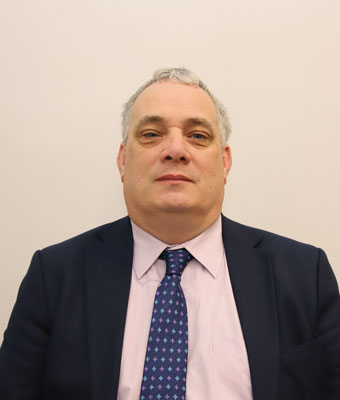
3. Deputy Aengus Ó Snodaigh asked the Minister for Culture, Communications and Sport his plans to improve accessibility for artists to apply for the 2026 basic income for the arts, BIA, scheme. [33423/26]
I thank the Deputy for raising this question and for his ongoing support for the basic income. In February, I announced that the Government had agreed to a successor scheme to the basic income for the arts pilot. Guidelines for the new scheme were published by my Department on 1 April. The applications portal opened on 15 April and will remain open until 12 May, which is an important date given the fact we are still in the middle of that application process.
The BIA will provide 2,000 artists with a weekly payment of €325 for a period of three years. The focus of the successor scheme is to support professional artists whose creative practice is based in Ireland. This is a major milestone for the arts in Ireland and I am particularly pleased that the research my Department conducted provided Government with a clear evidence base upon which to make that decision. The research clearly demonstrated both how precarious and difficult it is to be an artist and the positive benefits for society as a whole if we invest in it. The Department has seen strong demand so far with over 3,000 applications submitted. Over 8,200 eligible applications were received under the original pilot scheme. We expect that number to grow substantially before the end date.
My officials are providing assistance with making applications in a number of ways, including an email mailbox, an online video providing information on filling out the form and a telephone helpline. There has been a high volume of email queries, which are being triaged depending on the urgency of the matter. Our officials are also providing over-the-phone assistance for those who have specific accessibility needs and for queries that cannot be dealt with via email . A voicemail service to book these sessions has been in operation since the scheme opened with priority given to those with accessibility needs or who are vulnerable. Assessment for eligibility and the selection of successful applicants for the scheme will begin once applications close on 12 May. I expect payments to begin before the end of the year.
This is a groundbreaking support for the arts in Ireland and recognising the importance of supporting artistic practice and makes Ireland a world leader in how we support our artists and culture and will help to sustain the careers of those who receive it and retain their talent into the future. I encourage artists from every background and every corner of the country to apply for the scheme as is currently laid out.
I also encourage professional artists and graduates because it is not just professional artists who can apply. There is a number of positions available in this scheme for those who have just graduated.
The issue I had raised initially relating to the website has been addressed. Originally people could not find where to click unless they read the whole front page. That issue is addressed. However, there are other issues. People who have been leaving voicemails or who have been looking for help were not getting the help as quickly as they felt they should. If somebody is an artist and is busy and is trying to access the website or a person to talk to, there is frustration. That has already led to some people thinking they might not apply. I encourage them to apply. The main thing here is to make it as easy as possible for those artists who should be applying to apply.
I agree with the Deputy. If anyone who has experienced any difficulties and has contacted the Deputy, I encourage him to pass any specifics on to me. We want to try to make it work. It is in our interest that we get the maximum number of eligible applicants because we are only around the corner from the next round of negotiations on public expenditure for the next budget. The success or otherwise of this scheme will be demonstrated not just in relation to the output of the artists but also through the number of eligible applications we receive. The greater the number of eligible applicants we receive is a good thing as far as I am concerned. Whether I am able to give them a grant or not is kind of secondary. It will demonstrate very clearly to the Department of public expenditure and reform on my behalf that there is pent-up demand.
If there are IT problems the Deputy is aware of, I ask him to send them on to me. I also encourage anybody who has experienced difficulty to contact the Department directly or contact my office and we will endeavour to make sure that everybody gets a proper service. I am acutely aware there is a vulnerable cohort here as well who might not be as tech savvy as other people are who we do not want to be excluded.
The portal has been moved higher up on the page. Originally users had to scroll down several thousand words before they found the portal to click on. It is now in the first one or two paragraphs. When they click onto it the user is brought to a page that says "An Roinn Department Client Portal" and asks for an email and password to log in. It is only down at the end where it prompts if they do not have an account to create one account. The person will not have an account; that is the whole point. This is a one-off. For people who are not tech savvy, it can be scary. There are a lot of people who do not like filling out forms, whether they are on paper or online. When somebody gets to that page, it should state somewhere that this is the basic income portal and make the sign-up part larger, just for the next couple of weeks while we are waiting for applications.
That is very helpful and I will certainly relay that back to the team in the Department to see if we can adjust the home page to address the points the Deputy has made. I am not sure whether that is possible or not but we will certainly try. If there are people who have nothing better to do at 9.05 a.m. than listen to the Deputy and I having a chat in the Dáil and who have specific problems accessing the service, I encourage them to contact the Department. We do not want to leave people behind. I do not want a situation where people say they could not apply because the system would not allow them. That is no good to me, no more than it is no good to the artist. If there are specific issues the Deputy or any other Deputy in the House has encountered regarding the application process, they should let us know and we will endeavour to make sure everybody gets a fair crack at this.
The appeal is for artists to apply. They have until 12 May. The appeal from here if, as the Minister said, anybody is listening, is for people to make the application between now and 12 May. They will then have to wait. When exactly will the scheme start? The Minister has allocated, I think, €18 million. That amount suggests six months for this year and it will cost €33 million per year based on 2,000 people. Can the Minister indicate when the scheme will start? The last time it started, there was a-----
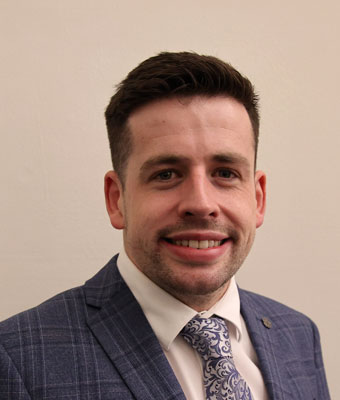
The Deputy is over time.
The screen indicates I have 11 seconds.
That was for the Minister's previous reply.
I ask the Deputy to bear with me. Our bona fides in this have been well established and we have had a very good engagement with the Opposition.
Once 12 May has passed, and once I have a full read-out of the number of applicants, which I will publish, I will come back to the Deputy.
Broadcasting Sector
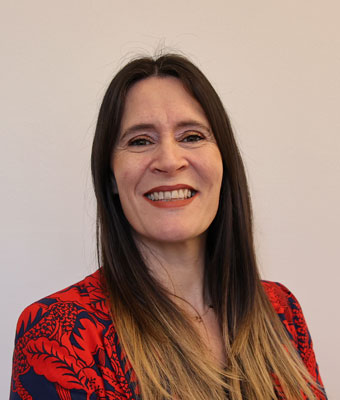
4. Deputy Sinéad Gibney asked the Minister for Culture, Communications and Sport following recent reports regarding the raising of the Coimisiún na Meán levy on radio by nearly 70% from 2024, the way in which he plans to support local and independent radio broadcasters with these unexpected rises. [33369/26]
I would like to hear if the Minister has any response to the recent radio broadcast levy, which has gone up nearly 70% since 2024, and if he or his Department has any plans to support local radio with this very steep levy increase.
A diverse, independent and trustworthy media sector, operating in line with appropriate media codes and rules, plays an important role in supporting our democracy, fostering our national identity, heritage and culture, and ensuring access to free and impartial news and current affairs. However, it is equally important that any supervision or regulation of the sector is also independent. As such, the independence of Coimisiún na Meán is provided for under section 10 of the Broadcasting Act 2009, as amended.
There is a long-standing principle that costs of regulation are met by regulated sectors, particularly commercial operators. Therefore, provision is made in section 21 of the Broadcasting Act for the imposition of levies to meet the costs of media regulation, supervision and licensing.
The Act also vests authority and responsibility for the levy in Coimisiún na Meán. As such, as Minister, I have no role in either determining the cost of regulatory activities or setting the levy. I did, however, meet with two commissioners from Coimisiún na Meán last week in order to seek clarity from Coimisiún na Meán regarding its approach to implementing its statutory responsibilities with regard to the levy. It was also an opportunity for me to impress upon Coimisiún na Meán the need to take the opportunity to more clearly communicate such matters to its stakeholders and the wider public.
I am conscious of the very important role independent broadcasters and outlets play in the wider media sector, particularly at local and regional level. The importance of this role is recognised by ongoing support which is provided to the sector through a range of schemes, funded by both Exchequer and television licence revenues, which are designed to support the continued provision of a diverse range of public service content to audiences.
Between 2020 and 2025, the commercial radio sector was supported with over €13 million in funding through Sound and Vision. In addition, the number of support schemes has increased significantly over recent years. In 2026 to date, the commercial radio sector has been awarded €4.3 million under a range of media fund schemes. This represents a very significant increase in funding for the sector and shows the Government's commitment to supporting independent media in Ireland.
I am heartened to hear that the Minister has at least spoken to Coimisiún na Meán about this but I do not believe that explaining to it that it needs to communicate to its stakeholders is enough in this regard. I also do not believe that the argument of an independent regulator is reason enough for the Minister to wash his hands of this issue. As he has said, local radio is a crucial part of the fabric of Irish society. The services that local radio offers to community cohesion, democratic participation, entertainment and culture within this country are so valued by so many members of Irish society, yet this is an industry and a sector that are under great pressure and have been for many years now as we have seen change of ownership and the pressure of disruption from the tech sector. I do not believe it is enough to simply say that the regulator has the right to impose the levy and therefore it can. It is disproportionate compared with the others. Not only that but Deputy O'Donovan is the Minister for the media, and this goes beyond just asking the regulator about it. What is the Minister doing to support the radio sector in this complex situation?
I have already outlined what I have been doing. The Deputy cannot have her cake and eat it. It is not that long ago that her party and the party that sits beside it were very quick out of the traps, when I asked a question about Coimisiún na Meán, to remind me of my role under the Broadcasting Act and the independence of Coimisiún na Meán. The Deputy cannot have her cake and eat it. She cannot come in here one day and tell me to keep my nose out of Coimisiún na Meán and the second day come in here and tell me to tell Coimisiún na Meán its job. That is opposition politics for opposition's sake. The Deputy is good at it, fair play to her, but I remind her of what her party and the party that sits beside it said. This is a statutory organisation that is independent of the Government and that makes its decisions independent of the Minister and of any political interference. The Deputy wants it both ways but she cannot have it both ways.
That interference, which is how I would describe it, or attempted interference, on the Minister's part was very different from this situation. His is a Government that has been in power for many terms now and it has built and established a statutory body to regulate this sector, so it is beyond me that he can say he has nothing to do with it. It is the Minister who is trying to have his cake and eat it by saying that this regulator can just be established and then let run. It is not interference to examine and engage with his agency on a disproportionate levy on radio of 2.8%, compared with TV at 1.2%, online services at 1.25% and streaming at 0.5%. This is an industry that, as I have said, is already under pressure. The Minister is the one who is trying to have his cake and eat it. He is trying to say he does not have anything to do with this when we know that independent local radio is being crushed. Meanwhile, the online sector, which is pumping out misinformation that local radio is trying to combat, which has taken all the ad revenue and which the Minister's Government is failing to regulate, is cleaning up.
Again, nice try. The Deputy fails to recognise one fact, and I think she was connected previously to the tech sector so she will know the role that Coimisiún na Meán has played with regard to the tech sector. Only this week Coimisiún na Meán has announced further investigations into the tech sector. The Deputy is right: this Government has been in office for a long time. It has been in office thanks to the votes of the people of the country. We have won successive elections. We have put together programmes for Government, manifestos and mandates that the people have voted for. We have also put forward legislation through the House that the Deputy's party when it was a lot smaller and the party beside it when it was a lot bigger supported in relation to Coimisiún na Meán. If the Deputy is claiming people are washing their hands in here, she should stand in front of mirror. She is attempting to place me in a position where she knows I cannot be. Hers was the very party a couple of weeks ago when I asked a question - I just asked a question; I did not make an assertion - that jumped up and down, which of course it does very regularly. Nobody jumps up and down higher than the Social Democrats when it comes to indignation. I am simply saying what the legislation allows for. I have also said that I have had engagement with Coimisiún na Meán and I have relaid to Coimisiún na Meán the need for it to engage more clearly-----
Minister, you are well over time.
-----with the relevant stakeholders.
Heritage Projects
5. Deputy Aengus Ó Snodaigh asked the Minister for Culture, Communications and Sport if he is aware of the law adopted by the French National Assembly in April 2026 with regard to the repatriation of heritage objects taken as part of colonial plunder; if he plans to establish a similar framework for cultural heritage objects in this State; when the advisory committee on the restitution and repatriation of cultural heritage last met; and the recommendations made. [33424/26]
This question is about the law adopted by the French National Assembly on 30 April with regard to the repatriation of heritage objects taken as a result of colonial plunder. I ask if the Minister plans to establish a similar framework of cultural heritage objects in this State, when the advisory committee on the restitution and repatriation of cultural heritage last met and the recommendations it has made.
I thank the Deputy for raising this important question. The issues of restitution and repatriation are complex and sensitive matters which have significant impacts on families and communities of origin, as well as more broadly on the cultural landscape. I am aware of the legislation recently passed by the French National Assembly which creates a legal framework for the return of cultural objects taken from former colonies, replacing the previous requirement for separate, case-by-case legislation for restitution.
In Ireland, the advisory committee on restitution and repatriation was established in 2023 to advise the Government on matters relating to restitution and repatriation of culturally sensitive objects held in collections in Ireland. The advisory committee has been expertly chaired by Sir Donnell Deeny, chairman of the UK Government's Spoliation Advisory Panel and member of the Court of Arbitration for Art in The Hague. The Heritage Council provides the secretariat, and the committee's membership brought together diverse experiences, expertise and perspectives from potential claimant communities, the national cultural institutions and other collecting institutions, and the fields of law, ethics, academia, public policy and cultural heritage.
As part of its work, the advisory committee considered the associated legal, ethical, policy, procedural and institutional issues and reviewed the international best practice research available in this area. In 2024, the Heritage Council undertook a national survey to understand the scope and the scale of cultural heritage collections in Ireland. These findings have significantly informed the advisory committee's work and will also be of great interest and benefit to the cultural heritage sector.
Through its work, the advisory committee will provide guidance to support cultural institutions and other bodies that have responsibility for managing historic collections, on associated matters, including collections management and provenance research. I am very pleased with the progress that the committee has made in this regard to date. The committee as a whole met most recently in November 2025 with significant strands of work also being progressed between meetings.
I received the committee's interim report early last year and I am due to receive its final report shortly. I will bring this to Government at the earliest opportunity and I intend to then publish it without delay. I will give full consideration to the advisory committee's recommendations and I will then bring a plan to the Government to seek support for implementation.
The French National Assembly in some ways is setting out where we need to go with this but, given that it is a former imperialist and colonial power, it has a lot more work to do than we should have. That is not to say that there is not within our national institution collections elements of colonial plunder. We should look to ensure that the repatriation of those, where demanded or sought, takes place.
As to the real question, the Minister has mentioned the advisory committee on restitution and repatriation of cultural heritage, saying that it met in November. I believe he also said it was due to meet in February, which was its final meeting. When do we expect the committee's recommendations and final report?
It is expected shortly. As I said in my reply, I will bring the report to the Government and then publish it. I do not disagree with anything the Deputy has said. Restitution cannot be a one-way street. We need to see if there is anything in Irish institutions that is connected to, funded by or associated with colonial plundering. I do not disagree with that term. I believe the Deputy is being very mild-mannered in using it. We cannot ask others to do as we say and not to do as we do. In a similar way, if other countries, particularly European Union and former European Union countries, have plunder from here, restitution needs to be examined. There are post-colonial museums scattered all over Europe like feathers out of a bag and these contain plunder from all over the place, including from Ireland. There is a compulsion on European Union countries that are funding museums they know to contain loot that was taken from people against their will to recover it and return it to those people's countries. That includes Ireland.
There are a number of issues here. We are not in disagreement. We must ensure our national cultural institutions and other museums are aware of this issue and will take a proper approach to it. However, funding is required to address that and perhaps to make 3D copies of the material on display so that we would still have a facsimile in the collection. As the Minister has said, it is not a one-way street. Over the years, we have seen countries, particularly England, holding material belonging to or relevant to Ireland that is hidden away in museums. This material is sometimes surplus to the museums' requirements. Such material has sometimes been given back by way of permanent loan rather than being returned outright. When he worked in a museum, my father managed to return some such items without anybody's permission. These items now sit in a museum.
His methodologies may have been a bit different and might be a bit unorthodox for a Deputy of Dáil Éireann to be advocating. However, I do not disagree with the sentiment. If there are materials in other museums, particularly in countries that were formerly colonial powerhouses, including the one that occupied this State, in the modern world of 2026 there is a compulsion on them to look into their hearts and recognise that this stuff was taken against the will of the people from whom it was taken and that it really does not belong where it is. That is particularly the case where it is archived and shoved into presses or cupboards but it does also apply to stuff that is on permanent display that clearly does not belong to the country in question. There are some museums that contain nothing belonging to the state in which it is located but rather a mixum-gatherum of stuff that was literally stolen from all over the world. In 2026, any right-thinking democracy needs to take a long look at itself and say that now is the time to begin the process of repatriation as part of restitution and an overall recovery package for what was done during colonialism. I certainly support the Deputy's point. I look forward to the final report, which I will publish. Once I publish it, I expect our national cultural institutions and those institutions funded by my Department that are not NCIs to act appropriately.
Swimming Pools
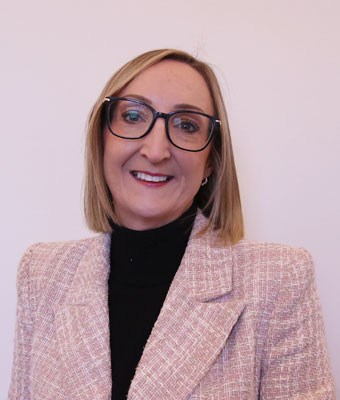
6. Deputy Grace Boland asked the Minister for Culture, Communications and Sport the way in which he plans to ensure that the implementation of the national swimming strategy addresses regional and demographic disparities in access to swimming facilities, particularly in areas experiencing rapid population growth and sustained unmet demand such as Fingal, where limited access to public swimming pools persists despite clear and growing community need; and if he will make a statement on the matter. [33670/26]
North County Dublin is one of the youngest and fastest growing areas in the country yet access to public swimming pools is extremely limited, particularly in north Fingal. Waiting lists for the limited swimming pools that are available are at 100%. Fingal County Council is planning to develop a swimming pool in Balbriggan. Will the Minister of State update us on whether any money will be made available from central government to fund that swimming pool?
I thank Deputy Boland for her question. I know she is very committed to the development of a swimming pool in Balbriggan. Further to a specific action in the 2024 national swimming strategy and enabled with funding from my own Department, Swim Ireland was commissioned to carry out an in-depth analysis of swimming pool provision across the country. This examined the condition and age of facilities and the provincial and county-level distribution of pools. The resultant swimming pool gap analysis report was subsequently published at the end of last year and is available on Swim Ireland's website. That gap analysis report, which our Department paid for, is now being considered by Department officials. It will form a key input to the future development of swimming pool facilities, enabling enhanced decision-making with regard to targeting investment more effectively. That is the objective. We are now assessing the report and how to take steps forward, ensuring we are making the best investment that will have the biggest impact.
As things stand, the provision of swimming pools is ultimately a matter for the relevant local authorities. From what the Deputy has said before and today, I know there are plans to construct a new public swimming pool at Castlelands in Balbriggan. These plans are being progressed by Fingal County Council and the project has moved to preliminary design and planning stages. Fingal County Council made an application for grant funding in respect of the proposed new pool under the 2024 round of the Department's large-scale sports infrastructure fund. Unfortunately, due to the large volume of applications made under that round, it was not allocated funding. We continue to monitor capital availability under this round. Moving forward, we expect the large-scale sports infrastructure fund to reopen within the next couple of years. Applications to the fund must be made by a local authority or the national governing body of a sport. So far, we have seen €41 million invested in 12 swimming pool projects through the LSSIF.
I very much welcome Swim Ireland's report. The Minister of State will have seen from it that waiting lists in Fingal are at 100%. The nearest pool to Balbriggan is in Swords. Balbriggan is the youngest large town in the country. We need access to a swimming pool for Balbriggan, Skerries, Rush, Lusk and the surrounding villages of Naul and Garristown. The demand is there and we have the population. Fingal County Council has put an awful lot of work into the planning. I urge the Minister of State to look favourably on any application from Fingal County Council. It is an essential necessity for the area, which is rapidly growing. We are building houses in Balbriggan, Skerries, Rush, Lusk and the villages. We need access to appropriate sporting facilities.
I accept that. I know there is a particular challenge in the north Dublin area in relation to swimming pool availability. The gap analysis report certainly identifies that. We are considering that gap analysis report at the moment to get a sense of the scale of the challenge and to assess how those challenges can be matched by our current funding streams, including the community sports facilities fund and the large-scale sports infrastructure fund. The Government is focusing on this issue and wants to see it addressed. The capital envelope will obviously be important in determining what we can do. However, we have now for the first time identified the challenges and where they are most acute. In line with our national swimming strategy, we want to achieve our objective of making sure that people have the opportunity to participate in swimming regardless of where they live. We are considering how best to do that, following on from the publication of the gap analysis report.
I welcome the Minister of State's positive comments. I think I will be back here asking him follow-up questions. I would appreciate it if he would work with me on this issue.
I thank the Deputy for her ongoing advocacy and for identifying the challenges and the need for swimming pool facilities, which mean that everyone can avail of sports and that we do not have long waiting lists. I look forward to continuing to work and engage with her on this with a view to identifying opportunities to invest to make sure that projects such as the one in Fingal can be moved forward.
Legislative Measures
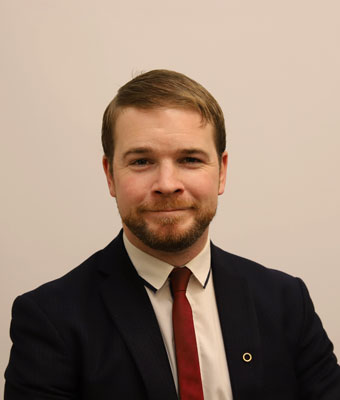
65. Deputy Donnchadh Ó Laoghaire asked the Minister for Defence if she will outline her proposals to remove the triple lock neutrality protection; when she intends to bring forward a Bill in relation to same; and if she will make a statement on the matter. [33425/26]
The volatile nature of the world underlines all the more the reason that Ireland needs to maintain an independent foreign policy. Central to that policy, as was articulated by members of the Government while in opposition is the triple lock. This is a crucial protection for our neutrality. I would like an update as to where this legislation stands and what consideration the Minister has given to the pre-legislative scrutiny report from the committee.
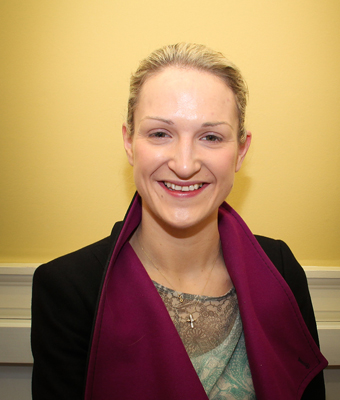
I fully agree with the Deputy. We can all see that we are living in a very changed world and a more complex world, particularly when it comes to our overall security environment. That being said, I want to make it absolutely clear that the Government has no desire to change our position and our policy of military neutrality. This is something that is long-standing and something that the vast majority of people in this country support. However, it is my intention and the intention of Government to change the terms of how our Defence Forces can be deployed overseas. I, and I think many colleagues in this House, believe that it is untenable to continue with the current policy. Essentially, we have a situation whereby other countries, many of which are at war or in conflict at the moment, are able to make a decision that impacts on our sovereign decision-making process when it comes to where and how we deploy our troops. That position is untenable.
Any considerations on international peacekeeping engagements should be within Ireland's exclusive sovereign control. It should be our own decision-making process and it should be purely within the remit of Government here so that we can have these debates in the Oireachtas with people who have been democratically elected by the people of this country. This is a very strong belief and firm view that I have. I thank the committee for the excellent work it did on the pre-legislative scrutiny. This legislation has gone through a number of stages at this point. I have considered carefully a number of recommendations from the report and brought this to Cabinet recently. Drafting work is under way to progress some of the recommendations, specifically around the international obligations but also in terms of annual reporting. I accept that where one element is removed from what has been a long-standing process, we have to make sure that any mechanism we have in the Oireachtas and across the committees has a level of oversight and scrutiny. What was stressed by the committee is that in any changes that are made, it is very clear that any peacekeeping mission that will be approved will be in line with and grounded firmly by the principles of the UN Charter and international law.
That is something the committee has stated very clearly.
The Minister thanked the committee and I acknowledge that. It was under a different Minister, and I would say it is not an unheard-of occurrence, but it is remarkable that Government TDs and Senators on the committee were whipped to prevent extra hearings because there was such a rush in terms of this legislation, and now it is many months since that process was concluded. I find that hard to understand. We had a desire within the committee to ensure that it would see full scrutiny. Members of the committee were clearly whipped to prevent the extension of it. That was a tremendous shame.
I would make the point to the Minister that the triple lock is a protection for future Governments as well. More importantly, I would make the point that it is our decision. The Defence (Amendment) Act is Irish legislation. It is legislation constructed and passed by these two Houses on the basis that our troops should serve on peacekeeping missions that are mandated by the UN. If we are going to be serving on peacekeeping missions that are not mandated by the UN, under which auspices are we undertaking those peacekeeping missions or other missions generally?
The Deputy said this is about protecting future Governments that might decide to deploy our troops to missions that are not based on the UN Charter and are not upholding and protecting fundamental principles of international law. What I am saying very clearly is that the legislation would have this enshrined in it. It would be very clear as to how and when our troops could be deployed. There would be a level of oversight within the Oireachtas. It would have to be voted through by a democratically elected Government. There would also be a level of oversight within the committee, depending on when or how many troops are being deployed. That would also be included in the legislation.
We have a situation emerging at the moment. We now have some of the final members from the 128th Infantry Battalion who are going out to UNIFIL. That mission has not been continued because we know it would have been vetoed. If it had been vetoed and if a vote had gone through last year, our troops would have had to have left immediately. Decades-long service of Lebanon peacekeeping troops would have ended immediately. We would have had no ability to send our troops back unless we had a new mission put in place, be it a common security and defence policy, CSDP, mission, which is something at which we are looking at the moment. Moreover, and on top of that, we now have another mission, Operation Irini, that we are looking at very carefully but which very soon, in the coming weeks, could come to an end because it looks as though that mandate is not going to be renewed. What we want that mandate for is to be able to monitor the shadow fleet in our waters that is causing huge challenges and that is funding the war in Ukraine. There is also a potential environmental disaster looming with any of these ships. How do we know it is going to be blocked? We know the Russian person who is perpetrating these crimes is on the committee and is able to do it. The idea that Russia would be able to stop us from keeping our troops on a mission in the Mediterranean that would monitor what are illegal ships is absolutely crazy. It is crazy that we are in a situation that, as a country, we cannot deploy our troops because a country like Russia is going to be able to stop us.
The Minister spoke about the SCDP and potential deployment. Could she elaborate on that? Is she saying there would potentially be a CSDP deployment to Lebanon in place of UNIFIL? Could she please clarify that?
The issue in relation to the protection of future Governments is crucially important. That is my view, and I think it is the view of the people. Our troops have served under the UN flag with incredible distinction. I think it is profoundly dangerous that UNIFIL is coming to an end. I really regret that decision. It is important that we continue to push for UN reform. I would like to hear the Minister say some more about that. Ultimately, if we are not deploying troops under a UN flag, they are going to be deployed in another context. It is not difficult at all to see circumstances where if we remove the triple lock, pressure comes on a future Irish Government to deploy troops to a scenario or theatre that would clearly endanger our neutrality. The Minister has said that the Irish people support neutrality. This potentially brings future Irish Governments into a position where they are pressurised into deploying troops in situations that would undermine our neutrality.
The first thing to say is that any change to our triple lock does not change our position of neutrality. Our position of neutrality is about joining military alliances. If we are to deploy troops under this new legislation, it would have to align with, adhered to and be firmly grounded in the principles of the UN Charter and international law. That would be our law, so to do anything other than that would be to breach our law. This would be overseen by committees and by the Chamber. We fully support the UN. I make this point every single time I engage with it at an international level and it knows that. However, we know that the structure is not working at the moment. The fact is Russia would able to stop a mission that is currently under way in the Mediterranean in which our troops participate. They do a really important job in terms of arms. We want to now use that mission to be able to monitor the Russian shadow fleets - an illegal fleet that is funding an illegal war and a maritime disaster ready to happen. The fact that Russia would be able to block that does not make any sense. It is taking away our sovereign ability to make a decision as to where we send our troops but it is also stopping us from doing what we should be doing and that is monitoring its illegal activity and making sure we do everything in our power to stop it from being able to wage the war it is waging and possibly more beyond that.
In terms of making it clear around the overall missions, again, it would not be within our power to send our troops to anything other than peacekeeping missions or, as we have seen in recent times because of the conflicts happening around the world, where we need to get people out safely. That is something we really need to be able to do.
We can do that.
Defence Forces
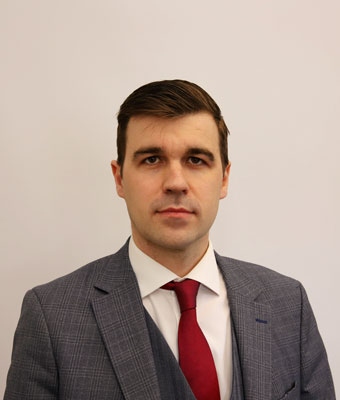
66. Deputy Duncan Smith asked the Minister for Defence the timeline for the increase of cadet pay in the Defence Forces; and if she will make a statement on the matter. [33427/26]
The world is changing, and national defence is becoming more important by the day. The Government is slow-walking change, though, to the pay and conditions of our Defence Forces, particularly for our cadets. It is simply unacceptable. The question I want to ask the Minister today is about the timeline for the increase of cadet pay in the Defence Forces.
I fully agree. The world is changing. We need to expand our Defence Forces. We need to enhance our capabilities. However, we need to make sure we have the men and women in our Defence Forces to be able to operate and be able to grow in the way we need to. That means looking to retain those we have but also encouraging more and supporting our cadets as well.
As the Deputy will be aware, there has been significant progress made more broadly in terms of pay and conditions for the Defence Forces personnel, particularly over the past six years. There has been a renewed focus, and rightly so, in making sure we increase pay and that the pay is reflective of the work and training that is happening. I met with representatives of RACO on 22 January 2026 and they, of course, raised the issue of cadet pay with me. It is an issue that is currently on the conciliation and arbitration agenda. I have agreed on top of that to give further consideration to the issue and the process that is ongoing. I outlined at that meeting, however, that any cost-increasing claims must be addressed within the parameters of public pay policy. I think we all know that but we want to make sure that structure is progressing and that claim is progressing as well.
The Deputy will be aware as well that different pay scales apply during training, obviously, for different periods for cadets and recruits. The current pay scale applicable to cadets ranges from €26,248 to €39,026, depending on their qualification. In addition, cadets are provided with accommodation and meals free of charge for the duration of their training as part of their overall package. What is important here as well is that we are investing in where they are staying and where they are eating their meals. In the past two weeks alone, I opened quite a large new canteen facility, essentially, in the barracks in Dundalk. In the past two weeks, I also opened accommodation in Haulbowline for a significant number of new recruits. We want to make sure we are investing significantly in where they are staying, where they are being fed and where they are training and in their gym where they need to do their training. This year alone about €70 million is being spent specifically for accommodation. That is an investment in the men and women of our Defence Forces.
At the same time, I appreciate that when it comes to overall pay and cadet pay, in particular, we need to make quicker progress through the conciliation and arbitration agenda. This is something on which I have committed to working with them.
Those improvements in accommodation and other physical places, such as barracks, etc., are welcome. I and Deputy Ó Laoghaire have just come from the Joint Committee on Defence and National Security, and that came up and was complimented. It simply is not enough to talk about action when it comes to pay. I accept the Minister's bona fides in terms of wanting to improve this but it is worth putting on record that cadet pay remains the lowest in the Defence Forces at just €503 per week compared to €550 for a recruit. It rises to €627 after 12 weeks. Cadets remain on this pay for the entirety of their first year while recruits can move to a weekly salary of €814 after six months. They are paid significantly less than enlisted recruits despite being in full-time training for commission leadership and bearing far greater responsibility. In fact, in their first year, cadets earn 47% less than their enlisted counterparts. This can have knock-on impacts for their pension entitlements. I know there is a process under way but we need a timeline. I accept the Minister's bona fides but we need to see real progress on this for the cadets.
I agree. I would like to see things move on. I would like to see a resolution as quickly as possible. It is obviously going through the process. Again, the current public service pay agreement to which the members of the Permanent Defence Forces are party provides for that local bargaining process. It provides for that 3% of basic pay, with the 1% to be paid from the current agreement and the balance to be addressed in any successor pay agreement.
There is an opportunity beyond the current engagement to examine pay and conditions, including cadet pay, through that process. There is a number of different ways in which we can look at this.
It is encouraging, not only for cadets. However, if you look at the number of applications for cadets in 2022, it was 1,297. If you fast-forward to this year, it is 2,878. We are seeing a significant increase in the number of applications, more broadly, across the Defence Forces. There were 16,500 applications last year and up to the end of March of this year alone, there have been 7,000.
There is a significant increase in interest and I think it is because we are investing more. We are clear that we want to expand the Defence Forces. We want to invest in the men and women who are there but we want to invest in greater capabilities. There are more opportunities, be it in the Naval Service, the Air Corps or the Army, for people and that is reflected in the overall figures.
Certainly, we are trending away from the recruitment and retention crisis that we have seen in the Defence Forces. We are not quite there yet and still have a bit to go.
In terms of cadet pay, the long-term impacts of it and why it needs to be resolved, it can become financially illogical to become a cadet. Under the single pension scheme, earnings are averaged across an entire career meaning that paying cadets the existing poverty-level wage does lasting damage to their pension entitlements. It is not as enticing an offer to young people as it could be if we get through this process as quickly, as expeditiously and as beneficially as possible for the cadets. These young cadets will have dependants in the future and an increasing amount of responsibilities, like most people, as they go through life.
There is an increase in recruitment but we will have a problem with retention unless this pay and pensions issue is resolved for cadets. I urge the Minister to put every pressure on to get this resolved as soon as possible.
I stress that the claim was received by the Representative Association of Commissioned Officers. The claim is being dealt with under the conciliation and arbitration scheme for members of the Permanent Defence Forces. The Deputy will appreciate the discussions under the conciliation and arbitration scheme are confidential but I look forward to, and hope we can have, that constructive engagement and that conclusion reached as soon as possible.
The Deputy is correct. There is quite a variation from €26,248 to €39,026. I would stress, however, that if you are a cadet coming in, your accommodation is paid for and your food is paid for. Obviously, for a lot of people, that would account for a significant portion of any wage that they would get on a weekly or a monthly basis.
More broadly, we need to make sure we are doing everything that we can to focus on increased recruitment and retention. We have a defence sector working group, which was established to examine the representative associations' proposals. We are working with RACO and PDFORRA proposals under local bargaining. What that is doing is identifying measures to increase recruitment and retention, with a particular emphasis on the Naval Service because with the new national maritime security strategy and with the need for us to do more when it comes to maritime security, our focus on the Naval Service is important and the cadets within that. We are seeing an increase in numbers also.
Air Corps
67. Deputy Donnchadh Ó Laoghaire asked the Minister for Defence further to recent Dáil Éireann debates, her views on past health and safety measures in the Air Corps; the actions she intends to take to support former aircraft maintenance and ancillary personnel; whether she intends to ensure their medical needs are met; and the other supports that can be offered to the category affected as a whole. [33426/26]
Since our last engagement on this issue, we have had the "RTÉ Investigates" documentary, considerable reporting by Neil Michael from the Irish Examiner, and many disturbing and worrying disclosures and descriptions of what was going on. It is clear that Air Corps personnel were exposed to unsafe working conditions and to dangerous chemicals and there seems to be a strong correlation to very serious illness and bad health outcomes. These are people who served the State. They should get support. What does the Minister intend to do about it and how does she intend to ensure that they are looked after?
I thank the Deputy for raising this. I acknowledge the Deputy's engagement around the issue. I welcome the opportunity to set out the position as it stands. As there are multiple ongoing cases before the courts, as I have stated previously, I am limited in terms of what I can say so that I do not prejudice any of the ongoing litigation. The Deputy has said previously that it is possible to discuss both but I always want to be careful in that regard.
The advice available to me is that any view I have here needs to be carefully expressed so that we do not undermine the current process. Each claim has to receive the necessary case-specific analysis and consideration because what is clear is that each individual case is different to a certain extent.
I had a number of briefs from my officials on this. I then requested further detailed analysis from them. I have received that and carefully considered it. I convened a meeting with the Attorney General, representatives from the State Claims Agency and officials from my Department to discuss the matter further, having sought various different advices.
There are accusations that the State is prolonging legal proceedings as a deliberate tactic but that is not the case. It is important to stress that at every step of the way, the engagement that we have had, be it through the State Claims Agency working with individuals, has been to try to find a resolution and to work constructively with them.
The State Claims Agency has confirmed to me that it has made representations to the legal representatives of the litigants to explore the possibility of mediation to find a resolution to this issue. This is the way we want to move forward - that we can mediate and find a way forward - but those approaches have been rejected pending the cases having been set down for hearing.
I would encourage all those involved. We want to find a way forward. We do not want this to have to go to a court setting. There is an offer there from the State Claims Agency to work with it and with its legal representatives. We all want to find a mutually agreeable resolution, taking into consider what people have gone through and the current individual situation for those involved in this overall. I would encourage them to take up that offer and to engage more broadly with us.
To be honest, that is a frustrating response because the Minister is well aware that I have outlined the point in the past. I would say there are issues in relation to the handling of the State Claims Agency of these cases. It is not appropriate for us to get into individual cases. I have never asked the Minister to do so. I have never tried to discuss individual cases in this Chamber, with the Minister or her predecessor. The issue here is in relation to a category of people who were acting in the service of the State. They were supporting the Defence Forces in terms of maintenance of aircraft. As the Air Corps Chemical Abuse Survivors group outlined, there have been 130 potential premature deaths. Clearly, we need to get to the bottom of that.
I am not asking for an update on the legal side, although I think there are issues in relation to the State Claims Agency's approach. What I am asking for is what the Minister proposes to do, and which we discussed previously, in terms of the whole category, a potential package of health supports and health safeguarding, including forms of screening, and an accountability mechanism. There has to be an accountability mechanism as well.
There are 22 active cases before the courts, which we are trying to engage with. Like the Deputy, I want to understand whether this is something that is happening on a wider scale but at the same time, we have to identify whether or not there is a consistent pattern here. Work has been done within the Department to see whether this is something that has been happening on a broader scale and whether there is a consistent pattern beyond the 22 people the Deputy is talking about here, and even within those cases where there is not a consistent pattern in terms of health implications or issues that have come to the fore. I am not for a second disputing the fact that the people who we are engaging with have health concerns and have had health concerns. There has never been a dispute that there needed to be better measures in place in terms of health and safety, whether it was gloves or handling. Whether the exposure had the overall effect, as has been set out by the individuals in the 22 active cases, is what is being discussed and engaged with at present. I would encourage all those to engage further in a mediation process that we have been actively trying to pursue because I think this the best route to be able to come to a conclusion for all of the individuals concerned.
If there is a pattern, we are not going to find that out in the High Court. That will be found out through a process the Department seems to be considering. A memo was due to be brought to the Minister in the first quarter but we are past the first quarter now. That is what I recall the Minister saying. Has the Minister considered this memo in relation to a whole-category approach?
I ask the Minister to not go back into the legal cases. The clear example is in relation to Australia where the Australian air force saw that there was an issue, it engaged with the group and the people retained their right to take cases as they saw fit but there was health screening, an accountability mechanism and health supports. There is nothing preventing the Minister from doing that. When will she make a decision as to whether the Government will put in place a process such as there was in Australia - a study of health outcomes, identifying whether there is causation and ensuring support for people who are very sick? Among these people, there have been heart conditions, colorectal cancer and suicides.
Clearly there is a need for things like routine cardiac screening. These are all things that can be done without any reference to the court cases. When will the Minister make a decision on a solution for the whole category?
The Deputy referenced Australia. The case in Australia involved de-seal and reseal programmes. The maintenance workers were quite literally required to physically climb into fuel tanks of F111 fighter jets. They worked in extremely cramped conditions for extended periods with chronic confined exposure to concentrated hazardous substances. Nobody has suggested at any point that this is in any way aligned with the conditions in the Air Corps.
No, but it still goes on.
We have said very clearly that there need to be better health and safety standards. That is something that has been made very clear and those changes have been made. As the Deputy has outlined, we have a significant number of different conditions that have come to the fore with the litigants who have been mentioned. However, it has not yet been identified whether this was specific to the exposure.
We should find out.
I told the Deputy that there was a body of work being done initially to see if there is a connection. Is there an increased level of particular types of health complications? Was there an increased level within the Air Corps during that time because of that exposure?
When will we find out?
That body of work is still under way at the moment. I do not think we can say this is the same as Australia.
I hear the Minister saying that but when will we find out?
That work is under way and I will bring that to the Dáil and to the Deputy's attention when I can. If people have been harmed here, I want to make sure we know about it. I also want to make sure that those involved in the process can engage with us and come to a conclusion on that process.
Military Neutrality
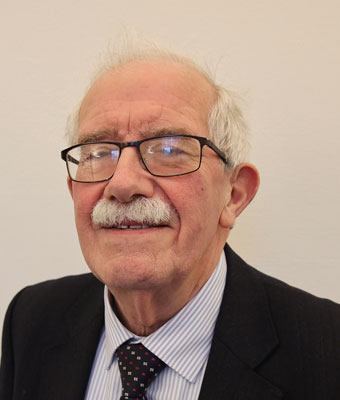
68. Deputy Seamus Healy asked the Minister for Defence if she plans to introduce the defence (amendment) Bill to provide for the abolition of the triple lock; and if she will make a statement on the matter. [33645/26]
Is it the Government's intention to proceed with the proposed defence (amendment) Bill to provide for the abolition of the triple lock, which is against the expressed wish of the Irish people as expressed in two referendums on the Nice and Lisbon treaties?
As set out by the Minister earlier in this session, the purpose of the defence (amendment) Bill is to consolidate the existing provisions of the Defence Acts concerning the despatch of members of the Defence Forces for service outside the State. In effect, the requirement for a UN mandate will be removed. It will modify the existing requirement regarding the so-called triple lock mechanism in relation to the despatch of the Defence Forces for service outside the State as part of an international United Nations force.
It is important to note that the Bill will also seek to amend the Defence Act to provide for the suspension of members of the Defence Forces, thereby giving effect to recommendations in the 2024 Ward report on the management of members of the Defence Forces charged with, or convicted of, serious criminal offences.
There has been extensive engagement between the Department and the Office of the Parliamentary Counsel on the drafting of the Bill, and the Minister intends to bring the Bill to the Government for approval shortly.
As previously outlined to the House, the continued reliance on a UN Security Council mandate can have direct practical consequences for Ireland’s peacekeeping engagements. A very recent and tangible example is in relation to UNIFIL. We saw one power exercising its veto at the UN Security Council. Had the mandate for UNIFIL not been renewed - as was the case for a short period of time - Ireland would have been legally obliged to plan for the immediate withdrawal of Defence Forces personnel from that mission. Similar issues arise in respect of other operations, with concerns arising in relation to the upcoming renewal of the UN mandate of Operation Irini in the Mediterranean in early June. The outcome is currently unclear and if this mandate is not renewed, it would necessitate the immediate withdrawal of Irish troops under the current legislative provisions. The mission would continue nonetheless in its humanitarian work and its work to prevent illegal weapons coming into Europe because it is an EU mission.
The Bill also provides for reinforced safeguards governing any future overseas deployments. While the UN Security Council mandate requirement is being removed, the legislation expressly requires that all such deployments be consistent with the principles of the UN Charter and with international law.
Neutrality and a triple lock have served his country well. The current Taoiseach is on record as saying that the triple lock is the core of Irish neutrality. Of course, that neutrality goes back over 100 years to when James Connolly erected a banner on Liberty Hall declaring that, "We serve neither King nor Kaiser, but Ireland". It also goes back to hugely successful protests against conscription in Ireland during the First World War. It goes back to Article 29 of Bunreacht na hÉireann, Éamon de Valera's Constitution, which speaks of "adherence to the principle of the pacific settlement of international disputes by international arbitration or judicial determination." It goes back to Éamon de Valera's declaration of neutrality in 1939.
The triple lock itself has been endorsed by the sovereign Irish people in two referendums, the second referendum on the Nice treaty and the second referendum on the Lisbon treaty. Solemn national declarations have been added to those treaties. Successive polls have shown support for the retention of neutrality, the core of which is the triple lock. I believe it is now time to abandon this proposal. Of course peace missions can be authorised by the UN General Assembly as well as the Security Council.
The Deputy is correct that under Article 29 of the Constitution, Ireland's international relations are founded upon international justice and morality. Our Constitution affirms our "devotion to the ideal of peace and friendly co-operation amongst nations". That is not changing. That is in our Constitution. That is the entire basis on which the Government exercises its foreign policy. The removal of the triple lock in current circumstances has no impact whatsoever on Ireland's policy of military neutrality. All it means is that we are not giving the authority to any of the five permanent members of the UN Security Council to determine what our foreign policy is in terms of our peacekeeping missions. It is a fact that the UNIFIL mission was stopped, effectively, by one member of the UN Security Council. It is also a fact that if a mission were to continue, for example under EU auspices, in Lebanon, it is entirely unclear as to whether Ireland could take part in that without a UN Security Council mandate. Operation Irini would continue as a very effective peacekeeping mission but Ireland would not be able to be part of it without a UN Security Council mandate.
Irish peacekeepers who have served throughout the world for decades know the value of the triple lock. Neutrality has been an invaluable component of Ireland's foreign policy. This country's involvement in and reputation for peacekeeping gives moral legitimacy to our voice for the international rule of law and peaceful resolution of conflicts. Former Defence Force members with first-hand experience of peacekeeping and conflict have spoken in defence of the triple lock. These people include Senator Tom Clonan who stated that it gives international status as an impartial voice for peace and de-escalation of armed conflict. Gerry Rooney, a former secretary general of the PDFORRA, which represents about 7,000 members of the Defence Forces, is also on record as saying that maintaining the triple lock and strengthening the engagement of the United Nations would be a more effective path for sustaining Ireland's peacekeeping role and neutrality. I believe that abolition of the triple lock undermines our peacekeeping role in the world.
All deployments of Irish troops abroad under this legislation have to be consistent with the principles of the UN Charter and international law. I have already said that I agree with the Deputy in relation to the Constitution. However, I suggest that nobody in this House agrees with the decision of the UN Security Council to end peacekeeping duties in Lebanon.
What about the General Assembly?
The General Assembly has not put forward any proposal in relation to that and it is not practical for us to-----
The General Assembly is entitled to call for peacekeeping missions.
There have been no proposals in the General Assembly to continue a mission in Lebanon. At the end of the day the Security Council is the authoritative body on international security. That is just the reality of the situation. We have an incredibly proud track record of peacekeeping under our Constitution and consistent with UN principles. We would like that to continue. In the current environment it literally cannot continue in Lebanon because of the decision of the UN Security Council. That mandate is coming to an end because of a decision effectively of one country. If another peacekeeping mission were agreed, for example at EU level, we could not take part in it under the current legislation. All we are trying to do is to make our own sovereign decisions and continue the peacekeeping work that we have done over many generations.