Sports Events
7. Deputy Mark Ward asked the Minister for Culture, Communications and Sport if he will call for a boycott of the upcoming Nations League matches between Ireland and Israel on the grounds that Israel is an apartheid state that has engaged in ethnic cleansing and genocide; his engagement with an organisation (details supplied) on this issue; and if he will make a statement on the matter. [32981/26]
Will the Government call for a boycott of the upcoming Nations League matches between Ireland and Israel on the grounds that Israel is an apartheid state that has engaged in ethnic cleansing and genocide? What engagement has the Minister of State had with the FAI on the matter? If he thinks it is okay to ban Russia from international sport, why can the same rule not apply to Israel? Will the Minister of State stop the game and refuse to play ball with genocide?
I thank Deputy Ward for his question.
National governing bodies of sport, such as the Football Association of Ireland, are independent, autonomous bodies responsible for the governance of their own sports, including the organisation of sporting fixtures, whether in domestic or international competitions. The Government has no role in deciding who plays who in international sports. The FAI is within its rights to decide to fulfil these upcoming UEFA fixtures and I note its intention to fulfil both fixtures against Israel in September and October. I support the FAI's right to make this decision and the Government will not be calling for a boycott of these games.
The FAI has made this decision in accordance with its obligations as a member of UEFA, the governing body and confederation for football in Europe, and having consulted with An Garda Síochána and other key stakeholders. The FAI has also briefed myself and the Minister, Deputy O'Donovan, on this matter, and I understand that it will be engaging with the Norwegian Football Association to learn from its hosting of a match against Israel last year. I understand that the FAI is also continuing to engage with An Garda Síochána to ensure appropriate preparation for, and policing of, the home leg of the fixture.
On a wider note, I want to reiterate that the Government remains committed to working with key partners to end the conflict in Gaza and to advancing a sustainable peace plan. We want all parties to adhere to their commitments in full, desist from any actions inconsistent with what has been agreed and continue to negotiate in good faith to ensure full implementation.
Let us get real here. The Minister of State is ducking any responsibility. If the Government opposed Ireland playing Israel in an international soccer match, the FAI would follow suit. Yesterday a campaign was launched to stop the game between Ireland and Israel. An open letter was signed by many people in Irish soccer, including Brian Kerr, Joe Redmond, Pico Lopez, Louise Quinn and Roddy Collins as well as people outside soccer, including Christy Moore, Senator Frances Black, Kneecap and the Fontaines DC. I am a season ticket holder for the FAI. As a basic human being, I will not attend that match.
Last year, the FAI passed a motion to suspend Israel from UEFA competitions. The Government and the FAI must respect that mandate. The signatories are calling for the game to be stopped on the basis that Israeli teams are playing on occupied Palestinian land and that Israel has a brutal system of apartheid and has committed acts of genocide. The Government accepts that Israel is an apartheid state and is committing acts of genocide. It is inconceivable that the Irish Government is willing to stay silent on this matter while these crimes are going on in the name of football.
The Deputy made the comparison with Russia in his contribution. To tease that out, the Russian exclusion from sporting events was a decision that was made by UEFA, the sporting body. It blocked and barred Russia from participating in competitions as did FIFA. The footballing body decided to do that as well. As we well know, in the European Union at political level, we have sanctions imposed on Russia. In regard to the participation of Israel, there is no such ban by UEFA or, indeed, FIFA. The FAI brought a motion or proposal to UEFA, which was not supported by other member countries. The FAI, as is its prerogative, is working within its footballing union. It is an independent body within this country. It has taken up the matter within UEFA and is fulfilling its responsibilities in that regard and the Government supports its right to do so.
The Minister of State mentioned sanctions on Russia. The Government has still not enacted the occupied territories Bill. We are still waiting. That was a promise in the programme for Government. What the Government has responsibility for is who comes into our country. Can the Minister of State guarantee that those arriving to support Israel have not taken part in or supported genocide? What security measures will be in place to stop people who have taken part in or supported the slaughter of 75,000 Palestinian people from entering Ireland? How will the Government screen for those who have committed the most barbaric crimes from entering the country? Will they be arrested at the airport for crimes of collective punishment, mass displacement or genocide? Can the Minister of State even guarantee that the Israeli players themselves are not or were not members of the Israel Defense Forces? Are we going to stand by and allow supporters and perpetrators of genocide to enter our country? This part of it is the Minister of State’s responsibility. I urge the Minister of State to stop the game: do not play ball with genocide and be on the right side of history.
From a political point of view Ireland and the Irish Government has led out internationally in relation to the atrocities we have seen happen in Palestine as part of the conflict and in terms of providing leadership and trying to bring about a peaceful settlement to the conflict. We have set the agenda in many ways at European and international levels in relation to the approach and stance we took which subsequently many other countries rallied around as time went on. We continue to play our role internationally to try to ensure there is a sustainable peace settlement in Palestine. As a country, we have also led out on the development of and are assessing the legal challenges around implementing an occupied territories Bill.
What about the security measures?
The FAI is an independent organisation working within the footballing and governance structures internationally. UEFA has not prevented Israel from taking part in competitions such as happened in the case of Russia. The FAI is engaging with An Garda Síochána in relation to the appropriate policing arrangements for the game.
Sports Funding
8. Deputy Paul McAuliffe asked the Minister for Culture, Communications and Sport the engagements he and his Department have had with local authorities and national sporting bodies to ensure local sports clubs are supported in applying for available grants; and if he will make a statement on the matter. [32806/26]
Will the Minister of State outline the engagements he and his Department have had with local authorities and national sporting bodies in advance of the forthcoming round of sports capital grants?
I thank the Deputy for the question. I know the sports facilities fund is something he is very committed to in relation to supporting clubs in his local area. In line with the previous rounds of the community sport facilities fund, a review of the current funding round has been undertaken and will be finalised shortly. It is anticipated that the objective of the next round will particularly target areas and sports that have been under-invested in over the years. We are working to be in a position to be ready for opening a new round next month.
The Department is currently collating feedback from sporting clubs and organisations which will provide valuable input to our ongoing preparations for that next round. I and my officials engage regularly with local authorities and national governing bodies and this engagement is helping to shape the criteria for the new round. New guidelines will be published in advance of the opening of the next round to ensure clubs have clarity in relation to the application round. We will also undertake a comprehensive communication round to help clubs make their applications.
My aim is to have as many eligible sporting bodies as possible applying, by simplifying the application process and guide, and carrying out a wide-reaching communications campaign, including with local authorities and national governing bodies. Many clubs are relying on volunteers, and with a revised and simplified application and assessment process which my Department is implementing, it will be easier and quicker for clubs to navigate the system at all stages and allow for quicker turnaround times while also streamlining the workload for my Department.
As I travel to many different parts of the country, I provide the opportunity for sports clubs to engage with me. I get their feedback on the challenges they face and how best we can make sure this next round of community sport facilities fund meets their needs as well as to give them as much information and answer as many questions as they have on how the programme and fund has worked and how they can best prepare for the next round. Once we finalise that review and publish the new round, we will communicate that clearly through the national governing bodies and through our sporting organisations.
I welcome that engagement. I want to highlight an issue particularly in cities. Often within cities land is the key issue. There might be land owned by one party and then there is a club or sporting body. That needs a degree of co-ordination. Of specific concern to me is that co-ordination and bringing parties together is not being done on a structured level. I have done it in my own communities where I have tried to bring different parties together. Dublin City Council’s parks have so much potential across the city. I am not certain that at a senior level in the city council the opportunity of the sport facilities grant is being taken serious in regard to all-weather pitches. There are parks right across my area that have the potential. There is already the example in Finglas west, the Kildonan model, where two soccer clubs have joint access to a new all-weather facility. I want to see that in parks right across Dublin City Council. That involves Dublin City Council leading the charge.
Particularly in large urban areas such as Dublin city land can be a real challenge. That is why with the last round but particularly this upcoming round we are looking to encourage educational institutions as well as local authorities to work with clubs to make joint applications.
For example, where we can get a school that has some land available, where facilities can be improved and the children can use that during the school day and a club or community can use it in the evening, we get a lot more participation return for the investment that we are making. I have tasked my officials with engaging in more detail with the Department of environment and the local authority structure about how we can better structure the collaboration in relation to identifying land and making sure that it is part of our wider policy analysis and sweep, to make sure that the provision of sporting infrastructure and amenity infrastructure is considered with regard to how we develop communities, particularly new communities.
I welcome what the Minister of State is saying. When the sports capital grant opens, it is almost too late to start to bring together parties in that way. That is why the city council has such an opportunity to lead on this. I am looking at a park like Albert College, for example. Many soccer clubs but also GAA clubs really need somebody to bring them together and to put that package together on city council land in a park. I am thinking of clubs like Glasnevin FC, which really wants an all-weather facility in Albert College. There are other parks like Johnstown Park or Poppintree Park in my area that could do with all-weather facilities. We know these pitches are used widely at the moment but the wet weather that we have often reduces the amount of usage that they get. Our public parks are for everybody and we do not want to see public parks losing space, but a well co-ordinated plan and better co-ordination with the Department of heritage about brent geese needs to happen. I ask the Minister of State to reach out to Dublin City Council and ask it what its intention is this year, because I am fearful that it will not be substantial or ambitious enough.
I have engaged on this and will meet local authorities across Dublin in advance of the round opening, with the objective of making sure that they are being as proactive as possible. I know from visiting a number of clubs and working with the Deputy in his own area that he and other representatives working with him are trying to ensure that the local authority is prioritising this as well. There are challenges, particularly in urban areas, but those are challenges that we want to try to do our best to address. It requires everyone working together. Regarding the next upcoming round, we want to see that happen as much as possible. Also, with regard to long-term planning, there should be a joined-up policy and regulatory approach to make sure that land availability is considered in the context of supporting and growing a community.
Question No. 9 taken with Written Answers.
Sports Facilities
10. Deputy Darren O'Rourke asked the Minister for Culture, Communications and Sport if he plans to introduce a scheme to support sports clubs with the cost of purchasing land for playing pitches; and if he will make a statement on the matter. [31768/26]
I ask the Minister of State if he plans to introduce a scheme to support sports clubs with the cost of purchasing land for playing pitches. I could include buildings. My question is about providing clubs with a permanent home, whether playing pitches, boxing clubs and so on. It is a big issue for clubs across the State, particularly in urban centres and, in my case, in the commuter belt area, where the State does not own land.
The programme for Government commits to supporting local authorities in the acquisition of new lands for parks and playing pitches to help to build liveable communities. While neither of my Department's sports capital funding programmes, the community sport facilities fund, CSFF, or the large-scale sport infrastructure fund, LSSIF, provide for the acquisition of land, I would be supportive of local authority acquisition of lands for sport and recreation purposes. I have asked my officials to engage further with the Minister for Housing, Local Government and Heritage's officials in this regard and will liaise further with the Minister to assess steps that we can take to make real progress on this and on working with local authorities to identify and secure land.
Once lands are acquired for sporting purposes, applications for capital investment, including equipment, on those lands can be supported by both the CSFF and the LSSIF. In line with previous rounds of the CSFF, a review of the current funding round is being undertaken and will be finalised shortly, in advance of it opening. My Department is aiming to announce the opening of applications over the course of this summer. Regarding the LSSIF, our current focus is on ensuring project delivery under the first two rounds and this process will inform any decisions regarding the timing of a future round.
Both the Minister and Minister of State have to be aware that this is a major issue. We are here for oral questions every six weeks or so. Every time we are here, this question comes up, particularly in the urban areas, Dublin and the wider commuter belt. The issue is that there are public parks and they are oversubscribed and, certainly in my area, that the State does not own land. The first question I asked when I was a county councillor elected to Meath County Council in 2014 was to show me the land that the council or the State owns in the area I was elected for. It is minuscule. Clubs are entirely dependent on negotiation or some sort of deal under the county development plan. They are renting and are sent from pillar to post. It is a major issue and there needs to be a solution for it. Whether it is the Minister's Department or the Department of Housing, Local Government and Heritage, we need a solution for this.
We need to do more on this. Certainly, with the next round of the community sport facilities fund opening over the course of this summer, we want to try to do as much as we can in that short timeframe to encourage collaboration between schools, local authorities and clubs. We also have to look at how we can do more to identify land and communal grounds where municipal-type facilities can be developed. The programme for Government commits to that. My officials and I are engaging with the Department of housing to establish that. One recent example I saw was a GAA club where the local authority had required that an area the size of a football pitch be made available to the club free of charge as part of a zoning permission for a new housing estate beside that pitch. That is the type of joined-up thinking we need to see more of and that is the objective.
I could name any number of soccer clubs, including Stamullen FC, Killegland AFC and Kells Celtic FC, and boxing clubs which are in precarious situations. For example, they may be renting a corner of a gym. Many important sporting clubs and organisations have been without a permanent home for a long time and a solution needs to be provided. I have heard the Minister of State mention this developer-led approach where there can be negotiations and conditions on planning applications. I have also heard and have experience of working with educational facilities. It is very slow. An Teachta Seán Crowe was here before to address a specific roadblock. I have experience of people going for a sports capital grant on school facilities who did not get the okay and had to pull out of it. It is not a permanent solution but where it works, it works. In an awful lot of cases, it does not work. We need the State to step in and say it will build communities and support people doing it.
The key thing is that we have to make the biggest impact we can with what is available, and also look to grow what is available too. There are opportunities in many communities where there could be land available through schools and local authorities to collaborate with clubs. That is a message that we are getting out as strongly as we can with regard to this new round to encourage that collaboration, but there are also challenges regarding availability of land and it not being available. We are engaging across Departments about that to see how we can do more. Tools are available to local authorities, like I described, to be able to identify lands and to help to make them available, but we certainly need to make that more of a priority and for it to become more standard practice in how we step out and plan for new communities and make sure that their sporting and recreational needs are fully catered for.
Post Office Network
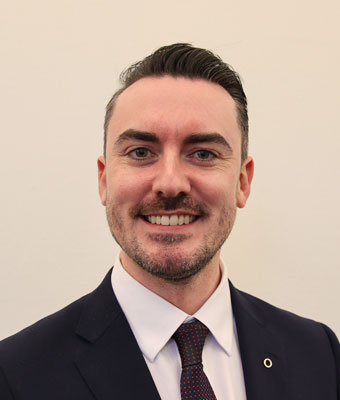
11. Deputy Naoise Ó Cearúil asked the Minister for Culture, Communications and Sport for an update on the funding agreed by Government for the post office network in January 2026; if the funding has been made available to An Post; the projects and services the funding will be allocated to; and if he will make a statement on the matter. [33216/26]
Ba mhian liom ceist a chur ar an Aire Stáit uasdátú a thabhairt ar mhaoiniú a d’fhógair an Rialtas do líonra Oifig an Phoist i mí Eanáir. I ask the Minister of State for an update on the €15 million agreed by Government for the post office network in January, if the funding has been made available to An Post, and what projects and services the funding will be allocated to.
I thank Deputy Ó Cearúil for his question and his ongoing advocacy on behalf of the post office network and its importance for local communities.
The post office network is a key component of the economic and social infrastructure throughout the country. On the back of that, the programme for Government states that the Government will continue to provide the nationwide network of post offices with funding to ensure their sustainability and enhance the value they bring to local communities. In that regard, on 13 January 2026, the Government approved renewed funding for the post office network for the next five years, running from 2026 to 2030, at an enhanced amount of €15 million per annum from my Department. That has increased from €10 million per annum.
In line with the programme for Government, the funding will support the stability and sustainability of the nationwide network of post offices, protecting and nurturing a commercially focused post office network. It will also support access for citizens to the key social benefits of the post office network and help citizens access services effectively and equitably.
The Government also agreed the principles on which the funding model will operate, which include maintaining access to the network across urban and rural Ireland, aligning individual funding with criteria, including the degree of isolation and the sustainability of each post office, ensuring a minimum revenue threshold for post offices, and recognising offices of cultural or geographic significance, such as those on inhabited islands or in Gaeltacht areas.
My Department is progressing the necessary legislation to place this funding on an appropriate statutory footing. I will shortly prepare a memo to bring to Government to publish the legislation which has been drafted in conjunction with the Office of the Attorney General. As matters stand, that funding is being provided from the start of this year by An Post to the post offices. Once the legislation is passed by this House, we will reimburse An Post and provide that funding for this year.
Decisions relating to the network, including decisions relating to specific post offices, are always operational matters for the board of An Post and the management of the company.
The Minister of State and I agree the post office network and post offices, particularly in rural Ireland, are vital community infrastructure. I pay tribute to the Irish Postmasters Union for the work it is doing on behalf of the postmasters throughout the country and our party colleague, Councillor Tom O'Callaghan, for his advocacy as well. I appreciate the €15 million that has been allocated. However, the question that still remains for a lot of the postmasters is when the funding will reach the network so that they actually see it. I appreciate that the Minister of State said it has already been allocated but a lot of the postmasters have not seen any of it yet.
Furthermore, what specific improvements or protections will the funding support? Part of that is looking at extending the post office network into other areas, such as click and collect, and making the business more commercially viable, operating in the heart of a community and delivering services that would not be available if it were not for An Post.
My understanding is that, since the start of the year, the funding is being paid from An Post to postmasters. If there are any particular instances where that is not the case, I will be happy to have them followed up. That is my understanding of the situation based on the briefing I have received on it. An Post is due to get €15 million, which is an increase from €10 million last year. This requires short legislation going through the Houses. Our objective is to have that completed by the summer. Once that legislation has been facilitated, we can make the €15 million payment for this year to An Post. This will cover the funding the company has already given post offices since the start of the year and the funding that is required to carry post offices through to the end of the year and, going forward, to 2030.
It would also be beneficial to have annual reporting on that €15 million to ensure there is transparency as regards where and how it is being spent. That would be extremely helpful in order to get a better understanding and ensuring value for money for the additional funding the Government is providing to the post office network.
There was very strong engagement between the Irish Postmasters Union and An Post in relation to agreeing the criteria for how the funding will be distributed. An agreement on its distribution, including the criteria around that for each of the five years, has been finalised and is now in place for postmasters. That Government commitment, under which we have increased our funding to the post office network by 50% since last year and increased certainty around the future of that funding by putting in place a five-year agreement as opposed to the three-year agreement it is replacing, has been very much welcomed by postmasters throughout the country and the Irish Postmasters Union. It reflects the commitment of everyone in the House, including the Deputy and I and, in particular, the Government, to supporting the post office network. I thank the Deputy for raising this matter and for his ongoing advocacy on behalf of the post office network and of its importance to local communities.
Raidió Teilifís Éireann
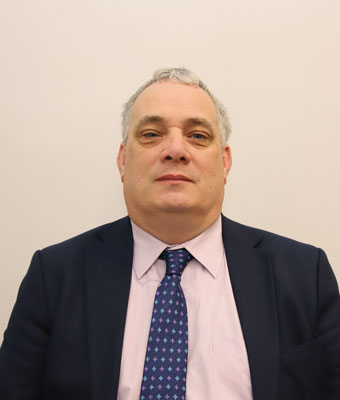
12. D'fhiafraigh Deputy Aengus Ó Snodaigh den Minister for Culture, Communications and Sport an bhfuil sé ar an eolas faoi gheo-bhlocáil a chuireann isteach ar chláracha Gaeilge ó chraoltóirí seirbhíse poiblí a bheith ar fáil don lucht féachana sna Sé Chontae, ar sheirbhís bheo agus ar sheinnteoirí ar líne araon, agus an bhfuil sé i gceist aige aon ghníomh a chur i gcrích chun a chinntiú go bhfuil fáil ag an lucht féachana fud fad na hÉireann ar ábhar sa teanga náisiúnta. [33400/26]
Baineann an cheist seo leis an geo-bhlocáil atá á dhéanamh ar chláracha Gaeilge ó chraoltóirí seirbhíse poiblí nach bhfuil ar fáil don lucht féachana sna Sé Chontae de bharr an geo-bhlocáil atá á dhéanamh ar sheirbhísí beo agus ar sheinnteoirí ar líne araon. An bhfuil sé i gceist ag an Aire aon ghníomh a dhéanamh chun deireadh a chur leis an geo-bhlocáil sin ionas gur féidir le lucht féachana ar fud na hÉireann ábhair atá á chraoladh sa teanga náisiúnta a fháil?
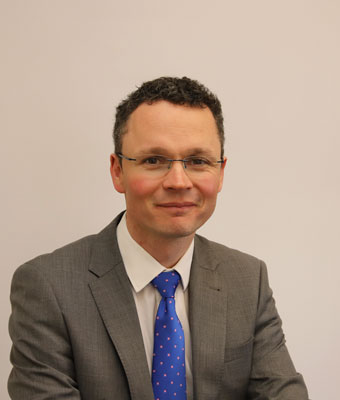
I measc na n-aidhmeanna atá ag RTÉ agus ag TG4 is ea go gcuirfeadh an dá chraoltóir seirbhíse poiblí a gcuid seirbhísí ar fáil, a mhéid agus is féidir é, don phobal uile ar oileán uile na hÉireann. Tá RTÉ agus TG4 araon ar fáil i dTuaisceart Eireann ar an ardán Freeview, chomh maith le hardáin síntiúis eile, ach is féidir bac a chur ar ábhair áirithe ar bhonn cearta. De réir mar a thuigim, nuair a cheannaíonn an dá stáisiún cearta ar ábhar craoltóireacht, ar nós imeachtaí spóirt, déanann siad iarracht cearta a cheannach ar bhonn oileán uile nuair is féidir. Ní bhíonn sé seo éasca i gcónaí. Is é an gnáthnós sa saol craoltóireachta ná cearta a dhíol ar bhonn críche. Mar sin is minic nach dtairgtear ábhar do RTÉ agus TG4, nó ní bhíonn siad in ann ábhar a fháil gur féidir a chraoladh i dTuaisceart Éireann nó áit eile taobh amuigh den Stát as Béarla nó as Gaeilge. Is minic a bhíonn cearta críche ar chláir, nó ar ábhair faoi leith, faighte cheana féin ag craoltóir sa Ríocht Aontaithe don dlínse sin ar fad. Cuireann sé seo cosc ar RTÉ agus TG4 iarracht a dhéanamh an t-ábhar sin a cheannach don oileán uile. I gcásanna áirithe, cé go bhféadfadh cearta uile-oileáin a bheith ag RTÉ nó TG4 maidir le craoladh líneach, tá cosc orthu ábhar a chraoladh ar sheirbhísí sruthú, mar a bhíonn acu ar na seinnteoirí, lasmuigh den Stát.
Baineann an cheist seo le halt a bhí ar Journal.ie le déanaí. Is ceist í atá ardaithe agam agus ag daoine eile i dTithe an Oireachtais. Baineann sí le cláir do leanaí ar nós "Bluey" nó "Dora". Bíonn an clár “Dora” ar TG4 agus bíonn “Bluey” ar RTÉ. Tá geo-bhlocáil á dhéanamh. San alt céanna, dúirt Pádraig Ó Tiarnaigh ó Chonradh na Gaeilge:
Tá sé scannalach, beagnach 30 bliain ar aghaidh ó Chomhaontú Aoine an Chéasta, go bhfuil RTÉ iad féin ag déanamh socruithe clár teilifíse a cheannach agus a chur ar fáil trí Ghaeilge, agus ansin bac a chur...[orthu siúd] do phobal na Gaeilge atá lonnaithe sna sé chontae.
Bhí leanaí Phádraig ag baint sult as "Bluey" trí Ghaeilge agus iad ar saoire I dTír Chonaill. Nuair a d'fhill siad abhaile, áfach, bhí "Bluey" imithe don seinnteoir. Tá muid anois tamall maith de bhlianta ó Chomhaontú Aoine an Chéasta inar glacadh leis go ndéanfaí cinntí le déanamh cinnte de nach mbeadh cosc nó baic maidir le cothú agus forbairt na teanga.
Tuigim cé chomh tábhachtach is atá an clár "Bluey", an leaid gorm sin as an Astráil, don lucht féachana Béarla agus Gaeilge araon. Tá an clár tábhachtach do na gasúir óga agus iad sa bhaile. Ní hamháin go bhfuil sé tábhachtach do na gasúir, ach tá sé tábhachtach do na tuismitheoirí freisin. Is ceist thábhachtach í. Ní hamháin go mbaineann an cheist seo leis an gclár "Bluey" agus na cláir eile a chraoltar do na gasúir óga, ach baineann sí le stádas na teanga i dTuaisceart Éireann. Leagadh amach i gComhaontú Aoine an Chéasta a thábhachtaí is atá an Ghaeilge. Mar is eol don Teachta, bhí mé i m'Aire Stáit a raibh freagrachtaí na Gaeltachta air.
Bhí an-chuid fadhbanna ag an Rialtas anseo ag déileáil leis an bhFeidhmeannas i dTuaisceart Éireann maidir le stádas na Gaeilge i dTuaisceart Éireann. Ar an gcead dul síos, is ceist í seo don Fheidhmeannas agus do Rialtas na Ríochta Aontaithe, ach tuigim cé chomh tábhachtach is atá an cheist seo, ní hamháin don chlár "Bluey" ach do stádas na teanga i dTuaisceart Éireann freisin.
Tuigim go dtuigeann an tAire an cheist. Ní bhím ag féachaint ar "Bluey" mórán ach nuair atá na garpháistí linn, bíonn siad á lorg i mBéarla, i nGaeilge nó i pé teanga ina gcraoltar é. Is breá leo "Bluey". Nuair a bhí m'iníon óg, is ar an chlár "Dora" a bhíodh sí ag féachaint. Nuair atá RTÉ agus TG4 ag ceannach cláir mar seo agus ag déanamh aistriúcháin orthu, má dhéanann siad iad féin é, tá sé tábhachtach go bhfuil na ceadúnais acu chun na cláir a chraoladh fud fad na hÉireann ina iomláine. D’fhoilsigh mé an Bille Craolacháin (Seirbhís Uile-Éireann) (Leasú), 2025 chun díriú isteach ar an gceist seo. Tá sé tábhachtach go mbeadh an Rialtas ag díriú isteach air seo ionas gur féidir linn teacht timpeall ar an bhfadhb seo.
B’fhéidir gur ceist í seo don Roinn gnóthaí eachtracha nó Roinn an Taoisigh mar tá sí an-tábhachtach. Mar atá leagtha amach i gComhaontú Aoine an Chéasta, comhaontaíodh go mbeadh TG4 ar fáil chomh forleathan agus ab fhéidir ar fud Thuaisceart Éireann. Tá stádas TG4 agus stádas tábhachtach na Gaeilge leagtha amach cheana féin. Tá a fhios ag an Teachta na deacrachtaí a bhí agam maidir le Foras na Gaeilge nuair a bhí mé i m’Aire Stáit le freagrachtaí don Ghaeilge agus do na Gaeltachtaí. Tuigim cé chomh tábhachtach is atá sé seo, ní hamháin do na gasúir ach freisin do stádas na Gaeilge. Le críoch a chur leis an ábhar seo, tá an Teachta ar nós "Bluey" ar maidin agus é ag caitheamh léine goirme, chomh maith le seaicéad gorm. Tá sé go hálainn an léine gorm a fheiceáil ar maidin.
Online Safety
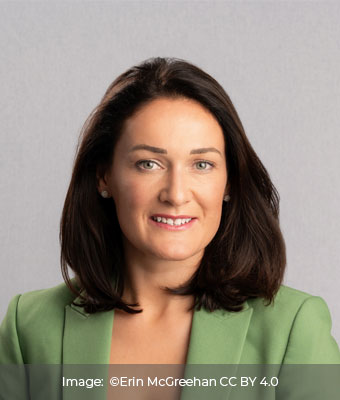
13. Deputy Erin McGreehan asked the Minister for Culture, Communications and Sport the actions being taken to protect young people online; and if he will make a statement on the matter. [32803/26]
I ask the Minister to outline the actions being taken by his Department to protect young people online.
Gabhaim buíochas leis an Teachta as ucht an ábhair tábhachtaigh seo a chur os comhair na Dála ar maidin. Ireland's online safety framework includes the Online Safety and Media Regulation Act 2022, the EU Digital Services Act and the online safety code. That code requires that designated platforms restrict access to certain categories of content that could cause harm, including to children. Those include cyberbullying and promoting eating disorders, dangerous challenges, self-harm and suicide. The code came into full effect in July 2025 and applies EU-wide in respect of platforms established in the State, including many of the larger platforms. Failure to comply can lead to significant financial sanctions of up to €20 million or 10% of turnover.
The Digital Services Act includes obligations to protect minors. Failure by a platform to comply can also lead to significant sanctions. However, the developing nature of digital services requires continuing vigilance. The protection of children and young people in the online world remains of the utmost importance to the Government. It is a key theme in our most recent national digital and AI strategy.
Under the online safety code, designated platforms must use robust age assurance measures to prevent minors from accessing pornography or gratuitous violence. I am determined to make sure that this requirement can be implemented. Officials in my Department are working with the Office of the Government Chief Information Officer on an age verification tool within Ireland's digital wallet. This will meet high standards of privacy, confirming to platforms only whether a person is over 18.
I am exploring options for introducing restrictions on social media use for young people under 16. It is Government policy and my firm belief that there should be a restriction at EU level, and I have been engaging with EU counterparts in that regard. If a common approach is not achieved at EU level, I will seek Government approval to take action at a national level.
Online safety for children is a priority for Ireland's Presidency of the European Union. The evaluation of the audiovisual media services directive, which will be published during our Presidency, may also yield proposals for other new measures to protect children online. I will be hosting a high-level Presidency conference in Dublin dedicated to this, which will review progress and discuss options for further measures.
I thank the Minister for that overview. As a parent, I am supremely worried about online technology harms. To a person on the street, it seems we have a wait-and-see approach. I feel child welfare is quite often dismissed due to our dependence on technology companies in the Irish economy, not by the Government but that is what it is seen as quite regularly. We see younger and younger children accessing mental health supports. We have to acknowledge the correlation between social media and online harms and our children's mental health. I see this as a public health issue, on which we must act fast.
I am glad to hear the Minister is making this a priority during the European Presidency because we have to make it a priority. He mentioned that the code of conduct came into effect in 2025. Does it work? What are the results? Have we seen any sanctions so far? Does Coimisiún na Meán have the resources and personnel it needs?
To go back to a previous question, Coimisiún na Meán is self-financed in terms of the regulation. Regulation costs money and that is why levies are imposed. People do not like that, and the previous Deputy said she did not like it. That is a separate issue, however. I am a parent as well and I am not happy with what is happening, particularly at EU level. This issue was raised at the EU Council meeting last week, and there was a shift in attitude on it. At the previous EU Council meeting, there was a view that the Digital Services Act was enough. It was very clear last week, maybe with the exception of one or two countries, that everyone now wants action taken on this. I had a bilateral meeting with the Commissioner at which I made my Department’s priorities clear. We have one sole priority, and I laid that out clearly. Everything else the Commission wants us to do as a Government in the areas of communications, postal and everything else will be predicated on its commitment to working with us on this. If it does not work with us on this, we will not work with it on those other areas. That is the way I am going to play ball. There is no issue facing the European Union at the moment that is more pressing than the protection of our children. If people do not get that message the easy way, we will do it the hard way.
I appreciate the strong line the Minister is taking on this. It is positive that this will be the single line of importance for his Department during the European Union Presidency. It is important we take a zero-tolerance approach to this and that we look after our children. As I said, it is a public health issue. The damage it has caused to our children will stay with them. I also extend that to online social media in general for all of us in the country. People would not dare say the things they say online to people as they walk down the street. If they cannot say it to someone's face, they should not say it online. Everyone in this House has been a victim of nonsense being said about them online. When we meet those people in person, however, they are as quiet as mouses. We have to stand tall and ensure we put pressure on the digital media companies to stamp it out. They have responsibility.
I agree entirely with the Deputy. For anyone who did not hear it, I restate that if a common approach is not possible at EU level, I will seek Government approval to take action at a national level. That is not mañana. If I feel, having taken over the Chair of the Presidency, that this is something the Commission or a significant blocking minority is resisting, we will go it alone like France, Spain, Germany, Greece, Luxembourg and a number of other countries have done.
The sad reality is that the Commission and the European institutions have left it to individual member states to act unilaterally in this regard. That is not how Europe should work. This question should not be about anything other than the protection of the European child. At the moment, that is not the case. If I feel, having taken the chair of the Council of Ministers, that this is something being pushed back on by the Commission or there is a reluctance to move it forward, I will bring forward proposals for Ireland to deal with it unilaterally in our jurisdiction by implementing a digital age of majority, as other countries have done.
Question No. 14 taken with Written Answers.
Sports Funding
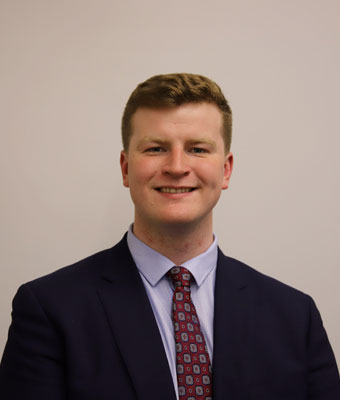
15. Deputy James O'Connor asked the Minister for Culture, Communications and Sport when the next round of sports capital grants will be opened for applications; and if he will make a statement on the matter. [33161/26]
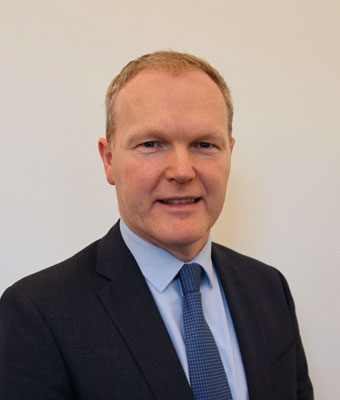
16. Deputy Séamus McGrath asked the Minister for Culture, Communications and Sport when he hopes to open up the community sport facilities fund and the large-scale sports infrastructure fund for applications. [33164/26]
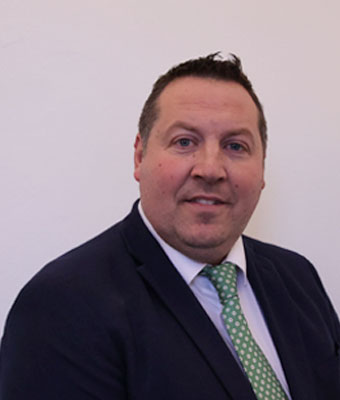
18. Deputy Peter 'Chap' Cleere asked the Minister for Culture, Communications and Sport when the next round of the sports capital grant will open for applications; and if he will make a statement on the matter. [32999/26]
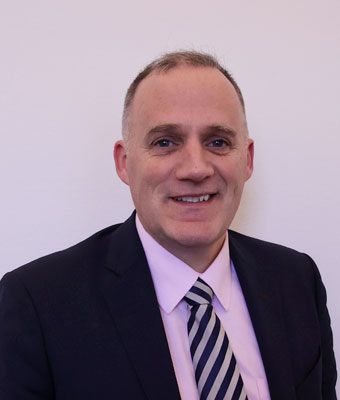
19. Deputy Naoise Ó Muirí asked the Minister for Culture, Communications and Sport when the capital funding programmes for sport, such as the community sport facilities fund will open for applications; and if he will make a statement on the matter. [33292/26]
27. Deputy Brendan Smith asked the Minister for Culture, Communications and Sport if there will be increased levels of grant aid in the next community sports facilities fund scheme, taking into account the substantial increase in construction costs since the last round of grants were approved; and if he will make a statement on the matter. [33411/26]
33. Deputy Ruairí Ó Murchú asked the Minister for Culture, Communications and Sport when the review into the current funding round community sport facilities fund will be finalised; the budget allocation for the forthcoming CSFF; and if he will make a statement on the matter. [32811/26]
39. Deputy Cathal Crowe asked the Minister for Culture, Communications and Sport when he expects to open the sports capital and equipment grant programme for applications; and if he will make a statement on the matter. [32459/26]
40. Deputy Joanna Byrne asked the Minister for Culture, Communications and Sport in light of his Department aiming to open the new round of the CSFF in the first half of 2026, when the new guidelines will be published in advance to include updated eligibility and likely assessment criteria in this next round; and if he will make a statement on the matter. [32741/26]
56. Deputy Brendan Smith asked the Minister for Culture, Communications and Sport when details of the next community sport facilities fund will be announced; and if he will make a statement on the matter. [33410/26]
When does the Minister hope to open the community sports facilities fund and the large-scale sports infrastructure fund for applications?
I propose to take Questions Nos. 15, 16, 18, 19, 27, 33, 39, 40 and 56 together.
I thank Deputies McGrath and Cleere for their questions. The programme for Government commits to continuing to support the funding of sports capital projects and assessing the distribution of funding in order to maximise participation in all sports at community and national level. My Department's Statement of Strategy 2025-2028 commits to continuing to invest in sports infrastructure through the community sports facilities fund, CSFF, and also the large-scale sport infrastructure fund, LSSIF. Deputies will be aware that these funds are critical to advancing the development of sporting facilities in different counties and parts of the country. This infrastructure is key to sporting participation and success and we will continue to invest in it.
One of the benefits of the investment we have seen as a result of the community sports facilities fund over the last years has been a growing level of participation. Sport Ireland's sport monitor shows that just under 50% of the adult male population now participate in sport at least once a week and among women, just 3% less than that, at 47%, participate in sport at least once a week. Significantly, in recent years we have seen the closing of the gender gap between the participation levels of men and women. This success is putting significant additional pressure on our sporting clubs and organisations in relation to the need for facilities and the quality and standard of facilities. This is all a result of that success.
The Government's objective, through grants from the community sports facilities fund, is to work with clubs to help them develop their facilities. We have seen the significant impact these grants have had since 1998 when the community sports facilities fund, previously the sports capital fund, was established. A total of €1.4 billion has been invested in grants to clubs, with 19,000 different projects supported. There has been a significant and generational change in the quality of facilities across the country as a result. The most recent round saw the largest ever investment in the community sports facilities fund, at just under €270 million, with over 3,000 projects supported and 40 different sports types benefiting.
We are now in the process of preparing for the next round. Significant work on a review of the previous round has been undertaken. We are working towards being ready to open for applications next month. We also have to finalise our engagement with the Department of public expenditure in advance of that. A lot of work has been carried out. We are also in the position of finalising a new communications or IT platform on which applications will be received. Everyone involved with clubs across the country will be very familiar with the OSCAR platform, which has been in place for over 20 years. Work is being finalised on a new platform which will be ready to accept applications on this occasion. It will be more user-friendly for clubs and for those making applications.
We are also finalising the finer detail in relation to the terms and conditions and how the scheme will operate. These will be made clear to clubs when we open it up. This applies to the standard club applications, which, under the previous round, were for a maximum grant of €200,000, and the regional applications, which were for a maximum grant of €500,000 under the previous round. The stream within the community sports facilities fund for equipment grants will be available again this time around. That was capped at €70,000 last time around. Clubs can apply for that. We had discussions earlier about the challenges of getting access to premises. Through this round, we want to bring about more collaboration around how people provide facilities where clubs do not have premises. Basketball and boxing clubs, for example, which may not have a premises and instead rent premises, are eligible to apply for equipment grants. Clubs must have a lease or ownership of a premises if they are applying for a capital development grant, but not so for equipment grants. This is certainly an option that clubs will be able to avail of as well.
I am meeting many clubs to gain feedback and provide information opportunities to clubs in different counties. We are also engaging on their experience of previous rounds of funding. The information gathered as part of that will help inform the review of this round to make sure it is as workable and practical as possible for clubs and to address the particular challenges we see as regards areas that have growing demand and sports that may have been underfunded in the past. We are working towards being able to open up the fund, all things going well, next month, pending Government approvals, and to have an application round over the next months.
I very much welcome the Minister of State's commitment in relation to these sports schemes. They are critically important. We are a proud sporting nation, as the Minister of State outlined. It is critical that we continue to invest in sporting facilities. There are many sporting clubs, community groups and national governing bodies waiting for the sports funds to open for applications. I see the importance of sporting clubs in my community. They are the thread that holds the community together. They provide a very positive outlet for people of all ages, particularly young people. It is essential in the world we are living in that we provide this positive outlet. Sport provides immeasurable benefits from a health point of view, both physical and mental health. It is critical, therefore, that we continue to invest in sporting facilities. I welcome the commitment the Minister of State gave and the fact that the community sports facilities fund is likely to open for applications in June.
I also asked about the large-scale sports infrastructure fund. If the Minister of State or the Minister could give us some clarification in relation to that, it would be welcome.
I thank the Minister of State and acknowledge his role in the sports capital grant. To see the fund increase under previous governments from €70 million to €170 million and then to €270 million in the previous round has been absolutely fantastic. This Government needs to continue to support and invest in sporting organisations right across the country.
The caps on the regional, local and equipment grants were €500,000, €200,000 and €70,000, respectively, in the previous round. It is my strong view that grants need to be brought in line with increased costs. I implore the Minister of State to try, to the best of his ability, to get all three of those caps increased to give clubs a fighting chance.
Sports capital grants are a shot in the arm for clubs that are the lifeblood of communities. They are at the heart and soul of communities right across the country. They make a phenomenal difference and the Government has to continue to support them. I look forward to the funds opening up in June for the thousands of clubs across the country that can benefit from this significant funding.
We have all seen the benefits of sports capital grants. There was a lot of conversation about the sports capital grant for the pitch and lights in Oriel Park. It has been a great benefit and absolutely necessary. We need that to continue. I add my voice to the call to increase the caps of €200,000 and €500,000 given the higher costs, especially with serious capital builds.
When will the large-scale sports infrastructure fund open? This is of major interest, not only to Dundalk Football Club and Oriel Park, but particularly to Louth GAA. We have seen the work on the stadium going on, and rightly so. If this was a couple of weeks ago, I would be talking about how great the Louth team is doing but it has been a rough week. I commend the under-20 team on a good came against Kildare. The best of luck to them. Hopefully we do better at senior level against Dublin next time.
I thank Deputies McGrath, Cleere and Ó Murchú. With regard to Deputy McGrath's question on the large-scale infrastructure fund, we have had two rounds of that fund so far, in 2019 and 2024. The national development plan provides for one round to be conducted and opened during this Government term. We expect it will be a couple of years from now, towards the latter end of the Government, because the current focus is on drawing down funding and making sure the projects funded in the most recent round are followed through on. We will be monitoring that closely. We are not talking about the next year or 18 months, but a time beyond that, perhaps in a couple of years. We will monitor it as it goes.
We will monitor that closely. We are not talking about the next year or 18 months. We are talking a couple of years beyond that. We will monitor it as it goes. There will be one round of the LSSIF over the Government's terms.
We are considering the caps as part of the review. The Minister and I will engage with the Department of public expenditure and across government as well to make sure that the funding envelope can be as strong as possible. That will inform where we are at with the caps as well in terms of the level of funding that can be made available and our general guidance on that. Going around the country, I met Deputies McGrath and Cleere in their own areas. I know they have many projects they want to see going forward. There is real demand. It is exceptionally rare that I visit a club or an organisation that is not under pressure for capacity and space. That is a reflection of the really strong work that the volunteer input that drives our clubs and makes support possible in communities is achieving. From a Government point of view, we have to work to try to support clubs with their key priorities in how they are developing their club best to meet the needs of their members and the participation demands that are on them as well.
We look forward to working closely with the Deputies to finalise the detail of this review, and then to having a round open over the next number of months and to make sure that it is as practical and as accessible as possible for clubs to be able to participate in it. We will all work collectively as a Government then to try to support the great work happening in our communities, driven by clubs and underpinned entirely by a voluntary commitment and effort. It makes such a difference and is such a gift from those people to their local communities in terms of the time they give up throughout their week for a wonderful dividend with sport being part of more and more people's lives on a regular basis.
I welcome the Minister of State's acknowledgement of the volunteers who help to run these sporting clubs across our country. They are critically important. People give up their time to proved a positive outlet for people of all ages in our communities. I want to add one point on the need to continue to invest in our sports facilities. Housing is our number one priority as a Government and we are rezoning additional land across the country. We will see additional houses built in our towns and villages. It is critically important that we invest in our social infrastructure, such as sporting facilities, to provide outlets and amenities for people. As I mentioned to the Minister of State previously, in my hometown of Carrigaline I have a project in the pipeline for the LSSIF. This is why I am interested in that fund. This is a combined application made up of a number of local sporting groups and we have a very ambitious project in the pipeline, so I will follow up on that with him in due course. I welcome the fact that there is a commitment to open up that fund during the Government's term.
As the Minister of State knows, I have a number of projects and I am sure we will discuss them at length in due course. I want to pay tribute to his colleagues in Killarney as well. Ken and the lads have been fantastic in any dealings I have had with them on existing schemes to new ones going forward. I welcome the Minister of State's commitment to the LSSIF to open in late 2027 or early 2028 as provided for in the programme for Government. We have some key infrastructure projects in my constituency that I look forward to discussing with the Minister of State as well.
Last night in Kilkenny I attended an amazing event for an incredible young man called Peter Lynch. He is the fastest marathon runner in the Republic of Ireland. He ran 2:06:08 to finish ninth in the London marathon and was the first European past the post. Peter is a product of Kilkenny City Harriers. In March, he ran the first sub one hour half marathon in New York, which was an incredible achievement. The community of Kilkenny City Harriers and Kilkenny County Council came out last night to support and congratulate this young man on his incredible achievements. It is important in this House that we acknowledge that Peter was an ordinary young lad growing up, worked his way through and showed incredible and resourcefulness. To come away and be a pure champion is absolutely fantastic. I pay tribute to Peter Lynch and Kilkenny City Harriers for their fantastic work.
I agree. We all know the necessity of sport as being a real positive in a world of many negatives. It is about making sure that the money does come on stream and that the Government would look at the caps. Whether it is Louth GAA, Dundalk FC or Drogheda United, they would be somewhat worried about what looks like a delay in the LSSIF. It is necessary, particularly for League of Ireland clubs. I said it about Louth previously and now I will say it about Dundalk FC. Hopefully we will do better against Bohemians at the weekend than we have done in the last while. We also need to make sure that we support the likes of Peter Lynch, Kate O'Connor and those who are coming behind them. We know some good work has been done but there is a lot more that needs to be done. We are starting from behind in some cases.
Ceisteanna Eile - Other Questions
Questions Nos. 69 and 70 taken with Written Answers.
Departmental Properties
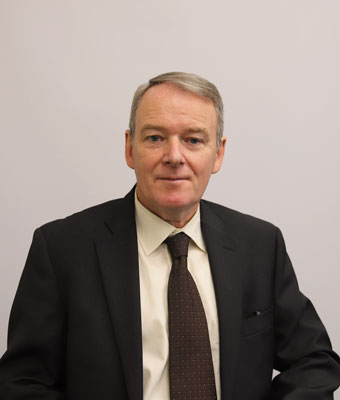
71. Deputy Brian Stanley asked the Minister for Defence if her Department or the Defence Forces have plans to renovate and bring back into use more than 80 vacant homes at the Curragh Camp; and if she will make a statement on the matter. [33195/26]
My question relates to the future use of the accommodation at the Curragh Camp. There are many vacant homes there at the moment.
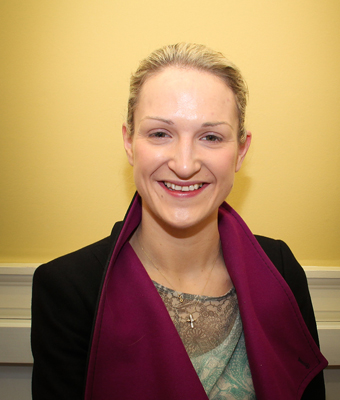
I thank the Deputy for raising this matter. There has been significant investment in the Defence Forces built infrastructure in recent years. The capital expenditure for building works in military installations and barracks across the country for the past five years was approximately €170 million, and for this year alone is close to €70 million. In particular, the development of accommodation for new recruits has been a priority for the Department.
In terms of the existing Defence Forces residential housing stock in the Curragh Camp, of 104 residential units, 63 residential properties are uninhabitable. None of these properties can be brought up to a habitable standard without significant work, and many were built prior to the introduction of building regulations. Consultants were commissioned to assess the condition of the Defence Forces vacant housing stock and its suitability for conversion or refurbishment to provide for additional single living-in accommodation for Defence Forces personnel. That consultancy reported its recommendations on refurbishment projects last year.
My officials have since engaged with the Defence Forces to have those projects included in the existing infrastructure development programme. I am advised that work is actively under way to prepare the necessary tender documentation, with a view to commencing a procurement process this year.
There is currently an extensive programme of investment in accommodation for serving Defence Forces personnel across all military installations. Since the launch of the infrastructure development plan in January 2020, numerous accommodation projects, at a combined cost of approximately €49 million, have been completed and have provided 775 beds. The Deputy may also wish to know that a steady pipeline of accommodation projects is being progressed. These are expected to significantly increase accommodation capacity in the coming years.
As I said in an earlier reply, only last week, I was at Haulbowline, the naval base in Cork, where we opened state-of-the-art accommodation with over 70 beds. That was in some of the older infrastructure, thereby making sure we protect our heritage and protect our older buildings, where possible, but also making sure that our new recruits are living and operating in new, modern facilities.
I take it from the response that there has been some progress. The Minister referred to 63 but my information is that up to 80 properties are in a derelict state. Soldiers are travelling distances to work, and many travel from County Laois. There are also retired soldiers, some of whom, unfortunately, end up in difficult housing situations. It is important these properties are put back into use. We cannot have vacant homes of any kind lying empty, given the housing crisis. Has there been liaison with the Department of Housing, Local Government and Heritage on the issue?
I would make one point about the consultants and the report. The Minister and I know that things can go around the houses over a long period of time. It is important that there is action. They are empty and derelict houses. It is important that we move on and try to get them back into use.
I agree that we need action. We need to make sure that the money we have allocated, all €1.7 billion of it, in particular the money that is specific to accommodation, is spent and that projects are ready to go.
How much will be spent on accommodation?
In this year alone, we are up to €70 million, and that includes accommodation, but also dining facilities, a new gym and overall critical infrastructure. It will be over €400 million in the coming years. We need to make sure that we have projects ready to go and lined up. As I said, 63 residential properties have been identified as uninhabitable.
The projects that are being progressed include refurbishment of block one in Collins Barracks, modular accommodation in Haulbowline, the conversion of houses Nos. 2 and 5 in Casement Aerodrome, the refurbishment of cadet accommodation in Haulbowline, the refurbishment of the cadets’ mess accommodation in Haulbowline, the refurbishment of blocks A, B, C, D, E and F in Stephens Barracks, and there is also Cathal Brugha Barracks, the Curragh, Gormanston and Casement Aerodrome. These are all projects that are under way. On top of that, the projects that have been completed to date include Pearse Barracks, the Defence Forces Training Centre in the Curragh, Cathal Brugha Barracks, Casement Aerodrome, McKee Barracks and Haulbowline. A huge amount of work has been done in recent years. As I said, a huge number of projects are currently under way.
The Minister outlined the many different locations, barracks and naval bases. I welcome that. However, the issue at the Curragh is of particular concern. This has gone on for a long time and in the past three or four decades, these houses have gradually fallen into disuse. I know some of them might be a challenge as they were built at a different time, some during the period of British rule. Whether it was 100, 120 or 130 years ago, housing standards were not what they are now. There has been a lot of talk in this House about upgrading houses and bringing old houses back into use. There is a lot more technology now. The Minister outlined a wide range of works across the State but I would like to see a particular focus on the Curragh. The Curragh was the main Army camp over the years. There was a big concentration in Kildare, and many people from County Laois served there. I would like to see that as a particular target.
I have been in the Curragh a number of times. It is synonymous with the Defence Forces and is long-standing in terms of what it has provided and supported for Defence Forces members for many years, including accommodation and training on the grounds. I want to do everything possible to invest in new infrastructure but also to bring what is derelict back into use and ensure we are making the best use of the infrastructure that we have there. That is why we are seeing a significant amount of investment, not just in accommodation, but more broadly in infrastructure across the Curragh and all of the various different barracks and areas that I have mentioned.
It is important to stress that we have a Defence Forces infrastructure development plan. It has set out the delivery of these projects from 2023 to 2027, many of which have already been delivered. With the new capital plan, the intention is to make sure that we have a new stream of works and more projects that are ready to go, including projects like the one at the Curragh. As more funding comes on stream, or as additional funding is added to our capital plan mid-term, I hope that we will have more projects ready to go and that we will be able to continue that steady stream of investment.
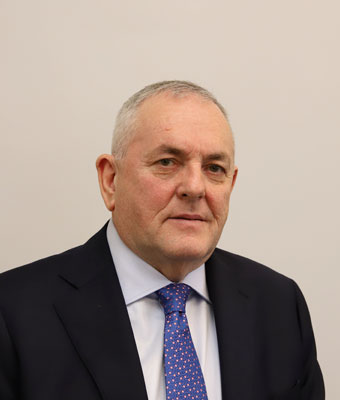
Deputy Ó Fearghaíl indicated that he wished to ask a supplementary question.
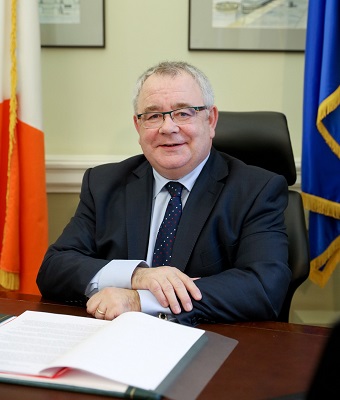
I commend Deputy Stanley on putting down a question on this important matter. I welcome the response from the Minister. I grew up in Kildare at a time when, like many generations before me, the Curragh was a vibrant, living community. Unfortunately, in recent decades, the Department of Defence took as its policy the depopulation of the Curragh camp. Worse still, in recent years, we have seen the demolition of many houses in the area, which is completely wrong. I thank the current Taoiseach and former Minister for putting a stop to the demolition of houses. I welcome the Minister, Deputy McEntee's reply today. The commitment to refurbish those houses is very positive.
I ask her to also look at the Orchard Park 100-house development, where a few houses remain in Army ownership. The intention is to transfer them to the local authority, which is in agreement, but there are still some tenants in those houses who would want to avail of an option to purchase. I ask the Minister to look at that.
We need to look at all of the stock in the Defence Forces. We need to make sure that where we can refurbish, we are doing that, and where we need to build new, we are doing that, but also that we are looking at other options, whether with the local authorities or other associations. I am happy to look at any proposals or suggestions that the Deputy has raised.
More broadly, the Deputy spoke about it as a community. I work very closely with somebody who went to school in the Curragh, so I understand that we are not just talking about people who are training but their families living onsite and going to school there. It is a community. We want to make sure that it maintains that sense of community, given its importance for the Defence Forces overall. My priority is to make sure we continue to invest in it, and that where there is dereliction, we address that, but also that we highlight it and support the community that is thriving there. That is an integral part of our Defence Forces because the support the families provide to our Defence Forces is essential. Again, this comes back to the fact that if we want to grow and expand our Defence Forces, have greater capabilities and encourage more people to come into the Defence Forces, we need to make sure there is appropriate accommodation and services for them. That is a key part of our overall plan and objectives in the years ahead.
Defence Forces
72. Deputy Duncan Smith asked the Minister for Defence her views on the release of figures that show that Ireland continues to languish at the bottom of the EU table for defence expenditure; and if she will make a statement on the matter. [33417/26]
I ask the Minister to comment on the fact that Ireland remains stubbornly at the bottom of the EU table for defence and security expenditure, and what plans she has to ensure that Ireland does not remain at the bottom and continues to improve its investment in this area.
I am very conscious, as we all are, of the narrative that Ireland has not been spending enough and that we have not invested in the Defence Forces. I think we all agree that we need to do more and spend more. That is why, in the past six months, we have seen an increase in our overall capital plan for the Defence Forces of 55%. We have a new defence sectoral national development plan from 2026 to 2030.
This is a comprehensive plan for the record €1.7 billion capital investment in over the next five years - an increase of €600 million, or 55%, on the previous baseline. This investment provides for the modernisation of the Defence Forces capability across all domains. In addition, the defence Vote group has been provided with the highest ever level of overall funding - an allocation of €1.49 billion - for 2026. That is, over time, an increase in spending on capital by 55%. Our increase in current is going in the right direction. In the upcoming budget, I will be hoping to increase that further.
When we look at the investment itself, we see that each new investment is delivering additional capabilities as part of our commitment to delivering on a major programme of capability improvement in the Defence Forces. For example, I opened a number of different blocks and accommodation and supports for the Naval Service base, but also for our Defence Forces across the country. This is part of a range of ongoing projects including the development of the cadet school - we spoke of cadets earlier. By investing in the school, we are encouraging more. It also includes a new medical facility at Casement Aerodrome. We also have a new contract for the construction of an Army Ranger wing headquarters at the Defence Forces training centre. A record €83 million has been allocated this year.
What comes through when I speak to colleagues at an international level is what we are doing when it comes to our new capabilities, particularly the military radar programme. This is the first thing that I have brought forward in our capital plan to make sure that we have the appropriate capabilities that we need in terms of long-range, land and air radar, given that the type of challenges that we are facing is changing and we need to be able to respond.
Successive Governments, for decades, have underinvested in our Defence Forces. Beyond that, wider politics needs to take some responsibility. We have used our commitment to military neutrality as a reason not to invest in our Defence Forces and our national security. We do need, at this time, a greater degree of sophistication in terms of how we discuss this. I hold our military neutrality very dear. I do not ever want to see Ireland join NATO, a common defence union through the EU or any other composition that would tie our hands in terms of military deployment. I also want to see us invest in our national security and ensure that we are sovereign in that. The triple lock is a part of that discussion, but it is not the full discussion. Again, there needs to be an approach on all sides of the House in relation to that. It is a part of it, but it is not the full story. We have neglected them. There has been some change and some increased investment, but I believe we need more. We need a lot more.
We are in a good place in terms of the increased investment that we have agreed to. I think we need to do more. I fully agree with the Deputy. My intention is that if SAFE, a fund that is applicable to all member states, opens up again, which I believe it will, Ireland should be applying for funding through SAFE. We should be using our own money that we are investing in Europe to be able to invest in our security and our defence. I fully agree. I think there is a belief by some that our military neutrality - the militarily neutral position that we have taken - somehow does not fit with us needing to defend ourselves by making sure we have the appropriate security mechanisms in place to defend our people and to work with other colleagues, partners, allies and friends across the EU and at an international level. When I speak to colleagues about the fact that we now have a new national maritime security strategy, it is something that is very welcome. Our maritime domain is seven times the size of our land domain. Many of the risks we are seeing now are not land wars, albeit that is happening now in Europe for the first time since the Second World War, and we are very clear that we are not neutral on that war. We now have a situation where we know there is a shadow fleet and other ways of bringing about the cutting of significant cables, hybrid attacks or other types of security warfare that is impacting us as well.
Defence and security experts are clear that we are not at a major risk of a kinetic attack but that our infrastructure is under constant threat. It is important to ensure that the debate is taking place in that space. Last week, Dr. Paul Davis from the DCU Business School appeared before the defence committee on the topic of defence procurement and raised how defence procurement needs to be looked at differently. There is already a degree of exceptionalism to it, but we must look at it from outside the general procurement system in the context not of what delivers value for money today, but of what keeps us safe into the future in scenarios that we hope never arise. That is a difficult thing politically because success is measured on things that do not happen and that we do not see, rather than being able to point to something like a children's hospital. As controversial as it has been, at the end of it, we will have a hospital. It is different in defence and therefore requires a degree of political leadership. There is a real possibility that, come the end of this decade, Ireland could find itself sandwiched between Europe and a US that is becoming increasingly hostile to Europe. Who knows where the UK could be in terms of its politics? These threats are real. They are unseen, but they are something we need a sophisticated approach to.
I agree. There are two things we need to do. First, we need to spend more and we need to spend wisely. The investment in our military radar programme and our counter-drone technology is absolutely essential. We are also investing in sonar equipment in order that we can scan our seabed and make sure we know what is happening underwater as well as above the sea. I also mention the sonar buoys that are going to be deployed from our helicopters and our Air Corps. We also have investment that is happening in new technologies. We are supporting the private sector to make sure we have the best equipment and the best technology, whether it is on Haulbowline or in the monitoring of our seas and what is happening. It is also about investing in cybersecurity, where An Garda Síochána has a lead, but also the Defence Forces now have their own unit within it to make sure their equipment is safe and cannot be interfered with by other outside forces. The second thing does not cost money. It is about engaging with other countries. We do a huge amount already. We are involved in PESCO programmes, European Defence Agency programmes and UN programmes. We are looking to see whether we can do more in joining more co-operative agencies, task forces and groups that are set up within the EU and beyond. Where we are sharing information and intelligence and doing it on a more regular and structured basis, we have a better picture of what the challenges are and we are better able to respond. I am determined that we will do both.
73. Deputy Darren O'Rourke asked the Minister for Defence to provide an update on the personnel number of the Defence Forces for 2026, 2025 and 2024; the steps she is taking to increase numbers and strengthen the Defence Forces; and if she will make a statement on the matter. [31761/26]
84. Deputy Cathy Bennett asked the Minister for Defence the establishment figure of the Defence Forces; the figure required under level of ambition 2 of the report of the Commission on the Defence Forces; and the total number in 2019 and currently. [33261/26]
I ask the Minister to update the House on the Defence Forces personnel numbers for 2026, 2025 and 2024. What steps are being taken to increase those numbers and to strengthen the Defence Forces?
I propose to take Questions Nos. 73 and 84 together.
I am fully committed to supporting the Defence Forces to increase numbers and, overall, to strengthening our Defence Forces. It was positive to see the growth in numbers last year, with 790 inductions. I have set a target of 850 inductions for 2026. Indeed, overall application numbers for careers in the Defence Forces continue to grow, with a total of 16,510 applications received in 2025 and more than 7,000 received to end of March 2026. On top of that, the number of people who left last year was at an all-time low over the last ten years. Not only are we seeing more people applying, but we are getting our numbers up in terms of the overall inductions. The number of people who are leaving, because our retention figures are much better, is at a low over the past ten years.
I recently visited the joint induction training centre in Gormanston barracks, an impressive facility in our own county, which is under expansion and will eventually facilitate the induction of up to 900 recruits per annum. Following investment of over €8.8 million, I officially opened the accommodation base in Haulbowline, as I have mentioned, which will accommodate an additional 74 personnel. The military authorities have provided the requested establishment and strength figures over the last seven years, which are set out in the table that is included with this reply. What we are seeing over the last number of years is an increase in that overall strength. Coupled with the increase in applications over the last three years, this shows that the enabling measures we are putting in place to support and drive Defence Forces recruitment retention numbers are yielding results.
I will outline some of the measures. We have increased the maximum ages of recruitment and retirement respectively. This was aligned with the increased age for An Garda Síochána as well. It also includes the extension of private secondary healthcare to all personnel and the application of the provisions of the working time directive, which is something the unions quite rightly fought for and engaged with for some time. The patrol duty allowance payable to Naval Service personnel at sea has been doubled after ten days at sea in a calendar year, while the Naval Service tax credit has been extended up to 2029. There continues to be significant progress on pay with all personnel benefiting from a pay award in February with a further increase due in June. We now have a situation where our Defence Forces personnel are represented by unions at those pay talks, which is really important as well.
Underpinning these and other measures, my colleague ensured that budget 2026 provided a record allocation of €1.49 billion, an increase of €145 million on 2025. These funds include provision for the recruitment of a net 400 additional members per annum. Opportunities for careers in the Defence Forces remain open via a diverse range of ongoing competitions including general service recruitment, re-entry schemes and multiple direct entry competitions for specialist roles. While recruitment and retention remains a challenge, and that is the case across a lot of our public sector, significant strides continue to be made on a number of fronts.
We have record levels of expenditure and investment. We are seeing the numbers of people who apply and, importantly, the number of people who stay increase on a year-on-year basis. I want and need to ensure, as we all do, that we continue on that trajectory. If we are to meet our level of ambition 2 and go beyond that, we need to make sure we have a steady plan and are on the right trajectory, which we currently are.
I do not agree. I will be interested to see the figures, which I understand the Minister will provide. According to the latest information we have, which is from the end of 2025, the target for the Naval Service, for example, was 1,094 personnel and the target for level of ambition 2 for 2028 was 1,794 personnel, whereas the number in situ in late 2025 was roughly 784. That means we needed more than 1,000 additional members to be recruited by 2028. Is that going to happen? What are the latest figures the Minister has for the Naval Service? My concern is that we are a long way off that level of ambition 2 figure.
We have set targets for 2028 and meeting them is going to be a challenge. I will not say otherwise. However, I believe that the higher the targets we set ourselves, the quicker we will reach them and the more we do to encourage and support more people to apply and also to retain our overall numbers, the quicker we will reach those establishment figures.
In terms of the Naval Service, this year the figure has gone up again. It is now at 833. With an establishment figure of 1,094, however, there is obviously still work to be done. The overall figures show that of the 7,000 people who applied in the first three months of this year, 23% applied to the Naval Service. If 23% of 7,000 applicants in the first three months were applying to the navy, we are clearly starting to see the numbers increase, which is really positive.
That is down to the fact that now, for the first time ever, we have a national maritime security strategy and are very clearly focused on how we can invest in the navy, its ships, fleet and personnel. We are now developing new equipment the Naval Service will use on our fleet. As part of the advancement of the new military radar programme, we will see new radar capability on our ships this year. In addition, the Naval Service will also deploy sonar equipment.
We are focused on our Naval Service. We are going to invest in it and we are talking about how good it is. It does a huge amount of work. On a 24-7 basis, seven days a week, 100% of our exclusive economic zones, EEZs, are monitored. Of the eight vessels we have, four are out on rotation at any given time, as are two helicopters. Due to that and the support we have from the Air Corps, our EEZs are monitored all of the time.
To Deputy Smith's comment, it is when things do not happen that we tend to talk about them but the fact is we have had successful monitoring, we are able to respond to challenges and we are working closely with other countries. We need to highlight that more. My ambition is obviously to be as ambitious as we can be but also to highlight what the Naval Service is doing and how important it is to us, and to encourage more people to join the navy because we want to grow it and we have more work to do.
The Minister has acknowledged that recruitment is a challenge and will be a challenge until 2028. I hope she will acknowledge that retention is also an issue. Defence Force members in County Meath, the Minister's constituency and mine, raise with me the issues of breaches of the working time directive and recognition, respect and fair pay for our Defence Forces and for the overtime they do. Does the Minister recognise that is a contributing factor in terms of the recruitment and the retention of Defence Force members? How will she address that?
We always need to do more in terms of retention. However, the fact that the numbers leaving was at a ten-year low is a positive sign. Notwithstanding that, as regards any measures brought to me by the unions, all of which I met in the first part of this year, I have given a commitment to actively work with the unions and overcome any challenges, particularly when it comes to overtime or working on bank holidays. That was raised recently and I also discussed it during oral questions recently. We are working through that.
More broadly, if we want to get our numbers to where they need to be, we need to make sure we look not only at recruitment to the Defence Forces but also at civilianisation more broadly. That is the path we have taken with An Garda Síochána where it has obviously improved numbers. Everyone brings something different and significant to the roles as well. A new workforce plan is being developed by the Defence Forces, working with my Department, and I hope to be able to present that in the coming weeks and months. That will set out the overall figures and also what we need within those figures, how we get to those figures and, importantly, how we increase the number of civilians we have working within the Defence Forces as well. There is a greater need and role for civilians if we are to achieve the overall numbers.
It comes down to making sure that we have a continued focus on investment in the critical infrastructure and resources that our Defence Forces use and need. It is about making sure, through public sector pay agreements, local bargaining and other negotiating options, that our Defence Forces benefit in the same way everybody else does. I stress again that it is very welcome our members are now, through the unions, around the table and part of the discussions. Any public sector pay agreement is about making sure that as issues emerge, we respond to them and that, more broadly, we highlight the positive work our Defence Forces do and the contribution they make, not just home but abroad.
We discussed the triple lock earlier. The first thing that comes to everybody's mind is the work we have done in Lebanon and the unbelievable contribution our Defence Forces have made in that regard. We need to highlight that work and make sure it is seen as a worthwhile career. The Defence Forces are doing extremely meaningful work in very challenging and difficult circumstances.
Naval Service
74. Deputy Naoise Ó Muirí asked the Minister for Defence if she will outline the importance of the National Maritime Security Strategy, particularly in relation to protecting critical infrastructure; and if she will make a statement on the matter. [33263/26]
My question largely focuses on objective 2 of the national maritime security strategy and how we can improve the security and resilience of Ireland's critical maritime infrastructure. Will the Minister outline the importance of the national maritime security strategy, particularly as it relates to protecting critical infrastructure?
I thank Deputy Ó Muirí for raising this question. Earlier this year, I launched Ireland's first national maritime security strategy. This is the first strategy of its kind in Ireland. It focuses on risks and threats to Ireland's national security and defence as a consequence of the assessed threat level, our geographic position and the fact we have a maritime domain seven times the size of our land domain. There is a responsibility and need for us to protect that domain and the critical infrastructure around it, and also to work closely with our colleagues in the UK, in Denmark, in the Nordic and Baltic countries, France and beyond, in identifying where those potential risks emerge and how we respond to them.
Through the new strategy, I am paying particular attention to the security of critical infrastructure in our maritime domain. This is because, as we all know, many major undersea cables land on our shores, come across the Atlantic and transit through our EEZ. They carry significant amounts of global Internet traffic and financial data. From an energy perspective, they are absolutely critical for us. In addition, our energy sector is heavily supported by subsea gas pipelines and electricity interconnectors. The infrastructure is vulnerable to hybrid threats. The same applies to any other country. I stress that with any type of underwater infrastructure, we are all open to the new and evolving types of threats. Vessels from the Russian shadow fleet also present a significant challenge from an environmental perspective. This is something that has been called out significantly.
I will outline some of the key actions in the strategy to respond to and be able to combat some of the concerns. First, we will develop the concept of a national maritime security centre, which will deliver a new whole-of-government approach to protect the security of our maritime domain. We will explore the opportunity for Ireland to host or participate in a regional maritime monitoring hub for the protection of critical undersea infrastructure in the North Atlantic. We want to strengthen regional partnerships, particularly with our near neighbours. Most recently, I signed a memorandum of understanding with the UK. We have a new memorandum of understanding with France and we are also looking at what other types of European initiatives we could join. We are working more closely with the private sector, which is absolutely crucial when so much of the equipment for underwater cables is from the private sector. We are also developing a comprehensive new legal approach.
I welcome the national maritime security strategy. It is a very positive step forward. With the EU Presidency just around the corner, this defence issue has rarely been more topical. We face potential threats now that we would not have thought of ten, 15 or 20 years ago. The sabotage of the Nord Stream pipelines, for example, puts into perspective how vulnerable we would be if that were to happen to us.
The two interconnector gas connections going from Scotland to Ireland will carry 86% of our gas for this winter. The new Celtic interconnector on the seabed between Cork and France when it comes live will have 700 MW of power, powering potentially 450,000 homes. These are all vulnerable. Until we transition to renewable energy sources, they will be vulnerable. Will the Minister elaborate further what is being done to safeguard those particular assets from man-made threats to them?
When I meet colleagues, be it when I was in Poland last week or when we have colleagues visiting here, security is one of the key things we speak of, making sure that, from an economic security perspective, we are focused on it but also when it comes to the potential threats. The Deputy touched on it and mentioned the Russian shadow fleet, not least the fact that that shadow fleet is funding the illegal war in Ukraine. There is also the potential for an economic disaster. With our Presidency coming up, there will be a renewed focus on Ireland and the fact that we have a large number of visits taking place. Then there is also the critical infrastructure, be it our energy infrastructure or the huge amounts of data that are essential for much of our economies here but also that carry data right across the globe. We need to make sure that we have all the infrastructure in place to be able to identify where risks emerge and how we respond to them. The military radar programme coupled with the sonar programme we are developing, the sonobuoys, make sure that we have a full and complete picture of what is happening under our water and above our seas. The close engagement we are having with the UK, France and many other countries and the networks we are feeding into at a European level mean that we have a complete picture of what is happening. We are also making sure we are able to respond to threats as they emerge. I hope to enact before the summer new legislation which will give our Defence Forces even greater clarity in terms of boarding, inspecting and directing ships if they are where they should not be.
I really welcome the co-operation with the UK on this matter. Let us be honest: it has technological capabilities and experience in this area that we can really learn from. That partnership is therefore really welcome. I am Chair of the climate, environment and energy committee, and we had a briefing recently from officials from the French embassy and they really highlighted the issues around the Russian shadow fleet and its proximity in terms of its operations close to our waters or, in fact, sometimes in our waters and the threats they carry. I would welcome, in the context of the Presidency, Ireland really pushing that issue with France to try to prioritise resolving those issues. There are environmental risks associated with the shadow fleet. They are probably the least of the risks but they are there as well because those vessels are so dated. As Chair of the climate committee, I have seen first hand how vital certainty and stability are for energy. The roll-out of the new EU-wide resilience measures that the Minister mentioned and the co-operation with our partners are really important. I would appreciate if we could keep that on the clár for the EU Presidency.
We have a huge amount of talent and a lot of innovation happening here. I think other countries are looking to Ireland and some of the work we are doing. On the same day I launched the maritime security strategy, I awarded a grant of €1 million through our Department to a private company that has been working with a university here. It is developing technology that can scan the seabed, look at gas pipelines and other types of critical infrastructure and identify where risks are emerging and how we respond to them but also maintenance and upkeep where that is needed. There is a lot of innovation happening here in Ireland, and we need to do more. The Deputy will know that our colleague, the Minister, Deputy Peter Burke, is bringing forward legislation to allow companies where there are dual-use opportunities around security and defence to access funding in a way they have not done before. That is really important. What is also critical in the new national maritime security strategy is the development of a forum that will bring together the private sector, Government, State agencies and Defence Forces to look at the overall infrastructure and how we develop, protect, monitor and manage it. That will be a really important way to ensure that everybody involved here in protecting what is critical infrastructure and the security of our State is working together and that we have full sight of what we need to do. Work is under way at the moment, and I look forward to providing further updates.
75. Deputy Brian Stanley asked the Minister for Defence the number of navy vessels the Naval Service can now staff and put to sea; and if she will make a statement on the matter. [33199/26]
I ask for the number of naval vessels that are in service and that we can staff and safely put to sea. As the Minister knows, in recent years that has been down to one or two at times. I am just looking for the current level of ability or capacity there.
The Naval Service currently has a fleet of eight commissioned vessels. These eight vessels consist of two P50 class large patrol vessels, four P60 class offshore patrol vessels and two P70 inshore patrol vessels. I am advised by the military authorities that there are four vessels available for operations on a rotation basis. This rotation takes account of maintenance, crew training and rest periods.
The strength of the Naval Service, as of 31 March 2026, was 833 personnel out of an establishment of 1,094 personnel. The military authorities have advised that the total number of personnel currently required to crew all vessels is 294. It should be noted that this figure is currently under review in the context of the overall force design process currently in progress, with a view to enhanced capabilities under level of ambition 2.
Challenges with ships to sea have been well documented in recent years. In 2025 we saw the benefit of a number of initiatives which have been introduced in recent years, such as the doubling of patrol duty allowance payable. As a result of these initiatives, we have seen the number of patrol days completed by the Naval Service in 2025 increase by over 35% on the outputs from the previous year, so quite a significant increase.
I reassure the Deputy that the regeneration of the Naval Service is one of my priorities as Minister for Defence. It is also, of course, a priority for the Defence Forces. This reflects the commitment in the programme for Government. It is reinforced in the actions required under the strategic framework to 2026, which was published in February of this year.
To that end, I have had detailed discussions with the Chief of Staff on the need to have a regeneration report submitted on the Naval Service, and work is under way on that. The Defence Forces, in conjunction with senior officials in my Department, are working to have the report, and an action plan against which progress will be able to be measured, delivered to me as soon as possible.
The joint actions of the Defence Forces provide a vital foundation for the new strategy. I am determined to strengthen our Defence Forces through investing in their personnel and capabilities in order that they can continue to protect and monitor our maritime domain against new and evolving threats.
I thank the Minister for her reply. Of course, the maritime area that has to be protected and that comes within our jurisdiction is massive. From her reply, I take it that there are four vessels that are seaworthy and available, as she said, at any one time. In relation to the rotation, are there some ships within that fleet of eight that are not seaworthy at all? The Minister might clarify that when she comes back. If I heard her right, I think she said that there are 833 staff. What are the numbers that were recruited in 2025, what were the numbers that retired and what is the target? They are the three key figures: the target, the numbers that have been recruited and the numbers that have retired or that have left the Naval Service. I know there has been recruitment to improve the capacity, and I welcome that. It is important we have it to protect our cables. The fact that we are a neutral country, which the Minister admitted in answer to a previous question, does not impede us in any way from increasing the capacity of our navy and having sensible levels of co-operation with neighbouring countries and other European countries.
Our overall strength, as of 31 March, was 833 personnel. We have an establishment or a target figure of 1,094. Obviously, we want to reach that, and we want to go beyond it if we are looking at level of ambition 2 and beyond. While I do not have the exact figures to hand for last year, as of 31 March this year a total of 39 personnel have been inducted, but that is just within the first three months. As I mentioned, of the 7,000 who have applied this year, about 23%, I believe, are applications to the Naval Service, so quite a large number are still applying. Thirty-nine have been inducted up until 31 March this year.
In terms of the overall vessels and how they operate, it is not physically or logistically possible for all our Naval Service vessels to be at sea simultaneously. That is because they operate on a rotation basis. Furthermore, I refer to maintaining safe manning levels and preventing personnel burnout. That is why we want to increase our numbers, in order that we can increase our overall capacity. Again, I stress, through the ships we have out, and with the support of the Air Corps, we are able to cover and to monitor with technology and equipment our EEZ 24-7. Obviously, we want greater capabilities on top of that.
In relation to the eight vessels, there are four at sea at any one time. I understand there is rotation and that they cannot all be at sea at any one time. Is it the case that there are one or two of those ships that are not seaworthy and that are permanently docked at any time? I ask the Minister to clarify that. That is the question I am asking. Of course, we have to protect our undersea cables.
As a result of the agreement signed with France, the Celtic interconnector will now be coming on stream. The import of drugs also continues to present a challenge. The navy and other arms of the State have had some notable successes in that regard. I welcome the target of 1,094 personnel but only 39 were inducted in the first three months of the year. That is a very low number considering the huge number of applications. Huge numbers of people are applying but the Minister said that 39 have been inducted, which is a very small number. Will the Minister clarify that point regarding the ships?
In relation to our ships, at any given time, something might arise resulting in a ship requiring unscheduled maintenance but, the vast majority of the time, it is a case of scheduled maintenance. Ships come to a certain point in their lifetime and go in for scheduled maintenance. It obviously takes some time to go through that process. That is why the ships operate on a rotation. The LÉ Aoibhinn is a new ship that we hope to be ready and commissioned in the third quarter of this year. Again, it is about making sure that scheduled maintenance happens as it is supposed to. Where issues arise and ships need to be taken in for maintenance as the result of unforeseen circumstances, we obviously need to respond as quickly as possible. I again stress that the physical presence of our navy ships is complemented by intelligence-gathering carried out by naval operations 24-7, 365 days a year, at the command centre in Haulbowline. That involves remote monitoring. In addition, Air Corps aircraft are equipped with state-of-the-art communications and surveillance equipment. To the Deputy's point, these work very closely with An Garda Síochána, Revenue and customs. We recently saw a massive drugs haul involving the MV Matthew. That was the result of all of our agencies working together with all of the resources we have.
Defence Forces
76. Deputy Seán Ó Fearghaíl asked the Minister for Defence her plans to increase cadet pay; and if she will make a statement on the matter. [33119/26]
85. Deputy Donnchadh Ó Laoghaire asked the Minister for Defence her views on the matter of entry-level cadet pay; and if she will make a statement on the matter. [33405/26]
93. Deputy Catherine Callaghan asked the Minister for Defence to provide an update on her actions to date to ensure cadet pay is increased to bring cadets in line with other entrants into the Defence Forces; and if she will make a statement on the matter. [33214/26]
This question is a logical follow-on from the one posed by Deputy Stanley. It asks the Minister about action on cadet pay. I ask it against the background of the continuing crisis in recruitment and retention. It is not just a question, but a call for urgent action.
I propose to take Questions Nos. 76, 85 and 93 together.
I thank the Deputy for raising this matter. He would probably agree that significant progress has been made on pay and conditions for Defence Forces personnel, particularly over the last six years. I have met with the various associations. I met with RACO on 22 January and its representatives raised the issue of cadet pay with me. As the Deputy will know, the matter is currently on the conciliation and arbitration agenda. At that time, I said that I would see whether we could give further consideration to the issue beyond what is being done through that system. I have asked my Department to look at that. During those discussions with RACO, I also outlined that any cost-increasing claims have to be addressed within the parameters of public pay policy. When dealing with our public servants, including members of the Defence Forces and An Garda Síochána, we have to work within that public pay policy.
As the Deputy will be aware, different pay scales apply during the training period for both cadets and recruits. The current pay scale applicable to cadets ranges from €26,248 to €39,026, depending on various qualifications. In addition, cadets are provided with accommodation and meals free of charge for the duration of their training. This is part of the overall package. For many young people starting off, rent and food make up a large chunk of the bills they have to pay so the fact that these are included is very welcome and certainly helps with the overall costs facing cadets. Cadets are required to complete a training period that is approximately 11 months longer than the training programme provided to recruits. They have to complete this programme before they are commissioned and operational. When they are commissioned, their starting pay ranges from €46,359 to €51,748, depending on whether they came in as school leavers or as graduates.
In the conversation surrounding the pay and conditions of members of the Defence Forces, it is important to point out that, in addition to basic pay, certain positions in the Defence Forces attract specialist and technical pay. There is additional pay to attract those with specialist qualifications. There is also scope for further income from duty allowances for specific duties carried out on an ongoing basis as well as the possibility of earning a tax-free duty allowance, which starts at €15,000, for a six-month overseas deployment. Many of those in the 128th Battalion, which is heading to Lebanon in the time ahead, will receive that allowance.
Members of the Permanent Defence Force are a party to the current public service pay agreement. This provides for local bargaining. Parties can bring forward proposals up to a maximum value equivalent to 3% of basic pay, with 1% to be paid from the current agreement and the balance to be paid under any successor pay agreement. There is an opportunity to examine pay and conditions, including cadet pay, through that particular process.
To the Deputy's question, negotiations are ongoing. The matter is on the conciliation and arbitration agenda. I would like to see that process concluded as quickly as possible. I have also asked my Department to look at other ways to support them on top of that. I can come back to that in my next response. It is about making sure we are investing in the physical environment and in our Defence Forces and that we are making it an attractive career, whether you come through as a cadet or through any other route.
I acknowledge the Minister's positive disposition to this matter in many aspects of her response but the general secretary of RACO, Conor King, recently set out in the Irish Examiner the fact that cadets are paid far less than the enlisted soldiers they work beside in their first five years. This anomaly would be indefensible in any other profession. Cadetship is a gruelling high-intensity apprenticeship like no other. As well as undergoing long hours of education and training, cadets may be deployed as an aid to civil power operations and are routinely used as the go-to unit for State ceremonial events, representing Ireland at moments of national and international significance. They demonstrated their usefulness during the course of the Covid crisis. We have a problem with recruitment and retention. Much has been done in that area but low cadet pay is a serious blockage in recruitment and needs to be addressed urgently.
The Minister has given indications in the past and she has talked about addressing this issue but it has been six months since she took office and ultimately nothing has changed. Cadets are still paid well below the minimum wage. That is damaging to recruitment and retention. Their pay is the lowest in the Defence Forces at €503 per week. That compares with €550 for a recruit. Considering that is weekly pay, there is a considerable distance between the two. Recruit pay rises to €627, which is considerably above that €503. They remain on this pay for the entirety of their first year, earning 40.7% less than enlisted counterparts. This has a knock-on impact on pension contributions so it has a whole-career impact. This is undermining recruitment and retention. These are the future leaders of the Defence Forces. It is crucially important they are supported. I understand RACO has said it has been left with little alternative but to recommend that cadets enlist as a recruit in the Defence Forces before entering a cadetship, which unnecessarily lengthens the progress of their career.
In these six months, I have been clear that I want to see us do more for cadets. There are quite a range of entry points, starting at €26,248 and going up to €39,026. A person's entry point depends on whether they enter on the higher scale as a graduate or otherwise. I cannot step into another role. The Representative Association of Commissioned Officers has sent in a claim. This is being dealt with through the conciliation and arbitration scheme for members of the Permanent Defence Force. Those discussions are confidential. While I would like to resolve the matter myself, I cannot do so. However, I would like to see it resolved as quickly as possible. We may have an opportunity to increase pay for our cadets and other members, including recruits, through local bargaining or otherwise through the public sector pay agreement.
It is essential that we look in the round at how to attract more people to the Defence Forces. Of course, an important part of that is pay and conditions. I accept that. We all know that. That is why, in recent years, we have made significant advancements on overall pay through the public sector pay agreements, on the health supports that are provided, on specific supports for those in the navy with particular programmes they are engaged in, on direct entry, and on allowances for specialised areas. More recently, issues around holiday pay, bank holidays and double time have been resolved. We need to make sure that, where issues and challenges arise, we respond to them quickly but in the context of the overall public sector pay agreement. As the Deputies will appreciate, this is not relevant only to the Defence Forces but we must make sure that our Defence Forces are represented and that, where there are increases, members at every level, including cadets, feel the benefits.
I will finish where the Deputy has alluded to very clearly. Cadets are valued members of Defence Forces as is the work they do. I know many people who have gone in through the cadet programme and are doing really well. They are people we are extremely proud of in the roles they are in. We need to make sure we provide every opportunity for people to enter and progress within the Defence Forces and to continue the really important work they do on the ground at home and overseas. That is my commitment in the time ahead as Minister.
I have to proudly state that those who emerge from cadet schools are people of an extraordinary calibre that we are all enormously proud of. Low pay might be tolerable if the cadetships were short or if the financial impact disappeared once training ended but under the single pension scheme, earnings are averaged across an entire career and, therefore, at the end of a career, the cadet is still being penalised by virtue of the reduced pension they will receive. That is not a tolerable situation. The recruitment age for cadets has been increased to 39 years. If people are 30-plus and have a family and a mortgage there is no way, unless they have very substantial savings, that they could afford to become a cadet and take the vastly reduced pay available at that level. The good step of increasing the age profile is being hampered and impeded by the low rate of cadet pay. It really needs to be resolved.
On a completely different but related matter, the cadet school has ended its relationship with Malta. For many years, the Irish cadet school trained members of the Maltese military in a really beneficial and impressive manner. I regret this has ended. Can something be done to restore that programme?
I would love to hear about local bargaining. Local bargaining seems to be the solution to cadet pay, the service commitment scheme and to specialist staff. However many per cent it is, the scope clearly does not exist to expect it to be like the miracle of loaves and fishes and solve all the problems. There is scope to do a bit with local bargaining but ultimately the Department needs to recognise that these are strategic considerations in the development capability and the personnel numbers of the Defence Forces. This is intolerable. Deputy Ó Fearghaíl is entirely correct. If people are coming from a different sector to become cadets, it will not be sustainable for them to keep up mortgage payments on that kind of pay.
I will give a brief mention to something else in another training sphere, namely Air Corps apprentices. One category of them, not the most recent, is actually on lower pay than the class coming just behind them because of the recategorisation. It is a small category. Some sort of ex gratia scheme or approach should be made to support them because it is not fair to have one class on a lower scale even though it is a year advanced than the next category.
An investment in the men and women in our Defence Forces is an investment in our security and the security of our State. We all fully agree and we are all aligned in that. We all fully agree we need to expand and grow our Defence Forces and expand our capabilities. That means more money but it also means making sure that pay and conditions are as strong as they can be. We have made significant progress in the past number of years. Conditions not just for our cadets, but across the Defence Forces, have improved. Through public sector pay agreements, overall pay has increased. There has also been investment in specialities and particular roles as well as encouraging people to come in with different qualifications. I accept if somebody is coming in later in life with a mortgage and family, we need to be able to look at that and see how we attract those types of people and make sure it is viable for them. That is where accommodation comes in and where paying for meals and other elements are important. We need to make sure it is accessible to people and they are not living in Donegal and having to go to Cork. We are looking at where training takes places and are trying to address all the different challenges, particularly when we have increased the age threshold. I welcome that and I witnessed the impact that had on recruitment to An Garda Síochána. I also see how it is starting to trickle through when it comes to our Defence Forces.
Both Deputies mentioned training. Whether it is maritime security strategy, the information sharing environment we are now part of at a European level, our PESCO programmes, the European Defence Agency or, indeed, the Partnership for Peace programmes we are involved in with the UN, much of what we do is around training. Our recruits are going to other countries and training troops on the ground there and exchanges that take place are a really important part of that overall training. For example, that type of exchange and training is a core part of the most recent memorandum of understanding with the UK. While I cannot speak directly to the Malta programme with Deputy Ó Fearghaíl at the moment, I am happy to follow up on that. I assure him that training and exchanges right across the EU and beyond and various different types of programme, peacebuilding or otherwise, are a core part of what we do. It is essential to the overall training of our own teams as well. The training we provide is seen as world-class. That is certainly something I am prioritising in every programme we are developing and in every exchange that is taking place with other international and European partners.
Question No. 77 taken with Written Answers.
78. Deputy Duncan Smith asked the Minister for Defence the reason the conciliation and arbitration scheme for the permanent Defence Force has been without an adjudicator since June 2025; when an adjudicator will be appointed; and if she will make a statement on the matter. [33416/26]
Why has the conciliation and arbitration scheme for the Permanent Defence Force has been without an adjudicator since June last year? This is the only place Defence Forces members can have grievances addressed. This process is being held up because of the lack of an appointment. I would like an update please.
I would like to see this resolved as soon as possible. It was raised with me by the representative groups when I met them. Every effort to nominate an adjudicator for the conciliation and arbitration, C and A, scheme for the Permanent Defence Forces is being made to bring it to a conclusion. Efforts have been under way for some time. As the Deputy will be aware, the scheme for the Defence Forces is the primary mechanism for addressing industrial relations issues in the defence sector. It is a voluntary mechanism that provides structures for management and the military representative associations to engage on issues as they arise. I am glad these structures have helped to maintain positive industrial relations in the sector over a number of years.
The scheme provides for an arbitration process to assist in the resolution of disputes that remain unresolved following engagement and that become the subject of formal disagreement. The scheme includes provision for an adjudicator and an arbitration board. Under the agreed terms of reference of the C and A scheme, the adjudicator and arbitration board appointments are mutually agreed by both sides. While an arbitration board is currently in situ, the matter of the appointment of an adjudicator remains under consideration. For that reason, it is something that has to be mutually agreed on both sides.
There has been considerable engagement between the Department of Defence, the Department of Public Expenditure, Infrastructure, Public Service Reform and Digitalisation and the military representative associations on the appointment. I look forward to the matter being resolved in the near future. I will continue to engage with all those involved to make sure we can have an individual who is mutually agreed by both sides. The Deputy will agree that the work the body does is essential so we need to make sure that it is functioning in the way that it should and that we have someone appointed as quickly as possible.
The continued delays and the recurring nature of this issue risks undermining the integrity of the C and A scheme in general. Given the unique restrictions places on the Defence Forces personnel, I have to say in the strongest terms, it is absolutely essential that this mechanism operates without interruption and with the confidence of all parties.
I will bring this up at every Oral Question session having been making continued representations to the Minister and I will work with the representative bodies as well to ensure that this matter is resolves at the earliest opportunity.
While the post of adjudicator under this scheme has been vacant, it has not prevented the continued operation of the scheme. It is important to stress that. We want to make sure someone is appointed as quickly as possible but it has not prevented the operation of the scheme. We have engagement between the official side and the military representative associations. That has continued through the conciliation councils, where appropriate, and through facilitation as well. The Deputy will be aware the revised scheme introduced in April 2024 strengthened the role of the independent chairperson and placed a greater emphasis on early and structured facilitation with the objective of resolving matters before escalating to the adjudication or the arbitration. It is working and it is important it continues to work but I fully agree and appreciate it is important we have someone appointed as soon as possible. I will continue to work with all of those involved to make sure a person everyone can be supportive of is appointed as soon as possible.
Is féidir teacht ar Cheisteanna Scríofa ar www.oireachtas.ie.
Written Answers are published on the Oireachtas website.