Social Welfare Benefits
5. Deputy Colm Burke asked the Minister for Social Protection to confirm that consideration will be given to an automatic entitlement to the fuel allowance where a member of the household is over 70 years of age; the cost of implementing this proposal; and if he will make a statement on the matter. [31303/26]
I thank the Deputy for his question. There have been significant improvements in recent years to the fuel allowance scheme, which has resulted in more than 100,000 additional households qualifying for the payment. The budget for the fuel allowance scheme has increased significantly, to €557.4 million in 2026. That compares with €290.45 million in 2020. In January 2023, enhanced fuel allowance measures for people aged 70 or over were introduced. These have since been extended to those aged 66 or older. This included a new weekly means threshold, which now stands at €534 for a single person or €1,068 for a couple. In addition, the amount of capital that is disregarded in the means test was increased from €20,000 to €50,000. The weekly means threshold for those aged under 66 was also increased by €80, to €200, above the appropriate rate of the contributory State pension.
In response to the rise in fuel prices, the Government has approved the extension of the 2025 to 2026 fuel season by four weeks, until the end of this week. This provides an additional €152 to some 470,000 households at an estimated cost of €71.4 million. A number of other important improvements to the scheme have been introduced. In budget 2025, we allowed the carer's allowance to be considered as a qualifying payment for the fuel allowance for the first time. The fuel allowance was extended in budget 2026 to recipients of the working family payment from January 2026. In budget 2026, we allowed those who leave their disability payment to take up employment to continue to receive the fuel allowance for five years after exiting the payment.
We do not hold data on household composition to be able to identify where a member of the household is over 70 years of age, and therefore, cannot provide a costing for the measure that is proposed by the Deputy. However, the criteria for the fuel allowance are framed in order to direct the limited resources that are available to my Department in as targeted a manner as possible. Extending the eligibility to include automatic entitlement to the fuel allowance for those over 70 years of age could change the targeted nature of the fuel allowance payment. It would require additional funding and would need to be considered in the context of overall budgetary negotiations.
Where I am coming from is the context of people who are living on their own. One of the big problems that we have where a person is living on their own is that there are additional costs. The cost of heating a house and normal maintenance is the same as it would be if there were two or three people living in the house. If we look at the allowance that the Department is paying out and the cost to the State where a person ends up in a nursing home, the average cost in a nursing home as a minimum now is €1,250 per week. Therefore, if we look at the overall cost in real terms, there are challenges for people, particularly in rural areas, who are living on their own trying to make ends meet. The cost of heating, especially in older houses, is a huge additional cost. It is something that needs to be looked at. The cost of administration is taking up a lot of money. If the allowance was already there for anyone over 70 years of age, that would reduce down the cost of administration.
Absolutely. The Deputy's question was framed in the context of the fuel allowance, but the living alone allowance would be the payment in relation to those people. It is a payment that I intend to focus on in this year's budget. There is no doubt that people on their own have extensive outgoings, particularly those who may end up on their own following the death of their partner or separation. It is an area that I am going to be very focused on in the context of this year's budget. The proposal to give an automatic entitlement to the fuel allowance for somebody who is over 70 would require significant resources and would take away from my capacity to do something on the living alone allowance, but also de-target some of the necessary element of the fuel allowance which we can target at people. I am very conscious of those living of their own and older people living on their own and the very disproportionate bills that they face, oftentimes without any warning or notice. I am going to be very focused on the living alone allowance in the context of budget 2027.
The cost of running a house for one person is the same as the cost of running it for two people, especially in relation to heating and maintenance. That is where I am coming from in relation to the fuel allowance for the over-70s. There is that huge additional cost. I recall dealing with one man whose basic allowance was the old age pension. His wife died. The income was cut in half but the cost of running the house was the same. In rural areas, we have quite a lot of properties that are not in great shape. They are extremely costly. People do not have the funding now to do major renovations despite all the grants that are there. It still costs a lot more money than what the grants will provide. In that context, I am wondering about making the fuel allowance automatic for people living alone rather than having their income assessed.
We have made considerable changes to the fuel allowance in recent years. We have considerably increased the disallowance in the context of means. A lot more people have qualified for it. We have gone from €290.4 million in 2020 to €557.4 million in 2026. A total of 470,000 households qualify. We need to do more work on the living alone allowance to cater specifically for the kind of cohorts that the Deputy spoke about. In many cases, for the fuel allowance and somebody living on their own, many people will qualify. We will do some more work around communicating the new means. I will be specifically targeting the living alone allowance to address that kind of cohort of people, particularly those who are left on their own, either by death or separation, with large expenses. The Deputy is absolutely right. We have the retrofit programmes and various support programmes, but for many older people it is a very big project to take on. I am going to be doing a lot of work in that space.
Child Poverty
6. Deputy Eoin Hayes asked the Minister for Social Protection to provide an update on child poverty figures and the effectiveness of his Department's measures to reduce child poverty. [31238/26]
The subject of my question is child poverty. Central Statistics Office, CSO, figures that were released recently show that the consistent poverty rate for families headed by lone parents was about 13.4% last year compared with 11% in 2024. It is a 22% increase in consistent poverty for one of the most vulnerable groups in the country, including the children they take care of. Will the Minister confirm what new measures the Department is designing to reverse this trend?
I thank the Deputy. The key national metric relating to the measurement of poverty is that of consistent poverty. It records those households who are both at risk of poverty and are experiencing deprivation. It is independently measured by the CSO through the survey on income and living conditions, SILC. SILC 2025, which is based on income data from 2024, was published in March. This shows a reduction in the child consistent poverty rate in 2025, from 8.5% to 7.8%. This is equivalent to an 8% reduction year-on-year. As SILC 2025 is based on 2024 income data, the survey does not take into account Government measures to reduce child poverty that were included in budgets 2025 and 2026. Budget 2026 included some of the most significant investments any government has made in tackling child poverty in order to make progress towards our new child poverty target.
Budget 2026 contained a €320 million social welfare package specifically to reduce child poverty. Key measures included the largest ever increases to child support payments, with a 16% increase for children under 12 and over 25% increase for children over 12, higher income thresholds for the working family payment and expanded access to the fuel allowance and the back-to-school clothing and footwear allowance. Taken together, the increases in core rates, the child support payment and the fuel allowance as well as the recent four-week extension in the payment of that fuel allowance means that a lone parent family with one child will see an increase of over 9%, or nearly €1,800, in payments from the Department and a two-adult household will see an increase of just over 8%, or €2,300, in their payments.
Budget 2025 extended the hot school meals scheme to make it available to all primary schools.
This additional investment supplements other cross-government supports such as free schoolbooks, free GP visit cards and enhancements to early childhood care and education schemes. While the impact of some of these non-cash measures will never be fully reflected in poverty statistics, I am confident that, together, they will bring us closer to achieving our target, which I am determined we will meet.
I thank the Minister for his reply. Many of those payments and changes are welcome but there is a question, in the context of the growing hardship on families, the cost of energy and the cost-of-living crisis, that people are being left behind. Potential talent, in particular, is being left behind at a young age if we do not reverse the trend of consistent child poverty. The Government's target is about 3%; 7.8% is still quite a long way off, despite the things the Minister has worked on.
In our alternative budget, the Social Democrats proposed a reworking of the working family payment to create a highly targeted support in the form of a second tier of child benefit. We were promised a second tier by the Taoiseach for budget 2026 in August. I think the Minister gave some support to that, but it did not appear. Will the Minister commit to the Government taking the rising poverty figures and the cost-of-living crisis as impetus for introducing a second tier of child benefit?
In budget 2026, we introduced record increases in the child support payment, which are making a direct impact for families as shown by the figures I have provided.
In relation to a targeted child benefit payment, I want to announce to the House that I am introducing a public consultation, opening next Tuesday, 5 May, and look forward to the input of Members of the House around that. It will be aligned with a consultation on a working age payment. Both payments are aligned and will have impact. We will review what comes back from that consultation.
Through the Taoiseach's intervention, we have a child poverty unit in his Department which is driving all of us across government to take the appropriate action. We can take action in the Department of Social Protection but it also requires input from the Departments of children, health, transport and education. That is also happening. We will be in a position to make reports on that in the context of the Taoiseach's office and the roadmap for social inclusion. I will be publishing a new roadmap before the summer recess, which will have a specific focus on child poverty on a cross-government basis.
It is worthwhile to read into the record some of the harrowing stories presented by St. Vincent de Paul and the reality faced by lone parents. One parent said: "I can't get control, we can't make plans, it's like being in a deep hole, no matter what we do we can’t get out of it. We climb up and fall back in." Another single mother told the organisation: "I find life very hard, not being able to pay all my bills and always putting some on the long finger. The stress makes me sick. I’m always worrying knowing that my kids have to go without." We know targeted interventions into child poverty are not just a moral imperative; they are the best investment the State can make into its people. Early intervention makes a huge difference later in life and can improve life trajectories and reduce the need for support down the line. A 2025 report from the ESRI suggested a payment of this type would cost around €772 million and could lift more than 50,000 children out of poverty. I hope the Minister takes that on as a major point of intervention. In the context of the energy and cost-of-living crises, the Minister has to do all he can on child poverty.
Absolutely. I think I have taken it on. We have directed our resources through a €320 million package in this year's budget. My new measures package was €1.2 billion and €320 million of that went specifically to child poverty measures - a 25% increase in child support for children over 12 and 16% for those under 12. They are making a difference. A lone-parent family with one child will have an increase of nearly €1,800 in their payments from the Department this year while a two-adult household will see an increase of just over €2,300. That is a direct difference and is making a difference in weekly payments as we speak. There is the increase in and, particularly, the expansion of the fuel allowance. The working family payment will assist children under the pressure the Deputy outlined.
We will publish the roadmap for social inclusion 2026-30 before the summer recess. That will focus on child poverty. The child poverty unit in the Department of the Taoiseach continues to keep every part of Government focused on this space.
Social Welfare Benefits
7. Deputy Thomas Gould asked the Minister for Social Protection the number of applications for urgent needs payments in Cork in the first three months of each of the years 2019, 2025 and 2026 respectively, by category of application, and the number approved, in tabular form. [31076/26]
Will the Minister provide an update on the number of applications for urgent needs payments in Cork for the first three months of the years 2019, 2025 and 2026, by category of application and the numbers approved, in tabular form?
Under the supplementary welfare allowance scheme, my Department may make additional needs payments to help meet essential expenses that a person cannot pay from their weekly income or other personal and household resources. This includes supplements to assist with ongoing or recurring costs that cannot be met from the customer’s own resources and which are deemed to be necessary. The main items eligible for assistance include utility bills, repairs to household appliances, clothing, child-related items such as cots and prams, assistance with funerals or burial costs, and travel costs.
The reporting of this scheme was revised in 2022 to give more complete information; therefore, the format requested by the Deputy is not available for previous years, including 2019. I have a tabular statement for this reply and will provide it to the Deputy separately. It outlines the number of additional needs payments registered and awarded, by category, in County Cork in quarter 1 of 2025 and 2026. In 2025 there were 1,078 awarded in quarter 1, compared with 1,038 in quarter 1 in 2026. The largest number of claims fall into the general category, followed by housing and then clothing. The figures do not reflect the number of claims that have been withdrawn, cancelled or are awaiting further information. Applications are assessed on the basis of identified need, income, available resources and essential expenditure.
I would encourage anybody to engage with the community welfare service. We have done a lot of work in recent weeks to connect that service to Oireachtas Members through mywelfare.ie or through the community welfare contact centre.
Go raibh maith agat. I would have preferred to have the information in front of me so I could have gone through it. There has been a reduction of 40 payments made between 2025 and 2026, if what the Minister has said is correct. I find that unbelievable. More and more people are coming to my office every week in urgent need - people in debt, whether in arrears on electricity or on gas; people who have had a car break down and do not have the money to fix it; people who are struggling to pay for confirmations and communions at this time of year. For it to be less, that is a failure of the Government to let people know the payment is there. There are just over 1,000 people availing of the scheme in Cork; that is only a fraction of the people who are in trouble. We know from information that came out this week that over 300,000 people are in energy arrears. The ESRI found today that more than one in ten households cannot afford a warm home. How do these figures match with that? They just do not.
I share the Deputy's concern about the low number. That is why we put in considerable effort, following submissions from the Deputy's colleague, Deputy O'Reilly, and other Deputies in recent months, to bring the community welfare service here. We had a very good afternoon in the audiovisual room a few weeks back. Each community welfare service had a clinic in every part of the country for Oireachtas Members to attend, meet them and get information. We have provided considerable information to every Member in recent weeks about that contact point, the qualification, the means test and so on. I will give the Deputy's office that information again. I want people to avail of these services. We have done a lot of work in relation to feedback about the ESB and, in particular, meters - the so-called pay as you go. There is an awareness of the difficulties people are under there, from feedback from Deputies.
If the Deputy feels we need to do more in the Cork area in terms of information, we will do that. We have tried to use Oireachtas channels to provide that information; if there are other channels, we will use them.
If we are serious, the Minister has a job of work to do now. Over 300,000 people are in arrears on their energy bills. The Minister for energy has announced that there will be a 9% rise in energy prices, so more and more people will go into arrears. What is the plan? Has the Minister devised a plan in his Department to support affected people and let them know support exists?
The fuel allowance ends today. In the next week, we will see temperatures drop to 5°C. What about those people who are going to struggle, who cannot afford to turn on their heating? It is going to be cold and the fuel allowance is to end.
Let me put on the record the view of a 21-year-old who is trying to pay rent. The person says the cost of living has reached a point where it feels impossible to get ahead. They add that everyday expenses like those related to food, rent and bills are becoming overwhelming, and despite working hard, it feels like there is no real support available. I have a list of people crying out for support. The Minister needs to do more.
As I said earlier, this year, 2026, we are going to spend €557 million on the fuel allowance. We have extended it to May. It is being paid right until the beginning of May. It has been extended by four weeks and increased by €5 per week. It has been extended to 50,000 people who are on the working family payment. That is a significant extension. In 2020, we spent €290.4 million on the fuel allowance. This year, we will spend €557.4 million. The household benefits package continues to be paid.
I am very much open to getting information about additional needs payments out. A household with two children on €45,000 a year can still qualify for an additional needs payment. Our community welfare teams, including the local ones we all engage with but also the central one, through mywelfare.ie, are available to assist people in any given situation. The supports are available and open. Once again, we will make information available on them.
With regard to the fuel allowance, an investment of over half a billion euro is very significant.
8. Deputy Tony McCormack asked the Minister for Social Protection if he will report on the introduction of pay-related benefit in March 2025 linking unemployment payments to previous earnings; the number of persons who have availed of it to date; and if he will make a statement on the matter. [31132/26]
I thank Deputy McCormack for his question. Jobseeker's pay-related benefit is a new social insurance income support that replaced the jobseeker's benefit scheme for people who became fully unemployed since 31 March 2025. This is a significant reform that brought Ireland in line with many other European countries. Jobseeker's pay-related benefit means that the income support is directly linked to a person's previous earnings.
People with five years' PRSI contributions receive 60% of previous earnings, subject to a maximum of €450, for the first 13 weeks. After that, the rate reduces to 55% of earnings, subject to a maximum of €375, for the following 13 weeks. A further 13 weeks sees a payment at a rate of 50%, up to a maximum payment of €300. People with between two' and five years' paid contributions receive 50% of previous earnings, subject to a maximum of €300 per week, for up to 26 weeks.
The scheme is demand-led and cost €297 million in 2025. We have provided over €560 million for the scheme in 2026. It is important to emphasise that jobseeker's pay-related benefit costs are funded by the increases in PRSI that have been legislated for. Over 97,000 people have been awarded jobseeker's pay-related benefit within its first year. There are currently almost 34,500 claimants. Of these, the majority, 84%, qualify for the higher rates payable to those with at least five years' PRSI contributions. Over half of those who qualify for the higher rates are being paid the maximum weekly rate of €450 for the first three months of the payment.
The jobseeker's pay-related scheme is in its early days. We are closely monitoring its impact and the pay-related approach to a benefit payment. It is still too early to make assumptions about trends or patterns. However, the data so far show that those on the scheme are returning to employment and generally close their claims before decreasing to the second tier of payment after 13 weeks.
I welcome the introduction of the pay-related benefit and believe it is an important step forward in how we support people who find themselves unemployed, especially the 97,000 who have received the benefit in the past 12 months and the 34,000 on it at the moment. For many families, losing a job is not just a financial shock; it is also an emotional one. It creates uncertainty and pressure at a time when people are trying to get back on their feet and secure new employment.
As I am hearing directly from people, the scheme provides stability during the period of transition. It allows people to focus on finding the right job rather than immediately falling into financial distress. From my interaction with individuals who have availed of the support, I believe there is a strong sense that it preserves dignity. People feel they are being treated fairly and that their contribution over many years of work and paying taxes has been recognised. That is an important principle. When people have contributed to the system, they should feel supported when in need.
Can the Minister outline how the Department is assessing the early impact of the scheme, particularly in terms of supporting people in returning to employment while maintaining the sense of stability and dignity?
I thank the Deputy. His overview of people's feelings about the scheme is absolutely correct. There are 34,500 claimants of the benefit in the first year, 84% of whom qualified for the higher rates payable. Over half of those who qualified for the higher rates were paid the maximum rate, €450.
We have begun an analysis of the first full year of operation, which ended at the end of March. It is too early to identify a trend or pattern from that, but most people are closing their claims before moving to the second tier of payment after 13 weeks. That is welcome and it explains the link to earnings. We will share the full analysis when we have it later in the year.
It is important to emphasise that this scheme is funded through the Social Insurance Fund, through people's own PRSI contributions. In this regard, people are basically getting back what they are putting in through PRSI. We will be learning from the jobseeker's pay-related benefit scheme for the lifetime of the Government and considering how a similar pay-related approach might be applied to other schemes.
It is great news that the majority of those who receive the benefit do not proceed to the second stage, which means the job market in Ireland is buoyant and people are able to find alternative employment. Building on that, I believe this approach should form a cornerstone of how we think about social welfare supports more broadly. It is about recognising contributions, supporting people through difficult periods and helping them to return to work in a sustainable way.
Can the Minister outline whether there are plans to further develop or extend pay-related supports and how the Government intends to ensure the principle of recognising and rewarding contributions remains central to our social protection system?
Absolutely. As the Deputy knows, the programme for Government commits to introducing a pay-related parent's benefit and also to exploring other payments where a similar model could be applied. Parental leave and benefit were introduced in 2019. As the Deputy knows, parents can take up to nine weeks of leave in blocks of a minimum of one week in the first two years following the birth of their child.
We are now going to examine the experiences from the first year of operation of jobseeker's pay-related benefit to inform thinking on extending pay-related benefits to parental and other benefits. We will be launching a public consultation to capture the views of the wider public on that process at some stage during this year.
This is the first scheme of this type introduced in the country and I want to ensure we have a very good understanding of its benefits, but also any challenges that may have arisen, inadvertently or otherwise. Once again, it is important to emphasise that any pay-related scheme is funded through increases in PRSI contributions that have already been legislated for.
Social Welfare Appeals
9. Deputy Darren O'Rourke asked the Minister for Social Protection the number and percentage of disability allowance decisions that are appealed; the number and percentage of decisions that are overturned on appeal; and if he will make a statement on the matter. [29507/26]
I am asking this question on behalf of my colleague an Teachta Darren O'Rourke. It is fairly straightforward. It is just looking for the number and percentage of disability allowance decisions that are appealed, and the number and percentage of decisions overturned on appeal. What we are seeking to understand is the reasoning. In most circumstances, nothing changes materially, so it is essentially the same person submitting the same claim again. Sometimes it is overturned.
My feeling is that a high number of cases are overturned on appeal but I await the figures from the Minister.
There is no direct correlation between the number and percentage of disability allowance decisions and the number of appeals that are registered during a particular time period as time differences always apply. This is particularly the case given that appeals regulations that came into effect on 28 April last year are now giving customers 60 days to make an appeal from the date of their decision. This is an increase from 21 days previously. Accordingly, appeals received in January 2026 may refer to decisions that were made in November 2025. However, as an indication of the appeal rate, 8,786 disability allowance decisions were made during quarter 1 of this year with 1,951 appeals being registered in the same period. That represents an appeal rate of approximately 22%. A total of 24% of appeals that were determined by appeals officers were allowed in favour of the appellant with a further 36% awarded by the decisions team without the need to complete the formal appeals process. Taken together, this means that 60% of appeals received had a favourable outcome, which represents about 13% of all disability allowance decisions that are made.
It is important to note that where decisions are allowed on receipt of an appeal, this may not mean that the initial decision was incorrect. A decision can be revised because the person making an appeal provides additional information that was not made available when the decision was first made. In other jurisdictions, appellants are not allowed to submit additional information but instead are required to submit a new claim. By referring the appeal papers back to the deciding team for a review, the process is more flexible. It does not require a person to restart his or her entire claims process. As a result, 606 of the 1,096 disability allowance appeals granted in quarter 1 of 2026, which is about 60%, were made by way of revised decision of the scheme deciding officers.
Sixty percent of them?
I will come back to that.
It had better be something good because that is not a good figure. It is traumatic for people to have to go through the application process. I know the Minister has sat in his constituency office with people and has gone through these forms the same as I have, so he knows these forms are not easy. They are necessarily comprehensive and I am not for a moment suggesting that the information should not be collected but if 60% of them result in what the Minister refers to as a favourable outcome, that is not exactly a massive endorsement of the process that happens initially. With regard to 60% of them being overturned, the Minister says that new information can be provided but that is not an indication that there is new information. In my experience, very often, it involves the same information and the same person with the same disability and 60% of them are being overturned. That figure is one that should cause the Minister some concern.
I have emphasised that 60% did not go into an appeals process. There was engagement with the person through that. As I said, in other jurisdictions, the person would be asked to submit an entirely new application. In respect of the 40%, if that decision remained unchanged, the appeal went to a formal determination by the appeals officer. The appeals officer then examined the documentary evidence that was presented and considered the appeal. Where an oral hearing is required, the appellant is generally given up to two or three weeks advance notice. A person can avail of an oral hearing.
Regarding going back to the original team and providing extra information, I have drilled into this quite considerably over 15 months as Minister. It is getting about the information, which can be difficult at times, and getting the medical information. We have tried to ask our team to engage with medical professionals so that there is consistency in the information that is provided. I accept that this is a very difficult process and I do not want to make people's difficult journeys even more difficult but, equally, there is a minimum threshold of information we need to make a decision and we continue to engage with medical professionals in particular in that space.
Those figures are not brilliant. The Minister can present it any way he likes but those are not good figures. He mentioned medical professionals. The problem is not specific to Balbriggan but the most recent case that was brought to me is in Balbriggan where doctors are now refusing to fill out these forms and not just for people on the medical card, although it happens a lot with people on the medical card. I always encourage my constituents to appeal where a decision goes against them if I feel they have grounds for that. Increasingly, I am advising people to appeal but they have to go back to their doctors now and they are not getting the forms filled out. The doctors are just point blank refusing them. The former Minister for Health, Dr. James Reilly, was in the newspapers sometime back regarding all the money he gets, and rightly so, for the medical card patients he has but some of these practices are getting a lot of money from the State and are then refusing to handle requirements for applications for payments from the State. It is a bit much. I know that is somewhat tangential but it is a very serious issue.
It is not tangential. It is really crucial that we get consistency of information and a certain level of information and engagement. I will revert with regard to that. During quarter 1 of this year, nearly 9,000 disability allowance decisions were accepted and approved so we also have to look at the overall approval rate, which continues to be quite high. I will follow up with engagement with the various organisations regarding the consistency of information that is provided. It is important our medical assessors and appeals teams have engagement and consistency around the information that is provided. What the Deputy said was not tangential. It is crucial to the quality of the application. Those making these applications deserve that level of support and that level of consistency from medical professionals with regard to the completion of their application forms.
Pensions Reform
10. Deputy Louise O'Reilly asked the Minister for Social Protection if the required additional funding has been provided to social welfare branch managers to pay for pension auto enrolment costs imposed from 1 January 2026 and if he will make a statement on the matter. [31208/26]
Industrial relations are a bit like the song "Hotel California", in that, apparently, I was able to check out but, unfortunately, was unable to leave. This industrial relations dispute concerns branch managers of social welfare offices. The Minister will be aware of the dispute. He will also be aware of the requirement by the Department that branch managers participate in auto enrolment but if it is not funded, how are they going to be able to do that?
I am certainly very aware of the situation and very much acknowledge the work of our branch managers around the country in the delivery of our services. The introduction of auto enrolment in January 26 2026 sought to address the employee pension coverage gap that exists in Ireland in order to provide all employees with greater comfort and security regarding their retirement income. As the Deputy knows, each social welfare branch office is operated and managed under a contract for service by our branch managers. As independent contractors, branch managers do very significant work on a commercial contract for service that is subject to public procurement rules. As is standard in commercial agreements, each branch manager is expected to meet operating costs from within the agreed pricing.
Auto enrolment obligations involving 1.5% of payroll costs now apply across the economy and with the exception of those community and voluntary organisations paid on a cost-recovery basis via grants, it is not appropriate for the Department to unilaterally approve changes to pricing arrangements to fund auto enrolments costs under commercial contracts such as those in place. However, we have received a request for review the overall remuneration arrangements for branch managers. We are engaging at the moment with the Department of Public Expenditure, Infrastructure, Public Service Reform and Digitalisation and will be in a position to revert to branch managers in the coming days with an update. I am hopeful that we can finalise revised terms very shortly. I am very conscious of their work, the contribution they make and the presence they give the Department around the country.
I might do the lotto on my way home because apparently I have incredible powers of prediction. I literally told the Minister this was going to happen. I said that if the Minister did not provide funding for people and if he put in an obligation regarding auto enrolment, particularly on organisations and entities that do not have access to any revenue-raising powers, this would happen.
These people cannot raise revenue; they are not in a position to do that. They are entirely dependent on the State and the Minister knows that. He put the obligation for the auto enrolment on them. They want to be part of the auto enrolment scheme but my information is the Minister's Department is refusing to go to arbitration with them. That is very much a backwards step. We know we have the Kevin Duffy recommendation, which was accepted by both sides, but the individual branch managers want to be in a financial position to discharge their obligations. They have no capacity to raise the revenue, the Minister knows that, and the obligation is on his Department.
I welcome that there is news in the coming days and I would welcome it even more in the Minister's next contribution if he advised me this is going to be good news for the branch managers and news that will allow them to discharge their obligations for auto enrolment and stay within their budgetary guidelines.
I can assure the Deputy there has been a lot of engagement from my Department's branch office support unit with both branch manager associations. Over the course of 2025, both associations expressed their intentions to seek a request for the review of the remuneration package. The representative group of branch managers submitted its formal request and case to the Department in May and the branch manager association did so in August. They all reflected not just auto enrolment but also the operational challenges of the branch office network, other costs that have increased and the cost of living.
We have been engaging with the Department of public expenditure on that and in respect of our responsibilities to engage with that Department around that. I acknowledge the frustrations with the time it has taken but we have to engage with that Department regarding this space, and we are nearly there. I wish the Deputy well in the lotto, also.
Social Welfare Schemes
11. Deputy Mark Wall asked the Minister for Social Protection the estimated full-year cost of paying carers who care for two or more people, based on a full carer’s allowance in respect of each person, not a half-rate for a second person. [31340/26]
I thank Deputy Wall for his question.
The Government recognises the important and valuable role of family carers and we - myself in particular - are committed to continuing to improve the supports available to them.
Carer's allowance provides a personal rate for the carer with additional increases for child dependants. If the carer is providing full-time care to more than one person, the rate payable is increased by 50% of the standard personal rate. As part of budget 2026, the personal rate of carer's allowance increased by €10 per week. A person caring for more than one person and receiving the maximum rate now receives a personal rate of €405 per week if aged under 66 or €462 per week if aged 66 or over.
An accurate estimate of the full year cost of paying carers who care for two or more people with a full carer’s allowance in respect of each person, as requested by the Deputy, is not currently available. However, I have asked for that to be prepared and I will forward the same to the Deputy.
Carer's benefit also provides an enhanced payment where care is provided to more than one person. The weekly personal rate of payment increased to €271 where a person is caring for one person and €406.50 where two or more people are being cared for. The annual carer's support grant is available to all carers providing full-time care regardless of their means. Last June, this grant was increased by €150 to €2,000 - the highest ever level. Domiciliary care allowance is payable to a parent or guardian of a child under 16 with a severe disability. Where a person is caring for more than one child, they may claim the allowance for each child. There is no restriction on the number of children being claimed for.
The programme for Government commits to examining how best to support carers who are providing full-time care and attention to more than one person. This work will continue to be advanced over the lifetime of the Government, taking account of available resources and the broader budgetary context. However, in line with the views expressed to me by carers and carer associations, my first priority will be the removal of the means test.
I thank the Minister for that. Yesterday, myself and a number of colleagues in the House this morning attended the Family Carers Ireland briefing scorecard for 2025 in respect of the Government. The big issue that arose for many of us at that briefing was that the Government needs to listen and to listen more.
The organisation appreciated the change in the means test. Obviously, many of people there said it needed to be abolished but the problem for many of them is two- or threefold. Many people who were present yesterday were caring for a second loved one and the costs do not diminish when you have a second child but they actually increase. The Minister said there is a commitment in the programme for Government to review this but we still do not have a costing on it. Does the Minister know when he may have a costing on it? Is it realistic for it to be in the programme for Government? Is it something the Department is currently looking at?
We also engage with the carer organisations and we look forward to engaging with them on their work yesterday and at our annual carers' forum, which is being held next week on 7 May. This gives carers and carers' organisations a chance to engage directly with not just myself but also with officials from across the Department and a range of budgets. We also have our pre-budget forum as a Department on 1 July, at which carers will be represented and will be part of.
There are a number of issues and I will pursue the costings as regards the Deputy's proposal, particularly for those carers who provide care for several people. I am determined to abolish the means test during the lifetime of this Government but I am also very aware of existing carers for whom that will not make a difference in their weekly payment and in the supports available. I will be very focused on what we can do for those who are on the existing payment regarding providing extra supports for them in their very important work.
I thank the Minister for that. Regarding what he has just said on providing additional supports, in parliamentary questions I tabled to the Minister, it came to light that only 4.4% of those who were in receipt of carer's allowance were getting fuel allowance, which is a very low figure. Some 106,000 people in this country are getting carer's allowance and only short of 6,000 of those are in receipt of fuel allowance. We have been told time and again, and we were told this again yesterday, that bills for those looking after their loved ones are three times higher than those who may not have to look after loved ones. Can the Minister look at something like that for them? The costing we have on it is around €107 million but the cost involved, and we are in the middle of a fuel crisis as has already been said this morning, would make a difference to so many. The Minister knows the cost of heating, the cost of using a washing machine, etc., when you have somebody who needs that level of care. It would make a huge difference on a weekly basis.
That is a very sensible proposal and those who care depend on heat and very high energy usage in terms of washing machines, tumble dryers, electrical equipment, beds, etc. I will look at that and see what the reason is. We introduced carers as a qualifying payment for fuel allowance a number of years ago. We will do some work to make sure those who are supposed to get it are getting it.
As I said, this year we expanded the fuel allowance to those on the working family payment but, obviously, anything we do has to be done within a very strict budget envelope and there are many priorities. However, I can assure the Deputy and the carers organisations - we will spend a day engaging with them next week - that their work is valued by the Government and by myself and we will certainly try to look at the schemes we can do, not just removing the means test for potential carers but also for those on existing carers payments.
Question No. 12 taken with Written Answers.
Pension Provisions
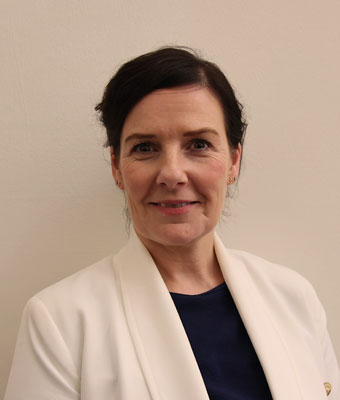
13. Deputy Catherine Callaghan asked the Minister for Social Protection if he will increase his departmental budget allocation in budget 2027 to those in receipt of the State pension, in response to the increased cost of living as a result of the conflict in the Middle East; and if he will make a statement on the matter. [31283/26]
I thank Deputy Callaghan for her question.
As part of budget 2026, I announced a €1.15 billion package of new social protection measures, which included a €10 weekly increase across social welfare schemes from 1 January 2026. This raised the maximum personal rate of State pension contributory to €299.30 per week and non-contributory to €288.00 per week.
These increases were set above the prevailing consumer price index, CPI, with pension rates rising by 3.46% for contributory and 3.60% for non-contributory.
In determining these budget increases, consideration was given to the most recent available consumer price index data and the broader cost of living pressures were also assessed in areas such as housing, energy and food.
I am very conscious of the impact that increases in the cost of living are having on those who rely on social protection supports, particularly older people who may not have the ability to get extra income, but also carers, those with disabilities and low-income families.
Additional relevant measures contained in budget 2026 included a €5 increase in the fuel allowance, which brought it to €38 per week, and a Christmas bonus was paid to pension recipients in December. In March, as the Deputy knows, the Government also approved an extension of the 2025-26 fuel allowance season by four weeks, which will see it continue to the end of this week, as part of the temporary and targeted measures to help those most vulnerable to rising energy costs. That included pensioners, and over 460,000 households are in receipt of the fuel allowance payment.
While it is not possible at this stage to set out specific budget parameters for budget 2027, we are very much closely monitoring developments. All changes to the current rate of payment for contributory and non-contributory payments will be considered in a budgetary context but with a very sharp eye on the pressures our pensioners are facing.
Gabhaim buíochas leis an Aire for that response. I absolutely welcome all the measures he outlined that were contained in budget 2026 and that had a good impact on the State pension and those in receipt of it. However, what I really need to stress is that we are not living in ordinary times. There is a war raging in the Middle East. It is affecting everyone across Europe and in Ireland. There is no end in sight. What I am hearing from State pensioners in Carlow and Kilkenny is their worry and anxiety about what the winter is going to bring and how they are going to manage. We are all aware that people who are in receipt of the State pension, be it contributory or non-contributory in nature, have contributed to this country. They paid into the pot in the hope that they would be able to sustain themselves in their latter years, not in the context of living any kind of extravagant lifestyle but just so they would not have to worry about paying household bills and everyday expenses. If it is not going to be possible to increase the pension, what will it be possible for the Department to do?
I am not saying that it is not going to be possible to do anything. We are obviously not in the budget situation yet, but I am very aware of the pressures people are under and that those pressures will increase during the winter. That is why, in the context of our initial €750 million response, we have made it clear that we may have to produce further responses. However, it is important that we give ourselves the ability to be in a position to respond, and do so quickly, if this energy crisis continues through the winter.
I had a very good discussion with Deputy Colm Burke earlier around the fuel allowance and the living alone allowance. I am going to be particularly focused on the living alone allowance because, for many older people who are left alone by being widowed or through separation, their expenses and the cost of running large houses remain but their income has been halved. I am going to be very focused on the living alone allowance as well as looking at how we continue to use the fuel allowance on in a targeted manner to support those most at risk of energy poverty, which includes our pensioners.
I welcome the Minister's focus on the fuel allowance. It is a very good scheme but is not agile enough to cope with the increases that are going to happen. The Minister said, "if this ... [war] continues". It will no doubt continue into the winter and it might still be with us this time next year. That is what I understand and feel, and our State pensioners are feeling that too. They would like more communication and a chance to know what measures might be possible to alleviate the worry and anxiety they are feeling. Bear in mind that said worry and anxiety are then passed on to their adult children, which means that entire families are concerned about this. It is also really important to recognise that these State pensioners, and pensioners in general, are on fixed incomes. They do not have any option or any other avenue whereby they can supplement the income they have. In fact, I sat with a lady last week who was in tears because she is dipping into her savings - money she thought she would be able to give as an inheritance to her children and grandchildren. Now she is utilising it for everyday cost-of-living expenses. I appreciate the work the Minister is doing, but I would love it if we could have some communication to allay the fears of our older generation, the people who helped to build this country.
I agree, particularly in relation to the fixed nature of pensioners' incomes and the challenges they face. They will be a priority for me in the context of budget 2027. I assure the Deputy of that, not just in the context of 2026 but also with regard to the increased energy costs they will face. I am very much aware of their need to have security.
In respect of information, unfortunately, we will not be able to do that until budget day, but the Deputy should be very aware that I look forward to working with colleagues across the House in relation to providing them with security and support. They should not have to have that worry at this point in their lives. They have given enough. They have done and worked hard enough for this country and we should give them comfort and security now that they are in retirement. As Minister for Social Protection, I will certainly continue to invest in our pensioners - not just in the weekly rate but the supports and other payments that are available, such as the living alone allowance, the fuel allowance and access to other payments.
As I have said throughout the morning, we have done a lot of work in recent weeks to give information to Oireachtas Members about additional needs payments and community welfare supports that are available. I encourage Members to use those supports.
Parental Leave
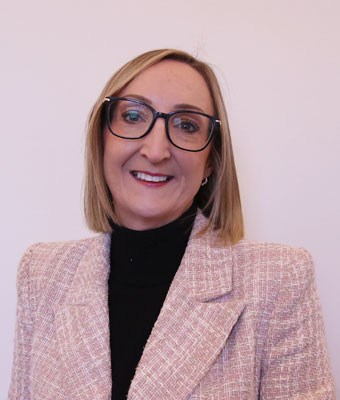
14. Deputy Grace Boland asked the Minister for Social Protection in the context of the programme for Government commitment to examine the extension of parents’ leave and benefit, whether he will outline the current status of this examination; the options under consideration to extend the duration of parents’ leave and benefit beyond the current entitlement; when he expects to bring proposals to Government; and if he will make a statement on the matter. [30628/26]
I am very glad that since I had my twins nine years ago, a Fine Gael Government introduced parents' leave, which now stands at nine weeks for each parent. As we know, the take-up of this leave, particularly by dads, is exceptionally low. Research from the Economic and Social Research Institute, ESRI, and the Irish Human Rights and Equality Commission, IHREC, last year showed that awareness really is part of this, as well as the low level that both parents will be receiving social welfare payments at a time when costs have hugely increased. The Minister might please give us an update as to what he is doing in regard to extending parents' leave and the rate at which it might be paid.
I thank Deputy Boland for her question. As she acknowledged, parents' benefit provides nine weeks' paid leave to parents during the first two years of a child’s life or following adoption. Any proposal to extend the period of leave is a matter for Deputy Foley, who has legal and policy responsibility for family leave as Minister for Children, Disability and Equality. My Department has legal and policy responsibility for the payment of the associated benefits.
Parents' leave and benefit were introduced in November 2019. The Government has provided over €123 million for the scheme in 2026. The scheme provides each parent with nine weeks of non-transferrable leave to be taken within two years of the birth or placement, in the case of adoption, of their child. The nine weeks can be taken in any combination of minimum one week to a maximum of nine weeks' leave. The 2019 Act is in line with the EU directive 2019/1158 on work-life balance for parents and carers. It provides that the nine weeks' leave is non-transferrable between parents. That is in order to promote the equal participation of men and women in the workplace and in caring roles. The leave was extended from the original two weeks in November 2019 to five weeks in April 2021, seven weeks in July 2022, and nine weeks in August 2024.
The number of applications for parents' benefit by both men and women has steadily increased. Our Department's statistics for quarter 4 of last year show that 40% of all applicants for parents' benefit were men and 60% were women. In providing nine weeks of non-transferrable leave to each parent, parents' benefit in effect ring-fences leave for fathers and it is hoped that this approach will encourage fathers to avail of their leave entitlement.
While Ireland is atypical among EU member states in paying a flat rate for all family leave benefits of €299, it provides one of the most generous durations of maternity leave, with 26 paid weeks and 16 unpaid weeks available to new mothers. I will certainly take Deputy Boland's proposal on board in relation to awareness around parents' benefit, particularly for men.
I thank the Minister. There is a real issue with awareness and we need to have a concerted awareness campaign. Fathers simply do not know that they are entitled to take this leave.
In regard to increasing the rate of payment, we know the projected child benefit payment this year is actually going to be down €320 million on what was paid last year. We should be looking at supporting families, particularly around payments for family leave. The is money there. We are going to be down €320 million on child benefit last year and I think we should look at increasing the rate at which we are paying for family leave.
The Minister might give us an update as to whether that has been costed or looked at.
As the Deputy knows, the programme for Government has a commitment to introduce pay-related parent's benefit. We are looking at that. We introduced pay-related jobseeker's benefit in March 2025. That has just finished its first year of operation and I am undertaking a full review of it. We will learn from the lessons of pay-related jobseeker's benefit what we can do before we carry out a consultation later in the year in relation to parental benefit.
We introduced a very specific child poverty package of over €260 million this year looking at families on lower incomes. We have a very specific focus on children who are at risk of poverty and on reducing that rate to zero, ideally. No child should be at risk at poverty. I take on board the Deputy's suggestions and proposals on the need for greater awareness, particularly for fathers, around the supports that are available. We will engage with the Department on that.
In terms of looking at people and children at risk of poverty, for a mother who is availing of maternity leave at €299 or of the 16 weeks' unpaid leave, and a dad who is also taking parent's leave at a rate of €299, the two combined payments are exceptionally low in terms of actually being able to avail of this leave. It means the people in lower socio-economic positions are simply not able to avail of this leave because of the rates of pay. I appreciate pay-related rates being looked at, but at the same time it is people at the bottom who are really going to be most affected because they simply cannot afford to take the leave. We need to look at that and how we can support everyone at all socio-economic levels.
I agree and I think we have done that. This year, the fuel allowance has been extended to those on the working family payment. It is the first time the fuel allowance is available to those who are also working. That means that 50,000 extra people now qualify for the fuel allowance payment. We also ensured that it was backdated to 1 January so that the 50,000 or so families with children would receive a lump sum payment in the beginning of March for January and February and were now getting the payment up to the end of this week to assist with the energy crisis at the moment.
We are going to look at the experience of the pay-related jobseeker's benefit's first year and how it worked and then apply the lessons to forming a consultation document on parental leave. The Deputy has raised it with me and Deputy Currie and colleagues across the Government are relating to me that we need to look at those payment rates. The point I always make about jobseeker's pay-related benefit is that it is people's own money being paid back to them. They have paid PRSI and they have paid into the Social Insurance Fund and that is what it is there for.
Bus Services

102. Deputy Roderic O'Gorman asked the Minister for Transport for an update on the roll-out of the planned inner orbital O route as part of the BusConnects project; and if he will make a statement on the matter. [31313/26]
Kilkenny is well represented in the Chair this morning. I wish to ask the Minister for Transport for an update on the roll-out of the planned O route, which is the inner orbital route, as part of the BusConnects project in Dublin.
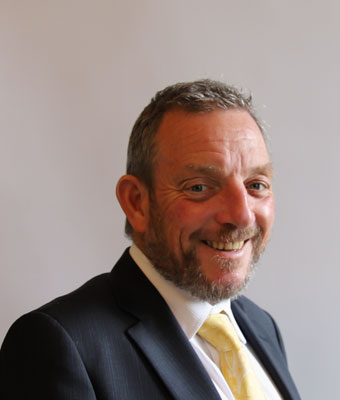
I join with the Leas-Cheann Comhairle in welcoming the students from Edmund Rice College, Carrigaline, who are here today as well. I wish them a very pleasant visit to Leinster House.
I thank Deputy O'Gorman for the question. BusConnects Dublin is a transformative programme of investment to provide better bus services to more people across the capital. The Department of Transport is providing significant funding to support the roll-out of new bus infrastructure, fleet and services. We have already rolled out the first seven phases of the BusConnects Dublin network redesign so far, with the most recent one being the F spine serving Finglas to Tallaght in October 2025.
The National Transport Authority is progressing all necessary works required to facilitate the introduction of the O route, which will provide an inner orbital operating on the North Circular Road and South Circular Road. The €940 million in public service obligation funding provided in budget 2026 allows the NTA to operate the bus network on a sustainable basis and to prioritise changes in line with operational capacity and passenger needs. The focus this year is on consolidating and strengthening the current network, while progressing improvements already under way. Unfortunately, it is not possible this morning to confirm an exact date for implementation of the O route. I am assured, however, that the S2 route from Heuston Station to Irishtown, which entered service in 2023, serves a part of the O route currently.
The Department is also providing funding to advance the core bus corridors elements of the BusConnects programme.
Contracts have now been awarded for both the Liffey Valley to city centre and the Ballymun-Finglas to city centre schemes, with a view to both entering heavy construction this year. I look forward to working with the NTA and our Department to continue the roll-out of BusConnects in Dublin in the years ahead.
One of the most difficult things to do in public transport in Dublin is get across the city rather than in and out of it. That is why those orbital routes are so important. The BusConnects O route will connect communities across Dublin city centre, from Infirmary Road in the west and North Strand in East Wall to across the Liffey and around the South Circular Road back to Heuston Station. Running in both directions, it will be the first true orbital route. It is the circuit that will link all the different spines of BusConnects together.
When I asked the Minister and the NTA last February when it will roll out, I was told it would be in quarter 3 of 2025. There was no sign of it in quarter 3 of 2025. When I asked the Minister and the NTA about it in February 2025, they could not even give me a roll-out date. The reply stated that," Commencement of the new O-Route is subject to confirmation of sufficient PSO funding to support its operation, and hence a precise commencement date cannot be provided at this time." When will the O route be rolled out? Will the Minister of State work to speed it up?
The Deputy is correct; it is difficult to get across the city. The orbital routes are important. In fairness, the Deputy’s former colleague and former Minister, Eamon Ryan, introduced them. We have seen some being rolled out and we are doing more in that regard. The Department of Transport and I will engage with the NTA to ensure we get a date. There is ongoing engagement around the planning of all necessary works for the route about which the Deputy spoke. I will bring his feedback back to the officials.
While I cannot provide a date this morning, I can say that the sectoral plan of the national development plan has allocated significant funding to the NTA to progress BusConnects routes in Dublin, Galway, Cork, Limerick and Waterford. The Minister, Deputy O’Brien, the Minister of State, Deputy Canney, the Department and I share the Deputy’s commitment in this regard. I take the Deputy’s points on board. I do not have an exact date but I will bring his remarks back and engage with the officials in the Department.
We are missing an opportunity if we do not speed up the introduction of this O route. Running buses in both directions in a circuit around Dublin city centre will change the way people get around the city.
There is one point about which I am concerned. My understanding, from comments an NTA official made to me, is that the roll-out of the O route might be split into two semi-circles, with only the southern portion being introduced first. That absolutely misses the point of an orbital route. It would also be unfair on communities in Dublin’s north-inner city that would benefit from a high-frequency service running in both directions along the North Circular Road. As with so many other public transport projects, it is clear that a lack of funding is causing the delay. The Minister needs to back this project and ensure the O route is rolled out soon on both sides - north and south - from the outset.
We all share the commitment to enhance the public transport offering. It is not correct to say there is a lack of funding. In the budget, the Minister received an increase of 46% in the PSO allocation. What we are doing - I think the Deputy will support us in this, being a former Minister - is building resilience and sustainability in the transport system and network for the future. We are planning new routes in a way that is sustainable for the future and will avoid the need to have to go through supplementary measures every budget and cycle. As the Deputy knows, people want certainty, reliable information and on-time buses. We will engage further with the NTA to ensure that process of planning is in place so that we can deliver.
The Deputy is right that this is transformative. I assure the Deputy that all of us in the Department of Transport are committed to this. We want to see it happen. As I said, we have increased the PSO offering. It is now about making sure we continue to roll out BusConnects routes not just in Dublin but in the city of Cork as well. I hear the Deputy’s views.
Air Services
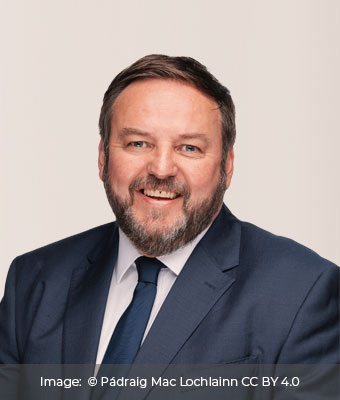
103. Deputy Pádraig Mac Lochlainn asked the Minister for Transport to provide an update on the timeline for the long-awaited restoration of the Derry to Dublin airlink. [29785/26]
We have been without this crucial Derry-Dublin airlink for 16 years. It was removed by the Government at the time. If we look at the map of Ireland, we see there is no motorway or train link directly to Derry, Donegal and the north west. The restoration of this airlink is key. I welcome that it has been agreed to by the Government but we need clear timelines.
I agree with the Deputy that this is a critical route. I am happy to provide him with an update. It was a programme for Government commitment, as the Deputy knows, to re-establish the route. I thank the Deputy for his continued interest in this matter. We are committed to supporting vibrant, inclusive and sustainable communities throughout Ireland where people can live, work and connect. The Deputy has made that point validly with regard to the north west. Many stakeholders have recognised that the north west is an area that is relatively under-served by transport connectivity. We are improving that but it needs to be improved further.
Government-funded PSO air services previously operated on this route for a ten-year period up until 2011. In this context, and in line with our objectives on building a shared island, the Government committed to engage with all relevant stakeholders to establish air connectivity between Dublin and Derry city airports. I met with officials in the City of Derry Airport and Derry Chamber as well as with the Deputy’s colleagues in Donegal County Council.
Last year, we decided that, pending progress on the A5 motorway upgrade, preparatory work to reintroduce the PSO air service to establish air connectivity between Dublin and Derry airports in 2026 would be progressed. We are fully committed to the reintroduction of a PSO service on this route, which will be funded through the shared island fund. As announced in budget 2026, the Government has doubled the resources available under this fund out to 2035.
My officials are progressing the preparatory work necessary to establish this service. That work is now well advanced. On 22 December 2025, we published a market-sounding survey. Views of stakeholders, including those who might avail of the service, were sought on the service. It is important we do that. This survey includes the specifications that would potentially best meet the requirements of the PSO air service, such as aircraft type, capacity and frequency of services. Engagement on this survey was positive. Over 700 responses were received, confirming the interest and recognised benefits of the PSO air service for stakeholders in Derry and the wider north-west region.
All things being equal, it is expected that following a two-month tender procedure, a contract will be awarded for the commencement of services this October. This will align with the winter 2026 airline scheduling season. We are looking forward to it. It is on track.
I thank the Minister for his response. Obviously, I will have many back-and-forth battles with the Government but this is welcome news for the north west. It is a tribute to both Letterkenny Chamber and Derry Chamber. They work together for the region. A total of 40% of the passengers who use the City of Derry Airport come from Donegal. For people elsewhere in Ireland, sometimes that geography can be lost. Essentially, Derry serves the entire region, including north Donegal. It is a crucial link. We have been devastated with the delays and legal challenges to the A5, so this is one project that gives people hope. I ask the Minister to ensure the October timeline does not slip. I am advised it is critical for the overall package of the airport. As the Minister knows, it connects into Heathrow Airport and various airports in England, Scotland and other countries. This is part of this package to continue to build confidence in the north west and show that we are rebalancing with the rest of island.
I, too, share the Deputy’s disappointment with regard to the A5. We are still committed to delivering it whenever legal challenges and planning issues are dispensed with. In the meantime, this is critical. This route is viable and needed. We will support it with a public service obligation. The timelines I have provided are robust. I very much expect this service to be up and running in October. Both the awarding of the contract and a commencement of the service will happen in October, aligning with that winter 2026 schedule. Not only will this service provide connectivity between Dublin and Derry but it will provide onwards connectivity as well.
Certainly, from a geographical perspective, it is critical for the north west. It will drive investment. I met with the chambers of commerce on both sides of the Border, as well as with Derry City and Strabane District Council. On the Letterkenny side, there are substantial land banks for further investment and employment growth. There would also be a good tourism offering for people there. I am looking forward to it. We are watching it. I am confident in the timelines I have provided. I thank the Deputy for his support for this project.
I welcome the Minister’s firm commitment today. It is good news for the City of Derry Airport. I also commend Derry City and Strabane District Council and Donegal County Council. They created the vision of the north-west city region. They speak with one voice. This is good news for Donegal, Derry, Tyrone and the wider north-west region. I will leave it at that. I appreciate the firm commitment.
This is another project that shows the benefits of the shared island initiative.
It is bringing people on the island of Ireland together and normalising future relations. It is a fantastic example of how local authorities and chambers of commerce work together. The Border does not exist, and that is critical. People are working together and bringing in investment. People work on both sides of the Border.
The shared island fund is an important enabler. The Taoiseach is incredibly supportive of the project. We are happy to work with it. The fund has been a constructive partner, as have Donegal County Council, Derry and Strabane and the chambers of commerce. To be fair, politicians across the House, including Deputy Mac Lochlainn, have been very supportive of this. I look forward to it opening. Maybe we will take a flight up there together.
Sounds good.
Public Transport
104. Deputy Mark Ward asked the Minister for Transport the public transport options to Dubin Airport for the people of Dublin Mid-West; if additional routes are being considered; and if he will make a statement on the matter. [31351/26]
It is an ordeal to get from Dublin Mid-West to the airport. What public transport options are available to Dublin Airport from Dublin Mid-West for the residents of Clondalkin, Lucan, Palmerstown, Citywest, Newcastle, Saggart, Brittas, Fettercairn and Rathcoole? Are additional routes being considered?
The NTA is critical in the context of the planning and provision of services and continues to keep public transport connectivity, including access to Dublin Airport, under ongoing and active review. As the Minister of State, Deputy Buttimer, mentioned in a previous response, there was a substantial increase, about 46%, in the public service obligation in the budget to enhance and improve our services. While there is no direct public transport from Dublin Mid-West to the airport, a range of convenient and flexible travel options are available. Many travel by rail into the city centre and out from there.
Looking ahead, the NTA is continuing to invest in additional orbital bus services which will provide more options to reach Dublin Airport by public transport. For example, route W4 which currently operates between Tallaght and Blanchardstown will connect with the planned new route N8 at Blanchardstown which will serve Dublin Airport via the M50. A further welcome development is included in the Dublin Airport Authority's planning application currently under consideration to increase passenger numbers to 40 million per annum. As part of this proposal, the DAA has sought approval for a new ground transportation centre which will consolidate airport bus services in a single location and, where possible, segregate general but traffic from pedestrian movements. This would provide priority access to bus stop facilities and increase bus bay capacities, supporting the continued growth of public transport use to make journeys to the airport.
In addition there is MetroLink, which will start construction by the end of next year. It is fully funded under the national development plan and will integrate directly with Iarnród Éireann services at Glasnevin, thereby significantly improving public transport access to Dublin Airport.
Deputy Moynihan asked for an update on DART+ South West. We are committed to that and are doing it as a Government. It will be a critical enabler of improving public transport services in what is a major growth area. There has been significant housing development in the area and new families moving in. We have to ensure that the public transport offering is commensurate with population growth.
There was a private operator, the Airport Hopper, in Dublin Mid-West until February 2025. It provided an economical route to Dublin Airport for residents of Tallaght, Lucan and Clondalkin. The operator closed because the service was not financially sustainable.
The Minister mentioned public service obligations. I understand when a privately run service stops, the State can take it over through the public service obligation. This essentially means that the route would remain in place, but would be operated publicly by the NTA. I received a response from the NTA that it is not considering a public service obligation. Instead, it will begin a new service between Blanchardstown and Clongriffin. I am delighted for my colleague Deputy Donnelly in Blanchardstown and Clongriffin, but that is no good for people in Clondalkin, Lucan and Tallaght. Can consideration be given to taking the Dublin Airport Hopper under the public service obligation in order that we can have at least one direct route to the airport?
I thank Deputy Ward for asking the question. As he knows, I asked a question about this matter a few weeks ago and have engaged directly with the Minister on it. The suggestion I put forward is that there be airport-bound routes going through Dublin Mid-West, like the Expressway service from the western part of the country. I have written to the NTA and hope to get the support of the Minister to allow pick-up and drop-off for residents in Lucan and Clondalkin on airport-bound routes outside of Dublin in the interim. I will work with the Minister and hope to secure a public service obligation for some sort of airport link. We can apply some interim solutions until then.
I welcome the support of the Minister in working with the NTA to mandate operators to provide additional pick-up and drop-off points. It is uneconomic to drive from Lucan, Clondalkin or Palmerstown as I have said on the floor of the House and with the Minister privately. I encourage him to support encouraging people to use public transport in as direct way as possible. I mean no disrespect to the response of the NTA, but it described a circuitous route to the airport when people need to get onto the M50. I would welcome interim solutions.
Deputy Moynihan asked a question about this on a previous occasion. The cessation of the Airport Hopper was a disappointment. It was a direct route for people. On foot of the questions asked a few weeks ago and Deputy Ward's question today, I will ask the NTA to move forward and see if something can be done within the public service obligation. There was a substantial increase in public service obligation funding. We have also seen a substantial increase in routes and additions to routes. Last year, 365 million public service obligation transport journeys took place across the network, a record number. Journeys are growing by about 6% or 7% per year. People respond when they have the choice and opportunity to use public transport. One can see from the questions Deputies Ward and Moynihan have asked that there is a gap regarding which needs to be filled in the interim. I am aware of the issue and will engage with the NTA to see whether we can bring forward the service and provide interim services solutions in advance of that. I will keep the Deputies informed.
I welcome the fact that the Minister is going to have a conversation with the NTA regarding the consideration of interim solutions. If I were to travel from Neillstown, where I am from, to the airport today by public transport, I would have to take three buses. If I travelled via Adamstown I would need to take a train and bus, that is, if I was lucky to be able to get on a train. DART+ South West was mentioned. That needs to be built as soon as possible.
Many people in my area, myself included, have no choice but to get taxis to the airport. I checked prices before coming into the House and discovered that the cost of getting to the airport from different parts of my constituency by taxi ranges from €50 to €90. It is often the case that the taxi fares people pay are more than what they pay for the flights they are taking out of the country. I urge the Minister to consider interim options. I take the point on the Citylink service from Galway to Dublin, which comes down the M4 and does not stop on the way. A stop would help some people along the way, especially in Lucan, Palmerstown and parts of Clondalkin.
That point has been well made by both Deputies. I will engage with the NTA and keep both Deputies fully informed. There could be an interim measure we can take. There is a longer term plan and continued investment in the public transport fleet, including DART+ South West, which everyone is supportive of and which we will bring forward. The Government has started work on that. I will keep Deputies Ward and Moynihan informed of progress.
105. Deputy Catherine Callaghan asked the Minister for Transport if he will provide funding for increased car parking facilities in Carlow and Muine Bheag train stations in Carlow; and if he will make a statement on the matter. [31281/26]
Is the Minister considering providing funding for increased car parking spaces in Carlow and Muine Bheag train stations in County Carlow, particularly in light of the ongoing fuel crisis in Ireland as a result of the war that shows no sign of abating, to try to give 7,000 commuters an alternative to taking their cars to work?
Students from Edmund Rice College Carrigaline are in the Gallery. I welcome them and wish them well. I hope they have a very good visit. Go raibh míle maith agaibh go léir.
They are all welcome.
By allowing drivers and passengers to complete part of their journey by car and part by public transport, park-and-ride sites have an important role to play in generating a mode shift towards public transport, cutting emissions and reducing congestion in our urban centres. To support this work, Iarnród Éireann is currently updating its national carpark strategy report to establish the capacity requirements for car parking, bus connectivity and active travel at all 147 train stations across the rail network. It is anticipated that the strategy will be complete and an updated report issued to the NTA for review later this year.
The Department of Transport has allocated significant funding to advance public transport projects, including park-and-ride facilities, through the national development plan sectoral investment plan, which was published in November. The NTA is now progressing a more detailed implementation plan within this overarching Exchequer funding envelope. The implementation plan, which will be published in the coming months, will provide details of projects to be progressed within the funding available over the period 2026 to 2030. This implementation plan, together with the report being prepared by Iarnród Éireann, will inform which park-and-ride sites are advanced in the medium term.
I thank the Deputy for raising the issue of Muine Bheag. It is not her first time to do so. She has been very articulate about the need for both car parking spaces in Carlow and enhanced connectivity. Carlow is a growing town, as the Deputy said. There is expeditious growth east and west. I thank the Deputy for raising the matter and look forward to engaging with her further.
The Minister of State is correct. Carlow is a thriving university town. I have also been calling for increased train services from Carlow - actually from Waterford all the way through Kilkenny to Dublin and vice versa. We need to have a change of focus. I welcome the report that has been done by Iarnród Éireann and the desire to have park-and-ride facilities throughout the country. However, in the current geopolitical environment, the Government as a whole needs to have a greater sense of urgency. While I appreciate all the measures it has brought in so far, in Carlow and Kilkenny there are approximately 7,000 people who commute by car and whose journeys to work and back home last more than 60 minutes. What is happening is that commuters are arriving at Carlow train station with the desire to take the train and there are no car parking spaces available. In that light, this is an immediate and urgent call I am making.
I am fully aware of the situation in Carlow. I am very familiar with the town. When you come off the motorway from Dublin, you can see cars parked along the road as you go into Carlow in an area where there could be a need for a park-and-ride facility. The Department and I are very much committed to having an overall strategy. We are looking at a change in focus. That is why we have BusConnects, why we will have the light rail system for Cork, and why we have the strategy whereby a modal shift is being further assisted and supported by Irish Rail with the Department of Transport in the context of park-and-ride facilities. Stations are prioritised using a multi-criteria analysis that takes into account the capacity, current and projected demand, the number of potential spaces gained and lost and everything to do with planning and programme risk. From my own observations, Carlow would be well placed on the relevant list. I know the Leas-Chathaoirleach is also familiar with this matter. For the Department, this is about the modal shift, enhanced connectivity and getting people out of their cars onto public transport.
I really welcome that very positive response and the proactive and ambitious plans for the future for rail networks through Carlow and into Kilkenny. I attended a meeting in Mullinavat this week. This is kind of separate from my question, but while I have the opportunity, I will mention that there is an disused train station in Mullinavat. It would be very interesting to explore whether we could recreate a stop there to help alleviate the pressure that has been experienced due to the reduction in the service of Expressway route 4.
When we talk about car parking spaces in train stations, will the Department consider multi-storey car parking for train stations like the one in Carlow or in Bagenalstown that are short on space and that do not really have the capacity to expand into the surrounding area? There are a number of schools around Carlow train station. If that was possible, we might consider putting solar panels on our car parking spaces, as happens in many other European countries.
The Deputy makes an interesting point. On the other, broader point, digressing from her subject matter of the question, from a geopolitical point of view, we need to look differently at rail provision. She mentioned Mullinavat. I could throw in the Midleton to Youghal line in Cork as an example. The Leas-Cheann Comhairle could have a couple in Kilkenny as well. We have to look at the whole thing differently now given what is happening in the world around the uncertainty in the Middle East and then moving away from fossil fuel dependency. The Department and the Government are committed to progressing the modal shift from cars and to buses, to Bus Connects, to a national rail strategy around commuter rail and to the Luas and the metro in Dublin and Cork.
I will certainly bring the fundamental point the Deputy makes back to Iarnród Éireann and to the Department. She is right though; it is about looking at how we can create that sustainable piece. What we are trying to do is to build reliance into our rail services. Part of our discussion, not just now but in the future, is about the points the Deputy has made here this morning.
Electric Vehicles
106. Deputy Pa Daly asked the Minister for Transport if he is aware of the findings of a research paper (details supplied); if he has engaged with the Minister for Climate; Energy and the Environment to address this; and if he will make a statement on the matter. [31152/26]
Is the Minister for Transport aware of the findings of a research paper from the school of physics in Trinity College Dublin entitled Why Rural Ireland holds the key to transport decarbonisation? Has he engaged with himself, as the Minister for Climate, Energy and the Environment, on this matter?
I talk to myself every day. It is good having two Departments because you can ask permission from the other Minister. There are good synergies between both though, to be fair. It is a good question. As Minister for transport and for climate, energy and the environment, I am aware of the report in question. I thank Deputies Cronin and Daly for bringing it to my attention. I have also reached out to Professor Brian Caulfield to arrange a meeting to discuss his research. It is very timely. We are firmly committed to achieving a low-carbon economy by 2050. The transport sector will play a pivotal role in that. Fleet electrification is expected to continue to provide the greatest share of emissions abatement in the short to medium term for the transport sector. Rural motorists are often in an advantageous position to make the switch to an electric vehicle, due to the large number of dwellings in rural Ireland which are suitable for home EV charging. Home charging is the primary charging method that most Irish EV owners use as it is convenient and cheaper for the consumer, as well as assisting in the overall management of the grid.
According to data provided by TII and the charging point operators, over 3,200 publicly accessible charge points are now available nationwide. We are finalising a data strategy in line with the programme for Government commitment, which will enhance the Department’s ability to monitor infrastructure roll-out, capacity and usage, so we can more accurately assess that data with the ultimate objective of delivering on EU requirements. We are going very well on the EV roll-out, and we have seen a really substantial jump in quarter 1 of this year. We have close to 240,000 EVs now on our roads and we are seeing that increase. I want to be able to deploy more EVs and ensure that people, particularly in rural areas, are assessing them. The data we have from last year shows that there is a good regional split. The need to focus on this has been raised by many Deputies and, indeed, Sinn Féin's transport spokesperson, and we will. I intend to meet Professor Caulfield in the coming weeks to discuss his research.
That is great that the Minister has engaged with this and that he will be meeting Professor Caulfield because the need to decarbonise and move to green energy has never been clearly, especially with the illegal wars in Iran, Ukraine, Lebanon and everywhere. The Minister can tell Michéal Martin that we do know about it. People in rural communities depend on their cars and are feeling this the most. One obvious way to protect them from these price shocks is to make electrical vehicles more accessible. The paper to which I refer suggests that this is not really that straightforward. While the good news is that the uptake of EVs in rural areas has been good, many of the people who are reliant on them are charging them at home. This can cause huge spikes in demand that our grid simply cannot handle. Even if people do want to switch to EVs, the grid infrastructure is just not there and that leaves rural communities stuck for the foreseeable future. What has been done to make sure rural areas have the grid capacity that they need so we can get on with the decarbonisation?
That is a very good question. That is why PR6, the capital investment programme into our grid infrastructure between now and 2030 is so critically important. We will be investing up to €18.9 billion in our grid. It is needed to improve grid resilience, grid capacity and distribution. That will be about adding more renewables to our grid too and storage to be able to deal with curtailment issues too but capacity issues in certain parts of the grid. The capital scheme encompasses about 520 projects right the way across the country. This will give that improvement our grid needs to be able to expand further, allow more people, businesses and homes to access the grid, and to facilitate further EV charging. That work has commenced across those projects and it will be the most critical grid upgrade that has been done since electrification in this country.
Projects like the north-south interconnector are encompassing it. That is critically important for grid resilience across the island of Ireland.
I am grateful for that because this is critical. When Russia invaded Ukraine, it should have been a wake-up call for us. We should have accelerated investment in renewables and energy security straight away. We have to accept that geopolitical instability is going to be part of the world - certainly for the next few years - and plan for that. Short-term supports certainly are a help but they do not go far enough. This paper offers solutions. We need long-term solutions, such as investing in the grid, expanding renewable energy, and easing pressure on the system. I encourage the Minister to look at a moratorium on data centres. It comes up all the time at the climate committee that the grid has increased and the first come first served system just does not work in regard to data centre.
We do not know how long these conflicts are going to last. We do not know when the next crisis is going to come. We have to make sure that we are prepared. I ask the Minister after his engagement with the professor to write to the climate or transport committee. It would be appreciated.
That is a good idea. I am happy to do that. In relation to renewables and the acceleration of renewables, we need to continue to reduce our dependence on fossil and imported fossil. That is good for climate, our economy and people's pockets. The good news is that we have doubled our wind capacity in a ten-year period. We now have over 8 GW of renewable energy connected to our system. We have about 1.4 GW of solar on rooftops. Solar is growing at a significant rate. In March of this year, 50% of our electricity was generated by renewables. We need to accelerate that further. We are doing that. We are doing that through measures like the Planning and Development Act.
Earlier this week I visited Bord na Móna's Derrinlough wind farm, which is one of the largest wind farms in the country. Bord na Móna is generating over 1 GW of renewable energy. It was a fossil-based peat company that has transitioned fully to green energy. In its pipeline of development and planning, it has over 5 GW of further renewable sources. On the offshore renewables, we need to get them into construction this decade. Regarding the horizon, the outlook is positive. I agree with the Deputy that we need to accelerate it. I will write to the transport committee post my meeting with Professor Caulfield.
I appreciate that.
Public Transport
107. Deputy Paul Murphy asked the Minister for Transport if he will seek substantial additional investment in public transport so that more services can be rapidly rolled out in response to the fuel crisis; and if he will make a statement on the matter. [31435/26]
In response to the fuel crisis, other countries are rolling out additional services. Some are making public transport free, which we have called for for a long time. The Government did not provide any funding for new services in this budget. Will it reverse that decision in light of the fuel crisis? Will it provide additional funding for new services to be rapidly rolled out to alleviate the fuel and cost-of-living crisis and to enable us to get off the reliance on fossil fuels as quickly as possible?
I thank the Deputy. As Minister for Transport, I fully recognise the pressure that people and businesses are under due to rising fuel costs. Public transport has a particularly important role to play at times like this by providing a more affordable and sustainable alternative for many people. We are seeing public transport usage increase year-on-year. Last year, we saw a record 365 million public transport journeys. In that context, I am keeping under close review how the public transport system is equipped to respond to current pressures. My Department and the NTA remain in close contact with operators to monitor demand and operational impacts as the situation evolves. At the same time, it is important that any such measures are carefully considered and aligned with available resources, so that they are effective, sustainable and can deliver real benefits.
The immediate priority has been to protect existing services and ensure continuity across the network within the resources allocated in the PSO programme. In the PSO, we secured an unprecedented allocation of €940 million. That was a 43% uplift on the previous budget. I want to get us to a sustainable footing in relation to the funding of public transport services. Where it previously had been, where additional routes were added and at the end of every year a supplementary budget was sought for transport, is not the way to plan things. It is not the way to plan things going forward.
To further support the sector, we approved a range of measures to mitigate rising fuel costs, including the transport sector through the road transport support scheme. That will support bus and coach operators providing TFI Local Link services and school transport. If we look at our charging structure in Ireland for public transport, it compares very favourably with our European counterparts. We have broadened free services with children up to the age of nine getting free travel, the senior free travel and the companion pass, which is being rolled out. We keep the fare structure and the fares under constant monitoring. We review it on a regular basis.
To respond to the climate crisis and the cost-of-living and fuel crises, we need to rapidly roll out as much public transport as quickly as is possible. That is not what is currently happening. Dublin Bus is sitting on 50 new electric buses. They are expensive and very good quality presumably but they are sitting there not being used because of a lack of appropriate infrastructure. The oldest new electric bus has been sitting there since November 2023. We have owned this bus for two years and five months. It is not on the road. It is not being used. Why? One reason is the lack of charging infrastructure and Broadstone buses cannot charged during the day because the grid is overloaded. Can the Minister not say to his Government colleagues that we should be prioritising charging our electric buses instead of giving all of our electricity to the data centres?
Each time we add one of these electric buses to the fleet, we are taking one diesel bus out. Why on earth are we taking buses, regardless of what fuel they are, out of the fleet when we should be adding capacity? Regardless of what fuel they are, it is much better for people in public transport rather than sitting in individual cars.
Let us turn to some facts.
Yes, please.
There are more people using public transport than ever. There were 365 million public transport journeys last year. That is a 6% increase. Our fare structure is affordable. We have many free fares across the system, which we will continue to maintain. On the other issue in relation to the electrification of our fleet, Limerick and Athlone are fully electrified. There were additional buses purchased in the previous Government term which are still being deployed at the rate of two a week. All the additional electric buses will be deployed across Dublin by this year and the remainder of them in quarter 1 of next year. There are two a week going into service now. I visited Broadstone to see that. It is not about grid capacity, although it was. There were issues with charging infrastructure. The Deputy is correct. I have addressed that. This is a matter that I inherited that we are dealing with. Bus Átha Cliath and its drivers have been really good in that regard. A lot of people are getting used to the use of those EV buses. We will continue to roll them out. There were issues. Those issues are being worked on and addressed. The remainder of those buses will be rolled out over the course of these few months. They are being rolled at a rate of two per week.
I ask the Minister to give me a date for when all the electric buses will be in use. I would like that. I will hold him to it.
Excellent.
There are 50 brand new electric buses still not being used. The issue that the Minister did not come back to is that each time we add one of the electric buses, we are withdrawing a diesel bus. Why on earth are we doing that? Why are we not having more buses in the system? That is what we need. We need a lot of more buses. Why are we scrapping routes? We introduced the BusConnects routes. That is fine. Why are we withdrawing other routes as a consequence of that? For example, in my constituency, there is a campaign to reinstate the 49 bus, which was cut when the F1 Busconnects route was introduced. It is a downgrade for a lot of people. It is taking people commuting to work to the city centre from Tallaght, Firhouse and Knocklyon an extra 20 to 30 minutes each way, which is ridiculous. It is driving people back into cars as a result. In response to the fuel crisis, why not reinstate the 49 bus? There are examples from other parts of the city. We should be expanding routes and buses, not swapping one in for another.
We actually are. We are expanding services across the country. The numbers bear that out. To answer the Deputy's question directly, to be fair to my predecessor, he had bought additional electric buses because the capital was there. They were purchased forward. They were not all going to go into use over the course of a month or two. It has gone on longer than it should. We are looking at about 10% of our fleet in Dublin being electrified. That is a good thing. Limerick and Athlone are fully electrified. We are investing €1 in every €4 in this NPD between now and 2030 in the transport sector. It is just short of €25 billion to deliver projects like MetroLink, BusConnects and the quality bus corridors, which we are starting. I mention Ballymun-Finglas to the city and the Liffey Valley to city. Both of those contracts are signed and both will be in construction this year. We are in the delivery phase.
The Deputy is right that there are deficits. I am not painting the picture that everything is perfect - it is not. We have a growing population. We have growing housing and had good news on housing again this morning - a 33% increase in housing completions in quarter 1 of this year. That is the type of sustainable progress we will continue to make across housing, transport and education.
Taxi Regulations
108. Deputy Barry Heneghan asked the Minister for Transport if he is aware of ongoing reports of wheelchair users being refused service by wheelchair accessible taxis in Dublin, particularly at night; the number of complaints received and penalties issued; the way in which drivers who received public funding under the wheelchair accessible vehicle, WAV, grant scheme are held accountable for refusing passengers; the immediate actions being taken to end this discrimination and guarantee equal access to taxi services; and if he will make a statement on the matter. [31296/26]
I welcome the huge investment in and development of private wires and look forward to the private wires system helping electrification and contributing to the solution to the issue Deputy Murphy raised regarding electrical infrastructure. The private wires Bill can reduce timelines for the installation of renewable projects and electric infrastructure.
I come to my question on the WAV grant scheme. I have been contacted by people in my constituency who are wheelchair users and are being refused by taxis despite the fact the taxis have received grants for wheelchair accessibility.
I thank the Deputy for his ongoing advocacy on behalf of people with disabilities and his good work with Ciarán Delaney, whom we both engage with. If there are complaints, I encourage the Deputy to ask the people affected to log them and we will take it up. It is important we have that data.
The regulation of the small public service vehicle, SPSV, sector, including the compliance, enforcement and administration of the wheelchair accessible vehicle grant scheme, is a matter for the independent transport regulator, the NTA, under the provisions of the consolidated Taxi Regulation Act. The Minister and I have no role in the matter.
The Department has been informed that, in relation to Dublin, the NTA has received 13 WAV-related complaints in the last 12 months, with 11 received in the previous 12-month period. Any person who receives a WAV grant from the NTA must complete mandatory disability awareness training. It is a condition of receipt of any portion of the grant that the proposed driver of the WAV must either undertake the free half-day SPSV-specific disability awareness training provided by the NTA or provide evidence that they have completed a SPSV-specific disability awareness training course during the three years prior to the application date for a WAV grant.
Not all WAVs are grant aided. In 2024, 346 non-grant-aided WAV taxi and hackney licences were added to the SPSV fleet, alongside WAV grants given to 372 new SPSV licenceholders. To support all licenceholders and not just grant recipients in providing WAV services, the NTA extended free training to all SPSV licenceholders at the start of last year. Operators can undertake the training as often as required, free of charge, to ensure that they are confident to provide such services to a high standard for passengers. There will be no ambiguity from us. The passenger experience must be to a high standard. There can be no obfuscation. I encourage wheelchair users to log their complaints.
I thank the Minister of State for his engagement on the matter. I have constituents who are left waiting hours for wheelchair accessible taxis that will take them.
In response to a parliamentary question I submitted last July, the NTA acknowledged what the Minister of State just said. It stated it was giving training for the safe use of lifts and clamping systems and that, since that January, the training had been provided free of charge. I welcome that but the most common excuse given to constituents who have contacted me is that drivers are saying they are unable to operate the lift. That does not stand up to scrutiny. All holders of wheelchair accessible licences have a statutory obligation to provide the service. This issue has been raised with me and my former colleagues on Dublin City Council, including Councillor Nial Ring and Councillor Kevin Breen, who are working with local residents.
How many complaints have been received and penalties issued? Are drivers who received public money under the WAV scheme being held to account if they refuse passengers? It is not acceptable that we are giving money to drivers through a grant to make a vehicle accessible but they are not taking people with disabilities.
I concur with the Deputy that that should not be the experience of people. The NTA has been working to make it easier for taxi drivers nationally and locally to increase the numbers available to passengers.
The last year for which statistics are available is 2025. The NTA received 1,815 complaints regarding SPSVs compared to 1,713 in 2014. Complaints related to the condition of the vehicle, driver behaviour, hiring matters, as the Deputy articulated, and fare matters. The majority of complaints, 976, were fare matters, while driver behaviour accounted for 368 and 396 were hiring matters.
I will come back to the Deputy on fixed-charge notices. My information is that four were given, which might seem small in the overall scheme but the percentage of complaints is quite low, given the number of taxis we have and journeys undertaken. I would be happy to engage with the Deputy further on the matter outside the Chamber.
I will send it over to the Minister of State's office. I can give cases of constituents with physical disabilities who have been refused collection by taxis. There are also taxi drivers who have built up records and submitted them to the NTA showing how many people with physical disabilities they collect but who then did not get the grant. I ask that when the next grant comes out for accessibility or renewal of the lift in the back of the taxi, taxi men and women with a proven record of doing the job the grant is given for are prioritised, rather than it being a lottery scheme. If that is already being done, will the Minister of State show me the steps? I will send him correspondence from the NTA stating it is not doing this currently.
I think there was one fixed-charge notice fine this year. The range of fines has gone from €80 to €250. Around 20% of the fleet comprises wheelchair accessible vehicles; I think it is about 4,836. It is an important matter and deserves the attention the Deputy gives it. If a person has a complaint, they should log it so that we can follow through. We must make it easier and we are providing training and that accessibility peice for the taxi driver. I take the Deputy's point on board. We are on a journey and must continue that journey. It is because of people like the Deputy that we are seeing that mindset being changed. I commend him on his work.
Question No. 109 taken with Written Answers.
Public Transport
110. Deputy Tony McCormack asked the Minister for Transport the steps he is taking to improve public transport connectivity in County Offaly, particularly in rural areas where services remain limited; whether there are plans to expand bus routes or increase service frequency under the Connecting Ireland programme; and if he will make a statement on the matter. [31116/26]
I thank the Deputy for raising the matter. Rural transport is an important point. In the context of the budget, the Minister and I are aware of the role that enhanced connectivity plays in supporting communities in Offaly. I commend the Deputy on the work he does in that regard.
In the budget for this year, the Department of Transport secured €940 million of funding for PSO and TFI Local Link services, providing a significant 43% uplift from last year. This package includes a dedicated €31 million for rural transport service provision, representing a 38% increase on last year’s funding. As the Deputy knows, people will use the service if they get it.
Offaly and Laois have been well served and seen significant investment in rural transport in recent years, with funding increasing by 36% between 2024 and 2025 to over €5.5 million. Passenger numbers are also increasing. The timetabled services in Offaly and Laois saw a 52% increase from 2024 to 2025.
Our public transport system is at an important juncture. To be fair to him, the Deputy has been advocating for it. We are experiencing growing passenger numbers and increasing demand. There is also the challenge, about which we have heard this morning, in parts of Dublin and Cork concerning congestion and getting enhanced and more frequent bus services to allow people to travel to and from work more easily.
In the interests of providing citizens with a high-class service, my focus as Minister of State with responsibility for rural transport is to stabilise the PSO position, ensure we have resilience and the routes we have now are functioning, reliable and sustainable, and progress improvements that were already under way.
With the Minister, Deputy O'Brien, and the other Minister of State in the Department, Deputy Canney, we will work with everybody to ensure new routes are provided and accessibility and connectivity are enhanced. I will engage with the Deputy further on the matter. I thank him for raising it.
I welcome the progress being made under the Connecting Ireland programme. I acknowledge the excellent work being carried out by Local Link services across the country. In rural communities in counties such as Offaly, Local Link has made a real difference in connecting people, particularly those who may not have access to a car. It has helped to address isolation and has provided vital links to services, employment and education. However, despite this progress, rural isolation remains a very real issue. There are still many areas where services are limited, infrequent or simply not available at the times people need them. For people living in rural Ireland, access to reliable public transport is not a convenience; it is essential. Will the Minister of State outline what further expansion is planned under Connecting Ireland to increase frequency and coverage in rural areas, and specifically how counties like Offaly will benefit from those improvements?
The Deputy is right in that access is not just an option; it is important not just for employment but also for connectivity, going to hospital appointments, going to medical services and even going to the local village. That is why we review local transport provision under the programme for Government commitment. The Minister and I are very much committed to ensuring we see an uplift again in the provision of transport links. This is critical.
The TFI Local Link rural transport programme has worked right across the country, east, west, north and south. I join the Deputy in congratulating and thanking those who administer and run the programme. What we are committed to doing through the programme is connecting the missing pieces. It will take time. We will be in the Estimates process seeking further support from the Department of Finance and the Department of public expenditure. I hope that will come because the Deputy is correct that it is the regular rural service and the demand-responsive element that have been critically successful. The proof of that is the number of passenger journeys.
Is féidir teacht ar Cheisteanna Scríofa ar www.oireachtas.ie.
Written Answers are published on the Oireachtas website.