Medicinal Products
I know this is a topic the Minister of State is very familiar with, as she has heard me raise it many times within our parliamentary party meetings. This is something she has heard plenty of times from me in the past few years. It is something I am very passionate about. I have more or less dedicated six years of my job as a public representative to pursuing various drugs for rare diseases.
I have a feeling I know what will be contained in the answer in front of the Minister of State. It will probably be something about the fact that the State is spending more money than ever on drugs for rare diseases and drugs in general. The spend is more than €4 billion. What I would like to hammer home is that a tiny fraction of that - less than 1% - is dedicated to new drugs, specifically drugs for rare diseases.
When I submitted this question, I specifically wanted to talk about Friedreich's ataxia and the drug Skyclarys, which is currently under consideration by the National Centre for Pharmacoeconomics, NCPE, and the drugs group. It is a degenerative disease. I know the Minister of State is familiar with it. There are hundreds of diseases out there that would break her heart or the heart of anyone in this House if they affected a brother, sister, son or daughter of theirs. It is heartbreaking to see the stuff people are going through on a daily basis.
The difficulty I have is that we have been blaming the process for too long. It clearly does not work and is fundamentally broken. At various stages, both the Fianna Fáil party leader and the Fine Gael party leader have said the process is broken. They are now in a position to change the process but we have not looked at it in a meaningful way in the six years we have been in power together. We have given a commitment in the programme for Government and I want to see us follow through on it. First, we must undertake to provide an early access scheme for people to access many of the drugs we are talking about this morning. Second, we must fundamentally overhaul the reimbursement system. They are two commitments in the programme for Government. I would like to see in the reply that the Minister has finally embarked on the task of starting that work, specifically on Skyclarys, which is currently under consideration.
The Deputy's time is up.
The NCPE is waiting for a response from the drugs company at the moment but I hope that, in the coming months, we will be in a position where the 200 patients affected will get access to the drug.

I am also here to speak about Friedreich's ataxia. On Monday evening, I met Aoife Quinn from County Galway, who was diagnosed with Friedreich’s ataxia in 2021. She outlined to me her long pathway to getting a diagnosis for this rare disease and how the disease impacted on her life. She told me of her experience dealing with symptoms like loss of balance and speech difficulties and of how her symptoms had deteriorated over time. Every day brings her a loss. It is a relentless and progressive disease.
The reimbursement of Skyclarys would slow the progression of this disease and give her the chance to maintain her strength and independence for as long as possible. She is just one of approximately 200 people across the State who are living with Friedreich's ataxia. Access to this treatment would also help those who are newly diagnosed, who may be spared some of the suffering experienced by those before them.
I am aware that the HSE is engaged in negotiations with the drugs manufacturer, but as of today the negotiations will have been going on for almost two years. Every single day that passes, Aoife's condition worsens, as it does for every person who is suffering from this disease. The clock is ticking for them and they cannot face more delays. This drug is an opportunity to slow the deterioration - in Aoife's case before she is wheelchair bound or suffers other issues. She does not have time to wait.
We all understand that there must be a process where the HSE negotiates to get the best possible price for medicines but we need to see real urgency here because every day that passes matters. Aoife has also expressed her frustration that she is not kept updated on the negotiations and that there is not regular contact with her on that. Will the Minister of State look at that?
The bottom line is that these people do not have the luxury of time. Every day that passes without the medication is a day where symptoms deteriorate. They do not have time to be left waiting in the dark, wondering whether a medicine that could improve their lives will be reimbursed. Will the Minister of State provide clarity today or give a commitment that this will be resolved soon?
I thank both Deputy O'Sullivan and Deputy O'Hara for raising this important issue. I spoke on this in the Seanad a couple of weeks ago. I acknowledge Deputy O'Sullivan's advocacy on rare diseases in the past six years.
As we all know, the State acknowledges the importance of access to new and innovative medicines for patients living with a rare disease. Budgets 2021 to 2025 included dedicated funding for new medicines of €158 million. Budget 2026 allocated an additional €30 million of funding available for new drugs. From 2021 up to March 2026, this has enabled the HSE to approve reimbursement for 263 new medicines, including 72 new medicines for the treatment of rare diseases.
As Members are aware, the National Rare Disease Strategy 2025-2030 was launched last year. The strategy outlines a comprehensive framework designed to enhance diagnosis, treatment and support for people living with rare diseases, aiming to improve quality of life, promote equitable access to healthcare, and foster innovation in rare disease research and treatment. It also emphasises the importance of access to orphan medicines among its key recommendations. The State has signed two new framework agreements on the supply and pricing of medicines from 2026 to 2029, following successful negotiations with the pharmaceutical industry, that will provide stability and certainty to the sector.
Building on this achievement, the State and the pharmaceutical sector have agreed to establish a strategic partnership on the development of a sandbox early-access programme for rare diseases. This will be a proof-of-concept initiative aligned with the commitments in the programme for Government and the national rare disease strategy.
Regarding Skyclarys, I will provide some background for our colleagues and then address the Deputy's question. Omaveloxolone, sold under the brand name Skyclarys, is a medication licensed by the European Medicines Agency to treat Friedreich’s ataxia in patients aged 16 years and over. Friedreich’s ataxia is a rare inherited disease that causes damage to the nervous system. Under the Health (Pricing and Supply of Medical Goods) Act 2013, the HSE has statutory responsibility for decisions on the pricing and reimbursement of medicines. The Act provides for a rigorous process for the assessment of new medicines for reimbursement. This ensures that the right medicines are chosen and that approval is at a sustainable price.
The HSE received an application for pricing and reimbursement for Skyclarys from the applicant, Biogen Idec (Ireland) Limited, on 1 August 2024. After receiving a completed rapid review assessment report from the National Centre for Pharmacoeconomics, the HSE commissioned a full health technology assessment on 25 September 2024. A fully completed dossier, which is required to allow the NCPE to conduct a pharmacoeconomic assessment of the pricing and reimbursement application, was not received from Biogen until July 2025.
The NCPE proactively engaged with the applicant company and submitted the finalised health technology assessment report to the HSE on 16 December 2025. It is important that we look at the timelines. This report included submissions made by patient organisations. These submissions will form part of the data that the HSE considers. The HSE invited the applicant to commence price negotiations and offered a range of dates to the company. The HSE has advised this meeting took place on 12 February 2026 and, as of the most recent update from the HSE in April, a commercial proposal from the company remains outstanding. I checked with the Minister's Department last night in this regard and I know the Taoiseach has engaged with her. Where we are at the moment is that a commercial proposal from the company remains outstanding, which I know is frustrating, but it is important to put the timelines on the record of the Dáil.
I thank the Minister of State for the response. It is predictable, although I do not say that to be dismissive. I know a lot of this and have known it for some time. The point I made in my initial salvo was that we rank 23rd out of 27 EU countries with regard to reimbursement for rare disease drugs. That is a fact. Whether it is Skyclarys or some other drug for some other ailment, the fact of the matter is that Ireland is a laggard among our EU counterparts in terms of reimbursement. I understand that engagement with this company has been attempted. I have not come across this company in the past. I wrote to it myself last week to look for engagement. I would like to think it might do something immediate, short-term and local with patients to give them early access in the absence of State intervention. However, fundamentally, we must be truthful with ourselves in here and recognise that the system is flawed. It is the same system we have had for decades. Any common drug or other product on the shelf of a pharmacy that costs you €2 or €3 goes through the same process as one of these drugs that costs hundreds of thousands of euro. If we fail to acknowledge that fundamental flaw in the system, this issue is going to keep being repeated.
I appreciate the update from the Minister of State. I cannot emphasise enough the impact the ongoing delays are having on those impacted by the disease. I also call on the drug company to engage in good faith in the negotiations with the HSE. The priority of all parties involved should be delivering this vital medication to the people who need it. Aoife and all of those who suffer from Friedreich’s ataxia want an opportunity to have as good a quality of life as possible. This medication is critical for them. As we speak, people like Aoife are losing their mobility, their ability to live independently and so on. The onus is on the Minister and the Department to ensure that people who suffer from rare diseases are given access to vital medication. The frustration is that we are one of the wealthiest countries in the world and this drug is available in many other European countries. The Minister of State mentioned that the commercial proposal is still outstanding. It has been two years since this process commenced. If she were to put herself in the shoes of somebody like Aoife, she would see how there would be enormous frustration at the delays that are happening here. I urge her to do absolutely everything she can to get this resolved as soon as possible. Every single day matters.
I concur with both Deputies. We are speaking about this really important drug and 200 people, their families and their parents want to know what is going to happen and are hanging on our every word. I take all that on board. While I know this has been going on for two years, the HSE did not receive the information from Biogen until July 2025. We are still waiting for the commercial proposal from the company. That remains outstanding. That is the situation at the moment. I am glad Deputy O'Sullivan has engaged with the company to see if we could get some movement on this. We have an agreement in relation to some drugs. We have the Benelux agreement, which allows us to get really good value in procuring drugs. However, it is different for drugs for rare diseases. You need a number of elements to work together. I agree with Deputy O'Sullivan about the overall system, the process and meaningful engagement. I will be speaking to the Minister about this again. The sooner the commercial proposal from the company comes in, the sooner a decision can be made. There is not a Deputy in the House who has not been touched by Aoife's case and those of others who are awaiting this drug.
Did the Deputies get my response? Was it circulated?
I have the response from the Minister of State.
Health Services Staff
I am raising this Topical Issue again because children across south Tipperary are being left without access to critical basic community ophthalmology services due to repeated recruitment failures following the planned retirement of the previous consultant, Dr. Hillery, in August 2024. This is not a new issue. It has now escalated into a full-blown failure of ophthalmology service delivery across south Tipperary. What should be a core community service simply has not existed for the past two years. More than 2,000 children are on the waiting list, 1,500 of whom are under the age of four. As we all know, vision development in early childhood is time-sensitive. Delays in assessment and treatment can have lasting consequences for speech and language development, educational progress, social interaction and general confidence and well-being. Very young children are waiting two, three or four years. In some cases my office has been made aware of, children have been waiting for an appointment since 2023. This can mean missing critical developmental windows.
In the interim, families are being advised to contact the emergency clinic at University Hospital Waterford if concerns become urgent. Families who have engaged with me tell me that the reality is that, more often than not, the phone in Waterford is not being answered. Waterford is already under huge pressure with its own waiting list. What we really need is a structured contingency plan.
I have raised this matter repeatedly throughout 2025, in February, April, July, October and December, and I had a Topical Issue debate on it with the Minister of State on 18 February this year. What immediate actions are being taken to secure a permanent consultant ophthalmologist for south Tipperary? We have now had three campaigns. Following the first campaign, the successful candidate declined the position. The second campaign found no eligible candidates. I do not think there were even any applications. None of the candidates who applied during the most recent campaign were deemed eligible. We also need to know what changes are going to be made. We are now entering into a fourth recruitment campaign. We need to ensure it is successful.
How will the Minister for Health ensure that patients in south Tipperary receive timely and equitable access to this critical ophthalmology service?
I wish to refer to the response that I received on 18 February last delivered by the Minister of State. The HSE said that it was engaging with the Royal Victoria Ear and Eye Hospital in Dublin with a view to supporting Tipperary South. Is there any update? The HSE also confirmed that it was entering into discussions with a private agency with a view of a scoping exercise being conducted. I previously spoke about availing of capacity within the private sector. There are 2,000 children waiting, with 1,500 under the age of four. As if the crisis in orthodontic services was not enough across the south east, this is another full-blown crisis with regard to ophthalmology.
I thank the Deputy for raising this again and for his continued advocacy in relation to this situation. It is one that I am very familiar with, as our two constituencies align along a border. I have met one of the nurses who works in the service and who has advocated strongly as well. I just happened to meet her one day.
On behalf of my colleague, the Minister for Health, I thank the Deputy for raising this important issue, which he has highlighted a number of times. As the Deputy is aware from previous replies, every effort has been made to recruit staff to this service, but these efforts have not been successful to date. The HSE provides free optical services to preschool and national school children who are referred through child health and school health examinations and are identified as having sight problems. These services continue until a child reaches 16 years of age. In addition, the community ophthalmic services scheme, which has been in place since 1979, allows medical card holders aged 16 and over to access care from contracted ophthalmologists, community ophthalmic physicians, optometrists or dispensing opticians.
The HSE has confirmed that the community ophthalmic post in south Tipperary - University Hospital Waterford - became vacant in October 2024 following a planned retirement. In 2025, the post was regraded to that of consultant in medical ophthalmology to align with the national clinical programme for ophthalmology. Permanent consultant posts are advertised through the Public Appointments Service, PAS. This process can take time, and the HSE ran two temporary recruitment campaigns in May and September 2025 to maintain services in the interim. Unfortunately, no appointment was made following these campaigns. The permanent post was advertised by the PAS in November 2025. As there were no applicants, the closing date was extended to January 2026. One application was received but following shortlisting, the candidate did not progress to interview. The post was advertised in the British Medical Journal. In parallel, the HSE has advertised clinical optometrist and orthoptist posts, a process that closed in January. Filling these roles will help support the resumption of optical services in south Tipperary.
While recruitment to the consultant post remains ongoing, a multidisciplinary working group has been established involving consultants from University Hospital Waterford and the national clinical lead for ophthalmology. In addition, a targeted blitz clinic initiative is being processed to urgently address the significant waiting list backlog for patients in south Tipperary.
I take on board every word that the Deputy said in relation to over 2,000 children waiting, with many of them under four years of age. That early intervention is absolutely crucial. We accept that. Sometimes, it is difficult for different reasons to get the specialist consultant into a particular area. That is what is proving difficult in this case.
As Minister for State with responsibility for mental health, I have similar challenges in various areas. I was delighted to see a vacancy in south Kerry child and adolescent mental health services, CAMHS, that had been vacant since 2014 being filled only recently. It had been supported by locums up until that. The HSE has tried everything to try to get this post filled. It went out to the British Medical Journey. However, I am pleased to see that this targeted blitz clinic initiative is being progressed to urgently address the significant waiting list backlog for patients in south Tipperary. Hopefully, that will have an impact while the recruitment process is under way in parallel.
I thank the Minister of State for her reply. It is very unfortunate. What I find most frustrating is that Dr. Hillery's retirement was a planned retirement. The recruitment processes that we have been going through for the past 15 months should have commenced before Dr. Hillery's planned retirement.
I am a small bit alarmed about what was not mentioned in the reply, namely, the HSE's engagement with the Royal Victoria Ear and Eye Hospital in Dublin. What was the outcome of that engagement? There was also no reference to engaging with the private agency, as was suggested in the reply to me on 18 February. There is no detail on the scoping exercise or, indeed, any plan to avail of capacity within the private sector.
I welcome that a multidisciplinary working group has been established involving consultants from University Hospital Waterford and the national clinical lead for ophthalmology. This is a matter concern for all the elected representatives in south Tipperary. Perhaps a meeting could be set up with Deputies Healy and McGrath and myself. It is important that we be kept updated.
What are the contingency measures in the meantime? My understanding is that there is no additional capacity. Everybody is working hard down in University Hospital Waterford. I do not like to put on the record of this Chamber that parents are telling me that the phone is going unanswered, but parents are unfortunately being forced into accessing private ophthalmology. It is a crisis. I would like to organise a meeting with the Minister.
It is disappointing that a post that has been advertised for almost two years has still not been able to be filled for various reasons. It is important to note that recruitment to the consultant post remains ongoing. In parallel, a multidisciplinary working group has been established involving consultants from University Hospital Waterford. The national clinical lead for ophthalmology is that piece of the jigsaw that the Deputy mentioned as regards the Royal Victoria Eye and Ear Hospital. That would be the person. Across all definitions in health, we have a national clinical lead. To have the national clinical lead involved at this level is important.
The targeted blitz clinic initiative is being progressed. We do not have the details here, but I would expect that would include public and private to try to get the waiting lists down. That would be normal. I will look for more information in relation to the blitz clinic initiative because I am a very conscious of the growing waiting list. I will revert to the Deputy. I will talk to the Minister.
Public Transport
There is growing concern in the town of Athenry in east Galway that a service that was introduced - the 6.50 a.m. train service from Athenry to Galway city - will be lost. In October 2025, this service was added as a temporary service in light of the works that were ongoing at Ceannt Station and Oranmore Station. As the Minister of State can imagine, there are many people who now rely on and benefit from this service, as there was no earlier service going into Galway city from Athenry. There are currently about 50 people availing of this service every day. I have been receiving messages and communications from people who are fearful that it will be lost and they will be forced back into their cars. They have been able to leave their cars in Athenry to commute on the train while avoiding traffic and getting to Galway city to work. It has been a huge quality of life enhancement for them.
This was a temporary funded service until the end of July 2026, so we still have an opportunity to get this right. The service is not gone yet. The decision is with the National Transport Authority, NTA, to make around funding. I am sure the Minister of State knows this from his constituency, but the reality is that there is no available rolling stock in Irish Rail.
Where is this stock going to be moved to? We need to keep this as a commuter rail service for the people of Athenry. We are a growing town with a population in excess of 5,000. For the past 18 months, we have had no bus service, despite a public service obligation being in place. I ask the Minister of State to communicate with the Minister for Transport, Deputy O’Brien, to ensure there is no loss of service in Athenry and that people who wish to avail of public transport can do so. Given the cost increases for commuting over the past few years, many people are choosing to use the train as a more economical option. It makes perfect sense and it gives them back some quality of life.
A consultation was carried out in the past 18 months on what people wanted to see in Athenry for the commuter service. The consistent message was that people wanted to see more early morning services, and this was part of the response to that. This new service at 6.50 a.m. was brought in and it allowed people to be in early. There is now a fear out there that the service will be lost because it is not funded any further than July 2026. People need and depend on this service. They need to trust that we, as a Government, will continue to support people who wish to commute to work via public transport. I understand it is a decision for the NTA, but the NTA needs to look at this. Where else is it going to send the stock? Why would it reduce commuter services in Athenry given it has been such a success?
I thank Deputy Dolan for raising this important matter. I am taking this on behalf of the Minister, Deputy O’Brien, who sends his apologies. The Deputy is correct that this is an opportunity to get this right. It is important that our public transport offering provides services that benefit people. I agree with the Deputy in that regard. In my city of Cork, we see that commuter rail is successful. It works. As the Deputy knows, the Minister, Deputy O’Brien, has responsibility for policy and overall funding. As the Deputy alluded to, the NTA is the agency responsible for the provision of this transport matter.
It is important to recognise - Deputy Dolan has done so - that in response to growing demand, Iarnród Éireann increased service frequency arriving into Ceannt Station before 10 a.m. from four to five trains in August. Following completion of work on the curved glass roof and the new platform 5 in late 2025, the next phase of the Ceannt Station development was completed on Saturday, 18 April. New platforms 3 and 4 also entered service. We all know the different knock-on supports that happened with the opening of the new platforms. This latest milestone equates to roughly half of the station footprint being reopened to the public, ensuring an improved passenger experience and a more streamlined service for local rail users. That links to what the Deputy wants to see happen with the continuation of the service that he spoke about.
Through funding from the Department of housing's urban regeneration and development fund and the NTA, Ceannt Station has been undergoing significant works for the past two years to deliver a modern, fully integrated and fully accessible transport hub in the heart of Galway. This commuter service is part of that, which is pivotal. As a gateway to the city, the investment will deliver better platforms and more capacity. For example, the number of platforms has gone from two to five, which will significantly expand the rail service well into the future. We have a new southern entrance and facade, creating that modern facade that we need.
Enhanced connectivity and interchange between rail and bus services will make it easier and more attractive for customers to use multiple modes. There will be improved accessibility and waiting areas, along with that ticketing office improvement about which we all get representations from people who use the buses and trains. Additionally, future bus bay expansion will be provided for, which is envisaged under the development of adjacent lands. In addition to the new roof, there are renovations to the northern elevation as well as infrastructure works, including track and resignalling, to support the increase in the number of platforms. Other service work is ongoing, including drainage works.
It was arising from operational arrangements associated with the ongoing renewal works at Ceannt Station that in October 2025 there was an ability to introduce a temporary 6.50 a.m. Athenry to Galway service until the end of July 2026. This service was funded though the capital project funding, as a train set had to be stabled at Athenry to facilitate the works. This temporary service is funded until the end of July this year. I heard the Deputy’s point on the consultation piece and I will bring that back to the NTA and the Minister. Iarnród Éireann has submitted to the NTA the associated costs to continue the operation of this temporary service beyond 31 July. This is currently under review by the NTA. I thank the Deputy for his advocacy. He has made a cogent and clear argument this morning. I will speak to the Minister and the NTA about it. Service level increases have proven beneficial to the travelling public and commuters. At a time when want to see more people get out of cars, this makes imminent sense. I am happy to support it and raise the matter with the Minister and the NTA.
I appreciate the Minister of State’s comments and sentiment. This new service was welcomed when it started last October. The critical piece of the Minister of State’s reply is that these carriages were stabled at Athenry, which allowed for the early commuter service. I completely welcome the works and the incredible transformation and investment that have taken place at Ceannt Station. Regardless of what is happening in the city at Ceannt Station, however, there is nothing stopping those carriages being stabled in Athenry and used to operate that commuter service. When the new carriages come, we can enhance and further expand the service. We must show people that we are ambitious, and that is what I want to see from the NTA. The NTA must show ambition and provide a dedicated, reliable commuter service that is stabled in Athenry and available for people when they want to use it in the morning.
I understand the service was funded through capital funding for the project in Ceannt Station, but the same point remains. These carriages are like gold dust. They are hard to come by and I do not know where they are going to be moved to or whether another service will be changed. They are in Athenry, where they are serving a lot of people and working really well. I cannot see why the NTA should not fund this. Let us call a spade a spade. In the past 18 months, the NTA has not delivered a bus service for Athenry. Athenry, a town with over 5,000 people, has no bus service to Galway city. The train is the only piece of public transport that we have, so let us enhance and make the most of it. In the time to come, I hope that Ceannt Station and the passing loop at Oranmore will see an enhanced frequency of service but, right now, we have this stumbling block to overcome. We need to keep the service after July 2026.
Deputy Dolan makes a compelling case. The Deputy can be assured that I, the Department of Transport, the Minister, Deputy O’Brien, and the Minister of State, Deputy Canney, are all strongly committed to providing all regions and citizens with reliable and suitable mobility options. Public transport plays a key role in the delivery of this goal. I live in Cork where we have an ambitious plan. It has been successful. Cork, Mallow, Cobh and Midleton are beyond recognition from where they were ten years ago. The Deputy made a key point. The key point for us is that in the budget, we secured €940 million in funding for PSO and TFI Local Link services. A significant uplift of 43% has been seen, which is important.
The Deputy is correct that the works in Ceannt Station have been transformative, but it is that piece about connectivity. The Government is fully supportive to continue to invest in public transport, particularly in Athenry. In the programme for Government, we are committed to a variety of changes and ways of making public transport more accessible and sustainable for the future.
This service is a matter for the NTA. As I said, it is carrying out a review. It is important we communicate with the NTA in this regard. I accept that. I am happy to do so with or on behalf of the Deputy, along with the Minister, Deputy O’Brien, and the Minister of State, Deputy Canney. We have seen a transformation in the provision of public services in the Galway area. That is a credit to the Government but also to Iarnród Éireann. We should also show our appreciation to the travelling public who have had to endure a lot of hassle and hardship in that period. The Deputy’s point is well made. I am certainly happy to commit to engage with the NTA in support of the continuation of this service.
Driver Licences
I ask the Minister of State, Deputy Buttimer, to prioritise driver licence exchange agreements. Reviewing parliamentary questions placed by my party colleague, Deputy Conway-Walsh, in the previous term and questions from at least ten TDs in this term, Ministers advised that it is a matter for the Road Safety Authority to recommend, following a detailed examination of the licensing system in a third country, whether or not to engage in the licence exchange agreement.
People appreciate that there could be a degree of technical complexity in terms of the reciprocal exchange of driving licences. More recently, as the campaign to make real progress on exchanges with the United States has gained momentum, Ministers have expanded on that explanation, saying we operate within the EU framework, standards are set at EU level, there is a technical road safety-based process and that this is not a matter of political will. This is what we have been told by the Government until now.
I commend Safe Home Ireland and the Irish-US Drivers Licence Campaign on their recently published report, Irish-US Driver’s Licence Campaign: Easing the burden on our returning citizens. I also welcome Ciarán Staunton, the co-chair of the campaign, who is in the Gallery today with Damian Greene.
Both organisations have done incredible work over recent years supporting members of the Irish diaspora seeking to return home. Ciarán's work with and among the Irish in the United States has been incredibly important over many years. What this report brings to light is that for all of the complexity we have been told about over the many years, there is perhaps a degree of this matter being about political will. The Minister of State can have the political will. There is certainly a need for common sense by all.
Road safety is paramount, of course, but we are talking about people who may have had Irish driving licences for decades and who may not have had to do a test had stayed in Ireland. We are also talking about people who are free to drive in Ireland for up to one year but it becomes an issue after that. In fact, in one instance, I read about an Irish citizen who had obtained a US licence, exchanged it for a Belgian one, returned to Ireland, drove for six years and then had to sit the Irish driving test. We all need to agree that it is not about road safety. It sounds as if it is more about bureaucracy.
Further to this report, I have a number of specific questions for the Minister of State, and I would appreciate if he would provide clarity. While we all accept the reciprocal approach when we think about, we also accept that under Irish law exchanges do not necessarily need to be reciprocal as in the case with some of the arrangements in place already with Austria, Belgian, Denmark, Finland, the Netherlands and Portugal. When we see so many awaiting driving tests, I think we all agree on a need for simplification. I would appreciate a response from the Minister of State to this very important report.
Gabhaim buíochas leis an Teachta as an ábhar seo a ardú. I welcome Ciarán and Damian and thank them for their work, advocacy and what they have been doing. I thank Deputy Bennett for raising the matter. I am taking this on behalf of the Minister who sends his apologies for not being here.
In order to ensure the safety of road users, it is vital that Ireland only exchanges licences following a detailed examination of the relevant country's licensing and testing regime. Engagement with the relevant licensing authority is required in order to conduct such an examination. In addition, formal engagement is required with the other country during the licence exchange process itself in order to verify the licence. Bilateral agreements are utilised to ensure that both of these steps may be undertaken effectively.
Entering into a driving licence exchange agreement with a country outside of the EU is not a straightforward matter and reaching it is not a matter of political will. However, I take the Deputy’s point with regard to political will. There needs to be that political will to do that. The former president of the GAA, Larry McCarthy, has been engaging with me on this issue. The core principle when reaching an agreement with another jurisdiction is to ensure the continued safety of road users is not compromised.
In reaching a bilateral agreement, the most important element is ensuring that the other jurisdictions applies standards for obtaining a licence which are compatible with our own. Where they do not meet these standards, no agreement is possible, no matter how desirable an agreement with that jurisdiction may be. From Ireland’s perspective, the Road Safety Authority, RSA, is delegated under national legislation with the task of conducting the independent technical assessment comparing the two licensing regimes.
Irish licences are normally issued for ten years but they may be issued for a shorter period in certain circumstances, such as on health grounds. Under the Road Traffic (Licencing of Drivers) Regulations 2006, as amended, someone who is resident in Ireland may apply to renew their Irish licence within ten years of it expiring. This effectively gives a window of 20 years from the day the licence is issued to the date it must be renewed.
People with a non-exchangeable licence who come to reside in Ireland must obtain an Irish licence in order to drive here. However, a person with a full but non-exchangeable licence can avail of a shorter learning to drive process, which includes six essential driver training lessons instead of 12 and no minimum period of six months before taking a driving test.
One of the commitments of the programme for Government is to work to facilitate the easier return to Ireland for emigrants, including reciprocal driving licence arrangements with the United States, Australia and Canada. Ireland has a licence exchange agreement with Australia and with seven of the ten Canadian provinces, with a proposed agreement under way at present with Nova Scotia. Under the programme for Government, the RSA is currently engaging with New York, Massachusetts and New Jersey in order to undertake a technical review with a view to entering into a licence exchange agreement. I am happy to ask the RSA to engage with the campaign group because it is important we hear from all sides and that we engage and understand fully what the issues are.
The EU Driving Licences Directive 2025/2205 aims to modernise the driver licensing system and bring down the number of road deaths across the EU. The Union is committed to getting as close as possible to zero road traffic accident victims by 2050. The rules on driving licences are essential elements of the common transport policy and play a major role in improving road safety. The new directive provides for agreements on the EU-wide recognition of EU licences issued in exchange for licences from specific third countries, which have a road safety framework similar to the EU. This may only take place after the Commission, together with the member states, assesses and decides on a country-by-country basis which third countries meet the requisite standard.
I again thank the Deputy for the opportunity to speak on this issue. I will bring her concerns and the points she raised back to the Minister of State, Deputy Canney, and the RSA.
I thank the Minister of State, Deputy Buttimer, for the offer to engage with the RSA. The gentlemen in the Gallery will be delighted with that response because it is something that we do need to move on. Ireland has asked a lot of our diaspora and they have answered time and again, particularly the Irish community in the United States, whether with political support or interventions regarding the Good Friday Agreement or Brexit, economic support or remittances during times of famine, funds that supported the fledgling Government during the Tan war, foreign direct investment and even supporting the tourism sector to this day.
We have been less consistent in relation to what we have to offer our diaspora. This is the bare minimum we can do, especially at a time when the Department of Foreign Affairs and Trade is actively encouraging people to return home to rebuild Ireland. It would make sense, it would be straightforward and it would make it possible for these people to return home.
In that context, I note the programme for Government speaks of prioritising agreements with states from which Ireland can source professional drivers. Given the shortages that makes complete sense. However, in terms of returning emigrants, the language is much softer. The Government needs to work to facilitate the easier return to Ireland for emigrants, including reciprocal driving licence arrangements.
Can we recognise where there are solutions, such as those brought forward in this report? I commend this report, which is great. It would be very useful for the RSA to engage with this as well as evidenced in the examples set by other states. The failure to prioritise our diaspora means that we do not have such an agreement or arrangement in place today. Can we agree today that the Department of Transport will ensure that it and the RSA will give equal priority to agreements and solutions for returning Irish citizens?
It is not a question of political will. We all accept the great need to have that piece around connectivity. As I said at the beginning, entering into a driving licence exchange agreement is complex. It is not straightforward. We completely agree that we need to find the solution going forward.
Let us have the solution. I commend the publication of the report and the work that has been done genuinely.
A solution-----
Whoa, whoa. Taistil go mall.
I know.
I do not disagree with the roadmap; the question is how you get to the end of the road. What we cannot do - and if we were to do so, the Deputy would come in here and excoriate me - is compromise on road standards and safety. We must engage. That is the one thing we will do. I will take back to the RSA and the Department the need to go through the report and meet with the group. They are fine people. I know them. Larry McCarthy, the former president of the GAA, has been on to me and I have spoken to him about this. We have seen an increase in fatalities on our roads in recent years and we cannot relax standards in that regard. We must ensure that the driving licence regime is robust and can stand up. I do not think any of us want to relax standards, and the report is very clear on that. We must ensure, where possible, that anybody who has passed a practical driving test to Irish standards obtains an Irish licence. Again, however, this is not as straightforward as we think. I am happy to advocate and to continue to ensure, as we have done in the programme for Government, that we have that reciprocal arrangement such that road safety and keeping Irish roads safe are the priority for all of us. Linked to the campaign about bringing people home, we must be able to ensure that anyone who obtains an Irish licence has passed a practical roads driving test that is up to our standards.
I will work with the Deputy. There is more that unites us than divides us.
Educational Disadvantage
DEIS plus is a crucial step to break the cycle of poverty and educational inequality. Several Limerick city schools have been included, which I really welcome, but, unfortunately, six schools have not been and they serve some of the most deprived communities in the State. Those schools are Our Lady of Lourdes, St. John's Girls' and Infant Boys' School, St. John the Baptist Boys' National School, Presentation Primary School, CBS Primary School and St. Michael's Infant School. These schools all form part of the Oscailt network of DEIS schools in Limerick city consisting of all band 1 primary and post-primary schools in the city. There are 12 schools in the Oscailt network. Six were successful with DEIS plus and six were unsuccessful. Research by the Oscailt network in 2025 highlighted the need for multidisciplinary support across all 12 schools and not just the six selected.
I will give the Minister examples of some of the statistics from some of the schools that were excluded. St. John the Baptist Boys' National School is an all-boys band 1 school located in Garryowen. It serves a community with complex needs where the majority of the students require interventions from SETs, local unemployment is at 33% and lone parent rates exceed 42%. Third level education in this community is as low as 14.8%. The school was unsuccessful. Similarly, next door, St. John's Girls' and Infant Boys' School serves 220 pupils and is in the John's A electoral district, which is statistically recognised as one of the most deprived areas in the country. A significant proportion of the students come from migrant backgrounds. Third level attainment is also very low. Our Lady of Lourdes has 162 pupils with an early start preschool and two special classes for autism. Most of the school's pupils come from families experiencing long-term intergenerational poverty, and their community is directly impacted by ongoing gangland feuding in the local area. Presentation, CBS and St. Michael's are on the one campus. Some 30% of their students are homeless, including hidden homeless, 20% are in IPAS accommodation, 10% are from a Traveller background and 40% are in DEIS band 1. The principal of CBS primary had to purchase mattresses himself last year as he found 15 people living in a one-bedroom apartment, a fact not picked up by the POD system.
The exclusion of these schools reflects not a lack of need but a failure of the system to respond appropriately to that need. The DEIS plus identification model is too rigid. It does not consider the lack of services in areas of high socio-economic deprivation or the crippling and destructive impact for children, families and communities of the many complex issues in these communities. It relies heavily on self-declared census data, and in many of these communities a high proportion of responses to the census return do not state certain details. For example, in Limerick city centre a large cohort of individuals chose not to disclose their ethnic or cultural identity or level of education, and these are two specific areas looked at in the DEIS plus identification model. This tells us that there is a gap in the data. Further gaps exist due to the self-reporting data collected by schools for the POD and P-POD because if the parents do not provide the information on a child's ethnicity, it is not captured by the identification model. We are falling short because the selection process fails to recognise the lived experience of poverty and disadvantage experienced by the children in these schools. In the appeals documentation the Department states that no additional data can be submitted on the appeals process. Therefore, appeals will be considered only on the DEIS plus identification model. We need to find a way to make sure that schools like this are picked up by the DEIS plus identification model.
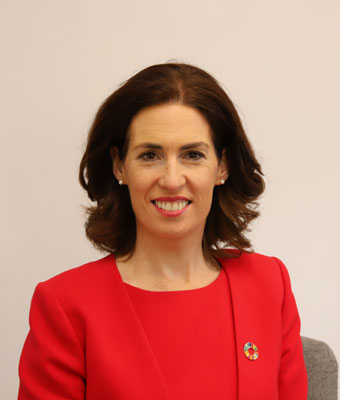
I thank the Deputy for his question and for giving me the opportunity to speak to it. Addressing educational disadvantage and ensuring that every child and young person can reach their full potential is a key priority for me as Minister for Education and Youth and for this Government.
The DEIS plus scheme, commencing this year as part of the DEIS Strategy to 2035, represents the most significant expansion of targeted educational supports since the establishment of the DEIS programme. It is designed to provide enhanced, evidence-based supports to a cohort of 121 schools with the very highest concentrations of children and young people experiencing persistent and intergenerational disadvantage. This forms part of a full-year investment of €48 million, with approximately 30,000 children and young people nationally benefiting from inclusion in the scheme.
The Deputy has raised questions about specific schools in Limerick city which were not identified for inclusion in the DEIS plus scheme, including Our Lady of Lourdes Primary School, St. John's Girls' and Infant Boys' School, St. John the Baptist Boys' National School, Presentation Primary School, CBS Primary School and St. Michael's Infant School. I acknowledge the very real challenges faced by school communities in Limerick and recognise the dedication of the principals, teachers and staff who work daily to support children and families experiencing disadvantage. It is important to stress that where a school is not identified for inclusion in DEIS plus this does not in any way imply that disadvantage does not exist within that school community.
DEIS plus schools were identified using a refined, rules-based model built on nationally available pupil-level administrative data. The model draws on a range of indicators associated with persistent and intergenerational disadvantage, including small-area deprivation, lone parenthood and unemployment, Traveller and Roma identity, and children living in State-funded emergency accommodation or international protection accommodation. These indicators are applied consistently across all schools using enrolment data from the past three years.
For inclusion in DEIS plus, the data on the individual school must demonstrate both a level of disadvantage that is significantly above the national average and a very high concentration of pupils from very or extremely disadvantaged areas. Many schools experience real and sustained challenges but still fall outside the threshold required for inclusion in this highly targeted intervention. A school-led application or self-reporting model would introduce inconsistency and inequity, which is why a data-driven and nationally comparable approach is essential. An independent OECD review of the DEIS identification model in 2024 highlighted the strengths of this approach, noting that it is multidimensional, respects GDPR principles and places no administrative burden on schools.
When the DEIS plus identification model was applied to the schools referred to by the Deputy in Limerick city, the data reflected disadvantage but not at the level or concentration required for inclusion in the DEIS plus cohort. In applying the same model nationally, a number of schools across Limerick city and county were identified for inclusion under the scheme based on the same objective criteria.
Schools in Limerick that are not included in DEIS plus continue to receive significant supports through the DEIS programme. DEIS grant allocations have been reallocated in line with the DEIS plus model with a number of schools mentioned receiving increased funding.
In addition to funding adjustments, the Department has reviewed and strengthened home school community liaison provision across the schools referenced by the Deputy with allocations updated under the revised DEIS model to ensure that meaningful supports are in place for families and communities. There is an appeals process for schools not included in the DEIS plus scheme that has now opened and the relevant schools can access full details on gov.ie.
I thank the Minister for being here today. It is very rare that one gets the actual Minister when one raises a Topical Issue. We have the OSCAILT network in Limerick and 12 schools are identified in that. It is very similar in the north east inner city where we have the North East Inner City initiative that works with ten of the most deprived schools in the inner city and operates on the same principles as OSCAILT. My understanding is that those schools were all identified and included in DEIS plus.
I have a couple of follow-on questions. Will the Minister or the Department flag to principals in advance of next year the importance of updating their primary online database, POD, and post-primary online database, P-POD, before the DEIS plus assessment? Principals have a highly intensive work load and in many cases the POD may not have been updated in the fullest sense. Will the Department carry out a review on the roll-out of DEIS plus to look meaningfully at some of the issues I have raised around the rigidity of the application process? There is a school on the left hand side of the road in Limerick that has been included and meets the criteria as set out by the system but there is a school on the right hand side of the road that does not when it essentially serves the same population and has the same issues. One school has now been given a leg up while the other has, unfortunately, been given a kick back.
The model nationally did not overlook Limerick. A number of schools across Limerick city and county have been identified for inclusion in DEIS plus based on the same objective criteria. With regard to the appeals process, schools have until 25 May to submit an appeal to the Department for review and they also have the opportunity to update their enrolment data for the years 2023 to 2424, 2024 to 2025 and 2025 to 2026 on the Department's POD and P-POD where they identify that the information already provided is not an accurate reflection of their school enrolment for those years.
Schools may also request that the application of the model to their existing data be reviewed. That review process will be overseen by an independent appeals board, the members of which are not part of the initial design and implementation of the DEIS plus identification model. When all of the appeals have been processed, the schools will be informed in writing.
The data is as good as that on the P-POD and POD but as part of the model, we are looking at unemployment levels and Traveller and Roma identity within these areas. It is based on the Pobal index as well. There will be as periodic reviews of this. My Department is working with the CSO and the ESRI around refining the data. As demographics and data change over the years, this will need to be reviewed as well. Schools will be reassessed periodically as the data sources and techniques are updated and advanced and as demographics change. The identification of schools for inclusion in DEIS plus does consider the presence of that persistent disadvantage but I would advise those schools to appeal as well.