Ceisteanna Eile - Other Questions
Táimid críochnaithe le Ceisteanna ar Sonraíodh Uain dóibh. Anois beidh Ceisteanna Eile faoi choinne an Aire Fiontar, Turasóireachta agus Fostaíochta. Ar dtús tá Ceist Uimh. 126, atá in ainm an Teachta Fleming, ach tá an Teachta McCormack á glacadh.
Business Supports
126. Deputy Sean Fleming asked the Minister for Enterprise, Tourism and Employment the measures he is taking to support the retail sector; and if he will make a statement on the matter. [30062/26]
What supports are currently available to the retail sector and are any additional measures being considered to assist retailers facing increased operating costs? I have asked this question previously on a lot of occasions, and the answers the Minister of State gave me, to be honest, just do not land with retailers on the ground.
I thank the Deputy for his question. The Government acknowledges the enormous contribution of the retail sector to our economy in every city, town and village in Ireland. It plays an important role in employment, with over 220,000 people directly employed in retail. As I said in response to the previous Deputy, I meet quarterly with the retail representative bodies for all retailers right across the country. The Minister, Deputy Burke, and I are aware of the issues facing retailers.
In addition, during the recent fuel price disruptions, officials in my Department engaged with the main multiple grocery retailers and focused on the impact on issues such as distribution, supply and home deliveries. As I said earlier, we are looking to identify practical actions that could be taken by the Government, or by industry itself, to support the sector, with particular emphasis on achieving sustainable jobs growth in the sector. The last meeting of the retail forum took place on 3 March. The topics discussed included retail crime, the deposit return scheme, environmental levies on single-use disposable cups and the national minimum wage.
The Deputy might be aware that the cost of doing business advisory forum has been established. It will look at the inherent costs for many retailers who are finding it challenging in regard to the increase in labour, insurance and energy costs impacting them. Over the last eight weeks, we have met regarding the various thematic areas of concern. Most of those focused on planning, insurance, infrastructure, water services and wastewater and legal costs. We want real outcomes from this forum. The last meeting was only held last week. It was attended by the Minister and the two Ministers of State here, given the political commitment we have to try to support the retail sector.
I welcome the supports that are in place and acknowledge the strong work being done for small and medium-sized enterprises by local enterprise offices, LEOs, and Enterprise Ireland in supporting businesses across the country. However, we have to be honest about the reality facing the retail sector. Over the last 12 months in particular, retailers have been hit from every angle. Rising energy costs, increases in the minimum wage and now the additional burden of auto-enrolment are all adding to the pressure on businesses already operating on very tight margins.
I have raised this issue with the Minister of State previously on the floor of this House, and while the supports are appreciated, there is a clear sense across the sector that more needs to be done. I say this not just as a public representative but on a personal level. I started my first retail business at the age of 21. I was born into the retail business sector through a family shop at home. I know what it feels like to open the doors every morning wondering if enough will be made to cover the costs. I understand the responsibility that comes from employing people, the weight of knowing that others rely on you for their livelihood. I have lived it. Right now, many retailers feel that they are not being heard. What additional targeted measures are now being considered to support the retail sector in the face of rising costs, including energy, labour and auto-enrolment obligations, so that viable businesses can survive?
I understand the concern raised by the Deputy, and I certainly do not underestimate the challenges many retail businesses face. That is why we have undertaken interventions in March and April in regard to the ongoing energy crisis we face. We have also looked at VAT changes, which will be introduced in July of this year, in respect of many cafés and small coffee shops. We have also looked at the targeted grants for local enterprise offices around cost reduction and digital adaptation. This is important. As I said earlier, we want to ensure that many retailers have consistency around cost certainty, simplification and where we can inform policy and inform regulators in regard to challenges or burdens being placed on retailers. This is why that exercise within the forum is not a box-ticking exercise. We want to look at the situation structurally and see where we can identify cost pressures and alleviate many of them to ensure the viability of businesses.
Building on that, there is real concern that without further action, small, independent retailers will continue to struggle, particularly in regional towns and rural communities. These businesses are the backbone of our local economies, as the Minister of State said, and are vital to keeping our town centres alive. Are specific cost relief measures being actively considered for the sector, particularly in relation to energy costs, labour pressures and the added impact of auto-enrolment? Will the Government engage directly with retailers to ensure the supports being developed truly reflect the reality they are facing day to day? Talk is cheap. We need to act now and act fast.
We are actively engaging with the retailers and the representative organisations. That is crucial. The charge may be that we are not listening, but we are listening. I think that is an important starting point.
The Deputy hit the nail on the head when he said we want to have less talk and more action. This is exactly what we are looking to do, focusing on delivery. We want to ensure that the grants around green for business, digitalisation and energy reductions, working with the Sustainable Energy Authority of Ireland, SEAI, are targeting businesses and reducing their energy dependency. This is something we are talking to the Department of Climate, Energy and the Environment and the Minister, Deputy Darragh O’Brien, about, and the energy affordability task force will look at the structural costs around energy for businesses. On regulation as well, we have established the small business unit within our Department. That is about the thinking small business first principle, which is what we want to do. We have introduced the SME test within the Cabinet handbook. This is very much focused on assessing before approval the regulatory impact on small businesses of any new policy or legislation that comes forward.
Question No. 127 taken with Written Answers.
Industrial Development
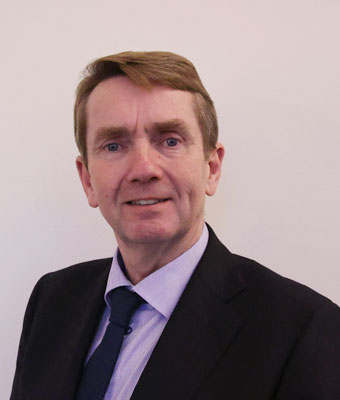
128. Deputy Michael Murphy asked the Minister for Enterprise, Tourism and Employment the current position regarding the IDA-owned lands at Ballingarrane in south Tipperary, including the extent to which IDA Ireland is actively promoting the site following the recent grant of planning permission for an advance building; the marketing and investor engagement strategy now being pursued, including international outreach and the inclusion of the site within IDA property portfolios; whether any expressions of interest or inquiries have been received to date; to provide an updated timeline for the delivery of an advanced facility on the lands; and if he will make a statement on the matter. [24947/26]
Will the Minister give an update on the IDA-owned lands at Ballingarrane industrial estate in Clonmel and the extent to which the IDA is actively promoting the site, particularly following the recent granting of planning permission for a 100,000 sq. ft advanced building solution?
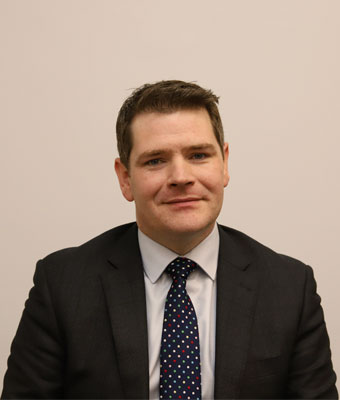
I thank Deputy Murphy for his very important question and the work he is doing on the ground for our enterprise areas in Tipperary. Balanced regional development is a key focus of the work of the Department through our development agencies. In this regard, IDA Ireland is continuing its strong commitment to promoting foreign direct investment, FDI, in regional locations as part of our 2025–29 strategy, Adapt Intelligently, and is targeting 550 investments of FDI projects outside Dublin over the strategy’s lifetime. Furthermore, IDA Ireland is positioning the midwest, including Tipperary, as a competitive destination for global investment and is targeting 100 of these 550 investments for the midwest.
The availability of suitable property and strategic sites is a critical component of the regional value proposition and can be a key differentiator in investment decisions from both new and existing clients, as well as clients of Enterprise Ireland and our local enterprise offices. IDA Ireland, in partnership with Tipperary County Council, has secured planning permission, as the Deputy pointed out, for a proposed 10,000 sq. m advanced factory building solution on a site of approximately 3.4 ha at Ballingarrane Science and Technology Park in Clonmel, which I visited with the Deputy earlier this year. This advanced planning permission allows maximum flexibility to the potential client, whereby they can avail of the permission or amend it to suit their specific requirements, subject to further planning permission.
IDA Ireland, in conjunction with Tipperary County Council, continues to aggressively market the Ballingarrane site and the proposed advanced building solution to existing investors, including in the IDA Ireland portfolio and through our Enterprise Ireland global office network, its regional offices and IDA Ireland’s website. The timeline for delivery of the proposed advanced building solution will depend on when the site is acquired and developed by a suitable client.
I will give more information in my follow-up reply.
It is positive to see that foreign investment is now at record levels.
There have been 323 investments in the past 12 months that will realise more than 15,000 jobs. Unfortunately, none of those investments are at Ballingarrane industrial estate. As the Minister said, this is a fully-serviced, strategically located land bank of more than 50 acres. It is in IDA ownership for more than 25 years. We have planning permission for that 100,000 sq. ft advanced building solution. As the Minister knows, Clonmel has a strong track record in terms of delivery, multinational employers, a skilled workforce and a reputation for reliability. Why has it taken so long to get to this point? It is crucial that Ballingarrane is prioritised within the IDA’s international marketing efforts.
I hear Deputy Murphy's frustration and I assure him I will leave no stone unturned in getting a client for this very exciting opportunity in Ballingarrane, which is an exceptional site that has full planning permission. We have approximately 16 IDA clients in County Tipperary such as Boston Scientific, Abbott, Merck, Sharp and Dohme, MSD, and Waystone. These are all exceptional clients providing high-quality employment across the sector.
We have approximately 95 Enterprise Ireland clients in Tipperary that employ 6,800 people. Between both agencies there are more than 12,000 people in employment. Critically, and I know the huge work the Deputy is doing in the tourism sector, we hope to have our capital schemes for Fáilte Ireland out in August.
I know at the forefront of the Deputy's mind is the Bulmers visitor centre at Dowd’s Lane, which is another exciting project. The enterprise projects, between tourism and enterprise agencies, will critically breathe life into rural areas and give towns that strong, sustainable employment they so badly need.
I thank the Minister. It was remiss if me not to acknowledge his own visit to the site at Ballingarrane. This site has been in IDA ownership for a very long time. The people I represent want to see tangible results, zoned and fully serviced lands, planning permission secured and a clear opportunity to deliver a flagship facility. I appeal to the Minister personally to keep the pressure on the IDA. I do not want to be asking the same question in six, 12 or 18 months’ time, but I will. I really want to see a timeframe for delivery of an IDA-linked company at this particular site. It is great to see more than 300,000 people now employed in IDA-linked companies. I want to see Clonmel in that number.
I assure the Deputy of my intention to continue to work very hard with the IDA to try to secure a client for that. It is important to note IDA employment increased 30% over the past five years in Tipperary as a whole. When we consider the region it is linked with, it has outpaced it by a very significant margin. Those exceptional clients in Clonmel and Tipperary as a whole create a solid ecosystem that makes it attractive for other clients to come into the region. We will work very closely with the Deputy to have a very strong value proposition. Budget 2026 achieved that for the enterprise sector. With our research development and innovation tax credit and the work we can do in supporting sustainable investments, in working with training and skills, we have a very important and exciting opportunity in Tipperary to work and develop further the options and value proposition Ballingarrane gives. We will do our very best to try to secure a client for it.
Business Supports
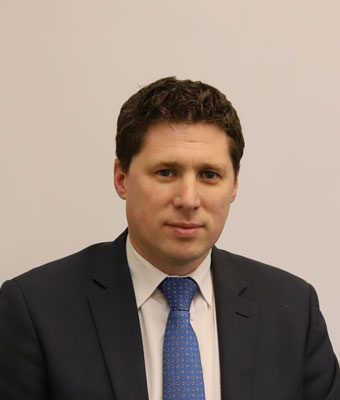
129. Deputy Matt Carthy asked the Minister for Enterprise, Tourism and Employment the initiatives he or his Department or associated State agencies have taken to encourage prospective new owners to establish a business at the former factory (details supplied) at Carrickmacross; and if he will make a statement on the matter. [30067/26]
The Bose factory was a landmark in the region of Carrickmacross for many years. In 2015, the factory closed and essentially has remained closed ever since because despite the huge fanfare from a Government colleague of the Minister’s, a then Minister, about 60 jobs coming, they never actually came. In recent months, we have been told that the factory is in fact up for sale. I seek an update on the Minister’s efforts to secure alternative employment for that site.
I thank the Deputy for his very important question. Enterprise Ireland supported the owners of the factory in Carrickmacross over a number of years as they sought to establish themselves as an infant formula and nutrition providers manufacturer. In March 2025, the company informed Enterprise Ireland that the business was no longer viable in Ireland due to inflationary pressures and market conditions. The company had intended to produce infant formula for the Chinese market. A number of factors have impacted on demand for imported formula in China, including a switch away from imported products and rapid growth in locally produced products. There has also been a significant decline in the Chinese birth rate over the past decade. As a result, the owners of the factory took the decision to sell the plant in Carrickmacross and appointed an Irish agent to support the sale process. They are actively seeking interest from potential purchasers of the facility and discussions have taken place with a number of interested parties. This process is ongoing and Enterprise Ireland continues to support the company by facilitating introductions to potential buyers where appropriate. Active promotion of the facility is being undertaken and further expressions of interest are being sought by the company both in Ireland and internationally. The Department keeps in regular contact with Enterprise Ireland about that important site. My colleague, the Minister of State, Deputy Niamh Smyth, is very much linked in with it as well. Enterprise Ireland will continue to liaise with the agent in supporting the promotion of the facility to the relevant potential purchasers as a matter of priority.
My Department remains committed to driving balanced regional development, including in the north east. Enterprise Ireland supported 84 companies in Monaghan and 66 companies in Cavan in 2025. These companies employ more than 14,000 people. The north-east region enterprise plan is also focused on delivering a range of collaborative initiatives to strengthen the enterprise environment in the region.
The building has essentially lain idle for 11 years. I mentioned it was 2019 when we had the fanfare and the Minister’s party taking credit, make no mistake about it, for jobs brought by Fine Gael to Carrickmacross. The jobs never materialised. The question that needs to be answered is whether the Minister will take a hands-on approach.
We met Enterprise Ireland. In fairness to the Minister of State, Deputy Smyth, she organised a briefing for local Oireachtas Members when the Minister, Deputy Burke, refused to answer my repeated requests for such a meeting. This is a crucially important venue. It is a huge site and was historically, economically very significant and important for the south Monaghan region, and it has lain idle. It seems as though everything is being left in the hands of the owners of this building, who have left it vacant for the past six years. My request is that the Minister take a hands-on approach to ensure we restore viable, high-end employment to this site.
First, Enterprise Ireland is working hard. It is the Government agency responsible for procuring a good client for the site in partnership with the owners. As I pointed out, this is a company whose business model was no longer viable. It is not fictitious; it did happen. The prima facie evidence is there. The owners engaged with Enterprise Ireland and were hoping to employ 60 people. This is obviously a very strong asset and Enterprise Ireland will work closely with national and international clients and the IDA to try to see if we can get a tenant for it.
There is significant employment in Cavan-Monaghan between Enterprise Ireland and the IDA with some very high-value jobs. In Cavan, as I put on the record, there are 66 Enterprise Ireland clients employing more than 6,000 people, as well as 1,557 people employed by clients related to the IDA. We have very strong jobs which our State agencies support in the area. We will do all we can in working with our agencies to get a good client for the site.
If a buyer is found and a new enterprise is established, the Minister will be there to cut the ribbon and get all the glory. That is the benefit of being in government. However, the job of being in government is that one does not get to hide behind a State agency when we are trying to secure reinvestment in an area that has been deprived because of the closure of a substantive factory. People refer to the prima facie evidence, good will and the rest of it. Has the Minister’s Department established whether the owners of the Newbaze site, previously the Bose factory, availed of the immigrant investment scheme, for example?
There are huge question marks over what exactly happened on the site. Given the level of investment we were told was being made in the building, with virtually no economic activity as a result, it does not make sense.
I am not aware of whether the owners availed of the programme in question. Obviously, they availed of some significant Enterprise Ireland funding but the majority of that was repayable and has been repaid under the terms of the original agreement. Again, that demonstrates that a significant business was put forward at that juncture.
As I said, there is significant employment in the region. There are, as we heard from Deputy Michael Murphy, many sites that require good clients in them but the Realpolitik is that we are operating in a very different economic environment, with so many geopolitical uncertainties, and the challenge to get capital investments is more difficult. Notwithstanding that, the economy is growing. We have seen all 13 economic sectors growing, no more so than in Cavan-Monaghan through the jobs being supported by our agencies. We will continue to do that and we will market the site aggressively, as we do by putting Irish enterprise first. Enterprise Ireland is ensuring that over 60% of jobs are located outside Dublin throughout the regions.
That means 40% of them are in Dublin.
Fuel Prices
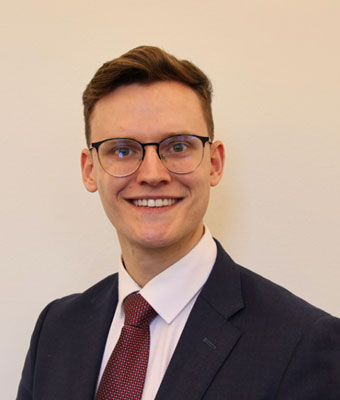
130. Deputy Albert Dolan asked the Minister for Enterprise, Tourism and Employment the assessment his Department has made of the impact of recent fuel price increases on small and medium-sized enterprises, particularly in transport, construction and agri-related sectors; and if he will outline any targeted supports under consideration. [30164/26]
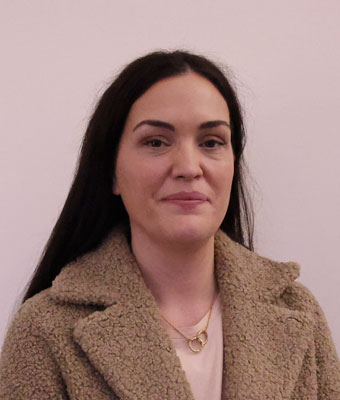
134. Deputy Aisling Dempsey asked the Minister for Enterprise, Tourism and Employment given that many SMEs are being disproportionately affected by the spike in fuel prices, and with businesses across the retail and hospitality sectors facing particularly heavy energy bills, the plans he has in place to help address these challenges; and if he will make a statement on the matter. [30074/26]
Has the Department prepared any assessment of the recent rise in fuel prices and the impact it is having on small and medium businesses in agri-related sectors and the construction and transport sectors?
I propose to take Questions Nos 130 and 134 together.
As the Deputy said, the Government is under no illusion about the seriousness of the fuel price shock facing small- and medium-sized enterprises. We recognise that for many businesses fuel and energy are not optional costs. They are a core input that determine whether a business survives or fails. The Department has carried out a detailed sector-by-sector assessment and the evidence is clear that the impact is uneven but acute in particular sectors. In transport and haulage fuel is a direct and immediate cost and price spikes feed straight into cashflow threatening viability, particularly for small operators with limited margins. The agriculture and agrifood sector faces double exposure, with fuel and fertiliser costs along with transport and processing pressures. These costs hit hardest during peak seasonal activities. In construction fuel and energy costs are embedded in materials, logistics and machinery use. The impact here is real and can be built up over time.
Beyond that, retail and hospitality SMEs are also facing sharp increases in energy bills that cannot simply be passed on without rising costs on competitiveness. This assessment has shaped a targeted Government response. Over March and April, we have introduced a substantial package of fuel supports, including VAT-inclusive reductions of 32 cent on the price of a litre of diesel, 27 cent on the price of petrol and 7.4 cent on a litre of green diesel. This is alongside a reduction on the NORA levy. Crucially, we have also deferred the planned carbon tax increase, providing immediate breathing space at a time of exceptional volatility.
We recognise that some sectors also need more than just price relief. For this reason, we have introduced and increased the diesel rebate scheme to 12 cent per litre. We have also established a new road transporter's support scheme, with direct payments for haulage and coach operators, which will cost up to €40 million per month over the next three months. We have also introduced a €100 million fuel subsidy support scheme to assist farmers, contractors and fishers during peak fuel-use months.
At the same time, the Government is looking at the structural costs to reduce further exposure altogether. This is being done through SEAI supports for businesses, which are being helped to cut energy demand permanently through audits, upgrades, renewable heat and microgeneration. Access to finance is also critical. It has been a barrier for many businesses to obtain the right finance to make these upgrades. The growth and sustainability loan scheme provides long-term, low-cost lending of up to €3 million, giving SMEs the capacity to manage shocks and invest through them.
These immediate supports are also being reinforced through structural reform. I outlined earlier that the cost of doing business advisory forum is now finalising its report, which has been brought by SMEs, regulators and Departments through a policy process identifying real cost drivers and also outlining practical solutions and recommendations.
While introducing immediate relief, we continue to monitor sharp rises in cost pressures to ensure that SMEs, jobs and our communities are protected in these uncertain times.
I want to make something abundantly clear and it is very important that I get this point across. Let us take someone in the agri-sector who is contracting day in, day out. If their machine is costing them an extra €200 a day to keep on the road, that amounts to a grand a week, which is over €50,000 a year. No business can survive that. That is why this intervention is absolutely critical. School bus operators are signed into a contract. They need to be supported. We are already having issues getting school bus drivers and operators. We need to ensure they are supported and they can survive and continue.
This country runs a serious risk of seeing massive construction inflation if we cannot manage the costs facing both self-builders and those building our national infrastructure and other projects across the country. It is vital that as much intervention as possible is put in place to help these SMEs survive. What further interventions does the Government plan to make?
I welcome the supports that are in place but we need to recognise the immediacy of the pressure facing small- and medium-sized enterprises right now. For many small businesses, particularly those that deliver their own goods in a fleet of vans, the spike in fuel and energy costs is not something they can simply absorb. These are businesses operating week to week, dealing with rising bills, fluctuating costs and very tight cashflow. Unlike larger firms, many SMEs do not have the capacity to hedge energy costs or spread risk. They are exposed in real time and that is where the pressure is being felt most. They do not have the economies of scale enjoyed by bigger businesses. There is real concern about viable businesses being pushed to the brink, not because of poor management but due to external cost shocks that are outside their control. Will the Minister of State outline what representations he has made to the Cabinet for small- and medium-sized enterprises as part of the package for agri-contractors, hauliers, bus companies and fishermen? Where is the package for companies with fleets of vans or cars, taxi companies and businesses that are the backbone of our community?
I thank the Deputies for their questions and contributions. I and my colleagues in the Department of enterprise have placed SMEs in all sectors front and centre. They are not being left behind. We fully understand the cost pressures many of them face. The memo the Minister, Deputy O’Brien, brought to Cabinet today was supported right across the Government. It outlined the types of measures that will be introduced over the weeks ahead. There are other specific measures within the construction industry. The sector was referenced today at Cabinet and more needs to be done for it.
On what we are doing and have done, we outlined the assessment that was made precisely to support those sectors that needed the intervention. If we take transport SMEs - our bus operators and haulage companies – they will receive direct fuel-linked supports because fuel makes up a huge proportion of their costs and they have felt disproportionate increases. Agricultural contractors are also receiving monthly targeted payments because they are exposed during seasonal periods. That is very important. Many businesses in retail and hospitality will see energy relief in terms of their distribution and they will have a significant VAT reduction to 9% on 1 July. We want to continue to ensure that businesses are supported.
Notwithstanding this, there is not a one-size-fits-all list of measures that the Government can introduce. The package currently stands at €750 million to support jobs, communities and SMEs right across sectors. This is targeted, evidence-based and an intervention that the Government wants to continue, and we are not finished there yet.
I welcome the intervention and the sizeable package that has been put in place, but it is like any scheme or package that was rolled out over the past few years. It is about how quickly a business can get this into its bank account to provide cashflow and liquidity so it can continue in business and get through a difficult and turbulent time. It is critical that the supports that are put in place now are through a streamlined process that is easy to draw down. Where I come from in east Galway, my family runs an accountancy firm and many of our clients are agri-contractors, small businesses and construction companies, and I see the hoops they have to jump through in trying to draw down many business schemes. I remember the temporary business energy support scheme, TBESS. That was extremely complicated and complex and it ended up being handed to the accountants to do. It is critical that people are able to utilise this scheme and get it as smoothly as possible.
They are being left behind. The companies and businesses I spoke about previously, which have fleets of vans and taxis, which rely on vehicles and fuel to power their business, are being left behind. Looking beyond the immediate pressures, there are also broader concerns about competitiveness. If energy and fuel costs remain elevated, many SMEs will struggle to remain competitive, particularly when compared with businesses in other jurisdictions which may have lower operating costs or greater state support. Will the Minister of State outline what longer term measures are being considered to protect the competitiveness of Irish SMEs, especially in energy-intensive sectors like retail and hospitality? How will the Government ensure that small businesses are supported not just to survive this period but remain viable in the future?
I certainly disagree that SMEs are being left behind. This is one of the most substantial packages across the European Union. It is all about supporting jobs and those who are most impacted but also ensuring they can absorb some of the cost increases that they are facing. We cannot cushion all the price increases. There is a reality here that many governments are trying to grapple with. A sum of €750 million is really substantial. The Minister, Deputy Heydon, met many of the pillar banks as recently as last week, advising them that these schemes are in place and that they would provide working capital to many of these businesses in the short term until they get this money into their bank account. That was received well.
We want the scheme to be simple in nature. We are all about simplification and being fast and agile. I expect that would be the approach for many Department officials with regard to trying to get this up and running. Looking at the more structural interventions we need to reduce our reliance on fossil fuels, we are looking at a large investment, through price review 6, PR6, into the grid and infrastructure, in ESB Networks and EirGrid. That will ensure we have the renewable energy deployment required right across the country, that we have energy efficiency supports and that we are looking at large-scale industrial decarbonisation. That is backed by over €300 million in environmental aid. We all know we cannot continue to go from shock to shock and not build resilience into businesses. That is why the Tánaiste is working through the Department of Finance in looking at hybrid heat recovery pumps, hydrotreated vegetable oil, HVO, and other energy efficiency measures to reduce that burden either through tax measures or through grant supports and subsidies. They will have a meaningful impact for businesses across the country.
Artificial Intelligence
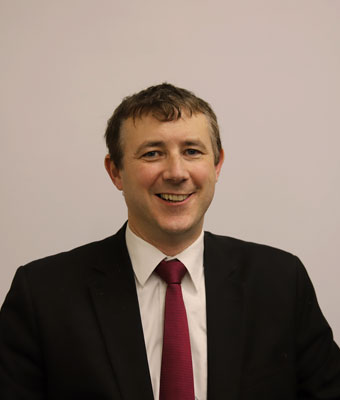
131. Deputy Aindrias Moynihan asked the Minister for Enterprise, Tourism and Employment the way in which his Department is ensuring that small- and medium-sized enterprises can move from AI awareness initiatives into measurable productivity gains from AI adoption; the changes that are required on current schemes to ensure sufficient scale and design; and if he will make a statement on the matter. [30424/26]
AI is no longer evolving year on year but rather month on month. Businesses are now encountering agentic and autonomous AI systems that can plan, act and execute workflows. While larger firms are moving more quickly, SME adoption is lower and more uneven. That risks embedding a two-speed economy. Will the Minister of State set out how current AI supports are being adapted and scaled to help SMEs to move beyond pilots and entry-level tools and into more measurable and productive approaches?

I thank the Deputy for his important question. The Government is committed to ensuring Irish businesses can adopt and benefit from Al. Many firms, particularly at an early stage of adoption, are seeking practical guidance on applying Al across core business functions. In response, my Department works closely with the enterprise agencies to develop practical guidance, case studies and sector-specific examples that demonstrate the tangible business benefits of Al.
The recently published national digital and Al strategy, Digital Ireland - Connecting our People, Securing our Future, sets out a clear roadmap for Ireland's digital and Al development and includes actions to support Al readiness across enterprise. Evidence points to rapid progress. Research from the expert group on future skills needs shows that Al usage and demand for Al roles have doubled since 2023, with strong skills demand matched by supply. CSO data shows over 20% of enterprises used Al in 2025, up from 15% in 2024, while the European Commission's 2025 digital decade report indicates that 13.8% of Irish SMEs use Al, above the European average and up from 8% in 2023.
My Department is also working with the ESRI to assess Al take-up among SMEs, including barriers to adoption and investment. A key priority of the new strategy is accelerating technology adoption among enterprises, especially SMEs. Under the Government's Al good for business initiative, a national Al and digital awareness roadshow is being delivered in partnership with our local enterprise offices, LEOs. The roadshow helps SMEs to understand the practical benefits of Al and digital tools, showcases real SME success stories and highlights available LEO supports. The initiative also includes the appointment of Al sector champions and the establishment of OBAIR, the Observatory for Business Al Readiness.
We already see evidence that many SMEs are stuck around entry-level AI adoption. Most businesses planning AI investments are expecting to spend under €10,000. That is typically on more basic content creation and basic marketing rather than on deeper, productive gains through workflow automation and supply chain optimisation, for example. At the same time, Ireland remains mid-table, just above average, in EU business AI adoption. That is behind countries like Denmark and Finland. How will existing schemes, through the likes of Enterprise Ireland, the LEOs and Údarás na Gaeltachta be redesigned or scaled up to support deeper AI integration in SMEs instead of fragmented, one-off or pilot schemes? How will the Department measure whether those interventions are actually delivering productivity gains at a company level?
We have work to do to ensure that the whole SME sector is open to and embracing AI tools. If they are not embracing it and looking at digitalisation in their companies, they are set to lose and the divide between the successful and businesses that will fall behind and may ultimately fall off will come down to their ability to adopt technology. We have a suite of measures to try to make that job easier. I am always keeping a close eye on the uptake of those grants to see how businesses are engaging with them. This LEO roadshow is incredibly important because it gives not just the Department's supports but also the LEOs', which are incredibly important at a local level. The case studies and, for me, meeting businesses and doing these roadshows is key, where businesses can see businesses like theirs and the difference that adoption makes.
I want to move the focus towards job protection. The real risk from AI is not so much AI itself as the poorly managed adoption of AI.
Where we have seen agentic and autonomous systems, as I mentioned earlier, they must not just assist with the work but should carry out tasks and co-ordinate workflows. Where people are trained to supervise and validate the work alongside the AI, productivity can grow; where that training is absent, it looks like the AI will almost substitute for the person. Smaller businesses are expected to redesign roles, supervise autonomous systems and comply with the EU AI Act, and to do all that at speed. How are AI initiatives being accelerated beyond basic literary into practical job-protecting capabilities? How are these skill supports being used to help SMEs manage change without job displacement?
It is true there will be disruption in the labour force and in business because of AI. The disruption and impact will be greater if businesses do not embrace AI. We have the observatory piece in our Department, OBAIR, which is looking at mitigating that. The AI will impact the workforce required. We will look at how to retrain and upskill staff so they are not left facing redundancy or anything like that. I am not in denial, and I do not think anybody in government is in denial, about the impact this will have.
Our colleague, the Minister, Deputy Lawless, launched this week AI Ready which is to get down to the nitty-gritty with individuals in the workforce so nobody feels a digital divide and to help people who want to explore AI to upskill within a business. That is all part of our suite of measures in place to help the worker and the company.
Tourism Industry
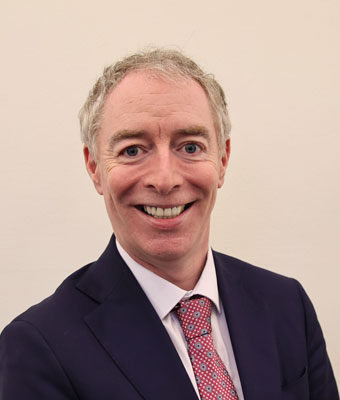
132. Deputy Shay Brennan asked the Minister for Enterprise, Tourism and Employment his assessment of the likely impact of current aviation challenges on the number of overseas visitors to Ireland in 2026; and if he will make a statement on the matter. [30451/26]
Anois tá Ceist Uimh. 132, atá in ainm an Teachta Shay Brennan ach tá an Teachta Cahill á glacadh.
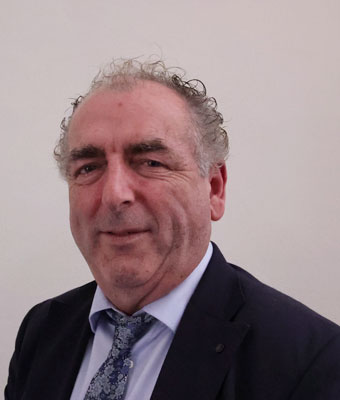
I raise this issue at a time of growing uncertainty for Ireland's tourism sector. In counties like Kerry, the uncertainty is very real. What is the Minister's Department's current assessment of the likely impact of these aviation challenges on overseas visitor numbers in 2026? Specifically, what contingency planning is under way to protect regions like Kerry? What actions are being taken to safeguard air access, support regional tourism and ensure counties like mine are not left exposed?
I thank the Deputy. The tourism sector entered the year with positive momentum. There were consecutive months of growth in overseas visitors from August through to February, the most recent period reported by the CSO, indicating that tourism was performing strongly prior to the escalation of the conflict. The Government, however, recognises that geopolitical instability, including the ongoing conflict in the Middle East, can have implications for international travel and tourism. Tourism is a vital pillar of Ireland’s economy, with overseas visitors contributing approximately €6 billion annually to the island. The sector supports close to 10% of total employment, and critically, around six in every ten tourism jobs depend directly on international visitors.
The Middle East plays a critical role in global aviation, acting as a major transit hub and accounting for approximately 14% of international transit traffic worldwide. Disruption in the region therefore has system-wide effects that extend well beyond its borders, particularly for connectivity between Asia, Australia and Europe. These disruptions have altered the operating environment for tourism and underscore the importance of continued vigilance and a flexible, responsive policy approach as global uncertainty persists.
Tourism Ireland continues to take a forward-looking approach to market development, underpinned by resilience and diversification. In August 2025, the Government set out targeted initiatives to grow tourism within mainland Europe and globally and avoid over-reliance on any single market. While maintaining strong performance in the US and Great Britain, Tourism Ireland is increasing its focus on mainland Europe, developing Canada as a key growth market, and laying the groundwork for long-term growth in markets such as China. The growing network of new air routes from the US enhances marketing potential. Tourism Ireland continues to undertake extensive advertising, publicity, social and digital activity along with airline and tour operator partnerships. Tourism Ireland's Kickstart campaign earlier this year covered 19 US states.
As an island destination, air access is fundamental, accounting for approximately 90% of overseas inbound connectivity.
Tourism in Kerry is the lifeblood of our local economy. From Dingle to Cahersiveen, from Killarney to Ballyheigue, from Kenmare to Ballybunion, from Glenbeigh to Listowel, from Valentia Island to Tralee and right across the county, thousands of jobs and small businesses depend directly on a strong and stable flow of overseas visitors. That stability is under threat. We are seeing the early impacts of global aviation disruption, driven by the conflict involving Iran and rising jet fuel costs. Airlines are already scaling back. Lufthansa announced 20,000 flight cuts. We have seen reductions from Aer Lingus while others are adding fuel surcharges. For an island nation like ours that predominantly depends on air access, fewer flights mean reduced capacity, higher fares and, ultimately, fewer visitors.
The Irish Tourism Industry Confederation has signalled the earlier growth projection of 5% to 7% this year is unlikely to be met. For Kerry, even a small drop in overseas visitors has a disproportionate impact. We are a premium tourism destination but also a peripheral one. We rely heavily on connectivity through our regional airports and on visitors making the additional journey beyond Dublin.
We have had strong growth this year, which is important to recognise, particularly since we brought in a new tourism policy in December, A New Era for Irish Tourism, which looks at bringing new strategies to lengthen the season and at ensuring we have a strong culinary strategy this year that will enhance the value proposition across the country, and, hopefully, an accommodation strategy that will look at viability for hotels.
I want to be careful in terms of airlines. Many airlines are consolidating their routes. If they run two flights and they are half full, they will only run one. We want to be careful how that translates into cuts in numbers. We are encouraging the airlines and working with them on this huge challenge. We have a lot of capital schemes coming out from August for Fáilte Ireland looking at enhancing visitor attractions, working with the 46,000 SMEs and, hopefully, getting capital into them to enhance their value proposition. Through our viability mechanism - our VAT cut - we are giving them 4.5 % on their margin. We need 6% and 7% growth on domestic and overseas tourism, which will be important for the communities the Deputy represents.
I appreciate the Minister's response but I want to press the point about regional impact. This cannot be approached in a one-size-fits-all way. Kerry and the wider south west are particularly vulnerable to any reduction in air capacity. If flights are cut or become more expensive, visitors do not just delay; they often choose alternative destinations entirely.
While there is a suggestion Ireland could benefit as a safe destination or from increased domestic tourism, we need to be realistic. Domestic tourism will not fully offset a decline in high-value overseas visitors, particularly in areas like Killarney, Kenmare and Dingle that rely heavily on international markets. We need to see proactive measures, not reactive ones.
I urge the Minister to consider targeted supports for regional tourism businesses if numbers soften, enhanced marketing through Fáilte Ireland and Tourism Ireland, particularly in North America and mainland Europe, and, critically, protect and expand regional air access, including routes that serve the south west.
There is a strong case for ensuring Kerry Airport and access routes into the region remaining a priority, especially in the context of any wider aviation strategy. The message from the ground is clear. There is nervousness in the sector. I ask that additional flights for Kerry be looked at from Belfast, Barcelona and Amsterdam to boost visitor numbers.
We will do our very best to ensure the sector keeps growing. I am aware that overseas visitors are critical for regional locations. That is why we are looking at growing our value proposition. Remember that some of the viability mechanisms have not started yet; they will not kick in until 1 July. They are coupled with reform of our capital schemes, and I have taken the view within the Department that what you cannot measure, you cannot manage.
We have targets in Fáilte Ireland relating to growth on a month-by-month basis and strict KPIs to build up support for SMEs. There will be significant support across 2026 and we will continue that. We have about €400 million in our capital plan for the next five years to support the tourism sector.
That is a very significant increase on the previous one. We also have a very strong budget working with our strategic air activation scheme. We are putting boots on the ground where we have new flights because we need resources to market them and to get the awareness of flights and to get them to take hold. There is a lot of work to do over 2026. I look forward to working with the Deputy to ensure the kingdom does benefit from that.
Crime Prevention
133. Deputy Michael Murphy asked the Minister for Enterprise, Tourism and Employment his assessment of the recent escalation in retail crime, including theft, organised shoplifting and related antisocial behaviour; the impact this is having on small and family-run retailers, particularly in terms of financial loss, increased operating costs and staff safety concerns; the specific measures, supports or interventions being developed by his Department to assist affected businesses, including with insurance and security costs; the nature of engagement under way with representative bodies and other relevant Departments, including those responsible for justice and policing; and if he will make a statement on the matter. [24948/26]
I thank the Deputy for his question. The Government fully recognises the significant harm caused by retail crime, which not only impacts retailers and retail employees but also has broader consequences for local communities and the national economy. Theft, organised shoplifting and associated antisocial behaviour are not victimless crimes and directly affect businesses' viability, staff safety and community confidence. I am acutely aware retailers are facing real financial losses, including rising insurance and security costs, and have deep concerns around the personal safety of staff, many of whom are working alone or at late hours. For small independent retailers in particular, a single incident can have a real impact on weekly profits, or worse. The issue is being taken very seriously by the Government. The programme for Government makes an explicit a commitment on retail crime, including the development of the retail crime strategy, which is being led by my colleague the Minister, Deputy O'Callaghan, in the Department of Justice, Home Affairs and Migration.
Over the past years, we have met officials from both Departments and have engaged extensively with retailers and representative bodies at the retail forum to understand at first hand the scale, patterns and consequences of retail crime. Operationally, An Garda Síochána has established Operation Táirge to specifically target organised retail crime and Garda management has briefed the retail forum on its progress. I welcome the strong focus on intelligence-led enforcement but also the increased visibility of Garda members in crime black spots and the disruption of repeat offenders.
From my Department's perspective, we are also acting to support retailers through enterprise supports. We will establish access to grants and have engagement on insurance and regulatory burdens, but that will be done through the cost of doing business advisory forum. We will continue to work on this matter and shortly will have the publication of the action plan on retail crime.
The reality on the ground is stark. Retail crime is no longer sporadic; it is systematic. We are seeing organised shoplifting, repeat offenders and a growing sense among retailers that there is little deterrence and few consequences. For small and family-run businesses, retail crime leads to lost income, rising insurance and security costs, and in many cases fear among staff going to work. I hear directly from retailers that feel they are being asked to absorb the cost of crime themselves and that cannot be acceptable because right now the perception, and increasingly the reality, is that retail crime does pay.
I thank the Deputy for his contribution. All retail workers deserve to go to work without fear and business owners deserve the protections of the livelihoods they have built. That is why we are very much focused on the retail crime strategy. It is well advanced and will include specific, targeted measures including prevention, enforcement and support for affected businesses. Operationally, An Garda Síochána has rolled out Operation Táirge, which has been successful. We have seen more disruption, arrests and prosecutions in many crime black spots, but we need to continue to redouble our efforts because retail crime needs to be confronted. It cannot be normalised and we need to work with retailers and their employees to ensure it is stamped out for good.
We need to do everything we can to support our retailers. They are the real heroes at the local level due to the extent to which they hire locally, spend locally and invest locally. Those same retailers tell me that the offenders are well known. Incidents are frequent and brazen and the system is simply not responding at the pace required. We cannot let the situation continue whereby honest businesses invest, employ people and contribute to their communities while others repeatedly break the law with little fear of consequence. What immediate actions, not long-term plans, will be taken in the next three to six months? Critically, who is taking ownership of this matter across government?
As I said, the retail crime strategy is being worked through at the Department of Justice, Home Affairs and Migration. It is being led out by the Minister, Deputy O'Callaghan. I have had extensive engagement with him and his officials. We have held a round-table meeting with many retailers, who were representatives of the retail forum. We want to ensure that strategy has concrete interventions and that these can be delivered within the term of the Government. It is a programme for Government commitment. We want to see this being worked through and we will, within the Department of enterprise, continue to support that over the months ahead.
Question No. 134 taken with Question No. 130.
Questions Nos. 135 to 152, inclusive, taken with Written Answers.
Wage-setting Mechanisms
153. Deputy Richard Boyd Barrett asked the Minister for Enterprise, Tourism and Employment if he will introduce legislation to raise the minimum wage for workers under the age of 20 and for apprentices in their first two years so that they will be at parity with other workers. [30429/26]
There is a film called "No Country for Old Men". This is no country for young people because the Minister discriminates against them in their entitlement to the minimum wage. People aged under 20 get paid either 90% of the minimum wage, 80% of it or sometimes as low as 70%. Apprentices, who we need a lot more of to help us to build the houses we need in this country, also earn less than the minimum wage in their first and second years, so it is hardly an incentive for young people to stay in this country. I ask the Minister to ensure that whether a person is a first or second year apprentice, he or she will get at least the minimum wage and that, similarly for those aged under 20, these discriminatory rates of minimum wages will be got rid of and that young people will be entitled to the full minimum wage.
I thank Deputy Boyd Barrett for his question. We are very clear we want to see real wage growth in the economy. We saw from the Central Statistics Office, CSO, index in December that all 13 sectors of the economy are growing, but critically, we are seeing real wage growth. I know that will be a challenge across 2026. I note the Deputy's concerns about the subminimum rates but we were very clear in our concerns for small businesses, for corner shops and for that developmental piece in terms of the early years of one's career when young people get experience. I am particularly thinking of our corner shops and the potential imposition that a 30% uplift in costs would put on them, really threatening their viability. We also have to be careful of any unintended consequences of these decisions on third level education.
The Minister, Deputy Lawless, is working on an action plan for apprenticeships and that is key. The Deputy raised a very valid point about making apprenticeships attractive and ensuring we are bringing in skills that are critical for the construction sector and for trades, some of which are exceptional in terms of the career pathway they offer. Critically, as a Government, we have brought parity of esteem to third level education and apprenticeships in the Central Applications Office, CAO, process, which was a very strong signal from the Government. We put forward an amendment to the motion earlier to detail the huge improvement we have seen in workers' rights in this country, from improved agility in remote working to the trajectory towards a living wage, the different schemes to support workers, the tips legislation, the ban on zero-hour contracts and the right to disconnect.
There are so many different areas we have made progress on. I am thinking particularly of the action plan for collective bargaining, which we brought in ahead of schedule. I gave that commitment despite what happened with the ECJ case. Again, that gives us a good pathway for continued improvements in workers' rights.
Deputy Boyd Barrett has 30 seconds. We do not want to go over time.
Okay. The Minister seems a bit more sympathetic on the apprentices, but will he do something about it? The higher education committee recommended it in a report. It is ridiculous. We desperately need qualified apprentices in the trades in particular but also in many areas of the economy. For first- and second-year apprentices to be paid either €7.67 in their first year or €11.50 in their second year is pathetic. Many of them are in their early 20s. Some of them are paying rent or have families. They need to be paid properly. I disagree with the Minister on young people. Corner shops or anything else should not be based on exploiting young people who should be paid the minimum wage.
To be fair, I do not think they are exploiting young people. In the many communities that have small shops, they really provide a service to the community and provide a huge resource, especially socially, to so many villages right across the country.
On apprenticeships, I absolutely think we have a lot of room for improvement. We are working on the action plan with the Department of the Minister, Deputy Lawless, to improve conditions and to make apprenticeships more viable career choices. Those are the skills of the future that a growing and dynamic economy needs. I am happy to work with the Deputy in that regard.
Is féidir teacht ar Cheisteanna Scríofa ar www.oireachtas.ie.
Written Answers are published on the Oireachtas website.