Special Educational Needs
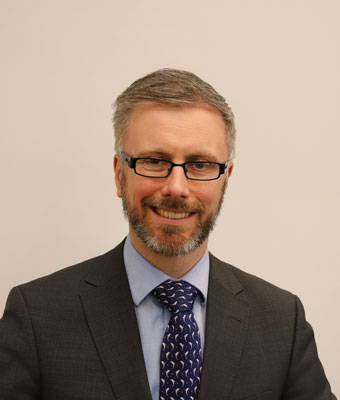
6. Deputy Roderic O'Gorman asked the Minister for Education and Youth when the report of the Dublin 15 special education task force will be published; and if she will make a statement on the matter. [29032/26]
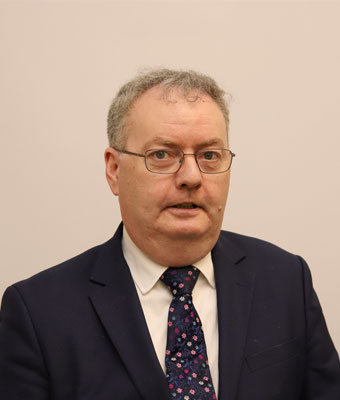
I thank the Deputy for his question. In 2024, the then Minister of State with responsibility for special education and inclusion established a task force to support the forward planning of special education provision in the Dublin 15 area. I thank all of the task force members, including parents representatives, school principals, school patron representatives and representatives of the HSE, the NCSE and officials from the Departments of children and education, for their work through the school year 2024-2025 in discussing the key issues relating to special education provision. The task force met on ten separate occasions. The key aims of the task force were to advise on how to better plan for the provision of special education places in Dublin 15 for the 2025-2026 school year and beyond, examine better ways to establish the level of need in the area, advise on how special education places can be provided and to examine how a common application system can be established to reduce the burden on parents applying to multiple schools.
The task force that supports forward planning of special education provision in the Dublin 15 area submitted its report late last year. The report sets out 21 key recommendations. I am happy that work is progressing in relation to meeting some of the key recommendations of the task force. A new education therapy service is being established. Additional funding has been secured for capitation for schools, with a particular focus on special schools. The State, as set out in the NDP launch earlier this year, is making significant capital funding available to our schools. I am happy to confirm that the report will be published very shortly.
There is real anger about the fact that this report that was handed over to the Department in July still has not been published. The Minister was involved in the establishment of this task force, so I do not need to go into the entire history. Before the 2024 general election, when there was a real crisis in Dublin 15 about lack of places for autism classes and in special schools, the Government, which I was a part of, made a decision to establish the task force to address the issue. The Minister of State set out the huge amount of work that was done by State bodies, but particularly by the representatives of parents and schools in the area. The recommendations are relevant to Dublin 15, but they are also relevant to the wider country. It is not good enough that we still do not have a date for the publication. I thought the Minister of State was going to give me some news there, but we need a specific date for publication and an understanding of how the Department is going to respond to each of the recommendations.
I assure the Deputy that we will be publishing it as a matter of urgency. On the key recommendations, a task force outlined the challenges that were being faced in a particular part of Dublin 15, but it is also representative of the challenges that are being faced across the country. The recommendations that are in it are in relation to investing, understanding the challenges and the need within the communities and to make sure that the whole of the Government and the Department are focused on ensuring that there is provision for special education. An awful lot of work has gone on over the past to ensure that we have school places for children who have special education requirements and to ensure that we have the supports across the country and in Dublin in particular, where there was a huge challenge. A spotlight was put on that area because of the difficulties that were there a couple of years ago. I assure the Deputy that we are looking at the key recommendations in it. The report will be published very shortly. I also assure the Deputy that the recommendations that are in it have been taken on board. We in the Department are working meticulously to make sure that those are implemented.
In Dublin 15, it has been parents and educators who have provided the leadership when it comes to special education. Danu Community Special School has a large number of autism classes. It was driven forward by the Dublin 15 autism group. The common application system, which is where, for the first time, a family only has to apply in one location and that application is sent for autism classes across 18 primary schools was driven forward by the Dublin 15 Principals' Network and Helena Trench in particular. That is why it is so frustrating that these groups gave a huge amount of time to the task force to bring forward these recommendations, which, as the Minister of State said, were put forward in the context of Dublin 15 but have city-wide and national application as well, have not been brought into the public light yet. It is urgent that the report is published. I urge him to do it as quickly as possible and to respect the work that was put into this report.
I give the Deputy a commitment that we will publish it as a matter of urgency. I acknowledge hugely the amount of work that is being put in by the people into the task force by each and every one of the education partners across the sector. The Minister and I have been working since Christmas. Most Monday nights have been spent in meetings in relation to moving forward the education and special education component of it as well to ensure that we are listening to the challenges that are out there. We are taking on board the challenges right across the sector whether it is the SNAs and the school communities, but particularly families and communities that are looking to have the best possible education facilities and educational experience for children with additional needs. I will give a commitment to get that published as a matter of urgency. I reiterate that the recommendations in the report have very much been taken on board by the Government to make sure they are implemented for the best possible education system for children with additional needs.
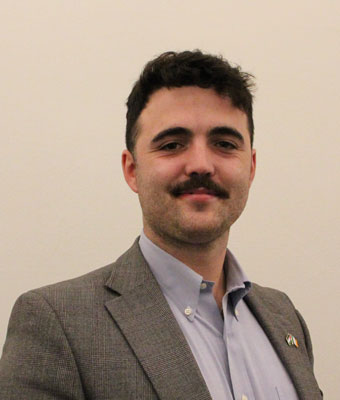
7. Deputy Barry Heneghan asked the Minister for Education and Youth the level of engagement her Department has had with the request by a school (details supplied) for modular accommodation that can facilitate the opening of two additional autism classes; and if she will make a statement on the matter. [29156/26]
Inniu táim chun caint faoi scoil a mbím ag caint fúithi i gcónaí sa Teach seo, Stapolin Educate Together National School in my constituency of Dublin Bay North. I have raised it a number of times. It is a fantastic school with dedicated staff who are watching this at the moment. I had the pleasure of visiting it, as did the Minister of State earlier in the year. He saw how hard-working the staff members are and the exemplary example of the education they are providing for their students. The issue is that they need a special class. They do not have room and they need modular additions for that to happen.
The Government is committed to the continued accelerated provision of additional special classes and special school places for 2026-27. The National Council for Special Education is the statutory body tasked with sanctioning new special education provision in our schools. The NCSE has sanctioned 432 new special classes nationally, including 102 new special classes in Dublin, for the next school year 2026-27, with more to follow in the coming weeks. This is a number of months ahead of last year and provides for greater certainty for families and more time for schools to plan for the establishment of new special classes. I commend every school, including the school referred to by the Deputy, that expresses an interest in opening a new special class. As the Deputy knows, I visited the school last year and I know the good work the staff do in supporting children with additional needs. This school is already supporting three special classes. The focus for the Department and the NCSE is working to provide new special classes in medium and larger primary schools with none or just one special class.
The school received a new building comprising 16 mainstream classrooms and a two-class SEN base in 2023. A recently received application for two special education needs modular classrooms under the additional school accommodation, ASA, scheme is currently under consideration. However, as this is a relatively new school building, the Department expects the school to prioritise utilisation of all existing capacity in the first instance. Resources are available to support schools who have children who have needs beyond those catered for within the special classes. I ask the school to continue to engage with the NCSE on accessing those supports. The council is also engaging with parents in the locality and in the surrounding areas to ensure there is a range of provision available, including in Stapolin National School. My Department and the council will continue to keep the matter under review.
I visited the students in the school again last week . They need this to be given to them. One of the students, Esmai, also asked for a pink castle, if the Minister of State could do this for her. He said the NCSE is reviewing it, but from speaking and listening to the principal, the NCSE is saying that the Department will not give the modular building, so there is miscommunication there. All five TDs in Dublin Bay North have brought this up. It is needed. All of the local TDs are pushing for it, as are local councillors. Other schools that are not asking for special classes or for modular buildings are being offered them but this school, which has a clear demand with data - 64 children are waiting in this area that I represent - to support the need for a modular building to be put in and they will be able to do it. It has an exemplary example of how it should be done. It has hard-working staff. I would really appreciate if it could be reviewed.
I know the school community is extremely dedicated and capable. It has been engaging with all the public representatives, including the Deputy. He has mentioned it a considerable number of times in the House. There is a number of issues. We are trying to make sure that we have the best possible provision across the Dublin community. Dublin continues to be a challenge in terms of special education, both in special classes and in special schools.
There is a huge amount of work going on. This school is a new building, comprising of 16 mainstream classes. We are looking at other school communities to make sure we have a balance right across the system in it. Deputy Heneghan has raised it a number of times but I assure him that we are looking at every single piece and at all school communities. We are looking at how best we can support children with additional needs right across the city of Dublin and right across the country. It is fair to say that it is a relatively new school and it is important the school prioritises utilisation of all existing capacity in the first instance.
It is a new school but it was not built big enough and there are more houses going into that area, which I represent. They need modular additions and I would appreciate if the Department could clarify whether it has assessed the situation.
I was speaking to one of the parents who is waiting for a school place. It is the case of James Field, who is currently without an appropriate special school place since September, despite the endless determination from his family. His mother, who was a councillor with me in the Clontarf Ward, has reached out to me. She said:
If James has no appropriate space by September, the years of progress will turn to regress day by day. James does not have play dates or friends coming here. School is essential for James to learn the basic life skills and social skills.
I have met James. He is a fantastic young man. Councillor Ali Field deserves for this case to be looked at. She has raised it through all of the TDs. She said:
If it was my child, how would you feel? You should be ashamed doing this to a 12-year-old, vulnerable little boy.
I would appreciate if the Department could look at that.
I appeal to James's family and the councillor to make sure they are engaging with the NCSE, like we have over many years within the NCSE. We are building up the expertise within the council to liaise with families. It is hugely important that we have what is needed on the ground dealing with families and challenges within the school communities. However, in the first instance it is important that James's mom is engaging with the council because it is the important conduit between the families and the school communities. It is always easier to give the carte blanche but this is a very challenging question the Deputy keeps referring to. It is important that the Department and the NCSE keep the matter under review but the school community should listen very carefully as well to the guidance they are being given and that they should utilise everything within the new school building at Stapolin Educate Together National School.
School Transport
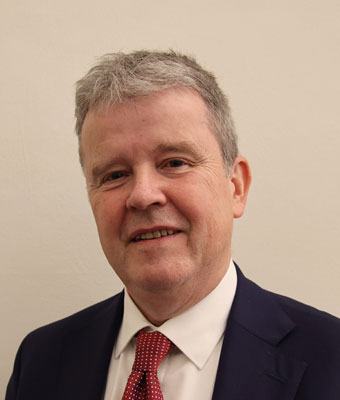
8. Deputy Edward Timmins asked the Minister for Education and Youth for an update on the expansion of the school transport service to reduce the distance criteria to recognise feeder schools; and if she will make a statement on the matter. [29143/26]
As part of the programme for Government, we set out to implement the terms of the school transport review to reduce distance criteria and expand eligibility. I want to raise the importance of recognising feeder schools as part of this criteria.
The school transport system scheme, which Bus Éireann operates on behalf of the Department, has expanded significantly over the past six years. In that time, the number of children and young people using the service has grown from under 120,000 in 2018 to over 181,000, including over 24,000 pupils with special educational needs in 2025, which equates to an increase of over 50%. Since 2018, investment in the scheme has more than doubled from €200 million to €537 million in 2025. The growth in school transport has been especially marked in the area of special educational needs. This now represents almost 60% of the scheme’s total costs, while serving around 13% of pupils.
The School Transport 2030 report was published in early 2024. The recommended changes to the schemes include expansion of the current eligibility criteria, addressing current operational challenges and moving towards better integration with public transport to ensure the better value for money to the Exchequer. It was outlined at the time the review was published that the proposed changes to the eligibility criteria would further increase demand for the scheme so it was considered prudent to implement the changes on a phased basis.
As part of this phased rollout, 14 school transport pilots commenced in the 2024-25 school year. A further 11 pilots were approved for the 2025-26 school year. For these pilots, the distance criteria for pupils were reduced to 2 km for primary and post-primary and the need for a pupil to be attending their nearest school was removed. All pilots are being monitored, and a further evaluation will take place at the end of the current school year. Findings from these evaluations will guide the planning and implementation needed for a national rollout of a revised school transport scheme. Implementation of the recommendations of the review will continue to be planned subject to resources being available to meet the increased demand.
In west Wicklow, St. Brigid's National School in Manor Kilbride is a feeder school to Blessington Community College. Some families attending Manor Kilbride school are told they cannot receive bus tickets to Blessington. This is because five other secondary schools in County Dublin are closer but they cannot get into those schools as it is not a feeder school to those schools. This is a crazy anomaly.
It is important that this criterion be reviewed. Many families have been left relying on the concessionary ticket system, which creates uncertainty. This distance calculation is also sometimes done on roads that may not be safe or suitable for a bus carrying students to travel on.
The school transport system is a hugely valued piece by families right across primary, post-primary and special education. Since the start of the school transport system in the late 1960s there have been many changes along the way. We had the recommendations of the report. The cost of the school transport has grown hugely over the past number of years to try to meet the needs.
Last September or October, there were over nine hours of discussion in the Dáil, Seanad Éireann and committees in one week on school transport and that goes to show the respect there is for school transport right across the system. The Deputy made a point in relation to feeder schools and the anomalies within the school transport system. We are evaluating some of the pilot schemes that have been done over the past two years. Those evaluations will be done after this school year to inform us how best we can meet the various challenges within the system.
School bus services in County Wicklow are critical, especially in west Wicklow where public transport is limited. Some schools are on narrow roads with limited parking and no footpaths. School bus travel is essential and will make school drop-off and collection time safer, reduce traffic congestion and will be more environmentally friendly. It also allows parents to continue working, as many have given up employment or reduced working hours due to the logistical challenge of getting children to and from school where transport is not available. It is also important that the process considers the community links for students choosing to attend a particular school.
The full implementation of the 2030 review is required to permanently fix the eligibility status for families, whose nearest school is not their feeder school. This is an anomaly. They are being refused tickets because they are not the nearest school, yet it is a feeder school and the only option they have to get in because they are not feeder schools of other closer schools. A feeder school should automatically qualify for the ticket.
There are pinch points across the country. There are always issues in relation to school transport in Wicklow. The school transport scheme was initiated in the late 1960s because a huge number of people did not have transport themselves. The school transport system was to get people to post-primary in particular, and to primary school as well. Now, because of work patterns, it is a crucial piece for families, in rural Ireland in particular, to make sure they have access to education.
Regarding the issues around the feeder schools, we will evaluate the data that will come forward at the end of this year on the pilot schemes. The cost of the scheme to the Exchequer has grown hugely over a short number of years, but we have to meet the demand as well. I will keep the points the Deputy made under review.
Question No. 9 taken with Written Answers.
Teacher Training
10. Deputy Ryan O'Meara asked the Minister for Education and Youth the training available for teachers to support them in their AI literacy skills; and if she will make a statement on the matter. [29161/26]
A comprehensive suite of professional learning to support teachers in relation to artificial intelligence, AI, for teachers is being provided by Oide technology in education, Oide TIE, which is the Department-funded digital teacher professional learning service that has been rolled out across the country. This work recognises both the opportunities and challenges presented by AI in schools, including its potential to enhance teaching and learning and assessment, alongside considerations such as ethics, responsible use, data privacy, algorithmic bias and assessment integrity.
In this context, the AI in schools external advisory task force will hold its first meeting on 14 May 2026. This task force will be set up and will support the Department in developing a coherent national approach to the safe, responsible and effective use of AI across our school system. At my request as Minister, the task force will report to me quarterly with reports on its emerging findings.
Through Oide TIE, general support is provided on the use of AI, particularly generative AI, in education. A dedicated AI hub on the Oide TIE website is available for all schools. This is a carefully curated digital space to support school leaders and teachers in considering the use of AI. It promotes the practical implementation and ethical application of AI, ensuring that schools adopt AI technologies in a thoughtful and effective way. The AI hub provides resources for teachers, including an introductory online course, AI for Schools. It also helps educators to understand AI. Documents are published in relation to guidance on AI for schools and the ethical considerations involved, as outlined in the digital strategy for schools.
I would like to focus briefly on the additional assessment components, AACs. These are being rolled out fully but they exist already in some subjects. This time 12 years ago, I finished my research study report as part of leaving certificate history. I did that report on the Modreeny ambush, where the north Tipperary flying column ambushed the Black and Tans between Cloughjordan and Borrisokane during the War of Independence. I had to look at Ernie O’Malley’s Raids and Rallies, the late Roche Williams' book, In and Out of School - In the Home of the MacDonaghs, and research done by the Cloughjordan Heritage Group.
This morning, I was able to just google the Modreeny ambush and get a full overview, with the date and time, the number of casualties, their names and everything else. My concern is around the way in which students are so easily able to access all that information now and how it impacts on the additional assessment component. I am glad to hear that the external advisory task force is being established. That will be needed for teachers and for external examiners as we continue to grow what I see as the very important additional assessment components.
The Deputy raises an important issue. In relation to the additional assessment components, coursework rules were published by the State Examinations Commission, SEC, last November. They addressed the use and misuse of artificial intelligence. Additionally, the SEC has also commissioned research by the University of Limerick, which is due for completion in December 2026. There are very clear rules online, through the SEC, in relation to the use of AI for examinations. As the Deputy and I will remember from when we were at school, if somebody else’s work is being used, then it has to be referenced. We have to quote it. It is very clearly laid out for teachers and students. Students have a responsibility as well.
There is the AI task force, which has key educational stakeholders and experts in this area on it who will report back to me. It is not just us doing the work here nationally. We are also working with our European counterparts, looking at the evidence and best practice coming from an EU level, and constantly updating our own AI research and guidance to schools. The SEC has clear coursework guidelines in this regard.
It is important to acknowledge the many positive benefits to AI as well. It is not all negative but it is essential that this advisory task force is up and running and doing that work. AI is moving so quickly compared to what we would have had only a number of years ago, let alone what I would have had in technological assistance doing my leaving certificate 12 years ago. There are so many benefits there to enhance students' learning experience and to enhance their ability to dig down into information but it is about all those mechanisms the Minister mentioned and possibly more, including working with European counterparts, that will be so important to ensure this technology does not take away from the ability to teach students the skills of critical thinking, research and analysis and investigating primary and secondary sources in whatever subject it might be. A huge body of work is needed and I am delighted to see the Department advancing it.
The Deputy very eloquently expressed the situation in relation to the role of the teacher and teaching and learning, which is very important. There are lots of positives for AI, as well as lots of challenges, including its ethical use. Teachers and school leaders play a central role in developing students' digital skills, including AI literacy. To support them, we have the AI schools hubs, acceptable use policy, bespoke in-school supports for teachers and Oide. We are also working at EU level. An international AI pilot is exploring data literacy, the ethical use of AI and generative AI. That information, the feedback and learning from that pilot, will feed into our guidance for our schools. We are constantly working and evolving, and working with our European counterparts and on national research here and on best practice to ensure we are rolling this technology out in a very safe and ethical manner. My Department has adopted a whole evidence-informed approach to AI, and that task force will be instrumental in these ongoing efforts. This is a living document and an evolving situation, and we need to make sure we are keeping ahead and working with European counterparts to make sure our young people are prepared for this digital world.
Deputies have asked to switch Question Nos. 11 and 12 around to allow for attendance at committees. We take Question No. 12 next.
School Transport
12. Deputy Keira Keogh asked the Minister for Education and Youth if her Department has considered the particular challenges associated with the current school transport criteria in rural areas such as County Mayo, including the local nuances associated with feeder schools and geographical distances; the measures her Department is taking to address these challenges; and if she will make a statement on the matter. [29062/26]
Go raibh maith agat to my Vice Chair who is allowing me to swap to let me make it in time for a committee. Has the Minister considered the particularly nuanced challenges around current school transport, especially local traditions in relation to feeder schools versus kilometres, especially in rural counties like Mayo?
I thank the Deputy for the question. The school transport system is operated on behalf of the Department by Bus Éireann and it has expanded significantly over the past six years. In response to previous questions, I said the number of pupils using the service had increased from 120,000 years ago to 181,000 now. That is more than a 50% increase in a short time. The investment by the State has increased from €200 million to €537 million in 2025. There has been a huge increase in the special education requirement aspect of it as well, which now accounts for almost 60% of funding in the scheme.
The Deputy mentioned the feeder schools. At various points, we can see that the school transport system is encountering challenges across the country. There are challenges in relation to areas of the country where the feeder schools are going to one particular school and the nearest school is going to other schools. Those have been recurring for some time. In fact, going back a number of years ago, it was changed from the catchment area to the nearest school to try to alleviate the pressures in the school transport system and to modernise it. A number of pilot projects have taken place. There were 14 in the previous school year and 11 in the current school year. This data is being collected right to the end of this school year to ensure we have a proper glance at where the challenges are. In the programme for Government, we are committed to further expanding the scheme. Indeed, the 2030 report also talks about it.
A lot of the questions that have come from the Deputy, and from other Deputies, concerned feeder schools, the criteria involved in this context and how that marries into how we operate the school transport system in future. County Mayo has been mentioned a few times, and we will certainly review the situation, but it will be based on the data we have from the pilot schemes.
I welcome the huge investment in school transport and the huge increase.
It is almost a year to the day I spoke about Sancta Maria Secondary School in Louisburgh that has two buses going every single day from Westport at a cost of approximately €850 to the parents. Traditionally, kids from Westport have either gone to Westport or Louisburgh schools. I even know of kids from Newport who will either go to school in Westport or Achill, but Castlebar schools could be considered their second nearest option. I understand there might be pilots going on, but a year later there are still parents paying €850. We do not have many children going from Westport to Castlebar, but traditionally we have two buses going to Louisburgh. That is data. We can look back over the past seven or eight years and there are two buses every single year going from Westport to Louisburgh. The Minister of State will agree, €850 is a huge cost to parents.
We have looked at the different challenges with feeder schools and where the clusters or noise is within the system. Last year, we had a weekly meeting with Bus Éireann and the Department to monitor the situation and this year we have brought forward a closing date from June to 8 May to ensure we can do better. We probably will have the same challenges in August or September but we want to have better sight of what is needed and what are the applications. The issue in relation to feeder schools is continuously raised with us whether in the Deputy’s area or other areas, and how the figures are with parental choice and what the norm is in those communities. It is something that if we had an endless purse we would love to resolve but we are constantly keeping it under review. Going back a number of years, it was the catchment areas which were drawn up in the late 1960s. We removed that. It is something that is constantly brought in with feeder schools and it is constantly under review.
I can see why in places like Dublin, Galway or bigger areas, the catchment area could be confusing and there are a lot of schools. However, when we look at really rural places, it seems it would be much easier to engage with the schools themselves. The primary schools can tell the Department where all the students are going. If the primary schools in Newport are saying their students are either going to go to Westport, Achill or Louisburgh, why is Castlebar down as their nearest school? It might geographically be the second nearest or nearest school, but if kids from an area are not going there at all, it is crazy that the system would look at it that way. If there is any way there is a pilot that could be looked at for rural areas to see if the Department could engage with primary schools first and foremost to assess the nearest and second nearest schools based on where kids are going rather than on kilometres it would help, because there could be a school nearer by kilometres. For example, for students in Glenhest, there is a 0.5 difference in kilometres, but the kids are not going to Castlebar, they are going to Achill, Westport or Louisburgh.
I talked about if we had endless funding in the Department, one issue would be traditional feeder schools and the policy there. We have to work within the parameters we have.
In relation to the evolving of the school transport system, it is hugely valued within rural Ireland because it is an enabler to get the children to and from school and the different work patterns parents have. As I said earlier, one week last September there were nine hours of debate on school transport within the Houses of the Oireachtas which showed the level of interest in relation to it. One of the issues the Deputy’s colleagues raised earlier in relation to another part of the country was feeder schools. There is no question we have challenges in relation to this because of the huge growth in the school transport system in the past number of years. We are continuing to invest in it, but it is one of the key pieces we have to do more work on.
Schools Building Projects
11. Deputy Aisling Dempsey asked the Minister for Education and Youth to explain the process around School Building Projects; the project process and if there are currently delays in the process. [29148/26]
I ask the Minister about the school building project list for schools which are either new builds or seeking extensions, and when they get on to that list how they work through the process and what delays they might face.
I thank the Deputy for her question. My Department’s process for delivering a school building project under the large-scale programme or additional school accommodation programme involves five core stages. These stages are reflective of the capital works, management framework and infrastructure guidelines. The stages range from preliminary design to completion and handover. My Department’s design team procedures set out the requirements to be followed at each stage of those processes. These procedures are available on the website.
At a high level, the work progressed at each of the key stages is as follows: stage 1 includes reviewing the project brief information and analysing all the site factors which may impact on the project’s viability; stage 2(a) includes the development of the design, cost planning and preparations to lodge the statutory approvals; stage 2(b) includes obtaining all the statutory approvals, preparing the tender documents and pre-tender cost plan; stage 3 includes running the tender process, assessing the tenders and awarding the project contract; stage 4 refers to the construction. Finally, stage 5 includes ensuring quality completion and timely project handover along with the final account.
In order for a pipeline project to move from one stage to the next, confirmation is always required that the project is compliant with all the relevant technical and cost requirements. Other factors which influence the timing for progress include relative prioritisation of the project and the timing affordability within the national development plan funding parameters, taking account of the overall programme requirements. Delays can occur on occasion due to factors beyond the Department’s control, for example, challenges in acquiring a site, planning permission issues, procurement difficulties or adverse weather while the project is at construction. Some of these issues are not unique to the school building programme and the Department manages challenges as they arrive. Overall, my Department endeavours to manage the school building programme across the estate of over 4,000 schools to ensure that projects are delivered to meet the most urgent needs in the shortest possible timeframe. This year, will see at least 1,000 projects under construction across a range of programmes.
I thank the Minister for that clarification. I will use Boyne Community School in Trim as an example. It has been on the school project building list for over 15 years for works and an extension. Some 24 prefabs have been added to that site which is a recognition that the Department is aware how important extending and improving the school is. The local demand for this school is huge. It is the only secondary school in Trim that caters for boys. Engagement with the Department was lacking for many years, but a full redesign was completed recently. However, it still remains in stage 2(a) behind Scoil Mhuire and our local Gaelscoil which only got onto the list in recent years.
I understand emergency school building works will arise and sometimes projects will have to be leapfrogged, but Boyne Community School should be on a transparent, public list with works completed as quickly as possible, in the order it went on the said list.
I think the Deputy. In the national development plan, of the 105 projects published earlier this year, seven are in County Meath, two of which are in Meath West, St Ultan’s School and Ard Rí Community National School, both in Navan. Additionally, ten schools, including six in Meath West are approved to undergo works as part of the climate action summer works programme this summer. These projects are in addition to the €473 million investment in capital funding since 2020 for schools in County Meath. Some €216 million was for Meath West schools. Over that period, a total of 62 schools have been upgraded either through the provision of a new school building, large-scale extension or provision of modular accommodation which includes 24 schools in Meath West. There are also 13 school projects in County Meath under construction, of which five are in Meath West. In addition, since 2020, a total of 125 special classes have been opened in County Meath of which six were sanctioned in Meath West for September 2026. I will come back in.
Boyne Community School is a DEIS school. It is on a fantastic site and is a lovely, historical building, but it is not fit-for-purpose as it stands. The type of building it is causes complexity in design and cost but we really need to overcome that. It was acknowledged 15 plus years ago that this work was needed.
I have concerns around the 24 prefabs. Incredibly, having looked at them and the classrooms in the school, they provide better facilities for the students.
It is putting some pupils at a disadvantage. It is almost creating a two-tier education system within the one school community. With the new and improved curriculums which focus on continuous assessment and practical matters, we need to provide these much-needed facilities. We cannot continue to disadvantage the pupils in Boyne Community School.
First, to reassure people, the NDP is a five-year plan but I know there is urgency. When you are on the list, it is great but when you are not on it, there is disappointment. This is the first tranche of a five-year national development plan programme for the country. It is €1.6 billion for those that are going to tender and construction this year and next year. My Department is also carrying out a prioritisation list. I know that school is moving through the process but it is looking at the energy and conditions of all the school estate across the country. That will feed in to prioritisation. There are some school which do not have a home at all - they might be working from a sports club, for example - and special education is a real priority for us. Also schools which have space to provide extra special education classes in their existing footprint are a priority as well. I know the Department will be working with that school to move it through the different stages of the process.
Questions Nos. 13 to 15, inclusive, taken with Written Answers.
Question No. 17 taken with Written Answers.
18. Deputy Eoghan Kenny asked the Minister for Education and Youth the rationale her Department has in choosing particular schools for priority building lists, to outline the denomination of each of the 105 schools chosen by category; if schools that are currently at stage 2b will be progressed over the next two years; and if she will make a statement on the matter. [28885/26]
In January this year, my Department published a comprehensive national development plan implementation plan for the education and youth sector. That included 105 school building projects to proceed to construction and tender in 2026 and 2027. That list included 80 large-scale and additional school accommodation projects along with 25 modular projects. The number of modular projects has now increased to 31.
The first tranche of projects was selected with a view to facilitating projects already at stage 3, that is, at tender stage, to progress to construction as smoothly as possible. The prioritisation of projects at stage 2b focused on projects which had achieved planning permission where therefore there is an appropriate stage of readiness for progression to tender.
Within the cohort of stage 2b projects, projects at special schools were afforded a top priority. Other projects included schools that did not have a permanent accommodation and had ongoing demographic pressures, projects providing significant special education capacity as well as projects progressing demographic pressures or had major condition issues.
There is a Department-led prioritisation process which will continue over the course of this year and next year to assess and to evaluate the progression of individual projects through the design pipeline, projects at stage 2b, that are not on that 105 list. This will ultimately inform the next tranches of the programme roll-out.
This is a five-year programme out to 2030. Where appropriate, the Department will also assess opportunities to undertake advance enabling works for the most urgent and complex projects to facilitate that smooth progression to construction in 2028 and beyond. It is important to note that of the 105 projects to move to tender and construction that represents a subset of all projects currently being progressed so in total 1,000 school buildings are projected to be under construction this year alone.
I want to reference one school in particular. I taught in Coachford College for a year. The Minister of State, Deputy Moynihan, will be acutely aware of Coachford College. I know he has engaged with the school on a consistent basis as it represents a number of his own constituents. Coachford College is a fantastic school with around 900 pupils. It has a huge offering of subjects. However, Coachford College has been waiting a number of years for a new school building. It is not part of the 105 school building projects list despite the fact it has been waiting so long. It is absolutely appropriate that the Department of education would communicate with schools like Coachford College on an ongoing basis so that they have an understanding on whether or not they will move to the tender process over the next two years. Will the Minister also clarify the date on which the new tranche of schools will be announced? Will it be 2028?
There is ongoing engagement between the Department and schools and school patrons. That is happening all the time. The list of 105 projects includes 12 projects in County Cork, of which five are in Cork North-Central. One of these schools, Scoil Íosagáin, moved into stage 4, which is construction, in February. Additionally, there are 35 schools, including eight in Cork North-Central, that were approved to undergo works as part of the climate action summer work scheme. These projects are in addition to the €785 million in capital funding since 2020 for schools in County Cork, of which over €199 million was for Cork North-Central schools. Over that period a total of 158 schools have been upgraded either through provision of a new school building, a large-scale extension or provision of modular accommodation. There are currently 20 projects in County Cork under construction, of which three are in Cork North-Central.
A prioritisation list will be worked on by the Department - that is the energy and condition survey. This is the first time this work has ever happened and it will give a real picture of our schools across the school estate. The Department will be working with schools through that and that will feed into the next tranche. I do not have a date per se.
I was in communication with the Department last Thursday at the Committee of Public Accounts. We have moved to a modular accommodation style of building works. While we are still building traditional school buildings we have significantly moved towards modular accommodation on which a significant amount of money has been spent over the past five years. I am not saying at all that modular accommodation is not welcome. I am sure it is welcome the majority of school grounds across the country but exact clarification must be given to schools like Coachford College in relation to when they might possibly see a new school building. A significant number of students in the likes of Coachford College who have gone through their whole six years without ever seeing a new school building. It is a fantastic school. It covers a huge area as the Minister of State, Deputy Moynihan, knows. There are a number of primary schools in the whole area of Duhallow. It is essential that schools like Coachford College would have some sort of an understanding of when they might see shovels in the ground for new school buildings.
In the past we might have thought of as modular as prefabs but these are not prefabs. These are state-of-the-art, very modern buildings. The Minister of State, Deputy Moynihan, and I have walked into many of them. You do not realise they are modular. They just look like an extension to a school. The spec is of a high quality.
The Department is working with schools and engaging with school stakeholders. That prioritisation process is ongoing. Work is under way in the thousands of schools across the country that are currently under construction. This is the first tranche of a five-year plan. That energy and condition survey will feed into that. There will be that ongoing communication with the Department and the schools in order to prioritise the next tranche.
The timing of a pipeline project, moving from one stage to the next, requires careful planning. It is determined by a number of factors, including confirmation that any existing or emerging school capacity in the area is being well optimised - we have to make sure we are getting value for money for that - and that there is compliance with all the technical and cost requirements. The outcome of that prioritisation assessment will feed into it as well as affordability around the funding through the NDP.
School Facilities
19. Deputy Noel McCarthy asked the Minister for Education and Youth further to Parliamentary Question No. 211 of 12 February 2026, the progress made to date in ensuring the use of a green area by schools (details supplied); and if she will make a statement on the matter. [28762/26]
I ask the Minister for Education and Youth, further to Parliamentary Question No. 211 of 12 February 2026, the progress made to date in ensuring the use of a green area by schools at Carrigtwohill School campus and if she will make a statement on the matter.
I am very aware of this issue. I recently met Scoil Mhuire Naofa and the local representatives, including the Deputy, on the matter. A campus project was delivered for three schools - Carrigtwohill Community College, Scoil Mhuire Naofa Carrigtwohill, and Scoil Clíodhna Community National School - as part of my Department's design and build programme. The project was completed in quarter 4 of 2023.
The schools on the campus have sought to use a green area, which forms part of the site for recreation purposes.
The area in question, as the Deputy knows, is not suitable for a formal playing pitch, because it is required as an attenuation basin under the flood management system for the campus. However, the Department is pleased to support the schools' access to this green area as an informal recreation space. Planning permission was granted by Cork County Council for an entrance and access way to this green area, as a standalone planning application.
The scope of works and associated costs to provide the entrance and access way is being reviewed by the Department and officials will update the schools upon completion of that review. In addition, there is an area of about 1.9 acres to the north of the campus in my Department's ownership. The Department has agreed that this can be used as a recreation area by the schools on a licence basis. Officials from my Department are in contact with the relevant stakeholders to progress this. Should the land be required to support school place expansion in the future, its use as a recreation area will cease. My Department has had positive and productive engagements with the three schools and their patrons throughout all stages of this project and will continue to support the schools on the new school campus.
I thank the Minister for her response. I thank her and her Department officials for recently meeting councillor Anthony Barry, Rory Cocking and me to discuss this matter. It is encouraging to hear at first hand from the Department that the expectation remains that access to the green area will be granted to all campus schools for recreational purposes. Entrance and access works to the green area have been approved, as the Minister said, by Cork County Council, but these works have yet to be completed. We are now nearly in May and it would be highly beneficial to all if these works were undertaken to ensure that access to the green area is in place for the upcoming school year in September. With this in mind, will the Minister confirm whether she has had any further recent engagement with the ETB and the schools on the matter and the status of the access works to be completed?
A scope of works and associated costs for the green space have been received by my Department for the proposed works to provide access to that green area. On initial review, it is the Department's recommendation that a cost-effective solution be considered and resubmitted for further consideration. Once the scope works and the cost to provide the access and entrance are agreed, procurement of a contractor to complete the works can be undertaken. Until the scope works are agreed, it is just not possible to give a timeline for completion, but the commitment is there to work with the schools on this. On completion of the works, my Department intends that the lands will be handed over to Cork Education and Training Board to be managed and maintained.
I thank the Minister for her positive response. It is good to hear that work will be undertaken as soon as the scope of work and cost is in. This is an easy win for all concerned. The green area is a flood attenuation area that is currently locked and lying idle despite being approved. It would make perfect sense that students of all ages would be able to benefit from the use of such a large green area close to their schools. There will be no pitch markings or changes of any description, just a green area that will be cut regularly and used for recreation. I therefore again ask the Minister to address the need for her and her Department to do everything within their power to ensure that the area is open to all local students as soon as possible. I thank the Minister for her positive response.
I thank the Deputy. The original planning permission for the campus development at Carrigtwohill included the green area lands to the south of the school building infrastructure, so the green area was always included in the development as a flood attenuation zone, which forms part of the campus flood mitigation strategy. The campus development was delivered according to the schedule of accommodation, which provided three general purpose areas, a PE hall in the post-primary school and a total of 13 ball courts across the three schools. As the function of the green area is primarily as a flood attenuation area, once the access and entrance are delivered, the area of green space can be accessed by the schools for recreation purposes and can be used when the weather and ground conditions permit. As I say, there has been ongoing engagement with my Department about this. At our meeting, we gave the commitment for this to proceed. The scope of works and associated costs were received by the Department, so the Department is asking the schools to come back with further information, and we can work with them.
Question No. 20 taken with Written Answers.
Education Costs
21. Deputy Darren O'Rourke asked the Minister for Education and Youth in light of the cost-of-living crisis and cost-of-doing-business crisis, if she will reverse the reintroduction of leaving certificate and junior certificate fees, and increases in school transport fees; and if she will engage with school transport operators to ensure that they are adequately supported with the increased cost of fuel. [29045/26]
As part of budget 2026, the Government confirmed that examination entry fees will be reintroduced for the 2026 State exams. These fees are being restored at their previous levels, which are unchanged since 2012. It is €116 for leaving certificate candidates and €109 for junior cycle candidates. Not all families are liable to pay examination fees. Any student with a full medical card, or covered under a parent's or guardian's card, will continue to be fully exempt from that fee. This approach strikes a fair balance, maintaining support for those who need it most while restoring a long-standing contribution towards the cost of running the examinations system.
I am advised that approximately one third of candidates who have engaged with the process to date are exempt from the fees. The process is straightforward, transparent and well signposted, and full details are available on the State Examinations Commission's website. Phone and email help desk services are available to school authorities and families who need assistance. A recent review of the school transport scheme found that having a fee helps make better use of resources and prevents seats on school buses from going unused, helping to protect and sustain the scheme for all families who need it. The school transport scheme remains heavily subsidised by the State, with over 92% of the overall cost covered. Transport, too, remains free for eligible medical card holders and pupils who are eligible for the special educational needs transport service.
The Department appreciates the concerns, given the recent global events and the impacts already being seen in increased fuel prices in Ireland. That is why a support package of measures has been approved by Government, providing targeted relief to transport operators, because this was a key concern for those operators. The details of these supports are being finalised.
We cannot separate these increases in cost. To that repeated line about the review of school transport fees, there are already fees. It is not the case that there were not fees. The issue is that they are being increased significantly, by up to 100% in some cases. The Minister might say they are modest increases or a reintroduction of leaving certificate and junior certificate fees that were there before, but she cannot strip this away from the cost-of-living crisis. Parents are dealing with uniforms, transition year fees, voluntary contributions and digital devices. It is a major burden on families at a time when they need relief rather than additional costs being heaped on them. Will the Minister review and reverse these decisions?
A recent review of the school transport scheme found that having a fee helps to make better use of resources and prevents seats on school buses from going unused. The fee for a primary school student is 55 cent per week and it is 60 cent for a post-primary school pupil, or €1.32 per week for a family. The Minister of State, Deputy Moynihan, and I are also acutely aware of the school transport system and getting better data about usage of school buses across the country. We are working with the Department of Transport and Bus Éireann, which roll this out, to get that data. We absolutely appreciate the importance of school transport, especially around special education children, who get this free of charge. We want to be able to roll that out but we also need to make sure that we are getting good value for money and, where there are vacant seats, that they can be used. For example, there might be students who are taking the bus in the morning and not taking it in the evening, or vice versa, or not taking it on a Tuesday or Wednesday. We need to get that data because we also have calls from TDs here who are saying that their constituents cannot get access to school transport.
That is the work we are doing in the Department to make sure we are getting good value for money for what we are investing.
I think I speak on behalf of every TD in the Chamber in saying that come the middle of August, we will be in contact with the Department about children who have not got access to the school transport system. The Minister can take that as read - unfortunately.
I want to ask the Minister about a related point. My contention is that all of this happens in the same households on which there are demands to provide for the cost of sending children to school. On the one hand, I welcome the free books scheme. The Government is happy to remind people of that. On the other hand, a significant number of schools are demanding digital devices for every child, at a cost of hundreds of euro each. We saw media reports in recent days and weeks about Sweden and other places that are stepping away from this type of technology. Is this something the Minister is looking at? Is she concerned about the direction of travel in schools in Ireland, in particular the costs for parents?
We have introduced a number of cost alleviations for schools and parents. The free school books is one example of that. We are providing solar panels for schools as well to reduce their energy costs. There has been a hugely positive uptake from schools across the country in relation to that. The school transport system costs 55 cent per day for primary school pupils and 60 cent for post-primary students. When we compare that to public transport costs there is a big reduction in the cost.
We give guidance to schools on ICT to ensure that in every way possible they minimise costs for parents. We also give them advice about uniforms. The financial services unit in the Department advises schools on their own costs and how they can make savings. There is also an onus on schools to ensure that, where possible, they reduce those costs. We also have ICT grants for schools. Millions have been invested in that. This is ongoing. We will work with schools in that regard.
With the permission of the House, I intend to go back to Question No. 16. This is the last question of the morning. Is that agreed? Agreed.
School Transport
16. Deputy Colm Burke asked the Minister for Education and Youth the progress made to date in relation to the introduction of e-ticketing as part of the school transport scheme; if there are plans to expand e-ticketing to other schools for the 2026-27 academic year; and if she will make a statement on the matter. [28771/26]
The school transport 2030 report was published in early 2024 following a comprehensive analysis and review of the scheme as it currently operates. The recommended changes to the future operation of the scheme include expansion of the eligibility criteria, addressing current operational challenges and moving towards better integration with public transport to ensure we have better value for money for the Exchequer.
As part of the review, it was also recommended that the Department and Bus Éireann continue to explore and implement improved technology. The Department is currently progressing a number of technological improvements to the scheme, including the planned introduction of e-ticketing. Not only will e-tickets replace the current printed paper tickets but they should also provide accurate information on ticket utilisation, which is currently not readily available. Better data will inform future route planning and maximise the efficiency and effectiveness of the system.
A technology working group has been established between the Department and Bus Éireann. Work is progressing on several projects, including e-ticketing, and the Department continues to engage with both the Department of Transport and the National Transport Authority on these matters. A phased implementation of the review's recommendations began at the start of the 2024-25 school year alongside the Department of Transport and Bus Éireann.
A total of 14 pilot projects took place and a further 11 pilot projects were approved for this school year. All pilots are being monitored, and will be evaluated in the future to better inform us. The e-ticketing pilot project is a hugely important piece of data collection for us and will make the best possible information available to us when we are planning the future direction of school transport. This morning a number of Deputies were looking for additional services in their communities. It is also important that we have the data on the utilisation of the current system, which will make sure we are putting the State resources to the best possible use.
I welcome the Minister of State's reply. The e-ticketing pilot data is extremely important in respect of the use of school transport. Every week we all get complaints about seats being vacant on school buses, while the children who would use them do not have access to the buses. E-ticketing is extremely important in making sure that there is full utilisation and that the people who have been unfortunate in not being able to get on the school transport system can use those vacant seats. What is occurring in parts of the country is that people agree to take the transport offered but then do not use it for various reasons, or they may use it some days of the week but not every day. It is important that e-ticketing would give us the correct data on the usage of school transport.
E-ticketing and the collection of data on school transport are hugely important. We have seen an increase in the State funding being provided, from €200 million to €527 million currently. Demand is growing in terms of the number of people who are looking to access the school transport system. Since 2018, the number of students travelling on it has grown by 50%.
Deputy Burke is aware, from people telling him about challenges in regard to buses, that some of the buses do not have full occupancy. We are constantly being asked if we have data on this. E-ticketing will help us to know whether an allocated seat is being used three days a week or five days a week, mornings and afternoons, and what the data is in that regard, to ensure that the scarce resources we have are being best applied.
We have gone well over time. Deputy Burke can have 30 seconds.
Will the Minister of State clarify if there is a target date for e-ticketing to be available across the board in all school transport systems?
The work is ongoing with the National Transport Authority, the Department of Transport and Bus Éireann. We have to implement the reform and get the data. There is a huge body of work to be done but we intend to do it as soon as possible.
Ceisteanna Eile - Other Questions
Questions Nos. 125 and 126 taken with Written Answers.
Mother and Baby Homes
127. Deputy Claire Kerrane asked the Minister for Children, Disability and Equality the number of applications made to the mother and baby institutions payment scheme to date in 2026; the number processed; and if she will make a statement on the matter. [28748/26]
In relation to the mother and baby institutions payment scheme, what is the number of applications made to that scheme to date this year and what is the number that have been processed?
The mother and baby institutions payment scheme opened for applications in March 2024. Over its full lifetime, the scheme had been tentatively estimated to benefit up to a maximum of 34,000 people who spent time in mother and baby and county home institutions. The scheme is open for five years, so there is ample time for survivors to apply. It is very important that they are aware of that. I believe they have until March 2029 to apply. It is difficult to predict at what stage across its five-year lifetime applications may materialise, although we do know that in some previous redress schemes, significant numbers of applications were made towards their end or closing dates. As of 12 April 2026, over 7,100 applications had been received, over 6,500 notices of determination had issued to applicants and almost 5,300 payments had been made, totalling over €78 million. Over 2,800 applicants have also qualified for health benefits.
All information on the scheme, including how to apply, can be found at the dedicated payment scheme website, which includes a booklet, questions and answers and short how-to videos on the application process. A helpline is also in existence. For clarity, I will give the helpline number, which is 00353 1 522 9992. Overall, we have received positive feedback that applicants are finding the application process straightforward and that the information, helpline and so forth are helpful.
The Department will continue to do all it can to promote and raise awareness of the scheme via a significant public awareness campaign. This is operating on a phased basis in Ireland and in jurisdictions overseas that have a significant Irish diaspora. The first phases across 2024 and 2025 included a mix of press releases, poster placement in public facilities such as libraries, social posts, leaflet distribution, webinars, meetings with representative bodies in Ireland and Britain and paid advertising campaigns. To date, some €1.8 million has been spent on raising awareness of the scheme across the world.
It is important to check the 6,500 notices of determination that have issued and the 5,200 of those that have been paid, as it means quite a number have not been paid. I do not have an issue with the system. It has actually worked quite well when people get into it and the application is processed. I have no issue there. However, that is a very significant gap and it could be checked. There has obviously been an issue raised as regards survivors who are living in England. Obviously, lots of people have lived in England and Ireland; it is very common. What level of communication has the Minister had in relation to ensuring those survivors living in England can access this compensation via the scheme without it impacting on other payments they receive, particularly pensions? More broadly, has this issue come up elsewhere, for example, in relation to the pensions and payments of survivors who are living in the US? Is this a wider issue beyond England?
Specifically on the 6,500 determinations and 5,200 payments, they will all have come at different times. The gap between the two figures is because the applications came at different times and are being processed at different times. However, if a notice of determination has been reached, it has been reached. It is absolutely our desire and intention to get the maximum number of people engaged in the process.
I acknowledge the work that has been done in the UK to have a disregard for people in the UK who are applying for benefits in the UK. We had a breakthrough in relation to that recently. The Deputy will be aware that as part of the UK-Ireland summit, the Taoiseach and Prime Minister Starmer announced that a disregard would be put in place. It is my understanding that in the short term, guidance has been issued to all local authorities and all state agencies that might have an investment here so that they would be aware of that. I want to specifically acknowledge the great work of the British MP, Liam Conlon, who I have met and who has done great work in this regard in putting it into the public domain.
I, too, welcome the statement making it very clear that there will not be an impact for those who receive money through this scheme in relation to their primary benefits, particularly pensions. Of course, the legislation has not been passed. There will be survivors who will be nervous and worried. There are also a number of survivors - I think about 700 - who have sought and received the payment and it is not clear if that has had an impact on their pensions and payments.
That needs to be checked as well.
Given the approximately 34,000 deemed to be eligible, and, unfortunately, there are seven exclusions, is it possible for the Minister to engage with other countries, such as America, to see if there is that same issue that has been experienced in England? We need to ensure that all survivors, no matter where they live, can access the support and it will not have an impact on their primary payments, particularly their pensions, in their older years.
Going back to the announcement in terms of the UK, I appreciate the point the Deputy raised on legislation. In that respect, we all accept that it takes some time to put legislation in place. In the interim, I particularly welcome, as I have referenced, the proactive step that has been taken in relation to guidelines.
I am aware that operational guidance has issued to Department for Work and Pensions staff on pensions, universal credit and housing benefit so that all deciding officers would be absolutely aware and would act in that respect. The Department for Work and Pensions as also issued guidance to local authorities, as they administer the housing benefits. I am hopeful that this will support increased numbers of applications from the United Kingdom.
I acknowledge that, whilst the legislation might be there, the guidelines are absolutely there. It should be a put through to encourage more to apply.
In terms of what is happening in other instances, the chief issue arose in terms of the UK but we continue our engagements with all of the diaspora.
Child and Family Agency
128. Deputy Ruairí Ó Murchú asked the Minister for Children, Disability and Equality whether Tusla has completed any monitoring visits to hotels used to provide separated children seeking international protection, SCSIP, accommodation in 2026; and if she will make a statement on the matter. [28219/26]
I would like to ask the Minister whether Tusla has completed any monitoring visits to hotels or other accommodation, particularly special emergency accommodation settings, used to provide for separated children seeking international protection accommodation in 2026. Given the "RTÉ Investigates" programme, this relates to that whole sphere. I would be grateful if the Minister can give some sort of assurance that this is being dealt with and Tusla will move away from using special emergency accommodation because it is not suitable and not regulated.
I appreciate the Deputy raising the question.
We know that Tusla is facing significant and ongoing challenges in sourcing appropriate placements for children and young people. It is important to recognise that there has been a 500% increase in arrivals of separated children seeking international protection entering the State since 2022, with the vast majority of arrivals aged 16 or 17 years of age. This has significantly impacted on Tusla's ability to provide accommodation and supports to this vulnerable cohort.
Tusla has advised that, where there is an unexpected increase in arrivals of unaccompanied minors, its national out-of-hours service may place young people in a hotel setting, in recognition of the immediate need for a place of safety. Tusla has said that young people are then moved to registered centres as a matter of priority and no later than the next working day.
The out-of-hours service follows standard operating procedures in respect of securing an immediate place of safety for unaccompanied minors, and immediately notifies the area manager of a placement the next working day, so that further arrangements for the accommodation of the minor can be made.
A risk assessment is completed by Tusla and support is provided to the young person and the care provider for the duration of their short time in the accommodation. Further, I have been informed when hotel accommodation is used in these instances, the young person is accompanied by staff during their stay and is not left alone in hotels.
Tusla provides regular data to my Department on its operation of special emergency arrangements. I am pleased to share that, as of Friday, 17 April, Tusla reported that there were no separated children seeking international protection placed in an SEA. In relation to that, it has come to my attention today that, whilst, on Friday, there were no children seeking international protection in special emergency accommodation, as of this week there are three with disputed age who are in three special emergency accommodations because they cannot be placed with other young people.
I acknowledge the work that has been done there by Tusla over the last number of months.
What is the process as regards how the Minister deals with those separated children seeking international protection and a disputed age? It is necessary to deal with that as quickly as possible from a child protection point of view?
I accept Tusla is dealing with far more significant issues in relation to the complexity of issues that are in front of it and the increase in the number of those separated children, but all of us were impacted by what we watched last night on "RTÉ Investigates", in particular, the case of Max. The Minister talked of children who find themselves in these particular situations and facilities always being monitored but we heard how it looks like Max, who has his own issues and complexities, at some level was left alone, found himself in a scenario where he was abused and nobody noticed for something like two-and-a-half hours. There had been a huge issue in relation to those who have gone missing for a significant time. What we need to see is a framework, that appropriate accommodation is found and we stop using unregulated facilities that are not suitable in any way, shape or form.
I join with the Deputy in saying what all we saw and witnessed on the programme last night has been incredibly upsetting in terms of the young people who were part of it and the experiences that they shared. I want to acknowledge that.
I want to acknowledge also the staff that work with them every day. This past week, I met with social workers and social care workers. I am very conscious of the work of the foster care system and foster care families.
These are very complex situations. The vast majority of children and young people in State care are in foster care or residential care. Some 96% of children are either in foster care or residential care. Nine out of ten young people who are in foster care and residential care are in education, further training, apprenticeship or whatever the case might be.
I want to acknowledge too - I will not reference any specific individual case that arose last night - that in the main Tusla is working with young people in care coming from really difficult, traumatic and complex situations through no fault of their own.
I accept that. We have spoken on many occasions previously of the need for earlier intervention and family supports, and even in other cases where children need to be taken out of places that are not safe for multiple different reasons. We have spoken as well about the fact that we need more foster carers, social care workers and social workers to deliver the framework. However, I again ask what the process is in relation to those children with the disputed age. Is the Minister considering moving away from special emergency arrangements, which are not fit for purpose? What will the time frame be? There are huge dangers. Guardians ad litem and a number of others have given out about them.
Has the Minister the numbers in relation to those that are in SEAs at this point in time?
The disputed age has been flagged by Tusla. It is a concern of the agency.
In relation to these three individuals, it will be worked through with the Department of justice. It is important that if there is any question over appropriate age, these young people are not placed with other young people who are underage.
In terms of the reliance on special emergency accommodation, I want to be clear that we are doing all that we can to move away from that, to minimise it and, eventually, to eradicate a reliance on special emergency accommodation. Last year, there were 170 special emergency accommodations. This year, there are 70. We are working to bring that down even further.
There will be for the first time a new policy on children in State care. That has been subject to public consultation. We hope that framework document will be available before the Dáil recess or in the coming months.
In the meantime, staffing is an issue. There is a new training college for special care.
Three step-down facilities are being put in place, two before the end of the year and one in January. Thirty-eight new residential places were opened last year, with a further 47 due to be opened this year. By the start of May, our reliance on special emergency accommodation will have reduced by 50%. We need to and will do more to reduce that reliance.
Childcare Services
129. Deputy Paul McAuliffe asked the Minister for Children, Disability and Equality the progress to reduce the cost of childcare to €200 per month per child through the national childcare scheme, as set out in the programme for Government; and if she will make a statement on the matter. [29145/26]
I have always been clear in communicating that the €200 per month commitment over the lifetime of the Government is hugely important. While the phase 1 report of Shaping the Future: Early Years Action Plan sets out the next steps towards this long-term ambition, I have not waited until now to take action. In September 2025, maximum fee caps were extended to all partner services in core funding. Budget 2026 also enables core funding to continue to support fee-control measures. It will ensure fees remain at 2021 levels for a majority of providers.
A central objective of Shaping the Future is to reduce parental fees to an upper limit of €200 per month over the lifetime of the Government. However, this objective cannot be achieved through the national childcare scheme alone. The fee freeze and maximum fee caps required for core funding have been key to the progress in recent years in making early learning and care and school-age childcare services more affordable. The phase 1 report of Shaping the Future sets out actions that will be carried out in 2026 using existing policy tools. The 2026 actions on affordability will include further reductions in some of the highest fees paid by parents by lowering the maximum fees core funding partner services can charge. In addition, from autumn 2026 we will reduce fees for lower income families through the national childcare scheme.
Specifically on the national childcare scheme, phase 1 of Shaping the Future commits to an increase to the lower or base income threshold of the income-assessed subsidy from €26,000 to €34,000 to ensure families with incomes below the relative income poverty line receive the maximum subsidies, a measure that came out of the recent budget; an increase to the upper income threshold of the income-assessed subsidy from €60,000 to €68,000 to extend income-assessed subsidies to more families - again, that came from the budget and we were happy to secure it; and an increase to the multiple-child deduction component of the income-assessed subsidy for families with two children under the age of 15 from €4,300 to €5,500, and for families with three or more children under the age of 15 from €8,600 to €11,000.
My children are now 14 and 16 and while that makes me feel old, it is remarkable to see the investment we have made in childcare over the period. We paid nearly €1,500 per month with no subsidy of any sort from the Government. As the Minister said, the national childcare scheme supports families. However, we need to be careful. A commitment was made. I am saying this not only to the Minister, Deputy Foley, but also to the Department of public expenditure. It is a key commitment over the lifetime of the Government and each year we need to be working towards delivering it so that, at the end of the Government's term, we will have followed through on it.
Many positive things will come out of delivering it. It is important. On the issue, there is always a tension between the provider, the childcare worker and the parent and the needs of all three. While we have to balance that, I return to the point that we made a commitment and I hope we will do everything we can in the remaining years of the Government to deliver it.
I absolutely agree with the Deputy. There is, in many respects, a balancing act in this. We have to ensure it is affordable for parents and that enough places are made available. We spoke earlier about State-led initiatives and the building blocks extension, which will be launched this week for providers. We also have to ensure that enough staff are available and that we are supporting them. I acknowledge that €45 million was put on the table last year to support staff and another €45 million is being put on the table this year to do so.
We are currently working on phase 2 of the action plan for early years. The Deputy will be aware there has been a strong consultation element to that, working through the issues and the perspectives of parents, providers and staff, to bring us to the point where we are delivering on all three aspects, the affordability for parents, a sufficiency of places and support for staff. We need to make progress quickly, but the actions we take in this second phase of the action plan will have to be sustainable and underpinned by the support and public consultation on the three different elements.
Along with the national childcare scheme, the commitment to a public childcare model is also important. That is why building blocks phase 1 was important. I welcomed the fact the Minister came to our nursery in Ballymun and saw at first hand the work being done.
On the balancing act between childcare workers, providers and parents, I am concerned that the €45 million that was set aside last year is still the subject of some negotiation. I would like to see, as quickly as possible, that money landing in the pockets of childcare workers because it is important we deliver for all three stakeholders.
I reiterate how important the building blocks programme is. I should be putting my question to the Minister for public expenditure. However, I compare it to the equal opportunities childcare programme of the early 2000s. The investment it made in youth centres and childcare was invaluable. We live with its legacy and I have no doubt we will live with the legacy of what the Minister is doing in decades to come.
I acknowledge the great work happening in the Deputy's constituency. It was a pleasure to visit Ballymun and see at first hand the excellent work that happens there. I am aware of the Deputy's personal commitment to advancing early years childcare provision in his constituency.
Specifically, it is hugely important that we support providers and parents from an affordability point of view, but that we also support staff. I acknowledge that the €45 million is subject to an independent joint labour committee. I do not interfere with that, but the Government makes the money available. It is for the purpose of supporting staff and that is how it will be used. However, the decision around it is independent of the Department and I respect that.
All voices are important in this area. As a country and nation, we need to acknowledge the importance of early years education. We also need to have a pathway forward. That is the purpose of phase 2 of the action plan. In that regard, there are 50 consultation processes taking place on the ground across the country at the moment. Some have started, more are ongoing. I invite as many people as possible, including parents, workers and providers, to engage in that forum.
Question No. 130 taken with Written Answers.
Disability Services
131. Deputy Richard Boyd Barrett asked the Minister for Children, Disability and Equality if she is considering additional funding for disability organisations, particularly those in the voluntary sector, to help them cope with increasing costs of operations; and if she will make a statement on the matter. [29004/26]
Many organisations that deal with disability and vulnerable sectors of our society are voluntary organisations. That is in itself a problem, but I will set that aside and ask about proper funding for those organisations to be able to look after the most vulnerable in our society. The Before We Die campaign was in the Houses yesterday to highlight the lack of funding to deal with the need for proper housing and residential care for older people with intellectual disabilities when their parents die, get sick and so on. It is an example of the need for extra funding for these organisations to be able to do their jobs properly.
The Government acknowledges the essential role voluntary organisations have in delivering a range of disability services. The Department has provided substantial additional funding to HSE specialist disability services since the transfer of functions in 2023. In this year's budget, €3.9 billion is provided for. In budget 2025, it amounted to €3.2 billion, so there was quite a substantial increase of almost 20% in that one year alone. These substantial additional investments demonstrate the Government’s commitment to supporting disability services, along with the provision of significant year-on-year Supplementary Estimates.
Through the annual budgetary process, the Department has helped the disability sector to meet the increased costs associated with existing service provision while also incrementally expanding service provision to meet demand. Every year, the Estimates process allows the HSE to request funding for the full cost of service provision, including cost increases experienced during that year.
In this year's budget, the Department provided €3.9 billion for HSE specialist disability services. As I said, that was a substantial increase of €628 million, or almost 20% above 2025, the largest ever increase in funding for disability services. It also follows significant year-on-year funding increases in recent years. In fact, there has been an overall increase of €1.85 billion, or 91%, since 2020. The additional funding sought for this year includes a significant uplift to the existing level of service provision of €478 million to address sectoral funding pressures such as the increased cost of service provision, pay cost pressures, capacity limitations and service provider sustainability. In addition to that €478 million for the uplift to the existing level of provision, a sum of €150 million has been provided to fund service expansion in residential and respite services, day service provision, home support, personal assistance and children’s services. The Department is also providing €43 million in disability capital funding for this year, a significant increase of €16 million on last year's provision.
To be honest, bandying around figures will mean very little to those who are concerned about their loved ones being let down. The Before We Die campaign's characterisation of the situation facing parents of children with intellectual disabilities was pretty grim. A lot of it revolved around the lack of planning and related funding for voluntary organisations. The description was fairly stark. They talked about a systemic failure in the State's provision of housing and care for adults with intellectual disabilities and about overreliance on emergency placements, where parents were living in a perpetual state of near or actual crisis. They said that the system was broken and that families were terrified that their loved ones would be placed in cost-effective, for-profit settings. They argued that their sons and daughters had a right to be heard, to be planned for and to be housed. Centrally, they said this means funded plans for children with intellectual disabilities when their parents pass on and proper, ring-fenced funding for section 38 and section 39 organisations. How does the Minister of State respond to campaigns like Before We Die and the concerns they are raising?
I respond by meeting them and listening to them. I have met with the Before We Die campaign twice now and the Minister, Deputy Foley, has too. The first time was at their request and I was absolutely happy to do that. The second time was at my request because I wanted to meet them, together with the HSE, to ensure that we had the right people around the table to be able to make progress. I would also like to take this opportunity to mention a group who are not part of that campaign but who are facing similar situations, Remember Us. I met with a group of parents and adults with intellectual disabilities last month and I met with a young advocate and his parents yesterday. I have another meeting with two parents later today.
This budget, for the first time every, provides for planned residential placements so that we are not always operating on a crisis management basis but are funding beds for the future. That is the situation we want to get to. That is why this year we are investing in that and expect that to be a success. We expect to be able to bring those places on board and to fill those positions and we want to grow on that next year. We are capacity building through our service providers and through the capital plan that I mentioned earlier. We are also investing in better collaboration between the HSE and the Department of housing because local authorities have a role to play here also in terms of providing and building houses and homes that can become respite and residential day care services. We have six positions within the HSE, four of which are now filled, dedicated solely to that collaboration to bring more buildings on stream to provide for those children and young adults with disabilities.
That sounds good and I hope it is the case but if we look at the additional funding in the last budget, it was an extra €40 million. That amounts to about 80 to 100 new homes but there are more than 2,000 adults with intellectual disabilities living with parents over the age of 70. Around 500 of those are with parents who are over the age of 80. They characterise the situation as one where basically, unless somebody dies or gets severely ill, there is no help available. It is a crisis management situation and the allocation of funding to the relevant organisations is way short of what is necessary. I reiterate the point about section 38 and section 39 organisations that it does not help that we have a second-class tier of people working in the health and care services who are on lesser pay and conditions than the people working directly for the HSE. The lack of funding, the lack of proper payment for staff in this area and the lack of planned funding and so on is leading to a crisis management situation for very vulnerable people and their parents.
On the Deputy's last point, the WRC pay agreement reached in 2025 between Government Departments and unions includes funding for a phased 9.25% pay increase that will benefit workers in section 39 voluntary organisations. The agreement also includes an automatic linkage to future public sector pay agreements for those workers to match all future pay increases. In delivering on the 9.25% pay increase, the Government is improving the ability of service providers to actively recruit and retain staff and supporting the overall sustainability of the sector.
The Taoiseach has convened a meeting of the Cabinet committee on disability for Monday. That meeting will be attended by me and the Minister, Deputy Foley, and our officials, as well as the Minister for housing and officials from his Department. We will discuss future planning when it comes to the buildings we need to increase capacity to deliver more residential and respite care across Ireland.
Questions Nos. 132 and 133 taken with Written Answers.
Care Services
134. Deputy Claire Kerrane asked the Minister for Children, Disability and Equality the steps being taken to open special care beds that are closed in the State; and if she will make a statement on the matter. [28749/26]
I again want to ask the Minister about the special care beds in the State that are closed. When I raised this issue with her here last month, she advised that 15 of the 26 beds were open. This issue was to the fore in the "RTÉ Investigates" programme last night. What more can and will the Minister do to ensure that the 26 beds that are there and that are needed will open?
I thank Deputy Kerrane for the question. Tusla has statutory responsibility for the operation of special care and the provision of special care beds. The Department recognises the significant challenges facing special care and is actively engaging with Tusla to address these challenges. Tusla has indicated that difficulties in the recruitment and retention of staff are the primary limiting factors in operating special care beds. The complex needs of children require high staffing ratios, as there is a need for at least one staff member per child throughout the day, in addition to supervisory staff, and the units must be covered on a 24-7 basis, albeit with reduced staffing at night. That means seven individuals for every one young person. Children with particularly complex needs may require up to twice that level of staffing resources, or 14 staff to one individual child or young person.
Department officials continue to work with Tusla to support it in addressing the staffing shortages in special care provision. A new grade and pay scale for special care has been introduced in an effort to increase staff numbers. This new Tusla special care worker grade offers an improved salary scale, with pay at the top of the scale 20.3% higher when compared with the social care worker grade used across services more broadly. A total of €26 million was allocated for special care in budget 2026. This represents an increase of over €6 million on budget 2025 and this investment will increase capacity and enhance provision, including funding for the new special care staff grade, staff well-being initiatives and additional therapeutic supports. As part of these therapeutic supports, Tusla has commenced recruitment for psychiatric nurses in special care.
Tusla has been allocated €188 million in capital funding for 2026 to 2030. In line with the national development plan, €17 million is the indicative allocation for special care. This funding will support Tusla in upgrading, renovating or purchasing special care and step-down units. Two new step-down units are scheduled to open in December 2026 and a third in January 2027. Tusla has commenced a project to repurpose a facility in Cork into a special care centre. This is expected to assist in recruitment outside of the Dublin area.
Tusla is fully focused on increasing staffing levels in special care and has taken significant steps to address the current challenges, with a dedicated recruitment team undertaking targeted campaigns across a range of media, including international recruitment.
I thank the Minister and acknowledge that there are real difficulties in hiring, recruiting and retaining professionals in these special care settings.
The Minister will be well aware of the restructuring that is being undertaken by Tusla. Part of that restructuring is impacting the special care services. Is the Minister aware that front-line staff and managers within special care services have raised serious concerns in relation to the impact the restructuring will have on the special care services themselves? Based on what we saw last night, would the Minister seek a pause in the restructuring in special care, given the concerns that have been raised by people who work in special care? Again based on what we saw last night, they are the people we need to be listening to. They have said that they are extremely concerned that what is being done in terms of the restructuring in special care will lead to a collapse of special care. Those people need to be heard by the Minister. Has she met the professionals in the special care services specifically?
I acknowledge that there is an issue in terms of staffing levels for special care. We are very conscious of that. As I said, you can be dealing with very complex cases at a minimum. It is a staff requirement of seven people to one young person. In many instances, 14 staff could be required for one young person. Tusla is proactive on the ground, ensuring that there will be newer avenues or streams to bring in staff and make staff available. I have already referenced the new special care category, which is a 20% increase in wage. I also acknowledge that Tusla has recently launched a new special care training college. National and international recruitment campaigns have been undertaken, along with graduate sponsorship schemes, which is important. Tusla has also engaged with higher education institutions to establish a work-based learning programme which leads to a BA in social care. This programme is currently laying the foundation for formal establishment of a national apprenticeship scheme. Alongside these steps to improve capacity in special care and residential care, actions are being taken to improve foster care capacity, which is hugely important.
We saw the need for special care beds in last night's programme. We saw the consequences of what happens when children in State care do not get the support they need. They enter a world of crime and drugs. They are abused and assaulted. They end up homeless. Those working in the special care services, who are highly trained and highly professional, are raising serious concerns in relation to the restructuring that is under way. I ask the Minister to please hear these concerns. I ask that there would be a pause on the restructuring of special care. Yes, there are issues in terms of recruitment and retention but we need to listen to those people. I am speaking about management level within those who are raising serious concerns for special care and for the restructuring and the impact that will have. I also know the director of special care has been removed from his position. That is deeply concerning based on what we saw last night. Will the Minister engage with these workers in special care services? Will she pause the restructuring until their issues are heard and addressed?
I cannot comment on HR matters for Tusla and how staff are moved or otherwise. It would be inappropriate. It is directly a matter for Tusla in relation to the management of its staff. Concerted efforts are being made, notwithstanding the challenges that are there. I have already referenced how upsetting it was to watch the experiences of and learn from young people their experiences, as we witnessed last night. It is so important that Tusla continues to be proactive in the space, particularly in the area of special care, recognising that a huge volume of staff are required in the area of special care and recognising that special care is a particular area where young people, for the protection of themselves, are denied their liberty. We are currently investing €26 million in special care from budget 2026, €17 million in capital funding for 2026 to 2030, renovating and purchasing new residential elements. There are three step-down facilities in special care being brought on stream this year, two at the end of December and one in January. As I have already referenced, we have the training centre. Over €1 million is being made available for therapeutic supports for those who might be in special care, leaving special care or on the verges of special care. There is every opportunity to do more in this space. More must be done in this space. It is being done and we will continue to be proactive in this space.
Questions No. 135 and 136 taken with Writtens.
Child and Family Agency
145. Deputy Ruairí Ó Murchú asked the Minister for Children, Disability and Equality the reason the caseload management system at Tusla has been paused; the protocols in place to ensure that Tusla social workers are not overwhelmed by caseloads; and if she will make a statement on the matter. [28218/26]
I want to ask the Minister about the reason the caseload management system at Tusla has been paused and the protocols in place to ensure Tusla's social workers are not overwhelmed by caseloads. We have just heard from Deputy Kerrane in relation to the issues that exist for special care facilities, and the fact there are issues that need to be addressed there that have been made far worse by the show we saw - "RTÉ Investigates". Those most vulnerable children not in appropriate accommodation. While we need more staff as regards social workers and social care workers, we need to ensure they are looked after and that we do not see the huge level of burnout that is happening within the sector at the minute.
Tusla has informed me that it has not paused its case management system. That is the confirmation that I have received from Tusla. Tusla's case management system provides a single integrated case management system that, over time, will be implemented across all Tusla services. This case management system provides a single view of each child, young person, family, care provider and others who are engaged with Tusla. Tusla is improving its case management system. Key to this is the creation of a single record for each child and young person, which supports integrated working, including more streamlined referral and allocation systems for residential care, improved communications, accurate data to improve decision-making on an individual level and resource allocation. In effect, Tusla is building an integrated data environment centred around TCM that will enable the agency to deliver improved integrated reporting by the end of the Tusla's management and digital transformation strategy 2024 to 2026. This strategy was reviewed by the Office of the Government Chief Information Officer and is aligned with the overall public sector data strategy. Tusla has simplified its standard business processes to reduce inefficiencies and to maximise time with children and families, facilitating more focus on direct contact and relationship building.
In 2025, Tusla experienced the largest ever demand for its services, receiving over 106,000 referrals, up 10% compared to 2024, with 96,666 referrals in 2024. Tusla areas prioritise social work resources to children where their knowledge and skill is most required, and then maximising the knowledge and skill of other professions where they can competently respond to children's needs. All of this work continues to be overseen by social work managers.
Tusla teams are constantly reviewing their caseloads to ensure that children with the highest priority are allocated as soon as a worker becomes available, while ensuring that children in urgent need of safety are prioritised for allocation. Each referral is screened. Based on the information presented, the referral is prioritised. As new information is received, the referral is reprioritised as required. Measures to reduce caseload pressure in Tusla have focused on recruitment of social work and social care staff at home and abroad, and increasing training places for social work and social care staff.
I ask that the Minister comes back to me in writing in relation to the caseload management system. My information is it has been paused. I accept the answer that the Minister got. In relation to the overall answer she gave, that sounds like a proper operating system. That is how things should operate. We have spoken before about the fact there are not enough social workers. The last figure I had was 1,728 or 1,754, including outsourced agency staff. Gerry Hone from Tusla told us we are 300 short in relation to that. There are 1,422 social care workers, of which we are at least 100 short. We need at least 500 foster carers for the overall system.
Not only does the Minister have to look at the issue in relation to special care facilities and those particular issues that are impacting it at the minute that will make it difficult to get away from special emergency accommodation or arrangements but we need to look at the operational situations for social workers and social care workers, ensuring the supports are also given to them so they can they provide the supports because we are losing, at times, some of our best to burnout. In some cases, they are just leaving because it is too difficult.
I am just providing Deputy Ó Murchú the information that was given to me from Tusla. I will ask Tusla to respond directly to his concern. I want there to be 100% clarity on the issue the Deputy raised, and I thank him for raising it. That is the information I have received from Tusla. I will ask Tusla to engage directly with Deputy Ó Murchú on the matter if there is any kind of question or concern around it.
I acknowledge that Tusla teams are constantly reviewing their caseloads to ensure that children with the highest priority are allocated as soon as work becomes available, while ensuring that children in urgent need of safety are prioritised for allocation. Each referral is screened and based on the information provided. As I said, the referral is prioritised. Measures to reduce caseload pressure in Tusla have focused on recruitment of social work and social care staff at home and abroad. We have seen an increase of over 3% in the number of social workers and we want more. We are looking at a variety of schemes, whether they are apprenticeship-style schemes or whatever else, to ensure we have sufficient social workers available.
I appreciate the Minister's answer and that she will come back to me in writing in relation to the case management system. We definitely need to ensure we have a system that works. I also acknowledge the work being done in relation to training and recruitment. I ask for information on how many social workers have been recruited, how many we have and what the deficit is at this point. The information provided to the committee is that for social workers the deficit is approximately 300 and for social care workers it is 100. I also ask for information on the supports provided to those on the front line who are doing huge work.
We need to deal with the issue of special care facilities so we can move away from special emergency arrangements. Those who are the first port of call need to be given protections that will enable them to deal with their caseload and triage properly. As I nearly always say, we need to get early intervention in place. We have to give it a steroid injection or something because we are not where we should be in relation to the supports required by individuals and families.
The Tusla staffing level is 5,661, which is an increase of 343 staff on the previous year. There has been a 3.6% increase in the number of social workers.
Could I have a breakdown?
Yes. I will ask Tusla to make available to the Deputy a more specific breakdown on the different types of staff. I want to mention the training places for social workers because these have proven to be impactful. The number of training places has doubled over the past five years. At the end of 2025, there were 340 placements in Tusla, with further expansion planned. A social work apprenticeship has been introduced, with 34 apprenticeships starting in 2024 and 71 in 2025. The plans envisage that in 2026, we will have 100 or more apprentices in those training places.
A similar approach is planned for social care. Tusla continues to provide retention supports and management teamwork training for workers in order that caseloads are managed effectively and equitably. Tusla has also provided additional resources for more supports, including community and voluntary programmes to help assess and support cases more effectively.
I thank the Minister. We will now go back to Question No. 137 in the name of Deputy Barry Heneghan.
Disability Services
137. Deputy Barry Heneghan asked the Minister for Children, Disability and Equality the measures being taken by her Department and the HSE to ensure continuity of care for young people with disabilities transitioning from child to adult services, particularly in CHO areas serving north Dublin; whether additional residential, respite and personal assistance capacity is planned; and if she will make a statement on the matter. [17676/26]
This issue has been raised and it is represented in a large part of my constituency. I speak of the Before We Die campaign. Its representatives were in the committee yesterday and I met the parents involved. I welcome the statement from the Minister of State in response to other Deputies who raised this matter today that it is being reviewed. I hope it will be examined. It is a very simple and profound issue. I understand, having spoken to the Minister of State, that she is going to work on it. This is about dignity and choice. Having spoken to the parents, they need and deserve to know before they die what will happen to their children.
I thank Deputy Heneghan. This question relates to the continuity of care and day services.
The HSE advises that disability services integrated service area, Dublin North County, and integrated service area, Dublin North City and West, in the Dublin north-east region provides a range of supports for adults with disabilities, their families and carers, including home support, personal assistance services, respite services, day services and registered residential services, subject to assessed need and service availability.
The Deputy asked about people with disabilities transitioning from child to adult services. I point to the HSE day opportunities team which works closely with CDNTs to support transfer to HSE-funded adult services, where appropriate. Referrals for transition planning may be made from the age of 16 and families are invited to information sessions to meet local service providers, including those offering rehabilitative training. That gives people the opportunity to engage with those day services up to two years before the person takes up a place. It is really about supporting people through that transition.
The HSE national day services team is reviewing the transition process and information that young people and their families require when transitioning from services to school. This includes working with the multidisciplinary young adult teams in place for rehabilitative training and school leavers to standardise referral pathways. The national day services teams are also liaising with the Department of education with a view to co-ordinating the information and supports provided to them.
The Department of education has undertaken a transitions pilot with 41 special schools where information and support are provided to students to make informed decisions on post-school options and pathways. More generally, the HSE is supporting a day services deferrals process where individuals can avail of a deferral if they wish.
I welcome the working day services, especially the service for north Dublin. It is much needed but the area needs more investment. We need more respite centres and we need to give parents and children with disabilities support.
On the Before We Die campaign, the parents are in absolute fear. We must focus on solutions. I welcome the Minister of State's comment to other Deputies on giving consideration to cross-departmental plans for disability housing and health to specifically address these cases.
Many parents have emailed my office. Bernadette, Caroline, Lynn, Candy, Tony, Susan, J.J., Mary and Helen all represent parents who are worried about what will happen to their children after they pass. I welcome that the Minister of State is working on this. I know it is one of here main priorities, as she said to other Deputies. I would love for this to be fast-tracked so those parents could have reassurances.
I would too. I have met members of the Before We Die campaign twice, as has the Minister, Deputy Foley, and, I believe, many other members of the Government. I first met them at their request and the second time was at my request because I wanted to have a follow-up meeting with senior officials from the HSE to sit down together and work out a plan of action. I also acknowledge parents whose adult children attend the day services at Remember Us in Balbriggan, who I met on this issue as well. I met a young advocate yesterday on this and I will meet with two parents who are in a similar situation this afternoon.
I am very glad we have moved to a situation where we are funding planned placements, rather than constantly responding to emerging crises. It is important we can provide that certainty for both the adults and the parents. This year, for the first time, we are moving towards a strategy of planned placements. The numbers are small but we expect to be able to fill them. We will be in a good position to then ask for the Department of public expenditure and reform to fill more.
I welcome the fact that the Minister of State has visited Remember Us. It is an exemplary example of what can be done. The increase in the budget for disability services was welcomed but fast-tracking personal assistance hours in these critical cases needs to be examined. Right now, these families feel like they are in the system. We need to move by making it planned for with centred supports. I welcome that the Minister of State has met parents at her request and at their request. I also acknowledge those who have contacted my office. Is there any timeline for delivering these kinds of co-ordinated supports for north Dublin and across Ireland? They are much needed. The data shows the northside has been neglected for too long.
I agree with the Deputy that we need timelines and we do have some timelines in place. This year's budget will fund the planned places that will happen this year. In terms of capacity building, we have targets and deadlines outlined in our disability capital plan, in which there was also an uplift this year.
This year, we are hiring for six new additional roles within the HSE. Those postholders will liaise with, for example, local authorities, approved housing bodies and developers and work with them to ensure we are providing capacity at all levels, whether through private or public means.
I was in County Donegal last week where I met the access officer in Letterkenny, who informed me that, as part of the Donegal development plan, 30% of all new homes being built by local authorities or AHBs in the county will have to be accessible. That is really good. We need more local authorities to follow that example. That would help us to plan for the future.
That concludes oral questions to the Minister for Children, Disability and Equality.
Third Level Education
220. Deputy Ruairí Ó Murchú asked the Minister for Further and Higher Education, Research, Innovation and Science the position regarding the engagement there has been with his Department, Dundalk IT and Queen’s University Belfast in relation to their partnership to create Dundalk university college; the work being carried out by his Department to resolve cross-Border further and higher education issues and the anomalies caused by the CAO-UCAS systems; and if he will make a statement on the matter. [22073/26]
What engagement has there been between the Department, Dundalk IT and Queen's University Belfast on a partnership? The heads of agreement have been signed from the point of view of creating Dundalk university college. What work is being carried out by the Department to resolve cross-Border further and higher education issues and the anomalies in the CAO and UCAS systems? The recognition of awards, etc., is an ongoing difficulty.
I must first send best wishes to the Deputy's colleague, Teachta McGettigan. I understand she has not been well this week and normally she would be a key part of this debate. She is a very valued contributor to the education conversation. I just wanted to send our best wishes. I know she was taken unwell this week.
On the Deputy's question, he will be aware, and as all in Dundalk know at this stage, that committed to developing the North-South collaboration in student mobility but particularly in driving on the partnership between Queen's University and Dundalk IT, DKIT, with the aim of Dundalk IT becoming a legally recognised university college of Queen's University, aligning on awards, on research and on quality assurance, creating the first all-island university. This is actually very exciting and something I am really pleased to be in a position to progress, and I am intending to progress very rapidly. It is something we are all very much aligned on and celebrate. It is a new model within the higher education landscape. There are significant opportunities for cross-Border collaboration and enhancement of higher education on an all-island basis through that.
In March I was present at the signing ceremony between the two institutions. The Deputy was present at that great event, as were Deputy Erin McGreehan and many others. That work is progressing as rapidly as my officials can deliver it. I am pleased to steward it through.
On another note, the Deputy asked about other collaborations or partnerships. I have met the Minister for the Economy in Northern Ireland, Caoimhe Archibald, MLA, on a number of occasions. We are working together to synchronise the two jurisdictions as best we can in terms of rules, exam results being released, and how the points are computed between the A levels versus the leaving certificate. As recently as this morning I launched the AIReady website that is about AI skills where I had a conversation with a number of interested parties from north of the Border who would like to see that developed on an all-island basis. I am having ongoing collaboration, which has been very positive and constructive so far, and I intend to continue it.
Gabhaim buíochas leis an Aire. I will pass on his best wishes to Deputy McGettigan. Our thoughts are with her and we are very glad that she is getting better.
We are all support this partnership, which is an all-island project that can deliver for the people of Dundalk and beyond. It will vw beneficial to Queen's University Belfast. It follows on from the idea of the M1-border corridor. At the Good Friday Agreement committee recently we had the Newry-Dundalk Chamber of Commerce and many others in. The representatives spoke about the absolute importance of this while dealing with other infrastructural issues that need to be dealt with.
I thank the Minister for his words in relation to his engagement with the Dr. Caoimhe Archibald. It is absolutely vital that we deal with those anomalies around points and the release of results, but that we also we get down to the issue around qualifications and recognition. It is absolutely necessary.
A body of work is required. This is the first time this has ever been undertaken and there is a job of work to do to align the different rules and regulations across the Border. My Department has been intensively engaged with that. In consultation with my officials, DKIT has established a number of representative groups working to identify requirements and issues, and bottom out the issues around legislation, the awarding of degrees and other qualifications, quality assurance criteria and aligning the two systems on each side of the Border to make sure they can work together and find out what the model is to present these into the legislation that I will bring before the House in the near future. There has been active engagement between my officials, between Queen's University and Dundalk IT, and between the agencies of the Higher Education Authority and Quality and Qualifications Ireland, QQI on this end, and the Department of the Economy in the North. They have carried out a programme of consultation with key stakeholders, which is going well. A regulatory impact assessment is also being performed which will inform the legislative programme. It is certainly full steam ahead and progress has been good to date.
We all agree this is vital stuff. Consultation on issues is a necessity so that we can cut the issues off at the pass. I thank Dr. Diarmuid O'Callaghan and his team in DKIT and those in Queen's University in making this happen. From what he says the Minister is in support of it and whatever is necessary from this end will be delivered.
There will be learnings in respect of those cross-Border issues the Minister is aware of that are impacting on a huge number of students and those that are qualified. It deals with higher education, further education and all the rest of it. We have heard here previously of the need for a proper clearing house for dealing not only in the educational sphere but in all spheres regarding cross-Border issues, while I might want to see a greater amount of work done in on delivering the all-Ireland project altogether.
To continue that theme of collaboration, Universities Ireland is co-funded by my Department and the Northern Ireland Department for the Economy. This is another cross-border body. Through that body universities across the entire island of Ireland have been working together on this project but also on others. They have really displayed an agility, a willingness and an ambition, which I applaud, to align entry procedures and to encourage student mobility. I have asked my officials to engage with the representative bodies across the Irish Universities Association and the Technological Universities Association to take this matter forward. I met with Dr. Archibald quite recently at the all-island ministerial forum where we compared notes on this and other matters. The associations were very keen to align those processes and make sure their students can travel each side of the Border seamlessly and without having to come across any kind of procedural hurdles or hiccups that might delay that path because it is a fundamental goal that students in the North be treated the same as those in South and vice versa.
Apprenticeship Programmes
228. Deputy Eoghan Kenny asked the Minister for Further and Higher Education, Research, Innovation and Science the number of apprenticeships the State has taken on each year from 2020 onwards; and if he will make a statement on the matter. [22012/26]
What number of apprenticeships has the State taken on each year from 2020 to date? We have discussed apprenticeships previously in this House. They are extremely important to me as a public representative and as someone who has grown up with many family members who have become apprentices.
I thank the Deputy for his question. The Government's commitment to expanding apprenticeship opportunities is delivering strong results. My Department secured €79 million additional investment through budget 2026, bringing the total investment for apprenticeships to over €410 million, more than double the level of 2020. This investment has supported significant growth with annual registrations rising by 78% from just over 5,000 in 2020 to well over 9,000 in 2025.
The question relates to apprenticeship participation across the public sector and this is a very specific priority for the Government. The public service apprenticeship plan, a deliverable under the Department's action plan for apprenticeship, which will soon be released, and the better public services strategy of the Department of public expenditure, sets a target of 750 annual public service apprentice registrations.
A co-ordinated set of actions from both Departments was put in place to assist employers in meeting apprenticeship targets. This included the establishment of leadership and working groups, employer engagement activities and practical supports such as the guide for employing apprentices in the public service, as well as promotional activities. While the target of 750 annual registrations has not yet been met, uptake increased from 67 in 2022 to 286 in 2025, demonstrating momentum and a foundation for continued expansion. The establishment of new apprenticeship programmes, such as social work, has been central to the increase achieved. In addition, earlier this week, together with the Ministers, Deputies Lawless, Chambers and Calleary, I launched a new business and operations apprenticeship, which will open up new pathways for careers in the public service.
I firmly welcome the developments in the public service apprenticeship model made by the Department of further and higher education. The Minister, Deputy Lawless, and I have had many exchanges on the role of apprenticeships in our public services. It is being focused on by the Government and I welcome this. It is something I am absolutely focused on. We all know of the difficulty with the number of apprenticeships our local authorities are able to take on. Will the Minister of State outline, in relation to the goal of having 750 apprenticeships annually, whether we have an idea where they will be working in our public service? Will they be located in our local authorities? I want to know where they will be located. I have made the point previously on the floor of the Dáil, and I will make it again, that local authorities are finding it ever more difficult to try to get their own workforce and are leasing out a lot to third parties.
The new business and operations apprenticeship will open up new pathways, beginning with the Civil Service, as well as contributing towards the overall target of 12,500 new apprentice registrations. There are other relevant programmes, including paramedic, spatial planning and data analytics. Information on public service apprenticeship uptake is not available prior to 2022 so I do not have figures prior to that. Regarding the figures Deputy Kenny is looking for with regard to public service apprenticeship numbers, back in 2022 the total number was 373. Last year, 2025, it was 566, and the annual registrations increased from 67 to 286. We can see a real increase in the numbers across the public service and Civil Service.
The increase is significant and I am glad that some of what I spoke about 15 or 16 months ago has been taken on board, relating to the role of apprenticeships. With regard to students in fifth or sixth year who may be thinking about going into third level or progressing their academic life, or people in their 20s or whatever age they may be, where or how can they access this information? Is it being publicised correctly? Is it being given to career guidance teachers in schools? Is it openly and freely available through an online system? Are we promoting it? Can we help to promote it in different ways to try to get apprenticeships into our system? Genuinely, this is the first time I have heard about a lot of what the Minister of State spoke about. Is there a possibility, from our perspective or from an outside perspective, of promoting this better so we can give young people in this country the opportunity of jobs in our public service?
The point Deputy Kenny has made is very important. We have a number of programmes, especially in construction, and I will come back to the public service in a minute. One of our best programmes was a social media programme, Building Heroes, whereby 15 young men and women in the construction industry were involved in a social media campaign so that young people could see what it was like to be involved in these jobs. Yes, there are challenges with getting the messages out through schools but things are improving significantly. More and more career guidance teachers are becoming involved. Sometimes it is a teacher in a school who has a specific interest and can encourage students on this pathway. From this perspective, the Department is making every effort to advertise these programmes. I can say there are plenty of applications for the public service apprenticeships, and this is really where these apprenticeships are for now.
Earcaíocht agus Soláthar Foirne Tríú Leibhéal
229. D'fhiafraigh Deputy Aengus Ó Snodaigh den Minister for Further and Higher Education, Research, Innovation and Science an bhfuil sé ar an eolas faoin imní atá léirithe nach mbeidh inniúlacht sa Ghaeilge anois ag Uachtarán, Meabhránaí ná Rúnaí Ollscoil na Gaillimhe nó ag an Déan Feidhmiúil atá freagrach as an nGaeilge san ollscoil ar a bhfuil dualgais ar leith maidir leis an nGaeilge agus freagracht as Acadamh na hOllscolaíochta Gaeilge; an aithníonn sé go bhfuil ísliú stádais tugtha don Ghaeilge san ollscoil le roinnt blianta anuas; agus an bhfuil sé i gceist aige aon ghníomh a ghlacadh chun stádas na Gaeilge a threisiú san ollscoil ar nós Bille an Choláiste Ollscoile, Gaillimh (Leasú), 2017 a chur i bhfeidhm. [22075/26]
Tá an cheist seo dírithe ar an imní atá ann maidir leis an bpolasaí Gaeilge agus an ról lárnach atá ag an nGaeilge in Ollscoil na Gaillimhe, áit a mbeidh seans ann nach mbeadh Gaeilge inniúil ag an uachtarán, meabhránaí, rúnaí ollscoile nó an déan feidhmiúil agus go mbeadh sé sin mar dhroch-chás don Ghaeilge agus do stádas na Gaeilge san ollscoil.
Is institiúidí féinrialaitheacha iad ollscoileanna de réir bhrí Acht na nOllscoileanna, 1997. Dá bhrí sin, coinníonn siad freagracht as an ngnó ar fad maidir le hacmhainní daonna, faoi réir chomhlíonadh bheartas an Rialtais maidir le líon na bhfostaithe agus an bheartas pá. Maidir le ceapacháin in Ollscoil na Gaillimhe, tá siad faoi chúram údarás rialaithe na hollscoile sin, agus níl ról agamsa ná ag mo Roinn sa phróiseas sin.
Aithníonn mo Roinn an tábhacht ghéar le cur chun cinn agus leathnú múineadh agus úsáid na Gaeilge ag an tríú leibhéal. Le hAcht an Údaráis um Ard-Oideachas, 2022, cuirtear oibleagáid reachtúil ar an Údarás um Ard-Oideachas tacú le hinstitiúidí ardoideachais chun an Ghaeilge a mhúineadh, a chur chun cinn agus a úsáid. Chun na críche sin, tacaíonn mo Roinn le hinstitiúidí ardoideachais, tríd an Údarás um Ard-Oideachas, trí mhaoiniú lárnach agus trí shruthanna maoinithe sonracha do thionscnaimh Ghaeilge.
Leithdháileadh beagnach €1.8 milliún in 2024 agus 2025 ar Acadamh na hOllscolaíochta Gaeilge in Ollscoil na Gaillimhe. Tacaíonn Acadamh na hOllscolaíochta Gaeilge leis an nGaeilge laistigh d'Ollscoil na Gaillimhe, agus ar fud Éireann. Cuireann an t-acadamh roinnt clár acadúil ar fáil trí mheán na Gaeilge. Tacaíonn an t-acadamh le hOllscoil na Gaillimhe freisin agus í ag iarraidh a bheith ina hollscoil dhátheangach trí fheabhsú scileanna sa teanga Gaeilge a chur ar fáil don fhoireann agus seirbhísí aistriúcháin a chur ar fáil don ollscoil.
Ní féidir agus ní ceart go mbeadh Pontius Pilate á dhéanamh sa chás seo. Is cinneadh Rialtais a bhí ann Acht Ollscoil na Gaillimhe a thógáil isteach in 2005 nó 2006. Rinneadh ísliú ar stádas na Gaeilge ó thaobh coinníollacha a bheith ann maidir leo siúd atá i gceannas ar an gcoláiste. Is féidir leis an Rialtas, tríd leasuithe a dhéanamh ar an Acht atá ann faoi láthair, dualgas a bheith ann go mbeadh cáilíochtaí ar leith ann - toisc an príomhról atá ag an ollscoil seo maidir leis nGaeilge - agus go mbeadh ar iarrthóirí a bheith inniúil sa Ghaeilge. Ní caitheamh anuas é seo ar na daoine atá sna poist seo. Fuair siad an post tríd an ngnáthchóras. Is caitheamh anuas ar an gcóras é nach raibh an coinníoll ann sa chéad dul síos. Dá réir, tá ísliú tugtha don Ghaeilge.
Tuigim an fhadhb. Is institiúidí féinrialaitheacha iad ollscoileanna de réir bhrí Acht na nOllscoileanna, 1997. Dá bhrí sin, coinníonn siad freagracht as an ngnó ar fad maidir le hacmhainní daonna, faoi réir chomhlíonadh bheartas an Rialtais maidir le líon na bhfostaithe agus an bheartas pá.
Is ábhar don chomhlacht rialaithe san ollscoil féin é ceapadh uachtarán nua cé go mbeifí ag súil go mbeadh próiseas oscailte earcaíochta i gceist. Ní bhíonn aon ról ag an Roinn ná ag an Aire sa cheapachán seo.
Tuigim cad atá á rá ach tá ról ag an Aire tríd reachtaíocht na Tithe seo. Bhí an díospóireacht ann agus léiríodh an bhuairt ag an am. In fact, sular éirí sé as, léirigh Éamon Ó Cuív, duine do chomhghleacaithe an Aire, an bhuairt chéanna. Chuir sé Bille chun cinn chun tarraingt siar ón gcinneadh a glacadh in Acht 2006. Thug sé an Bille an Choláiste Ollscoile, Gaillimh (Leasú), 2017, chun cinn a bhí dírithe ar cinnte a dhéanamh de go raibh stádas níos daingne agus níos láidre ó thaobh na Gaeilge de sa choláiste, agus go mbeadh tús áite ann ó thaobh na Gaeilge de. An bhuairt atá ann ná muna bhfuil inniúlacht sa Ghaeilge acu siúd ag an leibhéal is airde sa choláiste go ndéanfaidh sé dochar don straitéis atá ann. Tá straitéis ann a bhí ag tabhairt borradh don Ghaeilge sa choláiste agus tá dainséar ann anois.
Tá suim agam sa bhfadhb agus tuigim é. Beidh suim ag an Teachta sa mhéid atá á dhéanamh sa Roinn ag obair sa spás sin. Is rannpháirtí gníomhach í an Roinn sa réimse agus tá obair na hearnála ardoideachais tábhachtach chun a cinntiú go bhfuil luach ár saothar againn leis na scileanna teanga atá riachtanach chun an sprioc inniúlachta 20% a bhaint amach. Tá a lán oibre ar siúl sa Roinn towards that regards. Tá réimse leathan cúrsaí nua a bhfuil cuid acu i nGaeilge ar fáil do mhic léinn. Is iad na hinstitiúidí féin a chinntigh soláthar na gcúrsaí sin de réir neamhspleáchas a ceadaíodh.
Mar sin féin, tacaíonn an Roinn le réimse téacsleabhair Gaeilge freisin atá dírithe ar thacú le húsáid na Gaeilge ar champas tríú leibhéal lena n-áirítear tacaíocht do chlubanna agus cumainn Gaeilge. Tá m’am thart.
Education and Training Boards
217. Deputy Mairéad Farrell asked the Minister for Further and Higher Education, Research, Innovation and Science to provide an update on funding cuts to the Galway and Roscommon Education and Training Board; and if he will make a statement on the matter. [29090/26]

I ask the Minister of State to provide an update on the funding cuts to the Galway and Roscommon Education and Training Board. This specifically relates to the cut to English for speakers of other languages, ESOL, funding, which has resulted in the loss of 25 teachers and hundreds of classes within GRETB. This has had a devastating impact of which I know the Minister of State is aware.
The Deputy did bring this to my attention previously. I assure him that there have been no cuts to GRETB's core funding allocation. My Department remains committed to supporting a further education and training, FET, system that enables individual success, supports economic growth and strengthens communities, underpinned by almost €1.1 billion in current funding for ETBs in 2026. In 2026, GRETB's core allocation is €65.7 million. That is an extra €4.3 million relative to what was delivered 2025. In fact, it is an increase of over 34% to what was delivered in 2020. There are, therefore, no cuts to the allocation.
I understand what the Deputy is referring to, however, which is the conclusion of what was temporary emergency funding that was introduced following the outbreak of war in Ukraine in 2022. As I said, that was time-limited, temporary funding, but it did significantly expand ESOL provision for a fixed time period to meet exceptional demand. As was always intended, the temporary funding has now concluded, and ESOL funding has reverted to its pre-2022 core funding, which is in line with the parameters for budget 2026. While I acknowledge that the ending of these temporary supports presents challenges for some ETBs, it is important to be clear that this does not constitute a reduction in the overall ETB budget.
I thank the Minister of State. I visited the Dunmore centre last week. I met with some of the English language students whose classes have been cancelled. These are people for whom English is not their first language. These classes really helped them to integrate into the community and find employment and so on. It was really heartening to hear what a positive difference it has made for them but, unfortunately, their classes have been cancelled. It is not just English language and literacy. We also had Irish language classes being cancelled in Athenry, which is really disappointing when we should be doing everything we can to promote the language. Digital literacy has also been affected in other areas. It is really disappointing because this has impacted on vulnerable and marginalised students in particular. It has also impacted a lot of teachers who were very close to completing their four years and receiving permanent contracts. It was a slap in the face for them after years of service. Altogether, 25 teachers and hundreds of classes have been affected by this. I met representatives of GRETB. They said their hands are tied. They have to deal with pay increases. They cannot touch apprenticeship funding, which is the only pot that has increased. There is, therefore, nothing they can do.
The point I made earlier is that there is no cut to the GRETB budget. In fact, it has significantly increased this year from last year. It is also important to say that while ESOL provision has reverted to pre-2022 levels before the Ukraine war, when it was significantly expanded on a temporary basis, ESOL continues to be delivered nationally as part of core funding. It is not that we have stopped it; it is just that we have gone back to the pre-2022 levels. Of course, ETBs have to manage within the budgets that are allocated to them, but GRETB has an extra €4 million this year. As the Deputy said, while it may impact on Spanish students and otherwise, it is important to remember that this was a temporary expansion and it followed the outbreak of the war in Ukraine.
The reality is that it is a very significant cut within GRETB. Like I said, 25 classes are saying their hands are tied. I do not know if there has been engagement with GRETB on this. These cuts are cruel and they are impacting on marginalised students and staff who are about to become permanent. The Minister of State is shaking her head but, in fairness, there has been a significant cut to the budget in this area. GRETB has been very clear that it cannot move the funding around and that it has pay increases it has to meet. She might outline what engagement there has been with GRETB on this issue and if she would perhaps commit to meet with its representatives or with some of the teachers and students who have been affected by this. Every effort should be made to get these classes reinstated and get these staff back in place. I have been inundated with calls, texts and emails from people who are absolutely devastated by the outcome of this. That is the bottom line. I ask that the Minister of State do everything she can to get these classes reinstated.
I accept the Deputy's bona fides on this, and I hear what he says. However, I cannot emphasise often enough that there are no cuts here. There is an increase of €4 million in the budget. Each ETB has to decide how they spend their individual budgets, within certain parameters, obviously. ESOL programmes are simply going back to pre-2022 levels. We have seen similar tapering off of supports across other Departments. This was an emergency fund because of the Ukraine war and now, we are going back to where we were beforehand. I understand what the Deputy is saying to me, however. If he contacts me, I will get him as best an answer as I can. I cannot emphasise firmly enough, however, that it is up to individual ETBs. Each of them gets its funding. GRETB had a significant increase in funding and it is up to it how it spends that funding. I am, however, willing to speak to the Deputy about it to see if we can find any solutions.
Proposed Legislation
219. Deputy Richard Boyd Barrett asked the Minister for Further and Higher Education, Research, Innovation and Science the current status of the draft legislation to amend the Technological Universities Act 2018 to facilitate a partnership between Dundalk Institute of Technology and Queen’s University Belfast; the timeline for when a draft Bill will be presented; if IADT is the only other remaining institute of technology, being actively considered within the scope of any proposed legislative amendments to the Act; if any proposed amendments will also provide a pathway for IADT to achieve university designation within the technological university sector; and if he will make a statement on the matter. [29169/26]
What is the current status of the draft legislation to amend the Technological Universities Act in terms of the facilitation of the partnership that was announced between Dundalk Institute of Technology and Queen's University Belfast?
I ask that question in particular because of the potential implications for what will be then the last remaining institute of technology, IT, which is the Institute of Art, Design and Technology, IADT, and whether there is scope within the legislation for its status to be dealt with.
First of all, to take the Dundalk Institute of Technology and Queen's University Belfast partnership, that partnership under development is a hugely significant initiative, as I am sure the Deputy will agree, and advances the Government's goal, not only of balanced regional development, although it very much does in creating a university now on that north-east corridor between Dublin and Belfast, but by creating the first ever all-island university it very much advances the shared island objectives and broader objectives of alignment between both jurisdictions on the island and creating that shared entity. That partnership will include the development of shared processes in awarding qualifications, managing quality assurance of these different assessment bodies and grades, etc., within it, and collaboration in the research and innovation space.
It is also worth noting that Dundalk, under the partnership and under the technical specifications we are devising in terms of how it will operate, will retain its status as an autonomous designated institution of higher education in the State. While being part of Queen's, it also remains an autonomous entity within the State.
The matter has progressed steadily. I first brought it to Government in November. I was delighted to be able to do so. I secured Cabinet approval and set out immediately on pursuing the legislation that would be required to give effect to it. The colleges themselves, Queen's and DkIT, have been engaging closely and setting up working groups along with officials from my Department to prepare the necessary requirements and regulations to align the two jurisdictions and address whatever wrinkles may be there between incompatibilities to bring those together.
I am conscious of the Deputy's interest in IADT, which I share. I have visited the college on a number of occasions. I have met the IADT executive, president and team, both on site and, indeed, in here and in other areas. The IADT is one of only two remaining ITs in the State. It is a distinctive institution. It is a great opportunity for it, as a leader in the creative arts. I will come back to that in my next contribution.
I can see the attraction of university status for Dundalk as an all-island university, etc., but that leaves Dún Laoghaire IADT out on its own with no clear pathway forward. In particular, I am concerned for the staff and the workers, their terms and conditions and the sustainability of the IADT. If everybody who used to be in an IT is now in a university, who wants to go to IADT, but if IADT is to get university status, is it to be done under the Technological Universities Act 2018 so that the staff retain their existing terms and conditions? That is the way the staff would like it to be done. That is their clear declared position, and they are quite angry.
The Teachers' Union of Ireland, TUI, deplored the way in which the announcement was made, that it had not been consulted with in advance, that the authorities of Queen's and Dundalk and the Government clearly involved in the discussions around this make an announcement but that there was no consultation with the TUI and with the workers. This needs to be addressed.
Taking the Deputy's questions in reverse order, I will deal with the TUI in the first instance. The manner of the announcement was sensitive and was a case of jumping together. The executive of Dundalk IT, the board of Queen's University and, indeed, Cabinet here considered the matter on the same morning at the same time, and having come to a shared conclusion, we were then in a position to announce. I hope the Deputy will understand due to the sensitivities around it. It is historic. It is groundbreaking as a development creating the first all-island university, and it was essential that we moved as one. I hope that puts some context on the announcement.
I have met the TUI executive on a number of occasions, both here in Leinster House and elsewhere. I attended their conference recently and engaged with them on this matter and many other matters. We had a good, solid engagement. I do not say they agree with me on everything, nor I with them on everything, but we have a good working relationship and there is mutual respect there.
I might come back to the IADT-specific position in the next round because I want to go into some detail on that.
First, it is not great to make an announcement like that without consulting the workers. Their clearly declared position is that it should be done through an amendment to the Technological Universities Act 2018. Will the Minister clarify that is what the draft legislation is, when we are going to see it, when it will be published and whether there will be scope for amendment to accommodate a pathway to university status for IADT, which will be the last remaining IT? IADT will not be sustainable unless it has a pathway to university status, but the one that is preferred by the TUI and the staff in IADT is for it to be done through a technological universities Bill because anything else threatens or creates considerable uncertainty for the future of those workers and the terms and conditions of employment they enjoy.
The Technological Universities, TU, Act is predicated on the creation of technological universities through the amalgamation of institutes of technology and by ITs coming together to form a technological university. That is the framework that is provided for in the current TU Act. The Act does not currently have a mechanism for the elevation of a single IT to become a university. That process is not catered for within the Act. The Act is for an amalgamation and coming together of different satellites to become one. It does not have a single elevation path.
In the case of Dundalk and Queen's, there are a number of unique aspects to the partnership, because of the North-South and cross-jurisdictional nature of it. That requires separate legislation. I intend to publish heads of Bill at the earliest opportunity, which will be very soon and perhaps as early as next week, and we will see the flow forward from it at that stage.
I share the ambition of IADT to achieve university status. I fully support it in doing that. I respect the rights of staff and, indeed, learners at the college to have their say in that process. That is the process I am also engaging in, working with the institute in parallel.
Third Level Fees
221. Deputy Naoise Ó Cearúil asked the Minister for Further and Higher Education, Research, Innovation and Science if supports or grants are available for Irish students undertaking specialist artistic third level training abroad that is not available in Ireland; and if he will make a statement on the matter. [21628/26]
Tá mé ag tógáil na ceiste seo thar ceann mo chomhghleacaí, an Teachta Ó Cearúil. The question is to ask the Minister if supports and grants are available for Irish students undertaking specialist artistic third level training, such as ballet dancing and dance training, that may not be available in Ireland, what supports are available to those families and those students undertaking such training and if he will make a statement on the matter.
The student grant scheme operated by Student Universal Support Ireland, SUSI, provides maintenance grants to eligible undergraduate students pursuing approved courses in other EU member states provided, of course, that they qualify for a SUSI grant at home in the first instance. A qualifying student can take that grant with them if they are pursuing a course of study abroad within the EU.
In general, the rules of the scheme state an approved undergraduate course is defined as a full-time undergraduate course of not less than two years' duration pursued in a university or equivalent third level institution that is maintained or assisted by recurrent grants from public funds in another EU member state or the UK. Therefore, there are certain minimal entry criteria to qualify, but they are quite well understood and quite compatible with the SUSI scheme as it operates at home.
Students who may be in receipt of SUSI grants in a domestic institution whose course of study includes a compulsory period of study abroad, and those registered in participating higher education institutions taking part in schemes such as Erasmus or other student mobilities, continue to receive their maintenance grant payments while abroad. Effectively, they take SUSI with them. If they are undergoing a placement, an exchange or an Erasmus programme, their grant travels with them and continues to support them.
However, the student grant scheme does not extend to the payment of tuition fees to institutions outside the State, other than exceptional provision in a small number of cases for postgraduate courses in Northern Ireland. This provision, which has been in place since the establishment of SUSI, is consistent with the principles of the Good Friday Agreement and is intended to promote greater tolerance and understanding between both jurisdictions. A little like the previous question where I spoke about Queen's and Dundalk IT, there is a particular sensitivity and complexity to aligning the North and South jurisdictions but it is seen and treated, I believe correctly, as a special case that deserves special support and a special set of rules to promote and encourage that mobility. It is a special case for Northern Ireland, which does not extend beyond that in terms of fees for tuition payments.
Gabhaim buíochas leis an Aire as ucht an fhreagra sin.
I want to be clear on the kinds of programmes I am talking about. I am talking about specialist ballet programmes that may not necessarily result in an undergraduate degree award but that are for individuals who would have been practising or learning how to perform ballet, in some cases since the age of four. They would enrol in universities abroad, for example the University of the Arts in Rotterdam.
A number of the constituency cases Deputy Ó Cearúil and I have been dealing with have come back and said that such a programme is not covered by SUSI grants at the moment. When people have a talent for something like ballet and it is something they want to pursue, it is important that, where programmes are not available in Ireland, some flexibility be given to people who want to study.
I know of instances where families have explored all available supports, such as through the Arts Council and SUSI and have been told quite clearly that such courses are not eligible for coverage by SUSI. Therefore, my question is on whether there is scope for grants or bursaries or for an alteration to be made to the criteria for SUSI grants to support families in such instances when students are not able to pursue these kinds of courses in this country.
I see the point and the scenario the Deputy described and I am sure these talented young people have great opportunities available to them in certain specialist centres of education outside the State. It is unfortunate that specialist area of training is not available in the State at present. There are institutes such as the Royal Irish Academy of Music and a number of different dance and music courses are available across many institutions. I am not sure of the degree of compatibility. I heard the Deputy say, and noted it, that this particular course is not available in the State. I am not sure whether there are comparable courses. The Deputy mentioned he had explored the avenue of the Arts Council. It does appear that this may be a candidate for a bursary scheme or sponsorship scheme. There are students studying in Ireland who have such bursaries from their home states, although not necessarily from their states but from sponsors who have taken them under their wing to promote their talent. Sometimes that happens on a private sector basis. In examples I have seen, students ended up in Ireland supported by sponsors abroad but it is not a scheme currently in operation here.
I ask for some consideration by the Minister of the possibility of exploring joint approaches with other Government Departments. When we see great people achieve greatness in their disciplines, we take credit for them and take pride in those people being Irish citizens. It would be great for people like these constituents we have dealt with who have an aptitude for things like ballet and will represent Ireland in the international arts environment, if we were able to say the State played a role in supporting their love of their vocations and in them developing the skills and doing the training they needed to excel on the world stage. It is about reviewing the criteria for SUSI grants, especially if there are niche courses like this for which there are no equivalents in this country. Consideration should be given to what kinds of supports could be made available. If it cannot be done through the SUSI angle, will the Minister look at partnering with other Government Departments or State agencies like the Arts Council and the creative Ireland programme, not only for things like ballet, but for other specialist art and performing arts we are all familiar with in our constituencies? We all take pride in them when they excel but we must ensure the State has played a role in helping them to do so.
There is a case to be made for sponsoring, perhaps to a greater degree than is currently the case, students in the situation the Deputy described. It may be of interest to the Deputy and the House that I have asked my Department to commence preparation of a strategy for the creative arts, on how we support our artistic institutions, including the Institute of Art, Design and Technology, IEDT, the National College of Art and Design, NCAD, the Royal Irish Academy of Music and others, which perform a vital function in the creative tapestry of the social life in the State.
It is pertinent at a time when we require more transversal skills and the deep dive of specialised education is no longer as transferable as it once was. We need graduates to come out with skills in communication, problem solving and analysis. I often find the creative arts is a wonderful foundry for that kind of skill set and those kinds of ideas. I will take it on board. I would be happy to talk to the Deputy separately if he wants to follow up with me on the details of the case, or Deputy Ó Cearúil may wish to. In the context of the creative arts strategy, I will certainly examine whether there are any lacunas that could perhaps be usefully filled.
Oideachas trí Ghaeilge
222. Deputy Shane Moynihan asked the Minister for Further and Higher Education, Research, Innovation and Science the steps his Department is taking to support and encourage the provision of adult and community education programmes through the medium of Irish; and if he will make a statement on the matter. [22067/26]
Is ceist í seo le cur ar an Aire maidir leis an tacaíocht atá á cur ar fáil ag a Roinn le soláthar oideachas pobail agus soláthar oideachais do dhaoine fásta trí mheán na Gaeilge. My question relates to the provision of adult and community education through the medium of Irish. Will the Minister make a statement on the matter?
The Government is strongly committed to promoting and supporting the Irish language, including in the sphere of further education and training. Education and training boards, ETBs, play a crucial role in this work. ETBs assess demand in their communities for programmes delivered through Irish, including adult and community education, and provide these programmes where needs are identified and it is practicable to do so. Several ETBs participate in the breacadh scheme, which provides important support through the development of Irish-language teaching and learning resources, along with tutor training and curriculum development. ETBs also offer Irish language classes at a range of levels, including seasonal part-time and evening courses, with provision available for accredited awards from the national framework of qualifications, NFQ, levels 3 to 6.
In addition, Irish-language community organisations may apply to their local ETB for funding through the adult literacy for life collaboration and innovation fund, as well as the reach fund, subject to eligibility criteria. These funds support innovative projects addressing unmet literacy needs and engaging disadvantaged learners. Some examples of projects funded under these initiatives include digital skills programmes for older adults delivered through the medium of Irish and supports for refugees seeking to learn the Irish language. We spoke earlier about English for Speakers of Other Languages, ESOL, provision. There was some Irish language provision for Ukrainian nationals at one stage and gardening and horticulture classes are also delivered bilingually. That gives an illustration of the breadth of different courses being delivered by ETBs through the medium of Irish in a range of subjects.
The fundamental principle, which the point the Deputy made so well, is that Irish-language education does not mean teaching Irish. It means teaching other subjects through the medium of Irish. I am keen to progress that and expand on it.
Gabhaim buíochas leis an Aire as ucht an fhreagra sin. Tugaim moladh mór do na ETBs timpeall na tíre atá ag cur ar fáil scileanna nach scileanna Gaeilge iad ach atá ag cur foghlaim scileanna ar fáil trí mheán na Gaeilge. Tá an-tábhacht ag baint leis sin, ní hamháin sna ceantair Ghaeltachta ach sna ceantair nach bhfuil an Ghaeilge in úsáid iontu chomh forleathan céanna.
I pay particular tribute to the City of Dublin ETB for the Gaeltacht skills course it has put in place. It is a two-week immersion course for tutors and teachers in the City of Dublin ETB to give them the ability to revive their subject expertise through the medium of Irish. I was glad to hear the Minister articulate on the floor of the Dáil that nuair a cuirimid ceisteanna faoi úsáid na Gaeilge sa bhreisoideachas, nílmid ag labhairt faoi Gaeilge a chur ar fáil i ranganna, ach ábhair eile a chur ar fáil trí mheán na Gaeilge. That is an important distinction to make.
I would like to see the City of Dublin ETB approach expanded across the country, not only in extending the provision of courses through the Irish language but also ensuring its staff feels comfortable doing so. Support from the Department is needed to allow the sort of immersion courses in City of Dublin ETB to widely expand the ability of staff to deliver tuition through Irish.
B'fhéidir go mbeadh suim ag an Teachta i ngrúpa oibre earnála nua um riachtanas oideachas treasach don Ghaeilge san earnáil phoiblí. Tá an grúpa oibre seo á bhunú ag an Roinn agus an Roinn Forbartha Tuaithe agus Pobail agus Gaeltachta faoi ghnímh 4.3.3 den Phlean Gníomhaíochta do Sheirbhísí Poiblí Gaeilge 2026-2028. Is oifigigh shinsireacha ón dá Roinn, chomh maith le páirtí leasmhara earnála ó Ranna Rialtais ábhartha, gníomhaireachtaí Stáit agus ionadaithe ó na hearnálacha breisoideachais agus ardoideachais a bheidh mar chomhaltaí an ghrúpa. Is é cuspóir an ghrúpa machnamh a dhéanamh ar an gcaoi ar féidir réimse iomlán an soláthar oideachais tríú leibhéal ar fud an ardoideachais, breisoideachais, na hoiliúna, na bprintíseachtaí, agus na foghlama tacú leis an bplean náisiúnta do sheirbhísí Gaeilge.
Molaim go mór na hiarrachtaí sin. We need to go a little further with the upcoming draft strategy on FET, that should have - and I hope it will - an explicit mention of the provision of courses that are not on the Irish language but are taught through the medium of Irish. Ba mhaith liom rud eile a chur in iúl don Aire agus na ETBs ar fud na tíre ná go bhfuil an-chuid Gaelcholáistí againn ar féidir a úsáid don oideachas do dhaoine fásta agus don oideachas pobail. Community colleges provide a broad range of adult and community education courses. There is no reason Gaelcoláistí could not be asked to do the same and provide the same sort of model. That is something I would encourage. Tá an t-éileamh ann don Ghaeilge. Tá daoine ann atá ag iarraidh cur lena gcuid stór focal agus lena gcuid Gaeilge. Tá múinteoirí ann ar fud na ETBs ar fad atá in ann an teagasc seo a dhéanamh. Caithfimid an mhuinín a thabhairt dóibh é sin a dhéanamh as Gaeilge. Táim ag súil go ndéanfaidh an tAire obair leis na ETBs chun é sin a bhaint amach.
I agree with the suggestion about the greater utilisation of Gaelcholáistí and Gaelscoileanna as part of the educational real estate, which could play host to some courses of this nature. That is a good suggestion and one that I will take away with me and consider. I reiterate my Department's commitment to furthering provision of Irish language in this space and across all aspects of the tertiary estate. Tá an Rialtas tiomanta oibriú ar bhonn thras-Rannach oideachas trí mheán na Gaeilge a neartú ag gach leibhéal ó na leathbhlianta go dtí an tríú leibhéal ag cinntiú gur obair thairbheach agus inbhuanaithe atá ann chun an Ghaeilge a chur chun cinn. I hope I have provided some reassurance to the Deputy that this is being taken seriously by me and within an Roinn freisin.
Third Level Education
241. Deputy Eoghan Kenny asked the Minister for Further and Higher Education, Research, Innovation and Science the level of demand for specific courses particularly in health services, inclusive of medicine, nursing and dentistry; the number of applicants who apply for a particular course that will be granted a place on the course; and if he will make a statement on the matter. [22015/26]
I wish to ask the Minister about the level of demand for specific courses, particularly in healthcare including courses in medicine, nursing and dentistry; the number of applicants who apply for a particular course and the numbers that will be granted a course for the coming academic year.
I ask the Deputy to repeat that because I have run out of prepared answers. That is fine, I can take a free run but I ask the Deputy to repeat his question.
The question generally relates to the number of courses available in medicine, nursing and dentistry and if all applicants for whom it is their number one choice on their CAO form, for example, will receive a place on those courses.
I would never be so bold as to make a commitment that every applicant will get his or her first choice every time because I am not sure that is something the system has ever achieved. However, 80% of applicants receive their first, second or third choice within the system. The vast majority of students receive a choice within their top three course preferences and that is positive. The traditionally high-point courses in healthcare, including medicine, nursing and dentistry, as well as physiotherapy and veterinary medicine the Deputy mentioned are all in high demand and they typically attract high points. One of the issues I have been working on is increasing the provision of courses. We have 1,100 additional places available in the current year.
When I assumed my role in the Department, I asked the HEA to conduct an expression of interest exercise. The authority went to the different universities and asked them how many more students they could take on board. I was happy to fund that and indeed, we have done that already this year by creating the 1,100 additional places. This is also imperative in the context of the whole-of-government focus on disability services and healthcare and in the context of our demographics, whereby we have a population that is ageing and living longer. It is key that people are enabled not just to live longer lives, but to live healthier lives as well, and part of that is having the medical and other professionals available to assist. This is an important mission of Government.
I am currently in the process of undertaking a second round of expressions of interest. I have invited the universities to consider whether, having provided 1,100 extra places, they can do more. Can we create more places? That has two effects. The first is that it creates more capacity in the system, which should exert downward pressure on points, leading to more students getting their first choice or certainly, their first, second or third. It also increases the throughput of those professions through the system. It is a very important piece of work.
I thank the Minister for that. I asked the question because a lot of people have come to me who achieved the required points but they did not get the actual course because of a lack of places. I also asked it because we all see the extensive waiting lists across our health service, particularly for those trying to access a GP in their local area. There are also extensive waiting lists within community hospitals and in larger hospitals in Cork, Dublin, Galway and elsewhere. I am particularly interested in dentistry courses because I have come across a number of cases of people having difficulty accessing dental hygienist courses. I know of one person who applied for a dental hygienist course in UCC but a place is just not available.
Has the Minister been in communication with the Department of Health regarding the level of demand for these courses, given the waiting lists that we have in our health service?
On dentistry, I was pleased to visit the RCSI's new dental hospital in Sandyford recently where a number of new places have been created straight into the system. I met students who are already in first year on that course and they were participating eagerly. I am very aware of the shortages of GPs and the pressure on rural practices as a TD and have seen it myself in my own constituency. One of the benefits of the new courses I have been supporting and encouraging is that rather than doing the same thing in every university, and repeating it around the country, universities are coming forward with different offerings that are more targeted and localised. For example, in Galway a new medical degree is being offered in the area of rural and remote medicine. That focuses on future practitioners who will have a rural catchment area and a slightly different practice than might be the case for an urban practitioner, which is helpful. The ATU and SETU are creating new veterinary courses with a focus on large animal practice, unlike the small animal practices that are typical of cities. The RCSI have a proposal for a new GP medical course focusing on care in the community. Each of these new courses has a particular focus which is of societal benefit.
The question is based on the fact that people have come to me because their child has been waiting on a dental appointment for two years. People cannot get access to a GP, particularly those who are living in rural areas. I am sure the Minister is acutely aware of that. The first question that is often posed by constituents is around why we do not have more nurses, doctors or dentists because that would bring down the waiting lists. A cross-government approach to this is important. There are significant issues in our health service and the waiting lists. The possibility of providing extra courses, particularly in medicine, nursing and dentistry, would have cross-government and cross-House support because it would have the effect of bringing down the waiting times that many people are facing.
I sympathise with the plight of people. The Deputy asks what I am doing about that. I am creating more professionals. I am creating more college places and more capacity on those courses that are in demand. I am doing this for two reasons. The first is to enable access for professionals into those courses and the other is to ensure that we have a supply of graduates into the system to provide the services that the Deputy speaks about.
It is not related to my Ministry but there are incentives for GPs practising in rural areas. The rural practitioner allowance is a payment made to GPs taking on a rural practice to reflect the nature of the work they do, which can be somewhat different.
In terms of conversations with the Department of Health, the Minister for Health and I have had a number of conversations on this issue. We very much have a shared goal and I want to thank the Minister for Health publicly for her collaboration and cooperation with me on this piece of work. I also want to thank the Minister for Education and Youth in that regard because we are also looking at speech therapists, educational psychologists and a number of different professionals within the educational sphere. One of the key aspects to this is not just increasing the number of college places, although that is important, but having the placements that students can go on within the hospital setting as part of their training. The Minister for Health is working with me on that.
Employment Rights
251. Deputy Ruairí Ó Murchú asked the Minister for Further and Higher Education, Research, Innovation and Science the progress made to resolve employment issues of personal assistants who work in some education and training boards and further and higher education centres; the timeline for when the issue is expected to be resolved; and if he will make a statement on the matter. [22072/26]
I ask the Minister to outline the progress in resolving the employment issues of personal assistants, an issue we have dealt with previously. He has met with me and a number of these personal assistants who work in ETBs and further and higher education centres. What is the timeline for when the issue is expected to be resolved? Will the Minister make a statement on that matter now? I am aware that a WRC proposal is in play but I am not sure there is absolute joy in relation to it. If he could give me an update, I will come back in then.
I can give a very good answer in a minute or I can give the Deputy an answer off the top of my head right away. I do have any prepared answers left. We are beyond the range of questions that are normally reached.
I am very much aware of that situation. I have met the group with the Deputy in Leinster |House and we have had some good conversations. A disability demonstration project is under way in my Department, the purpose of which is to fathom the appropriate level of supports available to adult learners within the third level and further education system.
It may not be a direct correlation to perhaps an SNA-type role that we would see within the second level or primary school system because there has to be a degree of autonomy, dignity and recognition that the young adult may not be as keen to have a companion at all times in a way that a student at a junior level might. The actual nature and parameters of it are a little bit complex and require understanding.
There are multiple other supports from assistive technology through to different schemes. I increased the student assistance fund to €19 million this year, the highest it has ever been. It has a discretionary allocation within it that welfare officers and access officers in colleges can use to support students with a particular need. I appreciate that the question the Deputy is asking goes to the workers of his constituency, and the wider group whom I have met and engaged with. My proposal is to engage with the Deputy offline on that in terms of the latest development. It has been through the WRC, as he mentioned. I do not want to say too much on the Dáil record for fear of interfering with the industrial relations process, but we might engage on that offline.
I thank the Minister. We definitely will. The stakeholders are the Department, the education and training boards, and Fórsa on behalf of the workers. This issue has been ongoing for considerable time. I took it to the Tánaiste when he was Minister for further education. An element was dealt with in that the pay rate per hour was improved. It was a considerable percentage because it was a very low base. The big thing for them was the 52-week contract. These are people who are facilitating those who have challenging or further needs to stay in the educational sector and in further education. That is an absolute requirement. In relation to the disability project, a proposal is in front of them. It is not a 52-week contract, which is the big thing. The Minister knows that issue of applying for social protection is a huge issue. He might comment on the disability project, the outworking of that and how it may facilitate both those who need the help and those who are working in a scenario that is far from perfect.
There are a number of different ways in which I can assist students with challenges in navigating the educational system. One cohort of such students are those with intellectual disabilities who are engaged in further education and training programmes. I became aware of a lacuna in the system last year when a case was presented to me. There was no transport system available for those students to avail of learning within their own areas, which often meant a parent had to take time off. Perhaps they could not even take up a job or work outside the home because the student was entirely dependent on that parent to bring them up and down to the place of learning. Those places of learning were somewhat unique and specialist and not necessarily available in every town or village. It is typically one or two per county. I intervened in that regard and made a sum available - €2 million, in fact - through SOLAS, which has been disbursed to the ETBs. This now means a transport scheme is available for those learners with intellectual disabilities to take up their FET place within the system. The funds have been made available to the ETBs. My Department has issued guidance as to how that should be operated. I hope that will make a meaningful impact for those learners and their families.
We all realise the supports that are required, from reasonable accommodation to assistive technology. In some cases, students need added supports such as personal assistants. I do not see it as something that is changing. I accept that it creates a difficulty given that a proposal is in front of workers at the minute. I will deal with the Minister offline about that. There will be issues with pay and conditions, but the 52-week contract was a fundamental issue and is the reason there has not been huge retention in the area. Again, it is about providing the supports that work for those students who need added supports to stay in education, particularly in third level. It is also about providing people with a decent contract and decent pay. Even if this is accepted, I could not think that this will be a solution to the problem.
As I said, I am aware of the issue and am very much engaged with the Deputy and the workers on it. We have had good meetings with them. The Deputy engaged with my predecessor on the matter in a similarly constructive fashion. I thank him for the approach he has taken to it.
While we are talking about the assistance provided through those very diligent workers that the Deputy represents and those to whom he has introduced me in his area and other parts of the country, we also have work to do around the transitions from education into the workplace. Many learners with intellectual of physical difficulties have said to me - I have met a variety of groups - that they are managing to navigate the education system, but it is about actually getting a job. It is about getting the dignity at work at the far side. That is fundamental. I am working with my colleague the Minister, Deputy Calleary, on that and on the pathways. My Department is investing significantly. A number of officials are looking at a project around that to support that transition journey so that they will find an employer that is suited to their requirements and so we can make that journey work for all.
That is absolutely necessary. We will need to sort this out, particularly for personal assistants in DIFE, Ó Fiaich, Cavan and beyond.
Further and Higher Education
255. Deputy Richard Boyd Barrett asked the Minister for Further and Higher Education, Research, Innovation and Science to restore funding for the postgraduate and graduate scholarship scheme; and if he will make a statement on the matter. [29176/26]
We talked earlier on about big announcements without people knowing they were coming. I met earlier with representatives of the Postgraduate Workers' Organisation and Aontas na Mac Léinn Éireann, AMLÉ, the national students' union, about the surprise announcement from Research Ireland that it is pulling out of graduate and postgraduate schemes for PhD and postdoctorate funding. People will now be applying directly to colleges and universities. They are extremely worried that this has come out of nowhere and about what it may mean for the stipend, for the autonomy and independence of postgraduate students and post-doctorate researchers, along with many other concerns. Will the Minister say something to reassure them?
I am familiar with the situation. Research Ireland is changing some of the schemes it operates. It is consolidating some schemes. There were a number of different schemes within it, partly arising from the merger of the Irish Research Council to Research Ireland, and there was some duplication of schemes and programmes within that. There has been a consolidation. A new strategy has been adopted by Research Ireland, which is one I applaud and share the ambition of. Research Ireland has been funded to a level that has never been seen before. It has been one of the focuses of my time in this role that I have invested significant research funding, including in Research Ireland, which should be working its way through to the individual researchers. I would give an assurance to those researchers that while there may be a change in title of some of the schemes and a movement from one scheme to another, the overall contents of those programmes are being continued. The funding is also being continued. Those researchers should not have to fear the changes they are hearing about.
They are very concerned because the background is that the Postgraduate Workers' Organisation and students' unions fought for stipend increases. They got them up to €25,000. It is still not enough and is much less than their European counterparts. They are also looking for status as workers. They fear that their conditions may be impacted by moving over to universities because if a block grant is going from Research Ireland to universities, potentially the university could say it will have more postgraduate students on stipends of less than €25,000. The universities will not want to be taking them on as workers, which is what the postgraduate students want. The postgraduate student will have less autonomy because, currently, the grant is given to them. Now, it will be given to the Department or the supervisor rather than to the individual. People's choice about the things they propose to research will be reduced and put into the hands of the colleges and universities.
I would be very concerned if I was to learn, and I invite the Deputy to share details with me if it is happening, of researchers being told they cannot research certain areas and are being directed toward particular areas of research, because academic freedom is a key part of my strategy, the Department's strategy and Research Ireland's strategy. It is also the case that I have promoted education as a public good and the pursuit of curiosity and knowledge as one of the four pillars of my Department's strategy.
It is fundamental to my approach that researchers should not be told that a particular area is off limits or is not in vogue. In fact, there should be that full academic freedom. There are a number of schemes in place that should be supporting that. I invite Deputy Boyd Barrett to share those details with me if he wishes.
The Deputy mentioned AMLÉ. I met AMLÉ yesterday. I hosted a cost of college event where we met a number of students, learners, apprentices, researchers and people in the system across a range of institutions. It was a very helpful event which will inform my deliberations on the budget later this year. It is on my list to arrange, in the next couple of weeks, a dedicated sit-down meeting with the Irish Federation of University Teachers, IFUT, which represents researchers. I met with IFUT before but I am working towards a one-to-one meeting to hear what the organisation has to say on the issue.
I invite Deputy Boyd Barrett to share with me some of the details if there are issues of that kind.
I understand from talking to AMLÉ and the postgraduate workers that IFUT is also concerned about this. I have not talked directly to it since this information came out but clarifications and reassurances need to be given that there will be no question that, for example, the stipends of €25,000 that have been achieved when researchers applied to Research Ireland will be undermined when they go to the colleges and the universities.
Another concern that was expressed is that because there is more money available from the corporate sector, industry and so on for STEM subjects, the arts could get squeezed and that there will be a pressure because the sector does not want so many people doing postgraduate courses in arts and humanities and wants more of them in areas where the universities can get more money from the corporate sector and industry.
There are serious concerns that need to be addressed and assurances need to be given. One would need to explain why this is happening and what exact benefit there is in this change for research, postgraduate researchers and their staff, incomes, career paths and so on.
The Deputy obviously did not hear me on David McCullagh's show two weeks ago when I extolled the virtues of an artistic education, an arts degree and the humanities more widely.
I am glad to hear it.
It is something I have been saying for ten years. The Deputy and I have joined in common cause on that in this House before. A point I have made at a number of events I attended, including today, for example, with companies in the technology and digital space, is that we need to produce a wide range of graduates across all disciplines. That is even more the case in the age of AI and digital because the problem-solving, collaborative, creative mindset enables and creates those transversal skills that can be applied across a range of jobs and areas of industry in the future.
The job for life has long been a thing of the past but the skill set for life is something that is continuing to change and evolve. It is those creative industries that can very helpfully augment that talent pool in a portable, transferable way. Ironically, and perhaps unexpectedly, they are the skills that employers are seeking out more and more, rather than deep technical qualifications that are, of course, in great demand, but workers need to be able to translate learning across different sectors and respond to change as it comes at them.
Community Training Centres
259. Deputy Jen Cummins asked the Minister for Further and Higher Education, Research, Innovation and Science the position regarding the pay negotiations of community training centre staff; and if he will make a statement on the matter. [19513/26]
I want to talk about community training centres, CTCs, and the pay negotiations that are under way for them. I have spoken about this before. I am very passionate about CTCs. I have seen the major benefits these centres have for the young people who are in them in terms of their ability to learn, progress and gain self-esteem they may have lost in other education facilities. I would like to know how pay negotiations are going for those staff members.
I thank Deputy Cummins. I share her high regard for the CTC sector and also for the very similar work Youthreach organisations perform. I have had the privilege of visiting both in my role on a number of different occasions. I attended the Irish Association of Community Training Organisations, IACTO, annual conference. I think it was in Athlone. It was certainly in the midlands. I attended that event, spoke with the IACTO executive and addressed the membership. It was a really positive event which I was pleased to be able to engage with. I have a great interest in that area.
In terms of the pay negotiations, I do not want to trespass on the functions of the Department of public expenditure, which is leading the negotiations in that regard. However, I am aware of some advances and some progress made. I do not want to go into great detail on the record in the Dáil for fear of misquoting or misattributing a figure somewhere because it would be unhelpful to the process were I to do that.
I will share my view that CTCs and Youthreach perform similar functions and it would be desirable to strengthen both by ní neart go cur le chéile - being stronger together. There is a sort of consolidation exercise in a very positive way that could be performed there in terms of bringing them together. I have engaged with some CTCs on that initiative already. It is something I have called out in my tertiary strategy, which I brought to Cabinet on Tuesday. There are several actions in that strategy, close to 100. One of them is to look at a consolidated strategy that would allow CTCs to enjoy effectively the same rights and entitlements as the Youthreach centres currently enjoy, in a way that promotes them as a common entity or certainly as a common mode of educational delivery. There is such a similarity across the two services that it would make sense to consolidate in a way that gives both a greater platform.
I do not want to jeopardise any negotiations that are going on either, but I am aware of the frustrations people in the sector have. People are leaving CTCs because they can no longer afford to live on the wages they receive. They feel disrespected and not recognised. I am glad, as I think others will be, to hear the Minister express respect and understanding of how important CTCs are. I am a little concerned about the use of the term "consolidation strategy". I hope that does not mean CTCs are going to be replaced with Youthreach. I hope it means both will be strengthened, as the Minister has said.
Another important point as regards Youthreach and CTCs is that the wages of another cohort of people, namely, staff in the local training initiatives, LTIs, some of whom were in front of the further and higher education committee today, are even worse than those of CTC staff. In fact, I was shocked to learn they want to move to CTC scales. I asked why they do not want to move to Youthreach scales. I obviously do not work in the Department of public expenditure. These are people who are working with a very vulnerable cohort of students. We need to respect and support those staff members to the best of our ability in order that we keep them in place, given all the experience they have.
I completely agree with the Deputy. In terms of the vulnerable cohort of students, part of my political philosophy is to take a progressive approach by giving most support to people who need it most and making targeted interventions. That goes to the heart of the issue, in terms of the learners attending Youthreach, a CTC or an LTI. I have had the privilege of meeting many such learners. In fact, I have a piece of art that was put together by a learner in Kilkenny Youthreach. It now has pride of place on the wall of my office across the corridor.
The stories of each learner are unique and different. They are often inspiring and challenging. One of the points made to me by the educators in the centres is that there is not a homogenous group. There are many different people coming through with many different stories to tell. Many of them have challenges, all of a different nature. Many of them blossom when they are given an opportunity in a CTC or Youthreach centre. That is something I am very keen to continue to support.
I am pleading with whoever is making the decision. I have been told several times that the Department is not their employer. Notwithstanding that, as a member of the board of management of one CTC, I have to say we can only pay the staff on the scales that are provided and those scales are provided by the Department. A bit of guidance and some moving of the scales and terms and conditions for staff members would be fantastic.
As the Minister rightly said, there are vulnerable learners and they present as they present, are taken as they are and really thrive. However, that is because of the skill and dedication of the staff members. We have to do everything we can to ensure they have appropriate pay scales and there is a parity of esteem for all staff members, whether it is in Youthreach, the CTCs or the LTIs. There are a lot of initials there. The most important thing is that there is equality and equity among staff members to ensure they do not leave because without those skilled workers, the students will suffer, will not be able to progress and will not have the bright future they deserve.
The Deputy is right. I will give another example of the kind of creative learning that occurs. In the course of maths week this year, I visited Youthreach in Naas in my own constituency where I saw many of the learners being engaged.
Learning in the STEM and technology space was very evident that day. From speaking to tutors and learners, I know there is a range of activities and skills. Down the road, Newbridge CTC is another centre I visited recently. Any time I visit a constituency, I seek to go to a Youthreach or CTC because I think it is so valuable to do so. I am continually being impressed by the quality of education and the determination found in those institutions.
Separately, on the question of Youthreach, I am also aware of the issue of aligning with the school calendar. The request has been made and it has only come to my desk very recently. It is an issue I engaged with the TUI on at its conference and when I met its executive. To put it simply, I have great sympathy for the argument and I hope to be in a position to progress this matter shortly.
Further and Higher Education
269. Deputy Shane Moynihan asked the Minister for Further and Higher Education, Research, Innovation and Science the position regarding his plans to bring Marino Institute of Education under the remit of his Department rather than the Department of education; the timeline envisaged for any such change; and if he will make a statement on the matter. [22066/26]
This question is to ask the Minister for Further and Higher Education, Research, Innovation and Science the position regarding his plans to bring the Marino Institute of Education under the remit of his Department rather than the Department of Education and Youth; the timeline envisaged for any such change; and if he will make a statement on the matter.
I am very familiar with the Marino Institute of Education, notwithstanding that it is under the remit of the Department of Education and Youth. I recently visited it with Deputies Brabazon, Heneghan and Ó Muirí. The college serves a vital function in producing primary school teachers. It also has a wonderful ethos in terms of its embrace of an teanga Gaeilge and iománaíocht agus peile. The institute has had a variety of sporting achievements. The cultúr there spoke very strongly to me when I visited. It was very evident in the institution.
I do not want to put it too strongly because, again, some of these negotiations and engagements can be somewhat sensitive, but I am aware that Marino has engaged with at least one third level institution in the co-awarding of degrees. I think it is not a secret that it is Trinity College Dublin. An interest has been expressed in exploring a closer collaboration or partnership. I am not in any way opposed to that, but neither am I in a position to mandate it. Regarding the next steps, Marino, if it wishes to, is freely entitled to continue as it is as a stand-alone, independent college within the system. Equally, if it wishes to achieve an alignment with a third level higher education institution, it is perfectly entitled to do so as well. As I set out on the day, without going into the details on the floor of the Dáil, a number of steps are to be taken towards that, a process which ultimately means the college's destiny lies with itself and whatever putative partner it may wish to engage with. I have set out what needs to be done if it wishes to follow that path. It is an autonomous institution. I think that has been regarded as helpful within the college. If it does wish to take the next steps, it knows what to do and I would certainly be happy to engage as that progresses.
I will clarify that I am asking this question on my own part, because I discovered the lacuna that Marino is not under the aegis of the Minister’s Department. This query has not been requested by Marino.
As the Minister said, it is a fine institution. My wife is a graduate of it. She did her degree there. I am also struck by the sheer range of programmes it offers. It does not just offer primary school teacher training programmes. It also offers the early childhood education programme and a further education and training programme. I was puzzled, therefore, when I learned it was not under the aegis of the Minister’s Department. The Minister’s answer would suggest that the college needs to designate itself appropriately to be under the aegis of the Minister’s Department, as opposed to it falling outside its remit. Could the Minister go into a bit more detail about where the lines lie in respect of it falling under his remit? If the college were to decide to take the path referred to, and, again, I have not spoken to the institution about this issue, what sort of timeframe might see it falling under the remit of the Minister?
A number of institutions in the State are perhaps finding they struggle. I am not saying Marino is in this category, but there are some smaller institutions that may find they do not enjoy critical mass and wish to partner with a larger institution. It is one of the reasons the technological universities were created. We had multiple institutes of technology around the country, and joining those together meant the whole was greater than the sum of the parts. That was very much the philosophy that led to the creation of the technological universities. The process was assisted by an OECD report to ensure that the criteria for gaining university status were being met in all cases. To be fair, there have been some excellent examples of research innovation and high-quality education across all the TUs. It is beyond doubt at this stage that they have not only met those targets but surpassed them, and this is why they are technological universities today.
Some of the institutions, however, for whatever reason, were not suitable or did not engage in that process. Earlier, we heard a debate about the Dún Laoghaire Institute of Art, Design and Technology, and I absolutely share its ambitions for university status. It is the aspiration of Dundalk Institute of Technology, along with Queen's University, to become a university college there.
I apologise, but we have run out of time in this section. I am sure we all did not think we would have got through so many questions, but we do need to move on to the next section.
Question No. 210 taken with Written Answers.
Questions Nos. 212 to 216, inclusive, taken with Written Answers.
Question No. 218 taken with Written Answers.
Questions Nos. 224 to 227, inclusive, taken with Written Answers.
Questions Nos. 230 to 240, inclusive, taken with Written Answers.
Questions Nos. 242 to 250, inclusive, taken with Written Answers.
Questions Nos. 252 to 254, inclusive, taken with Written Answers.
Questions Nos. 256 to 258, inclusive, taken with Written Answers.
Questions Nos. 260 to 268, inclusive, taken with Written Answers.
Is féidir teacht ar Cheisteanna Scríofa ar www.oireachtas.ie.
Written Answers are published on the Oireachtas website.