EU Directives
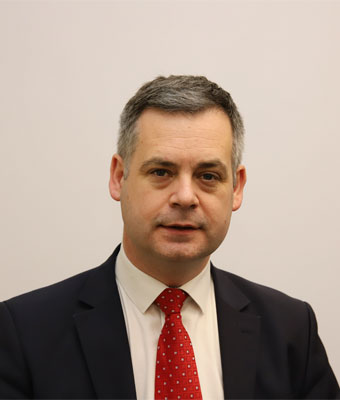
236. Deputy Pearse Doherty asked the Tánaiste and Minister for Finance if he will push at an EU level for electricity, including a separate category for residential electricity, to be added to the list of items that a zero VAT rate can be applied to in order to give member states maximum flexibility in designing their response to the energy crisis; and if he will make a statement on the matter. [26930/26]
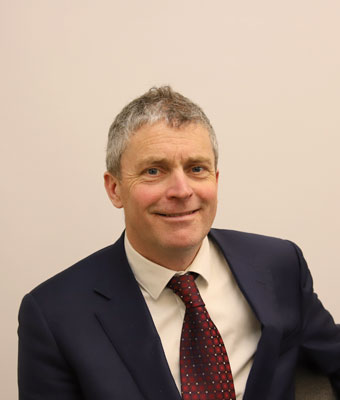
298. Deputy Pa Daly asked the Tánaiste and Minister for Finance if he will discuss reducing the VAT rate for 0% for domestic electricity with his EU counterparts; and if he will make a statement on the matter. [26730/26]
I raised the crisis in people's homes in terms of their electricity bills with the Minister on numerous occasions. If we were to visualise this, it is 300,000 families. How many times would we fill Croke Park and the Aviva Stadium over and over again with the families who cannot pay their electricity bills? It is absolutely scandalous that people have been left in this situation. Time and again we have put forward the arguments that it was wrong to withdraw energy credits at a time of a cost-of-living crisis. It was wrong to leave people without those supports. Will the Minister make the argument at a European level to allow for zero VAT rate to be applied to residential electricity to give us the options to provide additional support beyond just energy credits to these families?
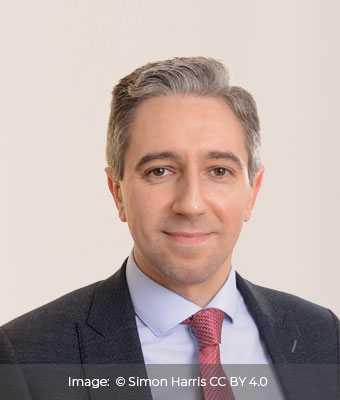
I propose to take Questions Nos. 236 and 298 together.
I thank the Deputy very much. The EU VAT directive, which Irish VAT law must comply with, generally holds that all goods and services are liable for VAT at the standard rate which must be set at a minimum of 15%. If a good or service is listed under Annex III of the VAT directive, a reduced or zero VAT rate may be applied. It is important to note that Ireland applies more reduced and zero rates than every other member state. Some member states prefer not to introduce greater variability in VAT across the EU.
The last amendments to Annex III were agreed in 2022 after four years of negotiation. Unfortunately, electricity was not included in these amendments and, therefore, the lowest rate that may be applied to VAT in Ireland is the second reduced rate of 9%. The application of the 9% VAT rate on supply of gas and electricity was introduced from 1 May 2022. This measure was extended on a number of occasions. In the most recent budget, we decided to extend it out to 31 December 2030. The total estimated cost of the reduced VAT rate for gas and electricity from its introduction on 1 May 2022 to the end of this year will be over €1 billion.
We are actively engaging at an EU level. There is to be an informal European Council meeting this Thursday or Friday in Cyprus where the EU will bring forward proposals around energy affordability. My understanding specifically in relation to VAT is that there would be unanimity required for any changes to the VAT level. I do not see that as a likely outcome. I am just saying that to be honest. At present, there are no proposals at a EU level to reopen the VAT directive regarding zero rates for electricity. However, officials in my Department and across Government continue to engage with our European counterparts and with the European Commission in relation to energy affordability measures. The European Commission is working with member states on the EU-wide response to the crisis. That is why we have chosen to extend the maximum lowest rate of VAT we can currently apply to electricity and gas bills until the end of 2030. We are very eager to see if Europe wishes to go further on that. I am not detecting that there is any such unanimity at a European level in relation to reopening the VAT directive. However, I will ask. I will keep the Deputy and the House updated should that position change. Of course, the fact that VAT change requires unanimity as opposed to other measures Europe may decide to bring forward is a challenge.
I thank the Minister for his response. When he rises again, will he clarify for the House whether he has written to the Commission and asked it for this to be part of its tool? Has he asked the Commission to consider and agree a zero percent rate of VAT on domestic electricity? As he knows, the Commission has published its draft. It said it wanted to engage with member states. I am sure it engaged with the Minister in relation to this. Did the Minister ask the Commission and formally put that proposal to it in relation to the zero percent? In the absence of the Commission's agreement - the mechanisms in terms of member states having to agree - there are other measures that can be introduced. Energy credits is a way of supporting families and, indeed, the Minister brought it forward for many years himself. Does he not recognise that given the scale of the crisis, where people are at, that so many households cannot pay their electricity bills and that one in four households cannot pay their gas bills, there needs to be an intervention now? People simply cannot wait.
We have not formally made a request in relation to zero percent VAT. The reason we have not is that my genuine feedback from engagement with the European Commission is that it is unlikely to have unanimous support. I am not against formally seeking further discretion on VAT but we have tried to target our asks to areas that we hoped we could make progress on, including seeking a temporary derogation from the minimum rate of taxation applied to auto diesel because the Deputy has been asking me to go further on diesel. I do not mean just because of the Deputy but many people, including him, have been asking me to do that. We have gone beyond what the energy tax directive allows us to do. We sought a derogation in relation to that. The reason we have not formally asked is that it is not possible to seek as a member state just a derogation from the functioning of the VAT directive. We would have to have unanimity in relation to that. The feedback we have been getting from the Commission is that is unlikely to be the case. However, I am happy to further pursue that with the Commission in terms of seeing if there will be such unanimity but I do not want to create a false expectation. It is my genuine view that it is unlikely to be something forthcoming from Europe.
In relation to energy credits, I said yesterday and today that I do not think anything can be off the table. It would be foolish for us to rule in or out anything. The Deputy has heard me say this before but it is my genuine view that an energy crisis in the winter is very different from an energy crisis coming into the summer months. Therefore, we need to keep these things under review as we approach the autumn and winter in terms of budgetary plans and what is the best thing to do to assist people should the energy crisis persist.
We also have to have other options and, indeed, I have heard interesting suggestions here about how we can help people with their own measures in terms of their own homes, whether that is retrofitting or solar panels and whether there is more we can do in that space to make that easier and more generous. I would be interested in engaging on that. I will keep an open mind on further energy interventions in the time ahead.
Sometimes I am lost for words in here.
I try to be constructive.
I know. I hear what the Minister is saying but, seriously, I do not know what more we need to do here. These are families. There are 300,000 plus of them who cannot pay their electricity bills. The Minister saying that if the Commission allows us to have a zero rate, we would be happy with that but the Government has not even asked.
That is not fair.
It has not even bloody asked the Commission to put this on the table. Last week the Commission asked the Minister and his Department what else they think it should do in this toolbox. The Minister has not even asked. There are families today who cannot pay their electricity bill, and these are people who are working and two income households. The level of arrears they have has increased. We have record numbers in the history of the State who cannot pay electricity bills. The Minister has not even asked.
That is not true.
There is a serious problem here. I do not want to repeat it over and over again but the Government needs to get down from the ivory tower. It needs to understand where people are at. People expect more from a government. People expect the Government to have their back and fight their corner. The Government is not even asking.
People expect more from an opposition. At a time of a national crisis when a Minister stands up and is trying to constructively engage, the Deputy just wants to give me the lines to take back. I explained to the Deputy very clearly. I said we are happy to go back and further engage with Commission. Hang on for a second.
The decision was made in 48 hours.
Just for a second, Deputy. Our Taoiseach - yours and mine and the Taoiseach of this country - will engage with his European counterparts when he attends an informal meeting of the European Council. Up for discussion at that meeting will be what more measures can we take. Ireland will make its position clear. The priority of my Department has to be to ask for things that individual member states can seek. Individual member states can seek a derogation under the energy tax directive. Individual member states cannot seek a derogation under the VAT directive. Therefore, the only way the VAT directive can be change is by unanimity.
I agree.
It is not about asking the Commission. It is not a member state. When we have engagements at the likes of the European Council, which the Taoiseach will have, it is about establishing whether there is unanimity. I am giving the Deputy an honest view in this House that I do not believe that unanimity is there. Do not give me the palaver about ivory towers here. This is about truthful debate. The Deputy asked about energy credits. I did not rule them out. I gave other views in relation to solar panels, retrofitting and things we can do.
The Government withdrew them.
I talked about €750 million package. Just because I do not agree with every position the Deputy adopts or because I point out legal and technical difficulties around them does not mean the Deputy cares and I do not. It just means I am being honest.
I did not withdraw them.
State Savings Schemes
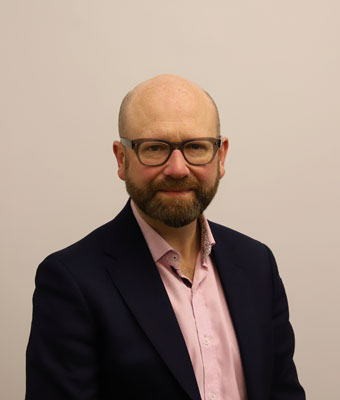
237. Deputy Ged Nash asked the Tánaiste and Minister for Finance his plans for a new savings and investment scheme for retail investors; the estimated cost to the Exchequer in terms of tax foregone in the first five years of the new scheme under preparation; and if he will make a statement on the matter. [26421/26]
I ask the Minister to update the House on his plans for a new savings and investment scheme for retail investors and if he could enlighten the House as to what he anticipates the estimated cost to the Exchequer in terms of tax forgone in the first five years of the scheme might be, and if there is, in fact, an assessment already done on that basis.
I thank Deputy Nash very much. The starting point here, on which many of us agree, is that Ireland does not have a sufficiently diversified savings and investment culture. I am quite conscious that we are having this conversation against the backdrop of significant economic challenges for people right now. I fully get that. However, even against that backdrop, I am also quite conscious that there is a lot of money on deposit in Ireland today. Even this week people are putting relatively small amounts of money aside to try to build up their own buffers insofar as they can for the times ahead. A lot of them are in low-yield deposit accounts where inflation is eroding their value over time. That is just the truth. Deposit accounts are right for many people. I understand the role deposit accounts have to play, and for many will be their source for putting money by for a later date, but they should not be the only practical option. Investment in capital markets can offer households another path to long-term financial well-being. It can also support growth and competitiveness in the wider economy. I have announced the Government's intention to introduce a legislative framework for an investment account this year as part of the finance Bill. We want to make investment simpler, clearer and more accessible for ordinary people. We want to help to make some of their hard-earned money work harder for them over time. The aim is to legislate for the framework in 2026 to allow for accounts to be offered from 2027, but it will also be a key part of a broader rethink of the taxation of retail investment. I would welcome the views of Deputy Nash and others in relation to that.
In recognition of the importance of encouraging retail investment, budget 2026 did provide for a reduction in the rate of taxation on returns from Irish and equivalent investment funds and Irish and certain foreign life assurance policies from 41% to 38%. In addition, the budget also included a commitment to publish a roadmap in 2026, setting out the intended approach to simplify and adapt the tax framework to encourage retail investment in future finance Bills. The roadmap will be published in the coming months in advance of the budget. It will take into consideration developments at an EU level in respect of a savings and investments union, including the recommendation on savings and investment accounts. The actual cost of this in the initial years will depend on the specific parameters of the account. That work is still ongoing and costs will be prepared as part of the budget process.
I welcome the debate on this. I accept that we need reform in this area. I have no difficulty with that. There has been a lot of focus on the deemed disposal rule. There is no doubt that how it operates is an anachronism and reform is needed. That should not sideline us from the need to develop alternative routes to allow people to plan for their future. I am glad the Tánaiste referred to the context of what people are experiencing at the moment. Investment is very much a minority sport. Most people are concerned with surviving and not how they are going to invest relatively substantial amounts that they have on deposit on schemes and accounts that may deliver more for them. I accept that this does need to be part of the solution in terms of preparing people for the future.
Mention has been made by ourselves in the Labour Party, and by the other parties, of the need to develop some products that might enable Irish people to invest some of their hard-earned savings in, for example, housing development in Ireland and in assisting high-potential start-ups, and so on. Is that the kind of area that the Tánaiste expects people to be able to invest in at a reasonable rate?
I thank Deputy Nash for his comment on the deemed disposal rule. I agree that there is, rightly, a lot of debate in this House about the rate of it. He made the broader point about the purpose it serves - or does not serve - any more. We need to have a substantive examination of what the policy intent was and if it is still valid today. The truth is that I do not believe it is. How do we unwind that? Can we do it in one go - just take a number - and what is the roadmap? We need to come back and have a conversation around that.
I fully accept the point about the cost of living. I am very conscious of it. I am also conscious that we are among the best savers in Europe. We talk about building up our own financial resilience. The country has to be able to help ordinary workers, as they are often referred to in this House - everyday people - to build up their own financial resilience as well.
My intention, to be very honest, in the first instance is to set up as simple an account as possible to get this up and running. Many other European countries have done this. I have heard constructive ideas from Deputy Nash and others on whether this could be used to help to invest in start-ups or housing. That merits consideration. The question is whether we would do that in the first tranche or if we would just get an account up and running. I think we would just get it up and running in the first instance. I am also conscious that there are other savings bonds. The NTMA, for example, runs the prize bonds, etc. We can look at whether there is a way of overhauling that too. It is worthy of further exploration.
I understand that people are risk averse because people have been burnt before. There are always risks to investing. Any model or scheme that is developed has to be very clear on that. I understand why the Tánaiste might want to dip his toe in the water in a tentative fashion in the first instance, and then maybe move from there. The Tánaiste has been quoted as favouring the Swedish model. It is one that people will be familiar with. On the basis that he has an understanding of the Swedish model and his officials may be going in that direction, has any assessment been done at this point on the tax implications for the Exchequer on the tax expenditure side in terms of tax forgone? It would be relatively easy to come to some kind of a conclusion - at least on a desktop basis - as to what the implications would be if we were to introduce a very simple straightforward model like the Swedish one. The Tánaiste seems to be moving away from the UK ISA-type model. Could he put his thinking on that, and what is informing it, on the record? In the available time, could he also indicate what engagement he has had on this with the Central Bank and if it has been helpful in assisting the Department?
Yes, there has been very helpful engagement with the Central Bank. We held the savings and investment forum in the Central Bank. The Governor of the Central Bank opened the meeting, which was very useful. We want to take the feedback from that. The point about the tax forgone is something I am very conscious of. I do not have that information yet but once I have it, I will be very happy to share it at an early stage with Deputy Nash and with the House.
Deputy Nash and I were in government together. I remember in my earlier days in the Oireachtas trying to copy the Dutch healthcare system. What I quickly learned is that the Irish people are not Dutch. The Irish people are not Swedish either. The Swedish model has many advantages. It is generally seen as best in class, but there is no off-the-shelf model, we will have to take what is best practice and adapt it for our own national culture and environment. The Swedish model is one we are looking at. The UK model is to be commended too but it does have a very high cash level that I think has a significant drag. I am not sure we necessarily want to replicate that element of it as well. We had a good forum with several hundred people from a whole variety of backgrounds. They fed in their views. I will be back to them with the next iteration. I am very happy - indeed eager - to have Opposition engagement on how to get this right in the times ahead.
Financial Instruments
238. Deputy Aisling Dempsey asked the Tánaiste and Minister for Finance if he will commit to the removal of the so-called "deemed disposal" tax in relation to ETFs; and if he will make a statement on the matter. [26607/26]
245. Deputy Grace Boland asked the Tánaiste and Minister for Finance further to the commitment in the programme for Government to progress the recommendations of the Funds Sector 2030 review to support greater retail participation in capital markets, whether his Department has assessed the recommendation to remove the eight-year deemed disposal rule applicable to exchange-traded funds and other investment funds; the estimated cost to the Exchequer of abolishing this rule; whether the Government intends to remove the deemed disposal provision; the timeline for any such reform; and if he will make a statement on the matter. [25770/26]
The Funds Sector 2030 review recognised that exchange-traded funds, ETFs, sit at the centre of Ireland's ambition to increase retail participation in capital markets - people who are planning for the future and parents who are planning for their children's college education. The current tax framework, in particular the eight-year deemed disposal rule, is a material barrier to that objective. Could the Tánaiste confirm if his Department has assessed abolishing the rule, what the estimated cost to the Exchequer would be, and when he might make a decision on it?
My question is very similar. It relates to the so-called "deemed disposal" tax on ETFs, which requires Irish investors to pay gains every eight years, even where no sale takes place. The programme for Government has committed to an implementation plan to address this anomaly. Like Deputy Boland, I wonder if we could get an update on the details of this and the current timeline.
I propose to take Questions Nos. 238 and 245 together.
I thank Deputies Boland and Brennan very much for raising this matter. Their questions relate to the rules governing the taxation of indirect investments such as investment funds and life assurance products. As referenced by Deputy Boland, chapter 7 of the funds review focuses on enabling and encouraging retail investment. It does make a number of recommendations including the removal of the deemed disposal rule. Deputy Brennan reminds us of our programme for Government commitments. These recommendations are being given careful consideration. We are looking at the existing regime and how it operates. The specific change raised by both Deputies is the removal of the deemed disposal rule. There is a specific reference to its application to exchange-traded funds. There is no separate taxation regime specifically for ETFs.
We need to remind ourselves why deemed disposal was introduced. It was introduced at that point in time as an anti-avoidance measure that applies to investments in Irish-domiciled investment funds and life assurance products, as well as equivalent offshore funds and certain foreign life assurance products, in order to prevent the indefinite roll-up of income and gains, and the associated loss of tax to the Exchequer. That is the history, if you like, to remind us all but the world has changed a lot since then and our policy and thinking need to change too. Under deemed disposal, taxes are levied eight years after an investment is made, and every subsequent eight years, regardless of whether a disposal has in fact occurred. The tax is levied on any gain in the value of the investment from the date of the acquisition to the date of the deemed disposal. On the ultimate disposal of the investment, any tax paid is allowed as a credit against the final tax liability.
The funds sector report noted that changes were needed. It did say that changes to deemed disposal would require guardrails to protect the Exchequer and ensure that appropriate taxation is paid. That is important. I think we all agree on that.
The most recent budget committed to publishing a roadmap for the taxation of retail investment, setting out an approach to simplify and adapt the tax framework to further support retail investment while retaining necessary and important anti-avoidance protections in a proportionate manner. The relevant recommendations of the funds review, including deemed disposal, are now being considered as part of the work under way in the Department of Finance on this roadmap. We will be publishing this in the coming months and in advance of the budget.
As I announced at the first annual savings and investment forum, on 31 March, a key aspect of the roadmap is the development of a new Irish investment account that aims to reduce the complexities related to retail investment taxation and allows Irish people to grow their savings more efficiently. That complexity is one of the real issues keeping middle Ireland out of investing in this country.
The cost estimate of changes to deemed disposal is the challenge. The information available to Revenue does not allow it to isolate the tax returns due to deemed disposal rules from other events that could give rise to a tax liability. We need to work our way through this. If it were assumed that all relevant retail investment exit taxes were as a result of deemed disposal, which of course they are not, removing deemed disposal could give rise to a potential cost of €284 million, based on tax paid over the past eight years.
As the Deputies know, we took some steps in this area in the most recent budget. An estimate was prepared of the Exchequer impact of deemed disposal not applying, assuming the deemed disposal was closer to 50% of the total tax paid. This assumption results in an estimated full-year cost to the Exchequer of €142 million for the removal of deemed disposal. However, I am being truthful in saying there is not an exact science because of the complicating factor.
I reiterate the point that we took steps in the last budget to reduce the rate to 38%. That was important. There is, however, the broader issue of whether the policy is fit for purpose. I am not convinced it is. It is somewhat outdated. We need to have a conversation about how it could be overhauled, with new, appropriate guardrails put in place. Alongside that, though separate and distinct, is the question of how we develop a new investment account that reduces complexity, has one point of tax and puts the responsibility for collecting that tax on the provider of the account, the institution, not the person making the investment.
I thank the Tánaiste. I very much welcome that update. It is good to hear that the roadmap will be published in advance of the budget, though it is disappointing to note that the Revenue Commissioners cannot actually track the amount of revenue to the Exchequer.
On the issue of removal, the reality is that under the current regime, a retail investor in an ETF faces a much higher tax rate and earlier taxation and cannot offset losses compared with someone investing directly in shares. Low-risk, diversified investing is taxed earlier and more heavily than speculative stock picking. Therefore, we really need to do something for parents who are looking to the future and those who weathered really bad times in the 1970s and 1980s and know how important it is to put money away for a rainy day but who are seeing the value of their savings eroded through inflation and very low deposit rates.
I too thank the Tánaiste for his clear answer. The core issue here is one of fairness within our own tax system. An investor in individual shares pays capital gains tax at 33% and then only when they eventually sell those shares. However, an investor who chooses a diversified ETF, which is arguably the more prudent investment choice for an ordinary saver, pays a higher rate on the gains they have not yet realised. As was mentioned, they also cannot offset their losses in these, and they face a tax settlement every eight years, regardless of their intentions regarding the underlying ETF. This creates a disparity that is very hard to justify. I appreciate that the Minister gave a detailed explanation as to how this came about by way of trying to justify it. I agree that there are complexities but does the Minister in turn agree there is a very strong case for removing the rule in the near term, not just because it is part of the programme for Government but also because it is the fair thing to do for Irish savers?
The short answer is "Yes" and the next word is "but". Yes, I see the policy challenge here. I do not like a situation where the world has evolved and policy has not caught up. Therefore, I would like to see an overhaul in this area. I am quite committed to that and to reforming retail investment. The only reason I say "but" is in relation to the near-term aspect. No matter what question anyone asks me on tax, I do not want to tie our hands, as a collective government or Oireachtas, in terms of decisions we may make in the time ahead. However, the Irish people can judge this Government, in its current form, on what it did in its first budget. It reduced the rate associated with the rule from 41% to 38%. That was a statement of intent by my predecessor, the then Minister Paschal Donohoe.
Second, we said we would publish a retail investment roadmap for overhauling this sector and roll into that the recommendation of the funds sector report, which deals very much with deemed disposal, among other areas.
Third, we have given a commitment that we are not just going to say we are going to champion the savings and investment union at a European level but are also going to make sure there are practical benefits for citizens in Ireland in terms of establishing an investment account.
I have no doubt we will be able to make progress on this together in the time ahead. I would hope we can make progress on this in the near term, but let us work through that. I am learning it is important when you are a finance Minister to say tax matters are a matter for budget day, and I am quite comfortable with that. That is the appropriate way to proceed.
Deputy Boland's point on parents and others is important. I have heard some ill-informed comments – Quelle surprise – on the investment account. First, you would swear we were the only ones doing this. We are certainly not the first. It is the right thing to do. It is a recommendation of the European Commission. We cannot just talk about financial resilience at a macro level; we have to bring it into people's households.
I have heard it asked whether this is just something for the wealthy. The wealthy are well able to look after themselves. They do not need our help. They are not the people being blocked out of investments. The people being blocked out of investment are parents, the garda married to the nurse, the teacher, the civil servant, the small business owner and the person trying not just to get by but also to get ahead. This is an opportunity, over the longer term, to help families, or middle Ireland, to build up resilience. I am extraordinarily committed to that.
I appreciate the Minister's comments. I look forward to seeing the roadmap and having discussions in the House on it. I thank the Minister.
There is another dimension to this. Ireland's position as a major ETF hub in Europe is something we should rightly be very proud of, but there is a contradiction at the heart of that success. Ireland is one of the best places in the world in which to manage and distribute ETFs but one of the most difficult places in Europe for an Irish resident to actually invest in them. Foreign investors in Irish-domiciled ETFs enjoy growth with no deemed disposal obligation, while Irish investors investing in the same products do not. Does the Minister acknowledge that this anomaly undermines or may erode our reputation as a well-functioning financial centre?
I would put it in a slightly different way, but I agree with the broader point. Given our country's huge success in financial services, the considerable revenue, jobs and prosperity this has resulted in and the fact that we have in many ways become a global hub for financial services, there is an irony in our being a major global financial services centre when, at the same time, we have locked so many of our citizens out of meaningful participation. "Ironic" is probably the diplomatic word. We have to challenge ourselves, and I have to challenge myself, to see how we can ensure the tax regime in this country is not getting in the way. It is the Government's job to help where it can, but it is also sometimes the Government's job to get out of the way. Our tax regime is in the way of people being able to invest and to access ETFs and their like.
Deputies Brennan and Boland quite rightly made a point on the differential between the exit tax and CGT. In fairness to former Minister Donohoe, there was a step made in the right direction with the decrease from 41% to 38%. However, CGT is at a different level.
We have made it clear as a Government that we are committed to making progress on this, ensuring Ireland has a much more diversified savings and investment offering, ensuring that is accessible to all our citizens and not just the wealthy, and ensuring the tax system is fair and that politics is not just a reductive debate about how to hand out public money but a more sophisticated and informed one about how to ensure hard-working families are able to get ahead, and not just get by in life, by making sure the tax system works in that direction.
Fiscal Policy
239. Deputy Michael Murphy asked the Tánaiste and Minister for Finance the work being carried out by his Department to ensure that citizens have access to robust and detailed financial analysis regarding the implications of a potential united Ireland, including disparities in taxation, public spending and fiscal transfers; and if he will make a statement on the matter. [24950/26]
I thank Deputy Murphy for this question. As somebody who would like to see a united Ireland in my lifetime and as somebody who is proud to lead a party that has "the United Ireland party" in its full title, I very much welcome the question. I want to engage constructively with Members across the House on this. The Government of Ireland is committed to the unity of the Irish people.
We are committed to that with a focus on reconciliation and developing the three sets of relationships recognised in the Good Friday Agreement to unlock the full potential of our island. Through the shared island initiative, the Government is prioritising the work of building co-operation and reconciliation with an ambitious agenda to deliver progress and to remain steadfast in fully implementing the Good Friday Agreement.
Obviously, the principle of consent and the possibility of change in the constitutional status of Northern Ireland are fundamental elements of the Good Friday Agreement endorsed by the people North and South and accordingly the Government's approach with regard to Irish unity is guided by Article 3 of the Constitution. Thus, in the event of a future referendum within the consent provisions of the Good Friday Agreement, the Government will make all necessary preparations in accordance with the terms of the Constitution and the principles and procedures of the agreement.
To date, the Government has advanced the largest ever programme of all-island investment to build a more connected island through the shared island initiative, backed by a €2 billion shared island fund. Last April, the Government launched a new phase of a joint research programme with the ESRI, which is really the nub of the Deputy's question, focusing on strategic policy and co-operation considerations for the island. Much of what the shared island unit has been doing, which we all support, has involved investing in really meaningful projects. The ESRI strand is particularly interesting because it looks from a policy point of view at the compatability elements between how things are done in the North and here and where the differences are. Within days of coming into office, I was very pleased to launch a new annual ESRI series entitled "Assessing Economic Trends in Ireland and Northern Ireland". At the launch of this report, I highlighted how valuable the series is, especially its deeper data comparisons and economic indicators, which together offer important insights and food for thought and help inform us of the policy we need to develop. I will return to some of that in a moment.
For me, it is really about ensuring that citizens are properly informed. Any decision must be grounded in credible, transparent and accessible financial analysis. I know various independent academic studies are being carried out and some already exist but I do not think there is any single authoritative, State-led body of work. There are a number of areas where clarity is essential, including taxation; the difference between tax bases North and South around income tax, corporation tax and indirect taxes; public spending around health; social protection measures; public services; and the complex area of fiscal transfers, such as the extent of subvention currently provided by the UK. These are complex issues. Other jurisdictions facing future constitutional or structural change have invested in serious, evidence-based preparatory work and there is no reason we should not do the same so that citizens can make that informed decision at the appropriate time.
I agree completely with the Deputy on this question. It is really welcome that this has come down. I acknowledge the Tánaiste's comments on this. We all acknowledge the shared island unit and the work it is doing but the question we need to ask ourselves is whether we believe we are enablers of bringing about constitutional change in a system that operates under the Good Friday Agreement and with consent, and most if not all of the people in this House believe we are. Therefore, we have to do the preparatory work.
These are complex issues and it should not be left to academics, the ESRI or others to do this. We have to find a way and a space and we must recognise the space we will occupy in doing this but we must find a space to carry out some of this work. I think back to when Simon Coveney was competing for leadership of Fine Gael. He spoke about setting up a committee to look at this and talked about papers, and I thought it was a very good argument. We have lost time. This is coming down the tracks and we have to be prepared so I really welcome this debate.
I certainly welcome that question and would welcome answers even more. Deputy Currie will know what I am talking about when I talk about what was agreed at the Joint Committee on the Implementation of the Good Friday Agreement. That was cross-party. It involved perspectives on constitutional change concentrating on finance and economics. We have a number of agreed recommendations that really need to be implemented. We heard it was reckless not to prepare. It is reckless not to do this work, regardless of one's constitutional preference or how people will decide to vote at the end of the day. One of the recommendations was that an Oireachtas committee be mandated, adequately resourced and dedicated to preparation for a united Ireland - for doing the preparation. It is reckless not to prepare. The Tánaiste will probably be Taoiseach in a number of months' time. I ask him to please implement these recommendations.
I welcome this rare moment of unity. It is really good. We all have different political traditions that we can debate and that is fine, but Deputy Conway-Walsh would like to see a united Ireland in her lifetime and I would like to see a united Ireland in my lifetime. I agree that the shared island unit is doing good work - really good work. I notice that across the community, as I am sure Deputy Conway-Walsh does. Regarding Deputy Michael Murphy's question and the constructive contributions of Deputies Doherty, Conway-Walsh, Currie, Connolly, Shay Brennan and Cooney, the economics of this are important. I will send the remarks I made at the launch of the ESRI report to Deputy Conway-Walsh. Looking at this from a financial and economic point of view will ultimately be an important part of any debate whenever it arises and we have a responsibility to be prepared to engage on it. I often grapple in my own head with what the best way of creating that space is. Perhaps the Good Friday Agreement committee would be a good opportunity for us to engage on that report. I take the point that it is not all about the ESRI but there is ESRI-funded work with which all of us might want to familiarise ourselves. I am very happy to have an engagement with the appropriate committee on this matter.
It is important to acknowledge that a lot of analysis has already been done and is likely to be done but it is fragmented and very technical. It comes back to that overarching point I am making, which is that it is not easily understood by the general public. It is so important that information is collated in a way that is coherent and user-friendly and uses easy-to-understand language. Should we commission some kind of centralised, cross-departmental assessment that would publish regular updates and ensure that information is presented in a clear and non-specialist way? It is really about informing democratic discussion. It is not about prejudging any outcome. Without this, there is real risk that the public debate becomes shaped by partial information or competing claims.
I also welcome this debate. We have had great engagement on the Good Friday Agreement committee in our work examining the constitutional future of this island. Everybody has a voice. I welcome research and information from anywhere to contribute to this debate.
Two things that have not been referenced are the productivity gap that exists North and South and the difference in educational attainment. There are great opportunities on an all-island basis. I am thinking about mid-Ulster, where I am originally from, in the engineering and manufacturing sectors so there are learnings across the board. Engagement is key and there will be no regrets on an all-island basis in progressing a financial and economic strategy that benefits anyone but that ultimately, from my perspective, bring us to a united Ireland.
We clearly need to have a longer debate in this House and the Whips and others should work out a way to faciliate this discussion. We should not fear it because, as Deputy Michael Murphy said, it is about information, facts, getting as much information as possible and identifying where there are information gaps.
My Department published "Shared Island, Shared Economy" in 2024, which examined the macroeconomic performance, broad sectoral structures, fiscal structures and linkages between the two economies. It found that overall economic connections between Ireland and the North have continued to deepen, supported by increasing cross-Border trade, labour mobility and joint investment initiatives. The economy in this part of the island is significantly larger, with GNI* per capita around 25% higher than GDP per capita in Northern Ireland - a gap that has remained broadly stable. Productivity levels are higher on this part of the island, although that gap narrows considerably when multinational activity is stripped out, with Northern Ireland performing broadly in line with Ireland's Border and midlands region.
Sectoral structures differ greatly. Ireland has a greater concentration in this part of the island in knowledge-intensive services, while the North has higher public sector employment and greater reliance on social welfare spending. There is also other data. There was a 2025 study by DCU and Ulster University, looking at the initial net fiscal cost of reunification. There is a debate around that. The Institute of International and European Affairs also looked at it, and suggested a much larger cost. The point is that we should not fear discussion, we should not fear facts and we should not fear preparedness. There is a responsibility on all of us to see how best to take that forward.
EU Presidency
240. Deputy Shay Brennan asked the Tánaiste and Minister for Finance the latest update on his Department’s preparations for Ireland’s EU Presidency; the way in which he plans to oversee budgetary discussions on the next multi-annual financial framework post-2027 in a manner that will safeguard Ireland’s fiscal interests; and if he will make a statement on the matter. [26559/26]
I am seeking an update on the Department's preparations for Ireland's EU Council Presidency and, in particular, how the Minister intends to approach the negotiations on the next multi-annual financial framework, which Ireland will chair. Can the Minister advise how he intends to safeguard Ireland's fiscal interest in these negotiations?
The Presidency is taking place in a few short months’ time, as the Deputy said, so I thank him for highlighting this. The Presidency of the Council of the EU is a critical focus for all of us in government, the Oireachtas and my Department this year. It represents an important opportunity for our country to shape European policy priorities, including the EU’s economic and financial agenda.
I am pleased to say that our preparations are well under way across both policy and operations. Our Presidency priorities are being prepared in line with the EU strategic agenda for 2024-2029. Of course, those priorities will depend on the progress of the Cyprus Presidency, which comes before ours. We will take stock of this and stakeholders' views before we publish our final Presidency programme in June. However, driving progress on the post-2027 multi-annual financial framework will be an important focus.
The Minister for Foreign Affairs and Trade and I jointly lead the development of Ireland's positions on the MFF. This involves close co-operation with other Government colleagues. During our Presidency, Ireland will progress various elements of the wider MFF package, from overarching negotiations to sectoral files. The precise tasks for Ireland will depend on the state of play at the end of the Cyprus Presidency in June.
The overarching negotiations on the MFF are advanced through the General Affairs Council, GAC, where we are generally represented by the Minister of State, Deputy Thomas Byrne. The Department of Foreign Affairs and Trade, in consultation with all relevant Departments, is preparing for these meetings. The Economic and Financial Affairs Council, ECOFIN, which I will chair during Ireland's Presidency, focuses on the revenue side of the EU budget - own resources - and the management of the annual EU budget process. The European Council, attended by the Taoiseach, provides strategic guidance throughout the negotiations and will ultimately reach political consensus among member states on the file.
Ireland, as Presidency, will ensure close and constructive co-operation with the President of the European Council. The European Parliament will also be required to give its consent to the regulation for the MFF after the European Council reaches a political consensus. Our intention, during our Presidency, is to act as an honest broker and to lead negotiations in a manner that protects the interests of the EU. Intensive preparatory work is under way.
During our Presidency, Ireland will chair and oversee the MFF negotiations, and will do this while simultaneously facing a reduction in our own allocations under the new framework due to our continued economic growth. I am not saying that is a bad thing. In one sense, we are in an advantageous position as we get to set the agenda and we are present at every negotiation. However, given the expectation that we act as impartial chair, does the Minister accept that this could work against us when it comes to pursuing our own fiscal interests? If so, how does he intend to manage that?
It is a key question, and one the Government has been considering. We took a decision earlier this year, during my time as Minister for Foreign Affairs and Trade, to outline Ireland's MFF budgetary priorities much earlier in the cycle for that very reason. The Deputy is right. When you take up the Presidency, there is an advantage to that, of course, and it is an influential and important position to have, but you are also expected to act as honest broker. Ireland took a decision, and the Government agreed, to formally agree our budget priorities for the MFF and communicate them to the Commission at an early stage. We have also had a number of Commissioners here, including the budget Commissioner, the agriculture Commissioner and others, to engage with me, the Taoiseach, the Minister for foreign affairs, the Minister for agriculture, the Minister of State with responsibility for European affairs and others. We have used the period in early 2026 to set out our priorities to work with other member states that share a like-minded view.
The challenge with the European budget, not too dissimilar from this place on occasion, but maybe on a larger scale, is that everybody has ideas on what to spend money on but people are less enthusiastic about funding it. That is also the challenge. Europe has a long list of ideas it would like to spend money on but the real substance of the debate is how we manage to prioritise those ideas. We have all heard a whole variety of things. Ireland, as an experienced member state in its eighth Presidency, will play an important role. I assure the Deputy that protecting our own national interest has been a priority in the early part of this year.
There is an expectation that the agreement on the MFF will be reached before the end of 2026. Ireland effectively carries the responsibility for delivering one of the most complex and contested negotiations in recent EU history within that six-month term. These negotiations involve deeply-held national interests across 27 different member states. There are significant disagreements on spending priorities. Overall, there is a total budget of approximately €2 trillion. Does the Minister believe that agreement is genuinely achievable within that timeframe? What commitment can he give that Ireland will do everything in its power to deliver a deal, given the significant reputational dividend that success would bring for Ireland within the EU?
I think it is doable but it is extremely ambitious. For the Council of the European Union to reach an agreement at a relatively early stage, in other words, by the end of this year, provides a degree of certainty in a world that is craving certainty. There is a real premium on trying to reach agreement because there is so much uncertainty in the world right now. It is not inevitable that that will happen. The Deputy is right that the process is tedious in its various parts. It ultimately becomes a matter for the President of the European Council, President Costa, to seek that consensus or agreement among European member states. The Taoiseach, who is very experienced in his area, will represent our country at that, and I know it will be a priority for him as well. Ireland certainly will not be found wanting. Obviously, there are elections in different member states, and although I will not comment on them, they will have an effect. There has been a change of government in some member states, or there is due to be very shortly.
We have outlined our own priorities. As a significant net contributor to the EU budget, as the Deputy pointed out, but which is often forgotten by others, it is right and proper that our voice is heard. We have outlined the areas that we want to see a real focus on.
Enterprise Policy
241. Deputy Tony McCormack asked the Tánaiste and Minister for Finance the fiscal measures currently in place to support enterprise development and investment in regional towns and rural communities; the further tax-based initiatives being examined to promote balanced economic growth; and if he will make a statement on the matter. [25715/26]
I ask the Minister for an update on the fiscal measures currently in place to support enterprise development and investment in regional towns and rural communities; the further tax-based initiatives being examined to promote balanced economic growth; and if he will make a statement on the matter
As the Deputy knows, the Government is committed to balanced regional development and supporting rural communities, as outlined in the programme for Government. Regarding fiscal supports, a range of tax-based enterprise supports are available to businesses and enterprises across the country, in particular SMEs. These incentives complement more regionally specific direct expenditure measures and schemes overseen by the Department of Enterprise, Tourism and Employment and its agencies. At a taxation level, the measures available are generally available nationwide but when they are coupled with the specific expenditure programmes available through the Department of Enterprise, Tourism and Employment, Enterprise Ireland and others, we can see a compelling opportunity for investment in the regions.
Examples of incentives for SMEs include the employment incentive scheme, start-up relief for entrepreneurs and start-up capital incentives. These reliefs are key supports that help provide SMEs and start-ups with alternative funding sources by incentivising investment in SME start-ups. Another example is the revised entrepreneur relief, which provides a reduced 10% rate of capital gains tax on chargeable gains on the disposal of a qualifying business asset up to a lifetime limit of €1.5 million, a limit that was increased in the last budget. There has also been an increase in the rate of the research and development tax credit from 30% to 35%, and that is being used by many SMEs as well.
As part of budget 2026, we saw the living city initiative, a tax incentive that offers tax relief to regenerate and convert homes and vacant properties. We have expanded that to Athlone, Drogheda, Dundalk, Letterkenny and Sligo, and it is already in place in Galway, as the Deputy knows. The much talked about reduction in the VAT rate for the hospitality sector will disproportionately benefit many rural and regional communities by reducing the cost base for the hospitality sector, which is an important part of the tourism sector. From an IDA and Enterprise Ireland point of view, we continue to promote balanced regional development in every way we can.
The Tánaiste will be aware that the national planning framework proposes to distribute the future population growth of the country equally between the greater Dublin region, the regional cities and the metropolitan areas that surround them. To facilitate that, we need enhanced infrastructure development, and we need to increase housing options for people in those locations. We also need to look at enterprise and fiscal measures to promote the development of industries at home and attract greater foreign direct investment into those regional cities.
I do not think we should rule out targeted fiscal measures at those locations.
There is one other thing I would like to get the Tánaiste's opinion on. We have seen it recently with Dublin City Council. In fact, I think Galway City Council made the initial invitation to or request of the Department of Finance to introduce some type of tourism tax, where the regional or local authority could benefit from additional revenues generated by people coming to spend time in the cities.
Personally, I am very positively disposed to that once it is a matter for the local authority. As the Deputy rightly said, I am a big believer in empowering local democracy. If you run in your community and get elected by your community, you should have real powers. A revenue-raising power is one. If you happen to be a member of Galway or Dublin City Councils - they are two examples - and you say, "Hang on a second, we want to bring in a small tax on a hotel room or the like", that should be considered and people should be given an opportunity to ring fence it. That is very much a matter for local government and I think national government should, if at all, be an empowerment in relation to that.
Infrastructure delivery is key. I am delighted to see the Galway ring road, as I am sure the Deputy is. We have got to get better at delivering critical infrastructure more quickly, particularly in the regions. We now have a very ambitious capital plan but making sure we cut through bureaucracy and planning processes that take too long is going to be key to delivery.
However, unlike we often hear in this House, I think regional Ireland and regional cities are going well. Cities like Galway are doing well. We have got to just make sure we support them from an infrastructural point of view and continue to keep the focus of State agencies on them too.
I very much welcome the Tánaiste's support for the initiative. My understanding of it is that while the local authorities would be the gatherers of the tax, it does require Department of Finance legislative change to try to make sure it is possible and feasible for them to do so. There is a sincerity and a genuine need for it in those cities or regional towns where there are significant numbers of tourists. There is an increased need for services, such as street cleaning at festivals, and all the types of services that visitors expect to see when they come to enjoy these occasions. I am delighted to see the Tánaiste is open to the idea. I hope that we can progress it and allow the local authorities to include it as part of their budgetary framework in terms of revenue generation.
I am very much up to the idea. Generally, people come to this House and come up with ideas on how to spend money. It is refreshing to have people come into this House and come up with ideas on how to generate money. A tourism tax or levy at the very least merits consideration. I say "tax or levy" because they are obviously very different. A levy is something that may not necessarily involve my Department or the Revenue Commissioners; a tax would. There is a whole series of issues that needs to be worked through. The next natural point should be the completion of the review on the powers of local government and local democracy. That might be a useful point at which we can have further engagement. I am happy, in the context of Galway, Galway City Council and the issues the Deputy has raised, to have further engagement or meetings with him on this matter.
I thank the Tánaiste. We have run out of time and cannot take any further questions.
Ambulance Service
120. Deputy Matt Carthy asked the Minister for Health the number of instances in 2023 to 2025, inclusive, when ambulances in Cavan and Monaghan did not arrive within the targeted timeframe; and the longest period that a person waited. [28365/26]
Tá ceist Uimh. 120 in ainm an Teachta Carthy á glacadh ag an Teachta Bennett.

The Dublin North and East region, which includes Cavan and Monaghan, has benefited from recent investment, with 12 additional paramedics in 2025 and a further 12 scheduled for this year. Six additional emergency medical technicians are planned for Cavan. This will help to preserve front-line ambulances for emergency calls. I highlight this because the National Ambulance Service is focused on addressing areas where there is a clear need for greater resourcing. A particular emphasis is on targeting potential applicants in areas of need, including the Cavan-Monaghan area, where there have been challenges with recruitment in the past. That is the only reason I set some of that out. I acknowledge that there have been challenges with recruitment, notwithstanding our desire to recruit more people in the area.
The HSE has informed me that the National Ambulance Service's response performance in the region between 2023 and 2025 met the key performance indicator, KPI, targets in the HSE service plan. However, it is acknowledged that at times of high demand, some lower acuity patients have waited longer for a response. I also acknowledge that we would like the targets for purple and red calls to be higher in the first instance. I am not saying that KPIs are any sort of panacea; I am simply acknowledging that the performance in the north-east region has been better than the target. That is something, but we have a way to go to build on it.
The Government is committed to the continued development of the National Ambulance Service in the context of both capacity and strategic reform. Since 2020, we have increased the budget for the National Ambulance Service by 60%. We have increased the personnel by 30%. This year, as I informed Deputy Cullinane, we really are trying to recruit. We have a targeted recruitment campaign. We have posts available. I will speak more to that, because, as Deputy Bennett is aware, we need to have better response times,
I welcome that additional staff have been employed. It is still not enough, however. More needs to be done. The National Ambulance Service used to make data available to help inform policymakers in coming forward with constructive solutions. Data indicates that the number of people who died by the time an ambulance actually reached their homes was up 70% in the eight years prior to 2024. There were over 95,000 instances in 2022 of people waiting more than one hour. However, when Sinn Féin recently sought updated information, the National Ambulance Service told us that there is no operational imperative to do so and that there is little or no clinical evidence underpinning response-time targets. That is despite coroners having found evidence of ambulance service capacity being the root cause of a person's death. Does the Minister think this information is relevant and important and that it should be made available to Members?
It is difficult to answer in light of some of the circumstances involved. The Deputy raised an individual case where somebody identified a specific reason. While I acknowledge that, in other cases it is not clear whether a patient, for example - it is awful to speak about it in this way - was going to die irrespective. I can understand the clinical constraints in providing broad data when dealing with many individual circumstances.
It is because of the increased response times and the availability that we are trying to recruit. The recruitment competition in 2025 brought the highest number of applicants ever with over 1,000 people applying. I take some comfort in that. It will help fill the additional 263 posts that we have in the National Ambulance Service this year. It will provide for 21 additional crewed emergency ambulances for new intermediate care services on a 12-over-seven basis and a range of other investments.
I find it hard to believe that there are 263 posts that we cannot fill. I do not know if this is down to how we are advertising these posts that they are not being filled. As stated, this information, which I asked for previously, is very important in order that we can inform policy decisions. We cannot fix what is not measured. In terms of what needs to be done in order that the right people across the State have the ambulance service that they deserve and need, however, a few things are apparent. Our dedicated and highly educated newly qualified paramedics need a clear pathway to permanent employment in the National Ambulance Service.
They are well needed because the service, by its own admission, is massively short-staffed by 2,000 workers. In Cavan and Monaghan, we need a 24-7 advanced paramedic. At a time when we have seen an overwhelming vote by National Ambulance Service workers for industrial action, up to strike action, will the Minister intervene on these matters?
I appreciate that the Deputy may find it difficult to see that we cannot fill posts but I assure her that it is true. Of last year's posts, there were 180, and 134 have been filled. I would like it to be 180 filled. This year we have provision for 263, which is obviously a considerable increase on last year, so the direction of travel in terms of our investment is very clear. This is not unique to the ambulance services; we have this difficulty across home support, we have it across recruiting into the medical profession generally and we have it with GPs. Across the board, we have posts that are unfilled and to which we are trying to recruit. I would welcome these positions being taken. As I said, there were 1,000 applicants. I take great comfort in that, that people want to do this, but it is also important to highlight that we are trying to have alternative care pathways as well. About 40% of patients now do not require, because of that intervention, subsequent conveyance or subsequent transfer to an emergency department, so those pathways are working well and we need to invest more in that as well. There is emergency department in the home, for example and all the different alternative emergency pathways.
Could I just ask about the 24-7 advanced paramedic that was taken away from Cavan and Monaghan?
I am sorry, that is not-----
Sorry. That is okay. I will table a parliamentary question to the Minister.
General Practitioner Services
121. Deputy Joe Neville asked the Minister for Health if her Department has considered introducing initiatives such as a refundable tax for set-up costs on new GP practices to address the current GP shortage and incentivise more GPs to open practices; and if she will make a statement on the matter. [28453/26]
I ask the Minister if her Department has considered introducing initiatives such as refundable tax credits on costs of new GP practices or extensions to GP practices to try to address the current GP shortage and incentivise more GPs to extend their practices; and if she will make a statement on the matter.
I thank the Deputy for his question. He has highlighted this in the context of the difficulty in new GP practices opening in his area. The region has had very significant population growth but not a corresponding rise in the number of GPs available for either GMS or private patients and I acknowledge that. I also acknowledge the efforts the Deputy is trying to highlight as to what we can do to support GPs to expand their existing practices and to open new practices. That is a very fair question because everybody in this House wants more GP practices to be able to be opened.
It is important for me to say that the State - I think people forget this sometimes - provides a significant level of financial support to GP practices. We work in partnership with GP practices both within the GMS scheme and more broadly. Among the more notable supports available are practice staff supports and subsidies towards the employment of a practice nurse, an administrator or a practice manager. The 2023 GP agreement increased the rates of those subsidies and introduced further staff supports. Specific supports are available for rural practices and, since 2019, in urban areas of disadvantage.
The strategic review of general practice, which is currently under way, is examining the ways in which this can be better and differently supported. We have reached agreements with GPs, for example, on chronic disease management, all of which is really improving people's outcomes. It is a different way of delivering care but it is also a financial partnership with GPs.
In relation to the Deputy's specific question about refundable tax for setting up new GP practices, that would be a budgetary matter for the Tánaiste and Minister for Finance, but I assure Deputy Neville that I will raise it with the Minister. I know he would like to see greater GP practices around the country, and this is certainly something I have heard from GPs that would be helpful.
I thank the Minister for her very positive reply. This has an impact especially in my constituency of Kildare North, where we see a huge need for more GPs, but I have also been very aware that it is not just commuter belt areas where we have this issue. There are also areas where there are rural sustainability challenges and indeed urban deprivation strategies. Analysis shows that it is in those three areas that we have the biggest issues. For the rural areas we have put in place a rural practice grant. For the deprived areas we have a deprivation grant. However, the one thing we have not really focused on as much is the need to help the GPs in the commuter belt. I look at the town of Maynooth. It had five GP practices 15 years ago. The population has expanded probably from about 11,000 to closer to 17,000. It now has only four GPs. That is why I am really focused on this for the commuter belt area. Maynooth is just a mirror image of what I see across the constituency.
The supports for newly establishing GPs are an important part of the strategic review of general practice, as surveys by the Irish College of General Practitioners have shown that concerns about the costs and risks of opening new practices are important considerations. Essentially, it is a matter of establishing a business and that is a challenging thing to do.
Whatever about new practices, however, we also have to think about how existing practices, which might make it easier for a new GP rather than having to establish their own practice and their own business, could work more easily within the capacity of an existing practice and how that can be expanded through the addition of better or bigger premises or through the use of satellite surgeries to enable local access.
The exact nature of these supports has not been finalised but it is under consideration. This could include supports with business education and training, provision of subsidies or grants, and potentially through the taxation system, as I have highlighted, subject to consultation with the Minister for Finance. Then there is also the growing network of primary care centres, from which GPs can practice. That is a really important part as well that may be complementary.
There is a lot of information in the Minister's reply and I will take on a couple of the points. I have seen the benefit of the new primary healthcare centre in Celbridge, and we have one in Kilcock. It is about maximising the outputs we can get there. I am very conscious as well that in areas like Maynooth - and this is something we have mirrored all across the country - we might have seen a GP practice in the middle of a housing estate. That would have been very common years ago. Now the new GPs may be unwilling. Will they be able to set up a practice? Will they get planning permission? These are all serious complexities for those people. Extensions, as the Minister said, are really important. If we could get those extensions, that would be phenomenal because we could have more GP services, and it is probably easier. At the same time, I am just offering the opportunity to look across the board because the more GPs we can get back the better. I know that GP services are working really complementarily with the Department and I get that feedback from them, but it is just about that chronic shortage we see in the commuter belt. We are putting in the housing, the wastewater and the roads, and it is just that social infrastructure of the likes of GPs to go with it.
Exactly, and it is a totally practical suggestion. We want to enable GPs to have their practice as quickly as possible. I have no view as to where they should practice necessarily. Of course, we would like to employ them into the HSE, but private practice is also so important. Whatever we can do to enable more GPs, it has come up again and again in this House, correctly, and I can point out all the new GPs that have been registered by the Medical Council, all of that work to clear the backlog of people looking to restore their practices and people looking to come to Ireland. If they do not have a place to work within the community that people can access, it is very challenging. I recall going to a GP practice. There was one or two in every big housing estate. It was a very natural thing and it was often a front room. Now it is a slightly different model, and that is true. There may be an opportunity to extend those premises. Just look at the changes we have made today, for example, in relation to planning permissions and so on and exemptions and what we are trying to do to encourage more and more use of space. This is a hugely important piece for any community.
I thank the Deputy for his suggestion. We will come back to it within the Department of Health but it is also an important budgetary matter for the Minister for Finance.
Question No. 122 taken with Written Answers.
Hospital Waiting Lists
123. Deputy Willie O'Dea asked the Minister for Health the targets in place for inpatient waiting times in 2026; and if she will make a statement on the matter. [28345/26]
136. Deputy Willie O'Dea asked the Minister for Health the targets in place for outpatient waiting times in 2026; and if she will make a statement on the matter. [28346/26]
Tá muid ag dul ar aghaidh go dtí Ceist Uimh. 123. Tá sé in ainm an Teachta O'Dea, ach tá an Teachta Daly á ghlacadh ar a shon.
This fits in with the rest of the debate going on here. It is to ask the Minister about the targets for the inpatient waiting times. I acknowledge her focus on productivity and reform within the health service. Deputy Neville has pointed out that with all these things it is an ecosystem and they are interconnected. If you cannot have an efficient admission and discharge policy for both elective and acute, you will end up with long waiting lists.
I propose to take Questions Nos. 123 and 136 together.
Improving access to healthcare in our hospitals is an absolute priority for me. As the Deputy knows, we have very good outcomes in our healthcare system. Our challenge is making sure we have access as quickly as possible. That is the focus, on making sure we are using our resources in the best way possible. We are focusing on a public healthcare system in which everybody has timely access to high-quality scheduled care where and when they need it.
I refer to the waiting time action plan for 2026.
This used to be the waiting list action plan, until we all realised together that the length of time spent waiting is more important than the number of people on the list, obviously. This builds on the progress to date. It includes significant reductions achieved in the length of time patients are waiting. The plan takes a multifaceted approach in achieving it, setting out six overarching and interconnected targets focused on patients waiting the longest. The plan aligns with the national service plan, NSP, targets for planned care, including targeting increases in the proportion of patients waiting within Sláintecare maximum waiting times and outpatient and inpatient day-case waiting lists. Those targets represent steps towards our ultimate shared goal of all patients being seen or treated within the Sláintecare target times, namely, ten weeks for outpatient appointments and 12 weeks for inpatient and day-case procedures.
The devolution of responsibility to the regional executive officers is an important part of this reform. The REOs have complete visibility over what is happening with their acute hospitals, their model 4, model 3 and model 2 hospitals and everything that is happening in the community and in their primary care centres. There has to be a complete synergy between the different model hospitals and primary care to use this. We now have tools that we did not have before. We have the outpatient toolkit, which is showing what the actual room utilisation is in every hospital. There should be no resistance to the application of the outpatient toolkit. It is not tenable that some hospitals have room vacancy rates of between 4% and 9% during the week and 24% on a Friday afternoon. I have not yet seen what the room vacancy rates are on Tuesday evening or Sunday morning, but we do not need to build more capacity and more rooms until those rooms are filled and being used. They are being heated and insured. All of these things are there and available. The utilisation of the outpatient toolkit is, therefore, enormously important. It means that we are scheduling according to the most efficient use of time. We are not asking people to change the length of their consultations or change the nature of their medical practice. We are simply taking the length of time they normally use and reorganising so that things are done differently and delivered differently, including in primary care centres.
This really matters because we have opportunities between the outpatient toolkit and now the surgical hubs in respect of inpatient day-case procedures - or a certain proportion of those - and also freeing up the corresponding activity in the home hospital. The first real application of that, of course, will be with the Dublin north-east surgical hub. This is a huge opportunity to test how the public-only consultant contract is being used or not used, rostered or not rostered, how the five over seven roster is complementing that and how that is being used by all the different hospitals in the Dublin north-east region.
We have these different opportunities but it is important that they are delivered. I want to highlight the importance of clinical leadership in this. Every single person in this House is calling for and looking for the same thing. It has to be implemented and there is a responsibility on clinical leadership to stand up and make sure the clinical community is doing everything it can to adapt and change its ways of working within the contractual parameters its members have signed and that have been set in agreements to make sure we are delivering for the patients of Ireland.
There are brilliant people working in the public health service who do their work very well but we can acknowledge, and I think the Minister acknowledges, that there are some hospitals in areas of the country where that productivity is not apparent. I will speak about the HSE West and North West region. In the past, at the health committee, the Minister acknowledged there are issues around discharge and management of patient flows. The west and north west is the poorest region of the country, with the highest proportion of the population in receipt of disability payments and the highest proportion of the population in receipt of a full medical card. We have a situation where we cannot discharge patients from a level 4 hospital, namely, UHG because there are not any step-down beds and not enough rehabilitation beds or enough home-help hours. In addition, we have a level 4 hospital that is purporting to carry out all the services of a level 4 hospital without having that capacity. We need a commitment to a new hospital in the west, at UHG in Galway.
In addition, we have a situation where there has been an over-reliance on the private developer-delivered primary care centres and also an over-reliance on individual GPs to deliver that infrastructure. If we are completely serious about the interconnectivity of our health service, we need to get some of that investment into primary care. The vast majority of the very considerable investment by the State over the last five years has continued to go into hospital care and acute care and not enough has gone into developing primary care. We have the longest waiting lists for speech therapy, psychology, community physiotherapy and speech and language therapy in the community. Unless we fix that capacity in the community in tandem with the acute service, we will not see the end of these waiting lists.
I agree. That is what we are trying to do. On the primary care centres, we have 181 at the moment, with eight under construction and 21 more in early planning stages. However, if people do not use them and if they are not used for outpatient procedures to relieve pressures on hospitals, we are going to keep having the same conversation. There is an excellent outpatient centre in Merlin Park right beside UHG. It is one of the few that is being used on a three-session per day basis. Good work has been done in that primary care centre but a lot more can be done.
This is as much about how people are working as about where they are working. I have talked about the physical capacity increases that we have but we cannot keep building more physical capacity if people are not going to use it differently. There is no point in concentrating consultant work between 9 a.m. and 5 p.m. Monday to Friday with all of this additional capacity. I would rather spend money hiring more people to fill the spare space. However, how can we be sure that will happen if the clinical leadership does not make sure we are implementing the contract such as it is? We have to see evidence of that and the trajectory in relation to it.
I agree with the Deputy on all the fantastic people doing fantastic work but we cannot keep saying that in the knowledge that many of them also have to work differently to make sure we are using the space that we have all paid for by making it available for the benefit of patients. We cannot have primary care centres closing at 5 p.m. They have to be open and serving the community until 8 p.m. or 10 p.m. That is what they are for. This is about building capacity, as it always will be with a growing population, but at some point we will reach a juncture where we have built so much capacity and if we have all of this evidence of it not being used or not being used in the most balanced way across the week, we will have to start asking ourselves decent questions about it.
I have a case involving a patient who has critical ischemia of her leg. She is a hard-working woman in her 60s. Twice she has had to be admitted to hospital and twice she has been sent out. She needs a procedure done. She has now been sitting for two weeks in a bed in UHG because they cannot get theatre time to do the procedure she requires. That is simply not a productive system. We have people who have given up on certain specialties, such as dermatology, rheumatology and others, in the west because they cannot get access. I completely agree with the Minister and she has my full support for any productivity reforms.
We also need to deal with the fact that our health service has not been digitalised. We are off the record. The EU 2030 Digital Compass requires that patients will have fully digitalised records in every country in the European Union. Ireland is so far off that chart. Countries like Estonia, Malta and Lithuania can do this, and we cannot. We need to focus on enabling productivity.
The Minister is right that we should be using our physical resources insofar as we can. However, there is an issue with UHG, and we need a new hospital there over the next ten years in order to make sure it functions properly as a level 4 hospital. That is the type of specialty treatment that some people need but they are competing with people who go through the emergency room, elderly people who need care in the hospital setting and people who might be better cared for in a community setting. We have to deal with primary care. We need to get over the culture that because it is a contract-led service by GPs, the infrastructure should be borne only by GPs. If we are completely serious, we should be building State-led primary care centres and have five-year, rent-free zones to attract young GPs into those centres.
I agree. As I said, we have 181 primary care centres, with eight under construction and 20 more at early planning stages for precisely that.
Regarding the Deputy's constituent who could not get surgery, let us count up the different things we have said here.
It was said that they cannot get theatre time for her. There is a theatre utilisation project. I would very much like to know the nature of her procedure and to test this case against theatre utilisation across the hospital. The Deputy says that we need a new hospital. I remind him that we are building both a surgical hub and an elective hospital precisely to provide additional theatre time. Let us stay aligned to exactly what is going on, which is the delivery of full utilisation of all of the theatres in University Hospital Galway, a surgical hub and an elective hospital. Can the Deputy imagine the number of surgeons it takes to run those all of the time? If we are to run them seven days a week, how many surgeons would it take? How many surgeons does it take to run a surgical hub all of the time, recognising that they will not all be working all of the time and that there will be two or three shifts? How many are required to run an elective hospital and all of the theatres that are already in UHG? How many surgeons does all of that take? I strongly recommend to the members of the Committee on Health who are here that they should invite the team that has done the theatre utilisation project and the OPD toolkit before the committee and interrogate them as to their findings and the use of theatres so that they can see this for themselves. We can then come back and seriously look at the number of surgeons it takes to fill six surgical hubs, four elective hospitals and every theatre in the country.
When we were doing the urgent project to deliver more endometriosis surgeries, I was looking for an additional 100 surgeries in the final quarter of 2025. One of the responses I got from a surgeon, who really is invested in this and who really is working hard, is that one of the barriers was that he had been told elective work could not be done after 5 p.m. in the theatres in the maternity hospital he was working in. I said "I am sorry, what? Says who?" These are some of the barriers we have to overcome. We have a lot of space. We have to use it.
Pharmacy Services
124. Deputy Aindrias Moynihan asked the Minister for Health the up-to-date position on enhancing the position of community pharmacies as health promotion and wellness hubs; and if she will make a statement on the matter. [28384/26]
Pharmacies have a very strong position in their communities. They have close relationships with their customers and are very much trusted. They are the first point of contact for many people who want to discuss a health issue. There is a large network right across the country. They are found in almost every community. They are open long hours and are very much available. They are ideally situated for the delivery of health and wellness hubs. Will the Minister outline the efforts being made to expand the role of pharmacies into the area of health and wellness hubs?
I completely agree with the Deputy. They are a phenomenal asset and support and a major part of our health infrastructure. We need to think about them more as a fundamental part of our health infrastructure. Community pharmacies are right where people live. Some 85% of the population is within 5 km of a pharmacy. They are embedded in their communities. They are the first, and often easiest, place to go for trusted advice and practical support for patients.
Of course, pharmacists are medicines experts, but their role goes way beyond that now and we would like it to go further. They deliver prevention and public health every day. This extends to flu vaccines, Covid vaccines and school-based programmes. Of the 26% of children who got vaccinated last winter, 56% got their flu vaccine from a pharmacist, which is remarkable. I am delighted to say that, from May, pharmacies will provide pneumococcal vaccination for eligible healthy adults over 65 who have a medical card. Pharmacies deliver services like health checks, blood pressure management, weight management, and smoking and vaping cessation programmes and help people to live with long-term conditions. All of this demonstrates the ability and willingness of community pharmacies to be an essential part of health infrastructure.
A big part of the future is the 2025 community pharmacy agreement, which seeks to expand that role. This gives us the opportunity to expand the role of pharmacists in areas such as bowel screening, contraception, prescribing and medicines optimisation. Pharmacies also have an important role in improving access to contraception through the national condom distribution services. Crucially, they also provide a common conditions service, which I will speak about in my next response.
I acknowledge last year's community pharmacy agreement, which recognises the role of the pharmacy as primary care. I also acknowledge the commitment to advance the health and wellness hub side. There is a proposal, which is currently being moved on, with regard to three programmes that are to be rolled out as part of advancing these hubs. While I acknowledge these campaigns, they seem fairly limited. There is to be a week on men's health, a month on alcohol in pregnancy and a winter vaccination campaign, which many pharmacies would already be providing. I feel there is greater capacity and that there should be greater ambition. Has the Minister set out targets for the number of different campaigns that should be run or for the participation rate among pharmacists? Will she outline the rate of participation in the campaign running this month, which is on alcohol and pregnancy?
I am sorry but I do not have that figure. I will get it and come back to the Deputy, if he will forgive me. As part of the community pharmacy agreement, the Irish Pharmacy Union has agreed to support the HSE health and well-being campaigns. The Deputy has highlighted three of them. Following a consultation between the pharmacy union and the HSE, three campaigns were agreed for activation across the community pharmacy network. The Deputy has outlined them. Of course, I would like them to be doing even more, recognising how important their role is.
One of the biggest changes in health is going to be the common conditions service and where we can go with it. As the Deputy is aware, 95% of pharmacists have signed up to it at this point. Community pharmacists will be able to manage eight common conditions, offering self-care advice and, where appropriate, prescribing prescription-only medications. That is a first for pharmacy in Ireland. I would very much like to see it succeed. I hope people will use it and that we can extend beyond these eight conditions to the next eight, whatever they might be.
Pharmacists have considerable knowledge and expertise. As the Minister has mentioned, this extends well beyond the pharmacological side of things, for example, into lifestyle. One would expect the wellness hub concept to expand into the area of lifestyle. Will further non-pharmacological campaigns be made available with regard to vaping, mental health, positive ageing, fitness and many other areas?
It is also vital that there be prior engagement with pharmacists to identify the kind of campaigns to be run and to prepare for their roll-out. Will the Minister outline the level of engagement with pharmacies, the IPU and the various different organisations in the preparation, identification and roll-out of campaigns to ensure they are successful and have a meaningful impact in communities?
As the Deputy highlights, this is done through consultation and agreement between the pharmacy union and the HSE. My own Department engages regularly with the pharmacy union. I will ask my officials and the HSE about the nature of that engagement because I am not party to those detailed discussions. I will get a much better answer and provide it to the Deputy. The important point is that there is a measure of consultation and agreement in relation to it. Pharmacists are very excited about this expanded role and about working to the top of their professional medical training. That is what I want to enable. I want to make them a genuine alternative to a GP, where appropriate, as they will be in many, although not all, cases. I want it to be a really natural place to get a prescription and to expand the use of community pharmacies alongside every other part of our health infrastructure. I hope the Deputy will forgive me for not having a better answer than that for him at the moment but I will get him an appropriate answer.
Dental Services
125. Deputy Pádraig Rice asked the Minister for Health if she has considered the Oireachtas Joint Committee on Health's Report on Dental Services in the Healthcare System; if she will commit to implementing its recommendations; and if she will make a statement on the matter. [28361/26]
There is a deepening crisis in dental services. Last week, the Committee on Health produced a report setting out 19 recommendations as to how this crisis can be tackled. Has the Minister had a chance to consider the report? Will she implement the recommendations?
I thank the Deputy and the Committee on Health for their work on oral health and I welcome their report. I have read it and it aligns with many of the frustrations being brought to me. I understand the frustrations of families and individuals who are experiencing this with the current service. To be really clear, the current position on dental services is not good enough. Too many people cannot get timely care and too many of those are children. We have to do two things at the same time. We have to take practical steps to improve access now and we also have to deliver lasting reform. The model of services we operate is largely rooted in the 1990s and it really needs to be modernised to meet today's needs.
While that reform is being progressed, however, I am determined to ease the pressure people are facing now. What that means is improving access through the public system, especially for children and adult medical card holders. My Department and the HSE are finalising a more focused two-year programme to attempt to do just that.
The plan is going to be delivered by a dedicated governance group with progress monitored closely and aligned to wider HSE and departmental priorities. It will aim to respond to sustained service pressures, workforce constraints and long waiting lists. It will focus on a small number of very clear priorities: cut waiting lists in the school dental programme and orthodontics, strengthen and expand the special access programme, review and improve the dental treatment services scheme, support recruitment, education and training, and then really lean into whatever innovations are appropriate for different ways to deliver care.
Over the next two years, our aim is to stabilise services, reduce waiting times and make access measurably better while at the same time laying the groundwork for longer term reform. This will be achieved by initiatives such as utilising the newly available capacity with the new surgical hubs. A small proportion of cases, but not all, will be suitable because some will require general anaesthetic. My Department and HSE officials have already initiated engagements on this with many of the stakeholders, but it is important that they brief the committee as well when the plan is better finalised.
I thank the Minister. It is welcome that progress is being made because it is now seven years since the national oral health policy, Smile agus Sláinte, was published and we still do not have that implementation plan. I was not impressed by some of the excuses we received from officials at the committee, one of which was to blame Covid-19 for the failure to do this over the last number of years.
We have been here before. Previous Ministers have promised an implementation plan, but it was never delivered. I hope that the current Minister does so, with clear actions, targets and timelines.
Crucially, we need a new dental Act. The Dental Council is currently toothless. It needs powers to investigate, inspect and regulate. We have heard of cases of an unregistered person convicted of a sexual assault who may be practising as a dentist, as well as an unregistered dentist offering dental treatments, including X-rays, from a sitting room in an apartment in Dublin. We have also heard about three unregistered dentists offering pop-up clinics in Munster. We want to see a new dental Act and for the Dental Council to be given the real powers that it needs and has been calling for since 2008.
We are committed to updating the Dentists Act 1985, but we have spoken separately about the practicalities of some of those individual cases, some of which relate to legislative reform and some of which relate to completely different things. The Deputy is correct in relation to the need for a new dentists Act, but there is also a lot of policy development needed to underpin that.
A recognition of the length of time that it would take in real terms has led to an agreement with the Dental Council to bring forward interim amendments such as continuous professional development, CPD, for dentists so that reforms can commence sooner. However, we need to make measurable and meaningful progress. I would like to have the opportunity to finalise that two-year plan, to present it and to have an implementation plan for it. This is not about planning for something in perpetuity. Rather, this is in recognition of very meaningful problems for a number of individuals who need a very specified intervention.
Children in particular are being failed here. Too many children are leaving primary school without receiving a screening. We know that children should be screened in second, fourth and sixth classes. Some of them are not being screened until fourth year in secondary school or later. We know that, in 2023, only 104,000 out of an eligible 208,000 children were screened, so half of them were not screened that year. There are real issues with workforce planning and having adequate staff in place to do that. It is a real failure by the State that we are not providing those services
to children.
Equally, the medical card scheme is not working. Dentists are leaving it. The number of dentists in the scheme has halved over a decade, which is a real signal that there are failures in this scheme. It is too limited, with a limit on the number of fillings but no limit on the number of extractions. There needs to be engagement with the Irish Dental Association to develop a scheme that works for patients, dentists and the public purse.
I will point out that the fees were increased by an order of 40% in that scheme. While I appreciate what the Deputy is saying, the fees were also increased by 40% and there is more complexity. I attended the dental association's conference. There is more complexity to the full range of practice that many dentists are engaged in and the other routes of practice, including aesthetics. I do not just mean aesthetic dentistry, which is important and was well defended at the dental association conference by its president. I just needed to make that point as well.
The Deputy highlighted schoolchildren, who are a particular concern of mine. We have engaged with the dental association, the Irish Dental Hygienists' Association and the Dental Council to look at how we are going to deliver near-term improvements in the school programme in particular, how we can use the complete workforce, including hygienists and dental nurses, and how we can broaden the ways in which they are trained. We are engaging with the Department of further and higher education on that so that we can get the best out of our complete dental workforce.
Question No. 126 taken with Written Answers.
Youth Services
127. Deputy Catherine Ardagh asked the Minister for Health if there are plans to increase support for the Planet Youth model in light of the insights it provides into adolescent behaviour, physical activity and mental health. [28355/26]
Tá ceist Uimh. 127 in ainm an Teachta Ardagh á glacadh ag an Teachta Daly.
I would like the Minister to reflect on the support for the Planet Youth model, which covers about five different regions in the country and dwells on youth mental health, well-being and the maintenance of that well-being, including through repeated surveys of youth to find out what makes them tick.
I am taking this on behalf of the Minister of State, Deputy Murnane O'Connor. She sends her apologies. I thank Deputies Ardagh and Daly for their interest in the prevention of drug use among young people in Ireland and for the opportunity to provide an update to the House on this very important work.
As Deputy Daly will be aware, the Minister of State published the draft national drugs strategy in early February. The successor strategy will seek to further the progress made under the previous drugs strategy and emphasise the importance of effective and evidence-based drug prevention. Significant support is currently being provided for drug prevention. In 2023, a first-of-its-kind funding programme to support evidence-based drug prevention initiatives was launched, providing €1.5 million to date. This funding has supported five programmes and represents a significant step in developing our approach to drug prevention in Ireland.
As Deputy Ardagh will be aware, the first strategic pillar in the draft strategy prioritises prevention. It will seek to protect individuals, children, families and communities from the harmful effects of drug and alcohol use and will contain several actions aimed at preventing the onset of drug use among our citizens, with a particular focus on young people. Upon publication of the finalised strategy, these actions will provide targeted responses to groups that are faced with high levels of risk, such as children living with parental drug use and experiencing hidden harm. Any new initiatives on drug prevention will be considered in the context of the finalised strategy, which will develop a coherent, co-ordinated and quality-based national drug prevention system.
The health and well-being of all citizens is of vital importance and reducing health risk factors for our young people is a priority for this Government. I will speak about Planet Youth in my next contribution.
I am glad that the Minister of State recognises the value of the Planet Youth project, which is based on the Icelandic model of intervening early to try to identify the reasons young people may fall into lifestyles that will be deleterious to their health.
One of the Planet Youth reports, which came out from Galway, Roscommon and Mayo in 2024, identified the fact that things such as unsupervised time for young people on the street gave them nine times more risk of smoking cannabis. Being unsupervised in a friend's home makes a young person five times more likely to engage in drinking at an early age. Other things that came out included that 18% of young people under the age of 13 had viewed pornography. These are really important pieces of data that allow us to target schemes at those young people to try to prevent them for getting into trouble.
Planet Youth Ireland is an initiative to promote, as Deputy Daly said, well-being among our children and adolescents. It takes a ground-up approach whereby local regions enter into a process that researches local government agencies, the education sector and young people themselves. Planet Youth is not an intervention, though, rather a data collection exercise that provides evidence to inform interventions.
The Icelandic prevention model refers to efforts made in Iceland to address adolescent drugs and alcohol use.
Iceland has also significantly invested in professional parent councils and networks. It has expanded that out. Officials from the drugs policy, tobacco and alcohol control unit and health and well-being unit met representatives of Planet Youth Ireland from across Ireland on 9 March in departmental buildings.
The value of having repeated data collection means you get an evolving picture of how things are on the ground. In the Ballinasloe area, for example, if your parent had an alcohol problem, you are something like five times more likely to have taken alcohol by the age of 14. If your parents were permissive around the use of alcohol, the risk of having a problem with drink in later life is three times higher. These are important parameters that allow us to plan health services based around health and well-being and working upstream so that we avoid the problems that develop in later life. Alcohol, drug abuse and the viewing of pornography lead to unsafe and sometimes dangerous practices for young children and adolescents. Data allows us to intervene earlier with measures that will prevent future problems.
Planet Youth Ireland communicated that it intends to discontinue its links with Planet Youth as it was felt the work done by Planet Youth could be done in Ireland at a lower cost. Planet Youth Ireland is separating from Planet Youth while continuing to do the work. For example, a number of regular surveys capturing information on youth drug and alcohol use patterns, risks and protective factors have been implemented in Ireland. These include European school survey projects on alcohol and drugs every four years, with the last wave of findings being published in 2025, the health behaviour of school-aged children, which monitors the health behaviours, health outcomes, drug and alcohol use and social environment of school-aged children every four years, and the Growing Up in Ireland study, which includes research on drug and alcohol use. The model is still being used, but Planet Youth Ireland has separated from the cost factor and is investing the money saved in drug prevention instead.
Hospital Inspections
128. Deputy Darren O'Rourke asked the Minister for Health her plans to invest in Navan hospital in view of the recent HIQA report, details supplied, and if she will make a statement on the matter. [28366/26]
Will the Minister to outline her plans to invest in Our Lady's Hospital in Navan in view of the recent HIQA report and will she make a statement on the matter?
I thank the Deputy. I reaffirm that the Government is committed to investing in Navan hospital. Since 2020, the number of whole-time equivalent staff has increased by 17.5%. During the same period, the budget increased by 51%. Under the acute hospital bed expansion plan, a total of 46 new and replacement beds will be delivered at Our Lady's Hospital in Navan by 2031, which includes 31 beds delivered between 2021 and 2024 and another 15 beds between 2025 and 2028. A new minor injuries unit is planned for Navan hospital. I am advised by the HSE that this is progressing through the detailed design and procurement phases. Construction is expected to commence in quarter 4 of 2026, with an indicative operational date of 2027, which is good for the area.
As part of its statutory role, HIQA conducted unannounced inspections of Our Lady's Hospital in Navan in June 2024 and November 2025. It is important to note that, at the follow-up inspection, HIQA recognised that the hospital had made progress since 2024, even where the formal compliance ratings did not change. It is important that I state that.
I would also like to outline the suite of service and safety enhancements being implemented in Navan hospital. I am informed by the HSE that additional staffing across primary care and older person services has enhanced the management of chronic conditions. Consultant-led chronic disease teams for respiratory and cardiology services will be developed in 2026. The new Navan patient quality and safety board was established last year to provide enhanced oversight of the safe and effective transition of care between Navan hospital and the HSE Dublin and North East region generally, as is the case for many hospitals. That led to the development of different and robust policies and procedures which will be further improved this year.
Several risk mitigation strategies have also been implemented, including the utilisation of the orthopaedic unit during periods of high activity and the implementation of surge capacity. In addition, acute surgical services are maintained to allow for patient stabilisation prior to transfer, as is the case in many other hospitals, along with integrated bed management solutions which link community and acute bed services. There are also ambulance bypass protocols, to which I will come back.
I welcome every euro invested in Navan hospital, as does the entire community in the county. The national standard 3.1 states that service providers protect service users from the risk of harm associated with the design and delivery of healthcare services, and the hospital was non-compliant in that regard in June 2024 and November 2025. Essentially, what management said at a follow-up inspection was that decisions regarding the transformation of the hospital on a national level were still outstanding and the hospital continued to operate as a model 3 hospital without the provision of acute on-site surgical services. That is stating that it is a model 3 hospital in name. In effect, it is a model 2.5 hospital because it does not have on-site surgical services. Is the Minister satisfied that the investment plan she has will address the risks identified in the HIQA report?
On the HIQA report, of the 43 actions in the compliance plan, I understand 18 have been completed and the rest are under way. It is important to highlight that. I want to look at the region in a very interesting way because it is a region that will have a new surgical hub opening shortly. It is a region where we are planning an elective hospital, in Connolly. It is a region where the hospitals are geographically concentrated. I am not yet convinced what all of the different pathways are and what the different specialisms are and how they intersect. It is a region of particular opportunity and Navan has a strong role to play within that.
On the immediate safety issues, ambulance bypass protocols are in place to ensure that patients receive the right care. For example, patients are stabilised and, if necessary, transferred to other hospitals. Patients classified as categories 1 and 2, including cardiac and stroke patients, are not brought to Navan hospital by ambulance. Beaumont and the Mater, which are specialist centres for both of those cohorts, are very close. That is what I mean by looking at the region in a different way.
I am certainly open to that. It would be welcome. It is an argument we have made. The starting point is that we have to protect our emergency department at Navan hospital. There has been a significant increase in population in the region. If there is an opportunity in terms of a surgical hub, the population base, infrastructure and potential are there for enhanced services at Navan hospital. That could work alongside Connolly, Our Lady of Lourdes, Beaumont and the Mater. There is potential there. The HIQA report needs to be the basis of increased investment and addressing the risks that may be present.
Of course the HIQA report needs to be implemented. Where there are issues within the control of the hospital, the HSE is required to deliver sustained improvement. Where risks relate to the broader intersection of the region, that is what I am trying to work out at the moment.
On 17 February, I met the regional executive officer and regional clinical director for the HSE Dublin and North East region and the integrated area healthcare manager for Louth and Meath to discuss the overall demand profile for the region, the pressures in Navan, the pressures on neighbouring hospitals, the different specialisms and their interoperabilities, and the ideal design of all of those hospitals, recognising the elective hospital, surgical theatre and capacity that that frees up. We have possibly examined this in a way that has been too individualised as regards the different hospitals. I am interested in the best interoperability and how we achieve that while, at the same time, implementing the compliance requirements identified in the HIQA report.
Medicinal Products
129. Deputy Marie Sherlock asked the Minister for Health the steps her Department is taking to urgently regulate the administration of dermal fillers as committed to in the programme for Government; when such regulation or legislation will be introduced; if she and her Department will engage with stakeholders regarding the best way to protect the public; if her Department received research from the Health Research Board on international best practice; if so, when she will publish same and her Department's response; and if she will make a statement on the matter. [28374/26]
My question relates to the regulation of the administration of dermal fillers in this country. Obviously, millions of euro is spent each year on beauty and cosmetic treatments. The vast majority are topical external treatments, but some are medically invasive. Unfortunately, there is something of a wild west out there in terms of who can administer these treatments.
The incorrect administration, particularly of dermal fillers, can literally be the difference between life and death. Certainly, we have a lot of stories coming to us of people developing sepsis, permanent scarring and other impacts. What is the Government doing to regulate and protect people accessing these treatments?
In the short time that I have, I will say that dermal fillers are regulated as medical devices. There are rules to ensure that devices placed on the market are safe and perform as intended. That means a dermal filler must have a CE mark before it can be legally sold anywhere in the EU.
It is important to be clear about what current EU legislation does not do. While it regulates the product, it does not regulate who can administer it. The Government recognises there is a need to strengthen regulation in this area. That is why it is in the programme for Government that we will only allow this to be undertaken by trained healthcare professionals. Work is under way in my Department on the options to strengthen controls on the use of dermal fillers.
The Health Products Regulatory Authority, HPRA, as the competent authority, previously provided my Department with a policy paper setting out the different options. In addition, we have commissioned research through the Health Research Board to look at the national policy and legislative and regulatory measures used in other countries. We expect that report in the coming period. We will engage with stakeholders to try to bring this piece of work forward. The final regulatory policy determined will be informed but all of those important pieces of evidence. We will progress it as quickly as we can thereafter. I recognise what the Deputy is saying.
There seems to be a legal lacuna in this regard. The HPRA does not regulate the administration of clinical practice, and HIQA is obviously not looking at this either. I am conscious there are people out there – many of whom are in my constituency - accessing these treatments for a little as €60, whereas other practices charge in excess of €250. A lot of people are being lured in by the prices. It is a potential question of life or death or of serious injury. We need to see the report. It was commissioned in 2025 and I have been submitting parliamentary questions about it. I ask for a bit of urgency in publishing that report.
Is féidir teacht ar Cheisteanna Scríofa ar www.oireachtas.ie.
Written Answers are published on the Oireachtas website.