Youth Work Supports

I am grateful for the opportunity to speak on the vital work that Youth Work Ireland is carrying out in communities across the south east. This is also a time to speak on the pressing challenges facing youth workers. Youth Work Ireland represents 20 youth services across the State. They are our front-line services. They are in our communities working as mentors and positive role models in the lives of children and teenagers who are missing those crucial factors. They tackle the root cause of antisocial behaviour rather than simply punishing it. This is the principle of diversion in action, that is, giving a young person a second chance rather than a criminal record.
Despite this vital work, these groups are left scrambling for funding from left, right and centre, year after year. How can any group effectively plan for long-term development when working off 12-month funding cycles? The Government needs to stop viewing youth service as a cost or expenditure. It must view it for what it really is; an investment. It is an investment with significant short-term supports but enormous long-term returns. It builds social cohesion, reduces antisocial behaviour, guides young people towards contributing positively to the community and reduces the burden on An Garda Síochána and the fire services.
I will use Ferrybank, not far from my home, as an example. Last summer, the fire service was called out almost daily to deal with antisocial behaviour activities. I do not need to remind the Minister about how stretched our front-line services are. Whatever we can do to ease that pressure must be explored. Proper funding to deal with rising costs and a statutory pay scale for all State-funded youth workers are two measures that would make a meaningful impact. Has the Minister’s Department looked at these proposals? Is she willing to implement them?

Front-line youth workers are being asked to carry more and more of the burden with less and less. They are dealing every day with the real pressures facing young people, such as mental health challenges, online harm and misinformation, social isolation and increasingly visible antisocial behaviour. In Waterford, we are seeing that play out in very real terms with the lighting of fires in parts of Waterford city, and most recently in the Gallowshill area of Dungarvan, along with the growing misuse of nitrous oxide, an issue that is being consistently flagged by my colleague, Councillor Kate O’Mahoney, and Deputy Mark Ward, who has moved legislation in this regard.
These are symptoms of a deep failure by a Government that frankly no longer gives a crap. Youth work is one of the most effective tools we have to intervene early, build trust and empower and equip young people with the skills and confidence to navigate the world they are growing up in but it is being undermined by Government failure. Recruitment and retention is now a serious problem. Skilled, committed youth workers are leaving because pay and conditions do not reflect the value or demands of the role. That is not sustainable. Services are also struggling under chronic underfunding. Rising costs, increased demand and the uncertainty of funding streams are making long-term planning almost impossible.
There is a clear deficit in infrastructure. Too many communities do not have proper youth spaces and that has been allowed to persist for years. Youth Work Ireland set this out clearly when I and many other Deputies met it last week. Proper funding, fair pay through a statutory scale and a capital programme for facilities are needed. The Minister will no doubt point to strategy in her response but strategy without delivery or funding does not support a single young person. We need investment, certainty and a recognition that youth work is not optional. In fact, for many of the communities that I and many other Deputies in this House represent, it is utterly essential.
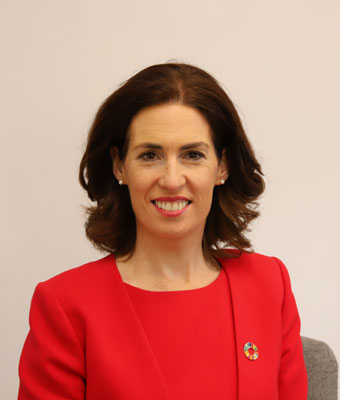
I thank the Deputies for raising this issue. Supporting youth work is a critical aspect of what we do as a Government to support our young people. I thank both Deputies for the opportunity to set out the position with regard to youth work provision and funding provided to Youth Work Ireland from my Department.
Youth work services deliver high-quality youth work and non-formal developmental opportunities to young people aged between ten and 24 across Ireland every year. Approximately 450,000 young people participate in youth work services annually.
Since 2020, Government investment in youth services has risen from €62.3 million to €90.1 million in 2026. Under the national development plan, €4 million in capital funding will be allocated annually to youth services from 2026 to 2030, providing multiyear certainty for the first time. This allows better long-term planning, investment and value for money.
Youth Work Ireland is a key organisation in the sector. It provides youth work to tens of thousands of young people across the country. Its importance is reflected in the support provided by the Department of Education and Youth via multiple funding streams. Over €2.8 million has been allocated to Youth Work Ireland under the youth services grant scheme in 2026, representing a 28% increase since 2020. Youth Work Ireland has also received funding for specific projects under the youth climate justice fund, the volunteer activation fund, and the youth services capital fund.
Youth Work Ireland and its member services play a key role in the delivery of targeted youth work interventions. Over €12 million has been allocated to Youth Work Ireland member organisations to deliver targeted youth work in 2026 under the UBU Your Place, Your Space scheme.
With this funding, the Department of Education and Youth continues to support existing youth services and youth organisations, including Youth Work Ireland, while also enabling the expansion of both targeted and universal services for young people. Youth workers and volunteers are essential to the delivery of quality youth services. The Department is also progressing a workforce development strategy in recognition of the need to support the workforce and the youth work sector to ensure that they can continue to provide high-quality, accessible and inclusive youth work opportunities for young people.
I sincerely thank youth workers and employers for the high level of participation in the workforce survey process. The analysis and responses will be extremely useful in informing the strategy's development. Consultations are scheduled to take place in multiple locations around the country during May and June to engage further with youth workers and employers in order to build on the data available through the youth workers and employers survey. Just this week, my officials presented some top-level findings from the surveys at the Inspiring Future Youth Workers seminar that was organised by the National Youth Council of Ireland and funded by my Department under the Bonn process.
There is a double standard in the area of youth work that cannot be ignored. In Dublin, staff are on a far better wage agreement. Youth workers outside Dublin are being left behind despite doing the same job, often in more isolated areas and for significantly less pay. Many are trained up by the local services only to leave for other agencies because of better pay standards. How can the Minister stand over this double standard and treatment? If someone is doing the work, they should be treated and paid equally, regardless of where they are based. Instead, many outside of Dublin receive increments only once every three years if they are lucky. Will the Minister commit to ending this geographic double standard?
I note the Minister's response and thank her for it. The difficulty is not the absence of strategy, it is the absence of delivery. We see the results of the workforce survey. There is also the workforce development strategy that is taking place at the moment. This is another case of too little too late. The issues in terms of recruitment and retention are not new. In many cases, they have always been thus. However, they have accelerated and worsened since the economic crash in 2008 and 2009 and the years of austerity that followed. Youth services have never fully recovered from all the cuts that were imposed by successive Fianna Fáil and Fine Gael-led Governments since then. What we need to see now is parity between the remuneration offered to youth workers working in the community in voluntary organisations and that of employees doing similar work, and, in many cases, with similar qualifications and similar demands on their time, in the public sector. That is a method we can use to maybe keep people in jobs where they are at the coalface and are doing front-line work that is so valuable in all our communities.
I thank the Deputies for raising those issues. Youth workers are employed directly by individual youth organisations. They are not public servants. Their terms and conditions, including pay, are set by those organisations. My Department provides grant funding for the provision of youth services to the organisations in question to meet the needs of young people. It does not directly employ youth workers or set the terms and conditions of employment.
My Department is aware that pension provisions across the sector are inconsistent. Some youth organisations have established pension schemes but others have not. The additional current funding that is being provided as part of budget 2026 will help youth organisations to manage the pressures on them, including the costs arising, for example, from pension obligations. Current funding of €90.1 million will be available this year. That represents a 5%, or €4.5 million, increase on the 2025 allocation.
The results of the survey will be analysed. My Department is progressing the workforce development strategy in recognition of the important work that the workforce does within the youth sector. There is also a fund relating to volunteerism, and there is the activation fund. There is €20 million in capital funding allocated to youth services as part of the national development plan. My Department is working with other Departments, including the Department of Children, local authorities and the ETBs, in the area of capital projects.
The workforce survey will be really important in the context of informing our work. The consultations will form a key part of that work. I assure the Deputies that this is a key priority. We have increased capital and current funding. I want to continue to do that and to work with and listen to the sector. I know the importance of youth work across the country.
Fiscal Policy

Over recent months, I have been vocal in this House and elsewhere in supporting the Government's proposals for personal investment accounts and calling for further tax reforms to ensure that existing investors will not be not left behind. I have pushed the need to abolish the deemed disposal rule. As long deemed disposal exists in Ireland, it will discourage international funds, including many domiciled in Ireland, from being offered to Irish retail investors. This is because funds would have to create a complicated additional layer of accounting to make their offerings available to Irish investors.
I want to talk about the industry we have in Ireland and the one that we could have. It is nearly 40 years since the International Financial Services Centre, IFSC, which has been a phenomenal success, was established. It was not just about the small geographical area off the docklands that we call the IFSC; the whole country benefited from the spirit of the centre. The Irish funds and asset management sector currently employs 20,000 people in every region of Ireland. Forty years on, we should not be complacent and take Ireland's historic attractiveness to international finance and investment for granted. One of the main things that made Ireland attractive was its dynamic, legislative and regulatory framework that promoted innovation and fostered competitiveness and growth.
As the EU is pushing for greater market integration, Ireland must work even harder to stay ahead of the curve in order to remain attractive and have offering which is compelling. It is only by doing this that we can protect and grow Irish jobs. There is a need for urgency in this regard. The updated Ireland for Finance offers a timely opportunity to deliver on the urgency needed on two fronts in particular. First, greater proportionality in how the State integrates regulation and supervision, with a focus on competitiveness and innovation. Ireland's financial rule book must be at the cutting edge of supporting the development and issuing of innovative new products. The principle of proportionality is embedded within EU financial services legislation. We must ensure that Ireland, therefore, does not fall behind other EU states that are subject to the same rules but that manage to move faster, avoid gold plating and overlapping regulation and, quite simply, offer a more compelling ecosystem within which to operate and innovate.
Second, there is a need to update legislation and regulation to keep pace with the digital transformation which is occurring in international funds management. Digitalisation is a key Government priority, yet I fear that Ireland could fall behind other countries when it comes to the establishment of digital fund structures, also referred to as tokenisation. There is an urgent need for clarity and certainty on the legal basis under which tokenised funds and other digital fund structures can be established and operate in Ireland. If changes are needed, they should be expedited. Why is this important? It is important because it will ensure that Ireland's funds offering and ability to deliver solutions digitally, which is the direction of travel across the economy more generally, keeps us in the game.

I thank the Deputy for raising this issue at a time when Ireland's contribution to the global financial ecosystem has never been more vital or more visible. I welcome the opportunity to discuss the importance of the funds industry in Ireland and the need for competitiveness.
I apologise; copies of my script are on the way. We thought they had already been sent down.
The latest estimate from IDA Ireland and Enterprise Ireland indicates that just over 20,000 people are directly employed in the funds sector. Furthermore, in terms of those working in the financial services industry - domestically and internationally focused - in Ireland, there are over 120,000 people employed, and these jobs are regionally spread throughout the country, employing highly skilled workers in almost every county. We know how important this sector is to our economy.
Work is under way on a successor strategy to Ireland for Finance, the whole-of-government strategy for the development of the international financial services sector in Ireland. Anticipated for launch later this year, the new strategy will be informed by a wide range of national and international stakeholder engagement, public consultation and research. The funds sector will be a key aspect of this new strategy.
The Department of Finance undertook a review of the funds industry in 2023 and the resulting funds review 2030 was published in October 2024. The review issued 42 recommendations to continue to grow this important sector of our economy. An implementation plan was published in October 2025. This includes a full breakdown of the recommendations and those responsible for their implementation. Of the 42 recommendations, the most substantive were categorised into four cohorts. The first was to grow exchange-traded funds, ETFs; the second was to grow private assets; the third was to grow retail investment; and the fourth was to address the risks and enhance transparency in structured finance.
The recommendations to grow ETFs have been delivered by the Central Bank. The recommendations to grow private assets involve legislative, regulatory and tax changes. These are on track for completion this year. There is ongoing engagement in train with the industry and the Department of Enterprise, Tourism and Employment on changes sought to the Limited Partnerships Act.
On retail investment, the Tánaiste has announced the Government's intention to introduce the legislative framework for an investment account this year. We want to make investing simpler, clearer and more accessible for ordinary people and to help their hard-earned money work harder for them over time. The aim is to legislate this year to allow accounts to be offered next year.
In budget 2026 we provided for a reduction in the rate of taxation on returns from Irish and equivalent investment funds and Irish and certain foreign life assurance policies from 41% to 38%. This took effect from 1 January this year. In addition, in the same budget we committed to publish a roadmap in 2026, setting out the intended approach to simplify and adapt the tax framework to encourage retail investment. The roadmap, which will be published in the coming months, will take into consideration developments at EU level in respect of the savings and investments union. This is a major project for the Presidency this year.
As home to the second largest funds industry in the EU and the third largest in the world, lreland does not just facilitate capital flows, we help to shape the architecture of the EU's savings and investment future. This is all-the-more crucial given the current challenges faced by the EU. These funding demands will continue to grow as we look to address our common goals, including security, competitiveness, digitalisation and a just and equitable green transition. It will be our responsibility to ensure we have the tools required to meet these challenges and continue to thrive.
I thank the Minister of State for his comprehensive response, including the reference to growing exchange-traded funds, which is something I want to see. I welcome the reduction in the exit tax, but the issue that remains is the deemed disposal rule and taxing unrealised gains, which interrupts compounding and undermines long-term savings behaviour. That is something the Tánaiste is looking at. The Minister of State spoke about it earlier.
I also note that new polling by Amárach highlights the resounding public support for Ireland's investment industry, with 90% saying it is important that Ireland remain competitive within the EU investment industry. The people of Ireland understand the value of attracting high-quality, regionally dispersed international jobs and investment. The funds sector has been one of Ireland's real success stories in terms of exports. I ask the Government to commit to action to support and protect this important sector.
Further to recent parliamentary questions I tabled, will the Minister of State provide an update on the transposition of the EU alternative investment fund managers directive in Ireland? This is particularly important in enabling the funds sector to continue to evolve and to develop new retail investment products for Irish savers. If he does not have an update on that now, perhaps he could seek one. In practical terms, Ireland's regulatory system has meant we have the products and solutions investors need and the environment for companies providing these to operate to high standards with commercial success and agility. This has helped transform Ireland into a leading funds management centre in Europe, supporting the export of Irish domiciled funds around the world. This was hard won and is the envy of many other countries.
On the alternative investment fund managers directive, the UCITS directive, the transposition was due to be done today but I am very sorry to say that this was not done by the Minister today. There will be a slight administrative delay. Work is continuing to finalise the draft statutory instruments. We hope the delay will be short and they will be ready for signature in the coming weeks. Everybody has to take responsibility for late transposition because it is a legal obligation on the State to transpose directives. One of my functions as Minister of State with responsibility for European affairs is to encourage Ministers to transpose directives on time. It is disappointing that this has not happened. The industry is rightly frustrated with this delay. I am grateful that Deputy Currie raised it. I agree it is essential that this directive is transposed as soon as possible. I will personally take that up with the Minister for Finance in the morning.
A lot of people are starting to realise and be concerned about the issue of the deemed disposal rule on ETFs, which was also raised by the Deputy. That is something the Government could do. I have no doubt the Minister of State, Deputy Troy, and the Tánaiste will work towards that. I strongly encourage people to examine ETFs on the basis that perhaps Governments will look at this in the coming years and certainly within the relevant period from now. It is something the Government wants to do, as the Minister of State, Deputy Troy, and the Tánaiste have said.
Our position in Ireland at the centre of the European funds ecosystem is a privilege and responsibility. By working together to support innovation and embrace opportunity while ensuring that our frameworks are robust, we can be confident that Ireland will remain a driving force in Europe's capital markets going forward.
Defective Building Materials

I am pleased to have the opportunity to discuss the issue of side-by-side housing within the defective concrete blocks remediation scheme, particularly in light of where we now stand with the legislation having been progressed. We had amendments towards the end of last year. We had regulations on the increase from €420,000 to €462,000 and the extension of time to 130 weeks but, lo and behold, there were no regulations to deal with side-by-side buildings. What is that? It is not simply an optional extra, it is an essential support for many families, particularly for those who have a person with a disability who requires specialised equipment within the home. For these householders the prospect of vacating their home during demolition and reconstruction is just not viable. It is necessary to allow them to live in their defective homes and to build a new home side by side and then to transfer the necessary equipment into the new home. Those people could not go down the town and find a house where this equipment could be provided. It is crucial that the scheme is inclusive and reflects the full spectrum of disability, not only physical disability but intellectual disabilities, and also neurodivergent conditions such as ADHD, which can significantly impact a person's ability to cope with disruption, displacement and changes to their environment. For that reason, there must be sufficient flexibility within the regulations that will underpin the scheme. A narrow or overly rigid approach risks excluding families who genuinely need this option. That cannot be allowed to happen.
I warn the Minister of State to ensure he speaks with his officials as the regulations are due in a matter of days. Let there be flexibility.
The measures must be practical, compassionate and grounded in the lived realities of those they are intended to support. This is now a matter of urgency. This should have been done months ago.
A number of families are currently unable to move forward due to the ongoing delays and they remain in limbo. They are facing continued stress, uncertainty and disruption to their daily lives, not to mention the psychological effects of all of this.
I acknowledge the ongoing commitment of my local authority, Donegal County Council, and the crucial role it plays in the defective concrete blocks remediation scheme. What is required now is delivery. The signing off of the regulations must be finalised without delay and the legislation must be signed off so families can finally move forward with certainty, security and dignity. These families have waited long enough. What they need now is action.

I thank Deputy Gallagher for raising this issue in the House. He represents a constituency and county that was very badly impacted by defective blocks. He has championed and represented the people in his constituency for many years, fought for the remediation scheme and continuously fought for the side-by-side construction amendment.
The good news is that the regulations on side-by-side construction are in the final stages of drafting. We should see the completion of the drafting of the amendments within the coming weeks, after which they can be implemented.
As the Deputy is aware, the Remediation of Dwellings Damaged by the Use of Defective Concrete Blocks (Amendment) Bill 2025 was initiated in Dáil Éireann on 2 December 2025, passed in both Houses of the Oireachtas and subsequently signed into law by the President, thereby becoming an Act, on 23 December 2025. A number of amendments came into operation on 25 February 2026, with related regulations also adopted on the same date. These changes provided that the increase in the grant scheme cap and rates from October and November 2024 can retrospectively benefit certain homeowners and they extended the period that applicants have for completed work from 65 to 130 weeks, along with reducing the time within which an applicant may apply for an extension from 12 to two weeks.
The second set of regulations is currently at an advanced stage of drafting in relation to additional scheme improvements contained in the 2025 Act. These include the amendment that provides for an application for an adjacent remediation option in particular circumstances. Those are the ones Deputy Gallagher outlined so well.
It became apparent that certain relevant owners who had received an option 1 demolition determination from the Housing Agency and who previously had their homes specifically adapted for use by persons with a disability were facing severe difficulties in finding suitable alternative accommodation that met their specialised requirements. The 2025 Act and forthcoming regulations will provide a possible remedy to this situation. Where the approved remediation option is the demolition of the relevant dwelling and its reconstruction, a relevant owner may be able to avail of funding under the scheme for the building of a home adjacent to the existing dwelling. Relevant owners can apply to the designated local authority for approval to construct a new dwelling in the curtilage of the relevant dwelling to replace the approved remediation option, subject to certain eligibility conditions. As this provision is an exemption from the normal rules of the scheme, which is fundamentally a scheme to remediate existing homes, the Deputy will appreciate that consideration had to be given to its drafting. This has meant some additional time was required to finalise the regulations.
Local authorities have responsibility for the administration of the scheme and will process the applications. On the Deputy’s point and question, we are in the very final stages of drafting the regulations. Drafting will be within the next couple of weeks, after which implementation can proceed.
I thank the Minister for the response but all that is new in it is that the regulations are in the final stages of drafting and will be available to the Minister to sign within the next couple of weeks. Back in committee last year, I was told completion would be in quarter 1, but it is now quarter 2. I was told completion would be in the middle of April. This is not what my constituents want to hear. I want something definite. I appreciate that officials will be drafting but all hands have to be on deck over the next couple of weeks. By the end of this month, or certainly by the early days of May, the regulations have to be finalised. It does not mean that those who have already received planning permission for a side-by-side build can start immediately. They have to make the application. Somebody will decide who qualifies and who does not.
There has to be flexibility. It is not just about a physical disability alone. Other factors have to be taken into consideration. I hope we are not back in the House on the second week of May debating this. I plead with the Minister of State to impress upon the officials that this matter is vital to the individuals concerned. It is urgent because families cannot progress without the provision being signed into law. They are left in limbo and they are waiting for clarity. The ongoing delays are causing stress, uncertainty and disruption to their daily lives.
This has already been a multi-year issue. I hope this is the last time it will be discussed in the House. I hope that when the guidelines and regulations are signed off, we will not be back here again requesting that they be amended. They should be all-encompassing and cover all individuals I have referred to.
I thank Deputy Gallagher again. I absolutely take his point and I appreciate the urgency of this. The families and constituents the Deputy represents right across the board have been severely impacted by defective blocks. They have had their lives turned upside down and have experienced significant upheaval.
Regarding the amendment we are talking about and the regulations we are introducing on side-by-side construction, there is another layer of complexity and difficulty when it comes to those who may have had their houses formally adapted for mobility and the fact that it is not as straightforward as upping sticks and going to another home that is not adapted, as the Deputy quite rightly outlined. The latter is just not a possibility, which is why we agreed recently to introduce the amendment to change the existing arrangement. However, there are complexities. Drafting was not straightforward and simple. It is not something that can be done overnight. However, I absolutely take the Deputy’s point that there is urgency. The Deputy wants to be able to go back to constituents in Donegal and say that what he is requesting is happening. However, I am here with good news: the regulations are in the very final stages. I cannot give an exact date as that would be unfair, but within the next few weeks the regulations should be signed by the Minister and, therefore, implemented. I sincerely hope this is the last time the Deputy has to raise this in the Chamber. I cannot give a date but the regulations are in the final stages.
Tourism Policy

I want to raise serious and growing concerns regarding the proposed short-term letting and tourism Bill, and in particular the manner in which it is being progressed. The Bill has not yet been published, yet significant changes have already been signalled to thousands of small operators, family businesses and rural communities. Can the Minister of State clarify when the legislation will be published in full and why stakeholders have been asked to prepare for compliance in the absence of clear statutory text? Second, will he outline whether the Government intends to allow proper pre-legislative scrutiny and meaningful engagement with affected groups, or whether the intention is to fast-track or rush the Bill through the Houses, despite the scale of its impact on tourism, rural employment and local economies?
Many of the concerns being raised are coming directly from the grassroots, small accommodation providers, self-catering operators, mixed-use homeowners and rural hosts, who are telling us very clearly that the approach is not going to work.
Does the Minister accept that legislation without clarity, buy-in or realistic implementation timelines risks repeating the mistakes we have seen with poorly handled policy roll-outs, where public anger and non-compliance followed instead of constructive outcomes?
There remains a complete lack of clarity around development and planning. Will the Minister explain how the proposed registration system is intended to interact with planning law, particularly in circumstances where properties were never intended for long-term residential use, where planning permissions were granted decades ago or where accommodation consists of cabins, extensions, converted outbuildings or holiday units? Will the Minister confirm whether people will be required to seek retrospective planning permission, what criteria local authorities will apply and whether national planning guidelines will be issued in advance of any enforcement? At present, constituents are being told they may not be able to trade but nobody can tell them what rules they will actually be assessed against.
Will the Minister explain how this Bill is expected to support tourism policy, particularly in rural and coastal areas where hotels and large-scale accommodation simply do not exist? What assessment has been carried out regarding the impact on local jobs, seasonal employment and the viability of tourism outside major urban centres?
Will the Minister commit today to publishing the legislation in full, ensuring adequate scrutiny and providing clear guidance on development and planning, and genuinely engage with those affected before asking them to comply? People do not object to regulation. What they object to is uncertainty, unfairness and being kept in the dark. Will the Minister address it? It has been well over 12 months or more since this legislation was first discussed. These are genuine people who are from all over my constituency. My mother ran a bed and breakfast in the 1970s so I know well the benefit it brought. It basically fed us. Those are the basics. These are hard-working people, mainly women. These are hard-working women who work at home and can run an Airbnb. The legislation as it was meant to be brought before us was scandalous. I attended the Oireachtas Committee on Enterprise, Tourism and Employment and I heard the planners inside saying "tick away the box that you have no planning and don't worry at all". When I asked them whether they would put that in writing so I could hand that out to my constituents, they would not do it because the Minister of State knows as well as I do. Regarding anyone telling me or the Minister of State here to tick a planning box and then they will say we are fine if we are not complying, the bottom line is that all these people's businesses have survived down through the decades with the planning that was there already. What we're saying is that there should be registration but no planning guidelines are needed for anyone unless he or she is a new Airbnb operator setting up tomorrow morning.
In April of last year, the Minister for Enterprise, Tourism and Employment obtained Government approval for the general scheme of the short-term letting and tourism Bill. Once enacted, this Bill will provide a statutory framework for regulating the short-term letting sector, including the establishment of a national register. The register will operate in compliance with the EU Short-Term Rental Regulation (EU) 2024/1028, which comes into effect on 20 May 2026. The register will be operated by Fáilte Ireland and will commence following the enactment of the necessary legislation. While the Minister is charged with the establishment of the register, the planning elements and requirements fall under the Department of Housing, Local Government and Heritage.
Tourism is a vital part of the Irish economy, supporting 227,000 jobs and generating €6 billion in 2024. I fully recognise concerns about the impact on rural tourism and local economies of reducing short-term let, STL, availability. Fáilte Ireland estimates that approximately 34,020 STL properties were advertised online in the State in October 2025 based on screen-scraped data from four major booking platforms. Up to 64% were listed as entire houses or apartments. This represents a 26% increase from an estimated 26,960 units in October 2022. In Cork, around 3,300 STL units were listed in October 2025, of which 63% were advertised as entire properties. This represents a 22.6% increase from an estimated 2,690 listed in October 2022.
On 9 February last, the Cabinet committee on housing agreed planning conditions for short-term letting activity as part of a broader Government strategy to tackle the housing shortage. This agreement provided that, following the introduction of the short-term letting register, accommodation providers based in towns with a population of 20,000 or less at the last census based on the census town boundaries defined by CSO will have two years to meet planning compliance requirements, and accommodation providers based in towns with a population of more than 20,000 at the last census will need to confirm planning compliance on registration with no further lead-in period if they wish to register with Fáilte Ireland.
The Department of Housing, Local Government and Heritage is finalising a national planning statement under the Planning and Development Act 2024. This will be brought to Government shortly and will provide a clear overall policy approach both at national and local authority level to enable planning authorities to determine planning applications for short-term lets across the country.
The Minister of State is saying here that people will have to have complied by 20 May 2026. I spent the past seven or eight weeks in the Dáil trying to bring the Minister before us. I mean no disrespect to the Minister of State. He is not the correct Minister to be here because he has nothing to do with tourism. I am not disrespecting the Minister of State. He has to do it. He is busy enough without being dragged into this. It is a disgrace that a Minister for tourism in the course of seven or eight weeks has failed to come before the Dáil to talk about something that affects tens of thousands of people's lives in this country and that has to be signed up to by 20 May. It is outrageous. That is what it is. The Minister of State cannot be carrying the can for it but he is certainly being forced to carry the can.
Is this a tactic the Government is using now and is it another attack on the people of rural Ireland? I have mentioned it several times in the Dáil and the Taoiseach has said to me there will be no problem at all, not to worry at all and that it is all in my head. God almighty, what the Government is going to do is down here in a document. People are being given two years to be planning compliant. That is wipeout in two years. It is a case of kick the can down the road for a few months - that is all it is - instead of understanding the crisis we have at present, which is that the Government is going to wipe out tourism. We got two years out of it and that was a hell of a struggle, but that is not good enough.
I pay tribute to Sarah Cronin. We have held public meetings on this with rooms full of people who are seriously concerned about the little bit of side income they had but the Government never listened and never sat down with them. The Government did not give a damn, basically. I live in an area that totally depends on this income. I spoke to the Taoiseach here about the lady in Courtmacsherry and others who walked out because they could not cope with the pressure being put on them. There would have been no need for that if the Government had sat down and spoken to the people who were running the businesses down through the years and come up with a solution, but not this, which is a can-kicking exercise and then ruin in two years' time. That is basically what is written down here. I do not do Airbnb but the Government knows damn well that if I had to get a planning officer to come out for compliance, it could cost me €100,000, €150,000 or €200,000. The Government is going to wipe out the industry.
I set out the position and the increase in the number of short-term lettings, even since 2022. The regulation the Deputy mentioned does impose obligations on the State to provide a register. That was passed with almost nobody voting against it in the European Parliament. Nearly 500 members of the European Parliament supported that.
As set out in the A New Era for Irish Tourism document published last December, the introduction of regulatory controls for short-term letting is intended to ensure that tourism develops in a manner that recognises and complements the broader economic and social needs of local communities. The Department of Housing, Local Government and Heritage is currently finalising the national planning statement on the Planning and Development Act for short-term lets. That will establish a clear and coherent policy framework at national and local level.
There are currently 34,000 short-term lets in Ireland, which is a huge increase since 2022. I acknowledge what the Deputy is saying about the income dependency in certain parts of the country. The Government has acknowledged that but there has been massive growth in the sector in the past three years, so it is necessary then to use regulatory measures to provide appropriate oversight and to ensure a balance between the needs the Deputy is rightfully describing and the needs of the long-term rental market.
The Minister for Enterprise, Tourism and Employment recognises that short-term lets play an important role in the tourism sector, especially in regional and rural areas where there is limited accommodation for tourists - we get that - and where the development of accommodation at scale might not be economically viable. The Deputy mentioned properties that are not suitable for long-term letting. We know that, but the Minister is continuing to work with the Minister for Housing, Local Government and Heritage to ensure clarity can be provided and a lead-in time for operators can be agreed to so that we get that balance between the needs of the people the Deputy is talking about, whom we all represent, and obviously the needs of people who are looking for long-term housing in the country.
Childcare Services

I thank the Minister of State for attending. I know this does not involve his own area, so I appreciate him taking this Topical Issue. As the Acting Chair said, I want to speak about childcare. It is probably one of the top three most prevalent issues in my own area of the city in Glanmire. If the Minister of State is not sure where Glanmire is or does not know much about it, it is a strong, growing suburb.
I was there with Deputy O’Sullivan at least twice.
You have, to be fair. It was after the flooding. The Minister of State is familiar with it. In the last 15 or 20 years, there has been unprecedented development of residential housing there. In the current city development plan proposals, further residential zoning is earmarked. Recently, the Minister, Deputy Foley, announced €135 million for State-led early learning and childcare services. It is a very welcome scheme and, in time, will prove to be a landmark announcement if we build upon it.
I stand here today to make the case for Glanmire and why it needs to be among the first tranche to benefit from the announcement. As I said, Glanmire is rapidly growing. Over the past decade, it has seen significant growth and, with recent zoning, the population is forecast to double in the next ten years, yet its childcare infrastructure has not kept pace. In Glanmire, I can count at least four premises that were designated for childcare services that were never delivered, specifically because of the non-enforcement of planning conditions by the local authority. More recently, we face the further closure of another two settings, which exacerbates problems locally. This is a barrier to work in some cases but, most importantly, it is detrimental to the well-being of our children.
The Government's forward-planning unit has acknowledged the need to focus on areas where childcare places have not kept pace with housing development. We have built 157,000 homes nationally since 2020, but the community in Glanmire is feeling the strain of that housing development. The State-led programme will step up and step in where the need is greatest targeting areas with unmet demand and low levels of existing childcare. Glanmire ticks that box. It has growing demand, limited existing community provision and families who would benefit enormously from an affordable, high-quality facility run on a not-for-profit basis. Again, Glanmire ticks that box. The initial phase of the programme will acquire and refurbish places that can provide in excess of 100 childcare places and facilities that can open in late 2026 or early 2027. Again, Glanmire ticks that box. I recently brought Cork City Childcare to Glanmire, with the owner of a proposed building and a proposed proprietor. It reckons that it can deliver up to 150 affordable childcare places in that building.
The majority of the criteria were laid out in the Minister’s announcement some months ago. Glanmire ticks the majority of the boxes. I am sure that other Deputies will make the same pleas over the coming months in pitching for this €135 million fund. I know we will not be able to satisfy everybody's demands, but I am trying to put forward the case for Glanmire. I heard initial feedback that it is expected the scheme will be oversubscribed. In many ways, that is indicative of the demand that is out there. However, we are talking about hard-pressed, working families, especially in the context of the last few weeks, many of whom feel disenfranchised and feel that we could do more for them. This is particularly the case where young families are just trying to send their children to affordable childcare while they go about their daily business. As I said, I believe Glanmire can put its best foot forward. I hope it is given due consideration in the coming months.
I will not forget my visits to Glanmire. The Deputy will remember that I was quite active on the issue when the Sarsfields Hurling Club suffered a disaster. In that case, we established a unique fund so that Sarsfields and other clubs got funding because of the flooding disaster. Another project in Glanmire, unfortunately, escaped my abilities to sort out although, as the Deputy said, it was not my responsibility but that of another body. I am certainly very familiar with Glanmire. I would be only too happy if I were in a position to deliver what the Deputy is looking for. I am sure the Minister, Deputy Foley, will do her best. Unfortunately, she cannot be here tonight, and I am here in her place.
Improving access to quality and affordable early learning and childcare remains a key priority for the Government. Based on the data available from the annual early years sector profile, the estimated number of enrolments has increased by 25% over the last three years. While the supply of places has increased, there remain indications that the demand, especially for younger children, is higher than the available supply in certain parts of the country. Living in the commuter belt myself, I know only too well the situation.
The Department continues to support the ongoing development and resourcing of core funding, which has given rise to a significant expansion of places since its introduction in 2022. Now in its fourth programme year, core funding funds services based on the number of places available. Core funding provides stability to services and reduces the risk associated with opening a new service. The increased investment in core funding will allow for the natural growth of the sector driven both by new services joining the sector and existing services increasing their hours.
A forward-planning model has been developed and will be central to the Department's plans to achieve the policy goals set out in the programme for Government to build an affordable, high-quality, accessible early childhood learning and childcare system, with State-led facilities adding capacity. The model quantifies the nature and volume of different types of early learning and childcare places across the country and assesses alignment with the number of children in the corresponding age cohorts at local area level.
The Government is also supporting the expansion of capacity through capital funding. The building blocks extension grant scheme is designed to increase capacity in the one- to three-year-old pre-ECCE age range for full daycare. Core funding partner services could apply for capital funding to physically extend their premises or, in the case of community services, to construct or purchase new premises. The scheme will deliver up to 1,500 full daycare places for one- to three-year-olds. Four applicants from Cork were approved for funding under the scheme.
Following on from the success of that scheme, the Minister today launched a new capital scheme, the building blocks extension grant scheme, phase 2. The scheme will make available €10 million. It will open for applications this year and will focus on offering community and private providers funding for extensions to their existing premises. The Minister also recently announced €135 million in capital investment in buildings for high-quality, accessible State-led early learning and childcare. The process will begin in 2026, with investment in buildings in what will be a groundbreaking initiative for the Government. Capital funding will be used to acquire and-or fit out the building, depending on requirements. There will be a particular focus in the new State-led facilities on providing places for one- to three-year-old children because this is where the need is greatest, with scope for these children to progress in the service until they start school. A suite of appraisal tools has been developed, including a forward-planning model, in order to select projects that align with our objectives.
It was remiss of me to forget that the Minister of State was in Glanmire when people were in the depths of despair after that flooding incident. I know they were most grateful at that time. They were also grateful to the Taoiseach and the then Minister, Michael McGrath, who was also there at the time. It was remiss of me to forget that, but I know the community in Glanmire certainly will not.
In the brief time that I have, I want to make the case again. There will be dozens of these projects across the country. We will all have them in our constituencies. We will all be putting our best foot forward to try to get one of these over the line in each of our areas. I want the Minister of State to relay the message to the Minister, Deputy Foley, that Glanmire is unique in many respects, especially on the northside of Cork city. It is probably the single biggest area where new housing developments are being built on the north-eastern side of the city. There has been a large influx of young families but, unfortunately, many of them have nowhere to send their children locally and they are sending them further afield.
In the last couple of weeks, an announcement was made to close one of the naíonraí, which is one of the only language provision childcare facilities that we have. Many of those parents have to go to Mayfield and other parts of the city to avail of childcare. That discommodes people because it might not be part of their normal route to work and given the traffic and having to ferry children left, right and centre across the city, it is often difficult to make the journey. In one fell swoop, we can secure 100 to 150 childcare places, which would be a massive boost for an area where primarily young, working families are situated. The building owner is on board and Cork City Childcare is supportive. It is one of two applications that have come forward from my side of the city. I am pleading with the Minister of State to take the message back to the Minister that Glanmire needs its slice of that €135 million.
I will bring it back to the Minister. Up to eight buildings will be selected this year for the State-led initiative.
That will provide places. The level of investment will ramp up during the lifetime of the Government. The initial approach is to purchase and refurbish buildings, given that that is a faster route to delivery, while the option of building new facilities will also be considered. Services will be offered on a not-for-profit basis by third parties.
Where a project is being considered without an operator already in place, the Department will run a process to identify an appropriate not-for-profit operator with capacity to operate a high-quality service, where works are required to manage a capital project. The Department is assessing sites and buildings and, where required, will seek expressions of interest from operators to deliver these services. Local city and county childcare committees will be supporting the development of projects, so in the first instance, community early learning and childcare operators, local authorities, developers and others who might have suitable premises and projects should contact their local committee.
Cuireadh an Dáil ar athló ar 10.41 p.m. go dtí 9 a.m., Dé Céadaoin, an 22 Aibreán 2026.
The Dáil adjourned at 10.41 p.m. until 9 a.m. on Wednesday, 22 April 2026.