Inshore Fisheries
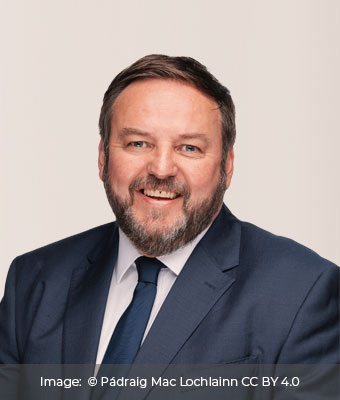
1. Deputy Pádraig Mac Lochlainn asked the Minister for Agriculture, Food and the Marine if he will work with the representatives of inshore fishermen to introduce an inshore fisheries stabilisation and climate adaptation scheme. [51707/26]
I put this question on behalf of my colleague, Deputy Mac Lochlainn, who is otherwise detained this morning. Ireland's inshore fishing fleet is facing an emergency. Rising costs, shrinking quotas and climate-driven weather losses are pushing family fishing businesses to the brink. The National Inshore Fishermen's Association, NIFA, has produced a practical and affordable proposal for an inshore fisheries stabilisation and climate adaptation scheme. Does the Minister of State consider it is may be time to stop commissioning further reports and commit to working directly with NIFA to deliver targeted supports before more boats leave our harbours and are tied up?
I have met the National Inshore Fishermen's Association and other representatives of the inshore sector and I am aware of the challenges facing the inshore fisheries sector. I am taken by its resilience and capacity to manage through difficult times. I am fully aware of the concerns raised. However, Ireland's current €258 million Seafood Development Programme 2021-2027, which is co-funded by the Government and the European Commission under the European Maritime, Fisheries and Aquaculture Fund, EMFAF, is the primary source of funding for the Irish commercial seafood sector. including the inshore sector.
The Department has reviewed all funding mechanisms available, either through the seafood development programme or other state aid routes to ascertain if there is a possibility of introducing a financial stabilisation scheme for inshore fishermen. Ireland, as an EU member state, is required to comply with the state aid regulations and the European Commission oversees the application of state aid rules among member states. Failure to comply with state aid rules, such as a failure to provide notification to the European Commission or implementing the aid without approval, can result in the member state being required to recover any aid provided. These rules also provide for added interest to be applied. Article 107(1) of the Treaty on the Functioning of the European Union defines state aid as any aid granted by a member state, or through state resources in any form whatsoever, which distorts or threatens to distort competition by favouring certain undertakings or the production of certain goods. Articles 107(2) and 107(3) provide for exceptions where state aid can be compatible with the Internal Market, such as aid to promote regional economic development, as well as research and innovation. Most state aid has the potential to disrupt trade within the EU.
As the managing authority for the EMFAF programme in Ireland, there is a range of projects and industry supports to the inshore sector, provided by agencies of the Department under the programme. These include the small-scale coastal fisheries scheme; the inshore fisheries conservation scheme - the v-notching programme; the seafood training scheme; and the seafood capacity building scheme. In addition to these, a scheme specifically for the inshore fleet was implemented in 2024 and 2025 under the seafood development programme.
I expected that the Minister of State would refer to state aid rules and how they might prevent this, but I do not believe that argument stands up. I acknowledge the work of NIFA and the inshore sector in producing these reports. NIFA has appeared before the Joint Committee on Fisheries and Maritime Affairs and has been engaging with Deputy Mac Lochlainn and others for a long time. The truth is that the industry is in crisis and has been under pressure for many years. There is a level of deterioration. The Minister of State knows the European Commission can approve a derogation from state aid rules. It has done so for the vessel fuel supports and in many other cases. I believe if this were affecting another primary producing sector and impacting dairy, tillage or beef production, the Government would already have sought that derogation. However, because it involves fishermen, and the inshore sector in particular, the Minister of States is pre-empting what the Commission may say to us if we were to ask. He must not hide behind what the Commission may say. Instead, he needs to argue and make the case for a derogation from state aid rules in order that this urgent financial assistance can be provided. If that means declaring an emergency and owning up to the fact that the fisheries sector is in crisis, then let us do that.
In my initial answer to the Deputy's question, I wanted to set out the parameters under which future decisions might be taken or any work done. I will continue to engage with Committee on Fisheries and Maritime Affairs in that regard. We have a clear policy position to support the inshore sector. That is why, by October of this year, there will be a total ban on trawling within the six-mile limit on vessels above 18 m to ensure the improved viability of the inshore sector. It is not as if the Government, the Minister, Deputy Heydon, the Minister of State, Deputy Collins, and I are standing back from our responsibility. We recognise there is a crisis. We are doing everything in our power and have not at all ruled out the possibility of putting a case to the European Union or the Commission in due course. That has to be appropriately thought through and structured. We have appointed an independent chair, Michael Berkery, under the Food Vision programme to do a full analysis of market conditions as a result of quota loss, etc. When that report comes through we will make further determinations based on its findings.
I also note the publication of the Mulvey report this week. It is underwhelming and there is not an expectation in the sector that the Berkery report will move this on much further, but that remains to be seen. My call to the Minister of State is that he and this Government accept that the inshore sector is facing an emergency and, based on that, they should now go and make the case to Brussels. Work can be done on other issues, such as quota, access and a fair proportion of fishing opportunity. This is about keeping the industry afloat. The industry is on its knees and has been facing a slow deterioration as a result of policy and inequity driven by Brussels over many years. It is now at a point from which it may never return. We may lose our inshore sector unless it gets direct financial assistance. It is important to note that the sector never came looking for anything from the State aside from fair access to our waters. Now, when it does come looking it is told to wait for a second report, after which the Government might make a case to Europe. As I said, if this were any other primary producing sector, the Minister of State would be in Brussels now making the case for derogation. That needs to happen.
The Berkery report will be published shortly. That report was guided by the exceptional crisis arising from the significant loss in quota as a result of the scientific advice of last year. That is the direct response. The Mulvey report was broad based. It set out to ascertain where the sector is at, so it had a different requirement from the Berkery report.
I will set out what is happening at European level. An evaluation was done of the Common Fisheries Policy. Our preferred option is that we now move to a significant review of the CFP. It is in that context that European agreement can be reached on addressing certain crises. Based on our experience, the Minister and I feel that were Ireland to put a proposal on its own, without the support of other member states, it might not land in the way we want. This is not just about making a request without having our homework done. It requires quite a bit of negotiation to secure broader support across the Union in order to effect necessary changes in the Common Fisheries Policy that address the kinds of requests that are coming. I fully understand the basis for that request and the need to address the viability of the inshore sector.
Horticulture Sector
2. Deputy Robert O'Donoghue asked the Minister for Agriculture, Food and the Marine to support the growth of Ireland’s horticulture sector in budget 2027 (details supplied). [52390/26]
Budget 2027 needs to support the growth of Ireland's horticulture sector through targeted investment in growers and targeted supports to attract new growers and encourage generational renewal. Investment in start-up grants, financial assistance with access to land, investment in education and training to upskill our workforce, investment in mentoring, and capital supports will help remove barriers to entry to the sector. Supporting new entrants is critical to maintaining domestic food production, driving innovation and delivering the ambitions of the National Strategy for Horticulture 2023–2027.
The Irish horticulture sector provides locally grown, quality food and plants and plays a crucial role in supporting the economy. The farm gate value of the sector in 2025 was €652 million, with an estimated 18,000 jobs at both primary and value-added levels. The National Strategy for Horticulture 2023-2027 sets out a clear vision to grow a more profitable value-added sector, driven by innovation and sustainability, and provides a roadmap for the sector to achieve this potential. It outlines eight key strategic actions to drive change and growth across all subsectors of horticulture, including attracting new entrants to the sector.
The Government provides significant support to deliver on the implementation of this strategy, through a range of supports and initiatives underpinning the sector's resilience, competitiveness and long-term sustainability. This includes a scheme of investment aid for the development of the commercial horticulture sector, which provides grant aid to horticulturists towards capital investments in specialised plant and equipment, as well as technology adoption specific to commercial horticulture production. The scheme covers all horticultural areas, including field vegetables, which includes seed potatoes, mushrooms, protected food crops, amenity crops, soft fruit, top fruit and beekeeping.
The scheme of investment aid for innovation and diversification in the horticulture sector and the scheme of aid for innovation and diversification in horticulture capital investments are designed to assist horticulturists in increasing innovation and diversification activities in the sector.
Changes in the eligibility requirements around young farmers in the horticulture capital investment schemes have meant that more young growers have been able to access higher rates of grant aid, thereby encouraging generational renewal.
Recognising that the future success of the sector depends on developing a strong skills and talent pipeline, a horticulture education review report was published in 2025 under key strategic action 4 of the national strategy.
Horticulture is under enormous pressure. We are facing some of the most serious challenges we have seen in years, including increased input costs, energy costs and labour costs. We are still importing fruit and vegetables that we could grow ourselves. I live in north County Dublin, the market garden capital of Ireland. We produce approximately 47% of Ireland's field vegetables. We need to keep supporting the sector. We cannot allow it to shrink further. There are huge opportunities in horticulture; we just need to unlock them.
I know first-hand the hard work involved in growing. I picked and packed every fruit and vegetable under the sun in Rush and Lusk. Many of the 18,000 jobs the Minister of State mentioned are in my constituency in north County Dublin. If we are serious about food security, rural employment and supporting Irish growers, then we must give the horticulture sector the support it needs and deserves in order for it to survive and thrive.
The Deputy mentioned the significant challenge in relation to labour for growers, specifically relating to seasonal workers. A seasonal employment permit pilot scheme took place in 2025 for those sectors in horticulture with a seasonal need for more employees. The Department of Enterprise, Tourism and Employment carried out an evaluation of the pilot, which was published on 9 June. The recommendations in the report are to initiate a phase 2 pilot to fully test the scheme. It is recommended this pilot again be in the horticulture sector, taking into account the learnings from the initial pilot, and that it be initiated in quarter 3 2026 with a view to preparing for the 2027 season.
I welcome phase 2 of the pilot. We have a problem in that the average age of growers is probably over 60. We need targeted supports to encourage new entrants and generational renewal in the sector. Horticultural is a viable career but we need to expand the horticultural apprentice scheme and invest in our youth.
Finally, the Minister of State and I will agree that we all need to buy more Irish produce. We need to strengthen the policy on identifying Irish produce. We need better regulation of labelling. If we do this, the consumer can make more informed choice by buying Irish, supporting local growers and sustaining the industry.
The strategy to grow the horticulture sector is set out in our National Strategy for Horticulture 2023-2027. That sets out a clear vision to grow a more profitable, value-added sector, driven by innovation and sustainability, and to provide a roadmap for the sector to achieve this potential. The strategy outlines eight key strategic actions to drive change and growth across all subsectors. The strategy has had its mid-term review and was published in the final quarter of last year. Good progress has been made on the key actions.
The Deputy raised encouraging new growers into the sector. One of the strategic actions contained in the strategy focuses on education and addressing the challenges of attracting new entrants to the sector to maximise opportunities. Recent changes to eligibility requirements for young farmers in the horticulture capital support schemes have meant a great number of growers have been able to access higher rates of grant aid available to younger farmers and growers.
Common Agricultural Policy
3. Deputy Martin Kenny asked the Minister for Agriculture, Food and the Marine if he will provide an update on CAP negotiations and specifically in relation to coupled payments and the future of entitlements. [52240/26]
I want to find out what is happening in regard to CAP. We want to see if there is any progress in relation to the proposed budget and retaining the Pillar 1 and Pillar 2 structure which has served Ireland well up to now. During Ireland's Presidency, how much progress can we realistically make towards securing a full and proper budget which will sustain Irish farmers and European agriculture?
In the time allotted to us, I would say we will not be able to cover everything in CAP. To take the last point first, the budget is everything. While it is not part of my negotiations as chair of the AGRIFISH Council, it is a key focus of the Irish Presidency. Working with the Taoiseach, the Tánaiste and all colleagues across government, we will be looking to significantly progress negotiations on the multi-annual financial framework, MFF, and will work with member states in that regard. I want to progress as many files as I can and progress the Council's position on as many positions as possible, ideally agreeing a partial general approach across the 27 member states so that the Council's position will be locked in. We cannot get to a full agreed general approach unless the budget is agreed because we need the figures as part of that. Getting the full general approach is out of our control but we hope to get as close as possible to an agreed Council position across all issues so that the position is set for the trilogues, which are the negotiations between the Commission's proposals, the Parliament's proposals and our own proposals.
Negotiations on the post-2027 Common Agricultural Policy are progressing well. Progress was made under the Danish and Cyprus Presidencies, with discussions now increasingly focused on the remaining political and technical issues regarding the CAP regulation. During its Presidency of the Council of the European Union, Ireland's role will be to facilitate negotiations, build consensus among member states and act as an honest broker in advancing the discussions.
In relation to income support, the Commission's proposals continue to provide for the use of coupled payments under the future CAP, where this is justified. Ireland could, for example, continue operating coupled income support in the same way as under the current CAP strategic plan, where protein aid is paid as a coupled payment. That is an example of that but there are a number of elements and what happens with them - like in relation to entitlements, which I can expand on in a minute - will determine whether coupled payments would work or will be needed.
I appreciate that but negotiations can only get you so far when you do not have the budget. We need to secure the budget and that is why I want to focus on that more than anything. Over six months of the Presidency, we need to secure that and get agreement on an increased budget. A decrease of approximately 20% will be devastating for Irish agriculture and for many sectors.
I am thinking of the suckler sector in my area, which really depends on these funds. If these funds are cut, it will have a detrimental effect on this industry and on many other sectors across agriculture. What we need to get down to here is whether the Minister is saying to me that we will have an increase in the budget and that Ireland will be able to secure it in the term of the Presidency. The Minister is smiling as if I am asking whether he has a crystal ball but what we need to know is how determined we are to ensure this can happen and what are the indications coming from other member states in respect of it. Is the Minister up against it or is there openness to trying to progress an increased budget for CAP?
It is fair to say that across the AGRIFISH Council, all of the Ministers for agriculture and fisheries want to see the maximum budget for the next Common Agricultural Policy and the next Common Fisheries Policy. That is obviously what we would expect. At the last Council meeting, I made the point to Ministers for agriculture that we need to go back and make sure, in every member state, that if the minister for agriculture is saying this, then the minister for finance and Prime Minister should also be saying it at the European Council, ECOFIN and all of the other Councils. The Tánaiste is in Brussels today and tomorrow on this.
In this regard, the Irish Government is four-square behind the approach of maximising the funding for the CAP. Other governments have different approaches. There are the countries traditionally known as the frugals, which are concerned about the size of the budget and want it to be less. Many countries, in eastern Europe in particular, are demanding that a larger allocation of the spend goes to the area of defence than has been the case historically. There are also many countries saying they are not able to pay more in. There are a lot of competing demands, which is why I have positioned food security and funding for the CAP, not as distinct and in opposition to the request for more money for defence, but as complementing it because food security is an integral part of the question of security.
I appreciate that and food security is certainly central to this. Every time somebody from the European Commission speaks, they talk about security but as we know with the various conflicts, and we have seen what is happening again in Iran, primary to security in Europe will be food security. We need to focus on ensuring we keep our agricultural sector vibrant and producing. If we do not do so, we will have a food security problem. To go back to the other issues with the Pillar 1 and Pillar 2 structure, and the possibility of more coupling and what sectors this may impact, where does the Minister feel this will move? In what direction are we moving?
To go back to the broader point about the funding, the ring-fenced budget is 76% of the past seven years. It is not enough. It is not nearly enough for what we need, what our ambitions are and what we want to do over the next seven years to support the agriculture, food and fisheries sectors. In terms of the mechanics of how we do this, we have the €45 million that President von der Leyen brought forward as a proposal in January. We have conditionality through the national regional partnership plan, NRPP, structure around a certain amount having to go to social cohesion. There is more money to be chased in terms of the overall pot but there is conditionality around it. This is where I am talking about flexibility and member states having the flexibility to be able to access it. This is about us being able to access additional money to increase that percentage. I am working with colleagues across member states to be able to do that.
In terms of the point on coupled payments, this is directly linked to what happens with entitlements. Right now, there is no provision for entitlements. Pillar 1 and Pillar 2 are gone and the NRPP structure is here to stay. I do not think farmers could really tell us what pillar their payment came from; they just know what is important about it. We have to work within the mechanisms. I am happy that in recent times, under the Cyprus Presidency, we did get a number of decisions made, such as on active farming, under the CAP regulation and not the NRPP regulation, which means it will be the agriculture ministers deciding, which is very important.
Defective Building Materials
4. Deputy Charles Ward asked the Minister for Agriculture, Food and the Marine whether he will consider introducing supports for farm buildings or agricultural buildings impacted by defective concrete; and if he will make a statement on the matter. [52560/26]
Will the Minister consider supporting farm agricultural buildings impacted by defective concrete? We are seeing a rise in the number of these buildings. Defective concrete has no discriminating factors. It is in tanks, slurry tanks and farm buildings. That is often overlooked as part of the defective concrete crisis. The impact on these buildings, particularly the environmental impacts on slurry tanks and cattle sheds, is disastrous for farmers. The crisis does not discriminate. We need a multi-departmental approach to this. It should not just be the Department of housing.
I thank Deputy Ward for raising this point. The targeted agriculture modernisation scheme, TAMS, 3 is a key element of the current CAP strategic plan and provides grants to farmers to invest in their farm businesses through building and-or improving a specified range of farm buildings and equipment on their holdings.
Regulation (EU) 2021/2115, which establishes rules on support for strategic plans to be drawn up by member states under the Common Agricultural Policy, stipulates that support measures must be linked to climate, environment and animal welfare and the economic sustainability of the agriculture sector is to be ensured. However, each member state is given the flexibility to decide on what measures and investments best support these objectives. Following wide consultation with stakeholders as part of the consultation process in advance of the submission of Ireland's current CAP strategic plan, a comprehensive list of investment items has been provided for under TAMS 3. However, support related to farm or agriculture buildings impacted by defective concrete was not included in the list of measures available in the TAMS 3 scheme.
It is important to highlight that TAMS 3 has been extremely successful, with huge interest from farmers. My Department has issued almost 50,000 approvals, allowing farmers to proceed with their investments. Payments of over €172 million have already issued to farmers to support the investments they have made in their farm businesses. However, as TAMS 3 is a demand-led scheme with a defined allocated budget, the huge uptake to date has meant the application of ranking and selection approval of only a certain percentage of applications for certain measures in recent TAMS application tranches. This has had to be applied to manage the available budget for TAMS 3.
As the current CAP strategic plan is at such an advanced stage - it ends in 2027 - it will not be possible to add new investment measures to the current programme. However, I will ensure that the list of investment items will continue to be reviewed on a regular basis and to inform consideration of any new investment support scheme which may be developed for the CAP post 2027. Like everything else, in terms of the discussion we have just had on the budget, the available budget will determine whether we will be able to have a TAMS or what a TAMS will look like the next time.
When we talk about defective concrete the national conversation quite rightly centres on family homes, but across rural Ireland the same materials were used in farm sheds, milking parlours, storage units, boundary walls and, critically, slurry tanks. They are not minor structures but central to functioning farms, animal welfare and environmental protection. The environmental impact is serious. There are failing slurry tanks, structural issues and environmental risks throughout the country. What makes the situation more difficult is that there are schemes for homes but there is absolutely nothing for farmers. Farmers are effectively left on their own and they are having a tremendously difficult time. The gap in policy is becoming more visible the more rural farmers are coming into this. They feel abandoned. What are we going to do to address this increasing gap?
Whether it is farmers with particular issues that are leading to environmental issues or issues with structures that need to be replaced, we are very lucky to have capital support in agriculture. I really believe in our TAMS structure. For me, the targeted agriculture modernisation scheme gets to the heart of generation renewal and hits the issues of climate, environment and animal welfare. The scheme is demand-led and entirely voluntary for farmers but the measures provide grants for capital investment in physical assets to assist the Irish agriculture sector to respond to a range of policy challenges and measures. Grant aid is available for qualified applicants. There are 11 different headings for TAMS. This is what exists at the minute. As I said, the scheme is greatly oversubscribed and there is massive demand for it. It has been secured for the period from 2023 to 2027, with €370 million available under 11 different headings - I will not list them as time is up - under which capital investment can be made on farms. This is available to all farmers, including farmers in Donegal.
During the Celtic tiger construction boom, Ireland experienced unprecedented building activity. Rural development schemes, farm modernisation grants and many co-funded EU agricultural and rural development programmes supported investment in farm infrastructure. The funding itself was legitimate and well-intentioned but the materials used in these construction projects on farms were defective concrete materials. We are talking about thousands of buildings potentially affected. What is clear is that the State is now facing long-term liability for construction decisions made during this period of weak regulation and no oversight. Rapidly developing issues are constantly coming forward.
Will the Minister ask the Minister for housing to include agricultural buildings in the remediation scheme? Are any EU grants available to remediate these buildings?
The answer to the second question is that I am not aware of them, if they do exist. I am happy to talk to the Minister for housing, who regularly brings updates on the defective blocks scheme to Cabinet. The Government is using billions of euro of taxpayers’ money to support the very people the Deputy is talking about in terms of their family homes and the awful blight that has happened to people because of defective blocks. While the issue first arose in Donegal, Mayo and the wider west, we are now seeing memos come to Cabinet about Carlow, Meath and places like that, and the challenge this has caused for people's homes.
As I said, I am happy to discuss this with Deputy Browne, as the Minister with responsibility in that area, and on the construction side of things. From my perspective, I stand here as the Minister for agriculture and our Department is investing very heavily in supporting farmers to improve, enhance and invest in capital infrastructure for a variety of very good reasons, from farm safety to supporting farmers. Obviously, that will also aid and impact the climate and environment and future-proof our farms.
Bord Bia
5. Deputy Martin Kenny asked the Minister for Agriculture, Food and the Marine if he has engaged with the board of Bord Bia in relation to the report on the review of governance procedures at Bord Bia; and if he will make a statement on the matter. [52241/26]
What engagement has the Minister had with Bord Bia in relation to the report on the review of governance procedures in that organisation? Farmers and farmer organisations are still saying very clearly that this report is not adequate, that farmers do not have confidence in the chair of Bord Bia and that as long as he remains there, they will find it very difficult to have confidence in Bord Bia as an organisation that implements the quality assurance scheme. How can we finally resolve this ongoing situation?
I thank Deputy Kenny for raising this issue, which was discussed many times in this House earlier in the year.
I welcome the report following the completion of the independent governance review into the board of Bord Bia. My Department met with Governance Ireland, which carried out the independent review, and the board of Bord Bia on the day the report was published to discuss its findings and recommendations. The review made 22 recommendations, as the Deputy will be aware, many of which were aimed at strengthening Bord Bia’s governance framework, identified through normal working practices and beyond. The recommendations for improvement in the report are directed at governance processes generally and board members’ understanding of these processes, and not at the chair or any board member personally.
Following the publication of the report, I wrote to the chairperson of the board on 22 June 2026, requesting that the board develop a timely and effective action plan to address the recommendations in the report, and I will be seeking regular updates on its progress. I want to see these recommendations implemented and progressed. I am confident that the implementation of the recommendations from this independent review will help to further strengthen the board of Bord Bia in fulfilling its important mandate.
From the chair's perspective, the report found that, in the view of the board members, he chairs the organisation very positively. It was noted that he provides clear leadership of the board and maintains an appropriate focus on governance and strategy. Bord Bia is doing extremely important work on farmers' behalf.
The other element that came out of this issue over the last six months has been the establishment of the Bord Bia farmers forum, which had its first meeting last Monday week. One hundred quality-assured farmers were in a room discussing, debating and listening, in a two-way fashion, to Bord Bia officials regarding Origin Green and quality assurance, which delivers so much for them. All the feedback I got from that meeting, from the farmers who were at it and others, was that it was a very positive event. It is an addition to farmers' two-way engagement with Bord Bia around quality assurance, which is very much in farmers' interest.
I appreciate all that and the farmers forum is a positive advancement on things, but we are back to the problem at the very core of this issue, which is that the chair of Bord Bia has been using imported beef from Brazil as part of his mix to sell product. This is at the same time that Irish farmers, Irish consumers and European consumers have serious difficulties with that product. The European Commission has gone so far as to ban the importation of Brazilian beef, notwithstanding the Mercosur trade agreement, and it did that because the product simply cannot meet the standards. That huge problem remains. The report does not deal with that, and that is the difficulty that farmers have here. The report has the 22 recommendations in regard to governance, but this is not actually about the governance. That was very clear from the beginning. The problem is that the chair of the organisation that is marketing Irish food globally is also using a product that flies in the face of the quality standards we have in Ireland and, indeed, he was not even a member of Origin Green.
The issues in this area have been well aired, and I am on the record of the House as having clearly outlined the facts as they are. I am not going to rehash them, but the Deputy talks about things at the heart of the matter. I will tell him what is at the heart of the matter. It is the price that farmers get for their beef, lamb, dairy produce and beyond. It is about how we can best, as a country that exports 90% of the food and drink we produce, give the best income back to our farmers.
We will discuss a range of topics here over the next hour and a half including generational renewal, supporting the sustainable income of our farmers and more. The work of Bord Bia and Origin Green is integral to that. That is what matters to farmers. We see the income volatility across our areas. We see Teagasc's farm survey reports of exceptional prices and income for most sectors last year. We saw the pressure on beef finishers at the start of this year. We now see this price strengthening and coming back great. This is directly linked to international markets. I am happy to talk about the pressure we are coming under in the British market, which is our key export market for beef and more. These are the things that matter.
Agreed.
The work of Origin Green and Bord Bia is integral to that.
Of course.
The work of the governance review has helped to strengthen that position and that work can continue.
I am not in dispute with the Minister in that respect. Nobody is. Nobody is saying that is not the situation. The problem is that credibility and authenticity are also central to people’s confidence and the chair of Bord Bia has lost that confidence because of the situation whereby his companies are not part of Origin Green, a programme that the board he chairs was saying all companies that produce food in Ireland should be part of. It is part of the system we are trying to put in place, yet his company was not part of it.
Furthermore, his company was using beef imported from Brazil, which the European Commission is now saying will not even be allowed into Europe from 1 September. The argument that the chair had was that he could not market his product if he did not use Brazilian beef. Now he will not be able to use Brazilian beef because it is going to be banned. What is going to do now, not market any of the product? Nobody believed that story, and that is the problem. It is about the authenticity of the person at the head of Bord Bia. It is not about the work that Bord Bia does, and the more the Minister keeps referring to the work Bord Bia does, how it is managing, how it is working and the good work it is doing for Irish farmers and Irish agriculture, the more he is avoiding the central point.
I am not.
You are.
I am at the heart of the central point that matters to farmers, which is the income from their produce and the structures we have in place as a State to support them and get the best return for our market value.
Deal with the point I made.
How does the Deputy think we doubled the value of Irish farmers' exports and produce, from about €10 billion in 2010 to €20.8 billion last year? We did that through the work of Origin Green, the work of our farmers and others, and the work of Bord Bia in promoting and supporting Irish agrifood businesses that are selling Irish farmers' produce and giving that best possible price return to our farmers.
We also have to look at the threats in the future. My job is not just to sit here and have Deputy Kenny tell me what the priorities are, with which I disagree. He tells me that confidence is gone, whereas the report says the vast majority of the board are very satisfied with the chair's position.
The report did not look at what it was meant to look at.
I also have to look at the threats here, which include the UK post Brexit, the deals it has done with Australia and New Zealand and the price pressure that is going to put on our market sales in a country where over 50% of our beef goes. The reason we have such a strong and dominant position in the British market-----
So, the confidence of farmers does not matter.
-----is the equivalence in food standards with the Red Tractor quality assurance scheme. I will not stand for us drifting away from that and allowing the undermining of our quality assurance scheme, which has served us so well. I will not let that happen on my watch.
Food Industry
6. Deputy Barry Heneghan asked the Minister for Agriculture, Food and the Marine if he will outline the current policy governing the production and sale of raw milk in Ireland; whether his Department is considering any changes to the regulatory framework relating to its sale to consumers; and if he will make a statement on the matter. [52569/26]
On my way into the Dáil today, I walked into my local shop and I could buy an apple-flavoured vape. I could inhale it. I could also buy 20 cigarettes. I cannot, however, go in and buy raw milk easily. I know I am out of my depth as a Dublin TD asking this question, but why is it not possible to get raw milk in a Dublin shop? Why do my constituents sometimes have to travel to the North to get raw milk when adults should be able to make decisions on what we want to consume? I understand that the Minister is going to give me a logical answer about the dangers, but if there is a healthy herd, has the Minister looked at allowing farmers to sell raw milk?
I thank the Deputy for raising this important point. I enjoy his engagement on all things agriculture. I am not sure how many farmers there are in his constittuency but there are a lot of consumers, and I have no doubt they appreciate and enjoy the produce of our farmers.
In Ireland, the sale of raw milk for direct consumption is governed by legislation commonly known as the hygiene package. Regulation EC Nos. 852 and 853 of 2004 are particularly relevant. These regulations set out detailed rules for the production and sale of raw milk including hygiene requirements for production on farm and the hygiene standards required when bottling milk. There is also a specific rule for labelling, which requires the milk to be labelled as raw milk. All producers selling raw milk must register with my Department and are subject to risk-based official controls that include inspection, audit and sampling. A derogation in EU and Irish legislation exempts producers selling small quantities of raw milk directly to consumers, that is, sales of less than 30 litres and within a radius of 20 km, from these regulatory requirements. However, these producers are still bound by the general food law provision and they must only put safe food on the market. The advice of the Food Safety Authority of Ireland, FSAI, is that the public should not drink raw milk without boiling it first. This is based on advice from the authority’s scientific committee as there is a risk of illness associated with drinking raw milk. There is a reason we pasteurise the milk the vast majority of people use.
In 2018, the industry representative body Raw Milk Ireland published guidelines on the sale of raw milk. The guide was developed in conjunction with my Department and the FSAI with the objective of helping producers understand the legal requirements and provide additional information to food business operators with a view to reducing the risks associated with raw milk.
My granny drank raw milk and she lived to 98. We need to look into alternative ways to have locally sourced food. In that regard, I will point to what is happening at EU level and how it ties into this. Brussels is trying to harmonise the upper limits of food supplements such that parents or adults should be allowed to decide what they have. Individual needs are, as they say, individual. If vitamin D is harmonised, that is unfair to stores in Ireland because someone in the south of Spain will not need as much additional vitamin D as we do. I ask that the Department speak to health and shop staff and nutritional therapists who are preventing people from getting sick. This is the same thing as raw milk. We should regulate the choice of a trusted national product rather than regulate for safety, and let the people decide.
We are getting plenty of vitamin D at the minute, which is well received. Our safety standards are beyond reproach in Ireland. When I go on international trade missions - I have just been discussing the value of our trade exports - the first thing discussed in places like Asia and beyond is how trusted our food safety standards are. That is really important. It is not something we will ever be complacent about. It is a unique selling point for us that people know our systems are beyond reproach. Where we have products with a higher level of risk for certain cohorts like infants, pregnant women or people who are immunosuppressed, it is incumbent on us to highlight that so that, to the very point the Deputy made, people can make informed choices. We produce safe food that is nutrient dense. I have drunk raw milk myself and I quite enjoy it but it is an informed decision, no more than eating steak tartare. It is an informed decision that comes with a risk that people are aware of. The reason we cook our food and pasteurise our milk is to take away the risk of microbial problems.
I appreciate that. I look forward to having some tartare and raw milk with the Minister some day.
A lot of people these days are getting very sick and very obese. We allow multinationals to come here and sell us cans of carbonated drinks with 40 g of sugar but we do not allow someone to get a glass of raw milk. There is something fundamentally wrong in that sense. I am very grateful for Irish food standards. They are world renowned. I had not known about the increase in value from €10 billion to €20 billion, which the Minister mentioned earlier. There are not many farms in my constituency. The only fields we have are GAA pitches.
On the supplements issue, the EU is trying to reduce the maximum levels of vitamin B6 from 25 mg a day to 12 mg and hold vitamin D at 100 µg per day. This is the same regulatory instinct. The Department should listen to healthcare officials who are worried about not being able to provide these vitamins to people in Ireland who need them at a high level.
Thankfully, Irish farmers' food produce is really nutrient dense and protein rich. There is a question scheduled for later today about the threat and impact of GLP-1s on our food-producing nation. These new drugs make people consume 30% less food and drink. I see this as a massive opportunity. If you are on a GLP-1, you are more aware of the additives. People are becoming more aware all the time of vitamins B and D, as the Deputy outlined, and their importance to us. As people take in less on a GLP-1, they become more aware of how important it is not to lose muscle density and to have a protein-high diet. Our pasture-based system for dairy, beef, lamb and beyond produces nutrient-rich food. Our fisheries produce fish full of omega-3 and all the best nutrients. From that perspective, we have a great story to tell here. We have great opportunities from a business perspective to sell that nutrient-rich, protein-dense food, which is really important.
Hospital Services
85. Deputy David Cullinane asked the Minister for Health the data collected on private practice in public hospitals; the level of private activity occurring in public hospitals; her plan for removing this in its entirety; and if she will make a statement on the matter. [52167/26]

I thank the Deputy for raising this matter. It is my view and his view that care in our public hospitals must be based on clinical need, not ability to pay. He will also be aware of - and shares - our commitment to ensuring full compliance with the terms of the public only consultant contract, POCC. The position regarding consultants on the POCC is unequivocal: they are not permitted to engage in private practice within public hospitals. There can be no local discretion, exemptions or deviation from the terms of the contract without express written permission from both me and the HSE, which is imagined in certain circumstances of great emergency to give us that flexibility. Where issues have arisen, such as in the Rotunda Hospital, I have been very clear that immediate action must be taken to ensure full compliance.
There has been clear instruction from my Department and the HSE since early 2025, setting out the requirement for compliance. This includes HSE CEO circulars of 14 February, 21 July and 25 September 2025, which required implementation of the POCC rostering provisions, extended consultant-led services and the completion of consultant work schedules. I also established regular workshops with regional and hospital senior management teams to monitor implementation of the contract and rollout of extended working. I met with each region in September 2025 and again in early 2026, as well as online in April 2026. While progress has been made, it has not moved quick enough. However, that is on the implementation of the contract. The HSE CEO wrote again to all regional executive officers on 15 June 2026, making clear that regions must ensure compliance and address any additional issues.
This was then followed by letters from the HSE chief clinical officer, Dr. Colm Henry, on 24 and 30 June, to all regional executive officers and regional clinical directors, stating that POCC consultants could not carry out private work in public facilities, and we have asked for formal assurance on its implementation. Crucially, we have also asked for formal assurances on the implementation of the type B contracts to ensure that does not exceed 20% of workload, as per their contract, and that extended-hours rostering is being fully implemented. Responses are due by 10 July, with a further rostering return due by 31 July. I have more to say but I have run out of time.
I acknowledge all that work. Data is important in this area because it allows us all to hold hospitals and consultants to account and to ensure that the terms of the contracts that people have entered are being honoured. As the Minister knows, the Oireachtas health committee met recently and had witnesses in from the Rotunda hospital, the Department and the HSE. I have been asking questions for the last number of weeks. I asked the Minister parliamentary questions, which were answered by officials or by whom the information was gathered, about private activity in public hospitals and seeking a breakdown on the level of that activity. I am not getting any answers. The same answer comes back which simply has the number of consultants on type B contracts, as opposed to activity. I also asked the Rotunda about whether it can provide data about those consultants on type B contracts who are going beyond the 20%. The hospital said it was not happening or that it had no evidence that it was happening, and that the Department was collecting data on it. However, there does not seem to be information or, if there is, it was not shared with members of the health committee and, by extension, the public. I am asking what information the Minister may have that we do not have.
As I said to the Deputy privately and am happy to say to him on the floor of the House, we did a productivity analysis in the Department of the actual activity being carried out in each of the four big maternity hospitals to try to determine what the level of private and public activity was. It certainly showed instances of type B contract holders going way beyond the 20% that would be implied in their contract, but it is not information that I felt was of a sufficient standard to be able to publish, share and stand over with the committee. On that basis, I have been a little reticent. However, it is certainly more than enough for me to have done the following. I have written to all the hospitals, asking that the clinical directors confirm compliance with the type B contracts. It is my intention, once I know there is compliance or issues to work on, to initiate a broader audit of how that is done. I have also cross-referenced the admitting rights of public-only consultant contract holders with private hospitals. None of this is enough for me to be able to publish and stand over, but I want the Deputy to be aware that I am doing this work and am trying to do it in a way that is verifiable and robust. It will lead to a much more significant analysis of what is happening in different hospitals.
That is a sensible approach. I do not disagree with it. I welcome the fact that there will be an audit because data is rich when it comes to allowing all of us to see what is happening under the bonnet of hospitals and the level of private activity. I am not against private healthcare, by the way, but it needs to happen in private hospitals. Where it happens in public hospitals, it has to be within the rules.
The Minister and I might disagree on many different issues, but where we do agree is that we need to send a message to the healthcare system in its totality that Sláintecare is not up for reconsideration. Removing private healthcare from public hospitals is supported, I hope, by every party in this Dáil. Making sure that contracts that were signed in good faith are honoured is something that we all have to get behind. It is also about making sure that if there is any pushback at all, or any attempt to undermine any of that work, then all of us have a responsibility to watch what is happening and play our respective roles in that. This is one of those important issues in healthcare. I know the Minister is active and vocal with regard to it, but this House and the health committee have a role to play in it as well.
I could not agree more. I thank the health committee for its robust engagement. This is a shared project, making sure that this contract and structure that we have all agreed are implemented. I have concerns about the operation on a hospital by hospital basis, for example, how intensive care facilities might be used between private and public and what the reimbursement structure is. I do not have robust answers to questions about the use of diagnostics, for example, if I am in a private hospital in a region and suddenly need intensive care facilities, and how that transfers. I do not believe those things have ever really been delineated or tested in different ways. It will be quite the challenge to do that. The first step in that is that it is the responsibility of clinical directors, both hospitals and in regions, to make sure that if work is being done outside the public-only consultant contract in a private hospital, it does not impact the public and it does not create and disincentives and that, crucially from a patient safety perspective, not too much of it is being done. It is crucial that a type B contract holder has a maximum of 20%. I do not want to see any instance where a type B contract holder has been doing more than that in a public hospital.
Mental Health Services
86. Deputy Liam Quaide asked the Minister for Health her views on whether child and adolescent mental health services in intellectual disability, CAMHS-ID, services remain significantly underdeveloped nationally; the current number of approved CAMHS-ID posts, broken down by discipline and team; the number of new CAMHS-ID posts approved in 2026; the shortfall between current approved posts and the staffing levels recommended in the HSE model of care for CAMHS-ID, broken down by discipline and team; and the timeline for ensuring that every CAMHS-ID team has the multidisciplinary staffing required to meet the needs of children and young people with an intellectual disability and mental health difficulty. [52212/26]
I ask about CAMHS-ID services, which are specialist teams for children and adolescents with a moderate to profound intellectual disability and coexisting mental health difficulties. According to the HSE, and by its own admission, no CAMHS-ID team nationally is staffed to the level recommended in its own model of care. Will the Minister of State set out the current number of approved CAMHS-ID posts, broken down by discipline and team, the number of new posts approved in 2026, the shortfall against the model of care, and the timeline for ensuring that every CAMHS-ID team is fully staffed?
Like every Deputy in this House, I want every child and young person with an intellectual disability to get timely and appropriate mental health supports. I launched the new CAMHS mental health with intellectual disability model of care in 2022, and I am fully committed to the phased roll-out of CAMHS-ID teams to provide nationwide access to dedicated services for young people. Supporting children and young people with intellectual disabilities and mental health conditions requires input from a range of disciplines, as detailed in the model of care. The Deputy will know well that baseline teams comprising core disciplines, including a consultant psychiatrist, a senior psychologist and a clinical nurse specialist, for the service have been established across the country, in recognition of the importance of achieving national coverage quickly.
Under budget 2026, I secured over €11 million to enhance youth mental health services, including funding for 11 new CAMHS-ID posts to establish two new CAMHS mental health with intellectual disability teams and uplift existing services. There are now ten CAMHS-ID baseline teams nationally, out of the 16 recommended by the model of care, with a total of 77.6 funded whole-time equivalent posts.
I was reflecting last week that I have been Minister of State with responsibility for mental health for six years. I was appointed six years ago last week. In that time, I have grown the number of teams for mental health from 220 to 285. That is 65 new teams across the country. We have seen the roll-out of 11 adult teams for ADHD and 16 teams funded for eating disorders. The point I am trying to make is that I am concentrating on every single definition and I am trying to grow them all incrementally. If I was to go through each post and where they are located, it would take up the whole hour here, but I will provide the Deputy with that information afterwards, through my office.
I already established, earlier this year, that the staffing levels of CAMHS-ID teams across the country are abysmal. These are children and teenagers with very complex needs. They experience major challenges across all aspects of their daily lives, including with communication and learning. Some have physical and sensory needs, as well as significant mental health difficulties. Yet, the specialist service meant to support them has been funded at less than half of what the HSE says is required. We need to be clear that the under-resourcing of these teams is not a question of vacancies or difficulty recruiting clinicians. It is a clear case of the Government not even funding the service to anywhere near the level that is required. That pattern of under-resourcing is pervasive across mental health services. This is a particularly vulnerable cohort of young people, and the lack of investment is particularly stark. The Minister of State should not look at me with an expression of incredulity because we have seen this across primary care and in child, adult and older adult mental health services. This is all out in the public domain. Unless there is sustained public and media focus on this, I fear these children and families will continue to be left waiting because the Government responds to pressure, not need.
I find the Deputy's negative narrative so disappointing. He called it abysmal. There are 77.6 clinicians working with the most vulnerable children in the country. Is that abysmal? The recommendation is that we would have 16 teams. Since 2023, we have put ten teams in place. They are not fully staffed according to the full definition, but we all know that with a child with a mental health intellectual disability, who is non-verbal or might be falling between the cracks, from a children's disability network team to primary care psychology, the consultant psychiatrist will make the initial diagnosis. We have made sure we have a consultant psychiatrist in place in all our starter teams. I would much prefer to see two starter teams, one in Waterford and one in Kilkenny, with three or four staff, than just one team in, for example, Cork. I want to make sure that the postcode lottery is addressed.
I will continue to roll out teams on an incremental basis, but the Deputy is completely wrong when he says that it is not a staffing issue. It certainly is a staffing issue in some areas of the country.
The Department is not funding the teams. That is the main issue. There is a stark double standard here. In mainstream CAMHS, multidisciplinary staffing is treated as basic good practice. In CAMHS, there is meant to be consultant psychiatry, psychology, social work, occupational therapy and speech and language therapy, but we know the CAMHS-ID services are patchy and understaffed. In some areas, they are non-existent. Some services are operating with little more than a psychiatrist, with limited or no access to occupational therapy, speech and language therapy, social work, psychology, nursing and family supports. The north Kerry CAMHS review showed the devastating consequences when children with intellectual disabilities are left exposed to an over-medicalised model of care. These are among the most vulnerable children in the State. Their needs are often more complex than those of young people attending standard CAMHS. I am asking the Minister of State for a clear commitment. When will the Government move beyond small, incremental additions year by year and fully fund CAMHS-ID teams in every region? When will that happen?
I am sure the ten teams working today with the most vulnerable children in the country and their parents will welcome the Deputy's negative narrative in relation to those 77.6 posts that are in place. There are more posts funded. Recruitment is under way in relation to those, as I secured the funding for 11 additional staff for budget 2026. We will do more next year. How the Deputy can say that funding for CAMHS is not-----
It is less than half of what it is meant to be.
Excuse me, Deputy. You will get your opportunity to respond. A total of €190 million has been provided from the mental health budget this year for CAMHS across all definitions. Is the Deputy trying to tell me that he does not want to see a roll-out of ADHD teams, perinatal mental health services or eating disorders services in order to fund mental health services for people with intellectual disabilities? We have six different clinical programmes. It is my job as Minister of State to make sure I build each and every one of the services incrementally. That is exactly what we will continue to do.
Health Services Waiting Lists
87. Deputy David Cullinane asked the Minister for Health her plan for tackling primary and community care waiting lists; and if she will make a statement on the matter. [52168/26]
This question is in relation to community care waiting lists, which I have been tracking for some time. There are now 280,000 people, unfortunately, on community waiting lists, with many of them waiting far too long. I know the Minister has talked about new initiatives to reduce community waiting lists, which I respect and want to see implemented, but, unfortunately, the numbers have been going in the wrong direction for some time. This important area of healthcare needs more attention.
I agree that too many people are waiting too long to access primary care and community services. A total of 1.3 million patients were seen by primary care therapists in 2025, which is significant. There is no question, however, that there is rising demand and increasing complexity, particularly for children's services. This is placing sustained pressure on services nationally. As the Deputy has referenced, that is why my Department and the HSE are driving forward a joint programme to reduce these waiting lists. This includes detailed analysis of therapy activity, productivity and workforce capacity to identify opportunities to improve service delivery and develop a much better therapy waiting list management protocol. As the Deputy is aware, last year I approved a national waiting list initiative across physiotherapy, occupational therapy and speech and language therapy, targeting the removal or treatment of over 80,000 people by year end. To date, over 21,000 removals have been recorded, of which 13,000 were by validation and 8,000 by treatment.
While this work is advancing across several integrated healthcare areas, IHAs, we are not where we want it to be at this point. A number of discrete industrial action issues are holding up implementation, but they are, I hope, nearly resolved. The HSE is engaging with unions to address these issues, and we are determined that progress must now accelerate. Where the initiative is being fully implemented, it is showing results, including reductions of 80% to 90% in long waiters. We can see the beginnings of real system reform, including much better scheduling and much better use of digital supports, as appropriate. Obviously, those improvements benefit patients, but they also benefit therapists and primary care teams delivering these services by easing some of the burden in managing the different lists and enabling them to focus on timely, patient-centred care. We want to see that progress replicated nationally.
Furthermore, alongside that, we are building capacity through the recruitment of 200 additional primary care posts this year. We are increasing the student training places for health to ensure the pipeline going forward.
As I said, 280,000 people are on primary and community care waiting lists. Of those, 86,000 people are waiting for physiotherapy, 60,000 people are waiting for occupational therapy, 34,000 people are waiting for psychology, 32,000 people are waiting for speech and language therapy, 24,000 people are waiting for audiology, 22,000 people are waiting for dietetics, 20,000 people are waiting for ophthalmology and 8,000 people are waiting for podiatry. I submitted a parliamentary question on how long people are waiting because waiting lists are bad enough as it is, but the real test is how long people are waiting. There were some incredible responses. A person in Longford-Westmeath has been on a waiting list for dietetics for 709 weeks. Someone in Louth has been waiting for ophthalmology for 617 weeks. There were several cases in Dublin of people waiting 500 weeks for psychology and a person in Galway has been waiting 534 weeks for occupational therapy. There is a lot to be done in this area. I do not doubt everything the Minister has said in terms of the additional staff and so on, but if Sláintecare is to be delivered and if we are to live up to the potential of the health regions, primary and community care have to be better supported.
I agree with the Deputy. As I look at the actual numbers on the lists, not only is there regional variation but there is variation by specialty as well. To be very transparent, if I look at the waiting lists from May 2025 to 2026, for example, there has been a reduction of nearly 7,000 people on the audiology list. There has been, however, an increase of nearly 3,000 people on the occupational therapy list. There is an inconsistency there. There has been some progress is some areas, which is great, but none in others. If I look at the number of people waiting more than 39 weeks for audiology compared with May 2025, there has been a considerable reduction. In occupational therapy and psychology, there have been significant increases, while in physiotherapy, there has been a decrease. It is not just the postcode that matters but the specialism as well. That speaks, in some way, to the number of professionals who are available and trying to get them into place. As the Deputy knows, we are trying to make it easier for physiotherapists across Europe to work here. The profession has been too restricted. Similarly, with psychology, it should be the case that people with master's degrees are able to do much more than they have been able to do thus far. We are trying to expand the workforce, but we are also trying to expand the range of qualifications where people can deliver services.
I accept all of that. In my constituency of Waterford, I deal with these issues all the time.
Of course the Deputy does.
We receive representations from people who have been waiting far too long for an occupational therapist or a speech and language therapist. The Minister mentioned children. Very often, children are on these waiting lists. A number of weeks ago, we had a debate in the House on dental services. The number of children waiting for orthodontic treatment and dental treatment is shocking. So much more needs to be done in that area. The Minister of State, Deputy Murnane O'Connor, took the debate on that occasion.
One of the benefits of Sláintecare, if it is realised, and the health regions is that it will end the silos and, potentially, the bias of investment in the acute system and recognise that if we have alternatives in primary and community care, we can take real pressure away from our acute hospitals, which is also better for prevention and catching ailments earlier. There is lots of positive stuff happening, for example, enhanced community care and the integrated care programme for older persons. I recognise all of that, but there are still far too many people waiting. As the Minister said, in some specialties, they are waiting far too long. We need to keep the focus on it.
We are trying to end the practice of the money moving from community to acute care and make sure that this does not happen. I will name some additional waiting list initiatives that are important. In budget 2025, we had base funding of €8 million for community-based waiting lists, particularly for psychology and audiology which had previously only received once-off funding. That is more embedded now. I totally agree with the Deputy in relation to the number of people waiting. We will have a dedicated programme over two years to address orthodontic waiting lists. We are just not quite there yet in terms of the negotiations with the Irish Dental Association. Nevertheless, €20 million has been invested in that initiative, resulting in more than 5,500 removals from waiting lists. The Deputy and I are not in any sort of disagreement here. We need to invest more in the community. We need these services to be available in the community. That also means applying the outpatient toolkit, once we are finished with the acute hospitals, to the community lists and the management and scheduling of those. It also means extended hours for all of those therapeutic services in primary care centres, as much as it will mean in the acute. The Deputy can understand why we focus on the acute services first. Nevertheless, that is where we need to get to.
Oireachtas Committees
88. Deputy Marie Sherlock asked the Minister for Health to commit to setting out a written detailed response and implementation plan to each of the 161 recommendations of the Joint Oireachtas Committee on Drugs Use policy reform. [52314/26]
As the Minister of State knows, the Joint Oireachtas Committee on Drugs Use published a report two weeks ago. It is a detailed report, with 161 detailed recommendations set out over 134 pages. I have to convey to the Minister of State the deep dismay and disappointment caused by her comments in response to the report some 24 hours after its publication.
Will the Department of Health issue a detailed response to each of the recommendations?
I thank the Deputy for highlighting this very important issue and the 161 recommendations. First, I thank the Joint Committee on Drug Use for its work. I welcomed the report and I am in agreement with many of its recommendations. As the Deputy will be aware, earlier this year I published a draft of the national drugs strategy. I delayed it because I wanted to work with the committee. Three things happened and this was why it was delayed, by the way. It was not that we went ahead and did the drugs strategy. I delayed it because of this. The three things were: first, public consultation to ensure everything could be shared; and, second, a stakeholder engagement process on the future shape of the structure under the HSE. As the Deputy knows, we have six health regions. We were very mindful in the new drugs strategy we involved every region. The third thing was the Joint Committee on Drugs Use. We waited until the Deputy’s committee had its recommendations, so we could work with it. That needs to be clarified.
The committee's report sets out its consideration of the 36 recommendations of Citizens' Assembly on Drug Use. The views of the committee will contribute to the development of an integrated and evidence-informed health-led response to drug use. I acknowledge the 161 recommendations made by the committee, several of which relate to the national drugs strategy. I have asked that these recommendations are taken into account in the finalisation of the strategy. I hope it will be finalised by 1 September.
It is important to say to the Deputy and the committee, which has done great work, that many of the 161 recommendations are relevant to several Departments, so it is not just my own one. They fall between different Departments. I requested that consideration is given to these by my Government colleagues. I am now working with my Government colleagues on these.
I thank the Minister of State. That is certainly very welcome. I say genuinely to the Minister of State and the senior Minister in the Department that there is a real opportunity to show leadership and to prove their credentials by getting things done with regard to this particular issue. Our committee heard hundreds of hours of evidence from 82 witnesses since April last year. It was an incredibly extensive look at all the issues. The reality is that the Minister of State outright rejected our recommendation of decriminalisation. There was an apparent misrepresentation of what the citizens' assembly actually said and she conflated decriminalisation with legalisation.
That to me is wrong. The reality is the issues are way too serious for that. There were 343 drug-induced deaths in our country in 2022. That is the latest available data. Over 80% of those in our prisons have addiction. Look at our communities. We need to change how we do things on drugs. To be honest, the Minister of State rejecting one of the recommendations less than 24 hours after publication is frankly not good enough. It is a knee-jerk response and it is anti-evidence.
No.
I thank the Deputy again for her work on the drugs committee. The vast majority of the 161 recommendations will be in the new drugs strategy but one of the recommendations was on the Misuse of Drugs Act 1977. It falls under section 3. That legalises drugs. It is important we tell the people of the concern. The programme for Government reaffirms the Government’s commitment to a health-led approach to drug use and to divert those found in possession of drugs for personal use to health services. I, and the Minister for justice and the Minister for Health, Deputy Carroll MacNeill, have agreed a health referral scheme, which will commence in September. The Minister and I, working with the Minister for justice, Deputy O’Callaghan, are looking at 1 September for the new drugs strategy and the new health referral scheme working together.
As the Deputy said, this is about the most vulnerable in our society. I have visited most services around the country. I see the affect drugs have on people and their families. It is so important that we get this right. I assure the Deputy that the Minister and I are 100% committed to this.
A health referral and health diversion scheme was promised back in 2017, so we are almost ten years waiting for that. The reality is the Minister of State is fundamentally misunderstanding why we have recommended decriminalisation. It is not an end in itself. Depenalisation is to ensure that we breakdown the stigma and shame of addiction in this country. It is to ensure that people can access services and that we end the war on drugs that has not worked. The Minister of State can walk around her community or my community – it has not worked. If we are serious about a comprehensive health-led approach, and the citizens’ assembly was very clear on this, it means dissuasion, diversion and decriminalisation. It cannot be cherry-picking one or two out of the three. It is a fundamental disappointment that the Minister of State is just looking at some of the recommendations and not looking at them in the round. It is a whole-of-government approach. My appeal to both the Minister of State and the Minister is that they bring this to the Cabinet and the rest of the Ministers. The Taoiseach’s response that we have had a health scheme in place for the past number of years and that it is working does not cut the mustard. It is not working.
Again, I have to disagree with the Deputy on that. We had a total of 15,422 cases in treatment, so we are doing work and that message needs to get out there. I visit the services around the country. I know we need to do more. The Minister and I are very mindful that we always need to put more funding into services but there are services there. As I said, there are challenges too but we are providing services. This is about everyone working together and about a health referral scheme that will give people the option to look at that. We have nine SAOR HSE workers who have been appointed across the country who will be working with this. So much work is being done on this. While this particular recommendation was the focus, I went through most of the 161 recommendations with my Department. As I said, some of the recommendations relate to other Departments. There is work being done, we are working with the committee’s recommendations and we are working with other services. My Department, the Minister and I waited so we could work with everybody. We will not get everything but at least we are working on health referral scheme. That is the way it will be.
Departmental Data
89. Deputy Peadar Tóibín asked the Minister for Health the number of persons who have presented to accident and emergency departments with injuries arising from incidents involving e-scooters, whether as riders or pedestrians; and whether these incidents occurred on public roads, footpaths, or other locations, where such data is available. [52614/26]
There has been a big increase in the numbers of deaths and serious injuries caused by the use and misuse of e-scooters. E-scooters are now the biggest cause of traumatic brain injuries among children. Children are being killed and gardaí working in the area have been injured. CHI has reported that six children have been admitted to intensive care in Temple Street with traumatic brain injuries, following accidents involving e-scooters in just two weeks. What steps is the Government taking to prevent these injuries and then to ensure the necessary resources are there to treat those injuries?
I agree this is a very serious issue for paediatric trauma cases and potentially acquired brain injuries. In light of the recent series of cases and the position paper published by the faculty of paediatrics, the deputy chief medical officer has formally written to the HSE’s national director of public health seeking an initial public health report on e-scooter related injuries in children and young people. That report is intended to clarify the scale of the issue, the impact on health services and whether any recent public health assessment has been undertaken. The deputy chief medical officer has requested that initial report be provided by the end of July or in a proposed timeline if additional data is required in relation to it.
I can also confirm my Department is in ongoing engagement with the Minister, Deputy Darragh O’Brien, and his officials in the Department of Transport to ensure that health, transport and road safety policy remain aligned as micro mobility usage continues to grow.
The Deputy’s question asked about the number of people who present to emergency departments with injuries arising from e-scooters. Emergency departments do not track that data. They certainly do not track the location of an incident outside the hospital. Their job is to treat the child that has come in with a severe trauma. Nevertheless, the Road Safety Authority, RSA, has statutory responsibility for the promotion of public awareness, including the advancement of education and the safe use of roads. Therefore, I have referred the Deputy's question to the RSA for direct response as best it can.
However, as to the Deputy’s question on the numbers presenting with injuries arising from incidents with e-scooters, whether as riders or pedestrians, emergency departments are in the business of treating people and not recording the nature or source of the injury or the location. Nevertheless, the public health assessment is an extremely important part of this and while I do not want to pre-empt it, I imagine it will give weight to any further actions to be taken by the Department of Transport.
I appreciate that it is the job of the accident and emergency departments to treat patients, but I also believe that you cannot manage if you cannot measure. The collection of data on public health issues is a key element to track the development of a public health crisis through society. I also understand that some of the issues around this are not necessarily under the Minister's Department's direct responsibility, but we do have a crisis in this country. I myself have seen children as young as ten or 11 whizzing around in gangs, oblivious to the directions of the roads and roundabouts, flying on paths in public parks. These vehicles are being misused around the country and it is leading to a public health crisis.
Parents need to take responsibility. There is a massive lack of responsibility being taken by parents of pre-teen children. There should be fines involved in this, and gardaí need the ability to pursue scramblers and scooters to make sure they can actually bring them to a halt.
As the Deputy and I are in broad agreement on this issue, I will simply use this opportunity to reiterate the potential impact of an acquired brain injury on a child or a teenager. Acquiring a brain injury is a lifelong and potentially life-limiting condition. It can impact their ability to walk, to think, to speak, to eat. It is important that we say these things in the Dáil. The impact of an acquired brain injury can be devastating, not just for the individual but for everybody around them. To acquire a brain injury, whether as a rider, a pedestrian or any person, as a consequence of the misuse of these micro-mobility scooters, or whatever we want to call them, is such a tragedy and such a catastrophe.
The Deputy is right that we need data. That public health assessment that is being done between the deputy chief medical officer, who was a clinician in Temple Street and who is very well linked into the paediatric system, and the HSE is the sort of basis on which we need to take other steps in other Departments to try to regulate and restrict usage.
I agree that it is important to focus on the outcomes of these tragic and serious accidents and the fact that many of these injuries are brought to the grave and are lifelong injuries that completely negatively impact the development of these children through their lives. It is time we looked at the registration of these vehicles. These are powered vehicles that can travel at speed. They should be registered in the same way motorbikes are registered. Nobody would think a person should be able to get on a motorbike without training, without being able to use the vehicle, without being at the right age and without registration and insurance. We know that prevention is better than cure. If we can prevent young kids getting onto these vehicles and driving them in a manner that is so dangerous, we can make sure that people can live positive, full lives and that the pressure does not come on the health service. If the Minister could use her influence at Cabinet to look for the registration of these vehicles, that would make a significant difference.
I have spoken to the Minister of State, Seán Canney, specifically on this in recent days and gave him a copy of the letter as to what is happening in relation to the public health assessment. I know that he, like the Minister, Deputy O'Brien, is very exercised by this, as is the Minister for justice. Not one of us in this House wants to enable or perpetuate a situation where children are acquiring injuries of this kind. They are devastating. At the same time, not one of us can go around and police every incident either. We therefore have to try to take the policy steps that will be appropriate, including supporting the Garda in making sure that it can pursue these cases and take the steps it needs to take to stop them.
I thank the Deputy for raising this very serious issue. If any child were to see the impact of an acquired brain injury on what their life would look like for the future, I wonder if they might reflect on their use of these vehicles.
Hospital Facilities
90. Deputy Seán Kyne asked the Minister for Health to provide an update on the progression of the master plan for the redevelopment of University Hospital Galway; the timelines for the first phase; and if she will make a statement on the matter. [52389/26]
In University Hospital Galway over recent years we have seen investment in a 75-bed en suite ward, a temporary emergency department and the new radiation oncology building, but so much more is needed. The master plan, including the 300-bed ward blocks, the oncology centre, new laboratories and a new emergency department, is hugely important to the future. I am looking for a timeline for progression of this project.
It is wonderful to have this conversation with Deputy Kyne in the Dáil because I recall visiting this hospital with Senator Kyne, as he was then, now Deputy Kyne, representing Galway and a continual advocate for University Hospital Galway. He and I were there in May 2025, when we launched the completed master plan, setting out a clear vision for a modern model 4 hospital serving Galway and the west and north-west region. I commend University Hospital Galway and the REO, Tony Canavan, on the way in which they got to that master plan because it took them some time and there were different iterations of it. The way they developed a master plan and a sequential plan for delivery is an exemplar for many other hospitals around the country that might take a leaf out of their book as to how to plan for this.
I am happy to say that significant progress has been made in advancing phase 1 of this plan. A major milestone has now been reached with the appointment of design teams for two new ward blocks and associated enabling works. Together, those ward blocks will provide 300 additional beds and represent an important step in moving the master plan from being on paper to being in real life for the benefit of patients. The additional beds will help ease pressure generally on the emergency department, reduce waiting times and improve services generally. I thank the management of University Hospital Galway, who at the beginning of March, alongside the region and the excellent Grace Rothwell, initiated a full reset of the hospital because its trolley situation had been so bad for so long, with 50 or 60 people on trolleys every day. The reset of the hospital was difficult for everyone to do, but they did it and they have managed to sustain it. They have had a few blips going backwards, but you can see and feel a different culture around the management of patient flow in University Hospital Galway. That is hugely important for patients and the Deputy's constituents, the people he represents, and I acknowledge the work they have done.
Furthermore, enabling works are under way to, among other things, clear the site for ward block A. That will maintain momentum on site while we undertake the necessary designs and statutory approval processes.
The planned relocation of the helipad is vital. I might pick that up in my further response.
I thank the Minister for that response. Certainly, the appointment of the design team is hugely welcome and a positive step. She will be aware of the Mater Hospital during the Covid pandemic and the 98-bed block that was built in two years. These things can be done where there is urgency. We have lost a lot of time in Galway, through no fault of the Minister's, because we have debated for too long whether we will redevelop UHG or move to Merlin Park. We have lost years, unfortunately, as well as money.
There is a strong case for the Minister, the HSE and the Department of public expenditure to look at seeking a derogation from the standard HSE design process by combining stages 1 to 3 into a single integrated activity. There is a strong and defensible basis for this approach. Both blocks A and B are primarily bed-based accommodation, supported by well-established HSE guidance and standard approval layouts. Considering the loss of a number of years in Galway, would the Minister see merit in engaging with the Department of public expenditure and reform on fast-tracking these design stages?
I certainly will. In the first instance, I will discuss that with HSE estates. The Minister, Jack Chambers, and the Department of public expenditure and reform are as keen to develop health infrastructure as I am. The accelerated infrastructure report and the work in that is a very significant advancement in that regard. Already we are seeing different areas where we are making quicker progress than we otherwise would have done, so it is very important, and I will certainly do that.
It is also important that I highlight the relocation of the helipad. This is important for everybody in Galway and is a matter that sits with Galway City Council. The relocation of the helipad is vital to enabling delivery of the master plan. There is no other way of doing that. It is in the mater plan. It is essential. It will ensure there is a clear flight path for emergency landings away from the future development areas while supporting timely transfer of patients to the emergency department. I understand that the transfer of land is due for consideration by Galway City Council in the coming days.
I know there are always concerns among local residents - we all understand that as public representatives - but this is critical to the development of proper emergency services for the people of the north west and enabling the development of the hospital master plan more broadly. I understand that further public engagement by the HSE is taking place this week.
Yes, there will be public engagement later today and again tomorrow. Residents in the Shantalla area hope to be able to pop in there tomorrow as well, and councillors will be engaging. I will certainly pass on the Minister's strong view on pushing on with a decision on the transfer of land in relation to the helipad project.
Block A and block B comprise 150 beds and the bed shortage is critical to this project. There are other very important projects, including the new laboratories, which have been in poor facilities for a long time dating back to 1953 or something like that. There also needs to be a cancer centre for the region. Professor Michael Kerin has done tremendous work advocating for cancer treatment in the west of Ireland. However, we need to do everything we can to fast-track the beds. In many cases we are talking about standard designs, which are copied from other places. We are not reinventing the wheel. There are processes in place. It was done in the Mater. It can be done here with engagement.
Not only was it done in the Mater but it was done successfully in Limerick. As the Deputy says, we have this standardised design that can be replicated and has been in other places. I will take that up with the Department of public expenditure and reform and HSE estates to try to advance it as quickly as humanly possible. There is no question but that the additional beds are necessary for Galway. They still have to manage their demand and do all the other things, but they need more beds. It is an area of rising population, which is a good thing, but no matter how well demand is managed there, that pressure is coming in the future and there is no question but that it is necessary. I take the opportunity to ask all Deputies and political parties in the House to do everything they can to take any step in terms of public persuasion and public support. Without the transfer of land for the helipad, we cannot progress this plan in a major way. I ask that everyone take what steps they can to advance critical infrastructure, which is what we all need and what Deputies will rightly come in here and ask me about a different day. We want to deliver this, and this is a critical for moment for everybody in the west and north west.