Library Services
2. Deputy Pádraig Rice asked the Minister for Rural and Community Development and the Gaeltacht the funding, both capital and current, allocated to Cork City Council for library services in its administrative area in each of the years from 2019 to 2025 and to date in 2026, by library; the engagements he has had with the Minister for Housing, Local Government and Heritage regarding the new Cork city library project to ensure that it is designed and developed in line with his Department’s National Public Library Strategy 2023-2027 - The Library is the Place; and if he will make a statement on the matter. [23346/26]
My question relates to the development of a new library for Cork. In March 2021, the Taoiseach announced that €50 million would be spent transforming Grand Parade by providing a new public library, plaza and boardwalk. Staff at the library do a fantastic job but the building is not fit for purpose. It does not reflect the services and it is not befitting of the second city. We are five years later and we have no new library. Even more concerning is that there is very little information about this project. We urgently need an update because the people of Cork want a new city library.
I thank Deputy Rice for raising the matter. I concur with him that we have an extraordinary dedicated library staff in Cork city right across all sections of our library service. As the Deputy will be well aware, the current libraries capital programme 2023-2027 is investing €22.6 million in 11 state-of-the-art library infrastructure projects around the country and a further €2.6 million in 12 next-generation mobile library vehicles across Ireland. Funding of €8.3 million has been provided by our Department to support Cork City Council's public library services since 2019, through the libraries capital programme and the Rural Regeneration and Development Fund. Details of this expenditure will be provided separately to Deputy Rice as requested.
As the Deputy will be aware, the provision of library services is primarily a matter for local authorities - in this case, Cork City Council - in their capacity as library authorities under the Local Government Act 2001.
The Cork city library is one element of the overall Grand Parade quarter project, which is being funded through the urban regeneration and development fund, administered by the Department of Housing, Local Government and Heritage. My officials are in regular contact with colleagues in the URDF unit in that Department on the matter. In line with a commitment in the national public library strategy, the libraries development unit in our Department issued updated public library standards and benchmarks to all library authorities, including Cork City Council, earlier this year.
We all share the ambition to have a state-of-the-art library in Cork City Council. I got involved in politics campaigning for my own local library in Bishopstown, where we had none. Thankfully, we have a magnificent library now adjacent to Wilton Shopping Centre. Like Deputy Rice, we in this Department, with the Department of Housing, Local Government and Heritage, share the ambition to have a modern state-of-the-art library for Cork city. That is a project we will all support.
We can have the ambition but we need the delivery and it has now been five years since the Taoiseach came to Cork and announced there would be a new city library, and there has been no development. The issue here is that nobody is taking responsibility for the project. The Government says it is the responsibility of the council. The council says it is waiting on the Government. This passing of the buck must stop. I have tried really hard to work with everybody constructively on this. During my time as a councillor, I submitted multiple questions and a motion to the council on it. My party colleague Councillor Niamh O'Connor has done the same. I had multiple meetings with librarians and council staff. We have submitted questions and got identical answers. For over a year now, Cork City Council has been giving us identical answers and no new information. We resorted to submitting freedom of information, FOI, requests to the council. They have all been refused. I have asked questions to the Taoiseach here and not got an answer. I understand a business case has finally been submitted to the Department of housing and local government. Has that been reviewed? Has the Minister of State's Department looked at that business case? We need a working group, the various Departments and the council to come together to work on this project and deliver the world-class library the people of Cork were promised over five years ago by the Government.
To clarify for the Deputy so that he knows, it is not our Department that is responsible; it is the Department of housing. To help him again, Cork City Council is the responsible local authority. I think Deputy Rice was at the briefing we had as Members of the Oireachtas with the chief executive of the city council before Christmas, where we believe the city council identified a site. Work is ongoing. Our Department is committed in terms of our responsibility. The Department of housing is equally committed, as Deputy Rice will know. It should be put on record that this Government has been supportive and has funded Cork City Council and the regeneration of Cork city. I hope the Deputy understands that the element we speak about today, the library, on which we agree, is one element of the Grand Parade project and has been allocated funding under the urban regeneration and development fund. That funding has been provided. Equally, the Minister, Deputy Calleary, and the previous Minister, Heather Humphreys, provided moneys under the URDF to Cork County Council, and we committed to and have built two libraries in Macroom and Youghal. I agree that our library staff are fantastic in Cork city. Our library needs to be that flagship for the part of the city we are regenerating. I look forward to working with the Deputy and with Cork City Council to develop that project.
The Minister of State's Department is responsible for libraries. My point here is that his Department and the Department of public expenditure and reform, the Department of housing and local government, and the city council need to work together to deliver this project, which was promised over five years ago. The real frustration here is the lack of information and the lack of public consultation on this key project. A campaign group has been set up to push for action on this project. It has set out its vision for how public authorities could engage in a public consultation. It has also set out a clear vision of what the library should look like, namely, a world-class library, a cathedral of learning in the heart of the city, and it has shared that with the Department. The lack of progress on this library is really frustrating. We have just seen delay after delay. It is not the only capital project that has been delayed in Cork city. It has now been ten years since the sod was turned on the event centre; and there is still no event centre. It has been five years since the library was announced, and there is no library. No funding has been allocated for the Luas, BusConnects is still delayed, and there is no safe injection facility and no homeless hub. The list goes on. The Government promises capital investment and projects for Cork city and it fails to deliver them time and again. We really need to see progress on a new city library in the heart of Cork city.
Deputy Rice comes in here and speaks about a cathedral of learning and it is wonderful rhetoric. I share his view. I am equally ambitious for Cork. I have been involved in public life for 21 years as a member of Cork City Council and as a Member of the Oireachtas and the library will be transformative for our city. The chief executive outlined at his briefing with us that the project in the library is one element of the overall Grand Parade project. The funding has been allocated and is ring-fenced.
Five years.
The funding is ring-fenced. It is very easy for the Deputy to come in here. I have met Colette Kelleher, the chair of the action group, and I am as committed as the Deputy is. Again, it is not our Department that is responsible.
No one is.
The Deputy is certainly not responsible, and it is very easy to speak to the papers and come in here and shout and roar every day but he delivers nothing but rhetoric. That is all he delivers.
I call the Government to account for its promises.
Our Government will deliver a library, working with Cork City Council, which is the lead agency. The Deputy knows that himself. He was a member of Cork City Council.
I thank the Minister of State. We are out of time.
We agree on the final point. We need to have a city library that is fit for purpose and our staff are the best in the country.
Cúrsaí Tithíochta
1. D'fhiafraigh Deputy Aengus Ó Snodaigh den Minister for Rural and Community Development and the Gaeltacht an nglacann sé leis an gcáineadh ar chur chuige na Roinne sa rún a d’aontaigh an Dáil maidir le cúrsaí tithíochta sa Ghaeltacht ag tús mhí an Mhárta, agus an bhfuil sé i gceist aige gníomhú dá réir; agus an ndéanfaidh sé ráiteas ina thaobh. [22301/26]
Tá brón orm as bheith beagáinín déanach. Ghlac an Dáil seo le cinneadh nuair a bhí rún os comhair na Dála maidir le cúrsaí tithíochta. Laistigh den rún sin bhí cáineadh ar an gcur chuige a bhí ag an Rialtas ó thaobh na tithíochta sa Ghaeltacht go dtí seo. Cad atá chun tarlú dá réir?
Gabhaim buíochas leis an Teachta. Is fiú a thabhairt faoi deara go dtiteann freagracht as cúrsaí tithíochta ar bhonn ginearálta ar an Roinn Tithíochta, Rialtais Áitiúil agus Oidhreachta agus nach bhfuil ach ról tánaisteach ag mo Roinn féin i mbeartas tithíochta. É sin ráite, tá soláthar tithíochta dóibh siúd atá ina gcónaí agus ag obair sa Ghaeltacht thar a bheith tábhachtach dom. Go deimhin, tá tithíocht riachtanach chun an teanga, seirbhísí, fostaíocht, fiontraíocht agus deiseanna eile sa Ghaeltacht a fhorbairt. Agus é sin san áireamh, tá céimeanna tacaíochta á dtógáil chun na críche seo.
Tá an Bille um Údarás na Gaeltachta (Leasú), 2024 le tógáil ar Chéim na Tuarascála go gairid. Cé gurb é athbhunú toghchán bhord an údaráis príomhchuspóir an Bhille seo, ar mhaithe le tacú le soláthar tithíochta sa Ghaeltacht déanfar leasú sa Bhille ar alt 8 den Acht um Údarás na Gaeltachta chun cead a thabhairt don údarás talamh a dhíol le comhlacht tithíochta ceadaithe nó le húdarás tithíochta nó a dhiúscairt ar shlí eile chun tithíocht a sholáthar sa Ghaeltacht. Tá mé féin agus mo chomhghleacaí, an tAire, an Teachta Browne, ag obair go dlúth lena chéile ar an gceist seo lenár gcuid oifigeach agus tá obair shuntasach déanta ag an Roinn ag forbairt ráiteas pleanála náisiúnta don Ghaeltacht. Tá sé beartaithe go bhfoilseofar an ráiteas pleanála náisiúnta don Ghaeltacht sa chéad leath de 2027 ach beidh sé ag tarlú roimhe sin.
I bplean tithíochta an Rialtais a fhoilsíodh le déanaí, gealltar an ráiteas a fhoilsiú agus moltar scrúdú a dhéanamh ar fhéidearthachtaí Údarás na Gaeltachta oibriú le hUisce Éireann agus le húdaráis áitiúla chun tacú le tithíocht a thógáil do phobail labhartha na Gaeilge. Reáchtáil mé cruinniú le gairid idir Údarás na Gaeltachta agus Uisce Éireann chun a chinntiú go ndéanfar dul chun cinn gan dua maidir leis an fhéidearthacht seo a scrúdú. Is fiú a nótáil go bhfuil obair thábhachtach ar bun ag Údarás na Gaeltachta chun fostaíocht a chur ar fáil do phobal na Gaeltachta. Ní bheadh sé cuí béim agus fócas na heagraíochta i gcomhlíonadh an róil sin a laghdú. Beidh ról tánaisteach ach tábhachtach ag Údarás na Gaeltachta maidir le soláthar tithíochta sa Ghaeltacht i dteannta ról na Roinne Tithíochta, Rialtais Áitiúil agus Oidhreachta agus go háirithe ról na n-údarás áitiúla.
Tá súil agam go mbeidh Bille Údarás na Gaeltachta ag teacht chugainn ar Chéim an Tuarascála gan mhoill mar tá obair fós le déanamh ar an mBille sin le cinntiú go mbeidh, ó thaobh an róil a luadh maidir le tithíocht, ról ceart ag an údarás amach anseo maidir leis na suíomhanna atá aige ach chomh maith leis sin ó thaobh chuir chuige. Tá ról ag Údarás na Gaeltachta maidir le pleanáil teanga, ní díreach tionsclaíocht. Déanann daoine dearmad go minic ar an ról lárnach sin atá aige. Ní gá an talamh atá ag an údarás a dhíol le AHB; s féidir leis an údarás an talamh sin a ligean ar léas. Luaigh an tAire cruinniú le hUisce Éireann le déanaí.
Mar chuid de róil Údarás na Gaeltachta, tá suíomhanna aige. Tá tionsclaíocht ar chuid de na suíomhanna sin ach d’fhéadfadh an chuid eile de na suíomhanna a bheith ina n-eastáit thithíochta dá mbeadh cead aige, nó ag dream éigin eile, an córas séarachais atá aige don eastát tionsclaíochta a úsáid do thithíocht chomh maith.
Aontaím leis an Teachta. Tá an obair sin ar siúl. Bhí cruinniú agam le príomhfheidhmeannach an údaráis. Tá liosta déanta agus tá muid ag déanamh oibre ar an liosta sin faoi shuíomhanna cosúil leis sin. Níl sé chomh éasca sin, áfach. I roinnt de na suíomhanna sin, tá cúrsaí séarachais agus uisce réasúnta láidir, ach níl aon seirbhísí i suíomhanna eile.
Maidir le ceadúnais pleanála sa Ghaeltacht, i mbliana, bhí 53 teach nua ceadaithe as 62 iarratas i nGaeltacht na Gaillimhe. I nGaeltacht Mhaigh Eo, sa bhliain seo, bhí 25 iarratas agus gan aon teach diúltaithe. I nGaeltacht Phort Láirge, i nDáilcheantar an Teachta McGuinness, níor diúltaíodh aon cheann as trí iarratas go fóill. Anuraidh, bhí 25 iarratas ceadaithe sa Ghaeltacht sinn agus diúltaíodh dhá iarratas. Tá a lán oibre ar siúl. Tá daoine ag iarraidh a rá nach bhfuil aon rud ag tarlú ach tá a lán rudaí ag tarlú. Ag féachaint ar na deontais le haghaidh na dtithe folmha, tá rudaí ar siúl ansin freisin. Tá obair le déanamh againn leis an údarás agus tá muid ag déanamh na hoibre sin sula dtiocfaidh an Bille os comhair na Dála, rud a tharlóidh roimh an samhradh.
Níl mé ag rá nach bhfuil aon rud ag tarlú. Aithním go bhfuil nithe ag tarlú. Tá siad ag tarlú i gceantair ar leith ar luas rómhall, áfach. Caithfidh muid straitéis a bheith againn sna háiteanna ina bhfuil na scoileanna i mbaol de bharr easpa páistí. Má aithníonn muid é sin anois, is cóir go mbeidh straitéis ann. Níl de dhíth ach dhá nó trí theach le teaghlaigh iontu chun scoileanna a choimeád oscailte i roinnt de na ceantair seo. Ní mór dúinn dul isteach agus féachaint ar líon na suíomhanna atá ann agus, mar a dúirt an tAire, líon na dtithe atá tréigthe agus iad a chur ar ais in úsáid. Muna bhfuil straitéis ann, fágfar é seo. Beidh na háiteanna seo tréigthe. Beidh na scoileanna agus na clubanna CLG dúnta dá réir de dheasca nach bhfuil aon dream ag teacht isteach. Tá tithe samhraidh sna ceantair seo, agus bíonn siad ar díol. Ba chóir go mbeadh straitéis ag an gcomhairle, ag an Stát nó ag Údarás na Gaeltachta na tithe seo a cheannach lena gcur ar an liosta tithe sóisialta nó inacmhainne le ligin do theaghlaigh bogadh isteach sna ceantair sin. Ní hamháin go bhfuil gá le tithe nua a sholáthar agus na cinn atá tréigthe a chur ar ais in úsáid, ach ní mór dúinn na tithe samhraidh atá ar díol faoi láthair a aistriú ina dtithe teaghlaigh.
Tá muid go léir le chéile air seo. Is é sin an fáth nach ndeachaigh muid i gcoinne an rúin mar tá sé tábhachtach go bhfuil guth láidir sa Dáil seo faoi thithíocht sa Ghaeltacht. Tá muid ag oibriú uirthi. Tá a lán freagraí ann, agus tá sé sin tábhachtach. Bhí cruinnithe agam leis na príomhfheidhmeannaigh sna húdaráis áitiúla. Chuir mé brú orthu agus chuir mé an scéal seo os a gcomhair leis na sonraí sin a fháil. Déanfaidh mé obair eile maidir leis na sonraí atá leagtha amach ag an Teachta Ó Snodaigh faoi na scoileanna atá faoi bhrú sna ceantair Ghaeltachta. Déanfaidh muid staidéar air sin le feiceáil má tá suíomh in aice láimhe ina mbeidh muid in ann rudaí a dhéanamh. Tá sé thar a bheith tábhachtach go bhfuil an infreastruchtúr sin iontu, lena n-áirítear infreastruchtúr oideachais, spóirt agus saoil do dhaoine sa Ghaeltacht. Tá muid, mar Rialtas, tar éis infheistíocht mhór a chur i scoileanna. Tá muid dírithe air seo. Beidh muid i dteagmháil leis an gcoiste tar éis na Cásca mar caithfidh muid na cáilíochtaí a ligfeadh do dhuine teach a thógáil sa Ghaeltacht a phlé. Ní mór dúinn na caighdeáin teanga agus cúrsaí mar sin a phlé. Tá muid ag súil leis sin a phlé leis an gcoiste. Tá muid ag oibriú air seo. Tá muid ag oibriú go díreach agus tá mé ag cur an-bhrú ar mo chomhghleacaithe Airí.
Fuel Poverty
3. Deputy Louise O'Reilly asked the Minister for Rural and Community Development and the Gaeltacht the way in which he intends to assist rural communities both households and local civil society organisations amidst rising oil prices and general trends indicating a rise in energy poverty; and if he will make a statement on the matter. [22887/26]
Tá mé ag tógáil na ceiste seo thar ceann an Teachta O’Reilly. I am taking this question for Deputy Louise O'Reilly. It is to ask the Minister for Rural and Community Development and the Gaeltacht the way in which he intends to assist rural communities, both households and local civil society organisations, amidst rising oil prices and general trends indicating a rise in energy poverty, and if he will make a statement on the matter.
I thank Deputy McGuinness for raising this question.
We are very aware of rising energy costs, which are being driven by the global uncertainty caused by the ongoing conflict in the Middle East. These are affecting everybody in society, including communities and civil society organisations. This week, the Government agreed on a €250 million package to alleviate the impact of the rise in energy costs caused by this conflict. These measures, which include measures administered my other Department, the Department of Social Protection, will assist those most in need of financial support.
As regards the Department of Rural and Community Development and the Gaeltacht, significant levels of financial support are currently being provided by Minister of State, Deputy Buttimer, to community organisations under a number of different programmes and schemes. With a budget estimate for the Department totalling €611 million, funding of €260 million is available for community development programmes in 2026. A particular focus of community development is to support marginalised and disadvantaged communities and those who are most likely to be hit hardest by rising energy costs. An allocation of €74 million is being provided to the social inclusion and community activation programme, SICAP, and other social inclusion measures in 2026.
The community services programme, CSP, currently supports the delivery of 445 local services via 426 organisations, and we have announced new funding for CSP this year. The scheme to support national organisations, SSNO, currently provides multi-annual funding towards core costs of 82 organisations that address poverty, social exclusion and promote equality. The local enhancement programme, LEP, is providing small grants to community groups to enhance their facilities, with supports available to community centres, local development associations, social clubs, senior citizen groups, men’s and women’s sheds.
The financial package introduced by the Government will reduce the pressure being experienced by households and communities. At present we do not have any plans at present to introduce additional funding supports for community and voluntary organisations but we continue to monitor the situation very closely.
On the package of measures announced this week, the general consensus among the public, and certainly on this side of the House, was that it was much too late and far too little. It does not go anywhere near the kind of intervention needed in our society at present, in light of the current crisis and illegal war in the Middle East and the ensuing increase in fuel and energy costs but also in light of the broader context of increasing energy poverty and an increasing cost-of-living crisis. It does precious little for households across the State but many of these crises are being felt particularly in rural communities.
The dependence on diesel and petrol for transport is more pronounced in many of these communities, and there is a particular dependence on home heating oil in rural communities. The fact home heating oil was not included in that package of measures in any meaningful sense has left people agog and deeply disappointed as well as angry.
I will put an additional question to the Minister. Will the fairly mean extension of the fuel allowance be paid out as a lump sum or will that be paid out on a weekly basis? People really want to know if that will be cause for intervention in a meaningful way in their lives.
There was consensus on the vote and Sinn Féin was the only party to oppose the reduction in excise duty. Every other party in the House supported it. A total of 467,204 people will get fuel allowance and there is an extension of four weeks. That is an investment of €71 million. The majority of the recipients of the fuel allowance payment live in rural counties. That is €152. My understanding, which I will clarify for the Deputy, is that it will be paid weekly. We want to get it to people as quickly as possible. That €152 extra will make a difference and will bring in fuel allowance season right to the week ending 1 May. There was a €5 increase this year as well.
For the first time, just under 50,000 families in receipt of the working family payment will also get the fuel allowance. Again, the working family payment is right across the country, including in rural Ireland.
We have said we will keep the position under review. Were we to adopt Sinn Féin's position and react to every crisis by throwing cash at it, we would not have the capacity to deliver, keep things under review and put further investments in if this situation in the Middle East continues.
Some 750,000 people are dependent on home heating oil. Many hundreds of thousands of families are already in significant energy arrears with bills. People are going cold and rationing heat and electricity in their own homes because of the wider cost-of-living crisis that existed before the war against Iran. This is the reality the proposals and the measures are not tackling and not facing up to. Nobody would criticise €152 extra paid out over four weeks to bring people up to May but it is not nearly enough. It does not address all those not receiving fuel allowance who are struggling and does not come anywhere near addressing the huge backlogs and arrears that people are in. We need to see more action.
On the community civil society organisations, many are already struggling. I was talking to SICAP and LEADER companies yesterday. They receive no core funding to implement those programmes, so they are already pinned to their collars in terms of overheads and costs to keep themselves running. It is putting those programmes and the myriad of other schemes, projects and programmes they operate in real jeopardy.
In relation to the LEADER companies, I assure the Deputy that they have substantial administration budgets. We are working with them closely to make sure they invest it. As I said, we continue to monitor the position and we will continue to do that. We can do that because we have a strong economy. We can do that because we have made decisions that are sensible and evidence-based over many years. The €250 million investment is one of the biggest in Europe when we look at what is happening in the UK where they have invested, I think, £35 million. This gives us a sense that we are doing this in a targeted way. Those 467,000 people are families on fuel allowance, and this makes a big difference to those families. For the first time, fuel allowance has been extended to working families. They are spread right across the country, in rural areas and in cities, and this is making an immediate difference. Our economic policies that are focused and ambitious mean we are in a position to put €250 million in at this point. We continue to keep the position under review. The Deputy’s party’s position is to throw money at everything. Were we to follow that position, we would not have the resources available that we have now.
Departmental Funding
4. Deputy Emer Currie asked the Minister for Rural and Community Development and the Gaeltacht whether consideration has been given to introducing dedicated community support officers at local level to assist community groups with accessing funding streams, including grant applications and associated administrative requirements, particularly in areas where groups may have limited capacity; and if he will make a statement on the matter. [23210/26]
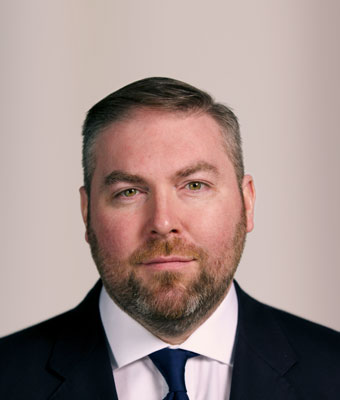
I am taking this question on behalf of Deputy Peter Roche, who unfortunately cannot be here. His brother, Vincent Roche, passed away yesterday evening.
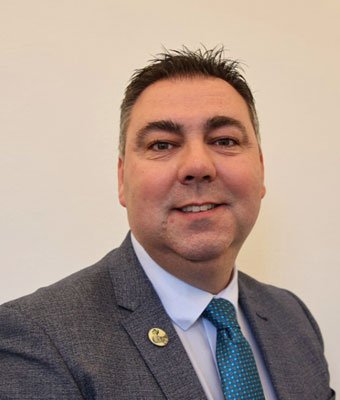
This is Question No. 4.
Yes, I am taking it. It was originally a question put down by Deputy Roche. He cannot be here today because his brother passed away last night. I extend my sympathies to the family at this sad time. This question relates to the idea that we would have community assistance officers in local authorities to help community groups to apply for funding and short-circuit the administration and bureaucracy involved in making those applications and help them to get what they need for the local communities.
I join with Deputy Ward in sending our condolences to Deputy Roche. I thank the Deputy for taking the question.
Our Department's mission is to promote rural and community development and support vibrant, inclusive and sustainable communities throughout Ireland. A number of programmes provide funding for staff resources to engage with and support communities, including building their capacity to access Government funding schemes. The social inclusion and community activation programme, SICAP, is the State’s primary social inclusion programme. It provides supports to disadvantaged communities and individuals to improve their life chances.
The SICAP initiative supports collective community engagement, providing direct supports to local community groups, LCGs, and networks. This includes developing their capacity to better engage with other groups, improve outcomes in their communities, and address social exclusion issues. In 2025, SICAP supported over 2,500 LCGs and networks in this way. Additionally, the empowering communities programme, ECP, enhances access to key services and supports communities to respond to area-based poverty and social exclusion. Community workers act as a local resource, as Members will know, including supporting groups with activities such as funding applications and administrative requirements.
Separately, our Department’s LEADER programme is a community-led approach to local development delivered in rural areas across the country by a network of local action groups, LAGs. The funding provided by our Department supports eligible projects relating to community groups and rural businesses, and also contributes to LAG administration costs, in terms of the budgets there, as the Minister said, to support work such as engaging with prospective applicants regarding their application.
I assure the Deputy that work remains ongoing in our Department to look at the best ways to ensure that disadvantaged communities are provided with the support they need to underpin their sustainable development.
I acknowledge what the Minister of State said about the amount of funding and supports there. The Minister of State and I know that Deputy Peter Roche, in particular, has done a huge amount of work in this area. He has worked particularly in the context of helping to support community organisations in his area. The difficulty he has identified, and other colleagues tell me they see it all over the country, is not a lack of funding, because there is a huge amount of funding there for the very communities the Minister of State mentioned, but a difficulty accessing it. Sometimes very bureaucratic and onerous processes have to be gone through. The idea behind this question is that there would be a community support officer in the local authority in the local area with the institutional knowledge and memory of how these forms need to be done, what systems need to be put in place and which boxes need to be ticked to ensure local community organisations get the most they can out of the SICAP funding the Minister of State mentioned and any of the other streams of funding available. The money is there. This is about ensuring that local organisations, which may not have a very strong organisational basis themselves, get every opportunity they can to access the funding and do good things in local communities.
The Deputy is right. The Minister and I are very much committed to making it easier for people and groups to apply, whether that is the local development group or the LEADER programme. I will be answering another question from Deputy Currie in a minute with probably the same replies. It is about working, in our case, with Pobal, as an example, to make it easier for people to apply and get that online guidance and support in the context of an application.
If I can use the phrase, there should be no wrong door in an application process. Having been involved in my own community association and GAA club and going through a myriad of funding applications, I fully concur with the Deputy that it should not be a complex process. If a process is started, it should not be necessary to go back to the beginning and start again. In many cases, applications should not have to be declared invalid. We should be able to work with and assist, as the Deputy rightly said, community and voluntary groups in respect of building their capacity to empower and enhance their own local areas. I look forward to working with the Deputy and Deputy Roche in putting in place an administrative pathway to make applying for grants easier.
I welcome what the Minister of State said about there not being a wrong door. He is absolutely right. Applications should not be cancelled because of an administrative error or something like that. At the same time, we both recognise that this is public money, and there needs to be transparency and things need to be done right. That is important too.
Even in relation to what the Minister of State said about online applications, very often we are dealing with small community groups. There might be one person or a small committee involved in making the application, and it can sometimes be very onerous on them. The idea here is that there would be somebody in the local authority who knows exactly how the applications work, and who might be able to look at a group's application before it is submitted online or in paper format and advise the group where there might be a problem or where something might need to be changed, such as opening a bank account or whatever it might be. For example, many local authorities have officers who deal with European funding because of the same administrative and bureaucratic burdens on organisations in getting funding in this context. Is there a role for a community support officer to do the same thing in relation to national funding for community groups?
I would make the point to Deputy Ward that we already have a range of programmes on the ground that provide support and offer dedicated staff access and a pathway for applications, whether this is for SICAP, ECP or LEADER. They are assisting communities and working to engage with funding and services. For me, and I know the Deputy is the same, a core feature of what we do is not just about providing support and capital investment but about ensuring we can strengthen local areas. The Deputy is right that there is the Government’s piece and a transparency piece. For me, however, it must be about how we can help and assist community groups, as an example, to navigate and be aware of the different programmes. I think the local community development groups and the LAGs provide that kind of signposting and a roadmap. We will discuss further the question the Deputy asked, and the question Deputy Currie will ask in a second.
It is about ensuring we work with all groups to provide clarity but also that navigability should not be too complex.
Legislative Programme
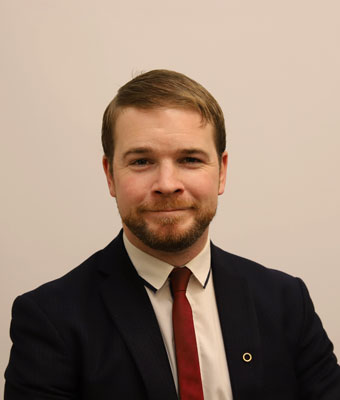
70. Deputy Donnchadh Ó Laoghaire asked the Minister for Foreign Affairs and Trade the progress on the drafting of the Israeli settlements in the occupied Palestinian territory (prohibition of importation of goods) Bill 2025; if she will outline the recent advice she has received from the Attorney General; and if she will make a statement on the matter. [23431/26]
This question has been frequently debated in recent months and years. The Government was elected on the basis of both parties committing to pass the occupied territories Bill, not a watered-down version of it. In any event, the progress we have seen on any occupied territories legislation has been quite halting since the election of this Government. When are we going to see that Bill on the floor of the Dáil?
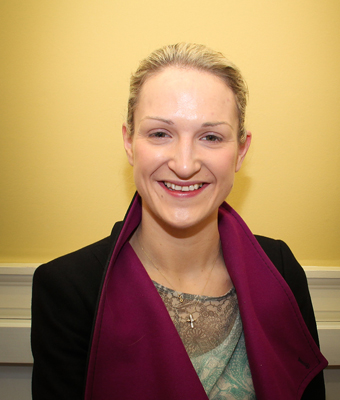
I thank the Deputy for raising this question. He is right that this something we have debated and discussed many times, and not just the Bill itself but the ongoing devastating conflict in Gaza in the Middle East. That conflict has now, unfortunately, escalated and widened and is now including many more innocent civilians. Everything that this Government and the previous one have done and everything the people of this country have done has been with the sole intention of making sure we can bring about a lasting peace. It is about making sure that those innocent civilians who are impacted by this ongoing conflict are protected and assisted in every way possible and that we have a pathway towards a two-state solution. That is something that we all agree on here and that we all want to achieve. Whether it is the recognition of Palestine, decisions we have taken at European level, the humanitarian assistance that has been provided or progressing this legislation, every objective here has been to ensure a lasting peace and to protect civilians on the ground.
The Bill itself is not straightforward and we have always been very clear in saying that, given the need for any legislation to be implementable on the ground but also the fact that requests on the legislation and the possible scope of it have changed and varied. In June 2025, the Government approved the general scheme of the Israeli settlements in the occupied Palestinian territory (prohibition of importation of goods) Bill. The main purpose of the Bill is to prohibit the importation of goods into the State from Israeli settlements in the occupied Palestinian territory, in line with the programme for Government commitment. Legally, the regulation of external trade in services is considerably more complex than is the case with goods at EU level. Obviously, the Oireachtas committee itself had done a body of work on this and had asked for this to be looked at. There is greater complexity when it comes to implementation than is the case when it comes to trade in goods.
The Government has received the Attorney General’s advice on the question of whether the inclusion of services in the Bill is permissible under EU law. As the Deputy can appreciate, I cannot discuss here advice provided by the Attorney General to the Government but what I can say is that the advice reflects the very significant difficulties that going beyond our programme for Government commitments and adding a prohibition on services to the legislation would entail. Following detailed consideration by my Department, clarification has been sought from the Attorney General on a number of legal issues related to the advice provided and I expect to receive that very soon.
My concern and that of a lot of people is that we are going to continue with this dance whereby the Attorney General sends something across to the Government, the Government looks for clarification, the Attorney General sends something back and we are at this slow-bicycle race forever. The urgency of this is very clear. For all of the talk of the ceasefire, the Board of Peace and so on, the situation on the ground is desperate. The Minister is quite aware, I am sure, that at the minute aid organisations are being restricted from going into Gaza and that settler violence is on a scale we have not seen in quite some time. Torture is being used. There is the appalling story of a two-year old child being tortured in front of his father with a view to extracting who knows what. There is talk of sexual abuse in forms of interrogation and many other appalling stories are coming out of Gaza, all because there has not been accountability. It is important that there is accountability.
There are actions Ireland can take. I would not overstate our influence but we should use what leverage we have and this is clearly one instance of it. We need to get this Bill onto the floor of the Dáil and debate it. Let us have the debate on the amendments. We currently have no clear sense of when this is going to come forward and that is not acceptable.
I agree with the Deputy that what is happening is appalling. I fully agree that what we are seeing is appalling. The ceasefire is not a proper ceasefire. Over 400 people have been killed since then and proper aid is not being let in. I visited the area myself at the beginning of the year and saw that goods that are by no means, or could ever be described as, a threat are not being let in. Enough food is still not being let in. We are doing our utmost. Our focus, and my priority at the outset, is to ensure that aid gets in because that is the most immediate need. Parallel to that, we need to determine how we stop what is escalating in the West Bank. I fully agree we are seeing an increase in settler violence and displacement. What I also know, from talking to my European colleagues and from the actions we have taken in the past that have helped to lead us the ceasefire, albeit an imperfect one, is that we are most effective when we act in unison and work together at a European level. A number of European countries are progressing legislation and looking at what we are doing as well. We are engaging with them, and where we make movement together and where we are looking at legislation that can actually be enacted and be impactful, we can make a bigger difference. That does not mean we are not doing anything in the meantime. We are providing assistance and increasing our assistance in ways other countries are not. We are also calling at every opportunity for progress on the peace board, the board that has been put in place to try to develop and ensure that people on the ground are starting to see a normal way of life again. However, a lot more work needs to be done and I appreciate that.
The manifesto commitments were different from the programme for Government commitments but both Government parties had access to the Attorney General's advice at that point, which was that while it is challenging to do, there is no particular obstacle to acting on services as well as goods. The Minister talked about other European countries. Ireland is now but one of five that are examining this. One of those, Spain, has effectively completed the action and another, Slovenia, is quite well advanced, as I understand it. Spain has been able to bring services into the ambit of the legislation, albeit in relation to advertisements. The fact that Spain has been able to do that and that there have been much less successful infringement proceedings against the Spanish Government demonstrates that it is possible to do this under EU legislation that there is no obstacle to acting on services. What I want to know from the Minister, first and foremost, and I ask her to be as clear as possible, is when a Bill is going to come before these Houses. When are we going to be able to debate it and pass it?
In terms of the programme for Government commitment, it was relating to goods and we were very clear on that. The Oireachtas committee then asked that we would look at services and it is important that we engage with the committee and its recommendations on any legislation. That was the advice that was asked of the Attorney General and that was the advice that I received soon after coming into the Department, just before Christmas. Questions needed to be asked and those have been asked of the Attorney General. I expect to get a response from him soon. Once we have that response, we will progress the legislation. It is not the case that we receive a Bill and it moves straight into the Houses. There is always engagement with the Attorney General. I would again stress that where we have made real progress for people on the ground and seen the ceasefire progress and where pressure has been put on Israel and other parties, it is where we have worked together, not where one country has moved forward on its own but where we have moved forward collectively.
I agree with the Deputy that what is happening on the ground is appalling. It is not acceptable and it is not in line with the ceasfire or what has been agreed. In fact, when I met with colleagues in Washington from all sides of the houses, both Republican and Democratic, they all agreed that what is happening in Israel, and in the West Bank in particular, is illegal and is not appropriate and they want it to stop as well. We are all on the same page. The question is how we exert pressure and make progress? It is by working together, in unison.
United Nations
71. Deputy Duncan Smith asked the Minister for Foreign Affairs and Trade whether she supports the calls from Colombian President Gustavo Petros for states to invoke Resolution 377, the UN’s uniting for peace mechanism in relation to Gaza; and if she will make a statement on the matter. [22633/26]
Staying with the issue of Gaza, I accept the Minister's point that we all want to work together and make progress towards peace but what we have now is Trump's odious, so-called Board of Peace, which is anything but that. Would the Minister and the Irish State support the calls from the Colombian President, Gustavo Petro, for states to invoke UN Resolution 377, the UN's uniting for peace mechanism in relation to Gaza? If we are to work together, the UN remains the best place to do that.
I agree with the Deputy that the UN is the best place for all of us to work together and Ireland, as a member and a partner, will always stand up for and advocate for the UN and its structures. We understand how important it has been, not just in this conflict but in many conflicts and, most important, in its resolutions over decades. In relation to the uniting for peace resolution, Ireland will always take part in and be a part of any structure or grouping with member states that can provide a way forward. The resolution itself provides for an emergency session of the General Assembly to be called on matters where a lack of unanimity in the Security Council prevents action in relation to international peace and security.
Since 1997, there has been an emergency special session dedicated specifically to the situation in the occupied Palestinian territory. The fact that it has been resumed over 20 times since it was established, including on multiple occasions since the outbreak of the war in Gaza on 7 October 2023, is a reflection of the importance that the international community and the UN give to the situation in the occupied Palestinian territory. Ireland will continue to actively participate in this special emergency session.
It is important, however, to acknowledge what the uniting for peace resolution can and cannot do. The resolution itself does not create any obligation on the Security Council or any other body of the United Nations to act, nor is it binding on any UN member state. No effective mandates for action in the areas of peace and security can be created by the General Assembly. It is not possible for the General Assembly to authorise a peacekeeping mission, for example, as it would lack the robust mandate required for such a mission to function effectively. Nevertheless, as we have seen in relation to the situation in Palestine, the consideration of any issue by the General Assembly is an important and impactful opportunity for each member state, including Ireland, to speak in defence of the protection of the fundamental values of the United Nations, as we have done, and to outline the horrors that have been happening and continue to happen in Gaza. In addition to our participation in this, we take every opportunity to reiterate our support for that just and sustainable peace by always intervening.
I thank the Minister. I am fully aware of the limits and obligations of the uniting for peace resolution. However, we are in a desperate situation. The ceasefire is Gaza is a ceasefire only in name. Bombardments continue. People continue to be killed daily. Aid continues to be blocked. Earlier this week, three planned UN convoys to collect supplies from the crossing had to be cancelled after the Israeli authorities informed the UN that only fuel would be let in that day. Most crossings into Gaza remain closed. Only Karem Abu Salem, Karem Shalom, is opened with some regularity. That presents a major bottleneck. Close to 20,000 patients are in dire need of medical care outside Gaza and cannot get out. Settler violence in the West Bank continues apace.
We are in a desperate situation. The UN is paralysed. The Security Council is paralysed. I know the General Assembly has been in emergency session but it is not pushing hard enough to provide some kind of alternative to Trump's Board of Peace.
I agree with the Deputy. My biggest concern is that the ongoing conflict in the wider region of the Middle East will take away our focus on our priority, which should be trying to find a way forward for the civilians in Gaza. We are, and I am, absolutely determined to ensure that will not be the case. At every meeting we have had, even where it related specifically to the ongoing conflict in Iran, I have raised the situation in Gaza and the need for us to make progress. I have raised what is happening in the West Bank. I have raised what is now, unfortunately, happening in Lebanon, where there is clearly an annexation happening in the south. I have said consistently that we need to do more.
While I believe that some progress has been made through the Board of Peace and the new board that has been established to try to bring about a structure in Palestine, it is not happening quickly enough. People are not able to get in. Many of them are still situated in Cairo. On top of that, as the Deputy has mentioned, in regard to the number of aid trucks and the amount of aid that is getting in, while my understanding from talking to ambassadors on the ground is that the situation has slightly improved, it is nowhere near where it needs to be. If we can, through the General Assembly and the UN structures, continue to raise these issues, we will. We need to do everything we can to bring about action. That is what we need. We need more trucks and openings and more progress on the Board of Peace.
That is what I want. What is the Irish Government's position on the Board of Peace? Are we in favour of it? Are we backing this board or are we remaining silent and seeing what, if anything, it manages to achieve? It seems we are paralysed in terms of calling it out.
The Government needs to support Resolution 377 A at the UN. We need to pass the occupied territories Bill in full. Deputy Ó Laoghaire articulated that clearly and eloquently a few moments ago. We must pressure the Israeli authorities to enable full, safe, sustainable humanitarian access and movement into Gaza and the West Bank with the complete opening of all border crossings. We must pressure the Israeli authorities to reverse the annexation and end the unlawful occupation of Gaza and the West Bank, including East Jerusalem, with the dismantlement of settlements.
The UN Security Council is paralysed. Our voice has always been powerful in the UN. We need to bring it, as loudly as we can, to the UN General Assembly. I believe that although it is in a weakened position, it is the best avenue towards some kind of resolution.
We have not joined the Board of Peace and have been clear in our reason for not doing so. We do not believe that any other structure should be mirroring the work of the UN at all. It is doing work with a particular focus on Gaza. That is why it was established. That was the UN resolution for which we and everybody else voted so that a structure would be put in place to support the redevelopment of Gaza and so that we could provide a clear pathway and future with a ceasefire for people on the ground. We support the structure that has emerged from the Board of Peace. What we really need is to ensure that the Palestinian Authority and Palestinian people are included in the work that is progressing. While they are not on the board in the way we want them to be, a number of structures have been put in place to try to ensure that they are consulted and engaged with, and that they are very much a part of any future that is decided. The problem is that it is not happening quickly enough. We have met the chair and those who are leading this. It is not happening quickly enough. As this conflict in the Middle East continues, we need to ensure that a focus is retained. At every opportunity that I have with my colleagues at the Foreign Affairs Council, that the Taoiseach has at the European Council and that my other colleagues have, we are trying to keep that pressure on to ensure that while work is progressing, albeit wholly imperfectly, we do more in terms of aid and access. We will continue to provide that.
Ukraine War
72. Deputy Donnchadh Ó Laoghaire asked the Minister for Foreign Affairs and Trade if the Government will make efforts to ensure that European sanctions are made against Rosatom, the Russian atomic agency; and if she will make a statement on the matter. [23432/26]
In the four years since the start of Russia's appalling war of aggression against Ukraine, there has been a wide range of sanctions against Russian individuals and companies, and against the Russian Government. In recent days, we have, unfortunately, seen an easing of sanctions on oil and gas by the United States. I am sure that is something the Minister regrets. That move makes it all the more important that Europe maintains a robust approach to sanctions. It is remarkable that four years in, given the centrality of atomic energy to the Russian economy and the Russian war effort, the Russian atomic agency, Rosatom, has not been sanctioned. I want the Minister to raise the issue at the European level and encourage action.
Ireland has consistently supported strong sanctions in response to Russia's illegal war of aggression in Ukraine, which, as the Deputy said, has been ongoing for more than four years. The sanctions adopted in response to Russia's actions in Ukraine are the most expansive and hard-hitting sanctions in EU history. Over 2,700 individuals and entities are now subject to EU restrictive measures. An unprecedented range of sectoral measures against Russia have been adopted, including measures targeting the trade, finance, energy, technology, defence, media and maritime sectors. These measures are agreed on the basis of unanimous decisions of the Council of the European Union. They are carefully targeted to ensure maximum impact on Russia while avoiding unintended consequences, including for civil nuclear safety. To date, the EU has negotiated and adopted 19 packages of sanctions, all of which we have supported and have been keen to see progress as quickly as possible. Work is advancing on the 20th package of sanctions, which we hope can be agreed soon. We have had challenges in that regard, but hope we can make progress soon.
Since the extension of sanction measures introduced in 2022, the question of restrictions relating to Rosatom has not received unanimous support from EU member states. This is a complex issue, and the reason it has not received that support is that it touches on the energy supply chain for a number of countries. That is a matter that has been taken into consideration for any of the packages that have been agreed in recent years. We have supported successive rounds of sanctions against Russia and will continue to do so under our Presidency because we know they are having an impact. The clear feedback from our Ukrainian colleagues, and from what we can see in terms of the economy in Russia, and other actions we have taken, is that the sanctions are having an impact. We will continue, however we can, to press for and ensure that no sanctions are eased off if there is no peace agreement or peace deal moving forward.
The other way we can provide support is by making sure we agree a support package and continue to support Ukraine. I again highlight the fact that colleagues in this House, including the Deputy, did not vote for a €90 billion package that was intended to support people in Ukraine at a time when they desperately needed it. Sanctions are one thing, but we need to ensure we are providing financial and defence support, and any other kind of support, to Ukraine. If any future vote comes up, I urge the Deputy to do the same.
The Minister will be well familiar with our support for civilian, humanitarian and infrastructural aid. That has been the case for several years, continues to be the case and will be the case in the future.
I welcome what the Minister has said about the sanctions. The package continues to be worked upon. The issue of sanctions against Rosatom is a very clear priority for the Ukrainian Government, as was articulated by President Zelenskyy in mid-February.
He has called for sanctions, given the centrality of the atomic agency to the Russian economy and the war of aggression. The Minister talked about the issue of nuclear safety. There is also the issue that nuclear infrastructure has been targeted in a way that is very dangerous to the civilian population in Zaporizhzhia. There have also been attacks on the protective shell at Chernobyl. Obviously, that will cause a huge amount of concern for people, when they cast their minds to the potential ramifications of that, so that is all the more reason.
I appreciate this is agreed at European level. The Minister talked about countries being vulnerable in terms of the supply chain. Ireland is not one of those countries. There is no reason Ireland should not push it. Will the Minister commit to using her voice to specifically call at a European level for such sanctions?
We have supported and will always support further sanctions. The Deputy can be assured we will continue to support any sanctions package that is brought forward. There are considerations that have to be taken into account. In this particular instance, there are very clearly concerns that have been raised by a number of member states in terms of their own energy security. Nonetheless, even with those issues, 2,700 different individuals and-or companies have been sanctioned. It has had a huge impact. We want to see that continue.
On the €90 billion package, we are providing humanitarian assistance. To date, Ireland has provided €492 million in support of Ukraine, including €198 million in humanitarian assistance and stabilisation. Ukraine is saying to us that is not just what it needs. Of course, it needs humanitarian support, but it needs defence systems. The only way Ukraine has been able to withstand this brutal invasion for four years is it has been able to stop drone attacks because of air defence systems. Europe and Ireland need to continue to invest in it. That is what the €90 billion was about. It was not just humanitarian aid or aid for Ukraine's critical infrastructure at a time when subzero temperatures were impacting people's day-to-day lives. The fact drones have stopped this war from ending on Russia's terms is because we are providing that assistance. I again urge the Deputy, if the opportunity arises, to support this type of funding.
I say again to the Minister that civil, humanitarian and infrastructural aid is important. It should continue and Ireland should continue to support that.
I will raise the issue of Aughinish Alumina in County Limerick, which provides alumina. In recent days, a report in The Irish Times highlighted the fact that smelters supply aluminium to a Moscow-based trading company, which in turn supplies Russia's military industry. That is obviously a concern. The Russian smelters and Aughinish are owned by Rusal, a company with deep connections to the Kremlin and Moscow's arms industry. It is important, when we are considering how to ensure sanctions are effective, that issues like this are taken into account.
I will again ask the Minister specifically. She talked in generalities about the need to support sanctions. I agree with her but I ask her specifically, and I want a clear response in relation to this, whether it is her intention to raise the specific item of Rosatom, which is a priority for the Ukrainian Government. Will she specifically ask that this be included in the next package? That is not a difficult question to answer. I want a clear answer to that and not on the Government's support for sanctions generally. I am aware of that. I appreciate and welcome it but will she call for that specifically?
Apologies; I thought I was clear. We have already supported that. However, there was not unanimity. My understanding is that will not change. We have already supported the progress of sanctions in all instances but there is not unanimity. It is not Ireland's choice at the end of the day. We are one of many member states. We have supported all the packages that have been agreed unanimously over the past number of years. We will continue to support and push for the twentieth sanctions package that is currently on the table. We know it is making a difference and having an impact. There may be more we can do. In the same way, as the Deputy mentioned, Aughinish Alumina has a significant role in supply chains across Europe, there are many similar pieces of infrastructure that have implications beyond the sanctions themselves for European member states. All of these have to be taken into consideration when any sanctions are being put forward. There was not unanimity when it came to this particular plant. I am clear on that-----
I ask the Minister to please clarify-----
-----but we are focused on the twentieth package. We have a package that we have been working on. We are focused on that and have been pushing for it. While we have not had success at the most recent Council, I hope we will be able to make progress. The sanctions are having an impact and are impacting on Russia's ability to continue this war.
Deputy Nolan apologises that she cannot be here for Question No. 73.
Question No. 73 taken with Written Answers.