Rural Schemes
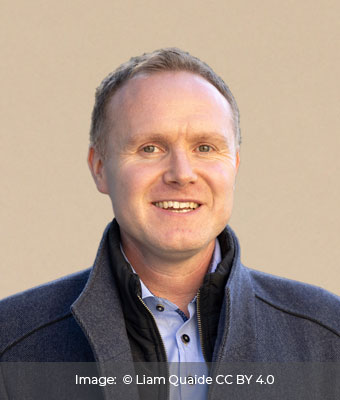
5. Deputy Liam Quaide asked the Minister for Rural and Community Development and the Gaeltacht the measures in place to ensure equitable distribution of funding across regions, including areas experiencing rapid population growth; and whether any formal methodology is used to align funding allocations with demographic need. [23002/26]
How can the Minister of State ensure that funding from his Department is shared fairly across regions, especially in areas of major population growth? Is there any clear formula for matching that funding to population growth? I ask this with particular reference to Midleton and Carrigtwohill where major population increases are projected over the next decade, but where local amenities are plainly not keeping pace. By 2034, the population of Midleton is expected to grow by 100% from where it was in 2022, while the estimate for Carrigtohill is in the region of 172% in that 12 years. That is a doubling and almost tripling of the population of those two towns.
I thank the Deputy for raising the matter. He is right that there is a complete need for clarity and certainty around the issue of funding. The community and voluntary sector is quite diverse and receives, as he said, financial support from a wide variety of Government agencies, including our Department. The Deputy has highlighted a growth population projection of Midleton and Carrigtohill, and it is important that from a whole-of-government perspective; while working with local authorities, we get it right. That is going to be the next big part of Cork that is growing.
The Government strategy to support the community and voluntary sector, Sustainable, Inclusively and Empowered communities, published in 2019, sets out a long-term vision for communities in Ireland and provides a strategic framework across government for engaging with the sector, as well as support for a range of programmes and initiatives. It included a commitment to promote multi-annual funding for community and voluntary organisations. Our Government is currently developing a successor strategy that will build upon the achievements, structures and programmes established under the previous strategy, while also responding to new challenges and contexts.
Across the community development area of our Department, funding of €260 million has been provided this year, consistent with that commitment and the strategy for the community and voluntary sector. The most significant funding programmes provide support on a multi-annual basis, including the social inclusion community activation programme and the scheme to support national organisations. Some €74 million is being allocated to the SICAP and other social inclusion supports this year, which also includes €12 million in support for community integration work, helping to support new arrivals into our country. The community service programme also supports 426 community-based organisations with a budget of €59.4 million last year to provide services through the social enterprise model. Our Department will continue to work with the Deputy and all stakeholders, including community and voluntary and representative organisations and local development companies, to provide sustained financial support to community organisations throughout the country. The Deputy’s points are well made.
What people see in towns like Midleton and Carrigtohill is residential development moving ahead much faster than amenity provision. New houses are being built at pace and more families are moving in, but the facilities which are core to community life are lagging badly behind. There is a sense that many families describe of being in a town that is thriving but impoverished in respect of the most basic communities that matter families on a daily basis, such as youth facilities, playgrounds and skate parks. Does the Minister of State accept that if funding is not systematically matched to population growth this is exactly what happens? We get housing estate after housing estate but not the facilities needed to build a connected community. We get long, frustrating drives to other towns or even villages to have basic community needs met. In Midleton, for instance, we drive to Mogeely to use the playground. Can the Minister of State say his Department has any clear way of matching funding to population growth so that we have a predictable, systematic spread of amenities or will our towns and villages still be left to fend for themselves through piecemeal schemes?
We as a Department and Government are committed to funding and working on a variety of schemes, whether through the community central investment fund which the Minister, Deputy Calleary is announcing a call later today on, or as we have done in the past, with the community recognition fund. The Deputy referenced the issue of the playground. We have the very proactive outdoor recreation investment scheme as well as the town and village renewal scheme and the rural regeneration and development fund. We work as a Department with Cork County Council but also with Avondhu Blackwater and the SICAP in developing the piece the Deputy referenced.
The key point for us is that it is about ensuring the allocation of funding delivers. Last year we provided almost €12 million in financial support for Cork and I can give the examples of MyPlace Midleton and the Cork Cloyne Diocesan youth services, and I can quote a myriad of other examples as the Deputy knows quite well.
His point is that we must ensure that at the very heart of what we do is people, place and giving people that sense of buy-in to their local community. It is about ensuring we work collaboratively to develop not just housing estates, which are very important and necessary, but a community where people can put down roots. We can have the piece the Deputy referenced coming off that as well.
Under the current disjointed system, families are having to spend years campaigning for basic amenities. They are being forced to become fundraisers, social entrepreneurs and project managers trying to patch together one disconnected grant after another while their town or village expands around them, and their children often outgrow the project before it is finally delivered, as in the case of playgrounds. That is not a serious way to provide basic amenities. Like so much about public service delivery, it is not fair, strategic or timely. These amenities need to be planned as part of the development of a town or village.
In towns like Midleton and Carrigtohill, housing and population are growing quickly but local provision is lagging far behind. Does the Minister of State accept that the stop-start piecemeal approach is not working? Will he commit to a clearer, fairer system - a more integrated way of funding in order that when population growth is projected, the amenities needed for community life are planned in line with it and not dependent on the remarkable innovation and drive of particular community groups?
I thank the Deputy for raising this matter. There is no doubt that it takes local action groups to work and get things moving, but there is a county development plan as we know well that sets out the blueprint and roadmap for investment. Everything the Deputy has spoken about this morning in terms of provision of playgrounds, community centres, you name it, the Minister, Deputy Calleary and I are very committed to. We have met with a variety of organisations in terms of demographics and projecting future needs and is critically important that we as a Department and as a Government continue to invest. That is why we have programmes such as CLÁR, LEADER and the community centres investment fund, CCIF.
I make the point that it is incumbent on the local authority as the lead agency on the ground working with the development companies to deliver and put in place that blueprint and road map. As I said in reply to Deputy Rice earlier, I got involved in politics because we had no library in Bishopstown. There will always be local activism but leadership needs to be provided by the local authority and Government. In our case, we are providing the funding and working with the council. I look forward to continuing to work with the Deputy in delivering because he is right that Carrigtohill and Midleton are pivotal to the development and growth of our county.
Tourist Accommodation
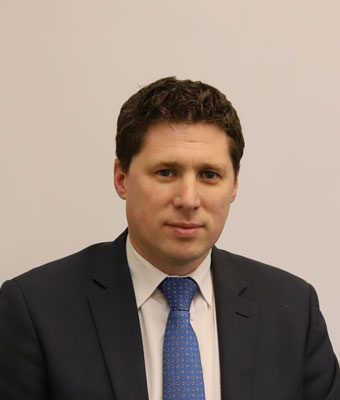
6. Deputy Matt Carthy asked the Minister for Rural and Community Development and the Gaeltacht his engagement with other Departments and State agencies to support hotels in rural communities. [22908/26]
I am taking this question on behalf of Deputy Carthy.
The Deputy is a super sub today.
Under my Department’s rural development investment programme, a range of schemes provide capital funding with a focus on the economic and social development of our rural areas. The schemes do not, however, include a specific focus on the provision of hotel accommodation. A limited number of projects have been supported by the rural regeneration and development fund, RRDF, and the town and village renewal scheme, which have seen short-stay accommodation facilities included, as part of a wider, multifunctional project. Similarly, while LEADER does not generally support hotel-based projects, it has supported projects related to tourist accommodation, for example, through support for glamping projects and other tourism-focused initiatives.
In all cases in terms of funding, many of those tend to be towards community, co-operative-based initiatives. More widely, the sustainability of rural businesses including tourism and hospitality is clearly enhanced by the provision of public and community infrastructure. The funding made available by my Department through a range of schemes such as RRDF and the outdoor recreation infrastructure scheme, ORIS is clearly having positive impacts in this regard.
At cross-governmental level, responsibility for business enterprise and tourism resonates with my colleague, Deputy Burke, Minister for Enterprise, Tourism and Employment. This includes responsibility for the national tourism policy statement, A New Era for Irish Tourism, which was published in December 2025 and sets out the Government's long-term approach to the development of tourism. I can confirm as part of my Department's ongoing work developing the successor policy to Our Rural Future, my officials are engaging with the Department of Enterprise, Tourism and Employment in respect of its remit.
My officials are engaging with the Department of Enterprise, Tourism and Employment in respect of its remit. The next iteration of Our Rural Future will include a focus on both rural tourism and rural enterprise generally. Work on the development of the policy is ongoing. It is drawing on a wide-ranging consultation process and I hope to be in a position to publish it before the summer.
It is very welcome that this issue is under consideration and forms part of the Minister's engagement with the Department of Enterprise, Tourism and Employment. This issue is impacting rural communities in particular. The lack of tourist accommodation, be it hotel, hostel accommodation or other kinds of accommodation such as glamping pods, is hampering economic development and economic diversification in rural areas that come under the remit of the Minister. It is also adding to the rural housing crisis that is of concern for many Departments. It is of concern to all of us here in the House but it has a particular resonance with the Minister's responsibilities. The move to short-term lets because of the absence of suitable hotel accommodation in many areas is having a disproportionate impact on those rural and coastal communities that are already under huge housing pressure. I am thinking of Gaeltacht areas such as Ardmore in my constituency. The measures that were announced a number of weeks ago to address the mushrooming of short-term lettings do not cater for towns such as Dungarvan and Tramore that are under the 20,000 threshold. We need to see action on this. I welcome that there is an understanding of the seriousness of the situation but we need to see action.
We want to try to promote enterprises and improve and promote the attractiveness of rural areas so we have developed the specific outdoor recreation infrastructure scheme. This is one of the schemes for enhancing the attractiveness of trails and of visitor attractions that in turn make a rural area more attractive or more feasible for hotel investment. Since 2020, we have invested €110 million in over 1,300 outdoor recreation projects across the country. Through LEADER, we invested over €52 million across the country, and over €9 million of that was invested in tourism-related projects and rural tourism and recreation projects.
We are having discussions with the Department of tourism in the context of the preparation of the next Our Rural Future. Fáilte Ireland has a very strong capital programme to role out at major visitor attractions. For instance, in the Deputy's constituency, the Waterford greenway is seen as the standard for greenways nationally. That has probably opened up a huge number of opportunities in the more rural parts of his constituency. That is the kind of thing we want to do. The investment in infrastructure opens up the investment for enhancement and attractiveness for tourism investment.
The Minister is right that the attractions are there. The greenways are of really high standard and the greenway in Waterford is a classic example. Unfortunately, the availability of tourist accommodation has not kept pace. On top of that we also see the use of tourist accommodation, and particularly hotels, for the State's responses to the various refugee crisis over the years. The Minister for justice has signalled a move away from that approach in the coming time. There is a concern, however, that many of the hotels that have been used will not return to tourist accommodation. There are examples of that in Dungarvan and in other areas. There has also been no recognition for the economic impact of the loss of tourist accommodation. We have the community recognition fund, for example, and many great things have come from that scheme, but there is no similar scheme to address the enterprise loss or the difficulties that have been experienced because of the loss of tourist accommodation. Perhaps it could be a conversation worth having between the Minister and the Minister for Enterprise, Tourism and Employment, Deputy Peter Burke, to see if a similar scheme could operate on that basis that would somehow support this tourist accommodation coming back on stream when possible to do so, and that there would be some recognition for those tourism operators and people operating in that space who have lost business over the last years.
I agree with the Deputy. In our engagements with the Department of Enterprise, Tourism and Employment we are looking at how we can maximise it. Deputy McGuinness referred to making an area more attractive as tourism accommodation comes back on stream. I do not see the Department getting involved in investing in commercial hotel projects. I would not like to create an expectation that there will be that kind of investment. Many hotels have reinvested the proceeds they received under the various international protection contracts back into facilities. What we will do is invest in the community-led infrastructure that makes it attractive for an operator to invest. I am looking and I am interested. We have a number of projects that are community-led and community co-operative-led. The Deputy mentioned glamping. We are looking at that kind of process, which might work in terms of social enterprise in the more rural areas. I am certainly anxious to do more in that space around community-led tourism projects and community-led tourism conservation projects.
Community Development Projects
8. Deputy Emer Currie asked the Minister for Rural and Community Development and the Gaeltacht whether he will expand the town and village renewal scheme to allow for Dublin west villages to meet eligibility criteria; and if he will make a statement on the matter. [22377/26]
The Minister and the Minister of State will both be familiar with this question because I have met them previously. When it comes to funding streams and Dublin West, our Dublin 15 villages are too big for the likes of town and village renewal scheme or are too small for the urban regeneration and development fund, URDF. I would like an update on our discussions on that please.
I thank the Deputy for her question and her ongoing interest in this area. In line with commitments in Our Rural Future, my Department supports a wide range of strategic capital investment schemes, ringfenced under the rural development investment programme, to transform rural towns and villages, making them thriving places to live, work, raise families and build enterprises. These schemes include the rural regeneration and development fund, LEADER, and the town and village renewal scheme. The scheme was introduced in 2016. It is designed to rejuvenate rural towns and villages throughout Ireland. Since the launch of the scheme, more than €210 million has been allocated to over 1,900 projects. While applications for towns with populations of up to 15,000 people are accepted in certain circumstances, the scheme specifically targets funding at rural towns and villages with populations of less than 10,000. I am anxious to ensure that the design of schemes such as the town and village renewal scheme ensures that we are using available funding in the most efficient and effective manner. With this in mind, the terms and conditions of each scheme are reviewed each year. In advance of the launch of the next iteration of the town and village renewal scheme, I will examine the approach to eligible towns, including smaller villages in the Dublin West region as referenced by the Deputy.
I also of note that, under the umbrella of the town centre first policy, funding is also available to local authorities to support larger and more urban settlements. This includes the Thrive scheme and the towns and cities regeneration investment fund, which was recently announced by my colleague the Minister for Housing, Local Government and Heritage. This fund, which is currently open for applications from those towns with populations of over 9,000, builds on the success of the previous URDF.
We have also been in a position to fund some of the rural parts of Dublin, in Fingal in particular, through the town and village scheme and through the outdoor recreation investment scheme, ORIS. I would be happy to engage with the Deputy, with South Dublin County Council and with our colleagues in Fingal County Council around how we are able to do that and the kinds of projects that we fund, which goes back to our previous discussion on enhancing town centres.
I thank the Minister and the Minister of State genuinely for engaging with me on this because I feel they understand the challenge we have. Our Dublin 15 villages are falling between two stools. I am talking about villages like Castleknock, where the Minister was yesterday for which I thank him, along with Clonsilla, Blanchardstown, Mulhuddart and Corduff. These are distinct communities. They are not just traffic through ways and they are not just part of urban sprawl. They want to support their businesses, they want to protect their heritage and they want to promote their village centres. What we are really lacking is that place-making ability for these villages that do have their individual sense of identity. When we support businesses and bring footfall into villages it contributes to that sense of community.
I agree with the Deputy. While the primary focus of the rural development scheme is going to remain on rural areas we have funded projects in Fingal and in south Dublin under the outdoor recreation scheme. Under the town and village scheme in Fingal, we were able to fund the development of new walking and cycling facilities and associated streetscape enhancement measures.
In Balrothery, Donabate, Rush and Ballyboughal we approved over €218,000 for village centre seating enhanced public lighting and the creation of a wayfinding strategy to include a new Fingal camino route. Where local authorities in Dublin engage with us and with the ethos of the schemes we are more than happy to engage with them. Given that Castleknock is in the Fingal area, there is huge potential particularly in the more rural parts of Dublin West, of which there are some.
Those villages are entitled to apply under the town and village renewal scheme but our villages in Dublin 15 currently are not. I will touch on what our communities are doing. The Castleknock business forum was set up at the beginning of last year. The members have done a survey that points to traffic issues. They are diagnosing the problems but do not have the funding to come up with the solutions and to activate those. In Corduff, we have just launched a standard 2 report about place-making, and 146 residents and organisations took part. Again, the problems are being identified but we need the funding stream to activate the solutions. Fingal County Council is totally on board with what I am bringing to the Minister's attention. It realises there is a problem. It will facilitate our villages in Dublin 15 like Blanchardstown and Castleknock with a town centre first health check, but it brings us back to the same issue. If we do not have the specific funding streams like the town and village renewal scheme, then we are not being given the same opportunities to activate those solutions to bring people into the village, promote village life and give them that identity and the place-making they truly deserve.
The more the Deputy can engage under town centre first principles, the stronger the case, and we will work with her. The Minister of State, as a Deputy in a city constituency with similar villages, is strong on this. Working collectively, we will work with the Deputy, Fingal County Council and our colleagues. If it can be done under the town centre first principles, something we align funding to in a lot of rural areas, the more it can be done with community ownership. I welcome the initiatives undertaken in Castleknock and the other areas. If there is community ownership rather than it coming top down from the local authority or from this House, then all the better. We will engage with the Deputy. We are currently reviewing the town and village renewal scheme for 2026. It will more likely be a 2027 initiative, but we will engage with the Deputy on it. I point her and the groups she is working with to some of the good work being done in rural parts of Fingal to get examples of protecting traditional villages amidst the growth of the city.
Rural Schemes
9. Deputy John Paul O'Shea asked the Minister for Rural and Community Development and the Gaeltacht for an update on current rural regeneration and development fund projects in Cork county; and if he will make a statement on the matter. [22797/26]
The rural regeneration and development fund is the major capital investment programme to support large-scale ambitious projects to achieve sustainable economic and social development in rural areas. To date, the fund has allocated over €614 million to 273 projects across the country, which includes over €43 million since 2018 allocated to 27 projects located throughout County Cork. These projects are being delivered by the local authority and other publicly funded bodies including our local development companies and Údarás na Gaeltachta.
Ten of the 27 projects have been completed in County Cork to date. Examples include the first phase of the Kanturk regeneration plan and the Ballydesmond village public realm and place-making enhancement project. There are 17 active RRDF projects, which includes four projects in Castletownroche, Crosshaven, Skibbereen and Fermoy, which were successful in the latest category 2 call for proposals announced in October 2025. Last month, we were delighted to announce a call for proposals for category 1 applications. This call will focus on strategic, large-scale build projects that are ready to commence. These projects must have a lasting impact on the towns and villages and deliver on the objectives of Our Rural Future, which is our rural policy. We are inviting applications for well-developed proposals from our local authorities and other State-funded lead bodies that work in partnership with local communities and stakeholders. Full details of the call are available on my Department's website.
I thank the Minister. It is great to see that more than €43 million has been invested in 27 projects across County Cork to date since 2018 when the RRDF came into existence. There have been many in my area, as the Minister of State outlined. The first one was the Kanturk relief road, which was funded many years ago in 2018 and 2019 and has provided a great opportunity for the town to enhance. It has allowed the new national school to open up and has allowed the lands across the relief road to open up to development. It has made a huge difference to the mart, which is located on that road. Likewise, in Ballydesmond in north Cork there is a fantastic public realm project and a pocket park being opened for the community. It was great to see former Deputy, Heather Humphreys there when she was Minister to officially open it. We look forward to the Minister, with the Minister of State, visiting many projects across Cork North West and the Cork county in the coming years. It is also important to outline that category 1 proposals are also coming up and there is no doubt projects will emerge from north Cork and Cork North West during that time.
I thank the Deputy for that overview. I acknowledge that Cork County Council and the team that deals with our Department's delivery of projects, is one of the stronger performing local authorities. The delivery by our partners on the ground can be a frustration generally in relation to RRDF. It is not in Cork. To that effect, we are engaging with local authorities and delivery bodies around the country on delivery of RRDF projects. As we have an open call, the advice needs to go out. It is all very well preparing an application. We have been having the discussion this morning about the pressures of preparing an application. We also have to be able to deliver the application if it is successful. We are engaging with local authorities on that. We may have to make some tough calls on projects that have been on the books a long time. I have funding for counties such as Cork, which are hungry and anxious to succeed. I encourage every Deputy, particularly those in rural areas, to engage with the current call and with information programmes on that. There may be communities that want to engage in a major programme and the facilities are there to do that. I also thank the Deputy for his support and for the committee's support for these projects. It is important that we have cross-party support. We get that from the committee.
It is great to see collaboration between the Minister's Department and Cork County Council and an acknowledgement that we are hungry for more. We will always accept more money when it is available. I am sure there will be applications for the category 1 call. I am sure the 17 active projects under way in Cork county will be completed as quickly as possible. I will mention one, which is the Charleville RRDF project. Over €6 million was allocated for that project and it is finally coming to the stage where we are starting the first phase of that shortly. I look forward to the Minister's continued engagement with his Department, Cork County Council and me as a public representative from that area to push that project forward. It is in a number of phases. There is a town centre refurbishment. There is public realm. There is allocation of public toilets and there is also a redevelopment of the courthouse in Charleville. It is a wonderful project for the town and the highest ever allocation for a town like Charleville to get €6 million from Government for community investment. We appreciate it and look forward to welcoming the Minister and the Minister of State when that project is in train.
That is exactly the kind of project we want to do under the RRDF. It is a project that would not have been done previously and for larger towns of 9,000 plus, there is the URDF and its successor scheme. It is important that project is done in conjunction with the community and that there is community engagement in it. One of our challenges with projects such as this is that sometimes the communities may not have been involved at the outset and as the project rolls out, there can be challenges with parking spaces and other issues people need to be informed about. We have a significant investment in what we call our capital delivery team that works with local authorities to deliver on this projects. We also have our own quantity surveyor in the Department. That examines all of the applications to ensure the costings are adequate and relevant to the current market. We also have systematic engagement to ensure delivery. There is no point in the Minister of State and I announcing projects such as that in Charleville unless they happen. We will be with the Deputy in Baile Bhuirne in April for the opening of the Coláiste Íosagáin campus, which is a significant investment. It also shows what can be done in rural Ireland with support from the RRDF and other bodies coming together.
Community Development Projects
10. Deputy John Clendennen asked the Minister for Rural and Community Development and the Gaeltacht the total investment in Offaly projects since the introduction of the LEADER programme; and if he will make a statement on the matter. [22906/26]
I thank the Minister for taking this question. I ask him to provide an update on Offaly projects since the introduction of the LEADER programme.
I thank the Deputy for his question. LEADER, as he knows, is a community-led approach to local development that has been operating for just over 35 years. We marked the 35th anniversary of LEADER just last weekend. It was introduced by the EU under the then Commissioner Ray MacSharry. The programme has evolved through successive programming periods and in 2007 it was mainstreamed into the Common Agricultural Policy and became a key intervention within Ireland’s rural development programme.
Since 2007 the total amount of EU and Exchequer funding allocated to LEADER on a national level has been over €876 million. Of this, the local action group in Offaly has received a total allocation of approximately €27.5 million. This total allocation is broken down over a number of programming periods with the most recent allocation in Offaly totalling €6.2 million in respect of the current 2023-27 LEADER programme. In keeping with the multi-annual nature of LEADER, all allocations are made at the start of each programming period and funds are drawn down from my Department as projects are completed. This approach ensures local action groups have the flexibility to manage LEADER support flexibly and in line with specific local needs. To date, 49 projects have been approved in Offaly under the current programme and I expect further projects to come on line as we progress through the programming period.
LEADER has a commendable track record in delivering locally driven projects that have delivered real benefits in Offaly and all across the country. I continue to advocate for a strong and well-funded LEADER programme. l am working closely with the Minister, Deputy Heydon, on the future of LEADER in the context of the CAP talks at the moment. I am confident the bottom-up approach of LEADER can continue to support valuable projects in Offaly for years to come.
I have seen at first hand, through applicants and through involvement in the LCDC how this initiative is so important to developing a county. I acknowledge Offaly Local Development Company for the work it has done to ensure the effectiveness of the programme. Offaly is one of the most counties in relation to LEADER. I also acknowledge both the Minister and the Minister of State, Deputy Buttimer, for their visits this year to Moneygall Development Association and the Offaly Volunteer Centre where they saw the progress that has been made under the likes of LEADER. Offaly Search and Recovery has got a new boat and St. Brigid's Boxing Club in Edenderry has got new solar panels. This is a critical funding model for rural areas. It provides an opportunity to advance and I emphasise that this should remain front and centre through the CAP negotiations as we take up the Presidency of the EU. It is something that needs to be protected and maintained for rural development. The important part it plays cannot be underestimated.
I agree with the Deputy. When the Minister of State and I visited Moneygall, the local development company put on a fantastic display. During the ploughing championships last year, it really showcased what LEADER can do across a county and the interventions it can make. On the future of LEADER, we are working, as I said, with the Minister, Deputy Heydon, and his Department. The CAP consultative committee includes my Department and other rural stakeholders. I am also engaging with Irish MEPs to discuss a range of issues. I encourage Deputy Clendennen and every other Deputy to engage with MEPs in their respective groups to ensure LEADER is properly funded within the next multi-annual financial framework. We are under no illusions. The CAP budget is under particular pressure given the competing demands. We must ensure, within those competing demands, that LEADER is progressed. It has a really strong basis. As I said, we marked 35 years of LEADER the weekend before last. The impact it has had has been transformative and we need to make sure we continue with it and it continues to grow.
I thank the Minister. Previous speakers have mentioned the likes of town and village renewal and rural recreation development funds. In many cases it requires an input from the local authority and the community. The likes of the local development company also need to get involved to fund the initial feasibility plans or design plans to ensure the projects are ready to progress to the next stage. We need to ensure we try to protect LEADER as much as possible. We probably need to look at exploring how we can identify the likes of EU funding officers in each local authority. If there is going to be a potential void on the basis of LEADER being impacted - I do not want to look at this in a pessimistic way whatsoever - there is an opportunity from an EU perspective to resource funding officers through local authorities or local development companies to ensure we are maximising our benefit. A study probably needs to be done to make sure we are maximising what is available from Europe and see if there is more potential to be gained from it.
I do not disagree with the Deputy's analysis. That would be a good investment of EU funds. LEADER is not the only show in town. Since 2020 my Department has allocated in the region of €65 million in funding to Offaly. In 2025 alone we invested €1 million under the LIS, €1.2 million under the town and village renewal scheme, €1.4 million under the community service programme, €420,000 under CLÁR and €440,000 under ORIS. We are investing €12 million under the RRDF to redevelop a site in Edenderry as an art space, community library and youth space. We were with the Deputy in Moneygall for the community centre investment fund investment of €1.8 million. It shows the impact of LEADER, which was the forerunner of many of these funding programmes. The important thing is it has community involvement. It is a bottom-up approach and it is important we protect that ethos. I reiterate the necessity of every Deputy being involved with their MEP colleagues in ensuring LEADER is prioritised in the MFF discussions.
With the indulgence of the House, we will go back to Question No. 7.
Scéimeanna Tacaíochta
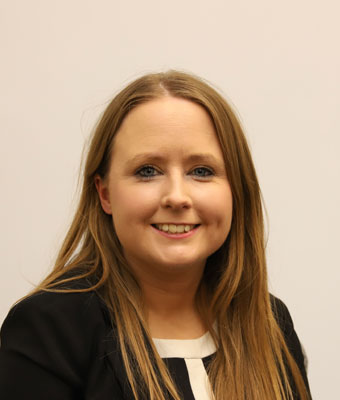
7. D'fhiafraigh Deputy Mairéad Farrell den Minister for Rural and Community Development and the Gaeltacht an mbeidh ardú ar an bhfóirdheontas do theaghlaigh agus do choláistí cónaithe Gaeltachta faoi Scéim na bhFoghlaimeoirí Gaeilge i mbliana; agus an ndéanfaidh sé ráiteas ina thaobh. [23101/26]
Is í an cheist atá agam ar an Aire ná an mbeidh ardú ar an bhfóirdheontas do theaghlaigh agus coláistí cónaithe Gaeltachta faoi scéim na bhfoghlaimeoirí Gaeilge i mbliana. An mbeadh sé in ann ráiteas a dhéanamh ina thaobh?
Tá scéim na bhfoghlaimeoirí Gaeilge á riar ag mo Roinn ar mhaithe le tacú le deiseanna sealbhaithe agus saibhrithe teanga sna réigiúin Ghaeltachta do fhoghlaimeoirí, idir scoláirí dara leibhéal, mic léinn tríú leibhéal agus daoine fásta ó áiteanna ar fud na tíre. Tagann an scéim le cuspóirí an Rialtais i leith na Gaeilge, mar atá leagtha amach sa Straitéis 20 Bliain don Ghaeilge 2010-2030, agus is í an scéim an príomhbhealach ina dtacaíonn mo Roinn le hearnáil na gcoláistí Gaeilge.
Is ar na teaghlaigh Ghaeltachta a chuireann lóistín ar fail don chóras a bhíonn cúnamh na Roinne dírithe, mar is iad na teaghlaigh sin cnámh droma an chórais. Cuireann mo Roinn cúnamh suntasach ar fáil ar bhonn leanúnach faoi scéim na bhfoghlaimeoirí Gaeilge agus tá an tacaíocht seo á cur ar fáil le tamall de bhlianta anuas chun tacú tuilleadh le hearnáil na gcoláistí Gaeilge. Tá ardú ceadaithe ar an bhfóirdheontas a íoctar le teaghlaigh Ghaeltachta agus coláistí cónaithe a chuireann lóistín ar fáil le roinnt blianta anuas. Go deimhin, anuraidh cheadaigh mé an cheathrú ardú ó 2022 ar an bhfóirdheontas nuair a d'ardaigh mé an deontas aon-oíche do theaghlaigh ó €13 go €14.50, agus an deontas aon-oíche do bhrúnna agus coláistí cónaithe ó €9.50 go €10.50. Is ionann é seo ar fad agus ardú 45% ar an ráta fóirdheontais a íoctar le teaghlaigh agus méadú i gcomhthéacs na mbrúnna agus coláistí cónaithe ó 2022 i leith.
Anuas air sin ar fad, tá ardú tagtha ar na tionscnaimh eile a cheadaítear faoi scéim na bhfoghlaimeoirí Gaeilge, lena n-áirítear an scéim DEIS Gaeltachta. Cuireadh maoiniú €900,000 ar fáil don scéim DEIS Gaeltachta in 2025. Is ardú suntasach é seo ar an gciste DEIS Gaeltachta ó 2024, le leithdháileadh de €400,000. Tá ardú tagtha chomh maith ar an bhfóirdheontas a íoctar faoi na beartais scéim Erasmus Gaeltachta. Leis na beartais seo, tá muid súil le gach cineál cabhrach a chur ar fáil do theaghlaigh sa Gaeltacht. Mar atá leagtha amach sa chlár Rialtais, leanfaidh mé ag tacú leis an earnáil seo le linn théarma an Rialtais. Mar is eol don Teachta, fuair mé an t-ardú is mó i mbuiséad Roinn na Gaeltachta sa bhuiséad is déanaí. Rachaidh an t-ardú sin i dtreo infheistíocht i scéimeanna cosúil leis an gceann seo.
Níl a fhios agam an féidir i ndáiríre labhairt faoi ardú de 45% ó 2022 i leith nuair atá ardú de €1.50 i gceist ón mbliain seo caite go dtí an bhliain seo. Tá a fhios againn go bhfuil mná tí ag streachailt cheana féin agus go bhfuil éileamh ollmhór ar na coláistí samhraidh seo. Díoladh na spásanna sna coláistí samhraidh i dtréimhse de dhá nóiméad mar gheall go raibh an t-éileamh chomh mór sin. Muna bhfuil maoiniú ceart ann do mhná tí, ní bheimid in ann daoine a mhealladh chun é sin a dhéanamh. Mar gheall air sin, ní bheimid in ann an t-éileamh sin a shásamh. Is é sin an rud atá i gceist leis seo. Ba chóir dúinn an maoiniú atá ag teastáil ó mhná tí a chur ar fáil. Tuigim nach bhfuil an tAire in ann na cinntí seo a dhéanamh go díreach agus go gcaithfidh sé an maoiniú sin a fháil ach, má táimid dáiríre faoin sprioc 20%, beidh ar na daoine sin dul chuig coláistí samhraidh. Beidh an t-éileamh ag éirí. Teastaíonn níos mó maoinithe anseo.
Tá sé soiléir ón ardú a bhí ann anuraidh go bhfuilimid dáiríre faoi seo. Táimid dáiríre faoin 29,000 scoláire agus beagnach 530 teaghlach Gaeilge a aithint. Táimid ag obair leis na mná tí agus leis na coláistí. Anuraidh, d'fhógair mé scéim aonuaire do theaghlaigh sheanbhunaithe chun tacú tuilleadh leis an gcostas chun troscán nua a cheannach. Is deontas suas le €2,000, nó 80% den chostas, a bhí i gceist leis sin. Fuair níos mó ná 200 teaghlach an tacaíocht seo. Is slí eile é sin ina bhfuilimid ag cuidiú. Táimid ag staidéar le haghaidh na bliana seo. Mar a dúirt an Teachta, tá suim mhór sna coláistí samhraidh. Táimid ag ceapadh go mbeidh 29,000 scoláire ag dul chucu i mbliana. Táimid ag staidéar é sin. Táimid ag obair le CONCOS. Tuigim go mór an brú costais atá orainn. Táim an-dírithe ar an taithí sin a chosaint. Is taithí an-tábhachtach é do scoláirí dul go dtí an Ghaeltacht agus a bheith ina gcónaí inti. Táim ag obair chun an taithí sin a chosaint agus a fhorbairt.
Impím ar an Aire staidéar géar a dhéanamh ar an gceist seo. In iarthar na hÉireann, tá formhór na ndaoine ag brath ar ola. Tá a fhios againn cé chomh daor is atá ola anois mar gheall ar an gcogadh san Iaráin. Tá na praghsanna sin ag ardú agus tá sé sin ag cur tuilleadh brú ar mhná tí, a bhí ag rá cheana féin go raibh níos mó airgid ag teastáil. Chomh maith leis sin, tá orthu brath ar pheitreal agus ar dhíosal chun taisteal ó áit go háit, rud eile a chuireann brú ar mhná tí. Impím ar an Aire breathnú air seo go géar. Impím ar an Rialtas ar fad breathnú air seo. Tá a fhios agam go dtuigeann an tAire cé chomh tábhachtach is atá mná tí ach táim buartha nach bhfuil an tuiscint chéanna ag daoine eile ar bhord an Rialtais faoi cé chomh tábhachtach is atá sé na daoine seo agus an tslí bheatha seo a chosaint má táimid dáiríre faoin nGaeilge agus faoin nGaeltacht. Impím ar an Aire labhairt leis na daoine eile ar bhord an Rialtais ionas go dtuigfidh siad cé chomh tábhachtach is atá sé seo.
Tá tuiscint ag gach cuid den Rialtas ar cé chomh tábhachtach is atá an taithí seo agus cé chomh tábhachtach is atá an Ghaeltacht. Tá an t-ádh linn go bhfuil an tAire caiteachais phoiblí ina iarAire Stáit sa Roinn seo. Tuigeann sé cé chomh tábhachtach is atá sé. Bhí sé sin an-tábhachtach agus muid ag iarraidh buiséad na Roinne a ardú. Ní fiú ardú mór sa bhuiséad muna bhfuil sé á chaitheamh ar an nGaeltacht. Tá sé ar intinn agam é a úsáid chun infheistíocht a dhéanamh, go háirithe sa saghas taithí is fearr, is é sin taithí shaoil sa Ghaeltacht le teaghlach Gaeltachta le haghaidh dhá nó trí seachtaine. Beidh mé ag obair le CONCOS ar an infheistíocht sin agus ar an scéim sin a chosaint.
Departmental Schemes
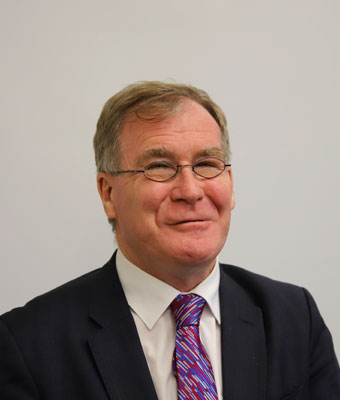
11. Deputy Colm Burke asked the Minister for Rural and Community Development and the Gaeltacht when applications for the next round of the community centre investment fund will open; whether it will be for new builds or refurbishments; and if he will make a statement on the matter. [21756/26]
I know an announcement was made on this matter this morning. When will applications for the next round of the community centre investment fund open? Will it be for new builds or refurbishments? Will the Minister make a statement on the matter? I know he made an announcement on the matter this morning, but the issue is about new builds. Will the Minister give some clarification on that particular issue?
I thank Deputy Burke for his question. The community centre investment fund, CCIF, was introduced by the former Minister, Heather Humphreys, to provide high-quality community facilities that are available to all groups in both urban and rural communities. Through the CCIF, to date some €111 million has been allocated for the enhancement and refurbishment of existing community centres and the construction of new centres where such a need has been identified. This is an unprecedented level of investment but there continues to be a need for further investment. The programme for Government makes a commitment to do this. I am delighted to say that this morning, my Department launched the 2026 CCIF, which will support the refurbishment of existing community centres.
There are two categories of funding under the 2026 scheme. Category 1 will provide funding up to €25,000 and category 2 will provide funding of up to €100,000. The scheme will open for online applications at the end of May and all successful projects will be announced before the end of the year. I encourage any community group interested in enhancing its community centre to use the coming weeks to decide on its funding priorities and begin preparing its applications. To that effect, there are a range of resources available to assist potential applicants. There will also be a number of information sessions provided, the first of which will be held on 8 April. Full details of these resources, information sessions and the fund are now available on the Department's website.
In regard to new builds, we are currently trying to complete the programme of new builds that was announced in 2024. I hope, subject to budget allocations, to have a new-build allocation in 2027. Our priority at the moment is to complete the 12 projects that were announced in 2024 and we are working through that as we speak. There is such a demand for refurbishment. The indications we have to date are that some of the community centres that have had investment in refurbishment have seen activity levels increase by up to 90% and we want to continue to do this.
I thank the Minister and accept that the announcement this morning was very welcome. I come from a parish where 11 acres were purchased 50 years ago, and we now have 45 acres of sports and community facilities involving the GAA, the rugby club, soccer facilities, a playground and a walkway. That has been developed over the past 50 years as a result of community efforts and with the help of sports capital grants. Likewise, in the area where I served as chair of a community centre in Blackpool, more than 40 organisations use the facility there, which is extremely important for the local community. Therefore, it is important to make decisions about providing refurbishment. The issue I have in regard to new builds is that there are challenges in Glanmire, which is a new town in real terms, with over 25,000 people. Likewise, there will be huge development in Blarney. The need for planning for proper community facilities is so important for those areas and that will involve new builds.
I know from speaking to those involved that one of the motivations behind the approach taken during Heather Humphreys' time in office was the need to help the exact kind of community that Deputy Burke has spoken about. There was massive development back in the seventies and eighties. Perhaps there are three of us in the Chamber who are old enough to remember AnCO. I will not say which three people I am thinking of. Through AnCO and through the skills of the people involved at the time, many community centres were built across the country in the seventies and eighties. When it became very apparent that they needed substantial investment in terms of energy and facilities, that was the initial intention of the CCIF. Some €30 million was then approved for 12 new community centres in nine counties. Eight of those projects have construction workers on site and the remaining projects are going through tender and design. I hope that, subject to budget, we will be in a position in 2027 - the Minister of State, Deputy Buttimer shares this priority - to focus again on new builds and on new communities such as those referred to by Deputy Burke. It will be competitive. One of the biggest topics we hear about in terms of community centre investment is the need for new builds. We will have a very competitive process. New communities that do not have facilities and need the kinds of facilities that a community centre can give and the kind of hub that a community centre can give will be the focus. Subject to budget, I can assure the Deputy that will be the focus for the 2027 scheme.
In relation to new builds, a big challenge is sufficient land being set aside where a large amount of housing is being built. The planning authorities are falling down on this. I have seen this in the Glanmire area, for instance, where over 25,000 people live and a proper community centre has not been developed. Sarsfields GAA club has provided really good community support. Without it, there would not be a community facility in real terms. We need to do more forward planning on this issue. Likewise with Blarney, there are over 3,000 houses to go in there over the next few years. Land needs to be set aside now. There should be communication with local authorities to make sure that is part of the planning process. The Department cannot give the money if the land is not there to build the facilities on. Without those facilities, there is a huge gap in the community. When I was in Blackpool as chair in 1994 and 1995, I had 30 people employed under a community employment scheme in the community centre. There were huge challenges in employment there at the time. It made a huge contribution to the area.
I was out yesterday with Deputy Currie and the Minister, Deputy Chambers, in Castleknock at the community centre to see the work it is doing with community employment and Tús. A community centre is not just a building; it is a hub and a magnet for activity. It is really the heart of activities. That is why we want to support the programme to ensure facilities are improved in existing centres as well as new ones. Some 190 CCIF projects have been approved in Cork since 2022. The Cathaoirleach Gníomhach, the Minister of State, Deputy Buttimer, and I were in Rylane in December to see the sod-turning of a new build. I endorse what Deputy Burke said in relation to local authorities and their responsibilities particularly in areas that are growing. We had this discussion earlier, which the Minister of State, Deputy Buttimer, led. They should be identifying in their development plans space for recreation and community centre activities. We have the funding streams in place. They should work with us to do that. We will be happy to engage - we are engaging with local authorities. I praise what is happening in Cork with the proactive local authority working with us. We work with them to provide the funding. If they provide the sites, we work with them in relation to the funding.
Community Development Projects
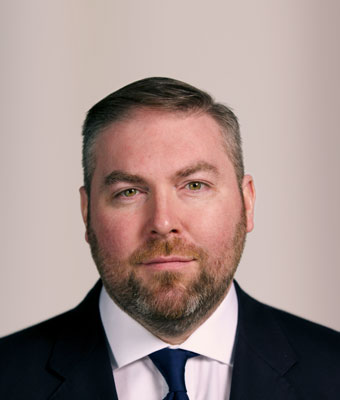
12. Deputy Barry Ward asked the Minister for Rural and Community Development and the Gaeltacht the position regarding supports provided at a local level in community centres targeted at addressing social exclusion; if he will consider increasing funding in this regard; and if he will make a statement on the matter. [22369/26]
The Minister will be aware of many community organisations around the country which focus on social exclusion. Are better supports available for them, conscious of the supports already available? Social exclusion is an issue that permeates society and has a massive effect. It is incumbent on us to deal with it. If we do not, it creates all kinds of other problems. Can we create greater supports and funding for those organisations?
I thank Deputy Ward for his ongoing advocacy, targeting, commentary and genuine commitment to the delivery of community-led supports. He has raised this matter on numerous occasions privately and in the Dáil. The Minister and I share the Deputy's view on tackling social disadvantage. The social inclusion and community activation programme, SICAP, is our country's primary social inclusion intervention programme, overseen by our Department. It is a national programme delivered in rural and urban areas by local development companies, LDCs, to help those in greatest need. SICAP supports people and community groups that face disadvantage providing targeted supports in areas such as employment, mental health, education and community engagement, improving quality of life for those facing social exclusion and inequality. The Minister and I are very much aware of the ongoing need. We are committed to the provision of supports and structures. That is why as a Government and we as Ministers in the Department were delighted to have secured an additional €1.5 billion in the budget this year, bringing annual funding for SICAP to over €50 million. We are also of the view that supports should be provided to staff of local development companies in local communities which use community centres as a hub. Our Department's CSP currently supports 426 community-based organisations with a budget of €59.4 million, an increase of €4 million from last year to provide 445 local, social economic and environmental services through a social enterprise model. We will have further news on the CSP in light of the programme for Government commitments later in the month.
I thank the Minister of State. We in Ireland consider ourselves to be a fairly happy nation. Even the happiness index published recently shows that we are up there. Yet, report after report shows that loneliness in Ireland and other countries in the western world is growing all the time. Organisations such as men's sheds, community groups and church groups do amazing work bringing people together, avoiding social exclusion, providing a vehicle for people to communicate with each other and build networks and friendships which is important. Are they predominantly focused, as we live longer and better lives, on people in the older cohort? Is there more we can do for people in the younger cohort? We have pubs and cafes, of course, but they are not always the best place for people to come together. Will the Minister of State consider enhanced supports particularly for groups that deal with social exclusion, loneliness and isolation for younger ages groups? Is there something to be said for increasing supports in that regard?
Deputy Ward raises an interesting point. Sometimes we miss that cohort of young people. Rightly, we focus on men's sheds, women's sheds, older people's social services and that integration piece. As we saw today in the announcement by the Minister, Deputy Calleary, of the CCIF, the community centre is the hub and the visible piece that leads to the ongoing delivery of integrated supports, which directly reduces social exclusion for older people, in particular. The Deputy made a good point. Perhaps working with the Ministers, Deputies Foley, Calleary and Naughton, we can look at a further model in terms of what we are already doing. Let us be honest - we need to listen and engage all the time. We have an ongoing conversation around online safety for young people but there is a piece in particular post-Covid where demand continues to grow in our Department, reflecting the complexity of life today in communities. I am open to the conversation around what structures and supports we can put in place for that younger age group, perhaps working at a cross-department level. The Deputy's points are very well made.
I acknowledge all of the supports available already. The bodies that tend to be supported by SICAP funding and some of the other funding streams the Minister of State mentioned tend to be community organisations, which is welcome. In the context of what I was saying about the younger age groups, sports clubs also have a role, and they are successful, but they are not really in the remit of what the Minister of State has been talking about. I mention places where people can gather socially. For example, we know we have a problem with the nighttime economy and the availability of spaces for people to mix outside the pub culture. Is there any role for this kind of funding not so much for commercial supports but to facilitate the existence of cafés particularly after 9 p.m., places where people can gather? I mention supports for them perhaps in the context of a sports club or another community group or organisation. Is that outside the remit of the Department or can it be considered?
What Cork City Council has done on the nighttime economy with no-alcohol cafés for young people is an example the Government as a whole must look at. Our Department has a variety of schemes and programmes that reflect the whole ethos of what the Deputy is trying to achieve. I am open in terms of eligibility criteria in the new call for applications under a variety of schemes, such as the CSP or SICAP, to looking at how we can broaden the remit while mindful that we do not have an infinite budget and will have loads of applications. We need to have a conversation as we emerge from Covid and in a new world around our attitudes to alcohol and online. What the Deputy is saying reflects a new Ireland. We must open to engaging and putting a new structure in place. I would be happy to sit down with the Deputy further and engage on that. I do not want to speak for the Minister but I am sure he would also be open to having that conversation.
We must look at how we can allow these young people to make a contribution and have them involved and engaged in our community networks and, as Deputy Ward said, not just forget them, think they are all being looked after and that they have migrated to an online space that is very difficult, truculent and complex. The points Deputy Ward has made are worth considering and I certainly look forward to further engagement with him on it.
Questions Nos. 13 to 20, inclusive, taken with Written Answers.
Social Enterprise Sector
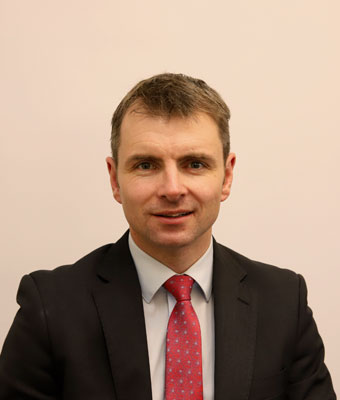
21. Deputy Ruairí Ó Murchú asked the Minister for Rural and Community Development and the Gaeltacht the reason that almost two years into the implementation of the National Social Enterprise Policy 2024–2027 a number of key milestones have been missed; the actions he is taking to ensure that no further targets are missed; and if he will make a statement on the matter. [22993/26]
We are almost two years into the implementation of the national social enterprise policy for 2024 to 2027 and a number of key milestones have been missed. What actions are being taken to ensure no further targets are missed? We have had engagement on this before and I have met SERI, a group representing a number of social enterprises in the State. It is about ensuring we have a framework that works.
I thank Deputy Ó Murchú for the question. In July 2024, prior to my appointment, the Department launched Trading for Impact, the national social enterprise policy, which was developed in partnership with the social enterprise sector. It has five key objectives, which are to build awareness of social enterprises, help them grow their financial sustainability, contribute to the green transition, deepen alignment from local to international level, and improve our understanding of social enterprises and their impact.
A stakeholder engagement group was established in June 2025, including public and private stakeholders, to co-ordinate delivery of the policy. Three working groups have now been established to address social financing issues and gaps, increase participation in public and private procurement, and raise awareness and make their impact more visible. Through these structures, work is continuing to support and grow the sector. The Minister, Deputy Calleary, and I were pleased to secure €400,000 of additional funding through the Estimates process to support this work.
Areas of focus include a new Dormant Accounts Fund scheme to grow financial sustainability, which I expect to launch very shortly, and engagement with stakeholders, including the Office of Government Procurement, to increase procurement and sustainability for social enterprises through traded income. They also include phase 2 of a pilot voluntary quality mark for social enterprises to help build their visibility, and the census of social enterprises, which will be launched in the coming weeks, to better understand and support the sector and help to set the direction of future policy.
While there was some delay in commencing implementation of the policy in late 2024, and I remind Deputy Ó Murchú that there was an election and a Government needed to be formed, significant work has been undertaken since my appointment and that of the Minister. We are committed to seeing this policy delivered. I assure Deputy Ó Murchú that the officials in our Department and other Departments, in partnership with the stakeholders, are working to ensure that all of the actions will be implemented over the lifetime of the policy. Deputy Ó Murchú mentioned SERI and I congratulate the former Minister, Richard Bruton, on his appointment as chair of SERI. We look forward to working with him to further develop the issue Deputy Ó Murchú has outlined. I have met many social enterprise groups since I became a Minister of State and I can tell Deputy Ó Murchú that I am very excited about this sector. I look forward to working with him to see it succeed further.
I accept there was a busy period in 2024 but work has to continue through the public service, the Civil Service and the Department. I will take on board the Minister of State's commitment to delivering on these targets because it is absolutely necessary. I assume from what he has said that he will have, and I hope there will be, engagement with SERI. I was approached on the fact that it had a number of questions. It is looking for an ecosystem where social enterprise can flourish, from local start-ups to those that have a capacity for international expansion. At the minute, they cannot access enterprise supports through LEOs, Enterprise Ireland or Skillnet. An amount of €340,000 per year is allocated to deliver 57 actions, which were set previously under the national social enterprise policy. Will funding be committed to the programme for Government seed fund?
I look forward to working with Deputy Ó Murchú in this particular area. Since my appointment, when I assumed responsibility in this area, we have engaged extensively. I have visited and met many stakeholders and social enterprises. To say the least, I am absolutely excited by the work being done. The objectives will be met. The stakeholder engagement group has met and it has a programme of work. It is committed to engaging on this and engaging with us further. I assure Deputy Ó Murchú the officials in the Department are engaging with colleagues on this matter on an ongoing basis. Deputy Ó Murchú should feel free to raise any issues with me. It is important to recognise that the Trading for Impact policy was developed in partnership with the sector. It is about partnership, le chéile and working together. Implementation of this policy must be done in partnership for it to succeed. I look forward to the stakeholder engagement group continuing its work. It has met four times since it was appointed and it has established three expert working groups to provide recommendations and advice and to help it implement the individual actions under its remit. I look forward to working with Deputy Ó Murchú because this is a brilliant, breathtaking and refreshing area to be in.
Dublin-Monaghan Bombings
74. Deputy Shane Moynihan asked the Minister for Foreign Affairs and Trade the position regarding the British Government's response to the State's ongoing request for full disclosure and access to all relevant documents concerning the Dublin and Monaghan bombings of 17 May 1974; and if she will make a statement on the matter. [22428/26]
I have raised this question before in the House. It relates to the British Government's response to the State's ongoing request for full disclosure and access to all relevant documentation concerning the Dublin and Monaghan bombings of 17 May 1974. We had the summary report of Operation Denton in the past few months but there is still a general frustration, despite the multiple calls by this House for disclosure of all documents relating to those terrible events of 1974. Will the Minister make a statement on the matter?
I thank the Deputy for raising this. I know he has raised it on a number of occasions. We all agree there is no doubt that the families and survivors of the Dublin and Monaghan bombings have waited far too long for answers. We all want to get to that point for them.
The Government has long-standing requests in place to allow access by an independent, international judicial figure to all original documents held by the British Government relating to the Dublin and Monaghan bombings. These requests arise from successive all-party motions adopted by this House, which is testament to the continued importance placed on the maximum possible disclosure in the interests of providing truth to victims of these atrocities and their families. In that context, the delay in the publication of the full report of Operation Denton, a review of the Glenanne gang cases, including the Dublin and Monaghan bombings, which was expected last year, is extremely disappointing. I understand, however, that legal issues, in particular in relation to legal proceedings currently under way in Northern Ireland, have prevented that report from being published.
Officials from my Department remain in regular contact with the head of Operation Denton, Sir Iain Livingstone. They will continue to follow up on the publication of the full report. We hope the report can be published within a reasonable timeframe and that its findings may shed light on what happened on that absolutely awful day for those involved and their families. The publication of the report would also help to maintain momentum on our broader work on legacy, particularly in the context of the implementation of the joint framework, which was agreed last year by the two Governments, and where legislation is currently going through the Houses in the UK and the Minister, Deputy Jim O'Callaghan, is progressing legislation on our side.
What is essential and at the heart of getting truth for families is having that reciprocal co-operation. That is very much at the heart of the joint framework, which commits the British Government to provide "cooperation to Ireland for investigations, inquiries and inquests" in this jurisdiction. It is vice versa in that we co-operate in the same way. During any of my discussions with the Secretary of State, Hilary Benn - we have met on a number of occasions and he is absolutely committed to finding peace and truth for so many families - it is that culture where we have the most possible disclosure. This is essential for public confidence in finding truth.
Gabhaim buíochas leis an Aire as an bhfreagra sin. As she said, the Dublin and Monaghan bombings remain one of the single darkest days of the Troubles. Constituents of mine are members of the families of victims who lost their lives in those bombings. More than 50 years on, those families are still waiting for the truth. As the Minister said, this House has been unanimous in its multiple calls for full disclosure from the British Government. Yet, it is ironic that in the same week we had the discussion and debate on the Omagh bombing inquiry Bill, where we are making our contribution to full co-operation with regard to the discussion and discovery of legacy, the same level of co-operation is not as forthcoming with regard to the findings of Denton.
While the summary report was there, what we have seen from the likes of the publication of Kenova is the importance of disclosure and openness, and the allowance of closure for families where they can see what happened in the case of their loved ones. We will then look forward to understanding our shared history and, more importantly, building that shared future. Will the Minister raise this in her next engagement with the UK Secretary of State for Northern Ireland and push for full disclosure?
I will absolutely speak with the Secretary of State on this. The British Government is in no doubt of the desire, not just of this Government but successive Irish governments, to see the release of relevant documents to help the families of the Dublin and Monaghan bombing victims to get the truth of what happened to their loved ones. I and other Ministers have raised this regularly in our engagement with the British Government and our counterparts. At least nine letters have been sent over the past number of years specifically seeking this information. Again, the joint framework we are both working on agrees and commits to reciprocal co-operation. Once these mechanisms are in place, we will again pursue the information we have requested from the British Government.
The hope and anticipation was that we would get some of those answers through Operation Denton. We regret the fact that report has not been published. We are told the ongoing legal situation in the North is the reason it has not been published. If that can be resolved, the sooner that report can be published the sooner we can identify and get some form of clarity. If that is not provided, we will continue to engage with the UK Government.
As the Minister said, the findings of Denton and Kenova demonstrated the real and acute need for full transparency from the British Government, the importance of access to these records and the ongoing impact for victims' families, in particular, of withheld material on truth and recovery.
I also draw attention to the fact that in the resolutions from this House, we asked for an independent judicial figure of high repute to address and investigate the documents in question. I urge the Minister to ensure that aspect of the call from this House is also heard to build trust in this overall process and ensure we have confidence in the findings thereof.
I thank the Minister for her engagement with the Secretary of State on this matter so far. I urge her to continue to put that pressure on them and ensure they understand the importance of transparency, truth and of closure, especially. For many of these victims' families who are entering their senior years, they would like some closure and understanding of what has happened to allow them to look with hope to the end of their lives.
I thank the Deputy and he can be assured that I will engage with the Secretary of State on this. We have been very clear in setting out and making sure there was trust in our request and we asked that it would be an independent, international judicial figure who would look over this information and would receive the original documents. To date, we have not received them. The focus had been on Operation Denton to see what information would be provided in it. The information that emerged from the Kenova Report was quite shocking; in fact, it was appalling in many instances. It is important that the information that was provided there that has provided some clarity for people that Operation Denton will be able to do the same.
Everybody in this House is not just of the same view but we have the same objective here: how do we bring some form of clarity? I am not sure there will be ever closure for families given it was such an appalling tragedy that happened to them. However, there might be some form of clarity that can be provided so they understand and know what happened to their loved ones. That is our objective and it is my priority. I will continue to work with the Deputy and colleagues on that.
Trade Promotion
75. Deputy James O'Connor asked the Minister for Foreign Affairs and Trade the role her Department plays in the action plan on market diversification; and if she will make a statement on the matter. [23046/26]
Question No. 75 is in the name of Deputy James O'Connor and is being taken by Deputy McCormack.
As the atmosphere grows here in Ireland but also out in Prague, I wish the Irish team and the management all the best as they try to qualify for the world cup. We all remember the previous competitions we qualified for and the pride it brought to our great country. I am back to the day job now so I would like to ask the Minister what progress has been made in implementing the market diversification action plan and the measures being taken to support Irish exporters in accessing new international markets?
From what I have seen, it looks like half of the island has left without a ticket but I am sure they will enjoy the match either way. I wish best of luck to our team, of course.
The Government Action Plan on Market Diversification was developed jointly by my Department and the Department of Enterprise, Tourism and Employment, with input from other Departments and agencies. It was developed with input from the business sector, most importantly, through the Government trade forum as a direct response to helping Irish business diversify their markets globally. In particular, given the challenging and uncertain environment we are all working in, it is very much about deepening and strengthening our economic relationship with our core partners such as the US, UK and EU but also about exploring new and emerging markets, of which there are many.
It was published last August and we have already published the first implementation update, together with the two lead Departments. There is an implementation plan, which is led by a headquarters market team. My colleague the Minister, Deputy Burke, and I update the Cabinet committee on economy, trade and competitiveness and the implementation of the plan every six months. The first report was a very positive report in terms of work that has been carried out. To give an example, we have held a successful first joint economic mission with the United Arab Emirates. This was held in the UAE in December with three Ministers from here in attendance undertaking detailed trade promotion activities. We have had our largest ever St. Patrick's Day programme, which many colleagues were on, and it saw 36 representatives visit 47 different countries. While the focus was on our diaspora and our cultural connections, there was a huge enterprise and trade focus looking at how we can explore and expand our markets.
I was in Boston and had an opportunity to meet with the representatives of some fantastic Irish companies who are expanding in the US but also to look at some of the large US companies we have here as well and how we can convince them to expand and do more here. There were significant early results on expanding our State agency footprint as well. There are new representatives for IDA Ireland, Enterprise Ireland and Tourism Ireland in Seoul, Zurich, Dubai and Deli. There are new innovation attachés as well who are in Boston. I met my own just in the past week in San Francisco. Other trade missions are also being expanded and developed for the year ahead. I will come back but there is a lot already happening and a very positive plan.
I thank the Minister. I welcome the continued focus on market diversification, particularly given the increasingly uncertain global trading environment in which Irish businesses are operating. Recent progress on the EU-Australia trade agreement demonstrates the opportunities that exist for Ireland to broaden its international trading relationships. However, this must also be viewed in the context of ongoing uncertainty around tariffs internationally and continued volatility in oil and gas markets, all of which create real risks for a small, open and highly export-dependent economy like ours.
Ireland's growth model has been strongly export-led for decades. While this has delivered enormous benefits, it also leaves us particularly exposed to geopolitical and economic shocks. In that context, the diversification is not simply desirable; it is essential for safeguarding long-term economic stability, employment and investment.
Can the Minister outline how the Department is actively positioning Ireland to benefit from new EU trade agreements and emerging global markets, while also mitigating the risk arising from tariff instability and energy market volatility?
I too will take this opportunity on the floor to welcome the agreement of the EU-Australia trade deal this week. This is something that will open up Irish markets to a substantial economy and one where we are very much aligned. We see Australia as trusted trading partners. There is further exploration happening and we are looking at other trade deals across the globe. Of course, we hope to ratify CETA as well this year in its tenth year. The Minister of State, Deputy Byrne, is bringing forward that legislation and we will visit Canada in the next few weeks to highlight just how much progress has been made and how valuable it is. It has been worth about €10 billion to our economy over the ten years.
There is more we can do outside of trade deals and I am very conscious of the fluctuation and changes that have happened in the tariff environment, particularly with the US. That is why during our Presidency, we will particular focus on what we can do within the European Union. The Deputy will know three of our priorities are competitiveness, security and our values from a competitiveness perspective. This will be about completing the Single Market. There are barriers within the Single Market that are preventing us from doing better and more business. It will be about making sure we focus on the capital markets union and banking union so we open up more finance. I will come back to the Deputy on the rest.
While strategy for diversification is welcome, the reality is that Ireland remains highly concentrated in terms of trade exposure. Around one third of exports go to the United States and Ireland holds over €1 trillion in foreign investment stock, the majority of which originates from US-based multinational firms. At the same time, the UK and the European Union collectively remain by far our largest overall trading partners. This level of concentration creates a significant vulnerability in periods of global economic or political disruption.
Can the Minister outline what measurable progress is being made in reducing Ireland's exposure to a narrow set of markets and sectors? How will the Department ensure that diversification efforts translate into real and sustained growth in trade with new partners rather than remaining at the level of policy ambition?
It is connected to what I was saying about the work we are doing in the EU, such as focusing on competitiveness and simplification so we can reduce some of the barriers, being honest, that we have imposed on ourselves that are adding cost to business. We are still focusing on the main trading partners we have. The EU is one of them and the US is a critical one. A huge amount of our focus and my time is making sure we can get absolute clarity on what the tariffs are and the implications for the various different sectors that are important to us.
We know there are certain industries, particularly agrifood and medical technology, where we need to make greater progress because of the current tariffs. That work is under way because no matter what we do and how much we diversify, the EU, US and UK will be our most important trading partners. With all of these other opportunities, be it through China, Australia or India, where we have a market that is hugely untapped, or in Canada, where we believe we can make much more progress, we still need to make sure that we are getting the most out of the relationships that are closest and most important to us.
While there are challenges there at the moment, I believe, particularly through our Presidency, there is an opportunity for us in our relationship with the UK in trying to bring that closer again with the EU and breaking down those barriers in the EU along with creating stability with the US that will benefit our businesses in so many different ways.
Diaspora Issues
76. Deputy Noel McCarthy asked the Minister for Foreign Affairs and Trade the progress made to date by her Department in the development of an updated diaspora strategy; and if she will make a statement on the matter. [23044/26]
160. Deputy Joe Neville asked the Minister for Foreign Affairs and Trade the status of the diaspora strategy; and if she will make a statement on the matter. [20218/26]
Question No. 76 is in the name of Deputy Noel McCarthy and is grouped with question No. 160.
Like the previous speaker, I also wish Ireland well tonight and hope we will be in the Aviva Stadium on Tuesday night for the next stage of it. With the Leas-Cheann Comhairle's indulgence, I will also welcome a school to the Visitor's Gallery today. The school is in my own constituency of Cork East, the national school in Coolagown, and I welcome the pupils and teachers who are there today. I thank the Leas-Cheann Comhairle.
I ask the Minister for Foreign Affairs and Trade the progress made to date by her Department on the development of an updated diaspora strategy.
I propose to take Questions Nos. 76 and 160 together.
I thank the Deputies for raising this question. As they know, the Government is committed to deepening our ties with the Irish communities overseas and to ensuring that the welfare of the Irish abroad remains at the heart of our diaspora engagement. In line with the commitment in the programme for Government, the next diaspora strategy is at an advanced stage of drafting and will be published in late April, to coincide with the next global Irish civic forum that will take place on 30 April and 1 May in Croke Park. This strategy will be the third of its kind and was drafted following a wide-ranging consultation process that engaged Irish community, welfare and cultural organisations, as well as business social networks across 28 cities in 19 countries, including formal diaspora consultations in Britain, the United States, Canada and Europe, as well as in the UAE, Australia, Argentina, Singapore and Kenya. I also met with Irish stakeholders in Dublin and Galway as well as a very productive meeting with Oireachtas Members in Iveagh House last June. Further meetings were also held with relevant Departments and State agencies. These engagements were supplemented by the global Irish survey, the first ever online survey of the Irish abroad, which I launched last July and was available for several weeks throughout the summer of 2025. This survey was open to individuals and organisations and received over 10,000 responses. Respondents also had the option to submit position papers, of which over 40 were received.
While work on finalising the strategy is ongoing, the well-being of the most vulnerable of our diaspora remains a key focus for us. I am also committed to enhancing our outreach to the next generations of the diaspora, strengthening our networks across the globe in order to embrace the experiences and perspectives of the Irish abroad, and supporting those who wish to return to Ireland. I can confirm that the emigrant support programme, ESP, will remain the primary vehicle to manage the Government’s commitments to our diaspora in the next strategy. As this House will be aware, since its establishment in 2004, the ESP has assisted more than 900 charitable and Irish community organisations in 53 countries with over €265 million in grants. The majority of this funding, some 60%, is granted to front-line welfare service providers working with elderly Irish emigrants and other vulnerable members of our communities. These organisations working closely with our embassies and consulates, particularly in Great Britain, the US, Canada and Australia, provide crucial support, often at times of crisis, in areas such as elders lunch clubs, advisory, counselling, mental health support, advocacy, information and outreach services for our citizens abroad, including on immigration matters and status. This work is vital, particularly for those from marginalised backgrounds and those with complex needs. The 2026 budget for the programme is €17.5 million, which is the highest amount committed to date. I look forward to publishing the strategy in the coming weeks and ensuring Ireland continues its broad and inclusive engagement with our diaspora over the next five years.
I thank the Minister of State for his response. I thank the Ministers for their hard work and dedication in the area that is of major importance to Ireland. The diaspora across the globe represents the very best of our country on a community, cultural, business and sporting basis. I acknowledge that the ESP is a very important support for Irish diaspora groups and has proven to be enormously popular. Almost 600 applications were received before the ESP deadline in early February. With that in mind, I ask the Minister of State when successful applications are expected to be announced and funding allocated? In addition, the recent EU trade deal with Australia and the Government action plan on market diversification with no doubt only further expand Irish communities and businesses abroad. Taking this into account, will the Minister confirm whether the Department plans to extend our diplomatic reach to new areas by opening new embassies or consulates in countries or areas in which Ireland has not previously been represented?
My question was grouped with Deputy McCarthy's. The Minister of State has partially answered it. I asked what the status of the diaspora strategy is and if the Minister or the Minister of State would make a statement on the matter, considering both of them are there. I know the Minister of State has specific responsibility for the diaspora. Coming on the heels of St. Patrick's Day, we know how important the footprint that Ireland has and that the people have had through multiple generations. As was said, it is not just about the first generation; it is about several generations and how we continue that work on through these. If we look at the US, I had a national chamber of commerce group in yesterday. We have direct flights into Nashville, not necessarily a place known for its Irish emigrants but, at the same time, a huge proportion of people have Irish or Scots-Irish ancestry. We need to ensure we get them here from a tourism perspective but also from a business perspective, which is really important.
I am proud of what the Minister and the Government is doing in continuing the work in the past of engaging with the diaspora. When we have thought in the past about the diaspora, we have tended to talk about the kings of industry around the world and then the disadvantaged and how we might support them but in recent times, we have large concentrations of highly skilled young people who have emigrated and concentrated in places like Australia and Canada. As part of any diaspora policy, does the Minister of State envisage some systems being put in place or some strategies being adopted whereby we can actively engage with those young people and encourage them to consider a return home where they are badly needed to fill many of the vacant positions that exist?
I thank the three Deputies for their supplementaries and I will try to rattle through them as quickly as possible. Regarding the emigrant support programme, as I laid out, this year the budget will be €17.5 million. That is the biggest it has ever been. Part of that is to reflect inflationary costs on certain areas but there is always increased demand and need for the services provided. Deputy McCarthy rightly cited the economic opportunities of EU-Australia trade deal, as was laid out by Deputy McCormack as well. Just this year, the Government has opened a consulate in Melbourne to complement the consulate in Sydney and the embassy in Canberra, while Enterprise Ireland and IDA Ireland have also expanded their teams. That is just in Australia, but around the world we see increasing economic opportunities through our diaspora. It is something I hope the new strategy will have a very distinct emphasis on, particularly in the United States where about 36 million people claim Irish ancestry, be Irish, Ulster-Scots, or Scots-Irish. That is why the Government launched a strong programme marking the 250th anniversary of the US Declaration of Independence, which was signed by many Irish people and has a strong connection to Ireland, both for the cultural and political ties but also the tourism and business ties.
Deputy Neville and I are two of the biggest fans of American football in the House. We see the power of the college football classic every August in Dublin as it brings €130 million into the economy. Equally, with the NFL, we see the opportunities there in terms of sports diplomacy.
In response to Deputy Ó Fearghaíl's question, the Government has laid out a number of programmes, not necessarily though the Department, looking to attract some of our highly skilled emigrants back home from places like Australia, Canada but also the Middle East. There are a number of obstacles that we will cite in the strategy or that we will look to overcome. We hope to conclude a reciprocal driving rights arrangement with the state of New York in the coming months, which will complement arrangements with Canada and Australia. We will also be looking at areas in terms of recognising qualifications and experience gained. Insurance companies are now quoting Irish people who have been driving abroad. We also have banks giving specific packages and programmes. I will elaborate in due course.
I am delighted that the Minister of State referenced college football because we have seen the tremendous impact that has had. Not only are we bringing the games but we are bringing people over. A lot of those people spend a lot of time in Ireland. The game offers a window to Ireland in America with huge numbers watching the games. They see the best of what Ireland has to offer from a sporting facility perspective but it also gives us the opportunity to promote ourselves the week before the season starts. The college football has been a tremendous boon to the economy and to how we promote ourselves. The Minister of State has referenced the sports but another way he has really reached out is through the promotion of the Gaelic games abroad and how we tie that in. The GAA really is a foundation stone for so many people who go abroad. The first thing they often do is look for the GAA clubs. However, we can bring the GAA under that umbrella and however that works best, it is important to keep those live connections between the people who might have just recently gone and the multiple generations in America.
I thank the Minister of State for his reply. He is a rugby man himself but as my colleague Deputy Neville said, the GAA is very important. What is the Department doing to promote the GAA overseas? How much money has been allocated to this in recent years?
Finally, we have a very important statue in Midleton in my constituency of Cork East, which is the Kindred Spirits monument.
This represents a donation by the Choctaw Nation to the people of Ireland during the Great Famine. It is a fantastic monument that showcases the very best of overseas aid and how historical partnership endures. Should the Minister of State have any availability soon, my colleague, Councillor Rory Cocking, and I would love to show him the statue in person.
Regarding the references to sport more generally, the Minister, Deputy McEntee, launched the latest iteration of the sport diplomacy strategy in Boston at the famous Fenway Park. This is a key policy provision not just for the Department of sport, but also for the Department of foreign affairs, because sport brings people together here and abroad. We often see the real economic opportunities associated with the College Football Classic and the NFL coming to Ireland, but we also see where that ties in with tourism and higher education opportunities. There are great opportunities for Irish third level institutions to partner with American institutions for investment and research.
At the heart of our sports diplomacy policy is, of course, the global games development programme, which we support with a direct grant, parallel to the emigrant support programme, of about €7 million per annum to the GAA. That money supports staff, training and governance in GAA clubs around the world. In February, I met the Simba Wolfhounds GAA Club in Uganda, which was set up by a Galway man who works with young children in very deprived areas. I have met GAA clubs in Coventry, Abu Dhabi, Dubai, New York and Pittsburgh, but there are also other sports as well. I would have played for the Toronto Irish rugby club and the Brussels Celtic rugby club. These are all a part of this as well.
GAA is very much at the heart and soul of this. When we look at both participatory and elite level sports, we see Irish people who have had to go abroad, perhaps to play Premier League football, like those currently in Prague, while others are at the highest level of collegiate athletics in the United States. Eamonn Coghlan, a former colleague of ours in these Houses, made his name in the United States and was able to represent the Irish abroad multi-generationally at the Olympic Games and the World Athletics Championships.
To conclude, any visit to Midleton is a good visit. I would be more than happy to join Deputy McCarthy and Councillor Cocking. The tie between the people of Ireland and the Choctaw Nation is something we cannot stop reminding people about. It is very important and historic.
EU Agreements
77. Deputy Louis O'Hara asked the Minister for Foreign Affairs and Trade the engagements she has had in relation to the EU-Mercosur Trade Agreement; and if she will make a statement on the matter. [21739/26]
90. Deputy Peter 'Chap' Cleere asked the Minister for Foreign Affairs and Trade for an update on recent developments regarding Mercosur; and if she will make a statement on the matter. [22524/26]
119. Deputy Matt Carthy asked the Minister for Foreign Affairs and Trade for a report on any engagements or meetings she has had in respect of the EU-Mercosur Trade Agreement since January 2026. [22879/26]
132. Deputy Darren O'Rourke asked the Minister for Foreign Affairs and Trade the measures she is taking to ensure the Mercosur trade deal is not provisionally implemented before a case is heard in the Court of Justice of the European Union; and if she will make a statement on the matter. [11691/26]
144. Deputy Matt Carthy asked the Minister for Foreign Affairs and Trade if she has raised any objection with the European Commission in respect of the decision to provisionally apply the EU-Mercosur Trade Agreement. [22877/26]
Deputy Newsome Drennan will introduce Question No. 77 on behalf of Deputy O'Hara.
On Monday, the EU told Mercosur countries that the trade deal would be provisionally applied from 1 May. What engagements has the Minister had regarding the EU-Mercosur trade agreement? Has she told the Commissioner that forcing through this trade deal is not acceptable?
I propose to take Questions Nos. 77, 90, 119, 132 and 144 together.
In the 2025 programme for Government, the Government very clearly committed to working with like-minded EU countries to respond to the very real concerns of Irish farmers and to defend our interests as regards the Mercosur trade deal. On 9 January 2026, EU member states voted on the EU-Mercosur agreement. This vote was carried by a qualified majority. Ireland voted clearly and unambiguously against the approval of the agreement. I and other Government Ministers, along with officials, have engaged extensively at EU level to voice our concerns about the agreement. This engagement was sustained over time and took place across multiple forums and in both formal and informal settings, with fellow EU member states and the European Commission. These included European Council meetings; sectoral Council meetings, including the Foreign Affairs Council for trade ministers; bilateral engagements in EU member state capitals; numerous phone calls at ministerial level; working party meetings; and ongoing direct dialogue with the European Commission.
Along with my Government colleagues, I have consistently emphasised Ireland’s requirements for credible, legally binding commitments on matters relating to trade and sustainable development, including climate, biodiversity and deforestation protections, as well as clear protections and assurances with regard to incomes of farmers in Ireland. As a result of this engagement and efforts made by Ireland and like-minded member states in the Council of the EU, it is important to state that hard-won improvements have been made to the overall agreement package, including a new legal Act to operationalise bilateral safeguards to protect sensitive products; a financial safety net for farmers; strengthened sanitary and phytosanitary, SPS, controls, along with a 50% increase in audits and checks; and commitments on the alignment of production and SPS standards, notably on pesticides and animal welfare. The Commission also committed on 7 January to enhance the availability of CAP funding to farmers and rural communities under the proposed new multi-annual financial framework, MFF.
The Government takes note of the decision of the European Parliament to refer the deal to the European Court. The Government also takes note of the statement of the European Commission President, as the Deputy has said, that the Commission will apply the EU-Mercosur trade agreement on a provisional basis. Speaking after the European Council meeting in January, President von der Leyen indicated that a decision on provisional application of the agreement would not be needed until at least one Mercosur country had completed its ratification procedures. In late February, Argentina and Uruguay both secured parliamentary approval in their respective parliaments. Brazil and Paraguay have now followed suit with their own internal ratification procedures. While the Council of the EU voted in January to grant authority to the Commission to apply the agreement on a provisional basis, which it is entitled to do and is legally allowed to do under the treaties, Ireland made it very clear that it did not support that vote. It is important to note that President von der Leyen emphasised the "provisional" aspect of this announcement on application. In line with the EU treaties, the agreement can only be fully concluded once the European Parliament has given its consent. Obviously, it cannot consent, and it has said it will not consent until that legal process is concluded.
Along with my Government colleagues, I will continue to engage with the European Commission and other EU member states in the time ahead to ensure the full implementation of the commitments obtained from the Commission to address our concerns with the agreement, including the safeguard provisions we fought for and which many MEPs made clear were necessary to support and protect the interests of our own farmers. It is important to stress that we have just had conversations about the need to diversify and to focus on other markets. We are an open trading economy and we have always supported trade agreements. However, we have to make sure when it comes to our sensitive industries and our most important sectors, like the agrifood sector, that our farmers are not penalised because of the standards we have set ourselves at a European level. These are the very clear reasons we voted against the Mercosur trade deal and had significant concerns with the deal. We wanted to find a way forward, but it was not possible at that time. We have been very clear in our objection to the Mercosur deal in its current format. That has not changed, even with its implementation on a provisional basis.
There are very real concerns for consumers and farmers regarding the risk this trade deal poses. We have seen the recall of Brazilian beef over the presence of banned cancer-linked drugs. God only knows how much more drug-riddled beef has been sold in Ireland and across the EU, because the levels of laboratory testing are an utter embarrassment. Does the Minister know the percentage of laboratory checks that are carried out? Would she like to hazard a guess? It is 1.7%. Is it the Minister's position that this is an acceptable amount of testing, especially considering all the recalls last year? To me, there is an air of secrecy about it all. Last year, 172 tonnes of beef came in from Brazil. When I asked where it went, the trade data did not even summarise the destination or the end user, so there is no record.
We have been clear in our objection to this for the reasons the Deputy has outlined, and for many other reasons also. It is very clear that this Government, our farmers and consumers have real concerns about the type of product that may be entering into the EU. It is for that reason that we opposed this. As I have said, as a country we are in the economic position we are in because we are an open trading economy. This is not the position we would normally take. However, we had real and genuine concerns, as did our farmers, and that is why we voted against it. The position of the EU - this is the way it works - is that we cannot stop this from moving ahead if there is a qualified majority. The Taoiseach voted against this at the European Council meeting where President von der Leyen made it clear that she wanted to move ahead with the temporary or provisional implementation. We made our position clear at that time, as we have done throughout all of this engagement and process. However, we were not successful and the vote itself passed for the reasons I have outlined.
At European level, we have pushed- as have our MEPs, particularly Fine Gael MEPs and Government MEPs - to make sure there are more safeguards in place to try to respond to some of the concerns the Deputy has raised and farmers have rightly raised.
I will go into more detail about those mentioned. We have key commitments, including enhanced monitoring. The Commission will follow market trends closely. It will be able to identify any risks ahead of time, allowing more space to react. There will be full transparency. The Commission sends a monitoring report to the Council and the European Parliament every six months to assess the impacts of imports. Swift action to launch an investigation is progressing. In most cases, the Commission will launch an investigation within five days if there is more than a 5% increase in annual imports of a product or if import prices are at least 5% lower than prices of the same or competing EU products. Clarity on possible measures can consist of a temporary suspension of the schedule of tariff reductions of the product concerned, whether it is beef or any other product, or a reduction of the tariff preference back to the MFN or base rate, whichever is the lowest level.
On top of that, we have a new unity safety net for crisis measures. Essentially, this is a fund with a total capacity of €6.3 billion. This effectively doubles the current agricultural reserve. This reinforced support will help to safeguard our farmers, particularly at times of market diversification, market disturbances and growing geopolitical uncertainties, of which we know there are many. In practice, the European Commission will monitor market developments closely once the agreement is being gradually implemented, particularly with regard to the agricultural sector. We are very specific and focused with regard to the agricultural sector. On 7 January, the Commission also committed to enhancing the availability of the CAP as well, which I think is absolutely essential to fund our farmers and our rural communities under the proposed new multi-annual financial framework, MFF. As the Deputy will know, with the upcoming Presidency, Ireland will be playing a significant role in progressing the multi-annual financial framework, or budget, for the EU, and the CAP and support for our farmers and our rural communities will be an absolute priority for us.
The Commission clearly holds the Dáil in low esteem. It has consistently failed to reply to concerns raised by me through the Oireachtas Joint Committee on Agriculture and Food. We have written to the Commission on a number of occasions since November, which was the first time, then in January and then again as recently as yesterday. We have been seeking answers and clarity, and silence is all we have been met with. The European Parliament voted to refer this deal to the European Court of Justice because of concerns around its legality. This was a democratic vote from representatives of the people of the EU. The Commission has opted to ignore elected representatives here in Ireland and across the EU and pushed on with the deal regardless. Is the Minister not concerned at the blatant disregard for the democratic process?
I am a suckler farmer. These are the farmers who are going to be selling weanlings. Their product will not get to the shelves for another year, so they are the ones who are going to be caught. I have asked for the Commission to write back to us but it is just ignoring us. To me, this smells something rotten. Nobody seems to be answering the questions.
I cannot respond in respect of who the Deputy might have engaged with. I do not know who the Deputy has engaged with. There are certainly many different channels available, even through Sinn Féin’s own MEPs, at European level where questions can be asked and responded to.
It was trade and agriculture.
While there has been a practice in terms of the Parliament voting for and consenting to a treaty, the EU treaties do not require European Parliament consent before the application of a trade agreement. Whether that has been the case in the past, the decision was taken in this instance, given the size of the deal itself, to move forward with a provisional application of the trade agreement. Again, under the EU treaties, the Council of the EU can decide to apply an international agreement provisionally before it is concluded and enters into force. The decision taken by the Parliament to send it to the court or to put it through a legal process has, in effect, delayed the Parliament’s ability to be able to vote on it. The decision was taken by the Commission to implement this provisionally because we do not know the length of time it will take before it comes back to the Parliament.
When this was put to the European Council, our Taoiseach and this Government voted against it. I cannot be any clearer in saying that. We have been clear from the outset that we were not happy with the measure put in place, albeit I believe it is much better and stronger because of the influence of Government MEPs at a European level. We have, however, been consistent in saying it has not gone far enough. Notwithstanding that, because the Mercosur countries have implemented this in their own countries and their own parliaments, the EU treaties do allow for the Commission to move forward with the provisional application, and that is what it is doing now.
I have huge issues with the fact that it does not come back to us.
I can check that.
Passport Services
78. Deputy Ryan O'Meara asked the Minister for Foreign Affairs and Trade the current turnaround time for new passport applications and for renewals; and if she will make a statement on the matter. [22522/26]
After a miserable winter here, many of our constituents are looking forward to their summer holidays and perhaps a bit of sun if they are lucky enough to get abroad. With that, comes a need for many people to renew passports or to apply for new passports. What are we looking at in terms of turnaround times for new passport applications and for renewals?
I hope it will not be just our constituents who will be able to get away. Maybe we might all get a break during the summer as well. The Deputy is right that this is the time of year when we need to highlight the need for, and encourage, people to get their applications in if their passports are out of date or if they need time on their passports for wherever they are travelling. This is particularly the case in situations where people have new small children who do not have a passport. They should get those applications in as soon as possible.
Notwithstanding that, I have to say the passport service is successfully responding to quite a high level of demand. It has already issued 224,000 passports this year. The service does phenomenal work, and I have no doubt that it will issue many more passports in the months to come.
The advertised turnaround times for passport applications are ten working days for simple online adult renewals. I would hazard a guess that anybody who has done their application online for a renewal will have received their passport within a matter of days.
Yes.
Ten working days is not the experience I and many others have had. It is 15 working days for complex or child online renewals. Again, the time taken tends to be somewhat shorter but these are the average lengths of time. It is 20 working days for first-time online applications and eight weeks for passport assist applications.
We have seen many of the challenges where first-time applications for children are being put in on paper. Those are certainly the queries I get and that I am sure the Deputy gets as well. This is particularly the case where there are challenges, where pictures are not correct, something has not been signed or there is an issue with the paperwork itself. It is much more difficult to deal with these applications in a quicker way. I use this opportunity to encourage anybody looking to apply for a passport to do it online because it can be done 24-7. It does not have to be done within office hours. The turnaround times I mentioned apply to applications that are fully complete and correct, and begin from the time the supporting documents are received by the passport service. It does not begin from the date the online application is made. Where applications are incorrect or incomplete, it is naturally just going to take a little bit longer.
Since 2022, the passport service has operated a document management system whereby incomplete applications that require further supporting documents are prioritised once the additional documents are received. These are processed within 15 working days. Huge progress has been made in recent years and hopefully people will be able to apply.
I acknowledge the work of the team in the Passport Office. The numbers the Minister gave are incredible. All of us as public representatives see how hard they work and how responsive they are to helping people under pressure to get a passport. There is also the rapid turnaround time if people are going for a simple adult renewal. The passport could be arriving in the letterbox a day or two after people apply.
I also acknowledge the Minister and the two Ministers of State here in the Chamber, and their staff. I particularly acknowledge the Minister of State, Deputy Thomas Byrne, and his staff for the assistance they regularly give to me in securing passports when there are these more difficult cases.
I echo some of what the Minister said. I encourage people to check their passports right now if they are travelling this summer> People should apply online, where possible, to avoid paper applications. We see so many issues arising from paper applications. I also believe this message should be communicated to our Garda stations to ensure that if somebody comes in with a paper passport application, gardaí will know they can guide them towards using an online application to avoid these issues happening.
I thank the Deputy. I fully agree. Some of the challenges have been around the paperwork, where certain things have not been signed or where there have been follow-ups and it has not been possible to engage with certain people. If people are going to a Garda station or to get a signature from anybody, it is important they know they will be in a position to be able to follow up with the Passport Office when it re-engages.
The reason we have been able to increase the number of passports being provided while reducing the timelines involved is because of the significant investment that has gone into the Passport Office in recent years. Over the past five years, the passport service has increased its staffing resources by 75%. The Passport Office has gone from having 468 people working there to 822 people working there now, which is a significant response and increase. Year on year, we are seeing a workforce that is expanding and growing, and that is also looking to the future too. In my next contribution, I will point out the changes that are going to take place this year. While we do have an award-winning passport service, we are looking to do even more for people.
To conclude, I believe communication with the public would help us in those final tricky cases we are seeing.
To be fair, as public representatives there are fewer and fewer passport issues coming to us because most of them are being sorted, as the Minister said, because of the investment the Government has put into the Passport Office and the increase in staffing numbers.
In relation to the witness for the photographs or the parents’ consent to a passport, people need to know they should go to a 24-hour Garda station. Someone will always be there to answer the call to verify and make sure the pictures are taken correctly. Parents should ensure they do not miss an email if they are queried on something. So they know, again I stress they should always apply online where possible. That should be communicated in a campaign and people should be directed towards those Garda stations which, to be fair, have a lot more to do in their job than just passports but are going to get that job when they are 24-hour stations. Members of An Garda Síochána need to know those key facts to be able to advise people to avoid the issue before it even has to come to us and then we have to go and hound the three Ministers for passports.
We do not mind at all. That is what we are here for. I agree and urge all Deputies to advise on their social media channels or in whatever way they can to encourage people to check their passports to make sure they are in date and to give enough time for a new infant or child getting a passport for the first time. I mentioned some of the changes which are going to take place this year. We are looking at some complex transformational projects which are trying to future-proof the service overall to provide a better customer experience, business continuity and safeguarding of the integrity of the Irish passport, which is probably one of the most secure passports in the world. Particularly post-Brexit, we are seeing an increase in the number of people seeking to have the Irish passport, which has resulted in some of the increase in numbers as well. We are looking to deliver customer relations solutions projects and facial recognition technology as part as our overall service. We have a passport redesign project and a passport online project as well. These will be integrated with the new passport processing systems. There is a lot of work being done to improve what I believe is already a very good system.
Middle East
79. Deputy Ruairí Ó Murchú asked the Minister for Foreign Affairs and Trade to provide an update on her interactions with the European Union following the United States’ illegal attack on Iran; and if she will make a statement on the matter [22941/26]
There have been some very interesting newspaper headlines today particularly, such as "Czechia ár lá." I think we can all say we trust in Troy, Caoimhín, their teammates and manager, Heimir Hallgrímsson, who I was lucky to meet at Oriel Park at a Dundalk game recently. Ádh mór and good luck to the Irish team.
I ask the Minister to give an update on her interaction with the European Union following the United States illegal attack on Iran alongside genocidal Israel and the chaos that has created.
I thank the Deputy for raising this issue. For many people it has been a huge concern over the past number of weeks and has added to the significant instability in the region, not just in Gaza and Palestine and the conflict with Israel and Lebanon, but also the wider region itself. Responding to the crisis caused by this ongoing conflict following the military action by Israel and the United States against Iran, and Iran’s military action in response, is a priority for this Government. We remain in close contact with our EU partners. I attended an emergency video meeting of the Foreign Affairs Council on 28 February and again on 5 March, the latter including foreign Ministers from the Gulf countries themselves. The situation was further discussed at the regular Foreign Affairs Council on 16 March and the European Council on 19 March.
EU member states including Ireland have been very clear that we are deeply concerned by the developing conflict in the region and have highlighted the need for urgent de-escalation. Ireland, with other member states, has expressed extreme concern about breaches of international law, the need for solidarity with Gulf states which are the subject of direct attacks, and the risk of further widening and escalation of the conflict which we are starting to see in other parts of the region. EU member states have also expressed concern at the situation in Lebanon following Israeli military action and the impacts for Palestinians in Gaza and the West Bank.
As I mentioned earlier, every discussion we have had focused on Iran. I raised the dire and deteriorating situation in the West Bank, Gaza and Lebanon. At the Foreign Affairs Council, FAC, and the European Council, member states condemned the targeting of civilian infrastructure and the bypassing of international law and the UN charter. It is regrettable, or more than regrettable, that time was not allowed for dialogue and diplomacy. It has been made clear to us that the Friday before this attack happened, progress had been made. It is regrettable that further talks did not continue. The EU must now use all of our channels to encourage de-escalation and a return to diplomatic processes.
We all want to see de-escalation and an end to this illegal attack. We must all be incredibly worried about the wider chaos it is creating. Obviously, the chaos is impacting us in relation to fuel prices, but there are incredibly serious circumstances. Israel has used this from a point of view of continuing its attacks on Gaza and the West Bank, and it looks like it is looking to build a cordon sanitaire beyond the Litani River in Lebanon. I wrote to the Minister and I appreciate the reply, regarding the issue brought to me by family members of those serving with the 27th infantry battalion which is on peacekeeping duties in south Lebanon. I accept the Minister cannot comment on issues of security, but can she ensure that alongside the UN there is a monitoring of the circumstances and absolute support is provided to our peacekeepers, who are out there doing absolutely necessary work, as these families are incredibly worried?
In relation to the situation in Lebanon, it is not acceptable what is happening. It is essentially a ground invasion. The Israeli defence forces and army are trying to annex the south part of the region. Unfortunately, that is where many of our troops are, though not all. What I can assure the Deputy is that I am in regular daily contact with the Chief of the Defence Forces who provides me with updates of our troops and how they are. I am pleased to inform the House that all of our troops are safe and accounted for, and these are situations which are kept under continuous monitoring. There are times they have to go into groundhog, which is when they are underground in very confined small spaces for a long period of time. There are other days when that is not happening and they are out patrolling. They are obviously working very closely with their international partners and battalions. I can assure the Deputy, families and those at home who of course are concerned about their loved ones that these operations through the UNIFIL HQ are kept under continual monitoring. The role of the peacekeepers however is to be there on the ground in these types of situations. The desire for peacekeepers to be there on the ground monitoring what is happening has been made very clear to me. Of course, we need to make sure that if situations change or escalate, that is taken into consideration. I have full belief in UNIFIL HQ and the decisions it takes.
It highlights the situational circumstances and danger that peacekeepers have in their particular work and job. I commend them. It is absolutely necessary that we maintain a monitoring eye on what is a constantly escalating situation. We are not entirely sure whether the US President is negotiating with himself, getting presents from Iran or going to unleash hell. All we know is that any further escalation will lead to far more difficult circumstances. It shows the chaos in the American lack of strategy. No matter what we might think of it, the Iranians had a strategy, and it was about impacting oil supply and hurting US assets throughout the region. We need a de-escalation; none of this is good enough. I do not believe the Government or the European Union has been sufficiently strong. I accept we are dealing with a president who does everything without listening to anybody and we can see the abject chaos. It looks like he has bitten off more than he can chew. Not only do we have to protect people as regards home heating oil, petrol and diesel, we need to make sure we play our part in standing up for international law.
We have been absolutely clear as a Government that de-escalation is the only way forward. The longer this conflict goes on the more lives are lost, the more innocent civilians are caught up in this, the more impact it has on the region itself and destabilising the region and the wider the impact for all of us. We know the impact we are seeing already, whether at the petrol pumps, in heating our homes or in other areas. That is why we brought in a €250 million package this week in a way that other countries have perhaps not been able to do to respond to the needs of those who are filling their car and heating their homes, and to the needs of those who are most vulnerable. However, the longer this goes on the more challenging that becomes. My priority and that of all of our colleagues in government has been, through whatever avenue possible, be it through European Council meetings or trips in the past week for St Patrick’s Day, to raise the need for de-escalation. That can only happen when all parties come to the table. It is very clear there was not a UN mandate or sanction for this.
All parties, the US, Israel and Iran, need to come to the table to negotiate. That is what we will continue to advocate for.
EU Meetings
Question No. 80 will be asked by Deputy Seán Ó Fearghail.
80. Deputy Willie O'Dea asked the Minister for Foreign Affairs and Trade for a report on the recent meeting with the Polish Secretary of State for European Affairs. [22515/26]
I congratulate the Minister of State, Deputy Byrne, on having been the person dispatched by the Government for the St. Patrick's Day celebrations in Poland. I wish to ask him if while there his meeting with Secretary of State, Mr. Niemczycki, was successful and enabled him to build on the wonderful person-to-person relationships that exist now, and existed for many years, between Ireland and Poland?
I met my Polish counterpart, the Secretary of State for European Affairs, Mr. Ignacy Niemczycki, in Warsaw on 13 March. This was the first of many engagements I had during my three-day St. Patrick's Day programme in Poland, which was followed with a visit to Ukraine and then to Moldova. The Secretary of State, Mr. Niemczycki, and I discussed the excellent bilateral relations between our two countries, including growing economic ties and the outstanding and wide contribution the large Polish community is making in Ireland. The Secretary of State and I had a very useful and constructive meeting where we addressed major files on the European Union agenda. We looked ahead to Ireland's Presidency of the Council of the European Union in the second-half of this year and we discussed our main priorities, including competitiveness, security, and European values. We also discussed the enlargement of the European Union, on which there seems to be strong momentum at the moment.
The Secretary of State and I had good exchanges on competitiveness and simplification, including better regulation. There was a very welcome discussion on the importance of the rule of law. Obviously there has been a change in perception and a change in view in Poland with the change of Government there. We both welcomed the work on the European Democracy Shield, which has been brought forward by Commissioner Michael McGrath. I highlighted the Blue Star programme to the Secretary of State, which is a programme we have here in Ireland to help increase awareness of the European Union among young people in Ireland.
Over the past several months, I have endeavoured to travel to each European Union capital in advance of our Presidency as part of our Presidency preparations, setting out our priorities and listening to my counterparts' concerns and perspectives. Such visits have been very valuable and are making a significant contribution to our preparations. I thank the Irish ambassador, Mr. Patrick Haughey, and his team in Poland for the excellent organisation of the visit and for the excellent regard in which they are held by the Polish system. Ambassador Haughey is very well known in Poland and he and his staff are doing an excellent job representing us in that country.
It is quite extraordinary the manner in which the relationships have developed between Irish people and Polish people. Polish people were among the first major wave of immigrants that came to work in this country during the Celtic tiger. They demonstrated a fantastic work ethic and they built a relationship with Irish people. There has been a lot of intermarriage. I think Polish is now the third most frequently spoken language in this State. I heard only yesterday from the Minister of State that the Poles are the second highest consumers of Irish whiskey after the Americans, so that is all very good in terms of what we may do as far as trade is concerned.
We share this passion for supporting Ukraine. Was it the Minister of State's experience that the Poles are equally enthusiastic about supporting the early advancement of Ukraine's application for EU membership?
What the Polish people have done in supporting refugees from Ukraine, as well as giving military support, has been extraordinary. At the start of the war people arrived off trains or off transport and were met on the platforms by Polish residents and brought to their homes. We can account for millions of people who have benefited from that. There is a strong desire in Poland to see Ukraine accede to the European Union. I have had much conversation on this topic with counterparts, with the chargé d'affaires here, and with our ambassador.
The Deputy is right to emphasise the strong links between Ireland and Poland. We have about 96,000 Polish people living in Ireland but I think there are about 100,000 people living in Poland who used to live in Ireland. There are at least 10,000 children in Poland who have Irish citizenship. It is quite extraordinary that there is a St. Patrick's Day parade in a place like Lódz, which is one of the biggest cities in Poland. To see the celebration of St. Patrick's Day in Lódz and in Warsaw really brings a new meaning to the word "diaspora". The Minister of State, Deputy Richmond, has been doing work on this too. It is a reverse diaspora of people who were here, who have exceptionally fond memories of this country, and who want to continue to build the links.
Could I take it that the Minister of State is very satisfied that Donald Tusk is someone who will be able to ensure Poland remains very much at the centre and at the heart of the European movement? I wish to ask also about their other neighbours. How do Polish people feel about, and are they supportive of, Moldova joining the EU? What, if anything, was said to the Minister of State about the situation in Belarus where the Lukashenko regime continues to harangue its own people, continues to support Putin, and continues to imprison over 1,000 political activists in a shameful disregard for democracy? Was there an opportunity to discuss that particular matter?
Belarus is an issue of considerable concern to the Polish Government. The Deputy is right. It is a major security concern for them. I think pretty much all of the major figures in the Belarusian opposition are based in Warsaw at the invitation of the Polish Government, so there is a strong link between them. At all levels of government, be it with Prime Minister Tusk, the Taoiseach, Deputy Prime Minister Sikorski, the Minister, Deputy McEntee, the Secretary of State Mr. Niemczycki, and myself, we have a very good relationship with Poland. That relationship has been brought to a new level by Ireland taking part in the Nordic-Baltic meetings before the European Council. Poland is now a part of this and it is now called the Northern Nine. Ireland chaired those meetings in the latter half of last year and Prime Minister Tusk was in the Irish delegation room meeting the Taoiseach as part of that. There is a really good relationship. There is a lot to build on and a lot to work on.
There is one thing we want to see that is lacking. There are not enough flights to Warsaw from Ireland. I know both ambassadors are working very hard on this. There are flights to lots of other places in Poland but at times it is quite difficult to get a flight to Warsaw. This is a concern to us all and we are working on it.
They are too expensive.
Trade Relations
81. Deputy Erin McGreehan asked the Minister for Foreign Affairs and Trade the way in which Ireland is working with EU partners and international organisations to ensure that trade flows, market access and regulatory stability are maintained during global economic uncertainty; and if she will make a statement on the matter. [22537/26]
139. Deputy Tony McCormack asked the Minister for Foreign Affairs and Trade the way in which Ireland is responding to evolving international trade policy developments that may impact Irish economic interests; and if she will make a statement on the matter. [22513/26]
In what ways is Ireland working with EU partners and international organisations to ensure trade flows, market access, and regulatory stability are maintained during the global economic uncertainty? Will the Minister make a statement on the matter?
We can agree that in an increasingly volatile environment it is really important that we focus on what we can predict and what we can work on, not just within the EU market but with our international partners such as the US, the UK and beyond. There are a number of things I am doing, working closely with colleagues in government. At home we are meeting with companies to understand what the impacts are of a lot of the changes, be they tariffs or the regulatory environment more broadly. We are meeting with our companies. I also host the trade forum where we bring together representative organisations on a regular basis to understand the impacts of what is happening and to get feedback from them as to what more we can do. At an EU level we are diversifying and strengthening our economic resilience by reducing our overdependence on some of these particular markets.
We have a number of new free trade agreements. Just this week we agreed the Australia agreement, which I very much welcome. It is an open and very much welcome agreement. We are also looking at negotiations with the Philippines, Malaysia, Thailand and the United Arab Emirates. There are lots of new markets we want to work on.
In relation to EU-US trade relations, the most important thing is that we have clarity and the stability we thought we had last year with the Turnberry agreement and the US-EU joint statement. We are advocating to get back to that point. We also want to make progress on some of the further exemptions we need specifically for some of the key Irish sectors.
The simplification agenda will be a priority for me and the Government during the Presidency. This is about some of the barriers we have perhaps imposed on ourselves and making sure that we make it easier for businesses to do business within the EU. I am really pleased to see the EU's 28th regime, which is going to be led by our own European Commissioner Michael McGrath, and which was brought to the Commission and to some of our Council meetings today. Hopefully, we will make progress on this. It is about making sure that if a company does business in Ireland, it is easy then for it to do business in France, Germany, Poland and in every other member state. At the moment such companies have to go through individual processes for each country. It is about looking out beyond the EU and what more we can do within the EU to support and enhance business at a time of huge uncertainty.
I thank the Minister. It is really good to hear about all the work that is going on in Ireland and the EU. We know the Minister is in agreement that our economic future and our social cohesion really depends on how we maintain those strong trade relationships and how we respond to real pressures that people are facing on the ground with energy costs and food security. I am very glad to hear that the EU Presidency has a clear focus on this. We need a strong focus on diversification to cushion our economy from shocks.
The latest energy crisis is only the latest, and there will inevitably be another one ahead. Before the next crisis, Ireland and Europe really need to stand up to make sure we protect our economy and citizens from the whims of global leaders.
Everything we do is interconnected. Any of us who travelled in the past week or so, or indeed anyone who has been on any of the visits we make as parliamentarians, will have seen that our economic interests are supported by our cultural ties and what is happening in other regions and other parts of the world. All of this can have a significant impact on the quality of life citizens have here. While there is huge instability in the world, knowing the impacts it can have on our economy and people's quality of life, we need to make sure we can control the controllables and take away some of that uncertainty businesses and communities are feeling. That is what the trade forum is about and it is why I chair it every six or eight weeks. It is why our focus and one of key priorities during the EU Presidency will be competitiveness. It is about that simplification agenda and looking to see how we can further strengthen the Single Market and break down barriers within the EU and seek more trade deals. I have mentioned that at least four are in the pipeline and that will hugely benefit our economies. Beyond that, whether it is China, India or other sectors we have not explored in the way we should, there are huge opportunities for business and citizens and communities because of that.
It is important that we do. With the EU Presidency, Ireland has a real opportunity to be a leader. Ireland is an economic success story, but with Ireland's Presidency of the EU let us make sure that we are cushioning ourselves and that we have a strong Europe, a strong Ireland and a strong economy.
I believe the EU Presidency is an opportunity to make sure we can make further progress on our relationship with the UK. It is still one of our most important trading partners and closest neighbours. The relationship with the UK now, with Keir Starmer as Prime Minister, has changed and transformed. We can see that happening with the EU as well and we all benefit when that relationship gets stronger. There are a lot of opportunities, and we obviously want the Presidency to be a successful one. That is exactly what we will be working towards.
Is féidir teacht ar Cheisteanna Scríofa ar www.oireachtas.ie.
Written Answers are published on the Oireachtas website.