Vacant Properties

I thank the Minister of State for taking this matter. My question is about central government support to local authorities for bringing vacant and derelict properties across our towns, cities and villages back into use, and specifically the buy and renew programme that has been in place for a period. In the constituency I represent, Dublin Central, there is an absolute scourge of dereliction. Across every community there are long-standing examples of derelict properties for which there has been no responsibility, accountability or action. There are a few examples of where the local authorities have acted, such as 19 and 21 Connaught Street in Phibsborough, but that tells the sorry tale of how our State deals with dereliction. It has been almost 20 years since it first went on the derelict site register. It came off the register when a bit of work was done, went back on it and eventually was purchased under a compulsory purchase order in 2019. In all that time since then, those two houses have not been brought back into use. The final nail in the coffin happened last year when there were significant changes to the buy and renew scheme by this Government.
There is no doubt there is an exceptional cost to bringing many of these properties back into use and making them homes. I think we all recognise that and there is huge pressure for volume and to build lots of houses at the moment. I totally understand that but it is not acceptable that there are streets in our communities where the blight of dereliction continues. That is a problem for the whole community, not only because of illegal dumping but also for the adjacent houses and the community overall.
Another example is 8 and 10 Ferguson Road, Drumcondra. Twenty years ago last year, the process of putting it on the derelict site register began. It finally went on the derelict site register in 2011 and was purchased under a compulsory purchase order in 2018. Those houses remain derelict to this day. When I talk to Dublin City Council, it tells me it has a huge problem in renovating these houses because it costs a lot of money. There is also a sense, however, that there is not Government support for local authorities in bringing these houses back into use.
We can talk all we want about the war on dereliction and the move to the derelict levy, which will come in and be collected by the Revenue Commissioners next year and is welcome although much belated, but there needs to be a serious financial commitment and recognition by the Government that bringing these houses back into use costs money and a special scheme needs to be put in place. It is not acceptable for any community in the Minister of State's county, Mayo, or in my constituency of Dublin Central to be looking at these derelict houses any longer. We need a specific Government fix.

I thank Deputy Sherlock for raising this matter and for the opportunity to update the Dáil on the modification and expansion of the buy and renew scheme. I am taking this question on behalf of the Department of Housing, Local Government and Heritage.
The Department has a number of schemes in place targeted at increasing the supply of social housing and working towards ending dereliction. That is a key priority of the Government’s housing policy, Delivering Homes, Building Communities. We are all aware of the existing schemes in croí cónaithe around the vacant refurbishment grant. The Department is finalising specific details on the updated buy and renew scheme, and it is expected a circular will be issued to local authorities in the coming weeks. In the interim, I welcome the opportunity to update the House.
It is timely to bring this to the fore because the buy and renew is an important scheme but in its implementation we want to change it in two key ways. First, the buy and renew scheme, which is currently led by local authorities and approved housing bodies, AHBs, is being expanded to include a contractor-led approach. That will have multiple benefits. The aim is to bring forward an additional option for local authorities and approved housing bodies to tackle long-term vacancy and dereliction. It will also provide a potential workstream for local contractors and a stepping stone for tradespeople to move into contracting, bring extra resources to bear in tackling vacancy and dereliction, and give certainty to contractors prepared to bring vacant and derelict properties back into productive use. It will also ultimately increase the supply of social homes. As a further provision, the modified scheme mandates that properties must be both vacant and derelict to be considered for the scheme. This modification will ensure that local authorities and approved housing bodies tackle the most challenging properties first, which may not be easily addressed by any other means.
The expanded buy and renew scheme has enormous potential to unlock development that might not otherwise progress in the absence of an assured purchase agreement approach by local authorities or approved housing bodies. This will involve the local authority or approved housing body entering into a fixed-price purchase agreement with the contractor, providing certainty of an end purchaser for the contractor and the provision of new social homes for the local authority or approved housing body once works are completed in accordance with the terms of the purchase agreement. Of course, properties developed under the buy and renew scheme must be in compliance with all other statutory requirements and with the housing regulations around standards for rental properties.
This is an important update. It is important that we maximise the benefits of all schemes to bring more properties back on stream. With local authorities identifying these properties and engaging with contractors through the buy and renew scheme, there is huge potential for greater momentum in repurposing and refurbishing existing stock. That has environmental and sustainable advantages compared with building new properties.
It is very welcome to hear this update. If I interpret correctly what the Minister of State said, we are moving from a buy and renew scheme to a renew and purchase or renew and sale scheme. It is slightly turning it on its head. That is not a bad thing, but the critical point is the amount of money that will be allocated for these projects.
We know that 40,000 units of Dublin housing stock was built before the 1940s. Much of this is redbrick stock and some of it is in areas of architectural conservation. There are real issues with regard to how we bring these houses back into use, short of demolishing them.
My concern ultimately is that while the scheme is potentially very welcome, the question is how much the Department and the Custom House are going to put behind it. There has to be recognition here, and I would be the first to talk about how costly it is for the State to buy turnkey homes and how costly can be in terms of Part 5 purchases, which we support. This will also be costly in terms of bringing stand-alone housing back into use. We need to see greater thinking with regard to how it will be financed and, perhaps, the use of some of these homes. Could we turn a two-bedroom or three-bedroom house into two apartments or some such innovation? The reality is that we cannot continue to have these houses remaining derelict.
I look forward to the day when the scheme will be announced. My appeal is that we make sure it is properly resourced. We look forward to the detail on the contractor-led approach in terms of who will take it up and how exactly it will be taken up.
I thank Deputy Sherlock for the constructive points she has raised this afternoon. Certainly I feel there are many good local authorities that engage in these types of schemes very proactively. There are also local authorities that fall behind and do not promote them. The modified and expanded buy and renew scheme is a positive and the new parameters are very welcome. The inclusion of the contractor-led approach will give certainty to many local authorities and approved housing bodies. There is a challenge to get small builders and SMEs involved in this type of refurbishment. Many of them are on greenfield sites or involve other large-scale developments. There is a certain niche market for contractors and tradespeople to do this. It is a challenge to bring them into these types of programmes. Along with the derelict property tax, however, it will certainly create an enhanced pipeline for a lot of these types of projects and will inevitably support this scheme. That is what the Department is hoping will happen when we roll it out over the coming weeks.
I take Deputy Sherlock's point on how much funding will be allocated to this. We await the detail in the circular that will be delivered to the local authorities in the coming weeks. Measures such as the buy and renew scheme, the vacant refurbishment grant and the urban regeneration and development fund are all programmes we speak about, but action and delivery are now paramount for many town centres that need this refurbishment and need to have new life breathed into their areas. I welcome the discussion today and hope the information is presented in a swift manner.
Housing Schemes
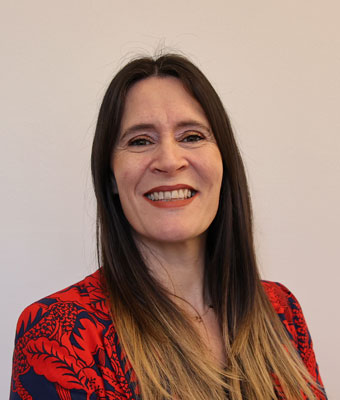
I welcome the opportunity to raise the issue of the maintenance of social housing in Dún Laoghaire and Rathdown. I am a TD for the Rathdown constituency and there is often an assumption it is an affluent area only. I have to say I have made it my business to make sure those living in deprivation in my constituency know I will represent them in Dáil Éireann as the only Opposition TD and a new TD in the constituency, because many people in the community are simply forgotten.
My team and I have got a huge number of queries about this and I have visited some of the homes to see for myself. I have genuinely been appalled at the standard of accommodation that some of our social housing residents live in. The key issue is that they are simply living in substandard conditions and I would like to get into some of the detail around it. There are blocks of flats all with the same issues of damp and mould but tenants are sometimes told it is their fault when clearly these are structural issues. I have spoken to families who have been told that while their living conditions are inadequate, they are not eligible for transfer because they are in arrears. We all know the complexity and difficulty that people go through to get to a point of being in arrears and how difficult it is to get out of arrears. To compound this by stating their accommodation crisis cannot be fixed really is hugely problematic. Their health and well-being are severely impacted because they cannot pay rent for flats that are covered in mould and damp.
I will bring this to life for the Minister of State, because when I went for these visits, I spoke to some of the families involved. There were lovely moments with the children, speaking to them about their experiences. Despite all the odds, they really are thriving in various ways, but they are facing such awful challenges. Some children cannot bring their friends around to play. Their parents cannot have their friends around for a cup of tea. They have to time activities because the smell can be so unbearable at various times of the day that they cannot use certain rooms. They have to recycle clothes and toys because they get so damp and covered in mould. This is one of the areas where we really see the price of poverty; because they cannot fix these issues, they end up bearing multiple additional costs. We have massive housing lists but it is absolutely crucial that we have the funding available for local authorities to maintain the housing stock they already have. This does not mean we need to jack up the rents, as happened recently with Dublin City Council, but by funding it centrally as a core part of what local authorities do and should do.
I want to say from a human rights perspective how problematic this is. Obviously, we do not constitutionally recognise the right to housing, but if we accept there is a right for people to have a roof over their heads, if we do not provide for this and for adequate accommodation, it is so hard to realise the other rights that are fundamental to us, such as the right to education, the right to employment and the right to health. They are all impacted by the right to housing. Without a roof over our heads, it is impossible to realise them.
I want to name-check specifically St. Nathy's in Churchtown, which I found to be in a particularly dire condition. I also want to call out the work of local groups, including the Society of St. Vincent de Paul, that help families in the area. They see the situations that people live in, which are simply not mirrored in the private tenancies people enjoy in the same neighbourhood. This is simply not good enough for me. The State and the local authority as a landlord have to acknowledge this. It drives people into places of shame and stigma. As I have said, there are so many other ancillary and knock-on issues that people experience because of this.
We need to look at how local authorities can provide for adequate standards of social housing in the portfolio of offerings they have. Instead of saying we will wait for the next tranche of social housing, which again is an answer that some of these tenants get as they are told they will be available in the next tranche, we need to fix the conditions that people are living in right now.
I thank Deputy Gibney for raising this important matter and giving me the opportunity to update the Dáil on behalf of the Department of Housing, Local Government and Heritage. Critically, the management and maintenance of local authority social housing stock is, first and foremost, a matter for the respective local authority, in this instance Dún Laoghaire-Rathdown County Council, in accordance with section 58 of the Housing Act 1966. This includes activating and funding pre-letting repairs to vacant properties, implementing a planned maintenance programme and carrying out responsive repairs. Local authorities must also ensure their tenanted properties comply with the requirements of the Housing (Standards For Rented Houses) Regulations 2019.
Notwithstanding what Deputy Gibney has outlined on the statutory obligations, the Department also provides annual funding to local authorities, including Dún Laoghaire-Rathdown County Council, to complement the local authorities' own management and maintenance programmes. This funding is provided through the recent planned maintenance and voids programme, the energy efficiency retrofit programme and the disabled persons grant programme. These programmes, together with the Department's local authority estate regeneration programme, will provide €260 million to complement local authority social housing management and maintenance activities this year. This is an increase of almost €60 million on the amount provided to these programmes in 2025.
Ultimately, the selection of homes and the nature and prioritisation of works for inclusion in the programme is a matter for the local authority itself. In the past 12 years, the Exchequer has provided more than €31 million to Dún Laoghaire-Rathdown County Council for its own social housing management and maintenance programme.
A further €6.3 million will be provided by the Department in 2026. This includes €1.3 million for the revised planned maintenance and voids programme, which was rolled out to the local authority earlier this month and will support bringing more than 70 vacant social homes back into productive use in Dún Laoghaire-Rathdown. Critically, the new programme will build on the strong progress made in tackling local authority vacancy levels. As I mentioned in reply to Deputy Sherlock earlier, we have the enhanced buy and renew scheme which will be coming on stream in the coming weeks, the vacant refurbishment grant, and significant funding through the URDF for vacant and derelict properties.
The planned maintenance and voids programme now takes a more evidence-informed planned maintenance approach and the local authority has updated its management systems, with a further €4.2 million being provided through the Department of climate, energy and the environment through the SEAI retrofit programme. That will see an additional €800,000 being fed through the disabled persons' grant programme.
The management and maintenance of housing stock is a statutory requirement and a matter for the local authority itself. My Department will continue to complement the efforts of the local authority through a strategic approach to ensure that the management and maintenance of such stock is kept to a high standard.
I thank the Minister of State for those details. I appreciate that funding is important but I assure him that the €31 million is not reaching some of the families that I am speaking to. I want to emphasise, as I did in my initial contribution, that this is not just about funding. The way in which some of these families are being treated is also an issue. There are complex ways in which people arrive into situations of deprivation and poverty. They do not want to be in arrears and for them to then be penalised for being in arrears and not be able to access other accommodation that is more suitable, which will then help to lift them out of all of the other elements of poverty, is problematic.
I am careful about what I raise in the Chamber as Topical Issues because I appreciate that a lot of this responsibility falls to the local authorities. However, in my previous role in the rights and equality space, I did some work with a group that was involved in a case that went to Europe. I want to reference that case because the obligation lies on the Government and does not just sit with the local authorities. The European Committee of Social Rights in 2017 found that Ireland violated Article 16 of the European Social Charter due to substandard social housing. The issues that I am seeing in St. Nathy's and other places in my constituency are exactly the same as the issues faced by the 20 different social housing estates that were involved in that case. They were dealing with damp and mould and with local authorities who simply failed to fix it. The knock-on impacts and the generational poverty that we are baking in those communities and those families is hugely problematic. This is something that the Government must take into account. It is not just about the local authorities. While I appreciate that it is their responsibility, ultimately, to carry these things through, they need to be given the support, with both a carrot and stick element, by the Department to actually deliver for these families.
Again, I thank the Deputy for raising this important matter and for her contribution. We are in agreement that the standard of social properties being rented out by local authorities should be such that tenants have a good quality of life and their well-being and mental health are being protected. It is not acceptable for anyone to live in damp, mouldy or substandard conditions. That is why the Government has stepped up with additional funding for 2026, with the provision of an extra €60 million for the planned maintenance and voids programme. It is really important that we have access to good quality homes that provide the required comfort levels for the occupants. These homes must meet the standards set out within the rented standard regulation. That is critically important and non-negotiable from the Government's perspective.
As I said earlier, as public representatives we all have an obligation to engage with local authorities and their housing sections, especially when these concerns are raised to us. We need to respond and I accept that point. We have taken steps to improve the system but the local authorities themselves have the reserved function to allocate their own resources to these types of programmes and to enhance the housing stock within their areas. I am sure that Dún Laoghaire-Rathdown County Council has a lot more resources than we have in the west, in County Mayo, for example, in regard to property tax and resources generated on the ground. That said, I take the Deputy's point. We will continue to complement the work of the local authorities on stock improvement programmes. As elected representatives, we need to continue to hold the local authorities to account regarding the condition of their existing stock and to make sure it is up to standard.