An Garda Síochána
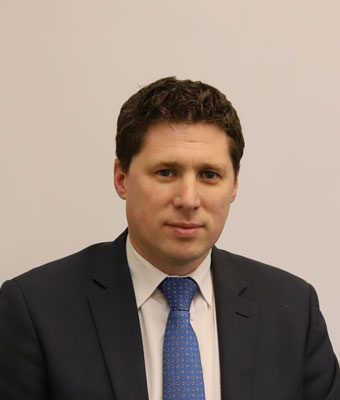
1. Deputy Matt Carthy asked the Minister for Justice, Home Affairs and Migration the number of gardaí who attested in 2025; and if he will make a statement on the matter. [20732/26]
For all the rhetoric, there has actually been very little progress made in tackling the Garda recruitment and retention crisis. There continues to be a severe over-dependence on overtime for routine Garda work. Considering the significant challenges gardaí will face this year, will the Minister inform the House of precisely how many gardaí attested in 2025?
The number of people we have in An Garda Síochána is extremely important from the point of view of enforcing the law. It is probably the most important part of the functions carried out by us, as Ministers, to ensure that the law we make in this House is enforced.
At present, there is a workforce of approximately 18,000 in An Garda Síochána. This includes 14,397 attested members, 3,527 Garda staff and 308 Garda reserves. Last year, 619 gardaí attested from the Garda College, which, I am pleased to say, was the highest number in seven years. If the Deputy wants to look at this from the point of view of the year of the date of appointment of the Government in January 2025, he will note as well that there was an extra attestation in February of this year, which brought the number who attested up to 786.
Recruitment is going in the right direction. The Deputy used the phrase "recruitment and retention crisis". There is no such crisis. In fact, even the representative associations do not now refer to a crisis. Resignations from An Garda Síochána are really low. Last year, 141 members of the force resigned. That is less than 1%. This is remarkably small when compared with nearby jurisdictions. I know recruitment is going in the right direction because in December, we took in 223 new recruits into Templemore. This is the highest it has been in years. If I can get up to 225 or 250 on each intake, we will get to where we want to be.
The Minister stated he wants to reach 5,000 attestations over the lifetime of the Government. It does not take much deduction to realise that 619 gardaí attesting in the calendar year of 2025 remains way below what is needed in order meet that goal. That number will come as a surprise to many people, especially when they have heard so much about the fact that over 11,000 people applied to join An Garda last year. That points to a crisis. It certainly points to a failure. Despite the welcome increase in the intakes into Templemore, there has to be a recognition the numbers are still nowhere near where they need to be. What is the Government going to do about this? What additional measures are going to be put in place? We have outlined proposals to increase both the training allowance and the number of training places and to encourage gardaí who have left the force to rejoin it. Has the Minister done any of those things?
We can agree on one thing, namely that it is heading in the right direction. It is certainly improving. The fact that we have seen the highest number of gardaí attesting in seven years is a very positive story from the point of view of the Irish public.
The Deputy is correct in stating that we ran two recruitment campaigns, in which there was huge interest, last year. We got 11,000 people expressing an interest in applying to join. We are processing those applications much faster. The fact that we got 223 new recruits into Templemore in December is a really positive story. If we can consistently get numbers like that, we will see attestations coming up to the figure of 1,000 and to more than that in the future. The reason we want to do this, as the Deputy will be aware, is because people want to see more gardaí on the streets. On a visit to Cork last week, I heard a very positive account of extra Garda visibility. The same applies in Limerick, as the Minister of State, Deputy Collins, will attest to. A huge amount of work is being done to get the numbers up. That work will continue.
Of course we want to see more gardaí across all the regions, but we also need to address the failure in terms of numbers. In that context, I am sure the Minister will accept that there is far to much reliance on overtime for routine police work. We have far too few community and roads policing gardaí. We are in what is probably an unprecedented year, with the EU Presidency and the upcoming Ireland-Israel UEFA Nations League game, which, unfortunately, is still going ahead. We still have the potential of a visit by Donald Trump in September.
The Minister mentioned the representative organisations. My understanding is that the Garda Representative Association, GRA, has threatened to refuse voluntary overtime as part of its dispute. An Garda Síochána has classified more than 40 events that will need to be the subject of major security operations during the Presidency . If we are going to rely on overtime for those, it will invariably mean that there will not be enough Garda visibility in areas outside of Dublin. What assurance will the Minister provide to communities that these additional responsibilities for gardaí will not leave their areas under-policed when the events to which I refer are taking place?
Overtime is always an integral part of the service provided by An Garda Síochána. Every year, there are major events that have to be policed. I have spoken extensively to the Commissioner about the commitments arising from the EU Presidency and the Ireland-Israel soccer match. Whatever happens, the Commissioner has informed me that there will be resources available to police these events.
We want to get as many people as we can into An Garda Síochána. A number of significant changes made in recent times have had a really positive impact. I refer, in particular, to changing the recruitment cut-off age from 35 years to 50. We are now seeing people who are in their 40s and in sedentary careers wanting the excitement of a career in An Garda Síochána. These individuals are joining the force. Also, increasing the mandatory retirement age to 62 has had a very positive impact. I have a very good relationship with all of the associations. They are very co-operative. Like me and, I presume, the Deputy, they want to see what is best for An Garda Síochána and the Irish public.
Common Travel Area
2. Deputy Matt Carthy asked the Minister for Justice, Home Affairs and Migration the position regarding all discussions he has held with British authorities on the implementation of the EU migration and asylum pact and its impact on the common travel area; and if he will make a statement on the matter. [20733/26]
I was watching in for parts of the Seanad debate on the International Protection Bill. I was interested in, but not a bit surprised about, the failure, either in the Bill or in the EU migration and asylum pact, to have due consideration for the common travel area. The latter was a dominant part of the debate. What discussions has the Minister had with the British authorities regarding the pact's implementation and its impact on the common travel area?
I thank the Deputy for his very opportune question. Last Friday, at the UK-Ireland Summit 2026 in Cork, I had a discussion with the Secretary of State for Northern Ireland, Hilary Benn, in respect of the common travel area, the new legislation that we are going to enact here and the need to ensure that there will be no abuse of the common travel area. Regrettably, we do see the latter between this jurisdiction and Northern Ireland. Last month, I had a discussion by way of a remote meeting with the Home Secretary, Shabana Mahmood. At that meeting, we had a very extensive discussion about issues relating to asylum, the common travel area and other matters of mutual interest.
As the Deputy knows, the UK is not only not part of the EU asylum pact, it also decided to leave the EU and go it alone. It is fair to say, without being too critical of the UK, that this policy has not worked. In order to be able to combat abuse of the common travel area or asylum mechanisms, countries need to work harmoniously with each other. That is why working within the EU is the best approach from Ireland's point of view. The number of asylum applications in the EU last year were down by 20%. In Ireland, they were down by 30%. They were only down by 4% in the UK.
At present, as the Deputy will be aware, the UK is designated by me a safe third country. Once the legislation commences on 12 June, it will again be designated as a safe third country. As I have repeatedly stated, movement in the common travel area between Northern Ireland and the Republic is not permitted for people who are not citizens. I have engaged with the British Home Secretary on the measures that will be introduced, such as data sharing and operational measures. As the Deputy knows, Operation Sonnet is ongoing.
We can have our opinions on Brexit. In fact, I am sure we would agree on many points. However, we would also need to agree on the fact that Brexit is a fact of life and that we find ourselves in a unique position. It is a fact that no other state which has signed up to the EU migration and asylum pact is also part of a common travel area with a state outside of the Union. The Minister has repeatedly made the claim, as have other Ministers, that the majority of international protection applicants enter the State via the common travel area. In fact the Minister's review of Protocol 21, which was published last year, acknowledged that the opt-outs we had to things like the migration pact were important in order to maintain the common travel area.
The Minister referred to discussions he has had with British Ministers. Correct me if I am wrong, but I did not hear anything about either a fundamental change or a new bilateral agreement being on the cards.
Does the Minister not accept that this is what is required between this Government and the British Government if we are to have an asylum process that works?
The basis upon which we think the greatest number of those claiming asylum in Ireland are coming from the UK is the number arriving at the International Protection Office. This year, 90% of people who have claimed asylum in Ireland did so at the IPO. That leads us to believe they are coming across the Border with Northern Ireland. It is a huge challenge whether we are in the migration pact or not. The simplistic view sometimes put forward is that if we had not gone into the migration pact, we would not have this issue. We would have this issue because of our land border with the United Kingdom and the common travel area. We need to emphasise that people who are not citizens of Ireland, the UK or the Channel Islands are not allowed to travel back and forth across the Border on the island of Ireland. We also need to recognise that I have discussed the issue of data sharing with the British Home Secretary and will reach agreement with her on that. That is extremely important in resolving abuses of the common travel area, as are operational measures between An Garda Síochána, the Police Service of Northern Ireland and Border Force. As to getting a written agreement with the British, I cannot force the British Government to enter into an agreement to take back asylum applicants from the Republic.
You can try, Minister. That is what I am asking. What efforts have been made? I will touch on the designation of Britain as a safe third country. Let us assume the figures the Minister has given are accurate, although a lot of work needs to be done on the collection of data as to where IP applicants are coming from. Section 220 of the International Protection Bill 2026 requires the Minister to be satisfied that any proposed safe third country fully meets EU standards, particularly in relation to non-refoulement and access to a functional asylum system. Will the Minister outline the assessments that his Department has carried out as to the prospects of Britain meeting these criteria and how these will be assessed? Has analysis been carried out as to what happens if Britain does not meet statutory and EU requirements or if a legal challenge to such designation in the courts were to be successful? The Minister will agree that if the figures he has cited are anywhere close to the reality, this would create huge problems, which could potentially derail the entire system he intends to implement.
At present, the UK is designated by me as a safe third country. That designation was done on the basis of an assessment. By 12 June, I will designate it as a safe third country under the new legislation, provided I get the assessment. There is no reason to think the assessment will change. Circumstances in Britain have not changed since I previously designated it as a safe third country. On the impact of this measure, under the legislation, certain applications from people who come from a safe third country will be inadmissible. It will also be possible to return people to a safe third country.
As the Deputy will know, when it comes to the deportations that take place and that have taken place, I can only deport or remove people to countries that are prepared to receive them. I cannot just charter a flight, land it in the UK and say "Here you are". Co-operation with the UK is required. I have a very good relationship with the Home Secretary. There is recognition of the issues that arise in respect of the common travel area and there will be an agreed response from the Irish and UK Governments. It is a difficult challenge. Can the Deputy come up with a simple response to it? I am not being facetious but the only way to stop it is to put a hard border on the island and we do not want to do that.
Prison Service
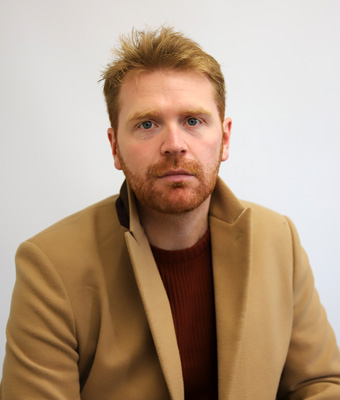
3. Deputy Gary Gannon asked the Minister for Justice, Home Affairs and Migration if he will respond to reports that women prisoners are being held in degrading and overcrowded conditions in the Dóchas Centre; and whether the Government accepts that continuing to rely on incarceration without sufficient investment in alternatives to custody, risks simply warehousing vulnerable women in the prison system. [20842/26]
Will the Minister respond to reports that women prisoners are being held in degrading and overcrowded conditions in the Dóchas Centre? Does the Government accept that continuing to rely on incarceration without sufficient investment in alternatives to custody risks simply warehousing vulnerable women in the prison system? The phrase "warehousing vulnerable women" is not something I have concocted myself. It was used in a report presented to the Minister's Department, which has yet to be released.
I thank Deputy Gannon very much for his question. I am concerned about overcrowding in the Dóchas Centre, the female prison in Mountjoy. To make the House aware of some statistics regarding the centre, as of yesterday, there were 223 women in custody in Mountjoy, 29 of whom were on mattresses. The centre's bed capacity is 146. I am concerned about this. I previously said that I do not have the same level of concern in respect of the women's prison in Limerick, which I know the Deputy has visited. That is true because, as I am sure the Deputy will appreciate, that is a very modern prison.
What is the solution to this? Part of the solution has to be creating more spaces within the Dóchas Centre. I am not saying that is the only solution but it must be part of it. There are plans to build another 65 spaces across the prison system in 2026, 26 of which will be new spaces for the Dóchas Centre. That will increase capacity to 172. As I have indicated previously, I have got approval from Government to develop further prison spaces between 2026 and 2030. The projects that I have got approval for include an extension to Rowan House at the Dóchas Centre that is expected to accommodate 50 female prisoners. There has to be some recognition that more spaces are required. That is my response in respect of that.
An awful lot of work is also being done to ensure that services are provided to facilitate women in availing of supervised temporary release. A scheme is being run by the Irish Prison Service to support the needs of women who are transitioning from prison to the community. The pilot is located in Limerick women’s prison and I am advised that, to date, over 50 women have accessed the scheme, with approximately 25 successful completions. An evaluation of the programme is under way. I will give the Deputy further information on my proposals when I respond to him again.
I thank the Minister for his response. The figures are fairly stark. Last night, the Dóchas Centre was at 153% of its capacity and 29 women were sleeping on the floor. Can the Minister imagine what that does to a person's capacity for rehabilitation and sense of place in the world? I understand these people have committed crimes and that there are consequences to that but the consequences of placing people in these conditions go well beyond what is appropriate to the crime, impacting their families and their children. I appreciate the Minister has said that 26 extra spaces will be provided at the Dóchas Centre during his term but that same report that has not been released yet also highlighted the fact that the Garda National Immigration Bureau is showing up at overcrowded prisons to place people into them without any consultation with the prison guards. That is extraordinary and it is happening on the Minister's watch. These 26 extra spaces will not fix this. We need something far more radical and different.
To deal with the issue of the report, that report will be published this week. I only got to look at it in the past ten days or so. I have approved it and it will be published this week. On the other measures that can be put in place, I do not believe prisons are the solution to all of the ills of society. We obviously need a combined approach in respect of these issues. The Probation Service plays a very important role. This year, it is providing over €21 million in funding to 60 community organisations to cover the costs of providing services and programmes. Probation obviously plays a big role. When this House enacts the miscellaneous provisions Bill, it will provide for the greater use of community sanctions and community service orders.
With regard to what the Deputy has said about deportations, I recognise the pressures this puts on the prison system. Perhaps we need a separate place where people who are going to be subject to enforced deportation can be detained. That is something I will look at.
I would definitely like to hear a lot more about these separate places because we still have not ratified the Optional Protocol to the Convention against Torture, OPCAT, on the prevention of torture. Today, I am here talking about the Dóchas Centre. A couple of weeks ago, I was talking about the women's prison in Limerick. The conditions in the men's prisons are extraordinary. We had the Inspector of Prisons before the committee a couple of months ago and his contribution was jaw-dropping. He spoke about conditions in our prison system being tantamount to torture. We know recidivism rates are nearly seven out of ten in this country. Is it time to be more radical? What would a citizens' assembly on prisons and incarceration in this country look like? We should begin a full exploration of our prison system. What is working and what is very clearly not working? What do we need to do differently and what can we do differently? Do we really need to imprison women whose children will have to visit them and be traumatised by that prospect?
There are a lot of things we can do if we had a vision for something very different. Clearly, what we have is not only not working, it has been described as being tantamount to torture.
I do not agree that it is tantamount to torture. Like the Deputy, I have visited the majority of prisons. I have visited seven, and I will be visiting another one very shortly that I have not visited already. There is a lot of excellent work going on in prisons. Many people who come out of prison do not go on to offend again. That is particularly the case in respect of serious offences. I am well aware that there are people in prison who, because of addiction issues or chaotic lives, do go on to commit further offences. That is a challenge in terms of how it can be responded to.
I engaged with the Inspector of Prisons, Mr. Kelly, and had a good conversation with him in respect of this issue. At present, we have about 5,800 people in prison. We have a population of 5.5 million. Ours is not a society that is at the higher echelons of incarceration, either in Europe or across the wider world. We have a moderate view in terms of who needs to be incarcerated. As the Deputy knows, however, there are debates in this House on a variety of issues, including that of victims saying that they want justice, and justice sometimes requires incarceration.
Miscarriages of Justice
4. Deputy Matt Carthy asked the Minister for Justice, Home Affairs and Migration if he will establish a historical investigations unit, as proposed by the Irish Council for Civil Liberties and the Committee on the Administration of Justice, to allow for independent police investigations into unresolved deaths and incidents of torture or ill-treatment; and if he will make a statement on the matter. [20734/26]
I am sure the Minister's office is even more inundated than mine in respect of this matter. Anybody who has ever been a member of the justice committee will have dealt with a huge number of outstanding legacy issues relating to the ongoing legacy of the Garda heavy gang, unresolved cases relating to the conflict and other historical investigative failures. How we have dealt with those matters has been a matter of much debate. The Irish Council for Civil Liberties and the Committee for the Administration of Justice proposed the establishment of a historical inquiries unit. That proposal merits consideration. Is the Minister considering the establishment of such a unit?
We need to be balanced about this matter. Obviously, there are legacy issues arising from the Troubles in Northern Ireland. The Deputy mentioned the Garda heavy gang. We also have to acknowledge that murders carried out by the Provisional IRA give rise to legacy issues that need to be resolved.
One of the inadequacies of the Good Friday Agreement is that it does not really deal with legacy issues at all. Governments have been grappling with this matter since then. Regrettably, and this applies in many instances, legacy is being used as a political tool. However, we do have to try to deal with legacy issues. Where there are historical offences, it is important that we try to resolve them.
It is important to say that there is no de facto moratorium or amnesty in this jurisdiction in respect of any murders or serious criminal activities that took place during the Troubles in Northern Ireland. That does not happen. There are many serious events that occurred that have still not been resolved. People have not got justice in respect of them. From speaking to An Garda Síochána and officials within my Department, I know that the relevant files remain open.
There has been progress recently. The framework agreement between the two Governments has given rise to a commitment that there a statutory regime to deal with Troubles-related killings, as they are referred to, or incidents will be put in place. That legislation, as the Deputy knows, is going through the Houses of Parliament in the UK. In May, I will bring forward a general scheme to Government in respect of corresponding inquiries here. The Garda Commissioner established a Troubles legacy liaison unit at the beginning of the year. That is an important development.
Of course, there are a range of historical cases. I am talking about cases in this State in respect of which justice and accountability have not been delivered. There are well-known cases of collusion and cases relating to the legacy of the conflict. The actions of the Garda heavy gang need to be addressed, particularly as those involved were central to a number of miscarriages of justice. The 50th anniversary of the Sallins case is approaching. There was no accountability for the actions of the gardaí involved in those events. The Kerry babies case is an outstanding area of concern. Little or nothing has been done regarding a number of conflict-related events, including the killing of Eddie Fullerton, the Dublin Airport bombing, the Dublin-Monaghan bombings and the case of John Francis Green in my constituency. All of these cases cast a shadow in terms accountability and give rise to an ongoing burden for the families involved.
The Irish Government has supported the establishment of an historical inquiries unit in the North. Why will it not do the same in this State?
The Deputy has fallen into the trap that I identified earlier. It is difficult not to do that. He stated that the actions of the Garda heavy gang need to be addressed. The murders carried out by the Provisional IRA also need to be addressed. The Deputy referred to Eddie Fullerton, a Sinn Féin councillor who was brutally murdered. The murder of Billy Fox, a Member of these Houses, needs to be addressed. The murder of Robert Bradford needs to be addressed. We cannot be selective about which atrocity we want to focus upon. That is why the legacy framework that has been agreed to by both Governments is welcome.
The Deputy mentioned the Sallins train robbery. I have already given a response on that matter. I am not going to have a public inquiry in respect of it. If it comes within the parameters of the legacy issues in due course, so be it. The issue in that regard relates to a robbery occurred 50 years ago. Two people had their convictions overturned in 1980. A presidential pardon was given to a third person in 1992. Financial settlements were subsequently made. I want to focus on where justice has not been delivered.
That answer speaks volumes. Let me be clear: every family that lost a loved one deserves truth and justice. I say that without equivocating or engaging in whataboutery. Let us deal with the Sallins case. Anyone looking at the detail of that matter can see that the investigation was rotten from start to finish. People's confessions were coerced, and that undermined the justice system. The problem is that, under the current framework, the Minister can just say that he does not think there should be a public inquiry. It should not be up to him, me or any other politician to decide which families are entitled to truth and justice. We should have a stand-alone mechanism for people, regardless of their background, the amount of money they have or their level of political influence. If individuals are entitled to the truth, they should have recourse to get it. Otherwise, how do we not create a scenario whereby there is the potential for political favouritism and a feeling that some people are entitled to truth and justice and others are not? That is why the proposal from the Irish Council for Civil Liberties and the Committee for the Administration of Justice warrants consideration.
I am going to conclude on a point of harmony. The Deputy makes a valid point. We do not want people to be selecting individual atrocities for the purpose of investigation. That is what the legacy framework is about. It will predominantly deal with Troubles-related killings. Those are the ones that have to be prioritised in the context of families that have not got justice yet and where there have been no prosecutions let alone convictions. There has been political agreement, but I would like to see legislative co-ordination between both jurisdictions to allow Troubles-related killings to be inquired into. Inquiries would focus on killings that happened during certain periods, and we would not have to decide who would get a public inquiry.
The call from the Irish Council for Civil Liberties related to an inquiry in respect of Sallins. I am not going to do that. I hear the point the Deputy is making. We will benefit from having enacted legislation in both jurisdictions that allows for an independent quasi-judicial inquiry into and investigation of Troubles-related killings.
Animal Diseases
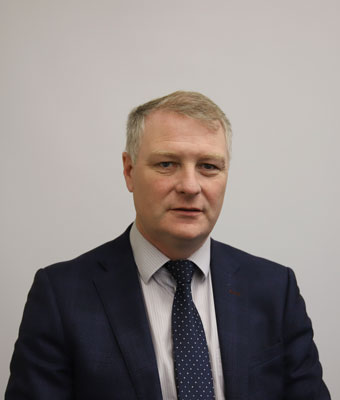
77. Deputy Martin Kenny asked the Minister for Agriculture, Food and the Marine the position regarding his Department’s response to the outbreak of bluetongue; and if he will make a statement on the matter. [20931/26]
I would like an update on the position regarding bluetongue. As we know, unfortunately, the disease has been detected at a number of sites throughout the country. Testing is ongoing. This situation is having an impact on trade, particularly the live export trade. I would like to get an update on where the Minister and the Department are on this, and the progress that has been made. Today, we are talking about the temperature possibly going up to 18°C. If we see an increase in temperatures, that will be a significant problem because it creates a situation where bluetongue can become a very serious issue.
I thank the Deputy for raising this important issue and giving me the opportunity to provide an update on the situation. Bluetongue is a viral disease that can cause severe clinical signs in ruminant species, such as cattle, sheep, goats, deer and camelids, such as alpacas and llamas. There are many different serotypes of bluetongue virus, and bluetongue virus serotype 3, BTV3, is the serotype circulating in Ireland and Northern Ireland. Bluetongue does not affect human health or food safety, and meat and milk are safe to eat and drink. I acknowledge the stress that the presence of bluetongue must be causing farmers, particularly those in the high-risk regions of the south east and the east.
Bluetongue has been detected in counties Wexford, Wicklow, Louth and Kildare. Modelling carried out by the UCD centre for veterinary epidemiology and risk analysis, CVERA, identified that the most likely time for an incursion of infected midges blown over to Ireland from Great Britain was probably in late September last year. Its modelling suggests that the incursion could have occurred along the south-east and east coast, including counties Cork, Waterford, Kilkenny, Wexford, Wicklow and Louth. My Department is undertaking ongoing surveillance nationally, covering all parts of the country. This includes surveillance at abattoirs, testing of animals submitted to my Department’s network of regional veterinary laboratories, investigation of clinical suspects reported to my Department by farmers or vets, and targeted surveillance in counties identified by the modelling undertaken by UCD.
My Department has undertaken regular engagement with farm organisations and stakeholders across the industry, as well as with counterparts in Northern Ireland’s Department of Agriculture, Environment and Rural Affairs since Ireland’s first case was confirmed. This has included multiple webinars for different stakeholder groups on bluetongue and its implications. The objective is to provide farmers with information regarding the potential impact of bluetongue and the broad geographical areas where it is likely to be present, so they can make decisions on whether to vaccinate. Where appropriate, farmers can vaccinate during spring to ensure their stock is protected in advance of the higher-risk summer months, when warmer temperatures make virus replication possible within infected midges. I will provide more detail in my supplementary answer.
I appreciate that a lot of work has been done in respect of this, and that the Department is doing a lot of testing to try to ensure we detect the places where this has arisen. The Minister gave a list of counties where bluetongue has been detected. Are these antibodies that were a consequence of previous infections going back to last autumn or summer, or is any of this potentially a new spread of the disease? That is something we really need to get a handle on.
With regard to the symptoms, certainly, in the early cases that were detected, the animals were not displaying any symptoms, which makes it very difficult. We tell farmers to be vigilant and to do everything they possibly can to have good hygiene and good husbandry on their farms. However, if the animals are not displaying symptoms, it is very difficult for them to do that. I understand that in some of these cases, animals are starting to show more symptoms and they are getting sick. I would like to get an update on that.
If farmers are going to have to vaccinate animals, what is the cost of the vaccination programme to which the Minister referred going to be?
How quickly can it be rolled out? Is that in itself going to have an impact on our animal trade?
In my initial answer I said that different forms of testing have discovered those cases. The very first case was found in the standard testing of a carcase post-slaughter in an abattoir, which identified that there were antibodies present indicating that the disease was present last year.
A historical case.
Yes, exactly. We investigated the remaining animals in that herd and in the neighbouring herds within the radius of the farm. Some of them were found to be positive, in the sense that they had it previously. If it is the case that we find one that is positive in January or February, how we respond in January is very different from how we respond in July because an animal will only be infectious for about 60 days, so therefore they would not be infectious heading into the high-risk period and beyond. The first ten or 11 cases I am aware of - the majority - were all asymptomatic and were not displaying any symptoms.
On the point the Deputy makes around vaccines, that is a commercial decision for farmers. I took the timely step of approving vaccine use once the first case came into Northern Ireland. Before that, it was very much the case that we wanted to lock down and hold back in order to be able to identify it but once the vaccines were available it allowed suppliers to stock up. More than 1.1 million vaccines will be available for use this year.
I understand that vaccines are approved and available but it will cost farmers to vaccinate. Will there be any assistance in that regard, as there could be quite an outlay for farmers?
TB is the other big vaccination programme we have in the country at the moment for animal disease and wildlife is obviously a serious issue. If bluetongue becomes a disease that we have to deal with across the State, will the problem arise that it will also spread? Could it potentially be hoarded within the wildlife sector, in particular in deer, which could then be spread to cattle or sheep?
The other issue that needs to be addressed in some sense is the impact on trade and in particular live exports? How will that be dealt with and what proposals does the Minister have in respect of that? There is quite a way to go here. If bluetongue is going to be in Ireland and we are not going to be able to prevent it - that seems to be the situation - how are we going to deal with it and go forward?
First and foremost, the cost of the vaccine is a commercial decision. We have made sure there is enough availability, working with the private suppliers of the vaccines. I am reviewing all options open to me to be able to support the sector in what is a very new challenge for us at a very challenging time. This is a real and dynamic response to a real and dynamic situation that has been evolving. We did a remarkable job keeping it off the island. I commend both private veterinary practitioners working with farmers, regional veterinary offices, and the Department to ensure the level of vigilance that was in place. That allowed us to respond in real time. The key responsibility for me and my Department is to make sure that we continue to get market access. Deputy Kenny saw how quickly we moved on skins and hides for China and regained access there. We were able to get measures in place to deal with susceptible animals moving from member states. We worked with them under health certificates as well, including the movement of animals for breeding purposes from North to South. They were all really important measures.
I thank the Minister.
On Deputy Kenny's point about wildlife, this is not passed from animal to animal but obviously it will be a challenge if the deer population has it and a midge lands on it but they will not pass it to each other.
Horticulture Sector
78. Deputy Robert O'Donoghue asked the Minister for Agriculture, Food and the Marine in light of warnings from EU farm organisations that the price of EU-produced fertilisers has increased by approximately 25% in the past month compared with the 2024 average, and given that fertilisers account for between 15% and 30% of horticulture farmers’ input costs on average, the steps he is taking to support growers and the horticulture sector who are already facing severe pressure from rising input costs and negative margins across the arable sector for the third consecutive year; and the measures being considered to mitigate the impact of escalating fertiliser prices on the viability of growers and horticultural producers. [20735/26]
We have had warnings from European farm organisations that nitrogen fertiliser imports into the EU have fallen by 80% since the carbon border adjustment mechanism, CBAM. What assessments has the Minister made on the likely consequences it will have for fertiliser prices and the availability for the Irish horticulture industry in 2026? Has he raised the concerns with the European Commission given that growers of fruit, vegetables and protected crops are already under severe cost pressures and further increases to the price of fertiliser due to the conflict in the Middle East could undermine domestic food production?
I thank Deputy O'Donoghue for the question. The Government fully recognises the importance of the horticultural sector to the economy and its contribution to food security in Ireland. My Department is closely monitoring developments regarding input costs. The current conflict in the Middle East is putting upward pressure on energy and fertiliser prices. The Strait of Hormuz is currently closed, leading to delays in the transportation of fertilisers. It has been estimated that 25% to 30% of global nitrogen fertiliser exports pass through the Strait of Hormuz.
Agriculture in the EU as a whole is vulnerable to shocks in the availability and price of fertiliser due to limited internal production capacity and a reliance on imports. Ireland does not produce fertilisers and therefore is exposed to market shifts. It is too early to assess the full impact of current input price pressures on horticultural production systems and, in turn, on farmer margins. The impact will depend on how long the disruption lasts, whether physical energy production infrastructure is damaged, and how secondary markets respond. My Department is meeting with the fertiliser importers this week and will continue to monitor the situation closely.
My Department provides a range of supports to growers in the horticulture sector through a number of schemes, including the scheme of investment aid for the development of the commercial horticulture sector, the EU producer organisation scheme for the fruit and vegetable sector and the schemes of investment aid for innovation and diversification in horticulture.
The Government is fully committed to the Irish horticulture sector. The National Strategy for Horticulture 2023-2027 sets out a clear vision to grow a more profitable, value-added sector, driven by innovation and sustainability and provides a roadmap for the sector to achieve this potential. My Department is working collaboratively with stakeholders to progress all key strategic actions in the national strategy for horticulture.
I accept that we do not know when the war in the Middle East is going to come to a conclusion but does the Minister of State accept or acknowledge that if fertiliser prices rise again - compounded by high gas and fuel inputs - that may make many Irish fruit and vegetable producers unviable? We currently import 83% of our vegetables. This is a food security issue. There were 600 growers 20 years ago and there are 73 now. I am calling for a firm commitment to targeted supports - like the Minister, Deputy Jim O'Callaghan, spoke about in the Dáil yesterday - for the horticultural sector, and a dedicated horticultural crisis fund like we brought in during the spike in prices at the start of the war in Ukraine. The agriculture sector is worth €19 billion, yet the focus in here is always on the beef and dairy sectors - fair play to them, they are well represented. My constituency is where the growers are - the market garden of Ireland in Dublin Fingal West. If we got half the attention the beef sector gets, we would be doing really well. It is time to give the horticulture sector its due to develop the potential it deserves because that is where our real food security lies.
Deputy O'Donoghue is so correct in everything he says. If we take the events of last week, one of our highly respected carrot producers went into liquidation. That is a situation I, the Department, and the Government find very concerning. It drives home now more than ever before that the customers - the people who go into shops - should be looking to try to buy Irish produce. We are better at producing our goods than anyone else. Our growers are better than anyone else but it is up to us. It is like the local post office: if you do not use it, you lose it. It is the same with our vegetables. Of course the geopolitical uncertainty in the Middle East is going to put unreal pressure on energy and fertiliser prices. The price of natural gas and oil are key components in fertiliser production. The national fertiliser database import figures show fertiliser stocks increased during quarter 4 of 2025, in advance of the introduction of CBAM, which stands to the sector in terms of supply in the early months of this year.
I thank the Minister of State.
What we are hoping for is that the situation will not be a repeat of 2022.
I could not agree more with the Minister of State. We should buy Irish. We should all be looking at that. The horticulture sector is under immense pressure due to conflict and climate change, and costs have rapidly increased over the past 20 years. I have worked in the sector. I know the amount of toil that goes into it. I have picked and packed every fruit and vegetable under the sun at some point in the past 30 years. When we had 54 days of rain in the north county, that did not make it easier to plough or to plant. Welgro produce cucumbers in glasshouses in Rush. It uses gas to heat the glasshouses to grow the vegetables. Its energy costs will go from €200,000 to €400,000 a year if prices remain the same.
That is with fertiliser prices on top. This snowballing of costs is not viable. Our growers need support and they need it urgently. I implore the Minister of State to look at introducing a crisis horticulture fund, like we did during the price spike arising from the war in Ukraine.
The Government will, of course, continuously assess the situation and try to respond in the most proactive and helpful way we can. It is too early to assess the full impact of increased energy and fertiliser costs but any spike in those prices obviously will have an impact on farmers' margins. The impact on fertiliser price will depend on how long the disruption lasts, whether physical energy production infrastructure is damaged and how secondary markets respond. Ironically, the concerns relating to the price-raising effect of the CBAM regulation caused the Irish farming industry to purchase significant volumes of product in advance of its coming into full effect on 1 January. As a result, it is understood there may be sufficient for fertiliser stocks to last until mid-April.
The national fertiliser database import figures show fertiliser stocks increased significantly during quarter 4 of 2025. That means there are reserves of fertiliser in the country. Many farmers thought ahead and have bought fertiliser already, meaning any fertiliser price shock may not be as acute as in the spring of 2022. The Deputy will recall that at that time, a pallet of fertiliser was like a pallet of gold because of the massive increase in price. We hope to be able to avoid a situation like that. If we look at the events overnight, the uncertainty that is there is something the Government can only follow and monitor. We will do our best to support the sector.
Fishing Industry
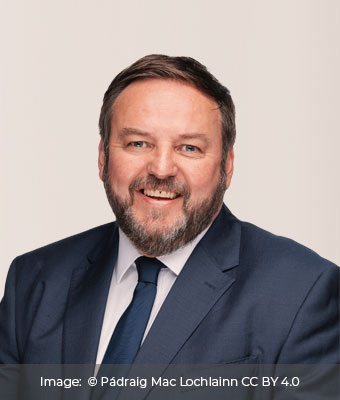
79. Deputy Pádraig Mac Lochlainn asked the Minister for Agriculture, Food and the Marine if he will campaign for the reform of European beneficial ownership laws to ensure transparency and accountability on the ownership of fishing vessels and the allocation of fishing quota by states across the European Union and in quota transfer deals with third-party countries. [20934/26]
I am putting this question on behalf of my colleague Deputy Mac Lochlainn. Five Dutch corporations now control more EU fishing quota than do entire sovereign states, including island nations like ours. They also clearly wield significantly more influence than member states when it comes to quota negotiations. The outcome of the December Council meeting showed that to be true. These five corporations operate across multiple jurisdictions through complex ownership structures and operate fleets under the flags of both EU and non-EU member states. Does the Minister accept there is a serious concentration of control here, a conflict of interest and a real concern about corporate influence distorting EU fisheries policy?
As the Deputy knows, European beneficial ownership laws apply across economic sectors, including the seafood sector. I understand a package of new EU anti-money laundering rules, including rules in relation to beneficial ownership, was adopted as recently as 2024. The Common Fisheries Policy, CFP, basic regulation does not specify requirements regarding ownership of vessels, other than providing that a Union fishing vessel is one flying the flag of a member state and is registered in the Union. The Irish register of fishing boats is publicly available on my Department's website.
As regards quota allocation, the CFP provides that it is a matter for each member state to decide how its fishing opportunities, which are not subject to a system of transferable fishing concessions, are allocated to the vessels in its fleet. In allocating fishing opportunities, the CFP requires member states to apply transparent and objective criteria, such as contribution to the local economy. A system of transferable fishing concessions allows for a member state's quota to be allocated to individual fishers or groups of fishers, with that quota then being available to them to transfer, lease or sell to other vessel owners. This is commonly known as an individual transferable quota, ITQ, system.
The last reform of the CFP set out the option for member states to introduce ITQ systems for their fleets. The European Commission had proposed that such a system be mandatory for all member states. Ireland was successful in strongly opposing a mandatory ITQ system on the basis it would inevitably lead to a concentration of ownership in a small number of international fishing companies with few or no links to Ireland's fishing communities. From an Irish perspective, we were very clear that we did not want to see what happened in other jurisdictions happening here. There were differing views on this at European level but we were allowed to make a decision on it as a competency of the Irish State.
In Ireland, fish quotas are a public resource owned by the State and made available to fishing vessels based on an overall policy framework that has been developed over the past 30 years. The result of this long-standing policy is that the Irish fishing fleet has retained a strong economic link with our coastal communities and has delivered economic activity, including vital employment, in those communities.
The reality is there is an oligopoly at the heart of European fisheries. If the Government will not name the problem, others will. I am prepared to do so here under parliamentary privilege. I refer to the so-called big five Dutch-based corporations, namely, Parlevliet & van der Plas, Cornelis Vrolijk, Van der Zwan, Alda Seafood and the De Boer family. Between them, they control an extraordinary share - almost 20% - of EU fishing effort. One in six fish caught in EU waters across the entire European Union is caught by one of these outfits. The actual number is likely much more; that is only what we know about. They exercise this control through use of a corporate maze, with vessels flagged across multiple member states and ownership structures that make meaningful transparency almost impossible. At the same time, as the Minister of State knows, these same interests are operating in non-EU waters, including off Iceland, the Faroe Islands and Norway, often in contexts where there are serious concerns about overfishing of our shared stocks in the north Atlantic, particularly in the pelagic sector. In effect, these corporations are ag imirt an dá thaobh. They are playing both sides of the system, influencing policy here while maximising profits everywhere.
Meanwhile, Irish fishermen are tying their boats to the harbour wall and coastal communities are being hollowed out. The Minister of State knows this as he has travelled to meet with them. We have a minuscule and utterly disproportionate share of quota in our own territorial waters. It is a classic case of the tail wagging the dog.
I call on the Minister of State to respond.
The Government must accept that EU fishing policy is being distorted by this reality. It warrants more than just self-congratulations and pointing to the small concession Ireland received from the European Union.
You are way over time, Deputy.
This issue needs an all-of-government approach. It must be investigated and taken very seriously.
I ask Deputies, the Minister and Ministers of State to stick to their allocated time. I do not want to get into a crossfire exchange with Members. I ask for greater efficiency in the use of their time.
I will try to keep to the time. I thank the Deputy for that clarification. I am fully aware of the concerns expressed by fishermen about the capacity of large corporations that have bought up quota from other member states that chose to privatise their quota. We have protected our quota in the interest of coastal communities.
There is an ongoing evaluation of the CFP, which is expected to be published in May of this year. I expect it will lead to a review of the CFP, as part of which opportunities will arise in relation to what the next formation will be. We have a very significant interest in that in a context in which certain species are now entering Irish waters as a result of climate change, which could be of benefit to our fishers. We will be working hard to try to achieve quotas in those areas.
At its core, this issue is about sovereignty, fairness and the very survival of our coastal communities. Everybody knows who these corporations are. There are published reports and investigative reports. There is clear evidence of the scale of their control and influence. They wield more control than does a sovereign member state of the EU. Previous Fianna Fáil and Fine Gael Administrations ceded sovereignty over our territorial waters to the European Union and now the Union is looking us in the face and regifting it to corporations that are running rings around us and laughing at us all the way to the bank. Their well-placed lobbyists are doing better than we are in quota negotiations.
The result is that fishermen all around our coastline, including in the Minister of State's county and my county, are tying their boats to the wall because they cannot go out to sea. The coastal communities that do not have the ability to fish do not want handouts, supports or lectures about heritage and how great they are. They want to get out and fish. Meanwhile, these corporations are allowed to do what they want in our waters, in the waters of other EU member states and, indeed, in the waters of third states. My question to the Minister of State is really simple. Will he and the Taoiseach take a strong line on vindicating our sovereignty and ensuring these companies are not laughing at us all the way to the bank?
The issue is a little broader than what the Deputy has presented. There is a suggestion that somehow these corporations do better than us in quota negotiations but, in fact, they do not. Quotas are based on track record. If the quota goes down based on scientific advice, each country loses a share based on that species. I wanted to correct that point.
Where there is an issue, and it speaks to the heart of what the Deputy is saying, is with the idea of playing both sides of the fence, being within the European Union and accepting its rules but also gaming it a little bit by having considerable interest in third countries. The negotiations we have sought on sharing arrangements with third countries, from a European perspective, have not happened, notwithstanding the best efforts of the European Union to try to get a comprehensive sharing arrangement in place between us and those third countries whereby we would look to protect the stock and have, in effect, a level playing pitch for all fishers.
That is where I think that malign influence is causing difficulties. Issues like that will be raised as part of any review of the CFP.
Animal Welfare
80. Deputy Ruth Coppinger asked the Minister for Agriculture, Food and the Marine for an update on the drafting of a new animal welfare strategy for 2026 to 2030; and if he will make a statement on the matter. [21353/26]
I ask the Minister to make a statement on how the animal welfare strategy is progressing. I draw his attention to the fact that two countries, Wales and Scotland, have this week banned greyhound racing. Ireland is now going to be a complete and utter outlier. In banning it in Scotland, it will be an offence to set up a racetrack or for a dog owner to race a dog on one. The proponent of the motion said greyhound racing belonged in the past. The international consensus is to ban it. In Wales, it will come into force by 2030. Is it not time for us to transition out of greyhound racing?
I have a response here to the question the Deputy put down on the animal welfare strategy. The term of Ireland’s Animal Welfare Strategy 2021-2025: Working Together for Animal Welfare, our first ever animal welfare strategy, reached a conclusion at the end of last year. In 2025, a process was initiated to develop a new animal welfare strategy, which will act as a framework for engagement and collaboration to direct future activities with the aim of benefiting both animals and Irish society. Development of the strategy is now well under way following broad stakeholder engagement, including a non-statutory public consultation that was launched on 19 November and ran to 2 January. In excess of 1,750 individual submissions were received as part of that process.
In moving to the drafting stage, my Department will work through the issues arising from this consultation and other issues in this area, both from a national and international, particularly EU, perspective, as a final document evolves for publication, which I hope and anticipate will be in quarter 2 of this year. The new strategy will continue to adopt a one-health-one-welfare approach, acknowledging and valuing the interdependencies between human, animal and environmental health, and taking an evidence-led approach to policymaking, target-setting, monitoring and evaluation.
There was quite a variance in the topics raised in those 1,750 submissions. Some 1,250 individual submissions referenced a wide variety of issues; 123 were more substantive in nature; and 376 submissions were campaign-type submissions on one specific issue. Analysis of the totality of the submissions demonstrates that canine welfare, including control and breeding, is an issue of importance to the public.
This is a new area for me. I take on board the points the Deputy raised on the greyhound industry. I do not intend to ban greyhound racing here. It will not be a surprise to the Deputy to hear me to say that. The control of dogs from the pet perspective was the dominant issue raised in the public submissions to my Department. I am glad to have responsibility for it now and I am working on it.
I do not think the Minister should be pre-empting whether he will ban greyhound racing. I hope he will actually study the strategy and come out with a report from it. Are we not actually going backwards on animal rights in this country when Wales and Scotland, two countries we have close ties with and to which we are aligned culturally, are banning it while the Minister is doubling down on maintaining it? Dogs Trust Ireland, not a radical socialist organisation by any means, has pointed out that 869 dogs have died on racetracks in the last six years and that 2,343 have been injured. Racing at speed on oval tracks is dangerous for dogs in extreme weather. They have poor diet, very little enrichment in their lives and very little traceability. That has been pointed out by Dogs Trust Ireland, which tries to work with the greyhound industry. This is an industry that is being propped up by the State. Attendances have plummeted. It is not widely supported in our society any more because people have seen the dangers of having a racing industry that is just propped up by the State and is cruel for the animals involved.
It is unfortunate that if the Deputy intended to concentrate solely on greyhound racing, she did not just ask-----
It is just because of what happened this week.
It is unfortunate she did not ask a question specifically on that because her question was on the broader animal welfare strategy, which is much broader than that. I disagree with some of the points she made, which are a dreadful slight on the thousands of people who work in our greyhound racing industry and who love the dogs and care for them greatly.
They are facts.
A throwaway comment on the floor of Parliament where she says that there is hardly any traceability is not borne out by the facts. The financial support my colleagues in the Department of agriculture and I are happy to provide for the Horse and Greyhound Racing Fund has seen increased allocations towards the area of welfare.
On the question that was raised, I want to look at some of the success of the previous strategy on animal welfare from 2021 to 2025. Funding to welfare charities increased from the 2020 budget of €2.4 million to over €6 million distributed to over 100 organisations in 2023, 2024 and 2025. We saw the banning of fur farming. The Farm Animal Welfare Advisory Council was relaunched and the first chair of the UCD school of veterinary animal welfare and veterinary ethics was appointed. I will look to building on that in the next strategy.
My question was broad. I will happily talk about the treatment of wild animals, animals in captivity and farmed animals but I decided that two events happened in Wales and Scotland this week that were absolutely seminal and should make the Irish Government think as well. Part of the reason that the greyhound industry has been able to sustain itself is exporting greyhounds. That will now be less of an option if it has been banned in two countries neighbouring us. While €20 million was given to the greyhound industry in the last budget, only €6 million was given to animal welfare charities, which we know are screaming out for more funding for dog rescues, pony rescues and so many others. I agree with the Minister that there is a huge concern over the treatment of dogs in this country, including puppy farming and many other things. However, there is no need for the State to be propping up greyhound racing in the way that it is. It is only maintaining itself. Some 5% of racing dogs have died within one year. Surely that should be considered an absolute priority in the animal welfare strategy.
As I said, responsibility for canine welfare, and the control and breeding of dogs, has recently come into my Department. I fought for it in the programme for Government talks. I feel it is a better fit coming under the Department of Agriculture, Food and the Marine because we also share the responsibility for animal welfare. I look forward to introducing legislation later this year to tighten up measures and make improvements in dog breeding and so on. I have said that previously on the floor of the House.
The public consultation on this animal welfare strategy, about which the Deputy asked her question, bears out the priority this represents in the public's mind. I mentioned what comprised the majority of the submissions that were made. Given the progress that was made in the last animal welfare strategy, this is an evolution. Obviously, we all take responsibility for animal welfare really seriously and we continue to evolve that. We have increased investment in that space. I look forward to establishing a new independently chaired advisory council on companion animal welfare. The public consultation phase will also feed into that. The dog control stakeholder group has a key role to play here as well.
Live Exports
81. Deputy Michael Fitzmaurice asked the Minister for Agriculture, Food and the Marine if his Department is putting a fund in place to help offset the cost of live exports of animals in view of the extra cost incurred for vaccines and PCR tests for live exporters; and if he will make a statement on the matter. [20960/26]
Is the Minister putting a fund in place to offset the cost of live exports with the new requirements from different countries for PCR tests and vaccines? I ask him to make statement on the matter.
I thank Deputy Fitzmaurice for raising the important issue of live exports. Whether it is live exports or agrifood, my role and that of my Department is to ensure market access for Irish farmers' produce. We need to provide the greatest number of opportunities and outlets to give the best possible return for those who export it and the companies that handle it. Obviously, that will drive a return for the farmers who produce that agricultural produce.
At present, I do not have any plans to introduce a fund or specific financial support scheme to cover or contribute to the costs of vaccines or laboratory tests associated with live exports. These costs are considered part of the commercial and regulatory obligations associated with participation in certain export markets. While some export markets require vaccination or pre-export testing, in other markets this is not a requirement. My Department will, however, continue to engage with industry stakeholders and monitor developments in export requirements to ensure that Ireland remains competitive while maintaining the highest standards of animal health and welfare.
Specifically in relation to bluetongue, conditions of derogations applied by other member states are set by the competent authorities in those member states, not by my Department.
The vast majority of our exports of cattle, however, are to EU markets where no vaccination or pre-export testing is required.
I recently co-ordinated closely with my Northern Ireland counterpart, as the Deputy will be aware, to ensure that cross-Border trade had been able to resume with no additional requirements. That has been very important.
Since confirmation of bluetongue virus in Ireland in January, my Department has engaged successfully with a number of third country markets, for example, Algeria and Tunisia, to amend veterinary health certificate requirements to allow trade to resume.
That is my and my Department's role. It is to make sure that where there are blockages, my officials engage with officials in the relevant member state or third country and look to agree a set of conditions. Those conditions, however, are set down by the receiving country. We do not set them. We negotiate with those countries and try to make sure we have access.
I thank the Minister's Department for getting the health certs done in each country. I am not debating whatsoever what other countries do, and I agree with him that other countries set this down. However, the fact is that other countries in Europe have brought in funds to help with exporting. The Minister will be aware that in some of those countries, first, you have to quarantine and, second, you have to do either PCR tests or vaccines. A vaccine, no matter how you go, is €15.
The Minister knows as well as I do that we need a live export trade. In fairness to the live exporters, they go out and source the market. It is not Bord Bia that does it for them. They source those markets themselves. They do not have the same representation as the likes of the meat factories would have abroad. The Minister will have seen over recent weeks, especially since Christmas, the way the factories look at the charts in the league of meat prices throughout Europe. We are at the bottom now and the factories are basically taking advantage.
We need live exports. I know the Minister is in favour of them but, as regards the extra cost, no one saw this coming. Yes, exporters have to pay for boats and everything else, but these are new costs put on top of them. Would the Minister consider a fund?
While I accept that and accept it is difficult for exporters at the moment, and they are meeting a lot of competition from farmers in the marts for these cattle, too, because of a shortage of cattle and a big demand from farmers for them, which makes it a challenging space, I think we would be having a much different conversation here if I had failed to reopen trade with Northern Ireland and if we had failed to gain access to the likes of Algeria and Tunisia. I understand that the conditions for exporters are challenging and that there is that increased cost where certain countries have set down criteria, but no more than with food or drink requirements and certificates - we export our dairy produce, our beef produce, Irish whiskey and beyond to 180 countries around the world - the receiving countries set those requirements, as they are entitled to do. We have to work with them and negotiate around those.
I presume most of the points the Deputy raises relate to bluetongue. We have had a number of renegotiated health certificates and we have been doing that for the past two years now, mindful that there was a likelihood bluetongue would come here at some stage.
I understand fully what the Minister says. The certificates are done by other countries but, in fairness to anybody exporting, there was no quarantining when exporting four months ago. Trade is trade. Whether it is a farmer or an exporter going for it, good luck. That keeps the price up. That is the good part of that. Four months ago, however, this was not needed. This is a new regulation that has been brought in. Yes, the Minister is right that it is other countries that want it - I do not disagree whatsoever - but with the number of cattle being exported, if they have to be PCR tested and have to have everything done with them in the line of vaccination, it will cost a lot of money. If there were all that much money to be got out of it, everyone in exporting would be a multimillionaire, but the fact is that there is not. This is another layer that you either have to try to knock out of the guy buying it in some other country or take the hit. Will the Department sit down with exporters and try to work out a cohesive plan?
As I said, there is ongoing engagement between exporters and officials in my Department, particularly in the veterinary health section. That was recognised in terms of the revised health certificates for Tunisia, which were secured on 18 February, and Algeria, to which we saw approximately 3,500 cattle exported in 2025 and 2,000 in 2024. That is all really important.
The Deputy is dead right that live exports are an important part of Ireland's livestock industry. I understand they play a role in the price in other ways as well, for example, stimulating price competition and providing an alternative market outlet for farmers. That is why my Department facilitates this trade, and we continue to do so.
We continue to engage on all other types of trade. On 12 February, we managed to secure a revised veterinary health certificate for hides and skins to China, which is a most significant market for this commodity to Irish exporters. That was really important. In addition, we secured an interim trade certificate between the Canadian Food Inspection Agency and Ireland on 18 February, which allowed dairy exports to Canada to resume.
Every child is equally favoured, from exporters to all the others, and we continue to work with and engage with them, mindful of the pressures they are under and the important role they play.
Common Agricultural Policy
82. Deputy Peter 'Chap' Cleere asked the Minister for Agriculture, Food and the Marine to outline Ireland's priorities for the next CAP; if this has been discussed at the Council of the EU; and if he will make a statement on the matter. [20636/26]
I thank Deputy Cleere for raising the really important issue of the Common Agricultural Policy. Ireland's priorities in negotiating the CAP post 2027 are to ensure that the CAP remains properly funded, continues to support viable farm incomes and contributes to food security, rural development and environmental sustainability. The CAP plays a vital role in supporting farmers and rural communities and in underpinning the production of safe, high-quality food across the European Union.
Ireland also considers it important that the CAP continue to operate as a clearly identifiable common EU policy, which has served us well down through the years, with appropriate governance arrangements and legal certainty for member states in the implementation of CAP measures. In addition, Ireland is seeking to ensure that the future CAP framework remains practical and workable in implementation for both farmers and administrations responsible for delivering the policy.
Ireland is advocating for greater simplification and for sufficient flexibility for member states in the design of CAP interventions in order that supports can be tailored to national farming systems and circumstances while still contributing to the overall objectives of the policy. It sounds a little contradictory in a way but it is absolutely not. We are looking to maintain the benefits of the commonality of the Common Agricultural Policy and the fact that we are part of the one common set of rules and the one common market, while also allowing the greatest amount of subsidiarity or flexibility for individual member states to recognise the fact that we farm very differently in Ireland from the way they do in many of the other EU member states. That is the balancing act I have in the coming months, particularly from 1 July, when I take over the presidency of the EU AGRIFISH Council.
The CAP proposals have been discussed on several occasions at the monthly meetings of the AGRIFISH Council, where I have exchanged views with Commissioner Hansen and my other EU counterparts on the Commission's proposals and national priorities.
I am delighted to see so much engagement in relation to the Common Agricultural Policy because, for Ireland, this debate is not simply another EU policy negotiation. As the Minister himself said, it is about the future of rural communities, family farming and food production in a country where agriculture remains one of our most important indigenous industries. As negotiations around CAP 2027 begin to take shape, Ireland has to ensure that its voice is strong and influential in Brussels through the Minister, the Minister for Finance and the Taoiseach.
As the Minister, Deputy Heydon, mentioned, Irish agriculture is unique in Europe. Our grass-based production system is among the most sustainable in the world, producing high-quality food with a comparatively low carbon footprint. Most importantly, our agriculture sector is built not on vast industrial farms but on family farms that have been passed down through generations. Ireland's agricultural success has never been built on industrial mega farms; it has been built on family farms. That model must remain at the centre of the CAP going forward.
I concur completely on the importance of the Common Agricultural Policy. We can talk about all the structures, all the rules and all the simplification that we can try to bring in and that I will look to bring in as we design a new scheme, but at its heart is the funding. If the overall funding envelope is 20% less than it was the last time, that is a very significant impact for our country.
The Deputy is dead right in what he says about this being a whole-of-government approach. At the AGRIFISH Council, I raised the specific points about the structure of the CAP and beyond, and our first priority is a properly funded CAP. The Tánaiste, as Minister for Finance, has a key role to play in that regard, as will the Taoiseach and others in all the negotiations, ensuring that the policy remains a clearly identifiable common EU policy and providing sufficient flexibility for member states.
Discussions on proposals are ongoing in the Council's preparatory bodies, including the special committee on agriculture, and the relevant Council working parties. Work is currently focused on progressing the text of the regulation and reaching agreement on compromise provisions among member states, so we continue that work.
I welcome the Minister's comments and the fact a strong CAP is not just about agriculture but it is about the future of rural Ireland. When farming thrives, rural communities thrive alongside it. Local businesses, schools, services and sports clubs all depend on vibrant rural economies so this finance will be key to that. CAP 27 must provide meaningful supports to help young farmers enter the industry and invest in their farms for the long term. Historically, Ireland has played a really constructive role in shaping European agriculture policy and, as decisions around CAP intensify, that leadership from the Minister, the Tánaiste and the Taoiseach will be more important than ever. Ireland must be at the negotiating table shaping CAP 27. We have the Presidency of the Council of the European Union, which will be hugely influential for us. However, if Europe wants sustainable food production, vibrant rural communities and a secure food supply, then the next phase of the Common Agricultural Policy must work for the farmers who make all that possible. It must work for the rural communities and the finance and funding has to be in place to allow these communities to thrive.
That is it exactly. The Deputy has articulated very clearly the impact of the Common Agricultural Policy on all of our rural communities. How do we achieve that? We achieve it in a number of ways. The Deputy identified generational renewable as one of the challenges of our time. This is not a challenge unique to us in Ireland or in even Europe. With growing urbanisation around the world and the fact that in Ireland we have full employment in a burgeoning economy, thankfully the next generation - farmers' children - have more options open to them economically than ever before. Commissioner Hansen's proposals about generational renewal are very ambitious and far-reaching. There is a number of them I can absolutely work with while there are some I would struggle with. Working through these and looking for the flexibility at member-state level to design generational measures best suit our system will be an important part of that. In a broader sense beyond even generational renewal, but definitely linked to it, is that the definition of the "active farmer" will be a critical point and that is something I will have to agree on. Through the CAP consultative committee we continue to engage with all stakeholders and I look forward to debating this in the House with the Deputy and other colleagues and at committee as well.