International Protection
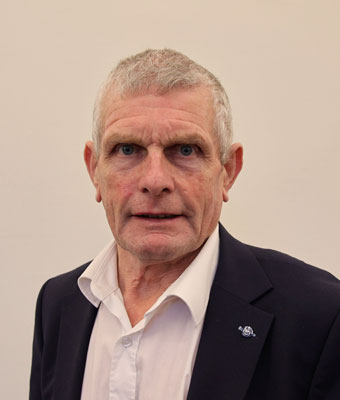
5. Deputy Joe Cooney asked the Minister for Justice, Home Affairs and Migration the number of contracts issued to hotels and-or guest houses to accommodate Ukrainian people, including the total number of beds, by county, at end of both February 2025 and February 2026, in tabular form; and if he will make a statement on the matter. [20884/26]
County Clare has welcomed significant numbers of Ukrainian people fleeing the war, just as it did with Hungarian and Kosovan refugees in the past. Our communities opened their schools, organisations and workplaces to them.
Now, four years on, many Ukrainians are moving on from emergency accommodation and hotel contracts are ending. Will the Minister of State confirm how many contracts have been concluded and how many beds may return to their original purpose?
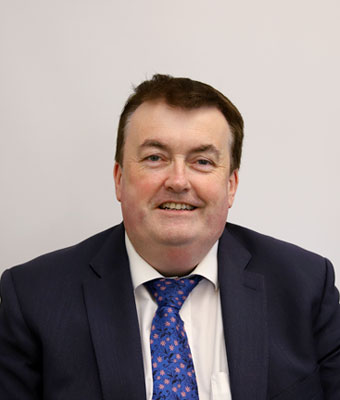
As the Deputy knows, Ireland remains steadfast in its support for Ukraine. My Department continues to work as part of a whole-of-government response to the war in Ukraine with a focus on providing access to emergency, but temporary, accommodation to those fleeing the conflict. For new arrivals, State-contracted accommodation is provided for 30 days in designated centres, together with supports to assist them in making independent living arrangements for those who wish to remain for the duration of temporary protection. As of 13 March 2026, over 125,700 people have fled Ukraine and received temporary protection here. Of those, over 94,300 have requested and been provided with access to State-supported accommodation. Almost 19,200 people are currently in State-contracted accommodation. This is a significant and welcome reduction from a peak of, believe it or not, 60,000 people in November 2023.
All accommodation contracts by my Department are temporary in nature. Persons with temporary protection are advised of that when requesting access to be assigned to temporary accommodation. Approximately 531 contracts are in operation. Our current contracted accommodation capacity is approximately 22,450 beds. It includes hotels, guesthouses and bed and breakfasts. In sourcing and securing accommodation, the central consideration is the safety and security of the displaced people fleeing the war in Ukraine. In 2024 and 2025, approximately 420 and 195 contracts, respectively, were able to be terminated in terms of changes that we are making in the reduction in numbers. So far in 2026, 25 contracts have been terminated and we have received three notices from providers for termination of contracts.
In relation to County Clare, as of the end of February 2025, there were 31 contracts, which was equivalent to 2,610 beds. To give the Deputy an indication, as of the end of February 2026, there were only 18 contracts, with 1,041 beds, representing a very significant return of beds from this area.
Additional information not given on the floor of the House
With this reply, I am providing the Deputy as requested with a table that shows the number of contracts and beds by county at the end of February 2025 and end February 2026.
*Please note that the figure for Dublin includes Citywest with 1,704 beds.
I thank the Minister of State for the reply and welcome the reduction in the hotel contracts. This is a positive step, showing that many people are moving on from emergency accommodation by finding homes, entering work and moving elsewhere. We should recognise the support of Clare communities and the contribution many Ukrainians have made in return. Hotels returning to serving visitors is an important opportunity for tourism and the hospitality sector. It will support local businesses, boost occupancy and protect jobs, which is important. Will the Minister of State provide data on how many businesses have exited contracts and are now operating again as tourist accommodation?
I have supplied the Deputy as part of my answer to him a table in tabular form with all the information for every county. I have outlined the total figures to him. It is important to recognise that, as part of an ongoing process, we are moving toward a reduction and eventual elimination of this accommodation situation. There will be a motion coming forward in the Dáil next week regarding the extension of the accommodation recognition payment, ARP. Temporary protection is something that was brought in by the European Commission across Europe, and we wanted to support it in that. As we look to the future and changes in that area, though, we want to see businesses going back to what they were doing originally and having the ability to put beds and accommodation back into local communities for the benefit of those local communities and areas.
Clare has lost thousands of tourist bed nights each month over the past four years, with the vast majority in north and west Clare, where tourism is a key part of the local economy. While I understand that tourism is not directly within the Minister of State's brief, the return of this bed stock is both vital and important. It must be managed to ensure that it delivers the maximum benefit quickly. Will the Minister of State outline whether there is any engagement with local authorities, Fáilte Ireland or Tourism Ireland to make the most of this capacity returning to the market? Are any targeted promotional campaigns planned to boost visitor numbers, where returning to our capacity will make a real and welcome difference?
Obviously, that is not within my area. That would be more within the area of the Minister with responsibility on the tourism side. From our point of view as a Department, what we want to do is facilitate the return of beds to the sector so that they are there and available. Like the Deputy, I would like to see, particularly in a wonderful county like Clare, that those beds would go back into the accommodation, tourism and hospitality sectors. Hospitality and tourism are key drivers for economics in a whole host of counties in our country and are very important. Therefore, as an initial stage, what we are doing here is making the beds available again by terminating the contracts and moving out of this area. I would hope, therefore, that in conjunction with the local authorities, the necessary tourism boards would put in place a process to ensure that those beds go back into hospitality.
Question No. 6 taken with Written Answers.
Ukraine War
7. Deputy Joe Cooney asked the Minister for Justice, Home Affairs and Migration for the number of properties in receipt of the ARP, by county, at end of February 2025 and 2026, in tabular form; and if he will make a statement on the matter. [20885/26]
I believe that a lot of people in County Clare have been housed through the accommodation recognition payment scheme. From what I can see, it is working well and I have not heard of any major issues from house owners or tenants. It is important that we have a clear picture of how many people are supported under this scheme nationwide. With that in mind, will the Minister of State provide an overall number and county-by-county breakdown of the properties receiving the accommodation recognition payment?
I thank the Deputy. The accommodation recognition payment was introduced to recognise the generosity of people who opened their homes to provide accommodation to beneficiaries of temporary protection in Ireland who fled the war in Ukraine. The ARP scheme is provided in Part 2 of the Civil Law (Miscellaneous Provisions) Act 2022 and is administered by the Department of Social Protection on behalf of our Department. The scheme involves a monthly payment of €600 to a host in respect of providing accommodation in accordance with the rules of the scheme. The ARP is not rent and is not payable where there is a rental agreement in place.
The scheme currently extends to March 2026 but it may be extended by ministerial order - as I mentioned earlier, a motion will be before the Dáil next week in relation to that - in accordance with the legislation. The Deputy may be aware that motions are to be considered in this House and in the Seanad next week that will extend the scheme to March 2027 in line with the current application of the EU temporary protection directive. By the end of February, the ARP scheme had supported over 42,000 temporary protection beneficiaries accommodated in over 23,500 properties at a monthly cost of approximately €14.5 million.
I am providing in tabular form with this response the information sought by the Deputy.
I believe this scheme shows that trust, along with fair financial support, can bring thousands of homes into the rental market. Over 42,000 people are currently housed in more than 20,000 properties, mostly without formal inspection or registration. That is a lot of people willing to rent out their properties under the right circumstances. I am not against proper oversight, but this scheme clearly shows that a system that is simple, fair and works for both sides can be effective. There also appear to be very few complaints about conditions or arrangements. Is there any data that gives way to this?
The scheme has worked, but the time for the scheme should come to an orderly conclusion. Like all temporary schemes, I believe you must look, introduce where needed and phase out where it is no longer appropriate. It is therefore my view that we will be extending the scheme as indicated for 12 months. This will be part of a phasing out process of the ARP. It will also be the intention to reduce the payment from €600 to €400 as part of that phasing out of ARP. That will enable us to have a gradual winding down of the scheme.
Ukrainians who have enjoyed temporary protection in Ireland are a welcome part of our community. There are many opportunities for them to avail of housing in their own right and many Ukrainians are doing so at the moment. We will work to a process of making it very clear the ARP scheme will be coming to an end and will have a phase out on it. I want to make that clear to the Deputy.
The difference between this scheme and the current private rental market is something we should look at closely. The private rental sector sees a lot of RTB disputes, complaints and at times poor relationships between landlords and tenants. The ARP scheme shows a different way of doing things. When property owners are offered a fair, simple and worthwhile arrangement, they respond well. Over 20,000 have already done this.
There are lessons here that could bring more homes into use, ease pressures on rents and improve things for many people who depend on the rental market. It would be a very positive outcome from this programme. Has there been any discussion between the Department of justice and others on how a model like this could be expanded?
I acknowledge what the Deputy is saying but we have to remember how the process of temporary protection came about. It was a temporary process in reaction to accommodation being made available to provide for Ukrainians who had fled from a war. It was designed and put in place as a very particular measure and to facilitate people welcoming people into their homes. It is something for which its time and place is naturally coming to a conclusion. There is a better and fairer way to do it, which allows everyone to have the same access rights to accommodation. The longer term position for Ukrainians who either will or will not return home at the end of the war is that we are putting in place a situation where access to accommodation will be equal and fair with everybody else. While I acknowledge what the Deputy is saying about the scheme and some of its benefits in freeing up accommodation, at this point the best way to deal with it is the orderly wind down we are proposing and moving to the next stage.
Domestic Violence
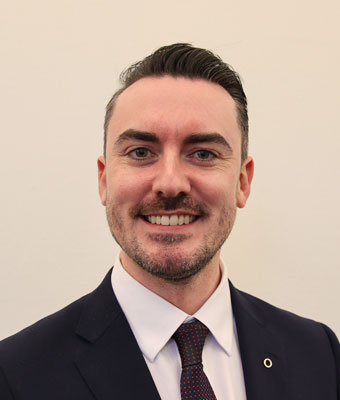
8. Deputy Naoise Ó Cearúil asked the Minister for Justice, Home Affairs and Migration to outline the criteria used by Cuan in identifying priority locations for new refuge units; if counties with established DSGBV services, such as Kildare, may be considered for inclusion in future phases of refuge development; and if he will make a statement on the matter. [20827/26]
I had the opportunity to visit Teach Tearmainn women’s refuge in Kildare recently where I met Lorraine Rowan, the CEO, and her team who are carrying out incredible work. A lot of questions arose from that meeting, particularly the need to outline the criteria being used by Cuan in identifying priority locations for new refuge units and if counties with established domestic, sexual and gender based violence services, such as Kildare, may be considered for inclusion in future phases of refuge development.
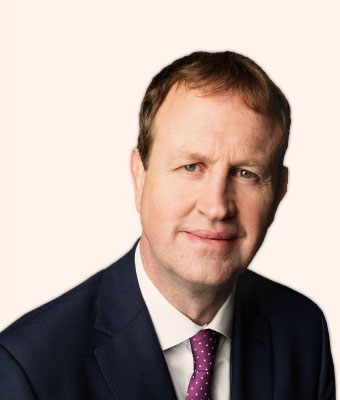
I thank Deputy Ó Cearúil for his question. I have also visited Teach Tearmainn. It is a wonderful refuge in County Kildare but, like very many of the refuges that have been established, it is obviously under pressure in terms of meeting the demand for its services, unfortunately.
Cuan is instrumentally part of funding to ensure that we can provide refuges and safe homes for predominantly women who are fleeing domestic violence. We are now increasing funding for Cuan, which is within my Department, up to €80 million per year. It is a very important function that is carried out within my Department. Obviously, there is collaboration between Cuan and a series of stakeholders, whether local authorities, the Department of housing and housing agencies. Between them the objective is to try to identify and ensure there are refuges or, indeed, safe homes, which are of use also, around the country to ensure there is sufficient refuge space and safe home space for people fleeing domestic violence.
The Deputy’s specific question was around whether another location in Kildare could be identified. While Kildare has not been identified as a priority location for new refuge construction in the current phase, Cuan is considering it as a location for consideration in future refuge development programmes and is supportive of ensuring Kildare is on the priority list for phase 2 development.
A lot of work is being done around ensuring new refuge spaces are established. A lot were established last year. The number increased by 13, with four in Louth and nine in Dublin, bringing the total number to 172 refuges. Additionally, another nine units have been developed in Dublin 22 and further units are being developed. I will liaise with Cuan in respect of ensuring Kildare is adequately serviced.
I welcome the Minister saying that Cuan is considering Kildare for phase 2 development. That is welcome news. Teach Tearmainn is in Kildare town, which is quite a considerable distance from the north of the county, from the likes of Maynooth, Leixlip, Celbridge, Kilcock and Clane, and it is technically in the Kildare South constituency. However, it caters for women not only across Kildare but also across the midlands. The work it does is truly outstanding.
One thing that has arisen for Teach Tearmainn is the amount of court-based related work it has been carrying out in Naas. There is need for a refuge centre in Naas, although I should say it has safe houses there. When will phase 2 be considered so that the likes of Teach Tearmainn can plan for the future?
We need to take a broad look at the work Cuan is doing. It is working towards having a minimum of 50 new refuge units under construction across multiple sites this year. Last year the number of safe homes increased by eight which increased the total safe-home capacity to 60. It is working to increase that capacity to 94. That means that by the end of 2026, we aim to increase the number of safe accommodation spaces, refuges and safe homes to 287.
I will come back to the Deputy on the priority phase 2 development issue he raised in terms of timelines. The priority list for phase 2 development has a timeline but a lot of it is about identifying a suitable location. Sometimes that can be difficult to identify. I hear what the Deputy says about Naas. I am happy to engage with him on any proposals he thinks would be suitable for provision of a refuge.
I want to state my appreciation for the work the Minister, Cuan and the Department are doing in increasing supports for domestic violence survivors and indeed those who care for them. What the likes of Teach Tearmainn are looking for is the long- and medium-term assurances that staffing capacity will keep pace with the rising need. We are seeing a rising need, particularly in domestic violence situations which is quite worrying. It is not just in Kildare - it is across the country – and that is reflected in the increased number of refuge centres across the country and in the work the Department is doing. I want to acknowledge the vital work Teach Tearmainn is doing under real pressure and under constraints. The Minister has seen it himself. It has a really impressive set up. Kildare has the population, the demand and the established service infrastructure with Teach Tearmainn to cater for and care for more women not only in Kildare but across the region.
I agree on Teach Tearmainn. It is in a very peaceful location at the end of a quiet road. It is something I am very pleased my Department has been funding. Last year my Department provided funding to Teach Tearmainn of €930,000. It will be funded again this year with probably an increase on that.
While Kildare has not been identified as a priority for new refuge construction in this current phase, Cuan is aware of this as a location for consideration in future. I will engage with the Deputy on this. The demand for these services is very significant, regrettably, but they are needed for short-term refuge spaces for women fleeing domestic abuse. As I will say in my response to the next question, we cannot develop a situation where the default position is that women who are the victims of abuse leave the house while the abuser remains there. We need to move on from that.
9. Deputy Grace Boland asked the Minister for Justice, Home Affairs and Migration the way in which his Department is supporting Cuan in advancing measures that allow victims to remain safely in the home while the abuser is required to leave, as highlighted in recent engagement with stakeholders and local representatives; and if he will make a statement on the matter. [20725/26]
I met the new superintendent in Balbriggan this week and she confirmed to me that domestic abuse continued to be one of the most persistent issues in north County Dublin and, I have no doubt, throughout the country. Victims should not be the ones forced to abandon their homes. The victim stays and the abuser leaves must become the standard practice and not just a principle. I ask the Minister to provide an update on his work with Cuan to make sure this principle is actually happening in practice.
As I indicated in my response to Deputy Ó Cearúil earlier, we have to be very careful when discussing the issue of women fleeing domestic violence that we do not present the solution as being removing the woman from the house and putting her, long term, into emergency accommodation in a refuge or a safe home. That cannot be the long-term solution. Refuges or safe homes are needed because sometimes there is an emergency requirement, on a short-term basis, for a woman and her children to leave the home where the abuser is. Ultimately, however, what should be happening if a woman is being abused within a domestic relationship in a home that both partners own or are in a joint tenancy is not that the woman is forced to leave, but the man, the abuser.
My Department is working to develop a new policy on removal orders to take offenders out of the home in high-risk cases. In particular, new powers are under active consideration that would allow gardaí to intervene in cases where they believe there is a high risk of domestic violence offences being committed. Deputy Boland will be aware that emergency barring orders can be sought under section 9 of the 2018 legislation on domestic violence and that is something that needs to be invoked more. An order under section 9 may not exceed eight working days and further emergency barring orders may be made against a respondent within a month of the expiry of a previous barring order where exceptional circumstances justify this. I am aware that those statutory provisions are available and I would like to see more women using them. I will be discussing this with Cuan but, ultimately, it is a matter for this House and the Seanad to determine whether new legislation is required. My own view is that it is not required. What is there in terms of the use of barring orders should be used more, availed of more and provided for more by the courts.
I appreciate the Minister's comments on this. We know the lived reality is that these measures are not being taken quickly enough. What steps is Cuan taking, with the Minister's support, to deliver in terms of ensuring victims are supported in a timely way so that they remain safe?
Cuan is actively collaborating with statutory agencies and organisations to ensure effective responses to reduce the incidence and duration of homelessness arising from domestic violence and to support pathways for long-term accommodation for victims. The demand for safe accommodation remains high and Cuan continues to work with services and agencies to support victim survivor progression and, where appropriate, safe return. Individuals who are victims of domestic abuse need to be aware of the statutory powers that are in place to enable them to get barring orders against an abusing partner. That is something that is not being used as much as I would like. However, I am conscious that it takes time when an application is made. There is a period before the order can be made by the court to remove the abuser from the home. The legislation is strong but we need to spread the message more that the remedy is available.
In terms of making sure that we are following up and doing everything we can in this House, will the Minister commit to publishing clear data on outcomes of domestic abuse cases, including instances where the victim is allowed to stay in the home rather than having to leave, as well as data on the various delays and barriers in the system? We must ensure that all gardaí have the appropriate knowledge and can support all victims. Will the Minister also commit to bringing forward any necessary changes, whether they be legislative or operational, to ensure victims are not displaced?
I agree that data in this area is extremely important. If I have data on outcomes in domestic abuse hearings, I will certainly put it into the public domain, if possible, because it would be important to do so. There have been very significant improvements on the part of An Garda Síochána in recent years in dealing with domestic abuse. I have engaged with protective units within An Garda Síochána that deal specifically with domestic abuse. I will not identify the areas where I have engaged with them but, regrettably, they are very busy. There is a high level of professionalism and knowledge on the part of gardaí who are dealing with what is a really difficult type of policing requirement. In many instances, they are called late in the evening, alcohol may have been consumed and there is a domestic row. It is a difficult scenario for An Garda Síochána but its members are really advancing the interests of victims now and we are beginning to see that. Many people who come out of court as a result of domestic cases praise An Garda Síochána for the support they got.
Proposed Legislation

10. Deputy Gary Gannon asked the Minister for Justice, Home Affairs and Migration if he will clarify the Government's position regarding potential new powers allowing An Garda Síochána to access encrypted communications and personal device data, following recent reports concerning remarks he made on the issue; and whether he will outline the safeguards that will be put in place to ensure that any expansion of interception or surveillance powers is necessary, proportionate and subject to robust oversight. [20841/26]
I thank Deputy Gannon for this interesting question. I announced recently that the Government had approved my proposal to start the process of drafting a new communications interception and lawful access Bill that will update the legislation that is there at present. We can all appreciate that there are circumstances when it is necessary and appropriate for An Garda Síochána to be able to access messages or communications between individuals when gardaí are investigating serious criminal offences. We have seen cases in our courts previously where the communication of messages between individuals has been centrally important in securing convictions for murder, serious child sexual abuse, serious armed robbery or violence. The legislation that I operate under at present was developed and enacted in 1993. It is completely outdated, and it is not just me who is saying that. The judges who conduct the reviews of the work that I conduct under that 1993 legislation have repeatedly stated that the legislation is outdated.
What I am proposing to do is to bring forward legislation that will have very significant safeguards in place. That is a legitimate concern of Deputy Gannon and many others. The safeguards that I am going to ensure will be in place will be such that there will be some form of judicial authorisation of interception requests. There will also be a requirement that agencies requesting an interception will have to outline any issues regarding privileged material, should that arise in any unusual circumstances. Obviously, it is also important to be able to access encrypted messages. A lot of serious criminal activity is being communicated at present with the benefit of encryption. I need to ensure that gardaí can gain access to such encrypted messages because they contain a lot of detailed information that will be of use in the investigation of serious offences.
I understand the rationale for a measure like this. I understand that the legislation the Minister is working off is from 1993 and its drafters would never have foreseen the world we are in now but we need to move carefully and cautiously with a measure such as this. Some of the technology being referenced here might be developed by companies such as Pegasus, for example. In other jurisdictions, Pegasus spyware has been used as a way of monitoring political opposition and has been used unlawfully against journalists.
I understand the rationale for this and we are in a very different world, but I ask the Minister, when he brings forward this legislation, to respect the process by which we can apply the right level of scrutiny. I ask him to work with organisations that can demonstrate best practice in oversight and to make sure that the Oireachtas justice committee has full sight of everything the Minister is proposing at the pre-legislative scrutiny stage. I can absolutely see why a measure like this is necessary but the world may also be very different in ten or 20 years' time. A Government ten years from now may be very different from the one we have now or next and may have a different attitude, so the careful drafting of this legislation is important.
I agree with the Deputy that any proposal like this should be considered and progressed carefully and cautiously. What we are trying to do is balance rights.
The rights about which the Deputy is particularly concerned are obviously the rights of privacy, which have to be protected. We do not want to see a situation where the State is able to stick its nose into legitimate communications that do not involve criminal activity by individuals. On the other side of the scale is the fact we need to be able to investigate serious criminal behaviour but at present we do not have access to a lot of information that would be of use in investigating serious criminal behaviour.
The Deputy mentioned a number of issues in terms of type of software that can be used. That is not an issue of concern at present. I know it is an issue of concern to the Deputy and it may arise in the future but the important thing is to put in place a statutory regime that enables access in certain limited circumstances and that very strong safeguards are put in place. If strong safeguards are in place, the Deputy will not have too much to be worried about.
Residency Permits
11. Deputy Colm Burke asked the Minister for Justice, Home Affairs and Migration his views on the ongoing delays in processing immigration permission renewal applications in view of the fact that at present only applications received from early December 2025 are being processed, the action his Department is taking to reduce the current processing timeline and if he will make a statement on the matter. [19247/26]
I am taking this question on behalf of Deputy Colm Burke. I would like extend my sympathies to Deputy Burke on the recent death of his mother-in-law. Our thoughts are with him and his wife Mary at this time. Ar dheis Dé go raibh a anam dílis.
I wish to ask the Minister about his views on the ongoing delay in processing immigration permission renewal applications in view of the fact that at present only applications received from early December 2025 are being processed, the action his Department is taking to reduce the current processing timeline and if he will make a statement on the matter.
I begin by joining the Deputy in offering my sympathies to Deputy Colm Burke.
The registration office of the Department is currently experiencing an exceptionally high demand for immigration permission renewal applications. This has regrettably reduced the timeline of the service to our customers. I understand that the extended wait times can be frustrating for applicants but I assure the Deputy the Department is exploring every avenue available to facilitate as many customers as possible. I had a meeting with my officials on this matter in the past couple of weeks, primarily to increase that processing capacity. The registration office is already open seven days a week to facilitate customers, with a team working considerable overtime as well to try to facilitate this.
Further measures are being put in place to reduce processing times. I expect this will address the delays currently being experienced. The registration office also provides a live processing date, which is updated every Monday, and is available on the website of the Department. It is currently processing applications submitted from 22 December 2025. It is open to customers to submit their applications up to 12 weeks in advance to allow sufficient time for an application to be processed and I would encourage people to take advantage of that.
Deputy Burke mentioned employers and the legality of employment to me, and I am sure he intended to mention it today. We have issued a notice to employers regarding the legality of employing someone awaiting renewal. That notice is also available on the website, so there should be no ambiguity in that area for employees who are worried, or for employers in terms of this.
I thank the Minister of State for his ongoing work in this space. It is very important to see that we are increasing capacity here in terms of renewal of applications. It is good to see the office is open seven days a week and people are working overtime to address the backlog. It is hugely frustrating for people who have applied and are waiting for an answer on this. I do take the point though in terms of seeking applications 12 weeks in advance. That is something we need to get out there a lot more, giving applicants and employers that assurance that they can submit renewal applications up to 12 weeks in advance. It is encouraging that the Minister of State will to continue to work with his officials to see whether they can reduce the timeframe associated with this. We all collectively want to see these applications processed within a four to six-week period, if at all possible. I encourage the Minister of State to continue his work in that regard.
I will do so. As part of that assurance, it is important to say if a person's IRP card has expired and he or she is unable to obtain his or her new one by the expiry date, he or she is still legally permitted to remain in the State. His or her existing IRP card has another maximum of 12 weeks. I fully acknowledge it is frustrating and worrying for people going through this process but, again, I assure the Deputy resources are being put into it to try to eliminate the delays being experienced because of high volume and demand and that we believe we will be in a much better position in terms of catching up and providing the service in the timeline we would like to see for everybody going forward.
The Minister of State's comments of the extension of the IRP card are very welcome - up to 12 weeks after the expiry date. Is it the Minister of State's intention to reduce processing time to four to six weeks? If so, is there a timeframe in which he would like to see that happen over the next number of months and years? It is good to see it brought up in the House today because it is of concern to many people.
We want an efficient and effective service that allows for the fact of those 12 weeks and the fact people are getting a turnaround. There are some exceptional reasons for the surge in demand in terms of the number of people applying. There are particular surge points at different times a year where the numbers go up. We are putting the technology and the systems in place that we believe will allow us to manage this and deliver on the timeline we want to see for people getting their renewals.
Sentencing Policy
12. Deputy Ken O'Flynn asked the Minister for Justice, Home Affairs and Migration the assessment he has made of the impact of suspended or short custodial sentences on victims of child sexual abuse whose abuse material is circulated online, whether there is evidence that current sentencing levels act as a meaningful deterrent to child sexual abuse material offending and the legislative or policy tools he is prepared to deploy if judicial guidelines prove ineffective in producing consistent and proportionate sentences in such cases. [20212/26]
I wish to ask the Minister about the assessment he has made on the impact of suspended or short custodial sentences on victims of child abuse and the circulation of such material online, whether he has evidence that current sentencing levels act as a meaningful deterrent regarding child sexual abuse materials and what legislation policy tools he is prepared to deploy if judicial guidelines prove ineffective.
I thank Deputy O'Flynn for this question and the related Questions Nos. 20 and 22.
I recognise the profound and lasting harm caused by offences involving child sexual abuse material, CSAM. What makes this offence particularly pernicious is the fact that when it is done online, there is a continuation of that abuse and damage to the child as a result of the repeated distribution of it online. That is an approach that has to be taken into account when looking at the uniqueness of this offence. As Deputy O'Flynn will be aware, there is a range of offences under the Child Trafficking and Pornography Act 1998 to address all forms of such abuse. The Act provides for very severe penalties, including for the most serious offences, with a maximum penalty of up to life imprisonment.
Among EU member states, England and Wales, Ireland’s penalties across the 20 offences are on average higher than the vast majority of other countries. A review conducted by my Department indicates that Ireland's penalties to address child sexual abuse offences are among the most punitive in Europe and far exceed the maximum sentence requirements set out in the 2011 child sexual abuse directive. The Deputy may be aware that directive is being renegotiated at present. There needs to be a new child sexual abuse directive within the EU considering developments that have arisen.
If we look at the penalties under some of the legislation, whether the 1998 Act or the 2017 sexual offences Act, we can see that the penalties range up to ten to 14 years. Under the 1998 Act, there are penalties up to life imprisonment for child trafficking and taking a child for sexual exploitation or up to 14 years for the participation of a child in pornographic performances.
I thank the Minister for the reply but I am asking whether the Department has carried out a full assessment of this. We can all call a spade a spade. Not a month has gone by where we have not read an article in a newspaper regarding suspended sentences for first-time offenders or those who have been caught for the first time when it comes to child sexual abuse images and online images.
Certainly, it upsets a number of people in my constituency and Members in this House as well when we see people with large volumes of vile images being used and circulated, and walking away with a suspended sentences.
I appreciate there is a precedent with the Loving case. We all are aware of that in this House. What I am getting at is whether the Minister is prepared to introduce legislation to circumvent this because District Court judges are saying they are stuck because of the precedent with the Loving case. I also appreciate that for a second-time offender, who has received a suspended sentence, that under the 1998 Act, all judges provide very stiff sentence.
Sentencing is a very complex area of a judge's function. Generally, what we do in this House is set out what the maximum sentence can be. Sometimes we put in a mandatory sentence - such as in the case for murder where there is the common law mandatory sentence of life in prison - but, in general, we set maximum sentences and give leeway to the Judiciary to decide where to go.
Obviously, no offence is going to be similar. No offender is going to be similar, as Deputy O'Flynn will be aware, even in the area of child sexual abuse. Obviously, somebody who is a repeat offender would merit a much stronger custodial sentence than a person who was convicted for the first time.
I am not proposing to bring forward legislation at this stage to amend the provisions in respect of sentencings that are contained within the 1998 and 2017 legislation but it is important to be aware that under the sentencing guidelines, we can and hope to see the Judiciary set out guidelines for certain types of criminal offences.
I have to say I am disappointed to hear the Minister is not prepared to bring new legislation to this House. At this stage, should we not be setting a minimum rather than just a maximum sentence given the type of crime it is? These are the most heinous images of child abuse and surely we should be providing for a minimum sentence at this stage rather than setting the maximum. I would ask the Minister to reassess that. I notice the Minister did not answer my last question about what assessments are being done. I do not know if he has that information in front of him today. I would ask the Minister to reconsider the idea that he would not introduce new legislation to set minimum sentencing rather than maximum sentencing. I know it is slightly different but it is time to reconsider whether we put in a minimum sentence or not.
The Deputy raises an interesting point about the use of mandatory minimum sentences. We did that previously in this House in respect of firearms offences where we said there was to be a mandatory sentence of, I think, five years and the Supreme Court looked at that and said it was unconstitutional because it did not give any exceptionality or discretion to a court. Introducing minimum mandatory sentences could get us into significant difficulties because we have to allow some discretion to a court. As the Deputy indicated, if it was the case - and I know these are horrific offences - that it was a very naive 18-year-old who foolishly looked at something online and saved it as compared to somebody who, for profit, was generating images of children for sexual abuse and for the purpose of generating income and who had a series of offences, those two offenders would have to be treated differently. I am concerned that if we had a minimum mandatory sentence, it could require no discretion on the part of the court.
An Garda Síochána
13. Deputy Gary Gannon asked the Minister for Justice, Home Affairs and Migration the number of Garda members who have retired or resigned from An Garda Síochána in each of the past five years; whether his Department has carried out any analysis of the reasons for those departures; the number of members currently eligible to retire within the next three years; and the measures being taken to improve retention within the force. [20843/26]
I want to ask the Minister the number of Garda members who have retired or resigned from An Garda Síochána in each of the past five years, whether his Department has carried out any analysis of the reasons for those departures, the number of members currently eligible to retire within the next three years and the measures being taken to improve retention within the force.
I thank Deputy Gannon for his question. I alluded to this in my response to Deputy Carthy earlier. In terms of resignations, 141 gardaí resigned from An Garda Síochána in 2025. That is a very low number. The number of gardaí is over 14,300 and, therefore, it is less than 1%. In terms of the number of retirements and resignations together over the past five years, 382 gardaí resigned or retired in 2021, 446 in 2022, 486 in 2023, 377 in 2024 and 359 in 2025. As I said, those figures include resignations and retirements. There is nothing we can do about gardaí who get to the retirement age and who want to retire but I suppose the figure that is of concern to me - I do not know if it is a concern to the Deputy - and that I would be interested in is that for resignations.
The number of resignations has been low for the years to which I referred. In 2021, there were 89 resignations; in 2022, there were 106; in 2023, there were 167; in 2024, there were 137; and, as I said, last year, there were 141. That is indicative of low levels of resignation from the force, which is good. It is not something I am complacent about. I want to ensure that people who join up to An Garda Síochána find it a fulfilling career and that their terms and conditions are good. It is part of my function to ensure that resignations are kept as low as they are. It is a good sign because when you look at the Met, the PSNI or police forces in other places, you will see resignations are much higher than that.
I thank the Minister for his response. There was one part of the question he did not answer, which was the number of gardaí eligible to retire within the next three years. That is a figure of particular concern to me. When the Minister wrote about this issue in 2024, it was of particular concern to him. At that time, he talked about nearly 50% of the force becoming eligible for retirement by 2028. The figure he had in that article in 2024 was 6,400 gardaí becoming eligible for retirement. That was because in the late 1980s and 1990s, there was a large recruitment drive and the majority of those gardaí are now coming towards retirement age. The genuine concern is that the number of people we are recruiting to the Garda will not be able to match the number of gardaí who are reaching the age of eligibility for retirement. Previously, the Minister talked about activating the Garda Reserve and the expansion of Templemore but, as he said himself, there is potential for a retirement crisis on the horizon. What is the Government doing to mitigate that?
I should have answered that question because the Deputy did ask it. There is a cumulative figure of 1,792 gardaí that will become eligible to retire by 2028. That, of course, does not mean that this number will retire over this period, only that they will be eligible to do so. For example, a Garda member may have 30 years of service or more at age 55 but may opt not to retire for the next seven years until they reach the mandatory retirement age of 62. The Commissioner can, with my consent, extend the age of retirement of a Garda member beyond 62, where this is in the interests of the efficiency of the force. I am always pleased to see applications coming before me from the Commissioner for the extension of a retirement age beyond 62. A lot of people do not want to retire at 55. It is far too young. The figure, as I said, is 1,792. I do not think we will see that number taking up retirement. However, it is an issue we need to be aware of. It also emphasises the need to ensure that recruitment is ongoing.
I would like to hear more about the recruitment and the capacity for expansion, particularly around Templemore. We reach a particular limit when the Garda does recruitment drives. A lot of people put themselves forward but such is the level of time it takes for the training, which is obviously necessary, and for vetting, which we have seen huge problems with, I do not believe we are bringing enough people through to cover the potential retirements that are on the horizon. That figure of 1,700 eligible is different from the figure the Minister got through parliamentary questions two years ago, which there was a great emphasis on. How is that mitigated because at different points morale in the Garda goes up and goes down? The numbers the Minister gave me for retirements for the past five years are fairly consistent; they are in the 400s and the high 300s. If we have greater capacity for retirements, are we doing any exit interviews with gardaí who are leaving? What measures are we taking? Obviously, it is welcome if a person wishes to postpone their retirement beyond the age of 55. That is their choice and I can understand that.
However, there are many who will not want to do that and many who have not done so.
The important thing is that we get Garda numbers continuously going up, which is happening. There are always going to be retirements and some small level of resignations but, cumulatively, we want to see the figures of attested gardaí rising, and we are seeing that.
The Deputy asked about exit interviews. The Garda offers exit interviews to all individuals who leave the organisation, with the exception of those who are dismissed. They were established to determine longitudinal teams in relation to organisational attrition, but they highlighted some useful issues. In 2024, 39 exit interviews were completed. The majority, or 60%, stated they found it difficult to maintain their career as a Garda member while also managing their family life, 40% stated that the commuting and working distance from their homes was a significant deciding factor and another cohort expressed a view that poor management was a factor for their decision to leave. The numbers are low but many of the people who are leaving and doing these exit interviews, those who have resigned, are doing so because of a work-life balance, which happens in every walk of life. People decide the work just does not suit their lifestyle. However, I am pleased to say the number of resignations is very low.

14. Deputy Barry Ward asked the Minister for Justice, Home Affairs and Migration the position regarding the recommendations of the Garda vetting review group; if the recommendations will be outlined; and if he will make a statement on the matter. [19943/26]
The Minister is aware that Garda vetting is a very important issue for voluntary organisations, schools and healthcare. It takes too long and seems to be quite cumbersome insofar as a person who moves position has to be revetted in a way that does not seem necessary.
I am aware there is a Garda vetting review group. Has the Minister received its recommendations or report? Has he had a chance to review them? Will those recommendations be implemented? If so, when?
I met with the Garda National Vetting Bureau in Tipperary town about two months ago. I went down there to get an update from the bureau, but also to communicate some of the concerns Deputy Ward and other Deputies have expressed to me.
It is important to point out that the vetting bureau of An Garda Síochána received over 6,330 vetting applications in 2025. The current processing time for 85% of those is eight to nine working days. For the majority of applications, it manages to produce an outcome in very short order. There are obviously some improvements that could be made. One thing I mentioned at my meeting with the gardaí in the vetting bureau is that we should allow for transferability of vetting. A person who has been vetted to coach a GAA team should be able to then move over and coach a soccer team without having to get vetting done again. Much of that can be done by the organisations themselves, such as the sporting organisations. The Teaching Council has a very good mechanism whereby it permits transferability of vetting from one school to another and the vetting moves with the teacher when they move across the school.
There is also an issue in respect of wet signatures and whether online signatures would be permissible. There was concern expressed to me by An Garda Síochána in respect of that. From its perspective, one reason for delays is that sometimes individuals have been abroad for several years. That can give rise to significant delay because the bureau is dependent on getting information from abroad. That is an understandable reason for there being a delay, but it is important to point out that, as I said, over 630,000 applications came in last year, and the bureau processed the vast majority of them very promptly.
I am surprised the number is as low as that. I welcome the fact many of them are being dealt with in under ten days, but that does not accord with the anecdotal accounts being given to me. I do not know whether there is prioritisation within the system. There should be, because some of the applications are time sensitive. As regards the issues the Minister has raised, we can see in other jurisdictions that there is a central register, for example, with a rolling account for any individual that can be checked immediately. It should not be up to individual organisations like the Teaching Council or sports clubs to set up transferability. That should be done centrally.
It is very important that the recommendations from the Garda vetting review group bring an effectiveness to Garda vetting that means it will be operable and will work, particularly for volunteer organisations. When there is a significant delay in vetting, it discourages volunteers and makes it difficult for sports clubs to get the coaches in to teach the underage teams and things like that. Let us ensure we put in place measures that make vetting work for our communities, as much as anything else.
One of the consequences of being a public representative is that people only ever come to us when they have issues of concern. They are never going to come to us and say, "Deputy, that is a fantastic vetting process. I managed to get a response within eight days."
I am conscious that aspects of the current vetting system result in a highly segmented process. It should be updated to ensure the burden of seeking vetting disclosures, particularly on volunteers and organisations working in their communities, is minimised to the greatest extent possible while maintaining the necessary high standards. Further to the work carried out by the Garda vetting review group, steps are now being taken to implement key changes to the process that will ensure it remains robust and effective, while improving the service to customers.
In practice and subject to a general requirement that vetting be renewed every three years, it is envisaged that this will mean that when a person is vetted for the work they will be, or are likely to be, involved in as part of their employment or volunteering within identified risk categories, the person will not be required to repeat the process if they were to move to another role within the same risk category.
In respect of operability, renewals and things like that, the Minister mentioned the Garda having a difficulty with online signatures. We have to get over that. If we have a situation where this Government is proposing, for example, online age verification using certain existing ID systems, surely we can also do that for vetting.
I recognise there is a problem with waiting for news to come back from abroad where somebody has lived abroad. Is there something we should be doing at European level to implement a co-operation agreement between countries in the European Union to speed up that process? I am also conscious that, in the vetting process, a letter is sent to every Garda district in which the person lived and the Garda has to wait for information to come back. Is there a way of streamlining that?
In response to a parliamentary question I put to the Minister in February, he indicated improvements to the vetting system might require legislation. Can the Minister clarify whether that will be primary legislation or secondary legislation? Will it come before the House soon, or does he have any news on that?
It would be primary legislation. I will come back to the Deputy on that. It will not be coming in the very near future but it is something I am committed to doing. It will also require updated technical systems to support the revised approach.
When I was down in Tipperary with the vetting bureau, I raised the issue of the wet signature for vetting. Currently, the bureau does not accept digital signatures as their use presents security and integrity risks within the vetting process. I was told these include potential disputes over identity, intent and the possibility of document tampering. Garda authorities have also highlighted vulnerabilities associated with digital signatures, including identity theft and social engineering attacks, which could significantly increase the risk of impersonation. For these reasons, a wet signature is currently required to provide valid consent to the vetting process. While initial engagement can take place online, a face-to-face element remains necessary to verify identity and obtain handwritten consent.
Joint Policing Committees

15. Deputy Roderic O'Gorman asked the Minister for Justice, Home Affairs and Migration to clarify how resourcing of community safety partnerships is targeted, based on the varying needs of local areas; and if he will make a statement on the matter. [20879/26]
Around the country, we have finished up with the old joint policing committee model and are moving to community partnerships. Could the Minister comment on the resourcing of community partnerships around the country and, in particular, how those resources are targeted to the varying needs of different areas?
The Government is committed to the principle that everyone, wherever they live in Ireland, should be able to feel safe. Building safe and secure communities by investing in An Garda Síochána is a top priority for the Government. However, the introduction of local community safety partnerships around the country represents a new and more collaborative approach to community safety. They are an important step towards a more collaborative, responsive and locally driven model of public safety. The safety partnerships bring together a broad range of relevant stakeholders to address community issues in their area, including residents, community representatives, business and education representatives, local councillors and a range of public services, including senior representatives of the HSE, Tusla, An Garda Síochána and local authorities. The Deputy will appreciate this is much broader than the membership of the previous joint policing committees.
One of the premises behind this partnership approach is that every community is different, as the Deputy has said. Membership in each safety partnership is configured to give the broadest representation across the relevant State actors and demographic and community interests in the local area in order to achieve the safest outcomes.
Each local partnership will be responsible for developing a tailored and prioritised plan specific to that area, in conjunction with the community and the relevant public services. The intention is to build the capacity of local residents and the community to contribute meaningfully to the local community safety partnership and grow local leadership and participation. This structure will ensure that communities have a strong say in what actions are prioritised by the services operating in their area. They will also have a key oversight role in ensuring those actions are followed through.
I thank the Minister of State for the comprehensive reply. There are two community safety partnerships in my constituency. One of them, the Dublin central local community safety partnership, is a long-established partnership that was part of the original pilot. My Green Party colleague, Councillor Janet Horner, sits on that partnership. Given that it has been in place for a number of years, we can make two points. First, there is no specific budget for this community partnership and, second, there is no specific funding commitment from the statutory agencies which sit on it and which the Minister of State listed. These partnerships are understood as being an innovation and a change from the joint policing committees that I would have sat on back in the day. The concern is that if there is no specific budget directly for the safety partnership, or no specific commitment from those statutory bodies that are sitting on it, this limits the ability of the community safety partnership to deliver for the citizens in that area.
Budget 2026 provided €8 million for the National Office for Community Safety. That funding will support the functions of the office, which is developing a national strategy for improving community safety. Each safety partnership is supported by a dedicated community safety co-ordinator and an administrator. Both of these permanent positions are funded by the Department of justice and hosted within each local authority. The community safety co-ordinator will support the safety partnership in its work. It will also bring together the diverse group of agencies and residents engaged in the joint planning and co-ordination of the services for each of the communities, including the design and delivery of community safety projects for each of the relevant areas.
I am delighted to hear there is €8 million for the central office. I have no doubt the councillors and the statutory bodies, particularly the local community representatives, would have a very clear idea as to how a proportion of that money could be spent well locally. I would say it is the same whether we are talking about Cabra or west Limerick. My concern centres on what has been described as a very transformative approach to how we address community safety, and how we link the Garda and local authorities with those statutory bodies. A lot of political capital has been expended on making this change from the joint policing committee model to the community safety partnership model, yet the key deliverable, which is having some element of resources and finance to deliver on the recommendations for a very specific community, is not there. That is a worry. Can these bodies deliver if they do not have the financial resources to implement their initiatives?
As I said, a safety co-ordinator and an administrator have been funded. Equally, many of the main participants on the new safety partnerships are State agencies that are also very adequately funded, such as An Garda Síochána, Tusla, the HSE and local authorities. The whole idea of these partnerships is to bring people together, along with community representatives, to make sure the priorities, needs, demands and asks of the local communities are being prioritised into action plans, particularly by the State agencies. It is about directing and empowering the State agencies to make sure they are responsive to the needs of the local community.
As the Deputy knows, the community safety fund has been created from the proceeds of crime, which are assets and money seized by the Criminal Assets Bureau. It is also available to communities across Ireland. Last year, 127 communities were funded from the community safety fund to the tune of €4.4 million.
Common Agricultural Policy
83. Deputy Martin Kenny asked the Minister for Agriculture, Food and the Marine if he will provide an update on CAP negotiations; and if he will make a statement on the matter. [20854/26]

113. Deputy Erin McGreehan asked the Minister for Agriculture, Food and the Marine if he has had meetings with his counterparts of the other 26 EU member states regarding the Council’s position on CAP post-2027; and if he will make a statement on the matter. [20727/26]
The previous question dealt with the CAP budget to some extent. A number of issues are very concerning for Irish farmers. Obviously, the budget being reduced is the big one. That is a serious problem because we need to see a decent budget in place for CAP to maintain productivity and to ensure we protect the family farm. The Minister mentioned generational renewal in a previous reply. There is talk farmers who are pensioners would not get any payments. That is a serious fear that farmers have. In previous generational renewal schemes, a lot of farmers found there was almost an exclusion order against them that they could not go near the farm anymore. That puts them off the possibility of entering into a scheme for generational renewal. There is a range of issues there on which I would like to get the Minister's position, including how strong we need to be as a State, particularly when we have the Presidency, to ensure we get a proper deal for Irish farmers.
I propose to take Questions Nos. 83 and 113 together.
The European Commission published its legislative proposals for the post-2027 Common Agricultural Policy in July last year, as part of its wider proposals for the next multi-annual financial framework, MFF, covering the period 2028-2034. Discussions on these proposals are currently ongoing at EU level. Under the Denmark Presidency and the Cyprus Presidency the proposed CAP regulation has a number of thematic blocks in order to facilitate a structural examination of the proposals by the expert working group. However, an important issue under discussion currently concerns the transfer of CAP-specific provisions from the proposed national and regional partnership plan, NRPP, regulation and into the CAP regulation itself. This issue has been raised by several member states and the European Parliament to ensure CAP provisions are clearly reflected in the CAP legal framework.
The Cyprus Presidency has indicated it wishes to progress work on this matter as soon as possible. A revised text incorporating the transferred provisions has recently been circulated to member states and is currently under examination by the relevant Council working party. The progress in agreeing the revised text will influence the next phase of discussions under the Cyprus Presidency and will ultimately determine the stage the file has reached when Ireland takes over the EU Presidency in July.
While this work is taking place at working-party level, I engage very regularly with my counterparts from other member states on the CAP negotiations. In addition to monthly meetings of the Agri-Fish Council and informal contacts, I engage with other member states and ministers in bilateral meetings on a very regular basis. A recent example was my meeting with the Minister of Agriculture from Czechia, who was recently appointed to the Agri-Fish Council, en marge of the Agri-Fish Council meeting in February. I also welcomed the Finnish Minister for Agriculture and Forestry to Ireland in early March. The Ministers of State, Deputies Dooley and Michael Healy-Rae, and I engaged with her and her officials on our relevant portfolios. These engagements provide valuable opportunities to exchange views on the CAP proposals, better understand the positions of other member states and identify areas of common interest as negotiations progress.
Alongside these ministerial engagements, my Department is in regular contact with the counterparts across member states and with the European Commission as part of the ongoing work on the CAP proposals. Working collaboratively with my EU counterparts, European Commissioner Christophe Hansen and the European Parliament, towards a robust and workable CAP framework is an absolute priority for me and the Department in the time ahead.
Deputy Kenny is right when he says big decisions have to be made. Right now, the overall fund and a properly funded CAP continues to be a top priority for all of us to fight for. The Irish Government has clearly stated this is a top priority. It is not just me saying it but the Tánaiste, the Taioseach and others have said it. Beyond that, we will have decisions to make on how best we can support our farmers with whatever the final CAP budget is and on how that CAP can best deliver. I am determined to deliver simplification and on the structures with which we do that. I have concerns about the NRPP structure and specific requirements for social cohesion and different elements. On the one hand, you could say work out of the national pot but on the other hand, you could tie your hands in terms of how much flexibility you have in that regard. We see that in terms of the additional €45 billion proposed by Ursula von der Leyen in January, how much of that we will be available to access and deliver to where we need to deliver it in comparison to other member states. These measures are all ones we are working through and when we have the Presidency, we will have to make more progress on them.
As I said, generational renewal is an area of real importance. I would not agree with the changes around the mandatory pension meaning the stopping of the single farm payment. There are a lot of other measures in there by Christophe Hansen that are very ambitious around the generational renewal piece. Again, we have to work through these proposals. There needs to be more meat on the bones of them and we need to see which of them end up being permanent or mandatory and which will be optional.
I thank the Minister. I appreciate we are at an early stage in negotiations and they have to take a route through all of this. The budget, as I said at the outset, is the key and what most farmers are concerned about, in that we see the budget being eroded. In every CAP negotiation for the past number of decades, we have seen that happen and that needs to be very firmly fought against to ensure we keep the budget in place so farmers can have reliability into the future. That is one of the big things for a lot of people. We talk about generational renewal but when people go into farming, they want to see a future in it. Part of that future is that they have to have a reliable and stable future and they know payments are going to be available to them.
On generational renewal, the Minister mentioned how we determine what is a farmer. What is a full-time farmer? What is the farm family? How is that put in place? I was concerned to see the Minister's colleague, the Minister of State, Deputy Michael Healy-Rae, in the changes to the forestry programme, suggested that for people to get the forestry grants, they would only need to have one year of payments. That is opening the door for corporates, companies and all kinds of people to be allowed to buy land up and to compete with other farmers.

It is not. The Deputy is completely wrong.
That is a very retrograde step and I would caution against that type of move.
I would like to join with Deputy Healy-Rae-----
Sorry, Minister, Deputy McGuinness has a question.
It is on the topic of stability and certainty in farm payments. I want to raise the issue of hill farmers on the Knockmealdown Mountains in County Waterford. They are currently in dispute with a landlord over exorbitant rent increases. I know the Minister will not intervene but the Department has effectively taken a side in an ongoing dispute here in holding these farmers over a barrel because no farm payments are being issued while the dispute goes on because of the requirement to provide a commonage-evidence letter. This is effectively the State siding with the landlord. These farmers rely on that farm payment. They farm other lands as well as the ones that are in dispute.
This has echoes of darker times in our history when absentee landlords pushed farmers off the land. The Department needs to take a realistic look at this. I understand the limitations on the Minister's ability to intervene but, if the Department is to be neutral in disputes, it should be fully neutral and not hold farmers over a barrel looking for this commonage letter while these disputes are ongoing.
To go back to Deputy Kenny's assertions regarding the changes to the definition of an "active farmer" for forestry, I back the Minister of State, Deputy Healy-Rae, in saying that the Deputy is wrong.
Then explain it to me.
It is not only us who are saying the Deputy is wrong. The Social, Economic, Environmental Forestry Association of Ireland also says he is wrong in that it has very much welcomed these changes and said that they will help small farmers in the area of forestry and beyond. It is very easy to polarise these issues and the Deputy is dead right; I have no doubt I will be back here disagreeing with him again on other definitions. However, with regard to the next CAP, our definition of an "active farmer" will be pivotal. It will impact what we do on generational renewal and in many other spaces. We will need to have a fair and honest discussion on all of the supports and measures that are now in place. Are they delivering what we need them to? Do they in some ways act as a barrier to those who actively want to farm and drive on? The State resources employed to support farmers are very significant, as are the European resources, but we always have to ask whether they are doing what they say on the tin and whether they are best delivering on our policy objectives. I look forward to debating those points here. I am sure that, if the Deputy were to put a specific question on forestry to the Minister of State, Deputy Healy-Rae, he would also be happy to debate the matter.
I am aware of the particular case in Waterford that Deputy McGuinness has raised. It is a bit beyond the scope of this question. The issue of single farm payments comes down to who is the active farmer. That is the position on that question. I hope a resolution can be found in the near future.
On Deputy Kenny's point on generational renewal and so on, this is going to be a really challenging debate. Commissioner Hansen's proposals talk about an increase from 3% of the budget to 8%. That would be really ambitious in the context of an increased budget and a lovely thing to deliver. If we are 20% down on the last budget, it is going to be really hard to deliver. Where do you cut money from to deliver in these areas? That may be a mandatory measure. These are the things we are trying to work through. We are trying to secure the maximum amount of flexibility so that we can be sure that interventions will deliver on generational renewal while also supporting all other sides of farming.
I accept that there is a proposed increase in the budget for generational renewal. The issue for many farmers is that, when programmes were put in place for them in the past, such as schemes to pension them off, these included an exclusion order. They could no longer have anything to do with the farm. They were out of it altogether and had to stay clear of it. That was a very bad proposal to put forward because the vast majority of these people, whether they are in their 60s, 70s or 80s, have farmed all their lives. They want to continue doing it until their last breath. They want to go out and feel they are an integral part of it. It is important that can be accommodated in any scheme that is brought forward.
The bigger issue is how to get young people into farming and how to get them to make that decision to have a future in Irish agriculture. To do that, it must be profitable and vibrant. They must see it has a future and that it will be good for them in the long term and not just for the next year or two. It is very important that we get that part of it right.
Again, the big part of this issue goes back to the budget. The Minister has not really dealt with that. What pressure is the Irish Government going to put on to ensure we maximise the budget for farmers in respect of all of this?
I am sorry. I thought I had dealt with the budget point clearly. It is our top priority. While it is not just me, I raise this at every single AGRIFISH meeting and in every engagement with Commissioner Hansen and other members of the Commission. The Tánaiste also raises the issue in his role in ECOFIN, as does the Taoiseach, who is in Brussels today. In all of those budget negotiations, there is a clear understanding across the EU that the CAP budget is critically important to Ireland. We are a net contributor, which means our voice is heard when we raise these points. I am proud that we are a net contributor. We have managed to take the structural funds of the 1980s and build a country and an economy that is going well enough to allow us to contribute more than we take in. For the benefit of the entire country, including those not interested in agriculture at all, 75% of the money we get back from Europe comes through Common Agricultural Policy measures. It is therefore in the interests of every citizen in this country that we get the maximum amount back from the CAP. If we do not get it from there, there will be a deficit in what we get back as against what we put into Europe.
If there is a transition period, that will also have an impact. As of now, a transition period is not planned but the timelines are very tight to have a whole new CAP in place and ready to go for the beginning of January 2028. If the Commission decides down the line to have a transition period, Ireland has good experience in that space and we will try to help design that during our Presidency. Having certainty in this space and flexibility to bring in targeted measures to deliver on our policy objectives while not undermining the commonality of the Common Agricultural Policy is a balancing act that we have to get right here. I look forward to continuing to engage with colleagues, particularly in the context of Ireland holding the Presidency of the EU from July until the end of the year. It will be a pivotal time for us, particularly with regard to the negotiations on the MFF. What happens there will directly impact farmers through the Common Agricultural Policy.
Trade Agreements

84. Deputy Louis O'Hara asked the Minister for Agriculture, Food and the Marine the engagements he has had in relation to the EU-Mercosur trade agreement; and if he will make a statement on the matter. [19775/26]
Will the Minister outline the engagements he has had on the EU-Mercosur trade agreement, specifically with regard to the provisional implementation of that deal by the European Commission?
I thank Deputy O'Hara for raising the important matter of the EU-Mercosur trade agreement. The Government has been very clear about Ireland’s concerns in relation to the EU-Mercosur agreement and has expressed these consistently over a number of years, particularly in relation to the agreement's potential impact on the beef sector, the strength of its climate and sustainability commitments, and the production standards enforced by Mercosur countries.
Since I took up the role of Minister in January of last year, I have met with like-minded EU counterparts to discuss these concerns. I have also raised them at every opportunity at the monthly AGRIFISH Council meetings in Brussels, at the extraordinary EU agriculture ministers’ meeting with Commissioners Hansen, Šefčovič and Várhelyi in January 2026, and in bilateral meetings with EU counterparts at the recent Global Forum for Food and Agriculture in Berlin, which was also in January.
I note the decision by the European Commission to move ahead with the provisional application of the EU-Mercosur interim trade agreement. The Government’s focus is on ensuring rigorous monitoring by the Commission of the agreement’s market impacts and the robust enforcement, where necessary, by the Commission of the provisions of the recently agreed safeguards regulation. The Government will also engage closely with the Commission and with other like-minded EU member states to ensure follow-through on additional commitments in relation to food safety and environmental standards as well as the agreement's stated intention to better align the production standards of imported products with EU production standards, particularly with regard to pesticides and animal welfare. All of this work will be crucial to addressing the concerns of our farmers and our consumers.
Some of these additional commitments were given by Commissioner Várhelyi at that special meeting in January, which I attended and where I raised and pushed those points with the Commissioner. Those safeguards that have been put in place are absolutely and critically important. We could never stop this on our own but we have worked with like-minded countries to build a bloc to do so. At the same time, as part of a twin-track approach, we have always pushed for the maximum amount of safeguarding measures to reassure our consumers and farmers should the agreement come into operation.
This deal obviously represents a serious threat to the future of Irish agriculture and to our farmers, who operate to the highest standards in the world in terms of food production but will now face competition from Mercosur countries where the same food production and environmental standards are not in place. It is not a level playing field. The Parliament voted to refer this deal to the European Court of Justice because of the concerns about its legality. However, the Commission has set in motion a process to implement the deal anyway. This shows a blatant disregard for the democratic views of the European Parliament. It is a shameful decision by Ursula von der Leyen and the Commission. We now need to see decisive action from the Government to prevent the provisional application of this deal. The Minister mentioned safeguards but what specific actions is he taking to stop the provisional application of this deal? Is the Irish Government opposed to that provisional implementation?
I can go back over all of the times I have raised my opposition to the Mercosur deal in the AGRIFISH Council and in bilateral meetings. I have also been very frank and clear on that in my public utterances, on the floor of this House, in Brussels and in media interviews I have done on the issue. An element of the Deputy's question should be directed towards the Minister for Foreign Affairs and Trade.
This is a broader Government issue and trade deals are not decided by the Minister for agriculture, although I do speak up when they impact on agriculture and beyond. The Minister, Deputy McEntee, has responsibility for trade across all the different trade agreements, of which there are many, and which, by and large, Irish farming and Irish farmers benefit greatly from. We export 90% of the food and drink we produce, and those markets are really important. However, we will always have defensive interests as well as offensive interests when it comes to trade agreements and that is why we fought to raise our concerns regarding the Mercosur trade agreement, but also to say that, should it come to pass, those safeguards are so important.
Getting the threshold for safeguard measures dropped from a 10% increase in import volume to a 5% increase, as well as the reduced 5% threshold for individual member states to trigger an intervention, are very significant changes that were fought for and measures like those are key to have in place.
There will be a huge impact on agriculture through this deal, so it is very relevant to the Minister. There is a concern out there because Fine Gael and Fianna Fáil sat on the fence for years when it came to this deal. It was not until the day before the vote that they came out and said they were going to outright oppose the deal. It is now being provisionally applied even though the European Parliament has voted to refer it to the European Court of Justice as it is not satisfied with the legality of the agreement.
The Government cannot be passive in the face of this. It needs to take a clear position on this and work with other member states to halt the provisional application of this deal. It is detrimental to Irish farming. Irish farmers have been clear about that and their views on it. As Minister for agriculture, Deputy Heydon's job is to represent those farmers, their views and their best interests. What specific actions is the Minister going to take? I understand what he is saying about safeguards and so on, and all of that is important, but what specific actions is he taking to oppose and stop the provisional implementation of this deal?
Before I talk about anything I am doing next, the first thing I have to do is to counter what the Deputy just said on the floor of this House. It is complete false. I have been clear on this issue. At a meeting of the Agriculture and Fisheries Council in Brussels on 27 January 2025, when I was four days into the job, I spoke about how I was opposed to the Mercosur trade deal and articulated that perspective very clearly. There were meetings on 24 February 2025 and 24 March 2025. On 23 June 2025, there was a meeting in Luxembourg. There were also meetings on 22 and 23 September 2025 and 17 November 2025 and the extraordinary meeting on 7 January this year as well. That is in addition to the bilateral meetings I had on a number of occasions with my counterpart, Annie Genevard, the French minister for agriculture. I met Francesco Lollobrigida, the Italian minister for agriculture, on a number of occasions to discuss this issue. I also met with ministers of agriculture from Poland, Austria, Cyprus, Latvia, Slovakia, Austria and many other countries that had, for a variety of reasons, expressed concerns. We engaged with them and worked all the way through. We worked to the very last point to get the maximum amount of leverage to see if we could build that bloc. We also pushed on the safeguards. No country would make a final decision that far out if it wanted to keep the maximum pressure on for the safeguards in the event that we failed to have a blocking minority. We crystalised our decisions on the last day and that was absolutely the right strategic approach because we got the 10% down to 5%; we got the changes on the safeguards should we fail to meet
the blocking minority. We always knew that we could not do this on our own. Population-wise and member state-wise, we knew that would not be able to make that contribution. It was a very strategic approach.
What was Sinn Féin doing when the Minister was doing all of that?
It is not your speaking time.
It did nothing.
It was the day before the vote.
Deputy Healy-Rae supported our motion in 2019.
Agriculture Industry
85. Deputy Colm Burke asked the Minister for Agriculture, Food and the Marine the progress to date on the implementation of the national women in agriculture action plan; when a detailed progress report is expected to be published; and if he will make a statement on the matter. [19342/26]
Deputy O'Shea should ignore the noise and make his contribution.
I am taking this parliamentary question on behalf of Deputy Colm Burke. I sympathise with Colm on the recent loss of his mother-in-law. I also sympathise with his wife, Mary, and the McCaffrey and Burke families. Our sympathies go out to them at this difficult time.
What progress has been made to date on the implementation of the national women in agriculture action plan? When is it expected that the detailed progress report will be published? Will he make a statement on the matter?
I join with Deputy O'Shea in extending my sympathies to Deputy Burke and his family on the passing of his mother-in-law.
Gender equality in agriculture is a priority of mine and it is included in the programme for Government. Food Vision 2030 also recognises the importance of gender balance to the long-term sustainable future of the sector and committed to holding a national dialogue on women in agriculture.
The dialogue, which took place in 2023, explored gender equality across the sector, with the outcomes and recommendations informing a report and national action plan which was launched in 2024. A working group was established to oversee its implementation, which is nearing completion. The group has delivered a winter webinar series to increase knowledge and awareness of my Department’s schemes, access to finance, agri-taxation, succession planning and social protection. This follows a number of in-person leadership and networking events nationwide last year.
The group established an annual women in agriculture studies excellence sward, in association with the UCD school of agriculture and food science. Sponsored by my Department, it recognises academic merit and commitment to gender inclusivity among female students.
A review of my Department’s schemes was completed to ensure language, terms and conditions and eligibility criteria do not present any unintended barriers to female farmer participation. It has informed an internal guidance note and checklist to assist in the design of future scheme documentation to ensure best practice. A review of the herd number application process was also undertaken and updated guidance documents, application forms and standard operating procedures have been implemented, ensuring greater consistency and ease of use.
A women in agriculture webpage was created as a centralised point of information for, and promotion of, women involved in Irish agriculture. Promoting the role of women in sustainability, the group published a "Spotlight on Female-led Sustainability" booklet, profiling and promoting women's sustainability practices in the farming, food production, forestry, marine and research fields. The specific work of this group is almost complete and an implementation report will be published later this year.
I thank the Minister for his continued engagement on this matter. I welcome the continued implementation of the national women in agriculture action plan. It plays a vital role in supporting, recognising and empowering women right across the agricultural sector. Women have always played a central role in Irish agriculture, both on and off the farm, yet their contribution has not always received the recognition that it deserves. The national women in agriculture action plan is an important step in addressing that imbalance.
I welcome the fact that the Minister has said that a working group has nearly completed its work. Will the Minister delve further into this and see when the next steps in the plan will be undertaken?
I thank the Deputy. It is timely this year because 2026 has been identified by the United Nations as the International Year of the Woman Farmer. My Department recently held a conference to launch the year in Ireland and to celebrate International Women's Day. I was delighted to announce the new International Year of the Woman Farmer ambassador, who will represent Ireland in Irish agriculture. She will raise awareness of existing supports and highlight issues that are important to women farmers. Further events for the International Year of the Woman Farmer will be held throughout the year. The calibre of applicants for that ambassador role was really impressive, as was the debate that took place on the day of the conference in Athlone. I was delighted to be able to attend and participate in part of that event.
This is an issue that is close to my heart. I know the barriers that are there for female farmers. My dad died when I was eight. At the age of 43, my mother became that female farmer. That was not easy in 1986, and it is not easy today either for female farmers. We want to break those barriers.
For many of the farmers who are operating on farms, their voice is not heard and their name is not seen on Department documents but they are integral part of the farming system. Those farmers are all over the country and it is about elevating them. There are a number of policy measures in the action plan, and it remains a top priority for me.
The plan is about much more than recognition. It is about creating real opportunities, from improving access to education and leadership roles to supporting female entrepreneurship and ensuring a stronger voice in decision-making. This initiative is key to building a more inclusive and sustainable future for women in rural Ireland. Encouraging greater participation by women in agriculture will strengthen farm families, rural communities and the wider agrifood sector. It is essential that we continue to support and fully implement the actions set out in this plan so that the next generation of women in farming can thrive right into the future. I welcome the Minister's commitment.
I agree with the Deputy. As he can see from my earlier response, it is not about on intervention that will change things and move the dial. It is a series of different things. When I looked at this previously when I was a Minister of State, the feedback from female farmers was that male-dominated knowledge transfer groups were a challenge. Having female-only knowledge transfer groups in certain instances has worked really well. There are lots of small, practical things we can do that can make a difference. I spent a long time in this House today talking about generational renewal. Our commission on generational renewal identified 31 barriers and challenges that we have to tackle. Gender is a significant challenge. I want to get to a space where daughters are considered every bit as much as sons when the mothers and fathers of farm families are discussing who the likely successors are. This has not been the case historically but it is where we want to get to. These changes will bring about that cultural change for the betterment of Irish agriculture.
Food Industry
87. Deputy Brian Stanley asked the Minister for Agriculture, Food and the Marine to provide details of the initiative to increase the amount of flour milling in the State and the necessary increase in the acreage of wheat grown; and if he will make a statement on the matter. [19101/26]
I am glad the Minister and two Ministers of State are here to take the question. Will the Minister provide details of the initiative to increase the amount of milling flour produced in the State and the necessary increase in acreage of wheat to be grown for that? I say this in a positive way. I hope with the Minister and two Ministers of State that we can have some good news on this now.
I know how important milling is to Laois and beyond-----
An-tábhachtach.
As is the tillage sector. The tillage sector is an integral part of Irish farming, producing high-quality animal feed and bedding for the livestock sector and ingredients for the food and drink industry. The sector makes a significant contribution to the Irish economy, as the Deputy knows, estimated at €1.9 billion per annum over the 2018 to 2022 period. It is also important in terms of employment and is estimated to support over 11,000 full-time equivalent jobs. This Government is committed to growing the area under tillage crops in line with climate action plan targets.
The Food Vision tillage group report sets out a roadmap for the sector’s growth and development, identifying key opportunities to sustainably grow the sector. Adding value to tillage crop output will be crucial to its long-term sustainability and competitiveness. The programme for Government commits to examining facilities for the processing of Irish crops and to exploring opportunities for oilseed and milling wheat processing. Additionally, a key recommendation in the Food Vision tillage report is to explore opportunities for milling wheat in Ireland.
While there are opportunities to grow milling wheat in Ireland, there are also recognised agronomic and market challenges. However, with collaboration from industry and support from the marketplace, domestic production of milling wheat can play a role in providing a new value-added opportunity in the supply chain for Irish tillage farmers. In line with these commitments, my colleague the Minister for Enterprise, Tourism and Employment, Deputy Burke, has approved the development and implementation of a new scheme, to be administered by Enterprise Ireland, to support the establishment of flour milling projects in Ireland. Approval for the scheme was granted in January 2026. I was delighted to be able to launch it with him. It will provide capital investment support for the establishment of large scale flour mills. A total grant budget of €15 million will be made available, and it is envisaged that up to three projects could be supported. Growing that capacity on the processing side will be a real incentive for tillage farmers to look at milling wheat as a greater value-added opportunity as well.
I thank the Minister for the reply. I welcome the news of the plan to develop four flour mills. There is huge financial potential here and gain for producers and jobs and employment. A total of 80% of our flour is coming from Britain, as the Minister knows. During the crisis with the beast from the east, the freak freeze, we almost ran out of flour and bread. The total cereal production in the State, while it was up last year by 10%, that was mainly due to good weather at the start and end of the season, as opposed to the year before. There are huge risks there. We understand that. In terms of costs and that, the costs of fertiliser and fuel have increased.
We are very vulnerable in terms of our food security. We are only three days away from a crisis at any time. This is a real opportunity for farmers and for jobs. There are environmental benefits and economic benefits for farmers, jobs and food security. Laois is very good wheat-growing territory. I know south Kildare is as well - the wheat plains of Kildare - but Laois has wheat plains as well. I strongly ask the Minister to consider Laois as a location. There are over 70 acres there of land for industry that is unused by IDA Ireland. I am asking the Minister to make this a priority, right on the edge of Portlaoise on the crossroads of Ireland, the M7 and the N80. You cannot get a better location. It is on the railway line. It has a strong case.
I thought Deputy Stanley was going to break into a bar of Trudi Lalor's "Lovely Laois" for a minute. I am well aware that some of the best tillage land in the country is in Laois because it is right beside Kildare. We have it too. The Deputy has many constituents, as I have, who are dependent, who are tillage farmers and are very worried about the future. They have had three really tough years due to a mixture of bad weather, income challenges and pressures and high input costs and low margin prices. At its heart has been the fact that our tillage sector is largely reliant on world market prices. Unlike the value-added piece that we have managed to introduce on our beef and dairy products, we are not in that space in tillage.
I am determined to get there. I have my €50 million supports through straw incorporation and protein aid, and the €30 million tillage sustainability scheme, which I recently launched. On top of that, it is about the value-added piece. It is about developing a quality assurance scheme for our tillage sector that delivers better value back there. It is this value-added piece that is here. In terms of the money and whether Laois is in the mix, it is up to individual companies to put themselves forward for that now. The Government has made that money available for them.
We have a strong tradition of milling flour in Laois. Odlums in Portarlington is one of the few places in the country now doing it. That is there. There is potential for it to be developed in the county. An economic report was published this morning by Alan Ahearne, former adviser to the US Federal Reserve and a former adviser to Micheál Martin, as I understand it. He stated that foreign firms are producing six times more than Irish firms in this State. They produce three quarters of all exports. He stated that there are huge risks to the Irish economy. It is great to have foreign firms. This is not an argument against that and I do not want it to be taken as that. What I am saying is that it is very lopsided. Our economic development has been lopsided for years. There are huge macroeconomic risks there because of that in terms of corporation tax and other risks. As I said, there are the environmental benefits, the economic benefits - jobs, food security and all those benefits. Laois, Kildare and Carlow lost the sugar beet. We should not have lost it and should not give up on it altogether. I welcome what the Minister is doing. I ask him strongly to consider a location in Laois for flour production. We have 70 acres there for it.
I completely concur. We should never have lost the sugar beet industry. It was a detrimental blow to those of us in south Kildare, Laois and beyond who made very good money out of the campaign every year in delivering it into Carlow, as they did in Tuam, Thurles and Mallow.
I take the points regarding Alan Ahearne's report on board. It is why the Government has invested and supported Irish agriculture to the extent it has, with record amounts of funding to meet the last CAP plan. The Irish Government was not found wanting in supporting our agriculture sector in matching the European money that came in there. We will continue to do that. It is also about driving more value back into our sector and providing that value-added piece that means our tillage price is not just dealing on commodity markets. It is about being able to premiumise that, as we have seen on the beef and the dairy side. If we can add that premiumisation and increase the value in the product by the story we tell and tillage farmers' work in the area - AgNav is a good example of that - that can lead to positive impacts in the future, as will this investment.
Harbours and Piers
86. Deputy Mairéad Farrell asked the Minister for Agriculture, Food and the Marine for an update regarding funding for piers in Connemara; when Galway County Council will be notified regarding same; and if he will make a statement on the matter. [20926/26]
I am seeking an update on funding for piers across Connemara. As the Minister will be aware, this is an extremely important matter, especially for those who rely on the piers in Connemara.
As the Deputy may be aware, our Department operates and maintains six designated State-owned fishery harbour centres, located at Castletownbere, Dingle, Dunmore East, Howth, Killybegs and Ros an Mhíl in her own constituency. Additionally, our Department has responsibility for the upkeep and maintenance of north harbour at Cape Clear, as well as the maintenance of a small number of specific piers, one of which is Cleggan in the Deputy's constituency, which may be what she has in mind here, as well as in relation to lights and beacons throughout Ireland, in accordance with the ex-congested district board piers, lights and beacons Act 1902.
The responsibility for the development and maintenance of local authority-owned piers, harbours and slipways rests with each local authority in the first instance and their parent Department, the Department of Housing, Local Government and Heritage thereafter. Therefore, it is the responsibility of Galway County Council to progress any possible works in relation to piers in Connemara, of which Cleggan is somewhat an outlier, because our Department has some responsibility there in consultation with the local authority, which also has part ownership of the pier. However, our Department, as part of its annual fishery harbour and coastal infrastructure development programme, does provide limited discretionary funding to coastal local authorities for the implementation of small-scale projects focused on the development and repair of piers, harbours and slipways under their ownership.
Accordingly, on 16 February, I announced €4.3 million in funding under the local authority marine infrastructure scheme for 2026. Under this scheme, my Department will co-fund up to 75% of the eligible project costs, up to a maximum of €187,500 reimbursement where eligible, per project, with the local authority providing the balance.
The deadline for local authorities to submit project proposals for funding under this scheme was 9 March. I am pleased to inform the Deputy of the large volume of project proposals submitted to my Department within the timeline. In fact, applications were submitted by every coastal local authority, including Galway County Council. Any applications for funding for capital works at piers in Connemara that may have been submitted by Galway County Council under the 2026 scheme will be given due consideration, taking into account the available funding and the terms of the scheme.
Tuigim an méid atá á rá ag an Aire Stáit faoi Chomhairle Chontae na Gaillimhe agus an ról atá aige féin ann. Is í an fhadhb atá ann ná nach mbíonn an maoiniú ar fáil ag an gcomhairle contae chun an infheistíocht atá ag teastáil sna céanna a chur ar fáil agus an obair a dhéanamh a bhfuilimid ag caint fúithi. Mar shampla, ar Chaladh Gholaim i Leitir Mealláin, tá siad ag caint ar dheisiúchán ó 2024 ar aghaidh. Tá an cás déanta chuig an gcomhairle contae ach níl an maoiniú ann.
I thank the Minister of State for his response. Galway County Council has a serious role there but the issue is a lack of funding for that. There is an issue with one particular pier, Caladh Gholaim, which has been ongoing since 2024. The council says it applied for funding from the Department. We need to make sure that funding is available in order that this can be done.
That is an issue right around the coastline. The funding we provide to local authorities is relatively small, and an input is required from them. It is really only suitable for minor upgrade works. I am conscious that there are others, including Cleggan and a number of others that Deputies from Deputy Farrell’s constituency and elsewhere have been in touch with me about . That scheme does not meet the needs. I am in discussions with a number of Departments, including the Departments of rural affairs and tourism, because there is a recognition that not everything relates to fishing. Leisure activities and the potential for some offshore renewable energy activity must also be taken into account. Over time, we need to develop a more comprehensive approach to addressing the deterioration in the quality of some of these facilities. I have seen quite a number of them. They do not fall within the scheme that is there. They are not owned directly by our Department yet the local authorities do not have the funding to address them. There is a bit of a gap there. We are trying to work on a solution that might involve a number of Departments which have line responsibility.
Táim sásta é sin a chloisteáil. Tá sé ríthábhachtach go mbeadh muid in ann díriú ar na céanna sin agus ar an mbuninfreastruchtúr sin ionas go mbeadh sé ann don phobal atá ina chónaí ann freisin.
I welcome that because I think it is important that there is recognition we need to look at exactly how we will fund these. There has been a lack of funding for basic infrastructure across Connemara, and we need to look at how we do that. It is good to look at it from a cross-departmental point of view in order to ensure that funding is available. It is not just piers; it is also bridges and roads. More often than not, I hear that funding is not available. I am sure the council would like to do it if it could.
Is maith an rud é sin. Sílim, ach go háirithe má bhreathnaímid ar an mbuninfreastruchtúr ina iomláine i gConamara, mar shampla, na droichid agus na bóithre chomh maith leis na céanna, tá go leor infheistíochta ag teastáil. Is maith an rud é go bhfuil an Roinn ag breathnú air seo agus go bhfuilimid ag breathnú ar roinnt Ranna atá in ann cabhrú leis.
I fully get that. I saw in the case of Connemara where part of Cleggan is owned by our Department and part by the local authority. There was a comprehensive plan there which was probably too large in scale. While everyone liked it, nobody was able to come up with the comprehensive amount of money. I have suggested to them that they might look at a slimmed down version and we can see how we manage that. In that case, while there is some fishing activity there it is relatively small but there is a really important ferry service going out to the islands that is of vital importance. There are certain times where there is a safety issue there.
Deputies Conor D. McGuinness and Mary Butler have a similar issue down in Waterford, which I have also witnessed. The pier at Heilbhic does not qualify for any of the supports that are available at the moment. In the case of Heilbhic, it is impossible to get the RNLI boat out in certain circumstances. We have to look at all this in a more comprehensive way in order to identify the areas where we need to do it. We also need to look at a more broadly based scheme.
State Bodies
88. Deputy Brian Stanley asked the Minister for Agriculture, Food and the Marine the length of time that the Government and his Department are allowing for the review to be completed into governance at Bord Bia; and if he will make a statement on the matter. [19098/26]
It is important that the review to which the question relates be expedited fairly quickly.
The board of Bord Bia met on 2 March to discuss proposals to resolve the situation whereby Bord Bia’s offices were being occupied by protestors. Following that meeting the board issued an agreed statement. This statement noted that the terms of reference of an independent governance review which I had proposed were agreed by the board, and that the protest inside and outside the offices would be stood down.
As agreed, my Department is now commissioning an independent review of Bord Bia’s governance framework. The review will specifically consider: the role of the board including the chair; composition, including eligibility, of the board, including the chair; the board’s terms of reference, including clarity in relation to corporate governance framework and implementation; the procedures for and management of conflicts of interest, including consideration of what constitutes a conflict of interest or a perceived conflict of interest as set out in the code of practice for the governance of State bodies; and specific governance related questions that have been raised during the current period. The consultants will engage directly with the board members and executive - the CEO and the secretary to the board - to seek their perspectives, especially in relation to governance issues that have arisen in the current period.
My Department is currently engaged in a procurement process for this review, with a view to completion by the end of April. Bord Bia is also progressing a new farmers forum which I had asked it to establish on foot of a five-hour meeting I had with the six farm organisations and key stakeholders on 13 February to try to bring a resolution to this. The farmers' forum is a vehicle for us to have farmers’ input into every part. Part of the recommendation from Macra na Feirme was that the outworkings of the farmers’ forum will be a standing item at every board meeting of Bord Bia and each of the six farming organisations will get to have input into that which is a key role. It provides another option for renewed engagement between farmers and Bord Bia.
I am trying to figure out the length of time it will take. The Minister said that it will start with procurement and that the review will begin by the end of April, is that correct?
The end of April.
It will begin by the end of April.
It will be finished by the end of April.
That is better again. That is good news. It is obviously a concern because it is fair to say there is a confidence issue there. There has been a big breakdown in relations and that needs to be addressed. Bord Bia is central as a body to promote the quality of Irish food and quality is the key word here.
In any outcome, we cannot have a food safety and promotion body that promotes the high standard of food produced here because of high regulations and standards and have someone at its head who is importing produce that is produced at a lower standard. Quality is key not only for farmers but for shoppers and consumers as well. Something that might be looked at is a more rigorous vetting regime for the heads of State boards.
Deputy Martin Kenny has a supplementary.
I support Deputy Stanley on this issue. It is obviously something that has taken up a huge amount of time and energy for everyone involved. It is positive we are at a stage where there is at least the bones of a resolution in place. The key issue is that people who are involved in State boards have a responsibility to adhere to the codes of conduct or practice that are in place. The review of all this will be short, hopefully. I welcome the Minister saying it would be concluded at the end of April. That would be ambitious. Farmers need reassurance that they will get additional and robust representation on any new board that is proposed, because that is one of the big issues. Without farmers, there would be no Bord Bia and no food to market anywhere. They see themselves as being very small players in all of this, however. Anything that can be done to ensure that farmers have a greater role to play would be very positive.
The reason we are talking about the end of April – which is both a very tight timeline and ambitious – is because it is something I want to bring to a conclusion. There needs to be a lot of honesty in the debate. I agree with Deputy Kenny that we need to reflect on everyone’s fiduciary duties when they sign up to a State board.
A great deal of responsibility comes with that, and that applies to every member of a board, not just the chairperson.
On the points about farmer representation and the farmer point of view, that will be enhanced by the establishment of the farmers' forum that I proposed at the five-hour stakeholder meeting on 13 February. The farmers' forum will provide a structured forum for two-way feedback because it is just as important that Bord Bia can feed back to farmers. It will also explain the market requirements, why quality assurance processes require certain amounts of information, how that is monetised and how it allows us to have premiumisation of their produce in the end. That is a really important part of this. We will all be strengthened from that greater collaboration.
The Minister said that the end of April is the completion date, and that is very welcome. Normally when we hear about reviews, they to go on forever and a day. As a result, I welcome the fact that there is a bit of urgency about this. Farmers' participation will be central to it. We have to learn from the fiasco that we have had over the last few months. We all need to look at what happened there and try to move forward in a more positive way.
That is it exactly. We want to move on, but we want to ensure that as we do so, there is a clear understanding of the highly integrated nature of food trade globally. We export 90% of our food and drink. It is really important that our farmers clearly understand that. The whole tenor of the debate over the five-week period focused on the 10% consumed in Ireland, understandably, because it is very important market in terms of sentiment and for Irish consumers as well. However, we cannot lose sight of the fact that Bord Bia is an international food board that provides marketing and opportunities for Irish food companies to get the best possible return. That, in turn, gives the best possible return to our farmers and it has been very successful. Coupled with our ten-year strategies in the Department, we have seen the value of Irish food exports grow from €10 billion back in 2011 to €20.8 billion last year and there has been a commensurate rise in farmers' incomes. We want to be very careful, in addressing all of these issues and concerns, that we do not undermine the very structure that is delivering real value back to our farmers.
That concludes questions to the Minister for agriculture. We will now move on to Leader's Questions. Before I call Deputy Doherty, I want to welcome a group of history students and their teachers to the Public Gallery. They are guests of Deputy Timmins and are very welcome. I hope they enjoy their day in Dáil Éireann.
Is féidir teacht ar Cheisteanna Scríofa ar www.oireachtas.ie.
Written Answers are published on the Oireachtas website.