Medical Register
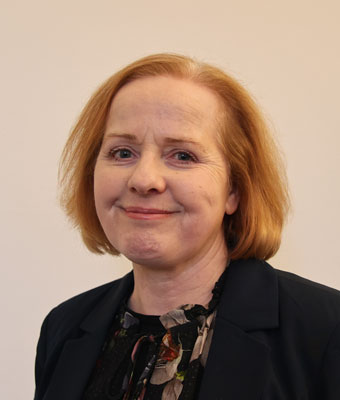
6. Deputy Ruth Coppinger asked the Minister for Health her views on whether gender-based violence should be ground for disqualification of a medical professional; and if she will make a statement on the matter. [17502/26]
The question of gender-based violence and the medical profession arose last year when a doctor, Christopher Morris, who had been convicted of assaulting two women was appointed as a locum consultant in obstetrics and gynaecology in the Coombe Hospital. Staff contacted me about that. It has now come up again as the result of what has happened in UCD. Thousands marched yesterday in support of a medical student who was raped and who had image-based sexual abuse committed against her on three occasions. The college and the school of medicine has clearly not acted property to deal with this situation.

I acknowledge that was a truly shocking case but I must be careful not to speak about individual cases in too much detail as it is a very sensitive matter. However, that does not mean I am not deeply concerned by it. I can say that the Medical Council is aware of that case and is actively engaging with the associated parties to get more information. The Medical Council has a responsibility to ensure that everybody in the doctor profession, including those in the UCD medical school, meet the required standards for medical education. I expect the Medical Council to make full use of its powers under the Medical Practitioners Act 2007 with regard to accreditation and inspection of all training sites. I have asked my officials to engage with the Medical Council in this regard.
Gender-based violence anywhere is completely unacceptable. I know I do not need to say that to Deputy Coppinger any more than she needs to say it to me. We are entirely in agreement, as is every person in this House. I can unequivocally state that incidents of gender-based violence are unacceptable in any context and must be reported to An Garda Síochána. If any such incidents occur in the health sector and involve medical practitioners, they should also be reported to the Medical Council, which exists for the purposes of patient safety. The idea of a medical practitioner of any kind doing harm to any person, particularly a woman, is anathema to all of us and does not bear thinking about.
Yesterday, we had statements in the Dáil on the establishment of an inquiry for the male victims of Michael Shine right across Louth and Meath. We know about hundreds of such men and I suspect there are many hundreds of others we do not know about. We spoke about the impact it had on their lives to have a sexual offence perpetrated against them within the trusting relationship between doctor and patient. Gender-based violence, like any form of sexual violence, is totally unacceptable in the medical profession and healthcare settings, as it is anywhere else.
Yesterday's protest was historic. Thousands of students reaffirmed our faith in the young generation. A key question that came up during that protest was whether UCD will do everything in its power to ensure this medical student can complete her medical degree within her original timeline or as close as possible to it rather than being forced to spend years longer in college because of the perpetrator's actions. She wants to achieve her dream of becoming a doctor. I ask the Minister to intervene to ensure this can happen. The whole country is standing behind this student. The question is whether UCD will do so. I ask the Minister to use her influence with the school of medicine. We will raise the issue of what happened but let us now look at the future. Can we rescue this situation for her and do everything possible to ensure she can become a doctor not years later, but as soon as possible?
I know UCD and its president, Orla Feely. It is a university led by a woman. That is a difficult position to achieve no matter what year we have reached. I know this medical student will have Professor Feely's full support. I will not speak about the particulars of courses, modules and all of those things I do not know about.
It would be wrong of me to pretend I do, but I certainly know UCD will put its full support behind this young woman to give her the best opportunity to succeed in her course, as she or anybody is entitled to do. I have never lost faith in the younger generation's clarity around values or the way they articulate those values and support each other. The protest was a demonstration of solidarity across the medical training community and beyond. It was a statement against gender-based violence in any context and in support of a vulnerable woman who should not have to deal with this.
Unfortunately, just because women are in certain positions it does not mean all of these questions are dealt with properly. I will not personalise it or mention names but we would not be here if UCD's leadership and school of medicine had handled the situation correctly in the first place. There is a problematic culture there and I ask the Minister to be open to that. As late as yesterday, the dean of the school of medicine sent an email to medical students telling them to be very careful because there was going to be a protest against gendered violence and providing an emergency number they could ring. How tone-deaf is that? The protest was against violence, against a rapist in their midst and against image-based sexual abuse. I saw that image. I had to look at it to verify all the facts. I saw the comments that went with it. They were utterly scary and sickening. People studying medicine potentially had a role in that. The rapist took so much from this person. The school of medicine and UCD should not take the rest. Let her complete her degree and please assist her in that.
I thank the Deputy. I have not seen the email she referred to so am at a disadvantage in relation to that.
It is on my Instagram.
Okay, but I do not follow your Instagram, if you will forgive me. I deleted it from my phone and do not have access to it so cannot speak to that with the knowledge the Deputy has of yesterday's email or any of those things. What I can simply say again and again is gender-based violence is wrong and the way we handle it is very important. Incidents should be reported to An Garda Síochána, to the Medical Council in cases relating to the doctor's profession and to the NMBI in respect of nurses.
This House made a clear statement yesterday acknowledging that sexual and gender-based violence can happen within the medical profession as much as any other place, that nowhere is a perpetrator to be protected and that nowhere is a victim not to be heard. We said that loud and proud; certainly, these benches said it clearly yesterday.
General Practitioner Services
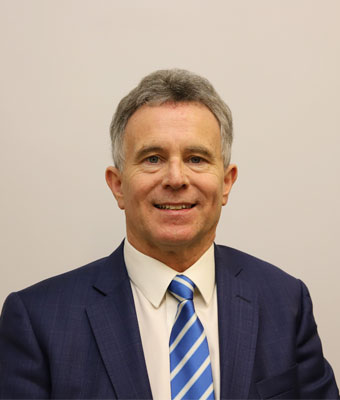
7. Deputy Sean Fleming asked the Minister for Health her plans for a new GP contract; and if she will make a statement on the matter. [17324/26]
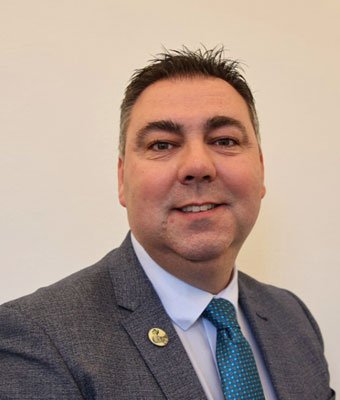
21. Deputy John Paul O'Shea asked the Minister for Health the number of approved general practitioner posts currently vacant in Cork; the measures being taken to recruit and retain GPs, particularly in rural areas of Cork; and if she will make a statement on the matter. [16272/26]
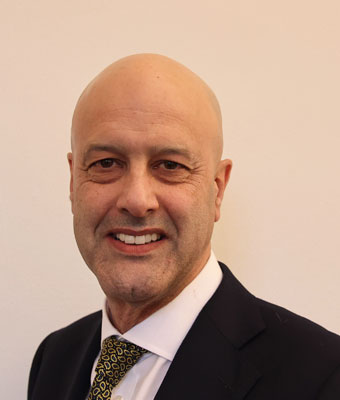
What are the Minister's plans for a new GP contract and what is the progress on the strategic review of general practice? I ask this in the context of our growing population, the increasing expectations and demands on our health service, the increasing expense of secondary and tertiary care, and the long-term need to treat patients with less complex problems in the most appropriate setting - namely, a primary care setting - by GPs and supported by full primary care teams.
I propose to take Questions Nos. 7 and 21 together.
I assure the Deputies that the Government is committed to the continued development of our general practice service and improving access to GP services for all patients around the country. Over €340 million in additional annual investment in general practice has been provided under the 2019 and 2023 GP GMS agreements. Those agreements provide for increased GP capitation fees, increased and new supports for practices and new fees for additional services. By any measure, that is a considerable support provided by the State and by the taxpayer to private practices. It is important to remember that. The positive impact of this investment is seen in the increased number of doctors both applying for and undertaking GP training. Annual intake into the GP training scheme increased by 80% from 2019 to 2024. We have further increased the number of new entrant training places this year by 50 to 400. In addition, recruitment of GPs from abroad continues under the international medical graduate rural GP programme, which targets the placement of GPs to rural and under-served areas.
A strategic review of general practice that is examining the range of issues affecting it is under way and will be completed this year. The review will examine issues related to capacity and will consider further possible mechanisms to attract GPs to rural and under-served areas. The review will set out recommended actions for more sustainable general practice delivery for the whole community. While the existing GMS GP contract has been significantly updated, including via a circular, a new approach must also be developed. The strategic review will identify the arrangements necessary to improve our current system of GP care and that will determine any changes required in a new contract.
There is hugely significant investment in GPs, particularly in chronic disease management, which has been of real benefit to the broader healthcare system. Regarding the chronic disease management programme, the State has invested in GP services for the benefit of people of a particular age who may face chronic diseases. This is showing dividends in terms of patient care and in terms of the number of exacerbations and presentations to acute hospitals. People are living better with chronic diseases because of our investment in GPs and because they can access it more easily.
I am concerned that there is not the same availability of out-of-hours GPs across the regions. That is putting additional pressures on emergency departments and local injury units, particularly at a time of rising population. I am particularly conscious of that in the mid-west and south west, but it is a national profile. That is something I need to make sure is included in any new contract. I have a number of other reflections about maximising the use of GP services so that we are getting the best in the community and reducing hospital presentations.
It is important to say that our development of pharmacy contracts enables better access to GPs. Let me say loudly again that you do not need to go to your GP for eight conditions, including a simple eye infection, thrush or a urinary tract infection. You can go directly to your pharmacy and pay €30 for a consultation with a pharmacist, a diagnosis and a prescription. You need never go to two different places when you have such conditions. Who does that matter for? Everybody. It matters because it creates more space in GP practices for somebody who needs a prescription for a urinary tract infection. For an older lady, such an infection is a really serious thing that can get much worse and result in hospitalisation. Because we have changed the pathway, people can get quicker diagnosis and an appropriate prescription to clear up a basic but important and potentially risky infection. In all those ways, we have tried to expand access to appropriate medical care.
I thank the Minister for her answer. First, they are private practices but the State has chosen to operate a contract of service-----
Correct.
-----and that has suited the State well in recent years.
The Minister is right that if a GP has a GMS contract, he or she is obliged to be available and provide an out-of-hours service. Many younger GPs are choosing not to sign GMS contracts with the State because of that obligation. I agree 100% with the Minister that we really need to rethink the out-of-hours framework. It may well need to be separate from the GP contract because an increasingly older population of GPs are carrying that out-of-hours burden.
We need to rethink premises. We are relying on a private developer model. That has not worked in many rural or inner-city areas where we need State-led, HSE built premises - I would say rent free - to attract GPs to those areas.
Finally, we need public salary GPs in some remote rural areas and in deprived urban areas.
The issue of vacant GP posts across Cork is placing serious pressure on communities, particularly in rural areas. Access to a GP is a cornerstone of our primary care system, yet in many towns and villages people are finding it increasingly difficult to register with a doctor or to secure a timely appointment. When GP posts remain vacant for long periods, the impact is felt immediately by the patient, by the neighbouring practices, which are already under pressure, and by the local health services. We need clear timelines and transparency from the HSE on how the vacancies can be filled and what interim measures are being put in place to ensure patients are not left without access to essential care.
Primary care must be strengthened. Two of the biggest issues that come up in my office every single week are access to a GP and access to consultant orthodontists in Cork. I urge the Minister to try to address those two issues for Cork over the next couple of weeks.
I find myself in agreement with all of the five points Deputy Daly made, such that I do not believe it is necessary to repeat them. I look forward to working with him on the practical points he has made, particularly in relation to the out of hours framework, the premises structure, what we might do and how we might think about that, and the development of that in terms of a tax-efficient way of encouraging activity. The Deputy correctly recognised the public-private element to it. I must also recognise it from the perspective of the taxpayer, and I think that is reasonably fair, but I do not see the need to repeat all those things that I already agree with him on, but I look forward to his input in how we improve them. I thank him for that.
In relation to Cork, while no GMS general practitioner posts are vacant in County Cork, I do understand, for example, in the area Deputy O'Shea represents, in Charleville, in particular, that there is a practice that is going from three GPs to two GPs. The impact that this has on the community is hugely significant. It should not be understated. While it is one GP, that is what matters. It is the hours that are available. It is the support that is there to the community. I recognise the point the Deputy is making. I know HSE officials are continuing to engage with him on that on behalf of his community.
In relation to the query regarding the orthodontic service in Cork, it is anticipated that the whole-time equivalent of specialist orthodontist will reduce to 2.83 from May 2026. That is on foot of three clinical staff retiring from duty, and that has a big impact. Plans to restore the whole-time equivalent levels of specialist orthodontist and senior surgeon posts are being advanced and finalised in HSE south west. In terms of any anticipated retirements for this year, we have not received any indications of retirements from the remaining clinicians but a specialist orthodontist has been on periods of sick leave, which is impacting further delivery. We had a conversation about the importance of that earlier. I thank the Deputy for raising it.
I acknowledge the investment of the State in general practitioner services over the past number of years. I think the Minister would recognise that with our growing population - 90,000 a year - the increased expectation and sophistication in what they want from a functioning health service has increased. We are not accelerating the capacity at the rate we are going to have to. We are talking about having 6,000 GPs in 15 years' time in order to meet that demand. We have 4,200 GPs who are registered as GPs but they are not whole-time equivalents. Many of them are in part-time practice. That is just the changing way people and younger doctors work. We need to find a way of getting the full contribution from GP training, in that the State has invested huge amounts of money to get them into general practitioner services in the country, so that it can be sustainable into the future.
I thank the Minister for her continued engagement and interest in the health services in Cork, particularly in terms of GP services. They are a first point of contact for many people. While it is great to see that there are no current vacancies in the GP contracts in Cork, our population in Cork is growing substantially, particularly in rural County Cork, where every single town and village is growing by the number of new houses there. There is particularly a need in Charleville. I thank the Minister for mentioning my town of Charleville that I represent. There is an acute need in terms of getting a new GP contract there because the population of Charleville is increasing significantly. We need additional supports there into the future.
I am receiving increasingly more queries into my office in relation to consultant orthodontists. There seems to be an issue where we do not have enough staff. There seems to be no plan in terms of recruiting a consultant orthodontist. I urge the Minister to see if she can engage with the HSE and with me to encourage more recruitment as we go forward in the next couple of months.
Let me be very clear in relation to the recruitment. Any delay should only be in actually finding the consultant orthodontist and bringing them into the system. That does take time because people have to leave posts and so on but there should not be any delay at a HSE level recognising the level of need I have described to the Deputy and have described more broadly.
In relation to GPs generally, we have expanded the training programmes and the numbers again and again. We do want them to work. We cannot force them to work as GPs in Ireland and we cannot force them to work in the public health system but that is what we want. Again, I think it is time to reflect on the level of investment that we put into training medical practitioners on behalf of the State. It is such a privilege to be able to do that and not charge the fees that would be charged in any other country to train as a medical practitioner and the opportunity that it gives people. We spoke about with dentists and spending a period in the public system. We want to develop a cohort of public GPs. There is no question about that, and we have to think about the ways in which we give people the opportunity, or make it a requirement, to spend time in the public service to get the benefit of that particular model.
In relation to out of hours, it is really important to reflect on that, particularly in rural Ireland and where it can be more difficult to get to somebody that you need. I was reflecting on Cork in particular in anticipation of the Deputy's question. In relation to Kanturk and Mallow, for example, there were issues going back in 2023 and 2024 that the Deputy will be aware of better than I in relation to Kanturk and Macroom treatment services. The HSE did engage with SouthDoc on the matter, which confirmed that the centres were to be available by appointment only. It has been improved somewhat. I am now aware that there is an on duty doctor physically present in the Mallow treatment centre each weekday night, which is important. They can see routine patients provide telephone clinical advice and travel to locations such as Kanturk to provide home visits. That is the support that is necessary in addition to a second doctor in situ at weekends in public hospitals. We do need that out of hours facility, as Deputy Daly has highlighted. We need to continue to make sure that this is part of the GP offering.
Question No. 8 taken with Written Answers.
Healthcare Policy
9. Deputy John Clendennen asked the Minister for Health the position regarding any analysis or action plan currently being considered in terms of additional healthcare capacity in the midlands, in particular elective care capacity; and if she will make a statement on the matter. [17322/26]
This morning I would like to ask for an update for a position regarding any analysis or action plan currently being considered in terms of additional healthcare capacity in Offaly and the midlands, particularly in relation to elective care capacity.
I thank the Deputy. I am fully committed to ensuring sufficient health care capacity across every part of Ireland. I compliment the work done in the midlands between the triangle of hospitals between Mullingar, Portlaoise and Tullamore, which are all performing at an exceedingly high standard in relation to all aspects of care, both emergency and scheduled. However, we need further development of the elective care capacity in the midlands. The HSE capital plan sets out a range of investments for the midlands, including the recently completed two-storey emergency department in Portlaoise, the reconfiguration of the renal department to provide additional dialysis treatment space and 2 additional neutral pressure isolation rooms in Tullamore Regional Hospital and progressing the appraisal for the replacement ward accommodation, theatre department and emergency department for projects for Regional Hospital Mullingar.
Alongside this excellent progress and the continued strong work by each of the hospitals, there is need for more capacity in terms of elective work. I do believe that this triangle of hospitals, working together, can offer a situation of exceptionally good elective work. Specifically on that, the HSE Dublin and midlands health region has confirmed that it is undertaking an analysis to inform the future development of an action plan. This early scoping phase is intended to consider potential options for new or additional capacity, including in the area of elective care. An expressions of interest process forms part of this broader review. Work to define scope, parameters and governance arrangements is ongoing. The process is expected to be completed by the end of this quarter. I am assured that the region will provide updates as this work develops.
The implementation of health infrastructure investment policy via the strategic healthcare investment framework means that any future proposal for new infrastructure will be centred on evidence-based demand analysis and established on a need identified by services.
I thank the Minister. It is welcome news that we are looking at new elective capacity in the midlands. It is something I have raised here in the past in this Chamber. We have a situation where patients and carers are travelling to every corner of the country rather than the midlands for that surgery and medical care. It will assist in relation to providing better care and local care but also with congestion, not just on roads but in facilities in the likes of Dublin, where patients have had to come for so long. That will take a demand pressure away from those hospitals by bringing a new facility, new capacity and a new modern facility to the midlands.
From my perspective, Tullamore is best suited to provide that facility. The performance ratings of the emergency department in Tullamore in particular are outstanding. Patients are seldom left on trolleys, but that is coming at the cost of elective care. This measure is very much welcome.
I take this opportunity to compliment Midland Regional Hospital in Tullamore and its excellent manager, Louisea Burke, on delivering consistently predictable urgent and emergency care. While it is not easy, they do it with an extraordinary focus on patient care. Mr. Bernard Gloster, CEO of the HSE, visited the hospital recently to compliment them in that regard. Often we attend hospitals where there is a problem but not often enough do we attend hospitals to compliment them on their excellent work. Tullamore hospital is deserving of that attention.
I met Tullamore hospital management reasonably recently, at the end of January at our regional forum, where I again took the opportunity to congratulate Louisea and all of the staff at Tullamore hospital for providing that extremely good, predictable and safe service to the people of the area. The hospital and the midlands need more elective capacity, however. Of course, because of the region it is in, it is within the south Dublin surgical hub, which is connected to St. James’s Hospital. That is a busy hub already and there is a need to reflect on the balance of that provided throughout the midlands. I acknowledge the Deputy’s advocacy on behalf of Tullamore. Indeed, I have visited it with him and seen the value of the space around Tullamore regional hospital. I know it well because of the Deputy.
I appreciate the Minister’s support in this regard. The objective is to get to a stage where there will be a call for expressions of interest and follow-through of this plan in order that surgical procedures will happen in Tullamore or elsewhere in the midlands. That is what we all have to aspire to.
I acknowledge the Minister’s recent visit to the midlands regarding ongoing facility works, such as the hospice in Tullamore and the primary care centres in Tullamore and Banagher. Edenderry primary care centre is also in for planning permission at the moment. I recently visited Birr primary care centre, which the Minister visited when it was only a shell. It is now nearing completion. If the Minister has any update on the completion of those works and when GPs will move onto the site, it would be greatly appreciated.
I was just reflecting on how Birr primary care centre has evolved since we saw it last summer. I am looking forward to visiting it in quarter 3 of 2026 when it will be operational to see how magnificent it is. For anyone who has not seen it, it is absolutely huge. It will be an enormous addition to primary care for the people of Offaly generally. Of course, it will have extensive GP practices and a pharmacy. It will also provide space for a National Ambulance Service base. It is extraordinary and it will add enormously. Indeed, I hope it will take some pressure off the hospital as well.
It is true that more elective capacity is necessary. While we are not considering a surgical hub model as such – we have enough work to do to get Sligo and Letterkenny ahead – that does not mean there are not different ways of achieving additional elective capacity. When I say we are open to suggestion in this regard, we really are. That is why we have insisted on this expression of interest process to determine what more can be done to deliver that elective capacity in an even stronger way, recognising the already excellent work done by the triangle of good hospitals.
Primary Care Centres
10. Deputy Joe Neville asked the Minister for Health the number of GP practices or primary care centres that have been introduced in north Kildare since 2020; the number due to be opened in 2026 that are known; and if she will make a statement on the matter. [17744/26]
The HSE contracts GPs to provide medical services on its behalf, including GP services under the general medical services, GMS, contract. Over 3,200 GPs hold at least one contract with the HSE, which is a 9% increase compared with January 2020. As GPs are private practitioners, they determine the location from which they provide GP services.
Increasing GP capacity is a priority for the Government. As I said in response to Deputy Daly, we have significantly increased the new entrant places. Additionally, we are trying to recruit from abroad for the international medical graduate rural GP programme.
There are 180 primary care centres operational across the country, with 51 centres having opened since 2020. A total of eight primary care centres are operational in Kildare, three of which are in north Kildare, in Kilcock, Celbridge and Clane. The HSE is also considering the development of a further centre to serve north-east Kildare. Available figures show the number of GPs with GMS contracts in the Kildare west and Wicklow local health office area has increased by over 20% since 2020, from 110 to 134. Obviously, that is a broader area than Kildare North, the constituency the Deputy represents, but it is the relevant geographic operational area for the HSE. Nevertheless, I recognise the significant population growth in north Kildare and the needs of the Deputy’s community in respect of access to GPs. We very much hope that number will be enhanced, not just for the region but specifically for the towns and villages of north Kildare the Deputy represents
The Minister referred to her discussion earlier with Deputy Daly, which I listened to, about the need for GPs and how we roll them out. He was speaking about both the rural and urban areas in his area, but where I see a real need is in those urban centres of Leixlip and Maynooth. They are two large towns with a university on top. There are 60,000 residents and there is not a primary care centre between them.
Likewise, there is a huge need for GPs. I have known of many cases where people have come into our towns and have been refused a GP because there are no places available for them. They are stuck having to use their GP in the area from which they have come, be it a rural area or Dublin. They have to keep those GPs and, realistically, that is not good enough. We have to ensure we can have more GPs. The Minister and I have discussed primary care centres being a key source of that. Indeed, Deputy Daly alluded to GPs potentially having free use of those primary care centres. Those are the sort of things we need for my constituency of Kildare North.
I agree with the Deputy. The difficulty, again, is that private GP practices determine their location. That is a challenge. The Deputy is right; we need to try to focus on the primary care centres and enable more GPs to come into the public practice. It is a particularly frustrating area because, of course, plans were advanced for primary care centres, which required planning permission to turn a facility into a primary care centre. They have not progressed, however. We are looking at the bigger one to serve Leixlip and Maynooth but that does not answer the question of the Deputy’s constituents today.
I agree with the Deputy; it is a considerable challenge for people to have to go back to their original GP, particularly for students, when they need basic access to care. I acknowledge what the Deputy is saying. We are trying to increase capacity everywhere through pharmacies, additional GP practices and additional primary care practices. The Deputy’s area has been particularly tight and I know this is not the first time we have spoken about it. The Deputy has articulated this issue on behalf of his constituents a number of times during these questions, and I genuinely acknowledge what he is saying.
Often when we talk about an area like north Kildare with a population that has grown so significantly, we can talk about physical infrastructure, Uisce Éireann or the need for housing. Ultimately, however, we also need the social infrastructure, in whatever guise that comes in, be it locations for elderly people or, in this case, GP services. Social infrastructure makes a community what it is and that is what everyone needs.
While I will continue to advocate for new GPs, I am conscious of the expenses associated with land and offices and the difficulties younger GPs face when setting up in the likes of Leixlip, Maynooth and other growing towns in north Kildare. As I said, north Kildare’s population has grown by 40% in the past 20 years, which is significant. We are lacking in some of those basic services. As I said, people have been turned away from GPs, unable to get places, and in some cases people who have not used a GP for a number of years, in a positive way, have received a letter telling them they are no longer members of that GP clinic and that the GP has taken them off the list just because they have not turned up, in a good way as a result of being healthy. This is a basic need. I am glad to work with the Minister to get a solution.
The Deputy is right; we have a challenge in this regard. On the one hand, we cannot tell private GP practices where they should locate. That is a matter for them to determine. At the same time, we want to ensure they locate in areas of need, such as the Deputy’s constituency. He has suggested looking at some measures to create different incentives for GPs to either join a practice or physically extend a practice and how the State could offer the best support to them to do that. This is something the Deputy has mentioned to me before. Perhaps we might follow that up to see how we could consider that to create additional incentives for GPs to set up or expand practices in specified areas.
Disease Management
11. Deputy Malcolm Byrne asked the Minister for Health the Government strategy to raise awareness of haemochromatosis. [17294/26]
I am taking this on behalf of Deputy Byrne but it is something close to my own heart as well. It is to ask the Minister about the Government's strategy to raise awareness of haemochromatosis.
Haemochromatosis is a disease that causes iron overload in the body. It is a genetically inherited disease. It is the most prevalent genetic disease in Ireland. One in 20 people will carry part of the gene and one fifth of those will develop full-blown iron overload.
Haemochromatosis is a hereditary condition, common in Ireland, characterised by an over-absorption of iron from the gastrointestinal tract. Excess iron accumulates in organs including the liver, pancreas and heart, causing damage. I am informed that Ireland has been confirmed as having the highest rate of haemochromatosis worldwide. I am advised by the HSE that the Irish Haemochromatosis Association receives €55,000 in funding from the Health Service Executive each year to support engagement, raise awareness, support patients, their families and the medical community and raise awareness of haemochromatosis. The association’s initiatives include World Haemochromatosis Awareness Week, taking place from 1 to 7 June every year, and the GP practice nurse training and education programme. The diagnosis, treatment and management of patients living with the condition is guided by the hereditary haemochromatosis model of care, developed by the hereditary haemochromatosis working group, and the guidance document of the Irish College of General Practitioners, Hereditary Haemochromatosis: Diagnosis and Management from a GP Perspective. I understand that the condition can be treated very effectively by a process called venesection or therapeutic phlebotomy, which involves the patient having their blood taken. This can happen in acute hospitals or GP surgeries or at an Irish Blood Transfusion Service, IBTS, facility. It is extraordinary that Ireland has the highest rate of this condition worldwide and we need to do more to drive awareness of it.
I thank the Minister for that. This is really important. Haemochromatosis was a hidden disease up to maybe 20 years ago. People would appear late in the disease with diabetes and liver failure and die from this condition. Thankfully, there is greater awareness in recent times. It was in my own family. My father had it and it was in his family. It can be managed very well. We need to diagnose it early. We need to be absolutely aware of how common it is. I do not think many people are aware of that. It can be simply treated in primary care. When we talk about capacity in general practitioner surgeries, that is an issue because while the State has a fee for GPs to do the venesection in their surgeries, many do not have the capacity to do so. People with haemochromatosis end up in hospital at some distance from their own homes. It is about raising awareness because it is the most prevalent genetic disease in Ireland. It is called "the Celtic curse".
I do not know what the reasons for that are and why Ireland has the highest rate of it. I would be quite interested to find that out. As the Deputy says, this is a condition that can be managed well, particularly at a primary care level. It is the most common genetic disease here, with one in 83 people genetically predisposed to develop the condition. The symptoms are sort of non-specific and include non-specific fatigue and joint pain. The diagnosis is very variable. However, it can be treated well and effectively and it is important we discuss it here in Parliament as part of raising awareness of this very common condition among the Irish population. I thank the Deputy for his question.
I am somebody who has haemochromatosis. I was very lucky about ten years ago that I had the diagnosis. I was simply feeling fatigued. It was a general checkup and I was lucky that my GP decided to check my iron levels. It is a perfectly manageable disease, as Deputy Daly has pointed out, and I am very fortunate that I can have a venesection in my local GP's surgery. The challenge, particularly among men, who perhaps do not go to the doctors as regularly as they should, is that there is not the level of awareness. When somebody leaves this condition undiagnosed and as the condition develops, the risk particularly of arthritis or other diseases grows. I ask that there would be a national awareness-raising campaign because of the disease's prevalence in Ireland. As has been said, given that potentially one in 83 adults carries the genes for haemochromatosis, the more awareness about this, the better.
I thank the Deputy for sharing his own experience and perspective because that helps to tell the story of how common this is and what the impact is. We support the Irish Haemochromatosis Association and World Haemochromatosis Awareness Week, which takes place from 1 to 7 June every year. The association also runs the GP practice nurse training and education programme. To the extent we can do so, we will get behind that world awareness programme every year in the first week of June, a lovely week of the year, to drive awareness of haemochromatosis, and I am sure the Deputies will be at the forefront of that.
Deputy Ó Laoghaire advises that he is on his way.
We will take Question No. 13 and then Deputy Sherlock, who has been waiting here for some time.
Home Help Service
13. Deputy Pádraig Mac Lochlainn asked the Minister for Health when the HSE will allow the home support service in Donegal to resume recruitment for healthcare assistants to address the growing waiting list for the service in the county.; and if she will make a statement on the matter. [17182/26]
This question relates to the waiting lists of 324 for home support services in Donegal. I am very clear from speaking to staff in the service that the HSE recruitment policies are preventing it from recruiting the necessary assistants to get those waiting lists down. That also has a knock-on impact on Letterkenny University Hospital. I wish to get a sense of what is happening and why it is happening.
Addressing the home support waiting list is a priority for me in 2026 and the HSE National Service Plan 2026 includes, for the first time, an explicit target to reduce waiting times. As part of this, I have secured funding for an additional 257 directly employed staff in 2026, with the highest allocation of 56.5 healthcare assistants, HCAs, and three managers going to the west and north-west region. I can assure the Deputy that there is no pause or restrictions on recruiting healthcare assistants in Donegal, and increasing recruitment remains an active priority for me.
Since September 2025, 39 additional healthcare assistants have been hired and commenced work in Donegal. In addition to this, a further 43 candidates have been offered roles, are progressing through pre-employment checks and are expected to take up employment over the coming weeks. Rolling recruitment campaigns are ongoing in the area. A recent recruitment drive for healthcare assistants resulted in a further 50 candidates being scheduled for interview. These interviews are scheduled to commence this week, 2 March. This pipeline will increase staffing levels further in the coming weeks. The agency conversion programme is also strengthening stability. Of 46 agency staff engaged, 42 have now been onboarded, including ten in Donegal since October who have moved to permanent HSE roles. The HSE continues to work closely with local education and training bodies to support a sustainable long-term workforce pipeline for the region in Donegal.
We are very proud in Donegal that we have the strongest level of home care assistance delivered directly by the State through the HSE and that is the way we want to keep it. My concern is that there is an agenda to privatise the service in Donegal, that is, to hold back recruitment in the public system and secure the services of private providers. I am aware of incidents in Donegal where the HSE has had to step in after a poor service by private providers. There are real concerns around this. The facts do not lie. The waiting lists are growing. There are 324 people waiting. That is not just about those families and, of course, the people themselves not having that level of support; it also impacts, as I said, on Letterkenny University Hospital. It means more people in the emergency department because we cannot release patients back into the community. I want to get a sense and assurance from the Minister of State that this is not about a privatisation agenda.
I thank Deputy Mac Lochlainn. I assure him that there is an intensive recruitment campaign for healthcare assistants for Donegal. As I said, 39 additional healthcare support assistants have been hired since September to the Donegal services for home support.
Furthermore, 43 candidates have been offered roles and are currently progressing through pre-employment checks. Seventeen of those are cleared to commence, and a further 26 candidates are currently in pre-employment clearance. A recent recruitment drive by the HSE has resulted in a further 50 candidates being scheduled for interview. These interviews are taking place now. There is a commitment and approval to recruit an additional 257 directly employed staff in 2026. That is on top of vacancies that are there. There is an absolute commitment by the HSE to continue to recruit healthcare assistants in Donegal.
I will continue to monitor this closely because it is clear that in recent years there has been an agenda at senior level in the HSE for a sneaking privatisation of the service in Donegal. In a response to a parliamentary question, it was confirmed that the use of private providers increased from 13% to 19% in one year. I am clear that recruitment through the HSE for home care assistants is being held back by policies there. By its own admission, it is looking to bring in private providers to fill the gap. That is wrong. There is a culture of community focus in Donegal and trying to keep people in their homes as much as we can and not have them in institutions. That helps the hospital. I ask the Minister of State speak to the managers to get an absolute assurance to stop playing games with privatisation. Whatever about the response they have given him, it is not borne out by the facts on ground I am seeing.
In my role as Minister of State for older people, particularly dealing with home support services, I want to bring down the waiting lists. I want the HSE to actively recruit staff. I have met with the HSE about that on a number of occasions. For the first time, in the national service delivery plan for the HSE we are looking specifically to reduce waiting lists. As it stands, 39 additional healthcare assistants have been recruited by the HSE since September for Donegal. There are 43 candidates who have been offered roles and 17 of those have already gone through pre-employment clearance and a further 26 are undergoing it. There are also interviews taking place for 50 candidates. These are all people who will be employed by the HSE as home care assistants. The Deputy has a job to do as a representative for Donegal. I have a job to do as Minister of State. We got approval this year for an additional 250 whole-time equivalents. That is something I continue to engage with the HSE on, as well as reducing the waiting lists.
Healthcare Policy
14. Deputy Malcolm Byrne asked the Minister for Health the strategies in place to tackle the high levels of osteoporosis and fracture falls in Ireland. [17293/26]
The Healthy Ireland framework provides a number of strategies to ensure everyone in Ireland can enjoy good health as they age, including the national physical activity framework and the obesity policy and action plan. One in three older women and one in five men are affected by osteoporosis. In 2023, the Department published healthy eating guidelines for adults aged 65 and over, which emphasise the importance of a healthy diet for older adults to maintain muscle mass and bone strength to support independent living. A HSE fracture liaison service pathway developed by the National Clinical Programme for Trauma and Orthopaedic Surgery promotes preventative community-based care as opposed to a reliance on reactive medicine, in line with Sláintecare reform.
This year my Department approved funding to the HSE to pilot a scalable, multidisciplinary falls and frailty prevention service for women aged 65 plus in Mayo, Galway, and Roscommon. This service particularly targets older women at increased risk of falling, frailty, mobility issues, fear of falling, chronic conditions or reduced function post-hospitalisation. The overall aim is to reduce falls and fractures and the demand for treatment and long-stay care in acute services. Falls assessments, along with osteoporosis drug treatments, are essential for fracture risk reduction and these are being progressed through the community access to diagnostics scheme and the Health (Pricing and Supply of Medical Goods) Act 2013.
We are also investing and supporting a range of different forms of exercise in the community. I do not wish to name communities but I have seen projects in Sligo, in my own constituency and in Limerick, which are encouraging safe exercise among people of all ages to develop their muscle mass and bone strength in a way that is not likely to lead to any injuries, but only to rejuvenation and greater strength. That is a hugely important part of living well as we age.
The Minister has outlined what a serious issue it is, and the numbers impacted in this country by osteoporosis. We know there are approximately 32,000 fragility fractures every year and that is estimated to cost our health service approximately €464 million every year. That is not to forget the impact it has on the individual patients. Given our ageing population, if we do not address some of this, those costs could rise to close to €1 billion within a decade. I welcome the commitments toward healthier activity, particularly among older people. The Minister will be aware that there is a commitment in the programme for Government towards tax relief for gym membership to encourage people to build resistance and cope with falls. I hope when the issue of tax relief for gym membership is being considered that the Minister will support it.
The element of preventative care is crucial from the perspective of diet, lifestyle management and the ways in which people exercise. The gym membership piece is interesting but exercise is available in lots of different ways. I am seeing different forms of community exercise groups. There is a fantastic facility in a GAA centre in south Sligo and in other places. What you are doing is turning up as part of a community and going through the different machines. Whether people are post-hospital or post-diagnosis, using those safe, community facilities to build up their strength and bone mass is an important part of preventing illness, future falls and recovering. Of course, it is an extremely difficult situation to have the fear of falling particularly in the winter when weather is bad, and hospitals are already under pressure from respiratory illness. We have seen this winter in particular that combination of respiratory illness and falls from a prolonged period of bad weather. It does not help anybody and makes living as an older person that bit more difficult.
15. Deputy Marie Sherlock asked the Minister for Health the number of women who have applied for and who have travelled abroad under the endometriosis surgery abroad interim scheme; and if she will make a statement on the matter. [17509/26]
My question is regarding the endometriosis surgery abroad interim scheme. We all want women to be treated in Ireland, and I know there is progress being made towards that. However, we can all agree we are some distance away from being able to see that in Ireland, both in terms of diagnosis and care. My question concerns the number of people who have applied under the new scheme and the number who have been treated, which is probably a small number. Since the new scheme was published I have had quite a number of people approach me because they are confused.
We met women with endometriosis at the beginning of September 2025 and this scheme was put in place six weeks later. It was put in place for a specific reason, which was that we wanted to make access to surgeries as easy as possible. There are already two schemes, which are the cross-border directive and the treatment abroad scheme. In many ways those required women to pay upfront when what we wanted to do was pay the upfront cost for them. I understand we set up a dedicated two-year scheme to keep it in line with EU rules and that was launched on 18 October 2025. I need to be cautious with regard to patient confidentiality in my response but I can say that a dedicated email address was established. I think we have received approximately 80 communications with that email address. They do not necessarily relate to that scheme but to the operation of other schemes as well. It has provided a single point of contact, which has been useful because the information was too fragmented before. We have had 20 completed applications since it opened on 18 October and approximately ten women have travelled abroad for surgery under that initiative. That is not the total number of women whom we have supported to travel. We have also supported women to travel under the cross-border directive and the treatment abroad scheme because they have been at different stages of their care and have taken different approaches. This has opened up a scheme for people who want an upfront cost paid.
However, the focus on it through centralising it in this way has enabled a better conversation with the other schemes as well. There have been a number of different questions on it, which is natural with any new scheme, many of which we are smoothing out. This includes referrals by consultants and different issues. I met officials from the national women and infants health programme, NWIHP, and today I have the good fortune of getting to meet up to 100 endometriosis patients in the Department with clinicians.
The meeting last September was hugely important, and very welcome, but there was a large degree of alarm weeks later when the scheme was published that the names repeatedly mentioned at that meeting of the surgeons operating on women in Romania and Greece were not on the list. I have a very real concern that there is a lot of confusion about the most appropriate persons to treat complex endometriosis and that there is a large degree of deterrence, and women are not going to apply to the scheme or maybe they have engaged with the Department to ask questions about surgeons who are not on the list, and, ultimately, will be excluded from the new scheme. The reality is that we do not have numbers because they have not been properly coded in terms of who has been travelling abroad up to now and where they have been going under the treatment abroad scheme. That has been a real problem.
The second key issue I have a concern with is that the surgeons on the list are very much gynaecologically-focused but endometriosis is a whole-of-body inflammatory condition. My concern is that the list is very narrow, while being very long.
When a new scheme is established, it must be done in a legally robust way. It is necessary to identify a reason these clinicians and not those clinicians are included. For example, the European Endometriosis League, EEL, and the British Society for Gynaecological Endoscopy, BSGE, criteria were picked. All of those clinics that were on those very defined lists automatically came onto the scheme. The clinics that the Deputy is referring to in Athens and Romania were not among those accredited by the EEL or BSGE. We said this clearly at the time. We asked NWIHP to engage further to see had they and could they meet the clinical standards to enable them to be within the scheme in a legally robust way. NWIHP has engaged with Athens and Bucharest. That process is not complete. I expect there will be some positivity and some negativity in relation to that. A relationship has also been developed with Bordeaux, which is, of course, much closer. There is a dedicated centre there and we are going to include that on the improved list. It is a live and iterative list that we are trying to develop all the time but it has to meet the clinical guidelines as well for our clinicians to refer people on to that scheme, which was one of the barriers in the past.
I thank the Minister.
We have to keep it clinically safe as well and within the rules for the future.
I appreciate that. Hopefully, we will agree that there has been an issue in this country in that the clinicians operating here have not fully understood endometriosis, so there have been barriers to referring on. There is a challenge in this regard. NWIHP has to have the confidence to be able to put centres on a list. The reality, though, is that women have had to find centres using their own wit over the past number of years to get the appropriate care. If any lesson is to be learned from this experience, it is that we need to listen to them in terms of where they have got the appropriate care. These are the women who have gone before and are currently seeking assistance now. It is not good enough just to say that we will solely listen to the clinicians in this country, because there has been an issue that they have not been providing the services that women have needed here. There is a circle to square. It is not acceptable that the centres that have been used are excluded, and I hope they will be added.
If I were to come back and give the Deputy the specific reasons there might be a concern about one clinic, she might take a different view. Perhaps we might have that conversation privately, because I suspect she does not have the complete information that I have, which is not a fair balance. We might perhaps speak about that separately.
She is correct that in the past there was a reluctance to refer patients abroad because clinicians did not know where they were referring them to. That is a cultural issue as much as anything else but we have overcome that now. I would not, though, classify all clinicians in that space.
I did not-----
But the Deputy did. Let me just be careful. We have clinicians who have been taking their own time to go and see others through surgeries so that they might learn more. We have developed different education pathways and fellowships over the past number of months, particularly with clinicians who really wanted to do better in Ireland and access the opportunity to do better in Ireland. I want to support those clinicians who are taking those steps. On Friday, the Royal College of Physicians is hosting its first conference on endometriosis with the Institute of Obstetricians and Gynaecologists. This is because of the weight we have placed on its importance. It is about clinicians at the highest level in the institute and the college responding and putting their focus onto this issue. I have seen them step up, and I would love to see that acknowledged.
With the permission of the House, we will go back to Question No. 12. Is that agreed? Agreed. This will be final question of this session
Health Services
12. Deputy Donnchadh Ó Laoghaire asked the Minister for Health the number of people in the south Lee area awaiting paediatric and juvenile primary care psychology; the number waiting over six months, 12 months and two years; and if she will make a statement on the matter. [17839/26]
Primary care psychology for adolescents is a huge issue. I am concerned that sometimes it slips under the radar. This service provides important support, but, unfortunately, from my experience in replies to previous questions, the numbers on the waiting list in south Lee are significant, including over a year for some people.
As the Deputy will be aware, primary care psychology provides a broad range of supports and treatment for mild to moderate mental health conditions. HIs concern is particularly the south Lee area, so I might get to that. Currently 2,445 children and young people under the age of 18 are waiting to access primary care psychology in the south Lee area, with 198 waiting for between 26 and 39 weeks, and 1,792 waiting longer than 52 weeks. That is an aberration and should not be the case. It simply has to be improved. Several key initiatives have been deployed by HSE South West to try to improve access to the services. This is having an impact, to be fair. In 2025, 30% more patients were seen in the region compared to 2024. The Deputy and I, however, want that rate of improvement to continue.
Furthermore, the regional director of psychology has established a child psychology service waiting list improvement initiative to drive improvements in accessing key areas such as workforce planning and development for the region, waiting list and capacity solutions and clinical service innovation. Local recruitment, last month and this month, will lead to retaining graduating trainees in permanent posts mapped to primary care and CAMHS and adult mental health services priorities. A number of psychology assistant posts from a new national panel created in December 2025 will be allocated to both the IHA south and west, and north and east to reflect the fact that the longest waiters are in the south Lee and north Lee areas.
We also have the primary care psychology waiting list initiative to try to target. That has had some success since 2021, removing more than 15,000 children from the waiting list nationally. Additionally, we have put in funding of €4.75 million in budget 2026, which will remove a further 3,000 from the national wait list this year, a number of whom will be from the south Lee area. I am not comfortable with the levels of waiting in the area, as I know the Deputy is not, and I expect a continued reduction, as was the case from 2025, which was better than 2024. We do have a lot of work to do.
Can the Minister clarify the figure of 198? How many weeks is that in excess of? It was the figure right at the start of the answer.
I am sorry. I did not hear the Deputy.
The Deputy gave a number of 198 people waiting over a certain number of weeks. I did not catch how many weeks it was.
There were 1,792 waiting longer than 52 weeks.
That is a huge number. It is maybe a slight improvement, but very comparable to what was there before. This time last year about 70% of the posts in primary care psychology were absent. That is not in the reply and I am sure the Minister will not have those numbers in front of her. Part of the problem here is that there is a gap in recruitment. My big concern in relation to primary care psychology is us not making the investment there. The threshold to get into CAMHS now is so high because of the pressure it is under. Therefore, people who are at a relatively high level of suicidal ideation, as well as people dealing with things like ADHD, are not being seen quickly enough and their condition is therefore escalating. The other concern I have, potentially, is with people ageing out, that is, people who reach 18 without having been seen.
I agree with the Deputy. We increased the number of psychology doctoral training places to 111 at the end of 2025. This was up from 49 places in 2021. It is not just about the doctoral level. We want to create psychology assistant posts too, where we can make sure that people with a master's degree can work to support doctoral-level psychologists to increase workforce expansion. Not everybody has to have a doctorate. People can have a master's degree and still do important psychology work under the supervision of a different level of clinician.
We are trying to find different ways to expand the workforce. Locally, at the moment - literally last month - we are trying to retain graduate trainee posts and permanent positions in the south west and recruit four psychology assistants from the national recruitment panel established in December 2025, who will be allocated to support waitlist reduction in the longest waiting areas. We have 15 trainees exiting the doctoral training programme, which will be back-filled to ensure there is a pipeline of new psychologists to engage in that work. I completely acknowledge the challenge, measure of improvement and focus on recruitment. The Deputy and I are going to want to see that delivered for young people who need psychological support in that area.
It is vitally important that we make this early intervention. The nature of primary care is that people are not triaged. It is very much a question of how long people are on the waiting list. CAMHS can triage people according to severity. The nature of primary care is, of course, that one comes in and is waiting the time one is waiting. That is all. All that time somebody's condition can be escalating. That can cause behavioural issues in school, an increase in the severity of suicidality and issues in terms of anxiety escalating. All of these problems escalate if we cannot address that.
It sounds from what the Minister is saying that many of the vacant posts which existed a year ago still exist. That is a concern. I make the point, and I have made it before, that one of the concerns I have, in terms of getting people into psychology, is that to try to reach the point of being able to do clinical psychology, one has to get experience. That is a barrier to people from low-income backgrounds. One has to be able to gain that experience and not everyone is able to get a paid position that provides clinical experience. I am concerned about people who are not seen and who have been on the waiting list for a year or whatever. When they turn 18 years of age, they are the back of the queue for adult primary care psychology.
I cannot answer that for the Deputy this morning but it is an important question. We might put this series of questions to Andy Phillips in respect of that region. I am sorry I cannot answer that question for the Deputy.
Rental Sector
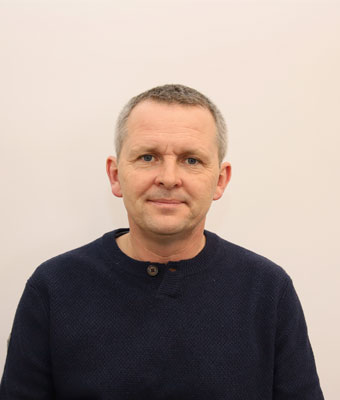
152. Deputy Richard Boyd Barrett asked the Minister for Housing, Local Government and Heritage his plans to reduce unaffordable rents in the private sector. [17818/26]
The Minister has introduced legislation allowing landlords to reset rents upwards, which is unbelievable when rents are already unaffordable for the vast majority of people and we have an unprecedented homelessness crisis. Does the Minister have any plans to make rents affordable in the private rental sector or is he just admitting this is a Government that is about increasing rents in order to benefit landlords who profit from the housing misery that results from unaffordable rents?
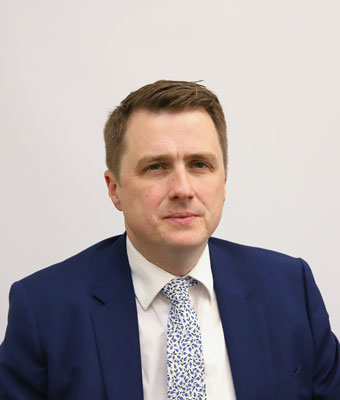
Affordability very much is at the heart of the Government's housing policy, as embodied within the new housing plan, Delivering Homes, Building Communities 2025-2030. The Government is targeting the delivery of 300,000 new homes by 2030, including 72,000 social homes and 90,000 affordable supports. The plan reinforces and expands the range of existing measures being implemented by Government to tackle the issues of supply and affordability, thereby supporting the increased provision of new homes to purchase and rent. Further Government measures introduced to support renters include the increase in the tax credit for renters under budget 2025 to a maximum of €1,000 for each renter in a household. Budget 2026 extends the rent tax credit, which was due to expire at the end of 2025, for a further three years to the end of 2028. The programme for Government commits to extending it. Record levels of social and affordable housing delivery have been achieved in recent years, with preliminary 2025 figures indicating further record levels of delivery. I am providing substantial funding to local authorities, the Land Development Agency and to approved housing bodies to support increased delivery. The national development plan has committed record levels of funding for new social and affordable housing, totalling almost €20 billion. Since the launch of cost rental in 2021, around €2.25 billion in Exchequer funding has been approved for cost rental projects. Beyond my Department, very significant loan funding is also being provided from the State's Housing Finance Agency. The lowering of VAT on new apartments to 9% under budget 2026 will also assist in the delivery of new homes into the cost-rental sector at lower cost.
The Residential Tenancies (Miscellaneous Provisions) Act of 2026 came into effect on 1 March, introducing a new national rent control for all tenancies which limits rent increases to inflation as measured by the consumer price index up to a maximum of 2%. For new-build apartments and student-specific accommodation, however, rent increases are capped at the level of inflation CPI only. These changes were introduced to promote greater investment in the rental market, to increase supply of rental properties.
That is all just meaningless drivel for the people out there looking for affordable rents.
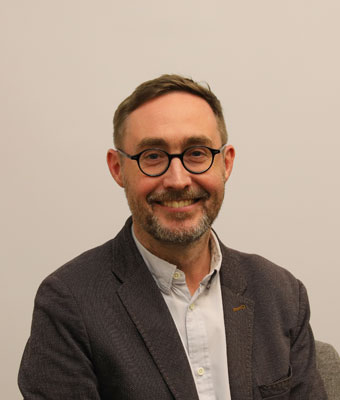
Hear, hear.
It is unbelievable. Average incomes in this country are €55,000 to €60,000. Many if not most people earn less than that. Take-home pay is €3,300 to €3,600 a month after tax. If you are looking for a three-bedroom apartment in Dún Laoghaire, you will not find anything below €3,000 today. Most of them are €4,500. I will read out a few figures in my area: €3,800, €3,050 and €3,650. More than 100% of the take-home income of the average worker is needed for the rents that are being looked for today. Suzanne, whose family is in an overcrowded two-bed, is looking for a three-bed. She is paying €1,700 and that is what is available for her and her two kids. She is going to end up homeless or staying in overcrowded accommodation, as are many people. It is an impossible situation and the Minister has got nothing at all to say to people.
We do have a lot to say to people. We have already delivered a record number of homes last year. Since Housing for All came in, we delivered 36,000 homes last year. We have provided tax breaks for renters as well. We know the only way we can address the homeless crisis, the rent crisis and the housing crisis is through increasing the supply. We cannot calcify the current situation forever. I know it is popular for Deputies opposite to say they want an eviction ban and to freeze rents. They are just going to exacerbate the situation as the population increases as a result of more people coming into this country, which is fantastic. The diversity is wonderful for our country but we have to drive the supply. The State cannot provide all homes to deliver that.
Seriously, young working people looking for accommodation are goosed with this Government. The Minister says supply is the answer. I am on the budget scrutiny committee. The Department of Finance in the Future Forty report is projecting that supply will not reach the level where it is possible, theoretically, that prices could come down until the end of the 2030s. We are stuck. Suzanne, who is looking to get from an overcrowded situation and is facing those rents, is goosed until the end of the 2030s. Another couple I am dealing with, who have two kids, got a notice to quit and are now living with neighbours. They have to wait until the end of the 2030s. We can actually control rents. They do it in other countries. Why will the Minister not control rents? Why does he allow rents to reach these unaffordable levels? Why does he allow people to be evicted? Why does he allow landlords to reset rents up to the highest levels when there is nowhere that can be afforded by average working people looking for a roof over their head?
Short-term protectionism is only exacerbating this situation. I want to give people hope. We delivered over 36,000 new homes last year. That is the highest number of homes since Housing for All came in. We delivered an awful lot more homes 20 years ago. In my view, the kind of protectionism we brought in has undermined the supply of those homes. We need to get back to delivering at least 50,000 homes a year. Going back 20 years, at one stage it was 90,000. I think those numbers were questionable, which is why we now rely on CSO data. There was still significantly more than we are delivering now. We need to ensure we have that framework and deliver the supply of homes people need right across the country. We are in a housing crisis. I am the first to admit it. The only way to get out of it is through supply, not through more and more protectionism.
Question No. 153 taken with Written Answers.
Vacant Properties
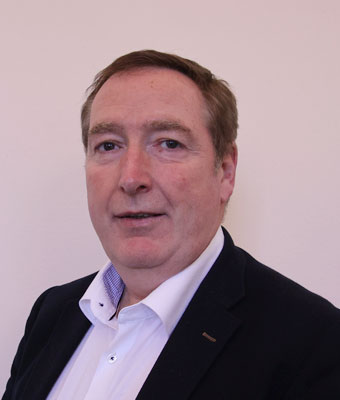
154. Deputy Tony McCormack asked the Minister for Housing, Local Government and Heritage the number of applications received and approved under the vacant property refurbishment grant and the croí cónaithe fund nationally to date; the total funding allocated and drawn down; the average processing time for applications; and if he will make a statement on the matter. [17619/26]
156. Deputy Peter 'Chap' Cleere asked the Minister for Housing, Local Government and Heritage for an update on the operation of the croí cónaithe scheme in Carlow; and if he will make a statement on the matter. [17327/26]
169. Deputy Joe Neville asked the Minister for Housing, Local Government and Heritage the number of properties which have been brought back into use under the vacant property refurbishment grant in north Kildare since 2022; and if he will make a statement on the matter. [17855/26]
191. Deputy Peter 'Chap' Cleere asked the Minister for Housing, Local Government and Heritage for an update on the operation of the croí cónaithe scheme in Kilkenny; and if he will make a statement on the matter. [17328/26]
198. Deputy Brendan Smith asked the Minister for Housing, Local Government and Heritage the number of applications that have been approved for the vacant property refurbishment grant in Cavan and Monaghan since its introduction; the number of grants that have been paid out; and if he will make a statement on the matter. [17477/26]
207. Deputy Colm Burke asked the Minister for Housing, Local Government and Heritage when the vacant above the shop grant will be introduced; and if he will make a statement on the matter. [17539/26]
255. Deputy Martin Daly asked the Minister for Housing, Local Government and Heritage the average processing time for vacant property refurbishment grant applications in Roscommon–Galway; the number of applications awaiting decision or payment; and the steps being taken to address delays. [17593/26]
My question is about the number of applications received for vacant property refurbishment grant and the croí cónaithe fund since the launch of the scheme, the number of applications approved to date, the total amount of funding allocated and drawn down under both schemes, and if the Minister of State will make a statement on it.
I propose to take Questions Nos. 154, 156, 169, 191, 198, 207 and 255 together.
Tackling vacancy and dereliction is a key objective of this Government as reflected in the new housing plan, delivering homes and building communities. The vacant property refurbishment grant, which is funded under the croí cónaithe towns fund, provides a grant of up to €50,000 for the refurbishment of vacant properties for the occupation as a principal private residence and for properties which will be made available for rent. A top-up grant of up to €20,000 is available where the property is derelict, bringing the total grant available for a derelict property up to €70,000. In order to qualify for the grant, the property must be vacant for two years or more at the time of application. Since its introduction in 2022, the vacant property refurbishment grant has been a key support to bring back vacant and derelict properties into use as homes. To the end of 2025, over 16,000 grant applications have been received nationwide and over 4,514 were paid out, amounting to €247 million. My Department publishes data on applications for the grant on its website on a quarterly basis, which includes the number of applications, approvals and the total number and value of grants paid per local authority.
Prior to the decision being made on grant applications, local authority reviews the applications to ensure that grant conditions are met and the required supporting documentation has been submitted. They will then arrange for a qualified person to visit the property to check the refurbishment work being applied for and to assess the proposed cost.
Once this process is complete, the local authority will make its decision on the grant application, which is then issued to the applicant. Applicants have 13 months to complete the works from the date of approval but in exceptional circumstances where an applicant cannot complete the works applied for under the grant within this 13-month period, the local authority may grant an extension of the approval period at its discretion. Following confirmation of a successful application and the works being completed, the local authority will conduct a final property visit to review that the work has been completed in line with the grant application. Once the local authority is satisfied all required documentation is in order, it will then pay the grant. Payment of the grant at the end of the process is to ensure the applicant has carried the works applied for and approved and to safeguard that the grant is related to the works completed. The average processing time for applications received in the past year from date of receipt to date of decision is 67 days. The average processing time for applications received where all required information to support the application is received at the outset over the same period is 48 days. I propose to attach the information requested as part of the Official Report.
The vacant homes unit in the Department monitors delivery of the grant and engages with local authorities on an ongoing basis, identifying issues and providing support and guidance in relation to the administration and processing of grant applications. Support is also provided to local authorities by the property optimisation unit within in the Housing Agency. This engagement supports efficient delivery of the grant and a consistent approach by local authorities in grant administration throughout the country. In line with the action contained in the housing plan, additional annual financial support of up to €100,000 per annum will be provided to local authorities to assist with grant administration. Building on the success of the grant and in line with the agreed action in the new housing plan, the Government in December approved extending availability of the grant to 2030, with 20,000 grants to be paid. Approval was also given for the introduction of a vacant above-the-shop grant, with a package of up to €140,000 to be made available in cases where a vacant above-the-shop space is being converted or refurbished for residential use and the commercial elements remains. The additional grant amount for these properties recognises the complexities involved in bringing this space into residential use. The package includes an expert advice grant of up to €5,000. Alongside these changes, approval was also given to provide an additional top-up of existing grant levels where an entire commercial building is converted into more than one residential unit. An additional €20,000 will be made available for the creation of a second residential unit and a further €20,000 where three or more units are created in the building. This will be on top of the existing grant of €50,000 to €70,000 as appropriate. The Department is progressing work on the vacant above-the-shop grant and the expert advice grant. It will be for made available for delivery by local authorities in the coming weeks.
Additional information not given on the floor of the House
The vacant property refurbishment grant is one of the many measures introduced and being introduced to tackle the scourge of dereliction and vacancy head-on. It has proved very successful and the changes now being made, build on that to maximise the number of vacant and derelict properties being brought into use as homes across across our villages, towns and cities.
I recognise what the Minister of State and his Department are doing and that he is doing everything in his power to speed up housing delivery. The vacant property refurbishment grant and the croí cónaithe fund are important initiatives in that regard. Bringing vacant and derelict homes back into use in many respects should be the low-hanging fruit in tackling the housing crisis. These homes already exist within our communities and with the right support they can be turned back into homes relatively quickly. However, a number of applicants have contacted me to say the application and approval process can take quite a long time and there can be uncertainty around timelines for decisions and payments. For people trying to organise building works and financing, that uncertainty can create real difficulties. Will the Minister outline if the Department monitors processing times across local authorities and if there are differences between these areas? What steps are being taken to ensure local authorities have the resources and guidance necessary to process applications quickly so that these homes can be brought back into use without unnecessary delay?
From a Department perspective we are monitoring processing times by local authorities. There is a significant discrepancy between the lowest and highest. I have outlined that the average processing time is eight weeks but I acknowledge that some local authorities are significantly above that. We are working with them to ensure we can get that down to the average. I understand the complexities and difficulties associated with projects like this from a financing perspective, trying to line up contractors and difficulties that can occur. We are providing funding to local authorities. We are trying to assist them in reducing processing times to ensure what is an excellent scheme is rolled out effectively across the country.
While these schemes are very welcome, their success ultimately depends on local authorities fully buying into them and driving them on the ground. Does the Minister of State believe all local authorities are engaging with the scheme to the same extent? Are there areas where uptake or processing is slower than expected? If there are differences, what steps is the Department taking to ensure best practice is shared and that every council actively supports applicants so that we can maximise the number of vacant homes brought back into use?
Every local authority is engaging with the scheme and has paid out grants but, as I said, processing times at both the front end and back end of the process vary from local authority to local authority. That is a challenge. We are working with local authorities to ensure all of them come within a much shorter range than is the case at the moment. We will continue to work with the local authority sector from a financing perspective in terms of the staffing required, and every local authority has a vacant homes officer and has been provided with €100,000 for support and administration of this grant scheme. An excellent scheme has been introduced by the Government, with16,000 applications, 12,000 approvals and 4,500 grants paid out. That is 4,500 vacant and derelict homes that now have families and individuals living in them today, with up to €70,000 in grant support provided by the Government.
Regeneration Projects
155. Deputy Eoin Ó Broin asked the Minister for Housing, Local Government and Heritage to provide an update on the funding for inner-city flat complex regeneration in Dublin. [17587/26]
As the Minister knows, some of the worst quality rental accommodation in the State is the inner-city flat complexes owned by Dublin City Council built in the 1930s, 1940s and 1950s. There is widespread damp, sewage problems, overcrowding and decades of poor maintenance. While Dublin City Council has a comprehensive and ambitious plan to address those issues, the Department continues to put far too many barriers in its way. Will the Minister provide an update on funding applications and approvals specifically for the 1930s, 1940s and 1950s inner-city flat complex regeneration proposals?
Within the programme for Government 2025, Securing Ireland's Future, a commitment was specifically made to continue to accelerate social housing regeneration schemes in Dublin. This commitment is reiterated in the new housing plan, Delivering Homes, Building Communities. Where local authorities propose the complete redevelopment of flat complexes such as O'Devaney Gardens and St. Teresa's Gardens, my Department is making a number of funding channels available to local authorities and approved housing bodies for such regeneration, including the social housing investment programme, the affordable housing fund, the capital advance leasing facility and cost-rental equity loans.
For flat complexes proposed for refurbishment and remedial works, my Department is making funding available through our estate regeneration programme. Dublin City Council has completed a number of regeneration projects, including 72 units at Dominick Street east and 100 units as part of Dolphin House regeneration.
The council has contractors on site for a number of other regeneration projects, such as Constitution Hill and Dorset Street and mixed-tenure redevelopments including the Donore project at St. Teresa's Gardens, An Droichead Órga at St. Michael's Estate and the Montpelier development at O'Devaney Gardens. These three mixed-tenure regeneration projects will deliver over 2,000 homes once all phases are completed. I have provided funding approval for a number of regeneration projects where the council is working on the design, planning and tendering, including Dolphin House phase 1b, School Street, Constitution Hill and Glovers Court.
My Department is working with the council on a remedial works programme for four existing blocks in Pearse House. A funding proposal is with my officials for review, with a decision to be made in the coming weeks.
The Department is also working with Dublin City Council on a proposal for remedial works on three blocks in Oliver Bond House and for the future regeneration of the remaining blocks. The Department remains committed to the regeneration of flat complexes in Dublin city and will continue to support well-conceived regeneration projects put forward by the city council.
The Minister is developing a terrible habit of spending most of his time talking about everything other than the actual question, which relates to the currently tenanted flat complexes, such as Oliver Bond House, St. Michan's House and Pearse House, where the Department is preventing, blocking and delaying the approval of funding. Initially it was because the national planning framework required that density be increased, and following the intervention of Dublin City Council and many of us on this side of the House that policy shifted. The current policy is that there can be no decrease in density as part of bringing these older flat complexes up to standard. That is simply not possible. We cannot ensure that the hard-working, rent-paying residents in Oliver Bond House, St. Michan's House, Pearse House and others get 21st-century minimum standards for rental accommodation without reducing density. There is no urgency or understanding, in my view, of the scale of the problem. What we want to know is when funding will be released so that the State, the largest landlord in the country, has the highest possible standards for its rental accommodation when, right now today in Dublin, the worst rental accommodation in our city is rental accommodation the State owns and the Minister is refusing to fund.
I thank Deputy Ó Broin and I am surprised at his comments. The national regeneration and refurbishment programme is the largest regeneration programme in terms of funds in the history of the State. The remediation of local authority social housing estates and flat complexes in the country's most disadvantaged communities is one of my key priorities. This includes those defined by the most extreme social exclusion, unemployment and other issues in these local communities. That said, given the critical shortage of housing across the State, unnecessary or unjustified reductions in density are not supported where such reductions result in a significant loss of homes. We cannot stand over or justify this. The local authorities know the Department's position. We are moving at speed but we need the local authorities to put forward plans that meet the Department's requirements for what we will fund, which is regeneration but not losing homes. We cannot afford to lose homes in the current situation of a housing crisis.
The only surprise that will be expressed following this debate is the surprise of the residents in the inner-city flat complexes listening to a Minister who clearly does not understand the scale of the problems. Someone living in an overcrowded flat that was built to 1930s or 1940s standards, which is riddled with damp, stinks of sewage and has a range of problems from rats to crumbling façades, needs to have that apartment fixed. This is not a question of density; it is a question of providing the funding so the State's own social rental homes meet minimum standards. If the properties were in the private rental sector, the local authorities would inspect and enforce. If these properties were in the AHB sector, the tenants would take their landlord to the Residential Tenancies Board. Right now, because of what the Minister has just said, because he has admitted what the barrier is, we are forcing social housing tenants, council tenants and working and rent-paying tenants to live in substandard and what are effectively illegal properties. When will the Minister wake up and realise the scale of the problem and release the funding to do one thing and one thing only, which is to bring these homes up to modern standards?
I very much do understand the scale of the problem. The funding is available to address every one of those issues and they need to be addressed because it is totally unacceptable that people are living in these types of conditions, but it has been made about-----
"But". That is the problem. It is the "but".
It has been made about density instead of being about regeneration. We fully support and will fund the regeneration. It needs to happen. It could have happened by now. We want it to happen at speed-----
But the Department is not approving the funding applications.
Because the local authority made it about density instead of regeneration.
No, the national planning framework makes it about density.
This needs to happen and it needs to happen quickly.
We told you. There is a national planning objective, legally binding, in the national planning framework.
It needs to happen in terms of ensuring people have the quality homes, updated homes and upgraded homes they deserve to live in, instead of it being made about density, which Deputy Ó Broin has made it about and so has the local authority in the past.
No. Your national planning framework made it about density. What utter nonsense.
Question No. 156 taken with Question No. 154.
Further and Higher Education
157. Deputy Catherine Callaghan asked the Minister for Housing, Local Government and Heritage for an update on the development of the national centre of excellence for traditional skills; and if he will make a statement on the matter. [16774/26]
<b>:</b> <P/>
The 2025 programme for Government includes a commitment to explore the creation of a national centre of excellence for traditional skills. In furtherance of this commitment the Heritage Council established a task force on traditional skills. The task force met five times during the course of 2025 and is due to meet again later this month. The task force has to date commissioned three pieces of work, including an audit of available traditional skills courses and an assessment of the current and future demands for traditional building skills.
A key finding of the group to date is that the market for skilled traditional tradesmen is experiencing an acute supply shortage driven by an ageing workforce, insufficient new entrants and the long-term erosion of training pathways. It is envisaged that policy recommendations aimed at addressing these issues will be made to the Government by the Heritage Council later this year. It is important to note that in addition to their importance for heritage, the transmission of traditional skills from one generation of practitioners to the next relies on an effective system of education and training. As such, and alongside stakeholders such as the Heritage Council, the Department intends to work closely with the Department of Further and Higher Education, Research, Innovation and Science to address the supply of skilled traditional tradespeople. To this end, and in parallel with the work of the task force, Kilkenny and Carlow Education and Training Board has an active further education and training college application, with plans to develop a national centre for traditional building skills. The application was lodged with SOLAS in 2024, and in February 2026 my colleague the Minister for Further and Higher Education, Research, Innovation and Science announced that Kilkenny and Carlow Education and Training Board would be in a position to appoint a design team for this important centre later this year.
I thank the Minister of State. He has almost answered my next question. It is very heartening to hear we are all thinking along the same lines. It is very important we recognise that over recent years there has been a growth in appreciation for the role of traditional craft works in Irish society. Skills such as thatching and stonemasonry have often been looked at in a nostalgic way as cherished emblems of an older Ireland. I believe, however, and I recognise from the comments of the Minister of State, that traditional skills have a place not only in Ireland's past but in its future as well.
Traditional skills will play an important role in the 21st century through the development of the specialist courses in Kilkenny and Carlow Education and Training Board, which the Minister State mentioned. Recently it held the first thatching course in 15 years in Sheepstown in County Kilkenny. That is probably a testament to the rich potential the sector has. As the Minister of State has said, it is critical that apprentices can learn these skills while there are still expert craft persons to train them. He has given some assurance already, but he might reiterate that every possible measure is being taken to expedite the delivery of the national centre of excellence and training in traditional skills.
I thank Deputy Callaghan. It is a programme for Government commitment, which is as strong a commitment as we can get, to explore the creation of a national centre of excellence for traditional skills. A task force has been established and it has commissioned work. There will be a report from the Heritage Council to the Government in respect of the work of the task force later this year. By way of interest, one of the items of work the task force completed was a survey of skills by RED C. It indicated very strong public support for traditional skills, with 91% of people saying traditional skills should be preserved and 88% people saying they should be taught in schools. In 2024, Kilkenny and Carlow Education and Training Board made an application to SOLAS to develop a national centre for traditional building skills.
In February 2026, the Minister for further and higher education announced that the board would be in a position to appoint a design team for the centre later this year.
I was at the announcement when the Minister, Deputy Lawless, came to KCETB. It was a brilliant announcement and a very positive day. Deputy John McGuinness was also there. I emphasise that we would like to see it delivered to ensure progress continues.
There is a unique cultural value to Irish traditional craft. Irish craft is renowned worldwide for its intricate design, high level of cultural significance and unbeatable quality. In Carlow, Borris Lacemakers provides an excellent example of a unique local product that has achieved international significance, with the lacemakers recently being chosen, alongside other craftspeople, to represent Ireland in the European Parliament.
Despite the unique opportunities that exist in the craft sector, a recent Heritage Council survey noted that only 9% of respondents advised they had enough apprentices to satisfy consumer demand. For example, there are only 15 to 20 experts to service more than 2,000 thatched buildings in Ireland. Without people and training, this conservation work will be tendered overseas. That will cost the Irish Exchequer an awful lot more.
With regard to the ongoing work of the task force, I mentioned the RED C survey on public attitudes to traditional skills. There was also an audit of traditional skills courses on the island in 2025. More particularly, there is an economic assessment of the demand for traditional skills, which goes back to the point Deputy Callaghan made. The report on the public attitude to the provision of courses is complete and the demand survey is in its final stages. That very much feeds into this. I have no doubt that, like Deputy Callaghan, the Leas-Chathaoirleach, Deputy McGuinness, will have a keen interest in the Kilkenny and Carlow Education and Training Board progressing its application for a national centre for traditional building skills with the Department of further and higher education. As I have said, the Department and the Minister gave the go-ahead in February 2026. The board will be in a position to appoint a design team for this important centre later this year.
Housing Provision
158. Deputy Louise O'Reilly asked the Minister for Housing, Local Government and Heritage when the direction to local authorities will issue to allow victims and survivors of domestic abuse to move from one local authority list to another and retain their years; and if he will make a statement on the matter. [17577/26]
The Minister will be aware that last month, as I have done many times before, I raised the issue of victims and survivors of domestic abuse being able to carry time they have accrued on waiting lists from one local authority to another, primarily where that is necessary for their own safety and that of their children. The Tánaiste confirmed that the Minister would be issuing a direction to rectify this. I am looking for an update on that.
I thank the Deputy for her question in relation to this matter. Supporting individuals and families who are experiencing or are at risk of experiencing homelessness, including victims and survivors of domestic abuse, is very much a priority for me, my Department and the Government. The response to domestic, sexual and gender-based violence is a cross-departmental multi-agency issue, with the Department of justice co-ordinating overall policy. Responsibility for the development and provision of services to support victims rests with my colleague the Minister for justice, working in conjunction with Cuan, the statutory domestic, sexual and gender-based violence agency, which is under the remit of the Department of justice.
It is currently not possible for a household that was previously on one social housing waiting list to carry over the time spent on that list when applying to another local authority. However, in line with a commitment in the housing plan, a protocol to allow households fleeing domestic, sexual and gender-based violence to transfer time spent on a social housing waiting list to another local authority will be established and implemented this year. My Department has already engaged with local authorities and the County and City Management Association to develop this protocol. The structures to progress this commitment are in place. This includes a dedicated group of local authority directors of housing, which is working with my Department to ensure the protocol is workable, meets the needs of those who can benefit from it and is finalised as soon as possible.
Notwithstanding this commitment, local authorities will prioritise allocations to those households they consider to be most in need at any moment in time. Local authorities may also provide for exceptional or emergency cases, allowing immediate housing for qualified households outside of normal waiting list priorities should circumstances require. Households may also move and relocate between housing authority areas under the housing assistance payment, HAP, scheme where the household income is within the relevant income limits.
Furthermore, in 2017, my Department issued policy and procedural guidance to local authorities on the role they can play in assisting victims and survivors of domestic violence. The issuing of this 2017 policy guidance was a significant action under the section national strategy on domestic, sexual and gender-based violence, which was for the period 2016 to 2021. It has since played an important role in addressing the housing needs of victims.
That is not exactly what the Tánaiste said. He said, "the Minister for housing has said he will issue a direction to all local authorities to make sure that issue is rectified." It should have taken the Minister two seconds rather than two minutes to answer. Either it is going to issue or it is not. What the Minister is saying is that a protocol is being developed. That is very welcome, but the Minister might provide some clarity in his follow-up. It seemed there was a little bit of slippage there as regards the normal rules on allocation applying. I know exactly how houses are allocated, as does the Minister.
I have used the example of a woman in my own constituency and I am going to use it again. I do not know how many names I have now used for her. Jesus, I will nearly use the woman's correct name; I have raised the issue that many times. Let us call her Margaret for the moment. Margaret has been on the Dublin City Council housing list for almost 13 and half years. She is about to be housed in the area where her former partner, who is out of prison after nearly killing her, is living. She cannot go back there. The Garda has told her not to. While she waits for the protocol to be developed and possibly issued at some point, what should she do?
I assure the Deputy that there is no slippage on this. This will be established and implemented this year. Once the protocols are finalised, I will be issuing that direction to the local authorities to ensure that people can travel from one local authority to another when fleeing domestic violence without losing time spent on the first authority's list. In fairness, I have generally found my own local authority quite reasonable and understanding in this regard. However, there has been an inconsistency across local authorities. We want to ensure we are not dependent on the views of an individual director of services or head of housing. We want consistency right across every local authority so that, when people are fleeing domestic, sexual and gender-based violence, there will be a level of compassion and understanding. As I have said, people will not have to depend on compassion and understanding; rather, they will have this as a right.
I fully agree with the Minister. The officials I deal with in Fingal County Council lack neither understanding nor capacity but they do lack basic direction from the Government. As the Minister has said, basic and all as this is, it will take at least until this year to get that done, although it is welcome. As I have said, it is an issue I have raised many times. The Minister will be aware of it. It is not going to affect a huge number of people but it will have a serious impact for some people. I trust it is in order to send my own local authority a transcript of this debate to show that this is coming because I do not want this woman to lose out for the sake of a couple of weeks. I hope the council will be able to fully adhere to the protocol when it is issued.
I recognise that the Deputy has raised this on many occasions. She has been very consistent on it. This protocol is coming. It would be welcome if, in anticipation of the protocol, local authorities accepted what they know is now going to come.
Defective Building Materials
159. Deputy Pádraig Mac Lochlainn asked the Minister for Housing, Local Government and Heritage when he will request that the Society of Chartered Surveyors Ireland, SCSI, draft a follow-up report on construction costs for the defective concrete blocks grant scheme, considering that the last one was almost two years ago and costs have considerably increased in that period. [17183/26]
The Minister will know that his predecessor, Deputy Darragh O'Brien, asked the SCSI for the costs of building a typical home in the areas affected by defective concrete blocks. That was two years ago and the costs have increased substantially. That means the gap between what the State will pay families through the grant scheme and the actual costs is getting ever wider. Will the Minister ask the SCSI to get this done?
I thank Deputy Mac Lochlainn for raising this important issue with regard to the SCSI and the draft follow-up on construction costs under the defective concrete block grant scheme. My Department keeps costs relating to the defective concrete blocks scheme under continuous review. As the Deputy is aware, following updated costs reports from the Society of Chartered Surveyors Ireland and advice from an expert group established to consider the matter, a further increase from the original grant rate set down in the Remediation of Dwellings Damaged by the Use of Defective Concrete Blocks Act 2022 was provided for on 23 October 2024. The scheme cap has risen by 10% to €462,000. Increases in the scheme grant rates of between 7.4% and 8.7%, as set out in the 2023 regulations, were also approved on 7 November 2024.
It was agreed the uplift in the rates would be applied retrospectively but primary legislation was required to amend the original Act to allow for this. The Remediation of Dwellings Damaged by the Use of Defective Concrete Blocks (Amendment) Bill was initiated in Dáil Éireann on 2 October 2025, passed by both Houses of the Oireachtas and signed into law. The main provisions of the 2025 Act provide that increases in the grant scheme cap and rates from October and November 2024 can retrospectively benefit homeowners who incurred qualifying costs under the grant scheme since 29 March 2024. I have signed the Remediation of Dwellings Damaged by the Use of Defective Concrete Blocks (Amendment) Act 2025 commencement order to give effect to these provisions, which came into operation on 25 February 2026, with related regulations also adopted on that date.
As for provisions of section 51 of the 2022 Act, a full review of the Act will commence later this year following its first three years in operation. It will offer an opportunity to review various issues arising in terms of the remediation of defective concrete blocks. I will consider whether the area of rates should form part of that review or a separate review.
The Minister and his Department officials continue to insist the people of Donegal, Mayo, Sligo, Leitrim, Clare and Limerick are receiving 100% redress based on SCSI costings. It should be remembered that does not include the foundations and other matters. This has to be based on real-world prices. The prices he is working off are at least two years out of date. Indeed, the data used in the March 2024 SCSI report are from 2023. I am going by his standards. He tells me he is giving people 100% redress based on SCSI costings, but those costings are at least two years out of date. It is very simple. The SCSI is a tremendous organisation and has always been professional and co-operative. The Minister should ask the society to do an up-to-date report so people are not tens of thousands of euro short. It is a simple request. Can he do it?
We continuously keep the scheme under review through consistent and regular stakeholder engagement. An implementation steering group for the defective concrete blocks grant scheme has been in place since 2023 and comprises officials from relevant local authorities, my Department, the Housing Agency and homeowner liaison officers. This regular stakeholder engagement is augmented by regular meetings.
We have done a review of the costings, implemented it and passed the legislation. I am looking at whether such a review will form part of the wider review this year or will be done as a separate review, but it will be done this year.
Please just accept our testimony. I can only speak with authority about Donegal but I listened to families in Mayo and Clare recently when they were before the Oireachtas housing committee. It is crystal clear we do not have anything near 100% redress in the west. That means the scheme currently benefits those of a certain age who can project-manage or can access €40,000, €50,000 or €100,000. The Minister heard me give an example and I could give many more of people having to find almost €200,000 and being locked into mortgages for another 15, 16 or 17 years. That is the reality and it is cruel.
The last time SCSI reported, it took a year and a half for legislation to be brought forward for people going through the scheme. I ask the Minister right now to send a letter to the SCSI. It is a tremendous organisation. It will carry out the work, which is to the benefit of the people, once he asks it. Will he do it now? What would delay him any longer?
I am very conscious of the distressing situation people in Donegal and other counties are going through. I have been to Donegal and spent considerable time listening to people and getting a better understanding of the distressing situation they are in. The wider review has to start on or before July 2026. It may start sooner if the review comes in in relation to IS 465/2018 being changed because that in itself triggers a review. There is another review in relation to the cost. It will be a question of the most effective way of getting the review of rates done.
Questions Nos. 160 to 162, inclusive, taken with Written Answers.
163. Deputy Pádraig Mac Lochlainn asked the Minister for Housing, Local Government and Heritage when he will advance the plans to relocate the families at a location (details supplied), living in defective concrete block homes, away from the dangerous flood plain they were built on. [17184/26]
This issue relates to Elm Park in Buncrana. I thank the Minister for his engagement to date on the issue. He met with the families in Donegal. I thank the Minister of State with responsibility for the OPW, Deputy Moran, and the Minister of State, Deputy O'Sullivan. I welcome the announcement before Christmas that the Minister is agreeing to relocate the families. They have been waiting a long time, first, for co-operation of all families in agreeing to relocation and then they had to get all their houses tested. Every house is affected by defective blocks. They are just pressing for a time frame.
I thank the Deputy for the question, which relates to Elm Park in Buncrana and advancement of the plans to relocate families. The Remediation of Dwellings Damaged by the Use of Defective Concrete Blocks Act 2022 commenced on 22 June 2023. It underpins the current grant scheme and the related regulations that were adopted on 29 June 2023. I visited Donegal last year and met with many of the affected residents. I understand the flooding issue pertaining to Elm Park, where nine homeowners are particularly affected. Some of the homeowners impacted are eligible to avail of the defective concrete blocks scheme funded by my Department but they are understandably worried about availing of the scheme and remediating their homes without the flood risk being addressed. The OPW has a plan to undertake flood relief works. The residents are understandably concerned about the length of time before the flood works would be completed and have asked that consideration be given to relocation options. I appreciate the genuine concerns of residents based on their experience of recent years; indeed, I have seen the videos myself. Therefore, I am disposed towards finding solutions to the flooding issue based on the needs of those affected and to finding a workable solution. In the past, the OPW has used relocation schemes in some small and specific circumstances and I have asked officials in my Department to find a method of relocating the families that come under the scheme.
The Minister of State, Deputy O'Sullivan, worked with the Minister of State, Deputy Moran, who was in Donegal in recent weeks, where he met with residents and saw the condition of these houses. There is an urgency in that some of the houses are in appalling conditions, are clearly unsafe and families are still living in them. At the same time, they live on a dangerous flood plain. Of course, those houses should never have been granted planning permission. We inherit the legacy of what came before us.
I appreciate the Minister has agreed to the principle of relocation but there is anxiety that this could drag on for a long period. This is urgent. The residents need a solution. They have worked in partnership with the Minister and demonstrated that all the homes are affected and have to be demolished. It is a common-sense proposal. The flood defences will not have to be built and the area will return to a flood plain. It ticks every box in relation to common sense but we need urgency. I appreciate the Minister's forbearance and work on this to date but getting this over the line would be a huge relief for everybody.
I thank the Deputy and the other Deputies in Donegal for their work in this area. I have met with the families and seen the videos. We know flood relief schemes take a considerable time. That relocation proposal needs to be advanced. I will continue to work with the residents and with the Deputies from Donegal on coming up with a scheme as quickly as possible. The current legislation did not necessarily envisage relocations but we have brought forward new regulations that will allow a relocation model in very limited circumstances.
Is féidir teacht ar Cheisteanna Scríofa ar www.oireachtas.ie.
Written Answers are published on the Oireachtas website.