Homeless Persons Supports
I have raised previously the fact that there are children in Cork who are homeless and who are being forced to travel across the city because they are in emergency accommodation. They cannot move schools because if they do so, they could have to move emergency accommodation again, or if the family ever finally do get a house, they do not know where it will be. They are being forced to travel long distances, sometimes getting two or three buses to get to school. This is not right. My understanding is that in Dublin there is a Leap card with €150 on it to get children to and from school. It is a support while they are in emergency accommodation.
There were children who had a safe, stable home and who did not understand anything about emergency accommodation or its consequences, and then all of a sudden they have to pack up everything they own, take a few toys and probably dump a lot of their stuff because there is nowhere to put it or bring it. Can the Minister of State imagine the traumatising effect that has on children? They can no longer then have sleepovers or have their friends over. Does the Minister of State know why? It is because the whole family is living in one room. They do not live near their local GAA club, soccer club or dance club because they are probably across the city or somewhere else, so they are losing their friends. Added to that is the expense of trying to get to school. These parents are not able to cook, they are getting takeaways, they are spending money and there is no support there either. The children end up not going to school, so they lose their friends in school, they lose their friends in sport and they lose their friends in the community. How does that make a child feel? Can the Minister of State imagine a child's mind trying to understand that? It is so traumatising. I have asked repeatedly for those in emergency accommodation to be accommodated close to their schools and the communities they came from. Not having money should never be a reason for a child to miss school. We are not talking about a huge amount of money here. This happens not only in Dublin but also outside of Dublin. There are people taking much longer journeys in rural areas or areas outside of Dublin city.
I know a teacher who has actually given money to parents to ensure that the kids can make it to school. There are unbelievable teachers and other people out there who understand the trauma and the effects of homelessness on children. It should not be up to them, however; it should be up to the Government. What I am asking for is not huge but it would make a huge difference to people in emergency accommodation.
I will give the Minister of State an example. I have dealt with a family on the north side of Cork city who were put in emergency accommodation in Cobh, County Cork. A son of theirs was doing his leaving certificate last year. He used to have to get a train and a bus to get to school. That was the time and the distance he was travelling every day to sit his leaving certificate. How was that child able to manage to study for the leaving certificate in one room? There are consequences to that. It is hard enough doing all that and not having the money to get to school. It is just not good enough.
This Government is offering no solutions to homelessness. That is why it needs to apply this fund for people, especially children.

Well said.
I thank Deputy Gould for raising this important issue, which I am taking on behalf of the Minister for Housing, Local Government and Heritage, Deputy James Browne.
Supporting individuals and families facing homelessness is a key Government priority, and the increase in homelessness figures is a concern for the Government. Budget 2026 allocated €513 million in current funding to ensure that individuals and families experiencing homelessness are provided with emergency accommodation and other supports. The key objective is to support families to exit homelessness to a secure home. In Dublin, the Dublin Region Homeless Executive provides Leap cards to families to ensure access to free public transport for essential school journeys. Deputy Gould has referred to that. This scheme was introduced in Dublin due to the numbers of families in emergency accommodation and the difficulty in providing emergency accommodation to all families close to the area where the children were in school.
The Department is committed to considering all measures necessary to support children and families in emergency accommodation nationwide. The Government's new housing plan, Delivering Homes, Building Communities, includes a strong focus on measures to eradicate homelessness. A key measure in the plan is the development of a child and family homelessness action plan. The plan will set out new measures to provide enhanced supports for children and parents experiencing homelessness, as well as measures to accelerate exits and reduce the time spent by children and their families in homeless emergency accommodation. My Department is working closely with the Department of the Taoiseach as well as a range of key stakeholders on the development of this plan.
A public consultation was launched in January and 60 submissions were received from a range of organisations involved in providing supports to children.
An in-person event was then held at the end of last month with more than 100 individuals in attendance. These included representatives from a range of organisations, including Government Departments, State bodies, local authorities and NGOs, as well as adults and children with lived experience of homelessness.
The feedback and recommendations received during the consultation process are being assessed. My Department and the Department of the Taoiseach will continue to engage with key stakeholders to agree a series of actions which will have a real impact in addressing child and family homelessness. The issue of transportation was one of the points raised during the consultation process and will be further considered in the preparation of the action plan. The Deputy has raised a specific issue in relation to Cork.
It is anticipated the plan will be published by the end of June 2026, after which a steering group will be established to drive delivery of actions within the plan.
The Minister of State outlined what is happening. I sincerely hope he will take on board the submissions made during the consultation and the point I have made today because I have raised this previously. We will disagree on politics and fight and argue over the housing policy and how I believe a number of Fianna Fail and Fine Gael Governments have caused the housing emergency we are in. I hope they will take the opportunity to provide this small support because it will make such a difference to homeless families and especially children in emergency accommodation. On top of that, when you look at the number of people who are homeless or in emergency accommodation - the figures came out last week - it is heartbreaking that so many families are being traumatised this way. I have spoken to parents, both men and women, who have cried in my office because they think they have failed their children. They cried because they do not see a solution. This week alone, two people came in with notices to quit and three homeless people came into my clinic on Monday. Those two families had notices to quit. The previous week we had seven people with notices to quit or people coming in homeless. There has been a tsunami of homelessness because of the new Government rent increase Bill that came in on 1 March. These families coming into me with notices to quit are terrified of the effects it will have on their children. They are terrified of how they will get to school or get to play with their friends or local clubs. This Leap card will make a real difference to ordinary children. I know the Minister is assessing it. I sincerely hope he takes it on board.
I again thank the Deputy for raising this important issue, which I am taking on behalf of the Minister for Housing, Local Government and Heritage, Deputy Browne. I reiterate that resources and funding are not an obstacle to the urgent efforts required. More than €563 million has been allocated to homeless services in 2021. On the specific point raised in respect of the Leap card, the Government's new housing plan includes a strong focus on measures around homelessness and a key measure in the plan is a child and family homeless action plan. There was a public consultation in January and 60 submissions were received. That was followed by an in-person event last month at which 100 people were in attendance. The feedback and recommendations are currently being assessed. The Department and the Department of the Taoiseach will continue to engage with key stakeholders to agree a series of actions with real impact on addressing child and family homelessness. As the Deputy said, the issue of transportation was one of the points raised during the consultation and will be further considered in preparation of the action plan. I will bring back to the Minister and Department officials the specific points of Cork, the Leap card and families experiencing homelessness. Furthermore, of the funding being provided, €513 million is current spending for homeless services this year. There is €50 million in capital to support delivery of high-quality transitional and emergency accommodation for individuals experiencing homelessness. This will be kept under ongoing review throughout 2026. I will bring to the Minister's attention the specific point of Leap cards for families experiencing homelessness outside Dublin in the area Deputy Gould represents in Cork, apart from the consideration taking place.
Special Educational Needs
In recent weeks, we have seen how important special education is as an issue, not just for the children and families affected but to the wider community that recognises if a child gets the right educational support in the right school at the right time, it can have a profound and life-long benefit. We know special education will take different forms. For many children an SNA in a classroom will allow them to participate and thrive in mainstream schools. We know for others there is need for units within mainstream schools. They have specific needs to be catered for. We know for a relatively small number of children that what is required is enrolment in a purpose-built special school that has the expertise, staffing and policies in place to support some of the most vulnerable children through their most formative years.
For too long my county had not the option of that last avenue. We had no special school. There was one special school between Cavan and Monaghan, a good school by all accounts, but the numbers and travel distances meant that for many, it was not an option and the capacity of that school was limited. Thankfully, primarily due to a sustained, dignified and determined campaign by families and supporters of children with disabilities, the Government agreed, in advance of the most recent general election, to the delivery of an interim special school. That opened in September last year with 18 students finally given access to the education they need, 18 families whose lives have been changed for the better and an entire community that is so proud of all who brought it to that point.
The crucial term used on delivery of that school was "interim." The building in which the special school is housed was previously a secondary school, which the school moved out of. It is limited in capacity for future development and expansion, and we know from experience all over the State that when you build a special school demand and capacity needs will increase. Therefore, I have been calling on Government since September to start the planning to deliver a permanent special school. That is what is required. We know the school is already at capacity, after being in place for only one term. We know future accommodation is required to facilitate even the needs there now. We know there are proposals for modular extension at the interim special school but what is needed is a bit of forethought.
We need a greenfield site to deliver a permanent special school that will have the capacity for future expansion. The current site is perfect for the kids there now insofar as they have the special education they need. It will allow for some expansion but will not allow for the type of expansion we know is needed in the future. I hope the Minister of State will outline a vision to say we will deliver a special school on a site with the capacity to deal with future demands.
I thank the Deputy for raising the issue. Monaghan Community Special School is one of five new special schools established in the most recent school year. It is operating under the patronage of the Cavan Monaghan ETB. The school supports 18 children and young people aged between four and 18 with a diagnosis of autism and complex needs, or students with complex learning needs with a professional recommendation for placement in a special school. The staffing comprises an administrative principal, administrative deputy principal, five class teachers, nine special needs assistants together with ten co-operation hours per week. The new school is located in Castleblayney in a former ETB school property, which was repurposed to facilitate the opening of the new school.
The project was delivered under the Department’s SEN reconfiguration and modular accommodation programme, which facilitated the school opening as quickly as possible. The programme involves the use of the project management support which is designed to enable accommodation to be provided as quickly as possible to help ease the administrative workload for school authorities in relation to management and delivery of the projects. This is a collaborative process between the project manager, school authorities and the Department.
The project manager is overseeing the delivery of residue elements to ensure the successful completion of the project. The Minister, Deputy Naughton, visited the school recently and was very impressed with the facilities, the quality of teaching and the commitment of all the staff and the students under their care. The National Council for Special Education is the statutory body in this regard. Over recent years a huge amount of expansion has taken place not only in special schools but in special classes also. This will continue for the 2026-27 school year. Work is under way on a large number of classes.
With regard to the Monaghan special school, the Deputy is correct that a huge effort was put in by families and their supporters over a continuous time, particularly during the previous Dáil. As chair of the disability committee at the time, I was acutely aware of the challenges there. In his opening statement, he alluded to having special schools in the community because far too many children travel long distances for specialised school places throughout the country. The site in question was a former ETB building, which was repurposed to get it into use in as fast a time as possible to ensure the 18 children could attend. Some of the children travel long distances in Cavan and Monaghan; I am aware of some of the families and have engaged with them on it.
We keep under review needs and requirements, particularly in special education. In recent years we have built almost 16 new special schools and more will follow to meet the capacity. We are keeping under constant consideration the school in Castleblayney. I thank the school authorities for the excellent work they have done in opening and facilitating the families. They have been engaging with the Department and we want to continue this. We keep under constant review the accommodation needs and not only from September to September. We also need to plan to make proper accommodation available for students who require specialist education places such as are offered in special schools.
I want to be clear that whatever modules or extensions are needed in the short term to increase capacity at the current location should happen without delay. The Minister of State mentioned that the Minister visited the school and, of course, she was very welcome. I was in the vicinity when the parents of the children who attend had a discussion with her. They had one ask, which was to make sure there is a permanent school that has capacity for future demand. The truth is that successive Governments have been far too slow in delivering special education. The Minister of State's answer alludes to this. What has been done is that Governments have been responding rather than planning. I am asking that in respect of the special school in Monaghan, let us plan. Let us not make the same mistakes as have been made in countless other areas, where interim schools have been put in place with extensions and prefabricated building on prefabricated building to deal with demand at any given time, rather than recognising there is a need to plan for the long term. Demand for this school will only increase. The needs in terms of capacity will increase. Do not wait until the current site is completely exhausted before starting the entire process of finding and identifying a site and going through the whole process, which, as we know in this instance, can take years.
We need a sea change. We have seen it with the SNA debacle. We have seen it with secondary schools fighting, as recently as this week, for additional special needs classes, even though the demand was apparent years ago because the children were coming through the primary sector. We know in this instance that the demand for the special school will only increase. What is required is a bit of forethought. I ask the Minister of State to ensure the NCSE does not only deal with the urgency of the immediate, which is important, but also deals with the prospects for the future.
I take the point and it is crucial. A lot of planning and work has gone into opening 16 special schools in recent years. This was coming on the back of the State not providing special schools over the years because of international policy, and we can debate this left, right and centre. I was chair of the education committee 20 years ago when there was mainstreaming. There are a number of issues we have to catch up with.
We have moved the date from 1 February to 1 October to bring greater certainty to families. I know the pressure that families are under when they are looking for a special class space or a special school place, and the enormous strain and pressure on the family and the wider family in this regard. I have dealt with many families and been advising and helping them over many years on this.
The opening of the school in Monaghan in the current school year was a welcome initiative. I know it was welcomed by all the community. I understand the parents who met the Minister when she visited and I know families who have children in the particular school. I assure the Deputy that I am constantly looking at how we plan for the future to have a system in place in the Department and in all of the other education stakeholders to make sure we future-proof the system. I take the points made by him. I assure him this is not the first time the special school in Monaghan has come across my desk. I have been constantly engaging with all local representatives on it and I will continue to do so. I take the points on board.
School Accommodation

I welcome the fact the Minister of State from the Department of Education and Youth is here to take this Topical Issue. As the Minister of State knows, I represent Dublin Fingal East. It is a rapidly growing area, with house building in east Fingal, and all towns are growing rapidly. This is good and we need houses. With this come a lot of young families and pressure on local infrastructure. This is not a new issue that I am raising. I raised this in advance of the previous academic year and I have to raise it again now in advance of the next academic year. The issue is the lack of school places in junior infant classes in St. Marnock's National School, Portmarnock. I have had the same response from the Department to parliamentary questions and Topical Issues, which is that the Department is aware of enrolment pressures in Portmarnock and has put in place a number of measures to support the schools. Unfortunately, these have not manifested or worked and children this year were unable to secure places in local schools. This will only be compounded next year.
I have real concerns about how the data the Department has is being examined. I have heard a number of times through parliamentary questions that first year enrolments nationally were expected to peak in the 2023-24 school year. However, this national level data does not apply to an area such as Fingal accurately because it is a growth area where houses have been built in recent years and continue to be built. The reality on the ground is very different. Last year primary schools only took children until a November birthday in first round offers and December birthdays in second round offers. This year children will need to be born in September 2021 or earlier to secure a place in their local school. This means children will have to be five before they start school in Portmarnock. We know the rules on the early childhood care and education, ECCE, programme and provision for two years. We know the impact it has on parents having to stay in work, which predominantly falls on the mother. Ensuring children have to start at the age of five is disgraceful.
According to the Department's demographic projections, peak demand in Portmarnock has not been reached. Despite this, construction of the new Malahide Portmarnock educate together national school was not selected to go to tender this year and has been delayed for at least four years. Eight months ago when Deputy McEntee was Minister for Education, I shared figures with her and it is important to do so again.
In 2022, the census captured the under-five population in the area as numbering 602 children. These children would have been in the area by April 2022, which is the time of the previous census. Taking an even division of the ages from birth to four years, that would equal approximately 120 children requiring a junior infant place and a subsequent primary school place in each year from September 2022 to September 2026. However, since the previous census, several large housing developments have been built in the area, namely, Dún Sí, Skylark and Drumnigh Manor, which have increased the population greatly. The housing developments are, of course, welcome. However, they need to be paired with increased infrastructure and school places.
To illustrate that point, I have worked out examples for the developments and the estimated expected number of children needing primary school placements for these estates alone. The Skylark development has 982 units proposed for development in the area, providing mainly three- and four-bedroom family units. Nationally, based on 2022 figures, 69% of households in Ireland are families. The Fingal county average for the number of children per family is 1.42, which is a conservative value based on anecdotal evidence in the Portmarnock area. Therefore, using these conservative estimates and the 982 units, it would be expected that there will be 962 children in that estate alone.
I thank the Deputy and welcome the opportunity to speak on St. Marnock's National School in Portmarnock, County Dublin. The Deputy has been liaising with the Department in relation to this issue.
The school is under the patronage of the Archdiocese of Dublin and is in the Portmarnock school planning area. Last September, the school had an enrolment of 638 pupils and 26 mainstream teachers, three special class teachers, one learning support teacher, one administrative deputy principal, seven special education tutors and one shared special education tuition post.
To plan for school provision and analyse the relevant demographic data, the Department divides the country into 314 school planning areas and uses a geographical information system using data from a range of sources, including the Central Statistics Office, CSO, census data, child benefit and school enrolment data, to identify where the pressures for school places across the country will arise and where additional school accommodation is needed at primary and post-primary levels. The Department produces demographic projections based primarily on the child benefit data, which is made available from the Department of Social Protection. It addresses details for all children aged from birth to five years living in the State and in receipt of child benefit. This is used as a basis for projection of future junior infant intake at primary level. The data provides the overview for future school place demand. The child benefit data is then adjusted with localised data on the age of the first enrolment to account for patterns of movement where children are known to typically cross school planning area boundaries to enrol in schools. A huge amount of data is being gathered from the Department of Social Protection and elsewhere to identify where the challenges are.
As regards the issue the Deputy raised, Portmarnock's school planning area has five primary schools. The demographic analysis for primary level shows projections for Portmarnock will peak in 2027. Furthermore, the actual 2025-26 enrolments for Portmarnock's special planning area were less than were projected for the 2025-26 school year. While the Department is aware of the enrolment pressures and the demand for additional school places in some areas, including Portmarnock, it is important to note that enrolment pressures can be driven by a number of issues.
To return to the issue the Deputy raised, I know from his engagement and the engagement of others with the Department, and from a number of families I know from the area who have been engaging, that there are huge challenges. Portmarnock is one of the areas of the country where there is huge growth. The Deputy mentioned housing estates being developed and the number of children in particular estates. We are acutely aware of that. I assure the Deputy that the Department is keeping a very close eye on the matter. It is continuously looking at where the pressures are. In the 2025-26 school year, there are 7,000 fewer primary school students in the system than there were in the 2024-25 school year. I accept that that is of little benefit to Portmarnock, an area in which the population is growing enormously. I assure the Deputy that we will monitor this very carefully and try to do what we need to do.
It is difficult to find some comfort in the Minister of State's response for my constituents in Portmarnock. The current school year was bad because some students missed out and had to travel awkward distances to other schools for placement. Based on projections, it seems very likely that some siblings will not get into St. Marnock's National School in the coming year. That information is from good sources and the situation is only going to be compounded.
The issue with Portmarnock is not just that it has new estates, but that the traditional part of the village has also seen major regeneration. A lot of younger families are moving into the houses that have been there for a long time. Pressures are increasing and we need a temporary or quick solution for the upcoming academic year. The Department needs to re-examine how it determines where resources need to go and how school planning areas are constructed. There are two main primary schools in Portmarnock, with a third, St. Nicholas of Myra National School, just outside the village. They are the schools for Portmarnock. They need investment. Pupils can walk and cycle to them safely, which is everything we want for local schooling as regards how pupils travel to school.
I ask the Minister of State and the Minister, Deputy Naughton, to put in place a proper solution for this issue. If we start pushing out enrolment dates to require that students be five years old at enrolment and put at risk the ability of siblings to enrol, we really are in a bad place, and it is a place we could avoid with some better planning.
Modular accommodation was approved for the school in question last May. It is near completion in relation to special education classrooms as well. I have looked at the enrolments and staffing in the school. I can share that information on enrolments from 2020 to date with the Deputy. I assure him that the Minister and I are acutely aware of this issue. We look at where the pressures are in primary and post-primary education. There are specific counties where there is a huge challenge at post-primary level and specific parts of the country that have challenges in relation to primary school education. Portmarnock is one of the latter group.
We are working to make sure we have practical solutions in place, not just for September 2026 but right through. We need to plan properly for the future. We have to take into consideration all the demographic analysis we have done and all the information we have to ensure we are not back here again next year or the year after that. There are particular pockets of the country where primary school education is challenging, notwithstanding the decrease in the number of students in primary school. In other parts of the country, other issues have developed.
In relation to the school the Deputy referenced and Portmarnock in general, I assure the Deputy that we are monitoring the position and engaging with all the school authorities, the education sector and the education partners to make sure we do the right thing. I have some background information which I will share with the Deputy, if that is helpful.
Ambulance Service
I thank the Ceann Comhairle's office for selecting this Topical Issue. I raise the very important matter of ambulance service provision in the wider east Cork area. East Cork is a huge area with an ever-increasing population but, unfortunately, the current ambulance service appears inadequate to meet the demands placed on it. I have received numerous reports of long waits for ambulances and medical attention in the aftermath of medical emergencies. This has prompted me to raise the matter as a Topical Issue.
I have the utmost respect for the ambulance service and its crews. I recognise the vital work the service does, under enormous pressure, to protect our communities.
However, it needs help in providing such an important service to the best of its ability and this assistance should be forthcoming from Government. East Cork spans a wide geographical area and this alone ensures that ambulance crews are constantly covering a very populated and busy part of County Cork. This area will only get busier and ambulance service provision will be spread even thinner with the number of planned housing developments and road infrastructure upgrades proposed for the near future.
With delays in the provision of vital life-saving services being experienced by so many in east Cork, there is scope to greatly improve the service as it stands and possibly increase it further into the future.
As I am sure the Minister of State would agree, any loss of life is regrettable. I very much appreciate that preventing loss of life is the primary objective of the ambulance service but, despite best efforts, there are, unfortunately, instances where delays in providing immediate medical care can contribute greatly to the passing of a person. With that in mind, I raise the recent case of a family in east Cork where a family member unfortunately passed away with the delay in providing medical attention a major contributing factor in his death. This has profoundly affected the family, which is questioning the HSE about the procedures that were followed in this case. The family argument is that it should not happen to any other family. While this case is an individual one, the family is asking that the overall service in east Cork be greatly improved.
With that in mind, can the Minister of State give a breakdown of ambulance service provision in east Cork and the number of times east Cork was left without an ambulance service in each year from 2021 to 2025? Has there been a review of the ambulance service in east Cork recently or is any review is planned? What measures are the Department of Health and the HSE taking to ensure service provision is increased in the area going forward?
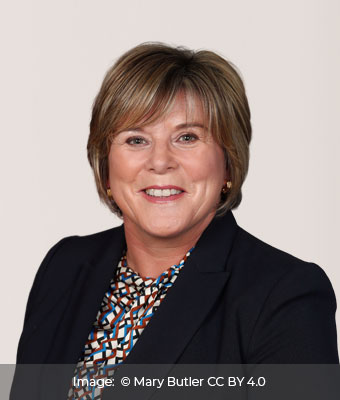
On behalf of the Minister, I thank Deputy McCarthy for the opportunity to update the house on ambulance service provision in east Cork. I thank him for the manner in which he raised it and am sorry to hear about the person who passed away.
As the Deputy will be aware, the National Ambulance Service, NAS, serves east Cork on a 24-7 basis through a highly skilled workforce of paramedics, advanced paramedics and emergency medical technicians; a fleet of modern emergency ambulances, intermediate care vehicles and rapid response vehicles; and 12 ambulances bases covering the entire county of Cork. The region is also served by several NAS alternative care pathways designed to treat patients at the most appropriate level of clinical need while avoiding unnecessary patient conveyances to busy hospital emergency departments where it is not clinically necessary. These pathways include the Pathfinder "See and Treat" service located in Cork, the NAS National Emergency Operations Centre Clinical Hub "Hear and Treat" service, the community paramedic service, and NAS intermediate care services. Further emergency response capacity in the region is provided by the Government-funded Southwest Helicopter Emergency Medical Service, HEMS, operating out of Rathcoole in County Cork. Additional HEMS support is provided in the region by the Irish Coast Guard, RCG, search and rescue service from its bases in Waterford and Shannon on an "as available" basis.
As the Deputy will be aware, this Government has continuously invested in NAS with significant increases in investment in recent years. Government investment in 2026 will support HSE plans to further increase capacity in NAS with 263 new posts representing an investment of €20 million. This will help to improve emergency ambulance response performance, provide for additional intermediate care service capacity and further development and expand NAS alternative care pathways, including community paramedic services right across the county.
Regarding the south west, including east Cork, additional NAS resources for 2026 will include additional emergency vehicles in Cork city and Killarney as well as a further intermediate care vehicle in Bantry. Further investment in 2026 will also include an additional community paramedic post to the region to provide care for lower acuity older patients.
The Deputy will be aware that NAS has also established a new NAS tertiary education training facility in Cork to further support paramedic education and training. I am delighted to learn that the first intake of student paramedics took place in January of this year, which has increased overall training capacity by 20%. That is very welcome. I know it will take a while for them to come through. I should also add that investment in 2026 will also see significant increases in NAS capital funding, including €34 million for renewal and expansion of the fleet of emergency ambulances and other response vehicles.
In addition, the provision of a replacement ambulance station for Midleton is at the design feasibility stage. I know this is very important to the Deputy and other Government colleagues in that area. Overall investment in recent years has also seen total NAS staffing rise to 2,470 at the end of December 2025, which is a rise of 28%.
Notwithstanding that, I appreciate the issue raised by the Deputy concerning east Cork, which is a vast area bordering my own county of Waterford. There are a lot of people on the border area there between Dungarvan west and into Youghal. I suggest the Deputy put some of the specific questions he asked regarding the number of call outs and times into a parliamentary question.
I thank the Minister of State for her very detailed response. I acknowledge the investment in the ambulance service in the area. While I appreciate the work the Department of Health and HSE are doing to ensure increased service provision, I remain adamant that east Cork requires further attention. With this in mind, can the Minister of State outline where exactly ambulance services in east Cork are currently based? I welcome the fact a centre will be established in east Cork with Midleton as a possible destination. I welcome the Minister of State's response with regard to that. I understand the expansion of such a centre is being actively progressed by the HSE and that the project is currently at the site selection phase. Have there been any further developments on identifying a suitable site? For the reasons I outlined previously, the development of such a facility would be an enormous boost to the wider east Cork area. It would also provide much-needed comfort to the families of those who may require urgent medical intervention at short notice.
With this in mind, I ask the Minister to continue to liaise with the HSE on possible measures that could be introduced locally, including the establishment of a landing centre. Finally, I ask that we be updated regarding any other measures. I reiterate my support for the ambulance service, the work it does and all the front-line workers.
I join with the Deputy in extending my thanks and that of the Department of Health to the staff of the NAS for their commitment and dedication to patient care in east Cork and across the whole country. I was just checking as the Deputy was speaking. In 2025, the following additional resources were added to the south-west region. Twelve paramedics and 12 emergency medical technicians were deployed to the south-west region. Seventeen staff were allocated to the region in 2025 under agency conversion to the following locations: Cork city, four; north Cork, two; west Cork, one; east Cork, one; and Kerry, nine.
The new college campus in Cork will have its first intake of student paramedics starting in January 2026. The college will initially be based at the National Maritime College of Ireland in Ringaskiddy, pending development of the new site that we spoke about in Midleton. I know the Deputy is genuinely concerned about that particular region and I will speak to the Minister later today and tell her the Deputy raised the matter in relation to east Cork in the Dáil today. It is a vast area, covering all the way from the Waterford boundary, all the way up to the Limerick boundary and right across Cork but the additional capacity that has been added overall should help.
Vaccination Programme
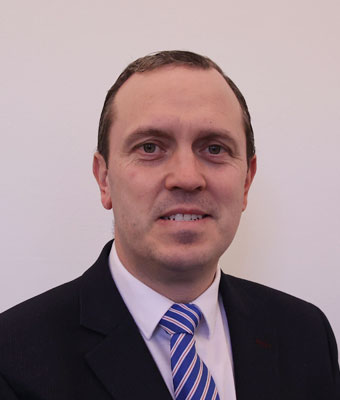
Gabhaim buíochas le hOifig an Cheann Comhairle as ucht an ábhar seo a roghnú ar maidin. Mar a dúirt an Cathaoirleach Gníomhach, I wish to ask the Minister to discuss the availability of the shingles vaccine for those aged over 65 or those with compromised immune systems. Shingles affects approximately one in three people during their lifetime, with the risk of contraction increasing significantly with age. I think also the risk of impact increases significantly with age. The condition can cause severe and prolonged pain.
I discussed the matter with my colleague, Deputy Martin Daly, who was in a position to advise me of some of the impacts of the shingles virus when contracted. It causes a very significant rash and the pain can be extremely debilitating. Should the rash affect one's face, it can cause serious vision problems, including potential risk of permanent vision loss. It can cause chronic pain. Some 30% of patients described feeling the pain some years after initially contracting the illness. In some cases it can lead to a syndrome known as post-herpetic neuralgia, PHN, where nerve pain continues for months or even years after the shingles rash is healed. One can imagine such an illness could have a very lasting impact on mobility, independence and quality of life.
A range of international studies have shown that the shingles vaccine may reduce the risk of Alzheimer's disease and other dementias. It can also slow the progression of dementia. In Ireland, unfortunately, access to the shingles vaccination currently depends largely on ability to pay, with the vaccine costing up to €500 per person, which places it out of the reach of many older people living on the State pension and creates inexorable health outcomes based on income.
In February 2024, the national immunisation advisory committee recommended the recombinant herpes zoster vaccine for all adults aged 65 and over but following this the Health Information and Quality Authority conducted a health technology assessment, which was published in 2024. It concluded that the vaccination of all adults aged over 50 was not cost-effective. One of the queries I have is that when the national immunisation advisory committee recommended the vaccine for those aged 65, why did HIQA conduct an assessment on providing it for all adults over the age of 50? It seems that the threat of contracting shingles and the impact of it increases significantly for those aged over 65. The assessment did not specifically model a targeted programme for those aged over 65, despite the recommendation of the national immunisation advisory committee.
Many countries, including our neighbours in the UK, and other European countries such as Germany, Italy, Belgium and the Netherlands already provide the shingles vaccination free of charge to older adults, so there is a trend across Europe of this being provided but Ireland is yet to introduce such a scheme. I met recently with a group from the active retirement association in Galway, which put forward a very good argument for a targeted, age-focused vaccination programme for adults aged 65 and over, as advised by the national immunisation advisory committee. We owe it to the people of the country to formally assess the provision of the vaccine to those over the age of 65. I ask that the Minister would give it every consideration.
I thank Deputy Connolly for raising this matter in the House. Varicella is a common and highly infectious disease caused by the varicella zoster virus. This virus is associated with two distinct clinical syndromes, varicella, commonly known as chickenpox, and herpes zoster, commonly known as shingles. Primary infection with the varicella zoster virus results in varicella, after which the virus becomes latent in the body's nervous system. The virus may reactivate after a period, sometimes several decades later, resulting in herpes zoster or shingles, as we know it.
Currently, a non-live, recombinant shingles vaccine called Shingrix is available in Ireland and is administered as a two-dose vaccine. The national immunisation advisory committee guidelines state that the Shingrix vaccine may be considered in those aged 65 years and older, due to the greater burden and severity of disease and post-herpetic neuralgia in this age group and in those aged 18 years and older at increased risk of shingles.
It should be noted that in advance of any change in policy, the Minister can request that the Health Information and Quality Authority, HIQA, carry out an evaluation of the impacts of a potential policy change. HIQA has a statutory remit, under the Health Act 2007, to evaluate the clinical and cost-effectiveness of health technologies, providing advice to the Minister for Health on budget impact, organisational and social aspects and ethical and legal issues. These evaluations take the form of health technology assessments or HTAs. A HTA is a multidisciplinary research process that collects and summarises information about a health technology in a systematic, unbiased and transparent manner. The use of the HTA facility assists decision-makers in assessing the merits and potential shortcomings of a new health technology, policy or service based on accurate and reliable evidence.
The Minister for Health advises that following a request from her Department, HIQA carried out a HTA on the herpes zoster vaccine which protects against shingles. The HTA examined the evidence on the safety and clinical effectiveness of shingles vaccines. The cost-effectiveness and budget impact were also reviewed, in addition to the ethical, social and organisational implications of including the vaccine in the adult immunisation schedule. This is an area I know quite a bit about because I was Minister of State with responsibility for older people for four and a half years and I can remember dealing with it at the time. HIQA's HTA was published on 19 July 2024. The HTA found that including the shingles vaccine in the routine immunisation schedule, at the vaccine price at the time, for all adults aged 65 years and over would not be cost-effective and would have a substantial budget impact.
While the HTA found that the introduction of the shingles vaccine was not cost-effective based on the cost of the vaccine, it found that it could be cost-effective for vaccination of those at 75 years and 80 years if the price of the vaccine was reduced by 80%.
The healthcare budget is finite and this year alone we will spend €4 billion of the €28 billion health budget on medicines. Decisions regarding increased spending relating to a change in one area could impact the provision of other health technologies and treatments within the healthcare system, the cost-effectiveness must be considered in any decision-making process. The Department considered the findings of the HTA in 2024 and determined that the introduction of the vaccine could be reconsidered when the cost-effectiveness of the vaccine was confirmed as being more favourable. I will come back to the Deputy with more information.
I understand the vaccine is available, as the Minister of State outlined. I also understand that when the process of assessing whether it would be provided through the immunisation programme was undertaken, there was a period of public consultation and a substantial number of submissions were made in the public consultation that highlighted that the cost of the vaccine - at that time between €480 and €500 - would be prohibitive for many older people, especially those on fixed incomes and those who rely in particular on the State's old age pension as their only income.
The public consultation also highlighted the potential long-term chronic impact of contracting the shingles virus. The impact it would have on quality of life is significant. While I understand everything the Minister of State said, I am not sure it is fully captured in the standard cost-effectiveness modelling.
The Minister of State provided one piece of information that differs from the information I have been provided with. In her response she said that: "The HTA found that including the shingles vaccine in the routine immunisation schedule, at the vaccine price at the time, for all adults aged 65 years and over would not be cost-effective" but the information I received is that the assessment was done for all adults aged 50 and over, and that is what was found not to be cost-effective. Clearly, it would be more cost-effective if it was done for the lower number of people who are over the age of 65. There is no argument being put forward by anybody that it should be made freely available to those over the age of 50 but the argument has been strongly made that it would have considerable benefits, including long-term benefits for people over the age of 65.
I recognise fully the limits on the State coffers and on the Department in terms of expenditure in this area but I feel the appropriateness and the benefits would outweigh that.
I understand the points the Deputy makes. I agree with many of them but we must stop and think. He says the vaccine would cost €500 per person. We have an ageing population. We actually have more than a million people over 65.
The Deputy can quickly do the maths to see what that would cost.
Following detailed consideration of the findings of the HTA in 2024, it was determined that the introduction of the shingles vaccine to the immunisation schedule in Ireland could be considered if and when the cost-effectiveness of the vaccine is confirmed as being more favourable. I think there is an onus, too, on the companies that provide the vaccine to come to the table. That is an important element of it.
In line with this, the introduction of the shingles vaccine to the immunisation programme in Ireland is again being actively considered for a cohort of immunocompromised individuals in line with NIAC advice and cognisant of the cost-effectiveness of market pricing and available funding, so that is welcome. The Deputy will also be aware that the immunisation programme in Ireland is based on the advice of NIAC. The information I have, and I have no doubt they looked at it for those aged 50 and the whole way up, is that the HTA found that vaccinations could be cost effective for those aged 75 and 80 if the price of the vaccine was reduced by 80%.
I will certainly raise this again with the Minister for Health. It is kept under constant review. As I said, €4 billion, which is a huge proportion of the overall spend of our health budget, is spent on medicines. We will keep the situation under constant review and I will speak to the Minister on the Deputy's behalf.