Disability Issues
1. Deputy Ruth Coppinger asked the Taoiseach if he will report on the first meeting of the delivery and monitoring committee for the National Human Rights Strategy for Disabled People 2025-2030, which he chaired on 8 December 2025. [10447/26]
2. Deputy Ruairí Ó Murchú asked the Taoiseach if he will report on the first meeting of the delivery and monitoring committee for the National Human Rights Strategy for Disabled People 2025-2030. [11871/26]
3. Deputy Martin Daly asked the Taoiseach if he will report on the first meeting of the delivery and monitoring committee for the National Human Rights Strategy for Disabled People 2025-2030, which he chaired on 8 December 2025. [71662/25]
4. Deputy Pádraig O'Sullivan asked the Taoiseach if he will report on the first meeting of the delivery and monitoring committee for the National Human Rights Strategy for Disabled People 2025-2030, which he chaired on 8 December 2025. [71664/25]
5. Deputy Erin McGreehan asked the Taoiseach if he will report on the first meeting of the delivery and monitoring committee for the National Human Rights Strategy for Disabled People 2025-2030, which he chaired on 8 December 2025. [71666/25]
6. Deputy Mark Wall asked the Taoiseach if he will report on the first meeting of the delivery and monitoring committee for the National Human Rights Strategy for Disabled People 2025-2030, which he chaired on 8 December 2025. [4034/26]

7. Deputy Cian O'Callaghan asked the Taoiseach if he will report on the first meeting of the delivery and monitoring committee for the National Human Rights Strategy for Disabled People 2025-2030, which he chaired on 8 December 2025. [12354/26]
8. Deputy Liam Quaide asked the Taoiseach if he will report on the first meeting of the delivery and monitoring committee for the National Human Rights Strategy for Disabled People 2025-2030. [13983/26]
9. Deputy David Cullinane asked the Taoiseach if he will report on the first meeting of the delivery and monitoring committee for the National Human Rights Strategy for Disabled People 2025-2030. [14261/26]
10. Deputy Darren O'Rourke asked the Taoiseach if he will report on the first meeting of the delivery and monitoring committee for the National Human Rights Strategy for Disabled People 2025-2030, which he chaired on 8 December 2025. [14281/26]
11. Deputy Peadar Tóibín asked the Taoiseach if he will report on the first meeting of the delivery and monitoring committee for the National Human Rights Strategy for Disabled People 2025-2030, which he chaired on 8 December 2025. [14303/26]
12. Deputy Paul Lawless asked the Taoiseach if he will report on the first meeting of the delivery and monitoring committee for the National Human Rights Strategy for Disabled People 2025-2030, which he chaired on 8 December 2025. [14305/26]
13. Deputy Richard Boyd Barrett asked the Taoiseach if he will report on the first meeting of the delivery and monitoring committee for the National Human Rights Strategy for Disabled People 2025-2030. [14447/26]
14. Deputy Paul Murphy asked the Taoiseach if he will report on the first meeting of the delivery and monitoring committee for the National Human Rights Strategy for Disabled People 2025-2030. [14450/26]
15. Deputy Barry Heneghan asked the Taoiseach if he will report on the first meeting of the delivery and monitoring committee for the National Human Rights Strategy for Disabled People 2025-2030, which he chaired on 8 December 2025. [14762/26]
16. Deputy Mary Lou McDonald asked the Taoiseach if he will report on the first meeting of the delivery and monitoring committee for the National Human Rights Strategy for Disabled People 2025-2030, which he chaired on 8 December 2025. [15023/26]
17. Deputy Catherine Ardagh asked the Taoiseach if he will report on the first meeting of the delivery and monitoring committee for the National Human Rights Strategy for Disabled People 2025-2030, which he chaired on 8 December 2025. [16741/26]
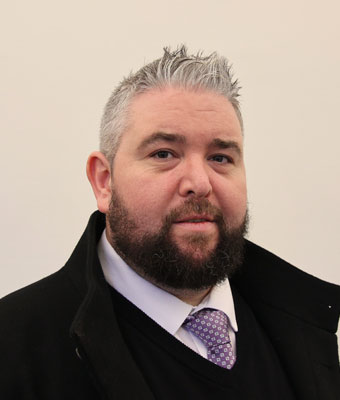
18. Deputy Conor D. McGuinness asked the Taoiseach if he will report on the first meeting of the delivery and monitoring committee for the National Human Rights Strategy for Disabled People 2025-2030, which he chaired on 8 December 2025. [16762/26]
19. Deputy Barry Heneghan asked the Taoiseach if he will report on the first meeting of the delivery and monitoring committee for the National Human Rights Strategy for Disabled People 2025-2030. [16763/26]
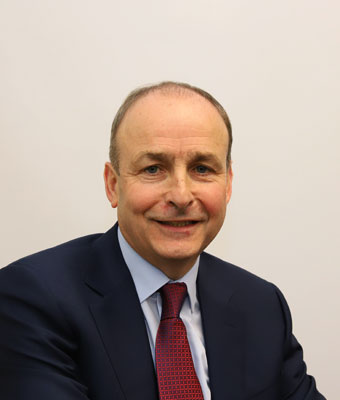
I propose to take Questions Nos. 1 to 19, inclusive, together.
The delivery and monitoring committee, which I chair, oversees implementation of the National Human Rights Strategy for Disabled People 2025-2030. This strategy, published last September, is the Government's plan to advance the realisation of the United Nations Convention on the Rights of Persons with Disabilities so that disabled people are supported and empowered to live full lives of their own choosing. The delivery and monitoring committee is part of robust monitoring structures that have been established for the strategy. These structures have been co-designed with stakeholders to ensure oversight and accountability, and will involve disabled people centrally so that their voices can be heard.
The first meeting of the delivery and monitoring committee took place on 8 December 2025. It was attended by the Government Ministers responsible for delivering the strategy, including the Minister for Children, Disability and Equality and the Minister of State with responsibility for disability, alongside representatives of disabled persons' organisations and disability and civil society organisations. To mark the inaugural meeting, a number of additional Ministers attended, including the Minister for Housing, Local Government and Heritage, the Minister of State with responsibility for international and road transport, logistics, rail and ports, the Minister of State with responsibility for special education and inclusion and the Minister of State with responsibility for small business and retail, and the circular economy.
The meeting of the committee considered a first programme plan of action for the national human rights strategy for disabled people, which covers the years 2025 and 2026. The plan details initial measures that will ensure disabled people experience real progress in their everyday lives. Examples include the roll-out of the new education and therapy service, increased provision of respite and residential services, steps to address primary care waiting lists and the development of a new vehicle adaptation scheme. Respite services play a critical role in supporting people with disabilities and their families, and the value that these services provide cannot be understated. We made a commitment in the programme for Government to continue the expansion of respite services and budget 2026 reflects this ambition. It provides €25 million in additional funding for respite expansion, providing over 10,000 extra overnight and 15,000 day respite sessions. This funding is being used to increase the level of respite provision for children and adults around the country through a mix of alternative respite options. These include in-home respite, after-school and day respite, using existing overnight residential capacity to the maximum extent and providing additional overnight respite capacity where it is needed. The funding will also support the further development of home-sharing, a person-centred and community-based form of respite where a person is supported in the family home as a viable respite option.
Following consideration by the committee, the plan of action was subsequently published. The committee will meet twice a year and future meetings are expected to have a thematic focus on specific issues that will be identified with stakeholders in advance. The next meeting of the committee has not yet been scheduled.
The Government is committed to delivering real and tangible solutions to enhance services to better support disabled people in Ireland. The overall HSE disability budget for 2026 has grown to more than €3.8 billion, a 20% increase on the previous year, delivering increased investment in residential, respite and therapy services. This includes additional investment in the 93 children's disability services which provide services and support for over 45,000 children, an increase of approximately 2,000 children since 2024.
While we recognise there is much more to do, CDNT waiting lists have fallen from nearly 13,000 in January 2025 to just under 9,400 at the end of December 2025. To support this growing investment, the HSE is driving intensive recruitment efforts and a dedicated disability workforce strategy will be developed in 2026. The Government is also firmly committed to supporting disabled people and improving their lives, including through addressing the cost of disability. The Government recognises the significant additional costs that disabled people can face in their daily lives and we are committed to improving outcomes for disabled people by introducing permanent measures. The programme for Government includes a commitment to introducing a permanent annual cost-of-disability support payment, with a view to incrementally increasing this payment. Work on this has begun, led by the Minister for Social Protection, and will include engagement with disabled people with a view to developing proposals for Government. A public consultation is currently open.
Deputies Quinlivan and Quaide and I visited the Side-By-Side clubhouse in Dún Laoghaire run by Acquired Brain Injury Ireland. Deputy John Brady and I met the group previously. It has two specific asks. Some 450 children in the State suffer moderate to severe traumatic brain injury. Unfortunately, outside of a small number of specialist rehabilitation centres there are no dedicated rehabilitation services for children with an acquired brain injury. Its proposal is for two community-based specialist interdisciplinary teams for children living with acquired brain injuries which would provide much-needed rehabilitation services to children in their communities, including in their own homes. The other issue relates to €2 million for a brain injury case manager. We saw a lady who had no action in regard to rehabilitation until a case manager was in place but that does not exist everywhere. We need that roadmap for everybody.
With the full permission of his parents, I want to raise the case of 15-year-old Oliver, a young person with severe autism and PANDAS. The State is currently spending approximately €700,000 on a residential placement that independent clinicians have warned is unsafe and unsuitable for him. His parents have documented repeated safeguarding concerns and HIQA has raised serious issues with the oversight of his care. Despite the ongoing engagement by his parents and my office, no clear pathway can be found. His parents are not seeking additional funding. Rather, they are willing to build a purpose designed extension at their home and are simply asking that the existing funding follows their child so he can receive his clinically assessed two-to-one care package safely at home at roughly half the current cost. I would appreciate the support of the Taoiseach in ensuring this case is reviewed urgently at the highest level, so that Oliver's best interests come first.
I too want to raise an issue around residential care, following on from Deputy Daly. The Taoiseach and I share a county and city. To be fair, his office was very helpful in the case I worked on with it over the past two weeks where a person required urgent residential intervention. The problem in a Cork context was that this young adult was diagnosed with a mild disability. To call a spade a spade, there are no residential opportunities for anybody with that categorisation in Cork, irrespective of their condition. That is happening in Cork at the moment. The county is essentially only dealing with emergency cases and cases are being managed on a week to week basis. At best, that is what people are trying to do. There is very little forward planning. I have met all of the service providers over the past few weeks. I am genuinely very concerned about the outlook for full-time residential care. I assume this is replicated in other parts of the country. We need to fund service providers adequately to provide accommodation. I thank the Taoiseach for meeting the Before We Die campaign, which is at the helm in terms of progressing the issue, and I hope he has more interaction with it in the next few weeks.
On world hearing day, I again want to raise the case of James Reardon and Ruth McSkane, who face a bill of €10,000 for hearing aids. I have previously raised with the Minister for Health the case of a lady in my area, Maggie Owens, who is involved with Irish Sign Language and creates great bond with the language in the town of Athy. At a time when some 50% of our population with a disability of working age is not in employment, expenses such as cost of hearing aids are prohibitive. In 2024 the Department of Health set up a working group to develop a national hearing care plan. Can the Taoiseach confirm the status of the report? Can the Government consider the costs which prohibit those from with disabilities from entering employment?
More than 3,000 people signed a petition calling for two new autism classes in Stapolin Educate Together National School. The Department of Education and Youth said it will sanction these classes in terms of staffing but will not provide any classrooms. There are no spare classrooms in the school. The school needs to be able to provide new classes and modular classrooms if the new autism classes are to open. Will two new additional classrooms be sanctioned? Will he speak to the Minister for Education and Youth about this? Cad é a dhearcadh?
In this Chamber, we tend to speak almost exclusively about the right of disabled people to access services, yet many other rights make for a full life, not least the right to employment. Ireland continues to have one of the lowest disability employment rates in Europe. The wage subsidy scheme is designed to close the gap, yet what we have heard from Rehab Group, the largest employer of disabled people in the State, is deeply concerning. It has warned the real value of the subsidy has eroded because it has not kept pace with increases in the national minimum wage. It has also raised concerns about the revised band structure. In practical terms, the marginal incentive weakens at higher staffing levels. That risks undermining the very objective of the scheme. If we are serious about participation, dignity and economic independence for disabled people, the wage subsidy scheme must strengthen, not dilute, the incentive for employers who are leading on inclusion. Will the Government revisit the structure and rates of the scheme to ensure a genuinely supports the expansion of disability employment?
How many children have been notified to the NCSE as needing a special class or school place for September 2026? We now know 351 special classes have been sanctioned. What is the shortfall? It has been reported as being in the region of 1,000 children and 250 extra classes. Can the Taoiseach give a commitment that the necessary places, special education teachers, SNAs and school buildings will be in place for September?
Parents, SNAs and school communities protested over the misguided move by the Government to take a significant number of SNAs from many schools across the country, a decision it had to backtrack on because of the outrage. They want to know they will not be in the same position in a year's time when the same issues happen again. Will the infamous 2014 circular, which they believe should be torn up, be rewritten with the input of the parents, SNAs and school communities so that the same dire mistake is not made again? The Government has committed to withdrawing the circular and rewriting it. Will it get input from the people who matter and know how the circular should be written in a way that guarantees the right of children with special needs and school communities? Will the Government make sure it does not make another mistake in having something written top-down by people who do not understand the issue?
On Saturday, I attended a powerful protest organised by the Affordable Ireland campaign. It was led by disabled people and disabled people's organisations. The focus of the protest was the cost-of-living crisis in general but in particular a demand for an emergency payment for those who have seen €1,400 in cuts savagely implemented in the past budget. A striking feature of the speeches was people responding to the ridiculing that happened in here about the notion that people are making real choices to heat or to eat. People spoke about their lived experience and this being the choice they face.
The Government is talking about a national human rights strategy for disabled people, while pushing people further into poverty with its political choices. When I raised this with the Taoiseach last week during Leaders' Questions, he pointed to an ESRI study that said the lowest income groups benefited most from the recent budget. I actually went and checked the report, which says the opposite. It says that the lower income households were hit harder. Will the Taoiseach listen to those on the street and implement a winter payment?
Táim tar éis é seo a rá sa Teach seo cúpla uair anois. Nuair a thosaíonn daoine le míchumas ag obair, tá seans go gcaillfear an pas saor in aisce don taisteal. Níl sé sin féaráilte ar chor ar bith. Níl sé cothrom. Má táimid ag iarraidh go mbeidh an méid is mó daoine le míchumas gur féidir leo a bheith san fhórsa oibre páirteach ann, bheadh sé i bhfad níos fearr mura raibh siad chun an pas sin a chailliúint. Le bheith ionraic, má táimid ag iarraidh é sin a chinntiú – bhí mé ag caint leis an Aire, an Teachta Calleary, agus dúirt sé go raibh seans ann – caithfimid an brú is mó gur féidir linn a chur ar an Roinn chun é sin a cheadú. Níl sé cothrom go dtarlaíonn sé sin nuair a théann daoine ar ais go dtí an obair. Níl sé féaráilte.
Holy Family School for the Deaf in Cabra is a centre of excellence for deaf education and is in fact the only campus in Ireland catering for deaf pupils from the ages of three to 18 years. This is education for deaf children and young people in the deaf community. It is a special school, providing a very specialised service. It is a wonderful school and they need in-house Irish sign language, ISL, interpreters on staff. I met them yesterday and they recounted to me how they have to hire in interpretation services for the most mundane, the most complex and sometimes the most sensitive of tasks. They also explained how bringing in interpreters piecemeal like that does not work for children, especially small ones, because there has to be a relationship of trust and understanding and so on. They need two of these interpreters in-house. They cannot get clarity from the Department. Will the Taoiseach intervene for goodness' sake? This school needs this service, as I imagine another deaf school in Limerick does.
Across this House we are incredibly impatient and adamant that this committee at the Department of the Taoiseach must deliver for disabled people. Right across the country, every single day, many of us speak to people with disabilities, and families who have children with disabilities who are caught up in not getting access to education, housing adaptations, timely assessments or transport in their communities. There is a cost-of-living crisis as well. There is an incredible number of issues. This committee has to be more than procedural. It has to have real results.
I thank all the Deputies who contributed on this matter. First, Deputy Ó Murchú outlined how he has met representatives from Acquired Brain Injury Ireland on the need for injury case managers-----
Yes.
-----and two community-based specialists for the centre. I am familiar with the organisation. I will speak to the Minister and the Minister of State to see what the background to this is. I think it has been a very effective organisation and an advocate for people with acquired brain injuries. I am supportive of this but obviously I will have to talk to the Minister and the Minister of State and see where they are in terms of the specific request. I appreciate the Deputy raising the matter.
Deputy Daly raised the case of 15-year-old Oliver. I will take this offline. The Deputy's suggestion sounds eminently sensible to me. The closer to home the child is, the better the sustainable prospects for the child and the family. I will talk to the HSE about this and see what we can do to get to the right solution.
I appreciate Deputy Pádraig O'Sullivan's comments about various interventions. I have met the Before We Die group. I am very conscious of the need to join together the disability Department, the HSE and the Department of housing in respect of sustainable long-term residential accommodation for disabled adults. There is a spectrum in terms of dependency and the needs for various levels of support for people to go into a housing situation. It cannot be a case where providers of services tell people to go to the local authority and apply for what will be general support services in time. That is not a sustainable model, in my view. I had a good discussion with parents in this situation. I have put it on the agenda for the next meeting of the Cabinet subcommittee on disability. I have asked the Minister and the Minister of State to come forward with clear proposals on how we can create a more sustainable framework for housing for people with disabilities in the long term. Some will need substantial supports, some will need fewer supports and some will need a sheltered or just a very basic supportive environment. The Department of housing has a funding scheme available. It is about how we pull everything together to make sure that it is sustainable going forward for those who need these housing scenarios. I am familiar with the case in terms of the mild to moderate diagnosis and again, there needs to be flexibility in how that is applied to services. In my view, there should not be a categorical cut-off line in situations to do with disability. There should perhaps be a more subjective view from clinicians. Nothing is that straightforward in terms of disability. The Deputy is right that the emphasis, particularly in the southern region, is on emergency cases at the moment.
I will talk to the Minister about that hearing issue raised by Deputy Mark Wall to see what supports can be provided. Obviously, we have to try to get the waiting times down and get greater access. Audiology has been problematic historically. We need to get more people into training places and recruit more people. It is a key area and it is related to speech as well. There is an inseparable connection between that and speech and language therapy. I will pursue this with the Minister.
I would say to Deputy Cian O'Callaghan that if they have sanctioned the classes, we will have to provide them. The timelines might be problematic but we have to provide a facility for those two classes if they are sanctioned, unless there are other spaces on the school campus that could it on an interim basis. I will talk to the Department in respect of that.
I assure Deputy Quaide that I will ask for a review of the wage subsidy scheme. When we came into government last year, the Department had done its review. The Minister, Deputy Calleary, launched it and I was at the launch. Some employers get good use out of it, but I am hearing that for some it is not turning out the way people might have envisaged. It was never the intention that it would be a disincentive to employing more. I will pursue that. We want to create a tipping point for people to employ people with disabilities. There are certain services where disabled people provide very good services to the community. It is an economic model and a social enterprise. They are not exactly well served by it either. I will talk to the Minister for an overall review in advance of the next budget.
I understand that the number of special classes that have been sanctioned - Deputy O'Rourke mentioned that the number is 351 - is already higher than the number for last year. I think it was about 302 last year. That shows the scale of what is happening. I will get a precise figure for the Deputy from special education. It will be significantly more than that. Our objective is to make sure children are adequately provided for and have a place because that is their constitutional entitlement.
Deputy Boyd Barrett referred to an "infamous" circular. It has been the circular since 2014. Since that circular, the number of SNAs has increased. It was 16,000 in 2020. If we go back to 2014, what was it? It must have been 10,000 or 12,000 and it is now at more than 25,000. It will probably go higher by next September.
I do not know why the Deputy is calling it "infamous". There has been some expansion of SNAs since then. There will continue to be a growth in the number of special needs assistants. There is a new circular being issued. There has been engagement with stakeholders. There is also a new redeployment scheme on which there has been substantive stakeholder engagement and that is imminent and near completion. There is then the workforce planning document on which a lot of work has taken place as well.
What should happen ordinarily on a year-to-year basis is the resources should follow the need and need will change. There will be increased need in some schools and there will be reduced need in other schools. It should not be done every five years. Covid-19 apparently interrupted the NCSE's approach to this. There should always be regular assessment of need in respect of what schools require. That should not be contentious.
How is the Taoiseach defining it?
In response to Deputy Paul Murphy, again, the budget has put in place substantial provision, particularly in terms of our child support payments - record increases in child support payments. In terms of the domiciliary care allowance, there was a substantial increase of €20 again, which was on top of last year's €20 increase. Combined with the working family payment, increases in entitlements and expansion of their access to entitlements, particularly free fuel, overall, there has been a very substantial embedded provision. There is also the 20% increase in disability services.
In response to Deputy Heneghan, an aidhm atá againn ná níos mó tacaíochta a thabhairt d’fhostóirí, níos mó daoine faoi mhíchumas a fhostú agus níos mó deiseanna a chur ar fáil dóibh. Táimid chun é sin a dhéanamh agus tá a lán slite againn chun é sin a dhéanamh agus an aidhm sin a bhaint amach. Is pas saor i dtaobh taistil de a bhí faoi chaibidil ag an Teachta agus fiosróidh mé leis an Aire cad é an scéal agus conas is féidir linn an scéim a fheabhsú.
In response to Deputy McDonald, I will talk to the Minister for Education and Youth in respect of the Holy Family School for the Deaf in Cabra. There had been an issue with the recruitment of Irish sign writers - full-time teaching positions. I do not know whether that is the background to this or not, or whether it is a sanction issue, but it would be much better if schools had permanent in situ teachers as opposed to hiring people in. I will follow it up.
Just for clarity, I am not talking about teachers. I am talking about interpreters.
Sorry, the Deputy is talking about interpreters - point taken.
In response to Deputy McGreehan, the disability committee is very outcome focused. From the get-go, we worked through the school-based therapy scheme. That is now up and running. The recruitment has started. The money was allocated. We are close to finalisation on a vehicle adaptation scheme under the Department of Transport, in combination with the Department of Finance. That will take some time to implement and work up but we are in a position where it will be a very positive outcome. We looked at the assessment of need issue. That committee took decisions on that in terms of legislation and legislative proposals.
In terms of the investment in disability this year, there is an extra 20% in the HSE disability budget to go towards respite and residential support. All of that is coming out of the work of the committee. In terms of the budget, including the whole issue of the domiciliary care allowance, we had a specific disability focus as well from that disability Cabinet subcommittee and from the unit in my Department, which did work in advance of the budget and has done a paper on the outcome of the budget, and will do the same in advance of the next budget.
Departmental Strategies
20. Deputy Ruth Coppinger asked the Taoiseach if he will report on implementation of the well-being framework published by his Department. [10448/26]
21. Deputy Ruairí Ó Murchú asked the Taoiseach if he will report on implementation of the well-being framework published by his Department. [11872/26]
22. Deputy Martin Daly asked the Taoiseach if he will report on implementation of the well-being framework published by his Department. [71663/25]
23. Deputy Pádraig O'Sullivan asked the Taoiseach if he will report on implementation of the well-being framework published by his Department. [71665/25]
24. Deputy Erin McGreehan asked the Taoiseach if he will report on implementation of the well-being framework published by his Department. [71667/25]
25. Deputy Cian O'Callaghan asked the Taoiseach if he will report on implementation of the well-being framework published by his Department. [12356/26]
26. Deputy Darren O'Rourke asked the Taoiseach if he will report on implementation of the well-being framework published by his Department. [14282/26]
27. Deputy Peadar Tóibín asked the Taoiseach if he will report on the implementation of the well-being framework published by his Department. [14304/26]
28. Deputy Paul Lawless asked the Taoiseach if he will report on the implementation of the well-being framework published by his Department. [14306/26]
29. Deputy Richard Boyd Barrett asked the Taoiseach if he will report on the implementation of the well-being framework published by his Department. [14448/26]
30. Deputy Paul Murphy asked the Taoiseach if he will report on the implementation of the well-being framework published by his Department. [14451/26]
31. Deputy Liam Quaide asked the Taoiseach if he will report on implementation of the well-being framework published by his Department. [16304/26]
32. Deputy Barry Heneghan asked the Taoiseach if he will report on implementation of the well-being framework published by his Department. [16764/26]
I propose to take Questions Nos. 20 to 32, inclusive, together.
Ireland's well-being framework is a cross-government initiative to measure progress and policy impact in Ireland in a more holistic way. The framework consists of 35 indicators grouped under 11 dimensions which reflect different aspects of well-being. It is supported by a dashboard hosted by the Central Statistics Office which brings together all of the framework's economic, social and environmental statistics in an integrated way.
Each year Understanding Life in Ireland is published, which assesses Ireland's well-being performance across these 35 indicators. Ireland's framework tracks 35 indicators grouped under 11 dimensions. These dimensions are subjective well-being; mental and physical health; knowledge, skills and innovation; income and wealth; housing and the built environment; environment, climate and biodiversity; safety and security; work and job quality - both paid and unpaid; time use; connections, community and participation; and civic engagement, trust and cultural expression.
The 2025 assessment shows that Ireland's overall performance is positive, in particular in areas including work and job quality, and our social connections and community. Only two of the 11 dimensions - the environment, climate and biodiversity dimension and the mental and physical health dimension - showed a negative performance.
The analysis also highlights there is more work to do. In particular, there are some groups in our society for whom progress is unequal across multiple areas of well-being, including people with long-term illness or disability, single-parent households, unemployed people, younger people in the workforce, households with lower incomes and households in rented accommodation.
To assist expenditure policy-making, we continue to integrate the framework into the budgetary process. The well-being framework was featured at last year's national economic dialogue and is part of the summer economic statement. The well-being framework was also part of the documents and analysis underpinning budget 2026, and this included analysis of the dashboard in budget day documentation and a paper showing how selected expenditure measures in budget 2026 are enhancing well-being was published by Department of Public Expenditure, Infrastructure, Public Service Reform and Digitalisation.
I am sure the Taoiseach would agree that the way sexual assaults survivors are treated is a key part of well-being in any country, and we have already seen the battle for people not to have their own therapy notes used against them in court.
This week, we are seeing how third level institutions treat victims of gendered violence. I highlighted the medical student who was raped, had image-based sexual abuse used against her and lost her place on the medical course. She tried to get reinstated and, long story short, UCD won that court case against her and are imposing costs. I have spoken to other students who have been victims of sexual assault at UCD. The dignity and respect policy seems to be utterly meaningless - for example, even to have the assailant not be allowed to go into a building where they attend courses. Even something as simple as that is impossible, and in all cases, it is the victim who ends up losing their education.
Another student had to do the rest of their degree online but the rapist, of course, continues on with their degree, affecting their mental and physical well-being as well as affecting how they do in their degree overall.
The Taoiseach has already mentioned the fact that those with a disability are unfortunately in a different set of circumstances. Many of us were at the Affordable Ireland campaign march at the weekend and we heard directly from those with disability about the severe pressure they are under. Unfortunately, as I said earlier, it comes down to heat or eat. These are decisions that have to be made that fortunately nobody in this room has to make. We need to look at the cost of disability in the round and I welcome the review process. That is fine but it is about the people who cannot afford to make payments now. Whatever about not making one-off payments across the board but for those with disability, it could be looked at. I also ask that the Taoiseach looks at the issue in relation to the high cost of hearing aids and that we would see that working group review.
Beyond that, there could be up to 400 trainees for the National Ambulance Service, who could be looking at having to reapply and who are not sure of their jobs. That is a particular issue that needs to be dealt with.
I want to raise the section under quality of water or water bodies. The report outlines that the water body assessment showed that 55.3% of Ireland's rivers were assessed as high or good in comparison to 56.2% a number of years prior. The reason I am raising it is that it is specific to one case in Carrignavar, which is in my constituency. Over the past few months, we have been able to tell people that record funding is going to be given to Irish Water to fix many of the problems that have been historic in nature and were carried over from various local authorities.
The reality here is that our water quality is disimproving in that period, according to this report. I attended a briefing with Irish Water last week. We listened to plans that go out to 2080. None of us in this room will be on this planet in 2080 and Irish Water is talking about improving water quality, in a Cork context anyway, by 2080.
Deputy O'Sullivan might make it.
I have a good chance compared with some in the room. I believe we need to get real here. We spoke about developer-led infrastructure in particular with regard to improving our housing delivery. That seems to be taking a backseat now.
The well-being framework shows the overall national progress on, in particular, incomes, job quality and mental health indicators. However, it makes clear that progress is not evenly felt. Single-parent households, unemployed people, renters and young people continue to experience lower well-being outcomes. We need to have more community-based supports for mental health. I believe in social prescribing. We can do more to support people beyond clinical services. What will be done to provide for initiatives such as social farming and community health projects to support voluntary groups that would reduce loneliness and improve mental health resilience in a practical and measurable way?
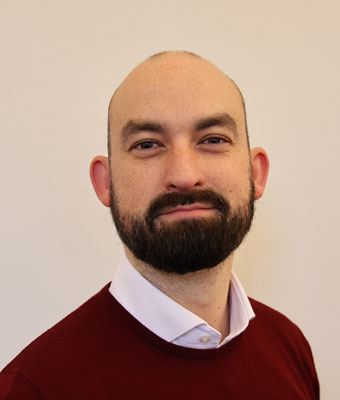
The Government's well-being framework is supposed to be a means by which preliminary budgetary decisions can be made. As the Taoiseach might be aware, last month, Social Justice Ireland published an alternative well-being framework entitled Measuring What Matters. It critiques the Government's framework design as not being sufficient to identify and understand disparities, so it took it upon itself to create a more comprehensive picture that reflects the lived experience of different groups. The report states:
The social contract must foster societal wellbeing if it is to last. If it fails to do so, it risks a breakdown in the social fabric and a loss of faith in our democratic institutions.
I could not agree more. The report found that there are significant disparities and inequality across the housing and built environment dimension, as well as the work and job quality dimension, suggesting a deepening gap between the haves and the have-nots. Importantly, in the environment, climate, and biodiversity dimension, the report suggests that progress is reversing, inequality is widening and sustainability is declining. What steps will the Government take in the forthcoming budget to ensure that these trends are reversed and, in particular, that the environment, climate and biodiversity dimension remains a top priority?
I want to focus on the mental and physical health dimensions of the well-being framework and return to the issue of special class places for September 2026. We heard at the public accounts committee last week that the Department of education, and I presume the Minister, intend to bring a memo to Cabinet imminently in relation to meeting the unmet need for special classes. The Taoiseach might let us know if he expects that to be about funding. What does it mean for SNA places? There will be hugely increased demand for SNAs, which was not part of the conversation last week, and we know an additional supplementary budget is coming for those.
Outside the Dáil today, there was a protest by a large number of mostly young people who are newly qualified paramedics. The Taoiseach may have seen that they gathered a petition over the weekend. About 10,000 people have signed it. For the last three years, they have been doing a degree to become paramedics and they have also been working part time for the HSE. When they were brought in through a recruitment campaign in late 2022, into this degree course and into the part-time work, they were given the clear understanding that they would be given permanent contracts. This was reiterated as recently as December of last year. All of a sudden, they have had the rug pulled out from under them and they have been told they have to reapply in a competition for their own jobs. They are absolutely gutted. They are being told, having believed they would be working relatively close to where their children go to school and so on, that they could be sent to another side of the country and not even got a job with the HSE. This is a shameful way to treat these young people. Can the Taoiseach intervene on their behalf?
War is a racket. It is an opportunity for many profiteering companies and individuals to try to rip people off. With Trump's new reckless, illegal, criminal, imperialist war in the Middle East, energy prices are going to rise even higher. In some cases, they already have, so the cost of home heating oil has gone up €80 since last Friday, for which there is no justification. That oil would already have been bought before the bombing started. The Taoiseach said earlier that he was going to raise this price gouging with the Minister for energy and has asked the Competition and Consumer Protection Commission to examine any unfair pricing practices. This is like "Back to the Future". We heard all of this when the cost-of-living crisis started five years ago. Ultimately, the Government refused to do anything at all. Report after report seemingly vindicated energy companies and supermarkets, claiming they are not profiteering when it is obvious that they are. The Taoiseach has the power to introduce price controls. Will he use that power?
Nuair a bhí na horduithe dianghlasála i bhfeidhm, bhí faic le déanamh i mBaile Átha Cliath thuaidh agus bhí go leor daoine ag snámh san fharraige. Tá sé sin an-mhaith don intinn agus don tsláinte. Maidir le well-being, will the Department commit to more funding for north Dublin's swimming areas? Regarding Bá Bhaile Átha Cliath, tá an méid pollution atá ann uafásach. Tá a fhios againn go bhfuil a lán airgid ag dul isteach sa Ringsend centre but for the Dollymount Dames, Blue Balls Ireland, and the swimmers at Dollymount beach and Howth and in all the coastal areas that I represent, getting into the water is an escape. Will that be prioritised in wellbeing?
I think swimming should be obligatory and mandatory for everyone in this House. It would take a lot of tension out of the House. It would be very therapeutic for all the Members. Táim an-sásta an-chuid oibre a dhéanamh chun níos mó tacaíocht a thabhairt do na daoine atá ag snámh sa tír seo.
The Taoiseach would want to do something about water quality in Dublin Bay.
Come up to the north side.
Táim an-bháúil le daoine a bhíonn ag snámh san fharraige go háirithe. Níl an t-am agam é a dhéanamh mé féin i rith an gheimhridh ach, le cúnamh Dé, beidh níos mó seansanna agam chun snámh san fharraige i rith an tsamhraidh.
In respect of sexual assault, Deputy Coppinger is not here, but I need the background of the case. I think the assertion was that in UCD, a student lost their place in medicine as a result of a sexual assault, which should not happen. I do not know the background to it but I would be interested in getting the full case. I will ask my officials to contact UCD in respect of this, because the dignity and respect framework should be observed and adhered to and absolute priority must be given to a victim of gender-based and sexual assault. Also, I do not understand how a rapist would be allowed to complete their degree on campus, if that was the assertion. Rapists should be in jail and convicted for such heinous crimes. If I could get the background of that, I will engage with UCD in the first instance because it was mentioned and I would like to hear its perspective on it.
In response to Deputy Ó Murchú, the Minister, Deputy Dara Calleary, is preparing work on the cost of disability and has already initiated a public consultation on that. That is a sustainable way of dealing with the cost that people with a disability undoubtedly have. It is better to do it in a proper, measured, sustained way that is researched properly and evidence-based. That is the approach the Minister is taking. The Deputy has already raised the issue of the hearing, which I have already responded to.
On the National Ambulance Service, I will talk to the Minister for Health to get the full background. If commitments were made to people, they need to be realised. It is a pity because the professionalisation of first responders and emergency paramedic technicians is the one area we have made great progress on. It is a very important area that has done a lot to reduce death and provide early interventions prior to someone being transported to a hospital. It is critical. I was involved in establishing it, in terms of the Pre-Hospital Emergency Care Council, so I have an interest in it.
Deputy O'Sullivan raised the issue of water quality. My understanding is that overall water quality has improved but there is an issue in Carrignavar. There is an issue on the north side of Cork city in terms of water quality, which is quite poor. We have made a lot of representations to Irish Water. There has been some progress made in some areas. Again, however, Irish Water has internal reforms, which it is progressing in respect of addressing any issues that might pertain to Irish Water itself.
Deputy McGreehan spoke about social prescribing and community health projects. I would be very enthused by those. They are very important. There is a lot more we can do there. The Deputy has identified some areas of the report in terms of single parents being under pressure and the area of mental health, where there is a greater need for not just clinical interventions or primary care and community care-based interventions but also broader supports and strengthening multidisciplinary teams in addition to psychiatry alone.
Deputy Hayes raised the well-being framework. Again, he mentioned social justice. The well-being framework we have is a very comprehensive one. I would prefer if social justice inputted into that framework so that we would have one framework. Maybe this framework is too positive in most of its outcomes. That is the problem; we do not do positivity very well in this country
That was not really the issue.
We are not positively disposed to positivity - I will put it that way - which is fine. I can understand that, too, to a point. We must always strive for better and do things better in some areas.
Deputy O'Rourke raised the issue of special classes. We spoke earlier on that. The Minister will be coming back to us in respect of that. There will be further discussions at Government level.
I have answered Deputy Boyd Barrett's question, which was similar to Deputy Ó Murchú's in terms of first responders-----
Paramedics.
Paramedics, yes.
I would say to Deputy Murphy that war is a terrible thing. I have no interest in war. I would prefer if all issues could be resolved diplomatically through peaceful means. I am satisfied that Ireland's approach to world affairs is one of peace and trying to help other people, generosity and particularly helping those who are furthest behind, which has always been the hallmark of Irish foreign policy, aid and peacekeeping.
Social Media
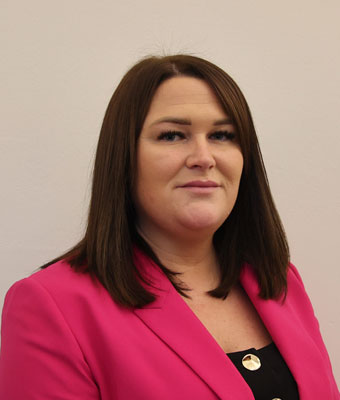
131. Deputy Joanna Byrne asked the Minister for Culture, Communications and Sport if the proposal to introduce a social media ban for under 16s has been abandoned; and if so, the reasons. [16790/26]
The Government's position on the issue of restricting access to social media platforms for children under 16 years of age is set out in the Government's recently published national digital and AI strategy. The Government is committed to working closely with like-minded European Union member states on proposals to restrict social media access for children and young people. In addition, the European Commission President, Ursula von der Leyen, announced an expert panel to examine the issue and any decision will take account of this report. This reflects the Government's view that a decision at EU would be preferable.
However, as set out in the strategy, Ireland will also take action domestically if necessary. The European Union member states are examining questions of prohibiting access by children and young people to social medial platforms and some are taking steps to do so, including France, which is debating legislation to restrict access to social media for under-15s. Australia is implementing such a measure in respect of under-16s and other jurisdictions are considering similar measures. However, across the European Union there are different views on whether there should be a digital age of majority, and if there was such an age, what that age should be and whether it should be an outright ban or a ban subject to parental consent.
Notwithstanding the international debate on the age of majority, I am of the view that age verification is a vital part of the picture in providing real assurance that children are the age they claim to be and to ensure they are not exposed to harmful or illegal content. Without robust age verification, any other measures including implementing a digital age of majority will not work. That is why my officials are working with the Office of the Government Chief Information Officer on an age verification tool as part of Ireland's digital wallet in support of the implementation of Ireland's online safety code. This wallet will be voluntary for people to hold and the tool will be voluntary for users and platforms to avail of. A pilot is envisaged to be led by the Office of the Government Chief Information Officer and will be voluntary and will run for a number of months. Feedback from the pilot will inform the shape of the initiative but while doing so we will ensure interoperability and respect users' rights, including data protection.
The Minister will understand our confusion this evening. According to media reports, he was blindsided by the Government's announcement of the national digital and AI strategy 2030 last week. Just the day before that announcement, media sources were briefed that the under-16s' social media ban had been approved and that the strategy would be rolled out the following day. The media further stated that the Minister was surprised by the plan to work at EU level and that he was not aware of it, despite being the Minister responsible.
We are really just looking for a bit of clarity here, after months of press statements starting in May of last year when the Tánaiste announced the Government was looking at copying the Australian model that banned all under-16s from social media. There has been a lot of kite-flying, there has been a lot of media coverage and what we seem to have now is an ambiguous Government statement about working actively with like-minded EU member states to explore options on introducing age restrictions on the use of social media, concentrating in particular on those under 16. In his response, the Minister said the strategy states that the Government will take action if necessary. I am still unclear as to the concrete pathway on which we are moving forward with this.
There has been no ambiguity regarding what I have previously said in the House. This is the first time Deputy Byrne has raised this issue in the House with me on oral questions. There has been no ambiguity regarding this issue from my point of view. I do not care what people read in the paper. The reality is I have consistently said and am on the record as saying that I thought it was regrettable the European Commission and the European Union had not acted as one with regard to this up to now, and that individual member states are being left to do it.
I have also put on the record, as I am doing this evening, that we will be bringing forward legislation, once the heads of the Bill have been agreed, in the first quarter of this year with regard to elements of the digital wallet that will be required to make sure we can put it into law. I hope that at that stage I get support from the Opposition. I have not got clarity with regard to where the Opposition stands on the digital wallet. Indeed, I have not got clarity on where it stands regarding age verification or whether it believes age verification is a necessary tool. Deputy Byrne might use the opportunity this evening to enlighten the House as to where exactly her party stands on this issue.
One thing the Minister and I do agree on is encouraging the safety of our youth online. Our preference is to have a safe, well-regulated online world for our teens, where social media companies are held to account for what is on their platforms, which can be done by Ireland's online safety framework, and where bad actors online are removed from platforms and face repercussions.
What I do have concerns about is an outright ban for under-16s, and I will tell the Minister why. It is unenforceable as teens are simply well ahead of us in the technological age and they will use virtual private networks, VPNs, to circumvent the blocks. This concern is shared by CyberSafeKids, the Children's Rights Alliance and other experts in the field that have been before the committee week after week in recent months and have all shared that concern. They feel it will further isolate marginalised teens such as those living in emergency accommodation. They feel that with us living in a technological age, if we are excluding youths at that age, they will not be prepared for what the digital age will be like when they reach the allowed age.
I am still no clearer as to whether the Deputy's party is going to support legislation that is going to be brought before the House in respect of a digital wallet. This is the public health issue of our generation. I have three small children and I am speaking as a parent. Previous generations had issues with smoking and alcohol from a public health point of view. We know that social media causes huge issues around mental health, addiction and physical health.
Deputy Byrne is talking about a self-regulated system. What does that mean in the absence of a law? I am still no clearer. Again, will Deputy Byrne enlighten me, as Opposition spokesperson, whether she is in favour of taking children off social media or whether she is in favour of allowing social media companies to continue to be the dominant voice on the future of our children online, because I am no clearer as to where her party stands on it?
Racism in Sport
132. Deputy Robert O'Donoghue asked the Minister for Culture, Communications and Sport the immediate measures he is taking to monitor, prevent, and address discriminatory online harassment and the alarming levels of online abuse directed at national sports representatives, particularly targeting those from ethnic minority backgrounds; the way in which he will ensure that perpetrators are held accountable to protect the dignity and safety of athletes; and if he will make a statement on the matter. [17066/26]
Recent incidents have highlighted the alarming levels of online abuse directed at our national sports representatives, particularly targeting those from ethnic minority backgrounds. What immediate measures is the Minister's Department taking to moderate, prevent and address such discriminatory online harassment and how will he ensure the perpetrators are held accountable to protect the dignity and safety of our athletes?
I thank Deputy O'Donoghue. Threats and harassment of any individual are not acceptable. The safeguarding of athletes at all levels of sport is a shared responsibility. It is imperative that we demonstrate that there is simply no place for abuse of any kind in sport and there should be zero tolerance for any actions that endanger welfare, whether of participants, staff or those who work for and support sports or, indeed, any discipline in the country. Everyone involved in sport, or in any discipline or capacity, regardless of age should be able to enjoy an experience that is free from any form of abuse, whether that is online or offline.
On raising awareness, a number of national governing bodies of sport have conducted campaigns in recent years with a specific focus on online abuse, including the Olympic Federation of Ireland and the Irish Rugby Football Union. We recently saw the racism that has been directed at some people playing rugby in this country and it is absolutely despicable.
The bringing to justice of the perpetrators of such abuse, whether online or offline, is a matter for An Garda Síochána and if anyone has been subjected to threats or abuse, they should report it immediately to the Garda. Furthermore, I encourage anyone who sees any abusive or threatening content online to report it in the first instance to the relevant platform. If a person is dissatisfied with the platform’s response, they can report it to Coimisiún na Meán.
In terms of dealing with this issue from an online safety perspective, a robust online safety framework in now in place in Ireland. Coimisiún na Meán has responsibility for implementing that framework, which includes applying and enforcing the online safety code to designated video-sharing platforms established in Ireland to ensure they minimise the availability of harmful online content.
Platforms must provide a way for people to report content they think is illegal, respond to these reports in a timely and diligent manner and consistently enforce their own terms and conditions. In particular, under the Digital Services Act, which is part of Ireland’s online safety framework, the largest online platforms must take mitigation measures against the availability and exposure of users to illegal online content. This includes, albeit not exhaustively, threatening, abusive or insulting comments that are intended or are likely to stir up hatred as detailed in the Prohibition of Incitement to Hatred Act 1989. Once again, I and the Government condemn all forms of abuse and urge those affected to notify the relevant authorities.
I thank the Minister. Online abuse is no longer confined to social media. It spills out into our stadiums, communities and local sports grounds. I was a soccer referee for a long time and I can attest to that. It is lovely to hear the Minister say there must be zero tolerance. For this behaviour, those responsible - it is hard to call them fans - should face real consequences. They should be banned from matches. They should have their online accounts sanctioned and we should have the social media companies walk with us. The Minister mentioned the abuse aimed at Edwin Edogbo, for which the IRFU had to turn off comments. That shows how serious the problem is. If we do not act now and hold people accountable, it will only get worse. Recent incidents, including the flares thrown in Oriel Park at a young supporter, show the real-life consequences. As the Minister said, abuse should have no place in sport. Enforcement is a good thing as long as it works. The numbers on enforcement from Coimisiún na Meán would be good to see.
I agree with the Deputy. To be honest, unfortunately, it is not isolated to one cohort in society. People in this House get their fair share of it as well and it is totally unwarranted. Whether a person is in Opposition or Government, there is a common thread that unites all of us who put our name on a ballot paper and get in here. The abuse some people get, particularly women Members of this House and the other House, is absolutely unbelievable. These nameless and faceless trolls hide behind makey-uppy names and invariably have a flag of some description stuck on after them. They besmirch our national flag and invariably bring it into disrepute.
Those people, if they stood for election to a bin collection committee, would not get elected. They are very brave men and women who hide behind faceless troll accounts and fake names. They think they are really brave men because they are ganging up on people who actually have done the State some service by putting their names on a ballot paper, regardless of what party or no party gets in here. The same can be said of sport. Any co-operation and suggestions members of the Opposition have on this are welcome. Going back to the previous question, I will take every bit of it on board because collectively, we have to get serious and get real on this. None of these people are any of our friends, by the way. Some people or some political parties might benefit occasionally from trolling but none of them are any of our friends.
A member of my bunch's last time in Government can confirm that. I thank the Minister. I do not believe it was a good idea to withhold funding from the clubs based off the incident in Oriel Park when the root of the cause really lies elsewhere. It begins online with what is usually a small minority using social media platforms to whip up outrage and hostility before a ball is even kicked. Clubs, which do extraordinary work on the ground and in their communities, should not be punished for the actions of individuals acting behind anonymous accounts, as the Minister mentioned. The focus must be held on those online platforms and users to be held properly accountable.
No one here should face abuse - Government or Opposition. I have spoken about this before and emphasised that strong adult safeguarding policies must be a priority for every club from local level all the way up to our international superstars. We must ensure sport remains what it is when it is at its best, a force that brings people together and builds communities.
With regard to the situation in County Louth that the Deputy raised, it is important to state that the national governing bodies here, the FAI and the League of Ireland, accepted their responsibilities, in fairness to them, because ultimately they are the governing authorities for this sport. I was not going to single out one. I had to single out the governing authority. When I met the governing authorities last week, they did not in any way push back with regard to the proposed sanction I had. In fairness to them, the following day, they brought forward a suite of measures that was proportionate to what had happened. They also sent out a very salient message to other clubs within their ambit of national governance, which is that if any of the rest of them engage in this sort of carry-on or thuggery, this is exactly what they are likely to face as well.
The challenge now for other national governing bodies of sport is to do the same and take the lead of the League of Ireland and the Football Association of Ireland. They need to look at these two institutions, the League of Ireland and the FAI, see where they have gone and pitched their penalties, and they have to do the same. That has to apply to all sporting codes in all disciplines.
Information and Communications Technology
133. Deputy Joanna Byrne asked the Minister for Culture, Communications and Sport the details of the status of the delivery for use of the new ICT system to replace the existing sports capital programme grant management systems, OSCAR; the total spend on the project; and if he will make a statement on the matter. [16791/26]
Will the Minister of State give an update on the delivery of the new ICT system to replace the existing sports capital programme grant management system and outline the total spend on the project and where it is at?
I thank the Deputy. As she knows, my Department operates two sports capital funding programmes, namely, the community sports facilities fund, CSFF, and the large-scale sport infrastructure fund, LSSIF. Both programmes are administered via an online customer portal, the online sports capital register, or OSCAR as it will be known to anyone who has made an application and been responsible in their club for engaging with the community sports facilities fund or the LSSIF over the past few years. It is also based on an internal administrative system, the CRM.
In 2022, my Department identified the need to replace the existing OSCAR system. The Department approved Pobal, a State-sponsored agency, as the preferred provider to design and develop the new system. The project to replace OSCAR with a new, contemporary offering is tracking well with delivery and budgetary milestones and is due for delivery in the course of the first half of this year. The total expenditure on the project to date is €759,000. As we will all appreciate, the development of a modern, cloud-based grant management system to replace the existing OSCAR platform will facilitate greater streamlining of the sports capital grant processes, enhanced reporting and improved stakeholder communication and will also enable enhanced, data-driven decision-making. This in turn will ensure scalable and resilient service to applicants and funded organisations.
As we would often say about an old car that has done a lot of service, it owes us nothing. The same could be said of the OSCAR system. It has served many rounds of funding and done so well but time has moved on. We are now moving to introduce a system that will be better able to meet the needs and adopt up-to-date technology to make sure the user experience is as good as it can be. We also want the system to have the capacity to be able to track applications and make sure they are clearly accounted for in an effective way within the Department as well.
It is now March. When I asked a question on this last June, the response I received was that we would have a fully developed online customer portal and an administrative case management system in March 2026. I appreciate that the Minister of State said it is coming very soon, but the urgency on this was for it to be up and running before the new round of the CSFF opens and for that to be able to facilitate an ease of application and an easy navigation portal for those using it.
I have travelled around the country, as has the Minister of State, meeting sporting organisations and the one thing that comes up time and again is the arduous application process and the system being hard to navigate, particularly for voluntary-led organisations but is not just the voluntary organisations that are finding it difficult. Some of the bigger national governing bodies with experienced, qualified staff are also finding it difficult. That is the urgency on it. If it is ready this summer, that is well and good, but I am not the only person who is keen to see that come before the next round of funding opens.
I agree. It is certainly tracking to be in place to be able to run the new sports capital funding round on that system as well. That is certainly the position we want to be in. I have met very regularly with the team and we have been leading out on this to make sure the progress has been tracked and that there has been a prioritisation put on it within the Department.
The work is progressing well. The team assures me we are on track to open for applications in late May and into June. We want to be in a position to be able to do it on this system. It will put us in a strong position with a modern, up-to-date system. I continue to liaise closely with the team to ensure that project is completed and is ready to be able to carry the new funding round.
That is brilliant. It is very welcome news. I appreciate that. If it is relatively on time and on budget, that is great news to all of the sporting organisations the length and breadth of the country that will use it. The only thing I ask is that there be a test run beforehand to ensure all of the bugs are ironed out so that it does not pose any difficulties to any applications that come through on it, but it is brilliant news.
There is a project management team in place and the different steps involved in the process include the transfer of data from the previous OSCAR system onto the new system. The testing of it will be part of the process too. A lot of work has gone into the initial part in terms of the building of it to be able to take on applications. I have been liaising with the team very closely on it. There is a lot of confidence in the team that we are on track to be able to run the new round on the new system.
We are ahead of time and those were very positive exchanges. I hope we will continue in this manner.
Culture Policy
134. Deputy Sinéad Gibney asked the Minister for Culture, Communications and Sport the steps his Department is taking to update the codes of practice for live events, particularly live music events, to better facilitate live music performance; and if he will make a statement on the matter. [17202/26]
The national codes of practice governing events date from 1996 and 1998 and have not been formally updated in almost 30 years. This has left a situation where Dublin city, Cork, Galway, Kerry and Fingal local authorities have all introduced supplementary event guidance that have different criteria, documents needed and procedures. Will the Department push for the national code to be updated to support consistency in how we run live events nationally?
I thank the Deputy. I believe he is taking this for Deputy Gibney.
I am.
As Minister for Culture, Communications and Sport, I am committed to the support and development of the live music industry. The Department, both through its own schemes as well as its funding of the Arts Council, provides support to a range of organisations that play essential roles in the development of music in Ireland.
Last year, I launched the grassroots music venue support scheme, a night-time economy initiative to support independent music venues that promote themselves and are known in the community for programming grassroots music artists, in recognition of the contribution they make to the industry. The scheme operated with a total fund of €500,000 and grants of up to €15,000 were available to host events showcasing the talent of emerging, grassroots artists performing live music they had written or created themselves in 34 venues right across the country.
This year, I have secured an increased allocation and committed €1 million in funding to support independent live performance venues with another edition of the grassroots music venue support scheme.
Details of the scheme are currently being finalised.
The Arts Council provides funding support to Irish arts centres and live performance venues which support year-round, high-quality, professional programming and infrastructure. In addition, the Commissions Award, funded through the Arts Council, supports individual music and opera artists and organisations, and festival organisers, to develop new work.
The music capital scheme, which is supported by my Department and managed by Music Network, has been awarding individual musicians and organisations, by providing access to instruments for people across the country.
These types of initiatives focus on supporting, nurturing and strengthening the live music sector, from the grassroots up by providing music education, employment opportunities for emerging artists and professionals.
As Minister for Culture, Communications and Sport, I have responsibility for policy and various funding streams that support the development of the live music sector. However, the codes of practice in relation to live events or music events does not fall under the remit of the Department. Codes of practice in relation to live events fall within the remit of a number of different bodies and Departments. The events industry is a matter for my colleague, the Minister for Enterprise, Tourism and Employment and licensing is a matter for local authorities under regulations most recently amended under the Planning and Development (Licensing of Outdoor Events - Planning and Development Act 2000) Regulations 2025, SI 37 of 2025.
I appreciate that the Department oversees the funding of arts but there is a significant gap in the sense that the Department's budgets operate on a 2026 basis but the laws upon which these events occur date from 1996. That creates a problem. There is a gap in terms of regulation. If you have an event in Dublin, you have the same event in Galway and you have a similar event in Cork, you are dealing with different processes, different licensing and different paperwork. That creates gaps for people who only want to put on events.
I appreciate the Minister is not the licensing body when it comes to events and that he is not the regulator when it comes to how these laws are developed but we need leadership here. If I talked to the Minister for housing, he would state this is not his role. If I talked to the Department of justice, it would say the same. Events need leadership and I suppose we are asking the Minister to demonstrate leadership in relation to these live events' codes.
I welcome the fact the Deputy acknowledged that this is not a responsibility for the Department of Culture, Communications and Sport. As I said a while ago, the planning legislation - this is a planning matter and events are covered under event licences - is a matter for the Minister for Housing, Local Government and Heritage in the first instance but supports from an enterprise point of view are a matter for the Minister for Enterprise, Tourism and Employment.
As I said a while ago, the Planning and Development Act 2000 lay down with strict criteria how events are to be planned under event licensing. It is a matter for local authorities, and rightly so. If there was any attempt to remove event licensing from local authorities, the Deputy would have great difficulty with it from a Dublin city point of view as would a lot of his colleagues from around the country would because this is a local function that should be performed locally.
I am talking about updating events' codes, which are 30 years outdated. The Minister referenced the Department of housing, which has responsibility for planning and the Department of enterprise. He said surely I would not wish to interfere with local authorities but that creates a gap for those who wish to put on live events. There are very significant discrepancies between holding an event in one county and holding an event in another county. Deputy O'Donovan is the Minister with responsibility for arts and culture and the funding authority. Surely he can see there is a need to have a national standardised process if you want to hold a live event. Surely it does not matter if you are holding it in Cork or Limerick. There should be a standardised process and standardised paperwork.
Of course, I value the night-time economy in Dublin. I understand the night-time economy in Dublin will be different from that in a town but the means by which I put on an event does not necessarily have to be different. The paperwork should be the same. The processes should be the same. Local authorities absolutely have a role in this in terms of support but the development of regulation guidance should be nationally standardised.
The Deputy is conflating as fact that all events are music events, which, of course, they are not. Some events are agricultural shows. Some events are religious events.
They do not have an event code.
It is a matter for planning. Event licensing is Ronseal - it does what it says on the tin. It is event licensing. It is a matter for the local authority, in the first instance, to decide whether to grant or not grant an event licence. You have everything from sports to agricultural shows to music to everything else.
As much as I am Minister for Culture, Communications and Sport, I am not Minister with regard to papal visits, agricultural shows or anything of that nature.
They do not have an event code.
The question that the Deputy asked was with regard to music performance but then he decided to go off on a tangent with regard to outdoor events.
Sorry-----
Deputy, you have had your time.
The Deputy said-----
-----the question states, "codes of practice for live events, particularly live music events, to better facilitate live music performance; and if he will make a statement on the matter." The Minister went off on a tangent from the question.
Deputy, you have had your time.
The Deputy said that you want all events consistent across the country and being handled by my Department. That is a physical impossibility because we are not a planning Department. As a former member of a local authority, the Deputy should know what the local authority does with regard to event licensing. Removing a power from a local authority would go down like a lead balloon with the Deputy's colleagues.
Cistiúchán Roinne
135. D'fhiafraigh Deputy Aengus Ó Snodaigh den Minister for Culture, Communications and Sport an bhfuil sé i gceist aige ciste caipitil ealaíon a bhunú ar mhúnla an chiste caipitil spóirt chun freastal ar riachtanais spáis d’ealaíontóirí agus taispeántais, agus an ndéanfaidh sé ráiteas ina thaobh [17092/26]
Tá an cheist seo dírithe ar an Aire. Táim ag iarraidh a fháil amach cad go díreach atá i gceist aige maidir le ciste caipitil ealaíon a bhunú ar mhúnla an chiste chaipitil spóirt, atá ag oibriú faoi láthair, chun feabhas a chur ar na spásanna atá ar fáil d'ealaíontóirí timpeall na tíre.
Gabhaim buíochas leis an Teachta as an seans seo cúpla freagra a thabhairt trí Ghaeilge i rith Sheachtain na Gaeilge. Mar atá leagtha amach i gclár an Rialtais, creideann an Rialtas go bhfuil an cultúr agus na healaíona riachtanach do leas an phobail. Tá líonra de bhonneagar cultúrtha ar fud na tíre agus an tromlach faoi úinéireacht na n-údarás áitiúil. Cuireann údaráis áitiúla agus an Chomhairle Ealaíon tacaíocht bhliantúil ar fáil don bhonneagar ealaíon agus cultúir seo, lena n-áirítear tacaíochtaí reatha a chabhraíonn le clár ealaíon a chur ar siúl.
Díríonn mo Roinn ar mhaoiniú deontais chaipitil a sholáthar chun cabhrú le forbairt agus chun aire a thabhairt do na háiseanna ealaíon agus cultúir seo. Tá roinnt cláir mhaoinithe á reáchtáil ag an Roinn faoin scéim um chaipiteal cultúrtha le blianta beaga anuas. Is é sruth E an ceann is déanaí, a chuir deontais suas le €50,000 ar fáil le haghaidh oibreacha caipitil agus a leithéid.
De réir an ghealltanais i gclár an Rialtais, cuireadh €6 milliún ar fáil do mo Roinn i mbuiséad 2026 le haghaidh clár nua maoinithe caipitil d'eagraíochtaí ealaíon agus cultúir ar fud na tíre. Cuirfidh sé seo tacaíochtaí caipitil a bhfuil géarghá leo ar fáil do na heagraíochtaí seo. Tá mo Roinn i mbun sonraí na scéime a dhearadh, lena n-áirítear critéir chun cur isteach ar an scéim.
Is scéim maoinithe caipitil chultúrtha eile atá ar fáil ó mo Roinn an scéim phíolótach €6 milliún do spásanna oibre d'ealaíontóirí, a seoladh i mí an Mheithimh 2024. Faoin scéim seo, tugtar cuireadh d'údaráis áitiúla, lasmuigh de Chomhairle Cathrach Bhaile Átha Cliath, tionscadail a mholadh a chuirfidh ar a gcumas spásanna oibre d'ealaíontóirí a sholáthar. Tá maoiniú suas le €300,000 ar fáil do cheantair údarás áitiúil a bhfuil daonra dlúth iontu agus €150,000 d'údaráis áitiúla eile. Críochnóidh mé an freagra go luath.
Tá sé tábhachtach aitheantas a thabhairt don obair atá á déanamh, cé go bhfuilim ag iarraidh go mbeidh níos mó ann. Táim ag lorg go mbeidh cur chuige an chiste chaipitil do spóirt á úsáid, go mbeidh an t-aitheantas sin ann amach ansin agus go mbeidh na comhairlí contae nó na heagrais ealaíon in ann dul chuig an Aire nó pé duine a bheidh san oifig chun airgead a lorg chun cuidiú leis an obair. Nílim ag caint faoin airgead iomlán. Bheadh ar na comhairlí agus na heagrais sin a gcuid oibre féin a dhéanamh. B'fhéidir go bhfaca an tAire sna páipéir an tseachtain seo an plean atá ag Comhairle Cathrach Bhaile Átha Cliath i leith Merchants Quay. Tá an chomhairle chun athmhaisiú nó athchóiriú a dhéanamh ar thrí fhoirgneamh. Beidh 20 spás ann d'ealaíontóirí.
Ní tharlóidh sé sin ach amháin go bhfuil siad ag fáil €4 mhilliún ó dhuine gan ainm mar bhronntanas. Níl an t-airgead ag an gcomhairle chun é sin a dhéanamh í féin mar sin tá gá le tacaíochtaí ón Rialtas.
Gabhaim buíochas leis an Teachta. Bhí cruinniú agam um thráthnóna leis na hoifigigh sa Roinn maidir leis an scéim de €3 mhilliún atá curtha ar fáil do Chomhairle Cathrach Bhaile Átha Cliath. Space to create an t-ainm atá ar an scéim. Tá sé an-tábhachtach dom go mbeadh an t-airgead seo á chur ar fáil don chomhairle cathrach go luath agus go mbeidh an chomhairle ag teacht go dtí an Roinn le plean chun úsáid a bhaint as an méid airgid sin. Tá súil agam go mbeidh mé in ann teacht ar ais go dtí an Teach go luath chun cuntas a thabhairt ar an €3 mhilliún sin.
Maidir leis an €6 mhilliún atá fógartha agam i mbuiséad 2026, tá súil agam go mbeidh mé in ann scéim cosúil leis an sports capital a tharraingt amach. Beidh mé ag caint go soiléir leis na comhairlí cathracha agus comhairlí contae agus freisin leis na húdaráis bheaga atá ag obair i gcúrsaí ealaíona timpeall na tíre.
Ní i mBaile Átha Cliath amháin atá an t-airgead seo ag teastáil. Tá sé go maith go bhfuil an €6 mhilliún sin ann don chuid eile don tír anuas ar an €3 mhilliún a luaigh an tAire ansin do Bhaile Átha Cliath. Mar a luaigh mé, níl ansin ach scéim amháin. Tá a lán scéimeanna eile ag an gcomhairle. San áireamh, tá an scéim le 500 méadar cearnach a tugadh do na healaíon thíos ag Calafort Átha Cliath; an campas ealaíne atá siad ag díriú isteach air ansin. Luaigh an tAire ceann eile an uair dheireanach. Bhí muid ag caint faoin Rupert Guinness Theatre agus an t-airgead a chosnóidh sé sin. Tá sé sin i mBaile Átha Cliath ach má théann tú go dtí Corcaigh tá suíomhanna ansin ar ghá a lán airgid a chaitheamh orthu chun go mbeadh siad i gceart do na healaíontóirí atá á húsáid agus caithfimid cuidiú leo. Is é sin an fáth go bhfuil mé ag tabhairt tacaíocht iomlán don Aire ó thaobh an chuir chuige. Tá mé ag iarraidh air, más féidir in aon chor, i bhfad Éireann níos mó airgid a chur ar fáil do na healaíon agus na háiteanna seo timpeall na tíre ar fad.
Gabhaim buíochas leis an Teachta as an méid tacaíochta a thug sé dom maidir leis an scéim phíolótach basic income for the arts. Tá sé an-tábhachtach dom go bhfuil sé seo críochnaithe go dtí seo agus go mbeidh muid in ann an scéim a chur i bhfeidhm arís i rith an tsamhraidh.
Maidir leis an scéim nua eile atá i mbuiséad 2026 a labhair an Teachta faoi, beidh mé in ann, le cúnamh Dé, teacht ar ais go dtí an Teach go luath leis an scéim seo. Má tá deis ag an Teachta cabhair a thabhairt dom chun an scéim seo a bhaint amach leis na heagraíochtaí éagsúla, ní hamháin i mBaile Átha Cliath ach timpeall na tíre freisin, b’fhéidir go bhféadfadh sé ríomhphoist a sheoladh chugam chun a chuid smaointí a phlé. Fáiltím roimhe sin mar cabhróidh sé leis an méid oibre atá le déanamh agam agus atá á déanamh agam faoi láthair.
Sports Facilities
136. Deputy Barry Heneghan asked the Minister for Culture, Communications and Sport to set out all funding provided by his Department or by Sport Ireland to a centre (details supplied) over the past five years; the amount provided each year; the purpose of the funding; any conditions attached, including requirements around community access or participation; whether those conditions have been reviewed for compliance, in tabular form; and if he will make a statement on the matter. [17225/26]
Today, I raise an issue I have raised multiple times in this House and that is the issue of north Dublin's grassroots clubs being effectively blocked out of a centre. The Oscar Traynor centre was sold for €500,000, despite its 2022 evaluation of €4.25 million. I have no problem with a professional club getting a good value-for-money deal. However, I do have an issue with young women and young boys in an area I represent being effectively blocked out from playing football. Could the Minister of State give me an explanation or evaluation? I would appreciate that.
Over a quarter of a billion euro was allocated to 3,048 community sports clubs and facilities in 2024 from the 2023 round of the community sport facilities fund, CSFF, representing the largest-ever investment in sports facilities in communities across the country.
The Deputy’s question referred to the Oscar Traynor centre, where €509,182 was allocated to the centre under the CSFF in the period in question. In the 2020 CSFF round, we allocated €23,563 for sporting equipment, including non-personal portable goalposts. My Department is awaiting further information from the organisation before payment can be made. Under the 2023 CSFF round, €485,619 was allocated towards an artificial playing surface, floodlight upgrading, natural playing surface works and ball stop netting. Formal approval to commence these works was granted in December 2025 but no payment requests have been received yet.
All CSFF grantees must sign a declaration that from the date of the grant, they will not deny anybody access to any facility or part of a facility for which they received a grant, on the grounds of gender, civil status, family status, age, disability, race, sexual orientation, religious belief or membership of the Traveller or Roma community without just, reasonable and proper cause. The Government is focused on promoting life-long participation in physical activity and sport for all sectors of society and communities. We are committed to a Sport for All approach, aimed at ensuring all persons have the opportunity to partake equally in sport and physical activity regardless of age, social-economic status, disability, or membership of, for example, the LGBTI+ community, the Traveller community or other ethnic minorities.
My Department routinely carries out compliance reviews and annual spot-checks on a proportion of grant-aided projects as allocations are drawn down and participation and inclusion aspects are an important feature of those reviews.
I understand and appreciate that but when I raised this with the Tánaiste months ago, I asked how many Troy Parrotts or Denise O'Sullivans there would be. We just saw the Irish women's team lose two to one to France. North Dublin has a proud history of providing some, if not the best, footballers to the Irish football team. Now, these young men and young women in the area I represent are effectively being blocked out. I have parents, teenagers and children sending me messages to say they cannot train or play the sport they love.
This was sold for €500,000 despite an evaluation of €4.25 million. I have no problem with any professional club, and this is not because I support other professional clubs. I represent an area and the children in this area deserve to play the sport. It appears the Football Association of Ireland, FAI, was eager to cash in on the sale, which allowed the organisation to recoup investment. In turn, a professional club secured a permanent academy base but blocked out local clubs I represent.
The understanding is the Oscar Traynor coach and development centre, owned by Bohemians FC, acquired a long-term lease hold on the facility from Dublin City Council. The use of public lands are ultimately a matter for the relevant local authority and not my Department.
Access to the facility is now a matter for the FAI and as all NGBs are independent and autonomous bodies and, as such, are responsible for their own governance and operational matters, including the management and operation of its facilities, it is a matter for that organisation to ensure appropriate access.
As I said, with the sports funding we provide, there is an onus on everyone to ensure people of all backgrounds, all ethnicities and minorities are included. As regards the checks we put in place, we monitor these and will certainly be doing so for this application and every other application as well.
I appreciate that and I understand the remit the Minister of State's Department holds but I would love if he could chase up how the FAI allowed a grassroots facility serving thousands of young players I represent to be handed over to a club without committee approval. Why was one person allowed to execute the transfer of the site? What checks are in place to prevent this from happening? What role did the FAI play in facilitating a deal that removed community access for north Dublin children who are directly benefiting from this facility? Why was the site sold for a fraction of its value? I understand the Minister of State said he is bound by certain things but the Minister for sport must address these questions. What steps were taken to assess the community impact of this sale?
There are four clubs in the Kilmore, Coolock and Darndale areas. Children in these areas who want to play sport cannot do so because they do not have the facilities. I understand that work is being done by Dublin City Council, which I welcome, to improve all-weather pitches. Something needs to be done on this issue. It needs to be looked into. Will the FAI take responsibility for its role?
As I said, my understanding is that a long-term leasehold on the facility was acquired from Dublin City Council. In the first instance, this is a matter between Dublin City Council and the organisation concerned.
In relation to approving and granting funds, we check to make sure that applications meet the criteria and that the access conditions are fulfilled. We will continue to do that in relation to all applications. On the transaction and lease in question, that is a matter for the organisation and Dublin City Council.