Culture Policy
137. Deputy Paula Butterly asked the Minister for Culture, Communications and Sport if he will consider establishing and funding a dedicated Irish town of culture programme to support local creative initiatives and community-based cultural development in Louth; and if he will make a statement on the matter. [16277/26]
Will the Minister consider establishing and funding a dedicated Irish town of culture programme to support towns such as Drogheda and Ardee with strong cultural identities and significant heritage assets? This would be particularly relevant for Drogheda, which has a rich artistic community and a deep historical footprint.
As outlined in the programme for Government, the Government believes that culture and the arts are essential to a well-rounded society, providing opportunities for education, expression and community engagement. The programme sets out an ambitious range of measures encompassing support for professional arts practice, investment in our national cultural institutions, the promotion of the arts internationally, preservation and presentation of our national cultural heritage, as well as deepening cultural connections across the island of Ireland. It also builds on the emerging consensus in the Oireachtas for an enhanced focus on regional balance and opportunities for participation by all.
It must be understood that this is a five-year programme and not intended to be delivered in one year. Significant progress has been made in the past 12 months, with the permanent basic income for the arts scheme, works on major refurbishment of the Crawford Arts Gallery now commenced, and the exciting announcement regarding the philanthropic donation of a major facility in Limerick for a branch of the National Museum of Ireland.
A network of cultural infrastructure exists throughout the country, with the majority in the ownership of local authorities. Annual support, including programming and revenue supports, is provided to the arts by local authorities and the Arts Council.
I am informed that in County Louth in 2025, the Arts Council made grants under the arts centre funding scheme totalling €440,000 to the Droichead Arts Centre in Drogheda and An Táin in Dundalk. In budget 2026, my Department was allocated €6 million for a new programme of capital funding for the arts and cultural organisations across the country, in line with the commitment in the programme for Government. This will see much needed supports for arts and culture organisations.
In relation to the proposal for a dedicated Irish town of culture programme, I am in favour of examining options that further promote local cultural activity and celebrate the unique and creative strength of towns and communities. I have asked the Department to commence consideration of the proposed measure to ensure alignment with existing cultural schemes and national culture policy, and to assess resource requirements in the context of the budget process. While yet to be decided, I envisage that a town of culture designation would involve a competition.
I thank the Minister. I am delighted to hear he is in favour of such a programme. Drogheda is a cultural powerhouse in the north east. It is home to festivals like the Drogheda Arts Festival, the Drogheda classical musical series and the Lú festival. It provides entertainment for locals but it is also a calling card for people from outside Drogheda and County Louth to visit the town. Like many Irish towns that have strong cultural identities, Drogheda tends to fall between the cracks of existing schemes and therefore sustainable funding models are always in short supply. As the Minister is in favour of a town of culture programme, I know he will be well aware that establishing a town of culture would bring benefits beyond the boundaries of the county. It would help employment, increase tourism and deepen our understanding of our culture and heritage.
Deputy Butterly will be glad to hear that, over the last couple of weeks, I have been dealing with a town of culture initiative in the Department. We are at a preliminary stage of drawing up what it would look like and how we would award it. I envisage a competitive process through the local authorities, with local authorities putting forward nominees to be the town of culture for a fixed period of time. From that, supports would be able to be derived from the Department. I also envisage that the town of culture designation would not be for one year, but for multiple years, because of the size of the Department. The Deputy also made a very interesting point that in order to have legacy, the designation will be needed for more than one year. We are at a very early stage. As recently as this week, I asked for resources in the Department to be assigned to the design of a scheme. That will ultimately be a competitive process. I am sure every local authority in the country, including Louth County Council, will have great ideas as to how they imagine this would be best represented in their area.
I tend to agree with the Minister. A few years ago, Drogheda had the fleadh for two years, during which it brought great short-term benefit to the town. I agree with the Minister that this designation would have to develop over a three- or five-year period in order to have a long-lasting impact on the town. Where I may disagree with the Minister is in terms of the competition among local authorities. I advocate having a pilot programme in a pilot town. Obviously, at the top of that list would be Drogheda, followed by Ardee, County Louth.
I am sure the Cathaoirleach Gníomhach, Deputy Keira Keogh, would have something different to say for Mayo, Westport, Castlebar and Ballina, as others would for all stations between Mayo and Dublin. I know Deputy Butterly is a strong advocate for the County Louth towns. Why would she not be? However, we will have to have a competitive process. I envisage it will involve the local authorities being asked to put forward proposals, which will have to be independently assessed and verified. Obvious, the winners will be delighted and the unsuccessful will use freedom of information those, or FOI - our three favourite letters - to find out how the scheme was awarded and everything else.
I intend putting a substantial amount of money behind this and I also intend to have the designation over multiple years in order that it will be legacy. No more than the European capital of culture, the Irish town of culture will be an exciting initiative for towns all over the country. With their local authorities, they will be able to compete for a title that will have an all-Ireland dimension to it. It will be welcomed by the local authorities and the towns that are prepared to participate.
Question No. 138 taken with Written Answers.
Sports Funding
139. Deputy Thomas Gould asked the Minister for Culture, Communications and Sport whether any specific funding is available for capital projects for women’s sports where the organisation does not currently own a playing pitch. [16724/26]
Will the Minister of State outline whether any specific funding is available for capital projects for women's sports where the organisations do not currently own a playing pitch?
The Government is very much focused on promoting lifelong participation in physical activity and sport for all sectors of society and communities. Our sport for all approach aims to ensure that all persons have the opportunity to participate equally in sport and physical activity, regardless of age, socio-economic status, disability or membership of the LGBTI+ community, the Traveller community or other ethnic minorities, and also regardless of gender.
My Department operates two capital funding programmes for sport, namely, the community sports facilities fund, CSFF, and the large-scale sport infrastructure fund, LSSIF. Sporting organisations can apply directly for the CSFF. Applications for the LSSIF must be made through a national governing body or a local authority. There is no gender-specific funding stream within these programmes and the vast majority of projects funded serve both females and males.
Capital grant limits for the community sports facilities fund are based on the applicants' projects and security of tenure. Under the 2023 round, funding of up to €200,000 was available to organisations that either owned their land or held a lease registered with Tailte Éireann with at least 15 years remaining. For organisations without a registered chargeable title, capital funding was restricted to a maximum of €70,000, and that was for equipment grants. If an organisation does not own the land in question or have a long lease, the community sports facilities fund provides that the landowner, if entitled to apply for the CSFF funding in its own right, can make an application on behalf of the sports user. This approach can often be seen in the case of sports clubs or organisations located on local authority lands. In the absence of outright ownership, the key objective is to partner and secure a lease for up to 15 years.
That lease qualifies the organisation to apply for sports capital funding. Otherwise, the option of applying for equipment-only grants is available to a club even if it does not have access to land. That is up to a maximum of €70,000.
I am very passionate about women's sports. My wife and daughters play camogie. In the constituency I am from, so many young women and girls are successful in sport. Tonight, unfortunately, the soccer team was beaten 2-1 by France and a girl from Knocknaheeny, Denise O'Sullivan, was playing centre field. There are girls like Amy O'Connor and Amy Lee playing Cork senior camogie and winning all-Irelands, Nathalie O'Brien playing in a world cup, basketballer Edel Thornton, Ellie Murray in boxing and Megan Leahy in taekwondo - brilliant young women and girls, but none of them owns a pitch or a facility. As the Minister of State said, if you do not have a lease you cannot get capital funding. A week ago, Wexford went to Clare to play a camogie match. They had nowhere to tog out beforehand, the pitch was a disgrace and there were no hot showers afterwards. It would not be accepted in any male sport but it is acceptable for women. The lease has to be worked on. Women need sports; they need pitches.
We want to be as flexible as we possibly can in supporting all clubs to develop facilities. One source of pressure on clubs is the wonderful increase in female participation in sport in general. That creates additional need for facilities. That is something we want to support through the community sports facilities fund and something we will look at closely. It is important when we give funding that there is assurance around the ownership of the land and the right to use the land for the purpose for which we are contributing significant investment on behalf of the taxpayer. That is why we require ownership of the land or a 15-year lease. There is lots of potential for partnering up with local authorities, schools or through the many clubs across the country which serve both men and women and which want to expand their facilities to meet everyone's needs. We want to support them to do that in the next round of the community sports facilities fund.
The Minister of State must have no concept of what is happening in women's sports. In Cork we have a club, Glanmire ladies football, that is one of the biggest in the county, if not the country. In 2017, it was a junior B club; in 2018, it won the junior A all-Ireland; and in 2024, it won the intermediate all-Ireland. It has four adult teams but the problem is the boys club has five adult teams. The boys do not have enough pitches, so where does that leave the girls? The president of the club, Brian Lotty, told me this evening they have not been on the pitch this year because they have nowhere to go. This is a club with hundreds of members in one of the biggest areas of Cork city, namely Glanmire, and it does not have any playing pitches. Glanmire ladies football is only an example. Will the Government and Minister of State make funding available for them to buy land to put a pitch on? Will the Minister of State fund female sports - soccer, GAA, rugby and others - so they can purchase land to put pitches on? Right now in Glanmire and clubs like it, women are treated like second-class citizens and it is not right.
In relation to making land available, we want to encourage municipal and multipurpose facilities, particularly through working with local authorities. I encourage the Deputy at local level working with the local authorities-----
I spoke to them. There is no land in Glanmire.
-----to see what the opportunities are there.
The focus of the Department of sport's funding will be on developing facilities and investing in facilities. We do not have a plan to open that funding up to purchasing land. Were we to do that, many clubs across the country would seek to purchase land under it. Our objective is to put the facilities in place. The primary objective is for the club, partnering with local authorities and others within the community - schools, for example - who may have land, to work to develop facilities. I appreciate the challenge. We want to work with and support the local authorities in any way we can to identify the needs, particularly in growing communities, and make sure they can partner up to develop facilities.
Minister of State, would you look at it at least?
141. Deputy Darren O'Rourke asked the Minister for Culture, Communications and Sport when the next round of the community sport facilities fund will be open; if he will consider allowing clubs use this fund to buy land; and if he will make a statement on the matter. [16263/26]
150. Deputy Shane Moynihan asked the Minister for Culture, Communications and Sport when the next round of the community sports facilities fund will open; the criteria that will be used to assess applications; and if he will make a statement on the matter. [16793/26]
157. Deputy Peter 'Chap' Cleere asked the Minister for Culture, Communications and Sport if the sports capital and equipment fund will open for applications in 2026; and if he will make a statement on the matter. [16745/26]
160. Deputy Tony McCormack asked the Minister for Culture, Communications and Sport when the next round of the sports capital and equipment programme will be announced; the expected timeline for the opening of applications; and if he will make a statement on the matter. [16794/26]
163. Deputy James O'Connor asked the Minister for Culture, Communications and Sport if he has discussed the potential total funding that will be available for the next round of the community sports facilities fund; if his Department has completed the review of the last round of the same fund; the timeline for the next round of the scheme; and if he will make a statement on the matter. [16720/26]
166. Deputy Peter 'Chap' Cleere asked the Minister for Culture, Communications and Sport if the community sports facilities fund will open for applications in 2026; and if he will make a statement on the matter. [16744/26]
167. Deputy Albert Dolan asked the Minister for Culture, Communications and Sport when he intends to announce the next round of funding under the community sports facilities fund; if any amendments to the eligibility or assessment criteria are planned; and if he will make a statement on the matter. [16722/26]
171. Deputy Joanna Byrne asked the Minister for Culture, Communications and Sport when the new round of the community sports facilities fund grants will open; and if he will make a statement on the matter. [16807/26]
188. Deputy Colm Burke asked the Minister for Culture, Communications and Sport when the new round of the community sports facilities fund will launch in 2026; and if he will make a statement on the matter. [16769/26]
198. Deputy Barry Ward asked the Minister for Culture, Communications and Sport the position regarding the reopening of applications under the sports capital programme; and if he will make a statement on the matter. [16470/26]
I want to ask the Minister about the next round of the community sports facilities fund, when it will open and if he will consider allowing clubs use the fund to buy land.
I thank Deputy O'Rourke. I propose to take Questions Nos. 141, 150, 157, 160, 163, 166, 167, 171, 188 and 198 together.
The programme for Government commits to continuing the community sports facilities fund and to directing its funding to disadvantaged areas and groups that are currently under-represented in terms of participation.
My Department’s statement of strategy for 2025 to 2028 commits to continuing to invest in sports infrastructure at local, regional and national levels through the community sports facilities fund and the large-scale sports infrastructure fund. These funds will be critical to advancing delivery of high-quality sport facilities and equipment over the lifetime of the strategy. Infrastructure is key to sporting participation and success, and we will continue to invest in sports infrastructure at local, regional and national levels. The funds will be critical to advancing delivery of high-quality, accessible and sustainable sport facilities and equipment, which will ensure the development of a sporting ecosystem that enables more people, including people with disabilities, older people and people from disadvantaged communities, to participate and benefit from sport at all levels.
The community sports facilities fund is the primary means of providing Government funding to sport and community organisations at local, regional and national levels throughout the country. The fund aims to foster an integrated and planned approach to the development of sports and physical recreation facilities and assist the purchase of non-personal sports equipment.
The community sports facilities fund, previously known as the sports capital and equipment programme, operated from 1998 with annual rounds and, in more recent years, biennial rounds. More than 19,000 projects have benefited from the fund with a total investment so far of €1.43 billion. That has transformed the sporting landscape across the country. It has led to a significant increase in participation, which is our objective, and that in turn has put pressure on facilities and speaks to the need for us to continue to invest significantly. In the most recent round, €250 million was allocated to just over 3,000 sports clubs and facilities. Forty sports benefited from that, as well as multi-sport facilities throughout the country.
The programme for Government commits to supporting local authorities in the acquisition of new lands for parks and playing pitches. While the community sports facilities fund does not provide for the acquisition of land, the Government is supportive of local authorities working in areas where there are challenges to identify suitable land, which local clubs and the community can avail of and be supported by funding from the Department to develop playing facilities on.
In line with previous rounds of the fund, a review of the current round has been undertaken by the Department and will be published shortly. I have asked the Department to prepare for a round of the fund in the coming months, with the objective of opening it in late May and early June. It is anticipated that the next round will target areas and sports that have been underinvested in over the years. My Department is collating feedback from sporting clubs and organisations in relation to their needs and that valuable input is going into our preparations for the next round.
My aim is to have as many eligible sporting bodies as possible applying, by simplifying the application process and guide and carrying out a wide-reaching communications campaign. Many clubs are relying on volunteers, and some find it difficult and cumbersome to navigate the current system and processes. With a revised and simplified application and assessment process, the aim is to make it easier and quicker for clubs to navigate the system at all stages and to allow for quicker turnaround times while reducing the workload for both the club and my Department.
Will the Minister of State indicate when we might see this? Will it be in quarter 2, quarter 3 or quarter 4? I welcome the fact that the application process will be simplified. There is a direct correlation between those accessing this funding and the capacity within the organisations involved, even at club level, in the context of completing the forms. There is a barrier that needs to be to be addressed.
The Minister of State indicated that a review is coming. What does he mean by that, particularly in the context of targeting sports that have been the subject of underinvestment over the years? Every sport feels that it could do with more investment.
When the Minister of State visited Tuam with his officials and held a meeting to give all the clubs in County Galway an understanding of what changes they might be able to anticipate in the upcoming sports capital programme and answer the questions they had, it was very warmly received. That was a really productive exercise. I welcome his statement to the effect that applications will open in May or June. It is very important that the Department continues to learn from previous applications as to what worked, what did not work and how we can move forward stronger into the future.
As I outlined to the Minister of State previously, we have many clubs in Galway that are based in areas where the population is growing, where needs are growing and where further investment in required. It is vital that clubs right across the country continue to receive investment, that Government increases the funding for the sports capital programme and that clubs are supported to achieve their best potential. I firmly believe that this is the most efficiently spent money in the State, particularly when it goes directly to the clubs and they then make it happen.
The plan is to open it in late May or June, with the objective of having funding announcements committed to and the process completed by the end of the year. As I travel around the country, it is very clear that clubs and volunteers are doing phenomenal work and that participation is growing all the time. That is putting pressure on facilities in clubs across all sports. We just discussed the great growth in female participation. The latter is adding significantly to the pressure on facilities. That is why it is really important that we continue to invest really strongly.
In this round, it is important to recognise that all sports and all clubs need support. We are also assessing where the needs are particularly acute. In the ongoing review of the community sports facilities fund, we are targeting support at the relevant areas. There is an acknowledgement that there is phenomenal work being done. As Deputy Dolan said, it came across very clearly at the meeting in Tuam that when we invest in the community sports fund, the impact is phenomenal. The value in terms of how people contribute, the voluntary effort made and the development of facilities is exceptional as well. There is not a current cost to the State, but we get a wonderful dividend. By investing in the community sports facility fund, there is a great participation benefit in the community and all that goes with it in terms of building communities. We also see health and social benefits coming out of it.
The Minister, Deputy O'Donovan, and I will be engaging with our colleagues across the Government to try to make sure that this round is as strong as it possibly can be. As I travel throughout the country, I am engaging with as many clubs as possible. Our message to them in the meantime is to be prepared and to consider where they can develop their clubs in a way that will best serve them such that they can be prepared for making applications to the next round over the summer.
I thank the Minister of State for the clarification on the timelines. One of the sports that has suffered over the years is swimming, particularly in the context of underinvestment in infrastructure and swimming pools. We previously discussed the gap analysis that was prepared and funded by the Department. One of the issues raised in that report was about the model for delivery. We have been talking about the clubs applying, but, of course, that does not deliver swimming pools. Swim Ireland had talked about an alternative hybrid model. In the past it would have been done by local authorities. Has the Minister of State met with Swim Ireland to discuss alternative methods for delivering and running swimming pools? I will make the case, as I have done before, for the Ratoath municipal district in Meath, which is underserved with swimming pools.
I appreciate everything the Minister of State said. One thing that needs to be made crystal clear to clubs this year is the promotion of female participation. I do not think we give it enough attention. We have to make sure that any club that is offering sport to males and females has to offer equal opportunities, equal access and equal participation. In many different sports clubs right across Galway East, I am seeing how much female participation has grown and how much young women are becoming involved. The competition is fierce in our schools, our clubs and everywhere else. A marker has to be laid down in this sports capital programme that clubs which do not give equal access to women will not get equal funding.
I fully support Deputy Dolan's remarks regarding the importance of female participation. However, we also need to take account of socio-economic disadvantage. Sports, such as boxing and football, are great at enabling social cohesion, bringing people on a path which will make sure that they have a fulfilling future in terms of youth diversion and so on. That is why I am particularly keen to support the likes of Collinstown FC in my constituency, which needs access to an all-weather pitch. On nine weekends of this football year, pitches have not been playable because of the weather. This underlines the importance of all-weather pitches. Local authorities and ETBs have a really important role to play in the context of looking at their suite of strategic assets and considering how they can make them available to teams across the constituency. That is something we should plan for and incorporate in this round of sports capital funding in order to ensure that those State agencies buy in and make these facilities available. It is important to support clubs like Collinstown that are performing a very important social function as well as an integrative function when it comes to bringing boys and girls into sport.
On what Deputy O'Rourke said, we know that there are particular challenges with access to swimming pool facilities across the country. That is why the Government provided €100,000 to Swim Ireland to compile the needs analysis report. I have met representatives from the organisation to discuss how we can step that out now. We now know where the challenges are, and we need to decide how we can best respond to them. Clubs and organisations will be able to apply to the community sports facilities fund for funding for pools, but, obviously, new pool development goes far beyond the scale of what is available in terms of the caps that are in place. That is something we are considering. We will continue to engage with Swim Ireland in order to try to see how we can best address this matter.
I agree with Deputy Dolan that female participation is absolutely essential for all clubs. We have seen wonderful work happening within clubs as a result of the fact that we have seen exceptional growth in female participation. Over the course of the past ten years, under the national sports policy, we have seen participation generally grow from 42% of adults participating in sport every week to 49%. We have also seen the gender gap between men and women who participate in sport every week close from a gap of 4.5% down to 2% now. That has been down to the wonderful work happening in clubs. However, we have to recognise that the wonderful growth we are seeing in women's participation in sport in particular, but also across the board, is putting pressure on facilities. That is why it is really important that we invest and put a strong package together for the next round to back clubs in the context of the really exceptional work they are doing.
I thank Deputy Shane Moynihan for the representations on behalf of clubs in his area. I agree with the point he made on the collaboration and synergies by local authorities, ETBs and schools with local clubs.
That is something we want to encourage and promote as part of the next round. If we can develop facilities that can be used by schools and clubs, we will get an exceptional dividend from that investment.
The Deputy's point about Astroturf and artificial pitches is more relevant than ever. They make exceptional use of limited space. We have seen, particularly with the weather we have had in the past couple of months, that the space can be used every week. Grass-based pitches have meant that many have not been able to participate over the past couple of months. That will be a challenge, going forward, that we will have to work to try to address through investment.
Departmental Funding
140. Deputy Séamus McGrath asked the Minister for Culture, Communications and Sport when the large-scale sports infrastructure fund, LSSIF, is likely to open for applications. [16500/26]
180. Deputy John Connolly asked the Minister for Culture, Communications and Sport whether a further opportunity to apply for large-scale sports infrastructure funding will be open to sporting organisations in 2026; if so, the level of funding that will be available; the criteria for applications; and if he will make a statement on the matter. [16268/26]
I will try to be shorter than the allotted time, if possible. I ask the Minister of State when the next LSSIF is likely to open for applications.
I propose to take Questions Nos. 140 and 180 together.
I thank the Deputy. The LSSIF was established, as the Deputy knows, to provide Exchequer support for larger sports facility projects and the cumulative investment since 2020 is €297 million across 68 projects. While the LSSIF is closed to applications at present, our focus is on ensuring that project delivery under the first two rounds of the LSSIF is followed through on. This process will inform any decisions regarding the timing of a future round, but I am committed to ensuring sustained investment in sports facilities to meet our ambitious goals for sports participation nationwide.
The LSSIF focuses on larger initiatives, particularly those related to high-performance sport, major spectator events and community-accessible facilities. The key aims of the LSSIF are to increase active participation in sport and the quality of that participation, to increase the quantum and quality of social participation in sport, to improve high performance in sport and to increase active participation.
I am pleased to confirm that nine LSSIF projects, including the redevelopments of St. Conleth's Stadium in Kildare and Dexcom Stadium in Galway, are complete. I joined the Deputy at the Munster Rugby centre of excellence in Cork, which is a wonderful facility that was strongly supported under this round of funding. I know from talking to him that day that the Deputy has plans and objectives for this fund, going forward. From the Government point of view, there will be one more round. The national development plan commits to that round. It will be towards the latter part of this Government's term when that new round opens. As I said, the specific timing of that will depend on the progress made with the existing fund and applications. For the next couple of years, our focus will be on ensuring those projects move. Some of them have been much slower than they should have been and we want them to be delivered before we move towards opening a new round for new applications to come forward. That is, we expect, two to three years away.
I thank the Minister of State for his response in respect of the LSSIF. He has outlined the statistics, including the number of applications, the number of projects and so on. Receiving up to €500,000 in public money is significant for projects. As the Minister of State said, it has allowed a large number of projects to progress. We are at the implementation phase of the previous rounds. That is all positive.
I do not have to tell the Minister of State the importance of sport. It is critical. It provides a positive outlet for many people of all ages. It not only helps physical health but also mental health. That is being recognised increasingly.
Sport helps to build bridges and improves diversity among our communities, which is critical. It helps to build lifelong friendships and bonds. It is critical to the self-development of young people. I know all of us in the House agree with that.
The LSSIF has, as the Minister of State said, a specific target. Very often, applications are made through local authorities, NGOs and so on. I will come back in shortly.
The LSSIF has been an important fund. The current national sports strategy, published in 2018, identified the need to establish a LSSIF at Government level. Outside the community sports facilities fund, there were many projects of scale that simply could not get the funding together to allow them to happen. That was a real gap in our national support network.
We have had two rounds so far. The first was in 2019 and the second was in 2024. As I say, over 60 projects have been supported as a result and the Deputy has seen the fruits of that in his constituency with the Munster Rugby centre of excellence.
I was glad, with the Minister, Deputy O'Donovan, to open a couple of weeks ago the new stand at the Dexcom Stadium of Connacht Rugby in Galway. That is a reflection of the types of projects that are now being delivered and that would have struggled to be viable in the absence of the LSSIF.
I know there are many other projects that are seeking funding. I know that Deputy McGrath has plans and objectives for where he would like that funding to go. Our objective for the next couple of years is to drive on the current projects and ensure they happen. As I said, under the national development plan, we have committed to opening a new round in the latter half of the term of this Government for new applications to come in and see that important work on projects of scale are supported at a Government level and are delivered.
As the Minister of State knows, many large projects are moving towards a multi-use and partnership model. In my hometown of Carrigaline, County Cork, there is one such project in the pipeline involving a number of different clubs. The local rugby, athletics and basketball clubs are involved, along with Owenabue Special Olympics Sports Club. There will also potentially be a swimming element. This type of partnership approach is critical.
I will make one additional point. We are now about to zone a lot of additional land across the country for housing, as is necessary to meet housing need. However, we must also invest in communities. Over many years, we have seen examples where we built houses but did not provide the social infrastructure or the leisure or recreational facilities. We certainly cannot repeat those mistakes. The sports capital grants and the LSSIF are important in that respect. Carrigaline is a prime example. It is a town that has grown significantly in recent years but that growth has not been matched with infrastructure and investment. This presents us with a golden opportunity and I ask the Minister of State to ensure we take that opportunity and build communities as well as housing.
I could not agree more with the Deputy. Communities do not thrive if they do not have the sporting and community infrastructure. Increasingly, and more than ever, sport is central to having healthy communities.
The project in Carrigaline is exactly the type of project we want to come forward across the country. I am certainly happy to meet those involved in relation to their plans the next time I am in Cork. I will also engage further with the Deputy in that regard.
The Deputy made a point about planning. It is an issue on which we have been engaging with the Department of housing. Good planning does not just mean developing houses; it also means developing communities and sporting infrastructure. That is what we want to see as part of joined-up thinking about how we, as a Government, approach the issue.
Sport and Recreational Development
142. Deputy Emer Currie asked the Minister for Culture, Communications and Sport for an update on his efforts to support the League of Ireland; and if he will make a statement on the matter. [16822/26]
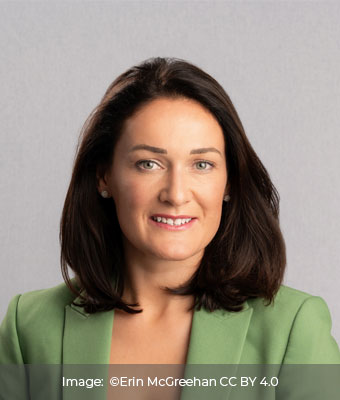
143. Deputy Erin McGreehan asked the Minister for Culture, Communications and Sport for an update on the establishment of the academy system within the FAI for which funding was allocated in budget 2026. [16779/26]
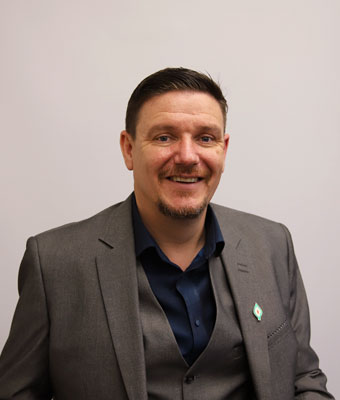
159. Deputy Mark Ward asked the Minister for Culture, Communications and Sport his plans for Government investment into the League of Ireland; the efforts of his Department to promote the league; and if he will make a statement on the matter. [16771/26]
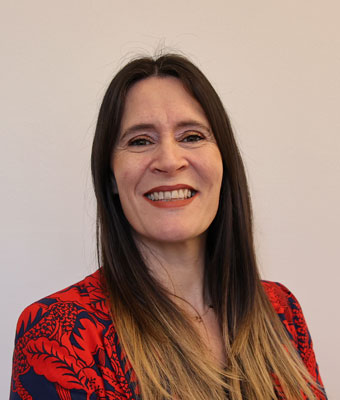
179. Deputy Sinéad Gibney asked the Minister for Culture, Communications and Sport the effort his Department is making to support the League of Ireland men’s and women’s leagues, and domestic football, in light of vast growth in attendance and viewership over the last period; and if he will make a statement on the matter. [16800/26]
The League of Ireland is experiencing sustained growth, with Premier Division attendances up 8% in 2025 and over 1.1 million attending matches involving League of Ireland clubs across the country. At a time when domestic football is clearly on the up, will the Minister of State outline what measures he and his Department are taking to support the rise of the League of Ireland?
I propose to take Questions Nos. 142, 143, 159 and 179 together.
I thank the Deputy for raising the matter. As she knows, the operation of the League of Ireland and its academies is driven by the Football Association of Ireland, which, like all governing bodies, works independently. It is like all the governing bodies that we, in the Government, want to support. I agree with the Deputy that it has been wonderful to see the growth of, and the momentum behind, the League of Ireland. It is great that every Friday night, if you cannot make it to a match, you can watch the round-up and the great product that is on offer. There is excitement and atmosphere at grounds around the country. That is continuing to grow. It is something the Government wants to support and back.
I was pleased to announce a €3 million multi-annual allocation as part of the most recent budget to support the development of a modern and professional soccer academy system that will provide the structures and pathways required to support future generations of Irish players, male and female, and maximise the potential of Irish football. This is on foot of the programme for Government commitment to exploring new mechanisms for the creation of football academies.
This builds on the additional funding of €1 million provided by my department to the FAI last year, which enabled it to produce a detailed report on the League of Ireland academies system. That funding also enabled the appointment by the FAI of an academies administrator to support the development of new academy programmes and to track their impact. The report benchmarked Irish football academies against international standards, based on an audit of existing academy structures and needs, and provided a basis on which to commit to multi-annual funding support.
One of the few benefits and dividends we have seen from Brexit has been our young players increasingly staying in the country. That has added wonderfully to the spectacle we are seeing in the League of Ireland. Of course, while players are, by and large, staying in the country until they are 18 years of age, we want to ensure that they have the pathways to excellence and to become the strongest and highest performing they can be in their careers.
That is why we are investing, through the academies, in supporting those athletes.
I agree with the Minister of State. In a few weeks, thousands of Irish supporters will cheer on the boys in green as they face the Czechs in Prague on 26 March, aiming to move closer to World Cup qualification for the first time since 2002. Moments like this remind us of our responsibility to strengthen the domestic game in order to support future national success. As the Minister of State said, Brexit has reshaped the pathway for young Irish players. More promising footballers are staying in Ireland for longer and are gaining senior experience in the League of Ireland instead of moving abroad at the age of 16. This presents a significant opportunity for us. Clubs are responding by raising coaching standards, investing in academies, upgrading facilities and developing players in competitive first-team environments. They are operating more sustainably, developing talent, securing transfer fees and reinvesting in infrastructure and youth development. If we want a stronger national team, we must strengthen the domestic system that produces it. The League of Ireland is no longer peripheral; it is absolutely central to Ireland's football future. I am in the green tonight.
I noticed that. The Deputy is ready for the matches ahead and will not have to buy anything new. We are all at one. We agree. It has been heartening and energising to see what has been happening at League of Ireland level. It feeds down to the grassroots and inspires young people. The wonderful thing about football is that people can play one-on-one or two against two. All that is needed is a couple of jumpers and a back garden or park for people to come together. It is a wonderful sport for participation. We want to see it grow and are committed to seeing people develop, whether it is Michael Noonan, Victor Ozhianvuna or Mason Melia, who I was glad to see score in the Brandywell not so long ago and do stuff with St. Pat's. That is what is happening across the country. It drives crowds coming to games and participation. It is something we want to support and see grow. We want the League of Ireland to grow to a strength we have never before seen.
I am also biased about Dublin West football clubs. We have the best in the country. I welcome the €3 million allocated in budget 2026 for League of Ireland academies. This important investment gives clubs the resources to build modern and professional academy systems and create clear pathways for the next generation of Irish players, both boys and girls. It represents a significant opportunity. More young players can now remain in the domestic system, developing and gaining experience at home. As the League of Ireland grows in profile, the conditions are in place to nurture talent in a way that we have not seen for decades. If we build on this momentum over the lifetime of the Government, we can match the pride and dedication of our supporters, including those who travel nationwide for their clubs and follow the national teams abroad, with sustained investment, planning and proper structures. By doing so, we can ensure Irish football reflects the ambition, passion and commitment that supporters already bring to the game.
I thank Deputy Currie. We want to make sure the investment we are making through academies is used to the best effect possible. The FAI is working, with the guidance of Sport Ireland, to use its experience to ensure that system is structured in the best way. It is also working with premier and first division clubs to see how we can make sure there is good regional reach in terms of academies. Another development over the next couple of months is the development of a tier three for the League of Ireland, which is a welcome development. It will deepen and add to the league. I thank the Deputy for raising this issue and for her support and advocacy on behalf of the potential that is here. We look forward to working together to build and support the great momentum and growth we have seen.
Sports Organisations
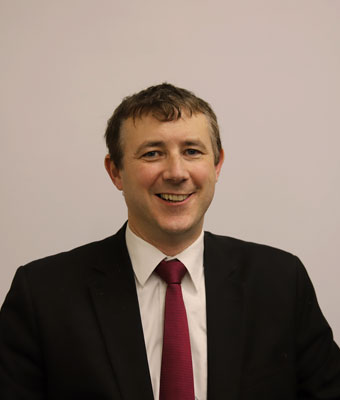
144. Deputy Aindrias Moynihan asked the Minister for Culture, Communications and Sport for an update on Sport Ireland’s research in the area of adult safeguarding; when this research will be concluded; and if he will make a statement on the matter. [16777/26]
Last year, Sport Ireland commissioned Safe Sport International to conduct a needs analysis in the area of safe sport for adults. The analysis was to include extensive consultation with sports sector stakeholders, including people with lived experience in the area. Can the Minister of State advise the House of the up-to-date position on the report and the future guidance it was to inform?
I thank the Deputy for raising the matter. Everyone involved in sport, in any capacity, regardless of age, should be able to enjoy an experience that is free from any form of abuse. The creation of a culture that promotes the safety and welfare of all must be at the core of the operation of all sports, from national governing bodies right down to grassroots and fans and spectators.
Sport Ireland is the statutory authority for the development of sport in Ireland and its statutory function with regard to safeguarding is to develop and disseminate guidelines and codes of practice promoting best practice for the protection of children in sport, consistent with child protection legislation. As a result, its traditional focus has been on the safeguarding of children, as outlined in the Sport Ireland Act 2015.
However, in recognition of the emerging requirement for action nationally and internationally, Sport Ireland recently commissioned Safe Sport International to conduct a needs analysis in the area of safe sport for adults. My Department continues to engage with it in that regard. Sport Ireland expects to receive a draft report from Safe Sport International in the coming weeks. It is anticipated this analysis, and recommendations arising from it, will be considered in the context of Sport Ireland's overall sports governance administration guidance for the sports sector and in the context of the development of the next ten-year national sports policy, a process I recently initiated.
I thank the Minister of State. It is good to know that the research is advancing and he expects a report in the weeks ahead. I presume the report will contain conclusions and an implementation plan. How will he ensure that the outcomes of the research are implemented across various sporting organisations? Has additional funding been allocated to Sport Ireland to conduct research and put in place an implementation plan?
I thank Deputy Moynihan. We have supported Sport Ireland in the development of this in the first instance. Sport Ireland provides governance and administration guidance for the sport sector, and the findings from the review will be factored into and incorporated into that. Obviously, there will be lessons and assessments from the report. It is key they are utilised in day-to-day practice. Sport Ireland will ensure that happens as part of its overall governance and administration guidance for the sport sector.
Regarding the development of our national sports policy for the next ten years, we as a Government and Department will take on board the learnings from the report to make sure we have factored them into the overall national sports policy and determine how we can support national governing bodies across the country to make sure the lessons from the report are incorporated into how we do business. From a funding point of view, we are always looking to make sure we back that sports policy, as we did the last one, and make sure it can be implemented. We will have to wait and see what is involved in the report. It is our objective to make sure we learn from it and that its findings are implemented.
Many of the concerns we have heard arose from athletes and their experiences. A key group of adults who are involved in sport are referees and their officials. All too often, we hear of the abuse and stress piled on them. Will the plan, and various research and outcomes from the report, examine the position of referees and the support that may be needed in that regard? They are a vital part of sport. There would not be a competition without a person standing in the middle of the pitch. We also need to make sure there is a supply of referees available for various sports. Many are volunteers. They need to know they will not find themselves in a vulnerable position and that backup and support is available to them.
Referees are absolutely crucial for the participation of teams. They often find themselves in roles that are not as respected as they should be. In terms of providing a safe environment for adults, the role of referees has to be central in the report and to how we provide that environment in sport.
Some sports have a much better ethos and culture than others. We have to work to get to a situation where that is uniform across the board in relation to referees. They have a very difficult role. It is one into which people put big commitment to step up to the mark and it is getting increasingly difficult to get people to do those roles. That has to be central to the respect and safe environment that they have as well. Whether in individual sports or team sports, we have to make sure that the environment is safe for them. That is why we are working with Sport Ireland. We have commissioned this report and needs analysis so that we can identify where the strengths are and also work together to make sure that where things can be strengthened, we do that and support all of our sports to do so.
Sports Events
145. Deputy Mairéad Farrell asked the Minister for Culture, Communications and Sport to provide an update on the possibility of derogation from the World Athletics 1934 political boundary rule that prohibits athletes from the North of Ireland from representing Ireland at European and world athletics competitions; and if he will make a statement on the matter. [16819/26]
I believe that Joanna Byrne recently met representatives of Athletics Ireland. There is a route map, and possibly a motion to go to the World Athletics Congress in China. There is a necessity for governmental support in relation to ensuring this happens.
While it would be my wish that athletes from all parts of Ireland should have the choice to represent the whole of Ireland at all major international competitions, as is the case at the Olympic Games, neither the Government nor Sport Ireland has a role in determining who can participate in international competitions organised by international sporting federations. International sporting federations are responsible for determining the composition of their membership, in line with their own internal rules. The international federations - in this case, World Athletics - have a leadership role for their global games, and it is at this level that strategic decisions are taken. Therefore, responsibility for any potential rule change in this regard rests with World Athletics, an independent autonomous organisation. Sport Ireland recognises Athletics Ireland as the national governing body for athletics in Ireland and it is affiliated to World Athletics. Neither I nor Sport Ireland has a role in the establishment, change or application of the World Athletics regulations.
It is clear from discussion on this over several years that a successful derogation request to World Athletics authorities would have to be driven by the athletic authorities in Ireland, in collaboration with their counterparts in the UK. Ultimately, I believe that a derogation from the current rule would confer additional flexibility of representation on the athletes concerned and I will continue to offer support to Athletics Ireland and to counterparts in other jurisdictions in support of this position.
I welcome the fact that the Minister of State is in support of a derogation in relation to this. It is only right and I commend the work of the Friends of Irish Athletics who have supported this over many years. I have no doubt the Minister of State has had a significant amount of correspondence from the group in relation to the matter. On behalf of Deputies O'Rourke, Joanna Byrne, a number of others and myself, I ask if the Minister of State would be open to a meeting with a cross-party group within the next, let us say, fortnight to discuss this issue and the Minister of State's facilitation of it. My understanding is the same as his, in that it is about World Athletics. I believe that Athletics Ireland has the capacity, through engagement with Athletics Northern Ireland, British Athletics, Sport Ireland and Sport Northern Ireland, to get all the stakeholders into the room at some stage from the point of view of making sure that a motion would go to the World Athletics Congress in 2027 in China. That engagement could find a solution to this. It is about ensuring Government support and support from the Minister of State. He could play a huge role in facilitating this. If he met us, we could work on a roadmap with these other stakeholders, which I believe are open to this idea.
Is féidir teacht ar Cheisteanna Scríofa ar www.oireachtas.ie.
Written Answers are published on the Oireachtas website.