School Accommodation
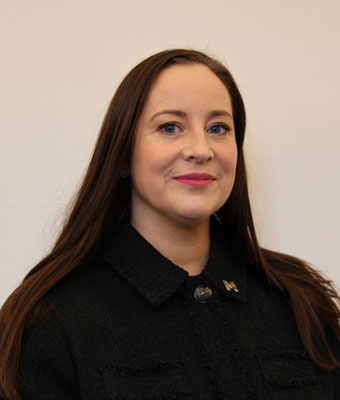
I want to discuss the additional accommodation scheme, especially as it relates to schools in County Mayo. So far, 16 schools at various stages of this scheme have reached out to me. They all stress the need for timely and adequate additional accommodation. Mayo has a wide network of schools that has a vast mix. Some are rural, some are urban. We have some island schools, some Gaeltacht schools and some DEIS schools. No doubt they are all doing excellent work but in many cases they are tasked with carrying out this work in buildings that are outdated, overcrowded or inadequate.
My main issue this evening though is around communication. I have principals, boards of management and parents who are really frustrated that they do not know what is happening with their particular buildings. Clear timelines are not available. Everybody knows the stages but the timelines of the stages are not clear. It is my understanding that, to be considered for capital funding under the national development plan announcement, schools need to be at stage 2b, but getting to this stage can be a real struggle. This year, no Mayo schools were announced in the 2026-27 tranche and that caused huge frustration, because I had principals who genuinely thought that sods might be turned on their new buildings this side of the summer. Where is the confusion if none of those schools was at stage 2b?
I think of the Sacred Heart School in Westport that is currently at stage 2a. Three schools are depending on this particular build, namely, Holy Trinity National School, Westport Educate Together National School and the Sacred Heart School itself. The delays and uncertainty this is causing is having knock-on effects for all three schools, influencing enrolment numbers and, indeed, teacher numbers when enrolment drops.
I think of Sancta Maria College in Louisburgh, which is waiting on its preliminary design to be reviewed by the Department even though the certificate of stage 1 completion was sent on 8 April last year. This school really has concerns about the viability of its two special education rooms because they are upstairs. This means that if there is an evacuation order, some students with mobility issues would have to be carried down the stairs. The principal has received no response to queries, despite sending numerous emails.
The rising cost of building materials is a real concern. I think of Coláiste Pobail Acla, which is currently at stage 2a. It sent an addendum report on 6 June 2025 and despite regular follow-ups by the principal and the Mayo, Sligo and Leitrim Education and Training Board, ETB, the school is still waiting on a response on how this project might be progressed. Unfortunately, pyrite was confirmed in the new extension in December and the roof that was built in the 1980s is leaking as well. The school really feels unprepared if another Storm Éowyn was to come, as the school is on the edge of the Wild Atlantic Way.
I think of St. Brendan's College in Belmullet. For its additional school accommodation, ASA, project, there is the replacement of prefab accommodation, special educational needs, SEN, provision and specialist rooms. The school's stage 1 report was submitted on 30 November 2022, and following agreement on the preferred design in September 2022, the school moved to stage 2a. The school has now had no movement in 20 months.
There is a huge amount of frustration. We cannot really expect schools to plan for the future if they do not know if they will have enough classrooms, enough spaces for neurodivergent students or the facilities they desperately need. We cannot expect teachers and schools to deliver educational excellence in buildings that overcrowded and not fit for purpose. We should not be asking school communities to accept this uncertainty.
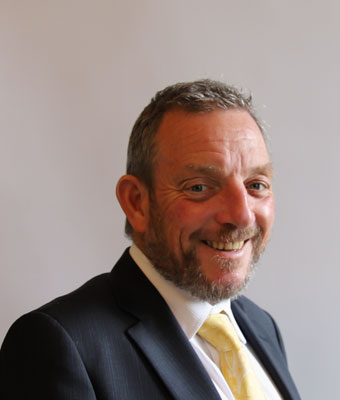
Gabhaim buíochas leis an Teachta as an Saincheist Tráthúil a chur os comhair an Tí maidir le cursaí oideachais i gContae Mhaigh Eo. I thank the Deputy for raising the matter of schools and the various stages they are at in the Department of education in County Mayo. I am taking this on behalf of the Minister for education. She apologises for not being able to be here.
The Deputy highlighted a number of schools.
I have made a list of them that I will refer back to the Department for the Deputy. She is right. Schools need certainty to plan for the future and that is the fundamental that we should all adhere to.
The Department provides details of all live and completed projects. Information for ASA in schools in County Mayo is available on the Department’s website and further engagement is being made available. Since 2010, a total of €37.12 million in capital funding has been provided for ASA projects in County Mayo. There are currently 27 ASA projects at preliminary design stage, 21 projects at detailed design, one project at tender stage and 11 projects on site at construction stage. In addition, 42 ASA projects have been completed since 2020.
As the Deputy will know, the Department recently published the NDP - she referenced in terms of the number of schools not included - for the period from 2026 to 2030. This NDP sectoral plan places an emphasis on maximising existing capacity and the prioritisation of school building projects to meet the most urgent needs. It is fair to say that in this context, the emphasis on special education roll-out is being applied.
Of the total €7.5 billion investment, it is envisaged that around €5 billion will be used for project roll-out to support the delivery and modernisation of school buildings across the large scale, additional accommodation, modular, and annual September accommodation needs programmes. Over the course of this year and next year, there will be construction work at around 10% of the school estate. These projects will, when completed, provide an additional 57,000 modernised school places with a strong special education needs focus in all projects. The Department will continue to lead and to build on the progress made over recent years with the continued roll-out of projects on a prioritised basis to meet the most urgent needs in terms of provision of additional capacity and modernisation of existing facilities. As I have said and the Deputy knows well, the Minister has published a list of the 105 school building projects that have been announced.
In terms of the issues raised by Deputy Keogh, clarity has been provided to schools on annual December to January payment period for minor works and ICT grants to schools. The minor works grants for the 2026-27 school year were issued in December and the ICT grants were issued in January. The Minister, Deputy Naughton, is also commencing arrangements for increasing minor works funding at primary level and introducing minor works funding at post-primary level. Investment under the plan will also involve the delivery of 297 projects under the climate action summer works scheme. This includes 16 projects in County Mayo. The Department will continue to engage with patrons and schools in County Mayo and across the country to inform the progression of projects across the capital programme.
I know there are schools on the list the Deputy read out that have not been allocated funding. Even though they have not been included in the first tranche of the prioritised projects, it is important that they engage and that we, as a Government and a Department, engage with the Deputy on the individual projects to see where they are in terms of that pipeline.
She raised an important point on the status of projects, the information needed and the clarity needed for school communities and parents associations. In this context the Department will fund and invest in school communities where appropriate. I will bring the list that the Deputy outlined here back to the Department and I thank her for raising the matter.
The Minister of State should absolutely send my list to the Department, but he can be guaranteed that it already has my list. I thank him for the details he outlined.
In his reply, he said that details of all live and completed projects are available on the website, but my big issue is that a school might be at stage 2a for 18 months. One school said it had no contact since April last year, another has had no contact in ten months, another said it was nine months and another said six months. St. Brid's Special School is in the ADAPT 3 fast track programme and some of the phrases that the principal has used to describe the process so far include "deep concern", "growing frustration" and "prolonged uncertainty".
My big ask is that we get clear communication between the Department and schools. It is not unreasonable for a school to have a check-in once every six weeks or two months - even three months would be acceptable to some schools. I do not understand why a school that is at stage 1 thought it might be included in a funding tranche when, in fact, you need to be at stage 2b. If principals who have been there for a very long period of time are not aware of the process then there definitely is a communication breakdown somewhere. I would like to see explanations for what exactly happens in stage 1, stage 2a and stage 2b, and what the timelines to be expected are. If a school is currently at stage 2a - which many schools in Mayo are - I want, as their public representative, to get them to stage 2b before the next tranche of funding is announced so we are in with a chance of many of them getting funded and getting that moment of turning the sod.
The bottom line is that every child in the State, including those in County Mayo, deserves the same opportunities, facilities and investment, and the access should not be different from one school to the next. I acknowledge that there has been a lot of funding into Mayo over recent years. It is unfortunate that in this case we were not included in the tranche, but I am hopeful that we will have a lot of schools at stage 2b at the next one.
As a former teacher and somebody who has been involved with schools both as a teacher, in terms of the construction of a new school in Ballincollig where I was teaching, and as a public representative, the Deputy is right. It is critical that clarity is provided and that we give certainty. As the Deputy said, that clear communication is very much required.
The Department of Education and Youth and the Minister, Deputy Naughton, will continue to work with schools and patrons with regard to the schools building programme and the projects in County Mayo. It is important that we give hope to school communities and the schools. The Deputy was right to raise the issue on the floor of the Dáil. It is a desire we all share, but she outlined it for the pupils in County Mayo. They deserve to have the same level and quality of school build as their peers elsewhere in the country and to be taught in a campus that is modern and fit for purpose.
We can go into some of the issues in terms of the schools. I was in a school yesterday and I wondered how we can still leave it open, despite the fact that the school community is phenomenal. It is a great school. The staff and students are resilient and the education output is phenomenal.
However, it is important that the Department engages and that it explains the process clearly in terms of the projects the Deputy outlined and the progression of stages. It is something that all of us, not just as public representatives but as citizens, deserve. There needs to be greater transparency. I see Deputy McGrath here. We are dealing with some schools projects in Cork. There should be no mystique. If it is good news or bad news, let us have it out there. At least then schools will know where they stand, where they need to be, how they can progress and if there is a vacancy or a complication somewhere else, perhaps they can fit into the slot, get the money spent and get the school built.
The Deputy makes a good point. I thank her for what she is doing. The important point from a Government point of view, and I am not being defensive, is that we are investing billions of euro in capital expenditure in education. We have delivered almost 1,400 completed school building projects and over 4,000 smaller-scale improvement projects since 2020. That does not solve the Deputy's problem, I take that point on board fully, but I look forward taking her views back to the Department. As she said, she is doing it already and I thank her for that.
Transport Policy
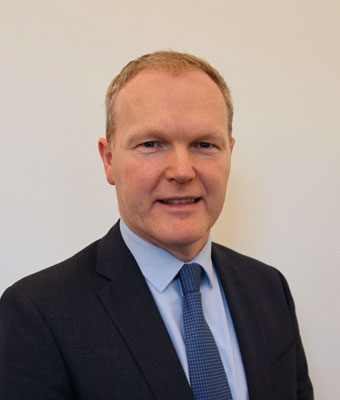
I thank the Minister of State for being here. Both the Cathaoirleach Gníomhach and the Minister of State will be aware that we have very significant transportation projects in the pipeline for Cork city and county, which are very welcome. Many of these projects are urgently needed in terms of progress. We have the Cork Luas project, which is significant, the BusConnects project, the commuter rail implementation and, of course, ongoing active travel projects. All of these are very important and very welcome.
We need to manage these projects under the one roof of a transportation office based in Cork, with the expertise based locally and with representation from the National Transport Authority, Transport Infrastructure Ireland, Irish Rail and our local authorities, as well as other relevant agencies. This is critically important. The Cork metropolitan area transportation strategy needs to be fully implemented. Before it is implemented, it needs to be updated and revised. It needs to be brought up to speed in terms of the projects that are out there. This is best served by having an office based in Cork so that can progress.
As the Minister of State knows, the preliminary business case for the BusConnects project has been approved by Cabinet. It will now progress to the planning phase and that is very important for the structural change that is required in terms of the development of 11 sustainable transport corridors. There is also the redesign of the existing service, which I hope should begin to take effect this year, but, as a public representative from Cork, I do not need to tell the Minister of State that I am deeply frustrated at the slow progress on BusConnects.
It is incredibly slow despite the huge amount of money that has been spent. We have seen no benefits whatsoever in the service on the ground, which is frustrating for us as public representatives, but more so for the public and passengers who want to use the service. We expect the preferred route for the Cork Luas project, also known as the light rail project in Cork, to be published in the coming weeks. It will progress to consultation. As the Minister of State knows, that is an 18 km light rail project, including 25 stops along the way, with the potential to carry 2,300 passengers per hour, which is very welcome for Cork. Transport Infrastructure Ireland, TII, is the lead agency here but of course the National Transport Authority, NTA, is also involved.
As I mentioned, we have seen good implementation of the commuter rail project, which is welcome. Active travel projects are ongoing in the local authorities. I strongly argue that these need to be mentioned in Cork under the one roof. I am not the only person making this call. I know our local authorities, the Cork Chamber of Commerce and Cork Business Association have made this call too. It makes perfect sense. We have the Cork metropolitan area transportation strategy. As I say, this needs to be updated and reviewed. That is best done in Cork by people based there locally engaging with the local communities and agencies.
Cork Airport is a prime example of where there has been a failure of joined-up thinking. The Cork Luas project does not include Cork Airport, for example. The commuter rail project does not go to the southern side of the city and the bus service currently serving the airport is appallingly inadequate. It is as simple as that. The current bus services as a whole are extremely frustrating. The Minister of State, I, and other public representatives are inundated with complaints about failures of the service on a daily basis. It simply is not good enough. People are sick and tired of excuses at this stage. They want to see improvements in the service. This can be best done by a local transportation office in Cork where all the relevant stakeholders work together so that we can progress the key transportation projects for Cork and get the earliest possible delivery to help provide a modern-day service for its people.
Gabhaim buíochas leis an Teachta McGrath as ucht an rúin a chur roimh an Teach. I have prepared remarks but in many ways they have been made redundant by what he outlined, because is right. Both of us agree. We have listened to the views of the Cork Development Forum, Cork Business Association and Cork Chamber of Commerce. We were both at the Future Cork event last Friday, where an Taoiseach spoke on the panel about the significant transport projects in Cork. The Government has committed to delivery of the Cork metropolitan area transport strategy. It is important to recognise in the House that it is an exciting time for public transport in Cork. Deputy McGrath and I share the view that there needs to be delivery of the plan for the integrated transport network that enables the metropolitan area of Cork to grow and develop and that also sees the Cork metropolitan area transport strategy delivered.
The fundamental point is that the NTA has already established an office in Cork city, on Horgan's Quay, but the office must be manned on a full-time basis for the delivery of the metropolitan area transport strategy. We have seen the Irish Rail projects and the success that AJ Cronin has brought to the development of infrastructure and rail. I concur completely with Deputy McGrath that this office needs to be expedited, manned in Cork and delivered. It needs to be accountable for the delivery of Bus Connects, the Cork area commuter rail, Cork light rail, the Luas and the active travel programme.
I apologise that the Minister, Deputy O'Brien, cannot be here tonight. I am taking this Topical Issue for him. We have seen various iterations of BusConnects. I will not read out the prepared remarks because Deputy McGrath knows as well as I do that this needs to be fast-tracked. It is taking far too long. It would bring a huge benefit to Cork. We see the N40 congested every day. I was in Carrigaline yesterday. It was like being in downtown New York, with the volume of traffic on the N28. It was extraordinary.
Deputy McGrath mentioned the sustainable transport corridors and active travel, including provision of bus lanes and cycle lanes. We need to continue with that. We have made huge progress in Cork, as the Deputy said, with commuter rail. We have delivered huge numbers of people. There is a new through platform at Kent Station and resignalling work, and the works from Glounthaune to Midleton, and on to Mallow in the Deputy's area, are phenomenal. It is important that we continue with that.
The point the Deputy made about the airport is absolutely correct. I share his view that the airport has been forgotten with regard to the provision of rail but, more pertinently and immediately, the provision of bus access to the airport. It beggars belief that Cork Airport does not have public buses to it, in particular in the mornings to get staff, customers and passengers to the airport. I cannot understand how Bus Éireann cannot sit down with TII, the NTA, the airport, and local authorities to address that.
I thank Deputy McGrath for raising the matter. He knows, as I do, that this a need that will see projects delivered. It is beneficial for Cork. I thank him for his support for this project. It is critical that we progress it.
I do not have to tell the Minister of State that Cork is the second city. It is the fastest growing city in Ireland and that is likely to continue for the coming decade. The population of Cork is expected to increase by between 50% and 60% by 2040, bringing the overall population of the county to 770,000 people, which is very significant.
I repeat what I said earlier. The projects in Cork should not be managed by people in Dublin. They should be managed by people based in Cork so that they can have active engagement with all relevant bodies, individuals, communities and stakeholders in Cork. That is critically important. The NTA office which is being worked on at present is welcome, of course, but that office needs to be radically reconfigured. It needs to be empowered. It needs to be a decision-making office and it currently is not envisaged as one. It needs to have representation from a cross-section of transportation agencies, TII, the NTA, Irish Rail, Bus Éireann, the local authorities, and so on. That is the only way we will be able to progress key projects in Cork and delivery. People want delivery. The Minister of State knows that as well as I do.
We have seen success with commuter rail. That is an example of success. I give credit to Irish Rail for the progress it has made on that. There is more to come and it is welcome, but a key element of that is managed from Cork, which is the difference. The airport is critical. It is our key transportation hub in Cork, along with the seaport. There is much frustration about the inadequate transportation service to the airport. There is no early morning bus service bringing workers and passengers to the airport. The statistics for those who travel to the airport by public transport show a shockingly low number, because the service simply does not exist. It is an example of a failure of joined-up thinking by agencies of the State and their failure to work together. Cork deserves better. It deserves an office based in the city with the relevant expertise and decision-making powers so that we can progress with meaningful intent on the key projects. That is what I am calling for.
I assure Deputy McGrath that I, as Minister of State at the Department of Transport, working with the Minister, Deputy O'Brien, and the Minister of State, Deputy Canney, want to see the projects that we speak about delivered. Delivery is critical. These projects cannot be managed remotely. There has to be a beefed-up office in Cork delivering in the city. Accountability, engagement and empowerment, which the Deputy spoke about, are needed. It is important that we deliver because that is what we will be judged on. The people of Cork deserve to have the projects we are speaking about delivered on time and on budget.
As an aside, we should look at how we can use the critical infrastructure Bill as an exemplar to deliver the Cork Luas project. The Government is committed to progressing the different projects we discussed. We have already highlighted and articulated the progress that has been made.
The proof is in the Cork area commuter rail programme, under the stewardship of AJ Cronin, and how it is being progressed and delivered.
I thank Deputy McGrath for his support and advocacy around that. It is the model that can bring about and unlock the other projects he spoke about.
I share Deputy McGrath's annoyance and frustration in terms of the airport. He has been articulating that for a while to be fair to him. I cannot comprehend the lack of joined-up thinking by Bus Éireann in terms of being able to deliver this. As the Deputy rightly said, a number of workers and passengers could use that. There is a bus coming to Cork from Waterford that stops at the bus depot that could go to the airport, for example, but it does not. Where there is a will, there is a way. From a Government point of view, we have to deliver. I thank Deputy McGrath for being a strong supporter of the projects. I look forward to working with him to ensure we see those projects being delivered in our lifetime in this Dáil.
Rental Sector
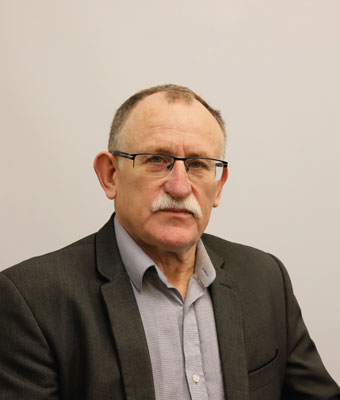
Tá áthas orm go bhfuil an tAire ag tógáil na ceiste seo.
Dublin City Council's new differential rent scheme, which will begin operating from 6 April next, will see increases in rent for almost all of the city's 68,000 council tenants. The new scheme is supposed to augment the council's maintenance budget. The council currently maintains an ageing housing stock, with over 50% of Dublin City Council properties being built between 1930 and 1977.
Previously, Dublin City Council calculated rents based on weekly payments on a percentage of household income rather than market value. Rent was calculated as 15% of the primary earner's income above a €32 to €64 threshold, plus additional contributions from secondary earners, who are charged a maximum of €21. This new scheme will increase the primary earner rate from 15% to 18% of net income, with a €40 cap for secondary earners. Also, a higher self-employed income of €700 per week will be assumed if supporting documentation is not provided. The reality is that these rent increases will disproportionately impact Dublin City Council social housing tenants who are already struggling with the cost of living. While if it is true that there is a funding gap between the cost of Dublin City Council running its social housing programme and the combined income from rents and Government grants, this is something that should directly concern central government.
The Department of housing is not sufficiently funding Dublin City Council, which has to maintain some of the oldest properties in the State. The issue of funding or maintenance is now being placed on the shoulder of some of the most vulnerable members of our community. The consequences of these rent increases for many people on low incomes or on a basic welfare payment is that their quality of life decreases. Their struggles with this cost-of-living crisis are greater, and all of this impacts on their mental health and well-being. I have been inundated with calls into my constituency office about these new rent increases. I have had many calls from pensioners who are fearful for the future. Pensioners can ill-afford to lose any more money from their small pensions when the price of energy and groceries are all going up. For example, one elderly couple has been informed that their rent will go from €65 to €89. The primary earner has €303.70 and will pay €44.77 and his wife on €298 will pay €43.74. The primary earner goes from 15% to 18%, less €55. This is a huge increase for a senior citizen of €23.74 per week, and an extra €20 from the secondary earner. That is what has been added on. To give another example, a woman on the lone parent payment with one child and a son on disability is at present paying €78.80. This will now see her payment going up to €118.
If the council is underfunded to carry out maintenance works, then it is up to the Government to increase its grant funding. These rent increases will only serve to push communities further into poverty and exacerbate antisocial behaviour. Housing assistance payment, HAP, tenants have been squeezed from two directions with both council rents and private rents rising. HAP tenants will not benefit from any money spent on the maintenance of social housing, and rental accommodation scheme, RAS, tenants will be equally disadvantaged. This new rental scheme is a recipe for adding to the homeless figures, and these rental hikes will exacerbate financial stress and debt, particularly for HAP and RAS tenants and for those in poor quality housing.
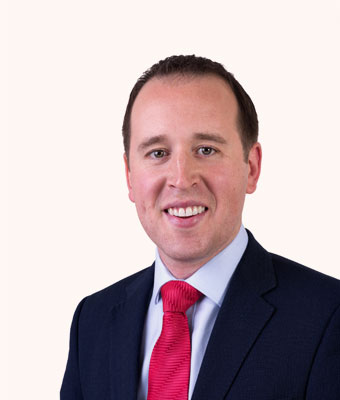
I thank Deputy Ellis for tabling this Topical Issue matter. The Housing Act 1966 provides for the charging of rent by local authorities on social housing tenancies. Rents are based on household income levels, with those on lower incomes paying lower rents and those on higher incomes paying higher rents. This system is known as the differential rents system. It is a critical piece of the State's welfare apparatus, subsidising housing costs and supporting households who cannot meet their long-term accommodation needs from their own resources. The making or amending of such rent schemes is a matter for local authorities within broad principles that are set out by my Department. As part of its devolved function in administering rent schemes, my Department understands that Dublin City Council has recently undertaken a major review of its differential rent scheme with the intention of making it fairer and progressive whereby those who earn more can pay more while still protecting those on lowest incomes.
Recent analysis by Dublin City Council found more than one fifth of council households have an after-tax income of greater than €1,000 per week. I understand that households in receipt of social housing in the Dublin City Council area pay heavily subsidised rents, with the average charge across the scheme at €83 per week. This average rent is reported to rise to €108 under the changes. The Dublin City Council scheme raises the proportion of income reckonable for rent calculation from 15% to 18% and also takes into consideration the incomes of all subsidiary earners in the household, including adult children who are working. Dublin City Council's new rent scheme is, therefore, progressive in that those households who collectively earn more pay a higher proportion of their income in rent, similar to the PAYE system.
The new housing plan entitled Delivering Homes, Building Communities 2025-2030 commits to reviewing the rents paid by social housing tenants with a view to introducing an equitable system of rents that is fair, progressive, sustainable and that protects the most vulnerable. This builds on the work and analysis my Department has been undertaking, which identified that the current differential system varies significantly across the 31 local authorities. While rents are based on household income, the amounts charged and the approaches taken in calculating those rents differ considerably. Proposals will be submitted to the Minister, Deputy Browne, for his consideration in the second half of this year, and any decision to implement a standardised national rents framework will be considered thereafter.
Gabhaim buíochas leis an Aire Stáit. Alongside the cost-of-living crisis we are in that moment, we are now faced with rent hikes by Dublin City Council and there have been rent hikes elsewhere. This affects senior citizens. I mentioned to the Minister of State a couple in their 80s on fixed incomes, and one of them is being charged €43 extra. It comes to €43 extra between the two of them. In another case, it is over €60. It is hard to understand how we can stand over €43 out of €280 being taken from senior citizens. That does not make sense. It is immoral; it is not right. There are flaws in what is being done here. I ask the Minister if State to examine this and see whether that can be rectified because that is far too much to take from any senior citizen.
We also have the residential tenancy Bill coming, so we are heading for a perfect storm that is going to increase homelessness substantially. We already have 17,000 people homeless, including over 5,000 children. We are now going to see a massive increase in that homeless figure over the next while. I urge the Minister of State to sit down and think about some of this. When we look at the residential tenancies Bill, what are people to do when their contract is up? Some of them have two- or three-year contracts. Their market value is now going to be set on that tenancy.
Market value in Dublin is between €2,500 and €3,000. Some people have been paying far less than that. What is going to happen? They are not going to be able to pay it and they will end up in homelessness. That is the problem. As I said, we have a perfect storm heading our way that will make the homelessness situation even worse than it is already.
I do not agree with the Deputy's hypothesis. He knows well that under residential tenancy legislation, any existing tenant is unaffected by the changes that were passed by this Oireachtas-----
Until their tenancy is up.
Sorry, but I did not interrupt the Deputy.
I am only pointing that out.
If the Deputy will allow me to respond, he gave an example of a tenant with two or three years of a contract. That does not exist. Part 4 tenancies are created after six months, and tenants have protections under the residential tenancies legislation. The new legislation that was passed applies to new tenancies created after 1 March.
On the Deputy’s broader point in respect of the rent scheme, which I commented on in my initial contribution, it is a matter for each of our 31 local authorities to set their differential rent schemes. Many people in the Dáil look for devolved functions and more powers for local councils. The Deputy sat on a council. I remember meeting him at various engagements. As Minister of State with responsibility for local government, I am looking forward to receiving the recommendations of the local authority task force, which has the aim of trying to give more powers to local government. This is one of them. This is a reserve function. It is an executive decision to bring forward measures to ensure that stock can be maintained. They have set it at 18% as opposed to 15%, but it is also grounded on the fact that those on the lowest incomes pay the least amount in rent and those on the highest incomes will pay the highest amount. That is a fair and equitable system. It is the system of differential rents that we have in place to support the most vulnerable in this country.
Water Supply
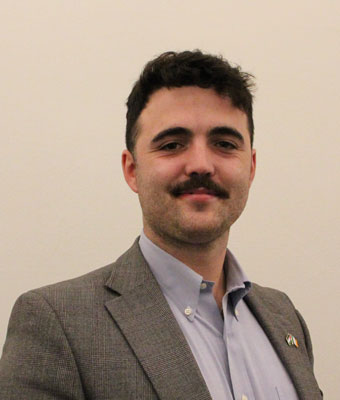
I welcome the opportunity to raise this matter. I finally got it accepted. It relates to the north city arterial main, NCAM, project and issues along the Howth Road and James Larkin Road and in surrounding areas. Hundreds of my constituents have been contacting my office every day. I have been trying to get access to information from Uisce Éireann and the contractor, but to no avail. As a public representative, the Minister of State can understand how frustrating that can be. The residents of north Dublin understand that this is necessary work, but what they do not understand is why communication has been so lacking and how the project is being managed. The Minister of State knows how hard it is to get elected to the council and to the Dáil. He also knows how much trust people put in you. Furthermore, he knows how bad it looks when someone who represents north Dublin asks for detailed drawings to be provided and they are not provided. That is not acceptable. What is the point of holding local or general elections if you cannot get a simple drawing of which paths will be inaccessible? People with accessibility issues want to know if they can go down a certain path next week or if they will be able to get a bus from a particular area. Some of the employees of and contractors working with Uisce Éireann have engaged with me, but the majority have not. As the Minister of State knows, when you email Uisce Éireann, you get a reference number. That is generally the end of it.
A constituent wrote to outline the frustration felt across the community. Residents on James Larkin Road received leaflets, but the full closure of the road affects traffic across all of north Dublin and has huge implications for public transport. The H2, H3 and 6 bus routes are already subject to delays and cancellations due to congestion. The lack of proper planning and communication risks making the problems being experienced by thousands of my constituents significantly worse.
I attended the public consultation meeting. People in my constituency thought I was organising the meeting because there was no information sent to houses across the area. I asked Uisce Éireann how many leaflets were dropped and on what roads. It is still to get back to me. People wanted to see the drawings. I told the Taoiseach how I asked at a meeting I attended if I could take a photo of the drawings and was told “No”. I met with the project team after raising this matter with the Taoiseach. I raised several issues on behalf of residents. I apologise if the email went to my spam folder, but I was in my office five minutes ago looking for it and there was no sign of it.
My job is to represent north Dublin - the job of everyone in this House is to represent their constituencies – but we cannot do that if semi-State bodies or agencies are not giving us the key answers we need. There are practical solutions to this. At the moment, the Coast Road is one-way all day, even at weekends when there is no one working. I emailed Uisce Éireann and suggested that between 6 a.m. and 11 a.m. when the majority of people are going into town, it could allow the flow of traffic to move towards the city and between 4 p.m. and 8 p.m. have it flowing outward. If it did that, traffic would be reduced. I was informed that the reason for not having a stop-go was for the health and safety of the company's workers. I have a video from today of a stop-go system being used by Uisce Éireann's team and the public because it was needed to allow a contractor to bring in stones, rocks and everything else for the project. The company is being hypocritical. I know people in north Dublin whose areas are completely congested. That is not acceptable. I am sharing the frustration of the hundreds of people who have been in contact with me. I would appreciate if the Minister of State could get back to me on this matter.
The Deputy has a job to do to represent his constituents when he comes in this Chamber. No one will ever challenge him on that, least of all me. The response I have here paints a somewhat different picture from that painted by the Deputy. It is important that I reflect it on the record of the House, but I am happy to engage further in my follow-up reply.
The works in the Clontarf area commenced on 16 February and relate to a new €25 million strategic water pipeline that will significantly improve resilience, connectivity and long-term water security across north Dublin city area. The north city arterial main will also provide the additional network capacity required to enable the delivery of 12,000 new homes, supporting future growth across the entire region. It is a critical piece of infrastructure for cross-city water transfers between key storage facilities at Ballymore Eustace and Leixlip and part of a wider programme of work to enhance water resilience across the greater Dublin area.
It is my understanding that Uisce Éireann has undertaken extensive communication and community engagement before and during these works. In 2025, the Uisce Éireann project team attended meetings of the Clontarf flood alleviation scheme joint working group to provide updates on the project to Dublin City Council, elected representatives, local businesses and resident representatives. Uisce Éireann also recently hosted two elected representative briefings in advance of commencement of works on the project with Dublin city councillors on Thursday 22 January and Fingal county councillors on Friday, 23 January.
Uisce Éireann has also committed to providing elected representatives with updates every two weeks. To date, updates have been issued on 17 February and 20 February. Uisce Éireann also hosted a community information evening on Thursday 29 January in Kilbarrack. Residents and businesses along the route from Causeway Road to Bayside Boulevard, including Greendale Road and Thornville Road, were invited. Information on traffic management measures that will be in place in order to complete the works safely was shared at this event. Access for residents, businesses, property owners and emergency vehicles will be maintained throughout. It is expected that this phase of works will be completed by the first quarter of 2027.
Uisce Éireann has also been engaging with Dublin City Council's active travel section to co-ordinate projects within the Kilbarrack area, and Fingal County Council roads division regarding co-ordination with forthcoming resurfacing works along the R105 Dublin Road.
Before the works began, Uisce Éireann's contractor issued letters to homes and businesses in the area with details of the traffic arrangements. Variable message signage will also be displayed at the junction of Greendale Road and Dublin Road and at the Causeway Road junction. This signage may move throughout the duration of the works as necessary.
Uisce Éireann's contractor has been engaging with local stakeholders, including Dublin City Council, emergency services, public transport providers such as Dublin Bus, refuse collection companies and schools, to help ensure that the project runs as smoothly as possible. Emergency services, refuse collection companies and public transport operators have been provided with a detailed traffic management plan so that they can make necessary arrangements.
Since the works have commenced, Uisce Éireann has been closely monitoring traffic conditions and will continue to review traffic management plans, incorporating feedback from elected representatives and local residents, as the Deputy is doing here this evening on behalf of his constituents. I am informed that a dedicated community liaison officer for the project is in place.
Gabhaim buíochas leis an Aire Stáit. I know how things work. I am in here 15 months. The Department gave this question to Uisce Éireann and Uisce Éireann has given its reply to the Minister of State. I understand that the Minister of State is very busy and I welcome all the work he has done on other issues. Uisce Éireann gave us a briefing on 22 January. A week later, it had a briefing for the public and the week after that the project commenced. Two weeks' notice for public representatives to give feedback on a major project that is going to close up the entire main road in north Dublin is not long enough.
After I raised it with the Taoiseach, I had a private meeting with Uisce Éireann and the contractor and they asked me why I wanted to know which path was to close. I was honestly shocked. I said maybe it was because I represented people with additional needs who needed to know which path they could go down. Maybe it was because people were wondering if the entirety of the St. Assam's and Foxfield roads was going to be chock-a-block, which it was last week. Businesses need to know if they have to reduce staff because they are going to lose access to the traffic flow.
I appreciate the Minister of State's statement, but what I am really asking him for, as any Deputies or councillors from Dublin Bay North or the specific area would if they were here, is an immediate meeting with Uisce Éireann and the GMC Utilities team. It is not acceptable for them to make these decisions without any public information. I am trying to read the gobbledegook Uisce Éireann gave to the Minister of State. It says there were a huge amount of leaflets dropped. When I asked what streets they were delivered to, on what date and to what houses, it did not tell me because it does not want us to know how few it dropped. It talks about updates every two weeks. I counted - I have sent it about 40 or 50 emails. There is a generic reply to every TD and councillor. The Minister of State knows this. It undermines the entire democracy when a holder of one of the highest seats we can be elected to in this country cannot get a simple photo of a path for a child who has learned the route of their commute to college.
I would love if the Department could request that meeting on behalf of the other TDs and the councillors in north Dublin. The northside cannot be treated this way. I have said it before: it would not happen on the other side of the Liffey.
I will take his request back to the Minister, Deputy Browne, and I am sure Deputy Heneghan will speak to him in the context of the Deputy's request.
As the Deputy will appreciate, any works of this nature are very significant and will be disruptive. Obviously, only management and mitigation measures can be put in place. That will change depending on the circumstances that exist at any given time, given the nature of works at any given time.
The communications, as outlined in my initial response, are there in terms of the meetings and the continued engagement that Uisce Éireann has committed to, including the designated liaison officer, for whom contact details are on the website, and the continued engagement with the emergency services, Dublin City Council and the public transport providers to ensure that as much of that communication is maintained insofar as is possible while works are being undertaken.
I hear what the Deputy is saying in terms of the engagement. I think there is a broader point that has been made by Deputies. It has been raised by the Minister and me with Uisce Éireann in terms of communications. The Deputy will have seen some feedback that was provided to all Oireachtas Members recently by Uisce Éireann in terms of public representative engagements. I accept the points the Deputy has raised and I will take them back to the Minister, Deputy James Browne.
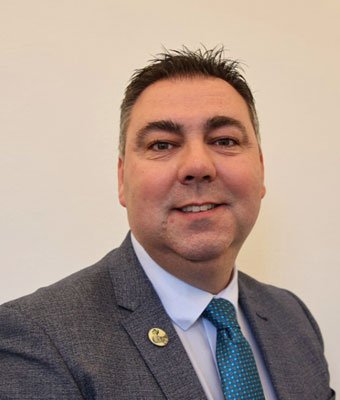
I thank the Minister of State. As the fifth Topical Issue will not be taken because Deputy Charles Ward is not in attendance, the Dáil stands adjourned until 9 a.m. tomorrow morning.
Cuireadh an Dáil ar athló ar 11.35 p.m. go dtí 9 a.m., Dé Céadaoin, an 4 Márta 2026.
The Dáil adjourned at 11.35 p.m. until 9 a.m. on Wednesday, 4 March 2026.