Small and Medium Enterprises
6. Deputy Sinéad Gibney asked the Minister for Enterprise, Tourism and Employment the steps his Department is taking to support SMEs with rising delivery and postage costs, and the impact of those increased costs on their competitiveness and ability to do business; and if he will make a statement on the matter. [13367/26]
As other Deputies have raised, SMEs are acutely feeling the cost of business right now. Many of them do not have the budget or level of business to be able to engage the courier services for the same rates as bigger businesses. Many rely on An Post but it has recently increased its rates and lowered the upper limit for parcels. What is the Department doing to support small businesses dealing with the cost of delivery services so they can get their products to the consumers who continue to support them?
The Government fully recognises that small and medium enterprises have faced significant cost pressures in recent years, driven by high energy prices, global supply chain disruptions and international economic developments. Despite these ongoing challenges, progress is being made to support SMEs, with the Government taking proactive steps to implement measures to reduce business costs and ease regulatory pressures. The Government is pleased to note there are emerging signs of improvement, with the CSO's wholesale price index showing a 6.4% decrease in the year to December 2025.
The cost of postage is a commercial matter for An Post, and I would advise the Deputy to follow up with the company in that regard. My Department is delivering on the programme for Government with two priority commitments: first, to improve the business cost environment with the establishment of the cost of business advisory forum in June 2025; and, second, to strengthen Ireland’s competitiveness position in response to international economic developments with the publication of the action plan on competitiveness and productivity in September 2025.
The cost of business advisory forum serves as a central mechanism to examine the key cost pressures affecting SMEs by bringing together business representative groups, Government Departments, State agencies and regulators to discuss a series of agreed thematic areas, such as energy, insurance, infrastructure and planning and legal costs. It is advancing further work on regulatory costs and payment, banking and financial services.
Its objective is to identify practical actions that can reduce the cost burden on SMEs and support a more competitive business environment. While delivery and postage costs have not been specifically raised as an issue for discussion by the members of SME representative bodies, the work of the forum is still ongoing. Work is under way to present its findings and a series of recommendations in a final report to Government and the indicative timeframe for that is later this year.
This issue has been raised with me and I suggest that if the Government is looking for practical measures, this is one that it should explore. We have a landscape where many small businesses do not even have retail spaces any more and make the majority of their money from online orders which they then have to send via the post or by courier to their customers. The cost of doing this has gone through the roof and there is very little these businesses can do to mitigate it, except to put up their prices. I hear so much talk about Ireland's competitiveness and the need to support a competitive economy and yet this has a huge impact on the ability of small businesses to compete. This is at a time when we are encouraging businesses to explore further digitalisation. Local enterprise offices can only do so much and we need to see real ambition from the Department when it comes to addressing the daily struggles of small businesses in a meaningful way.
I accept that this should be raised with An Post directly and with the other Department with oversight of that organisation. However, this is not the first time that I have raised an issue only to be told to go to another Minister but I would argue that this is what Cabinet is for. Ministers can liaise with each other at Cabinet and the Department of enterprise can connect with the Department of culture, communications and sport to ensure that these small businesses are not being penalised.
Delivery and postage costs are primarily a commercial matter for An Post and that is the reality. We are in the Department of enterprise but there is a Minister of State in another Department who actually deals with An Post specifically. We will engage in open dialogue and listen further to business representative groups either through the enterprise forum or the retail forum the Minister, Deputy Burke, and I chair. If it emerges as a key priority, then certainly we will feed it directly into those considerations and escalate it through the proper channels.
I accept some of the Deputy's points and understand some of the frustration that small businesses and enterprises may face with rising input costs. That is why we have stepped up substantive supports in recent times. In budget 2026, we delivered over €9.4 billion in a pro-enterprise package to try to support our SMEs and businesses over the next number of years. We will ensure that Government can respond to the cost pressures but also build resilience into the sector so that we can continue to create jobs and support communities right across the country.
I appreciate the Minister of State's willingness to explore this issue. I would argue that there are two ways to tackle it. One is by looking at the retail costs of An Post and the other is by looking at the supports that the his Department can specifically offer. Small business owners who have contacted my office feel forgotten. Some are new, some have been in operation for decades but these businesses are not aiming to become big operations. They provide goods and services that people want. They provide employment and a huge benefit to their communities. A small business which employs people but never expands to become a franchise, a mid-cap or unicorn is still a public good, an economic good and an important part of Irish society and enterprise. All of the supports that the Department has for such businesses seem to lead back to a business model based on either making SMEs into big businesses or allowing them to struggle and fold.
Delivery cost is such a nuts and bolts basic issue. Every business needs to be able to deliver its products to its customers. Recent changes have impacted the ability of SMEs to do that and compete effectively in our economy. This is something the Department should be keen to help to tackle and find solutions for.
I acknowledge the points the Deputy has raised. The Minister, Deputy Burke, the Minister of State, Deputy Smyth, and I are listening to businesses and SMEs. We have established the cost of doing business advisory forum, which is independently chaired. It engages directly with the key SME employer representative bodies, including IBEC, Retail Excellence Ireland, ISME and Chambers Ireland. It is a really important forum where we hear about the issues that matter most to businesses but also design practical policy responses. An integral part of that is ensuring that businesses can remain competitive, viable and sustainable into the future. I take the Deputy's point about the delivery and postal cost increases. If it is an issue of concern, we will respond in a systematic way to try to address some of the challenges that smaller businesses may encounter. Again, I thank the Deputy for raising this matter on the floor of the House.
Artificial Intelligence
7. Deputy Joanna Byrne asked the Minister for Enterprise, Tourism and Employment the steps he will take to tackle harmful AI tools (details supplied) and the online platforms that host them; and if he will make a statement on the matter. [4109/26]
16. Deputy Grace Boland asked the Minister for Enterprise, Tourism and Employment in light of reports that generative artificial intelligence tools can produce highly realistic child sexual abuse imagery, the specific engagement his Department has had on the online safety and cultural implications of such technologies for children and young people; the concrete actions being taken to ensure child protection and online safety frameworks are adequate to address these risks; and if he will make a statement on the matter. [4132/26]
I ask the Minister to outline the steps he is taking to tackle harmful AI tools and the social media platforms that host them. I invite him to give a definitive statement this morning on the concrete actions being taken to ensure enhanced protection for online users.
I propose to take Questions Nos. 7 and 16 together.
I thank Deputy Byrne for her very important question. This is a very serious issue and the Government has been very clear from the outset that the sharing of non-consensual intimate images and the generation of child sexual abuse material is illegal and that the use of AI to generate illegal material or to cause harm is unacceptable. The Harassment, Harmful Communications and Related Offences Act, known as Coco's Law, creates a serious offence of distribution or publication of an intimate image without consent with intent to cause harm to the victim. Under the Child Trafficking and Pornography Act, the production, possession and distribution of child sexual abuse material, whether offline or online, whether generated by AI or otherwise, is illegal and attracts a sentence of up to 14 years imprisonment.
Under the Digital Services Act, the European Commission is responsible for the oversight of very large online platforms like X which are required to assess and mitigate risks that their services may create in relation to the proliferation of illegal content online and the protection of minors. An urgent cross-Government response was mobilised in response to this issue when it arose in January, including the relevant Ministers and the Attorney General as well as Coimisiún na Meán to ensure a full understanding of the significant legislative and regulatory framework that already exists and provides protections in relation to this issue and how it was being applied.
Coimisiún na Meán is Ireland's digital services co-ordinator under the Digital Services Act and has engaged intensively with the European Commission since the initial reports on this serious issue. Nationally, Coimisiún na Meán has met with the assistant commissioner for organised and serious crime, the heads of the Garda national cyber crime bureau, the Garda national protective services bureau and the online child exploitation unit as well as separately with both Hotline.ie, Ireland’s national reporting centre, and the Data Protection Commission. An Garda Síochána has stated its full commitment to supporting victims and numerous investigations are currently under way to determine if there have been breaches of the law.
On 26 January the European Commission announced the commencement of an investigation into X and the use of Grok to generate and disseminate illegal content under the Digital Services Act. Coimisiún na Meán collaborated closely with the Commission in its preparation and is formally associated with the investigation. The Digital Services Act puts responsibility for facilitating the dissemination of harmful content where it belongs, namely with the online platforms.
The Government also welcomes this week’s announcement by the Data Protection Commission that it has commenced a large-scale inquiry which will examine X’s compliance with some of its fundamental obligations under the GDPR in relation to the matters at hand. It is important now to respect the independence of the relevant national authorities and the European Commission who are responsible for enforcement of the relevant laws and regulations and allow their investigations to be carried out independently and in accordance with procedural safeguards. In addition to these ongoing investigations, the Attorney General and the Minister for Justice, Home Affairs and Migration are examining the matter and will consider whether further legislative measures are needed in the area of non-consensual intimate images. Work is also under way in the Department of justice to transpose the EU violence against women directive which provides new protections in this area.
My own Department is liaising with the European Commission and member states to advocate for adding the use of AI systems for the generation of such images to the list of prohibited AI practices under the EU AI Act. Online safety will be a core pillar underpinning the new national digital and AI strategy which was published yesterday and a priority for Ireland’s Presidency of the European Council. These measures reinforce the Government’s commitment to enhancing online safety, in particular for children and young people, as a whole-system priority.
This question was originally submitted to the Minister for communications but was transferred to the Department of enterprise. I am not entirely sure why he did not want to answer it last week.
I note his comments about examinations, reviews and the work under way in various Departments but the fact is inaction by this Government against social media giants cannot continue. Thus far the Government has sat back and waited for anyone that is not it to act even though there are more than enough adequate Irish laws for it to use to step up and face down social media companies when harmful AI tools like Grok are used. The Minister mentioned Coimisiún na Meán extensively in his response. Coimisiún na Meán could use the Online Safety Media Regulation Act today to issue a penalty or fine of €20 million or up to 10% of turnover but it is waiting, like this Government, for the EU to conclude its investigation under the Digital Services Act. Despite everything the Minister has outlined, the Government is refusing to call on Coimisiún na Meán to use the Online Safety Media Regulation Act, so enforcement of the regulations in place is not paramount. While the story rolls on, in the absence of enforcement, people are left exposed, mainly women and children.
I welcome the publication of the Government's AI and digitalisation strategy but the issue relates to harmful products coming onto the market, as Deputy Joanna Byrne outlined. I appreciate we are going to be placing a lot more responsibility on the regulator but some of this has to be about putting responsibility back on the platform before the product or service is released onto the market. We are going to invest in our regulators to be able to deal with this, but the Minister will appreciate that if a new financial service or product is about to be launched onto the market, there are certain reporting obligations to the Central Bank as the regulator. We need to look at a similar situation where social media and AI companies, before they launch a product or service on the market, will have reporting obligations at that stage to the regulator to identify issues early before the product ever comes to market. The difficulty is we have been treating companies that operate in this space very differently from how we treat companies and organisations that operate in similar spaces.
We have been dealing with big tech in a very different way. If we were just relying on good manners and decency, we would not need to have this conversation. It is difficult to see how anybody thought it was an okay idea to produce an application that would allow for the creation of child pornography. That is what we are talking about. I agree with my party colleague Deputy Joanna Byrne that we need to see the operation of the online safety and media regulation legislation here. We need action to be taken from our point of view while pressure obviously needs to be maintained on the European Commission to ensure the DSA is operated. Are we sure the legislative gaps are going to be dealt with in the sense that a tool like this should be absolutely illegal? It is also about taking on those who allow the app to be put up and provide the app stores where it can be downloaded. They cannot be let off the hook in any way.
Irrespective of any entity, large or small, the Government will not be found wanting in protecting our children. I say that as the father of two young children. Our primary concern, irrespective of any company in this State or tax revenue any company will bring in, is our future, which is our children. Four investigations are live in this area, as I referenced, under the DSA by the Commission, Coimisiún na Meán, An Garda Síochána and the DPC. We live in a constitutional democracy. Due process has to happen for investigations. If I say anything here that prejudices an investigation that is ongoing, it would do a disservice to the State and the victims, who have been at the forefront of what we are speaking about. My action in relation to the AI Act has been on trying to ensure we get additional protections in. Critically, from our meetings with the Attorney General and the Minister of State, Deputy Smyth, and the work she has done, we know the law is strong in this regard. Investigations are ongoing and action will be swift. I will be very much at the forefront of calling for that, in the context of any company in this State. If it compromises in any way the safety of our children, it should pay the ultimate price. The Government is unequivocal on that. That is why are doing a huge amount of work over the next weeks and months in relation to the protection of our children and online safety, which will be so important, working with our European colleagues to get a co-ordinated response. We have to respect due process. Investigations are under way, which I referenced. That demonstrates action, and I am taking additional action under the AI Act and advocating through a European response.
Those are very strong words and it is great to hear the Government will not be found wanting in this regard, but talk is cheap if it is not backed up by action. I sincerely hope the Minister meant everything he said. The Government has powers. Nobody is asking him to jeopardise any investigation. It is just about enforcement of the powers under the existing mechanisms, to ensure they are enacted with the full rigour they can be in order that we will not have a repeat of the Grok scandal.
I assure the Deputy those powers are under investigation in terms of completing the files. We know that from An Garda Síochána and the DPP. Independence is a core tenet of our democracy and we have to let investigations run their course. I cannot pre-empt action that might happen arising from an investigation because that would jeopardise the whole investigation. Action is very visible from the four authorities I listed that are investigating this, together with the work I am doing with the Ministers of State, Deputies Smyth and Dillon, in relation to the AI Act.
Labour Market
8. Deputy Matt Carthy asked the Minister for Enterprise, Tourism and Employment the status of the review of the critical skills occupations list and ineligible occupations list; whether the review will take into consideration the availability of housing in addition to the needs of the labour market; and if he will make a statement on the matter. [13201/26]
Ireland’s economic migration policy is designed to address verified and persistent skills shortages across the economy. The system is vacancy-led and managed through the critical skills occupations list and the ineligible occupations list, which the Department reviews on a regular basis. A new review of the occupation lists is under way. This began with an open public consultation, which closed on 19 September and attracted a broad range of submissions including from the construction and built environment sectors. As part of this review, we consider both the eligibility of occupations and, where relevant, the need for quotas. Previous reviews have already made a significant number of construction-related roles eligible for permits, reflecting the importance of supporting increased housing delivery. For this review, the Department has worked closely with the Department of Housing, Local Government and Heritage to ensure the employment permits system aligns with the national effort to expand housing supply. This collaboration focuses on identifying pathways for occupations that are essential to improving Ireland’s housing output. More broadly, when assessing changes to the lists, we take into account not only labour market evidence but also wider whole-of-government collaborations. This includes the impact inward migration may have on housing demand, transport, health and other public services. The economic migration interdepartmental group has convened and considered the evidence of the Department’s inputs. The Department is finalising the outcome of the overall review and we expect to publish the updated occupation lists in the coming month. I remain committed to ensuring the employment permits system continues to be responsive, evidence based and supportive of key national priorities, including the delivery of housing.
I would appreciate clarity on some specific points. The Minister of State said a new list will be published next month. I assume that means quotas will be allocated to various sectors. He also said that when deciding those quotas, the Department will give consideration to other factors including housing and access to services. What precisely does "take into account" mean? We know about the pressures, in particular on the housing market. We also know that the only way we are going to increasing housing demand is through having international workers.
There is a balance to be struck here. We know that in many areas there is a huge housing pressure. Some people who have come here on employment visas have ended up in desperate housing need and desperate housing conditions because their employers have not provided that or arranged that. In other areas, huge pressure has been put on the local private rental market because international workers have taken that up. Will the Minister of State clarify what exactly he means when he says "take account of"? How will that be a deciding factor in allocating quotas?
Again, I thank the Deputy for the points he has raised. Targeted migration is essential for sectors, such as housing. It does not worsen the housing challenge that we are presented with. Through controlled and skilled-based migration into sectors such as construction, engineering and housing delivery, it directly increases our housing supply. That is reflective of the example where access to qualified tradespeople and technical specialists for housing completion will be a positive. Last year, over 2,000 permits were issued in the construction sector. That was a 47% increase on 2024. That is reflective in the completions. We have had over 36,000 new housing completions. These are record numbers. It is a 20% increase in housing supply from 2024. It is important to reflect that without those tradespeople and permits, our housing completions would slow down. It is having a positive impact regarding where we place these skilled labour workers.
I do not dispute anything the Minister of State said. When deciding what level of a quota any given sector is having beyond the construction sector, he said that his Department takes into account housing need and housing availability. How does the Department take this into account? On the one hand, we need international workers to help us build the homes that we need but, on the other, we have a housing shortage. When the population of a given area is substantially increased through any means, that is going to add pressure. How do those things balance out? The Cathaoirleach Gníomhach and I come from a county that has a large agrifood sector, no more than the Minister of State's constituency. We know the value of international workers but we also know the benefits of companies providing housing and ensuring housing is in place for workers before they come because that makes integration and the life experience of those who are coming on permits and those who are already in the community much better. When that does not happen, it creates huge problems for housing demand locally. How precisely is housing need taken into account when deciding quotas?
We look at it through an interdepartmental group. We identify our domestic talent within certain specific areas in terms of where the skills needs are. My Department engages extensively with the Department of further and higher education, the National Skills Council and the skills and labour market research unit. We ensure that every recommendation on the occupations list is paired with where our domestic supply strategies are. That is across construction, ICT, healthcare and advanced manufacturing. We ensure the allocations we provide help to plug the gaps today, while we build up long-term strategies within the Irish capacity and educational system. It is about in one sense to manage carefully the balance between safeguarding our competitiveness, protecting our growth model and delivering for key sectors and our communities.
Employment Schemes
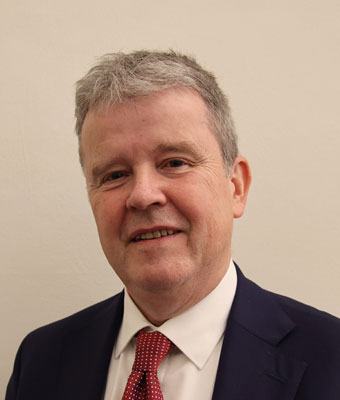
9. Deputy Edward Timmins asked the Minister for Enterprise, Tourism and Employment the steps being taken to increase the very low participation rate for persons with disabilities in the labour market; and if he will make a statement on the matter. [13377/26]
Employment opportunities are vital for the well-being of our population. This Government and the previous ones since 2011 have had remarkable success in giving our people employment opportunities. However, we have one of the lowest participation rates in the western world for people with disabilities at 32%. What actions are being taken to increase this number?
I thank the Deputy for his question. The Government continues to support workers throughout their careers with initiatives to improve work-life balance and flexible working arrangements, which encourages greater labour market participation including the participation of people with disabilities, resulting in greater diversity and inclusion within our workforce. The Government has a wide range of supports in place to assist people. For example, through the Department of Social Protection's Intreo centres, disabled people can access mainstream employment opportunities and employment schemes as well as referrals to tailored supports, such as EmployAbility, which is a service that offers a professional job matching service and ongoing supports and advice.
I also point to the wage subsidy scheme, which offers employers a financial incentive in hiring disabled people. Budget 2026 recently provided for an expansion of the scheme to people who acquire a disability while in employment and to those who transfer from invalidity pension to partial capacity benefit. In April 2026, the subsidy rate will also increase. My Department is co-lead of the employment pillar in the National Human Rights Strategy for Disabled People 2025-2030, which was launched in September last year. The ambition of the employment pillar of the strategy is to substantially reduce the employment gap between disabled people and others who are in employment and to enhance the opportunities for disabled people who can earn a living that they can do so. The central commitment for my Department is to establish a ministerial-led forum on disability employment as a subgroup of the Department's enterprise forum. This forum will be issue driven and serve as a means of progressing how best to support employers to employ people with a disability, including addressing the perceived obstacles from an employers' perspective and covering issues, such as cost, productivity and legal concerns. The forum would also be a means of raising awareness among employers of the benefits of employing a person with a disability.
I thank the Minister of State. I commend him on those actions. However, what is missing here are some of the numbers as this hides the scale of the problem. These figures can never be totally accurate as people tend not to disclose due to stigma or fear of discrimination or may answer differently depending on who is asking the questions. Based on labour survey data, there were 181,700 people with disabilities in employment in 2024. With a 32% employment rate for persons with disabilities in Ireland, this potentially means that there are 386,000 unemployed persons with disabilities. Based on these figures, Intreo centres need to engage with these unemployed people. Even by contacting 35,000 in early engagement, this is only 10% of the total. While activities are occurring, these are not even close to making a dent in the unemployment numbers.
I strongly the support the question raised by my colleague. It is critical that we enhance opportunities for those with a disability. I particularly encourage a further examination of the wage subsidy scheme. The Government made a significant increase in the context of budget 2026. Although it does not come into effect until the beginning of April, it could be considered in the budgetary process for 2027. For instance, a company like Murphy Furniture based in Tinahely, which has a number of stores operating right throughout south Leinster, employs a significant number of people with intellectual disabilities and who are neurodivergent. It is a challenge because companies have to adapt their operations in some of those cases. Something like the wage subsidy scheme is critical but there are costs involved. In the context of the budgetary discussions with the Department of Social Protection, I encourage the Minister of State to address this as well.
I thank both Deputies for raising these important matters. I absolutely share the concerns they have raised and about how long change has taken in this area. I want to underline that we are finally moving from language to implementation. Through the reporting and monitoring implementation group chaired by the Taoiseach, he wants to see the pillar around employment progress. As I said earlier, we have an employment gap between those who are disabled in employment and those who are not. At the most recent Fine Gael disability network conference, it was very apparent that we need to engage more with employer representative bodies to try to engage better with them to see what the perceived barriers are but also to ensure the likes of the wage subsidy scheme are refined to meet the needs of those who can avail of it.
The 15-hour threshold is a bit of a challenge. The Minister, Deputy Calleary, has been informed about that. It is something we could use into the future.
I compliment the Minister of State on the very successful disability conference that was held in Galway a couple of weeks ago. What is the Government doing to upskill people across the board in recruitment and employment services? These are the people who find the people with disabilities and put them into jobs. There are potentially over 100,000 people available to work who could be living more fulfilling lives and contributing to the tax base but who are now unemployed, with many receiving social welfare payments at a cost to the country when that is not necessary. We are not being fair to these people and giving them the opportunity to succeed. Having these programmes is great but I do not see their impact or their targets. How are these programmes increasing the participation rate, particularly as Ireland ranks lowest in the EU for the participation of persons with disabilities in the workplace? What are the targets to show progress in this area over the next five years?
Many of us have spoken in here about the low level of employment among those with disabilities. I get that, to a large degree and particularly with some of the schemes, this falls into the ambit of the Minister for Social Protection. However, a holistic approach is needed. While we have seen decent work and decent schemes such as WorkAbility, EmployAbility and the work of the Trinity centre and others in engaging with employers, I do not think these are sufficient. It is too ad hoc. We need to see a greater level of engagement.
With regard to the wage subsidy scheme, a number of employers, particularly those who employ more than one person with disabilities or a considerable number of them, say the scheme does not take sufficient account of the added costs of doing so. The reasonable accommodation funding provided through the work and access programme is also not fit for purpose. All of that needs to be looked at. Even with the wage subsidy scheme, we probably need to look at the self-employed and entrepreneurs. All of that is necessary.
I thank the Deputies for raising these important matters. The most important lesson we have learned as to why there have been low rates of participation is that employers have not been engaged enough. We need to turn the dial as regards the challenges they may face and the barriers that may present themselves. We must ensure they are supported to have better disability and inclusion policies that are focused on employers. The voices of those within the disability sector also need to be heard at that table. We will look at the concerns, the challenges and the stories that have been presented. Many businesses want to employ people but need clarity on flexible arrangements and legal obligations. We have schemes in place that are managed through the Department of Social Protection. However, the Department of enterprise also wants to ensure that enterprises, SMEs and businesses are supported through the Department of Social Protection. That is an important element.
Artificial Intelligence
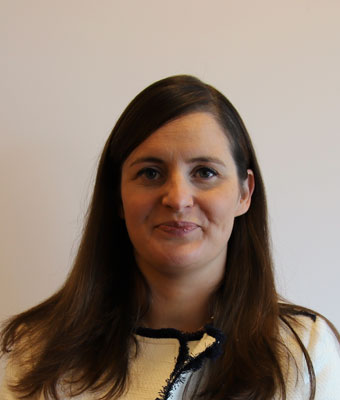
10. Deputy Catherine Ardagh asked the Minister for Enterprise, Tourism and Employment if he will establish an AI observatory to complement the national AI office, and track real-time issues and project future impacts on jobs and skills to provide independent forecasting and policy advice; and if he will make a statement on the matter. [12952/26]
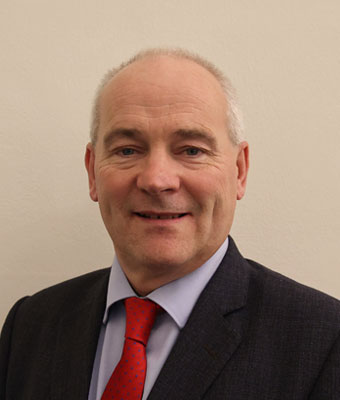
Question No. 10 will be taken by Deputy Malcolm Byrne.
Will the Minister establish an AI observatory to run in parallel with the national AI office to look at real-time figures with regard to jobs displacement and the skills needed for Ireland to avail of the opportunities AI presents?
I thank the Deputy for his question. Last year, the Government received recommendations from the AI Advisory Council and National Skills Council to establish observatories on AI and skills. The action plan for competitiveness and productivity subsequently included a strategic action to establish an AI observatory. The basis for these observatories is a need to provide up-to-date data and insights on aspects such as labour market dynamics, skills and other AI metrics. I fully agree that the intelligence developed through the work of the observatories could greatly assist the Government by providing evidence on an ongoing basis to inform policy decisions.
The Minister for Further and Higher Education, Research, Innovation and Science recently brought a memorandum to Government informing it of his intention to progress the establishment of a national skills observatory. It is envisaged that the national skills observatory will transform our skills intelligence landscape and provide a more joined-up approach to data gathering and use. The observatory will act as a central repository for labour market and skills information in Ireland, facilitating improved workforce planning, stronger policy and decision-making, and improved lifelong learning and workforce reskilling among other benefits. This will provide a valuable source of data and insights on the labour market and skills, including in relation to artificial intelligence.
My Department is currently considering an observatory focused on enterprise adoption of AI. Together with the national skills observatory, this would inform Government in shaping future AI-related enterprise and jobs policy. The establishment of an observatory on the enterprise adoption of AI is a deliverable in the new national digital and AI strategy, which was published yesterday.
AI is evolving rapidly and its impacts are difficult to predict. The Government is committed to strengthening our capability to understand and respond to the opportunities and challenges ahead through the AI observatory. It will be a key piece in supporting our actions.
I thank the Minister for the priority he has been giving to this proposal. As he says, the advisory council has strongly recommended it, as have those of us on the Oireachtas Joint Committee on Artificial Intelligence. Change is happening at pace and things are happening quickly. We saw the recommendations within the Government's strategy on AI and digitalisation, which was published yesterday, but we also had a report from the Department of Finance yesterday that identified that Ireland is potentially most at risk from rapid changes resulting from AI that will impact on the labour force, particularly in the areas of IT, professional services and financial services. It is therefore critical that we are equipped and that we see what these real-time changes are going to be. I welcome the moves by the Minister for further and higher education, Deputy Lawless, to provide microcredentials for skills and the whole-of-government approach through the skills observatory and AI observatory so that we will be prepared for the opportunities that will be presented and for the significant levels of job displacement we are going to see.
As the Deputy has pointed out, it is critically important that risk is managed in this process. That is why the IDA has set out under its five-year strategy to train 40,000 people. In the first year, we reached 33,000. That is transformational. It makes jobs sticky and ensures that people are upskilled and ready to grasp the opportunities artificial intelligence presents. We have a skills base in the Irish economy. We have double the EU average number of ICT graduates. We also have double the EU average number of STEM graduates per capita in the 20 to 39 age category.
On 14 October, we will hold our AI summit. The Minister of State, Deputy Niamh Smyth, is doing huge work on that with the Minister of State, Deputy Dillon, and myself. That will be a key opportunity to showcase Ireland at the application stage. It will give us the opportunity to show what we can do and deliver in our economy. We look forward to driving the public trust and simplification agendas, which need to go hand in glove if we are to be successful and have a very strong model.
I am hugely supportive of all of that. It is very welcome. It is unfortunate the Minister of State, Deputy Smyth, cannot be here today but I welcome the fact that she is at the global AI summit in New Delhi. It is critically important that Ireland takes a leadership role in this space. There is already anecdotal evidence that we are seeing significant changes in the jobs market so I welcome the fact that we are looking to be ahead of this. It is critical that there is an understanding within the Minister's Department and across the broader public service. I suggest that civil and public servants be encouraged to undertake the new programmes being launched through the Department of further and higher education so that they will understand the potential of AI. It would serve us well for all Members of this House to have the opportunity to avail of some of these courses to understand the real impact of AI and other new technologies on the employment market and on society more generally.
It is absolutely necessary that we track the changes in the jobs market. We are all aware of jobs that have been displaced and replaced. It is a matter of being able to react and being agile. That is something that goes without saying.
We have already discussed issues around the regulation of artificial intelligence, which is absolutely necessary. Unfortunately, I have to agree with Deputy Byrne. We need training - and we could do with starting in here - on what AI can do. In this entire conversation, we need to ensure we do not lose out on the possible benefits and innovation. If we talk about the health sector, we have seen in many other states that huge improvements and streamlining can be introduced. That is a necessity. We must ensure that element of innovation while offering protection and remaining agile in relation to changes in the jobs market caused by AI.
I assure the Deputies we are very much responding to the huge challenge presented in the jobs market, but also the opportunity. The opportunity is very significant. The key pieces include skills, on which we have done a huge amount of work, and having our energy policy correct. The Deputies will have seen our large energy user policy, which gives a huge opportunity for sustainable use. Power will be a significant challenge in financing our offshore renewables and our green transition, which will go hand in hand with our digital transition. Leadership is important and we are doing that through our AI summit, the work being carried out in relation to our AI Act, establishing our AI office in August, having a regulatory sandbox in place and driving that pro-enterprise, proportionate agenda across the European Union.
We have to be careful to protect jobs in our economy. I know that more than most because every week I get notifications of redundancies across the economy. I see a trend in relation to those exposed to artificial intelligence. On the other side, there is huge recruitment with some companies taking on hundreds of jobs to further their research and innovation in artificial intelligence.
We move on to Question No. 11. Deputy Byrne is again taking this one.
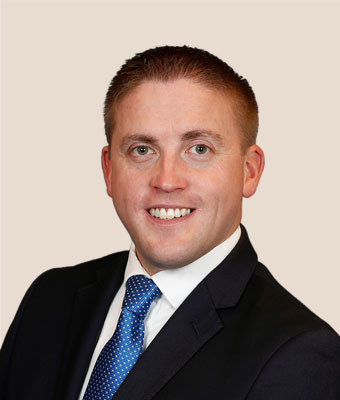
11. Deputy Cormac Devlin asked the Minister for Enterprise, Tourism and Employment his views on whether action is necessary to mitigate against an over-reliance on the private sector with regard to AI; and if he will make a statement on the matter. [12956/26]
AI has the potential to have a profound impact on society, as well as providing significant opportunities to ensure we remain competitive and future-proof our industrial base through its adoption. That is why it is equally important to ensure we address the challenges Al poses around safety, privacy and fundamental rights in the public and private sectors. Harnessing the benefits of AI must go hand in hand with protecting the people it affects.
The new national AI and digital strategy was launched yesterday. It will work across government and cover key pillars including the delivery of public services, enterprise, digital infrastructure and skills. As AI is a cross-cutting technology, the recommendations have implications across a wide range of policy responsibilities spanning a number of relevant line Departments.
Much work has been done by Government, and will continue to be done, to put a strong guardrail in place for the development and use of AI in Ireland. This includes development of regulations, standards, guidelines and codes of practice.
Our ambition in the new national digital and AI strategy is to enhance digital literacy and basic skills not only for the economy but across all levels of society. It is envisaged there will be an enhanced dialogue with the public and key stakeholders, including in the context of the strategy. Our goal is to build public trust in AI and ensure people feel included in its development. Most importantly, we want societal values and concerns to directly inform AI research and how technologies are adopted.
To help inform Government, the AI advisory council provides independent expert advice on artificial intelligence policy and helps to build public trust in AI. Our wider national governance framework for AI, including Ireland’s implementation of the EU AI Act, is designed to uphold fairness, transparency and strong protections for health, safety and fundamental rights, ensuring the development of safe, ethical and human-centric AI systems.
I thank the Minister. This question is based on a recommendation from the Joint Committee on Artificial Intelligence. I am encouraged by the approach Government has taken, particularly the publication yesterday of the AI and digitalisation strategy.
The Minister correctly stated in response to the previous question that this is related to our investment in digital infrastructure plus our investment in the energy grid, particularly in renewables.
Our approach has to be precisely, as he said. It is about getting the balance right between supporting innovation in the sector and using those technological tools to improve processes while at the same time maintaining public trust and ensuring the necessary guardrails are in place. It will be critical as part of the EU Presidency, which is what some of this question relates to, to talk of the EU's and, particularly, Ireland's digital sovereignty. I hope that will be one as the issues addressed as part of our Presidency.
I assure the Deputy of our continuing work in the areas he referenced. About 85 recommendations came from the joint Oireachtas committee. Three referred to our Department, which I am happy to speak about. They related to the establishment of the AI office, which will take place in August; to the AI and digital summit on 14 October; and to the work we are doing on the simplification agenda, which will be key to building public trust and to ensuring we are hiving out the opportunity. The Minister, Deputy Chambers, is doing huge work on the public sector piece, as referenced in the strategy published yesterday.
As Members across the House have said, this is general purpose technology by its nature. Its transformational effects are like those electricity had decades ago. This will have a huge impact across every sector and every area of society. That is why it is important we have the skills to deal with it and are sharp in our innovative approach.
I very much welcome the Minister's approach on this. It is critical we bring the public with us and, as he said, that it be cross-government. Will he consider public information campaigns to make people aware of the possibilities and challenges? He and I will probably remember the famous ads, "I don't know what a tracker mortgage is", so that people could understand financial products. We need to look in a similar way at artificial intelligence and have people sitting on the back of a bus saying, "I don't know what an algorithm is", and to get an understanding and explanation of that. The more understanding there is in society of the potential of the new technologies, the more it will inform those in business and in the public services about the opportunities and challenges.
I welcome the AI summit this October. It is a real opportunity to show Ireland as a leader in this space. The Government is taking the correct approach.
I thank the Deputy for his comments. We will work together on this. He is right that building public trust is a big challenge. Awareness will be central to that. I work closely with the Minister, Deputy Chambers, who has responsibility for the public service piece. We can work hand in glove on the private sector piece, protecting employees, giving skills as best we can to respond to this opportunity and also working through our tax code to incentivise innovation. We are happy to work in the coming months. As 1 July will come quite quickly, it will be important we hit the ground running. We have the building blocks and foundation already to capture a lot of this opportunity.
Flood Relief Schemes
12. Deputy Ruairí Ó Murchú asked the Minister for Enterprise, Tourism and Employment the supports currently available to businesses that have been damaged following flooding or other storm-related damage; the total amount under each support scheme that was allocated in 2025; and if he will make a statement on the matter. [13205/26]
The question relates to supports available to businesses damaged by flooding. We have just been through Storm Chandra and, on some level, people believe the rain will never actually stop. It is about ensuring we have fit-for-purpose defences. In my county's case, we need the OPW, the local authority and Uisce Éireann to ensure works are done, both short term and long term. We will be dealing with more of this, so we need the supports in place.
My Department operates the emergency humanitarian flooding scheme for small businesses and voluntary, community and sports organisations affected by flooding as a result of extreme weather and unable to obtain flood insurance through no fault of their own. The scheme is administered by the Irish Red Cross on behalf of the Department.
The Department has activated the enhanced emergency humanitarian flooding scheme for businesses impacted by Storm Chandra and the subsequent heavy rainfall from 26 January to early February.
The enhanced scheme is for small businesses of up to 50 employees or whole-time equivalents, and community, voluntary and sports organisations. It provides a contribution towards the cost of returning a business premises to its pre-flood condition. There are two payment stages - an initial payment of up to €5,000, and then a second payment subject to assessment of the damages by an independent, professional assessor. Under the enhanced scheme, the total funding available is capped at a maximum of €100,000 per small business or community, voluntary or sporting body. These funds may be used to replace damaged flooring, fixtures, fittings, and stock with the aim of enabling businesses to reopen as soon as possible.
As of 18 February 2026, the Irish Red Cross has received 57 applications for the enhanced emergency humanitarian flooding scheme. Total funding disbursed to date is €52,000, which represents initial payments of up to €5,000. Further payments will be made, up to a total of €100,000, once independent professional assessments are carried out. Further information and application forms are available on the Irish Red Cross website. The closing date for applications is 6 March 2026. The standard scheme, where the maximum contribution is capped at €20,000, was activated twice in 2025. It was first opened in early November due to flooding caused by a severe weather event in the Bantry area, and it was subsequently reopened in mid-November to assist those affected by flood-damage in County Wexford as a result of Storm Claudia. All claims have been processed under it at that particular time have paid out €82,000.
It is vital that we have a standing support scheme. As I said, a huge piece of work needs to be done to ensure we are not looking at this constantly from here on out. When I think of my own county and the town of Dundalk, it is not only the CFRAM flood protections that are necessary but the Uisce Éireann infrastructure is not up to scratch. Unfortunately, the dates we are looking at are 2030 and 2033. That needs to be sped up. We have also engaged with the Minister of State, Deputy Moran, from a point of view of those smaller works that can be done and personal property protections. They are absolutely necessary. In the long term, that will reduce the amount of moneys that would need to be paid out. It is vital that this is available not only to sport and community organisations but also businesses. We need to have a conversation with insurance companies. It needs to be a very strong conversation. Does the Minister have any information, even though it is still open to 6 March, in relation to the applications that are in at this point?
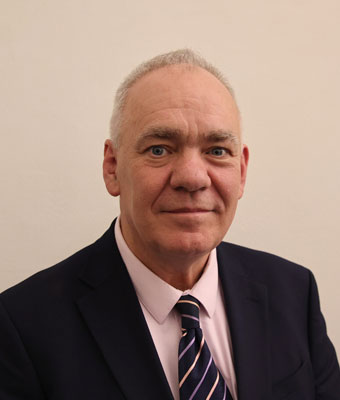
I need to bring up the treatment of staff in the Merck facility in Arklow. The Minister is well aware that there is a planned closure for 2028. I know that within 24 hours, the Minister was there on site-----
Sorry, Deputy Brennan, is the question on flood protection?
It is in south County Wicklow, which is badly affected.
I am sorry; the supplementary question has to be related to the initial question.
I commend the fact that the Minister has significantly increased the sums available when it comes to the humanitarian relief under storms. He did reference Storm Claudia, particularly with regard to the impact that had on County Wexford and the humanitarian relief which was open to businesses and sports clubs under that scheme. Unfortunately, one of the clubs that was impacted in a big way was Woodenbridge Golf Club but the problem is that because it is over the border in County Wicklow, it was not deemed eligible under Storm Claudia. Bizarrely, it escaped some of the worst effects of the recent Storm Chandra. My office has made a request to the Department that it would consider the case of Woodenbridge Golf Club and the impact that Storm Claudia has had on it. I ask that the Minister intervenes in this case because it was similarly impacted by the floods but because it is in the wrong county it was excluded from the scheme.
We are making the scheme as accessible as possible. I am prepared to work with Deputies in any areas that they wish to raise. It is also important to point out that the minor works scheme has gone up to €2 million from €750,000, which also is a big asset to businesses in the sector. As I said, we want to progress. That is why we have increased €20,000 up to €100,000 to reflect the seriousness of it. I am happy to work with the Deputies in question.
On Deputy Brian Brennan's issue, Merck is a significant and an important issue for his constituency. I met with so many of the employees with him a number of months ago. I assure him that the full industrial relations machinery of our State will be made available to support them. I know he has organised a number of meetings with my State agencies. I commend Deputy Brennan on the work he is doing supporting the workers.
It was an absolute necessity that the money was increased. We are going to be dealing with this from here on in, so it is about ensuring we can react. From the Department's point of view, it is absolutely necessary that there is engagement in terms of those works that can be done to ensure we have greater levels of protections, be they natural or unnatural protections. There is a huge number of areas that are still impacting on issues that have not been resolved over many years. I am thinking in the last while of some of those businesses that have been impacted. It is the likes of the Carrickdale. I know Councillor Antóin Watters has been working alongside them to try to get some of the short-term mitigations. When the Minister of State, Deputy Moran, visited Blackrock, he was in McQuillan's Pharmacy. We need to look at protections for the likes of that. Short-term mitigations can be introduced before the long-term CFRAM protections and everything. The likes of the Spirit Store in Dundalk was affected by one of the recent storms and was flooded. We all know the danger of flooding and the impact it can have. The conversation with insurance companies is absolutely necessary because they are getting off the hook.
I hear what the Deputy is saying. We have made progress across 52 schemes over the past four years. Huge work was done in Athlone in my own constituency. Work was done in Bandon, County Cork, as well. A number of these schemes have been very complex and there have been very different challenges in respect of each, either through the planning code or the complexity of delivery of them. CFRAM is very clear. There are 150 schemes that face one in 100-year events, 1% risk, that we are working through as a Government. We had a meeting last week to progress and fast-track a number of these schemes. From the Taoiseach down, we have given the commitment that we are working with minor works in terms of some remedial works that we can carry out now that can save businesses in the interim while we are waiting for the delivery of the significant schemes. They are a challenge. We have a record level of investment there to support businesses. We have to ensure that. I know that when a small family business is flooded, it is devastating. It has a devastating effect on their family. It is the same in the case of a club. We have seen the pictures and heard stories that paint thousands of words. We will be at the forefront of supporting them in the months ahead.
Ceisteanna Eile - Other Questions
Question No. 98 taken with Written Answers.
Pension Provisions
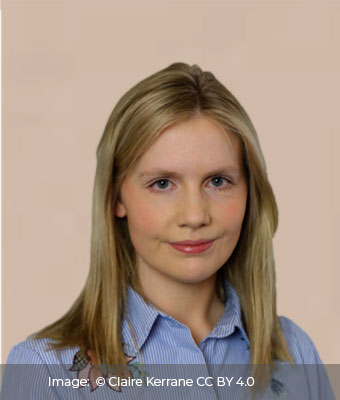
99. Deputy Claire Kerrane asked the Minister for Children, Disability and Equality if she has engaged with the Minister for Social Protection on providing a State pension for foster carers; and if she will make a statement on the matter. [13216/26]
I raise again the need for a State pension for foster carers. I appreciate that this mainly comes under the Minister for Social Protection. However, in light of that, what engagement has the Minister had with that Minister with regard to the commitment in the programme for Government, which I acknowledge, to ensure a State pension for foster carers is delivered as quickly as possible?
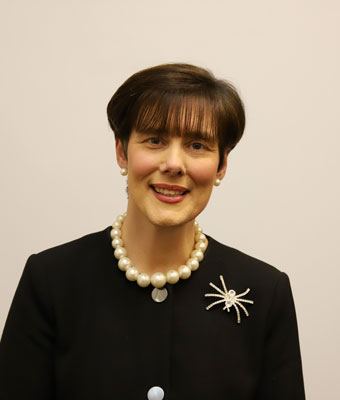
I have discussed this with the Deputy on a number of occasions and we are absolutely agreed on the importance of foster carers. There is appreciation of and agreement on that across the House. Foster carers play a vital role in enabling our most vulnerable children to live in a safe, secure and stable home environment.
While eligibility for the State pension, as the Deputy said, is a matter for the Minister for Social Protection, I know this is a matter of genuine concern for foster carers. The programme for Government 2025 introduced a number of commitments relating to foster care. This included commitments to examine and develop a pension solution for foster carers in recognition of the enormous contribution they make to vulnerable children in our society. I have raised this matter directly with my colleague the Minister for Social Protection, Deputy Calleary, and can confirm that subsequent engagement will now occur between the relevant departmental officials. This engagement will occur in accordance with my ongoing commitment to support foster carers and within the context of the related programme for Government commitments, which I have already outlined.
Work is under way within the Department on the development of a national policy framework for alternative care, which will deliver on a separate programme for Government commitment to develop a national plan on alternative care. It is in this context that we are also engaging with the Minister. Officials of the Department are developing the framework on the basis of evidence and robust consultation with stakeholders, care-experienced individuals and the public. I am informed that the consultation process has already included a number of constructive engagements with foster carers and their representative bodies. My officials and I will continue to listen carefully to what they say, including in relation to eligibility for the State pension and other key matters. I will continue to work closely with the Minister, Deputy Calleary, and other Government colleagues regarding the progression of these programme for Government commitments. Significant work has already occurred in relation to supporting foster carers. It included increasing the foster care allowance by 21% in 2024, the introduction of the initial placement payment in 2025 and the announcement by the Department of Social Protection that foster carers are now eligible for the back-to-school footwear and clothing allowance, also in June 2025.
I welcome that engagement between officials in the Minister's Department and the Department of Social Protection will take place. It is important that we get the State pension put in place for foster carers as quickly as possible. It is wholly unacceptable for any foster carer in this State, many of whom have provided decades of support to provide a loving and caring home to some of the most vulnerable children in the State, to be left at 66 without a State pension or relying on the means-tested State pension. That is not acceptable. It is also important to make the point that this would be a huge amount of money.
Money is always a factor because I know it will have to be within the budget or a coming budget, and I hope it will be. Many foster carers will have paid some PRSI contributions. In fact, I would imagine the vast majority will have, so this will be about topping them up to make sure they can access the contributory State pension in full, as they should be and as they are more than deserving of. Time is of the essence and this needs to be delivered as quickly and as early in this term of Government as possible.
There is a commitment in the programme for Government. What is really helpful to us as well is the public consultation we are having. It is a great framework for us to engage with the Department of Social Protection regarding this issue because it is an issue that is consistently raised by foster carers themselves. We need to do all we can to secure the foster carers who are involved in providing care to children but also to attract more into this space. I know it is one of one of the key issues, if not the key issue, for foster carers but I also have to point to other changes that have been introduced. Foster carers now receive additional funds between €3,796 and €3,900 per year compared with the previous allowance, depending on the age of the child. Foster carers now receive a weekly payment of €400 for children under 12 and €425 for children over 12. A revised mileage payment scheme is in place, while the cumulative weekly travel distance to qualify for these payments has been reduced from 300 km to 250 km. In June 2025, the Department introduced the back-to-school clothing and footwear allowance, while Tusla funding of €152 million will be used to maintain and grow foster care capacity and expand the foster care peer support programme and foster care recruitment teams.
I acknowledge what has been brought forward to improve things for foster carers but none of that will matter if someone is 62, 63 or 64, does not have enough contributions to access the State pension and is approaching 66, as quite a number of foster carers are. Again, it is not acceptable that a foster carer who has provided a loving home to some of our most vulnerable children would get to 66 and not have a State pension. It is wholly unacceptable and it needs to be dealt with quickly. I have repeatedly said the pension solution brought forward for family carers has really worked. It was worked on, achieved and delivered and I welcomed it at the time. That could be done for foster carers because, again, we are looking at people who have some, if not nearly all, of the 520 contributions but there is a gap for a lot of them, as was the case for family carers, so I believe that through using that solution, this can be done a lot more quickly. It needs to be, so I ask that this specific solution be looked at.
The Deputy and I are not in disagreement on this. I have always been very clear that the work and service provided by foster carers is second to none. I have also been very clear that it is the optimal option for children who need security and support. In that respect, my Department is doing all it can to ensure that measures are in. I have already referenced the increases in the allowances and mileage. To be honest, it will never be enough to acknowledge the work that is done. I know this is the key issue for foster carers, so we will continue to engage with the Department of Social Protection. The current consultation is really helpful to us because it will inform alternative care policy. I acknowledge the openness of the Minister for Social Protection to engaging with me and he has discussed the issue with me on a number of occasions. It is in the programme for Government. There are always complexities of which we must be mindful but as as a core objective, I absolutely agree with the points made by the Deputy.
Disability Services
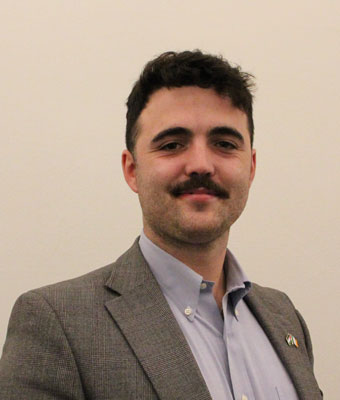
97. Deputy Barry Heneghan asked the Minister for Children, Disability and Equality the steps being taken to ensure that disability supports adequately meet the needs of people with disabilities, including access to services and timely assessments, and if she will make a statement on the matter. [3476/26]
It comes as no surprise that I will be raising the north side of Dublin again. Regarding the care and work done for people with disabilities and the elderly in north Dublin, the teams are amazing but St. Joseph's Hospital, St. Francis Hospice, Beaumont and St. Michael's House need supports, particularly for the elderly and people with disabilities. Will the Minister give an update on what the Department is doing to support these great teams and to add to care in the north side? The north side has been neglected for too long.
Like the Deputy, the Government and I recognise the importance of early intervention for children with disabilities and ensuring they receive the right services at the right time. That is the bottom line. I am pleased to say that progress has been made in this regard. Over the past few years, the roadmap for service improvement has provided for a series of actions being progressed to improve access to children's disability network teams, CDNTs. These teams provided support to 44,739 children with complex needs as at the end of December 2025.
The national CDNT waiting list has reduced by 43%. However, I also recognise that there is still more to do. The HSE national service plan has committed to a further 25% reduction in 2026. To this end, the HSE is developing the 2026 to 2027 service improvement plan for disability services for children and young people, further advancing the work begun under the roadmap.
In budget 2026 alone, more than €3.8 billion was allocated for disability services, which represents an overall increase of €1.8 billion since 2020. This is a phenomenal first-time level of investment by Government. The Government has provided funding for additional posts to CDNTs and to shorten waiting lists and waiting times in recent years. This includes further investment in budget 2026 to fund 150 posts for CDNTs. In addition, placements on CDNTs will continue to be expanded alongside the continued expansion in the number of places in higher education to develop the pipeline of future therapists.
While it is important to mention that good progress has been made, it is equally important to acknowledge that there are delays accessing supports and services. I am pleased to say, however, that significant activities are under way, both legislative and operational, to improve access to both assessments and therapies for children who need them. The HSE is developing a single point of access referral model, which will ensure that children are referred to the appropriate healthcare service, whether that is primary care, disability or child and adolescent mental health services, at an early stage. As a result, children will not be put on multiple waiting lists or passed from one service to another.
Targeted amendments to Part 2 of the Disability Act have been developed to improve the effectiveness and efficiency of the assessment of need process. This will result in a more streamlined process, which over time will help to reduce waiting times for assessment of need. A total of €20 million was also allocated under budget 2026 to continue the targeted wait list initiative.
Aontaím leis an Aire agus táim an-bhuíoch den airgead atá ar fáil do dhaoine le míchumas. An pointe atá á dhéanamh agam ar son na ndaoine i mBaile Átha Cliath thuaidh is that the families are struggling and I again call for more adequate funding for the facilities in the institutions I mentioned.
I also want to bring the Minister's attention to the case of Seán Horan, a resident in St. Michael's House in Ballymun. I would really welcome the engagement with the Department about it but the system needs to be changed. According to Seán's mother, he entered mainstream school and is in fifth year but is now being removed from St. Michael's House. His is mother abided by all the rules but we are not providing adequate funding for the north side. Seán's mother is worried and he does not know where he is going to go next year. If schools such as St. Michael's House were not classed as junior cycle, it would enable Seán to continue to stay in the school and get support he needs. I would welcome any attention towards the case of Seán Horan.
The Minister mentioned the change in the legislation around assessments of need and the Disability Act. We all know the pressure families are under - not being able to get an assessment, the therapies or the necessary early intervention. While we might all support that idea of a single point of access, it needs to work. Assessments of need waiting lists have skyrocketed. I assume they are anywhere between 22,000 and 25,000 at this point and constitute a continuing breach of the law. I can accept the argument that 29% of children are found not to have a disability and the idea that 35% need autism assessments, but the fear relates to who it is that makes the determination about this.
The assessment officer has the correct clinical background, which is a necessity. We need an update on what is going to happen from the Department of Education and Youth's point of view because teachers' unions, teachers and families also need to know how assessments will work in getting an appropriate school place. We need to ensure that we are not once again looking at a second-rate assessment because that is the worry at the minute.
Ar an gcéad dul síos, tá sé mar aidhm agam féin agus ag an Roinn áiseanna agus seirbhísí a chur chun cinn, agus tá níos mó airgid againn inniu ná mar a bhí riamh chun é sin a dhéanamh.
The primary aim and objective of this Government and this Department is to ensure that we have the funding in place. We have a significant increase in funding this year - greater than we have ever had - to provide the services Deputy Heneghan referenced. I do not know the specifics of the case he referenced here as it is an individual case, but I am happy to take the details from him later and to revert to him. We have €3.8 billion available to us now, which is a €1.8 billion increase since 2020. It will not solve all of the issues; money does not always solve the issues. It is a combination of different things.
I appreciate the points Deputy Ó Murchú raised around the assessment of need. He knows that there work is under way to advance the assessment and to streamline the service to make it more accessible to people. There is also the single point of contact and the HSE's autism protocol. A total of 45% of all cases in the first nine months of last year had an autism diagnosis. This separate pathway under the HSE will be helpful as well.
Gabhaim buíochas leis an Aire. Táim fíorbhuíoch as an airgead sin.
My predecessor Finian McGrath, a former Minister of State with responsibility for disability issues, would also be very proud and I spoke to him again this morning. One of my staff in the Oireachtas has a disability. I have raised this issue in this House previously. We, as policymakers, should have people with disabilities as close to us as possible, but we cannot avail of the wage subsidy scheme. My parliamentary assistant is working as hard as he can but he needs additional support. If we can encourage the Government to bring the wage subsidy scheme into the Oireachtas, we would have people with disabilities closer to people making the policies about their lives. I have raised it with the Minister, Deputy Calleary, as well. He is looking into it and I would love some pressure from the Minister, Deputy Foley, as well.
Táim fíorbhuíoch as an airgead sin. Táim ag iarraidh St. Michael's House, St. Joseph's Hospital, St. Francis Hospice and Beaumont Hospital i mBaile Átha Cliath Thuaidh a lua arís. These institutions and their hard-working men and women need more financial support. I welcome the money the Minister has, but I would love that money to go towards these northside institutions. The staff are hard-working and they can deliver the supports that are needed on the ground. I thank the Minister for saying that she will investigate Seán Horan's case as his mother feels that she was penalised for trying mainstream education. The only way the application was set up was for failure because the State did not provide additional space for the school.
Gabhaim buíochas leis an Teachta. Aontaím leis ó thaobh an sárobair a rinne Finian McGrath le linn a thréimhse anseo mar Aire Stáit agus an méid atá fós ar siúl aige chun na ceisteanna seo a fhreagairt.
In relation to the issues the Deputy raised regarding St. Michael's House and so many others, I want to recognise the sterling work of all the institutions the Deputy mentioned. I have met with representatives of many of them. I had a meeting last year with a group representing all of the organisations regarding funding issues that they faced. It was for that reason that we really pushed ourselves to move forward in terms of a budget that would significantly support all of these different organisations that are doing great work on the ground. People with disabilities being at the centre, in terms of raising issues and the implementation of policies, is the entirety of the national human rights strategy for disabled people. There is the implementation group that sits on different committees and the delivery committee is chaired by An Taoiseach, Deputy Micheál Martin.
100. Deputy John Clendennen asked the Minister for Children, Disability and Equality for an update on staffing levels and vacancy rates across the children’s disability network teams; how these are affecting service access for children; and if she will make a statement on the matter. [13292/26]
My question this morning is about referrals to children’s disability network teams, CDNTs. Will the Minister of State provide updates on staffing levels and vacancy rates across teams and how they are affecting services access for children?
I thank the Deputy for raising this important issue. The Government and I, like the Deputy, are committed to early intervention for children with disabilities, to ensure they can access the appropriate supports at the earliest possible stage. Those services are delivered through our children’s disability network teams for children with complex needs.
Recruitment and retention of health and social care professionals is a really big challenge, to be quite frank, and it is a challenge faced by the CDNTs across the country. I am pleased that progress is being made on the recruitment of staff to the teams and the HSE has reported a 28% increase in staffing levels nationwide from October 2023 to October 2025. This equates to an additional 448 whole-time equivalents, which includes 321 health and social care professionals. The overall CDNT vacancy rate has reduced from 29% in 2023 to 18% in 2025. That is a reduction of 11 percentage points nationally, but it is still a challenge and, as a result of that, there are still delays in accessing interventions for children with disabilities. However, it is important to thank our teams and recruiters for the progress that is being made.
Since the roadmap was approved by the Government in July 2023, the national CDNT waiting list has reduced by 43% as at the end of December. Despite staffing challenges, CDNTs provided supports to 44,739 children with complex needs as of the end of December last year. I thank all of our people who are working so hard on those teams. The HSE is currently developing a service improvement plan for disability service for children and young people, which will build on improvement works started under the roadmap with a key focus on recruitment and retention.
To maintain this progress, the HSE is driving intensive domestic and international recruitment efforts and will undertake a variety of workforce initiatives to support sustained growth of CDNTs and the wider disability sector this year
I congratulate the Minister of State on her new Ministry and I wish her the best of luck with it. I agree with her on the need for early intervention. At the end of the day, we need results. Children and their families cannot wait and critical windows of intervention can be missed, which ends up with complex cases becoming more complex.
My concern relates to with families, who have seen a child diagnosed and put on a list. They are waiting for a CDNT and they are not getting that support. The longer that goes on, the larger this problem is becoming. I appreciate that additional resources are being applied and delays are being addressed, but I would like to see a level of accountability and efficiency in how these services are being improved and expanded with the additional resources that are being applied. How accessible are these services and these teams to these families? How can we improve it further?

I am inundated with families contacting me who are having a real difficulty accessing the supports, services and therapies that their children need from CDNTs. The HSE data from last month showed a number of vacancies across the CDNT network in Galway. At that time, just one CDNT out of 15 in the broader west and north-west region was fully staffed. The result of that is that children are facing extreme waits to access the services they need. It is causing untold stress to families as well. One particular family in County Galway, who I know has been writing to the Minister of the State, is completely at their wit's end. Despite repeated requests, they cannot get individual speech and language therapy for their son who is non-verbal and autistic. It is heartbreaking for them as parents to see their child not getting the supports that they need and they are not the only ones.
Will the Minister of State explain this to that family? Will she also outline what she is going to do to ensure that our CDNTs are fully staffed and fully functional going forward?
In terms of staffing, this year's budget has allocated €8 million, which will provide for 150 new staff across our CDNTs. We will prioritise the placement of those new staff on the teams that have the highest vacancy rates. That is to make sure that we are providing more therapies to children who need them and who are waiting longer on lists. It is also to make sure that we are supporting the staff who are working with those CDNTs, which we need to do.
In regard to Deputy Clendennen and his constituents who have gotten assessments and then gone to their CDNTs, to be really clear, families do not need an assessment to go to their CDNT. They just need to be referred. Families can self-refer or they can get a referral through their school, public health nurse or whatever it may be. It is really important that people are referred as early as possible.
In Deputy Clendennen's own area, I know there are there CDNTs in Laois-Offaly. At the end of last year, there were 2,077 children who were open caseloads on the CDNTs. That means they have been in contact with CDNTs and there are 89 children on the waiting list.
I thank the Minister of State for that update. Where they are being assessed and availing of a service within the CDNT, generally the feedback is positive but where they are not, they are ending up in a private system and having to pay. Alternatively, they are ending up in the primary care system. Where there is complexity of need, more often than not the facilities and services they need with regard to the specialities may not be available through primary care. That ends up putting additional burden on the primary care setting.
I appreciate the additional resources. It is an area we are going to have to continue to be focused on. We need to try and meet the needs of individuals who are waiting far too long and get to a position in the whole area of service with CDNTs that is proactive in this space and not reactive. I appreciate the update this morning.
There are 45,000 children receiving support and therapies through our CDNTs nationally and that is really positive. We are embarking on a recruitment campaign to make sure we are bolstering our teams. Part of that will be international and national recruitment but it will also be making sure, for example, that we are expanding training places, which happened in June of last year. There will be up to 461 additional student places by the end of 2028 and the majority of those have commenced. New roles and training pathways are being developed to expand the skills mix and the pipeline of people we can hire. We have student bursaries and trainee programmes. We found them really successful in regard to people coming to do their student placements with CDNTs and, on graduation, being offered roles on those teams. We want to see more of that, and I thank all of our students who have taken up roles.
Pensions Reform
101. Deputy John Lahart asked the Minister for Children, Disability and Equality the measures being taken to address issues with employer costs of auto-enrolment for section 56 organisation employees; and if she will make a statement on the matter. [13075/26]
Deputy Aindrias Moynihan is taking Question No. 101.
Organisations funded by Tusla under section 56 of the Child and Family Agency Act are delivering a huge range of vital services, such as youth services, in communities around the country. Cloyne Diocesan Youth Services, CDYS, is a typical example in my own community. Can the Minister outline the efforts being made to address the costs associated with auto-enrolment for these organisations?
I appreciate the Deputy raising this important question. I deeply appreciate the work performed by section 56 organisations and I would like to thank their staff and volunteers for the commitment and support they are giving in improving people’s lives.
The Department welcomes the auto-enrolment retirement savings scheme launched in January 2026. The auto-enrolment system provides that all employees earning in excess of €20,000 and aged between 23 and 60 will be enrolled onto a new pension system and will not have to rely on the State pension alone on retirement. As such, it is of considerable benefit to many employees in section 56 organisations.
The auto-enrolment retirement savings authority will have responsibility for employer compliance, with Revenue providing support by supplying payroll data for identification and enrolment purposes. All employers are required to comply with the legislation underpinning MyFutureFund, regardless of their status or funding arrangements. This requirement applies equally to employers, including where employees are on short-term contracts or working multiple part-time jobs. MyFutureFund will be central to helping people increase their financial security in their retirement years.
Agencies, organisations and charities that will be covered by the new auto-enrolment scheme are generally funded under section 56 of the Child and Family Agency Act 2013. These organisations receive a portion of their funding from Tusla to deliver services and generally have other income streams. Funding is provided to these organisations by Tusla through the grant process and the level of service provided is generally covered within the terms of a service level agreement.
These organisations are independent entities and, as such, employment contracts and obligations - for example, auto-enrolment, pay, pensions and all of that - are matters between the employer and their employees. As these staff are not public sector employees, responsibility for meeting obligations under the new auto-enrolment scheme rests entirely with their respective employers.
These section 56 organisations, the likes of CDYS, are providing vital services such as social care services in the community, family support through the family resource centre and, in my own community, youth services and much more. While Tusla contracts them, as the Minister said, they are private organisations and their employees are not employed by Tusla. They are not-for-profit organisations delivering services in our community. While the aim of introducing the auto-enrolment is to fill that gap between people who do and do not have pensions, which is very welcome, it is an additional cost on these not-for-profit organisations.
We need to review the situation here and I would ask that additional funding be made available to support those section 56 organisations. They are voluntary organisations that are not for profit and are delivering vital services in our communities.
I want to second and indeed third what the Deputy had to say there about these organisations. They are really important organisations doing sterling work right across our communities, north, south, east and west. The work they do, and the breadth of it, is quite phenomenal. They are very much rooted in community and service to the community. I do not for one minute dispute that but I have to be clear on the funding mechanism. Tusla provides funding to many of these organisations, some of which the Deputy has referenced. In many respects, Tusla is providing part of their funding. They are funded through other means as well. Essentially, the issue here is that all of these organisations the Deputy referenced are independent entities. Tusla is not the employer. The relationship is between the organisation and the employee, that is, as employer and employee. Tusla is not in that space and it is important that we have clarity around that.
I am conscious that pay increases were agreed with section 56 workers in the past year and funding increases were agreed for the organisation to support an increase in pay. Has the Minister considered introducing additional funding to the organisations as was previously done to support the organisations' additional employee costs, and will there be assistance for these important services that find themselves in difficulty due to the increased costs of employment? They are providing vital services, including youth services and a broad range of services in the community. While they are not direct employees of Tusla, Tusla does fund and contract them and it provides funding for employment. It is not totally removed from the situation and is a vital cog in it. It needs to re-examine the possibility of supporting these organisations, as they are coming under pressure from the increased cost of auto-enrolment.
I want to be clear. I do not for one minute disagree with the points the Deputy made about the valuable work of these organisations. They are an integral service to communities and I understand the importance of that. I have to be clear: in the delivery of that work they are funded by Tusla. They are not employed by Tusla. There is a separate relationship in existence there between the employer and the employee, or whatever type of contract is in existence there. These organisations are entirely independent entities responsible for the care of their own staff or whoever is delivering on their behalf. It is important that we recognise that.
There are obligations in terms of auto-enrolment. It is very important. We are all agreed here on the importance of the auto-enrolment system but that must be catered for in the context of an employer-employee relationship. Tusla is not the employer. In regard to the broader funding being provided by Tusla, there has been a significant increase in funding by my Department to Tusla to increase the provision of services which, again, supports these organisations. That is the type of relationship that exists.
Disabilities Assessments
102. Deputy Matt Carthy asked the Minister for Children, Disability and Equality the number of children on the waiting list for an assessment of need in counties Cavan and Monaghan, by county; and the number waiting more than three, six and 12 months. [13202/26]
My question is in respect of the unacceptable number of children who are currently waiting for an assessment of need in counties Monaghan and Cavan in my constituency. I ask the Minister for an update on the number of children who have been waiting more than three, six and 12 months.
The delivery of an effective, efficient assessment of need system is a priority for the Government, which is why we are bringing in reforms in this area. There has been intensive work by the Department and the HSE to address delays in the provision of assessments of need to children and their families. Children do not require an assessment of need to access health services, including primary care, children’s disability network teams or mental health services. It is important that people are aware of this. However, demand for assessments of need has increased significantly in recent years, reflecting both the increase in population and families exploring all options to access services for their child.
The number of applications for assessments of need increased from 4,700 in 2020 to over 13,000 in 2025. Unfortunately, this demand is outpacing the capacity of the system to respond. As a result, HSE data shows that the number of applications over the completion date rose to over 20,200 nationally by the end of the year. This is unacceptable, which we acknowledge, and we will address it.
For Cavan-Monaghan LHO, in the Deputy’s constituency, the numbers he requested are as follows: 520 applications in total were not completed within the statutory timeframe of six months, 31 of which were overdue for less than one month, and 36 of which were overdue for between one and three months. The remainder, 453, were overdue for three months or more.
These numbers are stark. Every one of them represents a child or young person. I want to see this situation change so that families do not have to wait so long for their assessment of need applications to be processed. That change is happening. We have seen a notable increase in the number of completed AONs nationally over the past two years, but there is a lot more work to be done. That is why, in December 2025, the Government announced a series of improvements to the assessment of need process, including new legislation, which will be coming through pre-legislative scrutiny at the Joint Committee on Disability Matters.
The Minister of State started her response by saying this is a priority for the Government. I would hate to see it if it were not a priority for the Government. Some 550 children have been waiting over six months for an assessment of need in the two small counties, population-wise, of Cavan and Monaghan. That is 550 times that the members of Government have broken the law. They are obliged under the Disability Act 2005 to ensure that children receive an assessment of need within six months. Imagine that. We have a Minister of State saying they have broken the law 550 times in just one constituency, but they are going to do something about it at some point in the future, including changing the law so they cover themselves and so they are not actually in breach of the law. How many children last year in counties Cavan and Monaghan actually received their assessment of need within six months, the legal time limit?
Will the Minister of State consider establishing a cross-Border assessment of need scheme, modelled on existing cross-Border dental and surgical treatment pathways, to ensure that children can access timely assessments outside the State when domestic waiting lists are excessive?
I want to be absolutely clear, and to reassure parents in particular, that proposed legislative changes will not in any way remove any right for parents to apply for an assessment of need for their child, and will not alter the six-month timeline in the Act. That is important to say, and I do not want parents to be misled on that.
The changes include changes to Part 2 of the Disability Act, which provides for assessments of need. These legislative changes include ensuring the assessment process focuses on a child’s needs, so that more intensive clinical assessments are only used where required. They will also ensure the development of statutory guidelines to better support HSE assessment officers to do standard assessments in a standardised way, so that no matter where people are in the country, they get the same clinical approach.
With regard to the cross-Border scheme, that is definitely worth exploring. At the moment, we want to make sure that we are delivering more assessments of need. To that end, we have prioritised a waitlist initiative. We have set aside €20 million to provide for 6,000 assessments of need to be completed by private providers.
Regardless of what the Minister of State says changes to legislation will do, it will be of no comfort whatsoever to those people who are watching the Government break the law as it currently is. I asked her a specific question in respect of Cavan and Monaghan. How many children last year actually received an assessment of need within the legal time limit of six months? I will ask that question again.
We know that at the heart of this are children - children with disabilities who need access to therapies. Right now, they are waiting too long for access to therapies and too long for assessments of need. That is wrong. That is why, just in December, we outlined reforms. Those reforms include statutory guidelines, which will streamline and standardise the process. That will include decisions being communicated to parents.
How many last year?
There will be a new pathways option for children who are potentially autistic. They will be set up by in-reach teams, 11 of which will be created across the country.
I thank the Minister for State for that. How many children last year in Cavan and Monaghan actually got their assessment of need within six months?
Order, please.
I will revert to the Deputy with that exact number. I have the exact number that he requested in his question, which I read out, but I will get the number for last year too and give it to the Deputy. That is no problem.
We are also hiring more people for the CDNT teams. We have a new single point of access that ensures no child is on the wrong waiting list, and there is no such thing as a wrong door from a HSE perspective. In addition, we are supplementing our workforce by outsourcing a number of AONs as well.
Child and Family Agency
103. Deputy Ruairí Ó Murchú asked the Minister for Children, Disability and Equality the proposals her Department has to deal with the fact that Tusla has advised that 300 social workers,100 social care workers and 500 foster carers are needed now to cope with demand; and if she will make a statement on the matter. [13212/26]
Information was provided to us at the committee on children that Tusla is short of 300 social workers and 100 social care workers, and needs another 500 foster carers. In fairness, Deputy Kerrane spoke about the need to follow up on the State pension and other particular issues that will make it more attractive. We look after those who are doing absolutely necessary work. We all know the complexity. We know the issues that have been in front of this House in relation to Tusla. It is about ensuring it is fit for purpose.
I appreciate that the Deputy is raising a significant issue about the important work that is carried out every day by social workers, social care workers and foster carers.
With the prevailing high rates of employment and the range of opportunities across the economy, there is a great deal of competition for and challenge in attracting qualified and expert staff to carry out social work in the health, education and justice sectors, as well as in the area of child welfare and protection. The challenges in child welfare and protection are not unique and they apply right across sectors like health, education and justice. Notwithstanding that, we have to address this. The Department has supported the development of various schemes and programmes in Tusla to improve its recruitment and retention of social workers and social care workers. New programmes are expected to increase the number of annual social work graduates by 20%. That is a significant uplift, year on year, in the number of those who graduate specifically from social work and social care programmes.
The initiatives being taken by Tusla include: the introduction of a four-year tertiary degree, co-designed and co-delivered by Cork Education and Training Board and University College Cork; and the establishment of a two-year apprenticeship programme leading to a master’s or postgraduate diploma in social work, developed by an industry-led consortium. Tusla accepted 36 apprentices under the scheme in 2024 and took on a further 77 apprentices in 2025, with further expansion in 2026. I would like to see that move closer to 100 in 2026, if at all possible, but we will see how it goes.
The Department funds and supports Tusla’s recruitment and retention of social care workers through various Tusla initiatives and programmes. This includes a number of measures. Tusla offers incentives to existing staff to undertake training to become social care workers. Tusla offers a relocation and visa sponsorship package for social care staff from the Philippines and South Africa to take up contracts within Tusla special care. Tusla is in the process of developing a new internal training school to support social care candidates to develop the skills necessary to work in Tusla’s residential and special care centres.
Tusla is also in the process of developing a new internal training school to support social care candidates to develop the skills necessary to work in Tusla's residential and special care centres.
We all welcome initiatives in relation to workforce planning, although the easy refrain is that this should have happened earlier. The reason I am bringing this up with the Minister is the fact that Gerry Hone from Tusla spoke about unfilled positions. At the moment, there are 1,728 social workers. If we take in agency staff, the number is 1,754 but that is 300 short in terms of being able to deliver the work they do, which is phenomenal. As I understand it, there are 1,422 social care workers in the system but again, Tusla says that is 100 short of requirements. Foster carers do absolutely unreal work and we need to support them but if we are 500 people short, then we do not have the capacity in relation to delivering from a care point of view. We know the work Tusla is meant to do, involving everything from early intervention, supports for families and referrals to other organisations right through to looking after the most vulnerable who need to be in the State's care. We need a plan and I seek details, in a written response if necessary, on how this is going to be done and the numbers being included in the plan.
In terms of foster care, we have had a very good discussion on the role and importance of foster carers and the contribution they make in terms of child welfare. I can inform the Deputy that 198 new foster carers came on stream in 2025, a 9% increase. Notwithstanding that, I want to do more in this space. I also recognise the demand for foster carers is increasing. We have a number of new children coming into the system every single year and it is ever increasing. However, it is positive to be able to say that 198 new people came on board, a 9% increase over the same period in 2024. That is a positive.
I absolutely hear what the Deputy is saying in terms of the need for an increased number of social workers and social care workers. It is important we have the mechanisms that will allow for that. It is projected that there will be a 20% increase year on year in terms of these schemes. I particularly want to congratulate the further and higher education sector for initiatives in this area. The link between Cork ETB and UCC, for example, is producing a significant number of social workers for us.
We all welcome those initiatives, which are absolutely necessary, but we must make sure we fill the gaps. We must ensure the services Tusla is meant to provide are not put under more pressure. I am aware Tusla has a new resource allocation model and is talking of new models of care in relation to the more complex cases that are arising. I ask the Minister to come back to me in writing on the detailed plan in relation to targets, not only for recruitment but for actual employment. We must ensure we have a sufficient number of social workers and social care workers, particularly in light of the figures provided by Tusla itself.
We are all aware of the more complex cases. I refer here to Oisín Reddin, Kyran Durnin, Vadym Davydenko and Daniel Aruebose, to some of the cases referred to by the Child Law Project and the case of the ten year old who was heinously attacked. We need to be able to provide supports in those circumstances and we need to see that follow through I have spoken about before in terms of the recommendations. Legislative changes are also necessary in the context of the national review panel. We need to make sure all of that work is done.
We are all very clear about the importance of having the appropriate staff and of having a sufficiency of staff in place to support children. I can share with the Deputy examples of cases that are so complex they require a 2:1 staffing level. That means 14 staff being made available for the care of one child. That is the right and proper thing to do and that is what I would want to have in place. I am just making the point that such are the complexities that, at times, a huge number of staff have to be dedicated - and rightly so - to one child. In some instances, 14 staff for one child is the required staffing level. Notwithstanding that, the Deputy speaks of a plan and I am very happy to send on a formal reply in terms of all of the different levers that we are pulling. I am a particular fan of the apprenticeship model, for example, because it means those who go through the apprenticeship system stay within the Tusla family, as it were. That proves significant.
104. Deputy Claire Kerrane asked the Minister for Children, Disability and Equality the number of special care beds that are open currently; and if she will make a statement on the matter. [13218/26]
I ask the Minister to provide details on the number of special care beds currently open. Across the three special care units there is capacity for 26 beds. I do not know if all 26 beds have ever been open but would like to know how many are open today.
I thank the Deputy for her question. While the operation of special care and the provision of special care beds is the statutory responsibility of Tusla, the Department is actively engaging with Tusla in relation to the challenges impacting special care. There are four young people currently subject to a special care order who are awaiting placement in a special care unit. I am advised by Tusla that as of 16 February 2026 there are 15 young people in special care, with additional staffing of 2:1 required for at least one young person due to complex presentation. This means an additional seven staff, or 14 in total, are required to meet the needs of that one child. This is the equivalent of an additional special care bed.
Tusla has indicated that difficulties in the recruitment and retention of staff are the primary limiting factor in capacity in opening special care beds. Officials from the Department continue to work with Tusla to support it in addressing the staffing shortages in special care provision. A new grade and pay scale for special care was sanctioned in 2024 in an effort to increase staff numbers and has been advertised since January 2025. This new Tusla special care worker grade offers approximately 20% higher pay at the top of scale compared to the social care worker grade.
The Department has also provided a substantial budget increase for Tusla in 2026, rising by 14% to €1.37 billion. This represents the fourth consecutive year in which Tusla’s budget has exceeded €1 billion. In addition, €26 million has been allocated for special care in budget 2026. This represents an increase of over €6 million on budget 2025. This investment will increase capacity and enhance provision, including funding for the new special care staff grade, staff well-being initiatives and additional therapeutic supports.
Tusla has been allocated €188 million in capital funding for 2026 to 2030. Reflecting the priorities in the national development plan, €17 million is the indicative allocation for special care in Tusla’s capital plan for 2026 to 2030. This will support Tusla in upgrading, renovating or purchasing special care and step-down units. In this context, the expansion of dedicated step-down provision from special care is progressing.
It is really alarming to hear that four children in the State need a special care bed but there is not one there for them. I appreciate, understand and welcome the change to the payscale made in 2024 but we need to look at that again to see whether it is enough in the context of recruitment and retention of staff. I have raised with the Minister previously the report of the external review group on special care which raises the same issues around staffing and capacity. That report, published in April 2025, identified that since 2021 a total of 168 staff had been hired but 134 had left. There is capacity for 26 beds across the three special care units but I gather from what the Minister is saying that we only have staff for 15 of those 26 beds. We have four extremely vulnerable children who have no bed, so we need to look at the pay scale again. We need to look at that external report again and at the recommendations within it.
Deputy Daly has a related question.
My question similarly relates to vulnerable children. Following the Halpin report into CAMHS in north Kerry which showed deficiencies in care and a departure from standard operating practice, can the Minister confirm that the compensation scheme will be widened to include people who have had an apology already from the HSE and that the review will be widened to a much broader category of children who have been dealt with in the north Kerry area?
The Deputy attended the briefing with me provided by the Minister of State, Deputy Butler, on the north Kerry CAMHS report. He will appreciate that it is not in my remit; it is within the remit of Deputy Butler. It is my understanding that she will make further announcements as regards the extension of the look-back and issues around compensation. The Deputy will respect that it is appropriate that she as the line Minister of State does that.
On the points raised by Deputy Kerrane, there are so many complexities in this instance. As I previously referenced with Deputy Ó Murchú, there is one instance where 14 staff are required for the care of one child. It is right that we provide those 14 staff but in normal instances that is two beds being required, such are the complexities. There have been significant improvements, such as the new pay grade with a 20% increase. It has yielded 27 additional people being recruited. Significant recruitment is taking place abroad in South Africa and the Philippines which is also garnering success. The work continues.
I would like to see a timeline for the implementation of each of the recommendations of the external review group. Fifteen special care beds are open but we should have 26. There are four extremely vulnerable children who have been advised, told and directed to special care but it is not available for them. The report is especially damning. It describes "severe challenges" and talks of a "crisis". The report makes it clear that it looks at "the immediate operational issues", or what needs to be dealt with immediately. It also goes on to discuss the children in dire need of intervention - our most vulnerable children - for whom there is no bed for special care. The recommendations of the review group need to be looked at. It is always important to say that this is not just a matter for Tusla. There are other agencies that need to get around the table on these issues. We need to look at what we can do in relation to special care because what is going on at the moment with beds not being open is just not acceptable.
I want to be clear, in terms of the financial resources being made available, that €26 million has been provided for special care, with an increase of €6 million specifically in terms of the provision of beds. The financial resources are in place for staffing. There is an absolute challenge in staffing which is not unique to us. It has already been referenced that it is in other disciplines as well. There are new programmes. I outlined to the previous Deputy the types of the increases in places, in-house training for staff so they can step up into special care roles, and recruitment from abroad. There is a whole suite of efforts being made. It is an absolute priority. There is an absolute commitment that all of those recommendations for any Department or agency will be addressed and implemented in full.
Is féidir teacht ar Cheisteanna Scríofa ar www.oireachtas.ie.
Written Answers are published on the Oireachtas website.