Ceisteanna Eile - Other Questions
Question No. 146 taken with Written Answers.
Military Neutrality
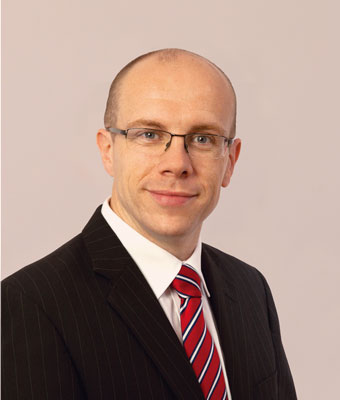
147. Deputy Darren O'Rourke asked the Minister for Defence if she will commit to a public plebiscite on the question of the removal of the triple lock; and if she will make a statement on the matter. [11687/26]
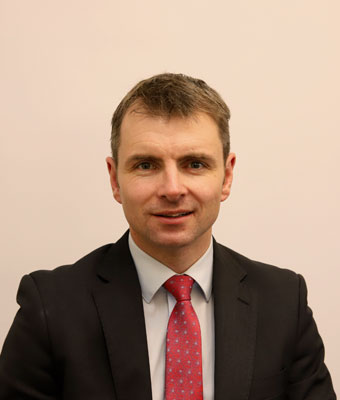
I know there has been much discussion on this already. I ask the Minister to commit to a public plebiscite on the question of the removal of the triple lock. Many have spoken in here, including Deputy Crowe, to the Irish people's belief in relation to an independent foreign policy, our neutrality and how they are completely against any movements away from this. They feel and believe the triple lock is that. It was offered previously as a protection and now it is being taken away.
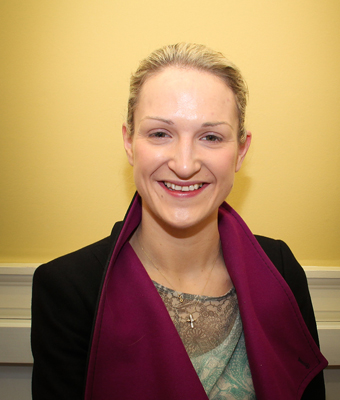
I thank the Deputy for the question. There have been a number of calls, including from Sinn Féin, for a public plebiscite in relation to the Government's proposed changes to the triple lock. It is important to highlight that there is a lot of conflation as to what is being proposed and what will be done and is actually being suggested.
This mechanism is not set out in our Constitution. What we are amending is not something that is set out in our Constitution, it is set down in national legislation, namely, the Defence (Amendment) Act 1960. Therefore, amending the legislation which governs how we deploy our Defence Forces overseas does not require a referendum. I need to be clear on that. Any suggestion that we are amending the treaties is simply not the case. That cannot be done without a referendum. We are amending legislation that was introduced in 1960.
The triple lock is a statutory mechanism, not a constitutional one. It is not enshrined in our Constitution and it was a political commitment during the Nice and Lisbon Treaty processes. It was a very different time, 1960. We are talking about a very different time given the threats and the changing landscape we are working in. Even when it comes to deploying our peacekeeping troops, that environment has changed. We now find ourselves in a situation where one of five countries can decide whether or not our Irish troops can travel to engage in peacekeeping missions, be it in Lebanon, the western Balkans or any other part of the world. I simply do not think it is acceptable that another country, be it the US, Russia, France, the UK or China, would decide where our troops are going.
I can commit and say very clearly that our legislation to change the triple lock will be very clear. Troops can only be deployed for peacekeeping reasons. It must be very clear where the missions are. They must comply with the UN Charter and international law and there will still be checks and balances. Instead of the UN mandate being a requirement, it will have to be approved by Government and the Oireachtas and where there are over 50 Defence Force members being deployed there will have to be a report sent to the Oireachtas committee. There is full transparency to what we are doing here.
The amendment of the triple lock does not amend the treaties or change our stance on neutrality; it simply changes the way by which we can deploy our troops. At the moment we cannot partake in any new mandated mission because they are simply not happening and they are simply not being approved by the council.
We start from the point of view of the UNDOF mission to the Golan Heights and the fact that it was a governmental decision to step aside and remove us from that operation that we have been engaged in for a huge period of time. That is down to the fact that there was a run-down allowed of the Defence Forces. The one thing the Minister will get agreement on throughout the Chamber and throughout the campus is that there has been a long-term failure to invest in the Defence Forces and that when we even spoke of neutrality we did not have the capacity to actually operate as many other neutral countries or states did. That is a failing that needs to be addressed and I am not quite sure that is happening. We are hearing statements from the Minister about how she is going to deal with the Russian shadow fleet. How is that going to operate on a day-to-day basis? In relation to the triple lock and what the Minister has proposed as regards checks and balances, how would they actually work?
Again, I keep hearing in the Chamber this evening that we are not investing in the Defence Forces and therefore this is somehow related to the triple lock. The triple lock is about how we send our Defence Force personnel. At the moment we have 436 troops, as of 31 January, on peacekeeping missions. That has nothing to do with how many members we have overall, which is over 7,000. I will be the first to say that we need to be more ambitious in increasing our numbers and investing in our capacity, increasing our spending and funding, doing more for the men and women of Óglaigh na hÉireann, making sure we are investing in new technologies, amending our legislation so it is fit for purpose, and that is what we are doing here.
We have to look, review and revise our legislation and ask if it is fit for purpose. That is no different for the Defence Forces. Is this fit for purpose? No. What was the whole purpose of it? That we would be able to send our troops to missions within UN mandate. It is not required by the UN and it is not something it requires from other countries. We imposed it on ourselves at a time when we lived in a very different dynamic politically and otherwise. We now have a situation where one of five countries can essentially say no, they will not let us send our troops to a mission because they have decided they do not want it to happen. That cannot be the case.
I do not think Irish people want us in a situation that we now have no ability to send our Defence Forces, which are renowned worldwide for the decades they have provided service in peacekeeping missions, to new missions unless they have a UN mandate that is there. Even at that, if we look at some of the smaller missions in the western Balkans, there is a constant threat that those mandates will not be renewed. The 85 troops I mentioned that we will have at the end of the year will potentially be even fewer. We are talking about a structure. We are not changing the treaties. This is not about our neutrality.
I get there is not going to be agreement. That could be taken from the first question, never mind some of the latter questions that were asked on this. I get that there is no constitutional requirement for the Government to call a referendum. I am just stating that asking the Irish people is the right thing to do. What engagement has there been in relation to changes to the triple lock? I will again ask the Minister to explain these checks and balances on what a peacekeeping mission is.
The Minister spoke about how this is only updating legislation, how it is absolutely necessary and that we are in a much different place from the 1960s. I accept that, but it is not like in the 1960s there was not the possibility of nuclear war. As far as I know, the Cuban missile crisis happened on 28 October,1962. They were very difficult times and these are very difficult times. Nobody needs Ireland to be a military superpower. We do not have the capacity to be one. We do need to make sure we have an up-to-date, upgraded Defence Forces that are fit for purpose, but we also need to protect independent foreign policy and that is the reason why we have been respected as peacekeepers throughout the world.
Respectfully, if we cannot send troops to engage in peacekeeping missions then we are going to lose that level of respect that we have had for many years. Countries will look at us and ask how do we not have the ability to send our own troops where we want to send them.
That is the situation we will find ourselves in. The world is changing. We need to update our laws. They are currently not fit for purpose when it comes to the deployment of troops.
In terms of the safeguards and checks, the legislation will be very clear. Troops can only be deployed for peacekeeping reasons, not for any reason or purpose other than peacekeeping. Of course, we will have to take on board recommendations and views from the Defence Forces, which will be part of this. There will then have to be a recommendation to Government which has to be agreed by Government. It will then have to be debated in the Houses, where everybody represents the people who elected them. That is where their voices are heard. There are then different stages within that.
If there is a mission with fewer than 50 troops, it will go through a particular process. If there are over 50 personnel being deployed, it will have to be sent to the committee afterwards to scrutinise whether the legislation was applied. The legislation itself, which we have not gone through and debated in the House, will have to comply with international law. We will be clear that any mission will have to be in line with the UN Charter. That will be debated and Members will be an opportunity to go through it when the legislation is going through the House. We all represent the people who have elected us. It is important that all of us, me included, engage with our constituents and those who want to discuss this. This is a really important issue and I am not minimising that, but I wish we would not conflate two things. This is not about neutrality; it is about how we deploy troops.
Defence Forces
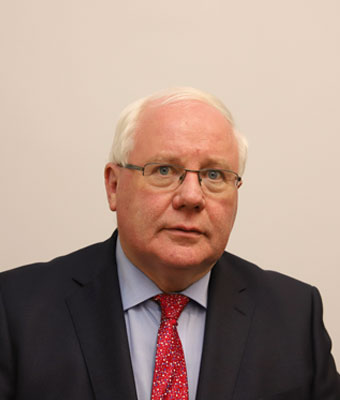
148. Deputy Brendan Smith asked the Minister for Defence the number of people currently enlisted in the Reserve Defence Force; the measures that will be taken to increase the number enlisted; and if she will make a statement on the matter. [12482/26]
This is the first opportunity I have had in this House to wish the Minister, Deputy McEntee, and the Minister of State, Deputy Byrne, well with their very important work in the Department of Defence. The implementation plan for the report of the Commission on the Defence Forces, published in November 2023, stated very clearly that the Reserve Defence Force, RDF, needs to be revitalised. For far too long, numbers have been much too low in the RDF. Will the Minister of State outline what particular measures he hopes to take to increase substantially the numbers participating in the important work the Reserve Defence Force carries out throughout the country?
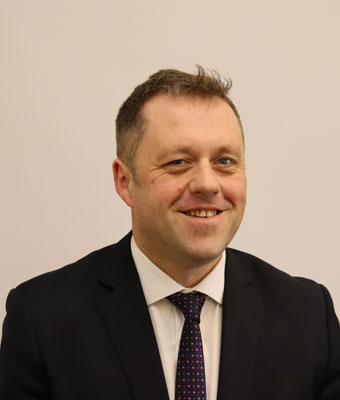
I thank the Deputy for the question. I will start by recognising the importance of the Reserve Defence Force to the State. In the past few years, we have witnessed a revitalisation of the Reserve. The strength of the Reserve Defence Force, as of the end of 2025, was 204 first-line Reserve personnel and 1,612 second-line Reserve personnel, which is comprised of 1,481 Army Reserve personnel and 131 Naval Service Reserve personnel.
The priority of Government is the modernisation of our Defence Forces and revitalising our Reserve Defence Force is a key part of this transformation. In that context, the Reserve Defence Force regeneration plan, published in July 2024, contains 27 actions across four objectives, namely, recruit and retain; resource; train and educate; and integrate and deploy. One of the four operational objectives of the plan is to improve the induction process, with the aim of achieving an effective strength of 80% by 2028. Recruitment increased substantially in 2024 and continues to gain momentum, with approximately 300 applicants in pre-induction training at the end of 2025. This growth will be reflected in the 2026 strength figures.
Implementation of the regeneration plan is being monitored to address any blockages arising and to ensure progress across the actions. Other areas of work under way in the Reserve Defence Force sphere include a new Reserve Defence Force recruitment system, which will result in a more streamlined and user-friendly process for applicants and a significant RDF advertising awareness campaign is in the final stages of development. This will be co-ordinated across all media, including TV and radio advertisements, to raise the public's awareness of the opportunities available in the Reserve Defence Force. Another area of work under way is the substantial expansion in the Reserve Defence Force budget, which continues to increase in pace with the enhanced role of the Reserve Defence Force. To illustrate this, the budget allocation in 2025 was €3.5 million and the Government has further increased it to €4.5 million for 2026.
I thank the Minister of State for his reply. I sincerely hope that the laudable objectives he outlined from the RDF regeneration development plan, which was published in July 2024, are implemented with as much impetus as possible. It is extremely important that we increase the numbers. The RDF should have a greater presence throughout the country and in each community. Deputy Crowe and I were on the foreign affairs and defence committee from 2016 to 2020. At that time, as Cathaoirleach of the committee, I invited the Reserve Defence Force Representative Association, RDFRA, to come before the committee. We gave its representatives an opportunity to outline the particular issues which, in the RDFRA's view, faced the RDF at that time. One of the issues, as the Minister of State noted, was the need for better advertising campaigns for recruitment and better support to ensure that retention levels are improved.
By and large, the Reserve Defence Force costs the State very little. The State could be much more generous in paying people for the time they are losing in their day jobs. In many instances, they have to undergo additional medical checks. The payments they get for those medical checks do not even pay the GP for the medical examination. Those types of things are small from the State's point of view but they are big to the individuals and addressing them could help to increase both retention and recruitment.
The regeneration plan was published in July 2024 and has four main priorities: recruitment and retention: resourcing; training; and integration and deployment. In relation to specific issues with Reserve Defence Force activities that attract payments, conditions under which reservists are paid for certain activities are set out in the Defence Force regulations. In 2023, a letter of instruction was issued that was not consistent with the regulations and items have been replaced with an updated guidance note.
The office of Reserve affairs has prepared a paper for the Defence Forces board about reserve activities that should attract a payment. The office has advised that the Defence Forces board is considering the content of the paper and the regulatory underpinnings of paid activities. It will be considered by Department officials once it is received.
As regards the Minister of State's final comments with regard to the review of particular services that can be remunerated, I hope that issue can be addressed. As the Minister of State knows, I grew up on the Border. I saw the importance of the Reserve Defence Force. In many instances, good members of the community got young people who may have been in certain difficulty into the Reserve Defence Force. The young people enjoyed the training and benefited a great deal from it. Many of them went on to serve in the Permanent Defence Force. Were it not for that conduit and avenue they had to enlist in the Reserve Defence Force, acquire training and skills and discipline in their life, God knows what would have happened to them.
Many people I know from the community along the Border where I grew up went on to serve this State, both at home and abroad, with great distinction and commitment. I remember referring to that one day at a committee meeting and many former members of the Army at all levels contacted me afterwards to say we should never forget the importance of the Reserve Defence Force in giving some young people who may have been vulnerable and came from what would be termed disadvantaged homes the opportunity to participate in the RDF and go on to very good and successful careers in the Permanent Defence Force and other trades and professions as well.
Recruitment has increased substantially, particularly in 2024. It slowed down in 2025 but the numbers were substantially higher than they were 2023. The numbers will be boosted by the number of applicants who were undertaking module 1 pre-induction training at the end of last year. Work has been done and numbers have gone up. That is very important.
There is a huge effort under way to attract more people into the Reserve Defence Forces, such as increasing the upper retirement age and mandatory retirement age. There is the implementation of a managed induction process, whereby a recruitment liaison officer maintains contact with applicants throughout the induction process to help facilitate an expeditious and efficient recruitment process. There is an on-boarding process which enables candidates to undergo pre-attestation recruit training. There is a significant RDF awareness campaign being developed, as I said, to raise public awareness. I would certainly love if Members of the Oireachtas were involved in spread the message. I suggest the Department make sure that Oireachtas Members are fully up to speed with the efforts being made by the Department and the military to enhance recruitment to the Reserve Defence Force. We can then encourage our constituents to take up these very important roles.
Question No. 149 taken with Written Answers.
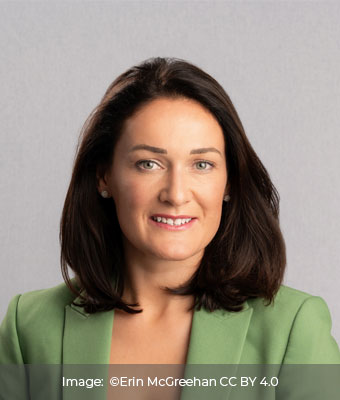
150. Deputy Erin McGreehan asked the Minister for Defence if she will report on the revised NDP defence sectoral plan for the period 2026 to 2030; the way in which defence infrastructure in Louth will benefit from this; and if she will make a statement on the matter. [12179/26]
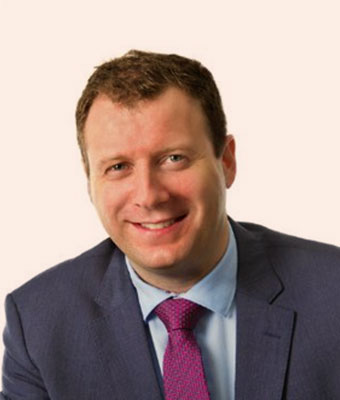
Deputy Smith will ask the next question, Ceist Uimh. 150.
First, I apologise for the absence of Deputy McGreehan, who has another commitment that clashed with the timing of questions here.
Three of us here, the Minister, Deputy McEntee, the Minister of State, Deputy Thomas Byrne, and I, are from the north east and any investment in Louth is important for our respective counties as well. Of course, I am thinking of Aiken Barracks, Dundalk, where many people from my constituency serve as well. It is important for County Meath as well. I sincerely hope that where investment is needed in that key military installation it would be forthcoming.
Last December, I was pleased to announce the record allocation of €1.7 billion in the NDP capital funding for defence from now until 2030. This represents an increase of €600 million or 55% on the previous baseline of €1.1 billion. For 2026, the defence capital allocation has increased by €66 million to €300 million. Obviously, we want every barracks and every area to be able to benefit from that spending. It is a clear demonstration of the Government's commitment to enhancing the capabilities, equipment and accommodation for our Defence Forces.
This capital investment in defence primarily supports the renewal, retention and acquisition of major defence equipment and the development of defence infrastructure and is a clear demonstration of the Government's commitment to delivering what we all spoke of here - modern Defence Forces capable of responding to what is an increasingly complex security environment that we live in.
The infrastructure development plan, IDP, sets out a programme of project delivery to 2027, reflecting the complex environment in which the Defence Forces operate and the corresponding need for appropriate infrastructure.
In order to progress the infrastructural projects more efficiently and deliver economies of scale, we are currently developing a series of infrastructural master plans. These plans will identify the infrastructure requirements for each installation along with an associated prioritisation schedule. These plans will dovetail with developments identified under the current plan and will also lay out requirements from 2027 onwards.
As the Deputy outlined, Louth has an extremely proud tradition in the Defence Forces. Aiken Barracks is an incredibly valued barracks for the people of Dundalk and for the surrounding areas. As a County Meath woman, obviously, it is close to me also.
Within existing IDP structures, a central heating upgrade and the installation of new electric vehicle charging points have recently been delivered to Aiken Barracks, with a dining hall upgrade currently ongoing. Work is also ongoing on the new dining facility and all of this will be completed in 2026 at a cost of €5.6 million. This will replace the catering infrastructure currently used by Defence Forces military and civilian staff and includes a kitchen, front-of-house dining facilities and co-located ration storage. It is essential, particularly when so much of our infrastructure and so many of our barracks are old. They need that kind of investment. It is important that we are investing in the day-to-day workings, where they are eating or sleeping, and where they are doing their training, because it is an investment directly in the men and women of the Defence Forces.
I thank the Minister for her response. Our colleague, Deputy McGreehan, will be glad to hear of the Minister's commitment to further investment in Aiken Barracks.
I am glad that the Minister emphasised that accommodation needs to be upgraded. As a member of the then Committee on Foreign Affairs and Trade, and Defence some years ago, I had the opportunity to visit some barracks and I have to say I was very disappointed with the quality of some of the living accommodation. In the meantime, I had a lot of engagement with the Taoiseach, as Minister for Defence, and with the Tánaiste, as Minister for Defence. Both of them had directed substantial additional funding - much necessary investment - in living accommodation and in the general barracks.
As the Minister said, people are working in that environment. They are living in that environment. Most people nowadays come from homes that are of a good quality. I have heard young recruits go into some of the barracks and to be fair about it, their living accommodation was not acceptable.
I know the barracks. It takes huge investment. They are old buildings. It is not easy to upgrade them. It costs a lot of money but it is a very necessary investment in our Permanent Defence Force. It acts as an attractive measure if there is decent living accommodation while a person is being upskilled and being trained to be a member of our Defence Forces.
I fully agree. If we want to not only attract people to the Defence Forces but to retain them, we need to make sure the environment that they are working and training in is fit for purpose and insofar as possible, that it is as modern as it can be.
When you look at the next NDP and the capital plan for defence, we have €300 million being spent in 2026. In the next few years, it is rising to €360 million. When you break that down further and you look at how much we are investing in what we have just discussed, there will be €400 million of investment in infrastructure. This includes accommodation, offices and gyms. You then have aircraft hangers and naval berthage but I have seen in Gormanston, which is in my constituency, the investment that is taking place where members will be sleeping, eating, going to the gym, doing their day-to-day activities and their duties. There is a real commitment here to invest directly in the physical built environment and infrastructure.
Of course, I want to be able to do more because we know that there are many more barracks that need to see that overall investment. As I said, the intention is that every barracks and every area will benefit from the significant increase. If more money can be found, obviously, more money can be invested as well.
I thank the Minister for her response. Deputy Timmins quite rightly referred to investment in cybersecurity. We all agree with that and we know the urgency of it.
In the report of the Commission on the Defence Forces of 2022, the preferred enlistment is 11,500 by 2028. That is the target that was outlined in that report. To cater for that enlistment that I sincerely hope will be reached and exceeded, additional accommodation is needed. The most modern barracks in Europe was Dún Uí Néill, Cavan, which, unfortunately, was closed in 2012. The buildings are still there intact. Quite a number of them are not being used for any particular purpose. I put forward to the Tánaiste and the Taoiseach, both of them in the Department of Defence, that that particular military installation should be utilised again by the State for defence purposes.
I do not expect the Minister to answer on this specifically this evening. There was a huge corporate knowledge acquired by members of the Defence Forces when they were based in Dún Uí Néill Barracks in Cavan right through the central Border area. As the Minister will be aware, the military barracks is Finner Camp in south Donegal and there is nothing in the central Border region until we go over to the east, to Aiken Barracks.
Thanks, Deputy.
What I have suggested, and some of the senior Army personnel at a committee said should be considered, and I would hope the Minister would ask her Department officials to consider, is that Dún Uí Néill could be opened again as a forward operating base-----
Thanks, Deputy.
-----where members of the Defence Forces could acquaint themselves with the topography and detailed knowledge of that Border region because we are in a difficult security situation and we never know what is ahead of us.
Deputy Ó Murchú has a supplementary.
We have already spoken about the issues in relation to retention and recruitment. It is necessary that resourcing, training, and particularly buildings, barracks and living accommodation would be up to scratch and we need to ensure that we see delivery in relation to Aiken Barracks.
Aiken Barracks has huge history. It has huge connection with Dundalk, and particularly that area in The Quay, where it is situated, and the 27th Infantry Battalion. There is a huge level of respect for those in the Defence Forces.
I have a question, obviously, for Dundalk and those involved with the military in Dundalk, and family particularly, on the sad loss of Private Seán Rooney. I would be grateful if I could get an update in relation to the Minister's engagements with the Lebanese and in relation to the necessity of finding justice for the late Private Rooney.
I will try to touch on a number of issues raised.
At present, our strength is 7,756 personnel. It is an increase of almost 200 on the previous year. While it is modest, we need to continue with that particular trajectory and I want to build on that progress achieved. I have set a target of 850 inductions for this year.
It is important that when we are talking about investment, we are not only talking about investment in the capital side of things. There are other ways in which, through current spending, we are able to invest and support the work of the personnel who are there.
We have €10 million to facilitate new Defence Forces uniforms, which is really important to make sure that we are supporting what they get up and get dressed into every day. There is €10 million in support for Air Corps fleet maintenance, as well as airfield and training costs. That allows them to carry out their duties and work.
There is funding for a number of other strategic priorities. Digital transformation, which is absolutely key and will be essential, is something that the Defence Force members themselves are keen to see advance in their work.
There is maritime security, national societal preparedness and resilience campaign initiatives. All of this funding is supporting the work that they do. It is not only about investing in the physical infrastructure, which is really important, but ensuring that they are enabled to do the work that they need to do is essential as well.
When it comes to Private Rooney, this is a case that I myself have raised directly with Lebanese officials. I hope to meet with his mother very soon, but I am conscious of how difficult and distressing a situation it is. I have been clear in my raising this very recently that we need to find answers and that we need to find a resolution for his family.
Of course, there were others who were involved in the incident itself. I want to acknowledge that and acknowledge the difficulty for their families too.
151. Deputy Brendan Smith asked the Minister for Defence the measures being taken to increase recruitment into the Permanent Defence Force; and if she will make a statement on the matter. [12481/26]
As the Minister is well aware, the Commission on the Defence Forces produced a very important strategy in 2022, and the subsequent implementation plan outlined a series of measures that needed to be taken to strengthen our Defence Forces. One of the key issues was the whole area of recruitment and retention of personnel. I welcome the progress that has been made, but I am sure the Minister will be the first to admit it is slower than any of us want. Are there any particular measures the Minister can introduce in 2026 to improve both recruitment and retention?
I thank the Deputy. Increasing recruitment and retention of personnel in the Defence Forces is a priority for me as Minister and for everybody here who has spoken this evening. As Government, we are committed to putting the resources in place to achieve level of ambition 2, and a crucial element of this is personnel expansion. A range of measures have already been undertaken to tackle recruitment and retention challenges in recent years. As a result, we have seen that stabilisation I mentioned and that modest increase last year of 200. I want to continue on that trajectory. I want to see the 7,756 personnel increase further, and I have set a target of 850 inductions for 2026. Obviously, that will mean making sure we also have the accommodation to be able to support those numbers.
It is very positive to see that interest in a career in the Defence Forces continues to grow, with a total of 16,510 applications received last year, which is quite a significant number. The challenge now for the Defence Forces is to convert those applications into inductions. The Defence Forces are currently formulating a strategic workforce plan to set out current personnel and skill sets, and to map out proposals to achieve that strength of 11,500 and to include a detailed civilian workforce plan, which is essential if we are going to reach those numbers proposed in the Commission on Defence Forces report by April 2026.
One of the key actions I specified in the recently published strategic framework was the need for the Defence Forces to submit a civilisation strategy for my approval not later than July this year. This will identify the different roles and approach to significantly increasing the scale and numbers of civilians working within our Defence Forces to support our Defence Forces personnel carrying out military tasks. It is very important, when we talk about increasing our numbers, that we focus on the fact we have quite a low percentage of female members in our Defence Forces. There will be specific targeted campaigns to not just highlight this is a career and opportunity for women but also to show that when it comes to many of the challenging issues that have arisen in the recent past and are still ongoing, whether it is cultural issues or sexual assault that has taken place, we are responding decisively and are acting on this. There is cultural change taking place and being driven by a body chaired by Patricia King and many others. I am committed to working with them in making sure people know when they come into the Defence Forces that these issues are being addressed, are being taken seriously and that every person knows they have a place and will be respected when they come to work every day.
I thank the Minister for her reply. Again, it is important we recognise there has been stabilisation in the whole defence numbers, with a welcome increase also.
Recent programmes for Government gave a welcome commitment to build on improvements in the recruitment process and, as the Minister rightly referred to, better representation of women at all levels of the Defence Forces. Are there any particular additional measures being proposed this year to implement those commitments?
Some years ago, there was a ludicrous position where people had to leave after 20 years and there was the age limit. Are there any considerations being given to changing the age limit with regard to retirement? When we had a very heavy Army presence in the Cavan-Monaghan area with two barracks, many relatively young people, unfortunately, had to leave the Army because they reached a certain age.
There are several things happening that we need to see continue to encourage more and enhance greater uptake when it comes to those who wish to join the Defence Forces. I have said the numbers wishing to join are pretty substantial, but it is about then translating them. My focus this year is making sure we have the accommodation we need for training and that we have enough personnel for those in our Defence Forces carrying out the training. There were changes made recently to provide allowances in that regard. It is important that those changes were made, but where more needs to be done, that is my focus this year in supporting the Defence Forces.
I acknowledge there is an ambition there within the Defence Forces to reach these targets and to go beyond that, because we all want to be ambitious in this regard. As I said, for female participation, there will be targeted campaigns and a particular focus on how we can encourage more women into the Defence Forces, but also how we can make sure they are reflective of the entire community we now live in and the new communities who have come to Ireland. We need to see in our Defence Forces what we see in our own communities. Several actions have already been taken in terms of the increase in recruitment and with the retirement age. The anecdotal evidence is we are starting to see that having an impact and helping when it comes to recruitment and retention, but anything that has changed recently will take time to see the overall impact of those retirement age changes.
I thank the Minister and very much welcome her emphasis on a greater increase in diversity within the Defence Forces.
In my constituency, my colleague Senator Diarmuid Wilson is a member of the defence and security committee and attended the event in Renmore Barracks last week. Several people referred to that particular event over the weekend at clinics and other gatherings I was at. This shows the general interest among the public in the well-being of our Defence Forces. It was good to see those people, the chaplain and his colleagues, being honoured in view of the very serious incident they faced. It is important that that good message, that the State looks after its members and cares for those who have faced particular challenges and have shown great bravery, is put out in the public domain. That was a good event and great credit is due to the Army and Department of Defence in organising it. People should be honoured when they go beyond the call of duty and take on specific challenges.
The Deputy has given me an opportunity to again acknowledge Fr. Paul Murphy and his four colleagues who came to his aid so bravely and unarmed when responding to what was a vicious and violent attack. Last week, I had the honour, with the Chief of Staff of the Defence Forces,of presenting them with the distinguished service medals. This is something that is not given out to everybody. This recognised their bravery, but more broadly, the way in which members of our Defence Forces go about their work and put themselves at risk and in danger in the protection of our State and in the protection of those they serve, which is each and every one of us. It is important to have these ceremonies to recognise when Defence Force members carry out these acts of bravery but also to recognise those who support them. As the Deputy said, it was a very positive day not just for those members but also for their family members and for the whole barracks, because this was something that was celebrated more widely.
Question No. 152 taken with Written Answers.
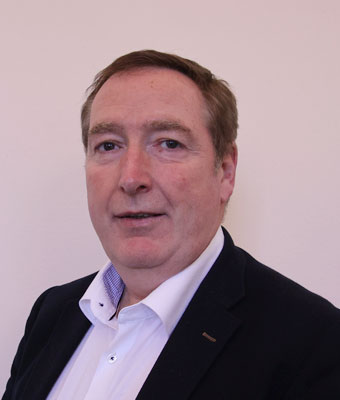
153. Deputy Tony McCormack asked the Minister for Defence the way the new strategic framework for the transformation of the Defence Forces will improve Defence Forces working conditions; and if she will make a statement on the matter. [12176/26]
As we all know in this House, members of the Irish Defence Forces serve the State at home and overseas in often high-risk and demanding roles. The level of commitment from Defence Forces must be matched by fair and sustainable working conditions. The Minister will be aware Ireland was recently found to be in non-compliance with the European Social Charter as regards the workplace conditions of Irish Defence Forces personnel. Will the Minister please advise the House how the new strategic framework for the transformation of the Defence Forces will improve Defence Forces working conditions?
The strategic framework, which I published on 10 February, highlights my Department's plans over the next 12 months to further improve working conditions within the Defence Forces. This is a commitment I will continue to champion, as will the Minister of State, Deputy Byrne, for defence and the Defence Forces. The key actions and outcomes to be delivered specifically include, first, career and talent processes and promotion systems. It is very important we see more of that and more opportunities for members. There will be policies to transform career and talent processes and promotion systems, developed by the Defence Forces, which will be submitted to me as Minister for approval, along with plans for implementation.
There will be a new process of culture surveys, of which we have already had the first with the Value Our People survey. This is the largest ever survey carried out with Defence Forces members and with the largest response ever. This looked at challenges members face, issues they feel impact on their ability to conduct their duties, reasons they would stay, what would encourage them to go and all these different types of questions. It is important we engage in these surveys to see what underlying issues there might be.
Annual climate and continuous attitude surveys like this look at morale, the command climate and underlying cultures, and they will be continued to be carried out. I think that every year we need to look at what more we need to ask and how we can respond to those kinds of question. The content and the proposed timeline for the surveys are to be submitted to the external oversight body. Flexible work practices are going to be looked at, in that the Defence Forces are tasked with making organisational changes to allow more flexible service and flexible work arrangements, with a pilot programme implemented in the coming months. Family-friendly policies are also being looked at, with extensions and enhancement of existing family-friendly policies to the greatest extent practicable. For example, we will consider the matter of overseas postings in recognition of the challenges faced by members where there may be caring responsibilities, including single parents or parents of children with disabilities, among others. There are gender perspective policies and actions. This involves the removal of gendered rules, regulations and standards that are unfavourable to women and others who do not fit the perceived norm. Finally, there are medical service reviews. These will see the development of an action plan to implement the recommendations arising from the review of medical services provided in the Defence Forces and commencing the implementation of that.
These are just a number of the actions specifically in the strategic plan that are focused on how we can support and make better changes to enhance the working environment for our Defence Forces members.
I thank the Minister for her reply. She will be aware that Defence Forces members frequently work irregular and extended hours. Compensation arrangements for overtime and public holiday duties have been a long-standing concern for members and must be addressed. Fair remuneration for additional hours worked is central to improving morale and retaining skilled personnel.
The bottom line is that a lot of work needs to be done to ensure our members have adequate working conditions. Members of the Defence Forces sacrifice so much to serve and protect our country and Irish citizens. Working conditions are essential to recruitment, retention and, without a doubt, the morale of members. The State must meet the standards that members show.
I answered a question on this earlier, specifically around the committee, its recommendations and the working times. Where members work additional or irregular hours, they are compensated through allowances and structured systems of compensatory rest. This is an element that addresses the time issue. In addition, the pensionable military service allowance, which is designed to compensate for the special disadvantages associated with military life, including the long and unsociable hours, is paid to all ranks up to the level of colonel. That military service allowance is also a pensionable allowance. While I fully accept the ECSR outcome, what I want to do now is look at the structures that are in place, the way in which members are paid for the additional or irregular hours, such as the bank holidays and the various different times, and how all of that aligns with the overall ruling of the committee in the last few weeks. I am committed to making sure that we are compliant. Obviously, we would work with the representative associations that are supporting their members and that brought forward that particular case.
I am happy with that reply.
Questions Nos. 154 to 161, inclusive, taken with Written Answers.
162. Deputy Ruairí Ó Murchú asked the Minister for Defence to report on any progress made in the investigations into the death of a Defence Forces member who was killed on duty in Lebanon (details supplied); and if she will make a statement on the matter. [12378/26]
What progress has been made in relation to those investigations that fall under the Minister's remit? I refer to the huge loss of Private Seán Rooney to his community, family, friends and comrades. I am talking about everybody in Newtowncunningham and across Dundalk. It is a matter of ensuring that we see the State playing its part in delivering truth and justice for the family of Private Seán Rooney.
I want to acknowledge Private Seán Rooney and the ultimate sacrifice he paid in his duty and service in the Lebanon and, of course, those who were with him on the day and who also suffered after what happened in the attack. I am absolutely committed to following on from the commitment of my predecessors, and everyone in this Chamber, in ensuring that we uncover the truth and get justice for Private Rooney, in particular for his family. I had an opportunity recently to meet the foreign affairs minister from Lebanon on a trip to Brussels. This is a case that I raised specifically with him and I asked for their continued support and engagement in trying to uncover the truth. In any engagement subsequent that I will have with my Lebanese counterparts, this will be raised.
More broadly, it raises the case of how we ensure that our Defence Forces personnel are supported and protected when they are on peacekeeping missions or otherwise out doing their duty. We need to make sure this is the case, whether they are serving on peacekeeping missions or whether they are at home carrying out their duties more broadly.
We will continue to engage with the Lebanese Government. We will continue to engage insofar as we possibly can on the ground to identify what has happened here to make sure that Private Rooney's family find the truth and get the justice they deserve.
I appreciate the sentiment and the promises the Minister has made. It is very important that we engage with the Lebanese. They made a number of promises, first of all to do everything they could with regard to apprehending Mohammad Ayyad, who was found guilty of the murder of Private Seán Rooney, and to appeal those other cases. I do not think anybody within this entire building or anyone you were to talk to throughout Ireland would be happy with the results. Some of the sentences were particularly disgraceful. What is the update in that regard? If the Minister does not have it, perhaps I can get it in writing.
There is an engagement with the UN. Beyond that, we had the independent inquiry by Mr. Michael Delaney SC. Where is that at? It is vital that we have learnings from what happened to Private Seán Rooney, Trooper Shane Kearney and all those involved. We need to ensure that we have best practice, that we have truth and justice for the family, especially for Seán's mother, Natasha, and that we learn what we can from what was a dreadful incident. It would have been a lot worse had it not been for the bravery of Private Seán Rooney.
It is very difficult for family members when this has been going on for longer than any of us would like. I would like to be able to give the Deputy a fuller update on the floor this evening, but unfortunately there are a number of different processes under way at home as well as our engagement with the Lebanese forces and the Government there and with the UN, as the Deputy mentioned. Whenever an incident occurs, particularly one of this magnitude, it is essential that the UN engage with us so that we can work with it on making sure that there is a very clear and firm response and that where changes or adaptations need to be made to any mission to make sure that troops are kept safe, that is the case as well.
There are a number of different strands under way at the moment. I appreciate how difficult this is for Private Rooney's family and for the other families as we are going through these different stages. It is my intention, as it is the Deputy's and everybody else's here, to get the answers we need as soon as possible so that we hopefully find ourselves in a situation where this does not happen again to any of our troops.
I agree with the Minister. I certainly hope that we do not have to deal with many more cases like that of Private Seán Rooney, who made the ultimate sacrifice. It is necessary that the State would follow through on that sacrifice.
I accept what the Minister has said about there being many strands in operation. Perhaps I could be updated on where that independent investigation is and be given whatever information can be provided on the engagement with and progress by, or lack thereof, the Lebanese. That can be provided in writing.
While I am here, and although I will be following up on this with the Minister later, are there any plans for updating the Army Pensions Act? I know there is a particular issue that is being dealt with and there is engagement with the Department at the minute. This is about ensuring that all families are treated right, particularly of those who have made the ultimate sacrifice. That is the piece we need to do in both life and death.
I am happy to keep the Deputy updated on matters, first and foremost to keep the family updated and working closely with the Defence Forces. I am happy to update the Deputy on this and on any other matters relating to pensions.
Questions Nos. 163 to 185, inclusive, taken with Written Answers.
186. Deputy Ruairí Ó Murchú asked the Minister for Defence whether there are plans to examine or revise the Army Pensions Acts to ensure fair treatment of families who have lost loved ones who are members of the Defence Forces; and if she will make a statement on the matter. [12379/26]
Will the Minister indicate whether there are plans - because there should be plans - to revise the Army Pensions Act and ensure fair treatment for families? There is a very particular issue that I have dealt with before. I know there is interaction between the man's family and the Department. I will not get into the specifics of that but in the long term we need to update that legislation to ensure we do right by the families of those who have made the ultimate sacrifice.
The Minister may give a response. That is all we have time for.
Like the Deputy, I will not get into specific details. I do not think it would be appropriate. I want to ensure we have legislation that ensures every member of the Defence Forces and their families are treated equally when it comes to pensions, particularly where a tragic incident has occurred. It is something I am engaging on and open to engaging on but I will not get into the specifics.
Is féidir teacht ar Cheisteanna Scríofa ar www.oireachtas.ie.
Written Answers are published on the Oireachtas website.