Special Educational Needs

Every child is entitled to an education and an appropriate school place. Sadly, many children are being denied this right across County Galway and the State. Children are being left in unsuitable places, not having their needs met and being denied equal opportunities and the chance to realise their full potential. I have been contacted by many parents and schools in relation to the urgent need for increased provision of special school places and special classes locally. I welcome the recent announcements of special classes in places like Clarin College in Athenry, Cummer National School, Corrandrum National School and Killeeneen National School, but there is clear demand for additional classes across Galway East.
There are a huge number of areas and schools. Every corner of the county needs increased provision. I will give a couple of examples. In Esker National School, a number of children there have applied for a special class place. Having a class in that school would enable them to remain in their locality. The Minister of State visited that school not too long ago. He knows the needs that are there, the pressure they are under and the difference this and any other additional supports that can be forthcoming to that school would make, as was discussed during that visit. In St. Vincent's in Coolarne, there is demand in the local area. The school has the appropriate space and facilities to provide inclusive education. It has been engaging on this for a number of years.
I also met with Ability West recently. One of the key issues for it and the families it works with is the provision of special class places and places in special schools. For example, St. Oliver's Special School in Tuam is totally oversubscribed. Many children are not getting the places they need. Again, the Minister of State has been at that school and is aware of the pressure they are under.
I also raise the 1 October deadline for letters of eligibility. This has left in limbo hundreds of children who missed that deadline. They cannot be considered for a special class or special school place because they do not have this letter of eligibility from the National Council for Special Education, NCSE. I have come across a situation locally where the child's professionals and his existing school have all stated that his current school place does not meet his complex needs, yet he cannot be considered for an alternative place. I have raised this situation with the Minister of State's office. These kinds of situations are desperately unfair on these children and their families because they are being left in limbo. It needs to be sorted urgently.
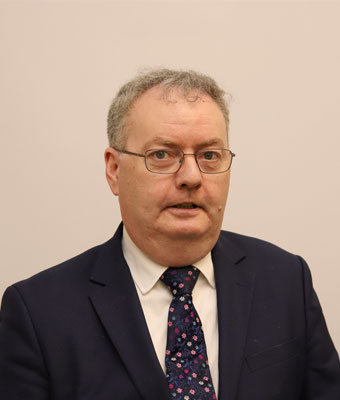
I understand fully the need for specialised provision of education across Galway. The Deputy is quite right. I did visit St. Oliver's and Esker National School recently.
I know the points he made in relation to St. Vincent's and the work being done by Ability West. The Deputy also raised an issue here, even though I did not directly respond to it, in relation to equine therapy and the equine centre. I understand that and welcome his interest in it.
I will give a small bit of context and then deal with a number of the issues. In County Galway, there are 180 special classes that are now operating providing capacity for over 1,080 students. This includes 12 new special classes for the 2025-26 school year. In addition, 16 new special schools have been established around the country over the last while. Seven of these schools are in County Galway and are educating 352 students with more complex educational needs. These schools are supported by the Department and the NCSE, National Council for Special Education. The NCSE has a clear picture of local demand for special class places for 2026-27 and is reviewing the information. As the Deputy quite rightly outlined, we have a number of announcements in relation to County Galway. I thank the school authorities, the patrons and the management of the schools for their engagement with the NCSE and our Department in relation to this.
The NCSE and ourselves will be working very closely with families either before or after 1 October. To be very clear, 1 October was the deadline we brought forward this year. In 2025, the notification date was 1 February. We very much felt this time last year that we were too late within the school year to have identified the children that would have special educational needs at both special classes and special schools. After my appointment this time last year, one of the first decisions we made was to bring in the new 1 October deadline, so that we would have sight of the challenges we have earlier in the school year. That has brought huge benefit to us in terms of the numbers and forward planning. Like previous governments, we have been berated in relation to forward planning but we are doing a huge amount of forward planning. There has been engagement by both the Department and the NCSE with the patron bodies and school authorities right through the summer and beyond. A number of families have come to the NCSE post 1 October. I assure the Deputy we will be working very closely with all families to make sure we can provide the best possible place for them in the 2026-27 school year.
The responsibility for that role is something that I take extremely seriously. In my engagement right across the country over the last 12 months, we have visited many schools, as the Deputy outlined. Many of them are looking for additional classes but many have additional classes and are doing amazing work in relation to this. The Minister, Deputy Hildegarde Naughton, and her predecessor, Deputy Helen McEntee, and I have worked extremely closely to ensure we are doing the right thing for children and their families. We have engaged with all Deputies right across the House in making sure the concerns they have, quite rightly, in representing families are brought to our attention. We will try to find a resolution between the NCSE, the Department and ourselves.
There are a number of areas across east Galway, including the ones I mentioned, where there is significant demand and the schools are ready to accommodate those classes. As much as possible, we need to see delivery on the ground. Parents want certainty around what will be available in their local area. As I said, there is huge demand. It is absolutely critical that adequate places are provided. Far too many children are not being provided with the appropriate place for their needs. Again, I urge the Government to resolve the issue of eligibility letters. Our spokesperson, Deputy Darren O'Rourke, has been working on this and raising it tirelessly because parents need certainty for next September. Children should not be locked out of an appropriate school place because of an arbitrary deadline of 1 October. The Minister of State mentioned that further information will be provided on this, but when is the question parents have and are coming to me with. They need certainty on this urgently.
For children who are in mainstream schools, it is absolutely vital that appropriate SNA and special education teaching, SET, support is in place. I will give two examples. I recently visited Cahergal National School. In recent years, the number of students has increased from 86 to 124, yet the school's support teaching hours have actually decreased from 38 to 37. All the school staff there work exceptionally hard but they need appropriate teaching hours to be able to properly support their pupils, especially those who need a little extra support. Similarly, Castlehackett National School's recent review of SNA hours was unsuccessful. Again, this is a fantastic school but it is a constant struggle for the teachers and SNAs to support children in the school and meet their needs when they do not receive adequate resources. I ask that these specific cases are looked into also, as well as ensuring we have adequate provision of special class places across the county.
I reassure the Deputy that the NCSE, the Department and ourselves meet on a weekly basis. We have 300 extra classes - 301 to be specific - sanctioned this year for the 2026-27 school year. That is four months earlier than it was previously because, as I outlined, we want to ensure that we have certainty and give information earlier to families. That is very welcome but we also have to work through a number of tranches of special classes to be announced over the next number of weeks. I assure the Deputy we are looking at notifications prior to 1 October. I explained why we brought 1 October forward in the summer and I thank the Deputy's party for welcoming it because it gave a sense we were going to have better planning. I reassure him that we will be working with those notifications both prior to and after 1 October to make sure we have the best possible supports in place.
There is a huge demand for special education teachers, support teachers and SNAs within the system. We have almost 25,000 SNAs working within educational services at the moment. We need to make sure that students who need specialised education are getting the best possible supports. I genuinely believe that the State will now put in the proper supports while they are of schoolgoing age. Last week, we announced education therapy services for 45 special schools. The intention and decision taken by the Government was that that would be rolled out to special classes and on to mainstream schools to ensure that children who have additional educational needs get the best possible supports at school time. This is because it will serve not just the students and their families but society well into the future.
Educational Disadvantage
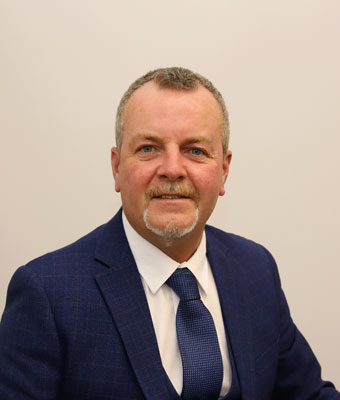
I thank the Minister of State for taking this question. As a Sinn Féin TD representing Cork East, and in line with my party's strong focus on tackling inequality and investing in disadvantaged communities, I ask for his active support in progressing fair DEIS provisions for students in Youghal who are experiencing persistent socioeconomic disadvantage. The Youghal urban area is home to 7,075 people: 5,276 adults and 1,799 children. The sociodemographic profile of the town shows that significant populations within the town experience varying degrees of disadvantage.
In January 2023, the board of management of Gaelscoil Choráin submitted a comprehensive, evidence-based submission to the Department of education seeking consideration under DEIS urban band 1. The submission was grounded in objective data, including the Pobal HP Deprivation Index, the Youghal community profile and Barnardos documentation, all of which demonstrated entrenched and persistent disadvantage in the school community. That same month, An Taoiseach, Micheál Martin, visited Gaelscoil Choráin and other schools in Youghal and witnessed at first hand the scale of complexity of disadvantage affecting students and families and acknowledged the significant challenges facing schools across the town. In June 2023, the Department of education refused DEIS urban band 1 status to the school. However, critically, the correspondence acknowledged the challenges faced by Gaelscoil Choráin and stated the submission would contribute to future work examining the allocation of resources to tackle educational disadvantage, including through a review process informed by updated deprivation data and the OECD analysis.
Since 2023, the socio-economic circumstances affecting this community have not improved. On the contrary, the concentration of need in the school has intensified. Gaelscoil Choráin serves a school community located in a designated revitalising areas by planning, investment and development, RAPID, town where disadvantage is persistent, cumulative and well documented. Independent and objective data sources, including the Pobal HP deprivation index, the Youghal community profile and the Barnardos document, clearly demonstrate a concentration of socio-economic disadvantage that significantly impacts students' educational, social and emotional well-being. Without the DEIS urban band 1 supports, this school is structurally constrained in its ability to deliver equitable educational outcomes for students experiencing sustained socio-economic disadvantage. Schools serving communities with comparable profiles benefit from reduced class sizes, targeted staffing supports and integrated DEIS interventions. These students do not, despite the clear evidence of need.
I am speaking on behalf of the principal of the school. The Minister of State heard about these situations from the previous speaker and other TDs as well. There is more than one school in my area of east Cork that is struggling without assistance. Principals in many schools in my area are reaching out. I met the Minister for Education and Youth, Deputy McEntee, and we were promised at private meetings additional classes for people with autism and special needs and additional SNAs, and told that if the school principals asked for them, they got them. At the time, I told the Minister I knew of six principals where those supports were not forthcoming.
I will stick to this school under Topical Issue Matters. I appeal to the Minister of State in his position - I again thank him for his presence tonight - to try to push for this, take it on board and progress it because we are all here to help people.
I thank the Deputy for raising the issue of the Gaelscoil in Youghal. This falls under the remit of my senior Minister, Deputy Naughton, so I am taking it on her behalf. Educational disadvantage is a key priority for the Minister, the rest of the Government and me. The DEIS programme is a key policy initiative for addressing concentrated disadvantage at school level. Supplementing universal supports, the DEIS programme provides a fair and targeted way to address concentrated educational disadvantage that promotes equity and meets the needs of children and young people. Currently, the DEIS programme supports almost 1,200 primary and post-primary schools, reaching almost 260,000 students, with an annual investment of over €180 million. Budget 2026 allocates an additional €16.5 million, rising to €48 million in 2027, to support the implementation of a new DEIS strategy and to introduce the DEIS plus scheme, which will commence this year.
Schools that were included in the expansion of the programme in 2022 were those with the highest concentration of children and young people at risk of educational disadvantage, as identified through the refined DEIS identification model. Schools were not required to apply for inclusion in the DEIS programme. The model was applied equitably to all schools - I will come back to that in a few moments - including those already in the DEIS programme to ensure that they were in the band that best addressed their level of disadvantage. Urban primary schools with the highest levels of disadvantage were assigned to urban band 1. DEIS urban band 2 schools also face significant need and receive a broad range of supports, including reduced pupil-teacher ratios, additional school grants, access to the home school community liaison scheme, the school completion programme, literacy and numeracy initiatives and targeted attendance and retention measures.
The Minister, Deputy Naughton, is committed to tackling educational disadvantage in all schools to ensure all children can reach their full potential. To this end, a new ten-year DEIS strategy to 2035 will be published in the coming weeks. The new strategy will introduce innovative solutions to address educational disadvantage and to continue to address the gap between DEIS and non-DEIS schools. Any future changes to the identification model and overall allocation of resources will be considered within the context of the new DEIS strategy. The new strategy will focus on improving the opportunities and achievement levels of children at risk of educational disadvantage, developing more innovative approaches to tackling educational disadvantage, and working towards a more flexible system of supports to ensure that schools receive the right level of support at the right time.
The Deputy mentioned Youghal. There were strict criteria for getting DEIS status. We understand the importance of DEIS status. The Deputy made the case for the Gaelscoil in Youghal. I will take it on board and take it back. A huge amount of work by the Minister and the Department has gone into the new strategy to make sure it comes forward and I welcome it. It will be announced in the coming weeks. The Deputy can rest assured that I will take on board the points he made about the Gaelscoil and feed them back to the Department.
I thank the Minister of State for the reply. Sometimes, it is hard to comment on individual cases. Going back to this school, it is three years on. The Minister of State spoke about the urban bands 1 and 2. I understand that the Department has to be fair and tick all the boxes. It is similar to what we have been dealing with in terms flooding with tranches 1 and 2.
The Minister of State mentioned the right level of support and, in fairness to this school in Youghal, it has made a strong case. It has been three years and nothing has changed. Thankfully, the population is growing despite being in a rural area, the lack of public transport and so on, which is a different issue. From dealing with the individual representing the school, I know these people are passionate. It is not about them getting a pat on the back; it is about doing the right things for those who need it.
As the Minister of State said, the right level of support is needed. I thank him for the response. It would be remiss of me if I did not say I will probably follow this up with a formal letter to the Minister, Deputy Naughton, because I know she is passionate about it and when people are new to their roles, it can be difficult at times. We have all often said that we do not come here to get a pat on the back. We come to do the right thing. That is what it is all about.
I understand there is the ten-year strategy, but everyone has an emergency. It is urgent, and after three years of full engagement and the Taoiseach coming to see it first hand, surely that first-hand experience would give it a better advantage.
I will certainly pass on the comments to the Minister. She brings a wealth of experience because she served in the role I am in now quite recently so has a good understanding and has hit the ground running on these issues.
It is not right. We are putting forward a programme and there is huge commitment by the Government. A total of €180 million is being put into this matter currently and more money will be pumped into it again this year and again in 2027. That shows that the Government, including the Minister, and the Department of education understand the positive benefits of DEIS for school communities and, more importantly, how it has helped students and given them the best possible chance in life. I constantly say it. We have done this continuously in Ireland. One thing we can be exceptionally proud of is the education system we have developed over 100 years. It has served us extremely well. The more investment we can put into education - the Deputy mentioned this in relation to special classes, but into all education, whether it is in disadvantaged areas or whatever - the better. It is a great leveller in terms of giving people the best possible chance.
The DEIS programme looks at making sure pupils stay in school and get the best possible outcomes from school. That may be difficult in some circumstances but we will work with the Deputy. If the Deputy puts in the full details, we will respond accordingly. There is just one thing. The Deputy mentioned Youghal being rural. Where I come from at the other side of the county, in a particularly rural part of the world, I would nearly call Youghal a city. That being said, I will continue to work with the Deputy.
They would be very glad to hear that. I thank the Minister of State.
Regulatory Bodies
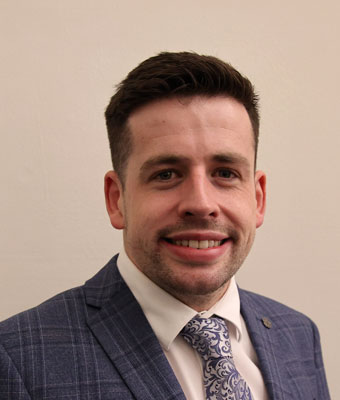
Gabhaim buíochas leis an gCeann Comhairle as an gceist seo a roghnú and I thank the Minister of State for being here. The lack of a regulatory framework and national standards for professional interpretation in judicial but also medical settings is an issue of huge concern in this country following the judgement by the Court of Appeal in the case of Director of Public Prosecutions v. HM and BO, which quashed the conviction of a married couple who were convicted of female genital mutilation, as the court found evidence of inaccuracies and distortions in the interpretation of the appellant's testimony, including the mistranslation of key legal and medical terms, omission of critical information, confusion of pronouns, and distortion of questions and answers which affected the jury's ability to accurately assess the appellant's credibility and reliability.
Government needs to take action to deal with the lack of training and testing of legal interpreters in this country. Interpreters should have a high level of proficiency in English and in another language. However, the ability to speak two languages is not enough. They also need to master legal terminology in both languages and to be familiar with regional variations of vocabulary and idioms. In addition, they require excellent short-term memory along with consecutive and whispered simultaneous interpreting skills. Further, interpreters must also be able to preserve the register used by the speaker. Interpreters also need to understand ethical principles applicable to legal and to medical interpretation. This is a specialised role that requires significant training and competence, but there is no accredited training for legal interpreters in Ireland. They are not tested to establish their competence and there is no national standards framework or professional code of ethics. That means in practice that anyone who can speak two languages can work as an interpreter in the courts, healthcare settings and other public institutions.
Without reliable interpreting services, language barriers can hinder everything from healthcare and education to legal processes and community integration. We need a strong legislative framework that underpins and regulates this crucial provision. It is not only necessary but fundamental to promoting equity and inclusion. We can look at the differential to Irish Sign Language because that got official recognition through the Irish Sign Language Act 2017, unlike spoken language interpreting, so there is a differential because this mandates public bodies to provide accredited ISL interpreters. The lack of a professional framework for spoken interpretation creates significant clinical and patient safety risks in medical settings when medical consultations rely on untrained staff or family members. There are also risks in education as schools often lack a formal policy or budget for this and frequently rely on children and friends to translate for parents.
This issue has been raised for decades. In 2008, the then Minister of State with responsibility for integration, Conor Lenihan, published a report, Developing Quality, Cost Effective Interpreting and Translation Services in Ireland. The report addressed the lack of regulation in Ireland's translation and interpreting sectors and there were a number of recommendations, including a whole-of-government approach, setting national standards, requiring specific qualifications, and establishing a central register of accredited interpreters. To date, no such centralised regulatory body or mandatory national register has been fully established across all public services. Nearly two decades after that, many of the original problems, such as the use of unqualified interpreters, persist in the legal, asylum and healthcare systems. There are examples in other jurisdictions where this has been done effectively, such as Italy and Sweden. All of the evidence and research tells us that this needs to be regulated.

On behalf of the Minister for justice, I thank the Deputy for raising this important issue. It is important to state that the Minister for Justice, Home Affairs and Migration has no role in individual court proceedings, nor can he intervene in operational matters that fall under the remit of courts, including the processes by which translation and interpretation services are provided.
Management of the courts is the responsibility of the Courts Service, which is independent in exercising its functions under the Courts Service Act 1998 and the Constitution. In relation to introducing State-accredited training, the Minister is advised that the Courts Service, like many other public service bodies, has a contract for interpretation services under the interpretation service procurement framework set up by the Office of Government Procurement. The Minister is further advised that this contract requires the contracted company to ensure that interpreters possess the qualifications and competence appropriate to the tasks for which they are employed. The contract agreed under the central procurement framework sets the standards for interpreters supplied to the Courts Service.
Ireland has opted into EU Directive 2010/64/EU. Article 5 states that Member States are required to take concrete measures to ensure the quality of the interpretation and translation services. However, the article does not mandate member states to establish a register. The Minister has been advised that there are no plans at present to create such a register. Where the court of its own motion, or on application by any of the parties to the hearing, considers that the interpretation being provided is not of such a quality as to ensure that the person before it can effectively exercise his or her right to a fair trial, it may direct that the interpreter be replaced.
The Minister has been advised by the Courts Service that on the rare occasion where an issue arises, defendants, with their legal representatives, can and do have the entitlement to inform the court that a defendant cannot follow proceedings because of the quality of interpretation. Where this arises, proceedings are adjourned until another interpreter is found. The right to fair procedures is a central tenet of our criminal justice system. Ireland opted into the EU directive on the right to interpretation and translation in criminal proceedings and it was subsequently transposed into Irish law. This was done via two statutory instruments, one relating to interpretation and translation in criminal proceedings, which relates to the arrangements to be put in place by the Courts Service in respect of the conduct of court proceedings and the second which relates to interpretation and translation for persons in custody in Garda Síochána stations.
I am disappointed by that response. The Minister of State referred to a directive of the European Parliament that compels member states to take concrete measures to ensure interpretation and translation provided meets the necessary quality standards. I have presented an example of where that did not happen. There is a line in the directive that member states must endeavour to establish registers of interpreters and translators. This is something that is best practice, which professional linguists and people such as Professor Mary Phelan in DCU have been calling for for decades. We need to move away from the concept that any bilingual person can be a competent interpreter. We need to move away from outsourcing because there is an issue with quality control. We need to have accredited, university-level courses for legal interpreters. We need a regulatory body and a register. We need for longer trials to have two competent interpreters. The UK has a new qualifications framework and a contract for spoken language services that was tendered in autumn 2024. We need to follow suit.
It is not just me who is saying this. People who are experts in in this field are saying it because we need to develop a framework for formal accreditation and a national register for spoken language interpreters in healthcare and judicial settings. There have been examples where people have gone into hospital and people have used Google Translate. It primarily concerns migrant healthcare. There is a report with recommendations. They just need to be implemented.
The Deputy makes his point very well in a very sound, fair and reasonable fashion but I remind him that the Minister for Justice, Home Affairs and Migration has no role in individual court proceedings. As I have previously noted, Article 5 of EU Directive 2010/64/EU requires member states to take concrete measures to ensure the quality of interpretation and translation services. A 2018 European Commission report on the implementation of the directive did not flag any issues of concern regarding Ireland’s approach to same and no open infringement proceedings are under way in this regard.
All procurement by the Courts Service is governed by EU directives on procurement that set out rules and procedures designed to ensure equal treatment, mutual recognition, proportionality and transparency in the awarding of public contracts. Procurement decisions must in all respects be fair and equitable and ensure value for money. The Courts Service must be able to justify decisions made and actions taken. In all cases, the Office of Government Procurement public procurement guidelines for goods and services, which set out the rules and best practice on the various stages of the procurement process, must be followed by all staff.
I reiterate that the Minister for Justice, Home Affairs and Migration has no role in individual court proceedings, including the processes by which translation and interpretation services are provided. On my behalf and that of the Minister, I thank the Deputy for raising this very important matter.
Road Projects
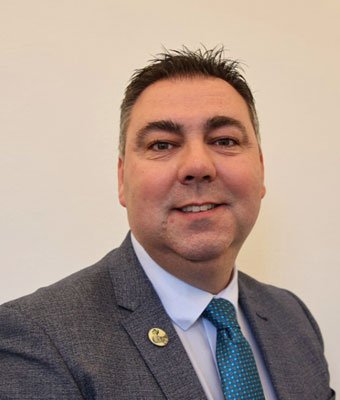
I welcome the opportunity to speak this evening on the importance of the N20-M20 motorway project for the Munster region and the urgent need to accelerate progress on its business case, the final design and planning during 2026. For far too long, the N20 corridor between Cork and Limerick has been recognised as one of the most congested, dangerous and inadequate national routes in the country. It is a road that no longer meets the needs of modern Ireland and certainly does not meet the needs of a growing and ambitious Munster region. Every day, thousands of commuters, families, students and businesses depend on this route. They experience long delays, unpredictable journey times and unacceptable safety risks. Communities along the route continue to bear the burden of heavy traffic passing through their towns and villages. This is not sustainable or fair.
The delivery of the N20-M20 motorway represents a once-in-a-generation opportunity to transform connectivity between the two largest cities outside of Dublin. It will strengthen the economic links between Cork and Limerick, support balanced regional development and help to unlock the full potential of the Atlantic economic corridor. This project is not just about building a road. It is about building opportunities, creating jobs during construction, attracting inward investment, supporting indigenous enterprise and ensuring that our region can compete nationally and internationally. For rural villages like Ballyhea and New Twopothouse and towns across north Cork such as Charleville, Buttevant and Mallow, improved connectivity will mean better access to education, healthcare, employment and public services. It will mean safer roads, reduced emissions from congestion and improved quality of life.
We have seen progress in recent years, and that progress must continue, but now we must move from project design to planning and delivery. This year must be the decisive year for this project. I am calling for a clear and accelerated timeline for the completion of the business case, the final design and the statutory planning process. These stages are essential but they must not become obstacles that bring about unnecessary delays. Transport Infrastructure Ireland, TII, in partnership with the Department of Transport and local authorities, must be resourced and empowered to progress this project at pace. We need certainty, transparency and accountability regarding these timelines.
Equally, meaningful engagement with landowners, communities and stakeholders must remain at the heart of this process. Progress must be made in a way that is fair, respectful and environmentally responsible. The people of Munster, businesses, farmers, landowners, commuters and families have waited long enough. We cannot afford another five years of reports, reviews and revisions while congestion worsens and opportunities are lost. This Government has rightly committed itself to balanced regional development. The N20-M20 motorway is essential to delivering on that commitment. If we are serious about strengthening regional cities, supporting rural Ireland and easing pressure on the greater Dublin area, we must be serious about delivering this project. I urge the Minister and the Department to make the N20-M20 a top strategic priority in 2026, to set out a clear road map to construction and to provide the funding and the leadership necessary to bring this to fruition. Munster deserves modern, safe and reliable infrastructure. Our people deserve better connectivity, our businesses deserve certainty and our region deserves the opportunity to thrive.
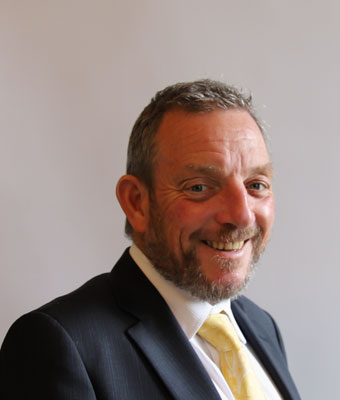
The Deputy is dead right. I thank him for his ongoing support and advocacy concerning the importance of the N20-M20 as a county councillor, as leader of the council and as a new Teachta Dála. He illustrated very clearly here the strategic importance of the road. He is 100% correct. I speak as a Cork person when I say that people have waited far too long. It is the piece that we are missing in our region for a variety of reasons, including safety and economic sustainability. I thank the Deputy for his very thought-provoking address tonight here to the House about this strategically important route, which is a priority for the Government.
The proposed project aims to enhance regional accessibility by improving the network connecting the cities of Cork and Limerick but also by improving connections to west Cork and Kerry along with that piece the Deputy spoke about, namely, balanced regional growth, especially in north Cork. The N20-M20 Cork to Limerick project will provide not just better connectivity between the second and third largest cities in the State. The Deputy outlined that towns such as Buttevant, Croom, Charleville, Mallow, Blarney, New Twopothouse and Ballyhea will benefit but it will also address safety and the deficiency on the existing road and will deliver active travel infrastructure along the corridor along with the better opportunities we all want.
The N20-M20 road corridor options were progressed by TII with public transport alternatives and rail as comparators. Following this appraisal, TII announced the preferred solution on 20 March 2022. The preferred solution involves building a dual carriageway or motorway along the existing N20 corridor between Cork and Limerick and would use 30% to 40% of the current N20. In the course of arriving at the preferred solution, the project team looked at rail options and highlighted the provision of improved services on the existing rail network as a means of enhancing public transport between Cork and Limerick. The design team is currently engaged in the design and environmental evaluation phase of the project. This will include selecting the type of road in addition to the preparation of the scheme's business case, which is required under the infrastructure guidelines.
In June 2024, a briefing took place for public representatives as part of the project team's ongoing engagement process. In considering various options in relation to the delivery of this project, the project team is currently recommending that the scheme should be tolled. However, no final decision has been taken in this regard. The introduction of tolling would be subject to compliance with the requirements of the infrastructure guidelines and further statutory approvals. A further project update on 16 June 2025 provided further details, particularly regarding the refined requirements relating to land take. The scheme's preliminary business case is expected to be submitted to the Department of Transport in the second half of this year. Subject to Government approval as is required under the infrastructure guidelines, the submission of the statutory documents for the project to An Coimisiún Pleanála would follow thereafter. TII allocated €4.5 million to Limerick City and County Council to progress the scheme during 2025. Allocations for 2026 will be announced in the near future.
I assure the Deputy that I am, as he is, very supportive of this particular project and recognise its importance as we have said, for a variety of reasons, but most importantly from a safety, economic and sustainability point of view. This road needs to be connected. It is that piece that is missing in the connectivity of our country and as two Cork Members and representatives, we understand fully what could happen when this new road is built in terms of the new life it will breathe. The people of that area deserve for this road to be delivered expeditiously. I thank the Deputy for his ongoing work and support and for being a long-time champion of the road.
I thank the Minister of State for his kind words relating to this project. It is a very detailed project and there is a lot of money involved, but I welcome the fact that in his response, he said the scheme preliminary business case is expected to be submitted to the Department of Transport in the second half of this year. This is very welcome news. We need to keep this momentum going, and subject to Government approval, which I am sure will come as is required under the infrastructure guidelines, the submission of the statutory documents for the project will be forwarded to An Coimisiún Pleanála. I thank the Minister of State very sincerely for his response.
As two Cork TDs in this area, we met the representatives of Cork Development Forum recently in Leinster House, and the Cork Chamber of Commerce. There is huge backing to finally proceed to get that infrastructure project between Cork and Limerick together. It is very important and poignant that today further infrastructure announcements were made by Government to move the delivery of infrastructure more quickly. That is very much where the N20-M20 project is at. I hope this project will fit into this Bill. Like the lengthy duplicative processes, the project will undergo a streamlined, time-bound internal review by the Department of public expenditure. The kind of practical reform the Government wants to see is when infrastructure is ready to go, the system should help it to move and not hold it back if at all possible. I thank the Minister of State for his comments on the project. It is important that we collectively, as Corkonians but also as Government representatives, move forward and match the words with actions to ensure that this N20-M20 project motorway moves decisively from aspiration to reality.
The Deputy is right that it is time to move from aspiration to delivery. That is why the Tánaiste was very clear about the need for the development of expeditious projects to be progressed, with the whole issue around infrastructure development and the need for a specific department of infrastructure. The Deputy and I really listened to the Cork Development Forum and the chamber of commerce and other business interests and a variety of interests relating to the N20-M20 project. It is included in the NDP and received, as he knows, significant funding in 2024. This year’s funding allocation is due shortly and it will receive money.
The proposed project is critically important in terms of connectivity, not just from a Cork-Limerick perspective but also from the perspective of other regional towns as we have articulated and outlined. It is important to outline to the House that approximately €502 million of Exchequer capital funding was provided last year to TII in line with the NDP and Government policy, and TII sought to allocate national roads funding to local authorities in a manner that seeks to deliver in protecting existing rural projects and major projects that are to be progressed or are in or near construction, such as that we were talking about in terms of pre-construction, but also in the context of new roads.
The N20-M20 is one we need to see delivered. We have seen the benefit in our own county in the Baile Bhuirne-Macroom bypass, in the importance of the Dunkettle interchange upgrade, and we need to see more happening in terms of the N40 where we have gridlock every day. We need the Atlantic economic corridor to be developed so that we can improve the offerings of jobs in west Cork, north Cork and dare I say it, Kerry as well. This is about ensuring the N20-M20 is built. People have waited long enough. The potential to reduce road fatalities and accidents is there for all to see from a safety point of view. I look forward to working with all Members, but in particular Deputy O'Shea, to deliver the project on behalf of the Government.
Cuireadh an Dáil ar athló ar 10.35 p.m. go dtí 9 a.m., Dé Céadaoin, an 11 Feabhra 2026.
The Dáil adjourned at 10.35 p.m. until 9 a.m. on Wednesday, 11 February 2026.