Community Development Projects
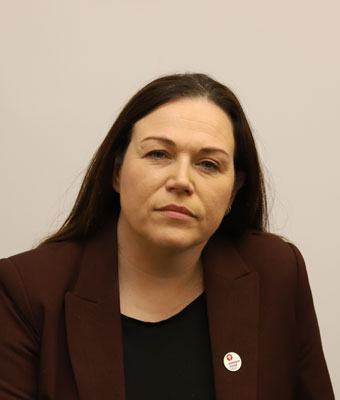
1. Deputy Louise O'Reilly asked the Minister for Rural and Community Development and the Gaeltacht the measures in place to support community centres with ongoing operational pressures such as energy, insurance, and staffing costs, beyond one off capital grants. [8731/26]
This is a fairly straightforward question with which he will be familiar. I am seeking to understand and to get some information from the Minister of State in relation to those non-capital grants. We understand the capital grants and the schemes but I ask about the actual level of funding that is available to cover those costs, such as energy, insurance, staffing, etc. This relates to the stream of funding that will go beyond the capital grants.
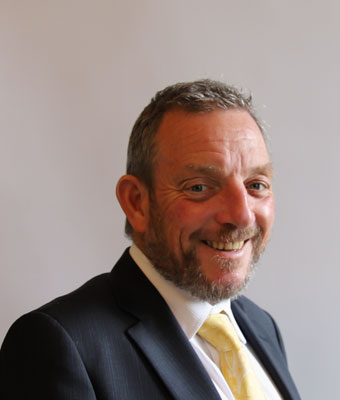
I thank the Deputy for her very important question. The Minister, Deputy Calleary, and I are aware of the challenges that many large community groups that operate community centres face in relation to the operation and staffing costs. In our consultation processes for the new strategy for the community and voluntary sector, it has emerged as an issue of concern. As the Deputy knows, the community and voluntary sector is quite diverse and receives financial support through a variety and wide range of funding programmes and schemes from several Government Departments and agencies, including our Department.
Our Department's community service programme, CSP, for the four year period from 2023 to 2027 currently supports the delivery of 445 local services, which is 426 organisations. It is a total allocation of €59.4 million for this year alone. Some 78 community centres and other community facilities are funded under the CSP, supporting a total of 380 staff posts, 53 managers and 327 full-time equivalent staff. This amount of total funding allocated is €36.2 million over the current five-year timeframe of this programme. In line with the programme for Government commitment and together with the Minister, our Department last year announced our intention to hold an open call early this year on the new CSP programme. The design of this open call is under way. Details, including eligible community services and organisations, will be announced in the coming weeks.
In the Gaeltacht region, there is a comprehensive development approach to managing the increased demand for funding from Gaeltacht community development organisations, with a 59% direct increase in funding to these organisations. Both the Minister and I are very much aware of the issues and challenges our community centres, which are operated in the main by voluntary boards, are facing.
I thank the Minister of State for his response. The purpose of the question was to try to isolate those specific funding streams separate from grants that will contribute towards the physical running. The Minister of State is right that they are in the main run by volunteer boards. However, they are employers as well. It makes things very tricky. There have been welcome increases in the minimum wage. That has a knock-on consequence for other people who are working. Costs like energy in particular are rising. What we saw in the aftermath of Storm Éowyn and Storm Chandra was how badly exposed some, although not all, community centres were. They are a bit of a beacon in the community. People think when everything is gone they will head to the community centre and it is like a hub. In some instances, they were not sufficiently staffed to be able to respond. They are now having to cope with the energy bills. There is a huge increase in energy. The money available is not matching that level of increase.
The points the Deputy made are fair comments. Both the Minister and I are very much aware from our own involvement and engagement. We have travelled the country and met with the community and voluntary sector. As a former director of my own community association, I know they are very resilient in sourcing funding from a variety streams. In the budget announced last November, there is a 6% increase in funding from our Department, which is a demonstration of the ambition the Minister and I have in terms of supporting and developing community organisations in our rural towns, urban suburbs and communities across the country.
This is a very genuine point. As part of the consultative process for Our Rural Future and in new the community and voluntary sector strategy, there has been a strong articulation of the points the Deputy has raised. Both the Minister and I will reflect on that as we look at the new Our Rural Future design and the community and voluntary sector strategy when we publish it later this year.
Can I be a bit a cheeky and hijack my own time for a moment to remind the Minister of State that he promised me he would visit Foróige in Balbriggan? I will follow up with him again after this.
I understand the Minister of State is listening and hears what is being said. What I am trying to find out is how that is going to manifest itself in terms of money so that the community centres can be sure they are going to be in a position to be able to pay their energy bills. The fear many of them have is that they are not going to be in a position to fund because energy costs have risen. They are not coming down. Even if the pace of increase has slowed a small bit, they have not come down. For very many, they are unaffordable. When times were very hard people, particularly in the aftermath of Storm Éowyn and Storm Chandra, they went to their community centre as a beacon. We do not want the lights not being able to be turned on there.
I look forward to going to Balbriggan. The Deputy was to come back to me with the invitation to arrange it.
I thought I had done that but I will do it.
I would love to do that because it is very important to support that organisation. The Deputy raised that already.
The reality is that we have seen - for example, in the community services programme - an increase of €4 million to €59.4 million this year. We have seen a 6% increase in the budget. We will reflect on the articulation by the community and voluntary sector in terms of the preparation of the strategy and in the consultative process for the new Our Rural Future. I assure the Deputy the Minister and I are very much rooted in this sector. We want to ensure the challenges that are being encountered will be considered in the development of any new policies. When we had Covid and the cost-of-living crisis, and energy was at its core, the Government was not found wanting. Again, our community and voluntary sector is very resilient in the sourcing of funds. We will look at what we can do to support what is a very important pillar of our society.
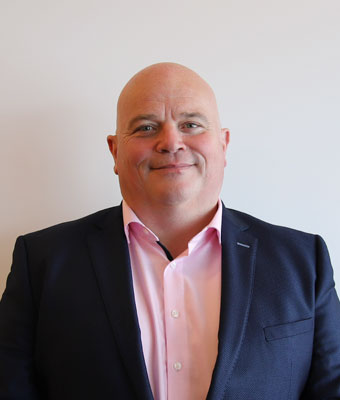
2. Deputy Mark Wall asked the Minister for Rural and Community Development and the Gaeltacht when a new programme for community centre investment will be announced given the urgent need of many community centres; and if he will make a statement on the matter. [8769/26]
Staying with the topic of community centres, will the Minister inform the House when the Government might announce a new programme for community centre investment given the serious issues many community centres are having at the moment in increasing what they have to offer for the public and if he could make a statement?
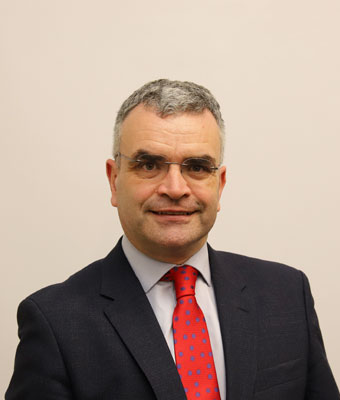
I thank the Deputy for his question. Both the Minister of State and I agree and recognise that community centres can be at the heart of every community and that they are a vital resource for any city, neighbourhood, town or village. Since joining the Department, we prioritised investment in community infrastructure. As part of budget 2026, we secured increased funding for the programmes delivering on this priority, including an increase in the annual budget for the community centre investment fund, CCFI, of €3 million to €20 million. The CCIF was introduced to provide high quality, accessible, community spaces that are available to groups in all communities in both rural and urban areas. Through the CCIF, €110 million has been allocated since 2022 for the enhancement and refurbishment of existing community centres and the construction of a number of new centres where such a need has been identified. I am committed to delivering further iterations of the CCIF in the coming years.
Following meetings with the Minister of State and myself, our officials are currently finalising the details of the next call for applications. This call will focus on refurbishment to existing community centres. I expect to open this new round of funding to applicants in the coming months with a view to announcing successful projects before the end of the year. We also support community facilities with enhancement works through a range of other funding streams, including capitally through the CLÁR programme, LEADER and the town and village renewal scheme.
I thank the Minister very much for his reply. We are all aware of the importance of community centres throughout the country and no more so in my own area. Tonight, I will have a meeting of my own local community centre where we will discuss all things relevant, including funding and how we can expand what we can offer to the local community. It is very welcome that there is to be additional funding allocated. How quickly can that happen? The Minister said the announcement will be this year and then there will be funding announced before the end of the year. A lot of the community centres I am dealing with are having issues around heating, lack of heating, heating that is obsolete, etc. It is making a difference, particularly over the past number of weeks, in that they cannot open their doors. That is the issue I wanted to raise with the Minister today. I am glad the Government will concentrate on refurbishment more than anything else. The heating systems in many of these local halls and community centres are so old that they are not fit for purpose. I would welcome it if the Minister could confirm that is the type of infrastructure the Department is looking at.
I confirm that will be part of the iteration. We are trying to make it as broad as possible. As the Deputy and Deputy O'Reilly said previously, these centres provide very important services. Many of them were built at different times when energy costs were not quite causing the pressure they are now. Regarding the impact of the CCIF today, 93% of centres that have been funded under the CCIF have reported an increase in user numbers following the upgrades, with new improved accessibility, inclusivity and comfort. There has been further engagement from older adults, people with disabilities, families and marginalised groups reflecting to the new centre and new investment. Energy upgrades have been a major feature of the CCIF refurbishment process. They will continue to be. We will work closely with colleagues in the CCIF to give the best possible advice to community centres through local authorities. The vast majority of them have voluntary boards of directors. I want to make sure the new iteration of the CCIF is as easy as possible for those volunteers to access in an efficient manner.
The Minister mentioned a very important point. Tonight, at our meeting, there will probably be six of the locals who have been there for the past 20 to 30 years. They are the volunteers who keep that particular community going. As the Minister just did and the Minister of State previously acknowledged, it is always important to acknowledge those volunteers. In relation to the disability and marginal groups, there is a growing demand in urban areas for centres for marginalised groups. In relation to new centres, an area I have raised with the Minister before is the conversion of derelict buildings into community centres. Is that something the Minister will look at? I have mentioned previously rural schools that have become obsolete in some cases and unfortunately have closed in other cases.
Again, is that something the Minister will look at? Obviously, those with a disability and those from marginalised groups need to meet, and need to have a location where they can meet. There are a number of obsolete and derelict buildings that could be used for these purposes. Is that something this fund would encourage?
It is. It is my intention in 2027 to have a specific round of the CCIF for new-build centres. The then Minister, Heather Humphreys, announced a range of those in 2024. We are getting all of those into construction at the moment. There are about 12 nationally. Under the town and village renewal scheme, through the buildings acquisitions measure, local authorities can identify properties that are derelict within communities for a number of uses. We have funded the acquisition of properties for use as community facilities for exactly the kind of groups the Deputy has looked at. We have done similar through LEADER. I encourage any group to look at the town and village renewal scheme if they want to invest in a new centre, particularly within an existing community. I gceantair Ghaeltachta freisin, tá airgead breise le haghaidh hallaí agus hallaí pobail a bhfuil daoine ag iarraidh infheistíocht a chur isteach iontu. We have a range of supports across every section of the Department, predominately in capital. As the Minister of State, Deputy Buttimer, has outlined, both he and I are working with the CCIF to try to assist that programme too.
Scéimeanna Teanga
3. D'fhiafraigh Deputy Aengus Ó Snodaigh den Minister for Rural and Community Development and the Gaeltacht an nglacann sé le focail an Bhreithimh Humphreys san Ard-Chúirt sa bhreithiúnas maidir le cás Wild Ireland Defence CLG in aghaidh an Choimisiúin Pleanála, an Aire Tithíochta, Rialtais Áitiúil agus Oidhreachta, an Ard-Aighne, agus an Aire turasóireachta, cultúir, ealaíon, Gaeltachta, spóirt agus meán, go bhfuil sé “seafóideach” agus “áiféiseach” a rá go bhfuil feidhm dhlíthiúil fós ag na scéimeanna teanga; an aithníonn sé nach bhfuil dualgas ar na comhlachtaí poiblí na scéimeanna teanga a chur i bhfeidhm a thuilleadh; agus cathain a fhoilseofar na caighdeáin teanga atá le teacht i gcomharbas orthu. [8767/26]
Tá an cheist seo dírithe ar an Aire toisc an breithiúnas a rinne an Bhreithimh Humphreys san Ard-Chúirt maidir leis na scéimeanna teanga. Dúirt sé go bhfuil sé "seafóideach" agus "áiféiseach" le rá go bhfuil feidhm dhlíthiúil fós acu. Cathain a bhfoilseofar na caighdeáin teanga atá le teacht i gcomharbas orthu siúd?
Gabhaim buíochas leis an Teachta as an gceist. Tá an Roinn ar an eolas faoi chás cúirte a tógadh i rith na bliana anuraidh, inar tarraingíodh ar ghnéithe bainteach le hAchtanna na dTeangacha Oifigiúla mar chuid de. Mar a luadh roimhe seo, bhí mo Roinn ag feidhmiú i gcónaí de réir comhairle dlí a bhí faighte ar an ábhar roimhe seo, ach mar bheart taca sa bhreis agus chun aon amhras a sheachaint sa tréimhse idir aisghairm na scéimeanna teanga agus teacht i bhfeidhm na gcaighdeán teanga, tá leasú molta ábhartha ar an Acht sin áirithe sa Bhille um Údarás na Gaeltachta (Leasú), 2024. Ó tharla nach bhfuil an Bille sin achtaithe go fóill, scríobh an Roinn chuig gach comhlacht poiblí i mí na Nollag 2024 le meabhrú dóibh nár chóir aon laghdú a theacht ar leibhéil na seirbhísí Gaeilge atá á soláthar acu le linn na hidirthréimhse seo.
Leagann an tAcht leasaithe amach nach féidir le caighdeáin teanga leibhéal níos lú seirbhíse trí Ghaeilge a fhorordú ná mar a bhí geallta roimhe seo faoi scéim teanga nó eile. Chuige sin, tá athbhreithniú cuimsitheach déanta ar na scéimeanna teanga reatha go léir mar chuid den obair dhréachtaithe ar na caighdeáin teanga, atá ag teacht chun críche anois. Áirítear roinnt gníomhartha bainteach le nithe a fhorordú trí na caighdeáin teanga sa phlean gníomhaíochta um sheirbhísí poiblí Gaeilge a sheol mé le déanaí, chomh maith leis na bearta atá le tacú le comhlachtaí poiblí agus iad á gcur i bhfeidhm. Agus an plean sin foilsithe anois, tá sé i gceist tús a chur leis an gcomhairliúchán ar na dréacht-chaighdeáin go luath trí na meicníochtaí aitheanta faoin Acht.
Gabhaim buíochas leis an Aire. Is léir ón bhfreagra go raibh comhairle dlí i gceist agus gur aithin an Roinn go raibh fadhb bhunúsach ann. Gealladh dúinn nuair a bhí muid ag déanamh plé ar Acht na dTeangacha Oifigiúla go mbeadh na caighdeáin ann sar i bhfad. Ó thaobh an dlí de, ba chóir go mbeadh siad ann roimh dheireadh 2024. Tá na scéimeanna teanga as ord. Ní ann dóibh. Tá sé seafóideach agus áiféiseach a bheith ag brath orthu. Táthar ag brath ar dhea-thoil nó treoir ón Aire do na comhlachtaí poiblí gur chóir dóibh rud éigin a dhéanamh nach bhfuil go hiomlán dleathach má théitear de réir an méid atá ráite ag breitheamh na hArd-Chúirte. An príomhcheist ná cén uair a mbeidh feidhm dhlíthiúil ag na caighdeáin. Tá an tAire díreach tar éis a rá go dtosóidh comhairliúchán. Ní hamháin nach bhfuil siad foilsithe, in ainneoin gur gealladh dúinn go mbeadh siad foilsithe laistigh de thrí mhí, ach tá an tAire anois ag caint faoi chomhairliúchán. Mar sin, ní bheidh siad i bhfeidhm, de réir cosúlachtaí, roimh dheireadh na bliana seo.
Tá an-obair idir lámha ag mo Roinn ó achtaíodh an tAcht ar dhréachtú na gcaighdeáin teanga. Sa mhéid seo, táimid ag tabhairt aird ar chúrsaí níos luaithe go sonrach san Acht atá le háireamh, nithe atá le foghlaim ó thaithí na Breataine Bige, áit ina bhfuil córas ag feidhmiú go héifeachtach anois agus ar thóg sé roinnt ama an chéad dréacht a aontú. Tá an plean gníomhaíochta foilsithe anois. Tá sé i gceist tús a chur leis an gcomhairliúchán ar an dréacht ach tá an t-uafás oibre tar éis dul isteach sa dréacht sin agus beidh a lán sonraí ann. Bhí cruinniú leis na hoifigigh sa Roinn atá ag déileáil leis na dréachtaí an tseachtain seo caite. Tá muinín agam go bhfuilimid réidh le dul ar aghaidh go dtí an comhairliúchán sin chomh luath agus is féidir. Beidh mé ag cur brú go mbeidh sé déanta go tapa. Cé go bhfuil an dréacht agus na caighdeáin chomh tábhachtach, tá sé tábhachtach freisin go mbeidh am ag daoine iad a phlé. Tuigim an gá atá ann dóibh. Is rud an-tábhachtach dom é go mbeidh siad foilsithe. Tá sé tábhachtach freisin go mbeidh muid in ann caint le daoine fúthu agus aon bhuairt a bhíonn ar dhaoine faoin ndréacht a thuiscint.
San idirlinn, an bhfuil sé i gceist leanúint leis an leasú a bhí an tAire ag cur chun cinn maidir leis an mBille a bhaineann le toghcháin Údarás na Gaeltachta? Is féidir é sin a chur chun cinn mar Bhille ann féin agus an reachtaíocht maidir leis na toghcháin a chur ar athló, mar atá déanta ar aon chaoi, mar tá éigeandáil ann anois nach bhfuil aon fheidhm dhlíthiúil ag na scéimeanna. D'fhéadfaí rún nó Bille éigeandála a thógáil os comhair na Dála. Is é sin an rud a tharlaíonn de ghnáth nuair a deir an Ard-Chúirt nó aon áit eile nach bhfuil feidhm dhlíthiúil le reachtaíocht. Is é sin atá an breitheamh tar éis a rá. Mar a dúirt sé:
Go deimhin féin, seafóid agus rud nach bhféadfaí a rá is ea an argóint ar fad go bhfuil an scéim fós ag faoileáil os cionn talún agus ag feidhmiú cé gur baineadh uaithi na cosa taca dlí a bhí mar bhonn léi.
[...]
Chomh seafóideach céanna atá an tuairim seo gur féidir leis an scéim feidhm dlí a thabhairt di féin trí leas a bhaint as a foclaíocht féin d’ainneoin cinneadh an Oireachtais an reachtaíocht údaraithe a aisghairm.
An fhadhb bhunúsach, mar sin, ná nach bhfuil aon stádas ag na scéimeanna a thuilleadh gan reachtaíocht éigeandála.
Táimid beagnach réidh lena lán leasaithe a thabhairt chun tosaigh le haghaidh Bhille an údaráis. Tá leasú air seo mar cheann de na leasaithe sin. Tá mé ag plé an Bhille leis an bPríomh-Aoire chun é a thabhairt chun deiridh agus os comhair na Dála chomh luath agus is féidir. Beidh leasú ann faoin ndúshlán seo. Tá sé tábhachtach freisin go leanfaimid ar aghaidh leis an obair ar na caighdeáin agus go bhfuil muid in ann na dréacht-chaighdeáin a phlé. Táimid dírithe ar an obair sin - ní hamháin na leasaithe - freisin. Beidh na leasaithe ag teacht os comhair na Dála agus an tSeanaid chomh luath agus is féidir nuair atá deis agam iad a phlé leis an bPríomh-Aoire.
An Ghaeltacht
4. Deputy Rory Hearne asked the Minister for Rural and Community Development and the Gaeltacht to outline the way in which he is supporting Údarás na Gealtachta to address an ghéarchéim tithíochta sna ceantair Ghaeltachta; and whether he intends to use his powers as Minister for the Gaeltacht, under section 9(a) of the Housing (Gaeltacht) (Amendment) Act 2001, to devise and implement housing schemes in order to support Irish speakers to build, buy or renovate houses in Irish-speaking parts of the Gaeltacht. [9039/26]
The housing crisis in the Gaeltacht is having a specific damaging effect on these communities and our language. Tá an ghéarchéim tithíochta na ceantair Ghaeltachta ag cur todhchaí na Gaeilge mar theanga bheo i mbaol. It is putting our language in danger. Young people are being forced to leave. Will the Minister set out how he is using his powers as the Minister responsible for the Gaeltacht under section 9 to help Údarás na Gaeltachta to deliver homes and ensure the future of our language and our Gaeltachtaí?
Gabhaim buíochas leis an Teachta Hearne as an gceist. It should be noted that housing issues pertain to the Department of Housing, Local Government and Heritage. The primary objective of Údarás na Gaeltachta is to ensure the Irish language endures as the main community language in Gaeltacht areas and is preserved for future generations. To that end, an t-údarás provides funding for a wide range of enterprise and employment development initiatives. The organisation also supports strategic actions relating to linguistic, cultural and community development. It is worth noting that Údarás na Gaeltachta will have a role, albeit a secondary one, in working with relevant stakeholders to support housing supply in the Gaeltacht. An t-údarás maintains a significant property portfolio across the Gaeltacht and wastewater infrastructure at various sites is part of that. As laid out in the Government housing plan, there are opportunities for an t-údarás to co-operate with relevant authorities to avail of that existing infrastructure through a strategic, plan-based approach, in order to fulfil the housing needs in Gaeltacht communities.
I have had meetings with the príomhfheidhmeannach of Údarás na Gaeltachta and it is my understanding that the organisation is having discussions with local authorities. I have also asked it to engage with Uisce Éireann to avail of current infrastructure and identify where that very necessary infrastructure is missing. I will continue to have further engagement with an t-údarás in this regard.
Although there is a challenge in terms of the scarcity of living accommodation in Gaeltacht areas, they also have one of the highest vacancy rates in the country. To that end, a dedicated vacant Gaeltacht homes co-ordinator was recently appointed in partnership with local authorities with Gaeltachtaí in their area, funded by an t-údarás, to aid communities in addressing issues of vacancy, facilitate access to various State grants and provide us with information on vacancy.
Since my Department's schemes under the Housing (Gaeltacht) Acts were changed some years ago, the Government has established a number of new schemes under which far more generous grants are available than those available under the previous schemes. On that basis, the return of the grant schemes that were available under the Housing (Gaeltacht) Acts is not currently under consideration.
I thank the Minister for his response. I welcome the engagement on housing. While housing comes under a different Department, we cannot separate the future of the Irish language from the housing crisis in Gaeltacht areas. As the Minister knows, there is a particular emergency there. This morning, there were ten properties to rent in Connemara on daft.ie, while Airbnb had 573. Young people are being forced out of Gaeltacht communities. It was reported by the One Million Homes project this morning that 12,000 homes are needed in Gaeltacht areas. We have had presentations by the GAA about how it cannot field teams. Housing is the core issue for Gaeltacht communities. I have met with BÁNÚ and Conradh na Gaeilge, as has the Minister. More needs to be done. Údarás na Gaeltachta could be playing a much bigger role in ensuring housing is available for young people, thereby ensuring the future of our language.
I do not disagree with the Deputy's analysis in terms of rental properties and vacancies. We must work on this in a strategic way. I have met with the príomhfheidhmeannaigh of the local authorities in Gaeltacht areas on two occasions and will meet them again before the end of this month to discuss how we can work together. The appointment by an t-údarás of a vacant homes officer with a specific focus on Gaeltacht area is an important development. Following my meeting with the príomhfheidhmeannach of an t-údarás, we are beginning to identify where the sites are and whether an t-údarás has plans for those sites. In particular, I want to gain an understanding of the deficiencies in those sites in terms of infrastructure, especially wastewater infrastructure. That will allow us to start working with an t-údarás and Irish Water on a collaborative basis to address those deficiencies and then work with an t-údarás to develop the sites for housing purposes. I have also had meetings with the Minister, Deputy Browne, to ensure we get early publication of a housing statement for Gaeltacht areas focusing specifically on the challenges we all agree are there. We are very focused on that and I would love to get a quick result. We now have a pathway to some progress in this area.
I appreciate the Minister's focus on this issue. It is wonderful to see. I am one of the people coming back to the language agus ag foghlaim an teanga arís. Within that, people need to understand that while there is this great revival, the places where the language is alive, where we think of it as having its origins and being capable of being sustained, are, in fact, in serious danger. I have spoken to young people who are being forced to leave those areas. This is a particular emergency in Gaeltachtaí. I urge the Minister to do all he can to fast-track support and funding for an t-údarás and the local authorities in order that the young people who are cainteoirí na Gaeilge can stay in their communities and, from there, we can regrow the language of our country. The Gaeltachtaí are the heart and core of the solution. It is the contention of Conradh na Gaeilge and BÁNÚ that the future of the language is in danger if the specific housing crisis in Gaeltacht areas is not addressed. The market will not solve those housing issues because it is not profitable for the private sector. The State must lead on this and support these communities.
We are working with an t-údarás and, in particular, with the local authorities in the Gaeltacht areas, which are the planning authorities, to identify every possible opportunity and solution. The information will come through from the Gaeltacht vacant homes officer, the work of the local authority chief executives and the work of an údarás at both príomhfheidhmeannach level and board level. I want to ensure we bring all that work together, working with the Minister, Deputy Browne, to deliver on this major challenge. We want people not just speaking the language but using and celebrating it and getting involved in community organisations. The next question, from Deputy Conor D. McGuinness, concerning support for early childhood care centres, is central to that. The infrastructure is being put in place and we will make announcements in that regard in the coming days. However, unless there are people living in Gaeltacht areas, putting down roots and taking part in the community, that infrastructure will be for naught. I assure the House that this issue is a priority. It is not all in my control. I am working with the Minister, Deputy Browne, and with an t-údarás. We will work with the local authorities. Collectively, we can arrive at a solution.
Oideachas trí Ghaeilge
5. D'fhiafraigh Deputy Conor D. McGuinness den Minister for Rural and Community Development and the Gaeltacht cad iad na tacaíochtaí maoinithe caipitil atá ar fáil óna Roinn do naíonraí chun áitribh oiriúnacha a fhorbairt nó chun leathnú a dhéanamh chun freastal ar éileamh méadaithe. [8768/26]
Tá sé iontach níos mó daoine a chloisteáil ag caint mar gheall ar ghéarchéim thithíochta na Gaeltachta. Is maith an rud é sin. Baineann an cheist atá agam le naíonraí. Tá an-chuid daoine ag éileamh anois ar shaol trí Ghaeilge, mar shampla ar oideachas trí Ghaeilge dá bpáistí, laistigh den Ghaeltacht ach lasmuigh den Ghaeltacht chomh maith. An srian atá i gceist anseo ná srian caipitil chun foirgnimh a thógaint agus spás a chruthú do pháistí atá ag freastal ar naíonraí fud fad na tíre.
Gabhaim buíochas leis an Teachta as ucht na ceiste tábhachtaí seo. Tá maoiniú ar fáil faoin gclár tacaíochtaí pobail agus teanga agus faoin gclár scéimeanna tacaíochta Gaeilge de chuid na Roinne chun tacú le tograí caipitil laistigh agus lasmuigh den Ghaeltacht. Is é cuspóir an chúnaimh chaipitil a chuirtear ar fáil faoi na scéimeanna seo an Ghaeilge a neartú mar theanga pobail agus teaghlaigh i gcomhréir le cuspóirí an straitéis 20 bliain don Ghaeilge.
Faoin gclár tacaíochta pobail agus teanga, cuirtear cúnamh caipitil ar fáil do choistí agus eagraíochtaí Gaeltachta chun áiseanna pobail agus teanga a thógáil nó a uasgrádú. Faoi na scéimeanna tacaíochta Gaeilge, cuirtear maoiniú ar fáil do choistí pobalbhunaithe a fheidhmíonn trí Ghaeilge lasmuigh den Ghaeltacht chun cabhrú leis na costais a bhaineann le hionaid Ghaeilge a thógáil nó a athchóiriú. Áirítear naíonraí agus seirbhísí luathblianta mar ábhar iarratais inghlactha faoi na scéimeanna seo. Cuirtear tacaíochtaí sa bhreis ar fáil do thograí luathblianta sa mhéid is gur féidir maoiniú suas le 95% de chostais inghlactha a fháil do sheirbhísí luathblianta pobalbhunaithe atá ag feidhmiú trí mheán na Gaeilge. Is féidir costais chaipitil chomh maith le costais ghairmiúla a bhaineann le comhairleoirí a fhostú a áireamh sna deontais seo.
Moltar dóibh siúd atá ag smaoineamh ar iarratas a dhéanamh teagmháil a dhéanamh leis an rannóg cuí i mo Roinn chun maoiniú féideartha a phlé sula gcuirtear aon iarratas foirmiúil isteach. Is féidir teacht ar bhileog eolais don dá scéim agus ar shonraí maidir leis an bpróiseas iarratais ar shuíomh Idirlíne mo Roinne. Má tá an Teachta ag iarraidh an t-eolas sin, seolfaidh mé chuige go díreach é. Maidir leis an Roinn leanaí, tá an clár Building Blocks ann ó thaobh cúrsaí chaipitil freisin.
Gabhaim buíochas leis an Aire as an bhfreagra sin. Mar is eol dó, tá tábhacht ar leith ag baint leis an tumoideachas agus an deis do dhaoine óga freastal ar oideachas d'ardchaighdeán trí mheán na Gaeilge ó aois an-óg, ó dhá bhliain agus naoi mí nó trí bliana suas go dtí an coláiste nó ollscoil, más maith leo. Is rud an-tábhachtach é sin agus tosaíonn sé i gcónaí leis an naíonra. Is dócha go bhfuil naíonraí mar bhunchloch an oideachais sin. Nuair a théann páistí isteach sa naíonra, b'fhéidir go gcloiseann siad an Ghaeilge ó pháistí eile don chéad uair agus foghlaimíonn siad scileanna sóisialta agus píosa neamhspleáchais. Tá sé an-tábhachtach go dtarlaíonn sé sin trí mheán na Gaeilge. Mar sin, tá sé tábhachtach go bhfuil naíonraí ar fáil. Táim ag smaoineamh ar dhá bhaile i mo thoghcheantar féin: Trá Mhór in oirthear Phort Láirge agus Dún Garbhán in iarthar Phort Láirge.
I dTrá Mhór, tá Naíonra Philib Barún taobh le scoil náisiúnta Gaeilge. Níl spás ceart acu. Tá siad istigh in dhá prefab. Tá suíomh ceannaithe ag an naíonra agus táthar ag iarraidh áit a thógáil. Táim ag smaoineamh ar Naíonra Gharbháin chomh maith, atá sa riocht céanna. Tá an-éileamh ag teacht ar an naíonra áirithe sin.
Aontaím go mór leis an Teachta. Tá sé tábhachtach. Nuair a thosaíonn an turas Gaeilge ag aois óg cosúil leis sin, bíonn turas iontach ag an bpáiste on réamhscoil go dtí an bhunscoil, an mheánscoil agus an coláiste. Is iontach an rud é sin. Mar a dúirt mé, tá an t-airgead agus na scéimeanna ann. B'fhéidir go mbeidh plé againn maidir leis an dá scoil sin. Beimid in ann tacaíocht a thabhairt dóibh, go háirithe agus iad díreach in aice leis an mbunscoil. Is é an rud is fearr do thuismitheoirí go mbeadh an naíonra agus an bunscoil san áit céanna agus an Ghaeilge in úsáid sa dá háit. Táim sásta an dá scoil sin a phlé leis an Teachta agus obair a dhéanamh ionas go mbeimid in ann dul ar aghaidh. B'fhéidir go mbeimid in ann obair a dhéanamh leis an Aire, an Teachta Foley, freisin, faoin scéim Building Blocks. B'fhéidir go mbeidh meascán airgid agus infheistíochta ann. Aontaím go mór leis an Teachta faoin turas Gaeilge. Má thosaíonn sé ag aois óg, mairfidh sé don saol.
Bheadh sé iontach dul chun cinn a dhéanamh maidir le Naíonra Philib Barún agus Naíonra Gharbháin. Ba bhreá liom cruinniú a dhéanamh leo, leis an Aire agus lena oifigigh chun é sin a phlé. Más féidir linn, ba mhaith an rud é obair a dhéanamh leis an Aire, an Teachta Foley, chomh maith chun an maoiniú caipitil sin a chur ar fáil dóibh. Tá na suímh acu, ach is éard atá ag teastáil uathu anois ná píosa airgid chun dul ar aghaidh agus foirgnimh a thógáil ar na suímh sin ionas go mbeidh spás mar ba cheart ag na páistí atá fós ag feitheamh ar spásanna sna naíonraí sin.
Beidh mé lánsásta na tograí tábhachtacha sin sna naíonraí a phlé faoi na scéimeanna tacaíochta Gaeilge. Má chuireann an Teachta ríomhphost chugam, beimid in ann é sin a dhéanamh. Tá sé thar a bheith tábhachtach go bhfuil an infheistíocht seo ag dul go dtí na naíonraí. Tá infheistíocht bhreise le dul isteach i mbliana go dtí na naíonraí agus go dtí an obair atá á dhéanamh ag tuismitheoirí na Gaeilge. Mar gheall go bhfuil an t-airgead is mó sa Roinn againn le blianta, beimid in ann infheistíocht a dhéanamh sna naíonraí, sna scoileanna agus i gcúrsaí óige freisin. Beidh mé ag déanamh togra mór amárach faoi ionad óige mór faoi phlean caipitil na Roinne. Mar a dúirt mé leis an Teachta Hearne, tá an infheistíocht seo thar a bheith tábhachtach chun rud bunúsach a chur ar fáil do mhuintir na Gaeltachta ionas go bhfuil an deis acu ní hamháin tithe a fháil ach scoileanna, oideachas, cúrsaí cultúir agus ealaíon a fháil sa Ghaeltacht agus ceiliúradh a dhéanamh air sin sa Ghaeltacht agus lasmuigh den Ghaeltacht.
Sports Organisations
6. Deputy Brendan Smith asked the Minister for Rural and Community Development and the Gaeltacht his views on the findings of the recent report by the GAA national demographics committee; the measures his Department will implement to address issues relevant to this report; and if he will make a statement on the matter. [8648/26]
The Minister and the Minister of State will be very familiar with the findings of the report of the GAA's national demographic committee. As we all know, the GAA, along with the Ladies Gaelic Football Association and the Camogie Association, comprise over 2,300 clubs and they have 760,000 members. We are not just talking about sporting organisations. We all know that these clubs are a key and integral part of every community. In so many instances, they shape local community life. It is essential that the Government and the Oireachtas listen to and act on the concerns outlined in that report. Recently, the GAA made an excellent presentation to the Oireachtas housing committee. I hope the Minister and Minister of State encourage all the officials in their Department and in the agencies that come under its remit to study the transcript of that particular committee meeting. There were fabulous contributions by both members and the witnesses.
I thank the Deputy for his question. I am aware of the recent report of the GAA national demographics committee, and the presentation it made. The Deputy drew my attention to it some weeks back. The Minister of State and I engaged directly with the GAA on this issue. We met the national demographics committee last September in relation to its work and the report.
We acknowledge the challenges for the GAA, but also for the communities that they serve that the report outlines, and the importance of their clubs as focal points for communities all across the country. We are aware the GAA is committed to working within rural and rural communities and at national level. I thank not just the national demographics committee, but in particular the county demographics officers around the country.
Our Rural Future adopts a whole-of-government approach, which will contain a wide range of measures aimed at ensuring that all rural areas are attractive for people to live, learn, work and raise families. Actions delivered under the current policy have delivered improvements in broadband provision, increased rural transport services, support for rural enterprise and ongoing support for the agrifood sector. My own Department has seen significant funding increases in recent years across a range of capital investment schemes such as the rural regeneration and development fund, the town and village renewal scheme and the outdoor recreation infrastructure scheme. This investment is delivering real impacts in rural communities all across the country.
As the Deputy will be aware, we are currently revising Our Rural Future, and the process of developing this is well advanced. My Department undertook an extensive range of consultation to help shape the new policy. Many of the issues relating to attracting and retaining young people and their families in rural areas featured strong. The GAA has engaged proactively in the most recent call for written submissions. All such submissions received will feed into the development of the new policy. We will continue to engage with our Departments and other key stakeholders, including the GAA, ahead of the publication of the next iteration of Our Rural Future, which will address many of the challenges outlined by the GAA demographics committee.
I welcome the Minister's response. I fully appreciate the understanding that the Minister and the Minister of State have of the concerns outlined by the GAA. In my own county of Cavan, we have had a welcome increase in population, but there is a population imbalance and demographic imbalance. The east of County Cavan is in the commuter belt of Dublin. The clubs there face pressures because of increasing numbers of participation, which is great. The belt from Castlerahan, Ballyjamesduff, Virginia, Mullagh to Bailieborough and Kingscourt has experienced huge population growth. The Minister is familiar with the geography of west Cavan. Blacklion's Shannon Gaels, Swanlinbar's club or Corlough all face particular challenges due to population decline, particularly within a certain age profile. My own club of Templeport St. Aidan's, and our neighbouring club, Corlough, have an arrangement where the players from Corlough have a deviation that they can play in competitive competitions with my own club of Templeport. They still retain their own identity, which is a very good thing. When the Minister has the opportunity to visit those clubs, he will see the excellent facilities they have. We need to put on the record that we value the work of those volunteers in ensuring sports are available for all age groups in every community.
All of us will agree that without volunteers we would not have any society, particularly the GAA, but any organisation. I always take the opportunity to ask those who give out about volunteers what they would do on a Saturday if they had no GAA, no drama, no rugby, soccer, swimming or anything to go to and if their kids did not have those outlets. They are run by volunteers. The Minister of State and I are focused on the challenge outlined by the demographics committee that we met in terms of the disparities within counties. I also raise the pressures within urban communities in our cities to get playing facilities within the city of Dublin, where the population is there but the facilities are not keeping up. In terms of Our Rural Future, we will seek to try to address that. Some of our discussion earlier was on housing. The Deputy and I have had discussions on the rural housing guidelines, the updating of which is necessary to encourage young families back into rural communities. I noted his comment about the pressure on clubs on the Meath border in Cavan. It did not seem to affect Meath at the weekend, but we will look at that.
I thank the Minister. As the Cathaoirleach Gníomhach knows, thankfully, in practically every parish in Cavan-Monaghan, we have excellent community facilities. I know that many communities in Dublin and the highly populated areas would love to have those facilities. As the Minister knows well, we have the social infrastructure in rural communities. We have community centres, schools, GAA and other sporting organisations. What we need is population. Perhaps the Minister and the Minister of State could try to continue the influence on other Departments on the need for investment in rural Ireland.
We need more jobs and, as the Minister said, more young families. We have to improve in some way the availability of housing for young couples. Planning is essential, as are changes to the rural planning guidelines. Only last night, I engaged with the Minister for housing, Deputy James Browne, who fully understands the difficulties. Where we have the infrastructure, the community facilities, education, health and other social facilities, we need people. The Government must try to ensure, through every means available to it, that more and more young people are in a position to live in rural communities.
I assure the Deputy that the Department, including the Minister of State and I, and our officials, are currently engaging with our colleagues across government on what their responsibilities are in relation to the next stage of Our Rural Future. Rural affairs are not just for the Department of Rural and Community Development and the Gaeltacht. It is an all-of-government approach, which is very much what Our Rural Future is about.
I reiterate my thanks to the GAA. Its demographics committee and demographics officers are an example. After the Minister of State and I met with the GAA, we certainly engaged with other sporting organisations with a challenge to them to give us similar reports and data. Many of them responded to that challenge. It is my intention that we will publish the next iteration of Our Rural Future ahead of the summer. We are in the final stages of negotiation; there is a question later on the level of engagement with that process, which has been significant. The challenges identified by Deputy Smith, and known to the Cathaoirleach Gníomhach, are real, not just in Cavan and Monaghan, but right across rural counties. We will seek to address those.
Foreign Conflicts
56. Deputy Donnchadh Ó Laoghaire asked the Minister for Foreign Affairs and Trade the Government's position regarding the situation in Sudan, in particular the need to ensure access to appropriate aid; her position regarding the continuing concerning flow of weapons into the country; and if she will make a statement on the matter. [8758/26]
The Minister of State and I have spoken on a number of occasions in relation to the terrible situation in Sudan, which has seen tens if not hundreds of thousands of people killed, or certainly hundreds of thousands of people killed, in the past number of years. There has been the slaughter in El-Fasher. The conflict carries on unabated and there has been inadequate attention from the international community and inadequate pressure. There are steps Ireland as well as the international community can take. First, could the Minister give me an outline of the current position and actions? Actions must be taken by the Government on raising this issue and in continuing pressure in regard to this appalling conflict.
I thank Deputy Ó Laoghaire for consistently raising this issue. He is dead right; there is a distinct lack of attention on this around the world. I would like to think it is an exception here in Ireland. The Deputy is a part of that and I am very grateful for it.
Last month, the conflict in Sudan reached its 1,000th day. It is continuing to have a devastating impact on the Sudanese people, particularly women and children. The escalating violence in the Kordofan states is deeply worrying and underlines the need to ensure Sudan remains firmly on the international agenda. Ireland has been a consistent advocate since the beginning of the conflict, including in the EU and UN, and as a principled and active donor. We remain resolute in our commitment to the Sudanese people.
It is vital to address the urgent humanitarian crisis, ensure the protection of civilians and humanitarian workers and explore all avenues towards a credible and inclusive Sudanese-led political transition. The critical issue of humanitarian access and the need to remove bureaucratic impediments to aid are at the heart of our diplomatic engagement. Ireland's response also recognises the impact of the crisis on neighbouring countries, particularly in welcoming refugees. As the Deputy is aware, last year, we provided €14.3 million in humanitarian assistance to support the people most in need in Sudan and those displaced in neighbouring countries. We are committed to further increasing our funding and our focus on Sudan this year.
Last week, officials from my Department visited Adré on the Chadian-Sudanese border to visit refugee camps there and to gain a better understanding of the complexity of the situation; indeed, I hope to do a similar trip this calendar year. This will help to shape our ongoing humanitarian response. The Government will also continue to advocate for increased engagement on Sudan when Ireland assumes the rotating Presidency of the Council of the European Union in the second half of this year.
It is essential that external engagement in the conflict ends. Specific allegations of violations of the UN embargo and EU sanctions are pursued, as the Deputy is aware, through UN and EU channels.
All parties must comply fully with their obligations and refrain from any actions that prolong the conflict and fuel further violence.
I welcome the Minister of State's intention to visit. I am glad the Department officials have visited those refugees. The humanitarian situation on the ground could potentially escalate even further. Even if the UN reaches its appeal for €2.9 billion, that will only reach 20 million of the 33 million people needing humanitarian assistance. That is the scale of the humanitarian crisis, of hunger and of need, that is there. This is all escalating alongside a very significant conflict and slaughter, in many instances that is being encouraged by external actors, unfortunately. I have two points on that and I have raised this with the Minister of State before. The major actor external actor, although not the only one, on the RSF side is the United Arab Emirates and I asked the Minister of State to raise his concerns directly on behalf of the Irish Government. Has he done that? The other element is the UN arms embargo. I understand it only applies to Darfur and not to the Kordofan and neighbouring regions where the conflict has very much spilled into.
On the humanitarian aspect, in terms of our partners, it is really important to stress the role of UNOCHA and the UN population fund. Ireland will continue to provide a commitment to all UN appeals because the humanitarian situation is grave. There is famine in Sudan, one of two man-made famines in the world at the moment, and it can be reversed through a co-ordinated humanitarian response and action.
On raising this matter, we do so on a UN and an EU basis. I have met four Ministers from the UAE in the past six months and have raised it on two occasions with the relevant Minister. With the other two, it was not specifically relevant to their brief. I am due to meet the UAE ambassador in my constituency next Thursday and this will be a subject matter. We maintain regular discussion and contact to make sure our opinion, views and concern get across.
On the embargo, I am more than happy to take that on to the next level and investigate that with the Deputy as appropriate.
That would certainly be one of the asks. There are two layers to it. Obviously, the arms embargo is not fully effective by any means as things stand. We must always have hope but it is difficult not to be pessimistic when both actors in the conflict feel they can win and, therefore, the prospects for peace in that context are constrained. Dialogue needs to be at the centre of what the Government and the international community are calling for. There will be opportunities.
We had a very interesting and harrowing hearing in the foreign affairs committee recently with experts and some aid organisations. The point was made that until this becomes a priority for either Europe or the United States this is unlikely to see the pressure that is required. In engagements at whatever level in the next couple of weeks with the US Administration, whether with the State Department or whatever, this should be on the agenda. On that technical point, as a principle, it is important that if the conflict is across the whole country, then particularly in places like Kordofan, the arms embargo needs to apply there too.
I see no issue with that technical point. There are avenues to pursue that. The embargo in place is far from perfect on I think we can both agree but Ireland does believe in it.
On keeping it on the agenda, at every Foreign Affairs Council and at every UN meeting I have attended, I have raised this. It is one of the key pillars of Irish interest - Ukraine, Gaza and Sudan – that is raised consistently in all international arenas and is met with real funding and belief among the people in regard to humanitarian support. The Presidency of the Council of the European Union does give us a clear opportunity in chairing those meetings, co-chairing Foreign Affairs Council meetings with the High Representative and in chairing development formations of the Foreign Affairs Council to ensure this is on the agenda. We will consistently put this at the top of the agenda, namely the need for a real humanitarian surge into the region and a real plan to abolish famine in Sudan and make sure the embargo sticks.
Consular Services
57. Deputy Duncan Smith asked the Minister for Foreign Affairs and Trade the number of Irish citizens her Department has been advised of as being detained by the Immigration and Customs Enforcement, ICE, agency of the United States in 2025 and 2026; the number of Irish citizens in the United States currently being assisted by consular services due to an interaction or detention by ICE; the number currently detained; if their locations are known in all cases; and if she will make a statement on the matter. [8647/26]
The entire world is aghast at the actions of the Immigration and Customs Enforcement Service, ICE, in the United States. I am asking a question about Irish citizens, not documented or undocumented. It is not to make an exceptional case because all immigrant groups are being targeted. However, given that we are in the Irish Parliament, I am asking about Irish citizens. How many are being detained by ICE? Are their locations known in all cases? Will the Minister of State make a statement on the matter?
I wish to thank the Deputy for raising this matter. The provision of consular assistance to Irish citizens who get into difficulty abroad is a cornerstone of the work of the Department of foreign affairs. The provision of consular assistance is at the request of the citizen or, where the citizen cannot request such assistance, by a family member or friend. As such, there are many instances where a citizen gets into difficulty abroad and does not request consular assistance. In these cases, my Department may not necessarily be aware of their detention or impending deportation.
For data relating to the activities of the Immigration and Customs Enforcement agency, the US Department of Homeland Security maintains a publicly available website. I can confirm that the number of citizens who have requested assistance in relation to deportation from the United States of America in 2025 was 65. To date in 2026, the number of people who have requested assistance is one. The number of 65 may seem small but it is a 330% increase on the previous year. This includes both those who have already been deported and those who are still going through the deportation process, which may include being held in detention by ICE. It is important to note that this figure only relates to cases where a citizen or their family has requested assistance and does not necessarily reflect all deportations to Ireland or where a citizen is currently being detained by ICE.
I assure the Deputy that my officials stand ready to provide all possible consular assistance to Irish citizens who get into difficulty abroad wherever that may be. We have nine diplomatic missions in the United States. However, as the Deputy will be aware, the Department does not comment on individual cases in order to protect the identity of the citizen receiving consular assistance. As such, the Department cannot provide detail on locations, in case doing so could compromise the citizen's right to privacy.
Our figure is 65 plus one so that is 66. ICE's figures for January to September last year are 99. That means 33 people, based on those figures, have not sought consular assistance. I believe that is a low figure. We should be doing more to seek out where those Irish citizens are being held, what there status is and how they can be assisted. I do not think it is good enough in this circumstance to sit back and wait to give consular assistance.
Look at the case of Donna Hughes-Brown who had been living legally in the United States since the age of 11 and is now 59 years of age. As she had two cheques for low amounts of money bounce, because she was away in Ireland on a break, and which she then cleared, she was detained, taken out of state from Chicago to Kentucky and held in conditions that were absolutely deplorable. This is what is happening to Irish citizens, both documented and undocumented. For us to just wait for an Irish citizen to contact for consular assistance is not good enough.
I have great empathy and I do not necessarily disagree with the Deputy on that point but there are very real challenges. People may have dual or triple citizenship and there are a lot of things at play. They may not want Irish Government assistance. One thing the Irish Government does in all jurisdictions is work through our network, not just of diplomatic missions but also through our coalition and alliances with Irish pastoral centres, community centres and the Irish Penal Trust which visits people who are incarcerated for whatever reason, to make sure that even where people are not seeking our assistance, they are aware we have a full obligation to Irish citizens wherever they may find themselves in the world and whatever difficulty they may find themselves in. We provide that consular assistance, or more importantly, our diplomats provide that level of assistance to the highest degree. It is not only a professional response but a humanitarian one in many difficult cases.
I have travelled to the United States five times since I was appointed to this brief and on each occasion met the Irish groups, whether in New York, Boston and Chicago, who are working with individuals who are frankly very worried. We are making sure our funding to those bodies has been increased. Indeed, our responsiveness has increased as well.
Given the size of the Irish diaspora and our cultural and historic links with the United States and the very real human rights concerns we have for anyone being held by ICE in detention facilities, should we not request formally - I believe we should - from the US Secretary of Homeland Security details of all Irish citizens, documented and undocumented, in detention and where they are being held?
We should request that from the United States on the grounds that we have real humanitarian concerns over how our citizens are being held along with other immigrant groups from around the world. This is a manifestation of the creeping fascism in the United States, pulling people off the streets and sending them out of state and holding them for terms of indefinite duration in absolutely deplorable conditions. We need to hold the United States to account on this. At the very least, our Minister should be asking their opposite number where our Irish citizens are.
The Irish Government maintains a very open and frank level of engagement with the US Administration at all levels, not only at federal level but also at local level, particularly at state and city level. As the Deputy knows, the Minister, Deputy McEntee, is in the United States at the moment. Where appropriate, we always raise those concerns. I have to stress this point. On the rights of the individual, it is also their right not to notify the Irish Government and not to seek consular assistance. We have to respect that right of an Irish citizen in difficulty abroad. When they or their family or friends seek consular assistance, either directly through one of our diplomatic missions or through one of the very many agencies, organisations or partners we work with in any jurisdiction, our diplomats work day and night. Those diplomats deliver a level of compassion, care and service that all Irish citizens deserve regardless of the situation they find themselves in. We will continue to do that throughout our global network.
Proposed Legislation
58. Deputy Donnchadh Ó Laoghaire asked the Minister for Foreign Affairs and Trade the current progress of the drafting of the Israeli settlements in the occupied Palestinian territory (prohibition of importation of goods) Bill 2025; and if she will make a statement on the matter. [8759/26]
59. Deputy Brian Stanley asked the Minister for Foreign Affairs and Trade if the Government will finally honour its commitment to bring forward the Israeli settlements in the occupied Palestinian territory (prohibition of importation of goods) Bill 2025; to give a timeframe for its passage into law through the Oireachtas; and if she will make a statement on the matter. [8644/26]
On that last question, I might just say that individual cases do not necessarily preclude the Irish Government from representing a category generally speaking and that should always be the case.
I cannot make up my mind as to what the Government intends to do with the occupied territories Bill. Does it intend to drop it entirely? Does it intend to water it down? Does it intend to put it on the long finger and maybe think about doing something later? I am not totally sure. However, I know it is vital. It represents the most obvious, practical and tangible way in which the Government can exert influence and can speak in the context of international law.
I have more time that I expected in this first intervention.
Keep going.
The key principle that underlines the occupied territories Bill is that the International Court of Justice case clearly states that trade with those occupied territories is illegal. The position of the Department of foreign affairs and the Government has always been that we should not trade with these territories. I see no reason that there should not be a criminal sanction for those who choose to do that. It is very much in that realm. This is not necessarily about catching every transaction; it is about ensuring that where people do that, they can potentially face prosecution. Not being able to capture every incident can be true of any criminal act. This is why it is so important to have this legislation on the Statute Book.
I propose to take Questions Nos. 58 and 59 together.
In June 2025, the Government approved the general scheme of the Israeli settlements in the occupied Palestinian territory (prohibition of importation of goods) Bill. The main purpose of the Bill is to prohibit the importation of goods into the State from Israeli settlements in the occupied Palestinian territory, in line with the programme for Government commitment. Legally, the regulation of external trade in services is considerably more complex than is the case with goods at EU level. There would also be greater complexity when it comes to implementation than is the case with regard to trade in goods.
The Government has received the Attorney General’s advice on the question of whether the inclusion of services in the Bill is permissible under EU law. The advice, which is detailed and extensive, identifies a number of significant legal and practical issues with the regulation by a member state of trade in services with a country or territory outside the European Union. Following detailed consideration by officials in the Department, clarification has been sought from the Attorney General on a number of legal issues. Any legislation must be legally robust, able to withstand challenge and progress the Government's broader policy agenda.
Work is advancing across a number of strands at official level as well as engagement at EU level. It remains the Government’s preference that collective action would be taken at EU level and we continue to pursue this.
That raises a few questions. On the implementation, I have never received a satisfactory answer to this. The practical effect of the implementation is very similar to the preparation that would have been required for the implementation of the similar ban on trade with the territories of Ukraine that are currently occupied by Russia. It is absolutely right that those sanctions were put in place, but the implementation would have been the same. Whether the vehicle is different is immaterial as to what preparations a company or the Government would have to make. That is completely immaterial and the same preparations for implementation would apply.
The Government has been talking about this for about eight years. The Spanish Government announced it would ban trade with the settlements in September 2025 and two weeks later that passed fully into law. By the end of the year, it was being implemented, including in relation to services. If the Spanish Government can do it, and given that it is similarly subject to EU law, why can the Irish Government not put in place a similar ban?
Why has the Attorney General's advice changed? What legally has changed? The ICJ decision that all states must abstain from entering into economic and trade dealings and prevent trade or investment relations with Israel stands. That was the basis on which the previous advice of the Attorney General was made. In the previous advice of the Attorney General, he made no distinction between goods and services because legally in international law there is no distinction between trade in goods and services. Instead, he made the point that it would be a political choice to exclude services. The Government is making a political choice to exclude services to bow down before what Trump is asking for. Micheál Martin is quite open about it when he says it in the Dáil. Simon Harris tries to hide it a little bit but Micheál Martin is completely open; I can quote it.
The Government is watering this down and reneging on an election promise made by both Fianna Fáil and Fine Gael. It is trying to find some legal advice to hide behind. It does not work because Spain, an EU country, is implementing a ban on services traded with the occupied territories. How can Spain do it under European law and yet the Irish Government is not able to do it?
There are a few things there and I will try to answer them in order. Regarding the situation in Ukraine, obviously it is much easier to implement and find a vehicle for sanctions that have been adopted by the Union as a whole when it comes to an area of trade competence.
It is important to be clear as to what is happening around Europe because people have made assertions about what is happening in other European jurisdictions. Four other EU states have expressed an interest, desire or commitment or have started the process following the Irish Government's commitment to do this in the programme for Government. I have discussed it with ministers at European Council level. Slovenia has a different legal system which does not require primary legislation in order to effect a ban on goods and goods alone. Let us be clear that Spain, using a different legal situation that did not need primary legislation as we do, was able to implement the ban on goods and also on the advertisement of services. That important distinction has not yet been made in this Chamber. There were commitments by the Belgians and the Dutch but they have not moved as far as the Irish Government has.
The ICJ judgment made it quite clear. The then Taoiseach, Simon Harris, asked the Attorney General on foot of that ICJ judgment whether there was a pathway to pass a version of the original occupied territories Bill brought into the Seanad by Senator Frances Black - indeed I was in the Seanad with her at the time. Since then, we have consistently looked for a way to do it for goods and then, following pre-legislative scrutiny at the foreign affairs committee, there was a request that we could guarantee services, bearing in mind that the Government commitment was only on goods initially. That is related to additional legal advice being provided. The legal advice has been digested by officials at the Department of foreign affairs and they have gone back to the Attorney General with additional questions. We await the clarifications on those. Some of them are technical and some are otherwise.
It is very clear that the Spanish legislation goes into the area of services, the extent of which we can perhaps consider further. For example, due to the Spanish legislation, some rental companies been forced to remove the advertisement of the letting of properties in these occupied territories. Therefore, it is clearly having an effect. If EU law prevented member states from intervening in the area of services, that would be struck down. Obviously, any potential legislation can be challenged; anyone can choose to challenge any legislation.
It is about whether it is currently robust enough. We need to get a sense of the advice of the Attorney General by whatever means the Minister of State can communicate this. It seems that the Minister of State is saying he is not necessarily prevented from doing so. He spoke about raising a number of questions. Perhaps he can clarify that. Questions can be raised, including about practical implementation. I am sure it is not going to be simple to do but it is doable, that is for sure.
Let us remind ourselves that last year saw not only the continuation of the genocide in Gaza, but a record number of home demolitions, settler attacks and orders for new illegal settlement construction in the West Bank. That is all continuing this year. The urgency of this Bill has never been greater. Since the so-called ceasefire, well over 500 Palestinians have been killed. Yesterday 18 Palestinians were killed. It is the position of the foreign affairs committee that the Government should include the question of services. It is the position of this Dáil, which the Minister of State did not vote against. The whole Dáil voted for a motion two months ago to say that it should include services and should be enacted before the end of the year. We are two months on and the Government is just kicking the can down the road trying to avoid taking action.
The Minister of State made the point about all these other countries having different legal frameworks. That is fine, in terms of their domestic legislation. However, the Government's argument has also been that the problem here is European law. European law applies equally to all European countries. If we cannot do services in Ireland because of European law, it cannot be done in Spain either.
The clear point I was making is not necessarily in relation to EU law but the ability of different jurisdictions to progress legislation in a different manner as per their domestic parliamentary structures for creating legislation. We have to recognise that.
Eight years is plenty of time.
Of course, the Deputy is right that any legislation can be challenged. We have made it quite clear that we will not produce legislation that we feel will actually fail the test of EU or international law. That is a very real commitment because we are talking about the rule of law and the importance of it. We have to act as such.
I must stress that this is not the only thing the Irish Government is doing in relation to the absolute horrors of the genocide that is going on at the moment in Gaza. On our response at EU level, twice we have called for a suspension of the association agreement. We have asked for investigations under article 2. We have led the way. I am not looking for a clap on the back; I am just providing the context. We have no material opposition. I absolutely respect and support the declaration of the foreign affairs committee last summer and of course I did not vote against the motion in the Dáil. I have no political obstacle to this. We have said consistently as a Government that we need to work in something that is fit for purpose in terms of international law. We have prepared legislation, as we committed to in the programme for Government, in relation to goods. There was the clear response, request and instruction from the foreign affairs committee on services. We sought advice from the Attorney General to provide that legal guarantee. That has been received and now we are looking for the technical details and responses. In fairness to the previous Minister, and I am sure it will be no different with the Minister, Deputy McEntee, briefings will be provided to the Opposition and there will be full engagement not only in this House but also in the Seanad, noting that the genesis of this was Senator Black's Bill back in 2018.