Schools Building Projects
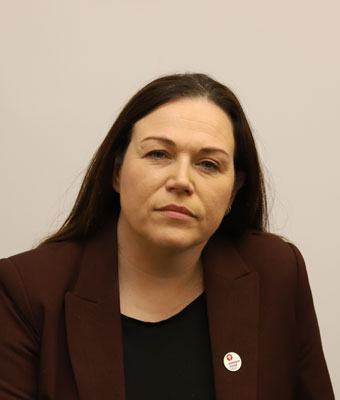
I thank the Minister of State for being here this evening. I do not mean this disrespectfully when I say it but I would have appreciated if the Minister for education could have made herself available for this because it is a very serious issue in my constituency. I do not say that in any disrespectful way to the Minister of State. I am grateful he at least is here to hear it.
The Government published its priority list this day last week. That sets out who is on the list and who is not. I represent one of the youngest constituencies, which is also the fastest growing in terms of population, in this State. The need not just for infrastructure now, namely, classrooms to get rid of the prefabs, is very clear but also we need to plan for the future because we have a growing population. That is a good thing and we are very proud of that. Unfortunately, when the Government published its priority list there was not one single school from my constituency on that list. Not one. It has been remarked on by a few of the old backbenchers of destiny, as well as by other TDs, that there does seems to be quite a number of them going to Galway, which I am sure is just a coincidence because that is in the Minister's constituency but we have not had an explanation as to how some schools get on the list and some do not and that is really frustrating. My phone has been hopping. I have met parents in person. I have also received a huge number of emails. As the Minister of State can imagine, when the list comes out and it is on the RTÉ website, the first thing people do is click and go to see where their kid's school is on the list. There was not one on the list. We are scratching our heads. There are plenty of schools in my area that require additional infrastructure. I know we are very short of autism places in Skerries at the moment. I was compiling this list and it is a case of 2b or not 2b. A lot of schools in my area are stuck at stage 2b. They had hoped they would find themselves on this list for priorities and that that would give them the green light. What they fear is that because they are not on the 2026 and 2027 list, that means their school and building that is so desperately needed is now going to be pushed out and will not happen until at least 2028. The Minister of State may be able to address that.
I am specifically raising a number of schools today. St. Teresa's Primary School, Balbriggan, is a fantastic school celebrating 50 years and some of the buildings are that old. There are a lot of prefabs there and they are falling apart. This school is stuck at stage 2b. Gaelscoil Ros Eo and St. Joseph's Secondary School, Rush, have planning permission, a site and the tender documents are going to be delivered to the Department in a matter of weeks. They are at a very advanced stage. They want to know when they are getting the green light and when there will be a new school. I am sure they are as sick now at all the Government representatives and wannabee representatives who turned up for their photographs and now it appears this is going to be delayed. St. Mary's National School, Oldtown, has 18-year-old Portakabins. It is stuck at stage 2a. Balbriggan Community College is at stage 2b but is also not on the priority list. Likewise, Rush National School is stuck at stage 2b. These schools are all in towns where the population is growing and the schools are already pushed to capacity. The teachers are doing their very best. The principals are tearing their hair out. Then, when the priority list comes out, it can be imagined how people felt when they saw their school was not on it. I am hopeful, given the advanced stage of some of these projects, that they will be able to progress but I would be interested to hear from the Minister of State what the response of the Department is.

Gabhaim buíochas leis an Teachta. She is right; I am taking this on behalf of the Minister for education.
I thank the Deputy for raising this matter. It gives me an opportunity to set out for the House the position with regard to school infrastructure in Dublin Fingal West on behalf of the Department and the Minister for Education and Youth. I can assure the Deputy that the provision of school places to meet the needs of children and young people at primary and post-primary level, including children and youth people with special educational needs, is an absolute priority for the Minister. When demographic data indicates that additional provision is required, the delivery of such additional provision is dependent on the particular circumstances of each case and may be provided through utilising existing unused capacity within a school or schools; extending the capacity of a school or schools; or provision of a new school or schools. If additional accommodation is required, the aim is to try to facilitate this as much as possible by way of expansion of existing schools rather than establishing new schools.
The expansion of existing schools is consistent with wider Government objectives under Project Ireland 2040 for an increased emphasis and compact growth.
It should be noted that the underlying demographic profile of preschools and school-aged children residing in the Dublin Fingal West area indicates a declining demand for school places. The number of junior and senior infant pupils is approximately 20% lower than the number of children in fifth and sixth classes, with an additional average reduction of 15% a month in preschool-aged children. The demographic data will continue to be monitored by the Department's forward planning section and is subject to change in line with population trends, particularly those influenced by new housing completions.
Between 2020 and 2025, the Department of Education and Youth has provided €1.79 billion in capital funding for Dublin schools. Over this period, a total of 244 schools have been upgraded either through provisions of new school buildings, large-scale extensions or modular accommodation. There are currently 64 school projects under construction in Dublin. Another 20 school projects will go to tender or construction in 2026 and 2027, which form part of the first tranche of the €7.55 billion national development plan sectoral implementation plan recently announced by the Minister.
This summer, 53 schools are approved to undergo works as part of the summer works scheme climate action plan. Since 2020, a total of 459 special classes have been opened in Dublin, 58 of which were sanctioned for September 2026. The Department is continually planning for and investing in existing and new schools to ensure that every child in the State has access to a school place. With regard to the Dublin Fingal West area, there are a number of active projects are primary level. These projects include St. Molaga's in Balbriggan, St. Michael's Special School in Skerries, Skerries Educate Together National School, Ballyboughal National School and Gaelscoil Bhaile Brigín, which will provide for both mainstream and special education needs.
A number of large-scale school projects have been completed in the past six years, including Lusk Community College. Smaller scale additional school accommodation, ASA, projects were also completed across a number of primary and post-primary schools. There are also another 19 projects are primary and post-primary levels at different stages of architectural planning process for schools across the Dublin Fingal West area.
I will read out the names again because none of the schools I named are on the list. To be brutally frank with the Minister of State, referencing schools that were built previously is not going to help the people in schools that are falling down around them and bursting at the seams. We have a problem in Dublin Fingal West in terms of school capacity. We also have a problem because the teaching staff, pupils and parents are absolutely sick, sore and tired of make-do and mend.
I am going to read out the specific names. I would be most grateful if the Minister of State could get me a direct response as soon as possible on each of these so that I might go back to the parents and the school communities, which are all coming to me because they are understandably distressed. St. Teresa's national school in Balbriggan is stuck at stage 2b. Gaelscoil Ros Eo and St. Joseph's in Rush are at a very advanced stage, have planning permission and a site, and the tender documents are going to go to the Department in a matter of weeks. St. Mary's National School in Oldtown is in 18-year-old prefabs. It is at stage 2a. Balbriggan Community College is at stage 2b, but not on the priority list. Rush National School is also at stage 2b.
These are all in towns where I would be very confident, because I have looked at the data, that they fulfil the demographic requirements. If the demographic requirements are the only requirements that this priority list was based on, I am happy to tell the Minister of State that we more than fulfil that. The Minister of State can ask the master in the Rotunda Hospital and they will tell him that there is population growth in my area. Houses are also being built in my area. The Government is not building anywhere near enough, but they are certainly building in the area. This is needed to future-proof, at some point, but it is also needed now. The schools are in very substandard conditions. There are 18-year-old prefabs in one of those schools. They are mouldy. It is not appropriate for kids to be taught in those conditions. I was going to say "in modern times", but it is not appropriate any time for kids to be in classrooms where there is mould.
The Department uses data from a range of sources, including child benefit data, enrolments and information on new residential developments to plan for school place needs. As has been outlined, there has been a significant investment put into schools infrastructure across the Fingal county area, including in the constituency of Dublin Fingal West. The Department is continuing to plan for an investment in existing and new schools. I can assure the Deputy that the Department will continue to liaise with Fingal County Council in respect of its county development plan and any associated local area plans with a view to identifying any potential long-term school accommodation requirements across the county.
Flood Relief Schemes

I raise the issue of the Blackpool flood relief scheme. Blackpool has had 15 major floods since 1974. Three of them were in 2010, 2012 and 2013. It was decided in 2013 that a flood relief programme would be developed, and the submission was made in 2018 for the Minister for public expenditure to sign the statutory confirmation. The Minister gave the statutory confirmation. We are now into 2021, and then we had a judicial review. I know full well that the Minister had to deal with that judicial review. Unfortunately, it then went back to the drawing board again where further environmental impact studies were done. They were submitted to the Department of public expenditure. Unfortunately, as I understand it, by the time action was taken, the reports were out of date.
In 2021, the Minister signed off on this flood relief programme. We are now five years later and still have not approved the programme, even though judicial reviews have been submitted. This cannot go on. Blackpool is an old part of Cork city. Yes, there has been development there by Cork City Council and it has put in a lot of apartments and residential development, but the older houses there are at risk at all times. One man was trying to sell his business premises. The sale collapsed on three separate occasions because the people buying it could not get flood protection insurance. Therefore, the banks were not prepared to lend for it. A lot of houses need major refurbishment. It is an old part of the city. A lot of families live there, but there are also businesses that are extremely restricted as regards spending more money because they know they are at risk. If there is further flooding, they will be further damaged, which they will have to carry themselves. This is one case that needs to be prioritised.
We have an additional problem in Blackpool, in that a lot of housing is being built there now on the northern side of the city. As a result of that, there is increased water flow. In fairness to developers, they are doing everything possible to deal with that issue, but overall, you will have a greater water flow into the streams and rivers that flow into Blackpool and the River Bride that comes in and then continues on through an underground tunnel that carries it eventually into the River Lee. We are at risk there. Unless a decision is made about going forward, then the regeneration of Blackpool, which is urgently required, will not occur.
I am asking that priority be given to this project. We have had a lot of discussion about floods over the last two weeks. It is the number one item in the news at the moment because of the fact that heavy rainfall is expected in parts of the country.
Cork was lucky on this occasion in that we did not get heavy rainfall compared to other parts of the country, but our turn will come when that will happen. We will then have a major problem in Blackpool again. I ask that this issue be given priority.
I am taking this on behalf of the Minister, Deputy Jack Chambers.
The Deputy will be aware that ministerial consent for this scheme was provided in early 2021 but was subsequently overturned by a judicial review challenge taken by a local community group. The Department of public expenditure has sought legal advice and taken measures to ensure the consent process complies with national and EU environmental law in order to account for the issues raised during the judicial review process. On foot of legal advice received by the Department and the recommendations of its retained environmental consultants, the Minister sought supplementary information from the Office of Public Works on the environmental impacts of the scheme. This request was made in February 2022 with the OPW supplying this information to the Minister in October of that year.
Following an examination of the environmental reports and supplementary information provided, and acting on the advice of independent environmental experts, the Minister sought further supplementary information from the OPW in November 2023. The OPW submitted the supplementary information on 17 April 2025 and 25 August 2025. Due to the nature of the information supplied, a further round of public consultation was required in order to inform the confirmation process under the provisions of the Act. A period of consultation was opened on 5 September 2025 and concluded on 10 October 2025. In total, over 1,000 individual submissions were received during this consultation and each submission can be viewed on the Department of public expenditure's website.
The environmental impacts of the scheme are currently being examined by an independent team of consultants. This work is advancing and I expect to receive reports which detail the outcome of these examinations. These reports will form the basis of any decision I may take in accordance with the provisions of the Act. Any updates in this regard will be published on the Department’s website.
I fully understand that there were over 1,000 submissions. At least 900 of those were in support of the flood relief programme proceeding. It is extremely important because these are residents who are living in Blackpool. They are third and fourth generation people who are living there and now find they are restricted in what they can do with their property. I ask that this issue now be prioritised. In one particular area in the eastern part of the country, the issue has been going on for 25 years. We have already seen about 15 floods in Blackpool since 1974. I do not want this issue to still be going on in five or ten years' time, with the same discussions happening after major flooding of the area, where property is damaged and people suffer further loss.
I fully accept that the Department has to go through procedures. There is the risk at all times of judicial review. I fully understand that but once all the t's are crossed and i's dotted, we should not delay in making a decision on this matter. Even if we go out to a tender process in the morning, it will still take time for work to commence. The best example is the Glanmire flood relief scheme in my constituency, where there were no objections. Substantial flooding occurred there in 2010 and 2012 but the work is almost completed there now, and a huge amount of additional work was done as well to make the place safe for both businesses and residents. That work has been done by the OPW, which has done a very good job there. The reason was there was no objection to the scheme and it was able to progress. Twelve years from a major flooding event, that scheme is now almost completed. It is important now we give priority to this Blackpool project.
While the delays in the delivery of this scheme will be a source of frustration for those in Blackpool, it is imperative that the consent process progresses in a manner that is compliant with the relevant regulations. In the period since the original consent decision was overturned following the judicial review challenge, the Department has implemented measures to ensure that the process is in compliance with the regulatory framework. This has necessitated the requesting of supplementary information from the OPW in order to ensure that a reasoned conclusion can be reached regarding the anticipated environmental impacts of the proposed scheme. This process has been informed at all stages by expert legal and environmental advice, as appropriate, with a view to ensuring the process is sufficiently robust in the event of any future challenges that may be brought.
I concur with the Deputy on the issue of insurance. There are young couples who are trying to buy a house where there might have been a flood. It is a major issue that has to be addressed. I will bring that issue he raised to the Minister. I came across it in my own constituency as well.
Employment Rights

We are living in an extreme weather event right now in that there has been flooding all over the country. These events are becoming much more normal and routine. What is not normalised are what protections there are for workers. It was very moving to be at a press event organised by Unite last week to hear the parents of Matthew Campbell, an electrician who died in a storm in the North of Ireland. We are seeing the impact on homes but there is also a massive impact on workers. In summary, workers have no rights in law to say no, if their employer presses them to go to work because there is no such thing as climate leave. Workers reported being docked pay, having to take unpaid leave and having to use annual leave. In some cases, according to a Unite survey, a third of people were not able to work from home during the most recent major storm.
This is about a demand. The Government needs to give workers rights - not to ask their employers but rights - to be able to protect themselves in extreme weather events. They should have actual leave that exists and not use their own leave or whatever. It is extremely important that this is built upon.

This is very simple. We need extreme weather legislation to protect workers. We do not have it now and the result is workers' lives and health are put at risk. One worker responded to the Unite survey about how their employer acted during Storm Éowyn stating:
The company were more interested in production than employees' safety. Because there is no clear legislation around extreme weather events, it is left to employers' discretion to do what they want. Unfortunately, employers only concern is profit so they will choose to ignore weather warnings if it suits their agenda.
This is going to be an issue more and more. It is an issue now and will be an issue tomorrow. Tragically, it was an issue for Matthew Campbell, an electrician who was killed in 2018 while working in a forest during Storm Ali. His dad Mark told us at a press event last week that his son would be alive today if legislation like Unite is seeking had been in place then in the North. I hope no more workers have to die on this island before we have workers' rights legislation to protect people from extreme weather events to ensure their employers cannot put their lives at risk in order to maximise their own profits.

I thank Unite the Union for putting the spotlight on the issue of the need for policy and legislation addressing protections for workers in extreme weather events. The one point I will add to that of colleagues is the impact of extreme heat. It is hard to make the case about that tonight of all nights, but we know we will have more incidences of extreme heat in our summers. We know this will impact vulnerable people, the young, the elderly and people with underlying conditions. Some of these will be workers. Some will be workers operating in difficult conditions outdoors and people working in agriculture, maybe in overheated warehouses.
Right now the Department of Health and HSE do not record data on excess deaths from extreme events or prolonged heat events. That is not the Minister of State's Department, but it has to change. If we are not recording these excess deaths, we cannot put in place the measures to protect vulnerable people and workers in times of extreme heat.

I thank the Deputies for raising this important matter. I acknowledge Unite’s concerns and those of the family of the late Matthew Campbell regarding the protection of workers from extreme weather events. These concerns are understandable and the well-being of workers in all conditions must remain a priority. I am satisfied, however, that strong protections already exist in current Irish legislation.
Ensuring that Irish workplaces are healthy and safe is a key priority for me and for our Department. A robust occupational safety and health regulatory framework is in place, which is essential in supporting that priority and the Health and Safety Authority, HSA, plays a vital role in delivering it. Irish law already regulates work carried out in high or low temperatures. Employers are legally required to assess the health and safety risks present in their workplace, including risks from excessive heat, storms or driving for work. Under the Safety, Health and Welfare at Work Act 2005, employers must conduct a risk assessment, identify hazards, evaluate the risks they pose and put appropriate measures in place to protect employees. Extremes of temperature are defined as a hazard and must be addressed accordingly.
Although there are no plans at present to introduce paid climate leave for extreme weather events, the Workplace Relations Commission, WRC, provides guidelines on employer and employee rights and responsibilities during severe weather. The guidance is available to the public on the WRC website. Any arrangement with regard to the provision of paid leave during extreme weather events is a matter for agreement between the employer and the employee. Some employers provide for such leave as part of their policies and it may be provided for in a contract of employment between the employer and employee.
My Department met officials of Unite to discuss their proposals and offered to facilitate engagement between Unite and the HSA on this matter. I encourage Unite to accept this offer to explore ways to further enhance and amplify messaging regarding extreme weather risks in the workplace.
The Minister of State summed it up. It is a matter for agreement between employers and employees so it is up to individual employers. He also mentioned guidelines. Guidelines are not legislative protection. We also have a large number of migrant workers. We have unorganised workers or non-unionised workers who do not have the power to say "No" to their employers.
I will finish by highlighting what has been done in Spain to show the Minister of State how climate leave might work. Climate leave legislation was passed in Valencia. It provides for four days paid leave if extreme weather makes it impossible to travel to work, with the possibility of this being extended. Four days paid leave are also available if workers need to address needs at their homes as a result of their children not being able to go to school or damage to their home and property. After four days, businesses can declare force majeure and get Government assistance. There is an example of it being done.
The Minister of State is satisfied that strong protections already exist. He should look at the evidence. Unite carried out a survey. Is the Minister of State satisfied about the 48% of workers who went to work during Storm Éowyn who said they did not feel safe? Is he satisfied that 53% of those who worked outdoors during the storm felt their employer had not taken all reasonable precautions to make their work safe? These are unionised workers. That means it will be a lot worse for non-unionised workers. If the Government does not give people legal protections, it is leaving them prey for their employers to put pressure on them to make them work in unsafe conditions. We need a legal obligation on employers to have graduated alert-based responses. We need a legal requirement that, where work is required to cease, workers are paid as usual. We need paid climate leave, maximum temperatures at work and recognition of temperature-related illness as occupational disease.
We can do better than this. Tonight, thousands of people, including me, will get home safely due to the hard work of workers in our public transport companies on an absolutely grim night. We have to recognise that our climate is changing and the employee protections in place at the moment will also have to change.
On the point about the graduated warning system, our approach to closing schools and childcare facilities changed when we introduced that system. We have to look at its impacts on workers, particularly those in the most vulnerable areas.
I reaffirm that worker safety remains a core priority of our Department's ethos.
The existing legislative framework I outlined is strong, comprehensive and designed to ensure employers assess risk and take all necessary steps to protect staff from extreme temperatures and other hazards. While there are currently no plans to introduce paid leave for extreme weather events, guidance is available with regard to employers' and employees' rights and responsibilities during severe weather events. The HSA has a key role to play in this regard and it provides guidance, oversight and timely communication during these events, ensuring that workplaces are fully informed about their obligations and fully prepared.
I reiterate my Department’s offer for further engagement with Unite to facilitate engagement with the HSA. That is where this conversation needs to start, discussing how we can further enhance and amplify messaging and continue to ensure our workplaces are safe during these events.
Cuireadh an Dáil ar athló ar 7.37 p.m. go dtí 2 p.m., Dé Máirt, an 10 Feabhra 2026.
The Dáil adjourned at 7.37 p.m. until 2 p.m. on Tuesday, 10 February 2026.