Ceisteanna Eile - Other Questions
Questions Nos. 6 and 7 taken with Written Answers.
Animal Diseases
25. Deputy Martin Kenny asked the Minister for Agriculture, Food and the Marine if there are adequate amounts of bluetongue vaccine here to carry out a vaccine programme in the spring, if needed; and if he will make a statement on the matter. [6708/26]
This question is on the bluetongue outbreak. We saw yesterday that three more farms have been found to have animals with bluetongue. It is a very serious problem and a lot of farmers are very concerned. What is missing from all of this is that we do not know what the plan is. I appreciate we will have a meeting with members of the agriculture committee in respect of this after these questions. We do not know what the plan is. We know that vaccines have been approved. Are there stocks of them? What will happen as we move forward? Where did this come from? That is one of the big questions a lot of farmers have and it is their real concern. What do they need to watch for? How do animals get infected?
The positive case was found last week due to stringent routine investigations and testing of a culled cow that had been slaughtered. Antibodies were found, which showed the culled cow had been infected with bluetongue virus, BTV-3, last year on a farm in Wexford. We went in with our follow-up tracing and testing of all of the animals on that farm and the contiguous farm surrounding it. As of yesterday, unfortunately, we are up to 11 positive cases across that farm and three neighbouring farms. There are 11 positive cases on four farms.
We were monitoring all last summer. I pay tribute to farmers for their surveillance and to our private veterinary practitioners for how they all work with our regional veterinary officer teams from the Department. We worked well to do our best on surveillance last year, when it was rampant across Europe and the UK, to keep this disease off the island until now. It is unwelcome but it is not hugely surprising. We were monitoring wind activity and the risk of this blowing over in warm weather. Midges are the vector for spreading this disease from animal to animal. They are likely to be blown over in the wind from Wales and France in the warm weather, and that is most likely where it came from.
We have responded in real time. Our approach was always to identify this early, lock it down and try to eradicate it. We have lost our disease-free status. It is important to reassure the public that there are no human health or food safety concerns with this disease. It is very much a production disease but it is a big cause of concern for farmers. Some of their animals will get sick from it and there are trade implications now that we have lost our disease-free status. We have lost our beef access to China, which I announced yesterday. We have been working with third countries over the past two years to reform our veterinary health certificates we will continue to do so.
I thank the Minister and I appreciate all of the work that has been done. When I ask where it came from, there is the monitoring of the wind but we are in the winter and the weather is very cold. The likelihood of it coming from midges blown across the Irish Sea is probably minimal, I expect. How much investigation of this has been done? A lot of straw is being imported. Could the disease come with midges in the straw? These are the kinds of questions farmers ask me. People are perplexed that it is here at this time of the year. While I doubt it is the case, is there a connection with the outbreak in County Down before Christmas? That is very unlikely seeing as the cases were in two opposite ends of the country. People would like to get information in respect of this. We tell farmers to be vigilant but what do they need to be vigilant for? This is really what we need to focus on. The Minister did not get to speak about the vaccines and where that is at. Perhaps we will hear about it at the meeting later.
I focused on one part of the question. I will respond now on the vaccines. The first animal that tested positive did so for antibodies, which proved the culled cow had it last year. As we know, midge activity can only spread disease when the temperature is over a constant 12°C, so we are really in the high-risk period from April or May until October. This animal had it last year and did not present symptoms. The other ten animals that have tested positive since are not displaying symptoms. Many of them tested positive for the antibodies, which means they had it last year. An animal is only infectious for approximately 60 days but it retains the antibodies. When we test we can see they had it last year but they did not present symptoms. Most do present symptoms, and when we ask farmers to be vigilant what we are saying is that if an animal is sick or if farmers see unusual behaviour, they should contact their private vet. The private vets are completely plugged in with our regional veterinary officers and beyond. I am out of time again but I have a reply on the vaccines and I will provide it in the response to the next supplementary question.
I thank the Minister. I want to follow up a little on this. Obviously, these are animals that probably got infected last summer. This will concern many in the agricultural community. Does this mean there are animals on a lot of farms around the country that contracted it last summer but it was not identified, they presented no symptoms and it will only be when they go to the factory and a test is done that it will be found? This is a big concern I have learned about this morning from the Minister. I was not aware of that before now, and I am sure a lot of people were not either.
With regard to the spreading of the disease, we are in cold weather now but climate change is probably at the root of a lot of this. With the weather getting warmer, we will see a lot more of these diseases, which have probably been confined to hotter climates, starting to move up. This will be an issue as we move forward. We could get a couple of weeks in March when temperatures are 15°C or 16°C. What will happen then? That is the issue we need to focus on and it is where the vaccine comes into play.
It is not as big a concern that an animal had it here last year. A number of animals displaying antibodies now, showing they had it last year, gives us the concern that midges in that area were infected with it last year. These midges are lying dormant at present. Will some of them still have the disease when the temperature goes back up to spread it? That is the real concern. This disease is not passed from animal to animal. It is passed through a midge landing and biting an infected animal and then biting another animal. That is how it is spreading across Europe and beyond.
It is fair to say that the response in January is very different from what our response would be if we were in July. The fact is that an animal is only infectious for 60 days, so an animal testing positive now will not cause the disease to spread through a midge landing on it because by the time the temperature gets warmer, the animal will no longer be infectious.
In terms of the vaccine, we changed our approach. Our approach was always to identify it and move in quickly. If we vaccinate, we mask the disease because we cannot tell the difference between a positive test result and a vaccinated animal. Late last year, when the disease appeared in Northern Ireland, I approved vaccines for this year. That was a commercial decision. I ask people to engage with their veterinary practitioners to see whether vaccines are suitable for them.
With the permission of the House, I will go back to Question No. 8.
Climate Action Plan
8. Deputy Paul Murphy asked the Minister for Agriculture, Food and the Marine if his Department has contingency planning in place to protect the future of Irish farming if the Atlantic Meridional Overturning Circulation, AMOC, collapses; and if he will make a statement on the matter. [6975/26]
Over the past few days, we have seen how unprepared the State is for even moderately extreme weather, with the likes of yellow weather warnings and Storm Chandra. My question is about something much more severe, which is what contingency planning the Minister has in place for Irish agriculture if the AMOC, which includes the Gulf Stream, collapses, as researchers now believe is likely to start happening between 2050 and 2063.
I thank Deputy Murphy. Is "moderately extreme" a thing or is it an oxymoron? When I was in Australia somebody pulled me up for saying something was "terrible bad". I was told something is either bad or terrible but that it cannot be both. Deputy Murphy caught me with "moderately extreme".
All joking aside, I thank Deputy Murphy for raising this important question concerning the resilience of Irish farming in the event of a significant disruption to the Atlantic Meridional Overturning Circulation. AMOC is a massive system of ocean currents, often called a conveyor belt, that transports warm, salty surface water from the tropics north toward Europe and North America. The movement of this warm water plays a crucial role in regulating our climate and helping to keep Ireland and much of Europe warmer and milder than other regions at the same latitude. This circulation helps Ireland to maintain generally mild temperatures, reducing the severity of prolonged cold weather, and plays an important role in shaping rainfall patterns and the occurrence of extreme weather events across Ireland and Europe.
The Department played a key role in developing the climate risks identified in the national climate change risk assessment, working closely with the Environmental Protection Agency, Met Éireann and other Departments to ensure that risks to agriculture, forestry and seafood were fully reflected.
Climate adaptation and long-term resilience planning are core priorities for my Department under the Climate Action and Low Carbon Development Act 2021 and the updated national adaptation framework, NAF.
My Department does not treat the AMOC risk in isolation. Rather, we continuously review climate risks as part of our co-ordinated cross-government planning frameworks, including through the national climate change risk assessment, NCCRA, and subsequent adaptation planning processes, which provide evidence-based assessments of hazards that could impact the economy, environment and society. These things cannot be looked at on their own. We have just been discussing a virus, bluetongue, that is found across Europe and climate change is probably having that impact. These things are all interlinked.
What is the contingency plan? The Minister says he does not treat AMOC in isolation. That is good, but does he treat it at all? The national climate change risk assessment explicitly states that events such as the collapse of the AMOC are not addressed in the scenarios used within the NCCRA. The assessment does not account for this type of scenario. What is the contingency planning? It will be utterly devastating. It is a sign of the severity of the climate catastrophe. The Intergovernmental Panel on Climate Change, IPCC, said it might happen by 2100 or later. Now, it could begin to happen from 2050. There was a report in June by Dutch scientists who said the collapse of AMOC could see Dublin experiencing temperatures of -22°C, with one day in three out of the entire year having sub-zero temperatures. Met Éireann said that an AMOC collapse would be a high-impact, transformative event with severe consequences. Obviously, the consequences for agriculture would be very severe.
When I first got this job a year ago I got many regular briefings on disease threats, risks, plant diseases, animal diseases, weather risks and everything else. It is a bit overwhelming and then after a while one realises we have our mitigation plans and our approach, which I will go into in a minute. However, it is important we do not catastrophise. The NCCRA, published in 2025, identifies over 100 climate risks and prioritises 43 significant risks across sectors. While AMOC is noted as a system concern, a full collapse is considered a low-likelihood, high-impact event. More immediate risks to agriculture include increased weather variability, storm impacts and shifts in rainfall and temperature patterns. My sectoral adaption plan for 2025 strengthens resilience in agriculture, forestry and seafood. The key objective is to embed adaptation, enhance resilience and integrate adaptation and mitigation measures. Priority actions cover a wide range of areas, to respond to the direct question, such as advisory and technical capacity, sustainable land and water management, which involves improving soil health, water retention, hedgerows, flood resilience and other measures, which I can address in my next supplementary contribution.
I heard the Minister's answer and, unfortunately, he is saying we do not have any contingency plans for the collapse of AMOC.
I just listed actions.
No, those actions are all based on not addressing AMOC. The NCCRA explicitly states that its assessment is not based on the collapse of AMOC.
It says it is low likelihood.
I do not know if the Minister knows that climate scientists are now saying this is likely to begin in 2063. AMOC is already weakening. There is lots of evidence to indicate AMOC is already weakening. A high-risk event, even if there is a low likelihood of it happening in the next 20 or 30 years, is something we need to plan for. The year 2063 is not that far away. There are people who are taking up a farm now who could be affected by the collapse of AMOC. Are we looking at things like drought resistant crops, nature-based solutions, early warning systems and community resilience building? These are all measures recommended by Professor Peter Thorne, chair of the Climate Change Advisory Council's adaptation committee. What work is the Department doing on those?
To finish the point I was making on the sectoral adaption plan, as well as priority actions in areas such as advisory and technical capacity, sustainable land and water management, we also have forestry resilience, species diversification, improved management and early warning for pests and fire. We are the fourth largest spending Department on research and much of that research is focused on the impact of our changing climate and building our resilience, whether it is in forestry sector, the crop sector or animal health and welfare; the marine and coastal adaptation; climate resilient aquaculture infrastructure and coastal protection; research, knowledge transfer and innovation; or sector-wide learning, innovation and local preparedness. These all feed into the broader approach. I know the Deputy's question is focused on AMOC but we have to have a hierarchy of risk. The plan is delivery focused and evidence based, with 102 actions designed to mainstream adaptation across policy, regulation, funding and advisory systems, to demonstrate measurable progress over time on all of these key areas. We cannot just focus on one specific area, as the Deputy's question does. It is the broad range of issues and changes that are coming in that space.
We will move to Question No. 11 before returning to Question No. 9 to give Deputy Ó Murchú a chance to-----
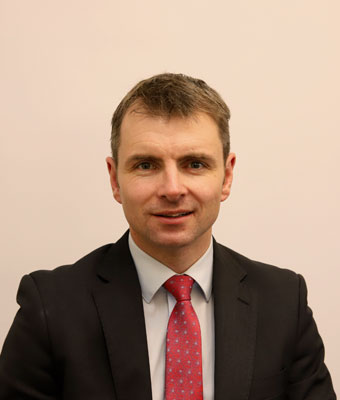
I am ready.
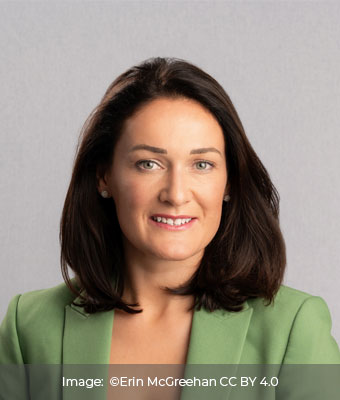
Can I be indulged as I am supposed to be chairing a committee?
That is fine.
I appreciate the collegiality from my constituency colleague, Deputy Ó Murchú.
Artificial Intelligence
11. Deputy Erin McGreehan asked the Minister for Agriculture, Food and the Marine if he has considered the potential use of AI to develop a carbon map for a national audit of carbon sequestration on farmland; and if he will make a statement on the matter. [6848/26]
It is great to see such collegiality among the Louth Deputies.
Louth and proud.
I thank Deputy McGreehan for raising an important point on the role carbon sequestration can play in agriculture and the opportunities there are in this space. I acknowledge the Deputy is wearing a St. Brigid's cross. Both Louth and Kildare are very proud of Brigid. We are looking forward to the public holiday this weekend in her honour.
Innovative technologies to improve our measurement of carbon sequestration on Irish farmland are important. My Department is committed to improving the measurement, monitoring and reporting of carbon sequestration, which is central to both climate adaptation and mitigation efforts. We are actively considering all innovative technologies to enhance the accuracy and efficiency of national carbon assessments. This may include AI in future work, in line with Government guidelines on its use.
Initiatives such as the soil sampling and analysis programme, the National Agricultural Soil Carbon Observatory, and the Teagasc Signpost programme are currently helping to provide a more detailed and spatially resolved insights into carbon stocks and changes over time. This investment in research helps develop the science that shapes and improves the accuracy of our national greenhouse gas, GHG, inventory reporting. The Deputy will be aware that the Environmental Protection Agency, EPA, is responsible for the reporting of emissions and removals associated with land use activities on an annual basis to the EU and the United Nations Framework Convention on Climate Change. Developing accurate, evidence-based tools to track carbon sequestration is a key priority and my Department will continue to investigate other emerging technologies to support Ireland's climate and farming objectives.
In essence, to be able to monetise and give a financial return for farmers on carbon farming down the line, and to ensure we are in line with what Europe is coming with, we have to do our baseline measurement. We have invested a lot of money, through Teagasc and the Department, in flux towers to measure the baseline activity of carbon in current soil types. We will have to be able to prove additionality down the line in order to monetise it with increased land management measures.
We have a real opportunity here. Louth could lead on this. The use of AI to develop a national carbon map for farmland could be a game-changer, not just for our climate targets but for fairness, accuracy and farm viability. Farmers deserve clear, credible data that recognises the carbon they are already sequestering through hedgerows, grasslands, wetland and soil management. I see the potential in Louth. I live in a rural area. I see the biodiversity highway we have in our hedgerows and what it is producing. We are sequestering carbon every single day. That network of hedgerows and field margins is so important. An AI-driven map would be beneficial for Irish farmers.
We continue to monitor the latest technology and the opportunities and the amount of work under way in this area is significant. The National Agricultural Soil Carbon Observatory is part of my Department's strategic investment in soil carbon research. Funding was supplied to the establishment of the observatory by supplying the scientific infrastructure to measure GHG fluxes from soils under agriculture management. There are 28 flux towers across a range of soil types. The observatory will place Ireland at the forefront of EU carbon sequestration research and enable Ireland to better quantify soil carbon emissions and sinks from agricultural land on peat soils, enable mitigation measures to increase carbon sequestration to be included in the national inventory, participate in the EU Integrated Carbon Observatory System, ICOS, network, and enable Ireland to benefit from the 2018 EU effort sharing regulation.
The Teagasc signpost programme has a critical role to play. Our national soil sampling programme has also played a role, as have farm carbon research projects. I mentioned earlier the Department of agriculture has the fourth biggest State Department spending on research. A lot of it is in the areas of climate mitigation and carbon.
I am really glad to hear there is a lot of work going on. AI can make it collaborative, bring the work together and make that carbon map.
For the weekend that is in it, we will think of our nature and heritage and what our plants and trees mean to us. St. Brigid's tree was the birch. It is about fertility, new life and rebirth. If you slap the arse of a cow, you would have a fertile cow and a healthy calf. Trees and nature are entwined with our history and our carbon future. Protecting that history and native Irish flora and fauna is really important. Our farmers know this and have known it for thousands of years. We need to appreciate it.
As we head into the weekend of Imbolc and the start of spring, St. Brigid taught us many great things. She might have been connected with the birch but in Kildare she gave us our county name - Cill Dara being "the church of the oak" - where she built her first male and female monastery. She was ahead of her time. As the patron saint of milkmaids and brewers, she had a huge connection to all things agricultural and would very much approve of the work we are doing to improve the sustainability of our agricultural system.
Renewable Energy Generation
9. Deputy Ruairí Ó Murchú asked the Minister for Agriculture, Food and the Marine the uptake of the latest solar capital investment scheme; whether his Department is working on proposals to improve or streamline the scheme; and if he will make a statement on the matter. [6877/26]
I am delighted the Minister has recognised the huge importance of St. Brigid from Faughart, not to get into a contentious issue.
The Minister dealt earlier with the question of using AI to develop a carbon map. Sequestration is something I would support. We need to get to grips with renewables. We are talking about solar schemes that work for farmers. We know they have issues at times when the best of land is being used. Regarding other renewables, relations of mine have spoken of issues around getting wind turbines, particularly replacement wind turbines. That is everything from planning right through to the schemes that work for farmers.
I thank the Deputy. We will not let St. Brigid completely dominate today but while the people of Louth are proud that she was born in Faughart, I note she moved to Kildare pretty quickly and spent most of her life there. You cannot choose where you are born but you choose where you live.
The targeted agriculture modernisation scheme, TAMS 3, which is EU cofunded, provides grants to farmers to build and-or improve a specified range of farm buildings and equipment on their holdings. The solar capital investment scheme, SCIS, is one of the measures in TAMS which provides support to farmers wishing to invest in renewable energy, thereby reducing their dependence on fossil fuels. The objective of the scheme is to enable farmers to consume solar PV-generated electricity onsite to meet their farm electricity demand, including in respect of the dwelling house. In order to encourage the purchase of solar investments, the scheme is ring-fenced with its own investment ceiling of €90,000, and grant-aided at the enhanced rate of 60%. The SCIS has been hugely popular with farmers, with 5,529 applications received under the first ten tranches of the scheme. To date, a total of 3,167 approvals have issued, with payments of €22.9 million issuing to 1,232 applicants. Approvals continue to issue on a daily basis.
TAMS 3 operates in tranches, with generally four tranches per year. The timeline for approval of applications under TAMS 3, including those received under the SCIS, has been agreed with the relevant farm bodies and laid down in the farmers charter. The issuing of approvals following the selection of valid applications will take place within three months of ranking and selection of files under each tranche, and no later than six months following the closure of a tranche. Ranking and selection is the process whereby the overall cost of applications received in a particular tranche is assessed, taking into account the available budget. It is a regulatory requirement that ranking and selection must take place on all eligible applications. On average, all eligible TAMS 3 investments, including solar PV applications, where there are no issues with the application are processed within three months following the ranking and selection process. I believe the processing of applications using the current structure is the best way to ensure applicants receive timely approval to proceed with their investments.
Gabhaim buíochas leis an Aire. I appreciate most of what the Minister said and am doing my absolute best to ignore the disgraceful commentary he made at the beginning. I commend the work being done to remember St. Brigid by the community in Faughart. Dundalk BIDS and Martin McElligott have done a great piece of work. We need to ensure not only Kildare but also Louth gets Government support in relation to that.
I welcome the information the Minister has provided on TAMS 3. I have heard anecdotally of issues. We have all heard farmers say they want to ensure the majority of the ground they have that could be used for solar, particularly sheds and so on, is used. That could be of benefit to farmers and the wider environment.
I would also ask the wider question about wind turbines. I have been at many meetings of the IFA and I know farmers sometimes get hammered in relation to their position. A huge number of them want to do more. Can we review this to provide the best solutions for farmers and renewables? That will bring real benefits in the future.
I will make a last reference to St. Brigid. I was jesting earlier. Kildare and Louth will both enjoy our public holiday next week, the third since it was established. I fought hard in government for the public holiday for St. Brigid. It makes great sense in many ways. With Councillor John Reilly and the community in Faughart and the broader area, we all share in the legacy of Brigid. There is a phenomenal opportunity for tourism and so on in that story, even beyond our shores. We all share that in Kildare, Louth and beyond.
There are different elements to the question the Deputy is posing, and all are relevant. TAMS support for the rooftop solar scheme was largely for large energy users on farms to offset against large energy bills. Not every farmer has a large energy bill. If you are dairy farmer, you certainly do. It has been an intensive cost on the TAMS budget. That budget is not infinite and has to be managed out to the end of 2027, hence the ranking and selection. My colleague, Deputy Peter Burke, the then Minister for planning, brought in an exemption for solar PV on rooftops of agricultural holdings in 2022 and that was a key component in Government facilitating this roll-out.
I suppose I would agree with the Minister's commentary. It was a lot less contentious that time. I would probably have agreement from my councillors, Antóin Watters and Fiona Mhic Conchoille, on the necessity for support. At times, the county of Louth probably did not get the support and recognition for St. Brigid's close connections.
I think we will have to have a special debate on St. Brigid on a later occasion.
Maybe it is down to lack of representation. I do not know.
That will be the last reference. I thought we might have been having a row about other issues. I had another question on Bord Bia that might have been taken but we will leave that for another day.
I accept what has been done is working for a significant number of farmers. I ask the Minister to meet farmers on the whole piece on renewables to a greater degree. Deputy Kenny, who I nearly called "Minister", has spoken - and we have spoken before - about the need to streamline schemes and facilitate people. The Minister spoke of the perfect scenario of having one scheme to deal with everything. We need a piece of that done, both technically and from an administrative point of view. Can we look at a review of everything from solar to wind turbines and what works for all farmers and wider society?
Absolutely. This is all about balance and giving farmers opportunities to offset costs. It is open to farmers, as landowners, to pursue opportunities to derive or manage income from renewables. That is where rooftop solar has been important. Under TAMS, it is only to offset high energy bills but if farmers put it on their rooftops through a normal system whereby they can sell it back to the grid and make an income from it, there is nothing to stop a beef or sheep farmer generating an income of €5,000, €6,000 or €7,000 per year from the roof of a shed while the core agricultural activity involving cattle, shed or grain continues in the shed.
When one thinks of income volatility and the ups and downs in market prices, anything that can provide a steady income for farmers that offsets that income volatility definitely helps with incomes, but also helps in terms of generational renewal and providing certainty for the next generation to look to take on. We all agree that we want to work here in a balanced way.
With 3,167 approvals, almost €23 million paid out to 1,232 farms and approvals on a rolling basis, this has been hugely popular and hugely successful. I just have to manage the overall TAMS budget under my priorities.
Question No. 10 taken with Written Answers.
Agriculture Schemes
12. Deputy David Maxwell asked the Minister for Agriculture, Food and the Marine if the current compensation paid to farmers who have to cull animals under a notifiable disease order, such as TB and bird flu, will be reviewed so that a fair compensation is paid, over and above the market value of the animals, to include a proportion of consequential loss; and if he will make a statement on the matter. [70152/25]
Will the Minister consider the current compensation paid to farmers who have to cull animals under a notifiable disease order, such as TB or bird flu, and can this be reviewed so that a fair compensation is paid, over and above the market value of the animals, to include a proportion of the consequential loss? I ask the Minister to make a statement on the matter.
The control of all animal disease is an ongoing challenge for Irish farmers and my Department. I am acutely aware of the emotional and financial impacts that an outbreak of any disease can have on farmers and their families across rural Ireland. My Department provides a range of financial supports for farmers affected by certain animal disease outbreaks. Section 31(2) of the Animal Health and Welfare Act 2013, as amended, provides that compensation shall not exceed the open market value of an animal before its killing or natural death or destruction - less any salvage value or payment under a policy of insurance in respect of it - as if the disease did not exist. I am, therefore, obliged to work within the provisions of the Animal Health and Welfare Act when compensating farmers for the loss of animals associated with disease where a compensation scheme exists.
The primary support scheme in relation to the valuation of animals affected by a disease outbreak is the on-farm market valuation scheme under the bovine tuberculosis, TB, programme. Most people are familiar with that scheme. Further supports are available through the income supplement scheme, depopulation grant scheme and the hardship grant scheme. In 2025, of the 39,790 animals valued under the on-farm market valuation scheme, just over 91% of animals were valued below the scheme ceilings. Other examples include financial supports for farmers under the bovine viral diarrhoea, BVD, programme, where animals are removed from a holding under the programme, as well as compensation to farmers who had birds culled due to an outbreak of avian influenza.
Significant financial resources are expended each year by my Department on supporting farmers affected by animal disease outbreaks directly as well as supporting farmers to reduce their risk of an animal disease outbreak through facilitating engagement with their private veterinary practitioners on improving on-farm biosecurity, which is the first line of defence in preventing an outbreak of disease on a farm.
I suppose every TD's office is getting phone calls from farmers. Farmers are losing out. Over the past 18 months, the price of cattle has increased and that is good for Irish farming. In one case, a farmer reckoned his animal was worth €5,000 in the mart and he got the €3,000. It is a big loss. Cattle prices could drop, though we hope they will not. Going forward, can we look at a scheme whereby, if prices have increased and they stay at that level for six months or so, farmers will be compensated? Never mind the monetary loss for a farmer, it is the emotional loss that a farmer feels when a cow or bullock goes down with TB, the herd is restricted. It affects the whole farm. Is there something we can look at, on the side of the compensation, when prices remain high over a number of months?
I absolutely empathise and understand. I remember when we had a reactor at home in the 1990s. I was still at school at the time. The devastation and the impact of having a restricted herd and of the cow going off to the factory was devastating. Financially, it had a significant impact, but emotionally, even beyond that, it created huge turmoil.
I would very much like to be able to not have any caps on ceilings here but I have to manage a budget within the constraints and balance the interventions and the allocation of that money to make sure that ultimately it is driven to reducing the overall incidence of this happening and having fewer farmers having to deal with this awful impact on them, their families and their farms into the future. That is what my new TB programme does. I will monitor this situation. As we say, we do not have a crystal ball as to what the price of beef will be over the course of this year. We do not want to see it drop. Farmers are getting an income now that they need to get and that is very important. In terms of managing my budget, the TB programme in 2025 alone cost €121 million.
That is good news. I want to move on to the poultry. Before Christmas, a couple of flocks in Monaghan were affected by bird flu. From speaking to one of the owners, I know that, never mind the loss of the birds you have in your house, it is the cleaning of the house and the disposal of the bedding and shavings. Even shavings that were on-site had to be sent to a specialist for disposal. Following the cleaning of the house, you have let the house lie fallow for a number of months before it can be brought back into use. The owner was saying that, never mind the loss of the birds, that year you will lose at least one more rearing session, probably two, and that is a big hit. For the poultry end, is there anything we can look at or what is the set-up with compensation for those poultry farmers who were unlucky enough to lose out before Christmas with the bird flu?
The Deputy will be aware that last week we received our HPAI disease-free status again because we have gone three months without an outbreak of highly pathogenic avian influenza. I pay tribute to our poultry farmers, to private veterinary practitioners, to my staff in the regional veterinary offices and my chief veterinary officer and her team in my Department because this has been a huge effort. At the start of the high-risk period in November last, it looked as though we would have a lot of instances. Everyone worked together. Obviously, I introduced the housing order and we had the mandatory biosecurity measures, but people really worked together in the sector and what could have been a very bad outbreak was controlled.
From the compensation perspective, last year €2.384 million was spend on compensation for avian influenza across five different sites. Compensation occurred in turkey flocks in Ireland in November. Ireland is still in a higher-risk period for further incursions of the HPAI, as winter is a higher-risk period for avian influenza, as the Deputy will be aware, due to the migration of wild birds and the extended survival of the virus in colder periods.
Deputy O'Rourke is the longest waiting, although we have two more Deputies coming in. Will we go to Deputy O'Rourke and then revert to the list?
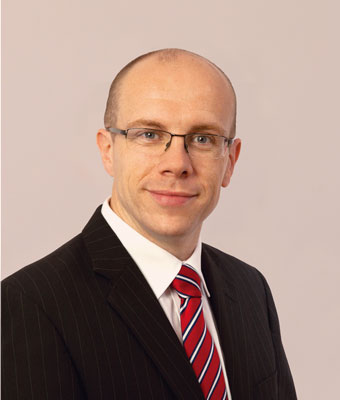
I do not mind.
Trade Agreements
16. Deputy Darren O'Rourke asked the Minister for Agriculture, Food and the Marine the assessment which has taken place of the potential impact of the Mercosur trade deal on the Irish beef industry; the measures he will take to mitigate this; and if he will make a statement on the matter. [5369/26]
What assessment has taken place of the potential impact of the Mercosur trade deal on the Irish beef industry? What measures will he will take to mitigate this?
In 2019, the then Department of Enterprise, Trade and Employment commissioned an independent economic and sustainability impact assessment, ESIA, which both my Department and Teagasc fed into. The ESIA, which was published in July 2021, estimated that beef imports from the Mercosur countries into the EU would increase by approximately 53,000 tonnes. The study noted that, assuming the additional imports were in high-end cuts only, and depending on other factors, producer returns in Ireland could fall by around 2%, due to the increase in imports to the EU. This would translate to a maximum reduction in the value of Irish beef output of between €44 million and €55 million based on export figures available at the time of publication.
On sanitary and phytosanitary, SPS, standards, the study notes that the implementation of the agreement does not in any way lower EU standards regarding market access for Mercosur, including on beef. The EU's SPS standards are amongst the highest in the world and are non-negotiable. The Government is firmly of the view that these standards must continue to be rigorously upheld for the benefit of European consumers. This is a matter I raised directly with the Commissioner, Mr. Várhelyi, following the recent recall of Brazilian beef and the need for Europe to increase the number of inspections, both in third countries and at our border control posts, which was agreed to by Europe before Christmas. We have Mercosur beef coming in to Europe and have had 200,000 tonnes at a very high tariff rate. The Mercosur agreement is about what the tariff is for it. It is not that it does not come in. In some ways, the food safety and SPS standards are non-negotiable. We do not allow hormone-fed beef. We have very strict control on our antibiotic use here among our farmers and consumers are reassured of that, and we expect any produce that comes in from anywhere outside of Europe to meet those same standards. The issue for farmers has been on the environmental standards, which I can talk to later.
The Government has been very clear about Ireland's concerns in relation to the EU-Mercosur agreement over a number of years, particularly its potential impact on the beef sector, the strength of its climate and sustainability commitments, and the food safety and environmental standards in Mercosur countries, due to which we had to have safeguards, irrespective of what tariff rate the product comes in at.
The impact is tens of millions of euros and a very significant question mark over food safety, standards, quality and the environmental impact. “Non-negotiable” is an easy thing to say but we know in practical terms, whether in food safety or technology, that there are many examples and huge potential for this to be the thin end of the wedge. That is the reality of this. It is a concern, and all we have to do is look at the Irish Farmers’ Journal to see this. All of the incentives are there, of course.
Regarding the environmental concerns, the Minister said “non-negotiable” but what measures are proposed? It is my firm opinion that there are no cast-iron guarantees that the standards that currently apply to European countries, including Ireland, will apply to these products coming in.
I remind the Deputy that the Government opposed the Mercosur trade deal, for very good reasons, which I have articulated. In line with our programme for Government commitment to work with like-minded countries that oppose the deal, I very much took a twin-track approach over the course of the last year. Every month that I attend the Agri-Fish Council in Brussels, trade is on the agenda. I have raised our concerns on the sensitivity of the impact of the Mercosur trade deal on our beef sector in particular. There is an economic impact of somewhere between €44 million and €55 million a year on a beef sector worth over €3 billion.
On the environmental element, our farmers have been on a journey and a trajectory of increased ambition around environmental sustainability, while producing top-quality food in line with the regulations set down by Europe, which farmers have signed up to. That has increased the sustainable credentials of their food but it has impacted their margins, and it has definitely had an impact on the cost of doing business. We then chase the higher markets to get better value for that product. That is why we do not compete with Brazilian beef abroad. We are in the higher value markets, where we get a better return. We are not in the commodity market in that space. Therefore, those environmental standards have stood to us well. However, allowing other beef into Europe to displace us in this market is inherently unfair to our farmers.
The twin-track approach the Government took in relation to Mercosur was that it was for it and against it at the same time. If we look at the Government’s actions and efforts to oppose it, they fell far short of what was required, and they certainly were not successful in delivering what Irish farmers needed. We look at how Government MEPs voted on the referral to the European Court of Justice. They literally did both things, yes and no, and spoke with both sides of their mouths. There are real concerns as to the potential for the European Commission to move to provisionally apply the Mercosur trade agreement, which would be completely unacceptable, given the vote by the MEPs and the referral to the ECJ. What efforts will the Government make to ensure the Mercosur trade deal is not provisionally implemented?
Irrespective of what way the Deputy tries to spin this, the record shows very clearly what way Ireland voted. If he talks to anybody in Europe who is in favour of the deal, they are very clear that the Irish Government opposed it. Irrespective of what he tries to tell people, the facts are the facts, and they are there. The Deputy can put down questions to the Minister for trade on all elements of trade deals. I do not have that competence but I have the role, as Minister for agriculture, to defend my sector and talk about its important role.
The point I was making was that our beef farmers meet all of that extra conditionality around environmental standards, which means they have been able to chase a higher return for their produce. It was the right thing to do. However, giving a preferential tariff rate to 99,000 tonnes of beef that comes in from outside third countries, and does not satisfy those same environmental standards, would cut to the hearts of farmers, who have continuously raised these issues. We know that beef already comes in due to the integrated nature of the global supply chain but it comes in at a high tariff rate. It was the giving of the preferential tariff rate for beef that is of a lower environmental standard that was unacceptable to me.
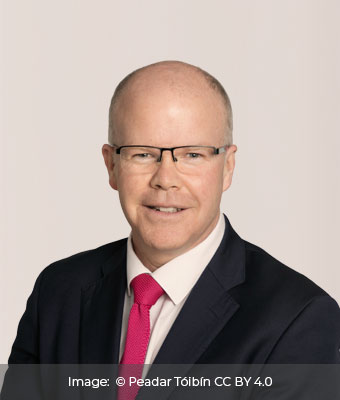
13. Deputy Peadar Tóibín asked the Minister for Agriculture, Food and the Marine if his Department has undertaken any analysis on the scope of potential job losses or profit losses which may be faced by farmers in Ireland as a result of the Mercosur trade deal; and if he will make a statement on the matter. [5981/26]
We all know that Mercosur will have a significantly detrimental effect on farmers throughout the country. The Minister mentioned the headline figures for the damage it will do to the sector. What kind of modelling and research has the Department done in relation to the downward pressure it will have on farmers’ incomes and the loss of jobs that Mercosur, if implemented, will create in the sector?
In 2019, the then Department of Enterprise, Trade and Employment commissioned an independent economic and sustainability impact assessment, ESIA, which both my Department and Teagasc fed into. As part of the ESIA, and specifically on the macroeconomic impacts of the agreement for Ireland, it was noted that shifts in employment across sectors were forecast to be marginal and to mirror changes in production across sectors. Employment was found to generally increase in manufacturing and decrease slightly in the agrifood and services sectors.
The forecast change in employment in the agrifood sector is minimal. The main impacts were found to be in other processed foods and extraction, where a 0.3% decrease in employment by 2035 is noted. For beef, sheep, other red meats and other primary products, the decrease in employment by 2035 is predicted at 0.1%, whereas dairy and other meat products see no change. In terms of the agrifood sector market impacts, the study primarily focuses on the impacts on beef producers. Assuming that additional imports would be in high-end cuts only, and depending on other factors, it states that producer returns in Ireland could fall by about 2% due to the increase in imports to the EU. This would translate to a maximum reduction in the value of Irish beef output of between €44 million and €55 million based on export figures available at the time of publication.
I put on the record of the House earlier the impact on farmers who have attained higher environmental standards but then see food coming in at a lower environmental standard given a preferential tariff rate. This is not about blocking food. The nature of global supply chains is that they are highly integrated, and we need to explain that. In the context of other rows that are happening here at the moment, there is a lack of honesty in this debate. However, giving preferential access to 99,000 tonnes by Europe was unacceptable to me, and I continuously articulated that. We all have a responsibility regarding the challenges we face in agriculture, and we have talked about bluetongue this morning, CAP reform, CBAM and different things. It is important that we do not catastrophise this. Our farmers are the most resilient businesspeople in this country. They have faced many headwinds in the past, and they will face and deal with this as well. We did our best to try to stop it with the Government vote. There is still a way to go as to whether it will come in or not, but irrespective of what happens, farmers have proven their resilience in the past and will prove it again.
The Minister talks about resilience. A third of farmers are making their living off the farm, according to Teagasc, a third are only making a living because someone in the household is working off the farm, and a full third are currently either going into debt or are in poverty. That is an incredible figure. Every year, the number of farmers is reducing in this country. The Minister is saying there will be an extra reduction in employment as a result of this particular deal, and he refers to a €55 million reduction in income in the sector over this period of time. That is catastrophic for farmers, who are already clinging on to economic survival.
Last week, my colleague, Deputy Paul Lawless, was in Strasbourg lobbying MEPs. Luckily, he and others won the vote there. Incredibly, MEPs in the Minister’s party voted against farmers in Strasbourg last week, which is shocking. Is it going to be a situation where the Minister makes sure this deal is not implemented unless it gets the democratic assent of Europe, or is he going to allow this deal to be implemented before there is even a proper vote or judgment on it?
I have been very clear in my role since 23 January last year on every given occasion. Four days after I became the Minister for Agriculture, Food and the Marine, I was in Brussels at my first Agri-Fish Council, and I put on the record my concerns and opposition to the Mercosur trade deal. I have worked very closely with individual like-minded countries to build a coalition and try to get a blocking minority. I have also worked to get the safeguards improved so that if the blocking minority failed, the safeguards would better protect the very farmers the Deputy is speaking about. The change in the safeguards from 10% to 5% will be very significant if this deal comes in. Nonetheless, our view was very clear: that is not enough for us and we oppose the deal.
I would challenge the Deputy’s catastrophisation of the issues. We have seen record year-on-year growth in the value of our agrifood exports. I have no doubt that when the CSO figures for 2025 come out in the very near future, they will again show another year of record growth to over €21 billion in the value of the agrifood exports that our farmers produce, compared to €8 billion or €9 billion a little over ten years ago.
Teagasc income surveys last year for every sector proved very significant percentage increases for each sector as well, and those percentage increases are income going into our family farms on the ground all across rural Ireland.
The problem is that anybody can pick an individual year and say, "This year is above the previous year." The fact is that in the previous year Irish farm incomes were extremely low. In the beef sector they were a fraction of the average industrial wage in this country. Most beef farmers in this country were making a fraction of the average industrial wage two years ago. Plucking last year as an example of movement in income does not give a long-term trend with regard to the figures. The figure I mentioned, that one third of farmers are in poverty or in debt, is a Teagasc figure. One third of farmers are operating in another job off the farm to be able to make sure the farm works. That is a Teagasc figure. The Minister said he has been very clear but I still do not know what he, as Minister, is going to do to prevent Mercosur being implemented before there is a court judgment or a final vote in the European Parliament.
I am sorry but I think the Deputy is mixing me up with the Minister for trade and that sector. The Deputy is welcome to put that question down. What I talk about is the role I have played. I have said very clearly on the record of the House, in response to the Deputy's first question, exactly what I have done over the last year and what I continue to do to advocate for our sector. I would pull the Deputy up on the fact that he is catastrophising here. We face loads of challenges and I will always defend the agriculture sector for the best interests of our farmers and our agriculture sector first. That is my job. It is my job in the Department and at the Cabinet table. I do it to the very best of my ability and I will continue to do it. I will also protect our farmers who feel vulnerable to being told that any one thing, whether it is this or the bluetongue virus, is the end of the road. We grew up as young children on farms hearing that there would be no future in farming because Maastricht was going to change everything. We have heard that the Fischler reforms, Covid, Brexit and the high cost of input following the Ukraine war were going to change everything. Farming has endured and continued and it will continue to do so in the future with the support of the Government, like it always has in the past.
It is not the same. Why can the Minister not push back against-----
Please, Deputy-----
Why can the Minister not push back-----
Sorry, Deputy-----
Why can the Minister not push back against the deal being implemented?
We voted against it.
Animal Welfare
14. Deputy Barry Ward asked the Minister for Agriculture, Food and the Marine the position regarding the increase in funding for animal welfare groups as committed to in the programme for Government; if multi-annual funding can be considered to allow for longer-term planning by these groups; and if he will make a statement on the matter. [6000/26]
We can all recognise the importance of animal welfare groups and the work that they do. I particularly welcome the increase in funding to them, to €6.5 million, in accordance with the commitment in the programme for Government. The 94 groups which will benefit from that do incredibly important work. Can we, however, put a bit of certainty in place for organisations like that? Multi-annual funding allows them to plan more into the future and increase the quality of the work they do, for example to provide support for the Minister's Department in prosecutions under the animal welfare Acts. Can we provide that multi-annual funding and that certainty for them?
I thank Deputy Ward for raising what is a very important issue. It is fair to say that sometimes we sit in here for oral questions on agriculture, food and the marine, and predominantly the questions are raised by rural-based Deputies but animal welfare is in everyone's interest. I have no doubt that Deputy Ward's constituents in Dublin and Dún Laoghaire are passionate about animal welfare. I am determined to continue the improvement we have made in these spaces. Society as a whole is changing and our standards and expectations change along with that. I reassure the Deputy on this very important point that animal welfare is a key priority for me as Minister and for the Government. Considerable funding is provided to support eligible animal welfare charities nationwide through the animal welfare grant programme, which is administered by my Department. I thank the Deputy for his kind comments on the increase in that space.
Each year my Department invites eligible animal welfare charities to submit a funding application under the animal welfare grants programme. To qualify, applicants must meet specific requirements that are clearly set out in the application process. The process is robust and comprehensive. Applicants are asked to provide information on their activities, including reporting specific data and metrics, with successful applicants allocated funding on the basis of objective criteria which are reviewed on an annual basis.
The awards support a wide range of criteria and can include: the number of animals assisted; rehoming figures; the provision of education and knowledge-sharing to the public on animal welfare and responsible pet ownership; and helping to raise animal welfare standards. Veterinary inspection results are also taken into consideration when grant amounts are determined. In December 2025 I provided funding of almost €6.5 million to 94 animal welfare charities across the country. This figure represents the highest allocation of funding awarded under the animal welfare grants programme, greatly exceeding the programme for Government commitment to double the €2.4 million funding available to animal welfare charities from the 2020 budget. Eligibility is determined each year and allocations and grants are dependent on resources available and the number of applicants. I am happy to discuss some further supplementaries and other work I am doing beyond grants in terms of reform of animal welfare legislation as well.
I note the Minister's comments about rural Deputies raising issues here but I agree with him that agricultural issues and animal welfare issues are not just for rural Deputies. There are farms in the Dún Laoghaire constituency. I am a member of the Irish Farmers Association, IFA. They are mostly drystock farms in the south west of the constituency but agriculture affects everybody and it is important. Animal welfare is something that is very close to my heart. As a barrister I prosecuted animal welfare offences for the Minister's Department in the past. I worked with organisations like the ISPCA and the DSPCA which did incredible work supporting the Minister's Department in bringing those prosecutions and bringing evidence in relation to them. Those are the organisations I am talking about. They are the ones that supplement the work of the Minister's Department. They carry out hugely important work to ensure there are people on the ground who are familiar with animal welfare issues and have the capacity in the context of a prosecution to help rescue those animals and present the Department with evidence so it can proceed in those prosecutions. I also acknowledge the Minister's commitment to reforming that law so that those prosecutions can be more effective.
The Deputy will be aware that I have just concluded a public consultation on my new animal welfare strategy for 2026 to 2030, which I will introduce this year. I thank everybody who made contributions on that. Animal welfare crosses so many different areas. The control of dogs legislation came back in under my Department since last summer with some significant work. I am really happy about that. As part of the negotiating team on the programme for Government I was very keen on this. There had been a fragmented nature to the control the dogs. It was under the Department of rural affairs but my Department has the main responsibility for animal welfare legislation, as the Deputy is aware from his other work. I am also mindful that the role of animal wardens and animal welfare officers in our local authority system remains under the Department of Housing, Local Government and Heritage, but it is better co-ordinated. There is a huge opportunity for us, working together across this House, to identify ways of improving the structures around animal welfare while also ensuring the very high level of enforcement that exists at present continues. We really do take animal welfare very seriously. It is something I am passionate about. I want to continue this and grow it in the future.
I absolutely accept the Minister's commitment to these issues. With animal welfare, everyone in this House has something to do with animals, whether they are domestic pets or agricultural animals. I think the prosecutions in the Department focused particularly on agricultural stock, and obviously there is a food safety issue there as much as anything else, but it needs to be expanded to include domestic animals. I remember as a child getting a rescue dog. He was a cross between an Old English sheepdog and a black Labrador. We still talk about that dog and there are pictures of him in the house. These animals are so important and they are part of all of our lives. Animal welfare, as the Minister has acknowledged, is more than just the prosecution of offences that are plain. It is also about the maintenance of standards for animals, whether it is in the agricultural or the domestic context. Part of that strategy has to be about improving the standard of animal welfare across the board, and I know that it has been because I am aware of submissions that have gone into it. Reforming the system has to be about doing that but, perhaps more importantly, also funding the organisations that do it on the ground, funding the prosecutions of those who refuse to abide by the law, and ensuring that animals are safe and well in this country.
We are very much at one on this. This is something I want to work on with colleagues. This is something we discussed in the Fine Gael Parliamentary Party. It will also be debated and discussed at the Oireachtas Joint Committee on Agriculture and Food, and beyond the House, working with my colleagues at the Department of agriculture, the Ministers of State, Deputies Dooley, Grealish and Healy-Rae. It transcends and covers all parts of society. I genuinely believe, as somebody who grew up on a farm with animals, that you can judge a person by how they treat animals. If you teach a child to treat animals well, they will probably also treat humans well. This gets to the heart of our core values as a country. This goes to the Deputy's points on domestic animals as well as farm animals. Obviously, the enforcement of animal welfare legislation is a key component in our trade element because of our very high standards. We normally talk about high environmental standards and high traceability standards but our high animal welfare standards are a very important part of the higher value markets that we export into. I am determined to build on this and to grow it. Although we have extremely high standards that are beyond the European norm, there are always things we can do better and improve and I will drive on further with them.
Fishing Industry
15. Deputy Michael Collins asked the Minister for Agriculture, Food and the Marine the urgent actions he is taking, at EU and Council level, to reverse or challenge the severe loss of approximately 57,000 tonnes of Irish fishing quota for 2026, representing an estimated €94 million blow to the Irish fishing sector; whether he plans to initiate or support legal action at the European Court of Justice to defend Ireland’s interests given the collapse of Hague Preferences at the recent EU Agriculture and Fisheries Council; and if he will make a statement on the matter. [6850/26]
We know of the 70% losses that were announced in early December in the EU for Ireland's fishing quota. This 70% loss in our fishing quota means that 57,000 tonnes will be lost.
What has been happening in Europe to turn matters around since this dreadful announcement was made? Are we taking legal action in the European courts in the context of the Hague preferences, which are a guarantee and safeguard and which appear to have been discarded?
As the Deputy knows, the Hague preferences are negotiated annually. Over the years, many member states have objected strenuously to their application because the additional quota for Ireland comes from their allocations. These objections have intensified in recent times, arising from reductions in quota due to quota transfers under the EU-UK Trade and Cooperation Agreement and scientific advice based on a considerable reduction in fishing stocks. Some of that reduction has been as a result of overfishing by other countries and some, potentially, as a result of climate change.
Regrettably, during the December Fisheries Council, a group of member states chose to block the invocation of Ireland’s Hague preferences for 202. The Danish Presidency did not include the Hague preferences in the final Presidency compromise on the fishing opportunities regulation. This will unfortunately result in severely reduced fishing opportunities for Irish fishermen and fisherwomen in 2026. While Ireland voted against the regulation because it did not include the Hague preferences, the regulation was adopted with a qualified majority.
Ireland has already expressed to the Council, the Commission and other member states its intentions to invoke the Hague preferences at the appropriate time in respect of fishing opportunities for 2027. The Department is currently examining the position to determine potential next steps, including in the context of what legal redress is available to us. The Deputy will be aware that the European Court of Justice, ECJ, addressed this issue in a past finding, which indicated that the acceptance of the Hague preferences was a matter for the Council. That creates potential challenges.
I have stated publicly that we will look at all potential opportunities to try to address this matter. With the support of the Minister, Deputy Heydon, we are establishing a working group under the auspices of Food Vision 2030 in order to develop a framework of supports to address the substantial challenges currently facing the sector as a result of the significant reduction in quota to which the Deputy referred.
It appears that there was scientific advice available, but the nature of that advice was to destroy the Irish fisheries, and it worked. They used that weapon to beat Irish fishermen out of Irish waters. It did not affect the quota of other countries that are taking fish from of Irish waters. I have often stated that between 16 and 18 articulated truckloads of Irish fish leave Castletownbere and head off through west Cork. There is no gain out of this, other than the council trying to repair the roads as a result of the damaged done by the articulated trucks going up and down with fish that have been taken from of our seas. People are telling me they cannot buy Irish fish. Irish fishermen are not allowed to fish in our waters.
The bottom line is that the decision in this regard has to be appealed. Surely there has to be some mechanism that can be used to lodge an appeal. The Hague preferences are there to provide protection, but this has not happened. The scientific evidence was used against Irish fishermen and to protect foreign trawlers. How is that going to be turned around?
I understand that the Deputy comes from an area where fishing is important. To be clear, the quota reduction, based on the scientific advice, applied across the board regardless of the member states involved. It did not seek to penalise Ireland in favour of any other state. It sought to try to protect, insofar as possible, the future of certain species. The Deputy is right in the sense that Ireland has a significant quota when it comes to species like mackerel, in particular, blue whiting and boarfish. In the case of mackerel, we have 50% of the European quota based on track record. However, stocks of that species are considerably low. The quota reduction of 70% was applied to each country in the context of its quota allocation. It would be wrong to suggest that what was done was unnecessarily discriminatory towards Ireland.
As stated, the Hague preferences have been under pressure for some time. We will seek every possible way to try to find a mechanism to have them restored in due course.
The Minister of State indicated that there have been quota reductions across the board, but Irish fishermen have been hit with a 70% cut - the greatest of all. Basically, that is sending them home. People have massive debts having paid for trawlers. They are paying back bank loans they got in order that they might have the best trawlers available to allow them to compete. I am not referring to competing with super-trawlers from Norway, Spain and other countries that are stealing our fish. However, they bought those boats to allow them to compete in some way and to be safe out in our waters. This is a terrible infliction on them.
When is the task force being set up? Has it held any meetings yet? As far as I am concerned, this is an urgent crisis that has, very unfairly, been foisted on Irish fishermen. It is similar to what happened with Brexit, decommissioning and all of that. I hope to God that the task force is not being set up to talk about further decommissioning, because if it is, the Irish fleet will be wiped out completely. When is the task force going to be set up? What bodies will be represented on it? When will its first meeting be held? What will its role be in the context of bringing fishing back to the top of the agenda?
The task force will be part of the Food Vision strategy. Later today I will be meeting with the independent chair, Michael Berkery. We have a draft of the terms of reference, which I hope to have agreed shortly. I hope that the first meeting can take place within the next two weeks. We have a clear agenda about the necessity to address the crisis in light of the fishing opportunity that has been lost for 2026. I also want to broaden it out to include the impact of the reduction in fishing opportunities for this year. Its work will also address not just the impact on the pelagic sector, which has been hit to the greatest extent, but also the impact on inshore fishermen. Their representative bodies will certainly be part of the task force because they will be impacted by the cost of bait, etc. We have to look at this is a comprehensive way. I am of the view that a multiplicity of actions will emerge from the work of the task force. I look forward to engaging with the Deputy and his team on that.
Further and Higher Education
88. Deputy John Connolly asked the Minister for Further and Higher Education, Research, Innovation and Science the plans within his Department to develop a further and expanded phase of programme for access to higher education, PATH, 4 funding; and if he will make a statement on the matter. [6868/26]
I am taking this question on behalf of Deputy John Connolly. The programme for access to higher education, PATH, 4, is the universal design for learning. It supports HEIs in making teaching assessment and student supports more inclusive. Does the Minister or Department plan on developing or expanding any phases of PATH 4?
I thank the Deputy. The PATH 4 programme is extremely important. I am very proud of it and the Taoiseach is very supportive of it as well. We have discussed it directly in Cabinet. It supports the goal of enabling all learners with disabilities, including intellectual disabilities, to avail of higher education. I have visited a number of PATH 4 locations, including in Cork - I think it is called the field of dreams. I have been to the Trinity centre for people with intellectual disabilities. Each one is remarkable in terms of the participation, enablement and autonomy it provides students who can avail of the service. I am keen to continue to support the programme.
The two phases of PATH 4 aim to strengthen universal design for all students. Universal design means making sure that buildings, courses and how we navigate them internally are geared towards students with various different disability types in mind. The programme also enhances opportunities for the engagement of students with intellectual disabilities to fully participate in courses in a way that suits them and from which they can fully benefit.
A total of €5.8 million has been allocated under PATH 4 since 2022. Some €3 million was allocated in 2022 and I was pleased to bring forward last year a further €2.8 million for the period 2025-2026. To date, that funding has been introduced on a phased basis year by year and is something I hope to mainstream. I plan to update my Cabinet colleagues on proposals in that regard to make the funding a permanent feature of the system. I expect to make an announcement on that in the near future.
I thank the Minister for his reply. There has been a concerted effort from the Minister and the Department to ensure that PATH 4 is expanded. It is about realising the potential of every young person through education, in particular. PATH 4 certainly offers that.
There has been strong uptake across higher education institutions, improved staff capacity and awareness, and inclusive training and teaching. There is early evidence of more accessible learning. I pay tribute to some positive examples. Maynooth University has delivered universal design for learning, UDL, training to academic staff and developed inclusive assessment pilots; University College Cork has embedded UDL principles into first-year curriculum redesign projects; and Technological University Dublin has introduced UDL-aligned digital learning standards and staff workshops. However, there does not seem to be a standardisation or an even implementation across higher education institutions. I know we are still at the early stages of UDL adoption, but if there were a standardisation across the higher education institutions, that would make it more accessible to more people.
Yes, that is fair. I think 193 students are enrolled in PATH 4 phase 2. The original target or expectation was that it might hit 160 students, so it has gone well beyond that, which I am delighted to see. They are running across 11 different programmes. I will not list them out but there is a reasonably good spread geographically and they include the technological universities and the traditional universities right across the board, with multiple institutions participating. The way in which those courses or colleges were identified and chosen followed a competitive call for proposals. The Deputy asked how this was decided. There was a PATH initiative under strand 4 whereby an independent expert panel was commissioned to say which of these applications should be supported and, following a competitive call, these 11 were chosen. The courses are typically between one and two years in length. I hope this does not need to be said but I will just say it anyway. The courses are free and there is no charge for participation. There was a significant consultation across many Departments. The National Learning Network, SOLAS, the Irish Universities Association, the inclusive national forum, Down Syndrome Ireland and many others were also consulted in devising the courses and the allocations.
I understand the phased approach, but ensuring multi-year funding would allow higher education institutions to move from pilot phases to full implementation. I ask as well that a national UDL benchmark be established so we can measure consistency across higher education institutions. We need to ensure there are benchmarks that show what is success, what is working and not working, and what we can learn from, change and improve. Finally, I ask for further support to institutions with dedicated UDL co-ordinators or teams. Having a team on campus supporting these students is particularly important. Seeing those types of measures in place will certainly benefit those students now and into the future.
I will address the UDL piece first. I thank an Teachta Connolly. I know Deputy Ó Cearúil is taking this question in his stead. Deputy Connolly has invited me to a UDL conference in University of Galway later this year, which he is involved in arranging and which I very much hope to attend. That will be a very important milestone in rolling out UDL more widely and discussions about this issue.
In terms of mainstreaming our permanent funding, this was, to an extent, a new pilot programme when it was introduced in 2022. It was funded until, I think, 2024. When I came into office I allocated a further €2.8 million to it to continue for this year and last year, the intention being, having done a second phase or second tranche of funding, and all going well, and it has done very well, to look then to mainstream that and put it onto a more permanent, sustainable footing. As I said, I intend to bring a memo to Cabinet in the near future on that note. I hope I will have good news to share with the Deputy in the House at that stage.
Third Level Costs
89. Deputy Naoise Ó Cearúil asked the Minister for Further and Higher Education, Research, Innovation and Science the measures being considered for 2026 to support students with accommodation and living costs, including any planned adjustments to SUSI thresholds; and if he will make a statement on the matter. [6882/26]
What measures are being considered this year, in 2026, to support students with accommodation and living costs, including any planned adjustments to SUSI thresholds, particularly in our constituency of Kildare North and the Maynooth area but also as students from across our constituency are travelling into Dublin. Not everybody goes to Maynooth, as I did. A lot of people go into Dublin. What plans, if any, are there for 2026?
I am very familiar with the challenges of commuting from Kildare to various colleges. I have two daughters, one attending Maynooth and one attending UCD, both of whom recently graduated, and I have seen the commute, the grind and so on. The Deputy and I have worked together on improving public transport on many of those services.
When I came to review the grants this year, I was mindful of non-adjacent students, that is, students who live 30 km or more away from college. The Deputy will appreciate, representing as we both do a commuter-belt constituency, that non-adjacent previously meant 45 km and it is now 30 km. Just because we are close to a college, be it UCD or any college in the city centre, does not mean it is easy to get there, put simply. That is because of congestion, commuting and so on. I was very mindful of that, so the distance is down to 30 km.
As to what supports are available for students facing accommodation pressures, commuting costs and so forth, I have increased all the non-adjacent grants this year - the first five levels, from the base grant right through - some by €350 and some by up to €420. Every single non-adjacent grant for students living 30 km or more away from their college has increased this year.
I have also increased the postgraduate contribution fee. That means that postgraduate students have €500 less to pay this year. I have increased the subvention to the student contribution fee more broadly, in a universal fashion, which means there is a €500 permanent cut to student fees across the board. In particular, in terms of targeted measures, that additional money allocated to people on non-adjacent grants is real money into their hands, additional money that I expect will support them significantly in making the costs add up.
I also increased the student assistance fund. That is a discretionary fund available through college hardship officers. I am increasing thresholds as well. The threshold to avail of the various grants has increased now to €120,000, which means Members of this House, for example, can benefit from a SUSI grant, which would not have been the case historically.
I acknowledge the efforts and measures the Minister has taken in increasing the non-adjacent grants, the student assistance fund, etc. I spent a year in student union politics just after university in Maynooth students' union. An issue then, which continues to be an issue, is that there are those who sit right above the threshold for grants, for whatever reason. It is similar in a way to when somebody is applying for social housing and there is an income limit of €40,000. In circumstances where there is a €40,000 income limit, as in that instance, or a €50,000 limit, in terms of the SUSI grant, there is sometimes a reason that the threshold should not apply to someone earning €51,000. In that circumstance, is there any way view of assessing difficulty or hardship or reasoning when assessing that hard line of a threshold?
In any social democracy, where do we draw the line and where should income levels and thresholds be? We are at a situation now where the threshold to avail of the minimum form of a grant is €120,000 per household, which means 80% of households in Ireland are eligible for at least some form of SUSI grant intervention.
To the Deputy's broader point about how we draw the line, and there are a number of lines as you go through the graduated system, I mentioned to Deputy Charles Ward earlier that there is a disregard for mica scheme payments. There are also disregards for disability payments and bursaries, for example, the 1916 scheme. I think there are several dozen of those because I signed a statutory instrument last year to give effect to them. The many disregards should go some way towards making it easier to hit the thresholds. One thing I intend to explore in the upcoming budget is whether, in the case of larger families with a number of children in the household attending college at one time, there is a measure we could take to ease the burden on them and whether that is a factor or criterion we could take into account. I am pursuing that at the moment to investigate for this year's budget.
I welcome that. It is really positive. Deputy Jen Cummins mentioned earlier children who are estranged from their parents, etc., and having to rely on their parents then when they are looking for student grants or if they are not getting student grants, even though they are estranged. The Minister's response to that made complete sense. It could increase the number of people claiming they are estranged when they might not be.
The Minister and spoke outside the House about the other issue I raise. He stated that about 80% of the population are eligible for some sort of SUSI grant. I do not know if this is being planned but it would be great to see the Department promote that message in secondary schools. It could also work with the CAO to get that news out to students.
A lot of people who are eligible for it do not claim it, like me. As we spoke about before, I did not claim it in first year, but I did in second year when I realised I was eligible for it.
I wholeheartedly agree with the Deputy. Many of the thresholds are now so high and some of the benefits are so broadly available that maybe people have not realised they are eligible for them. I did launch a communications campaign in the national media last summer as a result of that to make people aware. Deputies may have seen it running across national radio and TV. That did actually drive an increase in applicants, which I was glad to see because we devise these schemes so people can avail of them. That is the whole point of having them. I agree with that and we will continue to do more of that as well.
I will mention too, because I think it is relevant in terms of the wider supports, that the student assistance fund, which the Deputy might be aware of from his students union time, is a broad-based fund at the discretion of each individual access officer or welfare officer in the colleges. It is a pool of money worth €19.3 million. That is there and I increased it again coming into the new year. That is for things like books, the cost of materials, rent subvention if necessary, food, travel and medical costs. There is a relatively wide list and it is not prescriptive. Significant trust is rightly given to the access officers or welfare officers in each college to make a call when they have a student coming to them for assistance. They can judge and I think they get that call right.
I thank the Minister.
That broad-based fund is available and it is an additional student support on top of the other schemes there.
Apprenticeship Programmes
90. Deputy Tony McCormack asked the Minister for Further and Higher Education, Research, Innovation and Science the progress made in expanding apprenticeship and traineeship opportunities; whether additional measures are planned to increase participation and completion rates; and if he will make a statement on the matter. [6757/26]
What progress has been made on expanding apprenticeship and traineeship opportunities? Are additional measures planned to increase participation and completion rates? I ask the Minister to make a statement on the matter.
I thank the Deputy. His question relates to expanding apprenticeship and traineeship opportunities. As he is aware, work-integrated learning, where learners apply their studies in real-world settings, is a cornerstone of Ireland’s tertiary education system and this includes apprenticeships and traineeships. Apprenticeships provide structured routes into employment for roles requiring hands-on learning and guaranteed workplace experience, whereas traineeships offer shorter, much more flexible options where work experience is essential. My Department remains committed to investing in apprenticeships and traineeships.
In budget 2026, the Government invested €79 million in apprenticeship delivery, bringing the 2026 current apprenticeship budget to over €410 million. That is more than double the allocation in 2020, when this Department was established. The investment has grown the number of apprenticeship programmes from 58 in 2020 to 78 currently, so we can see that investment is increasing significantly, as is the number of different apprenticeship programmes available. Regarding traineeships, SOLAS allocates funding to the education and training boards, ETBs, and that depends on local needs, where they support flexible, targeted training. There are over 75 traineeship programmes available nationally across sectors from construction to retail.
A wide range of supports are also funded by my Department to support the participation of apprentices and trainees. I can elaborate on some of those in my further replies.
I thank the Minister of State for her reply. I wish to briefly underline the importance of apprenticeships in the context of the very significant investment the Government is making in infrastructure and housing. If we are serious about delivering on our housing targets, retrofitting programmes, transport projects and wider public capital investment, we must ensure we have a strong and sustainable pipeline of skilled tradespeople to match that level of ambition.
In that regard, I wish to acknowledge the excellent work being carried out at Mount Lucas in County Offaly, where the Laois and Offaly Education and Training Board is delivering high-quality apprenticeship and training programmes that are making a real difference for learners, employers and the local economy. We also know that many qualified tradespeople are now earning substantially more than their peers who pursue other degree pathways, with strong job security and clear progression opportunities. Apprenticeship is no longer a second-best option. It is increasingly an attractive and viable first-choice career. Given this reality, can the Minister of State outline how her Department is actively promoting apprenticeships?
I absolutely agree with the Deputy regarding the great work being done at Mount Lucas. I think I have been there three times at this stage, looking at its work on modern methods of construction, MMC, its flagship development. Of course, it also has what is called the Skillnet MMC Accelerate platform. That showcases the different career pathways that are available to participate in MMC. It is one thing to have it and to have it developed and have really good work going on, but is another thing to make sure apprentices are aware of it and of the opportunities.
The Deputy's question is broader, though, and includes reaction to our NDP, our climate plan, our housing targets and how we are going to ensure we have a sufficient pipeline of apprentices and trainees. Just this week, the Minister and I launched the careers in construction action plan. It includes 36 actions building on the previous plan, which was quite successful. Actually, it was very successful. Again, if the Deputy wants more detail, I can tell him more about it.
Many young people enter mainstream third level education and subsequently drop out for a range of reasons, including being pushed into or choosing the wrong course. There remains a degree of snobbery within our educational system and wider society that prioritises traditional college routes at all costs, even where apprenticeships would better suit a young person's skills, aptitude and learning style. Given that many young people are well suited to apprenticeships and would thrive in that model, what steps is the Minister of State taking to challenge this mindset, ensure apprenticeships are presented as an equal and respected option in schools and better capture those students who disengage from traditional third level education but could succeed through apprenticeship pathways?
This is again a very important question. I agree with what the Deputy is saying. Perhaps up to now, though it is changing, apprenticeships and sometimes traineeships were seen as a second or third option. They absolutely must be a first option for those for whom they are suitable. We are starting in the schools. There are a number of programmes in transition year. We have the initial vocational education and training, iVET, programme, which is a taster programme in construction available to transition year students. We have SafePass programmes. We are also looking at other programmes to not just encourage students to look at construction as a possible career, but also to break down some of those barriers that exist, including the gender barriers and the underrepresented groups. We are dealing with it from that aspect first of all. We are also having quite a number of promotional activities. The Deputy may have heard of Building Heroes, an excellent programme, with 12 ambassadors who are already in the construction sector undertaking peer-to-peer engagement, telling their colleagues about why it is a career of choice, why it is a top-class career and why they should consider it. There is a lot of work going on.
Grant Payments
91. Deputy Peter Roche asked the Minister for Further and Higher Education, Research, Innovation and Science if he has examined the impact of the current means-testing arrangements for the SUSI grant on adult and mature applicants who, due to the lack of available or affordable housing, continue to reside in the family home and are therefore assessed on parental income; his plans to review the SUSI means test to address this issue, particularly in respect of independent or mature students; whether his Department is engaging with the Department of Social Protection regarding potential reforms to these arrangements; and if he will make a statement on the matter. [6932/26]
I am taking this question on behalf of Deputy Peter Roche. Has the Department examined the impact of the current means-testing arrangements for the SUSI grant for those applicants who continue to reside in the family home and thus have to be assessed on their parental income? Obviously, the number of people in this situation is rising, potentially, because of the housing crisis. Has the Department engaged with the Department of Social Protection regarding potential reforms to these arrangements?
I think the Minister will be back in a few minutes, but I will respond to this question. The reply states the student grant scheme is a universal scheme and the rules including the means-testing of reckonable income are applied on an equal basis to all students who make an application. In general, for student grant purposes, students are categorised according to their circumstances, either as students dependent on their parent or legal guardian or as independent mature students.
Students may be assessed as independent students if they have attained the age of 23 on 1 January of the year of first entry or re-entry to an approved further education course or an approved higher education course and they have not been ordinarily resident with their parents from the previous 1 October. Otherwise, they are assessed as dependent students, that is, assessed with reference to parental income. Applicants who do not meet the criteria to be assessed as an independent student for grant purposes or who cannot supply the necessary documentation to establish independent living for the required period may still apply to the awarding authority, SUSI, to have their grant eligibility assessed as a dependent student.
Mature students living at home may have benefited from recent improvements to the scheme. This academic year, all income thresholds to receive a student grant increased, with standard rate thresholds increasing by at least 15%. In budget 2026, the Minister introduced the first permanent reduction in the student contribution of €500. Families whose household income is under €115,000 can also receive a €500 grant towards their student contribution for this academic year. The threshold for this grant will also increase in September to a very significant €120,000.
According to the Skillnet Ireland talent report for 2025, 58% of businesses report that they have difficulty in attracting required skills. There is a huge opportunity for society and for the individuals themselves in people reskilling and upskilling, thereby contributing more to society and improving their own lives. However, we are effectively putting barriers in place, preventing people from engaging in this upskilling by not enabling them to fully access all the supports that would be available to them were it not for their personal circumstances. In order to finance their return to education, people are returning to live at home, having been in rental accommodation or overseas. Many people in Dublin Rathdown have been in touch with me to highlight how they were not aware that, if they allowed their children to move back home, they would suddenly no longer be eligible. These are individuals who regard themselves as fully mature and independent. They just want to make a greater contribution to society and improve their own opportunities.
I think an Teachta O'Connell is standing in for an Teachta Roche. I acknowledge that he raised this issue with me during Questions on Policy or Legislation earlier in the week. It is an important issue. This is a universal scheme. Means testing of reckonable income is applied to students on an equal basis.
I will recap the rules that pertain to mature students. A student is considered to be independent or mature if he or she has attained the age of 23 at the start of the calendar year and has not ordinarily been resident with his or her parents from the previous 1 October. By contrast, if students are living in the family home, they are assessed as dependent students. I know the Deputy is asking whether it is correct for that to be the case. I appreciate it is difficult, particularly at a time when housing needs are not always met and people are living in the family home by necessity rather than necessarily by choice. It is a difficult situation intergenerationally as well.
A number of improvements have been made to the scheme. The eligibility thresholds have increased by about 15% across the board. The student contribution was permanently cut by €500, which could contribute towards affordability. In addition, all the non-adjacent grants have been increased. The student assistance fund has also been increased to an historic high. Various other supports for things like disability and mental health were also brought into the system through the recent budget.
I acknowledge the improvements that have been made to the various schemes. The overall scheme does not take into account how the world in which we are operating has changed. We are now in a world where people are expected to engage in lifelong learning. People return to education, then go back to work and then return to education. We need to demonstrate our support for that. As we know, we are also facing a housing crisis. As part of that, we are changing the rules to allow modular homes to be built on the site of the family home. We will now see in Dublin the situation that pertains in the country where people share an eircode with their family while living completely separate from them, resulting in all of the income being rolled in together. The system as originally designed is not fit for purpose in the modern era. It needs to be looked at. We need to ensure that people can access these supports because we need to have people consistently upskilling and reskilling in order to contribute to society and improve their own outcomes. Of course, we need to ensure the system is not taken advantage of but we need to provide those supports for people to encourage that lifelong learning.
Lifelong learning is at the core of everything I seek to do in the Department. It is one of the reasons I brought the proposal for a national skills observatory to Cabinet last week. This dataset will enable future labour force needs to be forecast and emerging occupation trends to be modelled, predicted and met well by the education and training systems. Just last Friday, I attended a Skillnet event in Dundalk with my colleague, the chair of the committee, Deputy Erin McGreehan. We saw at first hand how Skillnet working with local employers can be extremely useful. We also have microcredential courses. These are short courses that can last six weeks or six months and can be offered online, through a hybrid model or in a local centre. Those microcredentials can be stacked upon one another. You walk away with a qualification that can be increased and augmented over time.
The reason a student living at home is not considered to be independent is that they do not necessarily pay rent, although I appreciate that they make a contribution in some cases, although not all. They also benefit from certain supports that are not provided to students living in an independent residence. I take on board the point on the prospect of modular homes and the planning system. That is progressing and it is something we need to look at to see what its knock-on effects might be.
Questions Nos. 92 and 93 taken with Written Answers.
Third Level Fees
94. Deputy Mark Ward asked the Minister for Further and Higher Education, Research, Innovation and Science his plans to reduce university fees; if the Government is committed to fully abolishing university fees; when this will be realised; and if he will make a statement on the matter. [6908/26]
What are the Government's plans to reduce university fees? Is the Government committed to fully abolishing university fees? When will this happen? In the context of the ongoing cost-of-living crisis, these fees are putting undue pressure on families and students.
The Government's commitment is set out in the programme for Government. It is no more and no less. The programme for Government commitment is to reduce the student contribution fee in a financially sustainable manner over the lifetime of the Government. Budget 2026 was my first opportunity since taking up office to begin delivering on that programme for Government commitment. I did so with an immediate permanent reduction of €500 in the student contribution fee. That became effective straight away. Students are benefiting from that in the current academic year. That flat-rate reduction is universal. It is not means-tested and is available to all students, regardless of income. It has resulted in the base-rate fee reducing from €3,000 to €2,500 for the current academic year. That is the first permanent reduction in fees since free fees were introduced in 1995. It is significant and I am proud to have been able to deliver it. That fee reduction will benefit around 108,000 undergraduate students. A further 14,000 apprentices will also benefit, as will postgraduate students.
In addition, I have increased the income threshold for grant applicants to €120,000. As I said earlier, there are Members of this House who could now benefit from that. The new threshold reaches into the middle income bracket and, I would suggest, even a little bit beyond. Some 80% of households are now eligible for at least some form of SUSI intervention, whether in respect of fees, maintenance or both. I would welcome debate as to where to target further moneys. Further moneys have been pledged. I am of the view that we should be progressive and target these funds. We should look at investing moneys in the sections of society where they are really needed and where they will make a lifelong difference. That is why, as part of the budget, I invested in mental health and disability supports and increased all of the maintenance grants for the first five basic layers. I also increased the student assistance fund. We give help to everybody but we should give the most help to those who need it most. That is a fundamental principle of social democracy and social justice. I would welcome the Deputy's comments on that at some stage.
As the Minister mentioned, 108,000 students and their parents will get a second bill for student fees through the door. I know because I am one of those parents who got a bill this week. I am in the privileged position of being able to afford to support my daughter but many parents are not in that position. I was interested in the Minister's response to Deputy Ó Cearúil earlier with regard to parents who have multiple children going through college at the same time. He said there may be a commitment to address that further down the line or in the next budget. That would be really welcome.
I know the Government has a promise to reduce fees but the reality for most parents and children out there is that there has been an increase of €500 from last year to this year. The reason I know this is because I am one of the parents who had to pay the money. Is there any commitment to address this?
I was also one of those parents, not this year but in recent years, and I will say I did not need that support. I will be honest about it. Those on an upper income, such as Members of the House for example, are in a privileged enough position. Having said this, I have extended the threshold and Deputy Ward will now benefit from the €500 cut. Presuming his income is the TD's income we all have, he will benefit from the €500 subvention. This means the fees will be €2,000, the same as they were last year. It is arrived at through a different formula but it is the same thing. It is a little bit fairer and more progressive because it is based on means, albeit the means threshold is at €120,000 now, which is the highest it has ever been. The combination of the flat cut of €500 and the student subvention cut of another €500 on top means that effectively it is the same thing. As much as I can, year on year I will continue to reduce the figure.
There are many other aspects to it, such as the cost of accommodation, the cost of travel and the cost of books. I have engaged with student unions across the board on this in terms of their needs and there is a range of measures. The minimum thing I will do in every aspect of my brief is to follow the programme for Government. Deputy Ward can take it as read that I do my very best to follow the programme for Government in its fullness. I also look to go beyond it. For example, reaching the families that I mentioned is not in the programme for Government but I want to do it. There are many other things I want to do to support students and families.
I do not want to talk about my own stuff but if there is more than one income coming into a house, it is taken out of the threshold. Talking to students and parents, all they see is that the Government broke its promise. They thought they would get a reduction of €500. The simple maths is that last year I paid €2,000 for my child's education in university and this year the cost is €2,500. You do not need to be a college professor to work out there has been a €500 increase. There is a bit of spin in this and the Minister has to admit this. What parents want to see is actual change in their pockets. The question they want me to ask is when they will see a further reduction in college fees and when they will see college fees totally abolished. This is what that people right across Dublin Mid-West and throughout the country want to know.
I am not sure where the mention of abolition came from. It certainly was not in my party's manifesto. I never promised it to anybody, not once in this brief, and not once in the campaign did I or my party promise this. I do not know what other people might have done. It is for them to speak about that. I am not aware of any such promise in any manifesto. What my party promised to do was to address the cost of education and this is what we are doing aggressively. We are going full steam ahead on it. This is why I have introduced a range of measures. The €500 permanent cut is the first of its kind. There is the fee subvention for households with an income up to €120,000. The student assistance fund is being increased. All of the basic layers of maintenance grants are being increased. It is worth recapping and restating that 80% of households, if we look at the ESRI income distribution chart, will now benefit from SUSI grants. The question is whether we will continue, and we will, with flat reductions, but the 20% of top earners are the ones who will benefit most from ongoing fee reductions. I will do this but I will also do things that support those in the 80% and the 20% at the bottom because it is socially just to do so.
Deputy Ward raised the issue of fees. His party in the North recently had an advertisement about student fees being £4,800. This is two and half times more.
The money comes from Westminster. If the Minister is that interested in the North he should run in an election up in the North.
Deputy Ward's party boasted about fees being £6,000 on social media.
The purse strings are held by Westminster and the Minister knows this. He is being disingenuous.
Departmental Funding
95. Deputy Brendan Smith asked the Minister for Further and Higher Education, Research, Innovation and Science the capital funding available to his Department for developments in the further education sector in 2026; and if he will make a statement on the matter. [6900/26]
I very much welcome the substantial provision the Minister secured in the national development plan for capital developments in the further education sector. Thankfully, there has been a welcome emphasis in recent years on the development of the further education sector. Will the Minister outline some of the projects that will be progressed and will benefit from the funding available to his Department in 2026 for capital developments?
As part of the national development plan review, which was conducted last summer, I secured for the Department a capital allocation of €4.55 billion over the next four years from 2026 to 2030. This is significant and it is almost double what it was previously. It is the largest budget in the history of the Department. It is aligned to the overall capital envelope of the NDP. Part of this is because the Department's activities are so aligned with the whole-of-government missions, such as infrastructure needs to roll out housing for our people, the metro, transit, grid upgrades and water upgrades. The Department will train the tradesmen to do these jobs through the apprenticeship paths and programmes. There are also all of the skills that go with the digital agenda. We are entering an AI age. There is also the energy revolution with offshore wind and all of the opportunities that come with this. There are also healthcare and therapy needs, and we are scaling up the provision of courses for nine different occupations.
Additionally to this, the research and innovation aspect of the Department has received significant funding. Before Christmas I launched the €750 million INSPIRE research framework programme, which is fundamental to our knowledge economy, the ideas that we generate and how we succeed, innovate and remain competitive in a very robust and changing world. These are all significant capital projects. I was delighted to be able to secure these moneys and we have published the sectoral plan for the Department which provides a detailed breakdown. One project that might be of interest to Deputy Smith is the college of the future in Cavan. I thank him for the invitation to visit Cavan Institute recently. I still wear the top with pride; I was presented with a sporting jersey which I wear on my runs every week. The Cavan Institute is very much one of the projects I look forward to seeing progress in the time ahead. I might come back to it in a supplementary reply.
I thank the Minister for his response. With regard to Deputy Ward's concluding remarks, I very much welcome the fact that the Minister was the first Minister who was able to announce an all-Ireland university. He has worked very assiduously, along with Dundalk Institute of Technology and Queen's University, to have Dundalk Institute of Technology as a college of Queen's University. It is the first all-Ireland university we will have. This is practical and I very much welcome it.
I very much welcomed, as did the board of management and the staff and students in Cavan Institute, the Minister's recent visit. As Councillor Clifford Kelly, the chairperson of the board, indicated that day, a number of us have worked over the years to develop the college. We have seen it grow from being an extra class at second level in Breifne College to being a substantial provider of further education. Today it is one of the largest colleges in the country. We need additional accommodation, as the Minister saw himself at first hand. I sincerely hope his officials, working with Cavan and Monaghan ETB and Cavan Institute, will be able to progress the particular college of the future to the next stage so we can advance towards construction.
To pick up on Deputy Smith's remarks about Queen's University and Dundalk Institute of Technology, I had a meeting on it as recently as yesterday. I am really excited about it. Going back to the wider question, I will do everything in the programme for Government to the best of my ability but I will do other things. The Queen's University and Dundalk Institute of Technology merger was not in the programme for Government but I am doing it anyway. It is something that is very important and I am very excited about it. The all-Ireland dimension is huge. Deputy Smith is a big supporter of the all-Ireland dimension, as is Deputy McGreehan. We were at a function yesterday in connection with it. It is progressing and it is a very important milestone.
With regard to funding and capital for the Cavan area, with the relocation of the army barracks Cavan Institute received €5.3 million in funding in 2023. The centre of excellence for supply chain logistics was completed in September 2024 with €207,000. There is a minor capital works application in the pipeline at present for Cavan town. There are also electrical works, roof works and other ongoing and emergency works. The college of the future campus on the Cathedral Road is progressing and I am glad to be able to inform Deputy Smith and the House that I was successful in progressing it to the next stage of development. It is at pre-tender project design planning, procurement and supply stage and I very much hope to be in a position to update Deputy Smith and the House on further progress on it in the near future
I thank the Minister for his response and I know of his personal commitment to the project. As I assured him previously at the Oireachtas committee and at other meetings, when the project gets to tender stage it will be advanced as quickly as possible by Cavan and Monaghan ETB. We have an opportunity to work in conjunction with Monaghan Institute and South West College in Enniskillen. It is being practical, for which the Minister and I have advocated for many years. Thankfully, we are in a position today, with the political initiative since the signing of the Good Friday Agreement, to have greater collaboration across different aspects of society. We have seen the all-Ireland economy grow. We now need to upskill our people, and to provide skills and training on an all-Ireland basis. Earlier today, the Oireachtas committee on further and higher education heard from representatives of IDA Ireland, Enterprise Ireland and Skillnet.
They were talking about a skills shortages. Thankfully, today we are talking about skills shortages in Ireland because in the past, unfortunately, we did not have employment opportunities. There is a great opportunity to utilise the potential of the further education sector to contribute to training and upskilling people for very worthwhile employment.
There is a real skills shortage. It is a factor of success because we are at almost full employment in the economy. Recently my Department produced a labour force modelling report which looked at our construction skills needs. I am working closely with Minister of State, Deputy Harkin, on the development of that report. That showed we need to continue to grow our pool of skilled tradespeople from our craft trades right across the board - all the skills we need to build the big infrastructure projects we aspire to develop over the course of this term which are funded through the national development plan. For almost the first time we actually have funding. What we need is an intermesh between the labour force and the skills to deliver. There are a number of ways we can do that but primarily it is through skilling and training our people. Things like modern methods of construction can be embraced which, as well as being more productive, also bring the employment opportunities to a more regional level because there can be factories developing modern methods of construction in a regional, rural location which are then shipped off to a building site in the big town or the big city without the worker having to commute every day. It addresses the gender balance in the workforce and things like that as well because it permits women with caring responsibilities and people with disabilities to work on a site like that because they may not be able to travel to a traditional construction site. It is beneficial for many reasons and is something we will continue to progress.
Further and Higher Education
96. Deputy Shónagh Ní Raghallaigh asked the Minister for Further and Higher Education, Research, Innovation and Science the work being undertaken by his Department to secure pathways to further and higher education for people with disabilities; and if he will make a statement on the matter. [5970/26]
I thank Teachta Ní Raghallaigh. Supporting students with disabilities is a key strategic priority for me, for my Department and for the Government. Indeed, we have a Cabinet subcommittee on disability which I sit on. My Department has taken on a number of actions through that because it is something we are determined to address across all of Government.
The National Access Plan identifies students with disabilities as a priority target group for subvention and supports. I spoke to the Deputy's colleague, Deputy Mark Ward, and others in the House about targeting supports. It is important that we target resources at those most in need. That is a fundamental principle we should adhere to.
The most recent figures show that new entrants into higher education with a disability have increased from 12.4% to 14.7%, so we are getting more participation in higher education from students with disabilities. That is really positive. We have a target of 16% which I think we will surpass. That is very good news but we need to continue to do that and to continue to explore the ways we can support such students.
One of the ways we can do that is through a flexible and agile system with many different pathways for learners to take as they navigate the further and higher education systems. One of the vehicles for supporting that is the fund for students with disabilities. That is a critical fund and in the recent budget, I was pleased to increase that by €3 million across both further and higher education. That will make a significant difference to over 22,000 students with disabilities for targeted supports they can avail of in the further education and higher education spheres.
We are also looking at things like the universal design which asks how we develop buildings with everything from sensory needs to textures to colours to navigation of spaces. That whole area of universal design for learning approach is critical and under the programme for access to higher education, I have provided €5.8 million to improve universal design across higher education institutions and to further educational institutions. It should not just be the colleges that get it; it should be across the board in every centre.
Gabhaim buíochas leis an Aire as ucht an cheist seo a fhreagairt. I thank the Minister for outlining the work being carried out by himself and his officials. I will specifically turn to PATH 4 funding. I wholeheartedly support the advancements made in relation to universal design the Minister has been speaking about for learning in phase 1 and the course offerings provided for people with intellectual disabilities in 11 HEIs across the State under phase 2. I have had engagement with Trinity College, in particular, and I have been learning about the immense benefits of its programme in terms of empowerment, agency and work readiness. The programme for people with intellectual disability is state of the art. It is a world leader in the design of inclusive education and is ambitious in what it envisages for its students.
I look forward to reading the review of PATH 4 when it comes out and I hope to see funding for the programme mainstreamed in the next few years. However, in the meantime, there is a lot of uncertainty. Phase 2 funding is coming to an end this year and, as it stands, planning for the academic year 2026-2027 is at a standstill. Students do not know if enrolments will continue. Staff do not know if they will have jobs in September. Some colleges will not have an entire cohort through the programme by the time funding is due to expire.
The PATH 4 programme is a wonderful programme. It is a programme I am very passionate about. I am glad to hear the Deputy visited the Trinity Centre for Intellectual Disabilities. I have also been there. I met with the students, the learners and the educators. I have also been to the Field of Dreams in Bishopstown in County Cork and a lot of other centres, including in my own area of Naas and Sallins. The project there is for people with disabilities participating in education. They are all wonderful centres, and it is really great to see them doing so well.
We have, under PATH 4, a target of 160 students to participate. We actually have 193 students participating through PATH 4 in higher education institutions. That programme is currently spread across 11 different HEIs with a budget of €11 million. There is good regional spread. It was done on a competitive call basis with an expert independent panel to assign the funding. That has proven very successful. The model has to be responsive.
I take on board the Deputy's points about mainstreaming the funding. Our colleague, Deputy Ó Cearúil, raised that earlier as did others. It is something I am very mindful of. When I came into office I increased the funding by €5.8 million for a further two years, which was this year and last year. I will return to that very soon. I aspire to put that on a more sustainable, long-term basis.
I believe the goal in this sector in the medium term, alongside mainstreaming courses for students with intellectual disabilities in our colleges and third level institutions, must consider a national centre to co-ordinate those courses and ensure standards across them. We should be looking at introducing a separate stream of funding to pilot a programme for neurodivergent learners, learners with complex needs and learners with rare diseases based on the same model.
As all-Ireland education has come up already in this debate, it relates to the potential to expand this model to the North. I see the real potential here to export a world-class model and make a 32-county initiative of this. Strandmillis University College has produced a feasibility study and there is plenty of scope and interest. At the moment, there are 11 courses open to learners in the Twenty-six Counties but there is none available across the Border. I have spoken with my colleague in the Six Counties, Caoimhe Archibald, and she is enthusiastic about this project, and I am sure she would be interested in collaborating with the Minister's Department on this issue. Dundalk IT and Strandmillis University College fall under the same governance structure, which should facilitate this. I encourage the Minister to consider extending PATH 4 funding to support this initiative through DkIT.
Absolutely. The PATH 4 initiative is something I am very committed to and intend to mainstream. Certainly, I will be revisiting that in the coming weeks. I intend to speak to Cabinet colleagues on that and t o look to roll that out on a more permanent basis.
The Deputy makes an interesting point about the opportunity to have wider participation for students with complex needs. That is a good point and something I will take on board. We have a thing called the disability demonstration project at the moment, which is an exercise supported by academic research and a dedicated researcher to look at what interventions are appropriate at different levels and how we can broaden that. The Deputy mentioned Minister Archibald. I meet regularly with her and we have a very good working relationship. There is a number of items on our agenda which are shared. Just before Christmas in Farmleigh we announced all-island apprenticeships and the accounting technicians' body is on an all-Ireland basis. We talked about the Queen's University Belfast and DkIT consolidation. That is something I am really excited about, namely that all-island university potential that is coming to bear there and the disability supports and what we can do on an all-island basis. It is certainly something I would be very happy to support and explore with Minister Archibald. I do meet with her regularly in the North South Ministerial Council and in bilaterals. I have visited both Magee Campus in Derry and Queen's University in Belfast on a number of occasions since my appointment as well.
Is féidir teacht ar Cheisteanna Scríofa ar www.oireachtas.ie.
Written Answers are published on the Oireachtas website.