Bus Services
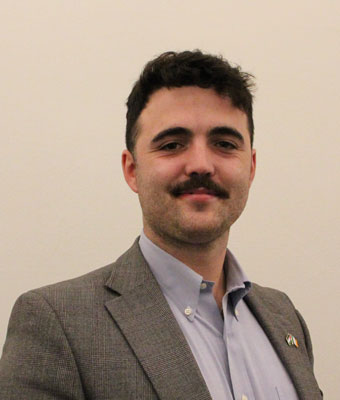
Gabhaim buíochas leis an gCathaoirleach Gníomhach. Tá a fhios agam go bhfuil an t-ábhar seo an-tábhachtach di agus dá constituents ar fad ar an taobh eile den chathair. Today I want to speak about issues relating to the National Transport Authority, NTA, and the proposed changes to a bus route but in particular the lack of consultation with my constituents. Will the Minister of State provide a current update on what the NTA proposes? The proposed merger of the 80 and 130 routes would be catastrophic because, according to the NTA, the reason for ghost buses relates to to cross-city travel and longer routes. Instead, could we be reassured that the current routes would be served more regularly, especially at peak times? I get the bus into town in the morning and I see two or three buses going by while I am at the bus stop. That is not down to the drivers - the drivers on Dublin Bus are really hard-working men and women - but is due to resources and the current number of buses at various times.
The lived experience of my constituents is very fragile. I spoke earlier this week to the Taoiseach and the Tánaiste about children, elderly people and those with a disability who have the current bus system as part of their routine. They do not like changes to their routine. They were not sufficiently consulted. The former 123 bus now stops on the other side of the river, not near O'Connell Street. It is a change to people's routine. While this might not make a difference to everyone, it does to them.
I heard Members of the House speak about an NTA-run taxi app. One of my constituents, P.J. Ryan, has pushed me to raise this. It is a very important issue. It is something else that could be examined.
Is there any update on the 130 bus? Will the Minister of State's office please consult the NTA to reassure my constituents that if there are changes, they will be consulted and that there will be more frequent buses? This merger must be stopped. I cannot understand how we have allowed no public consultation to occur and how people are just being told their bus route is going to change. It makes no sense. The data behind the decision in regard to current reliability, cancellations, and time performance of the current bus routes must be published so that the public can see the rationale behind this.
Ghost buses must be tackled urgently in respect of the failure with real-time information. We all receive hundreds of emails weekly from the public. It is a bus system and the issue should be very simple to solve. Public transport must be reliable in order to reduce traffic congestion. We spoke this week about remote working and reducing traffic congestion. Another key issue in tackling traffic congestion is reliable bus services.
I also want to flag other issues on the north side on which people were not consulted. The first is the changes to the DART station at Donaghmede. Iarnród Éireann insisted that a leaflet drop occurred. I emailed Iarnród Éireann about that again asking for the date and time of the leaflet drop in estates but I got no reply. I raised it directly with the Minister of State, Deputy Canney, and he has now emailed Iarnród Éireann. I know that does not relate to the 130 bus but it is part of the broader theme about the public needing to be consulted. The public know where the faults lie in the public transport system. Will the Minister of State give me an update on the 130 bus and on any data from the NTA?
Given that the Minister of State, Deputy Moynihan, has responsibility for special education, I would love to raise with him Stapolin Educate Together National School. All the Deputies have raised it. It is very important.
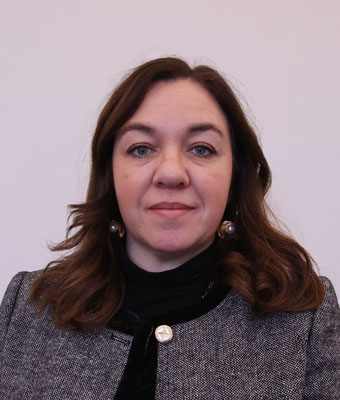
This is the Topical Issue debate.
I do not get to see the Minister of State every time.
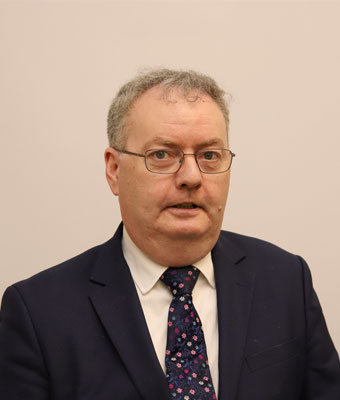
On my way down we were discussing the odds that Deputy Heneghan would raise the issue. I assure him that a lot of work is going on in this regard right across the education system. I will address the matter in response to the matter raised by Deputy Whitmore.
I thank Deputy Heneghan for raising this important topic, which I am taking on behalf of the Minister for Transport, Deputy Darragh O'Brien. While the Minister has responsibility for policy and overall funding for public transport, neither he nor his officials have any involvement in the day-to-day operation of public transport services. The statutory responsibility for securing the provision of public passenger transport services nationally rests with the National Transport Authority. The NTA works with the public transport operators, who deliver the services and have responsibility for day-to-day operational matters.
That being said, I assure the Deputy that the Government is strongly committed to providing all citizens with reliable and realistic sustainable mobility options, and public transport plays a key role in the delivery of this goal. To support this objective, in budget 2026, the Department of Transport secured €940 million of funding for public service obligation, PSO, and TFI Local Link services – a significant 43% uplift, and an increase from €658.4 million in 2025.
BusConnects is the largest investment in the bus system in the history of the State and is managed by the NTA. The aim of the network is to improve the existing Transport for Ireland system through enhanced services with high-frequency spines and new local, orbital and radial routes. In regard to the NTA's proposed merger of the Dublin Bus 130 route with the 80 route, the NTA acknowledges that, for a variety of reasons, including city centre congestion, routes such as the 80, which replaced the 26 route, did not meet the expectations of customers following the introduction of the F-spine under phase 7.
When rolling out phases of the BusConnects network, the NTA commits to monitoring new services, identifying issues and implementing fixes where appropriate. The NTA takes all feedback from the public very seriously, as it should, because it is the public who are using the system. As the Deputy will be aware, on 28 November, the NTA announced that it would amend the alignment of route 80, which runs from Chapelizod to the city centre, in response to passenger needs. The amended route now continues along the north quays to O'Connell Bridge and Custom House Quay before heading north. The NTA also announced a proposal to merge route 80 with the existing route 130, which currently runs from the city centre to Clontarf. The temporary re-routing of bus route 80 will be implemented on 8 February. In the inbound direction, the re-routed route 80 will continue along the north quays to O'Connell Bridge, turning south onto D'Olier Street, College Street, College Green and Dame Street, before rejoining the existing 80 route on South Great Georges Street. The outbound direction is the same but will use Westmoreland Street instead of D'Olier Street. It is, of course, acknowledged that these changes require some passengers to make their journey in a different way. However, in other cases, customers now benefit from direct services where transfers were previously required, while others may need to interchange. The TFI 90-minute fare ensures that transfers incur no additional cost for the customer. Following discussions with-----
I thank the Minister of State.
I will continue with the response later if that is okay with the Deputy.
I appreciate the reply from the Minister of State. This is an important issue for my constituents, who need reassurance. I emailed the NTA but my office has not received a response from it. I acknowledge the work of Independent Councillor Breen on the north side. I also acknowledge the work of the Acting Chair, Deputy Cummins, who worked very hard on the route 80, which affects her side of the city.
If the NTA is to proceed with a merger, I can understand the changes to route 80 but not for the 130 bus route. I have visited special education schools in north Dublin with the Minister of State. Changes to people's routine can really affect them. A lot of constituents have contacted me who are terrified of the changes. They have learned the route and they are used to it. The merger cannot go ahead. If it does go ahead, there needs to be another option for these people. Will the Minister of State relay to the Minister, Deputy Darragh O'Brien, the need to engage directly with the affected communities, which I represent? Will he also ensure the NTA publishes the base evidence for the changes?
The Minister of State is correct. Obviously, his office knows I always raise, when I have the chance, Stapolin Educate Together National School, but I have him here to relay issues to the Minister for Transport. The bottom line is that the public need to be consulted properly, the reliability issue needs to be fixed, including the ghost buses that are being experienced across all the bus routes in north Dublin, and the data needs to be published. It is very simple for people to hide behind data. If the data is published, we can hold the system accountable.
In the last 15 seconds, if the classrooms are sanctioned in Stapolin Educate Together National School, then the necessary funding-----
Deputy, stick to the topic.
-----for those classrooms needs to be provided. It is not fair to sanction classrooms for a school and not provide the area for SNAs to teach in.
I addressed that issue during Commencement matters in Seanad Éireann this morning as well. I assure the Deputy that I am aware of the issue.
Gabhaim buíochas leis an Aire Stáit.
Regarding the 80 and the 130 bus routes, it is of course acknowledged that these changes will require some passengers to take different routes. Following on from the discussions with Dublin City Council, in 2027 and in advance of the closure of Dame Street between College Green and South Great George's Street to facilitate the College Green pedestrian plaza scheme planned by Dublin City Council, it is proposed that this temporary rerouting be removed. In this event, route 80 and route 130 will then be combined into one route on a cross-city basis. The combined route will run along the north and south quays between Heuston Station and the Custom House. The NTA understands that changes of this scale require adjustments and that some customers may experience challenges during the bedding-in period.
The Department of Transport is engaging with the National Transport Authority, which will continue to monitor the situation closely and make further refinements where necessary. Recent actions taken during the roll-out of the BusConnects Dublin phase 7 demonstrated the collective and collaborative approach between the Government, the NTA and the public transport operators in being responsive to the feedback provided in the best interest of the passengers.
I will relay exactly what the Deputy has said but it is also hugely important for public bodies such as the National Transport Authority to be very closely aligned and listening to the concerns of the public. Those are concerns for those who, in this instance, are using the services on a twice-daily period. When a commitment is given that leaflets will be sent out, that must be sacrosanct. It must be done because it is only with the collaboration and the goodwill of the public that we will can effect change; not just in this but right across government.
Special Educational Needs
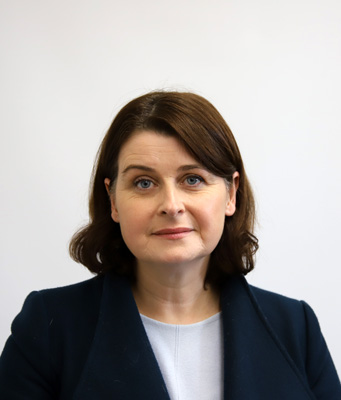
We have recently had announcements of three special education classes for the Wicklow constituency. Two are for Greystones Community College, which is a brand new building that will hopefully open soon, and one is for Dominican College in Wicklow town. We will have three special education classes in secondary schools open. The one for Dominican College Wicklow was sanctioned and meant to open last year. The Department then pulled that sanction, so this is really a reannouncement of a sanction.
Setting that all aside, no primary schools received additional special education classes in the entire constituency of Wicklow. I was really surprised. I welcome the opening of any classes, so I welcome the three secondary school classes, but compared to the amount of demand and what I am hearing from parents, I do not understand how only three classes were sanctioned. I am aware of 16 parents whose children have letters of eligibility and need a special education class. The majority are for primary schools. I collected this information just last week. I could sit down here and come up with four for Bray. I could find an entire class for the Minister of State now, so I do not know how more were not sanctioned.
Coupled with that, I am aware of schools that want special education classes sanctioned. They asked the Department or the National Council for Special Education, NCSE, for them but those have not been sanctioned. There seems to be a complete mismatch between what the demand is and what the provision is, and I just do not understand it. I wanted to raise that with the Minister of State. Parents are very worried, and they deserve answers about this.
The other thing I want to raise is the fact that there are still a number of children who do not have the letter of eligibility. I have raised this with the Minister of State previously. The portal to get that letter of eligibility was closed on, I believe, 1 October by the NCSE. I asked at the time what would happen to those parents who did not have the documentation ready or who were not aware of the portal. The Minister of State told me, and this has been the position of the NCSE, that parents and children would not be left behind and would be supported. That has not happened. There are parents of children who did not receive a letter of eligibility because they did not get a chance to apply for one, and their children could not even apply for a special education class. I am not sure what they are actually meant to do. Those parents are incredibly worried and stressed.
It seems to me that nobody really knows what is happening. The system has changed for special education classes and it is still in a very transitionary period. I understand that. You change policies; that happens. What we cannot have happen is children falling through those gaps. That is absolutely not fair. I am aware of a child who has been offered a special school place and the school is willing and able to enrol the child but the special educational needs organiser, SENO, has refused to issue a letter of eligibility because the deadline was missed. We have a place that is waiting for a child who needs it and that deadline is stopping them getting it. I am aware of another child who the letter of eligibility said needed a special class place. Their local mainstream said it could not give the child that place and they needed to go somewhere else. That means travelling the entire length of the county and there are no places. It seems there is a lot of confusion and, unfortunately, parents and children are bearing the brunt of it. I really hope the Minister of State can come in and clarify some matters for me. I will always welcome any classes being opened but I do not think enough are being opened.
I thank the Deputy for raising the issue because it allows me to outline where things are at. Two weeks ago, we announced the first tranche of the special classes. There will be multiples of those over the next number of weeks. It is not the case that it is just the number of classes that were announced as opening two weeks ago; there are a number of them.
To reassure the Deputy, we are aware of the challenges in Wicklow, both on a special school and special class basis. I will deal with this in two pieces, if the Deputy does not mind. We moved the date to 1 October because when I came into this position last year, the deadline was 1 February. Due to Storm Éowyn and so forth, it was really 1 March before we understood the level of need. We moved back the date so that we could plan properly for right across the country and see the level of need that was there. There has been a volume of work done since the middle of October when the figures were correlated to try to meet the demand within the communities.
On the point the Deputy made in relation to travelling, some of the onerous journeys that children with additional needs are travelling would try anybody. It is hugely important that we put the class in where the need is within the community.
In the first instance, I reassure the Deputy that we will be opening more classes. They will be announced over the next number of weeks. We will be announcing them on a phased basis. The NCSE and the Department are working meticulously through the numbers, along with school authorities, some of which have been absolutely fantastic in putting their hands up and saying they will take a special class. We are moving with that. We have challenges in other parts of the country where we will have to work extremely hard with patron bodies and school authorities to make sure we have special classes there. There is a lot of work ongoing in relation to this. We met right up to 23 December and we were meeting early in January to do it.
Regarding the children who were notified after 1 October, in a previous contribution I made to the Deputy, I said we were acutely aware of it. We are striving to make sure that all children will have school places. That is what I set out at the very start when I was appointed almost a year ago now. We are working to that basis. We understand the challenges that are there. Regarding what the Deputy has raised with me, I have seen it coming through quite clearly where there is a school place but the letter of eligibility is the issue.
I assure the Deputy that the National Council for Special Education and the Department of education are working very diligently to try to resolve those matters.
Regarding Wicklow, I reassure the Deputy that we are aware of the need within Wicklow. While only three special classes were on the list last week, there will be many more to follow. If we are to meet the need in Wicklow, there will be special schools and special school places. I assure the Deputy we will. I thank the Deputy for raising the matter. It is important that, in the Dáil, we give information to families because they are stressed and challenged about this. We are working extremely hard. We understand their plight and their difficulties and stresses. We are trying to make sure the system works. We are changing the dates and bringing them forward. This is for better planning so that we have a better system in the future than we have had heretofore.
I thank the Minister of State. It is not often that I, or any Opposition TD, comes in here and gets the answer they want from a Minister of State. I welcome the fact he has confirmed there will be additional special education classes for Wicklow and that they will be announced shortly.
In relation to letters of eligibility, I understand the Department is working hard on this issue but what can I tell parents? As I said, one child has a place and the school is happy to take the child but the family does not have the letter of eligibility. The SENO has actually said they will not issue one because the deadline has been missed. Does the Minister of State have a message I could give to those parents who do not have a letter of eligibility? What are they meant to do? Do they talk to the SENOs? How do they apply for a letter of eligibility in the absence for the portal being opened? Ideally, it would be brilliant if the Minister of State opened the portal because that would be the simplest way to deal with this. Otherwise, people are relying on individuals within the system. I ask the Minister of State to open the portal, even if only for a few weeks, to allow the backlog to go through. What do I tell parents in this instance?
I will raise another issue with the Minister of State that came back very strongly when I spoke to parents. While it is brilliant that there are special education classes and places for children on the autism spectrum, there is a huge deficit in places for children with mild learning difficulties. That is a very big problem as well. I ask the Minister of State to take that into consideration. I know the NCSE will sanction places based on what the demand is but that issue is coming to me very strongly. At one stage, the special schools were told they would not be able to take in children with a mild learning difficulty diagnosis and they would have to go mainstream but mainstream schools do not have the capacity. Some of those children will get lost in some of the very big schools. I ask the Minister of State to take that into consideration when developing policy in this regard.
I note the issue the Deputy has with the family who are looking for a letter of eligibility. If she shares with me details of that specific case, we will take it up and respond to the Deputy, rather than giving a carte blanche reply. It is important that we are very clear in our public statements that we are working extremely hard to make sure children who were notified before 1 October last have provision. We are also aware of the challenges that have arisen since 1 October. We have to make sure we do the right thing for all children.
The concern I have is that we brought the date back to 1 October last year to have better planning. We will have to bring that date back further. We will make announcements about that earlier. We need to get it into the system. The challenge the Department has is that we are not getting the information early enough. We have children on the access and inclusion model, AIM, programme or on domiciliary care, which are in different Departments. We need all of that information because if we are to do the right thing and ensure we do not have endless debates on special education in the Dáil, the Seanad or committees, we need to know the challenges being faced and plan accordingly.
We will move to an earlier date to ensure better planning. We have to deal with all aspects of education. The date is hugely important for proper planning. We are looking at all cases notified after 1 October and we are working extremely hard.
If the Deputy shares details of individual cases she has, I will look at them and do the best I can. I thank her for raising the issue because it allows me the time to do that. I thank all Deputies for constantly raising these issues because it is hugely important to have them raised on the floor of the Dáil.
Vacant Properties

The former Shannon Oaks Hotel in Portumna has been lying in a dangerous and derelict state for 15 years. I have raised this matter a number of times. The local community has been promised repeatedly that the site will be secured and the hotel redeveloped. The closure of the hotel has been a huge loss to Portumna, an area with serious tourism potential but a lack of tourist accommodation. Efforts have been made to engage with the owners of the hotel, the Comer brothers, with a view to having the hotel reopened. They have not been successful. The planning permission for the redevelopment of the hotel has now lapsed, confirming that, as it stands, the owners still do not have any intention of redeveloping the hotel.
All the while, the building lies empty, idle and in a derelict condition. The hoarding around the site is regularly breached. We know that people are entering the site. There have been videos taken from within the building. They show it in a dangerous condition and a state of total disrepair. The people who enter the site are trespassing but the reality is that derelict sites will attract curiosity, from young people especially. They attract antisocial behaviour and there is a serious risk of somebody being hurt, not to mention the fact that the building is a serious eyesore. It really detracts from the appearance of the village. Portumna is a fantastic town and one that is very popular with tourists. It has a lot to offer but this takes away from that.
The site was previously on the derelict sites register. It is no longer on it. Galway County Council's position is that the site does not meet the definition of "derelict" within the Derelict Sites Act because it has hoarding all the way around it most of the time. This building does not have a roof on most of the structure. I want clarity from the Government on this. If a site has hoarding erected around it, does that automatically mean it is not classified as derelict? That has been the position of Galway County Council. I ask the Minister of State to clarify that in his response.
At the same time, we have Coillte developing proposals for Portumna Forest Park, which borders the site of the Shannon Oaks Hotel. A survey carried out by a local community group showed clear opposition to the idea of building tourist accommodation in the forest park. The group believes the Shannon Oaks Hotel should be the focus of development of tourist accommodation with the locality. I again call on Coillte to engage meaningfully with the local community in relation to its proposals for the forest park. I call on the Government to support that call also.
How can the owners of this hotel, the Comer brothers, be allowed to leave this hotel, which is an eyesore and a safety hazard, in this condition indefinitely and will they be held accountable?
I remind the Deputy not to name people in the Chamber.
They are the owners of the hotel.
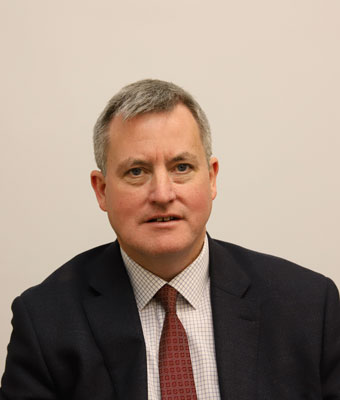
I thank Deputy O'Hara for raising this important matter and providing me with an opportunity to update the House on behalf of the Minister for Housing, Local Government and Heritage, Deputy James Browne.
It is important to point out that under section 30 of the Planning and Development Act 2000, the Minister with responsibility for planning is precluded from exercising any power or control in relation to any particular case with which a planning authority or An Coimisiún Pleanála is, or may be, concerned. In addition, in accordance with section 63(3) of the Local Government Act 2001, local authorities are independent in the performance of their functions. However, the Government recognises the importance of tackling vacancy and dereliction. I assure the Deputy that the Government is committed to addressing these issues through a range of measures and with the support of all key stakeholders, including local authorities.
These measures include the provision of vacant homes officers and town regeneration officers in local authorities, the implementation of the vacant homes action plan and related resourcing and funding supports. This funding includes call 3 of the urban regeneration and development fund, which provides a €150 million revolving fund for local authorities to acquire vacant or derelict properties and sites for reuse or sale. The fund is replenished from the proceeds received from the sale or reuse of properties, allowing a rolling fund for each local authority to tackle vacancy and dereliction.
In addition, the vacant property refurbishment grant provides up to €70,000 in grant support to bring derelict properties back into long-term use as homes.
In December, the Minister, Deputy Browne, announced a new enhanced support package of up to €140,000 to bring vacant above-the-shop properties in our cities, towns and villages into use as homes, which will be made available in quarter 1 of this year. This grant may be used in combination with exemptions from the requirement for planning permission for the conversion of certain types of vacant commercial property into residential use, such as living-over-the-shop accommodation, up to a maximum of nine residential units.
The Government also amended the Planning and Development Regulations 2001 to include an exemption for the change of use of vacant commercial buildings, including vacant pubs. This exemption has now been extended to the end of 2028. Up to the end of 2024, local authorities received 1,457 notifications from developers intending to avail of the exemptions. If acted on, this would result in 3,429 new homes across the country.
A compulsory purchase order, CPO, activation programme was also launched by the Department of housing in April 2023. The programme supports a proactive and systematic approach by local authorities to the reuse of vacant and derelict properties. It also includes guidance for local authorities to actively use their legislative powers, including under the Derelict Sites Act, to acquire vacant and derelict properties and to use CPO powers where engagement with owners has been unsuccessful. The activation programme works in tandem with URDF call 3. Under the CPO activation programme, targets are set, with local authorities required to identify vacant and derelict properties and record activity and outcomes.
I would also like to highlight THRIVE, the town centre first heritage revival scheme, which represents a transformative opportunity for our towns and communities. THRIVE is a €120 million Government initiative, co-funded by the European Union and delivered through our regional assemblies in partnership with my own Department. THRIVE provides funding for the preparation of Town Centre First, a co-ordinated, whole-of-government policy framework to proactively address the decline in the health of towns across Ireland and support measures to regenerate and revitalise them. Key elements of the Town Centre First approach are collaborative and plan-led through Town Centre First plans setting out a vision and priority projects, and delivery focused through a town regeneration officers and integrated with national and local government oversight agencies. The package of measures introduced within my Department represents a decisive and co-ordinated response to dereliction across Ireland.
I appreciate the response, but from what the Minister of State has outlined, if we are talking about CPO, would the Government provide the support to Galway County Council for what is presumably a very expensive building to be able to acquire that and, at a minimum, make the site safe? The planning permission on this has lapsed. The developers have no intention of redeveloping this hotel. It has been left in a derelict state for 15 years. It is an eyesore and a safety hazard. Young children are going in and out. Somebody has to take responsibility for this. It cannot be allowed to continue. I have raised this a number of times in this Chamber. It is not a new issue. I have raised it with the Tánaiste and the Minister for Finance. Government is well aware of this issue and the impact it is having on the town of Portumna. I cannot stress enough how dangerous it is and the risk of somebody getting hurt or losing their life. I do not want to hear more excuses or more kicking the can down the road. It is a problem that is not being addressed. I want to know what the Minister if State is going to do now to ensure that the owners of this property are actually held accountable and that the building is at the very least made safe. To go back to my earlier question in terms of the hoarding around the building, does that mean this site automatically cannot be on the derelict sites register because there is not hoarding around the building? There is hoarding around the building. I ask the Minister of State to clarify that. The owners of the hotel - the Comer brothers - are very wealthy people. They could redevelop the site. At the very minimum, they could take action to make it safe. They can afford it. There is absolutely no doubt about that. Therefore, the issue here is one of accountability. Is the Government going to take action and hold them accountable for leaving this site in a dangerous and derelict condition for the last 15 years? Will the Government give a commitment that it will support the local authority to CPO the property, if necessary, and make the site safe again?
Once again, I thank the Deputy for raising this important issue and giving me the opportunity to give an update on behalf of the Minister for Housing, Local Government and Heritage, Deputy Browne. As I previously stated, under section 30 of the Planning and Development Act, the Minister with responsibility for planning is precluded from exercising any power of control in relation to a particular case with which the planning authority, An Coimisiún Pleanála, is or may be concerned. In addition, in accordance with section 63 of the Local Government Act, local authorities are independent in the performance of their duties. As I said previously, the Government is committed to tackling vacancy and dereliction. I assure the Deputy that it is committed to this through a range of measures and with the support of all key stakeholders, including local authorities. By strengthening compulsory purchase powers, activating the derelict sites levy and the proposed introduction of the derelict property tax alongside providing targeted funds and supports for regeneration through local authorities, we are shifting from isolated interventions to a whole-of-government approach. Crucially, these measures are designed not only to incentivise action but to ensure accountability. Furthermore, the new recently published national housing action plan, Delivering Homes, Building Communities, builds on existing measures and programmes to tackle dereliction. Other specific actions beyond the derelict property tax announced in the budget include the provision of a digital national derelict sites register, an increased number of properties on the derelict sites register, increased compulsory acquisition of properties where owners have failed to engage with local authorities and increased collection of unpaid derelict sites. I will ask the Department to seek an update on the point the Deputy raised. Obviously, the councils are independent in the way they function in this area, but I will ask the Department of housing to seek an update from Galway County Council on this particular issue.
World Economic Forum
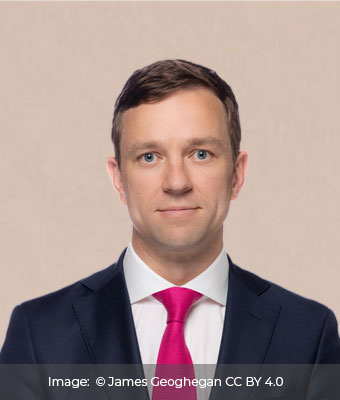
At a pivotal time of instability in the world, Ireland has a unique opportunity. Ireland is in a strong position internationally as a committed member of the European Union and with our diplomatic and trading relationships with the United States, the UK and China. We occupy a space that few small countries can match. We are a country that can bring people together and create the conditions for constructive engagement.
The Minister of State may have seen that yesterday it was reported that the current co-chair of the World Economic Forum, Larry Fink, said that the World Economic Forum should start something new by meeting in places where modern industries are actually being built. He specifically named Dublin as a prime example of where the World Economic Forum could find itself. Dublin is a bustling working city where the people who are shaping the global economy live. Ireland is one of the most business-friendly locations in Europe, underpinned by a Government committed to supporting enterprise innovation.
Ranking as the most competitive economy in the eurozone and seventh most competitive globally, Dublin has firmly established itself as a global centre for financial services. There are now over 430 internationally focused financial service companies operating here, employing more than 50,000 people. Among them are 17 of the top 20 global banks and 11 of the world's 15 largest insurance companies. Their presence means that Ireland has become one of the largest exporters of financial services in the European Union and, indeed, the world, according to data from the World Trade Organization. Dublin was recently ranked first in Europe for economic potential in the fDi Intelligence major European cities of the future report. The city is also placed second overall, accounting for its strong business friendliness and FDI strategy. We are a transatlantic gateway with direct access to both the European and North American markets. As the only native English-speaking country in the European Union, Ireland provides a unique advantage for global firms navigating European operations. The city is also one of the most globally connected, connected by Dublin Airport, which is one of the top 20 in the world.
I echo the words of the Prime Minister of Canada, Mark Carney, where he set out how middle-sized countries are not without influence. They can help shape a global order grounded in respect for human rights, sustainable development and the sovereignty of states. Ireland has been doing this since the foundation of the State, and we must continue to ensure that we are using our voice, our relationships and our credibility to contribute meaningfully to that work. We have always understood the value of engagement, whether through our role in the European Union, our peacekeeping records, our development partnerships or our diplomatic ties across continents. Ireland has consistently shown that constructive participation can make a difference.
That approach is needed now more than ever. Mark Carney said at Davos:
We shouldn't allow the rise of hard power to blind us to the fact that the power of legitimacy, integrity and rules will remain strong - if we choose to wield them together.
The World Economic Forum has been held in Davos since 1971. The co-convenor has said it is time for the forum to move to a working hub and not a showcase city. The forum wants to remain relevant to the real economy. With Dublin being among the most connected and competitive cities in Europe, we really should seize this opportunity. Will the Government take up this call to potentially have Dublin as a future host of the World Economic Forum?
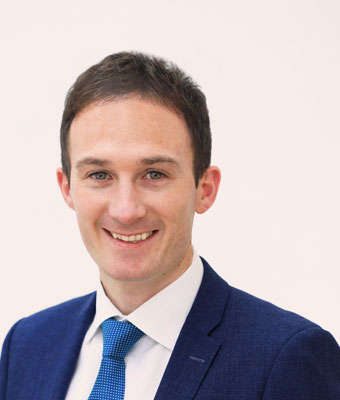
I thank the Deputy for raising this Topical Issue and for outlining the position in terms of commentary regarding Ireland and Dublin in the press this week. The World Economic Forum is an independent international organisation that was founded back in 1971. The forum states that its mission is to improve the state of the world through public-private co-operation. As the Deputy outlined, the forum's annual meeting is one of a few global moments in which the most powerful government and company leaders and business executives convene in the same place with a shared focus on growth, innovation and long-term economic resilience and their impact on both global trade and investment opportunities.
The Taoiseach arrived in Davos yesterday and noted its importance as an opportunity to meet with international and business leaders to discuss how we can best work together to address geopolitical and economic challenges. As part of the Taoiseach's itinerary, he addressed the annual IDA Ireland dinner last night at the forum. Also in attendance at Davos is the Minister, Deputy Peter Burke, who is engaging with many chief executives of multinational companies already operating in Ireland, CEOs of companies with potential to invest in Ireland in the future and international leaders.
As the Deputy noted, Ireland continues to be seen as a really attractive location for FDI. That is reflected in IDA Ireland's most recent results, which show it secured 323 investments in 2025. This was the highest ever number and a 38% increase on 2024. I agree with the Deputy that when we hear people like the co-chair of the World Economic Forum mentioning Dublin when talking about alternative locations for the forum's annual meeting, it reflects the position of both Ireland and Dublin and how we are seen by many leaders as a place where global decision-makers are very comfortable. It also positions Dublin as a credible destination that offers stability, a strong regulatory environment and a genuinely international outlook.
As well as the his work previously with Dublin City Council, as Lord Mayor of Dublin and speaking on behalf of the citizens of Dublin here in the Dáil, the Deputy is making a very pressing case for Dublin to host the annual meeting of the World Economic Forum. However, it is important to state there has been no official contact by the forum with the Government. Were an approach to be made, it certainly would be considered by the Government. It would be important to reflect on such a proposal. There would be a number of factors to consider in staging such a large event, but Ireland has shown in the past that it is very much capable of managing major events. I have no doubt this would be the case again.
The idea of Ireland hosting the annual meeting of the World Economic Forum is reflective of our economic ranking. A recent article in The Economist referred to Ireland's position as a highly connected global economy that attracts investment, talent and ideas from every corner of the world. Those qualities will underpin any discussions we might have. Hosting the annual meeting would be an opportunity to promote our economic success.
It is really important that we demonstrate ambition and hold up our hand. Our holding of the EU Presidency this year could well be a very good dress rehearsal that enables us to present Ireland in the light in which many of the millions of people working every day of the week in this country see it and who are so proud of what Ireland is, what it represents and of our culture and values. For perhaps the first time in a very long time, the World Economic Forum reminded us yesterday that there is a bit of hope for the world in which most of us, collectively in this Chamber, believe. Mark Carney set out that the old order is over but that the new one we are trying to create does not mean we get rid of all the foundations that made a world that was the kind of one we wanted it to be and created wealth in ways that were deemed unimaginable decades ago, largely built upon an open, free trade model that has been so successful for this country.
Who better to promote that market economy than a country like Ireland that has benefited so well from it? As the Minister of State said, it speaks to what we have achieved in this country that we would even be talked about in this vein and that Dublin could host one of the most significant global summits. It speaks volumes that this was suggested by the co-convenor of the forum, who is co-founder of a company, BlackRock, that has many employees based in Ireland. I am very glad that the Government will seize this opportunity, should it arise, and that it is ready to take on that ambition.
I again thank the Deputy for raising this important topic. He has made his case very articulately and has demonstrated as well as anybody could the positive impact global international trade has had on this country in terms of our economic growth and our resilience over the past number of years. It is important that Ireland continues to have a presence at Davos. It underscores our position as a stable, pro-enterprise, pro-business and innovative economy and as a trusted partner for many large, powerful companies and for global leaders who want to engage with Ireland as they navigate technological changes, geopolitical challenges and talent transformation. From engaging with IDA Ireland within the Department, I know events like the annual meeting of the World Economic Forum are very important. It affords high-leverage opportunities to engage directly with senior decision-makers, current clients and priority target companies. This is important at a time when strategic investment decisions are actively being shaped. That is a challenge we have endured in recent months, especially with the trade tariffs and the tension they bring between the EU and the US and to many other trade agreements.
Hosting the annual meeting of the World Economic Forum, involving a co-ordinated engagement between the Government, IDA Ireland and a flagship event involving some of the world's most influential companies, would deepen our senior relationships and reinforce confidence in Ireland. We certainly would like to see the proposal advance to a more concrete outcome that would support our economy, jobs, growth and competitiveness into the future.