Disability Services
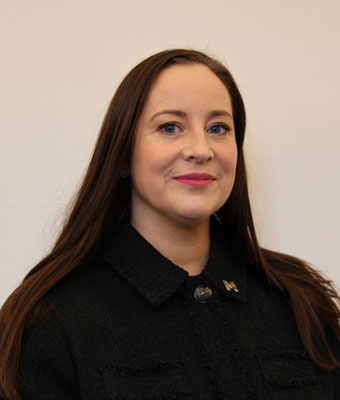
I ask the Minister of State to cast his mind back six years to 2020 and imagine a constituent of my predecessor, former Deputy, Michael Ring, walking into his office at the age of 18. The constituent needed a primary medical certificate to access the disabled driver's and disabled passenger's scheme, DDS. They were refused. They appealed and lost the appeal. This was not because they can walk unaided because they cannot. It was not because they can safely drive a standard vehicle, because they cannot. They were refused because they do not meet an exceptionally narrow and outdated set of medical criteria that prioritise amputations over functional ability. This young person would not be able to walk unaided from where I am standing to where the Minister of State is. This young person cannot reliably press the brake pedal with their disabled foot. Yet, because their limb is not amputated, they do not qualify. Six years later, they are about to turn 24 and still cannot drive. This is six years without independence and without equal access to work, education or social life. It is six years reliant on family, friends and taxis, not because the support does not exist but because the system is stuck in limbo with rigid criteria.
This injustice is compounded when we look at the timeline and the movements of responsibility between Departments. Under action 104 of the National Disability Inclusion Strategy 2017 to 2022, the State committed to reviewing transport supports, including the DDS. An interdepartmental transport working group was formed in 2020 but that was, unfortunately, paused due to Covid. Two years later, in January 2022, the Minister of State with responsibility for disability reconvened that group as a matter of priority at the time. Another year later, in February 2023, the final report concluded correctly that the DDS is not fit for purpose and should be replaced with a needs-based, grant-aided vehicle adaptation scheme and that responsibility should be moved away from the Department of Finance. By that point, my constituent had already been waiting three years.
In June 2003, the Taoiseach said he would convene all relevant Departments to develop proposals. That work progressed through further interdepartmental engagement, with the subgroup reporting to the Department of the Taoiseach a year and a half later, bringing us to February 2025. In May and June last year, the Department of Transport announced that it would now be the Department to develop a new needs-based vehicle adaptation scheme. We are now told the Department is beginning extensive engagement and public consultation while working towards January 2027 for the scheme to be up and running. That would mean seven years from my constituent's first application, which was made when they were aged 18, without being able to drive.
I know the response I am going to receive tonight is that the Department of Finance shares my concerns, that the DDS is outdated, that a new scheme is being developed by the Department of Transport following work co-ordinated with the Department of the Taoiseach and that, in the meantime, the existing DDS remains with the Department of Finance and assessments remain with the HSE. That, however, is exactly the problem. While responsibility has been moving from Department to Department, people are being left behind.
My constituent has not been failed by a lack of reports or reviews; they have been failed by a lack of common sense and discretion. If someone can demonstrate that they cannot safely operate a brake pedal, then they need a vehicle adaptation. That should not require an amputation to be believed. What immediate direction can be given to the HSE and the appeals board by the Department of Finance to apply a more functional and humane interpretation of the existing criteria? My constituent cannot wait until 2027 for independence.

I thank the Deputy for raising this extremely important topic. She is right in part of what she said. The Department of Finance, the Tánaiste and I acknowledge that the disabled driver's and disabled passenger's scheme, as the Deputy outlined, is not fit for purpose. That has been confirmed on multiple occasions. While acknowledging that it is not fit for purpose, it is important to recognise that the scheme provides relief from VRT and VAT on the use of adapted cars. It also provides an exemption from motor tax and an annual fuel grant scheme for anyone who holds a primary medical certificate. In 2024, €150 million was spent on the scheme. That is very welcome and beneficial to those who qualify. However, the Deputy is right, and she makes a very valid point in this regard, that the scheme is very rigid and excludes many people. She gave an example of someone in her constituency and I am aware of people in my constituency who I have tried to assist in relation to this. I did not come in with a prepared script from the Department because, quite frankly, some of it is embarrassing. The Deputy has given a timeline for a commitment given to reform a scheme or multiple schemes that all of us, including me and my predecessors, acknowledge are not fit for purpose. The timeline for implementation is embarrassing. I say that with regret.
In 2022, a report was published based on the national disability inclusion strategy, having established a transport working group as part of the review of all Government-funded transport and mobility schemes. I am not going to outline the findings of the report. Suffice to say that they are not at all positive. If we roll on four years, despite the fact that my Department has made a significant contribution to the national disability inclusion strategy to develop a proposal that would be fit for purpose and would mirror international best practice, we do not seem to be any further along. It is fair to say, however, that the new Government, on assuming office, prioritised disability services. Disability and supporting people with a disability into work, education and independent living are a priority.
The delay in implementing this reform further reinforces the decision the Taoiseach made to establish a disability unit within the Department of Taoiseach to ensure that schemes such as this one are pushed ahead at speed. As Government Ministers, we have to take responsibility for ensuring the decisions we take are implemented in a timely fashion by the officials working for us in our respective Departments. I cannot give a definitive timeline tonight, but what I can say is that the Deputy's amplification of this problem further reinforces an issue that needs to be prioritised. I will talk directly to the Taoiseach to ensure the unit within his Department prioritises a speedy decision in relation to the new scheme. I will talk to my colleague, the Tánaiste, as I am sure the Deputy will, to ensure this process moves ahead at pace. We cannot afford to wait any longer for the new scheme to be implemented. The consultation has already happened. There should not be any need for further consultation.
I thank the Minister of State and I respect his decision to move away from the prepared script. My concern is that in 2020, nobody saw Covid coming down the line and this led to the working group being paused. We have had different reports over the years from different Departments. We now know the Department of Transport is putting the scheme out for public consultation. I am pleased to hear that the Minister of State is going to talk with others about the fact that we do not need a consultation. I am not confident, however, that the consultation will not be pushed ahead. We do not know what will happen in the world in the next year, so the scheme could be pushed further down the line.
I know a 94-year-old man with carpal tunnel syndrome who cannot feel his hands. I know a lady in her 80s whose daughter cannot bring her to the doctor five minutes down the road because she cannot get her into the car. They have been asked to go to Dún Laoghaire. People from Mayo have to go to Dún Laoghaire for the appeals process. There is no point in their going to the appeals process because in the appeals process they are working off the current criteria, six criteria that we all know they will not meet. There is no point in travelling across the country to Dún Laoghaire to be told you will not get your appeal.
The HSE is carrying out the assessments and the appeals, but this is still with the Department of Finance. My request tonight is as follows. Will the Department of Finance issue interim guidelines to the HSE and the appeals board? We have the two reports. We know the system is failing. We know there is a new system on the way. We hope to have that up and running by January 2027, but the Minister of State and I both know that could roll on until the summer of 2027. God knows what will happen in the world. It could roll on to 2028, and I have constituents who will probably pass away in that time. These are the last years of their lives. Some of them cannot go to the doctor or go down the road. Their children are caring for them. We have to act now. This has been going on almost seven years. Can we please have an interim guideline issued to the appeals board and the HSE in order that they can do something now for the people who have been waiting for years and years?
When the Government took office this year, we committed to a step change in the delivery of supports and services for people with a disability and their families. That is a priority for the whole of Government. Budget 2026 is the first step in the delivery of this ambition, providing €3.83 billion to specialist disability services next year. That is an unprecedented increase of €618 million a year, or 20%. That reinforces and demonstrates our commitment to disability services.
I will take back what the Deputy said about an interim measure and I will talk to the Tánaiste when we meet next week about seeing whether that is feasible in the Department. I am told that it is not and that that is the reason a whole new scheme was to be devised. However, none of us as public representatives, be it as TDs, Senators or people who are fortunate enough to serve in executive positions, should accept that decisions that are meant to be implemented at a specific time are just allowed to roll on. We have to hold officials to account such that when a policy decision is taken it is implemented in a timely fashion. I always give the example of planning permissions with local authorities. It is legislatively prescribed that a decision must be taken within two months and a decision is taken within two months. I have said internally in my party that even if we have to bring in legislation that states when a decision is to be taken, the date is not a target but, rather, the decision has to be taken by that time. We are unfortunately allowing too many things slide on by weeks and weeks, which become months, and the only people who are affected are the people whom we are here to represent. That is not good enough.
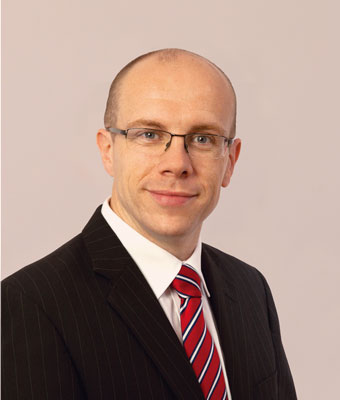
I welcome the opportunity to raise this matter and thank the Ceann Comhairle for selecting it. This is an issue I have raised consistently and to which I have had numerous responses at a State-wide level from the HSE. The HSE points to the number of people, over 22,000 adults, in receipt of HSE-funded disability day service supports at 1,200 locations, working with 97 service providers. It acknowledges that many people with a disability need access to transport to enable each person to attend a day service but that the provision of transport services is not part of core services within disability services. The HSE encourages people to use public transport options and to be independent, understandably, but it recognises that public transport options are not always available to many people throughout the country. Specifically in relation to Meath, it reiterates that day services do not have a separate budget for transport.
It says that transport in Meath is managed in a combined way between service providers and the HSE transport manager, who contracts Transport for Ireland, TFI, to supply some historical transport. That is significant. There are 217 service users accommodated on this historical transport to adult day services but there are currently five others on the waiting list for particular transport routes. There is a gap in funding but also in the transport service provision.
I want to raise a specific case of one of those service users who is on a waiting list. I have his and his mother's consent to raise their case in the Dáil this evening. It is the case of Noah Gibney from Slane in County Meath. He is 19 years of age, going on 20. He left school last year and has since been attending Prosper Meath in Navan. Noah is a full-time wheelchair user. He has cerebral palsy, autism, intellectual disability and scoliosis. He is not independent and cannot use public transport to get from his house to Prosper and home again daily. These services are really important. The response we have from the HSE locally is that, unfortunately, no space is currently available on the route for a second wheelchair, as the bus can only accommodate one at a time. The HSE Meath transport manager advises that Noah continues to be wait-listed for transport provision.
It is important that there is no defined timeline for the waiting list. That is really frustrating in this case. The policy objective, which we share, is that people can live independently and be provided with supports to do that. In this case, that is not happening. Noah's mum, Jennifer, has done her very best to secure safe and secure transport for her son, but every door is closed and, as a result, she is bringing him to and from his day services in Prosper every day. That is not a long-term solution and it runs directly contrary to the policy of giving people their independence.
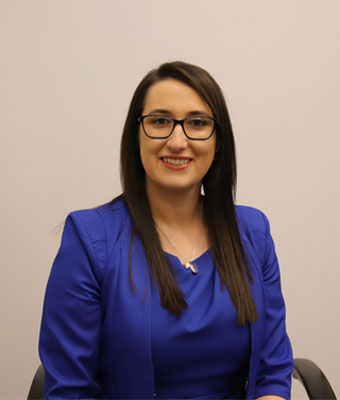
I thank Deputy O'Rourke for raising this really important issue and giving me the opportunity to discuss it on the floor of the House. The specialist disability budget supports a range of services funded through the HSE and delivered by section 38 and section 39 organisations, as well as the HSE. This includes, among other services and supports, day services and rehabilitative training for people with specialist disability service requirements.
The HSE funds on an annual basis 97 provider organisations to provide day service supports in line with the new directions policy and the UN Convention on the Rights of Persons with Disabilities, UNCRPD, to more than 21,000 people nationally. The provision of transport is not part of core services provided by the HSE. As a general rule, public transport is used in all circumstances where it is an option. This is in keeping with the principle of mainstreaming, with a clear focus on ensuring persons with disabilities have access to the normal range of services and participate in community life as far as possible. In general, day service users are in receipt of disability allowance and are automatically entitled to the free travel pass. It is recognised that viable public transport options are not always available throughout the country and that transport support needs vary between individuals. This seems to be the case in Noah's situation.
In the absence of transport options being made available by the National Transport Authority, NTA, some transport supports are provided by the HSE or funded agencies on a case-by-case basis, and a variety of transport solutions are pursued in different health regions. These include travel training to enable public transport to be used, where appropriate, local transport such as Local Link, and private bus transport. Some service providers provide transport where capacity exists. That sounds like the situation the Deputy has raised this evening.
Ireland ratified the UNCRPD in March 2018, which clearly articulates that all State parties shall take appropriate measures to ensure that persons with disabilities have access, on an equal basis to others, to transportation. In line with the principle of mainstream-first service delivery, it is incumbent upon all public bodies to execute their functions with proper regard for people with disabilities and Ireland's obligations under the UNCRPD.
The HSE has advised that all transport provision in County Meath is managed across a range of services, including disability, between service providers and a HSE transport manager. Day service providers are asked to provide transport to people seeking access to their services. The HSE transport manager contracts TFI to supply some transport. The transport manager covers all transport across disability, primary care, dialysis and some elderly services. The role of transport manager is a legacy role that may be unique to Meath community services. The post is funded across the care groups according to the HSE and there are no transport managers in any of the other five counties that were part of the former CHO 8. There are currently 217 service users accommodated on this legacy transport route, which provides access to a number of adult day service locations. These routes are at capacity, as the Deputy said. As a result, five people are waiting for these particular HSE transport routes. From what the Deputy has said, Noah must be one of those five people.
Sanction was provided to the HSE in 2024 for €3.6 million to be used for the upgrade of transport vehicles in disability day services. Building on a similar approach to addressing the issue of ageing vehicles in disability residential and respite services in 2021, this funding was specifically aimed at supporting the provision of vehicles for transport to day services where other transport solutions are not available and where an ageing fleet exists. This funding was allocated to HSE, section 38 and section 39 services on a one-off basis and has supported the purchase of 77 vehicles, which provide services.
I thank the Minister of State for the reply. I know she understands the importance of these services for Noah and everybody else who accesses them for fulfilment, engagement, development and independence. She has articulated here and in the responses I have got before that a unique set of circumstances exist in Meath. It is a frustration for us in Meath that they were there. It is different now for people coming into the system. The wider point is about the need for an integrated system that can ensure that, where people cannot access public transport for whatever reason, a transport system is in place to allow people to have independence and not to be dependent on individuals. We can all imagine scenarios where someone's carer, support or transport provider, such as a family or friend, is not available because they are sick, away or so on, which has a knock-on impact. I ask the Minister of State to look at this issue, specifically at Noah's case, and at Meath, but also in a wider context at transport for people accessing adult day services. No two cases are the same. There are individual merits, for example, and if a needs assessment was done, a transport need might be identified in an individual case.
The Deputy is right that it is important that not only should we provide access to high-quality day services right across the country, which we are, but we should also ensure that people can get there as easily as possible. I appreciate that and every effort is being made to ensure that local public transport links are provided. In Meath's situation, which is unique, there is a bespoke solution that is working for the people there.
I appreciate that there is the waiting list of five, but it is something unique to Meath and I think it is working quite well from the feedback I have had. I will point out now that under pillar 5 of the National Human Rights Strategy for Disabled People 2025-2030, our new strategy launched last September, the Department of Transport has the lead responsibility for reducing and, where possible, eliminating transport barriers faced by disabled people. I think that is really important. Under that pillar, there is a commitment to personal mobility and to supporting those who cannot use or easily access any public transport through the provision of enhanced personal mobility options.
The Government's ambition is also reflected in the really significant investment being made in specialist disability services in recent years, with record investment of €3.8 billion in 2026 alone. This includes additional funding for a new cohort of 1,400 school leavers and 53 day-service places for non-school leavers. The Government is absolutely committed to supporting people with disabilities and to ensuring they are enabled to reach their full potential in the spirit of the UNCRPD. I thank the Deputy for raising the case with us here today.

We now go back to Topical Issue matter No. 2 from Deputy Malcolm Byrne to the Minister for education to discuss the planned redevelopment at Bunclody Community College.
Schools Building Projects
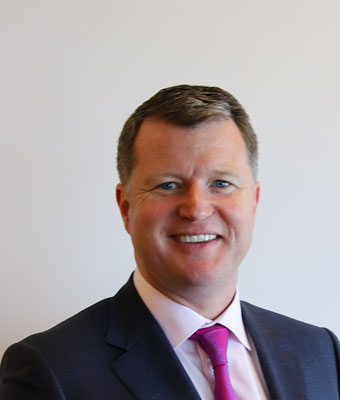
Go raibh maith agat. I thank the Minister of State for taking this Topical Issue matter. I appreciate it is not his Department, but I hope he will bring this matter back to the Department of education and that the officials tuning in will be very aware of the concerns around Bunclody Community College. Bunclody Community College is a school with an enrolment of 310 students. This is an increase of 42% since 2019, so it is a rapidly growing school. It is a very good school, with a very committed and excellent teaching staff and some amazing students. I met the student council there. The school had a very successful project at the Stripe Young Scientist and Technology Exhibition around misinformation and disinformation only two weeks ago.
This is a really dedicated team of people working to provide education in an area that has a lot of disadvantage. It is a DEIS-designated school, a champion school of sanctuary and also a pilot school in the supporting Traveller and Roma, STAR, pilot project of the Department to increase participation among those from the Travelling community. This is a really good school as well, when we look at the whole-school evaluations, in terms of the quality of education delivered.
I have to say that of all the schools I deal with in my constituency, and indeed beyond, in terms of the physical structures, this is by far the worst. The school operates on two campuses. It has to because of the expansion of the school. There is a 500 m walk between the two campuses. A lot of the prefabs are on the separate campus. Students have to walk the 500 m, which involves crossing a busy regional road. We are talking about four or five minutes being lost every time for staff and students when they have to travel across between the two campuses. There are only three regular classrooms in this school not currently in prefabs. I do not think there is any other school in the country like this and I will challenge people in this House to identify any other school that is in this situation. Some of the prefabs have been there for more than 20 years.
One of the difficulties is that one of the first parliamentary questions I asked in this term was around what was happening with Bunclody Community College. The response I received was that, "The project referred to by the Deputy, has been devolved for delivery to Waterford and Wexford Education and Training Board, WWETB", and, essentially, that is at stage 2b. As colleagues in this House will know, I tend to refer to stage 2b as purgatory. It is that sort of holding place that the Department of education has. If a school is told it is in stage 2b, it never knows when it is necessarily going to get out of it. I have eight schools in the constituency in this situation.
In this case, this project has been on the go since at least 2014. In 2019, there were announcements that were welcomed. In fact, the then Minister, Paul Kehoe, described it as one of the most needed investments in a Wexford school. Deputy James Browne, now the Minister of State's ministerial colleague, made very clear about how this project, after many years of campaigning, was finally going to be delivered. That was in May 2019. Complete planning permission for the project was granted in April 2023, so that permission will obviously run out in 2028. Every time I have asked a parliamentary question about this issue since I have come in here, from that first one in January, to one on 29 July, to a further one on 25 November, I have got the same answer again and again, namely, that it is at stage 2b. I hope the Minister of State will fill me with a bit more optimism from the Department and that, as with the previous question, he will not simply read the standard script.
I thank my friend and colleague. I will read the standard script because the previous question I answered was for my own Department. This one is in relation to the Department of education, which I am taking on behalf of the Minister, Deputy Naughton. I thank the Deputy for raising this matter as it gives me, on her behalf, an opportunity to update the House on the current position regarding the school building project for Bunclody Community College, Bunclody, County Wexford.
The project referred to by the Deputy is devolved for delivery, as he said, to Waterford and Wexford Education and Training Board. The project brief is to provide an extension to the existing school building, as well as the appropriate refurbishment of the existing buildings to be retained for ongoing educational use. This will cater for a long-term projected enrolment of 550 and provide two special education classrooms.
The project is currently at stage 2b of the architectural design process. This stage allows for detailed design and planning, obtaining necessary statutory permissions and preparation of tender documents. A stage 2b report has been submitted to the Department from WWETB. The report is undergoing a detailed technical and cost review in line with the public spending code. All projects, including this one, are subject to the due diligence requirements of the public infrastructure guidelines. Managing timing, scope and the cost is crucial to staying within budgetary limits for the overall programme. Once the review is complete, the outcome will be communicated to WWETB as the delivery body for this project that will continue to engage directly with the school authorities to keep them fully informed of progress. The length of time a project takes to deliver depends on a number of factors, including scale and complexity, and is subject to the time it takes to progress through the various project stages and the statutory approval process, which I understand, as the Deputy said, it has already gone through.
In July 2025, the Government announced a capital allocation of €7.55 billion for the Department of Education and Youth for the period from 2026 to 2030 under the national development plan. As part of this NDP allocation, the Department will place a strong emphasis on provision for children with special educational needs, with a particular focus on meeting annual school place needs. In relation to project roll-out for large-scale projects and additional school accommodation scheme projects, the approach will be to continue to maximise the capacity of the existing school estate as much as possible in the first instance and provide necessary additional capacity through targeted and prioritised project roll-out over the course of the period from 2026 to 2030 to meet the most urgent and prioritised needs.
The NDP implementation plan for the education and youth sector and the first tranche of projects to progress to construction will be published by the Department shortly. This NDP implementation plan will optimise outputs from the NDP allocations, with a strong focus on maximising existing school capacity, progressing priority projects where local capacity across schools in the area is insufficient, and ensuring delivery that is affordable, offers value for money, and meets functional needs.
I thank the Minister of State for his response. I appreciate it is not his Department but, frankly, there is nothing new in this. This is deeply, deeply frustrating. The challenge for this school and for the staff, the students and the wider community - and I spoke with my good friend and colleague, Councillor Barbara-Anne Murphy, who chairs the board of management of the school - is that this school is tired of, frankly, false promises from the Department. This situation has been running for well over a decade in terms of trying to move things forward.
The difficulty for the school is it sees other schools in the wider community where those projects have progressed much more quickly. As I said, I reiterate the point, in terms of the conditions that this school has to operate under, there are two campuses where students and staff have to travel - the Minister of State knows what the weather was like today - across a busy regional road, losing valuable education time. We are in a situation where the majority of the school is in prefab classes. That is not acceptable in 2026.
The Minister of State knows I am one of the most passionate advocates for investment in education in this House and support the capital building programme. Lots of work is being done. The question has to be asked as to why this project has taken so long. I invited the Minister of State with responsibility for special education, Deputy Michael Moynihan, to this school because this school has an excellent record in that area. It was willing to expand further in this area, something that not all schools are willing to do, yet we are still not seeing any progress. The Department needs to be much more honest with schools as to the exact timeframe that is involved. This is one of the worst schools I have come across in the country in terms of its physical structure, even though the quality of education is excellent. It deserves a clear answer now from the Minister for education as to when construction work will finally start.
I thank Deputy Byrne for raising this project forcefully and working with Councillor Barbara-Anne Murphy in advocating on behalf of the school, the teachers and the students who go to this school. As I said, the NDP allocation, which was announced last year, was €7.55 billion over 2026 to 2030. The Deputy made a very strong case that this school is part of that allocation process. All I can say is that I will bring the Deputy's message, that he brought very forcefully to the floor of the Dáil, to the Minister for education. It is just the most recent time that he has raised the issue. I know he has been advocating on behalf of the school for a long time. It is a fair request that he has made, that, at the very least, the school authorities should be made aware of an indicative, realistic timeframe as to when they can experience the new building.
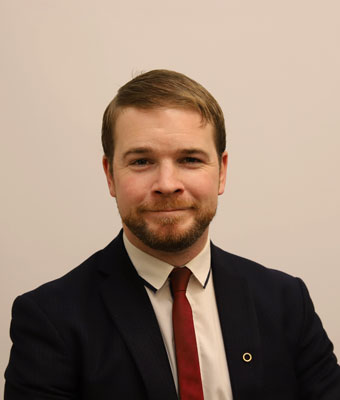
This Topical Issue relates to Coláiste Daibhéid and its application under the additional school accommodation scheme. It is important to be open and honest in this place, and I declare an interest. This is where I attended secondary school and it is also where our 14-year-old currently attends in third year. All the same, the issue is substantial and it needs to be addressed because it has been carrying on for far too long.
Coláiste Daibhéid is a school of around 200 children at this moment. It has a projected long-term enrolment of 300. It is an ETB school. Cork Education and Training Board is the patron. It is an Irish-medium school. It is one of the few schools left in Cork city centre. Partially because of that, its growth and development is seriously constrained by the lack of development of its current site. It is a relatively young school. It has been in place for about 33 years now. The location is in St. John's College in the city centre. The buildings are not purpose-built; they are old parts of St. John's College that were provided by the patron, the education and training board. Effectively, the school was never really built. Some extensions were added to existing buildings. One of these buildings is 150 years old.
Níl na foirgnimh maith go leor ar chor ar bith. Tá siad róbheag agus níl go leor spáis ann. Tá roinnt de na foirgnimh sách sean. Caithfear athchóiriú a dhéanamh orthu.
There is no sports hall, which is a huge constraint for any school. There is not an adequate reception area. The classrooms are not adequate to facilitate the potential growth of the school. It is separated across two separate buildings. The school was approved to enter the Department's pipeline for a project under the additional school accommodation scheme. Unfortunately, this has been going on since about 2018. The application is to build a multimedia room, a textiles room, a graphics room, a construction room, a technology preparation room, a science lab, a prep area, one project store, and, crucially, a potential sports hall. That is vitally important. This was submitted in its most recent round for stage 1 review, but that was on 29 July and the school has heard nothing since. That creates a huge difficulty for the school in being able to plan its way forward, and for the patron to plan the way forward and to go ahead.
It is important that a hall is part of these proposals. Project Ireland 2040 has a commitment to a physical education hall build that ensures that students in all post-primary schools have access to state-of-the-art facilities, particularly in the context of roll-out of physical education as a leaving certificate subject. The hall is vitally important. It is also important in the context of students only having their classrooms to go to. There is no place to congregate.
Tá sé tábhachtach chomh maith i bhfianaise thodhchaí na meánscolaíochta trí mheán na Gaeilge. There are eight Irish-medium primary schools in the city council area. This is one of three secondary schools. Clearly there is greater potential and a lack of provision. This is in the context of the then Minister, Joe McHugh, in 2019, stating: "There are ... 60,000 young people in Irish-medium schools right across the country and I want to see an ambitious target set to double that." This is a perfect opportunity to expand the school, to create that potential for the school to grow and to give it the modern facilities that it requires.
I also make the point that the NCSE has been engaging with the school in relation to greater provision for autism classes and units. The buildings need to provide for that. I am looking for an update in relation to this, and to try to see that we can progress this beyond stage 1, that this can be approved in order that the school can get on with planning a building of the future.
I thank the Deputy for raising this matter as it gives me the opportunity to update the House on the current position regarding the school building project for Coláiste Daibhéid, Cork. The project referred to by the Deputy was approved to enter the Department's pipeline for a project under the additional school accommodation scheme. The project will provide one multimedia room, one textiles room, one graphics room, one construction room, one technology prep area, one science laboratory, and prep area and one project store. The inclusion of a PE hall or general purpose dining hall depends on site feasibility, constraints and input from the local authority and heritage officer. The delivery of this project has been devolved to Cork Education and Training Board.
The stage 1 report outlining the proposed design and costings was submitted to the Department in July 2025. This is currently under review from both a technical and cost perspective in accordance with the requirements of the public spending code. Once the review is completed, the outcome will be communicated to Cork Education and Training Board which will continue to engage directly with the school authorities to keep them fully informed of progress. The Department is committed to ensuring appropriate accommodation is available for all school pupils and will, in the wider context outlined, ensure that each school project on the school building programme is subject to the due diligence required under the public infrastructure guidelines.
In July 2025, the Government announced a capital allocation of €7.55 billion for the Department of Education and Youth for the period 2026-2030 under the national development plan. As part of this NDP allocation the Department will place a strong emphasis on provision for children with special educational needs, with a particular focus on meeting annual school place needs. In relation to project rollout for large-scale projects and additional school accommodation scheme projects, the approach will be to continue to maximise the capacity of the existing school estate as much as possible in the first instance and provide necessary additional capacity through targeted and prioritised project rollout over the course of 2026 to 2030 to meet the most urgent and prioritised needs.
The NDP implementation plan for the education and youth sector and the first tranche of projects to progress to construction will be published by the Department shortly.
The plan will optimise outputs from the NDP allocations, with a strong focus on maximising existing school capacity, progressing priority projects where local capacity across schools in an area is insufficient and ensuring delivery that is affordable, offers value for money and meets functional needs.
I appreciate the update. I hoped for a bit more regarding when we might get through the next phase. I appreciate that the Minister of State's Department does not have responsibility in that regard. I would appreciate if he could, on my behalf, bring this matter to the attention of the Minister. I note the presence of my constituency colleague the Minister of State, Deputy Buttimer, who is also keen to support the school. Perhaps he could use his good offices to contact the Department as well. The school wants to get past this stage. It wants to get to the point of being able to develop all the things that have been outlined in terms of value for money. That is fine; it all makes sense. It is absolutely the case. I have no doubt that the education and training board, which is a very professional and capable organisation, has all of that is lined up.
Will the Minister of State bring a couple of things back to the Department. He stated, "The inclusion of a PE hall or general purpose dining hall depends on site feasibility, constraints and input from the local authority and heritage officer." The school and patron have amply demonstrated the fact that what is proposed is viable and can be delivered, either in the basement or on the roof of the building. They have offered potential designs in that regard.
This is a piece of community infrastructure. We are talking about bringing people into our cities to live, raise their families and work. The south parish does not have a huge number of community facilities. What is proposed here could be a resource for wider community in that part of the inner-city centre, namely the south parish, as opposed to just the school.
At present, there are constraints on the ability to provide PE in the school. There is no place for people to have lunch on rainy days. Caithfimid freisin a thógáil san áireamh nach bhfuil go leor soláthair ann don mheánscolaíocht trí mheán na Gaeilge i gcathair Chorcaí. Níl ach trí mheánscoil i gcomparáid le hocht mbunscoil. Níl go leor áiteanna do leanaí ar mian leo dul go dtí an mheánscoil trí mheán na Gaeilge. There is not enough provision for Irish-medium secondary education. Expansion of this school is necessary to try in order to meet some of that growing demand across the city.
The Deputy is dead right. My colleague the Minister of State, Deputy Buttimer, is fully supportive of the upgrade to this school. Last year, in the updated national development plan, €7.55 billion was committed in respect of educational investment. This will ensure the completion of the 300 or so school building projects already under construction, which will deliver over 22,300 new and modernised school places across primary and post-primary, the expansion of special education provision and the provision of a record 14,000 additional places in special education classrooms and new mainstream school capacity. It will also ensure that we continue to invest and keep our existing stock up to a modern standard. It is anticipated that later this year the list of schools that are going to benefit from that substantial investment in school infrastructure will be published. The Deputy makes a very strong case, as does the Minister of State, Deputy Buttimer, in relation to the school in question. I will be sure to bring the message back to my colleague the Minister, Deputy Naughton.
I wish to support my colleagues because Cólaiste an Phiarsaigh in Glanmire is one of the other schools waiting for a long-awaited extension.
Public Transport
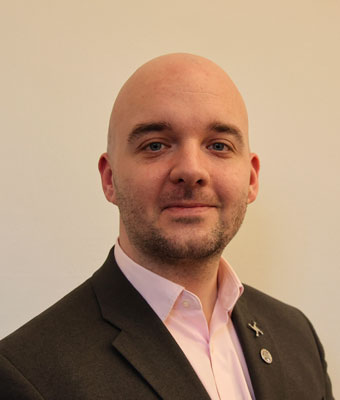
I thank the Minister of State for being here. I appreciate him and the other Ministers of State present giving of their time this evening.
The Minister of State will be well aware of the outrage that met the Minister's announcement regarding the decision to defer the delivery of DART+ South West, a project costed at €1 billion that was set to increase the capacity on rail services running from Hazelhatch and Celbridge, County Kildare, to Dublin from 5,000 to 20,000 passengers at peak times. Essentially, this service was going to change people's lives and the way in which they could interact with their communities and their capital city. Before Christmas, the Minister performed a bit of a U-turn on a project that has been planned for many years. We have not had a justifiable reason as to why that was the case. The latest press release from the Minister suggests that it is something that he would like to do and would like to see come to fruition and that he is not ruling out making a U-turn on his U-turn. I raised this matter in order to try to get on the record what exactly the Government's plan is with regard to DART+ South West.
The aspect that frustrates a lot of people in Kildare, where we have seen such significant population growth over the years, is that many Ministers have been at pains to tell us that individuals and community groups taking judicial reviews are the reason why the provision of significant infrastructure projects in this country has been delayed. The project in question has full planning permission. It has gone through the railway order process. Local authorities both in Dublin and Kildare have done their bit to prepare and get this project incorporated into county development plans. A great deal of planning has gone outside of this House to prepare for this project. Yet, the Minister has essentially stated that he would like to see it happen. Representatives from the National Transport Authority, NTA, were before the public accounts committee last Thursday. I asked them about the DART+ West project and when they expect to see passengers being able to use DART+ West. They said it would probably be 2030 before that happens. If we extrapolate that timeline in respect of the DART+ South West project, it is obvious that if construction does not start until 2030, we will not see anybody availing of the service until, potentially ,2034, 2035 or beyond. Everything is in place bar the funding.
Do we have a concrete timeline for when the DART+ South West project will progress? Can the Minister, the Minister of State and the Department make it clear that there will be no more changes of heart when it comes to this important project? Planning permissions have been granted on the basis that this infrastructure will be in place. As the Minister of State knows very well, the people of Kildare and Dublin need this service. This is not an optional extra. We need this service to come into place in tandem with DART+ West.
I would appreciate an update from the Minister of State. We will see where we can go from there.
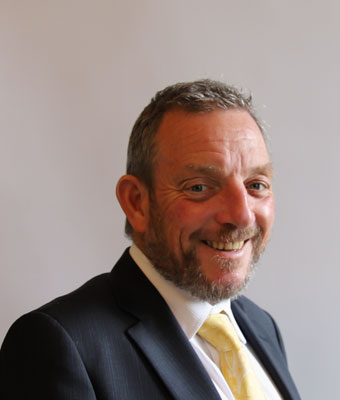
I thank the Deputy for raising this very important matter. He has been consistent in raising matters relating to public transport in the House.
I am taking this matter on behalf of the Minister for Transport. The DART+ programme comprises five different rail projects in and around the greater Dublin area, extending the existing DART network to Maynooth, M3 Parkway, Hazelhatch and Celbridge and Drogheda and improving current DART services from Dublin city to Greystones. The programme will triple the length of the electrified rail network in the Dublin area and double city centre peak hour capacity from 26,000 passengers per direction to 52,000 in future. DART+ South West will extend DART train services from Dublin city centre to Hazelhatch and Celbridge station, including four-tracking from Park West to Heuston station. An Coimisiún Pleanála approved a railway order for DART+ South West in November 2024. In addition, procurement for DART+ South West and DART+ West is progressing, with pre-qualification questionnaire notices for design and build works advertised in May last year.
The Government is committed to the delivery of major public transport projects. That commitment is evidenced by last year’s review of the national development plan, in which a total of €24.3 billion in Exchequer funding was allocated in respect of transport projects for the period 2026 to 2030. Of this total allocation, Exchequer funding of circa €10 billion for public transport infrastructure is earmarked for this period in addition to the €2 billion allocated for MetroLink.
This funding is allocated broadly in line with the Department’s national investment framework for transport in Ireland, NIFTI, intervention hierarchy of maintain, optimise, improve and new. The approach involves prioritising investment in the protection and renewal of existing assets before investing in new ones on economic and environmental grounds. This represents an unprecedented level of investment in public transport infrastructure over the coming five years, which has more than doubled in comparison with the last five-year period under the previous NDP. However, it is a simple fact that within any funding envelope - no matter how big - there are decisions required in relation to sequencing and prioritisation. Those are the decisions that come with the responsibilities of being in government.
The funding under the NDP transport sectoral investment plan will see significant advancements made in a number of public transport projects by 2030, including advancing various elements of the DART+ programme.
The compulsory purchase obligation processes for DART+ South West will commence this year and aspects of the procurement frameworks put in place for DART+ West will be available for use on DART+ South West when its main construction works commence.
It is important to state that, following on from the investment in the new DART+ fleet, DART+ West was also recognised as the critical step in the DART+ programme that will help enable DART+ South West and, indeed, the other infrastructure projects of the programme, to develop for a number of reasons. The new depot in the Maynooth and Kilcock area, to be delivered as part of DART+ West, will provide essential stabling and maintenance facilities for the expanded fleet for the entire DART+ programme, which is a prerequisite for supporting service patterns across the entire DART+ network, including DART+ South West.
DART+ West will deliver the critical electrification of the city centre rail network and the necessary city centre capacity upgrades. This is a prerequisite for future trains coming from DART+ South West to enter the city centre network at Glasnevin junction from the Phoenix Park tunnel. Upgrades delivered under DART+ West, such as re-signalling and electrification, are also vital for accommodating the increased frequency envisaged for DART+ South West. The new station at Spencer Dock, to be introduced as part of DART+ West, is a key node for future service integration, supporting the operational flexibility required for DART+ South West train services, helping to address capacity issues around Connolly Station.
In accordance with the Government commitment on the delivery of major capital projects, the Department will also explore any EU funding which may become available to accelerate public transport projects. Moreover, the NDP will be reviewed around 2028 and updated at that point, and this will also provide an opportunity to examine the potential to provide additional funding to accelerate the delivery of projects such as DART+ South West.
I was preparing myself to get back up to criticise the Minister of State for giving me a blank reply but, in fact, what he has done is given me a very detailed reply and I thank him for it. There is a lot that I can take back with me to constituents and to my colleagues, Councillors Peter Melrose and Nuala Killeen, who have been working tirelessly on this for many years. I had not seen confirmation in writing before tonight that the depot for DART+ West will be in the Maynooth-Kilcock area. When we spoke with the NTA last week it did not confirm this. I really welcome that it has been confirmed this evening. What the NTA did speak about was a public consultation that might be aligned with this. Does the Minister of State know anything specifically about this, whereby communities in the area will be asked their opinion on this? I know Irish Rail has done considerable work in going back to the drawing board with regard to the depot.
I want to press on the Minister of State the importance of this next matter and I cannot underplay its significance. If a depot comes to Kilcock, can we make sure that a stop in Kilcock is part of it? For years people in Kilcock have been told they will have the depot, the noise and the lights, and they will nearly be able to smell it, but they will not be able to use it. It would make absolute sense, if we are bringing the depot as far as Kilcock, which I welcome and I support the Minister of State and the Government wholeheartedly if we can deliver this, that we can include a station with the depot. It would make massive sense from a future planning perspective. I thank the Minister of State for being here and for giving me such a detailed reply. The only outlying piece is whether there is a timeframe for the public consultation in Kilcock.
I went to college in Maynooth, and Deputy Joe Neville has been on to me, as has Deputy Farrelly in the past, to be fair. Again, on behalf of the Minister for Transport, I thank Deputy Farrelly for raising this matter. This is a very important issue and I am familiar with the Kilcock issue, which Deputy Farrelly has spoken about. I do not have a definitive answer on the public consultation but I will ask officials to liaise with Deputy Farrelly on it.
I will recap the developments in the DART+ South West project. It will provide an extension of DART train services from the city centre to Hazelhatch and Celbridge. Procurement for DART+ South West and DART+ West is progressing, with pre-qualification questionnaires for design and build advertised in May 2025. In addition, the railway order for DART+ South West was approved by An Coimisiún Pleanála in November 2024. As I stated earlier, the national development plan sectoral investment plan for transport, which was published by the Department of Transport in November last year, will enable advancement of various elements of the DART+ programme in the coming years, including DART+ West. This funding will also allow for compulsory purchase orders to progress for DART+ South West this year, and will provide for procurement progress for the project, with some of the framework contracts being established in common for DART+ West and DART+ South West.
As the roll-out of the new DART+ fleet, which has started to undergo safety testing, progresses from 2027 onwards, it will allow the cascade of existing trains to serve new areas of the Irish rail network. The redeployment of this fleet is a matter for Iarnród Éireann and the National Transport Authority to decide on, based on a range of factors. There is potential for some of this fleet to be deployed on the DART+ South West line to add capacity in advance of infrastructure upgrades.
As I said earlier, the Department will also explore any EU funding which may become available to accelerate public transport projects. The public transport offering has transformed the whole Maynooth area since my days in college. Moreover, the NDP will be reviewed around 2028 and updated at that point, and this will also provide an opportunity to examine the potential to provide additional funding. I take Deputy Farrelly's point on the acceleration of projects and he made a good point on the population growth.
To be fair to the Government, there has been significant investment in infrastructure and it reflects well on us. I will take back the point on notification of the public consultation. The acceleration of projects with regard to DART+ South West is a good news story and I thank Deputy Farrelly for raising the matter tonight. I thank the staff for being here this late, and I thank An Cathaoirleach Gníomhach for chairing the House at this late hour of the night. I wish the staff a safe journey home and if they are on public transport, all the better again.
I thank Deputy Farrelly and the Minister of State.
Cuireadh an Dáil ar athló ar 11.56 p.m. go dtí 9 a.m., Dé Céadaoin, an 21 Eanáir 2026.
The Dáil adjourned at 11.56 p.m. until 9 a.m. on Wednesday, 21 January 2026.