Disability Issues
6. Deputy Michael Murphy asked the Minister for Social Protection to explore the possibility of reducing the minimum hours of the wage subsidy scheme from 15 hours to ten hours (details supplied). [1439/26]
Somewhat following on from the last question on the wage subsidy scheme, I want to acknowledge the reforms introduced by the Minister over the last number of years. I want to further explore the possibility of reducing the minimum hours from 15 to ten. Doing so this would help many service users in centres of excellence like MooreHaven in Tipperary town to achieve their dreams and it would make working in local communities a more realistic option.
As the Deputy knows, the wage subsidy scheme is a key disability employment support. It aims to encourage employers to offer substantial and sustainable employment to disabled people through a subsidy. In December 2025, 1,551 employers were availing of the wage subsidy scheme and 2,626 employees were supported through the
scheme. Budget 2026 provided for the scheme to be expanded to those who acquire a disability or who have a progressive or degenerative condition that worsens and to those who transfer from invalidity pension to partial capacity benefit.
In 2024, the Department published a review of the wage subsidy scheme. Based on the findings in the review, my Department reduced the minimum required hours for the scheme from 21 hours per week to 15 hours per week. This change sought to make the scheme more accessible and flexible for disabled people. However, it also sought to ensure that the wage subsidy scheme maintains its key aim to encourage employers to provide substantial and meaningful work to disabled people.
The scheme needs to operate within the new 15-hour minimum requirement for a period before we can assess the impact the change has had. As the Deputy knows, there is already a commitment in the programme for Government and the national human rights strategy for disabled people to further reviewing the minimum hours of the wage subsidy scheme. I will advance this commitment but I need time to judge and measure the impact of the new 15-hour minimum requirement. I am very happy to engage with the Deputy and to visit the project in Tipperary to see how it is working.
I welcome the Minister's reply. I thank and acknowledge everybody working within the scheme and, in particular, individuals in the Department of Social Protection around the country working on this and other activation schemes. It is such a fantastic scheme and it is not about money or policy. It is about being able to be seen to be capable of working, to be able to work with others. I am conscious of those individuals who just do not have the capacity to work 15 hours a week and may only have the capacity to work ten hours a week. There has been a lot of feedback from employers and service providers indicating that the current minimum threshold of 15 hours per week can be a barrier. While the scheme is well designed, this requirement can limit its reach. As the Minister said, there is a commitment in the programme for Government. I look forward to working with the Minister to explore whether we can reduce the minimum requirement further.
I thank the Deputy. We will certainly work across the House in relation to this area of furthering employment opportunities for those with disabilities. As we discussed earlier, WorkAbility is working on 57 local, regional and national projects right across the country. We have also work in access, which is one of the changes we announced alongside the changes to the wage subsidy scheme. This offers seven supports to improve access in the workplace for people with a disability. Funding is available for communication support, work equipment, workplace adaptation and training. I am currently reviewing the work and access scheme with a view to looking at the new assistive technology that is available for employers and those with disability in terms of maximising the opportunities that are available.
We have made changes again to the wage subsidy scheme. We have made changes to the balance of the wage subsidy scheme to encourage people. As I said previously, throughout 2026 we will be having a number of work and skills events that are themed for those with a disability. We had a very successful pilot last October with AsIAm. I intend to roll those out nationally during 2026.
It was remiss of me not to acknowledge the many employers across the country who participate in the scheme. Indeed, their willingness to provide opportunities has had such a positive impact. I am engaging with service providers, not just the MooreHaven centre, but others within my constituency, and they have indicated to me that the ten-hour threshold would be far more achievable, first of all, for many employers but more importantly, it would better suit the needs of many participants, having regard to their abilities and indeed their limited capacity to work. As I said, for many the 15 hours is simply a bridge too far. This is not due to a lack of willingness but just practical and health-related constraints. Reducing the minimum requirement from 15 hours to ten hours is a sensible and what I would call inclusive adjustment. As the Minister said, it fully aligns with the objectives of the programme for Government, but I accept what the Minister is saying. The 15 hours minimum requirement was only introduced in 2024 but we are now two years on, so I appeal to the Minister to maybe accelerate that consideration.

I would like to echo Deputy Murphy's call to reduce the time requirement for the wage subsidy scheme. The OECD published a report not too long ago saying that 10% of the working-age population had a disability and 25% of people with disabilities in 2019 were unemployed. It is the largest employability gap in the developed world and is higher than the United States or the United Kingdom. Dr. Mel Cousins from Trinity College said that income from employment would be the best way of tackling poverty for people with disabilities but, importantly, making sure that people do not lose employment would be the best way of tackling poverty for people with disabilities. One thing that is not mentioned too often in the wage subsidy scheme is that the number of employers that are availing of it has actually dropped over the last number of years. What will the Minister do to tackle the highest employment gap for people with disabilities in the developed world?
Just to come back to Deputy Murphy's point first, we will keep it under review. In 2024, the hours were reduced from 21 to 15, which is quite a substantial reduction. It is important that we also keep an eye on the main aim of the scheme which is to provide substantial and meaningful work and I think we need to keep that in mind as well.
In relation to Deputy Hayes's point, we very focused on addressing that gap. As I said, we have made changes to the wage subsidy scheme. We have provided quite a lot of information to employers. Throughout 2025 we relaunched the wage subsidy scheme and made changes to it and we have made further changes to it to address a particular point the Deputy raised, that is, that those who acquire a disability employment can be retained within their current employment and avail of the wage subsidy scheme. Previously, if somebody within a workforce acquired a disability, they were not supported through the wage subsidy scheme and would have had to give up that employment. We have made that change. We will be making further changes to the workplace activation scheme to support employers.
I am also committed to engaging with employer organisations in relation to showing the opportunities that are there. I am referring to the skills that are being missed, the talents that are not being availed of when employers do not look to people with disability for employment opportunities. I am looking at various social enterprise models that will reflect where Deputy Murphy is coming from in terms of how we can use that skill and talent. I am very committed to addressing that gap. Deputy Hayes's statement about the gap being the worst in the developed world is wrong.
That is what the OECD said.
We are close to the EU average, but it is nowhere near where I want them to be and I am determined to make a change there.
Social Welfare Payments
7. Deputy Catherine Callaghan asked the Minister for Social Protection the steps being taken to ensure that parents who are aged 66 years and above and caring for children with lifelong disabilities retain the rate at which they are paid their carer’s allowance and concurrently receive the State pension; and if he will make a statement on the matter. [2827/26]
I would like to talk about carers, in particular, those who are over the age of 66 and in receipt of the State pension. I ask the Minister to outline the steps that are currently being taken to ensure that parents who have, for their lifetime, cared for their children and reached the age of 66 can retain the full rate of carer's allowance and concurrently receive the State pension.
The main income supports provided by the Department to carers are the carer's allowance, carer's benefit, domiciliary care allowance and the carer's support grant.
Spending on those payments in 2026 is expected to be over €2.2 billion.
In general, people who are eligible for two social welfare payments at the same time receive the higher payment for which they are eligible; they do not receive both payments simultaneously. For instance, a jobseeker who falls ill does not receive both a jobseeker payment and an illness payment. In recognition of the vital role of caring, however, an important exception already applies. Where a person is receiving a full-time social welfare payment, such as the State pension, and is providing full-time care for at least 35 hours per week, they may receive up to half the carer's allowance rate in addition to their primary payment. This arrangement applies across almost all weekly social welfare payments, including those with increases for a qualified adult. At the end of 2025, there were 49,234 carers benefiting from these arrangements. Of that figure, approximately 14,500 were receiving a State pension, either contributory or non-contributory. That means that a person in receipt of carer's allowance who qualifies for the full State pension on reaching the age of 66 and retains a half-rate carer's allowance will see their payment increase from €270 a week to a combined pension and carer payment of €453.30 per week.
The programme for Government commits to ensuring that parents who are aged 66 or over and who are caring for children with lifelong disabilities retain the rate at which they are paid their carer's allowance and concurrently receive the State pension. We are committed to progressively increasing weekly carer's payments. We will continue to increase various payments in this space.
A big focus is that the carer's allowance means test is abolished. The process for phasing out that means test is well under way. From July of this year, the weekly income disregard will increase from €625 to €1,000 for a single person and from €1,250 to €2,000 for carers who are part of a couple.
We will continue to advance these commitments over the lifetime of the Government, having regard to the overall policy and budgetary context.
I acknowledge the work being done but, as a former family carer myself, I know full well that our carers provide an enormous service not only to their loved ones and those they care for but also to the State itself. It is estimated that each year the State saves €20 billion that would have to be invested in our health services were it not for the work of family carers. These carers work long and difficult days in the most demanding of roles, and caring for a loved one in older age can often be deeply challenging. I am therefore of the strong opinion that the State has a responsibility to look at our carers in an exceptional way and to care for them and to support them in every single way we can. While I said I welcome the body of work that has been done to phase out the carer's means test the Minister mentioned over the course of the current Government's term, I strongly support the commitments made in the programme for Government to ensure that the State give every support possible to help our carers in their role. I therefore ask the Minister to take one further step and to ensure that everything possible is done to provide pensioners caring for their children with the full rate of carer's allowance.
We absolutely agree with the Deputy on the role of carers and the role of family carers. That is why we have made changes and made such commitments in terms of the means test. It is also why the exception in relation to the half-rate of carer's allowance is made. Those in receipt of the half-rate are the only cohort for whom that exception is made. We have a programme for Government commitment to better support parents aged 66 or over who are caring for children with lifelong disabilities, and I will advance that commitment over the lifetime of the Government. As I said to the Deputy, at the end of December last there were 49,234 recipients of the half-rate of carer's allowance and, of those, just over 15,000 were receiving a State pension. We will continue to progress that commitment in relation to those aged 66 or over and we will continue to engage with the Deputy on that commitment.
That is very heartening to hear, and I look forward to working together to ensure that the commitments in the programme for Government are advanced.
While I am here, I would like to raise the immense financial strains carers often find themselves under in spite of the services they provide. In a recent survey, 69% of carers reported having difficulty making ends meet and, of those, 29% have begun cutting back on essentials such as food and heating. Some 39% of all carers live in households with a combined total income of less than €30,000 per annum, so the financial challenges that come with being a carer, particularly in older age, must be addressed head-on. The Minister has mentioned the ambition that has been shown in supporting our carers through an increased domiciliary care allowance, which I acknowledge. He has outlined the increased welfare payments that started this month. I know that this Government intends to ensure, as he has also outlined, that our carers are fully and properly supported. I have so many such constituents who are pensioners. They do not understand why, despite having provided care and having been in receipt of the full rate of carer's allowance their entire life, when they reach pension age, when in fact the job sometimes gets more difficult, their full rate is reduced. They see it as a sign that the State does not acknowledge their work as carers. I again urge that the commitment in the programme for Government is advanced. I thank the Minister for his work.
There are supports. There are additional supports as well. It is important that everybody is aware of them in order that they do not miss them. We know that the carer's support grant increased to €2,000 last June. I refer to those who are getting carer's allowance at both the full rate and the half-rate and other full-time carers. The household benefits package is available to help to meet the costs of electricity, gas and the TV licence. It is available to carers under the age of 70 who are getting carer's allowance at the full rate or the half-rate. Carer's allowance has been a qualifying payment for fuel allowance since this time last year, since January 2025. We have additional supports available. As I said, we have a programme for Government commitment in this space. The Deputy has spoken to me about this before, and we will advance it during my time in the Department.
Cost of Living Issues
8. Deputy Louise O'Reilly asked the Minister for Social Protection if he has given consideration to additional cost-of-living measures, given the increased rates of poverty after housing costs; and if he will make a statement on the matter. [2838/26]
As the Minister will know, and as a direct result of Government policy, the housing situation in this State is - what is the word we are using now? Is it "crisis"? "Emergency"? "Disaster"? Any of those would be used, but "expensive" and, in many instances, "unaffordable" are the words people will most use. My question relates to additional cost-of-living measures. Has the Minister given any consideration to such measures, given the rate of housing costs in the State?
We are fully aware, as a Government, of the challenges facing individuals and families. We have consistently ensured that core social welfare rates have increased at or above the rate of inflation. For example, as I said earlier, core rates increased by about 20% over the period between 2021 and 2025, which is more than the rate of inflation of 18.5% over the same period, and the increase of 4.1% on most payments announced in the October budget exceeds the increase in consumer prices reported by the CSO of 3.2% over the 12 months to November 2025. We supplemented these rate increases with further supports.
We have decided, however, to move away from the use of one-off payments, which are difficult to target. Instead we are prioritising permanent measures targeted to those who need them most.
This year we will invest €28.9 billion in social protection measures, which includes more than €1.15 billion in new measures comprising an above-inflation increase of €10 per week in core rates and significant targeted measures, including €320 million in increases dedicated to alleviating child poverty.
This investment enabled the largest child support payment increase in the history of the State. This payment increased by €16 per week to €78 for children aged 12 and over, which is a 26% increase, and a weekly increase of €8 to €58 for children under 12, which is a 16% increase. This brings the total annual value of the child support payment to more than €3,000 for each child under 12 and more than €4,000 for each child of 12 and over. Since 2019 the value of the child support payment has increased by about 110% for children over 12 and by 71% for children under 12.
The budget package also includes significant supports to help householders with the cost of heating and other energy bills, including, for the first time, families receiving the working family payment qualifying for the fuel allowance.
These are targeted rather than one-off measures. They will give increased certainty to recipients in need and to those on the lowest incomes across our State.
The Minister mentioned the rate of inflation and did not mention the rate of housing inflation, the cost of housing. That was specifically mentioned in the question.
The cost of housing in this State is rising and has risen every single year, whether people are renting or are struggling to buy. After housing costs, 40% of renters live on an income below the poverty line. That is 43% for local authority tenants. It is almost 60% for those on HAP, RAS or rent supplement, who are living below the poverty line when we take it into account. The Minister is not getting the full picture if he is not taking into account the cost of housing. Perhaps in a normal economy where the Government had not crashed the housing market repeatedly into a wall, leaving out housing figures might give an accurate picture, but it does not, because when we take housing into consideration, we actually see the true rate of poverty and the fact that Social Justice Ireland, the ESRI and others pointed out that the increases in the last budget did not do anything other than impose austerity on people and do not keep pace with the rising costs.
In relation to rent, the Department of Social Protection rent supplement as it exists today is seen as a short-term support paid to families and individuals as an initial payment where they first encounter difficulties in meeting rent costs. Longer-term support is given through the housing assistance payment. The rent limits applied on rent supplement are aligned with those on the housing assistance payment. Expenditure for rent supplement paid by the Department of Social Protection in 2025 is provisionally estimated at just over €52.2 million, which compares with the 2026 estimate of over €570 million for HAP and the rental accommodation scheme within the Vote of the Department of Housing, Local Government and Heritage. A review of rent limits is a matter on which my colleague, the Minister for Housing, Local Government and Heritage, is taking the lead. Officials from my Department are working on that review. Any changes to the rent supplement payments will then be aligned to the outcome of the housing assistance payment review.
Various arrangements and flexibilities are in place in relation to rent supplement payments, with higher rent supplement payments that are payable in certain circumstances. For instance, my Department, in conjunction with Threshold, has a special protocol in Dublin, Cork, Kildare, Galway, Meath and Wicklow. Threshold advises, advocates and intervenes on behalf of families or individuals in receipt of rent supplement who are in danger of losing tenancies. We also have a protocol with the Dublin Regional Homeless Executive and with Cuan to assist people fleeing domestic violence.
Half of Dublin is on homeless HAP. I know what it is and the Minister does not need to explain it to me. The fact is that when we factor in housing costs, we see the true picture of poverty in the State. A quarter of children under 16 years of age, 26.7%, are growing up in poverty. Almost a quarter of workers, 22.3%, are living in poverty. These are very real figures. I ask the Minister to give consideration to additional cost-of-living-measures for people who are experiencing deprivation in the here and now. I am aware of homeless HAP. I talk to people every single day of the week. As I said, half of Dublin is probably on it at this stage, because all it is doing is fuelling those price increases for rent. I am sure that keeps some people happy, but the people I represent want to know whether the Minister is considering short-term measures, because they are in dire straits.
That is why we have delivered. Deputy O'Reilly has raised child poverty in particular. I have mentioned and reiterate the record increases in the child support payment, which goes to those on the lowest incomes. There is €1.15 billion in new measures for 2026 in the Department. The child support payment, to reiterate, increased by €16 per week to €78 for children aged 12, which is a 26% increase in the child support payment, and increased by €8 to €58 for children under 12, which is a 16% increase. The total annual value of the child support payment is €3,000 for each child under 12 and over €4,000 for each child aged 12 and over. That goes to those specifically on the lowest incomes. As we discussed earlier, we have also increased the fuel allowance by €5 per week, which is a 15% increase. We will continue to work with the Department of housing in relation to supports offered through rent supplement for housing costs.
It would be quicker if the Minister just said, "No". Is he considering additional cost-of-living measures given that people are absolutely battered? I have read out the figures to him that show that a quarter of children are living in poverty and nearly a quarter of workers are living in poverty. If the Minister is not prepared to give the measures that will ensure that these people do not live in poverty then he should have just said, "No". I regret that the Minister does not have a better answer for me, to be brutally frank, because the cost of living in this State and the cost for people who are on low incomes, as we know, means they are very heavily exposed to any price increase, including any increase in the price of food, but the Government has refused to negotiate or rein in the large-scale supermarkets. Any increase in energy again is the same story. It is a case of saying to carry on lads and keep increasing the energy costs. All of the people who are on low incomes are very badly exposed to these. The very last one, and the one that is raised in this question, is housing. These people are right up against it. They need help and they need it now.
I have given Deputy O'Reilly the answer. I have given her the increases that we have made in payments this year. There is a €28.9 billion investment in social welfare, €1.15 billion in new measures, and €320 million to reduce child poverty. As I said, there are record increases in the child support payment. These increases are well in excess of inflation, particularly for children over the age of 12. Once again, I reiterate that there is a €16 per week increase to €78, which is 26%, and a weekly increase of €8 for children under 12, which is a 16% increase. That brings the child support payment to €3,000 for children under 12 and over €4,000 for children over 12. We have also increased the fuel allowance. There is a 15% increase of €5 per week for those on fuel allowance and we have extended it for the first time to those on the working family payment and to those in employment. There is a significant change in the fuel allowance and that will provide a lump sum to those on the working family payment at the beginning of March. I reiterate that there is a €28.9 billion investment in social welfare, with €1.15 billion in new measures for 2026, and €320 million of that €1.15 billion is for child poverty. We are addressing poverty on a daily basis and that kicked in from 1 January.
Pension Provisions

9. Deputy James O'Connor asked the Minister for Social Protection the number of employees in County Cork registered with My Future Fund; and if he will make a statement on the matter. [2683/26]
Auto-enrolment is a significant change for people who are in employment and preparing for pensions. It has been up and running since the beginning of the year, as the Minister will be aware, and the first pay packs are arriving in. It is very visible there. Can the Minister give an outline of the number of people who are registered at this point, and, in particular, the figures for Cork?
I thank Deputy Moynihan for raising this issue. As he knows, we made a commitment to introduce an automatic enrolment retirement savings system. The aim of introducing automatic enrolment is to address the pension coverage gap that exists in Ireland and, in particular, to provide workers with access to a quality assured retirement savings scheme, thereby giving greater comfort and security regarding their retirement income. My Future Fund commenced on 1 January 2026. More than 763,000 employees who were not actively contributing to a qualifying pension or PRSA through payroll have now been automatically enrolled in My Future Fund. That includes 75,468 employees in County Cork.
The collection of employer and employee contributions is now under way. It is operating in line with the design and build of the system. The contributions are being topped up by the State and are being transferred to the investment managers for investment. The myfuturefund.ie portal is available to both employers and employees to access various services and will in time allow participants to view their account. This outcome is reflective of the huge effort made by officials in my Department and other stakeholders, including payroll providers and employers, in advance of the launch of My Future Fund. This is a significant and positive result which will ultimately provide employees with greater comfort and security regarding their retirement income.
With more than 760,000 people to be enrolled across the country, and I hear the figure of more than 75,000 people in County Cork, are they all registered and up and running on it or are gaps emerging in places where employers have not registered and people are not yet registered for various reasons?
If gaps are emerging, can the Minister outline where they are and if they are in particular sectors or concern large or small employers? Can the Minister please give an overview on this?
At this point, we have 94,062 employers registered, with 700,256 employees registered. There is a gap between 700,256 and 763,000 and we are working to address that by engaging in further information campaigns with employers. The call centre dealing with this has been open since 1 January. It has taken 4,620 calls and 3,748 online chats. Of those queries, 57% have been from employers, 21% from participants and 15% from agents. The numbers are continuing to climb every day. At this point, I think a 92% response from employers is very positive one month into the scheme. We are continuing to engage, and the National Automatic Enrolment Retirement Savings Authority, NAERSA, will engage, to ensure we give everybody the opportunity to enrol in My Future Fund to give the security it will make available in a post-retirement situation. We are very focused on that and on seeing it through. The operating body for the My Future Fund, NAERSA, understands the priority the Department gives this matter.
In relation to the gaps emerging, it would be interesting to know if these are in particular sectors or geographical, if there is a little bit more information on this, as well as how quickly, or otherwise, the gaps might be closing. The Minister might not have the information now, so it is okay if he is able to send it on afterwards.
I have been discussing this with people locally and a number of different issues have been emerging. For example, where people are not registered but will be at some stage in the future, there will be a catch-up time. This is because there would be an expectation that 1 January payments would be made. Would a lump sum be taken from a pay packet on the first one if a catch-up is being done?
A second issue has to do with a means test and if somebody's situation changes in the future. People are asking me whether, if they are applying for a county council grant to repair the roof or whatever it might be in ten or 15 years' time, the lump sum in question, perhaps from a pension fund, will be taken into account as part of a means test. These are the kinds of questions people have been asking and I would like to get clarity on them, please.
To come back on those figures briefly, the Minister referred to just under 100,000 employers having signed up to the scheme and over 700,000 participants. This gives me a sense that the average number of employees per business that has signed up is about seven. I would like to get a sense of whether the Minister has an understanding of the spectrum of sizes of employers and the number of employees per employer that have signed up to the scheme. Is it disproportionately small businesses, for example, or retail and hospitality businesses? What has been the feedback from employers?
In particular, I am just conscious that the regulations that came in at the end of the year, just about a week before the launch of auto-enrolment, changed how employers dealt with the auto-enrolment question and how they were giving pension provision to employees. I would just like to hear from the Minister regarding the different small businesses or the spectrum of different employers that exists by number of employees.
In relation to the breakdown of employers and employees registered, we will certainly provide those figures when we get through this period of bedding in and NAERSA will be in a position to provide them. I do not think we can just divide the number of employees by employers in terms of saying it is seven. Multiple types of employment and employers are registered.
An average.
I will go back and get some detail for Deputy Moynihan regarding his specific queries as well. I also encourage every Deputy in regard to this matter. We have the My Future Fund portal up and running and quite a number of scenarios are outlined in it in relation to people's questions. I will revert to the Deputy in relation to his specific queries.
Social Welfare Payments
10. Deputy Richard Boyd Barrett asked the Minister for Social Protection the details of the maximum rent supplement payment; and whether he will review these maximum limits. [2903/26]
The maximum limits on rent supplement have not been reviewed for years, as far as I know. They are ridiculously low compared to where rents have gone. For example, if a couple or a single parent on rent supplement has three children, you cannot rent a place in Dublin for more than €1,300. Now, there is no such thing as a rent of €1,300 for a family home of that size in Dublin. These limits are crazy and they have to be reviewed upwards. I will give more examples of situations in my supplementary contribution.
I thank the Deputy for the question. Rent supplement, as it currently exists, is a short-term support paid to families and individuals as an initial payment when they encounter difficulties in meeting rent costs, for example, on loss of employment when they apply for a jobseeker's payment. As we discussed earlier with Deputy O'Reilly, where longer term support is required, the person transitions onto the housing assistance payment, HAP. The rent limits applied on rent supplement are aligned with those on HAP.
Expenditure on rent supplement paid by the Department of Social Protection in 2025 is provisionally estimated at just over €52.2 million. This compares with a 2026 estimate of over €570 million for HAP and the rental accommodation scheme-----
What is that figure again?
It is €52.2 million for rent supplement and €570 million for HAP. The issue of a review of the rent limits is a matter in which my colleague, the Minister for housing, is taking the lead. I understand the Minister has approved the commencement of a review of HAP rent limits. Officials from my Department will provide input to this review. Any changes to the rent supplement limits will then be aligned to the outcome of the housing assistance payment review.
It is important to note, however, that there is flexibility in the application of rent supplement limits, with higher rent supplement payments that are payable in certain circumstances. For example, my Department, in conjunction with Threshold, operates a special protocol in Dublin, Cork, Kildare, Galway, Meath and Wicklow, where supply issues are particularly acute. Threshold advises, advocates and intervenes on behalf of individuals or families in receipt of rent supplement who are in danger of losing their tenancies. My Department operates a protocol with the Dublin Region Homeless Executive, DRHE, which liaises on behalf of the local authorities. We also operate a special protocol with Cuan to assist people fleeing domestic violence. Additional needs payments are available to assist those with essential expenses, such as rent deposits, rent in advance and household bills they cannot pay from weekly incomes.
Yes. I know there is some flexibility and discretion, so I accept that. The maximum limits as set down by the Department, though, have not been adjusted for years and they are completely out of line with where rents are actually at. I have had cases where it has been true that, eventually, after some difficulty, anxiety and concern for people, you sometimes get them sorted. I take the point that most people have moved onto HAP. These temporary, emergency, special or exceptional needs payments, where for one reason or another people are not on HAP, are very important to the people who get them. They should not, though, be the starting point in a context where the limits do not make any sense. They need to be reviewed. At the moment, they are almost meaningless. This is the case in Dublin, Kildare, the commuter areas and so on. These limits have to be reviewed upwards, even if it is a relatively small number, as the Minister has outlined. A figure of €52 million still means a lot of people are getting it, so these limits need to be reviewed upwards.
That figure is 5,706 for active recipients. I apologise because I meant to give the Deputy that figure, too. I work with the Department of Housing on reviewing the limits and ensuring that our rent supplements are aligned. I am conscious and aware that they have not been reviewed in some time and I am absolutely determined to make sure we work with them.
If there are delays or blockages in cases, then I ask the Deputy to bring them to my attention and we will look at ensuring that those delays are not adding to people's stress in terms of homelessness or the distress at that particular point. I will certainly work with the Deputy in relation to particular cases on that.
I appreciate that response from the Minister and I accept it. These payments come under exceptional needs, essentially. If I might take the opportunity in my second supplementary contribution to raise another issue under exceptional needs, albeit under the same sort of general heading, there is the moving-in payment for people when they are allocated a house. There is a problem with that. I will give an example.
Katie and her family got an allocation due to a transfer from a terrible situation just before Christmas, but she cannot apply for the moving in allowance. She is delighted about her new place and just moved in yesterday, but all that was in the house was two mattresses and a fridge. That is where she, her kids and her partner had to sleep. You cannot apply for the moving in allowance until you get your keys, even though she was allocated the house before Christmas. That does not make sense. That is just one example. As soon as you can confirm you have a place to move into and you are eligible for the moving in allowance, you should be able to get it there and then and not have to wait until you are in with the keys, which means either you have to continue to stay in your old place and pay two rents, which happens to some people, or, for weeks, you and your kids are going around with no carpets, no fridge and no this, that or the other. By the way, the heating was not working when she moved in either.
I am not going to comment on an individual case, but I will certainly revert to the Deputy.
In relation to exceptional needs generally, the matter has been raised by the Cathaoirleach Gníomhach and Deputy O'Reilly in the committee. I plan on organising a session with the community welfare team to go through everything to get feedback. We will be doing that in the audiovisual room at some stage in February. The Deputy's example is the kind of anomaly I want hear about. Explanations might also be given as to why they are there and we can have a discussion around that.
When will that be?
We will be doing it in February. It is an issue that keeps coming back. We want to try to get feedback from every Deputy and Senator in relation to that. We will do that at some stage in February. I will let every Deputy know.
11. Deputy Paul Murphy asked the Minister for Social Protection when he will introduce a permanent cost-of-disability payment as promised in the programme for Government. [2794/26]
The programme for Government promises an annual cost-of-disability support payment, suggesting that it will be incrementally increased. Instead of introducing that in the last budget, the Government introduced an incredible series of cruel cuts, totalling over €1,400 for disabled people. When is the Minister going to right this wrong? What level of payment is he going to introduce? When is he going to introduce this annual cost-of-disability payment?
The Department of Social Protection provides a range of income support payments for disabled people. There are approximately 231,000 recipients of disability income support payments, amounting to an estimated expenditure of €3.24 billion in 2025. The Government recognises the significant additional costs that disabled people face in their daily lives and is committed to improving outcomes for disabled people by introducing permanent measures. That is why the programme for Government includes a range of commitments to support disabled people. Our programme for Government commitments will be advanced over the lifetime of the Government, having regard to the overall policy and budgetary context.
The programme for Government commits to introducing a permanent annual cost-of-disability support payment. My Department will lead a strategic focus network, with the involvement of other relevant Departments and agencies, as a commitment under the national human rights strategy for disabled people. The work of this network, which will include disabled people and their advocates, will inform the approach to be taken in delivering on the programme for Government commitment. My officials have been asked to expedite this work with a view to bringing a proposal to the Government in the first half of this year. Officials have already held meetings with a number of organisations to discuss the possible structure and content of the strategic focus network on the cost of disability. My officials met a number of organisations on 2 December at my Department's disability consultative forum, at which the cost-of-disability strategic focus network was the main agenda item. A meeting with the Disabled Persons Organisations Network is scheduled for Friday, 23 January.
The views of disabled people and all relevant research, such as the Indecon report and the more recent ESRI report, will be considered by my Department when progressing this work. To reiterate what I said earlier, we will also be having public consultation where we look forward to views from across the House in relation to what the permanent cost-of-disability payment should look like.
It says a lot about the priorities of the Government that it can have fast-tracking of VAT cuts for fast food giants and developers whereas, although it has this on-the-paper commitment to an annual cost-of-disability payment, the payment does not come in. Instead, the Government cuts disabled people's income substantially. We know and the Government acknowledges - it has commissioned the report itself - that it costs a lot of money to be disabled in this country. Adjusted for inflation, the Indecon report states it is between about €10,000 and €15,000 a year. It means an extra €500 a week. That is how much disabled people need to come close to a normal standard of living. The rate of enforced deprivation for disabled people who are unable to work is massive at 39%. The rate of consistent poverty is one in five. We have the lowest rate in the entire European Union of disabled people who are in work. The Government had a €400 lump sum disability payment last year. That was a drop in the ocean. Far from increasing it as promised, however, the Government actually abolished it completely and then cut a whole series of other payments, putting people into even more dire poverty. That needs to be reversed immediately.
We are currently providing 231,000 people across the country with a disability income support payment, with an expenditure of €3.24 billion in 2025. There are a number of significant measures in budget 2026. We have included a €10 increase in the weekly rate of payment, which would bring the personal rate of payment to €254 per week from this month. That is a €51 increase to weekly income support payments since budget 2021. There have been the highest ever increases in the child support payment, with an increase of €16 to €78 for children aged 12 or over and of €8 to €58 for children under 12. There has been a €20 increase in the rate of domiciliary care allowance, bringing that rate to €380 per month from 1 January. We have also made changes to those moving from disability allowance to take up work so that they will be allowed to retain the fuel allowance payment. The budget 2026 allocation of €3.8 billion for the Department of Children, Disability and Equality for disability services in 2026 represents another significant investment.
We are prioritising the work on a permanent cost-of-disability payment. I look forward to views from across the House as to who should get that and what the rate should be. The work on that is already under way.
If the Minister wants to quote payments, we can quote payments. The Irish Wheelchair Association, Access for All Ireland and the Disability Federation of Ireland have done very good work in making people aware of the cruel cuts that the Government has introduced in the last budget. The disability support grant was €400 previously. It has been removed, meaning a loss of €400. The living alone allowance saw a loss of €200. The fuel allowance saw a loss of €160. The October double payment saw a loss of €254. The loss of the electricity credit was another loss of €250. This is a total net loss for disabled people of €1,404.
There was a powerful briefing in the audiovisual room yesterday, where we heard from all these organisations and from disabled people about the extreme crisis that they were in. One woman said her life was a balancing act between heating her home or feeding her children. Another disabled woman spoke about how she was no longer able to afford to put her child in a crèche. These are horrendous stories and the Government has made these people's lives worse. It could reverse that. We will come to the next question on an emergency payment while we are waiting for this annual cost-of-disability payment to come through.
We heard a whole pile of horror issues in the audiovisual room. In fairness, the Irish Wheelchair Association, Access for All Ireland and the Disability Federation of Ireland have done really good work in putting this idea out there and making sure that people are aware of the need for a cost-of-disability payment. The Minister obviously accepts that, given the fact that there is a review process under way. At the minute, though, we are listening to horror stories. I think it was summed up in some of the documentation provided, including the comment that, some weeks, it is a toss-up between food or bills because there is nothing left. That is just the reality that people with disabilities are living with. We all accept there is an added cost. It is all well and good speaking about how we are not going to offer one-off payments, but they previously had been getting payments of up to €1,400. That has been stripped away from them. What we need to see, and what their request is, is a €400 emergency winter cost-of-disability payment and the possibility of energy credits specifically for those on disability payments. This is all imperfect. The piece of work that has been done should have been done earlier as regards reviewing what a cost-of-disability payment should look like and who should get it. That work needs to happen as soon as possible. The fact is there needs to be a payment now for people with disabilities who are under severe pressure.
I thank both Deputies. I am certainly aware of the pressures that people with disabilities are under. Nobody has an exclusive right in relation to that understanding. That is why we want a permanent payment, one that is shared and the design of which is agreed by those with disabilities and their advocates.
That is why we are engaging in this process already ahead of budget 2027. Within my Department, I have made it very clear that this is my priority for budget 2027. We have increased payments this year ahead of inflation. We have increased the payments across all our payment schemes. We have increased fuel allowance and disability allowance. We have made changes in relation to a number of other measures. We will continue and engage. There will be further engagements next week in relation to the cost-of-disability payment to a permanent cost-of-disability payment and that is not one from year-to-year, depending on budgetary context. This will be a permanent payment but it is one the design of which will be shared with people with disabilities and their advocates.
Social Welfare Benefits
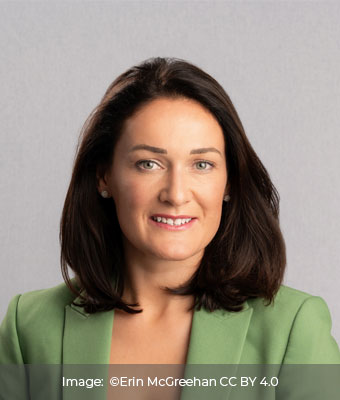
12. Deputy Erin McGreehan asked the Minister for Social Protection the measures being taken in his Department in 2026 to support people with disabilities; and if he will make a statement on the matter. [2886/26]
I thank the Deputy for her question. In budget 2026, we have provided for a substantial package of €28.9 billion of social protection measures with €1.15 billion of new social protection measures. This contained significant targeted measures to support people with disabilities, including a €10 increase in the weekly rate of payment bringing the personal rates of payment to €254 per week from January and the highest ever increases in the child support payment - an increase of €16 to €78 per week for children aged 12 or over and of €8 to €58 for children under 12 years old. There is a €5 increase in the fuel allowance, bringing it to €38 per week from 1 January. In addition, the budget 2026 allocation of €3.8 billion to the Department of Children, Disability and Equality for disability services in 2026 represents a significant investment to ensure that those with disabilities receive the right support at the right time in the right place.
To make the welfare to work journey as smooth as possible in 2026, we provided additional supports for those moving from disability allowance or blind pension to take up work. They will be able to retain their fuel allowance payment for five years. Those getting disability allowance or blind pension who have children will be eligible for the back to work family dividend when taking up employment and moving off those payments. There is an expansion of the wage subsidy scheme to those who acquire a disability while in employment and those who transfer from invalidity pension to partial capacity benefit. We are increasing the rates paid from April.
The programme for Government is committed to introducing a permanent annual cost-of-disability support payment. In addition, under the National Human Rights Strategy for Disabled People 2025-2030, my Department established a strategic focus network on the cost of disability. My officials met with a number of organisations on 2 December at my Department's disability consultative forum, at which the cost-of-disability strategic focus network was the main agenda item. A meeting with the Disabled Persons Organisation's network is being organised. It is scheduled to take place next Friday, 23 January. I have asked my officials to prioritise this work with a view to bringing a proposal to the Government in the first half of this year.
Other Members in the House have articulated the huge pressures people with disabilities and their families are under in relation to paying their bills and surviving. Like the Minister, I have heard from many disabled activists of their devastation. They are feeling very let down about the cost-of-disability payment. I understand all the arguments. Those arguments and the practical reasons there was not a cost-of-living payment or support for disabled people in this year's budget is understandable and logical but practically for people who have disabilities, it is a huge let down. It has a huge impact on their families and lives. I cannot stress enough how disappointed they are but "disappointment" is just a word. These are families who are on the breadline anyway with that grant. I wish to articulate how crucial the work, the review and the engagement with people with disabilities the Minister is doing at the minute is. It cannot happen fast enough.
Absolutely. It is crucial and a priority for the Department. Within budget 2026, we included a €10 increase in the weekly rate of payment. That goes to €254. There was a €20 increase in the monthly rate of domiciliary care allowance increasing to €380 a month from 1 January. There were the highest ever increases in the child support payment - a €16 increase for children aged 12 or over, bringing it to €78, and an €8 increase for children under 12 years old, bringing it to €58. There was a €5 increase in the fuel allowance.
We are very focused. I will be doing detailed consultation with people with disabilities, their advocates and the public generally about a permanent of cost-of-disability payment. This is not a payment that depends on the year-to-year budgetary situation. This will be a permanent payment to reflect the cost pressures - the very real pressures - people are under. I am determined to progress that in terms of budget 2027.
We all will herald in the success of that cost-of-disability payment and want that payment to come through. The Minister articulated clearly the increases that have been put forward but there are so many people who are the working poor and who do not qualify for so many of those grants. Whether it is lower employment rates or lower income rates, or higher costs of living for people who need extra heat, who cannot travel work or for whom there is a lack of access to transport, there are extra charges on those people and their households. There are so many working poor but there are far more working poor people with disabilities. I want to make sure the cost-of-disability payment takes into account the thousands of people with disabilities in this country who are working, continue to be poor and caught in that poverty trap of not getting access to benefits and the costs still being there for them.
We all accept there is a need for a cost-of-disability payment. That goes without saying. We also need to ensure we facilitate as many people into employment as possible. The Minister has accepted there is underemployment within the State of those with disabilities. He quibbled some of the figures that are out there. If the Minister could come back on that, it would be useful. I have spoken many times with him before in relation to the wage subsidy scheme, WSS, and the drop in the number of those who are employed by it over the past number of years and the employers taking it up. It has been reviewed but I do not think a proper job has been done in relation to what needs to be delivered. The Minister has corresponded with me in relation to what has been brought to me from the likes of the Rehab Group, Mr PRICE and others who employ a number of those with disabilities. They believe the WSS is not up to scratch at the minute. We need to see greater employability and workability. We also need to see reasonable accommodation funding, as in work and access. It needs to be fit for purpose. At this point in time, it is not in relation to those who need assistive technologies or the employer or whoever has to go through the administrative burden. It is too much at the moment.
I was not going to say anything but I felt moved to do so. It is interesting to hear a Government backbencher describe how people with disabilities were left devastated and feeling let down by the budget. Of course, the difference between myself and the Minister's backbench colleague is that she voted for budget and I did not. This is the very same budget that devastated and let people down. I have a simple question to the Minister. People with disabilities say the budget left them €1,400 worse off. Does the Minister accept that figure?
I have been speaking to a lot of disabled people over the past few weeks about their experiences and on this question of a cost-of-disability payment, permanent or otherwise. Some of the stories they told me were that they were using only one heating bar on their electric heater rather two because they could not afford the cost of electricity, that they were going in for central dialysis in a hospital because they could not afford the energy costs of doing it at home thus increases the risk of hospitalisation and that they could not charge their electronic wheelchair. A wheelchair user was going to several shops to try to figure out where she could get the best deal for food. There is real anger and frustration at this drop of €1,400 that has been stripped from people with disabilities. These costs are affecting everyone but this is the most vulnerable population in the State. They were vulnerable before the cost-of-living crisis. They will be vulnerable after the cost-of-living crisis.
Importantly, I reject this question of it being a one-off payment. If the Minister intends to introduce a cost-of-disability payment, a payment in lieu of it through the Supplementary Estimates process would absolutely be within his gift and within the gift of Fianna Fáil.
There are a number of issues. I made it very clear that we are working on introducing a permanent cost-of-disability payment. I look forward to hearing people's proposals on this with a view towards budget 2027. In relation to the employability issues raised by Deputies McGreehan and Ó Murchú, we have made changes to the wage subsidy scheme. At the end of November, we had 1,550 employers and 2,615 employees participating. I have made administrative changes, in particular in terms of centralising the decision-making process in this so that it is quicker.
In terms of work and access, I am making changes in relation to adaptive technology so that we can support it. Deputy Ó Murchú has engaged with me on this a number of times and we are making changes to support employers who use assistive technology. It gives many more opportunities. We have changed the rates and we continue to review the rates and their impact. As I said earlier, we will do a number of themed disability employment events throughout 2026 to encourage employers to offer opportunities to those with a disability, not only here in Dublin but across the country.
We move to Question No. 13. I can only allow one supplementary question because we are out of time.
Social Welfare Payments
13. Deputy Paul Murphy asked the Minister for Social Protection if he will introduce an emergency winter payment for disabled people to compensate them for the cuts imposed on them in the Budget; and if he will make a statement on the matter. [2795/26]
This follows on from a number of previous questions. I would say disabled people watching this at home are screaming at their television screens because they are being told by the Minister not to worry as a permanent payment is coming. What they are saying, and I quote Joan Carthy, is that people are suffering today and they cannot wait another day, never mind another four years. They desperately need an emergency €400 winter cost-of-disability payment now to make up just a fraction of the cuts the Minister has implemented. This is the ask and it is very simple.
What Deputy Murphy is not acknowledging is that we have responded with a €10 increase in the weekly rate of payment. We have responded with the highest ever increases in the child support payment. We have responded with a €20 per month increase in the domiciliary care allowance and a €5 increase in the fuel allowance, all of which are permanent and none of which will be changed from year to year. That is why we are doing the work on the permanent cost-of-disability payment, on which I look forward to hearing Deputy Murphy's thoughts and proposals and engaging with him. That is why we made changes to the wage subsidy scheme in recent months to encourage employers to give more employment opportunities to people with a disability. That is why, in budget 2026, a record amount of €3.8 billion was provided by the Department of Children, Disability and Equality to disability services, to ensure people get the right supports at the right time and in the right place throughout the country, and to ensure that services are where they need to be for people with a disability. There was a response in budget 2026, and the continued interpretation that we have not responded is unfair and untrue. We will respond with a permanent measure and I look forward to engaging with all of the groups on what this looks like.
I find it bizarre that the Minister is saying he has responded. He has not responded. There is an ask that has come as a consequence of his budget decisions, which cut a bit over €114 from disabled people. While it is true that the Minister has given a little bit of this back through the small increases, he has left people worse off to the tune of more than €1,000 per annum. Their ask is that they need, at the very least, an emergency winter payment now. The Minister is claiming he has responded to that with the original budget, which is where the cuts were made in the first place. Disabled people are responding to the budget. It is why they have come up with their ask. In response to the Minister's point about services, which is what we hear non-stop, disabled people would say that the majority of them are not in receipt of services. This is not addressing the additional costs they have as a consequence of being disabled. Before the latest round of costs, 13.6% of disabled people were unable to heat their homes properly. One in five are in arrears on their utility bills. It is a very simple ask for an emergency payment now. Disabled people cannot wait for this process. They cannot wait for the next budget.
We are working on a process. We have introduced extra payments through budget 2026. We cannot just dismiss services and the extra investment in services in the way Deputy Murphy has done. That is also crucial and we continue to work on this process.
Road Network
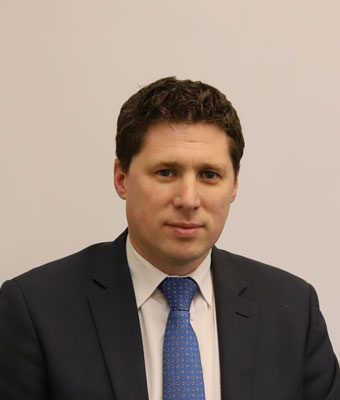
101. Deputy Matt Carthy asked the Minister for Transport the funding allocated for local road restoration to Cavan and Monaghan County Councils in 2025; and the funding allocation to both councils in 2026. [1246/26]
I have been in elected politics a long time and I have to say that the state of local roads generally has never been as bad in all of my time. It is evident not enough funding is being provided to local authorities. Will the Minister indicate how much funding was allocated to local authorities in my area, Cavan and Monaghan county councils, last year? What is the proposed allocation for 2026?
I know this matter is of great interest to the people of Cavan and Monaghan. I met with councillors from there before Christmas. At the outset, I should state that the improvement and maintenance of the regional and local road network is the statutory responsibility of the local authority, in accordance with the Roads Act. Works on these roads are funded from the council's own resources and are supplemented by State road grants. The initial selection and prioritisation of works to be funded is a matter for each local authority. Indeed, Cavan and Monaghan do a very good job. Although they have been constrained by resources, they have got the resources every year they are required.
As regards the basis for allocating grants, within the budget available to the Department, grant funding is allocated on the basis of grant programmes and not on the basis of the category of road. The allocation of funding across specific roads, or across categories, is something we get submissions from local authorities about, which we assess. The main regional and local road grant programmes are targeted at specific policy objectives, including pavement sealing to protect the road surface from water damage, road strengthening based on pavement condition rating to lengthen the life of the roads - good work has been done in Monaghan, in particular, on that using new technologies - and a discretionary grant that allows for a range of activities, including pothole repairs, edge strengthening and renewal of signs, etc. These three grant programmes account for most of the grant funding and are allocated based primarily on the length of the road network in a particular local authority area.
Apart from a requirement that 15% of the road strengthening grant is spent on regional roads, the allocation of funding to different categories of road is entirely a matter for decision by each local authority. Having said that, in 2025, Cavan received an allocation of €19.193 million, which was an increase of nearly €1.8 million on its 2024 allocation, and Monaghan received an allocation of €18 million, which was an increase of just short of €1.8 million on the previous year's allocation.
I am awaiting the draft allocations for roads. I expect to have that in the next week. I will then go through that, taking into account working with officials, to allocate that and get it out quicker than we did last year. There was a slight delay because of the election and road allocations did not go out until around March. We intend to get them out in January of this year.
I agree with the Minister on two fronts. Local authority staff in Cavan and Monaghan are doing a huge amount of work and are getting efficient use out of the funding that is allocated in terms of the road programme. The second area is that councillors across all political parties and all local Oireachtas Members agree that the funding in place is nowhere near sufficient in order to deal with the issues.
There are a number of different problems. The road network deteriorated as a result of cutbacks following the financial crash and costs have increased substantially. The increases we have seen, even in recent years, come nowhere close to addressing that. In Monaghan, for example, in real terms, the extra allocation was about €1 million last year vis-à-vis the two years in terms of actual funding provided. Well over €400,000 of that - it was actually closer to €500,000 in Monaghan - had to be spent on speed limit signs because of the new speed limits. The situation is that more roads are in need of urgent repair than ever before.
The Minister said he cannot give the actual figures. Will there be a substantial increase in the 2026 allocations?
Every local authority is looking for additional funding. Last year, we provided significant additional funding, which the Deputy acknowledged. We intend to provide a further increase in funding this year. I am not being evasive; I cannot give him that figure. I need time with colleagues to be able to go through the draft allocations, which I will look at. We take into account the submissions and feedback we receive from local authorities. I have met with most, though not all, local authorities in relation to the roads programme. I could not meet all of them in the short space of time that I had. Both Cavan and Monaghan do an excellent job. I know both local authorities well and the staff therein. Monaghan, in particular, has been to the forefront of using new technologies for road repair. It has got additional funding for that and is one of the counties that has piloted that programme. I commend its chief executive, Robert Burns, and its director of services on the work they have done there.
This will be in the next few weeks. I intend to get this out, if I can, in January. I will obviously share that with Deputies. We will get the allocations out to the local authorities so they can continue the good work they are doing. This will not all be fixed in one year.
No, but here is the difficulty. I have visited roads, including one that is close to the town of Ballybay and one close to Castleblayney, in recent weeks. The roads are in a terrible condition. From dealing with the local authority, the best it can do in the short term is patching work, which in many ways is economically crazy but it has to be done. The best-case scenario under the current trajectory is that it could take five or even six years before those roads will be properly restored.
Here is the frustration of people in those areas: they have seen their cost of insurance increase; they are paying their road tax; they have seen the cost of petrol and diesel being increased by the Government on an annual basis; and, for those who have to travel to Dublin or elsewhere, their toll charges have increased. They are asking themselves what they are getting for all of this, if they cannot even drive to their local school without risking bursting the suspension on their car.
I know the Minister cannot give the precise figures. Will there be a substantial increase in road funding so we can ensure that the programme for road maintenance and restoration will be accelerated in the coming months and years?
We cannot just look at this in isolation. There is the NDP and the projects we are advancing for new roads and new national roads across the country. In Cavan-Monaghan, there is the trans-European transport network, TEN-T, road network, which is critically important in the north west. There have been unprecedented levels of investment. There will be a further increase. The Deputy's definition of "substantial" and mine might be different, but I do not have a figure yet. I do not have the draft report. When I do, it will be considered. We will do that.
We will work with our local authorities across the country, which do a good job in this regard. The funding increases last year were significant. It has been good to see the local authorities being able to deploy those resources. More work needs to be done. Deputy Carthy would also acknowledge that this situation will not be fixed in one year. We have got to be able, on a phased basis and in a structured way, to continue increasing that funding. We are coming through, but are still in, a high-inflation environment where more money has been allocated but, in some instances, it has really just covered that inflationary amount. That has to be managed well, and it will be. In the coming weeks, we will be announcing the allocations.
Bus Services

102. Deputy Roderic O'Gorman asked the Minister for Transport the new bus routes that will be provided under his Department's 2026 current expenditure allocation; and if he will make a statement on the matter. [2584/26]
What new bus routes will be provided under the Department's 2026 current expenditure allocation?
Improving accessibility, reliability and affordability of public transport while ensuring the system remains well funded and responsive to passenger needs is a core priority under the programme for Government. While my Department sets the overall policy direction and funding framework for the delivery of public transport services, the NTA has the statutory responsibility for securing the provision of public transport services nationally. In this context, we secured an unprecedented allocation of €940 million for the PSO services in budget 2026. I mentioned this in my previous answer to the Deputy. That was a 43% uplift in one year alone. It has raised that base. As I mentioned earlier, we did not want to continue the practice of the previous five years of going back for continued supplementary budgets because you cannot plan properly. We need to get the PSO onto a sustainable footing. We have taken a real step forward in that regard. As the Deputy is aware, supplementary funding has become a recurring requirement and we wanted to move away from that. Accordingly, the 2026 allocation prioritised advancement of ongoing programmes and commitments in line with operational readiness and resource availability. This includes recently announced changes to the route alignments under phase 7 of BusConnects and the upcoming roll-out of new town services in, for example, Mullingar, County Westmeath, in quarter 1 of 2026.
I will continue, with colleagues, to engage with the NTA as it finalises its 2026 service plan, ensuring that planning and strategic decisions are informed by operational and resource considerations. Once we receive the draft plan, the Ministers of State and I will assess that. I expect there will be new services in 2026. We have to consolidate the new services brought in during the past couple of years. We have to manage the resources properly, which we will. I do not have the service plan yet, but I expect to get it imminently. We will take the feedback we get from all colleagues, Government and Opposition, with regard to services that are needed. People are using public transport at a level they never have before, which is great, and we want to continue to support that.
The Minister has set out the size and, in his own words, the unprecedented current expenditure allocation for 2026. I am concerned it only gives him enough to maintain existing levels of services. That seems to be backed up by what his officials said. The minutes of the management board meeting were quoted in the paper: "The allocation, while substantial, will not allow for new services to be delivered" in 2026. For example, on the BusConnects programme for Galway city, the NTA said in 2023 that Galway's new bus network was scheduled for 2025 to 2026. However, when I contacted the NTA in November last year, it said that the new bus network in Galway city was currently scheduled to commence implementation in 2027 to 2028, subject to operational readiness and confirmation of funding. To be clear, the NTA is saying this is not an infrastructural issue, but a funding issue. Funding is key to the decision about whether Galway gets its new BusConnects system. I am concerned that gap in funding for new services identified by the Minister's officials is the blockage for BusConnects in Galway.
I also saw that article and will take the opportunity to say we need the investment in the new services, like the N8 bus link from Dublin 15. However, we definitely need investment in existing services as well due to a growing population, growing demand and growth in housing. The Minister and I spoke about the fact that investment in existing services in Dublin West had reduced to €97 in 2022 and there was zero budget for 2023 in enhancing existing services. That led to serious reliability issues across the 37, 38, 39 and 40 buses. They are the backbone of our constituency. We need to invest in both new services and enhancing existing services. It was foolhardy to prioritise new services over existing services, leaving communities like mine behind from 2022 to 2024. It would also be foolhardy to now go in the opposite direction. I know from speaking to the Minister that it is a priority for him to invest in both and get it right for all the population of Dublin.
We will take Dublin as an example. I am using Dublin because two Dublin Deputies have asked this question. We had 164 million passenger journeys on Dublin Bus alone last year. Those are record-breaking numbers. That has been supported by new services being rolled out and improvements to existing services, even acknowledging that there have been human resource challenges. We still have issues in some areas with reliability of services. The ghost bus phenomenon needs to be addressed because the customer needs to be central to everything our bus and rail operators do all the way across the country. It has to be about serving the paying customer because people are responding to the investment. We will not be able to do every new route that everyone wants in one particular year. We have to step that out and move it through.
Deputy Currie mentioned the N8 and has asked me direct questions on that before, as have Deputy O'Gorman, the Minister, Deputy Chambers, and others. I intend to get that route in place in 2026. I am clear about that.
We have to work with partners in the NTA and we have a budget to manage. We do not have infinite resources either. Let us be clear about that, too. Getting the PSO onto a sustainable footing was critical. I was not going to do what was done over the past five years, which was to depend on large supplementary budgets coming in at the end of every year to support service expansion. That is not the way to do business. That is why my two Minsters of State and I insisted that we get a significant increase into the base in the PSO. That gives us a real platform to move forward into 2027 to 2028 and beyond.
For my part, I will always fight for new bus services and public transport routes around the country. I brought in a question earlier specifically about the N8, a new service we have desperately needed for years and that has been pushed back. I am glad that the Minister is going to intervene, and we look forward to seeing that delivered this year.
I think about the growth of housing around our city and brand new estates in areas like Tyrrelstown, Hollywoodrath and Kilmartin Grove. These are entirely new estates in places that were fields two or three years ago. Those areas need new services. It is not always enough to say we have boosted the existing services, because there are brand new areas that have been created. Particularly in those parts of my constituency, and the Minister and I were at the opening of many of those homes, I know that many people cannot get into town because the bus routes are inadequate. That is why we have to fight for new services as well as improved capacity on existing services.
When I want to take a bus or train from Belfast to Dublin, Dundalk or Drogheda, the routes have improved. By rail or bus, they are absolutely excellent and even on the hour. However, if I want to go from east to west, from Clogherhead to Dunleer or Ardee and on to Trim or Kells, there are no buses and no public services to enable people to get to work or to get to medical appointments. I have written again and again to the NTA with no reply. If there is any reply, it is saying they have no plans to develop any services east to west within County Louth, or even connecting County Louth to County Meath. I find this extraordinary when we are trying to encourage people to use more public transport. There is the cost to car owners and to people who have to take time off work to bring loved ones to medical appointments. Surely this is something that can be considered.
By the range and depth of the questions and contributions here, we see all of the different demands on the Department of Transport. That is good. We have advocates right the way across the House, but we have a Government that needs to deliver. We need to continue a phased and sustainable improvement in services. My predecessor in transport, the former Minister, Eamon Ryan, did a good job and we worked with him in that regard.
We needed to get that funding on a sustainable footing and I was not going to continue what was done previously. It meant having to go back every single year and look for short-term moneys to plug the gap. We need to be able to plan in a sustainable way. That is how the Minister of State, Deputy Buttimer, answered Deputy Whitmore earlier when she asked for a bus service to be announced. It has to be done in a planned way. We have to look at the network in its totality, all the way across the country. Deputy Dolan raised specific issues in his own constituency that we will work through.
I am concerned that the Deputy said he wrote to the NTA and got no response. That is not acceptable. I ask him to bring those to us. Every Deputy deserves a response and for their input to be respected. We will make a further improvement this year in 2026. Am I going to be able to keep everybody happy with all the services they want in 2026? No, I am not. However, we are going to see a further step change in that regard, an increase and improvement. We particularly have to serve our newer communities. We cannot look at this in isolation to the NDP capital investments. We are talking about the bus network. The first two BusConnects corridors have started and there has been major investment in rail, road and our bus network as well. We have lots of good things. This period of time could be transformational.
There were 343 million public transport journeys in 2024. That was throughout the full year. That will have substantially increased further in 2025. People are responding to the investment the Government is making. This is good for our climate and quality of life. We need to continue to improve it, and we will by working with people.
103. Deputy Keira Keogh asked the Minister for Transport if his Department will consider introducing additional Local Link routes and frequencies to better connect rural communities in Mayo; and if he will make a statement on the matter. [2666/26]
Many communities and individuals across Mayo continue to face significant challenges in accessing essential services like employment opportunities and social activities, as well as doctor's appointments, due to limited public transport options. Will the Department consider introducing additional Local Link routes and, more importantly, additional increased frequency to better connect communities in Mayo?
I thank Deputy Keogh for raising the issue. As Minister of State in the Department of Transport with special responsibility for rural transport, with my colleagues, the Minister, Deputy O’Brien, and the Minister of State, Deputy Canney, we are, as I told Deputy Whitmore, investing considerably in services throughout the country under the NTA’s flagship Connecting Ireland rural mobility plan, supported by funding allocated by the Department of Transport. I thank the Deputy for being a constant advocate in her own county of Mayo for rural transport and connectivity. We have seen funding increase by 56% between 2023 and 2024, with passenger numbers increasing by 72%. A great example of this continued investment can be seen in the launch of routes 460a and 460b in September of last year. These new routes offer connectivity to regional bus services in Castlebar station, Mayo University Hospital and to the villages located between Castlebar and Achill Island. I am pleased to share with Deputy Keogh that, last July, Ireland’s first ever smart demand responsive transport service was launched in Achill. This pilot marks a major milestone in rural mobility innovation and is a flagship initiative designed to revolutionise how rural communities connect and access public transport, and the service includes a flexible door-to-door app-based transport model, tailored to local needs, offering greater connections, convenience, accessibility and frequency. Since its launch last July, the pilot has seen encouraging passenger numbers, with a notable increase in repeat users highlighting the importance of the service as a transport link for residents in areas with limited transport options.
In October 2025, the operating hours of the TFI Anseo in Achill were extended and it now operates from 7 a.m. to 8 p.m. to better meet the needs of the local community, providing more travel options for greater convenience and accessibility.
In conclusion, my Department supports continued investment in rural transport in line with the commitment in the programme for Government to continue delivering on the fundamental and foundational public transport service produced under our flagship Connecting Ireland rural mobility plan.
I thank the Minister of State.
I will conclude on this. There is €31 million ring-fenced for rural transport, a 38% increase on funding from last year.
I was at the launch of TFI Anseo and I welcome it, along with all of the increases in spending. When we look at the map of Local Link in Mayo, it looks like we are really connected, but I am thinking of a lady in Fahy outside Westport who is in her 60s. Her mind is super active and she is a fantastic woman, but she has arthritis and cannot drive. She has one option to go to Westport on a Friday morning at 12.10 p.m, but she has three hours and 20 minutes in town before she has to be back on the bus for 3.30 p.m. It sounds as though that is great and she can go to town once a week and do her shopping and meet her friends but she has to plan that in advance. With TFI Anseo doing so well, it would be great to see that expanded into Erris and Westport so that people do not necessarily have to plan ahead. I also think of Pullathomas where one when can go as far as Curraunboy on a Monday or Wednesday at 10.30 a.m. and get a bus to Ballina at 10.44 a.m., but cannot get back. A lot has been done but more needs to be done.
The map paints a very good picture and I accept there are challenges. There are the provisions we have to bring and we want to see a further enhancement of the service. As I said earlier to Deputy Whitmore and I will say again now, we await the NTA service plan. As the Minister, Deputy O'Brien, said to Deputy Carthy in terms of road funding, we will listen to all requests. We have a finite budget, as the Deputy will appreciate, but with the NTA, we will work to ensure we continue to invest in our rural transport. In the Deputy’s own county of Mayo, we saw an increase in investment of 56% between 2023 and 2024 to more than €2 million, with passenger numbers increasing by 72%. As Minister of State, I will work with the Deputy to ensure we look at that map and see how we can fill the gaps in provision for the people the Deputy mentioned. I am fully committed, along with the Minister, Deputy O'Brien, and the Minister of State, Deputy Canney, to ensuring that map has connectivity all the way around.
We need to box clever when we are looking at it. For example, Knockrooskey is an area that does not have footpaths or lighting, so we cannot put an extra bus stop in yet for the Bus Éireann route that moves through it. A Local Link would be really welcome there where the nearest bus stop is Coill an Bhaile and it is too dangerous to walk to. I think of Louisburgh, where the bus service finishes around 6.30 p.m. and the residents are cut off from the nearest swimming pool where kids want to attend lessons, the theatre or cinema.
I welcome the increased investment and numbers but we can think smart about it. We should expand the likes of TFI Anseo more so that we are being flexible and adaptive to the needs of our constituents and boxing clever with the resources we have. That would go a long way.
The Deputy is right that it is about boxing clever and TFI Anseo is a success. I fundamentally agree with her. She mentioned Knockrooskey. It is about that joined-up approach in terms of the local authority with footpaths, the NTA and Bus Éireann. What I would like us to do further as a Department is better linkage in terms of more accessibility and highlighting what the Deputy referenced in terms of the child who wants to do swimming lessons being able to get on a bus, the footpath, the lighting, and having a bus stop on the road. That comes down to an holistic approach by the NTA, the Department, local authorities, local communities and the local bus service providers to make sure that we are more accessible and resilient.
People are voting with their feet. We as a Government and a Department are strongly committed to enhancing our Local Link services, as I know the Deputy is. She has been a champion for that for the 12 months I have got to know her and I hope we can work together to deliver further for the people of Mayo.
Rail Network
104. Deputy Albert Dolan asked the Minister for Transport if plans are in place to progress the double-tracking of the rail line between Athenry and Galway; and if he will make a statement on the matter. [1763/26]
Athenry as a town is growing at a rapid rate. The town has been without a bus for a year and our trains are completely wedged. I welcome the investment in Ceannt Station in Galway, bringing it from a two-platform to a five-platform station. I welcome the investment in the passing loop at Oranmore to increase frequencies. However, I have to ask whether there is any plan to double-track the line from Galway city to Athenry.
I thank the Deputy for the question and I wish to confirm straight off that my Department is working with the National Transport Authority and Iarnród Éireann to progress a number of rail projects in Galway, including double-tracking the line between Athenry and Galway. In order to progress this project, Iarnród Éireann has appointed a multidisciplinary engineering consultancy, and the Galway line capacity study commenced last summer, so the work is in hand at the moment.
The development of an emerging preferred option is expected to be identified later this year. Separately, and related, as the Deputy said, works commenced at Oranmore Station last October. This project will provide an additional platform and a passing loop. This will increase capacity on the Galway to Athenry line. The project is scheduled to be completed next year and will be of immediate benefit to the route.
Work is also progressing on Ceannt Station. These works, which are scheduled to be completed later this year, will increase the number of platforms from two to five, which will support the growth of train service frequencies envisioned under the all-island strategic rail review. In order to start making the vision set out in the rail review a reality, the NDP sectoral investment plan for transport, which my Department published in November, provides funding to advance a number of early interventions by 2030, including new passing loops and platforms to boost rail connectivity and resilience.
Included in these early interventions are new platforms at Clara and Woodlawn on the Galway line which will support journey times. The sectoral plan also provides funding to commence the construction of the reinstatement of the western rail corridor between Claremorris and Athenry. I look forward to seeing these projects being delivered in the years ahead. This morning I met the chief executive of Iarnród Éireann to get a progress report on the works that are going on right across the country in terms of the all-island rail review. I am happy to say that progress is being made and that last year we had 55 million journeys on rail. We are now talking about rail in a fashionable way as opposed to how we were talking about for the past 20 years, which was talking about closing it down. We are now in expansion and growth mode, and that is what we will be doing.
I really appreciate the update and the fact that it is being looked at and that a team has been appointed to design a preferred option. However, I have to re-emphasise that Athenry is a town with a population of over 5,000 and currently has 200 homes under construction across four different sites. Things are going great for the town. Jobs are coming but that access to Galway city is vital but right now a town with over 5,000 people has no bus service. Our trains are completely wedged in the morning. I know that the trains and carriages are on their way but they cannot come quickly enough. The people are crying out for them and they want to see this happen. The double tracking is critical because that would enable a direct commuter link from Athenry to Galway city. The passing loop at Woodlawn as per the sectoral plan is vital as well because that would drastically reduce intercity times. All of this is progress but the Minister of State has to understand how serious it is right now in Athenry. There has been no bus service for over a year and trains are completely wedged.
Deputy Butterly, did you wish to come in on this?
Yes. County Louth, where there are 140,000 people-----
Ah Jesus, what has that got to do with Athenry?
The Deputy is allowed to speak.
The Deputy is allowed to ask the question.
It is based on rail, Deputy Mac Lochlainn. With a population of 140,000, County Louth is growing and houses are spawning at an accelerated rate. Our businesses are growing and we are attracting businesses into the county, month after month. However, our two train stations are jammed. There is no parking and there is no facility. I listened earlier when the Minister of State talked about how we have to be ambitious, and we are ambitious, but it is now time to have a serious conversation about a third railway station. We have the land zoned in Drogheda and it would make sense to have another train station in Drogheda, or north of it. However, if we are truly ambitious, surely we should consider a brownfield site half way between Dundalk and Drogheda and really plan for the future.
I thank the Deputy for raising that issue. As someone who has been in politics since 2004, I am glad to see the demands that are now coming for rail and for investment in rail. At that time, the agenda was to close down the railways and people continued with that up to two or three years ago. I am glad to see that my colleagues in the constituency have seen the light of day and are now supporting the implementation of and investment in rail. It is a success story and we are now in growth and investment mode. There are 285 new carriages on order at the moment, with a total of 750 to be procured over the next number of years. That is an investment. What is happening at the moment is that we have demand that is growing every year and that is great. What we have to do is make sure we, as a Government, provide the investment to make sure we can meet that demand and give a good experience to the passenger.
The idea of a new train station for Louth has a lot of merit. We need to get the population there travelling by public transport rather than by cars and all that goes with that. Over the next number of year, I will look forward to making sure we invest. My two colleagues here are totally behind me on that.
For fear there would be any confusion, I invite the Minister of State to look back through my social media since I was elected in politics in 2019. He will see that month on month, I consistently raised the need for the passing loop at Oranmore. On radio and in local media I have consistently pushed for the double tracking. Those projects are vital and they will be delivered but this has to be done collegially and together. I look forward to working with the Minister of State in the constituency to make that happen. We have a town that is growing at a rapid rate and the commuter service and the access to the city before 9 a.m. are vital. I appreciate the work that is being done but I would definitely invite the Minister of State to look back through my social media and I think he might be pleasantly surprised.
When mentioned colleagues, I was not referring to Deputy Dolan but he knows the history of what people were trying to do. They were trying to close down lines and they were from political parties and none. Basically, I am saying that agenda is gone. What we need to do now is to work together to make sure we deliver what we can deliver. We have the will to do it and Iarnród Éireann is capable of doing it. We will start in a logical way. We are going to make sure that Ceannt Station is capable. In the meantime, while we are getting the double tracking done, we will get a passing loop and a new station at Oranmore.
We are also going to open up the line between Athenry and Claremorris, so that we can service the west of Ireland. I know well the Deputy supports all of that. The agenda has changed and people are demanding investment. They are getting the investment and we will continue to do that. Not everything is going to happen at the one time. We have set out our strategic plan for investment over the next five years and beyond. When I met representatives of Irish Rail this morning, I got their programme. They are looking at the next 15 to 20 years. I am looking forward to seeing all of that being delivered, as the Deputy is.
It is wonderful to have that clarified and those in the constituencies are working together.
Yes, I thank the Leas-Ceann Comhairle.
School Transport
105. Deputy Brian Stanley asked the Minister for Transport if he will resolve the issues concerning bus drivers aged over 70; and if he will make a statement on the matter. [2626/26]
I ask for the Minister to resolve the issue of school bus drivers, when they reach their 70th birthday, having to bow out and retire. This has to be addressed because it is causing problems. I have been raising this issue since January of last year. Right throughout the year, I have been at it. I hope there is some progress being made.
I thank the Deputy for asking the question. I know he is passionate about it, as are a lot of Deputies and Ministers, because it is something we need to get sorted.
The overriding consideration in relation to age limits for bus drivers has been safety. It is a matter for relevant bus companies, including Bus Éireann, to set their own terms and conditions in relation to employment, including retirement age. Bus Éireann applies a retirement age of 70 years for drivers across its wider road passenger services, including semi-State PSO services and school transport services operated or managed on behalf of the Minister for education. This approach is consistent across the PSO cohort, as neither Dublin Bus nor Go Ahead Ireland employ drivers over the age of 70.
Bus Éireann’s policy of operating services with drivers up to age 70 is grounded in safety considerations. This policy is informed by the company's operational experience and also by ongoing engagement with relevant stakeholders, including the RSA and other public operators. At this stage, I have had contact with Bus Éireann over the past year since I came into office. I have asked it to look at the requirements for people over 70. It has been looking at that. It has a safety board and an accessibility committee and they are considering whether to increase the upper age limit to 75 for its drivers. Bus Éireann is looking at this at the moment and it will continue to engage with the Departments of Education and Youth and Transport on all of this.
Hopefully, we will get a conclusion on it which will be acceptable to all in the not-too-distant future.
I thank the Minister of State for that. The issue is straightforward: bus drivers on the school transport scheme cannot drive beyond their 60th birthday. They cannot drive a minibus for two or three hours a day with ten or 15 pupils on it, yet they can drive a 50- or 60-seater coach hundreds of miles, and are doing so. School bus operators are losing drivers every year, and in Laois this is a real problem. They are finding it very difficult to replace them because the work is part-time and really suits retired people. I emphasise this to the Minister of State and the Minister, Deputy Darragh O'Brien. The cohort driving the school buses is largely retired people. People generally retire at 60 or 65 and get five or ten years' driving. I am not asking for them to keep going until 100 or 90 years of age; I am simply proposing that they go to 75 on the condition that they pass a strict medical test. This is the key. I do not want to endanger anybody. I can understand Bus Éireann and other bus operators being concerned, but there are real issues starting to arise here. I refer to somebody driving a minibus two or three hours a day five or ten miles to a local school. They can drive 50-, 60- and 70-seater coaches, which they are doing and I know people who are doing it, yet they cannot drive their local school bus. That is a ridiculous situation. The Minister of State is right that we need to address the safety issue, but we need to solve this issue as well.
A private operator can be asked by the school to bring a group from Galway to the zoo in Dublin and someone aged over 70 can drive the vehicle, but someone that age cannot drive students in the local area to the local school, a route with which they will be a lot more familiar. There is an issue there to be resolved. In all fairness, Bus Éireann is looking at that. It has to look at it from a safety perspective. It also has to look at it from a logistical point of view as to how this will work. This probably affects the private bus operators more than Bus Éireann because they have people who are well experienced and school bus runs are part-time work.
This is a work in progress. The Department of education is involved in it as well as Bus Éireann. I will continue to work with them to try to find a solution, which the Deputy is requesting.
The school bus scheme is working fairly well, and it is good that is happening. I think problems were ironed out a bit quicker this year, and that is welcome. I acknowledge that. However, we have to have the drivers to fill the positions, and it is the Government's ambition, as I understand it, to expand the scheme, maybe to bring in people who are closer to the school and to reduce the distance from the school to qualify for it. If the Government is going to expand the scheme, that, along with an expanding population, will require more drivers. It is really important that we try to fix this because in September there were problems again trying to fill positions. Bus operators were frantically going around trying to get people to take on positions. We could extend the age by three, four or five years beyond 70 with a strict medical test. We do not want to see anybody put in danger. As I said, this has become a problem in Laois. I know it is starting to become a problem elsewhere because other Deputies have started raising it as well. The strict medical test is the issue. I ask the Minister and the Ministers of State to bear this in mind and to use their influence with Bus Éireann because the Department pays money to it every year. People's health is better now. They live longer now. Their health is better beyond 70. Seventy is the new 50.
I reassure the Deputy and every other Deputy in the House that this is a priority for the Department of Transport and that I have the support of the Ministers and the Government on this. We are making sure that any changes we make, or made, take into account all the safety factors that have to be considered as well. I agree with the Deputy. I see this in my constituency where private operators find it hard to get drivers to do part-time work and there are very well-qualified drivers who may be 70, 71, 72 or 73, who can do this and who were doing it last year but who cannot do it this year. We have to look at that and have a pragmatic approach, and that is what is being done at the moment. Hopefully, we will get the solution to it in the not-too-distant future.
Greenhouse Gas Emissions
106. Deputy Roderic O'Gorman asked the Minister for Transport for an update on the corrective action modelling project his Department is developing to correct the trajectory of carbon emissions from the transport sector out to 2030; when this will be published; and if he will make a statement on the matter. [2585/26]
Over Christmas, the Minister raised the white flag on our 2030 emissions targets four years ahead of schedule. One of the areas where Ireland continues to struggle is the emissions from our transport sector. The NDP sectoral plan the Minister published in November referenced the corrective action modelling project that the Department of Transport is leading to try to tackle the gap in our transport emissions. When does the Minister expect to publish that work?
First, no one has raised the white flag. I read with real interest and, actually, amusement the Deputy's comments in that regard since he is someone who served in the Government in the past five years and his former party leader did a very good job in that area. We are reducing emissions while the economy and the population are growing. A lot of the projects we have been talking about today will help to further decarbonise our transport system. Transport is critical in that regard. I am being honest with people and changing that climate conversation to ensure that people see the benefits of the transition that is under way in this country. Really significant progress has been made across many sectors, including agriculture, transport and, in particular, energy.
We are clear on the climate obligations we have. I am committed to advancing the progress we have made. However, we also have to be very honest with ourselves about where we will land at the end of the decade. I gave a view on that, which was based on projections I have, and it is important people know that. That is not to surrender anything at all. I can see where we will further accelerate our progress between now and the end of this decade and in the early 2030s. That conversation itself needs to change, and we are having an honest conversation with people and stakeholders and further advancing the good work that was done by my predecessor and the previous Government. However, we need to be honest with people too. That is where the discussions we have had even here this morning about the competing demands, and rightly so, with regard to public transport will be critical. I refer to continued electrification of our public transport network and of our car fleet. We have exceeded targets, by the way, with regard to electric vehicles. We have targeted the supports there for people through tax measures and grants. We will accelerate retrofitting of homes as well. In no way has anyone raised a white flag in that regard. Of that I can assure the Deputy.
The Minister's comments over Christmas cannot be taken in any way other than raising a white flag on this issue. What shocks me is that it is happening four years before the date for our 2030 targets.
Notwithstanding our disagreement on that, will the Minister speak to a particular project taking place in his Department, the corrective action project, which is to address the emissions gap pre-2030 as well as post 2030? If the Government is to effectively try to bring us on track in the transport sector pre-2030, this has to be published soon so those actions can start to be implemented and can take place. Has the Minister engaged with his officials on this project? Does he have any sense of the recommendations for new, extra measures, that this will bring forward? Does he have any sense of when that document will be published? Will any additional budget be provided for these extra measures?
We will get back to the point of agreement in this regard. I thank the Deputy for the question. It has been widely acknowledged that transport is and continues to be a difficult sector to decarbonise, but we are making progress. The development of the transport chapter of the climate action plan identified and set out policies intended to put the sector on a pathway to achieve an emissions reduction of 50% by 2030. Current indications, however, are that the carbon budget 1, 2021-25, target of 54 MtCO2eq has been exceeded and any overshoot will therefore be deducted from the carbon budget 2, 2026-30, target of 37 MtCO2eq. Achieving that more demanding target will be a challenge. Again, we have to be honest with people on that.
With that in mind, my Department has been working very closely with the NTA over the past 12 months to deliver the CAP corrective action modelling project that the Deputy has asked about. The aims of the project are essentially to identify potential policies and measures to correct the trajectory, which we are doing; determine whether the transport sector can go beyond this in order to address the issue of unallocated savings for carbon budget 2-----
Thank you, Minister.
I will come back on the supplementary question with the rest of my time.
The Green Party has called on the Minister and his Government to publish a plan B to show how, across all sectors of the economy, they will try to get us back on track to meet the emissions reduction targets. This project could serve as a model as to how that could be done across the economy. As regards one of the key consequences of the decision set out in the Department's sectoral plan for transport in November of last year, moving that 2:1 ratio of public transport to roads back to 1:1, I think we are already seeing the negative consequences of that.
If the project recommends, in light of the height of our transport emissions and the importance of investment in new public transport, a return to the 2:1 ratio, will the Government accept that recommendation?
To put to bed this mistruth in relation to the ratio, the Deputy is not correct and has been peddling this mistruth. The 2:1 ratio always was and always will be a relatively rough and ready reckoner. Having said that, based on the NDP sectoral plan, the ratio is as at more than 2:1 in relation to investment in public transport versus new roads. That is a fact. The Deputy cannot dispute that. We are looking at an investment package in the NDP that is heavily weighted towards public transport. On that basis, the ratio is about 2.6:1 in favour of new public transport over new roads. That is a fact.
To get back to the Deputy's question, the corrective actions modelling project is progressing very well. That will feed into the 2026 climate action plan. It will be completed in the coming months. I cannot tell the Deputy that it will be this quarter but it is well under way. I met officials yesterday evening and got a progress update on that. Where we can take corrective measures, we will, and we have a real opportunity to do that in the transport sector.
Is féidir teacht ar Cheisteanna Scríofa ar www.oireachtas.ie.
Written Answers are published on the Oireachtas website.