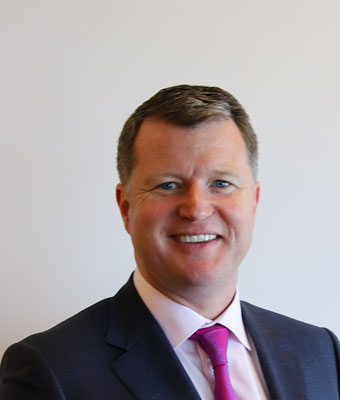
1. Deputy Malcolm Byrne asked the Taoiseach when the Cabinet committee on EU and international affairs will next meet. [65714/25]
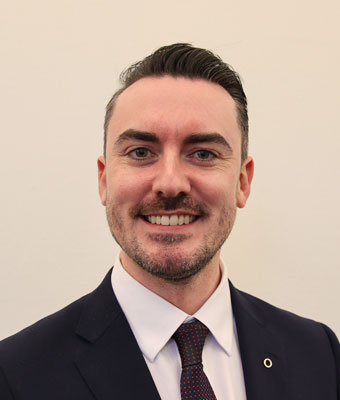
2. Deputy Naoise Ó Cearúil asked the Taoiseach when the Cabinet committee on EU and international affairs will next meet. [65718/25]
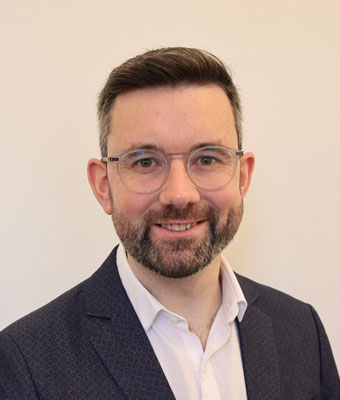
3. Deputy Pádraig Rice asked the Taoiseach when the Cabinet committee on EU and international affairs will next meet. [68414/25]
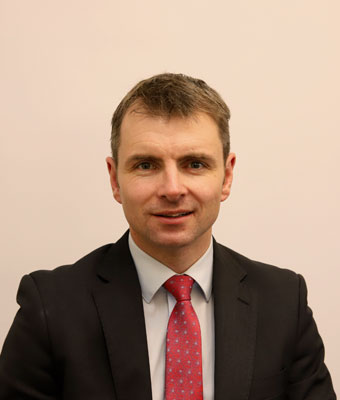
4. Deputy Ruairí Ó Murchú asked the Taoiseach when the Cabinet committee on EU and international affairs will next meet. [69322/25]
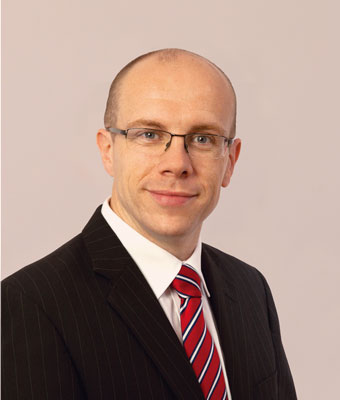
5. Deputy Darren O'Rourke asked the Taoiseach when the Cabinet committee on EU and international affairs will next meet. [69705/25]
6. Deputy Pádraig Rice asked the Taoiseach when the Cabinet committee on EU and international affairs will next meet. [70180/25]
7. Deputy Darren O'Rourke asked the Taoiseach when the Cabinet committee on EU and international affairs will next meet. [71907/25]
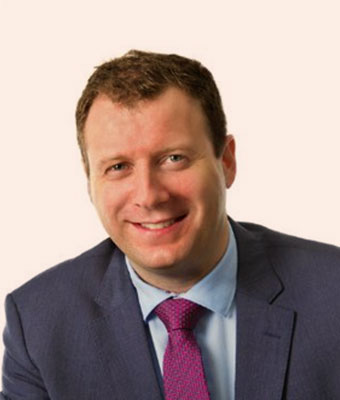
8. Deputy Pádraig O'Sullivan asked the Taoiseach when the Cabinet committee on EU and international affairs will meet next. [74327/25]
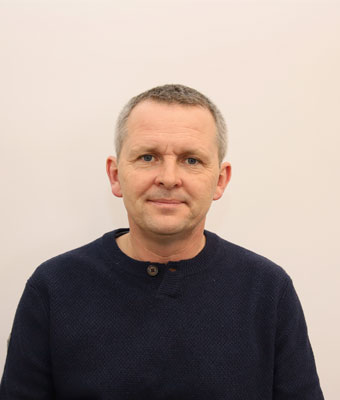
9. Deputy Richard Boyd Barrett asked the Taoiseach when the Cabinet committee on EU and international affairs will next meet. [1547/26]
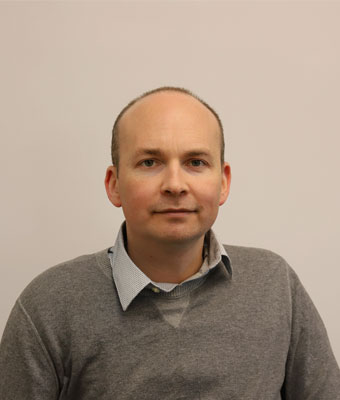
10. Deputy Paul Murphy asked the Taoiseach when the Cabinet committee on EU and international affairs will next meet. [1550/26]
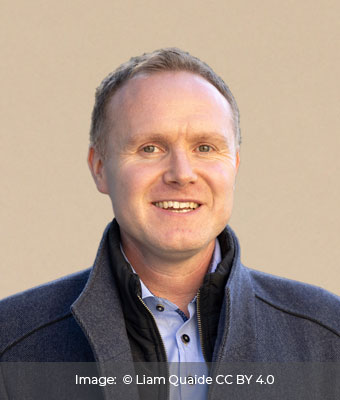
11. Deputy Liam Quaide asked the Taoiseach when the Cabinet committee on EU and international affairs will next meet. [1109/26]
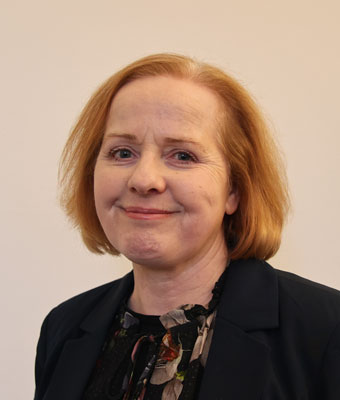
12. Deputy Ruth Coppinger asked the Taoiseach when the Cabinet committee on EU and international affairs will next meet. [1707/26]
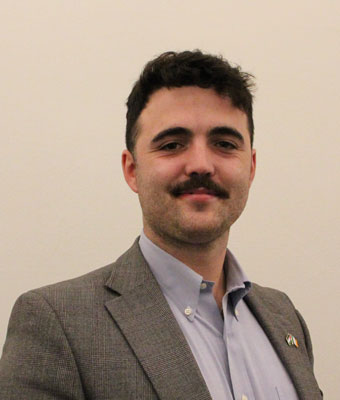
13. Deputy Barry Heneghan asked the Taoiseach when the Cabinet committee on EU and international affairs will next meet. [1732/26]
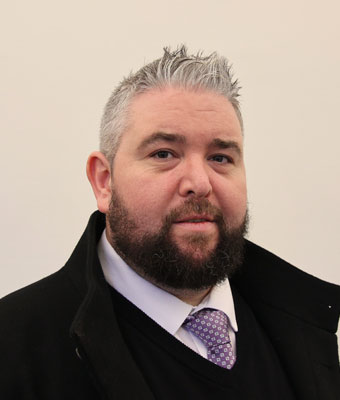
14. Deputy Conor D. McGuinness asked the Taoiseach when the Cabinet committee on EU and international affairs will next meet. [1822/26]
15. Deputy Rose Conway-Walsh asked the Taoiseach when the Cabinet committee on EU and international affairs will next meet. [1828/26]
I also congratulate Elaine Gunn on her appointment. We look forward to working constructively with her in the time ahead. She is very experienced and knows the operations of this House very well indeed, as well as the various personalities who make up the House and how they all have to be managed differently and carefully. Deputy Boyd Barrett, the applause was for Elaine.
I knew that. I was only joking.
You basked in it nonetheless as you walked in.
I propose to take Questions Nos. 1 to 15, inclusive, together.
The Programme for Government: Securing Ireland's Future, recognises the importance of Cabinet committees to the policy development and oversight work of Government. The Cabinet committee on EU and international affairs was established by the Government on 18 February 2025. It meets quarterly in advance of regular European Council meetings and as required. Its role is to oversee the implementation of programme for Government commitments in relation to the European Union, including preparation for Ireland's Presidency in the second half of this year and international issues.
The Cabinet committee on EU and international affairs last met on 8 December in advance of the meeting of the European Council on 18 December. Matters discussed included the agenda for the December Council meeting and plans for Ireland's Presidency of the Council of Ministers in 2026.
I attended the European Council meeting in Brussels on Thursday, 18 December. On 17 December, I attended the European Union's western Balkans summit which also took place in Brussels. Leaders discussed Ukraine, specifically future financing; the next multi-annual financial framework; European security and defence; enlargement and reforms; migration; geoeconomics; and competitiveness. Other items included the pact for the Mediterranean, the fight against antisemitism, racism and xenophobia, and the fight against disinformation.
As the House will be aware, I also had the opportunity to discuss issues on the agenda of the European Council with its President, António Costa, during his visit to Dublin on 9 December. We looked ahead to Ireland's Presidency of the EU in the second half of this year and I briefed President Costa on our preparations. Accelerating our work to secure the European Union's future competitiveness as well as advancing negotiations on the Union's next seven-year budget will be important priorities for Ireland's Presidency. The date for the next meeting of the Cabinet committee has not yet been scheduled.
I will begin with Deputy Malcolm Byrne. As there are 13 Deputies, I propose they take a minute each.
I welcome the Taoiseach's continued commitment to multilateralism and human rights, the rule of law and democracy. As someone who has raised Iran in this House before, I salute too the brave men and women who are fighting against that oppressive regime. Equally, it the right of the people of Venezuela, now that the despot Maduro has gone, to decide on their future, even though his removal was in breach of international law.
I raise the question of Greenland. In August 2018, I made a personal visit to Greenland, including to Ilulissat inside the Arctic Circle. It is a beautiful and special place. The people are very friendly and welcoming. They are, understandably, increasingly nervous. It is a matter for the people of Greenland to decide on their future. I ask the Taoiseach to express solidarity with the people of Greenland, reiterate that it is a matter for the people of Greenland to decide their future and work with Denmark, our EU partner, on this matter.
I acknowledge the Taoiseach's criticism of the Iranian and the Russian regimes. Similar to Deputy Byrne, I have particular concerns about Greenland and Denmark. Has the Government engaged with Denmark or EU parties regarding recent EU statements on Greenland? What is Ireland's position on safeguarding EU territorial and sovereign lands such as Greenland, particularly as we move into the EU Presidency in July of this year?
Around the world, LGBT+ people remain under continuous attack. In December alone, Kazakhstan's senate approved a ban on so-called gay propaganda, which basically amounts to blocking any information on the LGBT community. In Türkiye, a court shut down an LGBT youth organisation for supposedly encouraging people to be lesbian, gay or bisexual, while in Budapest the police have recommended pressing charges against the mayor for simply organising a Pride parade.
These incidents cannot be viewed in isolation. They are part of a pattern of escalating repression. We also know that there are still 65 countries where it remains a crime to be homosexual. What is the Taoiseach and the Government doing globally to promote LGBT rights? Does the Taoiseach support a UN convention on the rights of LGBT people? Will the Taoiseach be advancing LGBT rights as a priority during our Presidency of the European Union? Ultimately, what is the Taoiseach doing at home to protect and enhance LGBT rights?
It would be fair to say that the world is not exactly where we would like it to be, whether we are talking about the draconian actions of the Iranian regime, the so-called "peace" in Palestine or the ongoing conflict in Sudan. We have seen Donald Trump tear to bits international law. Whatever people's view of President Maduro, nobody can stand up and state that America has the right to remove whichever leaders it does not like. This State has not been sufficiently strong in its reaction to this. I would also state the European Union has been particularly weak. Some of this is based on a weakness due to the need for American support for Ukraine but this is not good enough. Where does this end? As has been brought up by others, the fact is the threat is there in relation to Greenland. While we hope this is an ideal boast, we do not know when we are dealing with Donald Trump.
It is also fair to ask the Government what it intends to do in relation to Mercosur and the fear of 100,000 tonnes of beef and 180,000 tonnes of poultry that are not up to the standard of European and Irish farm produce and what the Taoiseach hopes to do from here on in in relation to properly combatting the Mercosur deal, which is bad for Irish agriculture.
Will the Taoiseach immediately publish a full and detailed account of all legal, political and diplomatic actions that the Government has taken or intends to take to oppose the ratification of the Mercosur trade agreement and outline definitive steps to ensure that Mercosur beef cannot enter the Irish food chain under any circumstances? Will he actively and publicly support the legal action taken by Members of the European Parliament against the ratification of the Mercosur trade agreement?
Ireland's upcoming EU Presidency represents an important opportunity to advance economic competitiveness. Can the Taoiseach advise if there are plans to host EU Presidency-related meetings or events in Cork and other regions across the country to ensure that the whole country can benefit in some small way from hosting such events?
The EU Presidency also represents an opportunity to show policy leadership. Can the Taoiseach outline some of the key policy areas the Government will prioritise during this time?
As the Taoiseach will be aware, I have a personal interest in the area of rare diseases and access to drugs in particular. Can he comment on whether that will be on his platform when the EU Presidency is held later this year?
We should all declare our solidarity with Iranian people protesting against rampant inflation, corruption and the violent repression they are facing at the hands of the Iranian regime. The regime should stop killing protesters and should lift the censorship that it has imposed on Iranian people fighting for legitimate change and reform in their country. However, we should be equally clear in saying that Donald Trump and the American military have no right to threaten Iran or any other regime, as they did with Venezuela, kidnapping its leader whatever we may think of Maduro, and I do not think much of him. They have no right to threaten Greenland, Cuba or Mexico, or, as Trump is threatening as we speak, possible military action against Iran. If we are going to be consistent in our principles, in standing up for human rights and standing up for self-determination, as well as calling out the violent repression of the Iranian regime, we have to call out Donald Trump's warmongering and naked imperialism across the globe.
Last weekend, the US ambassador attended a far-right conference in Meath. It was a who's who of the Irish far right - Malachy Steenson, Sharon Keogan, multi-billionaire businessman Declan Ganley, an array of transphobes and anti-choicers. The conference explicitly encouraged American interference by the American far-right in Irish politics. Presumably, the US ambassador was nodding along when the conference chair, Eddie Hobbs, told the audience to reach across the Atlantic and seek help from the US MAGA movement to change the Irish Government. This comes after Steve Bannon telling Politico that he is working on developing an Irish Donald Trump and developing an Irish national party. Is the Taoiseach concerned? The US MAGA movement just kidnapped a head of state in Venezuela and brought him to America, killing many Venezuelans and Cubans on the way. Does the Taoiseach think that by being craven and just licking the boots of Donald Trump, he will not interfere in our politics or will he change course and call out what is happening on the international stage?
The European Union launched, in December, a groundbreaking affordable housing plan with revised state aid rules and new approaches to delivering affordable housing. Will the Taoiseach put affordable housing central on the agenda of the European Union Presidency that Ireland will hold? Will he take action to ensure Ireland draws down funding that is available through the European Union and new approaches? Does he accept that the Irish Government and governments across the European Union have failed a generation of young people who cannot afford the rents and cannot afford the house prices? We have new apartments being built in Dublin. The rent for a two-bedroom apartment is €3,150. Does the Taoiseach accept that it is not migrants who can be blamed for the housing crisis but it is the failure of governments across the European Union? Does the Taoiseach accept that Ireland has to take responsibility and should put affordable housing central to the European Union Presidency?
"The Party told you to reject the evidence of your eyes and ears. It was their final, most essential command." That is from Orwell's 1984. I am wondering if that is what happened with Fianna Fáil and Fine Gael in relation to what Donald Trump is doing in general, and has done in Venezuela. On Truth Social, he announced that he is now the de facto leader of Venezuela. They swooped in, kidnapped a leader and his wife, by the way, killing 130 people in the process, which the Taoiseach seems to have been silent on.
The Minister for foreign affairs put out a statement that the fate of Greenland should be decided by Greenland but the Government does not seem to apply that to Venezuela, and we seem to be selective about who is dictator. The Government announced sanctions against Iran but none against Israel, which has been carrying out a genocide for over two years.
This lickspittle boot-licking subservience to US and western imperialism is not going to do the Taoiseach any good. It has not worked for Machado trying to hand her Noble prize back and it will not work for the Taoiseach either.
Toisc gurb é an chéad uair dom a bheith ag caint sa Teach seo i mbliana, ba mhaith liom athbhliain faoi mhaise a ghabháil le gach duine.
I am seeking a clear update on the progression of the occupied territories Bill. The programme for Government I signed up for promised the advancement of legislation prohibiting the importation of goods. Given the ongoing genocide and Ireland's stated obligations under international law, it is now essential that we bring the Bill in as soon as possible. I stress that at the committee there was cross-party support for the inclusion of goods and services.
What is the Taoiseach's current stance on the position of the Palestinian Action political prisoners who are still on hunger strike? Britain chose to let Irish hunger strikers die in 1981. What is the Taoiseach's current take on this situation? They have not been eating for 70 days.
The AGRIFISH meeting in December last year at which quotas were set for this year for the entire European fishing fleet was the deepest and most severe shock that the Irish fishing industry has ever faced. The industry is on its knees, it is on the ropes and its demise is imminent unless there is action take.
On 3 December, the Taoiseach met with Irish fishing industry representatives. On 11 December, the Taoiseach met with the Working Group of Committee Cathaoirligh at which I implored him to give his political support and take action to build political support at European level. A couple of days later, Ireland was isolated at European level and the Irish fishing industry was, once again, sacrificed on the altar of European commercial fishing interests.
My colleague, Deputy Mac Lochlainn, submitted a freedom of information request to the Taoiseach's office seeking all outgoing correspondence, calls, logs and memorandums relating to it. It seems the Taoiseach did not lift a finger, lift a phone or do a tap to build political support.
Thank you, Deputy.
The Taoiseach allowed the Minister of State, Deputy Dooley, to go into those negotiations without any political support from him as Head of Government. It is not good enough. The Irish fishing industry and coastal communities have suffered because of the Taoiseach's failure to take political action.
Recent public statements by US President Donald Trump have raised the extraordinary prospect of the United States seeking to forcibly take control of Greenland, a territory of Denmark, an EU member state.
Such an action, if pursued, would present a fundamental challenge to international law, the sovereignty of small states and European security. It would also have serious implications for the strategic balance in the north Atlantic region of direct relevance to Ireland’s security, particularly in relation to undersea infrastructure, airspace monitoring and hybrid threats. Given Ireland’s military neutrality, limited defence capabilities and increasing exposure to geopolitical instability, will the Taoiseach outline what assessment has been made of the implications for our defence and national security? Will he update us on discussions taking place at an EU level regarding Greenland’s sovereignty?
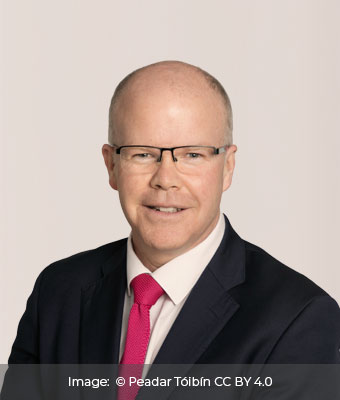
The Taoiseach’s record on Mercosur has been a disaster. Last week saw one of the most incredible flip-flops in political history. One day, the Taoiseach was in support of Mercosur, saying it could be of benefit to the State and the next day he came out against it as well. I am not sure if that flip-flop came as a result of instability within Fianna Fáil and the backlash from its TDs or because Fine Gael basically outmanoeuvred Fianna Fáil just at the last minute also or because Italy gave the Taoiseach cover to make that change. It is fiercely cynical in relation to what is happening to farmers. Mercosur is an existential threat to farmers in this country. Will the Taoiseach help to lobby MEPs throughout the European Union to persuade them to vote against Mercosur? Will he support a boycott of Mercosur beef, which operates at a lower regulatory standard, in this country? Will he make sure there is proper labelling of Mercosur beef so Irish consumers can make that choice?
There were quite a number of questions. Deputy Malcolm Byrne raised the issues of Iran and Venezuela but in particular Greenland. I appreciate he is probably one of the few Members of the House who took the trouble of going to visit Greenland. Ireland’s position is very clear. I have spoken to Mette Frederiksen, the Prime Minister of Denmark. Ireland stands in solidarity with Denmark and with the people of Greenland in respect of the sovereignty of Greenland and the absolute centrality and importance of an international rules-based order in terms of adherence to the democratic wishes of the people of Greenland. We have made that clear at European Union level and bilaterally. I publicly issued a statement in that regard last week, I think, when asked about it. It is interesting that the US had a military base in Greenland for a long time with up to 10,000 troops there; there are now just 200 troops. If there are issues in respect of security in the general Arctic area - there may be, though not in that specific location but in other parts – they are issues that fall to negotiation and dialogue. Deputy Ó Cearúil also raised that issue. As I said, I have engaged. I have also met the Prime Minister of Greenland in international forums. I have spoken to him in respect of the issues and concerns and to the Prime Minister of Denmark. Europe is very clear on this. I urge that whatever issues people have be dealt with sensibly and in accordance with the normal dialogue that ensues between sovereign nations and also in accordance with international rules and the rules-based order.
Deputy Rice raised the issue of LGBTI rights being under attack, which they are. He instanced Kazakhstan, Türkiye and Budapest. We have raised this with Hungary not just on the specific issue of the Pride parade in Budapest but on other issues that have emerged over the past two years. I have been very clear at Council level in this respect consistently over the years. In terms of our engagement internationally, Ireland affirms LGBTI rights everywhere it goes and in any agreements or development aid we provide. We are very clear on our policy goals in that respect and in defending and supporting the rights of LGBTI people. We will explore the issue of the UN convention.
Deputy Ó Murchú raised the issue that the world is not in a good place, and it is not. The multilateral order is under threat – of that there is no question. There are too many authoritarian regimes which have not been impacted by the international rule either and have carried on regardless. Sinn Féin has had a checkered record in this respect. It attended the inauguration of Maduro. It endorsed his election.
We are not talking about that.
It is an important point. I have got a few lectures from the Sinn Féin benches this afternoon and maybe a bit of consistency from yourselves in respect of human rights-----
You just got back from China.
(Interruptions).
It is not back and forth.
I have gone back over the record. I have read what Deputy McDonald said in respect of Maduro and defending Venezuela. You have a good record in that part of the world over many years.
You were out in Israel pointing at ceilings.
Deputy McGuinness. This is not the way it works.
(Interruptions).
There have been many poor leaders supported by America for many years.
Sinn Féin has a really dodgy track record in supporting very dodgy leaders over the years. You had very dodgy relationships.
As have you.
(Interruptions).
You had many dodgy relationships with governments across that hemisphere where you shared your expertise in given matters with such authorities down through the years. Maybe a small bit of humility on your side now in terms of lecturing other people about geopolitics might not go amiss. You are the most self-righteous bunch I have ever come across at times in your pontificating about human rights and whole lot of other things.
It is Taoiseach’s questions.
(Interruptions).
You guys showed scant regard for human rights when practised by rulers and authoritarian leaders you were friendly with and shared expertise with.
Deputy O’Rourke raised Mercosur. Significant improvements were actually made to the Mercosur agreement. Ireland trades – we are a small open economy. We export €20 billion of our foodstuffs all over the world. There is a need for perspective in this debate. We export €20 billion of foodstuffs and drink all over the world and we expect other markets to take them. I believe in free and open trade. That said, there are issues. We have a legitimate right to provide safeguards for our farmers. There are a lot of safeguards, if one compares the agreement that got through because Italy decided to support it for its reasons. The idea that we control Italy is just absurd but that is the proposition I have had to listen to from Deputy McDonald and others, that somehow Ireland failed to persuade Italy. Italy has its own interests in terms of trade and has made its judgment. On market safeguards, it has gone from 10% down to 5%, which is significant, and legal instruments have now been put in place. That is what I did last week. I acknowledged that. It would have been churlish not to acknowledge it. That was a result of countries like France, Italy, Ireland and others which continued to negotiate for additional safeguards and members of the European Parliament like Barry Cowen and others who put down amendments and got them secured. They had to work on two premises – one, that it does not get through and the other that it might get through. If it gets through, the stronger the safeguards there are the better to protect Irish farmers. Italy also worked to see if we could get the CAP included in negotiations. The CAP is far from where we want it to be. There will be important negotiations on the multi-annual financial framework over the next 12 months which will fall and conclude in our Presidency. The previous seven-year financial framework gave farmers about €10 billion. We are down to about €8.2 billion now. We have to get that back up. Some of it has been frontloaded as a result of negotiations last week which will help farmers in 2028 but it is not where we want it to be. We have had a very successful outcome to the extension of the derogation. We have to mind that over the next while also. It is very important to the agricultural industry. My overall objective has been to protect Irish farmers and support them as well as the Irish economy. My view is we should think of what is in the best interest of Ireland and Irish farmers, not what is in the short-term electoral benefit to ourselves. There was a lot of that going on last week. It is still going on in the House. I would argue there is a certain degree of short-term electoral politics going on, Deputy Tóibín. You are all racing to try to outbid each other. There are all sorts of tensions between Sinn Féin and the Independent Ireland Party.
(Interruptions).
Everyone is trying to gain ground. I am very focused and clear-eyed in terms of protecting Irish farmers across all the suite of issues we have to deal with over the next 12 months. The most important one will be income to farmers because income matters in terms of the multi-annual financial framework and how much we can ring-fence for the Common Agricultural Policy for the next seven years after 2027. That is vital for Irish farmers. It is something we will continue to work on.
Obviously, the European Parliament will make its decision in respect of that.
Deputy Pádraig O'Sullivan raised the issue of the Presidency on two fronts, including the area of key policy. On competitiveness, the expansion of the Single Market, savings and investment union and enlargement, I would like to see progressive steps on enlargement whereby we would at least be in a position to close out the negotiations on Montenegro, for example. That is a real prospect and we have given a commitment to trying to advance this during our Presidency.
The Council took a decision in December that it wanted to conclude the multi-annual financial framework by the end of this year. That means the Irish Presidency will have to conclude it. Impossible demands in terms of the availability of funding and so on will have to be resolved. Values, as have been discussed here, will be a key objective.
There will be quite a number of informal Ministerial Council meetings in Ireland and other conferences. About 25% of the ministerial meetings will be outside Dublin, and clarity will be provided on the specific meetings that will be held across the country in respect of the Presidency.
I note the Deputy's ongoing consistent interest in and advocacy in terms of rare diseases and orphan drugs. I hope the Minister will be able to bring to the Government shortly an agreement after the negotiations with the Irish Pharmaceutical Healthcare Association in respect of our domestic allocation of funding for medicines this year. I took an interest in that also given the Deputy's advocacy on the issue. It is a very important issue for many groupings and people with rare conditions who need more urgent responses. It is challenging and an area of increasing focus. The cost implications are enormous. Hopefully, the agreement we hope to conclude and bring to the Government shortly will deal with a lot of this in terms of our domestic capacities.
That covers most of the areas we will be covering during the Presidency. There will be others.
Deputy Boyd Barrett referred to President Trump and Iran. Again, Iran has been a very malign actor. I take the Deputy's point that he has no truck with the Iranian regime because it has persecuted its civilians for a long time. Long before Mr. Trump became the US President, people from different political backgrounds always argued about interventions.
He is threatening.
Sorry now, none of that.
I am just saying Iran has been a malign influence for as long as I can remember.
Yes.
It has created havoc across the Middle East.
Saudi Arabia too, of course.
Israel.
Others.
Egypt, Israel-----
We cannot-----
Does that mean we ignore Iran, does it?
No, no. I said Iran was a malign influence.
This is not a back-and-forth forum.
The world has tolerated Iran since the ayatollahs took over.
The shah was more than tolerated-----
Please, Deputies.
Look at the damage that Iran has caused across the region, including, more fundamentally, to its own people’s quality of life and so on.
There are legitimate issues but they are for another day because it is very difficult to discuss them when people are more interested in heated exchanges than what may be a more reflective discussion on all of this. The world is in great difficulty, principally because the authority of the UN has eroded over the years through the absence of reform and the dominance of major powers on the Security Council. The Security Council needs to have its representation broadened and its authority needs to be restored. That is the more fundamental problem with what is going on in the world today.
The Taoiseach will not call out Trump-----
No, please.
We have been very clear and consistent that international rules must and should apply.
And he broke them by kidnapping Maduro.
Ah, Lord.
Deputy Paul Murphy referred to various meetings. I am not aware of the US ambassador's attendance at the meeting in question. I have no truck with those who attended the meeting. Again, we have to have faith in our own democracy and assert our own principles here in this House. We should do this and do so collectively, but, again, it is a challenging area. The increasing fragmentation of Irish politics is a problem and it is opening the door for exploitation and manipulation. This is something everyone in the House should be mindful of. There will be those who will seek to exploit it and we have to resist that. All of us have to resist that type of influence, be it external or internal.
On Deputy Hearne's remarks, we will be hosting a summit on housing during our Presidency. It is late in the day that Europe has come to the housing question because housing is a core competency of member states and always has been. The last EU Council meeting, or the one before that, in October, was the first at which the Heads of State ever discussed housing. I welcome that discussion. On the area of state aid, the removal of barriers to member states supporting housing would be a simple and progressive move that could facilitate their doing more. The housing crisis is a Europe-wide phenomenon. I spoke to and met the head of the European Investment Bank, who has prioritised housing for the first time ever in the work of the bank, simply because, after touring all the European capitals, housing was the number one issue that came across from all EU governments. The more the EU can support member states on housing, the better. We need more supply. That is the fundamental issue for us.
Deputy Coppinger referred to George Orwell's 1984. It is a great book by an outstanding author. Greenland has not been attacked and nobody has violated it. There have been threats, talk and this, that and the other. We believe in dialogue and sensible engagement. Above all, we believe in Denmark's sovereignty in respect of Greenland and in the people of Greenland having the ultimate decision on Greenland’s own self-determination and destiny. We have spoken with Denmark in that respect and I have also spoken with the leadership in Greenland. We will continue to support Greenland. We do not believe in any shape or form that there should be any violation of its sovereignty and territorial integrity.
On Deputy Heneghan's comments, I will discuss again with the Minister for foreign affairs the legal opinion that was in before Christmas on the occupied territories Bill. My comments on services are well known. There are issues with services, to be quite frank. I have said that to the Deputy before and we need to realise it. The implementation will be challenging overall but I will talk to the Minister for foreign affairs about where the Bill is at now. On services, there are implications in terms of legislation in the US and so on. The Bill is completely non-implementable on the services side, to be honest. I do not see how it can be implemented. Parking that for the moment, there would also be an impact for Irish multinationals or multinationals based in Ireland. We need to be clear-eyed about that and people need to realise it. I have said that before.
On Deputy McGuinness's remarks, the fundamental problem, which he failed to articulate, is what was found in the research in respect of overfishing, not by Irish fishers but by Norwegian and non-EU actors who have agreements with the EU. This overfishing is the fundamental reason Irish fishing is in deep crisis. There has been a 70% reduction in pelagic stock available for fishing because of conservation.
There was not equitable distribution of stock for the Irish fishing fleet.
Sorry, Deputy, this is not the forum. It is not a back-and-forth.
Deputy McGuinness knows I am telling the truth. The same problem arises with nephrops in that there is a significant------
The Taoiseach is ignoring the truth.
Sorry.
That is the fundamental issue. We should consider the income we lose now because of our not being able to fish because of the conservation efforts that arise because of the research. What we have to do now – I have met the fishing industry in this regard – is devise supports for the industry that can sustain it over the coming years while fish stocks are replenished. We also have to work harder and robustly with the EU on what it is doing in respect of neighbouring countries that are raiding the fishing stocks in the North Atlantic and in Europe more generally. That is a big issue. There is no question but that the waters are being overfished, the result being a 70% reduction in the amount available to fish. That is catastrophic. It is not because of negotiations or anything like them. Whatever the research shows has always been accepted. It is having a devastating impact.
On Deputy Rose Conway-Walsh’s remarks, I have referred to Sinn Féin's position on Venezuela, which was not great in recent years-----
I never mentioned Venezuela.
The Deputy raised defence and security. The fundamental change to the defence and security posture across Europe relates to the Russian invasion of Ukraine, Russia’s utilisation of modern technologies, the appalling loss of life on both sides in the war at the front line and the trenches, and the indiscriminate bombing of energy infrastructure.
Europe feels very vulnerable to Russian attack and Russian rearmament. That is the more fundamental issue, not the US or anybody else. The fundamental issue facing European security right now is Russia. The Baltics feel it is an existential threat. The defence budgets of all of those countries have gone way up, and there are huge strains on their budgets as a result. Europe is very vulnerable to that, and it feels it.
Whether we agree with that here or not, it is the reality on the ground across the European Continent. There is a real debate within Europe about increasing military and defence capabilities. From an Irish perspective, that means that, yes, we have to increase our spending on defence and our military capability. We are focused on undersea critical infrastructure in terms of cybersecurity and developing technologies that can protect that. In other words, the economic security dimension is very important to Ireland. We have to increase our spending in that area to protect our economic security, and do it in solidarity with others. I make no apologies for saying that. If we are honest, that is the real driver of the defence and security concerns within Europe.
In response to Deputy Tóibín, I dealt with Mercosur in my earlier remarks.
We have not discussed the changes or why the Taoiseach changed his mind on Mercosur within 24 hours.
I did not change my mind.
The Taoiseach changed his language, then.
I am sorry. I made it very clear on this issue. I spoke about the safeguards that were negotiated. We did negotiate additional safeguards. There was additionality in terms of the Common Agricultural Policy and the bringing forward of funding. That is an improvement. That has to be acknowledged, no question. I said there would be a meeting that evening between the three leaders, and there was.
It is still an existential threat to rural Ireland.
It is not actually existential. That is over the top.
For many, it will be.
16. Deputy Ruairí Ó Murchú asked the Taoiseach when the Cabinet committee on Government co-ordination will next meet. [69323/25]
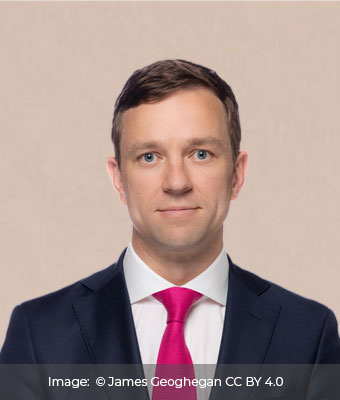
17. Deputy James Geoghegan asked the Taoiseach when the Cabinet committee on Government co-ordination will next meet. [69535/25]
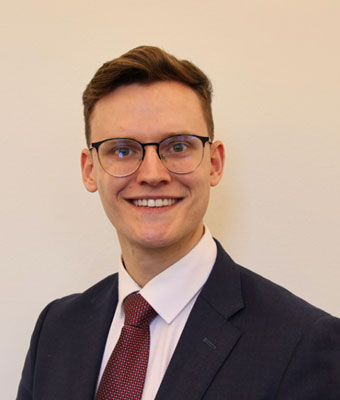
18. Deputy Albert Dolan asked the Taoiseach when the Cabinet committee on Government co-ordination will next meet. [71594/25]
19. Deputy Albert Dolan asked the Taoiseach when the Cabinet committee on Government co-ordination will next meet. [71595/25]
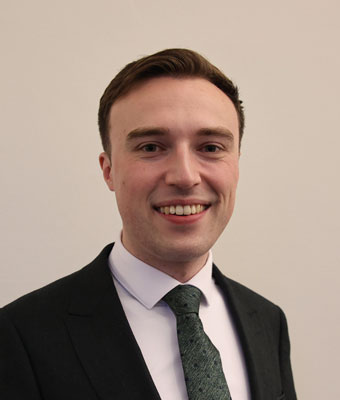
20. Deputy Ryan O'Meara asked the Taoiseach when the Cabinet committee on Government co-ordination will next meet. [71596/25]
21. Deputy Darren O'Rourke asked the Taoiseach when the Cabinet committee on Government co-ordination will next meet. [71906/25]
22. Deputy Rose Conway-Walsh asked the Taoiseach when the Cabinet committee on Government co-ordination will next meet. [72043/25]
23. Deputy Pádraig O'Sullivan asked the Taoiseach when the Cabinet committee on Government co-ordination will next meet. [74328/25]

24. Deputy Cian O'Callaghan asked the Taoiseach when the Cabinet committee on Government co-ordination will next meet. [74416/25]
25. Deputy Richard Boyd Barrett asked the Taoiseach when the Cabinet committee on Government co-ordination will next meet. [1548/26]
26. Deputy Paul Murphy asked the Taoiseach when the Cabinet committee on Government co-ordination will next meet. [1551/26]
27. Deputy Cian O'Callaghan asked the Taoiseach when the Cabinet committee on Government co-ordination will next meet. [72585/25]
28. Deputy Liam Quaide asked the Taoiseach when the Cabinet committee on Government co-ordination will next meet. [1110/26]
29. Deputy Ruth Coppinger asked the Taoiseach when the Cabinet committee on Government co-ordination will next meet. [1708/26]
30. Deputy Conor D. McGuinness asked the Taoiseach when the Cabinet committee on Government co-ordination will next meet. [1823/26]
I propose to take Questions Nos. 16 to 30, inclusive, together.
The Cabinet committee on Government co-ordination generally meets in advance of Government meetings and is expected to meet on Monday, 19 January. I am a member of the committee, with the Tánaiste and the Minister of State at the Department of Transport with special responsibility for international and road transport, logistics, rail and ports. The Secretary General to the Government and the relevant chiefs of staff also sit in on the meetings. The committee reviews the activities of Cabinet committees and the agenda of Government meetings, and discusses political priorities and implementation of the programme for Government.
The Government has approved the spring legislation programme, which includes 30 Bills scheduled for publication and 33 for priority drafting, alongside a further pipeline of 79 Bills in preparation across Government Departments. The programme reflects the Government's determination to deliver on commitments that matter most to people - strengthening critical infrastructure, accelerating housing delivery, improving healthcare and modernising transport. It is an ambitious agenda for a short ten-week session in the Oireachtas.
The programme prioritises measures to fast-track essential projects and strengthen energy security, including legislation to underpin a State-led strategic gas reserve and establish the National Cyber Security Centre on a statutory basis. New tenancy protections and rent regulation will take effect from March, while legislation will provide statutory supports for the remediation of defects in apartments and duplexes. Public health remains central, with legislation to regulate nicotine-inhaling products. The programme will also see work continuing to address parentage and citizenship issues arising from assisted human reproduction. Measures in the transport legislative programme include road safety measures, updates to railway safety standards, tackling planning constraints at Dublin Airport and empowering the National Transport Authority to deliver public transport infrastructure in regional cities.
The spring programme also includes the international protection Bill, which will implement the EU migration and asylum pact in Irish law. This legislation is an important step in ensuring that Ireland is fully prepared to lead on migration and asylum matters during the forthcoming EU Presidency, while maintaining a fair and efficient system for those seeking protection.
Since we took office, 21 Bills have been enacted, and there are a further 18 Bills at various stages currently in the Oireachtas.
What co-ordination has there been across the Cabinet on what is going to happen regarding Grok? We all know the importance of the tech industry to Ireland, but I do not think anybody in the House could stand over what we can only call a child pornography factory. We know how it can be used and is being used. It is disgraceful. It is fair to say that the answers from Elon Musk have not been up to scratch, and I think that would be accepted. We can make a fair claim that ketamine might possibly impact your brain function over many years. What do we intend to do? Do we need legislation? What interaction has there been with the European Commission and across government?
An issue that has come across my desk a few times in the past year concerns young couples or individuals being refused planning permission along national roads and having it objected to by Transport Infrastructure Ireland, TII. I understand TII objecting in the case of national roads. The problem is that these people are already living at home with their parents. They are proposing to build beside their parents and come out the same entrance that they are already using, so the justification for objecting or not allowing them to build a home beside their parents is lunacy. Does the Government have plans to look at the issue of planning permission on national routes? I know it forms part of the programme for Government.
As the Taoiseach knows, school secretaries and caretakers went on indefinite strike action last September. That strike lasted a week until Fórsa and Department officials agreed to go to the Workplace Relations Commission, WRC, where talks collapsed before Christmas. The issue is before the Labour Court this week. When are we going to get a resolution for school secretaries and caretakers on the issues of pension parity, bereavement leave and sick leave, among other issues? Caretakers have been waiting for years for the same payment system as secretaries. It is completely unacceptable and unfair that caretakers are still waiting for this. When will we see the Government resolve these issues for caretakers and secretaries?
I want to raise the issue of access to judicial review and costs. We all appreciate the need for the delivery of critical infrastructure, housing, transport and all the necessary infrastructure we need for our communities. There is a consultation going on at present on the issue of costs for judicial review. This could potentially mean that where local communities and individuals take a judicial review, they would be liable for costs in the region of tens or possibly hundreds of thousands of euro even where they win the case. Will the Taoiseach ensure this does not happen?
I want to raise the issue of the lack of ambulance services, particularly in north Mayo and the west of Ireland more widely. It is a dire situation that I have never seen as bad in all of my time, where people cannot get an ambulance on time. There are incidents where people have had to travel 50 miles on very bad roads to get to the nearest hospital. When people call an ambulance, they cannot even be told when it is going to come. My question is this. Does the Taoiseach know how many people are dying prematurely because they cannot get an ambulance on time? What is he going to do about it?
Given the growing concerns about the misuse and manipulation of images on social media platforms like X, formerly Twitter, does the Taoiseach believe it is appropriate that Ministers would continue to use this platform for official public messaging?
As I said on national radio last Friday, I honestly do not understand why the police have not gone into X and started arresting the people who run it in its European headquarters. Any fair reading of the Child Trafficking and Pornography Act or, for that matter, the Harassment, Harmful Communications and Related Offences Act will show that the peddling of these sexualised images of children is a criminal offence.
The people who are facilitating this child pornographic abusive imagery should be under arrest. Why is the Government soft pedalling on that? The law is there. If it needs to be tweaked, sure, but to be honest, any reasonable reading of the existing legislation says X is guilty of a crime and arrests should be made. The police should be in its headquarters.
Is the Taoiseach at all concerned that it appears the public paid a €10 million sweetener to the World Bank to ease the way for Paschal Donohoe to get his high paying €600,000-a-year top job there? Was the Taoiseach made aware at any stage in the discussions that the World Bank was asking for €131 million? The Department officials were advising not to give any more than that anyway yet Paschal Donohoe decided that we would give an extra €10 million to make €141 million. Was there any sense at that stage that this position would be emerging as his predecessor would be retiring as he was due to retire? Is the Taoiseach concerned? Has he asked questions of his colleague about this?
It is not clear how the Department of Social Protection decided that long Covid is not worthy of classification as an occupational injury for healthcare workers who had been in receipt of special Covid leave with pay until 31 December and how the Department of Health informed that decision. A group of these workers met the Taoiseach in Cork in June. As I have said here before, they felt he gave them a lot of time, showed genuine empathy and concern for their situation and, critically, that he validated the seriousness of their symptoms and the fact that they had contracted Covid in the workplace yet nothing has been done for them since. They are now on standard sick leave which will run out in three months and ultimately they are on a pathway to retirement on medical grounds.
It is difficult to do justice to the stress, worry and sense of betrayal that this has caused them. The health committee wrote to the Minister, Deputy Carroll MacNeill, before Christmas asking that she extend special Covid leave with pay for six months to give time for proper consideration by the Department of Social Protection of long Covid as an occupational injury. I am urging the Taoiseach to intervene between those two Departments on this issue.
Since we began this debate 67,700 images of a sexual nature of children have been created by AI. I have spoken many times in this Dáil on the issue of abuse and how these social media companies are child groomers and endanger women and children by encouraging misogyny. However, we now have an app that actively allows people to participate in child abuse. What is the Taoiseach going to do about it? His Minister, Deputy Patrick O’Donovan, said it is up to the individual users - it is not the fault of Grok at all. It is an absolutely unbelievable statement. That was an excellent question from one of the Government’s backbenchers: is the Government officially going to continue supporting X? I have decided I am not going to participate any longer in this abuse. It is bad enough encouraging fascism, racism and misogyny but now let us send a message to Musk. It does not seem like the Taoiseach is going to do anything about it in the face of - and I will finish of this - his love of AI and multinational corporations. It should not make him silent about child abuse.
The latest South East Economic Monitor shows that while the south-east region has 9% of the country’s population, it has 4% of national GDP, 5% of IDA-supported jobs and just 1.8% of ongoing major public capital spending. Several times on Taoiseach’s Questions and Questions on Policy or Legislation, I have raised the lack of inward investment into Waterford and the south east, particularly in terms of transport with the Taoiseach. The economy of the south east is flatlining. There is neglect by the IDA and the Government when it comes to investment. Major capital spending in the south east is now the lowest of any region. It receives just €1,738 per person in major public capital investment, which is less than half the spend in the south west and 14 times less than Dublin. What is the Taoiseach going to do to address this imbalance to end the inequity and make sure that Waterford and the south east get the fair investment they deserve?
I wish to raise the decision by Paschal Donohoe to excessively fund the World Bank to the tune of €10 million. There is potentially a serious conflict of interest in relation to this. That a former Minister for Finance would provide an extra €10 million of funding in excess of what the World Bank sought and in excess of what his own officials in the Department advised, an increase of 33% in funding just seven months before he landed a job worth €600,000 a year, is highly problematic. When we ask for money for people with disabilities or carers, the Government says there is no magic money tree yet there seems to be a magic money tree when it comes to funding organisations such as this. Will the Taoiseach join with Aontú in seeking that Paschal Donohoe makes himself available to the finance committee to answer questions on this?
We are four minutes or more over time. With the agreement of the House the Taoiseach might want to deal with some of these questions as quickly as possible.
I thank the Leas-Chathaoirleach. Deputy Dolan raised the issue of young couples being refused planning permission as a result of objections from TII. I do not think TII should be objecting to planning applications on housing. We have discussed this at Government level. There is over-reach by TII in respect of many of these issues. I understand some of the road safety issues if it is onto a motorway or if there is an issue with protecting a motorway but in terms of generically getting involved in planning applications where the exit is the same, that should be left to the local authority and we will be communicating that to TII. I do not think it is acceptable.
Thank you.
Deputy O’Meara raised school secretaries and caretakers. The issue is now in the Labour Court. We do want it resolved. There are a lot of issues there. Ultimately, we want to sustain a resolution into the future for both secretaries and caretakers. I hope this can be resolved very quickly with a decision by the Labour Court, which we would support.
Deputy O’Rourke raised access to judicial review. Again, you need to make up your mind which side you are on. Sometimes he is objecting to delay in infrastructure and so on but some of the costs have been far too excessive. We have to look at the collective interest and what is in the public interest more generally in relation to infrastructure. Judicial review is being over-used. Planning issues should be resolved through the planning process. There is not an obligation on the Government to fund excessive costs in relation to judicial reviews which hold back vital infrastructure that is to the benefit of the entire public.
These are cases where people win.
Deputy Conway-Walsh raised ambulances. There is a national framework on the organisation and administration of ambulances. There are various criteria and metrics around outcomes and so on. I will refer her question to the National Ambulance Service.
On Deputy O’Sullivan’s question, I would not make a general rule at this stage about the utilisation of social media in general. Many of these issues will apply to a number of different social media platforms. What is more important is that we focus on any criminality that has occurred. Existing laws should be enforced by the gardaí, Coimisiún na Meán and the European Commission. I have asked the Attorney General to get back to us in respect of whether there is a need to strengthen the laws in respect of AI and AI apps then. That is the critical issue at this stage. Everything is under review.
On Deputy Boyd Barrett’s point, he cannot become the police person. He cannot become the prosecutor. He is a public representative. It is great stuff - going in and arresting people in headquarters in Dublin who may not be responsible for it at all.
If somebody said they were making bombs next door I think the police would be in, would they not?
Yes, the police but not the Deputy and not Government.
I said why are the police not-----
You have to have an independent criminal justice system. That is all I am saying. However, again, the Deputy has given us a taste of what we could expect if he came to power: he would be arresting people left, right and centre for different things.
We would tackle big tech, yes. Correct. We would want that.
So the Taoiseach is not concerned with child abuse.
That said. Nineteen Eighty-Four and all that. You know what I mean.
We want to arrest people for producing child pornography.
We will have to conclude.
They would be disciples of all of that.
Any other comments, please.
The Taoiseach's jokes are not funny.
There is an important point to make because comments have been made about the former Minister, Paschal Donohoe and the International Development Association. First, the IDA provides highly concessional finance, grants and zero or low-interest loans to the world's poorest countries and supports 75 of the poorest countries globally, including 39 in Africa. It is the largest single donor for basic social services in these countries.
The IDA 21 negotiations concluded in Korea in December 2024 and covered IDA operations for July 2025 to June 2028. The World Bank developed multiple funding scenarios, low, medium, high and very high. Indicative contribution arrangements were provided to each donor, including Ireland. Scenarios are non-binding. Countries may choose higher, lower or no contribution. Ireland could not pledge at the December 2024 meeting due to the general election on 29 November and the convention that outgoing Ministers do not make binding financial commitments for a subsequent government.
The Irish delegation noted that a new Government decision and business case would be required. The World Bank kept the pledging window open until mid-February 2025 and the final IDA21 package was approved by the World Bank board thereafter. A formal business case was prepared in line with public expenditure guidelines. That was the Department of Finance business case. The assessment was on alignment with Ireland's multilateral development policy, bank governance approach, financial implications, comparison with prior Irish contributions and commitments by peer European Union and OECD countries. The options examined - this is from the Department of Finance information - included going from no contribution to maintaining the IDA20 level, that is, €105 million. The low option was €141.4 million. The high option was €158.9 million.
It was €148 million.
The mid-point recommended by officials in the Department of Finance was €150 million. The Minister for Finance-----
That is not what the FOI states.
My understanding is the FOI was in respect of the then Department of Foreign Affairs. My understanding now from preparing this note is this. The finance officials sent this information to me when I requested it. The Minister for Finance agreed to €141.4 million, classified as "the low option". The proposal was then approved by Cabinet and the business case is to be released in full under FOI.
IDA negotiations are conducted by officials, not ministers, across all donor countries. Ireland's negotiations were handled by Department of Finance officials. A senior official acts as Ireland's IDA deputy on behalf of the Minister for Finance. Ministers do not participate directly, as per World Bank procedures. The final contribution decision is made by the Minister for Finance on official advice and is approved by Cabinet. Former Deputy Paschal Donohoe became Minister for Finance on 23 January.
We are gone well over time.
Sorry. It was just to put that on the record.
That concludes Taoiseach's Questions. We will now move to the Public Health (Single-Use Vapes) Bill 2025.
A Leas-Cheann Comhairle-----
There were a couple of questions unanswered.
I am sorry but we are 11 minutes over.
I can come back separately to both of the Deputies.
The Taoiseach has said he will come back separately to each Deputy who has not received a response. Is that correct?
To Deputy Quaide in respect of the specific issue of long-term Covid.
But if there are other issues------
The others are more general policy issues.