Enterprise Support Services
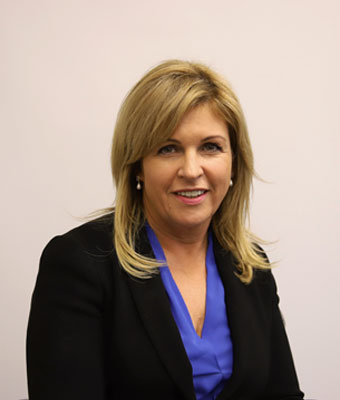
108. Deputy Rose Conway-Walsh asked the Minister for Enterprise, Tourism and Employment the steps he is taking to support small and medium enterprises facing rising costs of doing business, including energy, insurance and regulatory costs; and if he will make a statement on the matter. [64579/25]
SMEs and self-employed individuals are being crippled by the cost of doing business in Ireland in 2026. The Government is ignoring their pleas for help and rejecting every Sinn Féin proposal to alleviate their situation from our motion to tackle insurance costs to our motion to bring energy costs. I ask the Minister to outline the concrete steps his Department is taking to support these businesses struggling with the cost of doing business.
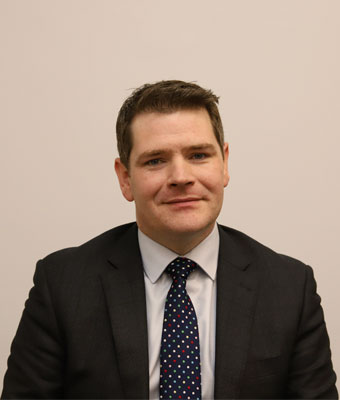
I thank the Deputy for her question.
The Government recognises that the cost of doing business has been an issue for firms in recent years, in particular, on foot of external inflationary pressures. It should also be acknowledged that the Government has been proactive in tackling the issue of rising costs and is pleased to note that the costs for firms, as measured through the CSO's wholesale price index, are declining. The latter are down 5.3% in the 12 months to November 2025.
In addition, the Government has provided significant financial support to the SME sector through the increased cost of business, ICOB, scheme and the power up scheme. Over recent years, in excess of €400 million has been distributed nationwide. This includes the €244 million under ICOB which was provided to more than 75,000 businesses. A second round of ICOB payments was targeted specifically in retail, hospitality and beauty sectors. The successor to ICOB, the power up grant, was aimed at these same sectors at a total cost of €159 million.
My Department has taken action to address fiscal and regulatory issues, including the establishment of the Cost of Business Advisory Forum in June 2025, and the accelerated publication of the Action Plan on Competitiveness and Productivity in September 2025. Both of these actions deliver on the programme for Government commitments to our small business, enterprise and industries and to develop Government policy which focuses on the economic areas that fall within our domestic sphere of influence.
The Cost of Business Advisory Forum's purpose is to critically examine issues that can lead to higher costs for business in Ireland and review associated regulatory and infrastructural issues that merit a changed approach. At present, there are 25 member organisations, representing a broad section of Ireland's enterprise sector, including SMEs, that regularly contribute to the work of the forum, alongside active engagement and dialogue with a variety of State agencies, regulators and Departments.
Forum members adopted a comprehensive thematic work plan in June 2025 and since then have met a considerable number of times. Areas, such as energy and security of supply, increased insurance costs, planning and infrastructural delivery and water services form part of their deliberations.
How come the business owners I speak to every day of the week are struggling so much if the Minister is saying that so much is being done for them, as measured through the CSO's wholesale price index? That is not the reality on the ground. It is certainly not the reality in the businesses that I see every day.
The SMEs are the backbone of employment in towns and villages right across this State. They keep main streets alive. They sponsor local teams, provide apprenticeships and take chances on new staff. Too many of them are telling me the very same thing, which is that they are working harder for less.
The SMEs need Government intervention that matches the scale of the problem. That could be it, that the scale of the problem is not recognised.
Over the past year, the Government has talked a lot about supports but what SMEs have experienced is delay, piecemeal measures and a refusal to tackle the big drivers of cost. The signs are there. In 2025, a total of 848 insolvencies were recorded. That is hundreds of businesses that did not make it through the year.
We are doing a number of things that will continue to bring viability into businesses. Each of them, on its own, has been opposed by Sinn Féin.
First, we have reassessed the trajectory to a living wage, which has been pointed out by firms as a huge cost for viability. Second, we have put a halt to an extension of sick day numbers. Third, we have increased viability through a host of sustainability grants. Our energy efficiency grant, which is a 75% rebate, can take €1,200 per month off the utility costs of firms. We have established a small business unit within the Department to respond to pressures on the SMEs.
All 13 sectors of the economy are growing. That is what the CSO said in its report in December. It showed that wages are at €1,000 gross per week, which is a 45% increase since 2015. All sectors are growing. Jobs are being created. Every day over 60 jobs are being created in this economy and we are working to reduce costs further through our Cost of Business Advisory Forum.
Then how come there are 848 insolvencies? That does not add up in terms of the supports for small business.
I recognise that there are increased costs in wages but we cannot have a situation where workers are subsidising businesses. That is why the proposal for a PRSI rebate was put forward in our pre-budget submission to mitigate those costs, but the Minister did not take that up.
Behind every insolvency is a livelihood and a community hit.
On energy, Ireland is simply not competitive. Eurostat data shows that Ireland had among the highest electricity prices in the EU for non-household consumers in 2025. That is devastating for cafés, shops, small manufacturers and tourism businesses trying to plan month to month.
On the insurance, the rip-off continues. Premiums remain stubbornly high. SMEs are being hammered by public and employer liability costs. Overall, Ireland ranks among the top countries in the world for insurance premiums per capita, which tells us something about how expensive the overall system is.
I want to come back to the Deputy with evidence and factual data. For every company that goes into liquidation in the economy now, ten more are created. We are at an all-time low in terms of insolvency levels. The CSO data, which is the gold standard of collecting evidence in this economy, backs that up.
The Deputy should have a look at the December outturn and the summary of our economic position. All 13 sectors of the economy are growing. We are at a record level of employment. Some 2.82 million people are going to work this week in the economy.
The Deputy has seen the increase in wages, which is not driving essentially a low-cost economy. We have good well-paid jobs in the economy. As I said, there has been a 45% increase in the weekly wage since 2015.
We want to bring more high-value jobs into the economy. Look at the data – Irish-born firms have had a record year of €36 billion of exports. It never happened before. It broke all records for Enterprise Ireland. The economy is performing strongly. There are challenges and costs are high, but we are doing our very best to address those on foot of the cost of business advisory forum and our small business unit. We are working night and day to try to bring in further sustainability grants to help them over the long term.
Tourism Promotion
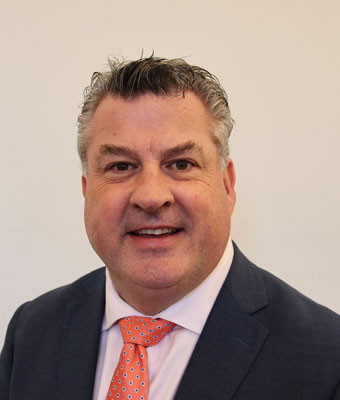
109. Deputy George Lawlor asked the Minister for Enterprise, Tourism and Employment in light of the recently calculated €1 billion fall in tourism revenue year-on-year, the factors his Department has identified as driving this decline; the immediate actions he intends to take to stabilise the sector and prevent further losses; and if he will make a statement on the matter. [1338/26]
What factors have been identified by the Department as driving the year-on-year decline of €1 billion in tourism revenue, as recently calculated? What immediate actions does the Minister intend to take to stabilise the sector and prevent further losses?
I thank Deputy Lawlor for this important question. While I acknowledge his observations on revenue, the CSO statistics indicate a more optimistic picture for 2025. Overall tourism revenue in 2025 remained strong, albeit at a slightly lower level than the exceptional high levels reached in 2024 but on par with 2023. Encouragingly, the latest CSO data show a return to growth in overseas visitor numbers and expenditure towards the end of the year. The CSO reports that in November 2025, overseas visitors spent €347 million on trips excluding fares. This represents a 10% increase when compared with November 2024 and a rise of 4% compared with November 2023. Some 460,300 foreign visitors completed a trip to Ireland in November 2025, an increase of 13% compared with the same month in 2024 and up 3% compared with November 2023. This is the fourth consecutive month of 2025 to show growth in visitor numbers compared with 2024, which is very encouraging after a slow start.
I recognise that the tourism sector continues to face challenges including competitiveness pressures, macroeconomic uncertainty and the need to strengthen connectivity. As Minister for Enterprise, Tourism and Employment, I am focused on ensuring that recent momentum is sustained. Addressing these challenges while supporting long-term resilience and productivity is a key priority for my Department and sits firmly within the wider enterprise and employment agenda. In November 2025, the Department and me published our national tourism policy statement, A New Era for Irish Tourism. This five-year strategy provides a clear framework to 2031 to grow our revenue and visitor numbers and, critically, career pathways within the sector.
I thank the Minister for his response. Someone’s figures are not adding up. There has been a clash – I think the CSO was saying one figure and the industry was saying another. The indications are that foreign spending slumped by almost €1 billion and total international visitors are down year on year by some 13%. As one can imagine in an industry worth €8.9 billion to the economy with, I think, around 200,000 people employed directly and indirectly, that is a shocking statistic. I appreciate what the Minister said about there appearing to be some pickup. While North America showed some growth, markets like Britain, France and Germany, surprisingly, appear to have declined. One could suggest geopolitical activity may have had some influence on some of the markets but for North America to show growth while the others decline is quite surprising and requires some investigation.
The Deputy is quite right in relation to the CSO earlier in the year. I was making the point that it has recovered significantly over the past four months. We took immediate action. We brought forward a plan that will grow the sector significantly over the next five years. I will work on extending the season because 50% of visitors come from June to September. We are trying to bring it from St. Brigid's Day out to Halloween which will be a significant asset. We are also looking at an all-Ireland culinary strategy which will assist growth of the food and beverage sector. Critically, we will have 12% more seats coming into Ireland through our air carriers this winter. If one looks at the markets the Deputy mentioned, we will have 13% more in Germany, 8% more in France and 7% more in the UK. The previous winter, we had 9% fewer seats in total. That has been a big challenge for the sector. There are 46,000 SMEs which deliver our authentic tourism product. They are now in the heart of my Department. That is why policy has changed. I have made a complete gear change, with my two Ministers of State, in tourism policy. We are working to support SMEs, extend the season and work on accommodation providers. We have 11,500 beds now in construction, 8,600 of which are in Dublin, and moving away from State contracts with private hotel accommodation which will be important for the sector.
I welcome some of the initiatives the Minister has announced. There are markets we can work on. I gave the example of Savannah in Georgia before. A number of Ministers have visited Savannah as part of the St. Patrick’s Day connections. Savannah has huge Irish connections. The city has a population of 170,000. Last year, it had 17 million visitors. If one considers that Australia had about 10 million in total, this is a vast market we should tap into. There is no direct flight to Savannah. I flew there a number of times to celebrate with the local people because of the strong Wexford connections. It took me 24 hours to get there despite the massive connections we have with that part of North America in south-east Georgia. We really need to tap into it and work with it. We will reap the rewards and the dividends will come back to Ireland Inc.
It is a very important destination for us. We have 21 gateway hubs with the US now. We are keen on expanding them. I was in Savannah and Atlanta for a St. Patrick’s Day mission a couple of years ago. Delta raised with me that it wanted to put new routes into Ireland but the cap at that point precluded it from doing so. We need to resolve the airport cap this year - that will be critically important - and grow those routes. I have specifically raised the strategic air activation scheme with Tourism Ireland which could work for Savannah. It would be important to try to get direct flights in. I am aware of the tertiary education link with Wexford and strong links there with the great work taking place on the ground in Wexford and in Savannah. The enthusiasm is incredible. So many business leaders on both sides of the Atlantic are working hand in glove. I would be very happy to work with Deputy on that to try to get that connectivity. It is an important marketplace for Ireland. Two-way bilateral relations benefit both sides, as we can see from tertiary education and other areas.
Employment Data
110. Deputy Rose Conway-Walsh asked the Minister for Enterprise, Tourism and Employment to outline the measures his Department plans to introduce to correct the imbalance in unemployment rates between regional areas and urban centres; and if he will make a statement on the matter. [2418/26]
What does the Minister plan to introduce to correct the imbalance in unemployment rates between the regional areas, particularly the north and western regional area, and the urban centres? Despite the song and dance the Department and the Taoiseach made today over the strong overall employment statistics for the State as a whole last year, recent figures have revealed a growing imbalance between the unemployment levels in the urban centres and unemployment in regional areas. Will he outline the measures his Department will take to address this?
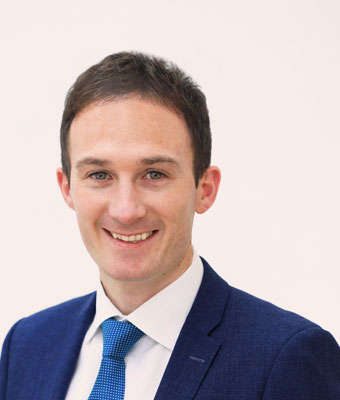
As the Deputy is aware, the programme for Government sets out a strong enterprise and fiscal framework that prioritises economic and employment growth and competitiveness, with a target to support the creation of 300,000 extra jobs by 2030. I am pleased to report that, one year on, the Irish labour market continues to record sustained employment growth, rising labour force participation and record job numbers last year, indicative of a resilient performance. In total, over 2.8 million people are now employed in Ireland with employment up 61,500 on average in the first nine months of last year. While this is a record level of employment, it is the case that the pace of job creation slowed as the year progressed. The overall robust employment performance reflects both the inherent dynamism within the economy and the success of Government policies aimed at supporting job creation, fostering innovation and providing opportunities for all sectors. Ireland’s labour market performance also compares very favourably with our European counterparts. In respect of the regions, this is something we have watched very closely. It is important to stress that the labour market here is very open and dynamic, with strong increases in labour supply. Furthermore, the prevalence of remote working and commuting patterns complicate comparisons across regions.
Nonetheless, over the past year we have seen some increases in regional unemployment rates, notably in the mid-west and Border areas, where the unemployment rates averaged 5.2% and 4.8%, respectively, over the first three quarters of 2025. Furthermore, the increases over the year in these areas were above the national average. At the same time, some areas saw a decline in unemployment, with the south-west region’s unemployment rate averaging 3.8%, well ahead of the national average, and the employment rate in the west averaging 5% over the first three quarters of 2025. Balanced regional development is a Government priority under my Department.
Let us look at the figures. They are not mine, obviously; they those of the CSO, backed up by reports produced by the Northern and Western Regional Assembly, whose work in this regard I acknowledge. It is very important for us to know the picture. On regional unemployment, the CSO states that the State's overall figure for unemployment at the end of quarter 3 of 2025 was 5.3%. The northern and western region, which incorporates the five counties of Connacht, including that in which the Minister of State and I live, as well as Donegal, Monaghan and Cavan, had the highest regional unemployment rate in the country, at 6.1%. This region has been categorised by the EU as a lagging region, well behind Ireland's other two regions, which have a GDP per capita that is almost three times higher. Most worryingly, if we drill down further, just looking at the unemployment rate for the west, which includes our county, Mayo, we see the rate was as high as 6.7%. That is over 25% higher than the figure for the State as a whole.
I acknowledge the significant buoyancy within our labour market. On the Deputy’s earlier point, it is not a matter of a song and dance; it is actual fact that we are very much creating balanced regional growth. That is evident from the high employment and rising participation rates right across the country. With 2.82 million people at work, a record level, we continue to implement good, sound Government policy.
With regard to our regions, we have an open and highly mobile workforce. Remote working has certainly enhanced the attractiveness of working within the regions, with the activity in this regard very much related to urban companies. We will have the next iterations of the nine regional enterprise plans. These are bottom up and will be led by local stakeholders, focusing on key sectors. We will also ensure labour market resilience. The Action Plan on Competitiveness and Productivity, which will complement the successor to Pathways to Work, contains targeted activation measures to ensure that we will have the necessary skills and participation, and that we will remove any barriers that exist for those within our regions.
In that case, why are so many people moving to Canada, Australia and Great Britain? It just does not add up. If they had jobs and a place to live, they would be staying at home. The Government’s enterprise support structure and investment and skills programmes remain disproportionately concentrated in already prosperous areas, while towns and rural regions struggle to attract sustainable employment. We need concrete action from the Government to attract and retain employers in regions with persistently high unemployment. We need to ensure the IDA Ireland and Enterprise Ireland strategies have a genuine regional impact. We need to align education and training programmes with the local labour market needs and to support SMEs, which are the backbone of regional economies. Warm words and strategies are no longer enough. Regional unemployment requires targeted, measurable and time-bound interventions. We cannot ignore the figures that are in front of us.
We are doubling down on skills development. Very much part of that is the fact that we are working with the Department of Further and Higher Education, Research, Innovation and Science on apprenticeships and training courses, expanding many of the skills within Springboard and Skillnet and working on digital and green skills.
The results of IDA Ireland’s most recent report show there were over 183 investments, 57% of which were regionally based. That demonstrates how important it is to ensure we have the jobs outside our main cities. The facts do not lie. This comes on the back of our upskilling of many people, including students, right across the country. We have a commitment concerning over 33,000 employees, with a focus on the retention of skills. Also, we are investing in regions, and that is through IDA Ireland’s Adapt Intelligently programme. We even see that a new advanced manufacturing facility is being progressed in County Mayo, in Castlebar, and the securing of a new land bank is being considered.
111. Deputy Sinéad Gibney asked the Minister for Enterprise, Tourism and Employment whether his Department is concerned about the rising rate of long-term unemployment and the rising rate of youth unemployment, which stands at nearly three times the average unemployment rate, according to the CSO; the measures his Department is taking to find the cause and address these issues in the Irish labour market; and if he will make a statement on the matter. [2383/26]
The CSO's labour force survey before Christmas found that we have significant increases in youth and long-term unemployment. The youth unemployment rate is nearly three times the average unemployment rate and it is clearly becoming much harder for young people to find work. What is the Department doing to address this increasing gap in our labour market?

I thank the Deputy very much for her important question. The programme for Government sets out a strong enterprise and fiscal framework that prioritises economic and employment growth and competitiveness. I am pleased to report that the Irish labour market saw sustained employment growth, rising labour force participation and record job numbers last year, indicative of a resilient performance.
In total, over 2.8 million people are now employed in Ireland, with employment up 61,500 on average in the first nine months of the year and with the pace of job creation slowing as the year progressed. Ireland’s labour market performance compares very favourably with the performances of our European counterparts. Ireland’s youth unemployment rate, at 14% as of December, is well below the rates of our European peers, namely 15.2% in the EU and 14.8% in the euro area. That said, we are continuing to monitor the unemployment rate. Several of the Government’s initiatives will be central in this regard, not least our ambitious investment plans and, of course, the Action Plan on Competitiveness and Productivity, published last year by the Minister, Deputy Peter Burke. The Government remains fully committed to improving our competitive position to add more jobs in the future. The action plan has a range of measures to address and build a more resilient economy.
Another important document will be the successor strategy to Pathways to Work 2021-2025, which is overseen by the Department of Social Protection. In fact, the Department has concluded public consultation on this as we look to develop a new strategy. The programme for Government was clear on our ambition here, which is to create 300,000 additional jobs by 2030.
I find it frustrating that when we highlight issues or concerns about rising youth unemployment and long-term unemployment rates, they seem to be batted away with lines like those that the Taoiseach used earlier and that we are hearing now to the effect that we have got so many people in work, that the rate is record breaking and that this is the most important thing. Essentially, the point made is that we should all be grateful that people have jobs at all. Níl sé seo maith go leor. We have seen a distinct rise in youth unemployment that is incredibly out of step with the national average. The Minister of State compared us with Europe, but we need to compare our domestic youth unemployment rate with our general population unemployment rate. When we do so, we see the difficulty. In an uncertain labour market, where quality jobs and secure employment are being eroded, we must not have a Government deciding it is not an issue or focusing instead on the broader picture and not isolating this as the canary in the coalmine we know it to be in labour economics. Fifty thousand young people are without work. We are seeing companies row back on entry-level and graduate recruitment. If we do not act now to ensure a balanced labour market, we will have people on the back foot for their entire lives. How is this specifically being addressed?
I thank the Deputy. As she will hear in my response, I acknowledge the fact, laid out in the CSO data, that there is a clear rise in youth unemployment, with the unemployment rate pertaining to young people between the ages of 15 and 24 having risen to 14% in quarter 3 of 2025 from 11.5% a year previously. This compares to a more modest rise in unemployment among our older cohort, from 3.4% to 3.9% among those aged 25 to 74. I acknowledge that. However, there is a strong underlying demographic effect within the labour force survey numbers, reflecting high inflows into the labour force from those born in 2007.
The employment rate of those aged 15 to 24 years is more volatile and subject to seasonal fluctuations. The CSO has told us that the 15- to 24-year-old age group accounts for 15% of employment, a ratio that is unchanged in a decade, although that is not to say it is acceptable. However, the same cohort now accounts for nearly one third of unemployment, up a quarter from a decade ago. With regard to graduates or educational attainment, for those aged 15 to 24, unemployment has increased by 9,500 persons but the vast majority of this was accounted for by those with levels of education at secondary level or below.
I encourage the Minister of State to go beyond the numbers and talk to young people herself. The young people I speak to tell me about the difficulties they have in finding employment. Beyond the statistics that the Minister of State is setting out, we have to simply acknowledge this.
As I mentioned, and as we know from history repeating itself, it is a canary in the coal mine. We know it is an indicator of a broader concern across unemployment. We know there has been an erosion in the quality of the work that is offered, particularly to younger people and other cohorts within our population. When I raise workers’ rights, the approach of this Government has been that job creation is enough, and we should be grateful that people have jobs in the first place. In a time of economic prosperity, where we are talking about the strength of our economy, our balance sheet and our enterprises, it is depressing not to see that translate to workers. Is cúis mhór imní anseo. A booming economy is cold comfort to people who cannot participate in that economy. Record corporation profits do not continue on to our society if companies are not employing people, if they treat their workers as disposable and if they do not provide quality jobs. What is the Government doing to tackle those issues head-on?
Pathways to Work, as a national employment strategy, addresses the key targets, as the Deputy has laid out. The key target strategy includes: supporting 75,000 long-term unemployed into employment by May and reducing long-term unemployment by 2.5% of the labour force by 2025; reducing youth unemployment to below its 2019 average of 12.5%; ensuring better labour market outcomes for those most at risk of poverty, including lone parents and people with disabilities; and improving labour market transitions by reducing the rate at which the newly employed progress into longer-term employment.
I acknowledge there is a challenge and a difficulty. However, it is fair to say that the strategies are in place and are a key target for us.
Tourism Policy
112. Deputy Rose Conway-Walsh asked the Minister for Enterprise, Tourism and Employment to outline the specific North-South tourism initiatives included in the Government’s new tourism strategy; how these initiatives will support the growth of sustainable all-island tourism; and if he will make a statement on the matter. [2419/26]
We are all aware that the Good Friday Agreement established tourism on the island of Ireland as a key North-South co-operation area, and it markets the island as a single destination for visitors. Will the Minister outline initiatives in the Government’s new tourism strategy that aim to grow sustainable, all-island tourism on a North-South basis? My concern is that the plan will leave parts of our island behind, particularly the Six Counties, and that we are not maximising the potential there.
Enhancing cross-Border co-operation and connections is a key ambition of this Government, and the tourism plan is an important asset towards achieving this goal. Tourism Ireland is responsible for marketing the island of Ireland overseas as a leading holiday destination, and it works closely with colleagues in Fáilte Ireland and Tourism Northern Ireland. In addition to a commitment to work with Fáilte Ireland to develop a balanced regional spread of tourism throughout the country, further advancing the experience brands, the programme for government also includes a commitment to support Tourism Ireland to further integrate tourism offerings on an all-island basis.
In line with the programme for government, my Department published the new tourism strategy, A New Era for Irish Tourism, on 1 December 2025. This policy provides an overview of the Government’s long-term approach to tourism development to 2031 and sets out a clear framework to support a competitive, sustainable and regionally balanced tourism sector. The policy provides for the delivery of all-island product development and promotion through the tourism agencies and shared island funding, and for the development of new tourism opportunities, building on the Wild Atlantic Way and Causeway Coastal Route brand collaboration project and the implementation of the Cuilcagh lakelands, Carlingford Lough and Sliabh Beagh shared destinations projects.
The commitments outlined in the new policy on North-South tourism include the Government’s commitment to ongoing co-operation in the overseas marketing of the island of Ireland as a holiday destination. In this regard, the Government will work with counterparts in Northern Ireland to ensure that Tourism Ireland continues to be adequately resourced to successfully carry out its remit and help achieve the policy objectives. My Department, in consultation with the tourism agencies, will continue to support shared island bids for joint initiatives, which will enhance regional connectivity and create more cohesive visitor experiences across the island. Under the All-Island Strategic Tourism Group, which was established by the North South Ministerial Council, my Department and tourism agencies will work with counterparts in Northern Ireland to identify key areas of North-South co-ordination and co-operation to harness the tourism potential of the whole island, offering rewarding experiences for visitors while supporting communities across the island.
While I am happy to finally see a regional focus on the Government's latest tourism policy document, which aims to grow sustainable tourism in historically overlooked regions, I fear that we have missed an opportunity to integrate successful tourism campaigns from both jurisdictions. Ireland's Hidden Heartlands, for example, only recently expanded to include a fraction of County Fermanagh. While I welcome that, it could be further expanded into mid-Ulster to offer visitors a unique experience across both sides of the Border and bring much-needed footfall and spending to rural towns and villages there.
Another missed opportunity was the potential to join the Wild Atlantic Way to the Causeway Coastal Route. Marketing co-operation alone is not enough. We need a Government-led vision that links infrastructure, transport, heritage and regional development to a coherent North-South tourism strategy. We want our visitors to experience the best of what the island of Ireland has to offer, all in one trip.
We are doing exactly that. We are harnessing the close co-operation with Northern Ireland. I am working very closely with the Minister, Dr. Archibald, whom I have met on a number of occasions, and we are promoting the country as an island internationally while abroad at trade missions.
Fermanagh has been included in Ireland's Hidden Heartlands. As for the Causeway Coastal Route, collaboration is taking place as we speak to have a joint project that attracts visitors across the island. As I pointed out, we are harnessing the ambition and opportunity through our all-island culinary strategy, which we will be developing over the coming year. It will be an exciting opportunity to really penetrate markets, particularly from a European perspective. We have a bit of work to do in that regard because people may have a different impression of Ireland before they come here. However, when they experience our authentic produce, particularly artisan foods and brewery products, they are very impressed. We have the North-South distillery trail, which is another prime example of the work that Fáilte Ireland, Tourism Ireland and Tourism Northern Ireland are doing in close collaboration. I want to see that continue because, as an island, our success is shared, and I am very keen on that.
I welcome the work that has been done in that area, but I want to encourage more of it, and I want to encourage it to go beyond the marketing. In particular, tourists travelling North and South still face poor public transport options. If I tried to get public transport from Mayo to Belfast, it would take me hours upon hours, and I would nearly be in New York by the time I would be in Belfast. There is much to do there. Other issues are the disjointed visitor information and the lack of integrated ticketing for travel passes. There are some basic things that we can get right. The continued neglect of rail links, greenways and co-ordinated transport planning undermines the potential of the natural pairings of the campaigns that I mentioned earlier, such as the Wild Atlantic Way and the Causeway Coast Route. There is a lot more to be done in this area. Structures such as the North South Ministerial Council are underused when it comes to tourism co-operation with real economic impact. I believe that is where the future growth of our island will be.
I assure the Deputy that any time I am marketing Ireland as a tourism product, it is the island of Ireland. We can see this in the infrastructural projects that reach into other sectors outside my Department. Through the shared island economic brand, it is very important to tackle the key infrastructural deficits we have on the island. We are being honest that they are there and very visible. We have a huge amount of work to do. From my perspective, I want to develop the brand and work on the infrastructural projects in the tourism sector. We will be taking some €7.5 million from the shared island fund to really penetrate into some of those key projects that need development in Northern Ireland, in particular the Causeway Coastal Route, the expansion of the Hidden Heartlands and the other projects I mentioned in view of the UNESCO status that Sliabh Beagh and other areas will get.
We are working very closely with Dr. Archibald, my ministerial counterpart in the North, on marketing Ireland as a brand. We are resourcing Tourism Ireland very strongly this year. As I said, boots are back on the ground internationally. We are going after new markets in the Asia-Pacific region and North America. That will yield significant results in the coming months and years.
Tourism Funding
113. Deputy Barry Heneghan asked the Minister for Enterprise, Tourism and Employment to support the development of a Dublin Bay heritage centre to enhance tourism, protect maritime heritage and increase year-round visitor numbers in Dublin Bay North; and if he will make a statement on the matter. [1793/26]
Anocht, ba mhaith liom ceist a chur ar an Aire regarding a heritage centre for north Dublin bay. This would be a single focal point for cultural heritage and would increase the number of year-round visitors to the area. Huge numbers of people already visit north Dublin. We have two castles there. People do not know that with the Guinness family, Bram Stoker and Daniel O’Connell all connected to the area, there is a huge amount of history there. We have loads of sites. Having a heritage centre would be brilliant for tourism and the economy.
I thank the Deputy for his very important question. In December, I launched the Government's new national tourism policy statement, A New Era for Irish Tourism. This sets out our clear vision to 2031 to have balanced product development. Since the move of tourism into my Department, I have reflected that SMEs are at the heart of the Department of enterprise. There are over 46,000 of them. We published the Department’s sectoral plan last week. We have €4.7 billion over the next five years, and €400 million is earmarked for tourism. I also want to enhance the quality and sustainability of our tourism offering, ensuring that Ireland remains a compelling destination for international visitors while supporting local communities and businesses.
I should clarify that regional tourism promotion is an operational matter for Fáilte Ireland, in collaboration with local authorities and other tourism stakeholders. Fáilte Ireland recognises the importance of ongoing capital investment in tourism infrastructure and attractions across the country and remains committed to supporting the sustainable development of tourism potential in all areas.
I understand that the project being proposed would be a heritage centre that could also be used as a shared community facility. At present, Fáilte Ireland does not operate a capital grant scheme to support such a project. However, when suitable capital schemes are launched, they are open to eligible project promoters nationwide, subject to meeting all scheme criteria being met, including strategic alignment and value for money. I encourage the Deputy to liaise with Fáilte Ireland in relation to schemes that will come forward over the coming year. My colleague the Minister for Housing, Local Government and Heritage has responsibility for the heritage sector. I have been informed that the Heritage Council, which comes under the remit of his Department, operates funding schemes that may be relevant to this project.
Separately, Fáilte Ireland has commenced work on the Dublin coast destination and experience development plan. The plan is being developed in close collaboration with local authorities in the region and key agencies, tourism businesses and community stakeholders. Fáilte Ireland is actively promoting and developing marine and coastal tourism in Dublin Bay North through a range of strategic initiatives. A key element of this work is the Dublin coastal trail, launched in 2022, which provides a flagship framework to showcase Dublin's coastline from Skerries to Killiney. The original trail features 11 stops, including Howth, Raheny and Bull Island, with five additional stops planned at Clontarf-Dollymount, Dublin Port, Balbriggan, Donabate and Blackrock.
I welcome the fact that the Minister thinks this is a good idea. It would be brilliant for the economy, local tourism and jobs. I will mention a few things that north Dublin has going for it, namely the Battle of Clontarf, Brian Boru, the two Norman castles, Lord Charlemont and Casino Marino and Daniel O’Connell and the monster meeting that took place in Clontarf in 1843 from which the Irish revolution and the foundation of the State began. I did not know about the latter until I went and met the men and women behind the great organisation involved to discuss giving them a base and a place that would not only be used in the context of heritage but also in respect of arts and anything that would help the local community. St. Anne’s Park is the former home of the Guinness family. We have the main avenue and the Red Stables there. It would be brilliant to bring the community together. From the city out to Howth Head, the area has an extraordinary concentration of heritage. This is something I was not fully aware of until I was educated by Dennis McIntyre, who I commend on his hard work. A heritage centre would support schools, local groups, researchers and visitors alike.
Again, I acknowledge the work Fáilte Ireland is doing on the coastal path, the 11 stops I mentioned and the others that are planned. Fáilte Ireland is a named partner in the Dublin Bay UNESCO Biosphere, the purpose of which is to ensure that tourism growth is aligned with sustainability and environmental stewardship. Fáilte Ireland continues to invest in seasonal events, such as the New Year's Festival, which is held in Howth, and the Home of Hallowe'en hub in Fingal, which drive off-season tourism and provide direct support to local businesses. Those are the key areas we are trying to work on in order to lengthen the season.
Fáilte Ireland offers tailored brand toolkits, marketing resources and business-to-business promotional content designed to empower local tour operators and small enterprises to create and showcase memorable visitor experiences that drive regional tourism growth. These initiatives represent a comprehensive programme to grow marine and coastal tourism in Dublin Bay North. This is along with other potential funding streams I mentioned that are overseen by the Department of Housing, Heritage and Local Government.
It is great that the Minister thinks this is a good idea. Think of what would be in place in another country if Bram Stoker had lived there. He lived in the Fairview area. You can still see his house. I know the person who lives in it. They voted for me. Actually, I do not know if they did.
They gave you their number two.
Yes. It is great to see Deputy Ó Muirí’s enthusiasm, but, sadly, you cannot ask a supplementary on a priority question.
A heritage centre would act as a home for Bram Stoker's story . It would be a base for tourism and a shared space for the community. It would drive footfall in the area. When I work as a barman, I spoke to Americans who came to the area. When I told them about Bram Stoker and the Battle of Clontarf, they did not know about either because not enough is done to publicise them. If any other country was the birthplace of the person who wrote Dracula and brought it to the world stage, that would be a centre point and it would be used to bring people in. We had the Bram Stoker museum. Sadly, it closed. Those involved with the heritage centre have the memorabilia ready; they just need a site.
I am happy to work with Deputies Heneghan and Ó Muirí in their constituency, particularly as this is a very important project. We will be working on a number of projects in the context of our destination and experience development plan, which will chart the development of the area, over the coming months and years. It is important that this work links with that of our State agencies and local authorities. There are exciting opportunities in the tourism sector, and I relish the opportunity of working on them in the coming months. We have significant capital schemes that we will bring forward this year. We will also focus developing the brand. SMEs are critical - I keep coming back to this - because they deliver the authentic brand on our behalf. In that context, we have to up our digital game. There will be a lot of grants available to help businesses make sure that the information provided on their platforms is what is needed to ensure that what we have to offer is highlighted on the search engines people use to book tours, etc. About 30% of all people who come here use the Internet to assess the areas they are thinking about visiting. They use generative AI to set out their itineraries for the time they are here. We need to ensure that businesses here can advertise what they have to offer in an effective way online.