Industrial Development
114. Deputy Sean Fleming asked the Minister for Enterprise, Tourism and Employment the number of jobs IDA Ireland supported in each county in the midlands region in 2025; the way in which this compares with the position in each county in the midlands region in 2020; and if he will make a statement on the matter. [1592/26]
Will the Minister comment on the number of IDA Ireland jobs in County Laois? The most recent figures I received show 145 IDA Ireland-supported jobs in County Laois. In the midland region, which includes four counties, there are over 8,000. Laois has 30% of the population of the midlands region and less than 2% of IDA Ireland jobs.
I thank Deputy Fleming for his very important question on the midlands. Regional development is a key focus of our programme for Government and is central to the work the Department and our enterprise agencies. The region, comprising counties Laois, Offaly, Longford and Westmeath, is home to 51 IDA Ireland companies that employ 7,501 people. Foreign direct investment performance has been consistent over the six years requested by the Deputy, 2020 to 2025, with IDA Ireland-supported jobs increasing by 1,027, or 16%, over this period.
Employment in Westmeath, Longford and Offaly increased by 626, 336 and 67 respectively, while employment in Laois decreased by two. In 2020, there were 158 IDA Ireland-supported jobs in Laois. This decreased to 156 in 2025. In Longford, the employment figures went from 1,236 in 2020 to 1,572 in 2025, an increase of 336. In Offaly, the 2020 employment figure was 1,232. This increased by 67 to 1,299 in 2025.
In Westmeath, the number of IDA Ireland-supported jobs increased by 626 over the period, going from 3,848 to 4,474. Over the period of its previous strategy, 2021 to 2024, IDA Ireland supported the delivery of 973 investments and the creation of 76,790 jobs. Some 54% of those investments were won in regional locations. In the midlands, 31 investments were won against a target of 25.
Under its current strategy, IDA Ireland is targeting 550 of a total 1,000 investments to regional locations, including 40 in the midlands. The first year of this strategy, 2025, saw IDA Ireland achieving the highest ever number of investments, 323, a 38% increase on 2024, which are expected to create over 15,300 jobs in the coming years.
I thank the Minister for that information. It has confirmed the issue I raised. I want to highlight the following situation. There are 52 IDA-supported jobs per 1,000 people in Westmeath. The figure in Longford is 35 per 1,000 and in Offaly 16 per 1,000. The figure for County Laois is two per 1,000. The IDA does not exist in Laois; I wonder does Laois exist in the minds of the IDA. It has a big regional office in Westmeath, and more power to it, but because that office is in Westmeath, people who come to the midlands are shown Westmeath first. We might be an extra 40 minutes down the road but it is well worth a visit. There is something strategically wrong with the IDA when it can have only two jobs per 1,000 people. The figure for Enterprise Ireland is not much better; it has about 2,000 jobs in the county, which is the third lowest in the whole country. I am asking for a positive response and for the Minister to ask the IDA to do more for County Laois because it has not done much to date.
I acknowledge the concern raised by Deputy Fleming in connection with Laois. I was on the ground there with Deputies Fleming and Aird recently and looked at where we have an advanced planning permit in Portlaoise and lands surrounding it, as well as being there on the occasion when Midland Steel announced 70 jobs, which are very important for the area. We have seen 11% growth in Enterprise Ireland from 2020 to 2024, which equals about 260 jobs supported by the agency. We have to do better and I fully acknowledge that. We drive regional growth as best we can and I have asked the IDA to up its targets for regional areas. I will do all I can, working with Deputies Fleming and Aird, to bring additional investment into Laois. Critically, the Leprino Foods site is another high-quality, high-spec building and we really need to find a replacement employer. It is one we are marketing aggressively as part of the IDA portfolio.
I appreciate the comment on Leprino, which closed in Portlaoise and was originally Glanbia, an Enterprise Ireland project. Because it was sold to an American company, it now comes under the remit of the IDA. That it just a book transfer but we need to get a facility reopened in that location as quickly as possible. I ask that when the Minister is arranging the visits for Enterprise Ireland and the IDA, Laois be put high on the list.
IDA has a 45-acre facility in Portlaoise and planning permission was granted on that in 2024 to lay roads, paths and lighting to facilitate development. We want to see follow-through from the IDA. It is totally out of kilter with the rest of the country. How can the IDA only have two jobs per 1,000 people in County Laois? It is off the scale completely, compared with other counties. There is an injustice happening to County Laois and I want the IDA and Enterprise Ireland to change that.
I take on board Deputy Fleming's comments. I will work with the IDA on attracting foreign direct investment into the region. We have increased our regional target, which is very important, to get as many jobs as we can. We are working through our capital programme, in which we have about €500 million for regional buildings, to put the infrastructure in place around them and ensure they are in the best position to attract investment.
Visitor numbers are up in the midlands but I will add a note of caution. We are operating in an uncertain political environment. We know the pressures on the global stage regarding attracting investment, which will be acute in 2026. Notwithstanding that, with our indigenous agencies, Enterprise Ireland and the IDA, we will do our best to reflect the Deputy's concerns and will try to do better in 2026.
Question No. 115 taken with Written Answers.
I understand Deputy McGreehan is taking the next question on behalf of Deputy Dempsey.
Job Creation
118. Deputy Aisling Dempsey asked the Minister for Enterprise, Tourism and Employment the number of jobs the IDA supported in each county in the mid-east region in 2025; the way in which this compares with each county in the mid-east region in 2020; and if he will make a statement on the matter. [1529/26]
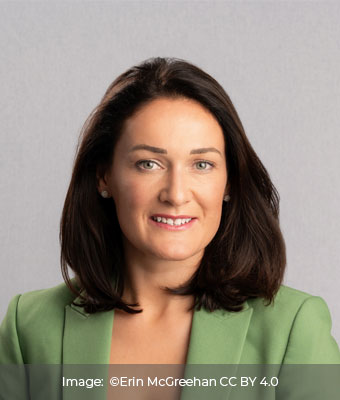
How many jobs in each county in the mid-east region did the IDA support in 2025? How did this compare with each county in that region in 2020? Will the Minister of State make a statement on the matter?
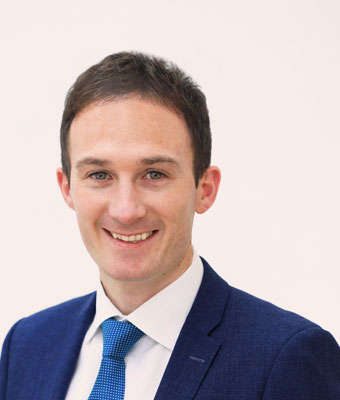
Regional development is a key focus of our programme for Government and is central to the work of my Department and our enterprise development agencies. The mid-east region, comprising Kildare, Louth, Meath and Wicklow, is home to 126 IDA client companies employing 20,284 people. The mid-east has a significant ecosystem of well-established companies across technology, life sciences, international financial services, and engineering and industrial technologies. The region has also won significant investment in the food and the film subsectors.
FDI performance has been consistent over the six years requested by the Deputy, 2020 to 2025, with IDA-supported employment increasing by 973 people, or 5%, over that period. Employment in Kildare and Meath increased by 490 and 1,259, respectively, while employment in Louth and Wicklow decreased by 710 and 66, respectively.
Over the period of its last strategy, 2021 to 2024, IDA Ireland supported the delivery of 973 investments and the creation of 76,790 jobs. Some 54% of these investments were won to regional locations. In the mid-east, 51 investments were won against a target of 40. Under the current strategy, the IDA is targeting 550 of a total 1,000 investments to regional locations, including 60 in the mid-east. The first year of this strategy, 2025, saw IDA Ireland achieving the highest ever number of investments, 323, a 38% increase on 2024, which are expected to create over 15,300 additional jobs in the coming years.
We know that investments by IDA Ireland client companies consistently generate high-quality, skilled jobs nationwide. It is significant that 183 investments, representing 57% of all investments in 2025, were in regional locations.
I thank the Minister of State for that overview. As he knows, jobs matter. Our previous speaker, Deputy Fleming, spoke about jobs in Laois. Jobs matter to families, communities and to the long-term viability of each region. I am particularly talking about Louth. Distribution of IDA-supported employment across Louth, Meath, etc., is not just a statistical exercise; it is a test of whether regional development policy is working. It was mentioned previously that IDA companies employed over 4,000 people in Louth. That is a lot of people.
It would be great to get an update on the plans the IDA have in Drogheda, County Louth. It has been granted planning permission for construction of offices and industrial spaces. This will be of huge significance to the area and county. Louth sits at the heart of the Belfast-Dublin economic corridor.
Gabhaim buíochas leis an Teachta. I acknowledge her question and her commitment to the people of Louth in regard to high-quality, skilled jobs. The Minister and I recently published the new national development plan and part of that capital plan is an emphasis on regional enterprise and supporting the regional ecosystem. That is around helping SMEs start, grow and scale, while supporting the IDA on next-generation FDI sites and on its regional property portfolio. That will strengthen innovation and capacity within the regions.
With regard to County Louth, the IDA will commence the advanced building solution in Drogheda.
It is also partnering with Meath County Council for the delivery of an advance planning permit for an ATB in Navan. That is the first step in activating the site, building on it and ensuring it is marketed correctly for the right sectors to ensure that jobs can go into the area. We are putting the public capital in place and ensuring that regional enterprise funding is allocated to each of the regions. We are supporting the IDA in that regard.
I thank the Minister of State. As I have said, Louth is at the centre of the Dublin-Belfast corridor. It offers scale, connectivity, a strong industrial base and a pipeline of skills. Dundalk is home to the newest university in the country and it will be a major asset to attract and embed high-value research-driven employment. The IDA sites in Drogheda and Dundalk provide a huge opportunity to grow the economy not only in the north-east but nationally.
We are very much focused on working with key State agencies, through Enterprise Ireland and the IDA, to ensure that we can continue investment across regions, including Louth. The most recently published report outlined that over 57% of all IDA investments, that is, 323 investments last year, were in the regions. That delivered huge positivity in the regions to ensure that people can work in their areas close to home.
We have also committed a significant amount of research and development grants, totalling over €2.5 billion, to support 33,000 employees in terms of upskilling. We want to continue regional dispersion to address the imbalance in projects in urban areas while ensuring that the likes of Louth is also supported. There have been real success stories in retaining FDI investment in the area and bringing new investments to Louth.
Enterprise Support Services
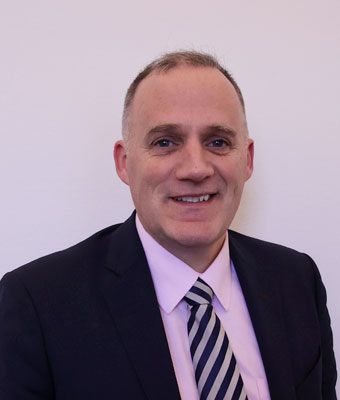
116. Deputy Naoise Ó Muirí asked the Minister for Enterprise, Tourism and Employment if he will provide an update on the uptake of the seed and venture capital scheme; when commitments will be made by Enterprise Ireland; and if he will make a statement on the matter. [1715/26]
My question relates to the future of a very important scheme that supports indigenous businesses around the country, namely, the seed and venture capital scheme. Will the Minister for Enterprise, Tourism and Employment provide an update on the uptake of the scheme, when commitments will be made by Enterprise Ireland, and will he make a statement on the matter?
As set out in our Department's sectoral capital plan, I and my colleague, the Minister, Deputy Burke, published last week, ensuring a vibrant seed and venture capital market that supports high growth and market disruptive businesses at all stages of development from seed to follow-on is a key priority for this Government. The seed and venture capital scheme was established in 1994 and since then has invested €700 million to support and sustain national and regional innovation which, in turn, has leveraged €3.3 billion in private investment.
The scheme's key purpose is to increase the supply of risk capital to Irish SME start-ups and scale-ups, to support their growth, leverage private sector investment and establish a robust, commercially viable and sustainable venture capital sector in Ireland. By providing access to finance at the critical start-up phase, the scheme has also played a very important role in developing the pipeline of talent, innovation and high-growth Irish-owned companies. It is funded through our Department and administered by Enterprise Ireland.
The scheme operates by making commitments to selected venture capital funds which, in turn, make investments into high potential, innovative companies, according to their investment strategies. The funds are selected to align with national objectives and Enterprise Ireland's strategy. The fund managers participating in the scheme look for the best of Irish innovation, namely, companies that can compete on the global stage and which typically require significant equity investment to develop their products and services.
The scheme operates in five-year cycles. The Minister, Deputy Burke, launched the latest cycle of the scheme in August 2024 which will run for the period 2025 to 2029. The Government agreed to an increase of €75 million on the previous cycle. That brings the total available to invest under the 2025 scheme to a record allocation of €250 million.
The first open call for the current scheme closed in February 2025 and received a record number of applications, demonstrating that there is a high level of demand for finance to invest in Irish start-ups. Enterprise Ireland made its first commitments to the fund in quarter 4 of 2025. This will be followed by a period of further fundraising by the funds.
I thank the Minister of State. I welcome the commitment of €250 million. In effect, it is venture capital provided by the State. From dealing with private venture capital funds, I know they extract their pound's worth. They look for an annual return of anything from 30% to 35% and try to get out of the business after two or three years, which does not provide the sort of space, investment and continuity required for fledgling businesses to succeed, as well as what they need in terms of building up markets, products, etc.
Typically, the jobs are pretty high value. In fairness to Enterprise Ireland, it has a good track record in identifying and nurturing those companies and putting the right agreements in place to be able to invest in them. It also gives those companies the space to make their own mistakes and develop and learn as they go.
I thank the Deputy for his question and interest in this area. We know how important it is. Recently, the Minister, Deputy Burke, launched the start-up Ireland programme, along with the seed and venture capital scheme. These two pillars are critical to the strategy to make Ireland one of the best places in Europe to start and scale a business. We have allocated over €28 million to start-up Ireland in 2026 to strengthen the start-up ecosystem.
The seed and venture capital scheme has gone from strength to strength. The most recent review shows that we are making huge headway with regard to the number of additional jobs that have been created - over 4,300 since it was established in 1994. The review of the scheme from 2013 to 2022 provided up to €2.5 billion in gross value added. There are significant gains in research and development and valuations. Many Irish companies have scaled onto the international and global markets as a result.
Regarding a sectoral approach to those investments, does the Department make those decisions or is it left to Enterprise Ireland to decide how to allocate the funding? Who has that expertise, because an element of expertise is required?
Reference was made earlier to the geographical distribution of investment. I know it is difficult because we are reliant on small businesses looking for these funds. Can anything be done to make sure that there is some level of geographical distribution of that investment? I do not know the correct way to do that, but it would be interesting to know whether anything can be done in that regard.
I thank the Deputy for his question. Enterprise Ireland manages the fund. The fund reflects geography and Enterprise Ireland has a target of up to 60%. Funding is very much targeted at manufacturing, internationally traded services and high-growth potential areas in life sciences, healthcare, pharma, fintech, technology, digitalisation and the green and environmental sectors and is very much focused on areas which can ensure quality and inclusivity. In 2024, 22% of all seed venture capital supported companies were women-led. Enterprise Ireland is very much to the fore in that regard. We want to ensure that funding does not go solely to tech companies in Dublin. Our ambition is that many founders will come from many different backgrounds right across the country.
Tourism Policy
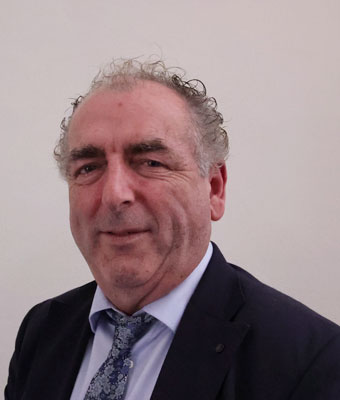
117. Deputy Michael Cahill asked the Minister for Enterprise, Tourism and Employment for an overview of the new national tourism policy; and if he will make a statement on the matter. [1713/26]
The need for short-term lets for visitors to our shores cannot be underestimated in the make-up of the ideal mix of accommodation types to ensure that everybody has a full choice and range to decide from.
We need long-term and short-term lets. There is no doubt about that. We need all sorts of accommodation. Restricting any type, such as short-term lets, is a detrimental move. We should encourage more of all types. Kerry is the premier tourist county in Ireland. Killarney is the best tourist town in the country. Local business owners should be consulted before any legislative changes are introduced. A wide range of accommodation types, including hotels, guest houses, bed and breakfasts and Airbnbs, is a primary reason visitors choose the area and choose Ireland.
I thank Deputy Cahill for his very important question. In line with the programme for Government, I was pleased to launch the Government's new national - I have the wrong one there. My apologies. I think I have the wrong question, if you could just give me a second. I do not see it here. Anyway, I will manage.
In relation to our short-term lets, there is obviously a commitment in the programme for Government about managing our short-term lets. We know the sector has grown by about 10% per annum over the last number of years. Critically, my responsibility is through Fáilte Ireland as it will be designated as a competent authority. This will essentially require a process where short-term lets will have to register on a portal and be provided with a unique number to ensure they comply with planning law. That is the critical component for which I am responsible. The second, working with the Minister, Deputy Browne, is to come forward with a planning statement which will essentially designate the criteria for short-term lets. It is based on a population basis.
We went forward to the Oireachtas joint committee and we are now awaiting its pre-legislative scrutiny report. That will be key for guiding the Minister, Deputy Browne, and I on the criteria that will be set out. I know the Deputy has raised very significant concerns about Killarney and other towns in relation to short-term lets. We will take on board all of those concerns. My critical concern is that we have to ensure we are bringing housing stock back into the long-term market, particularly in our large cities. As a tourism Minister, I also have to balance not only our indigenous tourism sector, which is very important, but also the societal need for housing. The challenge is getting the correct balance here.
I absolutely commit that we will work the Deputy and others to try to get the right policy. We will consider the pre-legislative scrutiny report from the committee, which we are due to have very shortly. I want to see the sectors grow. In areas that do not have very significant hotel accommodation, I acknowledge you need short-term lets. I am absolutely aware of that. In many locations, it is not viable to build hotels at the moment. That is something we will be looking at in our accommodation strategy, which I also hope to bring forward this year.
Without the mix in accommodation and flexibility, many people would stay away, despite our fabulous food and stunning scenery offering from Kerry to Donegal. We need to be very careful that we do not kill the golden goose by legislating tourism accommodation providers out of the market. To fill the shortage of all types of lets, we need more premises. This is being addressed with the vacant and derelict property grants. I believe this will grow and can be sped up with more supports, such as with the expected investment in constructed wetlands in our towns and villages across the country, something I have been consistently calling for as a councillor and subsequently, as a TD for Kerry. I believe this would solve the housing shortage in the medium term. This is a quick, efficient and relatively cheap and easy to install system for treating wastewater without years of planning and construction.
The new short-term letting register, managed by Fáilte Ireland, lacks the support of the tourism sector. The fact this register is to focus on just one type of letting has brought it into disrepute. Many believe it is discriminatory towards short-term letting and they are being held responsible for the shortage in long-term lets and the housing crisis. I believe the Airbnb sector has no intention of moving into long-term letting. The hosts have found their niche, pay their taxes and feel they should not be forced out of business.
It is not our intention to put anyone out of existence. I want to be clear that I am very keen on trying to develop our tourism sector. We now have a very robust plan, based on evidence, that will put key KPIs into our State agencies to ensure we are seeing 7% growth per annum in our sector. That will be very important. Obviously, County Kerry will be key in delivering that growth.
My primary role is to devise the legislation coming forward to designate Fáilte Ireland as the competent authority. Obviously, the Minister, Deputy Browne, is in a trickier position in terms of deciding what the planning piece will be and what designation should be attached to the numbers of where you will be required to have planning permission and where it will be approved. That will be the key response.
Across Government, we are working together to try to achieve a balance on that. I want to reinforce this point that I am very understanding there are areas right across our country where accommodation is under pressure and it is not viable to have hotels. We will be looking at that as well and looking at the product there is in County Kerry, which we want to support and want to continue, which we will under this current tourism policy. Over the past four consecutive months, we have seen very strong growth again and I want that to continue into 2026.
I thank the Minister. Legitimate businesses should be allowed to carry on. Other tactics need to be employed to encourage and attract people into offering long-term letting. I again call for a planning waiver. The Minister has touched on it there. Many of those with whom I deal in Killarney, Dingle, Kenmare and all of the towns in Kerry such as Killorglin, Tralee, Castleisland, Listowel and Cahersiveen, believe if they apply for planning permission, be it short-term or long-term, it could actually be refused. That is a very real concern.
There is no point in me re-emphasising the importance of tourism to my county. We pride ourselves on tourism. We believe we are the premier tourist county. It is a great boast to have. We have the scenery. The people involved in the business of tourism in Kerry do it very well. Short-term letting is a big part of the business in Kerry. It is important to our visitors from all parts of the globe for that opportunity to be there. People invested in short-term letting and in their properties to put their kids through school, etc. They should not be dictated to in regards to what area they should be in.
I again thank the Deputy for his comments. I do not want to see any unintended consequences coming from this action. The core point is that when you have a sector that is growing at 10% per annum in terms of numbers, without any Government intervention, we need to ensure there is regulation here in some regard. It is about getting the correct policy to ensure we are getting the data from the people who are staying in these short-term lets as we do not know anything about many of them so we cannot craft tourism policy. That data will be very valuable for our tourism product.
You also have to ensure that you have competing interests in an economy. We know we have a very acute housing crisis. Our cities are of particular concern. When you look at some of the Eurostat data about the utilisation of bed nights, some of these short-term lets in our cities are only rented out two or three nights a month. When you look at the Revenue that is coming in from those two or three nights and the property being vacant for the rest of the time, is that acceptable when society is under significant pressure for housing? Those are the types of trade-offs we have to consider in policy. We work closely with the Minister, Deputy Browne, on trying to get the balance right and taking into account what the Oireachtas joint committee did in pre-legislative scrutiny.
Enterprise Policy
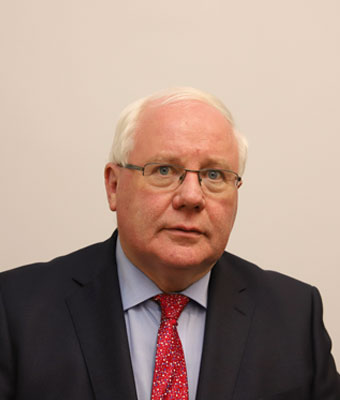
119. Deputy Brendan Smith asked the Minister for Enterprise, Tourism and Employment if a new north-east regional enterprise plan is forthcoming; and if he will make a statement on the matter. [1731/26]
Deputy Erin McGreehan is taking Question No. 119 for Deputy Brendan Smith.
I ask if a new north-east regional enterprise plan is forthcoming and if the Minister will make a statement on the matter.
Balanced regional development is a Government priority and a central component of the White Paper on Enterprise 2022-2030 is to support balanced regional enterprise development. My Department and its agencies contribute to this agenda in several ways, including through the nine regional enterprise plans, REPs. These are bottom-up plans developed and led by regional stakeholders that focus on collaborative initiatives to strengthen the enterprise ecosystem in each region.
The north-east regional enterprise plan covers the counties of Cavan, Monaghan and Louth and its steering committee includes stakeholders from the enterprise agencies, local enterprise offices, local authorities, regional skills, higher and further education, Fáilte Ireland and companies in the private sector and others. The north-east regional enterprise plan has 12 actions under five strategic objectives, which focus on areas including decarbonisation, digitalisation and place-making. The last north-east regional enterprise steering committee meeting was held in June 2025.
The regional enterprise plans were extended for one year to the end of 2025 with agreement from the regional enterprise plans national oversight group at its meeting on 25 April 2024.
This extension provided an additional year for continued implementation of the existing plans and time to review the regional enterprise plan initiative and consider the best approach to the future of the regional enterprise plans. In this context, my Department commissioned an independent review of the regional enterprise plan initiative in 2025. A steering group made up of the regional enterprise stakeholders and Department officials oversaw the review, which included significant engagement with regional enterprise stakeholders, in-depth analysis of the plans and their implementation progress reports and consideration of international approaches to regional enterprise development. This review also included recommendations and options for the future of the regional enterprise plans. I will be considering the complete review, along with the final progress reports for the regional enterprise plans from 2022 to 2025, over the coming months as we plan for the future approach to these matters.
I thank the Minister of State. It is very encouraging to hear all the work that is going into the new plan. The previous plan for County Louth and the rest of the region demonstrated a real commitment to multi-agency co-operation between Government enterprise agencies, local authorities, higher education institutions and the private sector. We see that when they work collaboratively, we get results. I will repeat that Louth, in particular, has unique strategic opportunities that need to be reflected in the new plan. As I said previously, the newest university in the country - an all-Ireland university - will be situated in Dundalk. It is central to the Belfast-Dublin economic corridor. Louth is a most important county. It is in the mid-east and north-east plans, which shows us how integral Louth is. It has strong transport connectivity, a deep manufacturing and agrifood base and a growing innovation ecosystem anchored in Dundalk. Its higher education and research capacity, the Advanced Manufacturing Training Centre of Excellence in Dundalk and the connected health and well-being centre in Dundalk Institute of Technology, DkIT, have positioned Louth as a leader in digitalisation, advanced manufacturing and health innovation.
I acknowledge the Deputy's advocacy for Louth and the north east. That is really significant and important. We want to get the regional enterprise plans back up and running in 2026. As part of that, we have looked at ensuring there are programme managers based in each of the local authorities. That is really important to drive implementation, but also to give the accountability piece. We will be focusing on 12 actions under the five strategic objectives, as I stated earlier, one being around decarbonisation and climate action, to ensure that many companies and SMEs have digitalisation and the capability within their own organisations and also around leveraging growth sectors. We have seen real positivity within Louth, as the Deputy said earlier. Back in January 2025, MSD Ireland announced it was expanding its Irish operations with its acquisition of WuXi vaccines in Dundalk and the creation of up to 1,000 new jobs across Ireland, including 150 roles in Dundalk. We want the enterprise plans to be a core part of each of the regions and very much part of that is the key agencies working in tandem with private and Government agencies.
I absolutely agree with the Minister of State. It is really important that we look at that inter-county connectivity between the counties in each region but also at how, in this new plan, we can utilise what we have in each area. I refer to our higher and further education institutions and investment in driving innovation and research, not only in the bigger companies and IDA companies but also in our small SMEs to see how we can make them more efficient and support them to scale up. If we are talking about a regional plan, particularly in the Border region that has been economically disadvantaged over the last century, we need to be a little bit more innovative, potentially with a cross-Border focus to see how we can co-operate cross-Border in relation to those 11 counties across the Border region to make sure we are really benefiting from the capacity and what we have on the Border region, particularly in counties Louth, Cavan and Monaghan.
Again, as I said earlier, this Government is very much committed to ensuring we have the skills and talent within each of our regions. We have had a real focus on apprenticeships and upskilling. We very much want that to be a core part of the regional skill set forums, driving investments into areas where it has the talent. Indeed, regional enterprise plans will be a key driver in that regard, working with further and higher education institutes. We know how important that is in terms of workforce planning. We have seen successes then within the pharmaceutical and hi-tech sectors where we have graduates with engineering or life science skills to take up employment in these areas. That is a core part and component. Part of that is ensuring that local authorities and regional stakeholders are part of the discussions in terms of what is the right fit or what are the right sectors within each of our regions across the nine sectors that are under the regional enterprise plans. We very much want to push this out into 2026 and ensure they are up and running and are measurable and accountable to the oversight group.
Regional Development
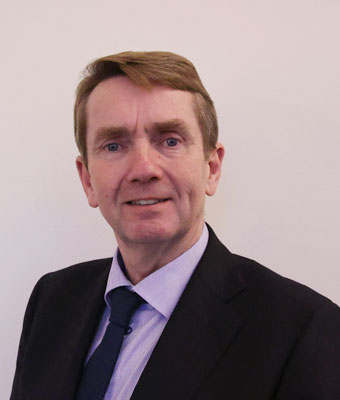
120. Deputy Michael Murphy asked the Minister for Enterprise, Tourism and Employment the current status of the IDA-owned lands at Ballingarrane, south Tipperary; the extent to which IDA Ireland is actively marketing the site following the recent grant of planning permission for an advance building solution; the marketing strategy now in place, including international promotion, engagement with potential investors and inclusion of the site in IDA property offerings; if any expressions of interest have been received; the timeline for delivery of an advance facility on the site; and if he will make a statement on the matter. [1440/26]
Following the Minister's recent visit to south Tipperary, what is the current status of the IDA-owned lands at Ballingarrane in Clonmel? Can he confirm the extent to which IDA Ireland is actively marketing the site, state whether any expressions of interest have been received for the site and outline the timeline for the delivery of an advance building solution that was recently granted planning permission on the site?
I thank Deputy Murphy for his important question. IDA's strategy to drive balanced regional development is a priority, as set out in the programme for Government, and is a key focus of the work of my Department and its agencies. IDA Ireland is continuing its strong commitment to regional development as one of our four key strategic objectives in the 2025-29 strategy, Adapt Intelligently. This ambitious strategy aims to secure 550 foreign direct investment, FDI, projects outside of Dublin, accounting for 55% of the total investment target. There has been consistent FDI performance in the mid-west region, comprising counties Limerick, Clare and Tipperary, with employment in IDA clients increasing by 15% over the past five years. IDA now has 158 client companies in the mid-west region, employing 28,125 people. Within that, there are 16 IDA Ireland client companies in County Tipperary, employing 5,630 people. The mid-west region has a significant ecosystem of well-established companies across technology, life sciences, international financial services, and the engineering and industrial technologies sectors. The availability of suitable property and strategic sites is a critical component of the regional value proposition and can be the key differentiator in investment decisions in the regions from both new and existing clients as well as clients of Enterprise Ireland and our local enterprise offices, LEOs. As part of the property strategy, IDA, in partnership with Tipperary County Council, has secured planning permission for a proposed 10,000 sq. m advance factory solution building on a site of approximately 3.4 ha at Ballingarrane science and technology park in Clonmel, County Tipperary. The advance planning permission allows the maximum flexibility to a potential client whereby it can avail of the permission or amend it to suit its requirements. I was delighted to visit Tipperary with Deputy Murphy in recent weeks and receive a presentation from the local authority and, indeed, IDA Ireland. IDA Ireland continues to market aggressively the site, and the planning permission it has in existence, to new and existing IDA global clients and through its regional offices.
I thank the Minister for his reply. In particular, I thank him for visiting south Tipperary in December, when he got an opportunity to see the strengths of south Tipperary and of our key towns, particularly Clonmel. He also got an opportunity to see our strengths in terms of our strong employment and the really strong presence of medical device and pharmaceutical manufacturing industries. All of this is backed up by a strong set of skills, proper infrastructure and, as I said, an established industrial base. As the Minister said, the recent granting of planning permission for a 100,000 sq. m advance building solution is an important step forward. The concern at local level is that IDA has owned over 50 acres at Ballingarrane for more than 20 years. There is a sense locally that it is now time for delivery, so any support the Minister can give us in that regard would be appreciated.
I thank Deputy Murphy again for his proactive approach when we were on site in Clonmel. The ecosystem that exists there will put us in a very strong position together with the partnerships the Deputy has worked with, including Tipperary County Council, to really ensure that we have the development of water and the development of grid capacity on site.
Having a utility-rich site like that puts us in a strong position. We will ensure the IDA gives its full attention to try to get a strong client into it.
On the Deputy’s trip I was impressed with the Bulmers visitor centre at Dowd’s Lane. It is an exciting project that we can deliver through our capital grants and Fáilte Ireland. I know the Deputy is committed to it. It is one I would like to see developing over the next year. Hopefully, the local authority can be proactive in this regard and we can work with the IDA to try to ensure that, first, we deliver high-quality jobs and, now that we have a new exciting tourism strategy, we breathe life into areas and ensure that the 46,000 SMEs and 228,000 people employed in that sector are getting a strong dividend back into their community.
I agree with everything the Minister said. Crucially, balanced regional development must be reflected in outcomes on the ground. South Tipperary, Clonmel and all the other key towns offer everything the IDA is looking for, such as a proven industrial ecosystem that the Minister mentioned. A town like Clonmel has so much potential. The crucial step in this regard was securing planning permission, which was a critical barrier for inward investment. That should translate into momentum. I press upon the Minister to push this was the IDA. The authority needs to set clear milestones for delivering this project and delivering industry. I welcome any intervention by the Minister and I particularly welcome his comments about the Bulmers visitor centre, which has so much potential and is located in the heart of the town.
As the Deputy rightly outlined, the location is hugely attractive, particularly in relation to utilities, which are at a premium. The local authority has been proactive in this regard in looking ahead in developing connectivity, which is critical for the key infrastructural components that deliver high-quality jobs. We will work closely with the Deputy and the IDA to ensure we get a good client in this location and build on the existing clients. It is a very exciting ecosystem, particularly for life sciences. We will hopefully publish a life science strategy by August in time for our Presidency of the EU which will chart more investment in that area. We have approximately 100,000 jobs nationally in that sector and a total of €100 billion investment in exports every year. It is an area in which Tipperary and Clonmel can be an attractive proposition for investment. That is something we are working closely on. I look forward to working with Deputy Murphy to develop more projects in Tipperary, for which he is a huge advocate.
Residency Permits
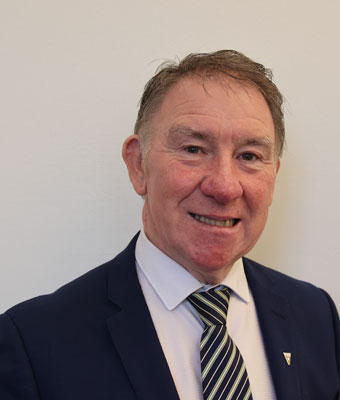
121. Deputy Peter Roche asked the Minister for Enterprise, Tourism and Employment the engagement his Department has had with the Department of Justice, Home Affairs and Migration regarding current waiting times for first-time Irish residence permit registration appointments, which in many cases now exceed new employees’ actual job start dates due to exceptionally high demand for appointments and limited availability (details supplied); the measures are being taken to reduce these waiting times; the supports or temporary flexibilities are being put in place to assist affected employees and employers; and if he will make a statement on the matter. [1459/26]
My question relates to first-time Irish resident permits and registration appointments. There are considerable delays and there is considerable anxiety for those who wish to avail of an appointment to seek employment, particularly critical employment. Those positions of employment are often in the medical care sector. I am anxious to understand exactly how that process can be expedited to ensure it does not go on for months.
The Minister for Justice, Home Affairs and Migration, Deputy O’Callaghan, has complete ownership of matters relating to the granting of visa and immigration permissions and is solely responsible for the administration of its registration appointment service. Queries relating to immigration status or any initiatives or temporary flexibilities in accessing its services during periods of high demand should be addressed to that Department.
My Department has responsibility for the employment permits legislation which provides permission to take up employment in the State subject to the granting of immigration permission to enter for that purpose by the Department of Justice, Home Affairs and Migration. It is my understanding that all employment permit holders can commence the employment stated on the permit while awaiting confirmation of their immigration permission to remain. A period is provided to facilitate registration with immigration service delivery. However, it is the responsibility of the non-EEA worker to ensure his or her permission is appropriate and up to date.
Significant work has been carried out by my Department to ensure that the national economic migration system supports all sectors of our economy. The new employment permit system has made the application process easier, more secure and more intuitive, resulting in a more streamlined processing experience. These timelines have been steadily decreasing and I am confident that this positive trend will continue. Processing timelines currently stand at seven business days for a critical skills employment permit and 25 business days for a general employment permit.
In particular, I have engaged closely with representatives of the health and social care sector to support that sector. This includes ensuring speedy delivery of permits for non-consultant hospital doctor rotations, ensuring access to a nursing workforce and recent engagement on the topic of healthcare assistants and home carers. My Department does not engage with the Department of Justice, Home Affairs and Migration regarding its processing times for individual visas. However, I am working closely with the Minister of State, Deputy Colm Brophy, in regard to a single permit.
I appreciate the Minister of State’s response but I am in receipt of an email that I received for what is described as a critical skills employment permit. The position the individual applied for was a critical nurse manager in Portiuncula Hospital, Ballinasloe. The employment was to start in early January but the earliest date they got for any appointment was 10 March 2026. That worries me. A position remains unfilled and the skilled person who wishes to take up that role still has not had an appointment. Therein lies the problem and that is why I bring this matter to the attention of the Minister of State. There is a delay and while there is a delay, there is anomaly. While that exists, there is always a vacant job post.
I thank the Deputy for bringing this important matter to our attention. Certainly, a healthcare professional should not lose their job or employment on the basis of a backlog. As I said earlier, employment permits allow for the commencement of work while the registration is pending. That is important to factor in. Our immediate priority, as a Government, is to keep hospital staff and ensure patients are cared for. Permit holders can start work on that basis. We are all working together and working with the Department of Justice, Home Affairs and Migration to accelerate any systemic issues that may present. We want to ensure our permit system is fast and flexible and it delivers the critical skills employment permits that we require to have a functional economy. Healthcare is a critical component of that.
I have raised my concern. Maybe there is a need for better and more collaboration. One thing that is sure and certain is that, when we require skilled people to take up critical posts in critical positions, there is an urgent need to expedite that process. I certainly have plenty of email evidence to suggest that there are considerable delays. Whether it be the Department of justice or otherwise, when it comes to the employment permits unit, maybe, as the Minister of State said, it can work collaboratively and more efficiently to ensure the situation remains that we can get people sorted sooner rather than later.
We have made significant strides with regard to our efficiency by transitioning to an online employment permit system. Since its launch, we have processed over 22,000 employment permits and we have issued over 15,000. That has been successful with regard to processing times. We see now critical skills employment permits, including healthcare roles, are being processed within 14 days. That by any yardstick is important to recognise. We will continue to work with the Department of Justice, Home Affairs and Migration to ensure that we have a seamless application process and work is under way in that regard. We hope that the next phase will deliver a faster, more integrated experience not just for the applicant but also to ensure that employees have that certainty and good user experience.
Is féidir teacht ar Cheisteanna Scríofa ar www.oireachtas.ie.
Written Answers are published on the Oireachtas website.