School Accommodation

I thank the Minister, Deputy Hildegarde Naughton, for taking this matter. It is great to have her here this evening. I congratulate the Minister on her new position and I wish her the very best of luck in the term ahead.
I raise this Topical Issue matter on behalf of Monksland National School in County Louth, a local school to me and just down the road from where I live. I raise this because the same queries could be replicated in many schools across County Louth and across the country that are struggling for space for facilities and for permanent solutions. Monksland National School is an example of how temporary solutions quietly become permanent through the delay and what often feels like a lack of accountability. Like many schools in County Louth, it is a growing school. Enrolment has doubled over the past decade. That growth should be a success story but instead the school is operating under pressure in conditions that most not definitely need to be improved. A few years ago the school had approval for additional accommodation. Due to delays, however, modular units were installed as temporary accommodation for much-needed and much-welcomed autism spectrum disorder, ASD, classes. These were never meant to be a permanent solution to the overall accommodation solutions that are needed for the accommodation shortfall of the school. I fear the Department seems to be treating the school as if its accommodation needs have now been met. They certainly have not.
Every room in the original school building is now used for a classroom. There is no staffroom to accommodate 12 teachers and ancillary staff. There is no space for teachers to sit to have their break. I believe that staff are often sitting in their cars. Again, growth should be seen as a success story but it has led to hardship. It is not just about the minor inconvenience of this. It is a basic failure to provide acceptable working conditions. The school has no general purpose area. It has no PE hall. That deficit has existed since the building was constructed in the early 1960s. As a result, pupils cannot fully access PE or well-being curriculum requirements, particularly during the winter months when outdoor activity is most unsafe.
The crux of it is that we need permanent classrooms, we need a staffroom, and we need a PE and general purpose hall. This applies particularly for those isolated schools that cannot link up with a sports club. It is either inappropriate or it does not make sense for them to match up with a sports club to build a hall and to access grants under the sports capital grant. They need the Department of Education and Youth to support them to help them create those facilities. They really want a school that feels like one school and one community as opposed to one building and modular buildings alongside it. It is a fantastic school. I know many of the teachers and indeed I went to school with many of the teachers. The children in there are thriving but I think they can do better under better conditions and additional accommodation.
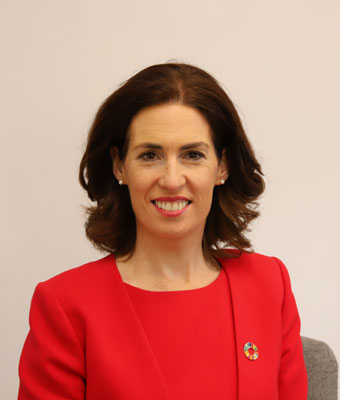
I thank Deputy McGreehan for her question. It gives me pleasure to have the opportunity to provide an update to the House on the current position in relation to accommodation at Monksland National School in County Louth. The school is a co-educational Catholic school under the patronage of the Archbishop of Armagh. It has an enrolment in 2025-2026 of 139 pupils, which includes pupils in the two special education classes that were established at the school in 2022. In line with the national decline in primary demographics, the enrolment at the school had decreased from 151 in 2023. At a national level, primary school enrolments are projected to decline by about 100,000 over a ten-year period.
In 2022, the school submitted an application for additional accommodation at Monksland National School. On foot of this application, modular accommodation comprising two special educational needs classrooms and one special educational tuition classroom was delivered in April of 2024. That is currently in place and operational. Modular accommodation provides a high-quality, modern learning environment that is both functional and adaptable, and it offers a well-designed comfortable space that effectively meets the school's current needs while allowing flexibility for future requirements. In July of last year, the Government announced a capital allocation of €7.55 billion for the Department of Education and Youth for the period 2026 to 2030 under the national development plan. As part of this NDP allocation, the Department will place a strong emphasis on provision for children with special educational needs, with a particular focus on meeting annual school place needs.
In relation to project roll-out for large-scale projects and additional school accommodation scheme projects, the approach will be to continue to maximise the capacity of the existing school estate as much as possible in the first instance and provide necessary additional capacity through targeted and prioritised project roll-out over the course of 2026 to 2030 to meet the most urgent and prioritised needs. The sectoral plan for the education and youth sector will be published shortly. The first tranche of projects to progress to construction will be published at that time. This NDP implementation plan will optimise outputs from the NDP allocations with a strong focus on maximising existing school capacity, progressing priority projects where local capacity across schools in the area is insufficient, and ensuring delivery that is affordable, offers value for money and meets functional needs. All existing school building projects and applications for accommodation will be considered in this context, with a particular focus on ensuring existing capacity is maximised. My Department has recently engaged with the Deputy's school, I understand, and will continue to work with the school to ensure that the current and the future school place needs are addressed.
I thank the Minister of State for her response. The modular buildings, I have to attest, are high-quality buildings, but they are separate to the school. They are not part of the school. I would appreciate it if the Minister of State could get one of her officials to visit the Monksland school to see the incapacity in the school when trying to fit the students into where they are working. The principal's office has to double up as an ICT room. They have no staffroom. It really is unacceptable in this day and age that teachers would have no staffroom because it was taken up. What was the staffroom is now a classroom. They are working under huge constraints.
The Minister of State referred to the reduced student numbers but these have doubled over the past decade. There are still 139 students there and 12 teachers - I believe - who are working in conditions that are not suitable. I think there has been a miscommunication or a misunderstanding between the Department and the school in relation to previous applications for works to be done. Maybe we could work on that ourselves and get the officials to reach out to the school and meet those there to make sure that we can iron out where they are on the building work scheme and on previous applications that they feel were approved but then let lapse.
I thank the Deputy again for raising this issue with me. Deputy Paula Butterly had also raised the issue of this school. I will ask the Department about those previous applications. As I said, we have to look at the existing capacity within schools across the country when we are looking at providing spaces. The priority is for special educational places across the country. We are committed to ensuring that there is appropriate accommodation available for all pupils in the wider context and to ensure that each school project on the schools building programme is subject to due diligence required under the Government's infrastructure guidelines.
It is a challenging construction environment we are working in right across the education, transport and housing sectors so the Department also has to manage the timing, scope and cost of individual projects to ensure they remain within budgetary parameters for the overall programme. That involves constant reviewing throughout a project's life cycle. As I said, as part of the NDP implementation project roll-out for large-scale projects and additional school accommodation scheme projects, the approach will be on a tightly prioritised basis to maximise the capacity of the existing school estate and to provide additional capacity through that targeted and prioritised project roll-out over the course of 2026 to 2030. I will follow up, maybe with the Department as well, in relation to those specific issues.
Schools Building Projects
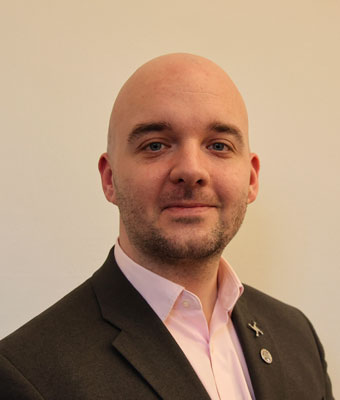
I have raised many Topical Issue matters and very rarely is the line Minister here for them so I thank her for that. St. Farnan's Post Primary School in Prosperous is the only post-primary school in that community. The work undertaken at this school under the stewardship of Mr. Andrew Purcell is nothing short of exemplary but the conditions in which people have to work, learn and develop are simply substandard.
The people of Prosperous and north-west Kildare have been led down the garden path about a proposed new school for over ten years. In 2025, news was released that the school had gone to tender stage. In 2023, the Department had officially approved the plans and designs for stage 2A of a 1,000-pupil school but it was as far back as 2015 when the then Minister Jan O’Sullivan made an announcement that St. Farnan’s was on a list for extensions. This school and this community have been promised this for an awfully long time. Nearly two generations of students have been told that by the time they finish, the new school will be here. Now the population in Prosperous and the communities this school serves, which goes far beyond into Allenwood, Coill Dubh and other places, have nearly given up hope on this. They hope that one day they will see this new school, but we are talking about the really young siblings. It is coming to the point where it will be the next generation before we will see the turning of the sod on this.
I am reluctant to get too much into the details of the temporary piece. There has been significant investment by the Department in temporary accommodation at this site and that is to be welcomed, but back in August, four classrooms were allocated and none of those have yet been handed over to the school. That is the kind of delay this school has experienced, yet it took in all the students who were enrolled on the basis it would have those four classrooms. Issues like that show the problems with the short-term fix to what is a much more long-term need for a sustainable capital project.
This is, as the Minister knows, one of 290 projects on the list. Of those, 20 are in Kildare. We are having this conversation in a context where County Kildare’s population has doubled since the early 1990s to nearly 250,000 people. When we see housing coming without the development of services and infrastructure, issues like this will arise. I could be talking about school issues in Clane, Brannockstown, Naas, Maynooth or Celbridge. I am not just listing off towns as these are legitimate concerns schools such as Scoil Mochua and Gaelcholáiste Mhaigh Nuad have. Capital is what we need. Investment is what we need. There have been six Ministers since Jan O’Sullivan made that announcement about St. Farnan’s back in 2015. We are really hoping the Minister, Deputy Naughton, can be the one who makes the project happen. What we need are the services and the investment. I am putting it to the Minister that we are just about there now and that the last push is needed for St. Farnan’s and Prosperous. I hope this Government will be the one that gets it over the line.
I thank Deputy Farrelly for raising this matter and giving me the opportunity to provide an update to the House on the school building project at St. Farnan's Post Primary School in Prosperous, County Kildare.
The project brief is to provide a new-build replacement school for a long-term projected enrolment of 1,000 pupils, including a four-classroom special educational needs base. The delivery of this project has been devolved to Kildare Wicklow Education and Training Board, KWETB. The project is in the final stages of stage 2B, which is the post-planning process, of the architectural design. This stage allows for detailed design and planning, obtaining necessary statutory permissions and preparation of tender documents. Planning has been granted and KWETB has been advised the stage 2B report is expected to be submitted in 2026. Once received it will undergo a detailed technical and cost review in line with the public spending code. All projects are subject to the due diligence requirements of the public infrastructure guidelines. Managing the time, scope and cost is crucial to staying within budgetary limits for the overall programme. Regarding additional accommodation requirements, the Department has provided temporary accommodation that includes four general classrooms, an office, a construction studies room and a multimedia room, which the Deputy referred to. KWETB and the design team have worked with the modular supplier to expedite delivery and reconfiguration of this accommodation to meet the school’s needs. At this early stage it is not possible to provide a timeline for completion of the project. KWETB will continue to engage directly with the school authorities to keep them fully informed of progress.
In July 2025, the Government announced a capital allocation of €7.55 billion for the Department of Education and Youth for the period 2026 to 2030 under the national development plan. As part of this NDP allocation, the Department will place a strong emphasis on children with special educational needs, with a particular focus on meeting annual school place needs. In relation to project roll-out for large scale projects and additional school accommodation scheme projects, the approach will be to continue to maximise the capacity of the existing school estate as much as possible in the first instance and provide necessary additional capacity through targeted and prioritised project roll-out over the course of 2026 to 2030 to meet the most urgent and prioritised needs. Government Departments are in the process of publishing their sectoral NDP implementation plans and the sectoral plan for my Department will be published shortly. The first tranche of projects to progress to construction will be published this month. This NDP implementation plan will optimise outputs from the NDP allocations with a strong focus on maximising existing school capacity, progressing priority projects where local capacity across schools in the area is insufficient and ensuring the delivery is affordable, offers value for money and meets functional needs.
I thank the Minister for that comprehensive reply. I am trying to read between the lines as to what that will mean for St. Farnan's specifically where the implementation plan is concerned. We need this. The community needs this. I accept Deputies throughout the House will be saying the exact same thing to her about various projects in their community but we are ten years on with St. Farnan's and this project will have a monumental impact on the communities this school serves in areas of deprivation and poverty. The Minister mentioned the special education services provided but she would have to see it to believe what this school is doing with such limited resources. I appeal to her that if and when this comes to her for decision, she will ensure St. Farnan's is on the list. She will be in Kildare tomorrow visiting schools. She could extend that visit by 20 minutes. She will be very close to St. Farnan's. If she could come by tomorrow and take a look around, she would very quickly believe this school deserves the investment we are talking about.
I thank the Deputy. I can certainly hear his passion for this project. As I have said, the Department is committed to ensuring appropriate accommodation is available to all school pupils and will in the wider context outlined ensure each school project on the school building programme is subject to the due diligence required under the public infrastructure guidelines. It is a challenging construction environment, as I said, and we are also required to ensure we are managing the timing, scope and cost of all these projects within the budgetary parameters that are set. The length of time projects take depends on a number of factors, including scale and complexity.
It is also subject to the time it takes to progress to the various project stages and the statutory approval processes. However, my Department remains committed to providing ongoing guidance and practical support in the delivery of this project. As I outlined previously, Kildare and Wicklow Education and Training Board is the delivery body for this large-scale, major project and will continue to engage with the school authorities on this matter. I thank the Deputy for raising it this evening.
Dental Services

I am back again to talk about the dental issue. This time it is about Cork dental hospital which made a submission to the HSE and Department of Health more than three years ago. It wants to open an outreach hub that would have ten dental chairs. The idea is that it would provide care for a large number of people and at the same time provide training for students. The building has been identified. It may have to go through a further process before it is finalised, but a clear plan of action has been set out to improve the dental training the hospital is providing to its students.
It has worked closely with the Department and the HSE and a lot of progress has been made in dental care in recent years but for instance, in the dental hospital in Cork, there are 91 chairs and that number of people are working at any one time, learning the skills required to practice as dentists. Our problem with dental services is that we have 44 dentists per 100,000 people. Germany and Italy have double that number per 100,000. More than 104,000 children are on waiting lists for school screening and there has been a 31% reduction in the number of dentists in the HSE. We have a major challenge because we have not increased the number of dental training places. The Royal College of Surgeons in Ireland, RCSI, opened a new training facility in September 2025, but that is the first major change that has been made in more than 30 years. The other two dental colleges, Trinity College Dublin and University College Cork, UCC, also need to increase their numbers.
This is about a dental outreach clinic that would provide training. Detailed costings have been submitted and it is unfortunate that it has now been three years since the submission was made and no progress has happened on it. The new dental college that opened in the RCSI in September has a community outreach clinic up and running. I do not understand why funding has not been provided for the centre in Cork. We have a team of professionals who are committed to developing and delivering this and what is needed - we have identified the building - is the funding so we can progress this project. When the funding is allocated, the project can be up and running in seven to 12 months. It depends on what work has to be done. However, if the funding is granted, there would be a really fast delivery and I ask that the Department give consideration to providing the funding in 2026 so UCC and Cork dental hospital can get on with this project.
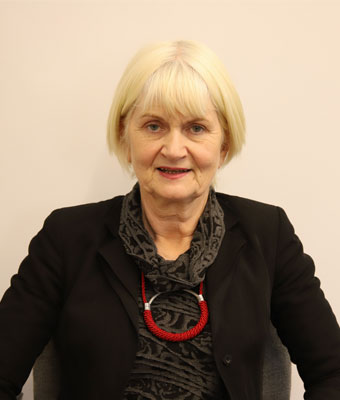
I sincerely thank Deputy Burke for raising this important matter concerning the Cork dental hospital and the availability of dental training places. As the Deputy said, he has raised this issue on a number of occasions and I have responded to him.
The Government is firmly committed to ensuring our healthcare system is supported by a steady and sustainable pipeline of highly skilled graduates. My Department, in collaboration with the Department of Health, the Higher Education Authority, HEA, and the higher education institutions, plays a central role in delivering the education and training infrastructure needed to meet the evolving demands of the healthcare workforce, including in critical areas such as oral healthcare and dentistry. Ensuring adequate capacity to train future dentists is part of our broader commitment to workforce planning that supports the health and well-being of our population.
With regard to the Deputy's specific question, the Department of Health has received a strong proposal from UCC requesting €4.7 million in capital funding to establish a dental outreach centre. This would enable training of an additional ten undergraduate dental students annually, particularly benefiting Irish and EU students. Currently, UCC admits 50 dentistry students annually, comprising 25 EU and 25 non-EU students. This initiative aligns with the national oral health policy by adopting a community-based model of dental education, which offers students earlier clinical exposure in real world primary care settings and that enhances their skills and readiness on graduation.
While the proposal is promising, it currently delivers limited increases in domestic student places. There is a clear opportunity for both Departments to collaborate further to maximise investment and expand domestic training capacity to meet Ireland’s dental workforce needs. Discussions are currently ongoing between the Department of Health and my Department to try to progress this proposal with a view to maximising Irish and EU places to obtain value for money for this proposal. UCC is refurbishing its dental school and hospital at a cost of €15 million in total, co-funded by the Department of Health and UCC.
We have established, as the Deputy said, new dentistry programmes, including one in the RCSI, which commenced in 2025 that will provide at least 20 new dentistry places. I re-affirm my Department's commitment to working with all relevant stakeholders to ensure any future expansion of dental education is grounded in evidence, responds to national needs and is delivered in a sustainable manner. However, I can assure the Deputy that his project is progressing.
I thank the Minister of State. I am frustrated by this. The population has increased by over 40% in the past 25 years. September last year was the first time we increased the number of Irish students training for dentistry, but it is not a 40% increase. We need to increase the number of places in UCC and in Trinity College Dublin. How is it that the RCSl was able to open an outreach clinic for which it got funding and UCC, which applied earlier, is still in the negotiation stage? I do not understand why it is being put on the back foot at this stage when UCC has given a clear commitment to expand the number of places available to Irish students. It has to take in people from outside the EU because it can charge full fees and that is how it is able to keep the dental college going. It is important.
I have parents on to me every week now because their children cannot get access to dental care because they are on long waiting lists. In Cork there is a waiting list of over 12 months for anyone who is a medical card patient. We have a situation where a huge number of private dentists who were providing care for medical card patients have now opted out. We have gone from 1,452 down to around 600 dentists who are now providing care for medical card patients. The public service waiting list is increasing because of the additional demand now that the private practices are not offering a service. I do not understand where the Department is getting its figures. We will attend the health committee tomorrow and I have seen the presentation that will be made to us by the representatives of the Department of Health. As far as I am concerned, it is a basket case of a reply we will be getting tomorrow because it does not represent what is happening on the ground.
I am sure at the committee meeting tomorrow the Deputy will have the opportunity to question the Department representatives. I am not here to defend its figures but I can quote them and I can say that we have increased by 33% the number of students commencing dentistry studies in 2025. That is factually correct. The Department of Health also tells me that we have had a steady increase in the number of registered dentists since 2016, from 2,949 to 3.945 today. The number of registered dentists per 1,000 of population has risen from 61 in 2019 to nearly 72 today. I understand we have to make more progress but those are the figures that have been supplied to me. I assure the Deputy we are committed to responding proactively to future workforce requirements. I made a special point today of speaking to officials in my Department because I recognise that this is an issue the Deputy has raised on many occasions and an issue to which he wants answers. I fully understand this. The officials from my Department have told me that the Higher Education Authority and University College Cork are meeting in the coming weeks to discuss the next stages of progressing the proposal in regard to the outreach centre. There are a number of issues they have to work out. Student training and student supervision were some of the issues mentioned to me. However, the Deputy should have an update in the near future.
Rail Network

One of the great mistakes of the Government during the Celtic tiger era was the failure to ensure that when new homes were being delivered, adequate infrastructure services and public amenities were provided. This was an issue that affected every county in the State. While today there is no doubt that not enough homes are being delivered and particularly not enough social and affordable homes, unfortunately in many constituencies including my own when new homes are being built the Government is repeating the mistakes of the Celtic tiger period. I represent Dublin Mid-West. We have two very large strategic development zones in Adamstown and Clonburris. As those residential developments are being built out, a number of Government Departments simply are not ensuring the adequate provision of facilities such as school places, doctors, dentists and, particularly, public transport. One of the lessons we thought had been learned, particularly in the context of strategic development zones that have clear, legally binding phasing agreements for the delivery of homes, is that infrastructure, amenities and, crucially, public transport, should be delivered in parallel with the homes. Unfortunately, that is not happening today. Somebody who has recently decided to rent or buy in Adamstown, or in Seven Mills in Clonburris and is looking to get a train into Dublin city or home during peak time simply cannot do so because by the time it reaches Dublin from the commuter belt it will be full and there will not even be standing room.
Likewise, BusConnects, an important project for the redesign of bus networks in Dublin, was blind to and continues to play catch up with the strategic development zones. When Eamon Ryan was Minister for Transport, he gave a commitment that the crucial DART+ South West project to electrify the line through my constituency - from Clondalkin, Kishoge and Adamstown to Hazelhatch - would commence in 2025 and be completed in 2030. The Minister of State can imagine the shock of people living in those communities when they heard from the new Minister for Transport, Deputy Darragh O'Brien, in November of last year when the detail of the national development plan, NDP, expenditure programme was released that in fact work now will not commence until 2030 and will not necessarily be complete until as late as 2036. It is a very clear breach of what had been committed to by the Government previously. It is a breach, in my opinion, of the legally binding phasing agreements of the strategic development zones in those two locations. Also and crucially, it is simply no good for people who need to get to and from work and young people who need to get to and from school or college daily. Since the news was announced in November I have written repeatedly to the Minister by way of parliamentary questions urging him not just to provide an update but to reverse that decision and ensure that commencement of this vital public transport project starts as a matter of urgency and is completed on time.
To give a sense of the scale of this, currently the train line through this portion of my constituency carries about 5,000 passengers per hour. The proposition of DART+ South West is to increase that to 20,000 passengers per hour in both directions so the scale of the need can be seen. I look forward to the Minister of State's response. I also hope he can relay the concerns, not just of myself and my constituents in Dublin Mid-West but of people in Dublin and Kildare as well, that the decision to delay the funding and delivery of this project needs to be reversed and brought back on track, if the Minister of State will excuse the pun, to be delivered on time by 2030.
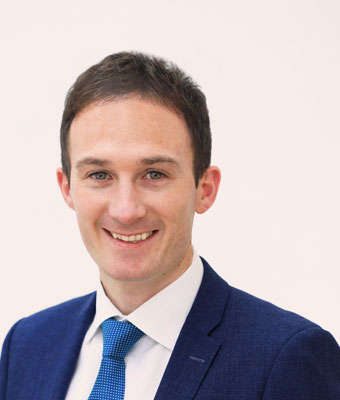
On behalf of the Minister for Transport I thank the Deputy for the opportunity to address the House on this issue tonight. The DART+ programme comprises five different projects in and around the greater Dublin area. It will extend the existing network from the city centre to Maynooth, M3 Parkway, Hazelhatch and Celbridge, and Drogheda, and will improve current DART services from the city centre to Greystones. The programme will triple the length of the electrified network and will double city centre capacity from 26,000 passengers per hour per direction to 52,000 during peak hours. DART+ South West will extend DART services from the city centre to Hazelhatch and Celbridge, including four-tracking from Park West to Heuston Station. An Coimisiún Pleanála approved a railway order for DART+ South West in November 2024. In addition, procurement for DART+ South West and DART+ West is progressing with pre-qualification questionnaire notices for design and build works advertised in May 2025.
The NDP transport sectoral investment plan provides an investment of €22.3 billion of Exchequer funding to the transport sector from 2026 to 2030, along with an additional allocation of €2 billion from the Infrastructure, Climate and Nature Fund to support the development of MetroLink. Of this total allocation, funding in the region of €10 billion is being provided for public transport infrastructure plus €2 billion for MetroLink over the period from 2026 to 2030. The funding under the NDP transport sectoral investment plan will see significant advancements made in a number of public transport projects, including various elements of the DART+ programme including DART+ West. This funding will also allow compulsory purchase orders to progress DART+ South West and will provide the procurement process for the project with some of framework contracts being established in common with DART+ West and DART+ South West. It is important to state that, following on from the initial investment in the DART+ fleet, DART+ West was always recognised as the critical step for the DART+ programme which will help to enable DART+ South West and indeed the other infrastructure projects of the programme to develop for a number of reasons. These include the new depot in the Maynooth-Kilcock area to be delivered as part of the DART+ West project, providing essential stabling and maintenance facilities for the expanded fleet for the entire DART+ programme which is a prerequisite for supporting a service pattern across the entire DART+ network, including DART+ South West.
DART+ West will deliver the critical electrification of the city centre rail network and the necessary city centre capacity upgrades. This is a prerequisite for future trains coming from the DART+ South West to enter the city centre network at Glasnevin junction for the Phoenix Park tunnel on the electrified and capacity upgraded rail system. Also, upgrades delivered under DART+ West, such as re-signalling and electrification, are vital for accommodating increased frequency envisaged on the DART+ South West.
Finally, the new station for Spencer Dock, included as part of DART+ West, is a key node for future service integration supporting the operational flexibility required for DART+ South West, as several services will be terminated in the new station helping to address capacity issues around Connolly Station. The Department of Transport will continue to explore opportunities for additional funding, including through funding streams such as the European Union's Connecting Europe Facility, CEF, to complement national Exchequer funding, which may allow some projects to proceed to construction earlier than currently anticipated, including DART+ South West.
Virtually nothing that the Minister of State said has not already been communicated to me and other Deputies in the constituency by way of parliamentary questions. It does not address the central question. Right now, people who live in Adamstown, Lucan and Clondalkin desperately need the high-frequency DART service into and out of the city centre to be delivered, as was originally promised, by 2030.
Nobody understands why, when the NDP expenditure plan was published in November, no funding was allocated for DART+ South West until after 2030. It makes no sense whatsoever. What the hardworking tax-paying people of Dublin Mid-West and the surrounding areas deserve is for Deputy Darragh O'Brien to honour the commitment that was made to them and to others by his predecessor, Eamon Ryan, and revisit the funding allocation, ensure the funding is provided immediately once the procurement issues are agreed and get the work done. That is what is required. There is no explanation as to why the change and no explanation as to why there is now a potential five-year delay.
I note that the Minister of State has given some glimmer of hope at the end that some funding decisions may be reversed. I urge the Minister of State to ensure that he communicate back to the Minister, Deputy O'Brien, the need for him to make a clear public statement as a matter of urgency that the funding will be released and work will start once procurement is finished in order that the working public, the school and college-going public, and people who want to go in and out of Dublin city centre for leisure or recreation activities will be able to get a DART every 12 minutes from Adamstown, Kishoge and Clondalkin train stations by 2030, which they were promised by the previous Government and should be guaranteed by this Government.
Again, I thank the Deputy for raising this important issue this evening. I will relay the key important points that the Deputy raised to the Minister, Deputy O'Brien.
As I stated earlier, to recap some of the recent developments within the DART+ South West project, the NDP sectorial investment plan for transport was published in November last. It enables advancements of various elements of the DART+ programme, including DART+ West. The roll-out of the new DART+ fleet, which is currently undergoing safety testing, will progress from 2027 onwards and will allow the cascade of the existing train fleet to service new areas on the national rail network. We will also see the redeployment of this fleet in a manner for Iarnród Éireann and the National Transport Authority to decide on the basis of a range of factors and this has the potential for some of that fleet to be deployed to DART+ South West lines. That, indeed, will add additional capacity in advance in the infrastructure upgrades.
To the Deputy's point that this is about funding, the Department will continue to explore opportunities for additional funding, including through funding streams such as the European Union Connecting Europe Facility, CEF, to complement national Exchequer funding. The NDP will again be reviewed around 2028 and updated at that point. This will also provide an additional opportunity to examine the potential to provide additional funding to additional projects, as the Deputy stated earlier, through the DART+ South West programme.
Pension Provisions
I wish to address the ongoing failure to implement the CIÉ pension proposals that were accepted by the CIÉ staff on 15 August 2025.
Before addressing the delay itself, it is important to acknowledge how this agreement came about, because it did not happen by accident and it did not happen easily. This deal was secured through Trojan work by CIÉ employees and former workers, that is, pensioners who refused to be brushed aside, who organised, who engaged constructively and who stayed at the table when it mattered. They approached this process in good faith with patience, persistence and a clear commitment to resolution. At every stage, these workers acted responsibly. They did not grandstand. They did not walk away. Instead, they engaged, negotiated and, ultimately, accepted proposals that they believe represented a fair and hard-won outcome.
That acceptance, on 15 August 2025, was the culmination of years of effort by people who had already given decades of service to public transport in this State. That is why what has happened since is so deeply disappointing. Months after acceptance, the agreed proposals remain unimplemented. Pensioners who did everything asked of them are left waiting, not because of any failure on their part but because the State has failed to move with the urgency that this agreement deserved.
I will focus in on one particularly important aspect of the proposal. The agreement states that pensioners will, on acceptance of the proposal, receive increases on all CIÉ pensions up to a maximum pension of €30,000. The words "on acceptance" carry meaning. They reflect the understanding reached after difficult negotiations and sustained engagement by workers and pensioners who fought to ensure that their concerns were finally recognised yet today, those pensioners have seen no increase. The delay in introducing the necessary statutory instrument has effectively frozen the benefit of an agreement that was secured with extraordinary effort and good will on the part of workers.
This raises a fundamental question of fairness also. When an agreement is accepted and when pensioners have fulfilled their side of the agreement, why should they bear the financial cost of administrative delay?
Many of these pensioners are living on modest fixed incomes. They are not asking for special treatment. They are asking for the delivery of what was agreed and for recognition of the contribution they made in achieving that agreement in the first instance.
This situation also risks undermining trust in the industrial relations process. If workers engage constructively, refuse to be sidelined and, ultimately, reach agreement only to see implementation drift endlessly, confidence in future engagement is weakened.
I am asking the Minister of State to act with the same seriousness and good faith that CIÉ workers and pensioners showed throughout this entire process. That means providing a clear timeframe for the statutory instrument. It means confirming that pensioners will not be disadvantaged by the delay itself and it would mean recognising that agreement secured through Trojan effort must be honoured in full and without further drift. CIÉ workers and pensioners did their part. It is now time for the State to do theirs.
I thank Deputy Kenny for raising this important topic, which I am taking on behalf of the Minister for Transport, Deputy Darragh O'Brien.
From the outset, I would like to clarify that the Minister for Transport has responsibility for both policy and overall funding in relation to public transport.
As a commercial semi-State body, however, CIÉ is responsible for the provision of pension schemes for their employees - this is consistent with the pension arrangements of all other semi-State bodies. Issues in relation to CIÉ's pension schemes are primarily a matter for the trustees of the pension schemes, the CIÉ group and its employees. Decisions relating to the administration of CIÉ pension schemes, including pension increases, are a matter for the CIÉ board, guided by the relevant statutory instruments and actuarial advice.
The 1951 superannuation scheme is one of two defined benefit pension schemes operated by the CIÉ Group, the other being the regular wages staff scheme. Between the years of 2008 and 2022, neither scheme met the statutory minimum funding standard set by the Pensions Authority, which meant no pension increases could be granted during that period. While both schemes met the minimum funding standard at the end of 2023, they have grown increasingly costly, posing a serious financial risk to CIÉ. As of December 2024, the combined pension liability stood at €361 million, the largest of its kind in the State, rendering CIÉ technically insolvent. This situation is unsustainable and out of line with practice in other commercial semi-States where new employees are no longer admitted to defined benefit schemes. Furthermore, no pension increases have been provided for the past 18 years due to the fragile funding position. Given the scale of the liability, CIÉ’s primary objective has been to close both defined benefit schemes to new entrants to protect the benefits of existing members and the solvency of the CIÉ Group and to establish a new defined contribution scheme. To this end, the Minister for Transport welcomed and commended the constructive and collaborative approach taken by the trade union group and CIÉ management in reaching agreement on a pathway forward to resolve this matter. The Minister has also acknowledged the positive outcome from the ballot held from 11 July to 15 August 2025 on the CIÉ pension proposal for both CIÉ pensions schemes.
Following on from this constructive and collaborative agreement, the Department of Transport is engaging with CIÉ as well as financial advisers at NewERA and the Department of Public Expenditure, Infrastructure, Public Services, Reform and Digitalisation on the next steps in progressing the agreement and bringing CIÉ pensions onto a more stable footing for the benefit of active and retired scheme members. In line with procedures laid out in the annex on remuneration and superannuation to the code of practice for the governance of State bodies 2016, as amended in Circular 16/2021, CIÉ must provide the Minister for Transport with a formal consent request in respect of any changes to the schemes. The Department of Transport must then submit that ministerial consent request to the Minister for public expenditure, infrastructure and public service reform for consideration. Following on from the dual ministerial review, under the Transport Act 1950, a statutory public consultation process is required regarding amendments to CIÉ pension schemes where any representations from interested parties will be considered. The Minister for Transport may therefore confirm, modify or reject an amending scheme in accordance with the process set out under the Transport Act. Under section 44 of the Transport Act 1950, CIÉ is required to publish notification of any proposed change to its superannuation schemes in Iris Oifigiúil and at its head office for a period of not less than 28 days.
I appreciate the reply from the Department. I want to give some context to the significant issue I raised. Yesterday, in my office, I met a former CIÉ worker, a pensioner. This is the fundamental issue he is facing right now, as it is for those he meets for the monthly cup of tea or coffee - the conversation they once had in their staffroom. On the new defined contribution scheme, the Minister acknowledged the positive outcome of the ballot held on 15 August 2025. Following on from this constructive and collaborative agreement, the Department of Transport is engaging with CÍÉ. It brings us back to fundamental fact – the proposals were accepted on 15 August 2025. The agreement states that pensioners will receive increases on acceptance. That is not ambiguous language, yet today, pensioners have received nothing because the Government has failed to act in a timely manner. References to process and statutory instruments do not change that reality. Administrative delay by the State cannot become a justification for the financial loss of pensioners. The question remains and deserves a clear answer – when the statutory instrument is eventually introduced, will the pension increases be backdated to 15 August 2025? I think it is the case in a lot of similar situations to that of the man I met yesterday, who I know very well, and of all the pensioners in CIÉ, that it is often the case that the money itself is not the actual issue. It is that they signed up to this agreement under a pretence on 15 August 2025 - understandably it would have taken a period of time to get the agreement in place - but their fundamental question now is whether, if it happens in one year, two years or three years, it will be backdated to 15 August 2025, when that agreement was reached?
The Minister for Transport acknowledges the long-standing tradition within the CIÉ Group of ensuring the terms and conditions of employees, which include pension provisions, are negotiated collectively with the recognised trade unions. As I said, the Minister is responsible for policy and operational matters within transport. Pension schemes and provisions are the responsibility of CIÉ and its trusteed. However, the Minister is engaging proactively with all of the relevant stakeholders to progress this matter. I assure the Deputy that he is raising this important matter and securing the dual ministerial consent for the statutory instrument. We have to follow due process in regard to the responsibility of both the Minister for Transport and the Minister for public expenditure and reform following that period of consultation, which will be launched prior to the implementation of the new CIÉ pension scheme. It is a key focus of the Department to ensure all stakeholders endeavour to achieve this at the earliest possible opportunity while keeping in line with the appropriate processes and ensuring it is in compliance with the relevant regulations and statutory instruments to ensure all necessary approvals are given effect and all agreements are honoured.
I thank the Deputy for bringing up this important matter. We all know people who have given enormous service to CIÉ over many decades and we want them to be supported in regard to their pension entitlements. It is important to bring these concerns to the floor of the Dáil. I will convey all of the Deputy’s points to the Minister, Deputy O’Brien.
Cuireadh an Dáil ar athló ar 10.47 p.m. go dtí 9 a.m., Dé Céadaoin, an 14 Eanáir 2026.
The Dáil adjourned at 10.47 p.m. until 9 a.m. on Wednesday, 14 January 2026.