Childcare Services

1. Deputy Claire Kerrane asked the Minister for Children, Disability and Equality if she will carry out a review of the regulations for childminders in Q1 of 2026; and if she will make a statement on the matter. [71885/25]
I raise again the regulations put in place for some time now for childminders and the many issues they are facing. We know about 150 childminders out of 14,000 or 15,000 have registered with Tusla, which is a small amount. Will the review of the regulations take place early in the new year?

As the Deputy is aware, the phase 1 report of the early years action plan, Shaping the Future, was published yesterday. It makes clear that childminding remains central to the Government's vision for the future of early learning and care and school-age childcare. The national action plan for childminding 2021-2028 sets out a pathway for the extension of regulation and supports to childminders. Implementation of that plan will continue under Shaping the Future, as I said at yesterday’s launch. The regulation of childminding services is critical to the safeguarding of children. I believe we all agree on that.
The childminding-specific regulations, which came into effect in September 2024, are designed to be proportionate and appropriate to the home and family setting in which childminders work. The route to registration under the new regulations requires childminders to undertake a short pre-registration training course as well as meet certain regulatory requirements, including Garda vetting, proof of insurance, first aid certification and child safeguarding training. We are now in a three-year transition period to September 2027, during which childminders are being encouraged and supported to register but registration is not yet mandatory. This phased approach aims to facilitate the largest possible number of childminders to enter the regulated sector and sphere of quality assurance and access Government subsidies, while also recognising the time and supports required for childminders to learn about and prepare for registration.
The Department has committed to undertake a review of the initial implementation of the childminding-specific regulations during the transition period. The review will include consultation with childminders and other stakeholders.
It will provide an important opportunity to learn lessons from initial experiences with the regulations.
As I have said previously, the review will commence in 2026. The timing of the review is crucial. In addition to hearing from childminders who have not yet registered, it is important that the review adequately captures and benefits from the experiences of those who have registered, been through the registration process and operated within the new regulations.
September 2025 marked the end of the first full year since the introduction of the regulations. Those childminders who have registered need time to thoroughly test the regulations in practice. The number of childminders who have registered will impact upon the thoroughness of this testing also. We are in a three-year process from the introduction of the regulations to the end of the transition period.
I am sure the Minister will agree that the fact that just 150 childminders to date have registered with Tusla should be causing concern. It is a tiny number compared with the overall number of childminders out there. Childminding Ireland has been excellent in its engagement on issues with the regulations. One such issue I have mentioned to the Minister before is the regulation regarding having a close contact, that is, a person who will be available at all times. That is next to near impossible. Some of the regulations are unworkable, like that one. I have met childminders and been in their homes and the big issue I am coming across relates to the inspections. They are being asked to register with Tusla but they have no idea what those inspections will look like. These are their family homes and, at the very least, they deserve clarity in that regard. Many of us would not like a person coming in and going around our homes. They need clarity as to what the inspection regime will look like. They should get that clarity.
I wish to be clear: childminders are an incredible resource in the entire system. I know the value of them and they are particularly important in rural areas, like my area. We want childminders to be fully engaged but we also need them to be registered because we need regulation. I think the House is unanimous on that. We are within the three-year timeframe now and I have committed to carrying out a review, which will take place in 2026. It will take place as early as I possibly can and as close to quarter 1 as possible. I know that was in the Deputy’s original question. It will be as close to that as possible. It is to give the maximum benefit to those who have registered and those who will register within that period or timeframe. I hear many of the queries the Deputy has raised. I hear them too. There will be inspections, however. While not comparing like for like, anyone who has a family property and runs a bed and breakfast is subject to inspection in order to be registered with Fáilte Ireland. Childminders will have to be subject to inspections, but I hear what the Deputy is saying when it comes to how that is managed and what form the inspection will take.
We have to be clear; I have not met a childminder who has an issue with regulations. Most of them have first aid training, insurance and Garda vetting. They have much of it in place for so many years already. That is not the issue. Rather, the issue lies with the inspections. Inspections will form part of the regulations – we all know that – but it is about what those inspections will look like and the rooms in the family home the inspector will go into. These are details that childminders should have before and while they are registering with Tusla. Clarification like that would probably increase the numbers registering with Tusla because they are being asked to register without knowing the ins and outs of what they are signing up to. That is a mistake and it is probably why we only have 150 registered out of tens of thousands of childminders in this State. That should cause concern. I welcome that the Minister said the review will be as close as possible to quarter 1 of 2026. I welcome that because I am not making it up - I hope the Minister takes me at my word - that childminders are leaving the sector. We cannot afford to lose them. We need that review as quickly as possible in the new year.
I absolutely understand the anxiety that is out there. Change is never comfortable and I absolutely accept that. I hear it myself when I engage on the ground. I absolutely accept the Deputy's bona fides in this regard too. She has raised this issue on a number of occasions. I am happy to engage further. I said I would engage prior to the review and I will do that. I will hold the review as close to quarter 1 of 2026 as I can, but I will not give a firm date because things and timeframes can change. It is my intention to do it as early as we possibly can. I want childminders to remain within the system. They are an incredibly valuable resource. Many issues have been raised. For example, the Deputy raised the issue in respect of properties and all of that. I am conscious of that, but it does not fall within my gift. Rather, it falls to the Department of housing but I am also engaging in that regard. I am conscious of the issues that are there. We will begin the review as quickly as possible. We have until 2027 for the complete registration.
Family Resource Centres
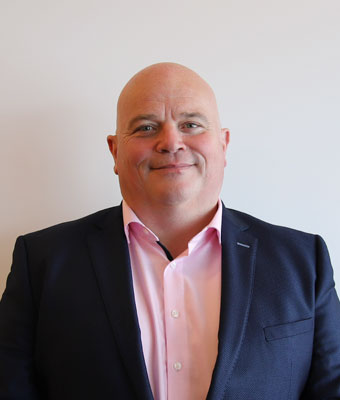
2. Deputy Mark Wall asked the Minister for Children, Disability and Equality if her Department will provide additional and multiannual funding for therapeutic and counselling supports, such as play therapy, currently provided in family resource centres; and if she will make a statement on the matter. [73394/25]
Will the Minister and her Department provide additional and multi-annual funding for therapeutic and counselling supports, such as play therapy? Will the Minister make a statement on it?
Tusla, the Child and Family Agency, administers funding for therapeutic and counselling supports. In 2024, Tusla’s total funding for family support service counselling was €8.375 million. A total of 90 family resource centres received €1.664 million. With regard to additional funding, in 2025 the Department secured the mainstreaming of an additional €1.5 million for counselling, psychotherapy and therapeutic services to children and young people to reduce waiting lists for community-based counselling services. This was previously funded as a pilot under the Dormant Accounts Fund in 2023 and 2024 and it is in addition to the yearly funding for family support services counselling I have already spoken about.
In 2025, €292,500 of this additional €1.5 million funding was allocated to 30 family resource centres to allow them to continue their important work of providing counselling and wider therapeutic services, such as play therapy and creative arts therapy, in the community. The additional funding helps to address unmet need and reduce waiting lists for community-based counselling services.
Funding for counselling services reflects the Government’s recognition of the critical work being done every day by local community-based services. I am proud to support their work and delighted that this additional investment of €1.5 million is now part of the mainstream funding provision through Tusla. This funding enables family resource centres and other family support service counselling services to provide counselling and therapeutic services at no cost or low cost for the communities they serve.
In 2024, clinical and therapeutic lead posts were established in eight family resource centres around the country to ensure there is a clinical and therapeutic lead in all six Tusla regions. I understand that this initiative is working well. The focus of the role includes providing clinical leadership, ensuring that quality services are developed and adapted to meet emerging and presenting needs in the region, and monitoring clinical practice and governance standards. Funding for the clinical and therapeutic lead posts continued in 2025 and I have also secured funding for 2026.
As the Deputy will be aware, the family resource centre programme has expanded from 121 to 126 members.
I thank the Minister for her reply. We can all agree, as we have done previously, that great work is being done by all the family resource centres. The Minister has, in fairness, expanded and created a number of new centres. The problem I am hearing is that the references and referrals coming from many organisations, such as Tusla, the HSE, CAMHS and local authorities, are overloading family resource centres and they are having great difficulty in meeting the demand that is there. We all know the benefits of play therapy and other counselling services. Is the Minister aware of all the referrals that are coming from the various organisations? Are they included in the figures she has just given the Dáil? Will she give multi-annual funding to our family resource centres to ensure they can cope with the additional demand they are facing at the moment? It is quite traumatic for them to have to turn people away from the doors when they are getting referrals. That is the unfortunate consequence of not having the multi-annual funding that should be available for them. That is the basis of my question, that is, the number of referrals they are getting from Government and non-Government organisations. Maybe the Minister can comment on that.
I wish to conclude on the point about the family resource centres first. The Deputy is correct; we are unanimous about the importance of those family resource centres and the whole myriad of services, including those the Deputy outlined, they provide. The programme has expanded from 121 to 126 members this year. The Deputy will be aware that a further ten centres will be added in 2026. I am pleased that I secured the funding for those additional ten centres in budget 2026. Mental health services are within the gift of another Department. This is just an additional support we are providing through the family resource centres. It is important that we recognise that and there is clarity around that. Mental health services fall within the remit of my colleague, the Minister of State, Deputy Mary Butler. The total allocation for mental health services for 2026 will be almost €1.6 billion. It is quite a considerable level. It is record funding, in fact. It is an increase in funding for the sixth year in a row. I wish to acknowledge the work of the Minister of State, Deputy Butler, in that regard. There are other avenues to support as well.
I appreciate that.
I am highlighting this today because I have been speaking to a number of family resource centres. The number of referrals they are getting is causing complications for the services they are offering. I am highlighting this today to make the Minister, Deputy Foley, and the Minister of State, Deputy Butler, aware of the need for additional resources in our family resource centres. They have now come to a situation where there is an overload on what they can provide.
The other point is the multiannual funding. They need to know what counsellors and therapists they can actually provide for the communities they work in. This is the issue that many of them have raised with me. Again I wish to put on the record that every euro spent is a very welcome euro for the communities they serve. So many of the family resource centres are up against it and on the coalface of so many community and social issues at the moment. I highlight the need for multiannual funding to ensure that our family resource services can survive and grow. That is the whole issue we are trying to highlight today.
I appreciate the Deputy highlighting it. It is highlighted to me also as I visit the family resource centres. It is a testament to the vision of the family resource centres that they are happy to step in when there is a need within a community. They do it expertly, they do it professionally and they do it without any difficulty really. That is to their credit. They always step up. I have never made any secret of the fact that I am an enormous fan of the family resource centres.
The entire budget for Tusla counselling services is over €8.3 million. The additional €1.5 million that has been mainstreamed from the Dormant Accounts Fund in 2023 and 2024 has been a great addition to us. Being able to mainstream that is an additional resource. I will continue to consult the Minister of State, Deputy Butler. She has successfully increased the budget for the entirety of mental health services for six years in a row - to over €1.6 billion now - and great credit is due to her for that. There is an opportunity for us to engage further on it.
Homeless Persons Supports
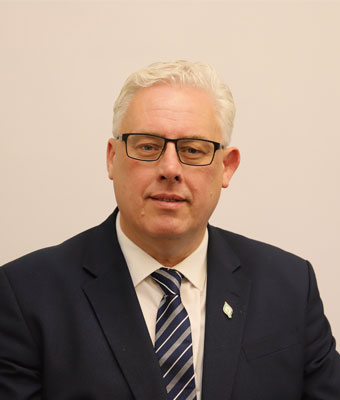
3. Deputy Thomas Gould asked the Minister for Children, Disability and Equality whether she will intervene to prevent the closure of homeless prevention services in an organisation (details supplied) in Cork in mid-January; and to ensure the service does not cease in providing vital community support to homeless young people through social care and work [73584/25]
Will the Minister give a commitment to intervene to prevent the closure in mid-January of a homeless prevention service in Cork, and to ensure the service does not cease to provide vital community support to homeless young people through social care work?
I appreciate the Deputy raising this question. I have been informed, and it is my understanding, that the services managed by Tusla's Liberty Street House are not being curtailed. This is the information that has been given to me. Tusla is undertaking a reform programme that will continue to meet the needs of service users of Liberty Street House. The integration of services will mean that the services provided within Liberty Street House will align under the proposed structures of the front door teams. Front door teams are a feature of the new Tusla referral and service user management process that will ensure each referral is assessed and addressed by the appropriate experts. Staff will work as part of multidisciplinary teams to ensure a range of professionals with different skill sets in the area of social work and therapeutic services are available to respond to the needs of children, young people and families in the right way at the right time.
The preventive aspect of work undertaken in the Liberty Street House services will align with family support and safety and welfare structures. All relevant cases in Liberty Street House services will continue to be worked on with the newly aligned networks in 2026. Liberty Street House services provide a domestic violence and abuse support service. Under the reform programme the focus will move towards the impact of domestic violence, particularly on children, bringing in expertise developed in Liberty Street House to the front door teams across networks. Equally, Liberty Street House staff who have a developed skill set in working with teenagers will continue to utilise these skills in their alignment within the front door teams.
Tusla's structural reform will bring opportunities to young people and families that Liberty Street House services work with. It will also deliver an integrative response of early intervention, family support and child welfare. Liberty Street House has responded to these needs in myriad ways since it opened. I appreciate the work done by the team in Liberty Street House on behalf of the State and local government.
I thank the Minister for the update but the information I have is that Liberty Street House will be out of staff by mid-January and is currently not recruiting. I understand it has not replaced the staff who have left, been redeployed or have retired. I want the Minister to be right, and I hope she is right, in what she has just said here. Liberty Street House has been operating very successfully for the last two decades in providing really vital services for young people who are at risk of homelessness. It is said now that it is being amalgamated with Tusla's front door teams. At one stage Liberty Street House was helping over 200 young people. Maybe the Minister's information is more correct but I am telling her, from the people who work on the ground, that the staff will be gone by mid-January. If the Minister is saying that is not the case, we need clarity on the matter. This is a vital service for young people at risk of homelessness.
I appreciate the Deputy raising this. My information is that the services provided by Liberty Street House are not being curtailed. Indeed, the cases will continue right throughout 2026. The new model of practice is to ensure that all services are available through multidisciplinary teams at the time when they are needed, in the one place at the right time. I am very happy for the Deputy to bring to me any specific information that he might not be in a position to share on the floor of the House. I am very happy to look at that and revert to the Deputy. It is my understanding, as I have said, that the services are not being curtailed. The new vision of service, which I think is a good vision of service, means that when a person presents themselves there is a single opportunity for all of the different supports they might need to be made available at that time from the front door teams. The front door teams approach emphasises the notion that there is no wrong door, that there is a single point of access, and that whatever supports the person requires are presented and available to him or her at that given time.
I have two worries on foot of the Minister's comments. She is saying that the services are being integrated. Is Liberty Street House being closed down? Liberty Street House provides a service to young people who are at risk of homelessness and who enter homelessness. I am looking for a commitment now that this will not be closed down. The information I have is from people who are in the know. They have told me that no additional staff have been taken on to replace those who have left through retirements and redeployments, and that the few who remain will be gone by the middle or end of January. The Minister talks about integrating services, which sounds great, but I am worried about the children who are not as severely at risk, such as a young person who is at risk of homelessness. A young person who is sleeping on the streets needs intervention, 100%, but there is no point in a young person who is at risk of becoming homeless ending up on the streets too. We need both types of children to be looked after. I am worried, in light of what is being proposed now, that Tusla is going down a different road. We need to save Liberty Street House.
The information that has been given to me is that all the services the Deputy has outlined, which are really important intervention services, are not being curtailed and that all cases will continue into 2026. It is a very valuable service that is being provided. It is important that whatever supports are required within the family structure for individuals, for young people or for older people are available at a given time, at the right time and in the right place. My information is that nothing is being curtailed and that everything is continuing in terms of services in 2026. If there is something different that the Deputy wants to bring to me, I will be more than happy - sincerely - to engage further with him on the matter. I will happily do that with the Deputy at the beginning of the year if that is what he wishes.
Go raibh maith agat.
Residential Institutions
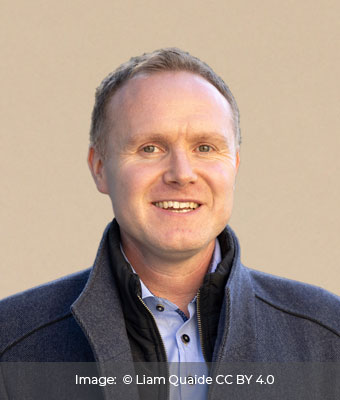
4. Deputy Liam Quaide asked the Minister for Children, Disability and Equality if she has completed an equality and human rights impact assessment of her Department's practice of locating people with intellectual and other disabilities in excess of 100 km from home in residential services for prolonged periods of time, and of her Department's failure to maintain statistics on these distances given their clear breach of the UN Convention on the Rights of People with Disabilities; and if she will make a statement on the matter. [72512/25]
Has the Minister undertaken an equality and human rights impact assessment of the Department's practice of locating people with intellectual and similar disabilities in excess of 100 km from their home in residential services for prolonged periods of time? Will she comment on her Department's failure to maintain even broad-brush statistics on these distances given their clear breach of the UN Convention on the Rights of Persons with Disabilities, UNCRPD, which enshrines the right of community living for people with a disability?

I thank the Deputy for raising this question and providing me with an opportunity to speak on this matter. The Government is committed to supporting people with disabilities through the implementation of the UNCRPD.
To further the work in this area the Department of Children, Disability and Equality has recently published the National Human Rights Strategy for Disabled People 2025-2030. This includes commitments to promote independent living and active participation and supports our obligations under Article 19 of the UNCRPD. Demand for residential placements is very high for a number of reasons, including demographic challenges associated with the increase in the number of people living with a disability, changing needs and the increase in age profile of those in existing placements.
The HSE advises that while every effort is made by the referring agency to ensure the provision of residential services is close to family and natural supports, taking will and preference into account, there are multiple important factors to be considered simultaneously in order to achieve a residential placement that will best meet the unique and assessed needs and requirements of each individual. Prior to placement, consultation with the individual and their family is undertaken and consent is documented as part of the decision-making process. A comprehensive needs assessment is undertaken by the multidisciplinary team to determine suitability and impact on the individual and their family. Funded placement reviews focus on areas such as the individual’s well-being and continuity of supports, in accordance with the national standards and Health Act regulations.
The HSE advises that each case is reviewed regularly where a transition closer to home is the will and preference of the individual. These actions are aligned with the principles of the UNCRPD and the HSE’s commitment to equality and human rights. In recognition of the impact that distance can have on people and their loved ones, HSE south west has recently engaged with a private provider to purchase houses in Cork to create capacity in order for people to be repatriated to their home county and create additional new placements. HSE mid-west also confirms it is endeavouring to offer individuals the option of living in residential services closer to their communities through capacity building.
I thank the Minister of State for her response. It is very concerning to hear of the rapidly increasing investment by her Department in privately outsourced residential services for people with disabilities. In many cases a person will move into such a service in the context of a crisis. The HSE will be under pressure to find any place for the person. The residential service they are offered will quite likely be located extremely far from home and sometimes in quite an isolated setting that is not joined up to community or other supports that would allow a person to grow towards increasing independence, connection and integration. We have a scenario where very wealthy private companies are amassing large sums of money with which they are building up significant property portfolios while section 38 and 39 services are struggling to keep the lights on and sometimes paying rent on properties. This is a disjointed, costly and reactive way to provide these services. When will the Government devise a national disability service plan that is implemented through multiannual funding and when will it move away from private outsourcing, which comes with such a human cost to the person with a disability as well as such a financial cost to the State?
I thank the Deputy. While the chief inspector of social services within HIQA does not have the remit to look at the specific issue of an individual’s distance from their original home, where inspectors see that residents are away from their support network or having to travel extended distances to their family, work or school, it is addressed in inspection reports under regulation 9 on residents’ rights and regulation 13 on general welfare and development.
On private and not-for-profit providers, the proportion of residential placements for people with disabilities provided by for-profit providers has increased in recent years. This has been in response to demand for new residential places. We have 1,402 residential placements being provided by private providers. This constitutes 15% of the total of all placements and represents an increase of 3% since December 2023, so while it is rising it is rising at 3% over two years.
I thank the Minister of State. The Minister said in a recent budget Estimate session that she wants to move away from private outsourcing but the proportion of money the Department is spending on these services has nearly doubled over the past four years. While the Minister is saying one thing, her Department's actions are the opposite. I can understand the ongoing reliance on these providers but this will not change as long as the Department is devoid of a plan for residential, vocational and community support services that are integrated with each other in each community. We need a service plan for disability akin to A Vision for Change. That document had key staffing targets per mental health service and per head of population. We have a very haphazard pattern of disability services in different areas based, essentially, on a tradition of the service being in that territory. When is the Department going to provide data - even general data - on the distance between a disabled person's house and their community of origin? This is a human rights issue and data on it should be recorded.
On data, I wish to be clear that the cost of care is completely dependent on the level of complexity and the support required. It is imperative to note that as a result, cost is not a reflection of performance and rather is indicative of individualised care needs. What is most important here is the person with the care need at the heart of this. The Deputy has the data on the average cost of residential places. That data is published and publicly available. The Department of Children, Disability and Equality's spending review 2025 contains this information, which is publicly available on our website. It should be noted these average costs are derived from a relatively small sample of placements from 2024 because there is a relatively small sample of placements in existence.
Questions Nos. 5 and 6 taken with Written Answers.
Insurance Industry
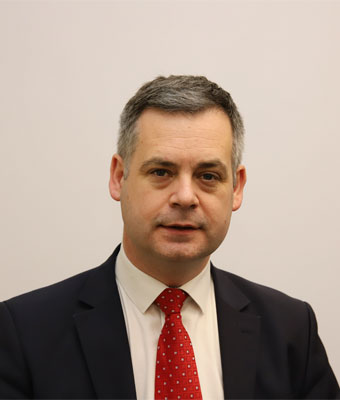
168. Deputy Pearse Doherty asked the Tánaiste and Minister for Finance the operating profits of motor insurance companies and public and employer liability insurance using a standard definition of operating profits, that is, after paying all business expenses but before tax and interest deductions from 2020 to 2025, by year; and if he will make a statement on the matter. [73162/25]
I raise with the Minister the profits that insurance companies are making in Ireland. When we talk of profit margins, we are talking specifically about operating profits, which, as we all know, have a specific meaning that is well understood internationally. It is always before tax and interest deductions. Will the Minister set out the operating profits of motor insurance companies and in the public and employer liability insurance market using this standard definition?

At the outset, I pass my sympathies, and those of everyone, to the Minister of State, Deputy Robert Troy, whose father, Paddy, has passed away. Robert is, obviously, a Minister of State in the Department of Finance and we think of him and his family at this time of loss.
I thank Deputy Doherty for his question. The programme for Government, Securing Ireland’s Future, sets out a range of commitments to build upon the reforms delivered to date in the insurance sector. On 24 July, the Government launched its Action Plan for Insurance Reform, which includes a comprehensive set of targeted actions aimed at improving affordability, availability and transparency across the insurance sector. I thank the Minister of State, Deputy Troy, for his work on this. It will build on its predecessor which was the catalyst for many changes, including the implementation of the personal injuries guidelines to replace the book of quantum, the commencement of legislation to enhance and reform the role of the Injuries Resolution Board in order to reduce the number of claims proceeding to costlier and time-consuming litigation, and the establishment of the Office to Promote Competition in the Insurance Market within the Department of Finance.
As part of the development of the new plan, the Department of Finance undertook a wide-ranging public consultation that received over 70 detailed submissions. There are ten priority actions, focused on the areas of greatest impact. I will come back to some of that information in a moment.
With regard to the operating profits for motor insurance companies before interest and tax deduction, the position shows that operating profit displays annual variability and has fallen from 13% in 2020 to 5% in 2024. To break this data out, operating profit was 13% for 2020; 16% for 2021; 13% for 2022; 9% for 2023; and 5% for 2024. I can provide those figures in writing. The data published in the latest national claims information database, NCID, private motor report 7 shows, on page 29, that operating profits for motor insurance companies, taking account of tax, interest costs and other expenses deducted, have also displayed variability over the years. The relevant figure was 12% for 2020; 14% for 2021; 12% for 2022; 8% for 2023; and 4% for 2024. I will have to come back in on the operating profits for the liability insurance market in my next response.
The Minister knows I am raising this because of the invaluable reportage we get from the Central Bank every year that is reported upon and understood by us. It has its own definition of operating profits. When we talk about the operating profits of any company, that means operating profits before tax or interest is deducted. That is the standard definition.
The Central Bank uses its own definition which has under-reported the profits of the insurance industry by not using the standard definition. In the past five years the Central Bank has under-reported operating profits just in the motor sector by €114 million. This is money that is extracted from people to keep their cars on the road. Will the Minister for Finance engage? The Central Bank is transparent. It has its own definition and all the rest. It is not doing anything different there. However, when people see operating profits they think it is the way that it is reported right throughout the world but the Central Bank has used a different definition. Will the Minister engage for the sake of transparency and a common understanding of what profit this industry is making? These profits, which we all thought were very high, are now even higher than what we understood before.
I will speak to the Central Bank as part of my regular engagement, raising the points the Deputy has raised. I am very happy to do that. The establishment of the National Claims Information Database, NCID, has greatly improved oversight of claims' costs and trends in the insurance market. Indeed, it is one of the most comprehensive and respected insurance data sources internationally. The Central Bank of Ireland, which was tasked with developing and operating the NCID, has advised my Department that operating profit comprises total income with tax, interest costs, and any other expenses deducted. This is fully consistent with previous NCID reports and ensures alignment with other reporting requirements for insurance undertakings issued by the Central Bank. However, my officials have contacted the Central Bank of Ireland and sought the additional information so as to assist with the Deputy's question, some of which I will put on the record. I can provide the Deputy with the operating profits for the liability insurance market. The broader point is that regardless of whether you look at the data supplied-----
Will the Minister provide those?
I can provide them. I am very happy to do that now if the Cathaoirleach Gníomhach
will bear with me for one second.
In terms of the operating profits for the liability insurance market before interest and tax is deducted, it should be noted that in 2020 a loss of 15% was recorded, a profit of 11% in 2021, a profit of 15% in 2022, a profit of 16% in 2023 and an operating profit before interest and tax of 12% for 2024, the latest year for which the information is available. The data that is published in the most recent NCID, EL, PL and Commercial Property Report 5, published last week, shows on page 30 the operating profits for the liability insurance market with those taxes and expenses deducted. I will set is out in a letter, which might be easier.
I appreciate that. I have engaged with the Central Bank in relation to this and it has provided me with the operating profits as commonly understood for motor insurance. It did not have them for the public liability. This is why I welcome this. This shows us two things. The insurance companies are making bumper profits. We know from the National Claims Information Database, NCID, reports that they are making three times what they told us they were targeting. However, it is worse than that because the Central Bank is using a definition of operating profit that nobody else uses. It makes that clear in the report but that is in the subtext. We need to be using standard definitions here. If we were using the standard definitions, these companies are making bigger profits. Instead of making 14% in one year, they are making 16%. This is the same in motor and in public liability. This is millions and millions of additional euro in profits. In motor insurance alone, it is a €114 million difference between using the Central Bank definition or the definition that everybody else uses. It is really important that this industry is called out for the price gouging that is going on and the bumper profits that are being made. The Central Bank does great work but it should not be using its own definition of operating profits. These figures get reported faithfully by the media and people understand it as something that it is not.
I am conscious that I put a lot of information very quickly on the record of the Dáil in the interests of the finance spokespeople here and Deputy Doherty. I will perhaps put it in a letter to the finance committee. I did not get a chance to go through all of the data in the brief time available in these back and forth exchanges. I would just make a couple of points to the Deputy. First, I will engage with the Central Bank, as he has done, in relation to the points he has made. Second, what is of particular interest is that there is some variation over the years, even as opposed to which definition one uses. This is important when we look at the sector over a longer period. Of interest is that if we look at the sector from 2010 to 2024, which is a longer period of time, there is an average operating profit of 5% across all firms for private motor insurance and a 2.1% profit for the liability insurance market. That is across a much longer period, 2010 out to 2024. I am also advised that insurers have released capital reserves, positively impacting profitability in recent years. Profitability trends may not be reflected in future years as a result of reserve releases. That is worth monitoring. It is also important to note that wider cyclical and long-term trends provide a more accurate reflection of market profitability. I also point out we are trying to attract more players into this market for obvious reasons.
Economic Policy

169. Deputy Ged Nash asked the Tánaiste and Minister for Finance the contents of the Government’s medium-term economic framework; the reasons for the delay in producing the plan; and if he will make a statement on the matter. [73642/25]
It is a year since the new Dáil met and almost 11 months since the new Government was formed, yet we still do not have the medium-term economic plan that this Government is obliged to submit to Brussels. The media were briefed earlier this week that the Cabinet would approve the plan on Tuesday. Is that the case? Has the plan been approved and when will it be published?
Yes, it has been approved and it will be published tomorrow. I am very happy, of course, to provide any advices or technical briefings that are required by Opposition spokespeople early in the new year, whenever required and in the appropriate forum. The medium-term fiscal structural plan will be published tomorrow. In line with all relevant European regulations and procedures, the plan will be submitted to the European Commission shortly thereafter. Although each member state has discretion over the content of its medium-term fiscal structural plan, MTP, information is required on three core elements: the fiscal strategy; investment plans; and structural reforms. Of these, the fiscal strategy is clearly the key component. As Deputy Nash is aware, the medium-term plan is a highly consequential document. It required considerable thought and analysis. The plan will reflect current macro-economic conditions as well as Government decisions and priorities.
The merit of medium-term fiscal planning is clear for a number of reasons, and I do not need to convince anyone of that. It provides clarity, it prevents in-year drift, and medium-term plans can help mitigate the vulnerability of Ireland's tax revenue base. Likewise, medium-term planning can also assist in preparing the public finances for fiscal challenges facing the Irish economy, such as the impact of population ageing, as we see in the Future Forty report we published last month, and crucially a credible medium-term strategy provides certainty on the domestic budgetary policy stance that can help boost private sector spending on capital investment.
This plan will set out the Government's economic and budgetary strategy for the remainder of this decade, with a clear objective to support further sustainable gains in living standards for all in the years ahead.
There is simply no valid reason this plan has been delayed for several months. We were told to expect this plan in the summer. We expected to see it before the budget. We did not see it before the budget. I think at this point, politics and media management is getting in the way of the publication of the plan. It will be published tomorrow. That is an interesting and important point. It should have been published this week so the Dáil would have been able to scrutinise and interrogate the plan and have a full debate on it. It is not an abstract plan. It will affect every person, every business and every citizen of this country over the next four to five years. There is, unfortunately, a pattern here when it comes to fiscal management and the production of data. We in the Opposition all expressed concerns, for example, about the reliability of the information received on existing levels of service before the budget. There were no spending review papers this year. We have a range of different concerns. It is not acceptable to me that on the day of the recess, we are being told that a publication of this importance is being published when the Dáil rises.
I take the point. It would have been optimum to have an opportunity to debate it before the recess. We did make an intentional decision not to publish this earlier in the year. I was not the Minister of Finance but I was involved in the decision as a party leader. The rationale behind it, which I think was correct, was to wait and see what the international environment looked like from a tariff point of view. There was different debate and different commentary on this and we decided to publish a summer economic statement that had a one-year horizon. This was different from previous years. We decided to publish the budget. When there was a degree of trade certainty - insofar as there ever is in this world - or certainly more than there was earlier in the year, it gave us more confidence to publish a fiscal strategy that is a binding document. There will be plenty of time for the Oireachtas to interrogate it. I am very happy for Opposition spokespeople on finance to be provided with any briefings they require. It did need to go to the Cabinet this week. It went to Cabinet and it will be published this week too.
The Minister has laid out the principles of what we can expect to see tomorrow. We knew that already. We understood that. Those of us who are members of the Oireachtas Committee on Budgetary Oversight met with the Irish Fiscal Advisory Council, IFAC, this week. I know the Tánaiste met with them when he was appointed.
I did.
They were, rightly, scathing about this Government's approach to budgeting. They said that the Government was budgeting like there was no tomorrow. The Tánaiste acknowledged there are no forecasts or horizons beyond next year. That is no way to budget. Our view in Labour is that key to this plan is that we should be prepared to reflect on the plan. Perhaps the Tánaiste can confirm to the House this afternoon whether the plan will include the commitment to the introduction of a net spending rule, net of tax changes. That would be really important. The Tánaiste will recall that the previous Government introduced collectively a spending rule of 5%.
That rule was more honoured in the breach. It was not based on any evidence at all or anchored in any plan. We should move to multi-annual budgeting in order to give those who are planning public service provision more certainty. Will the Minister commit to multi-annual budgeting in the plan tomorrow and to the introduction of a net spending rule? In other words, net of tax changes.
Without being smart, it depends on how you define multi-annual budgeting. What this will enable us to do is set out a horizon for spending levels out to the end of the decade. That provides greater certainty for the Department of public expenditure and others to engage multi-annual funding, which interestingly is something IFAC is very supportive of. It made a very positive difference when we introduced it in health for a two-year period. I met representatives from IFAC. I do not wish to speak for the council, but its main requirement is that the Government should set out a medium-term plan and stick to it. I think I am correctly paraphrasing what was said. Governments can decide what the level of spending should be, but IFAC's concern - and, certainly, what I took from it - is that it is important that when the Government publishes a medium-term plan, it sticks to it. There is a requirement for a net expenditure growth path. Net primary spending is a technical definition of public expenditure defined as general government spending adjusted for interest expenditure, discretionary revenue measures, expenditure on programmes matched or co-financed by the European Union, cyclical elements of unemployment benefit and one-off temporary expenditure items outside the control of government. There will be a commitment to that in the plan tomorrow.
Inflation Rate
170. Deputy Pearse Doherty asked the Tánaiste and Minister for Finance the updated projections from his Department in the wake of recent CSO inflation figures; and if he will make a statement on the matter. [73720/25]
Last week, the CSO published inflation figures of 3.2%. That is the highest rate we have seen in almost two years and way above what the Department of Finance projected on budget day. At that time, it was projected that we would be looking at an inflation rate for this year of 1.8%, which is starting to look like wishful thinking. How were the Department's projections so far off? Has the Tánaiste asked the Deputy to update them?
I engaged with my Department as recently as yesterday on this because we had previous engagements in certain forums in respect of it. The Department's clear view is that an uptick in inflation was anticipated in its forecasts. In that context, it points to the issue of base effects. It has provided a graph that I can send to the Deputy. These effects need to be factored in. While the headline figure for November was slightly higher than anticipated, we stress that monthly figures are volatile and the Department's assessment of inflation for next year has not materially changed. At the time of the budget, my Department forecast an annual HICP inflation rate of 1.9% for 2026.
We debated the ESRI report only an hour ago. The ESRI’s forecasts were published just morning. It has revised down its forecast for CPI for next year. It is important to stress that wages are growing faster than prices and that the average worker is seeing their wages outstrip price rises for the first time in a while.
As the Deputy well knows, the Department undertakes two macroeconomic forecasting rounds each year in spring and autumn. Both of these are aligned with the European Union’s budgetary cycle. The autumn forecasts published in September alongside the budget were endorsed by IFAC. The inflation rate for this year was projected to average 1.8% in the autumn forecasting round. In the year to date, namely January to November, inflation has averaged 2%. This forecast was calibrated on the assumption of an acceleration in the inflation rate in the second half of the year due, in part, to base effects. In other words, annual price changes are being influenced by the very low reading recorded a year ago.
In publishing its data, the Central Statistics Office outlined the role of the base effects in pushing up the annual rate of inflation since September. Taking these base effects into account, it is important to note that the price level in November was lower than in August. As a result, annual inflation is likely to moderate somewhat over the coming months. For next year, my Department is projecting an average inflation rate of 1.9% and the range of other forecasts extend from 1.4% in the case of the Central bank to 1.9% in the case of the European Commission.
People are being crucified as a result of the cost-of-living crisis. I have raised this with the Tánaiste time and again. Inflation is going back up and is eating away at workers' wages. It is leaving households struggling to make ends meet. Real wages declined in 2022 and 2023. They only increased by 0.1% in 2024. We are in danger of seeing the same again in 2025. The Tánaiste has made the point repeatedly about wages outpacing inflation. Over the past three months, however, we have again seen inflation outpacing wages. Inflation is going up higher than wages. This year, the Government brought forward a budget based on certain inflation projections. It appears those projections are no longer credible. The Government delivered a budget in 2025 where it thought inflation was going to be 1.8% this year and the CSO is telling us it is nearly double that. It is estimating it at 3.2%. Surely there is a need to revise what the Government has done. People are being fleeced, and the Government expected something very different from what is actually happening.
I accept that cost-of-living pressures are real for people. This House regularly debates what the different policy proposals to address that should be. In my Department's projections, which are obviously provided independent of the political system, inflation was estimated to average 1.8% in the autumn forecasting round. Between January and November, it has averaged 2%. On the forecasting provided by my Department in respect of budget 2026, which was delivered in October, the forecast is actually at the outer end of the forecasts of a number of other agencies and organisations. The Central Bank was predicting 1.4%. The European Commission was projecting 1.9%. I read the ESRI report, but I also listened carefully to the ESRI's commentary on the radio this morning. Wages are outpacing prices, although I accept that this is happening from a very challenging position in light of the level of inflation we have experienced and the level of real impact people have experienced with the cost of goods and services over a sustained period. That is why we can debate the budget package, as we often do.
I will go back over that again. I have not disputed that is the case in 2025; I am saying we may end up with it not being the case before the end of the year, because for the past three months, inflation has been outpacing wages. There are warning bells going off all around the place. Inflation stands at 3.2%. It was projected to be 1.8%. The Government delivered a budget. The Tánaiste is the guy who signed off on that and who brought the Finance Bill through this House. The ESRI has been very clear that everybody is worse off. Let me qualify that - developers, bankers and speculators are not worse off. People with extreme wealth are not worse off. The ESRI, looking at its models, said the Government has left families and workers worse off. It is there in black and white. How the Government was able to pull that trick off in a €9.4 billion budget goes beyond me. That budget was based on inflation rates but they are higher in reality than was projected on budget day. I am probably hitting my head against a brick wall here, but the Government really needs to revise this because there are people who are really struggling and it has left them high and dry this Christmas.
The Deputy needs to return to the technical but not unimportant point that it is still the view not just of the Department of Finance but also the CSO that what we are seeing in the inflation rate since September has been the impact of base effects in pushing up the annual rate of inflation. As recently as my engagement yesterday with the Department, as distinct from my political views, the forecasting for the year remains largely in line with what it expects to see at the end of the year and the forecasting for next year remains as it was on budget day. Deputy Doherty will have heard the person who wrote today's ESRI report say of the 1.6% in relation to disposable income that there were protections for lower-income workers. The report specifically talks about the 1.6% relating to medium- and higher-income workers. It also notes that this was without the benefit of wage growth, which is now, on average, outstripping price inflation. In other words, wage growth is now rising faster than prices. The ESRI made the point that this was not factored into the 1.6%.
Mortgage Interest Rates

171. Deputy Cian O'Callaghan asked the Tánaiste and Minister for Finance the action he is taking to address the banking sector using high mortgage interest rates in order to maintain high profits; and if he will make a statement on the matter. [73718/25]
172. Deputy Pearse Doherty asked the Tánaiste and Minister for Finance the steps being taken to address the situation where banks are maintaining high mortgage interest rates in order to maintain high profits; and if he will make a statement on the matter. [73721/25]
There is a significant problem with Irish banks charging very high interest rates to mortgage holders, especially in comparison with UK banks and the spreads in the UK, while at the same garnering record profits. What is the Tánaiste doing about this? Cad atá ar siúl?
The European Central Bank, as we know, is responsible for monetary policy in the euro area. Having declined in stages over the past 18 months, its main lending rate is now 2.15%. While changes in the level of official interest rates will feed through to the wider economy it does not have a uniform impact on the level of retail interest rates. In a market economy, the determination of retail and business lending rates is a commercial matter for individual creditors. The most recent Central Bank data shows the weighted average interest rate on new mortgages was 3.56% in October. While this is above the euro area average of 3.33%, the percentage is almost 0.5% lower than the same time last year. It is factually correct that we are above the euro but we are not the highest in the EU.
In the most recent budget, the Government maintained the mortgage interest tax credit at the current level for a further year and at a reduced level of relief for the following year. This will assist borrowers who have seen large interest rate increases to offset the impact of the rising cost of living. It introduced mortgage interest relief for homeowners with an outstanding mortgage balance on their primary dwelling house of between €80,000 and €500,000 as of 31 December 2022. This relief was extended in budget 2025 and again in the most recent budget for 2026.
The Central Bank, through its regulatory framework, offers protection for consumers and requires that all regulated entities, including banks, retail credit firms and credit servicing firms, are transparent and fair in all their dealings with borrowers. The revised and strengthened consumer protection code will come into effect next March and will set out requirements for enhanced disclosure on mortgage switching options and the impact of incentives on the overall cost of credit of a mortgage. The banking industry has adopted an aligned industry-wide set of initial eligibility criteria to facilitate the switching of mortgages from non-banks to banks and has introduced a website, bpfi.ie/in-your-interest, to assist the mortgage switching process. Domestic banks currently maintain healthy balance sheets, which are also important to ensure they are well positioned in case of adverse shocks. While the profitability of the domestic banking sector is high, it is noted that it has moderated from recent highs.
Irish banks are making huge profits from charging high interest rates on mortgages. Research by RBC Capital Markets shows that Irish banks are making more than three times as much on mortgages as UK banks by charging higher interest rates. It is the last thing people who are struggling to buy a home need. At the same time, profit levels in Irish banks are at a record high. AIB and Bank of Ireland last year made a combined profit of almost €5 billion and these same banks paid virtually no taxes on these profits. Does the Tánaiste think it is acceptable that Irish banks are making huge profits off the backs of mortgage holders? Does he see that there is a serious problem? Will he do anything to end this rip-off?
I have raised this issue with the Tánaiste over and over again. It is clear that people are being ripped off. I wonder whether that is the assessment of the Tánaiste, as Minister for Finance, or does he think it is okay that banks make €5 billion in profits and charge higher interest rates than the average in the EU. That is where they are making their money. It is not due to huge innovations. It is because of the European Central Bank, ECB, interest rate in the main that these banks are making the profits they are making. This means a lot to families. Percentages relating to large mortgages - and I spoke earlier about the runaway house prices and people being forced into huge mortgages - mean thousands of euro each year. We cannot have a Minister who is simply impotent in this regard. On the one hand, the Government is getting rid of the pay caps for the CEO and selling off the stakes while, on the other hand, customers are basically abandoned. Is there anything the Minister plans to do to ensure banks pass on reduced interest rates to their customers instead of gouging them?
The more competition in the banking sector and the ability to have competition across the EU is how we can help in a sustained and policy proactive way. A number of discussions that are taking place at a European level about completing the single market in relation to that is good. Making sure this is an attractive location in which to operate banks and financial services is also important and important to consumers, including the people the Deputies mentioned. It is important, though, when we have this conversation to recognise that we are having it at a time when the weighted average interest rate on new mortgages is falling. It is 0.5 % lower than it was at the same time last year. The Deputies are right that these are real figures and have real impacts on people. The latest data from the Central Bank, which publishes quarterly data on interest rates on outstanding mortgages, is from September of this year and indicates that the average interest rate on outstanding mortgages held by banks was 3.44%, down from 3.6% a year earlier. For the overall non-bank sector the weighted average was 3.78%, down from 4.39% a year earlier and for those entities in the non-bank sector, which do not engage in new lending, the weighted average was 3.91%, down almost 1.5% from 5.32% a year earlier. The Central Bank has indicated that Irish banks operate at a healthy profit level, but that gap with the EU average has narrowed more recently.
Domestic banks currently maintain healthy balance sheets. We need them to do so in order that they are well positioned to absorb potential credit losses in case of adverse shocks. We know what it was like when the banking sector collapsed in the past and the pain that caused. As announced in the recent budget, the revised form of a bank levy was further extended. Extending the bank levy in increments of one year at a time ensures the form, scope and revenue target of the levy can be assessed and calibrated on an annual basis in a manner that accounts for various factors, including the level of profitability of the sector from year to year and the performance of the liable institutions relative to one another and that is also a tool at our disposal.
Of course interest rates have fallen in the past year. The European interest rates have fallen. Why on earth would they not? The issue is that we have record bank profits and Irish mortgage holders are being over-charged in interest rates compared with other countries. I gave the example of the UK. The spreads in Ireland are more than three times higher than those in the UK. Does the Tánaiste find that acceptable? Is he going to do anything about it? He is simply talking about more banking competition. That has been said by Ministers for Finance in this Chamber over many years, but we are in the situation that people are being ripped off now. Is the Tánaiste going to do something about it or does he find it acceptable?
Deputy O'Callaghan made the point. To tell us that interests have dropped 0.2% in a year on weighted average, when the ECB has reduced interest rates seven or eight times in the past 16 months, is a nonsense argument.
It is not. They reduced.
It is a nonsense argument. The banks should be reducing their interest rates beyond the rate they are offering at this time. The ECB has given them the flexibility to do that by reducing the rate. I am not expecting them to be passed on percentage by percentage, but there is no doubt that Irish banks are creaming it off the backs of mortgage holders and the Tánaiste is doing nothing about it. His predecessor did nothing about it, and the Tánaiste's response here is that he will not do anything about it. All he is saying to the public is that he is looking for competition, that we have to get another bank. What will he actually do about AIB and Bank of Ireland making a €5 billion profit when everyone in this Chamber knows it is being made as a result of high interest rates that should not be charged to Irish consumers. Consumers and families are being forced to take out mortgages at huge rates because of Government policies.
If the Deputies want to have a direct link between every loan facility and the ECB interest rate, they have to be willing to say they want it for deposits as well. That will not be good either for many Irish businesses or families. There has to be a context to this conversation because people are watching at home and it is presented to them as though interest rates are way out of kilter with the European average. The point I am making with the evidence I put on the record of the House, which is available for all to read from the ECB and the Central Bank of Ireland, is that the gap is now narrowing.
I have heard it said for years that Irish mortgage holders pay the highest mortgage interest rates in the European Union. That is not true. We pay a little above the European average. That has real impacts on people in their bills, that is absolutely right. However, it was 3.56% in October and the European average was 3.3%. It is, therefore, absolutely prudent and sensible to say we should continue to look at what we can do at a European level.
I was at meetings as recently as last week about what we can do at a European level to complete the single market and make sure there are more opportunities for Ireland, which is a small country from the point of view of population, to be able to avail of banking services across the European Union and to attract banks in. It is not just talk. We saw yesterday the benefit of a new banking organisation entering the Irish economy. We have kept the banking levy, which is a tool at our disposal and it is reviewed each year in advance of the budget.
National Asset Management Agency

173. Deputy Mattie McGrath asked the Tánaiste and Minister for Finance given that the National Asset Management Agency, NAMA, is due to conclude its affairs and wind down operations by the end of 2025, to outline the arrangements in place to ensure that any unresolved investigations or litigation, particularly those involving significant public funds, are fully pursued; the person or body that will be responsible for ongoing investigations into alleged fraud or irregularities in current cases where matters are still arising, in particular two cases (details supplied); the person or body which will take responsibility for these investigations; if he will commit to a full and thorough investigation into both matters; and if he will make a statement on the matter. [71751/25]
My question is about the wind-up of NAMA, which will happen in the next ten days. Who will assume responsibility for ongoing issues, irregularities and other issues, such as court proceedings when NAMA has been wound up? It will happen by 31 December. That is only ten days away. Will the Tánaiste make a statement on the matter?
As the Deputy noted, NAMA is on track to substantively conclude its operational wind-down by the end of this year. NAMA completed its final surplus payment of €450 million to the Exchequer as recently as yesterday, 17 December 2025. In total, NAMA has now contributed €5.6 billion to the State. This contribution has included cash transfers, corporation tax payments as well as significant assets transferred to the Land Development Agency, LDA, earlier this year, comprising social housing and strategic lands with the potential to deliver up to 4,500 homes.
The conclusion of IBRC special liquidation and dissolution of NAMA Bill, when enacted, will finalise the phased and orderly wind-down of the agency. Priority drafting of the Bill was approved on 2 July 2024 and is currently at an advanced stage.
The experience of other workout vehicles internationally has shown that some residual activity, including litigation, would remain after NAMA's core work had concluded. The need to ensure that such residual activity is properly managed has been a priority of the Government and officials throughout the drafting of the Bill. Therefore the Bill will provide for a new unit to be established within the NTMA following NAMA's dissolution, to manage any remaining residual activity, including litigation, until ultimate completion.
This resolution unit will report to NTMA senior management and will operate within the agency's governance framework. The vesting of this residual activity in the NTMA will ensure that any active proceedings to which NAMA was a party before its dissolution will continue to be managed effectively.
As the Deputy will be aware, by virtue of sections 99 and 202 of the NAMA Act 2009, NAMA is legally precluded from disclosing confidential debtor information, including specific details relating to debtors, secured assets or related transactions. I remind the Deputy that NAMA was established as an independent commercial body and I have no role in its operations or decisions.
In relation to the matters raised by the Deputy, I am informed by NAMA that it is satisfied it has at all times acted appropriately and in accordance with its statutory remit.
I am worried that when there is alleged fraud taking place with the handling of money who will be responsible for the ongoing investigations into that fraud and irregularities and current cases; including two matters I have raised previously in this House, namely, the ongoing NAMA investigation into circumstances relating to Nemo Rangers lands in Cork, and the unlawful use by NAMA of the personal tax number of Mr. John Fraher, a businessman in Clonmel? He had gone out of business, was living in England and his tax number was used for a number of years, with the knowledge of NAMA and by people involved in NAMA. It was an abject crime.
What becomes of the cases when NAMA ceases operations? Who will take responsibility for these investigations? Who will be held to account for any irregularities or wrongdoing? Will the Minister make a statement on that? He said he is not responsible but somebody has to be accountable for what went on here. It was an awful vista. We had Project Eagle in Belfast and Project Jackdaw in Clonmel, on the Clonmel Arms site. We have the cases of Mr. John Fraher and Nolan Transport and other ongoing cases in Wexford and issues there as well.

There will be a supplementary question from Deputy Neville.
NAMA has been one of those interesting bodies in my lifetime. It came in during a significant economic crash and was seen almost a set-up of last resort. I wondered about the impact it would have. As we look back now we can see it has had a positive legacy. It has turned out positively for the Government, notwithstanding what has happened over the past few years and that is worth reflecting on. How do we take the learnings, and not just from NAMA itself? If something like this happens again, how do we ensure the knowledge we built up and the success, ultimately, of NAMA is replicated? It was one of the great benefits of the last 15 years considering the crash we had, to be able to put together a body like NAMA. The Opposition probably ultimately considered it would have been the worst thing in the world but it has worked out successfully. So much money has been repaid to the Exchequer, even though we took such a risk. How do we take the learnings from that and how does the Tánaiste see we will be able to put that in place for future generations?
I thank Deputy McGrath for his follow-up question. It is not a question of responsibility. I am precluded, as is NAMA, under sections 99 and 202 of the NAMA Act from disclosing confidential debtor information. Indeed, NAMA is legally precluded from disclosing that information, including specific details relating to debtors, secured assets or related transactions. The agency remains an independent commercial body. These queries the Deputy raised have been raised with NAMA and it has informed me it is satisfied it has at all times acted appropriately and in accordance with its statutory remit. If the Deputy has any further information to the contrary or concerns, I encourage him to make them available to NAMA or any other agency he feels is appropriate.
Deputy Neville asked an interesting question about learnings. One hopes we will never find ourselves as a country in this position ever again and that is why we have to continue to budget in such a manner. NAMA's lifetime contribution to the Exchequer has been €5.6 billion and that includes cash, corporation tax and significant assets.
Thank you, Tánaiste.
I will come back on the rest in a moment.
There are serious concerns about fraud in recent High Court proceedings about unusual ownership structures such as a case involving two identically named companies, Dildar Limited, one of which is registered offshore, which may indicate attempts to circumvent liabilities to NAMA, and the Tánaiste is saying that he does not have responsibility.
I never said "responsibility".
Somebody has to have responsibility when NAMA is wound up. We cannot just fold it up and put it on a shelf and say, "Great job done". NAMA did some good work but there was obvious wrongdoing and fraud in the cases I mentioned including the Nemo Rangers lands in Cork and worse in Clomnel town with the Clonmel Arms Hotel, which I have raised here, and now the Clonmel Park Hotel and Mr. John Fraher. The Tánaiste said NAMA is satisfied it acted appropriately. How could it have acted appropriately when he went out of business, ceased trading in Ireland, went bankrupt, was trading in England and his tax number was continually used to put funds through here by other directors of the company, with the knowledge of NAMA? I have named these cases in the Dáil.
Deputy, your time is up.
The Tánaiste said that NAMA is satisfied. Well I am not satisfied and I will not stop at this. I have gone to the Garda. They do not seem to be interested either so it is a funny situation.
I say this respectfully and I do not want to be overly argumentative on the final day of the Dáil before Christmas, but it is unfair to say the Garda is not interested. The Garda in this country take very seriously any issues brought to its attention and if the Deputy has an issue with the Garda, there is a structure there. I just do not like those blanket statements, "The Garda is not interested" and "NAMA is not interested". It is a very serious thing to come to the floor of the Dáil, reference individual citizens of our State's tax details and numbers - I am not sure that is in order - and then basically accuse people of fraud, including State agencies. Everyone has an entitlement to his or her good name. There are very robust procedures in place. If the Deputy believes any illegality has been committed, he should go to An Garda Síochána. The Garda is always interested in all matters related to that. I am satisfied, as Minister for Finance, that based on the information the Deputy has provided to the Department of Finance and to NAMA, that NAMA has acted at all times appropriately and in accordance with its statutory remit. That is what I am telling the Deputy here on the floor of the Dáil. I have also said, and reiterate, that in regard to any residual activity, including court cases - the Deputy referenced cases and I do not know whether they are live or not - responsibility for that will transfer to the NTMA. Perhaps that is another route through which the Deputy can raise his query.
Can I raise a point of order? I would like clarification because I was not aware of this. Are we allowed to ask supplementary questions on priority questions?

I was wondering about that.
It was provided for there in the last question. Priority questions are protected, as far as I know today, from other Members interfering in them.
We are not.
We are not. Please forgive me. It is my first time doing this.
That is okay. I was not sure if it had changed or not, genuinely.
Apologies for that.
The spirit of Christmas.
The spirit of Christmas and forgiveness.
Exactly.
Deputy Boland's supplementary question will be allowed. Not Deputy Neville's, that is enough. He has gotten me into trouble once already. We will move to Question No. 174 which will be grouped with Question No. 184.