Childcare Services
7. Deputy Joe Cooney asked the Minister for Children, Disability and Equality if she is satisfied that the number of childminding services registered with Tusla, and the numbers of childminders undertaking the pre-registration training, will be sufficient to meet the future demand in Clare; and if she will make a statement on the matter. [73088/25]
Roughly 22,000 children will need childcare in County Clare by 2027. Only five services have registered and only 26 individual childminders have done the mandatory pre-registration training so far. With less than two years before these new regulations take effect, what is being done to ensure the number of childminders will be sufficient to meet the future demand in Clare by 2027?
I thank the Deputy. Childminders are a hugely important part of early learning and care and school-age childcare provision and they continue to be the option of choice for many families. The National Action Plan for Childminding 2021-2028 set out a pathway for the extension of regulation to childminders. A singular objective of the national action plan is to enable parents who use childminders to benefit from State subsidies through the national childcare scheme. The Childcare Support Act 2018, which provides a statutory basis for the national childcare scheme, specifies that only Tusla-registered childminders are eligible to participate in the scheme. The limitation of public funding schemes to Tusla-registered providers helps to ensure public funding is provided where there is assurance of the quality of provision.
It must be noted that childminding regulations only came into effect in September 2024, with a statutory transition period of three years ending in September 2027. Registration is therefore not mandatory until the end of this transition period. This phased approach aims to facilitate the largest possible number of childminders to enter the regulated sector, the sphere of quality assurance, and access to Government subsidies, while recognising the time and supports required for childminders to learn about and prepare for registration. The childminding-specific regulations are designed to be proportionate and appropriate to the home and family setting in which childminders work. The regulations differ substantially from regulations for centre-based childcare. While the Department has successfully completed phase 1 of the national action plan, considerable work lies ahead during phase 2 in supporting the large number of unregistered childminders to register with Tusla and take part in the national childcare scheme before the end of the transition period, in County Clare and right around the country.
I fully understand the sense of uncertainty and anxiety childminders may be experiencing in this period of transition. Communication is essential to overcoming this. A national communications strategy is a key element in phase 2 of the national action plan during the transition period we are now in. Work on this communications strategy has begun with the aim of informing childminders and parents about the changes, the supports available and what to expect. The Department has committed to a review of the initial implementation of the childminding-specific regulations in phase 2 also. I aim to meet Childminding Ireland on a one-to-one basis before the review of the regulations commences.
I thank the Minister. In Clare we will need roughly 170 childminders to accommodate the number of children who use individual childminders' services. My experience on the ground in Clare is that existing services are already under huge pressures, with long waiting lists, very limited availability in many areas and, unfortunately, increasing numbers of childminders shutting up shop. I acknowledge the need for registration but am very concerned about how this will play out if there is not a well-thought-out strategy put in place to retain existing childminders and encourage new entrants to the sector, which is vital and important for our young generation in these very demanding times.
I thank the Deputy. I acknowledge that the issue of childminders and registration and the challenges they might face has been consistently raised in this Chamber.
I do not wish to be repetitive but I will say again that I absolutely acknowledge that childminders are an incredibly important and valuable resource in the whole sphere of the childcare sector and I want them to continue in the business. I have to ensure they are regulated and, as has been said, I do not think any childminders are opposed to that. However, it is an important element of child safeguarding.
There will be a review - I spoke about it earlier - as early as possible in 2026. That will be important for engagement. I have also given a commitment that I will meet Childminding Ireland before that review commences. Yesterday, I published Shaping the Future: Early Years Action Plan. The action plan commits to restructuring the core funding pilot for registered childminders in 2026 - in other words, a number of childminders in the pilot are part of the core funding process. That will also be restructured going forward to bring more and more into it. That is my ambition anyway. I am committed to continuing to work with childminders to make it as easy and accessible as possible for them to come within the regulations.
My main concern is that there will only be a trickle of applications for the training and a then a flood at the last minute. We can be smart and avoid that last-minute surge by putting in place a planned, targeted information campaign for next year, possibly using the childcare committees. This would ensure that any misinformation about the process is countered and that anyone who might be interested hears about this well before the deadline, which is important. We could take this campaign directly to parents by going to schools. This would drive a huge awareness campaign at local level, especially in more rural areas where the impact will be mostly felt.
I appreciate that the Deputy has come with many positive suggestions for how we can collaboratively support childminders going forward. Already the Department provides funding to each of the county and city childcare committees so that there is a specific individual who is a childminding development officer in place in each of the committees to work directly with childminders. That is an important access point for childminders and it will be drawn upon more and more. I have already outlined a stronger communication campaign which we are in the process of undertaking. We will do all we can - and I appreciate the many examples the Deputy gave - to ensure the maximum number of people are engaging on a consistent basis before 2027. It is a feature of life that there is always a rush towards the end and I absolutely accept that it would be better if there were a consistent registration so we will continue to work on that. I appreciate the Deputy's input.
Question No. 8 taken with Written Answers.
Disability Services
9. Deputy Maurice Quinlivan asked the Minister for Children, Disability and Equality her plans to address the waiting time for assessments of needs, considering there are in excess of 18,000 children waiting for such an assessment; and if she will make a statement on the matter. [73106/25]
More than 18,000 children are currently waiting for an assessment of need and this figure is expected to increase to between 22,000 and 25,000 by the end of the year. These are children whose lives are suspended. They are waiting for assessments so they can receive the medical and educational supports necessary for their continued development. As the Minister of State will be aware, early intervention is crucial and that intervention is being denied to many children. The long waiting lists affect development as they cannot access the supports they need. How will the changes the Minister proposed last week assist in rectifying this breach of the law?

I thank the Deputy for giving me the opportunity to address this on the floor of the House. The delivery of an effective, efficient assessment of need system is a priority for the Government. There has been intensive work by the Department of Health and the HSE. Demand for assessments of need has increased significantly in recent years. Applications may be in excess of 11,000 this year compared with 4,700 in 2020. That represents a doubling in five years. This reflects both the increase in population and the number of families exploring all options to access services for their child. The impact of this increased demand has contributed to more than 18,000 applications being overdue for completion nationwide at the end of September. We will have figures for the end of this year shortly. In September, there was a 42% increase on this time last year.
More positively, there has been continual improvement in the number of completed assessment of need reports. Over 4,500 reports were completed in the first nine months of this year, a 57% increase compared with the same period last year. This improvement has been bolstered by significant investment by the Department in the targeted waitlist initiative, which focuses on the families waiting longest for assessments of need. More than 6,300 clinical assessments have been commissioned from private providers under the initiative since it started in June 2024. Budget 2026 provides for the continuation of this initiative next year, with €20 million provided for the delivery of some 6,000 clinical assessments.
Last week, the Government announced a series of reforms to the assessment of need process that will make the process more effective and efficient for children and their families. Over time, this should lead to a reduction in the waiting time to receive an assessment. This reform includes changes to Part 2 of the Disability Act 2005, which provides for assessments of need. I will elaborate further.
My concern about the changes announced last week are that they risk deepening the chaos already prevalent in special education and that we are placing an additional administration burden on educators. In Limerick, for instance, 259 children are waiting for an assessment of need and none of them was met within the statutory timeline so the Government is failing those children with zero of 259 children having been met. The fact remains that the Government is in daily breach of the law by not honouring the requirement to provide an assessment of need within six months.
I urge the Minister to initiate a new campaign to recruit people to services, to advertise it properly - unfortunately, that was not done the last time - and, if sufficient applications are not received, to expand the drive internationally if we need to do so. The removal of the need for a formal diagnosis to access a special class or special school placement and its replacement raises concerns, not only with me, but with the teachers' unions which said they were not consulted in advance of last week's announcement, which is disappointing to say the least. It is not acceptable for this responsibility to be pushed onto educators without them even being consulted. Decisions on the necessary supports should remain the responsibility of qualified educational and disability professionals.
It goes without saying that the issue of assessments of need has been a disaster for a considerable time. There is much unease about the proposals that were put forward. One of the issues with the proposals is that they are only an indication of a proposal. We had an engagement earlier in the week and if we are talking about removing the need for assessments of need in schools, it is a fact that we are talking about something that is a few months away from being completed. Will the Minister of State give an indication of how she and the Department of education will come up with a process and by which means children will be assessed for the appropriate class, special class or mainstream education with supports? That is vital.
The Minister of State has said previously that there is not always a need for an assessment of need to access the child and adolescent mental health services, CAMHS, or primary care but we all know the issues. Children get bounced back and there is a real need to deal with that. The problem with primary care is that the service that was once there is not there at the moment.
I thank both Deputies. I was delighted to engage with the cross-party group on autism about this issue the day before yesterday. The direct question about the education plans was how the process will be formulated, and the answer is through consultation. The Department of Education and Youth has indicated to us that it is willing to explore how to get to a point where it can remove an assessment of need as a requirement for entry to special schools and special classes. It will now consult on how best to do that with relevant stakeholders and officials and will come back to the Taoiseach through the Cabinet committee on disability in the first quarter of next year with a proposal for how and by when it can make it happen.
On people being bounced from list to list, one of the things announced this week was the single point of access, which is the HSE's new system to ensure there is no wrong door and that when children get to the top of a list, they are not pushed to the bottom of another list. This is a service-based and needs-based approach the HSE is implementing in collaboration with our Department.
Last week's announcement was an attempt to shift responsibility to schools and mask the failure overseen by this and previous Governments.
However, I do note that each team will include a psychologist, a speech and language therapist, an occupational therapist and an administrator. Where will they come from? Is it not a better approach to have a proper recruitment campaign and try to access the resources that exist that we have not been able to harness so far? The change will not remove any rights for parents to apply for an assessment of need for their children nor will it alter their statutory six month-timeframe in the Disability Act. It does not explain how the Government will achieve this legal obligation of accessing an assessment of need within a six-month period. Will the Minister of State advise how this change will assist these children who are waiting for 27 months or more for an assessment? These children need their assessments and they need to have them completed within the six-month period. What we and the children need to see is an urgent workforce plan to recruit and, more importantly, to retain the staff we have already to deliver this important service without breaching the rights of these children. Every month and every single day that an assessment is delayed impacts children.
We all support the idea of a single point of access. My understanding is there will be 11 teams delivered in 2026 and then nine teams in 2027. That all sounds grand but I would follow up on what Deputy Quinlivan said. At this point I imagine, because we cannot always get the updated figures, we are looking at 300 or so positions unfilled in the CDNTs. I would like if that figure was lower but how do we recruit the OTs, SLTs and psychologists to those teams? How do we recruit to these new teams? How will these new teams work? We are all supportive of therapies within schools and involving the schools, the parents and everyone involved in the child's life. Assistive technology is absolutely important at that point. How do we get that recruitment process done while we are recruiting to all these bodies at the same time because many advocates have said there are difficulties in relation to this?
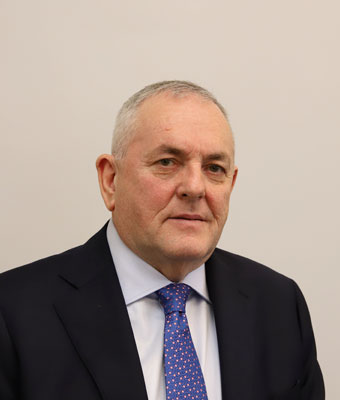
On the same line of questioning, if we reduce the waiting list so quickly then the next waiting list is for the therapy, so there will still be a huge number of children waiting for therapies, particularly speech and language. I referenced in the Dáil this week the children with Down's syndrome who are waiting. What happens when all of those children are added to the list?
I thank the Deputies. Can I be really clear? Last week's announcement was about children with disabilities who require therapies and that is exactly what we are setting out to achieve - the delivery of therapies regardless of children's disability. There is a six-pronged approach here. The heads of Bill have now been published. They will go through pre-legislative scrutiny at the Joint Committee on Disability Matters. We have committed to informing parents earlier about when a decision is arrived at as to whether or not their child has a disability. We have the HSE's new model of having a single point of access which we have discussed and which will be supported by additional recruitment. Between that and the autism assessment process and protocol, which is also a huge part of this, they will be supported by 11 inreach teams next year and 20 inreach teams by the end of the following year. We are also recruiting within our own teams - the CDNTs. We have had a 27% increase in staffing in the 18 months up to April of this year. We have 45,000 children now receiving therapies through our CDNTs and I would like to thank our staff and our clinicians who are delivering those. We are also supplementing our assessment of need process by outsourcing. We will outsource 6,000 of those next year. That frees up therapists to work with children to deliver the therapies they need.
Questions Nos. 10 and 11 taken with Written Answers.

12. Deputy Pa Daly asked the Minister for Children, Disability and Equality the measures she is taking to improve disability services in Kerry. [72874/25]
As Minister for State with special responsibility for disabilities, I am committed to delivering a step-change in supports and services for people with disabilities and their families, ensuring they are enabled to live full lives of their own choosing and on an equitable basis with everyone else in society. The Department has been working closely with the HSE to deliver on this ambition and improve disability services for all who use them.
The Deputy will be aware that services are provided on the basis of need and funding is provided now through the regional health areas, RHAs. The Deputy has asked about the improvements being made to disability services in Kerry, which falls within the HSE South West RHA. As part of a broader programme of work, the HSE, with the support of the Department, has progressed a range of service improvements in the Kerry area. As previously stated, the programme for Government includes a commitment to the continued expansion of all types of respite services, building on additional investment and progress over the past few years. The HSE South West disability service operates separate children and adult regional respite forums. Each forum manages the referral and respite service provision for the population of the region to ensure equitable access to respite services, consistent with each person's assessed need and preference. Service provider representatives and HSE South West disability service personnel comprise the membership of the regional respite forum. The HSE South West disability services provide a range of respite models for children and adults and these include: residential overnight respite centres, after-school clubs for children and young people, in-home support, outreach support and holiday breaks for adults. These options ensure that respite is provided in the manner which best meets the needs of the people and their families and carers.
RHA HSE South West, which extends to the Cork and Kerry areas, provided 17,181 respite overnights in 2024, 2,833 day-only respite sessions and supported 760 people with a disability. Kerry residential respite services for children aged between 6 and 18 years of age are delivered by St. John of God Services. There are two residential respite houses, one in north Kerry and one in south Kerry. Each house has four respite beds and operates seven days per week, with planned closures this equates to approximately 2,800 respite beds for children.
I thank the Minister of State for her reply. I remember attending a meeting in Listowel last year when the services in north Kerry were closed. It turned out that they were reopened but there were such levels of stress and anxiety among the families and the service users who were used to attending the service, which was just outside Listowel, the north Kerry service the Minister of State mentioned. Will the Minister of State guarantee to expand those services because it is a county where, for example, we have only have two early school intervention classes in the whole of the county whereas County Cork has 22 of them and there are three in the town of Mallow alone? The early services are not there and they need to be expanded. I will come back to it in a few minutes but the NCSE letters that have been sent out are a matter of grave concern also.
Just to advise the Deputy that our Department and the HSE are currently auditing respite services to have better visibility and to be able to plan better and make decisions based on the need. It is our intention to increase both overnight and day respite next year throughout the country. That will be part if the HSE's national services statement and national services plan and we will be making the decisions on that based on the level of current provision and the level of identified need in an area. I hope that is of benefit to the Deputy in terms of his own county.
The NCSE recently said it is saying it is no longer in a position to issue letters of eligibility for ASD classes in schools and special schools because it issued a deadline on 1 October and it is using that as an excuse to tell parents they are not getting places and to contact the school for any additional supports. Clearly, it is not appropriate to issue a final deadline like that. There is huge stress and anxiety among the parents. We heard earlier about the judicial review and there are legal challenges available to some of those parents where they are not getting the services they require. Will the Department give more flexibility so that people can access the proper services in a timely manner?
Just to clarify, the NCSE is under the remit of the Department of education rather than our Department. I know this is something the Minister of State with responsibility for special education and the Minister for education are looking at.
Together with the NCSE, they had set a date of 1 October for applications. That was to be able to give the parents better clarity, better security and early decision-making ahead of the coming academic year. I appreciate that there are parents who may have been in a position to provide information after this date. That is something I have raised directly with the Minister of State with responsibility for special education.
Question No. 13 taken with Written Answers.
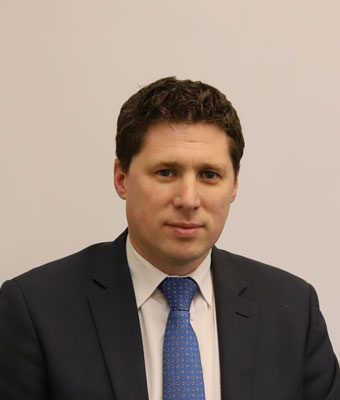
14. Deputy Matt Carthy asked the Minister for Children, Disability and Equality her proposals to provide additional respite capacity for adults and children with disabilities in County Monaghan. [72976/25]
The Minister of State may be aware that until last year, Monaghan had no respite facilities for children at all. The services it has currently are incredibly stretched. I ask the Minister of State to outline the proposals to provide additional respite capacity for both adults and children with disabilities in County Monaghan.
HSE Capital and Estates Dublin and North East and the disability services in the Cavan-Monaghan IHA service area have identified a premises for sale that is suitable for the purposes of renovation to develop a HSE respite centre for children. The purchase transaction has been approved and completed. The keys of the premises have been transferred to HSE Capital and Estates Dublin and North East. The premises are located at Drumbear, Ballybay Road, County Monaghan.
Following the conclusion of the preliminary design stage with disability services in quarter 3 of 2025, the HSE Capital and Estates Dublin and North East office, through the appointed design team, has progressed with preparing a planning application for the proposed development, to be lodged no later than the end of January 2026. Subject to statutory approval of the planning application, it will be the HSE Capital and Estates Dublin and North East office’s intention to commence the preparation of tender documentation for the project. The HSE will then complete a capital project to prepare the property to deliver a five-bedroom residential respite facility.
HSE Capital and Estates Dublin and North East has advised that, if all of those steps go according to the timeframe set out, this project should be completed in quarter 4 of 2026. The number of children who will avail of respite in this new centre will be dependent on the assessed individual needs of each child and his or her family. In order to legally operate as a registered residential respite centre, a facility will need to meet the required standards for a designated respite centre, which is assessed and determined by the Health Information and Quality Authority, HIQA.
Cavan-Monaghan disability services secured a commitment for funding for an interim, two-year residential respite service for children in County Monaghan pending the development of the new HSE facility. The location of the interim children’s respite centre for Monaghan is at Urbalkirk, approximately 8 km from Monaghan town. The Talbot Group operates the service under a service arrangement with the HSE. The interim children’s respite centre, called Rainbow Lodge, became operational on 1 October 2024. Retention of this respite centre’s services will be contingent on future funding considerations. Cavan-Monaghan disability services helped prepare capital submission documents for the national HSE capital and property steering committee to seek approval and funding to provide a stand-alone respite centre for adults with an intellectual disability in County Cavan.
I welcome that progress is being made on a permanent respite centre for children in Monaghan. However, I am deeply concerned by what the Minister of State referenced in relation to Rainbow Lodge, which is an interim measure. The Minister of State indicated that its future is contingent on funding. It would be completely unacceptable if Rainbow Lodge were closed before the permanent centre opened. I appeal to the Minister of State to take a hands-on approach to this. Even the new centre with five bedrooms is going to be at or above capacity on day one. I suggest it would make eminent sense for the HSE and the Department to ensure that Rainbow Lodge is maintained as a respite centre, even beyond the construction and completion of the new centre.
There is huge demand for respite services. Rainbow Lodge is operating well. It is incredibly popular with users and a huge relief to the families who have benefited from it. It would make sense to maintain both respite centres into the future.
As the Deputy is aware, Rainbow Lodge is an interim children's respite centre. It came into operation on 1 October 2024. Retention of this respite centre service is contingent on future funding considerations. I take on board what the Deputy has said in relation to the new centre coming on board at the end of next year, and that there may perhaps be a gap. I take that feedback on board and will bring it back to my officials.
Regarding respite services for adults and children in County Monaghan, I draw the Deputy's attention to the fact that there is also Annalee View Respite Centre. The HSE disability service in IHA Cavan Monaghan operates one respite centre directly in County Cavan, which is in the Deputy’s area. Steadfast House is an overnight respite centre in County Monaghan. It is a HSE-funded, section 39 provider, which is funded under a service agreement with the HSE to provide 1,500 respite nights per year. Following the submission and approval of additional funding in 2024, the number of respite nights increased from 840 per annum to the current level of 1,500. Mountain View Respite Centre, in County Cavan, provides services for adults with physical and sensory disabilities from both Monaghan and Cavan. It opened in November 2026.
The Minister of State said Rainbow Lodge is contingent on funding. She is the one who provides the funding. Has she allocated sufficient funding for Rainbow Lodge to operate throughout 2026?
Second, Annalee View is a respite centre that operates one week for adults and one week for children. The truth of the matter is that there is a deficiency in respite places. As the Minister of State outlined, it can be a lengthy process to provide new respite services. If we have a respite centre that is up and running, and operating well, which the users love and the families think is a great service, it would be illogical to close it down. I contend that if it is closed down, at some point in the future, another Minister will have to start the process all over again.
Will the Minister of State confirm that the funding is in place for 2026? Will she confirm that she will actively pursue keeping Rainbow Lodge open, even post the second and permanent respite centre being in place?
The Deputy described a deficiency in respite care in Monaghan. I assure him that the Department and the HSE are currently auditing respite services to give us better visibility of the full picture regarding the provision but also, more importantly, the need. We have additional funding next year that we sought through budget negotiations. That will be part of the HSE's national services plan that is to be published. To clarify, we will be making the decisions as to where the funding goes based on the current level of provision locally but also based on need. The Deputy has clearly outlined a case for why Monaghan needs further investment. If the HSE figures add up on that, we will absolutely be looking at it.
Child and Family Agency
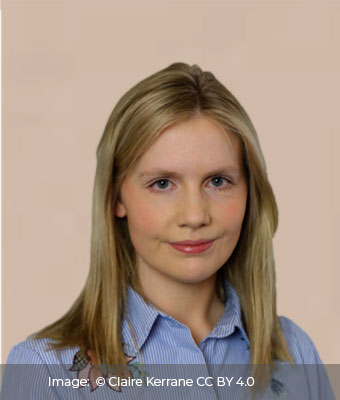
15. Deputy Claire Kerrane asked the Minister for Children, Disability and Equality if she will respond to a HIQA report published following an inspection of Tusla services in Dublin north city; and if she will make a statement on the matter. [71909/25]
I want to give the Minister the opportunity to respond to the HIQA report that has been published recently in relation to Tusla services in Dublin north city.
The HIQA inspection was carried out between 24 June and 30 June 2025. The inspection was a monitoring inspection of the Dublin north child protection and welfare service to assess the progress made on the actions identified to address non-compliance during the previous inspection in May 2024. The inspection identified that significant system risks previously escalated to the Tusla regional chief officer following the April 2024 inspection had not been addressed, and required escalation to the Tusla national office following this inspection. In this inspection, HIQA found that of the five standards assessed for compliance with the national standards for protection and welfare of children, all five standards were deemed to be non-compliant.
The HIQA findings from its inspection of Tusla’s Dublin north city service area have been escalated within the Department. Tusla has submitted an action plan to address all areas outlined for improvement as a matter of urgency. This plan was accepted by HIQA. Since the inspection, Tusla has made significant improvements and rectified almost all areas highlighted by HIQA, with any remaining actions being addressed as a matter of priority. To oversee the implementation of this compliance plan, Tusla has established a child protection and welfare governance implementation group, which meets weekly.
Following the inspection in June 2025, Tusla’s practice assurance and service monitoring team completed a 12-month, full audit of child-in-care referrals categorised as abuse. This was to ensure that screening, assessment and notifications were completed as required.
Tusla has increased the number of social workers at the front door of the service from three to eight and 94% of child protection and welfare referrals in Dublin north city are now screened within two working days. In relation to staffing shortages noted in the inspection report, Tusla is currently reviewing administrative capacity in the service area to ensure staff are being utilised effectively and to identify areas for improvement. The agency continues to move to a more multidisciplinary way of working to address challenges in recruiting a sufficient number of social workers from a very competitive and limited market. Since the inspection, Tusla has also undertaken a review of the governance structure and oversight processes in the service area relating to the receipt and management of referrals and case allocation in accordance with relevant policy, procedures and guidance.
I am glad to hear, and obviously the Minister has had it confirmed, that progress has been made in relation to the very serious findings not only in the initial inspection in April 2024 but also when HIQA went in well over a year later in June 2025 and things were not much improved at all. One example HIQA gave was a child with a disability who was non-verbal awaiting completion of a preliminary inquiry and safety planning for over two months. It reminded me, I have to say, of the Grace case - a non-verbal child with a disability waiting two months. Many other examples were given. There was an allegation of physical abuse by a parent against a child and they waited over four weeks. It was found the service was not safe, adequate or timely and where the screening for Tusla is supposed to be 24 hours, it was taking six months. I welcome if it is now two days. The likes of these cases really need to be checked on. We know the service also said things were done that were not done which was found when the inspection follow-up took place. I ask that a really close eye is kept on this.
I accept that there is and was incredible urgency to ensure matters were rectified as a matter of priority. I acknowledge the work of Tusla in that respect. It has increased the number of social workers and 94% of all cases are now seen within two days. There is very strong oversight of the operation. The Dublin north city area team, with support from Tusla’s regional and national teams, has worked diligently in an incredibly challenging environment to make significant improvements and rectify almost all areas highlighted by HIQA. Plans are in place to address any outstanding items and Tusla has been in close communication with HIQA during the implementation of the compliance plan. It is really important that HIQA is kept in the loop. Concerning Tusla more generally, budget 2026 saw Tusla receive increased funding of €165 million to continue providing vital child welfare and family support services, bringing its funding up by 14% to €1.37 billion.
When the word "allocated" is used, the figures look like a child is allocated to a social worker and therefore getting support but we also know from the HIQA report that some children were allocated to staff on extended statutory leave and had received no contact. We need to be careful in relation to what "allocated" actually means and that it is not just that a case is allocated but the case and the child concerned in that case is actually being seen and getting the support needed. There is also a need for consistent oversight. The HIQA report stated, "It was a significant concern, given that the significant risk’s identified in the April 2024 inspection, that the Self-Assessment Questionnaire (SAQ) returned by the provider in advance of the [June 2025] inspection had deemed the service area to be substantially compliant ..." Of course, it was not. HIQA was misled. I would like to take the opportunity to acknowledge the very many good social workers but where they do not have the resources, their hands are tied. This should be a lesson to all of us in terms of what can go on in some of these services. Consistent oversight is needed.
The HIQA report on Dublin referred to by the Deputy sets out specifics. The questions raised by parents all over the country are similar to the questions raised in the context of the HIQA report and Tusla. What is the process in Tusla to respond to individual complaints of a serious nature? Is it expected to respond to and deal with issues or is it the case that parents have to go further? I referred to the Jones case recently in the Chamber and I refer to it again now. I referred to a child being cared for in a hotel setting which is unacceptable. All of these things are in breach of proper procedure and standards. Given the reports I have read, Tusla needs a complete reform and overhaul in order to deal with this. I ask the Minister to insist that the CEO of Tusla respond to queries and not make false promises.
To go back to the case highlighted, in the intervening time, it has to be an absolute priority. I welcome the HIQA report because where things are not right, it must be highlighted and rectified. Tusla submitted the action plan which was accepted by HIQA. Since the time of inspection, Tusla has made significant improvements and rectified almost all of the issues, for example, 94% of all cases are now screened within two days. That is really important. I do not take from the challenges and I appreciate that Deputy Kerrane has acknowledged the very strong work ethic of really good people on the ground dealing with very changed, different and challenging circumstances. I acknowledge that work as well. New oversight has been put in place. Resources were referenced by Deputy McGuinness. Resources for Tusla have increased significantly to €1.37 billion, a significant uplift which Tusla itself has acknowledged. In terms of attracting staff, there are new schemes such as earn and learn for social workers and recruitment from abroad. More will be done in this area going forward.
Questions Nos. 16 and 17 taken with Written Answers.
Child Protection
18. Deputy Claire Kerrane asked the Minister for Children, Disability and Equality when a report by the special rapporteur on child protection will be published; if part of the annual report has been furnished to her; and if she will make a statement on the matter. [71911/25]
I want to ask the Minister about the awaited annual reports from the special rapporteur on child protection and when they will be published. The special rapporteur was appointed in February 2023; it is now almost 2026. It is actually coming to the end of her term and we have not seen any report whatsoever unless the Minister has. I would appreciate an update on this.
The special rapporteur on child protection plays an important role in examining and reporting to Government on legal, legislative and litigation-related matters in respect of child protection. The annual reports of the special rapporteur provide important input to the development and review of child protection policy and legislation as well as an objective and independent expert view of the child protection system in Ireland. The reports have been influential in informing policy responses across government to improve the lives of children and young people. The Department has not yet received any annual report or part of any report in respect of the current term of the special rapporteur on child protection. Department officials are engaging on an ongoing basis with the special rapporteur on the matter of the submission of the annual reports prior to the completion of the rapporteur's term of office on 31 January 2026. The special rapporteur has indicated that she expects to submit a report in respect of the period 1 February 2023 to 31 December 2024 imminently. She has indicated that this report will also include her observations and important developments from July 2022 to January 2023, before her term of office commenced. The special rapporteur has also indicated that an annual report in respect of 2025 will be delivered by the end of March 2026. The annual reports of previous special rapporteurs have tended to cover a wide range of policy areas and certain commentary and recommendations relating to several Departments and agencies.
Once submitted, a copy of the report will be provided to all relevant Departments for appropriate review. On completion of this review process, I will submit the report to Cabinet for approval to publish. Once approved, the report will be laid before the Houses of the Oireachtas and published on the Department's website. With the end of the current term of the special rapporteur approaching, I recently secured Cabinet approval to fill the position of the next special rapporteur on child protection for a two-year term. It is my intention to progress the selection of the nominee for the position by way of an open competition run in conjunction with publicjobs.ie as soon as possible.
Unless I am missing something, the Minister should have received by now an annual report from somebody who was appointed in February 2023 and who is almost at the end of her three-year term. I would have expected the reports to have been annual.
I take the Minister’s point entirely that the role is extremely important. It is about our child protection system in Ireland. There are few things more important, particularly in the Minister’s Department. Was there an expectation or a timeline concerning annual reports when the position was filled in February 2023? Has she raised the issue of having no annual report as we come to the end of the three-year term?
I thank the Deputy. I want to be clear. I acknowledge the work of the special rapporteur. I have engaged with her and she has made herself available. I acknowledge that there has been considerable engagement between the Department and the special rapporteur on making the reports available in a timely manner. The special rapporteur has indicated that she expects to submit her report for the period February 2023 to December 2024 imminently. She has indicated that the report will include observations on a period in which she was not in office, namely the period from July 2022 to January 2023. She has also indicated that an annual report in respect of 2025 will be delivered by the end of March 2026.
I thank the Minister. I appreciate that the special rapporteur is considering the year before she took up her role. It would be great to see the reports from her term in the first instance, but I welcome that the reports are imminent, if that is the case. I find it bizarre that, despite someone being appointed to the role in February 2023, we are now almost at the end of her term and still have not had an annual report. I hope that with the next appointment, we will have annual reports. As the Minister said, this is a really important body of work. I cannot fathom how, despite somebody’s having been appointed in February 2023 in the expectation that they would publish three annual reports, we have not had a single annual report at the end the person’s three-year term. I ask that for the next term, which the Minister has said will be two years, a time frame be put in place so an annual report can be expected annually.
Again, I appreciate the Deputy raising of the question. I accept the word of the special rapporteur that she will present the report for February 2023 to December 2024 imminently and that she will furnish the report for the period July 2022 to January 2023 before the end of her term of office. The annual report for 2025 will be delivered in March 2026. I expect that will be done with priority.
Questions Nos. 19 to 24, inclusive, taken with Written Answers.
25. Deputy Ruairí Ó Murchú asked the Minister for Children, Disability and Equality the engagement there has been with relevant Departments and agencies, including Tusla, following the publication of recommendations from the national review panel report on the case of a person (details supplied); the projected timeline and cost of this implementation; and if she will make a statement on the matter. [72979/25]
What engagement has there been with relevant Departments and agencies, including Tusla? I am talking about the recommendations following the national review panel, NRP, report on Kyran Durnin. We have had a large number of child protection issues, including in respect of Vadym Davydenko and Daniel Aruebose, and the shocking events surrounding the brutal assault on a ten-year-old girl who had been in care. What I am looking for is information specifically on the NRP report and assurance that the recommendations will be acted upon. Beyond that, I seek the timeline for the rest of the reports and assurance that we have the proper framework in play. I am aware that the Minister has legislation and other measures planned.
I appreciate the Deputy raising this matter. Any case of a missing child is of enormous concern to the Government, everybody in this House and others across wider society. I know he agrees with me on that. We are always conscious that at the heart of this case is a young child. All of us, including the general public, are devastated that a young child could go missing for such a long time.
The NRP delivered its report on the review of the Kyran Durnin case to the Department on 29 October last. I have been clear in my wish to publish the report in full on its completion. However, I was also clear at the outset that I would seek the advice and expert legal opinion of the Attorney General. I have done that. The Attorney General has determined that it would not be possible to publish the report at this time given the potential to prejudice any potential prosecutions. It may be possible to publish the report in the future, depending on the advice of the Attorney General and the Director of Public Prosecutions.
What was agreed on foot of the advice of the Attorney General was that the recommendations in the report would be published in full, and that was done on 3 December. Implementation of these recommendations falls to a number of Departments and agencies. They cover several areas, for example, tracking pupil movement between primary schools, including cross-border movement; a review of GDPR and network checking; guidance to social workers; the development of procedures for waiting list management; the development of a framework for quality assurance monitoring and review; outcome measurement for family support provider agencies; and a review of the Tusla–An Garda Síochána protocol.
The Attorney General recommended that the full NRP report be shared with the Minister for Education and Youth, Deputy Naughton. It has been shared with her. The Department is engaging with the relevant Departments and agencies, including Tusla, on the implementation of the recommendations relevant to them. Tusla has already commenced the process of implementing the recommendations under its remit. I am clear that the implementation of the recommendations should be completed as soon as possible.
I have recently introduced a Bill updating and modernising the Child Care Act, which provides the foundation for child protection and welfare services in the State. This will strengthen the child protection legal framework and the powers available to Tusla. Key child protection features include the introduction of a duty to co-operate among bodies.
The Minister will have an opportunity to follow on regarding what she envisages changing legislatively. Her comments recognise the need to update legislation and ensure a framework for child protection. Our thoughts are on Kyran Durnin and the other tragic cases I have mentioned. We need to put whatever protections we can in place.
I ask that the Minister engage with Tusla and other agencies to ensure the recommendations will be acted on. Could she give a timeline on the other reports and recommendations arising from them regarding the cases of Vadym Davydenko, Daniel Aruebose and the ten-year-old girl who was assaulted while in the care of the State? It is vital that we do all and sundry, that due diligence be done and that we have a framework that works. Tusla is not sufficiently resourced in respect of staffing and other areas. There are attempts to rectify this. How are they going?
The Deputy alluded to some of the new measures we will be introducing under amendments to the Child Care Act. A duty to co-operate will be introduced. This is important and it will mean there will be a compelling duty on all relevant bodies dealing with children, including Tusla and Departments, to co-operate proactively in performing their existing functions relevant to the development, welfare and protection of children.
With the new duty to co-operate, there will be a clear basis for the sharing of information between agencies and organisations when working together on child protection and child welfare matters. I am referring to the sharing of information around the table in the best interest of children so as to protect them.
I will also be introducing amendments to the Child Care Act to place the NRP on a statutory footing. The Deputy and so many others were keen for us to do this. This measure will further enhance the work of the NRP in addition to strengthening its independence and ability to compel information and witnesses in respect of all reviews it undertakes. I acknowledge the work of the NRP.
What the Minister referred to is vital whether we are talking about putting the NRP on a statutory footing or following through on all the recommendations. Could I have a notion of what the general timeline is? I understand that due diligence had to be done on the legislative process.
The issues around the tracking of pupils, particularly whatever cross-border directive is needed, should be addressed straight away. We should be overcoming whatever issues there are with GDPR. I would also like an update on the Tusla-Garda protocol.
Kate Duggan and others spoke about the increase in complex cases, the new model of care Tusla is looking to bring in and the need for it to increase its staff. We frequently hear from those in the community and voluntary sector who get referrals from Tusla. They also speak about their need for increased resourcing to ensure we have something that is more fit for purpose for looking after children and particularly the most vulnerable.
I acknowledge that those in Tusla, the Department and all the agencies who work with children are absolutely central to protecting vulnerable children and are doing excellent work individually. However, the purpose of the duty to co-operate is that collectively there will be the sharing of information the Deputy referenced, everybody will be around the one table as it were and there will be a strong sense of partnership across State agencies to ensure that everyone is fully engaged with and aware of the role they play in protecting children from harm.
The Deputy specifically referenced North-South co-operation. Although it is a matter for the Department of Education and Youth, I am aware of very extensive North-South engagement on that. It is an issue I have discussed with the North's Minister for Education, Paul Givan, on a number of occasions and the work there is very advanced. All the recommendations that have been outlined have been shared with each of the Departments and agencies concerned. It is a matter of priority for them to be put in place. As I said, the work with Tusla is under way. A considerable uplift in the funding of €1.37 billion has been provided for Tusla in the budget this year, and significant work is under way on recruitment of staff.
I ask the Minister to come back to me on a timeline for the report.
Questions Nos. 26 to 31, inclusive, taken with Written Answers.
32. Deputy Claire Kerrane asked the Minister for Children, Disability and Equality the timeframe for implementation for each of the recommendations made by the national review panel following its examination of the case of a child (details supplied); and if she will make a statement on the matter. [71912/25]
I ask the Minister for a timeframe for the implementation of the recent recommendations that have been published by the national review panel. Given the Kyran Durnin case, which the NRPl examined, it is really important that we have a very clear timeframe for when each of these recommendations must be implemented.
This is very similar to the issue raised by the Deputy's colleague. I reiterate that any case relating to a missing child is of enormous concern to all of us and is a priority for all of us because we know that at the heart of it is a child and child welfare. All of us share in the sense of devastation and loss that a child could be missing for such a long time.
The national review panel delivered its report on the review of the Kyran Durnin case on 29 October. I was always clear that it was my personal wish that the details would only be published if it were not to the detriment of an ongoing Garda investigation and that I would seek the advice and wisdom of the expert legal authority, the Attorney General. On seeking that advice, the Attorney General recommended or determined that it would not be possible at this particular time, given the ongoing Garda investigation, to publish the report in full because it had the potential to prejudice any future potential prosecutions. He has also said that it may be possible to publish the report at a future date but that would obviously be on the advice of the Attorney General and the DPP.
What has been agreed on foot of the Attorney General's advice is that the recommendations in the report would be published. As I have said, they were published on 3 December. The recommendations fall to a number of different Departments and agencies to implement. As Deputy Ó Murchú outlined, they involve: the tracking of pupil movements North and South; review of GDPR; guidance to social workers; development of procedures for wait-list management; development of a framework for quality assurance, monitoring and review, and outcome measurement for family support provider agencies; and review of the Tusla and Garda Síochána protocol.
The Department is engaging with all the relevant Departments and Government agencies, including Tusla, on the implementation of the recommendations relevant to them. I can confirm to the House that Tusla has already commenced the process to implement the recommendations that come under its remit. I am clear that the implementation of the recommendations should be completed as soon as possible and that has been advised to all the Departments and agencies involved.
With a number of Departments and agencies involved, it is really important that one person has oversight for ensuring that each of the recommendations is implemented as quickly as possible. I imagine that recommendations such as guidance, reviewing the protocol between the Garda and Tusla, and reviews of GDPR should all be initiated very quickly and some of them will be able to be implemented very quickly. Given the nature of the review panel's work, it is really important that we have a clear timeline for each of the Departments and the agencies involved so they are working to a specific timeframe to complete the work that needs to be done. That would be really important given we are going to see further recommendations from further reviews of the NRP. That makes it really important that the ones we have in front of us now are implemented as quickly as possible. It goes without saying that is exactly what the Minister wants. When a number of agencies and Departments are involved, a timeframe would be helpful.
The recommendations were issued on 3 December. There has been a genuine willingness from all the Departments and agencies to move with haste and priority, but also to do it right. I chaired a cross-departmental meeting on moving forward with the sharing of information and ensuring that this duty to co-operate can very much come into being. Outside of the work under way in the Department, that interdepartmental group is seeking opportunities for the sharing of information that one Department has and where there might be gaps in another Department.
I have brought forward the Bill to update and modernise the Child Care Act. Some of the key provisions will include the introduction of the duty to co-operate with all the relevant bodies. It will also include a clear basis for the sharing of information between agencies and organisations where they work together on child protection and child welfare matters. I will also bring forward the amendment, which is important from the NRP point of view, to put it on a statutory footing. All of that is being done as a matter of priority.
I appreciate all of that and I thank the Minister for those updates. It would be really helpful for her to provide to the Departments and agencies involved a time frame to ensure that each of the recommendations made by the national review panel is met. As I said, we will get further recommendations and more work is needed in these areas. That is why it is so important to have a clear and specific timeframe that the Department and agencies, particularly Tusla, are working towards. These recommendations need to be implemented as quickly as possible; nobody disagrees with that. As the Minister in this Department, she should provide them with a time frame for this really important work.
These recommendations were published on 3 December. From a legislative point of view, it is being given priority through my Department's work on the child care (amendment) Bill, which we move very rapidly through the House. I know that there will be very strong co-operation forthcoming from the Deputy and right across the House. We will continue to engage with all the Government agencies and Departments involved. Implementation of some of the recommendations is well advanced. In particular I am conscious of the Department of Education and Youth's North-South initiative because I have engaged in that myself. We will continue to ensure that these will be delivered as a matter of priority. It is important to recognise that some of the recommendations may be more complex than others but they will all be given priority.
Questions Nos. 33 to 95, inclusive, taken with Written Answers.
Disabilities Assessments
96. Deputy Ruairí Ó Murchú asked the Minister for Children, Disability and Equality the engagement there has been with the Department of Education and Youth on the autism protocol to ensure that assessments of need are not required for school places; and if she will make a statement on the matter. [72980/25]
What engagement has there been with the Department of Education and Youth? There are proposals around the autism protocol. We spoke earlier about the very specific proposal to remove the requirement for an assessment of need in order for a child to find an appropriate school place, whether that is in a special class, in a mainstream setting with supports or in a special school. There has been huge unease among the teaching unions and others in relation to who will make this assessment. It is very important that we bring clarity to this particular case. We all want to see streamlining of the assessment of need process. I have always said I have no particular issue with that, but clarity is needed at this time.
The Government absolutely recognises there are unacceptable delays in accessing assessments of need. My Department and the HSE are committed to addressing these delays. Under the Disability Act, an assessment of need is an assessment process carried out by the HSE where a person is of the opinion that he or she may have a disability for anyone born after 1 June 2002. It first establishes whether the person has a disability as defined within the Act and then identifies the health and education needs of the person with the disability and the service required to meet those needs.
As the Deputy said, last week the Government announced a series of reforms to the assessment of need process which will make the process more effective and efficient for children and families, and will move towards more assessments being delivered within the six-month statutory timeframe. These reforms include changes to Part 2 of the Disability Act, which provides for assessments of need. The general scheme of the disability (amendment) Bill 2025 was approved by the Government on 9 December and will be published on the Department’s website shortly. It is important to say these changes will not remove any rights for parents to apply for an assessment of need for their child, nor will they alter the statutory six-month timeline set out in the Disability Act.
Turning to access to treatment and therapies, I must emphasise that children do not require an assessment of need to access health services including primary care, children’s disability network teams, CDNTs, or mental health services. However, it is recognised that there can be delays for children and families in getting access to the treatments and therapies they need.
Children can be on a number of different waiting lists which can cause confusion for families. In 2026 the HSE will introduce a single point of access system, which will make it easier for families to be referred to the right service whether that is a CDNT, primary care, or a child and adolescent mental health team.
The recruitment of staff across the disability sector continues to be a key priority in ensuring children can access therapies in a timely manner. An intensive focus of my Department has been on increasing the staffing of CDNTs that deliver supports and services to children with complex needs. My Department has been in discussions with the Department of education on the need to phase out the requirement for an assessment of need to access special education class or school.
Will the Minister of State give some detail on what that engagement has been? I get that it is the early stages but unfortunately it has led to some unease. We all accept there are huge issues in relation to those who have been on the assessment of need waiting list. None of it has been great for the families and children. People are looking for adequate and correct therapies and supports. I have heard many times that the Department does not require an assessment of need to deliver supports and therapies, but unfortunately parents operate in a slightly different world and at this time the schools require assessments of need. While that is being dealt with, we need clarity. As I said, I have no particular issue if we are accepting that 45% of those who go through assessments of need have autism and if we can find the means whereby people can get a proper assessment in relation to autism and then can get the therapies. However, I ask again about recruitment as we try to recruit to the CDNTs and directly to schools and these new teams. Can the Minister of State go into the detail of how things will change in these things given the huge amount of work and the huge cohort they have to deal with?
That statistic that 45% of children who go through the assessment of need process receive a diagnosis of autism is absolutely correct. For that reason the HSE is standing up a new autism assessment and protocol process in order to be able to respond to emerging need in this area. We hope that from January, but definitely from the first quarter of next year, children who are displaying autistic traits will be referred into the new HSE autism protocol and assessment process. That will absolutely help. It will provide them with specific interventions that will be most appropriate to them. That is a really welcome development. I thank the HSE for its hard work and its engagement with my Department on this.
Part of what was announced last week was a six-pronged approach. We have the heads of the Bill. Decisions are being communicated earlier to parents. There is a single point of access. There is the autism protocol and assessment. We also have recruitment in our own CDNTs. We are recruiting at the moment and will be recruiting another 150 staff next year. Throughout the disability service we will recruit 1,000 people next year and we are also outsourcing assessments of need. Education is the other element of that. The Minister for education will come back to the Cabinet committee on disability in the first quarter of next year with formulated proposals on that issue.
If we are talking about the first quarter for the education piece, it could be as far away as March before we have clarity on it. It needs to happen as soon as possible.
When will we see delivery on the single point of access? I think Bernard Gloster said that those who have the best things to say about the CDNTs are those who have a contact person they can engage with because then they know the ins and outs. That is where some of this falls apart. Sometimes there needs to be a straight conversation about supports and about the future trajectory for children and parents. When that is lacking, obviously it does not work.
The Minister of State is saying that in January or at least some point in the first quarter of next year, the autism protocol will operate. As that waiting list becomes populated, will we have capacity to deliver on it?
Will the new teams ensure there is a greater level of communication? As I have said before, I am worried about recruiting to all the bodies need to recruit to. Will they be able to deal with the huge cohort that are on the waiting list now and the parents who have suffered because they did not have the supports they should have?
A short response from the Minister of State.
Taking cognisance of the Chair I will give a short response. Our in-reach teams will support the HSE's new model and will work to ensure there is more joined-up thinking between primary care, CAMHS and our CDNTs. Each team will consist of a psychologist, a speech and language therapist, an occupational therapist and an administration person. Part of the reason we have an administration person is because some of the feedback we have received from parents is around communication. This person will assist with that from a caseload management perspective. We will be standing up 11 teams in 2026 and a further nine teams in 2027. That will be 20 teams, which will be one team per regional health organisation.
I thank the Minister of State. That concludes questions to the Minister for Children, Disability and Equality.
Happy Christmas from all of us. Thank you for everything.
I wish the Minister and the Minister of State and their officials a happy Christmas.
Renewable Energy Generation
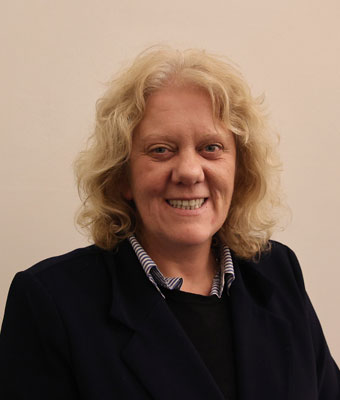
105. Deputy Paula Butterly asked the Minister for Climate, Energy and the Environment to provide an update on capital investment allocations for electricity grid upgrades under the national development plan; and the way in which decisions support Ireland’s renewable energy targets and security of supply [69909/25]
Can the Minister provide us with an update on the capital investment allocations for electricity grid upgrades under the national development plan, and the way in which these decisions support Ireland's renewable energy targets and, most importantly, our security of supply?

I thank the Deputy for her question. In July, the Government approved a €3.5 billion investment in Ireland's electricity infrastructure across 2026 to 2030 as part of the revised national development plan. This represents the largest single investment in the country's electricity network in its history. Some €1.5 billion was transferred this week from ESB Networks to support investment in the onshore electricity grid. The Electricity (Supply) (Amendment) Bill, which was enacted in November, provides the mechanism for making the investment in ESB. As part of the oversight measures in place, the Minister, Deputy O'Brien, will receive quarterly monitoring reports as to the expenditure of the investment and progress on delivery of the overall price review, PR, 6 investment programme. A further €2 billion will also be allocated to EirGrid over the next five years to support the financing of its offshore electricity grid investment plan. The mechanism for making this payment will be agreed and legislated for separately next year.
The Commission for Regulation of Utilities, CRU, also published its final determination on price review 6 this week, which paves the way for a historic investment of over €18.9 billion in Ireland's energy infrastructure. This represents approximately two and a half times the spend under the previous price review period, PR 5. The equity investment in both ESB Networks and EirGrid will support the financing of this unprecedented investment over the next five years. The Government equity investment will also support the integration of renewables and help to reinforce vital energy infrastructure across the effects of extreme weather events, thus enhancing the country's energy security. Extending and reinforcing the grid will ensure that every home and business has a reliable and secure source of electricity, including the 300,000 new homes the Government has committed to build by 2030.
I welcome all these updates, in particular the largest investment. I also welcome the fact that this is going to be monitored and that the Minister will receive quarterly reports because without a robust energy delivery, we are going to find ourselves in great difficulty going into the future. For example, the Minister, Deputy Burke, launched in May 2025 the Silicon Island project. This is a very ambitious project. This is something that will take us into the realms of new jobs and new prospects for our economy. We need to have the nuts and bolts, however, and I believe this Department has the nuts and bolts for every other Department to work efficiently. If we do not have that Department working not just efficiently but delivering efficiently, then we are not in a position to progress new jobs, such as in semiconductors. We will not be able to deliver new houses like, for example, phases 3 and 4 of the port access northern cross route, PANCR, in Drogheda, which suggests 700,000 homes.
I thank the Deputy for raising this important matter.
My dual roles as Minister of State in the Departments of enterprise and climate and energy are very much aligned in the context of policy. From an enterprise perspective, we have the policy of propelling prosperity. Within that is the provision of unprecedented investment through ESB Networks and Eirgrid. This will provide over 500 projects under price review 6, more than 181 km of new overhead lines, 319 km of underground cables, nearly 70 substations and the replacement of over 50,000 poles. As the Deputy stated, it will be the accelerant for us to deliver with regard to new homes, supporting enterprise and industry, reducing our curtailment and strengthening the security supply. We all know - even in Louth - that there is major industry which requires a strong energy supply. The private wires legislation we will be enacting next year will be an important benefit for many of these sectors.
The M1 corridor is uniquely positioned to attract new FDI. We have the lands and talent, as well as the proximity not just to two large cities but also the airports. This is an area in which I welcomed, during engagement throughout the summer with ESB Networks, its announcement of a commitment to invest €90 million. That will take us into the next five years but not the next ten years, however. It is about continued investment. It is great to have a plan for the next ten years, but we must think longer term than that. We must continually invest. Those quarterly reports will be essential to delivery, and it will all be about delivery. A total of 7,000 homes are ready to be built in Drogheda around the port access northern cross route, PANCR, and IDA Ireland is ready to develop the lands and attract FDI. None of that will happen without a secure supply of electricity.
I could not agree more. This certainly is the most ambitious energy infrastructure programme we have seen in decades. It is akin to the rural electrification scheme. It will certainly put Ireland in a strong position in terms of our competitiveness. It is also required because industry leaders are looking for certainty and security of supply.
We also need to build resilience into our network. I am delighted to see that the private wires Bill has been approved for drafting this week. That will unlock much needed private investment and speed up the clean power connections. A lot of work is being done by the Departments of enterprise and Climate, Energy and the Environment. A core element of that work is to ensure that we have connections for the 50,000 new homes that we will be building every year up to 2030 because we know how important good connections are for many areas right across the country to try to boost that supply.
Recycling Policy
106. Deputy Matt Carthy asked the Minister for Climate, Energy and the Environment the number of rPET pellets produced in the State; the amount of this product utilised within the State and the amount exported. [72997/25]
I have raised on a number of occasions issues relating to rPET plastic recycling in this State. With the introduction of the return scheme, which imposes a deposit charge on consumers every time they buy a plastic bottle that they then need to recoup, we need to ensure there is full transparency when it comes to all plastic that is collected under the scheme. Will the Minister of State detail the statistics relating to the number of rPET pellets that are recycled and produced in this State?
I thank the Deputy for his question and interest in this area. As matters stand, there are no official statistics confirming the number of rPET pellets produced or utilised in the State or the amount exported from the State. While statistics for the recycling of plastic packaging waste are reported to Eurostat by the EPA on an annual basis, the EU’s list of waste codes does not isolate individual polymers and, therefore, it is not possible to establish how much of this PET material is in existence. This is a shortcoming in the system and Department officials have engaged with the European Commission in relation to expanding the list of waste codes to provide greater granularity for plastic polymers.
Ireland does not have some facilities which convert PET waste into rPET flakes or pellets, but we do not currently have a facility producing pellets of a food-grade quality. Due to strict EU food safety standards, rPET to be used in food or drink packaging must meet the highest recycling standard to be of food grade.
Prior to the introduction of the deposit return scheme, PET plastic waste collected through our waste collection system was mostly recycled abroad. Since the introduction of Re-Turn, the deposit return scheme, DRS, operator can confirm that in 2024, it collected a total of 12,057 tonnes of PET plastics, which were sold on the open market. A total of 4,037 tonnes of material, which equates to 34%, was bought by companies in Ireland.
For the first time, a separate and high-quality stream of PET is now available for recycling. Together with the requirement under the single use plastics directive to incorporate 25% of recycled plastic into PET beverage bottles from 2025, rising to 30% from 2030, the opportunity to invest in Ireland's circular economy has been boosted significantly.
The deposit return scheme means that ordinary people are charged an additional cost every time they buy a plastic bottle and then they have to go to what is often a huge inconvenience of gathering the bottles to retrieve their deposit. There have been a lot of unforeseen consequences. For example, people's household waste charges have increased because domestic collectors are not, as was previously the case, receiving plastic bottles when collecting waste. With schemes such as this, we need to be careful that consumers and the general population do not see this as a burden rather than a mechanism to increase recycling and improve the circular economy. This is not helped by the fact that almost 70% of the plastic that is collected is exported to third countries, despite the fact that we have companies in Ireland, such as Shabra Plastics and Packaging Limited in my constituency, that have the capacity to recycle this product. Will the Minister of State take a hands-on approach to ensure that we increase significantly and substantially the amount of plastic that is recycled in this State under this scheme?
I reassure the Deputy that Re-Turn has collected over 12,000 tonnes of this PET plastic, 34% of which, as I said earlier, is purchased by Irish companies. Separately, we have Repak, which funds the recycling of over 8,300 tonnes of plastic, 42% of which is reprocessed in Ireland. Is it enough? We need to do more and that is widely acknowledged. Certainly, with the introduction of the DRS, we have made a significant step forward with regard to fully recognising the stream of product that we have as a result of having a dedicated collection system for PET recycling.
We also recognise that we need to continue to invest in recycling infrastructure. That must grow and that is why, through the extended producer responsibility, EPR, schemes, Re-Turn and Repak are now investing in their domestic capacity. We are engaging with Re-Turn with regard to a bottle-to-bottle PET plant. Certainly, we want to have more domestic capacity for recycling.
The lack of information and movement coming from the Department in this respect are completely unacceptable. The Government was quick to impose this charge on consumers but it has refused point blank to impose a charge on the use of virgin plastic, for example, something that would put a burden on the companies that are using virgin plastic, which is non-recyclable plastic. There are companies in this country that have the ability to recycle this product but Re-Turn sells the plastic to the highest bidder, regardless of the purpose or country. It means that people who are thinking they are doing the right thing recycling their plastic bottles can see their product going half way across the world in a way that no one could describe as being environmentally responsible. I will ask the question again.
Will the Minister of State take a hands-on approach? Rather than just taking the word of Re-Turn or Repak, will he ensure his Department is fully across every single detail and is not allowing something that is penalising Irish consumers or potentially putting Irish companies at risk by the actions that Re-Turn might be taking?
To be clear, the plastic that is recycled is traded on the open market by Re-Turn. The State is constrained in intervening by EU state aid rules. That is why we comply through the EU waste framework, ensuring there is a regulatory environment to support Irish recyclers. All operators in Ireland can play a role in that . It is a complex challenge and we want to continue to provide support. With the supply chain we now have through PET plastic, we can continue to work with the industry on how we can support companies here and reduce our reliance on the export market. This is why Re-Turn is actively planning a multimillion euro facility to bring bottle-to-bottle PET recycling to Ireland. That would be a game-changer for many reasons would present a real circular economy initiative, to the Deputy's point, avoiding the exposure to the export market.
The Government also needs to protect those Irish companies that are already recycling.
Energy Conservation
107. Deputy Paul McAuliffe asked the Minister for Climate, Energy and the Environment if he or his Department plan to make changes to the warmer homes scheme to allow alternative sources of home heating for older homes that require extensive home energy upgrading work and whereby a heat pump might not be suitable; if he plans to extend the scheme to allow for more targeted home energy upgrades whereby following a home energy upgrade inspection, the primary suggestion is only for home insulation as the current central heating system is obsolete; and if he will make a statement on the matter. [73206/25]
As the Minister of State will know, the better energy warmer homes scheme is an incredibly popular scheme. Now that the Government has expanded eligibility to fuel supplement recipients more and more people are availing of it. The Taoiseach said that 26% of homes are eligible for the fuel supplement. The changes earlier in the year to the European Commission's rulings on state funding of replacement of fossil fuel devices is having an impact on the better energy warmer homes scheme. It is time for the scheme to be reviewed to reflect that.
I thank the Deputy for the question and for his interest in this important area. The warmer homes scheme aims to improve the energy efficiency and warmth of homes owned by people at risk of energy poverty by providing fully-funded retrofits. The scheme is operated through the SEAI on behalf of the Department and is funded through the carbon tax receipts and the European Regional Development Fund. The scheme seeks to reduce the volume of energy a household needs by reducing heat loss through the installation of insulation and ventilation in the first instance, before moving to replacing heating systems where required under building regulations. This is in line with the fabric first and energy efficiency first principle and best practice.
There are a number of home energy improvements offered as part of the scheme. The upgrades recommended for a particular property depend on many factors including age, size, type and the condition of the property. For each eligible home, the SEAI’s technical surveyor determines which upgrades can be installed and funded. The SEAI is currently piloting the installation of renewable technologies, including heat pumps, where major renovations are taking place under the scheme. These pilots are helping to assess the suitability of such technologies in the context of energy poverty and long-term value for money. The scope of upgrades under the scheme is kept under ongoing review and my Department continues to work closely with the SEAI to ensure we maximise the impact of resources available.
The Government remains committed to ensuring that low-income households benefit from Ireland's renewable energy transition and we will continue to work with Deputies to explore how best to integrate other technologies into our energy poverty programmes.
I appreciate the response. The most important point the Minister of State made is that this is a fully funded scheme. Unlike the other grant schemes available to local authorities under which the responsibility falls on the individual owner to decide how they will replace their boiler, this is a fully funded scheme and it is up to the SEAI to provide the solution. There is difficulty, however, for a number of people I have been dealing with who previously would have been eligible for the full scheme with the wraparound and all the rest of it. Because of this issue with the boilers I am aware that in one case the household ended up getting four LED bulbs and a bit of attic insulation. The SEAI needs to get better at having a solution in place. The example I gave was a gentleman called Bill in Elm Mount. He spent a year waiting for that decision and he was incredibly disappointed. Another lady called Monica is 88 years of age. She was offered a heat pump under the pilot scheme but she really was not sure what a heat pump was and there was no real explanation of how she could be helped. The SEAI needs to get better at putting in place a solution and explaining it to people when it is offered.
I completely agree. The first principle of the SEAI warmer homes retrofit scheme is all about reducing bills, improving comfort for householders and ensuring that the vulnerable are part of and very much protected within Ireland's renewable energy transition. We have made significant progress on budgets. We increased the latest budget to record levels with over €230 million now under the warmer homes scheme. That has delivered 7,743 free upgrades. If we look at where we have come from, the average cost per household back in 2015 was €2,600 but it is over €29,000 today because we are tackling the worst performing homes first.
To the Deputy's point, we are piloting the schemes in the ongoing review. More exploration is needed on how we integrate alternative technology for older homes to ensure those are protected.
The Minister of State is right that this scheme has transformed the scheme but because of that decision not to replace a gas boiler, a very expensive heat pump system is being put in place. That is fantastic for those who avail of this but that transforms the scheme itself and the cost of the scheme. It will mean that fewer people will have access to the scheme if those resources are used. There is a question to be asked: where the boiler is not replaced by SEAI, why they cannot just put in the insulation and leave the boiler as it is? People will be in a better and warmer home with the insulation going into their home and leaving the boiler as it is, or leave them to apply for it through a council grant or replacement parts. They are being excluded from the whole scheme because of the single issue of the boiler.
I had a public meeting on this. SEAI provided us with their mentor, a fantastic guy who came out. There is a lot of interest in this scheme, in the solar grants and in all that is available. Given the changes to the European regulations around carbon fuels and the changes to the scheme, it just needs to be tweaked to make sure that a really positive scheme continues to be positive.
I appreciate the points raised by the Deputy and I will take them back to the Minister and the SEAI. The replacement of oil and gas boilers has been a challenge in that EU laws prohibit us to incentivise fossil fuel boilers from 2025. New boilers cannot be installed or supported through grant schemes. Replacement parts can be supported through local authorities for sure but the scheme itself is constricted on the basis of the fabric first principle, which relates to insulation, ventilation and then more complex technology. We will take the points back that the Deputy has raised today and try to fine tune them to meet the concerns of his constituents and the wider public.
I appreciate that.
Just Transition
We are moving on to a grouping of Questions Nos. 108, 112 and 119.
I understood it was Questions Nos. 98, 102 and 109.
Can I clarify that with the clerk that it is the grouping of Questions Nos. 108, 112 and 119?
I am taking Question No. 108 on behalf of Deputy Louise O'Reilly.
Yes. The questions are in the names of Deputies O'Reilly, Séamus McGrath and Deputy Neville.
108. Deputy Louise O'Reilly asked the Minister for Climate, Energy and the Environment if he intends to implement a socially-just phase out action plan for the replacement of fossil fuels by sustainable energy sources; and if he will make a statement on the matter. [73018/25]
112. Deputy Séamus McGrath asked the Minister for Climate, Energy and the Environment his plans to reform the home energy grants. [73000/25]
119. Deputy Joe Neville asked the Minister for Climate, Energy and the Environment the steps his Department will take to widen the number of people who have access to the SEAI grants for home improvement; and if he will make a statement on the matter. [73234/25]
We wish to ask the Minister for Climate, Energy and the Environment if he intends to implement a socially just phase-out action plan for the replacement of fossil fuels by sustainable energy sources, and if he would make a statement on the matter please.
Perhaps the Leas-Cheann Comhairle will give me guidance as to which of the three have an opportunity now or what way does he want it.
I could not give the Minister of State guidance, for God's sake. You would not take it anyway.
That disappoints me greatly as you have been a mentor of mine for many years here and I depend on your guidance in many other fora as well.
I propose to take Questions Nos. 108, 112 and 119.
The programme for Government commits to ramping up the achievement of retrofit targets through continued delivery of the Sustainable Energy Authority of Ireland's residential and community energy upgrade schemes. This includes revising and improving the provision of grants and financing models for homeowners who wish to retrofit to enhance energy efficiency and reduce costs, supporting group retrofitting projects and area-based approaches to retrofitting, targeting older homes still using oil to switch to renewable heating systems and considering the use of sustainable bioliquids to reduce emissions from existing home boilers where deep retrofits are not possible in the short term. These commitments are framing the work under way by my Department on continued delivery and development of the SEAI's residential and community energy upgrade schemes and the development of a heat policy statement and a roadmap to phase out fossil fuel heating systems. The SEAI has a number of schemes in place to support homeowners to upgrade their properties and move to renewable heating systems, thereby allowing homeowners to choose the best home upgrade option to suit their particular needs. These include a number of part-funded schemes and the fully funded warmer homes scheme.
Ensuring fairness to all and supporting a just transition are key principles underpinning the National Retrofit Plan. As an example of delivering on this, over the period 2022 to 2024, 64% of the total Government spend on residential and community retrofitting across our Department and the Department of Housing, Local Government and Heritage's schemes was invested in upgrading home energy performance for households at risk of energy poverty across privately owned, local authority and approved housing body homes. The Department continues to build on the progress achieved in recent years. Since 2019 there has been a record level of about €1.6 billion invested in SEAI schemes to support almost 240,000 home energy upgrades, including over 81,000 to BER B2, 18,000 heat pump installations and over 32,000 fully-funded upgrades for households at risk of energy poverty under the warmer homes scheme, which many of us are familiar with through the representations we get in our constituencies. In addition, the Department funded a further 14,300 local authority upgrades, including over 7,250 heat pumps, between 2019 to 2024.
Changes introduced to the SEAI schemes in recent years aimed at increasing the number of homes retrofitted as part of the Government's retrofitting schemes include: enhanced SEAI grant schemes, including expanded eligibility and higher grants; simplified application processes with faster approvals and a greater focus on heat pumps; an increased number of one-stop shops - there were 24 registered at the start of 2025 and a further two were added this year, bringing the overall total to 26 at the end of September 2025; a reformed warmer homes scheme for homeowners in energy poverty with expanded eligibility, increased depth of retrofit, a prioritisation of the worst performing homes and a higher number of homes supported; enhanced supports for retrofitting apartment buildings and flat complexes; new supports for area-based retrofit projects for mixed-ownership estates aimed at encouraging homeowners, regardless of requirements or means, to get a retrofit; a new pilot scheme to support the retrofitting of traditionally built homes; two pilot schemes aimed at informing approaches to increase the number of heat pumps installed; the new home energy upgrade loan scheme, launched last year with new lenders joining in 2025, is now enabling homeowners to avail of retrofit loans with interest rates as low as 2.99%; a tax incentive to encourage small-scale landlords to undertake retrofitting works while the tenant remains in situ; a reduction in the VAT rate for heat pumps to 9% and a 0% rate for solar panels - we all see how that has expanded the amount of solar energy that is now being captured on rooftops.; expanded obligations on energy companies to support homeowners and energy poor households to reduce energy use; measures to increase the number of workers with retrofit skills; and a procurement process to establish a new €1.2 billion contractor panel for the warmer homes scheme to be in place in by quarter 2 next year. This will support continued growth with a focus on scale, quality and output under the scheme.
Budget 2026 has provided record funding of €558 million for SEAI residential and community energy upgrade schemes next year. This is an increase of almost €89 million on the budget 2025 allocation. This funding is expected to be further supplemented with additional funding, such as an allocation from the European Regional Development Fund, which will provide for an increase in the allocation for the warmer home scheme. These allocations will be published as part of the Revised Estimates Volume later. This allocation will support even more home energy upgrades to make homes warmer, healthier and more comfortable, with lower emissions and lower bills. Increasing the uptake of energy efficiency upgrades and measures among homeowners is a key priority for our Department and as such, our officials, in partnership with their counterparts in the SEAI, continue to work to deliver in line with the National Retrofit Plan and the programme for Government commitments.
It is really important we get a just transition. The Minister of State will recall how Sinn Féin tried to get a proper definition of that when we were working on the 2021 climate Act and he and I were on the climate committee. As we move away from fossil fuels and transition to a greener economy, we have to ensure we do not leave anybody behind. The SEAI grants have been made available to people for them to retrofit their homes but it has been shown that tenants and the Travelling community cannot do so. It is not working for them or for people living in older homes. Clare O'Connor from Friends of the Earth was before the climate committee last week. She said those living in the least efficient homes cannot afford to upgrade them. What specific accommodation will the Government make to ensure households such as these are not left behind as we transition to a sustainable economy?
I thank the Minister of State for his response. I think we all agree reducing energy consumption at home is a critically important part of reducing our overall carbon output as a nation and of course reducing the costs for households of their energy use. Many households find the grants to be quite rigid and it is a case of perfection being the enemy of the good. For example, if a household wants to upgrade their windows and doors they have to undertake a full energy upgrade under the one-stop shop system. That can be very inaccessible for many households due to the cost involved, so I ask these grants be reformed in such a way they become more accessible and user friendly. I welcome the measures announced in the simplified process, a reduce loan cost and so on. They are all very important but especially with windows and doors, which are critical parts of reducing energy consumption in a household, the grants need to be looked at so there is not a requirement for a full-blown energy upgrade to avail of them.
Both Deputies show regular interest in this and have spoken on it in the past. The point about not leaving anybody behind is really important and it has been the focus. Deputy Cronin and I, and her party, are aligned on lots of issues. I sat with Deputy Stanley, a former member of her party, on that committee for years and certainly Sinn Féin was very committed to the transition, but we disagreed ultimately on how to pay for it. We sided with the idea of the carbon tax, the hypothecation of that fund and using that to assist people in moving forward. Sinn Féin had a different view but nonetheless recognised the importance of ensuring nobody was left behind. I felt at the time, and still do, that the carbon charge was a way of discouraging the long-term use of fossil fuels and taking that as a methodology to assist exactly the people the Deputy spoke about. What I outlined to her indicates, particularly with the warmer homes scheme, what we have done for people with low incomes, namely, classifying them as in the energy poverty category and targeting that.
The issue Deputy McGrath described has been raised with me, the Minister and the Minister of State, Deputy Dillon, on a very regular basis. Deputy McGrath and others have mentioned it in the House. The Minister is very cognisant of that and my understanding is he is working towards bringing some reforms in this area.
We would all like to do a deep retrofit that would get us in line. Most of us cannot afford it. We are paying our mortgages or are working our way through that. Windows and doors and a little bit of insulation can have a massive impact on emissions from homes, on reducing the cost of energy and on reducing the burden on society generally from the emissions and the generation of electricity and the difficulties around that. I will certainly take that point back to the Minister but he has already begun a process there.
The European Commission's 2025 country specific report stated that energy poverty has increased in Ireland and we now have the third highest household or consumer electricity prices in the EU when the add-ons are included. Much of that is down to our reliance on fossil fuels, which makes us susceptible to global price shocks beyond our control. Some 300,000 people are in energy arrears at the moment, with price hikes coming down the road with the PR6. The Minister of State mentioned carbon taxes. It was shown at the Committee of Public Accounts that carbon taxes are not being ring-fenced as was promised. We are meant to be climate neutral by 2050. The Climate Change Advisory Council said that by 2039 we should not be reliant on fossil fuels. How does the Government envision a complete phase-out of fossil fuels in Ireland? We are not getting there.
I call Deputy Séamus McGrath.
I thank the Deputy-----
No, the Minister of State should hold on.
There he goes again.
I am eager.
He is very anxious.
I am very anxious. I am nervous.
I thank the Leas-Cheann Comhairle.
I thank the Minister of State for his response. As I said earlier, the importance of reducing energy consumption for domestic households is critical, for carbon achievements and to reduce costs for households and our dependence on international energy importation. That is also an important part. Therefore, I welcome the reforms the Minister of State announced that are in the pipeline for these home energy grants. They need to be less rigid and become more accessible and the requirement for full-blown upgrades needs to be changed. It is critical that any improvement to home energy efficiency should be welcomed. We should not be putting unnecessary requirements, conditions and criteria in place, which can prevent people from accessing these grants. I welcome that and I urge the Minister of State to redouble his efforts to bring about these reforms as soon as possible so the grants are accessible to households and so we subsidise and welcome any improvement to the energy efficiency of homes.
Deputy Cronin highlighted the significant cost of energy and the impact it is having on households. We have certainly seen that. The Government has taken action, as the Deputy will be aware, by increasing the fuel allowance from the beginning of the year. We reduced the VAT, which is a help in addressing the burden, but we have to get to the core cost.
I answered a question earlier about the efforts that have to be made in terms of the wholesale energy markets and the price of gas. The Commission for Regulation of Utilities, CRU, on the direction of the Minister, is carrying out an investigation to establish whether there are issues with the market and whether there is potential for failures in the market. The International Energy Agency, IEA, indicated that the difference between the wholesale and retail cost is considerable and widening, particularly in the gas market and that sets energy prices generally. We are therefore looking at it from that perspective. However, the long-term approach is to try to ensure we move away from fossil fuels altogether and reduce the amount of energy needed in homes. I have already outlined the kind of approach we are taking to ensure people who are not in a position to do that upgrade get the State's support.
I thank Deputy McGrath for his comments. It is twofold. It is about having people in healthier, warmer homes that are less dependent on fossil fuels or even on renewable energy. If we can make the homes lose less energy, they will use less electricity and there will be less cost regardless of whether the energy is clean or otherwise. That is why the Minister, Deputy O'Brien, takes the view that this can be done incrementally and we can make progress. It cannot be that people have to do everything at once, because that is a turn-off for people financially. When they get to other side, having paid their mortgage, they often do not want to take on more debt so we will continue with that.
Question No. 109 taken with Written Answers.
Energy Infrastructure
110. Deputy Pa Daly asked the Minister for Climate, Energy and the Environment the steps he is taking to make critical energy infrastructure more resilient to extreme weather events; and if he will make a statement on the matter. [72818/25]
Deputy Farrell will take Question No. 110 on behalf of Deputy Pa Daly.
The Government has taken steps with immediate and medium-term impact to improve the resilience of critical energy networks. In February 2025, the Minister, Deputy O'Brien, asked ESB Networks to prepare a winter resilience plan to enhance the grid in the most vulnerable locations following Storm Éowyn. That plan was updated in October.
Core work undertaken includes remedial work to the network; work with Coillte and the Department of Agriculture, Food and the Marine to identify segments of the network that are at the highest future risk; replenishing emergency stock, spare parts and materials; increasing staffing levels and available contractor resources; and establishing formal mutual aid arrangements for extreme weather events. ESB Networks is also increasing the number of access officers who engage with landowners on forestry works. We are preparing legislation to enhance ESB Networks' powers to manage vegetation and the Government approved heads of a Bill in July. Work on advancing that legislation continues as a matter of priority.
While those measures will have crucial short-term impacts, for the long term, significant investment in the electricity grid will support overall resilience. On Tuesday, 16 December 2025, the CRU published price review 6, PR6, which sanctions investment in the grid up to 2030. The CRU has proposed approval of an investment of up to €18.9 billion, with a €13.8 billion baseline investment guaranteed. Under the 2024 national adaptation framework, a new suite of sectoral adaptation plans across 13 key sectors, including electricity and gas networks, were recently approved and published by the Government. The national electricity and gas sectoral plans align with the aim of the critical entities resilience directive, to enhance the future resilience of the energy grid to the long-term impacts of climate change.
Last night, thousands of households across Connemara were without power again. There was a storm and lightning. No one is going to blame the Government for lightening or a storm by any stretch of the imagination. However, we have a situation where every two weeks I get a text from someone who lives in Connemara to tell me the electricity has gone out again. Over the summer months, it is every month. Therefore, we clearly have an issue specific to the Connemara area.
The Minister of State mentioned Storm Éowyn and it was horrific, but equally Storms Bert and Darragh had serious implications for electricity and telecommunications in the Connemara area. We need a clear action plan from the Government now to deal with these crises as they are happening. Unfortunately, it does not seem like the work was done since last December and January to alleviate these pressures.
I thank the Deputy for raising her concerns on behalf of her constituents in Connemara. That is why we published PR6 this week, which is one of the largest investments in the history of the State. More than 500 capital projects will be delivered as part of the programme and, as I said earlier, we are placing resilience at the centre of this policy to ensure we can deal with energy emergencies and severe weather events. That is why we established the national emergency co-ordination group, chaired by the Department of housing and a co-ordinated with a national response. That certainly aligns with energy actions.
As I said earlier, we have introduced a number of operational measures and we need to continue to work with ESB Networks and EirGrid to build resilience into our network. We also approved heads of a Bill in July for the ESB Networks' statutory corridor powers because we have had difficulties in the past accessing major works.
That is certainly something we will prioritise into 2026.
To be very clear here, I welcome any investment that helps this situation. However, we need to be clear that there is a need for long-term investment because of so many decades of underinvestment in the basic infrastructure in Connemara. That is why we have poles that are pushed over on their sides and cables still on the ground. We also need to look at what can be done immediately to alleviate this situation. It does not make sense for areas to have power outages every two weeks. When there is a power outage or a bad storm, it impacts them for weeks. That does not make sense. The Minister of State cannot control the weather - I am not saying he can - but he can control how we respond to this. It is a year on from Storm Éowyn. I said very clearly at that time that while the Government could not have predicted it to be the way it was, urgent action was needed to ensure we do not leave ourselves as vulnerable again. I urge the Minister of State to take immediate action now, as well as having a long-term plan to alleviate these concerns.
We hear the Deputy loud and clear on this side of the House. I acknowledge the tremendous work of all the operators and workers within ESB Networks who have gone above and beyond. We saw that during Storm Éowyn when they reassured us that they were working day and night to get supply back to many households. That is why the Government has responded. We have allocated over €1.5 billion to ESB Networks. That was approved through the national development plan and legislated for last month. That will, in one sense, lower finance costs for ESB Networks. It will support the delivery at pace. We want to see that in west Galway, Mayo and all across the country. We want to ensure we have limited impact across the network when we have severe weather events. We will continue that investment over the next number of years. As I said earlier, unprecedented investment in our energy grid will support resilience and ensure we can get connections to those 300,000 homes we want delivered by 2030.
Question No. 111 taken with Written Answers.
Question No. 112 taken with Question No. 108.
Energy Prices
113. Deputy Pa Daly asked the Minister for Climate, Energy and the Environment if he has conducted an analysis on the introduction of CBAM on the price of energy; and if he will make a statement on the matter. [72821/25]
Has the Minister of State conducted an analysis of the impact of the introduction of the carbon border adjustment mechanism, CBAM, on the price of energy?
CBAM is an instrument implemented by the European Union to address the risk of carbon leakage. The EU's ambition is to become climate neutral by 2050. CBAM will aim to ensure that imported goods are subject to a carbon price equivalent to the carbon price of domestic production in the EU. CBAM affects the electricity sector by putting a price on emissions associated with electricity produced in countries outside the EU and imported into the EU. It aims to encourage sustainable practices and reduce carbon footprint. For electricity importers, compliance with CBAM initially involves reporting direct emissions associated with electricity production as an imported good from third countries on a quarterly basis, relying on supplier information.
The simplification package that was published in February and adopted in October permits the European Commission to more accurately reflect the carbon price paid, including for imports from Britain, which Ireland welcomes. CBAM is currently evolving at a rapid pace. The week ending 12 December saw voting taking place on some of the implementing regulations and acts, and other votes are to follow in the days and weeks ahead. At this time, until the exact details are clear, any estimation regarding the cost of CBAM in relation to electricity imports is likely to be inaccurate. Overall, CBAM provides an opportunity for the electricity sector to embrace sustainability and contribute to environmental protection by positioning businesses as socially responsible and environmentally conscious players in the market.
I thank the Minister of State for his reply. It is really important that this analysis is conducted. We import 70% of our energy. The EU average is 58%, so we are importing a lot more than normal countries. We are also importing more energy from Britain. The introduction of the CBAM will affect the prices that households, consumers and families are paying. The Government said that energy emissions will fall by up to 68% between 2026 and 2030 when compared with 2018, but that figure is misleading because we are relying more and more on imported energy. We do not know where that energy is produced so we cannot pretend the emissions have disappeared. It is a bit of a distortion. For the families who might be listening in, this is not about climate targets; it is about energy bills. Will the Minister of State tell us clearly whether CBAM will push up energy prices? If he cannot answer that question for me today, will he commit to doing an analysis on how CBAM will affect prices for struggling households?
Deputy Brennan has a question.
I am just coming in on sustainability. I really feel the key to this is the warmer homes scheme. It is an excellent scheme that is being operated at the moment by the SEAI. Will the Minister of State update me on efforts being made to reduce waiting times for people who have applied for the warmer homes scheme because this will be a key part of reducing the amount of energy consumed and meeting our targets?
They are two different topics but I will answer the first one.
I thought Deputy Brennan was coming in on this question.
He has chanced his arm.
Yes. I thank the Leas-Cheann Comhairle.
He has cleverly used his time.
On the first question, it is not accurate at this time to talk about increased energy prices. CBAM is still in a transitional phase. We are working very closely with the European Commission on adopting a simplification package - this arose in October - to clarify how we will be reporting and how carbon prices will be aligned. Until the Act is implemented or finalised early next year, any cost estimates would be speculative and misleading. We have a number of engagements with the European Commission. It is working very closely with the UK on how we carry carbon costs and how they are aligned to the EU emissions trading system price. We are very much focused on encouraging cleaner generation globally.
Deputy Brennan mentioned the excellent warmer homes scheme, which is supporting those who are finding it difficult to maintain rising energy bills. The scheme has one of the largest budgets into 2026, of over €230 million. It has been successful in that it has delivered over 7,700 grants to date. We are ramping up the number of contractors who can support the delivery of these warmer homes. We know how important it is to those who are waiting and who need these upgrades as quickly as possible.
I want to talk about price review 6. Households in Ireland are paying much higher prices - some of the highest prices in Europe - and more and more families are falling into energy poverty and falling behind on their bills. Under price review 6, households and small businesses will be asked to pay even more while the large data centres will be paying less. Household charges could rise by 28% while data centres, which use the most energy, will see their energy prices reduced by 20%. It is just not fair. It is actually egregious. At the same time that energy credits have been taken away from people who are struggling, energy companies that are making huge profits are getting a reduction. One way to ease this pressure would be to change the PSO levy and the network charges so that data centres pay their fair share. Will the Minister of State commit to a restructure of the PSO levy? Will he show that he is full of the Christmas spirit, as I was when I shared my question?
With regard to the Government's commitment, in recent weeks we have seen huge announcements about investment in our electricity and energy system. It is unprecedented and akin to rural electrification. Over €18.6 billion is being invested to reinforce our grid through a number of capital projects. Over 500 capital projects will be delivered right across the country.
We are very much focused on ensuring we can connect the over 300,000 new homes that we have committed to out to 2030, and on continuing to support enterprise and industry. We have heads of Bill for the private wires legislation coming before the House. That will go through committee and both Houses in 2026. It will certainly act as a catalyst for private investors to invest in electricity generation that can support many industries right across the country.
Departmental Reports
174. Deputy John Clendennen asked the Tánaiste and Minister for Finance his long-term strategy for ensuring the sustainability of public finances given the demographic pressures outlined in the Department of Finance's Future Forty: Ireland's Demographic Outlook, which projects an increase in the old-age dependency ratio from 23.1% in 2022 to 55.2% by 2065; and if he will make a statement on the matter. [69735/25]
184. Deputy Malcolm Byrne asked the Tánaiste and Minister for Finance the implications of aging demographics as set out in the Future Forty report; and the actions his Department will take as a result. [69523/25]

I propose to take Questions Nos. 174 and 184 together.
I thank Deputy Clendennen and I know Deputy Byrne has a similar question. Both Future Forty reports, Ireland's Demographic Outlook and A Fiscal and Economic Outlook to 2065, explore the key drivers of Ireland’s economy and public finances over the next 40 years, on a no-policy change basis. We are often accused of short termism in this place. In fairness to the officials in the Department of Finance who worked on this, this is the antidote to short termism, talking about what Ireland might look like, and not predicting it but actually putting a whole variety of different scenarios - about 2,000 of them - out there. It is really the antidote to short termism, saying, here is what Ireland could look like in 2016 on a no-policy change basis.
Developing realistic projections of Ireland’s future population size and demographic profile is a fundamental step in the broader assessment of the long- term drivers of economic growth. The analysis demonstrates how alternative scenarios for future net migration and fertility rates can affect population and demographic projections.
In Future Forty’s central scenario, the old-age dependency ratio is expected to increase - as the Deputy rightly said - from 23% in 2022 to 55% in 2065. These headwinds are unavoidable. However, even in a high migration, high fertility situation, Future Forty finds that the old age dependency rate may increase to 50% by 2065.
While people are thankfully living longer - this is a good thing, by the way - and living more active lives, the ageing population will have significant fiscal impacts for Ireland as age-related spending, including on healthcare and long-term care, increases in line with this change. It will also put downward pressure on our labour force and therefore could suppress economic growth.
The exact path of our future is uncertain; the risks are tilted to the downside.
However, steps can be taken to mitigate these risks and prepare for the challenges ahead. In fact, in the reading of Future Forty, it looks out for 40 years but its basic, simple message is that we have a decade to take the policy decisions that we need to take collectively to future-proof our country.
The Government has already introduced several policies to respond to these challenges. First, the programme of capital investment under the updated national development plan will support productivity growth, including by crowding in private investment. In addition, continued capitalisation of the Future Ireland Fund and the Infrastructure, Climate and Nature Fund will help to offset some of these future pressures. Finally, the rollout of the pension auto-enrolment scheme, which is a very important, transformational measure, will ensure that all eligible workers, for the first time, have supplementary private pension provision, thereby alleviating pressure on the public finances and helping to improve quality of life in retirement.
The key finding from the analysis is that policy development in the coming decade will have a critical bearing on Ireland's long-term living standards. We will all have different views on what those policies could be but Future Forty provides us with an important evidence base and data that will be useful to all of us in our work. This window of opportunity must be used to improve efficiencies, boost our resilience and implement key structural reforms in order to raise productivity. It is only by implementing policy action on all of these fronts that we can ensure long-term economic, fiscal and environmental sustainability.
My Department, alongside the Department of Public Expenditure, Infrastructure, Public Service Reform and Digitalisation and the Department of the Taoiseach, is committed to developing potential enhancements to better integrate long-term strategic planning more systematically into policymaking. Future Forty will be central to this process.
The report is on a “no policy change” basis. Of course, there will always be policy changes. The question for all of us is whether it is informed, intelligent and evidence-based policy. Crucially, the report looks at the advancement of technology, whether it be AI or other developments, and what that will do to productivity. What will it do in terms of being able to improve our access to healthcare as we age, hopefully with dignity, in our country? Future Forty is a very important piece of work that provides, in a way that I have not seen before in these Houses, a treasure trove of information, data and various scenarios that can help all of us - Government and Opposition - in planning for the future of our economy and society.
I agree with the Tánaiste that long-term forecasting models are very welcome. When we look at some of the measures we have introduced already, like the Future Ireland Fund and saving for days of pressing future financial demands, the question is whether we are doing it at a fast enough pace. Regularly, in this Chamber, we hear negative connotations and associations concerning migration. This report is very clear regarding our dependence on growing our labour force and economy, and who is going to play a vital role in ensuring that materialises. When we see a forecasted increase of 2.5 times in the old-age dependency rate in the next 40 years, it is startling to think of what we will have to do in this space in the coming years. I ask the Tánaiste to commit to publishing a clear, multi-annual demographic and fiscal strategy so we can continue to monitor this on an ongoing annual basis.
This is an incredibly important report, as the Tánaiste said. I welcome the fact that he acknowledges the role of AI and technology, and how it may change our lives. It is worthy of a full debate in the House. Given the statistics we are looking at, by 2041, on current projections, there will be 1.4 million people aged 65 and older, and by 2065, there will be 2 million people aged 65 and older, triple the number at present.
This is of particular interest to the Tánaiste, given he is probably the youngest in the Chamber, so he will have to keep working to fund all of our pensions. The pension issue is certainly something we will need to address. We need to look at how we are designing our communities and societies. It is critical that we engage with older people’s representatives around that. I have asked the Tánaiste before about keeping people healthier as they get older, and the commitments within the programme for Government for tax relief for gym membership, which is critical.
I agree with the Minister on the need to look long-term in the projections. When looking so far ahead, there are huge variances but we need to look beyond one year.
I recall that in his first speech as leader of Fine Gael, the Minister promised that a five-year tax strategy would be published by the end of last year. I cannot find that anywhere. Is it on the Fine Gael website, the Department of Finance website or the Department of the Taoiseach website? Will the Minister outline where that five-year tax strategy is? For the life of me, I cannot find it anywhere.
I thank Deputy Doherty for reminding me. Once we publish the medium-term fiscal framework, which will set out the expenditure trajectory to the end of the decade, it will enable me, in my new role, to look at that.
That is not a tax strategy.
What I can tell the Deputy is that the trajectory of the tax bands for the coming years is what is outlined in the programme for Government. I look forward to debating that with the Deputy in the months and, God willing, years ahead.
I thank Deputy Doherty for acknowledging this. The Future Forty document is not my document or the Deputy’s document. It is genuinely something that we should all embrace. It is produced by very able and informed officials and economic experts in the Department of Finance. It is as much for the Opposition as the Government; it is as much for the Oireachtas as the Executive. It will, no doubt, provide us with a useful debating tool, and hopefully inject, from everybody's perspective, a degree of evidence into all of the things that all of us say in these Houses, which the public rightly expect.
Are we doing it at a fast enough pace? That is a very fair question from Deputy Clendennen. An objective answer is probably “No”. More broadly, there are very significant megatrends, as they call them in the document, coming at us. There are huge opportunities within that, and there are also huge challenges. We have taken a number of important steps, such as the establishment of what could effectively be sovereign wealth funds. The Future Ireland Fund and the Infrastructure, Climate and Nature Fund are important steps, and running budgetary surpluses is helpful. The NDP provides clarity and €275.4 billion of funding out to 2035, and that it runs for longer than the lifetime of this Government is good.
I will come back to the issue of gyms. Deputy Byrne is right regarding what we can do to positively age. We are not powerless when we look at this document. We are all going to get older but we can get older and stay healthy. What can we do from a policy, health service and technology point of view to help make that more of a reality? On the issue of taxes for gyms, we look at all matters in the context of the budget. I would also point out that there are lots of ways you can keep fit out in the fresh air too.
One point in relation to funds is that the strength of deposits in Ireland on a domestic and international basis must be noted. The registration of auto-enrolment on 1 January is a big step forward. It is certainly welcome. Given the objective that it is set to achieve, it is going in the right direction. I have one ask. There is an element of apprehension, particularly among small businesses, about affordability and viability in this space. It is something we will have to monitor very closely in order to protect small businesses. I made the point at committee yesterday that there is now a situation where small businesses on high streets and in small villages are competing with multinational corporations. We need to get the balance right with regard to the demands. Nonetheless, it is definitely a worthwhile initiative. We also need to ensure that people who want to work later in life can do that and be rewarded for it, from a financial need or social well-being perspective. Those are initiatives that we need to look at as well.
I agree with Deputy Clendennen on auto-enrolment. It is essential, but it is important that we take on board the concerns of SMEs.
It is very welcome that we now have life expectancy of 83 in this country. It is a huge success that we are at that point. One of the challenges is that we age healthily. In Singapore, as part of the old age package, admission to community gyms and swimming pools is free for those over 65. There is a commitment in the programme for Government to tax relief for gym membership in order to promote strength training. What is critical is that we ensure that those who are in their 40s and 50s, and then in their 60s, 70s, 80s and 90s, can remain healthy.
It is critical to engage with organisations like the National Older People's Council, and I know Kevin Molloy in my own area is regularly raising issues around this. We need to involve older people in the discussions on these issues as well.
I was certainly not being flippant about the programme for Government commitments. I do not want anyone holding off on staying healthy until future budgets. These are issues that we will, of course, consider in the round, as we always do in advance of the budget.
I was in Millstreet in west Cork recently to visit a community gym that is part-funded through Government grants. It was great to see. I was on the same rowing machine that now-President Connolly had been on when she was campaigning. It is the most famous rowing machine in Ireland because the President was on it, and they are very proud of that fact. It is a great community gym. It is an example of communities working together to create healthy communities and help themselves age in a good way.
Deputies Clendennen and Byrne referred to auto-enrolment. I was talking to the Swedish minister in Brussels the other day.
I think this is something they did in Sweden many decades ago. It is a transformational decision. I accept that it is going to be a little difficult for people. We are asking people and employers to put a little aside at a challenging time, knowing it will create provision for them as they age above and beyond the State pension. The communications campaign is important, making sure everybody knows how it works and the obligations on everybody. I have heard good media engagement on that recently. It is important we keep that up. I am conscious of the pressures on small and medium businesses as I know the Deputy is. There will be different views in this House on this. We have taken a number of measures to try to assist with that, including the 9% VAT rate, the new timeline for the living wage and the decision not to expand the statutory sick scheme further beyond five days. I accept there are different views on those decisions in the House, but they were taken in recognition of the reality that when we have a bright idea in here, we do not always have to pay for it; it is the business that does. Auto-enrolment really needs to happen. As it rolls out, we will continue to engage and listen. We will look back long after we are all gone and say this was a really important moment to protect low-income workers in particular as they age. Future Forty suggests there will be many more low-income workers ageing and living longer, healthier lives in the future.
Film Industry

175. Deputy Richard Boyd Barrett asked the Tánaiste and Minister for Finance if he is satisfied that film producer companies in receipt of the section 481 film tax credit or meeting the test for quality employment and fully vindicating the employment and copyright rights of those working in the film industry; and if he will make a statement on the matter. [69915/25]
There is €125 million a year, I think, or probably higher, in section 481 film tax support for the film producers of this country. You can add in another €20 million or €30 million from Screen Ireland. It is a lot of money; billions over several decades. Is the Minister enforcing - I believe he is not - the quality employment and training condition? It is about guaranteeing decent quality employment and training for the people who work in the industry. In truth, actors are not being looked after in terms of their royalties and are being forced to sign buyout contracts, and crew are not having their rights vindicated. The Minister needs to monitor and police this properly.
I thank Deputy Boyd Barrett for raising this issue. I know it is an issue in which he has taken a keen interest since long before I was in this role. The Deputy and I, along with Deputy Ó Snodaigh, had some engagement on this matter during the Report Stage debate on the Finance Bill. Section 481 of the Taxes Consolidation Act 1997 provides a 32% payable credit for eligible expenditure on film production in Ireland. The scheme is intended to act as a stimulus to indigenous film industry in the State, to create quality employment opportunities and to support the expression of Irish culture.
The provision of quality employment forms part of the application process for the relief, as the Deputy said. Applicant companies are required to sign an undertaking of compliance with all relevant employment legislation. Adjudication of adherence to employment legislation is not within my direct remit as Minister for Finance. Monitoring of compliance with employment rights legislation is primarily a matter for the Department of enterprise through the Workplace Relations Commission. If there are any issues to be raised with regard to the application of employment law, they should be brought to that Department.
In relation to copyright, which is also within the remit of the Department of enterprise, my officials have directly engaged with relevant representative bodies to better understand issues relevant to the audiovisual sector. There are complex legal issues involved but processes are under way to address them. The Deputy will be aware that an independent facilitator was retained by Screen Ireland in 2023 to meet key stakeholders wherein copyright concerns were discussed and identified directly with industry. As a result of this process, stakeholders have agreed interim best practice industry guidelines while pursuing a path towards a collective bargaining agreement. This is a positive step. Several collective bargaining agreements have been reached in the industry in recent years including construction crew and shooting crew agreements. These agreements provide for improved rates of pay, for standardised work practices and for an industry pension scheme. This demonstrates the scope for positive engagement in the industry and the genuine willingness to reach compromises beneficial for both parties.
Regarding terms and conditions for film workers, it is not my place as Minister to dictate to creative professionals what their stance on pay and conditions should be. Rather, this is a decision for the workers themselves and for their unions to seek agreement in negotiations with employer representatives. It is not appropriate for legal rights to be linked only to one set of circumstances regarding tax credits. I want everybody's legal rights to be enforced regardless of the tax credit. It is important to recognise that the laws that underpin both copyright and employment rights apply regardless of whether a company applies for section 48.
The Minister's Department gives out section 481. The idea that he is not responsible for policing the quality employment and training condition is ridiculous. We need joined-up thinking. Everybody is playing pass the parcel - the Department of arts, the Department of finance and the Department of enterprise - and nobody is responsible. Therefore, workers are blacklisted, overworked, stressed and not treated properly. Their rights are not vindicated. Actors, screenwriters and so on are forced to sign buyout contracts which essentially force them to sign away their residuals. If anybody kicks up, they are kicked out of the industry. That is the actuality of the industry. Is the Minister or the Department aware that Screen Guilds of Ireland, which is funded by Screen Ireland, did a survey of people in the film industry in the summer but never published the outcome? Initially, very few people knew about it but when they found out, 800 film workers painted a very unflattering picture of conditions in the film industry. I have it in front of me. I will read excerpts if I get a chance. It was never published or given to the union. Stagehands recently won cases in the High Court. Equity will tell the Minister, despite what he is being told, that their fight against buyout contracts is ongoing because producers are not responding seriously.
I accept the Deputy's point that there are some examples in the sector but it is important to remember there are up to 16,000 people directly or indirectly employed in film, television and animation production in this country, including in the Tánaiste's constituency and in mine. For every €1 invested under section 481, the return to the State is estimated at nearly €4. It is a significant part of our economy. Deputy Boyd Barrett is correct that we need to be concerned about some of the residuals particularly with regard to the impact of artificial intelligence. The joint Oireachtas committee will look at the issue of the impact of AI on the creative industries and the long-term future for actors. This is a vibrant sector. While there are problems, I do not want it to be painted as a widespread phenomenon. There are a lot of really good employers creating incredible work that showcases Ireland nationally and internationally.
Deputy Byrne captured the point I would make. This tax credit has been extraordinarily successful. Deputy Boyd Barrett is not suggesting that it has not. It has created lots of employment and investment and an ecosystem. I happen to live in and represent a county, as does Deputy Byrne, which has benefited significantly from that, as have lots of parts of Ireland. We have seen progress in workers' rights and the enforcement of employment law in relation to this. I referenced a number of collective bargaining agreements. We want to see more. My job is to put in place a tax credit. People sign up and commit to adhering to certain things under the tax credit. I am making the point that those are policed or enforced by the Workplace Relations Commission primarily. There are a number of issues, of which I imagine Deputy Boyd Barrett is aware, before the High Court regarding substantive issues that arose from the Labour Court. I am often asked why we will not mandate PACT-Equity contracts, as used in the UK. They have been offered to Irish workers on a number of productions and they turned it down because the Irish contracts offered better terms.
The Minister is getting his information from producers.
It is from my Department.
On the work of crew, this survey was responded to by 800 workers. Has the Minister or Deputy Byrne seen it? No, because Screen Ireland has seen it but they have not published it because it paints a very unflattering picture. The words used by the film workers include, "Producers' reluctance to give the crew their full needs", "night shoots and rest days that aren't paid properly", "tight schedules", "long hours", "being hired as a trainee when there are no leads or assistants", "overly long work day", "budget constraints", "ageism", "professional development and progression not happening", "grade progression", "stress and hours", "continuity of employment", "pay", "stress" - it goes on. It was suppressed, effectively, because the people who did this survey do not want the Minister or anybody else to know about the outcome. Stagehands are in the High Court which found in their favour that their rights under the fixed-term workers Act are not being vindicated because of the DAC structure being abused by film producers in a way that means workers in the industry can never accumulate rights under fixed-term workers legislation. On buyout contracts, Equity made absolutely clear it wants PACT-Equity agreement. It is compliant with EU legislation. It has said this repeatedly. Whoever is telling the Minister they do not want it is not telling the truth.
I would welcome seeing that and I am sure the Deputy will give me what he has about the survey. I will also raise it through my Department with the Department of culture and Screen Ireland. If there is useful information that provides us with an insight into the industry, I would like to see that. It is important to see it and it should not be suppressed. I share that view. On whoever is giving me the information, the information is from my Department, to be clear. I am told there have been times when an Irish production has used PACT-Equity terms but there have also been cases where actors have been offered terms equivalent to UK PACT-Equity terms and have refused them on the basis of previous Irish contracts offering better terms, in particular on lower budget productions.
I am sharing that with the Deputy for the benefit of the discussion. Ultimately, as the Deputy knows, it is a matter for workers' and employers' representatives to reach agreement.
It is blacklisting.
Ultimately, that is what we should all be trying to foster here. However, I take the issue seriously. I know this sector through my own constituency and I know many people who work in it. I am aware that the ecosystem has benefited. It is a really positive part of the Irish economy and the Irish offering. Many countries would love to have what we have. If there are areas in need of improvement, I will be very happy to consider them and engage further on them.
Defective Building Materials
176. Deputy Pearse Doherty asked the Tánaiste and Minister for Finance the engagement he has had with other members of the Government in relation to defective concrete block scheme since taking office, including to ensure that all victims of the defective concrete products scandal are treated as equal citizens and are able to access financial products and services on the same basis as everyone else; and if he will make a statement on the matter. [73164/25]
Since taking office, what engagement has the Minister had with his Cabinet colleagues and the Central Bank to ensure all victims of the defective blocks scandal are treated as equal citizens and can access financial products and services on the same basis as everyone else? I ask this because the State's response to this crisis continues to be characterised by unfairness. If you live in Donegal, where I acknowledge the Minister has visited, you will know that families have been failed by the Government in such an unbelievable way. What the families face again this Christmas is horrible. What engagement has Deputy Harris, as Minister for Finance, had with his colleagues or the Central Bank?
I thank the Deputy. On an addendum, he raised with me on Report Stage of the Finance Bill a specific issue in relation to rental properties and their availability in Donegal. I undertook to engage with the Minister for housing on that. I sent him the information from our discussion and I will be engaging with him in January. I am happy to talk to the Deputy further about this.
I am aware that this is a very difficult situation for homeowners. I do not need to tell the Deputy, of all people, about the many homes affected. The current and previous Governments have tried to step up and provide support to many households affected by defective concrete blocks, and this is reflected in the increased funding for the scheme in recent years. As the Deputy is aware, the overall Government response to problems associated with defective concrete blocks is led by my colleague, the Minister for housing. His Department is engaging with impacted households and relevant stakeholders and administering financial supports to help affected homeowners. The Department of housing has engaged with Banking and Payments Federation Ireland, BPFI, to emphasise the need for a fair and consistent approach by the banking sector in supporting customers with distressed mortgage payments caused by defective concrete blocks in their homes. I am due to meet BPFI early in the new year and I too will raise this issue with it.
On the issue of access to financial products and services, the existing consumer protection regulatory framework fully applies to all consumers, including those whose homes are affected by defective concrete blocks. Lenders are strongly encouraged to engage constructively with homeowners affected by defective concrete blocks and assist them where possible in accessing the State redress scheme and remediating their homes. In particular, the Central Bank's consumer protection code requires all regulated entities to act with due skill, care and diligence in the best interests of its customers and without prejudice to the pursuit of their legitimate commercial aims. It does not, through its policies, procedures or work practices, prevent access to basic financial services. I will raise this issue at my next monthly engagement with the Governor of the Central Bank. If the Deputy wants to send me on any specific information in advance of that, I will be happy to consider it.
The banking and insurance focus group is doing tremendous work. In fairness to BPFI, it has really engaged with it and included other organisations such as Insurance Ireland, valuers and so on. The Department of housing has refused to engage with them, which is ridiculous, to tell the truth. They should be part of the working group, as should other Departments. These are very serious people who are working through issues like the mortgageability of houses. Houses remediated through the existing scheme are not mortgageable because the authorities will not sign off on them. The group made up of the parties I have referred to has made a submission on the new standards for defective concrete blocks, raising serious concerns. There are other issues also and they are major.
I welcome what the Minister for Finance said about the Minister for housing, but what is really at the core of this is whether the Minister for Finance actually believes there are people in my constituency and elsewhere who, even with whatever support the State has given, have to find up to €80,000 to build the exact same house that has to be demolished because of defective blocks. If so, how does he feel it is fair?
I believe people. I believe them when I meet them. I believed them when I sat in their kitchens in the Deputy’s constituency and county. They have told me about some of the issues they are still experiencing regarding shortfalls, anomalies or issues with banks. They raised some of those issues with me quite truthfully when I was in Donegal, which I believe, from memory, was during the month of August.
We are trying as a Government to continue to respond and evolve the scheme. We are seeing an increased uptake. That is also factually true. I do not like to hear from the Deputy that a Department is not engaging, because we need to continue to engage on this. The distress, worry and fear are real. There are other issues I have been trying to address through a variety of roles, including in respect of preschool facilities in the Deputy's constituency. There is one in Raphoe, as he will know. It is trying and there has to be a way forward in respect of this. I accept that we need to continue to work and engage on this further. I am pleased to hear that BPFI engagement has been good. I will still list this as an agenda item for my meeting with it in January. I am also happy to discuss the role of Central Bank of Ireland when I meet in January.
BPFI has been engaging for nearly two years now and it has done a huge amount. These are very serious people.
The Minister mentioned the childcare facilities that I have raised with him. There are three childcare facilities that are community run. The Minister has been talking about State-run childcare facilities and all the rest but the three community childcare facilities in question – in Letterkenny, Raphoe and Ardara – are in buildings that are falling down. The one in Raphoe is already gone because the children are not safe in the building. With regard to the other two cases, it is just ticking away. There is no scheme to replace those facilities. Kids and parents depend on them. There are 12 schools in Donegal with buildings that are going to fall down. There are cracks and you can put your hand through some of them. There is no scheme at present, although the Department is going to inspect the buildings.
Over 80 council houses in Donegal that should have families in them this Christmas are lying empty because they have defective blocks. There is no scheme to fix them. There are people going through the scheme but these are the people who have had to find €80,000, €90,000 or €100,000, and in some cases more. There are so many others who simply cannot do this. What does the Minister think is going to happen to them? He might know them. People of pension age have only their pensions. They do not have €70,000 or €80,000 to make up the shortfall. No matter what grant the Government provides, they cannot rebuild their homes under this scheme.
The Minister for housing, Deputy Browne, confirmed for me recently that Fingal County Council will be admitted to the defective concrete block scheme, which is very welcome. However, I need to highlight that a small number of very good, prudent homeowners in Skerries, Lusk and The Naul have already remediated their homes and consequently will not now be eligible to be supported under the scheme. I would very much appreciate it if the Minister for Finance worked with the Minister for housing to ensure those people, who were prudent and put themselves through financial hardship to ensure their homes would be safe and remediated, are not unfairly treated and disadvantaged because Fingal County Council is only now being admitted to the scheme?
Let me reflect on what Deputy Doherty said. While some of this is not within my direct remit, I am a leader in government and am not recused from responsibility. My sense from engaging with people in Donegal and other parts of the country is that the scheme is now working for more people than it was but that there are still some who have significant concerns that they cannot access the scheme, and that there are other areas, beyond privately owned homes, where people are still asking how they will resolve the issue. Up until now, the approach has been for the line Department to work its way through this, but we are going to need to give a more considered response as to how we proceed. Let me reflect on it. I will be happy to engage online or offline on this.
I am pleased to hear that Fingal County Council will now be included in the scheme. That is a source of welcome relief for people in Deputy Boland's county and constituency. I will engage with the Minister, Deputy Browne, on those homeowners in Skerries, Lusk and The Naul who have already remediated their homes. I do not want to make any commitments because I am not across the detail but I will certainly talk to the Minister, Deputy Browne, and revert to Deputy Boland.
I welcome the women from Graiguenamanagh Women's Shed to the Visitors Gallery. I hope they have a lovely visit. I had better crack on now before I get cancelled.
Are they the Chair's people? Hello to them.
No.
Mine.
I will never be asked to chair again.
Tax Reliefs

177. Deputy Cian O'Callaghan asked the Tánaiste and Minister for Finance the research carried out by his Department into the potential fiscal and housing market impacts of the new tax reliefs for property developers announced as part of budget 2026; and if he will make a statement on the matter. [73179/25]
364. Deputy Cian O'Callaghan asked the Tánaiste and Minister for Finance the research carried out by his Department into the potential fiscal and housing market impacts of the new tax reliefs for property developers announced as part of budget 2026; and if he will make a statement on the matter. [69732/25]
Now we have two grouped questions again – my favourite. Deputy Cian O'Callaghan has two different questions.
I thank the Chair. I have never been grouped with myself before.
Má chaitheann muid ár súil siar, we will recall that huge economic damage was done by property tax reliefs that were not well designed or indeed well researched.
In relation to recently introduced property tax relief measures, what research and analysis was done in advance? Will the Minister publish that research and analysis and share it with us?
I propose to take Questions Nos. 177 and 364 together.
The Deputy was determined to ask this question because it came in as a priority, regular oral and a written question. I am glad it got tabled because it is an important issue in relation to the expenditure of public money and the impact of that on the delivery of housing. A well-functioning housing market, we can all agree, is crucial to supporting labour mobility, improving competitiveness and ensuring that Ireland remains an attractive location for both domestic and foreign investment into the future. It is key for our people first and foremost.
The newly released national housing plan targets the delivery of 300,000 new homes from 2025 to 2030. High-density housing, such as apartments, will form a significant portion of these, in line with changing demographics and in order to achieve national policies on compact growth aimed at creating more sustainable communities.
The direct answer to the Deputy's question is that a number of reports have been published by my Department, most recently one in June 2024 that looked at the availability, composition and flow of finance for residential development. This report found that there is reasonable access to finance for viable residential developments. However, there are certain segments where viability is challenged and there is constrained access to finance, including funding apartment development for the private market. That was the 2024 anchor. I think that report was published.
The Deputy is also familiar with the recently published Society of Chartered Surveyors Ireland report "The Real Costs of New Apartment Delivery 2025", which came out post the budget. It found that State interventions are playing a critical role in closing the financial viability gap while also noting that affordability remains the key challenge. There is also a Department of housing total development cost survey. The direct straight answer to the Deputy's question is that the two principal reports from an official Department point of view are the Department of Finance report in June 2024 on availability, composition and flow of finance for residential development and the Department of housing total development cost survey.
The Society of Chartered Surveyors Ireland report reveals through detailed case studies that State interventions are helping to bridge the financial viability gap. The analysis shows that, without Government initiatives, just two out of six apartment types are viable, whereas with State interventions five out of six become viable.
Even with record levels of State spending allocated for housing, private capital will also be required to meet our housing needs. As such, it is important to create an environment where we can continue to attract private investment, both domestic and international.
For this reason, budget 2026 contained a number of measures to support the housing sector, and in particular the construction of apartment developments. These include the reduction in VAT on apartments, the enhanced corporation tax deduction for certain apartment construction costs and enhancements to the living city initiative, which encourages people to regenerate and live in historic buildings in the centre of Irish cities and now in five large towns under the national planning framework.
Apartment development at scale will play an important role in meeting our housing targets. However, in recent years we have seen a retrenchment of private capital from the funding and development of apartments because these developments are costly, capital intensive and higher risk. Investment in the private rental sector in Dublin is estimated to have fallen from €2 billion in 2019 to €166 million in 2024.
The measures introduced in budget 2026, in tandem with more structural measures related to areas such as planning, apartment design and infrastructure, are all elements of a whole-of-government approach aiming to improve viability, increase supply and help to create a long-term sustainable housing system that reflects our country's needs.
I am aware that there have been reports on housing, viability, financing and so forth and that there has been research in the area; that was not my question. My question was on the tax measures that were introduced by Government and by the Minister's predecessor as Minister for Finance in the budget on property. What research or analysis was done before those tax measures were decided on? The Parliamentary Budget Office, which is independent, has been highly critical of the Government for introducing measures like that and not producing any evidence, analysis or research to back them up, especially given the damage that has been done in the past with similar measures.
In other countries when there are such massive public subsidies put into different types of housing, it is linked specifically to affordability - it makes housing more affordable. The Government decided not to do that. One of the main reports the Minister cited was something that was published post budget. Did the Government carry out research about these tax measures and if so, will the Minister publish it and share it with us?
I am not aware of any research or information that is not already in the public domain but let me double check. I bring the Deputy back to the political decision we made - and it was a political decision - in relation to recognising that viability is a major issue when it comes to apartment construction. Only a month or two after the budget, and I do not want to reach too much into the data, the initial data is somewhat encouraging. The Society Chartered Surveyors in Ireland which has expertise and certainly independence in this pointed out that there are six categories of apartments and only two of them were viable before Government made a number of interventions and it now believes that five out of six are viable which is a good thing.
It is not just a measure that is going to benefit developers in the private sense - by the way there is nothing wrong with private development and we need a lot more of it - but it will also benefit AHBs. It will reduce the cost of apartments for approved housing bodies which is also a good thing. It will also benefit, for example, people building student accommodation which is also a good thing. I am out of time but I agree with the Deputy on the broader point about the importance of measures being targeted and carefully monitored and I hope I will have a chance to come back in.
As the Tánaiste has said, a political decision was made. We know that there was intense lobbying from the sector for that decision to be made. It appears that there was not any actual research or analysis done in advance on these tax measures by the Department. The Tánaiste is not aware of any and none has been published. The SCSI report that he referenced shows only the top 20% of earners can actually afford to rent an apartment. Not doing that analysis, not doing that research and not tying these measures in with affordability is an absolute flaw. We are surrounded by countries where when they make these kinds of investments and measures, they make housing more affordable. The Government is pursuing policies that increase supply but do not increase affordability. That is a major flaw in what it is doing. Not having researched or analysed it in advance is a major flaw and the Parliamentary Budget Office has called it out on that. Why did the Government not do that? When making these kinds of decisions in future, will the Government commit to do the proper analysis in advance and tie the measures in with affordability which is best practice in other European countries?
All the large building companies and AHBs appeared before the housing committee. They all welcomed the changes and improvements made on the viability of apartment building. Is there any timeline on the legal challenge being brought on the changes to apartment sizes which will affect the delivery of tens of thousands of apartments?
I have heard Deputy O'Callaghan make this point before and he holds a legitimate policy viewpoint on linking this to affordability. My predecessor was clear and I am clear too: this is a viability measure. While I do not have it in front of me, we have seen a very small example of where this measure has led to people building apartments to say that it has reduced the costs. However, it has not been introduced primarily as an affordability measures; it has been introduced primarily as a viability measure. There are other things we try to do on the viability side, such as cost rental, renter's tax credits, etc. That is a broader debate. I do not want to say, nor did I say, that no evidence-based research has been done. We have listened to the market, listened to industry and listened to the people who build apartments. That is an important thing to do in recognising there is a viability issue. There was also the June 2024 Department of Finance report which recognised challenges in this area and the Department of housing total development cost report.
I thank Deputy Carrigy for his question on apartments. I also followed that meeting and it was encouraging to hear many people, including the AHBs, saying this measure would help them. The Deputy is right in saying this is just one of a number of measures; there are also the apartment standards. I do not have a timeline on that but I will see if I can get it and revert to him. The apartment standard changes, the viability measures around the VAT and the clarity around rent protections are three key issues in trying to really stimulate apartment construction.
Cost of Living Issues
178. Deputy Peter Roche asked the Tánaiste and Minister for Finance whether his Department has assessed the cumulative impact of rising energy, childcare and housing costs on households that do not qualify for means-tested supports; whether targeted tax credit adjustments are under consideration in future budget preparations; and if he will make a statement on the matter. [73232/25]

I am asking this question on behalf of my colleague Deputy Pete Roche who has done an awful lot of work in this area for families in his constituency of Galway East. The question is about what assessment the Department of Finance has carried out of the cumulative increase in costs in things like energy, childcare and housing, and the effect that has on hard-pressed working families. Will that assessment result in any particular policy change, for example, more targeted supports in next year's budget or future budgets?
I thank Deputy Ward for taking this question on behalf of our colleague, Deputy Pete Roche. As part of the budget process, my Department annually conducts distributional analysis to examine the impact of proposed tax and welfare measures on a range of households. Given the variety of ways in which means tests are applied it would not be possible to do such analysis specifically on households that do not qualify for means tested supports.
As in previous budgets, distributional analysis was conducted through the decision-making process for budget 2026 and ex post distributional analysis of the final budget measures was then published on budget day. The analysis finds that all households receive an average boost in their net disposable income of 1.1% as a result of budget 2026.
The budget is also progressive, with low-income households gaining more. The bottom two income cohorts gain 4.9% and 3.8%, respectively. The analysis indicates that budget 2026 reduces the at-risk-of-poverty rate for all households by 1.7% on average. That is not something you hear in this House very often.
As the Deputy will appreciate, in the budget the Government had to make difficult choices to get back to an annual rhythm of budgeting and move beyond one-off measures to being able to deliver permanent, sustainable and targeted measures to assist people. The budget was designed to boost our economic resilience and support workers and growth in their income by investing in jobs and the future. However, with the substantial personal income tax packages implemented over the past four years, the previous Government made significant progress in the context of increasing the entry point to income tax for all income earners and increasing the point at which the higher rate of income tax takes effect. These income tax measures are broadly expected to be in line with wage growth.
Budget 2025 has provided a range of support to individuals, families and businesses. In particular, the rent tax credit has proven to be a very meaningful support for renters. The credit is being extended for a further three years. The ceiling of the second USC rate band is being increased. This will ensure that a full-time worker on the minimum wage who benefits from the increase in the hourly minimum wage will remain outside the highest rates of USC. The 9% VAT on gas and electricity bills, which most opposition parties only budgeted to go to the end of the year or April, will now be in place for several years until the 31 December 2030. There is also a variety of other measures.
I acknowledge what has been done in the budget in respect of this area. I acknowledge particularly the difficulty in balancing the importance of supports without creating inflationary pressure in other areas. I recognise that this has been done in the budget to a large extent. However, in certain schemes where supports are being provided, there are different pressures on families depending on where they live. The supports that are provided are across the board. There is no recognition of the fact that, for example, housing is much more expensive in cities. There is no recognition of the fact that if you are running a childcare facility in my constituency of Dún Laoghaire, your rent will be higher as will the rent paid by your staff. I raised with the Minister for children previously the idea that we might have varied rates according to where they are in the country, but I do not know if that is possible. Has the Department of Finance looked at the possibility of having staggered rates around the country?
It is a very interesting point. This week, the Minister, Deputy Foley, took a very important step forward in publishing the first instalment of the action plan on childcare. That has a number of areas on which she is endeavouring to move including on the issue of staffing and pay but also in trying to provide maximum fee caps starting with lower income families. Next year has to be about publishing a comprehensive plan that gets us from here to the destination envisaged in the programme for Government of €200 per month per child. We know how to do that. What we need to know is how we do it. In addition, we need to make sure the system has enough places and staff. The Deputy made the point that one size does not fit all. There is not a one-size-fits-all model in relation to childcare. The parent has to have choice – that is really important – but even in a country as geographically small as Ireland there can be regional and local differences and providing a system that is flexible enough to understand that will be part of the challenge. Good measures have been taken this year, including the funding in capital for state interventions in some of these and 2026 will see the substantive plan.
I wish the Ceann Comhairle a happy Christmas. I want to raise targeted tax credit adjustments. The budget was significant, with an extra €9.4 billion spent. We got a lot of criticism and many questions were asked. It was suggested that, potentially, we had spent too much. There was a real focus on the part of this Government on supporting the most vulnerable, which is exactly what we did. We put a lot of extra spending in social welfare to really look after people in need, and correctly so. There was also significant capital investment. Is there any way we can look at the next part, namely - and as a previous speaker mentioned - the people who get up early in the morning and how to deal with them? How can the budget benefit families?
Sometimes it is like Goldilocks – too hot, too cold or just right. In every debate I do on finance, whether it is here or the media, the first half is spent saying we spent too much money and the second half is a list of things we on which we should have spent more. The job of the Minister for Finance, the Government and the Oireachtas is to try and get the balance right. The first of five budgets had to be about getting back to a regular pattern of budgeting and being very clear to everybody in this country and everybody who looks at investing here that we intend to continue to run budget surpluses and continue to set money aside into the funds and invest at scale in infrastructure and in respect of the infrastructural pinch points that are holding us back. It was the budget of 9% in many ways - 9% for energy, which was reduced until the end of 2030, for jobs in the hospitality sector and also for stimulating apartment building because that is key to our housing challenge. However, I want to assure Deputies, their constituents and the people of Ireland that I want to get back to a regular budgetary rhythm whereby we can advance the tax measures for middle Ireland outlined in the programme for Government. Subject to being able to run the economy well and keeping things on the straight and narrow, that is exactly the path we will take over the next four budgets.
I agree about having a standard measure that is predictable from year to year, particularly in relation to the tax brackets. However, tax credits is one area in respect of which we could potentially address issues relating to working families. These are the families caught between qualifying for certain grants and not earning enough to be okay on their own. Tax credits, reform of tax credits or giving them advantages in terms of what tax they pay is one area.
Means tests are not keeping up with inflation, and that affects families in the middle ground. They might earn more money, fall outside something that is means tested but not have more purchasing power on foot of inflation.
That is absolutely right. We have to keep the means test under review so they do not become mean. That is why we took a number of steps in the budget, particularly around carers, to make sure more people qualify because, ultimately, we want to phase out the means test. The Department of Social Protection, certainly in the previous Dáil, was working on reviewing the means test. I will seek an update for the Deputy on that.
We live in a country where wage growth is outstripping price growth on average. For the first time in a while, we are seeing wages rising faster than prices. That is much-needed potential relief for families in the months and year ahead after what has been a very constrained and pressurised time in relation to the cost of living.
Regarding tax credits, I am learning in this job not to speculate on every potential measure. Lots of good ideas come up in this House. Tax measures are considered in the context of the annual budget. We have the work of the tax strategy group. I will be asking it to look at a range of issues in advance of the next budget. I will be happy to have feedback from Deputy Ward and other Members on that.
Question No. 179 taken with Written Answers.

180. Deputy Paul Murphy asked the Tánaiste and Minister for Finance whether, in view of higher inflation than his predecessor predicted prior to the budget, he will bring in an emergency supplementary budget before Christmas to reinstate cost-of-living payments; and if he will make a statement on the matter. [69658/25]
The Tánaiste's predecessor, Paschal Donohoe, said that there was no need for cost-of-living payments in the budget because “inflation has now returned to normal rates”. He said that inflation would be around 2% this year. That is clearly not the case. We have over 4% food price inflation and 3.3% energy price inflation. It is going to be a cold hard Christmas for many people. At this very late stage, I am asking the Tánaiste to bring forward emergency cost-of-living payments.
As stated earlier in relation to my Department’s forecast on inflation, an uptick was anticipated. That was down to what it describes as the base effects. The CSO outlined that the increase in inflation since September is largely accounted for by base effects. As a result, the assessment relating to inflation for next year has not materially changed. That is important to say because I understand that the cost-of-living pressures faced by people are real. They see individual items of inflation and individual reports and they wonder what that means for the year ahead. It is not only my Department and the European Commission. The ESRI has downgraded its inflation forecast for next year as recently as in its report this morning. We are now seeing wages growing faster than prices which should now mean the average worker experiencing real wage gains next year. I know that is much needed.
The Deputy and I will have a different perspective on this, but I would argue that we have endeavoured to provide significant support to households and businesses over the past number of years to help them absorb the worst impact of higher prices. These supports were temporary in nature. They balanced the need to provide assistance to the most vulnerable while avoiding a scenario whereby fiscal policy added to inflationary pressures. I say this for people at home: if the Government decides to spend lots more, it can have an inflationary effect and actually offset the benefit of what we are trying to achieve. As a result, we always have to achieve a balance between increasing investment and moderating the growth in day-to-day spending while avoiding doing anything that involves such a cost that it could create other difficulties for us in the time ahead.
We have taken a number of measures in the budget to try to assist people. The issue of the cost of energy is real and specific for people this winter. More people than ever will qualify for fuel allowance. The rate of the allowance will increase.
For the first time, people on the working family payment will get the fuel allowance as well. We also have a disconnection moratorium in place for the winter period, so nobody should feel the cold in their home this winter. We have supports in place to help those experiencing energy poverty.
The truth is we are going to have the highest inflation rates in two years. They are not back to the extremely high rates we saw before that, but they are high. The whole premise upon which the Government justified not continuing with the cost-of-living payments was that inflation had returned to normal rates. There was a logic set out that has been confounded by reality, yet the Government is sticking with its position of no return of one-off payments.
The Minister knows that the impact of the withdrawal of one-off payments was very hard for the poorer sections of society. As a result of getting rid of the one-off payments, the bottom 10% lost 4.4% of their income. The next 10% lost 3.9%, so there were huge cuts in income and then particularly cruel, savage cuts reserved for disabled people of about €1,400 per year.
I very respectfully make the point that we put in place an extraordinary level of support for people over the past four years. Thank God this country was in a position to do that. We did it at a time of very high inflation. Those measures always had to be temporary. It is always difficult to unwind such measures, but I am crystal clear that if we did not get back to a situation of being able to deliver one regular budget each year, the position would not be fiscally sustainable into the future. It also would not necessarily be a good use of public resources.
Deputy Murphy probably does not need an energy credit this year. I do not mean that personally to him, I mean people in the Oireachtas do not need an energy credit this year. There are people who need assistance with their energy bills this year. We are constantly trying to get that balance right. We did say we are going to move to permanent targeted measures at a time when wages are thankfully growing above prices for the first time in a while.
We did of course keep the Christmas bonus measure in place, which is a one-off double payment that is paid to all those on long-term social welfare payments, including pensioners. Objectively, the budget was a progressive one. The permanent measures introduced in budget 2026 benefited those on lower incomes above and beyond those on higher incomes.
I am sorry to inform Deputy Murphy that we are actually out of time. I thank everyone very much for their co-operation.
Is féidir teacht ar Cheisteanna Scríofa ar www.oireachtas.ie.
Written Answers are published on the Oireachtas website.