Psychological Assessments
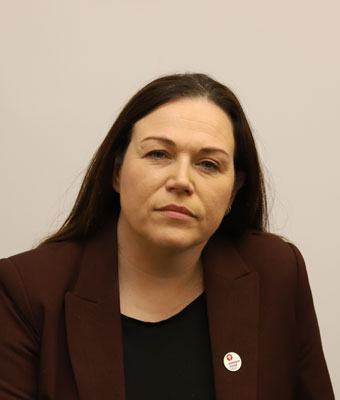
Before I raise my issue, I wish the Ceann Comhaire and her team, including Jill Gray, and every person who works in the Oireachtas a happy Christmas. We are incredibly well looked after. Sometimes it is a bit lost on us how well served we are. This is a very decent place to work because of the men and women who keep it going. I hope everybody gets a chance to spend a bit of quality time with their family, because they have all more than earned it. I hope the Ceann Comhairle gets a rest. It has indeed been a very busy year.
I thank the Minister of State for being here to take my topical issue, which relates to the length of time children in my constituency, in particular, must wait for an assessment of need, AON. It would be remiss of me not to raise the volume of representations I have received, even in the past two or three hours, on what is being referred to as the Government's decision, quietly embedded in a press release, on the AON process.
They come from teachers, people working in the area of special education and, crucially, parents. They say diagnosis matters. It is not a bureaucratic hurdle. It provides children with an understanding of their own identity, strengths and challenges and it equips teachers to provide informed and effective supports. They want to know who will conduct these educational assessments. Will teachers be expected to take this on? What training, what capacity and what safeguards will exist? How can educational assessment conducted without diagnostic expertise determine appropriate placement in complex cases? There are real concerns. I received a deluge of lobbying before I came down here. They have a simple request. They want the Minister to publish in full the proposed criteria and decision-making process. They want clarity on the future status of special education designations. They want this paused to facilitate the discussions, which I feel are important.
This Topical Issue specifically relates to my area, but my area is part of the wider picture. I represent one of the youngest and most rapidly expanding areas of Dublin, but the children in my area who require an assessment of need appear to be left waiting. I think they are the longest waiters in the State - 3% of children in Fingal received an assessment of need within the legal minimum timeframe compared with a national average of 10%. A national average of 10% is an absolute disgrace but 3% is even worse. I represent the youngest town in Ireland. If ever there was a need for additional resources to be targeted, it would be in my area.
Parents watch their kids wait and wait for assessments of need. If the Minister of State wants an estimation of just how bad things are, it was reported in The Times Ireland weekend edition that there is now a buy-now-pay-later service being offered for therapies. I have spoken to parents who are so desperate to get the assessments of need for their kids that they will actually go private when they do not have the money. It is grand for those who are loaded, but most people are not. They might borrow from a family member, get a credit union loan or do a few shifts of overtime if there are any going, but very often, there are not. Then they find themselves in debt but they still have to keep paying for therapies. The Minister of State might acquaint herself with this buy-now-pay-later, BNPL, service because I fully intend to raise this every single time. It is disgusting that people would be forced to get into debt for what their children have a legal entitlement to. These companies have the neck to advertise this stuff because they know how desperate parents are. They know that parents desperately need these assessments for their kids. This BNPL service is evidence of a failure on the part of the Government.
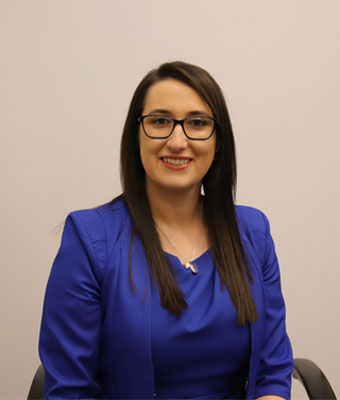
Before I deal with the Topical Issue, I wish a merry Christmas to Deputy O'Reilly and her family, as well as to the Ceann Comhairle, her team and everybody who keeps this place running day in and day out. I hope they all enjoy the break.
I thank Deputy O’Reilly for raising this issue and for offering me the opportunity to speak about it on the floor of the House. The Government recognises that there are unacceptable delays in accessing assessments of need, not just in the Deputy's constituency, but at a national level also. The Department and the HSE are committed to addressing these delays and ensuring that the assessment of need system is more efficient and effective.
There has been a continued growth in demand for assessments of need in the north Dublin local health office, which spans a significant area within Dublin Fingal West. In the first nine months of this year, 808 applications were received compared with 655 in the same period last year. This marks a 23% year-on-year increase in demand for assessments of need in the north Dublin local health office area.
Nationally, demand for assessments of need has doubled in five years. Significant efforts have been made to increase the completion rates of assessments of need throughout the country, including the north Dublin local health office area. This is reflected in the Deputy's constituency in the completion of 770 assessment reports in the first nine months of this year, a 58% year-on-year increase when compared with the same period last year. These efforts have had a positive effect in reducing the number of applications that were overdue for completion in north Dublin by almost 3% in the last year but obviously there is a long way to go on this.
At the end of September, there were 1,841 applications overdue for completion in north Dublin compared with 1,893 at the same time last year. While there is a positive trend evident, I entirely accept that we need to do a lot more, not just in the Deputy's constituency, but at a national level, to ensure that assessments of need are completed as soon as possible. This is why the Government announced on 9 December a series of reforms to the assessment of need process that will make the process more effective and efficient for children and families. These reforms include changes to Part 2 of the Disability Act 2005, which provides for assessments of need. These changes will not remove any rights for parents to apply for an assessment of need for their child, nor will they alter the statutory six-month timeline set out in the Disability Act.
In addition to these legislative reforms, there are a series of operational actions that are being progressed as a matter of priority. These include the development of statutory guidelines to ensure that assessments of need focus on identifying a child’s needs, engaging in more intensive assessments only where required to identify need. This should help reduce delays and allow therapists to spend more time delivering services.
The HSE will establish 11 new in-reach teams, initially, to support HSE assessment processes, including assessments of need and also the HSE's new specific autism protocol and assessment process. Each team will include a psychologist, a speech and language therapist, an occupational therapist and an administrator, providing clinical guidance throughout the process. The administrator is being provided for that team on foot of feedback we are receiving from families that they feel they need and deserve better communication from our teams.
The Government recognises the need for urgency in addressing delays in the assessment of need system and that is why we announced these reforms last week to be brought in in the coming months. We are absolutely committed to addressing these for the benefit of children and their families.
I suppose the Minister of State's recognition of the scale of the problem is welcome. I know she was not making a massive deal out of it, but going from 1,893 to 1,841 is nothing to be proud of really. She should probably be a bit mortified. That figure of 1,841 children in my area represents families that are just left waiting. They feel very much abandoned. On the establishment of 11 new teams, the Minister of State might indicate in her second reply how many additional staff that will provide. Will they be joined up with the children's disability network teams, CDNTs? Will they be joined up with community healthcare organisations, CHOs, local health offices, LHOs, and the network? Will they be a stand-alone network of their own? She might explain to me how that will work. She might address the use of BNPL offers. It is debt built up by people who cannot afford to pay out of their own pocket for a service that the State is legally mandated to provide for their kids. They are getting themselves into debt for a service that they have a lawful entitlement to. That is a fairly damning indictment.
I appreciate the Minister of State is not long in the job but her party has been more than 14 years in government. The evidence of kids being failed, specifically the 1,841 in north Dublin, is all around us. I have already outlined teachers' serious concerns over what was in the Government's press statement. Teachers in this area, with the interests of the kids at heart, do not trust that what the Government is saying will work. There is no clarity there and I hope the Minister of State will be able to put some clarity on it.
I will. The reforms announced last week are basically a six-pronged approach. First is the statutory element and we published the heads of the Bill, which will go to the disability matters committee for pre-legislative scrutiny and for further consultation. That is aimed at standardising and streamlining the assessment of need process to make sure that every child, no matter where they are in the State, gets the same approach. The second thing we have done is made the decision - this will be part of the statutory guidelines - that decisions will be communicated earlier to parents.
When a decision is arrived at as to whether or not a child has a disability that decision should and must be communicated to parents at the point at which it is made. That does not currently seem to be the case. We are now providing that for parents. Single point of access is coming in through the HSE. That is the process by which there will be no wrong door. The Deputy spoke about primary care and the different elements of the health service. Unfortunately some people’s experience is that they wait on the waiting list, they get to the top and they are told they are in the wrong queue and have to go to the bottom of another waiting list. This will be the end of that approach. This is a single point of access to make sure we are supporting parents and families through the right channel for them.
On top of that the HSE is initiating a new autism protocol and assessment process specifically for children who are displaying autistic traits. At the moment 45% of children who go through our AON process get a diagnosis of autism. This is responding to that need which is developing and evolving.
On the in-reach teams, there will be 11 in-reach teams next year and a further nine the following year, bringing it to 20 and there are 20 REO areas. That is the rationale for how they are being recruited and where they will be based. There will be 44 people hired next year for those in-reach teams of four per team. They will be there to support both single point of access and also the autism protocol and assessment process. We are also hiring more into our CDNTs. We are outsourcing more assessments of need. We will outsource 6,000 assessments of need next year and there is also the education element which the Deputy raised. The Minister for education has confirmed she is committed to putting together a proposal that will phase out the requirement of an assessment of need for a special class or special school and to formulate that proposal in consultation with key stakeholders including unions in quarter 1 and bring that proposal to the Taoiseach and the Cabinet committee on disability.
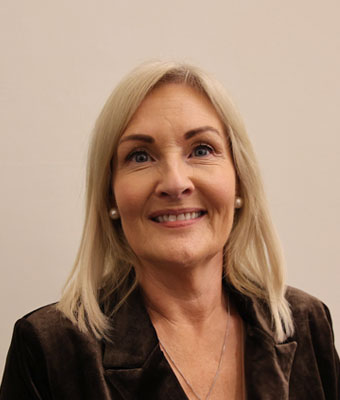
I thank the Minister of State and Deputy O’Reilly. I wish them both happy Christmas.
Happy Christmas.
Housing Schemes
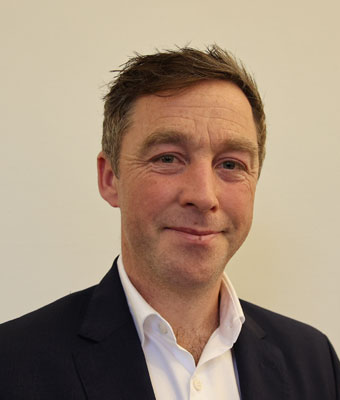
I also wish happy Christmas to all the staff, the Ceann Comhairle and the Ministers. Nollaig Shona. I look forward to continuing our engagement in the new year.
I will refer to one case in particular in my constituency but I wish to raise the broader issue affecting people which we are being inundated about. It is the issue of people facing eviction. They are being evicted from the private rental sector. These are families and individuals. A policy brought in after the temporary Covid eviction ban was lifted was the tenant in situ scheme. Everyone acknowledges the tenant in situ scheme has been a very effective homeless prevention measure. The housing committee had very important presentations, which I hope the Minister of State will look at, from Focus Ireland and the Dublin Region Homeless Executive this week. It showed the tenant in situ scheme was a really key measure in preventing homelessness in 2024. I will talk about one case which shows the necessity of this scheme.
This is the case of a family which was facing eviction. My office has been dealing with the mother. They have had to leave their rental home and are living in the husband’s parents’ house. It is extremely overcrowded with seven people in the house. The eldest daughter sleeps on the couch in the living room. The two sons share a room with their grandmother. The other daughter shares a room with her grandfather. The woman, her husband and their baby sleep in another room. They have been looking for a home for quite a few years and had not found anything suitable before they received their notice to quit. They had contacted the council in April when they received the eviction letter to see if the tenant in situ scheme could support them but at that time the council said the scheme was effectively paused until there was clarity on it. As a result, they had to leave their home.
The mother was in touch with us. She told us she cries every night. She has started taking antidepressants a week ago and she and her husband break up multiple times a day over arguments blaming one another about who is at fault that they got into this situation. She said she knows many people in the same situation and that they are all living this. She said she is grateful there is a roof over their heads but she will go to any length so her kids do not end up in a hotel with herself and her husband in the same room for an unknown amount of time where they are even more crowded than they are now.
This is an example of the tenant in situ scheme failing to support those families as a result of it being paused. I have been in touch with the council since then. It says the scheme is being operated but there are eligibility requirements, so it is being restricted in terms of who is eligible for funding for it. Will the Minister of State address that and clarify the eligibility changes to the tenant in situ scheme? I am very concerned it is limiting its potential to prevent families like this from being made homeless.
When the head of housing at Dublin City Council was at the housing committee this week where we discussed homelessness I asked him how the scheme was functioning. He said that while it was back functioning there are issues of eligibility and issues where repairs are required to a home that is currently rented privately and that is not up to standard because there is not funding there to do up those homes.
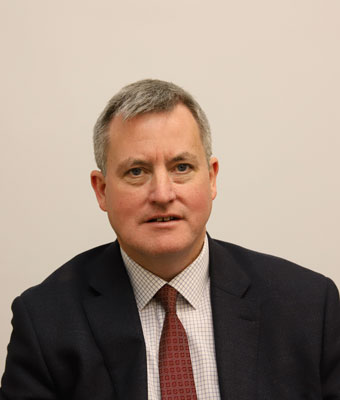
Like everyone else, I wish the Ceann Comhairle, the staff and our colleagues, Deputy Hearne and my colleague here, the Minister of State, Deputy Richmond, all the best and a good Christmas. Everyone needs a break. I wish everyone a peaceful, productive and robust new year.
I wish to thank Deputy Hearne for raising this matter and for the opportunity to update the Dáil on tenant in situ acquisitions. I am taking this matter on behalf of James Browne, Minister for Housing, Local Government and Heritage. Acquisitions with tenants in situ are a category of purchase under the second-hand acquisitions programme which help prevent social housing supported households in the private rental sector, such as HAP, from becoming homeless. In this regard, tenant in situ acquisitions are a policy tool available to local authorities once all other options and measures to prevent a household becoming homeless have been examined.
Along with the clear focus of Government on increasing the supply of new build social and affordable homes, a targeted social housing acquisition programme has been, and will continue to be, an important policy response to priority needs. The Minister for housing has this year secured funding to a total of €325 million to fund acquisitions under his Department's social housing second-hand acquisitions programme, an increase from €60 million per year committed to under Housing for All. Dublin City Council has been allocated €95 million of this funding. This allocation funds acquisitions under four categories, including: exits from homeless services; tenancy sustainment, namely tenant in situ; persons with disabilities and older persons requiring urgent housing responses; and buy and renew actions tackling vacancy and dereliction.
More recently, the Minister has secured an additional €50 million which has been ring-fenced for acquisitions supporting households, particularly those larger families with children and Housing First clients, to exit long-term homeless accommodation. Of that, Dublin City Council were allocated €22 million.
To date this year, nationally, 163 acquisitions have been completed to support exits from homelessness and into housing. A further 482 tenant in situ acquisitions have been completed, ultimately preventing those households from becoming homeless. Dublin City Council has completed 59 acquisitions to support households exiting homelessness into housing and 134 tenant in situ acquisitions preventing these households from becoming homeless.
The Department does not have to hand the number of these that were in the Dublin North-West constituency but the officials in Dublin City Council can provide this information. With more than 16,600 persons in this State without a home, including some 2,450 families and more than 5,200 children, our focus has to be to maximise the impact of the funding available to us for those households facing the most precarious housing situations. Where Dublin City Council acquires a property with a tenant in situ and where refurbishments are required the property will be put into their planned maintenance programme for future consideration.
I do not know the particular circumstances of the family whose case the Deputy raised but I have no doubt it is very difficult. If the Deputy would like to bring the particular circumstances to the Minister for housing and the Department, it is something we can follow up.
I do not know the particular circumstances but there are obviously issues of confidentiality as well. The tenant in situ scheme is part of the overall acquisition scheme itself in terms of a local authority's purchase programme. The refurbishment fund is to allow local authorities to acquire properties under HAP, where there is a tenant. Properties must be maintained to a standard and conform to the regulations for rental properties. Any refurbishment should be provided by the local authority under its planned maintenance programme.
I want to highlight the issue and to really push the Minister of State on it. Could he take it back to the Minister as well? There needs to be a step-change in how this Government approaches the tenant in situ scheme. When we look at the funding that has been allocated, it is €22 million to enable the purchase of homes for those who are in long-term homelessness, but at €400,000 per home, that is only 55 homes. There are 422 families in Dublin in emergency accommodation for longer than two years. The funding is simply not adequate. For the allocation of €95 million, we are talking about maybe 250 homes. The figures might sound like a lot, but it is not sufficient or adequate when we look at it in terms of the number of homes that can be purchased. My concern is that thousands of households currently in receipt of the housing assistance payment are facing no-fault evictions, and that will continue even when the changes begin in March. We have a ticking time bomb that is actually exploding now in terms of the mass scale of evictions going on of HAP households that cannot afford the market rent. If they are evicted, there is nowhere they can afford to go. That is ongoing now. It is why we see so many presentations into homelessness but it is going to get even worse in the coming years. There must be more focus on the tenant in situ scheme to prevent households who are in receipt of HAP from going into homelessness. A lot more funding needs to go into it because landlords say they are willing to sell the property, but the councils are too slow in responding and the issues around eligibility and lack of clarity on funding have added to this problem. I call on the Government to take action, in particular on the issue of maintenance. Councils need to be given a green light so that if a family or an individual is facing eviction from their home, where they are in receipt of HAP, the council can buy the property regardless of what it costs ultimately. It is cheaper to keep people in their homes than for them to go into emergency accommodation.
Once again, I thank Deputy Hearne for raising this matter, which I am taking behalf of the Minister for Housing, Local Government and Heritage, Deputy Browne. I urge the Deputy to provide those details on behalf of his constituents to the Minister and the Department.
Supporting households at risk of experiencing homelessness remains a priority for the Government. The tenant in situ scheme is a key measure in this regard. There was scope available within the original €325 million to support all acquisitions that could be completed. Local authorities that indicated they would expend their full allocation but could progress and complete additional acquisitions by drawing down the relevant funding this year were approved to do so. Dublin City Council was approved to progress additional acquisitions on this basis. That is important to note. Local authorities have also been authorised to enter into commitments for 2026 to a value of up to 30% of their original 2025 acquisitions budget. This has allowed them to commit some €95 million extra in 2025 for acquisitions that will complete and draw down next year. This effectively provides for a multi-annual approach to programme delivery, facilitating local authorities to plan and progress acquisitions from one year to the next with a higher level of certainty vis-à-vis future funding availability. This provides Dublin City Council with the ability to commit €28.5 million for acquisitions that will complete and draw down in 2026. This includes acquisitions to support exits from homelessness and tenancy sustainment via the tenant in situ scheme. The Minister for housing, Deputy Browne, is committed to supporting and funding the acquisition of properties with tenants in situ, where all other options and measures to prevent households becoming homeless have been examined. Ultimately, it is all about increasing housing supply. That remains the key focus, but it is also a priority in terms of dealing with homelessness. Part of that is the tenant in situ scheme, which is there to contribute in terms of preventing people from going into homelessness. I wish everybody a happy Christmas.
That concludes Topical Issues. I wish both the Minister of State, Deputy O'Donnell, and Deputy Hearne a very peaceful, happy Christmas. They will probably not still be here for the next debate.