Cabinet Committees
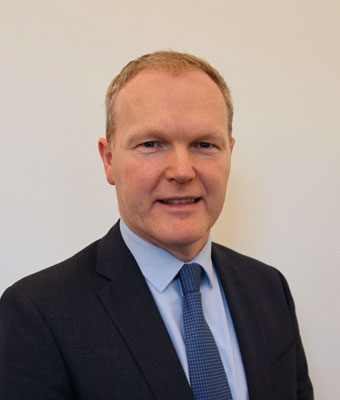
1. Deputy Séamus McGrath asked the Taoiseach when the Cabinet committee on housing will meet next. [64216/25]
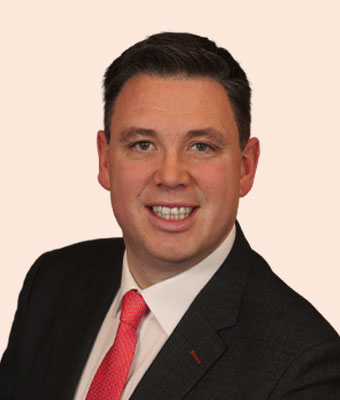
2. Deputy Paul McAuliffe asked the Taoiseach when the Cabinet committee on housing will meet next. [64218/25]
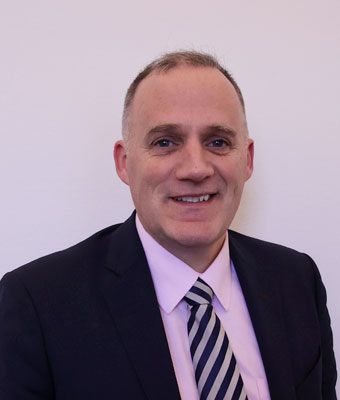
3. Deputy Naoise Ó Muirí asked the Taoiseach when the Cabinet committee on housing will next meet. [67523/25]
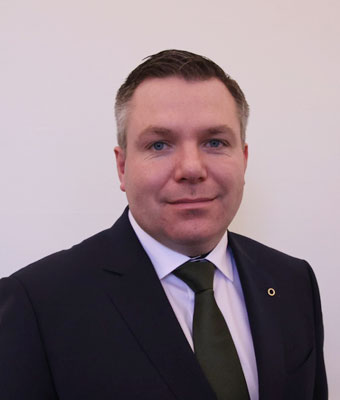
4. Deputy Shane Moynihan asked the Taoiseach when the Cabinet committee on housing will meet next. [67578/25]
5. Deputy John Connolly asked the Taoiseach when the Cabinet committee on housing will meet next. [67579/25]
6. Deputy Ryan O'Meara asked the Taoiseach when the Cabinet committee on housing will next meet. [67843/25]
7. Deputy Ruth Coppinger asked the Taoiseach when the Cabinet committee on housing will next meet. [68213/25]
8. Deputy Ruairí Ó Murchú asked the Taoiseach when the Cabinet committee on housing will meet next. [69321/25]
9. Deputy Rose Conway-Walsh asked the Taoiseach when the Cabinet committee on housing will meet next. [69660/25]
10. Deputy Barry Heneghan asked the Taoiseach when the Cabinet committee on housing will meet next. [69689/25]
11. Deputy Darren O'Rourke asked the Taoiseach when the Cabinet committee on housing will next meet. [69703/25]
12. Deputy Conor D. McGuinness asked the Taoiseach when the Cabinet committee on housing will meet next. [69836/25]
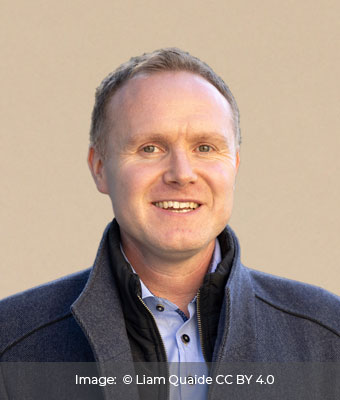
13. Deputy Liam Quaide asked the Taoiseach when the Cabinet committee on housing will meet next. [70804/25]
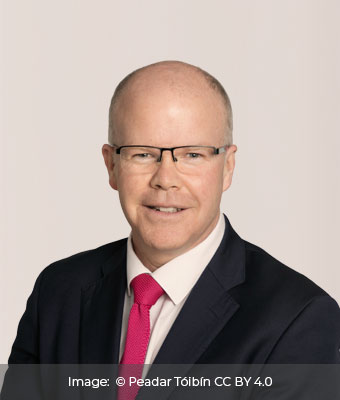
14. Deputy Peadar Tóibín asked the Taoiseach when the Cabinet committee on housing will next meet. [71606/25]
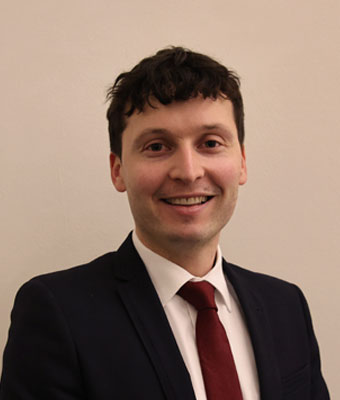
15. Deputy Paul Lawless asked the Taoiseach when the Cabinet committee on housing will next meet. [71610/25]
I propose to take Questions Nos. 1 to 15, inclusive, together.
The Cabinet committee on housing last met yesterday, Monday, 15 December. The committee works to ensure a cross-Government approach to the implementation of our commitments regarding housing policy. This week’s meeting was specifically focused on our homelessness challenge, in particular the national housing plan commitments in this regard, including the development of a homeless prevention framework and a child and family homelessness action plan.
We are making good progress on the delivery of homes to those most in need across the country, with the new housing plan committed to delivering 72,000 social homes over its lifetime. However, as we increase supply, we also recognise that those experiencing, or at risk of, homelessness have a wide and complex variety of needs. We need to ensure that the appropriate services and policies are in place to support them. Housing is our single biggest issue as a country, with profound social and economic consequences. That is why it is at the centre of the Government’s focus.
Along with the largest ever commitment on social housing, the new national housing plan commits to delivering 300,000 new homes, including 90,000 affordable supports to help people who are struggling to have a home of their own. The plan sets out the highest ever commitment of State funding for housing, with €28 billion over the next five years, coupled with additional funding through State vehicles, including the Land Development Agency, the Housing Finance Agency, Home Building Finance Ireland, the First Home Scheme and the Irish Strategic Investment Fund. Housing delivery, along with infrastructure and utility investment to enable delivery at scale, is at the core of the agreed national development plan published in July, and, at €275 billion, the largest ever capital injection in the history of the State.
To build homes at the scale now required, we need improved and more resilient water, energy and transport services. We will see large-scale investment in all of these areas over the coming years. Last month under price review 6, the investment plan for energy infrastructure was finalised, including funding allocations of up to €18 billion to ESB and EirGrid, leveraged by the Government injection of €3.5 billion in equity to these companies. This will enable thousands more homes to be connected to the grid.
We have also published the investment plan for water, which sets out over €12 billion investment in our water infrastructure, the majority of which will support the delivery of our housing targets. In addition, we are tackling barriers to delivery, through the accelerating infrastructure report and action plan, which includes reforms which will support public and private sector delivery of homes at scale.
Housing is at the centre of the State’s investment and focus for the coming years. However, to meet our targets, we will also need significant delivery from the private sector and we have implemented a number of measures and reforms in support of this. We have focused on making apartment delivery more financially viable, reformed our planning process and created a stable policy environment to enable the private sector to deliver at scale.
We are seeing indications now that our measures are beginning to take effect, evidenced by CSO data showing that we have had an increase of almost 30% in homes approved for planning in quarter 3 of this year, in comparison with the same time period last year, with the number of apartments approved up by over 50%. These are clear indications of confidence. Work is under way to zone a significantly higher quantum of land across the country. Now is the time for ambitious execution, and we have set out a clear framework and roadmap for the coming years to do this. I am confident that we can build on our success to date and bring about a very significant scale-up in our delivery of housing over the lifetime of this Government.
I thank the Taoiseach. I welcome today's announcement in relation to the vacant property refurbishment grant and the extension of this grant until 2030. This provides important certainty from a policy point of view in relation to vacant properties. We know they are still a very significant challenge. I also welcome the new initiative in relation to the above the shop grant. Up to €140,000, where multiple properties are involved, is potentially available. That is very significant and the fact that it will be available by quarter 1 of the new year is very important. It is important to look at the local authorities and their resourcing in terms of being able to deal with this grant. I ask the Taoiseach to also look at that. We want these grants to be processed in a timely manner so that we can get on with utilising this currently under-occupied space. The resourcing of local authorities is important and I ask the Taoiseach to look at that.
In my constituency between Shanowen Road and Collins Avenue there are proposals to build new apartment developments. While the additional new housing is incredibly welcome, unfortunately the under-utilised industrial estate there is currently occupied by Santry Boxing Club. Would the Taoiseach agree as well as powering ahead with the provision of new housing, Dublin City Council needs to have a more proactive strategy of making land available to sports clubs so they can avail of programmes like the sports capital grant? Santry Boxing Club is an amazing local facility and will be a great facility for those new homes that will be built. As well as enabling new homes, we need to put in place new facilities, and Dublin City Council needs to be more proactive in making land available to sports clubs.
As the Taoiseach said, the delivery of housing is the number one priority for this Government. That is why it is strategically important that all sectors of the Government support that aim, namely through the national development plan's transport sectoral plan, which was published recently. In my constituency, which the Taoiseach visited, we see it as one of the fastest-growing constituencies in the country, with large developments like Adamstown and Clonburris flying ahead. In its county development plans, South Dublin County Council is setting very ambitious targets for zoning. The key to enabling this zoning and to enabling delivery of those homes is the deployment and development of DART+ South West as a transport programme, to intensify the capacity on that line, not only benefitting commuters in Dublin Mid-West but also Kildare North, Dublin South-Central and Dublin-Central.
I am asking the Taoiseach for his support to do all we can to prioritise and bring forward, where possible, the delivery of Dart+ South West as a long overdue infrastructure requirement to not only allow catch-up on public transport in my area but also to plan for the future.
One of the actions in the recently published housing plan is that the Department will be publishing quarterly and annual performance tables for new-build output versus targets per local authority, thereby ensuring transparency and accountability.
I understand that will commence next June in relation to social housing. We should also provide similar tables in relation to affordable housing. The local authorities should also be assessed on their output of affordable housing. What actions will the Government take with local authorities that are not meeting their housing targets?
Last February the Government announced its intention to remove the requirement for planning permission for log cabins and modular homes in backyard developments. By the end of the Christmas recess, it will be nearly a year since we heard that announcement. One-off houses in rural Ireland can benefit if we allow log cabins and modular homes to be built not just in backyard developments. They are also one of the few affordable houses out there for young people in rural Ireland whom I speak to. I could give numerous examples of log cabins and modular homes across north Tipperary and north-west Kilkenny that are at threat of enforcement proceedings because they do not have planning permission. Enforcement should not be ongoing until we know what these regulations say. In addition, the development contributions for one-off rural houses should be scrapped again. They are simply a privilege for building on your own land. First, will we see these planning regulations that will exempt log cabins? Second, will this go beyond backyard developments and allow them in rural areas? Third, when will we see the regulations?
I call Deputy Ruth Coppinger. One question.
I also send my solidarity to the Jewish community in Sydney following the appalling attack.
I am sure the Taoiseach agrees with me that cities should be liveable and should have culture as well as venues where people can meet, socialise and enjoy themselves. Will the Cabinet committee on housing and local government discuss the issue of The Complex, a very important cultural space in our capital where artists are currently housed but have been given an eviction notice for the middle of January? A protest on this will come to the Dáil tomorrow. I have attended meetings and other get-togethers in The Complex. In fact, it was the venue for the launch of one of the presidential campaigns. Dublin City Council is open to buying The Complex but only if it can be given 80% to 90% of the funding. We need to intervene to buy this for €10 million. It would be €80 million to buy or to build a similar space.
I ask the Taoiseach to consider issuing an upfront fund to local authorities, but to Mayo County Council in particular, in order that they can turn around the vacant properties they have without having to go through the bureaucratic nightmare of applying for funding from central government on a house-by-house, unit-by-unit basis. Can the Taoiseach imagine what it is like to be a homeless person in Mayo watching council houses remain empty month after month while nothing is done? I will give him an example from a young mother in my constituency:
I am homeless, living in a friend's house. I've just had my first baby. She's now a month old. She was born at 36 weeks. I've been in and out of hospital the whole of the pregnancy with stress and anxiety. I developed diabetes also. I was rushed to a Dublin hospital for a week from bleeding and pains. I had a terrible experience. A lot of this stress has been brought on because of my homeless situation.
That is the case for many people.
I too join in the condolences on the attack that happened on the Jewish community in Australia.
I also support the plea for funding for The Complex.
Regarding the Cabinet committee on housing, across the country AHBs have signed turnkey deals that then collapse. In Dún Laoghaire-Rathdown, there was a recent scheme that had the contract signed, everything was above board, they were all ready and, at the last minute, when they were looking for funding, the Department denied the funding for 40 turnkey units. If we are to bring medium-sized and small developers into the market, this risk cannot be acceptable. We will not get the funding from the funding schemes, and it is putting all the risk on the developers. The homes are built, the deal collapses and the investor walks away. We want these small-scale developers to meet the housing targets. I have hundreds of people in my constituency looking for affordable housing, and this cannot happen.
I want to raise the issue of child homelessness. In October there were 5,274 children in emergency accommodation. More than 150 of those were in my county, Meath. There is an expectation that at Christmas there will be more than 5,000 and that almost 1,000 of those will be in emergency accommodation for their second or third Christmas. Are there specific measures the Government will take in advance of Christmas, now a handful of days away, to minimise the number of children in homelessness this Christmas?
We all know the issue that exists in relation to housing, whether it is homelessness, the lack of supply, those who cannot get houses, whether from a rental point of view or a purchase point of view, and those languishing on social housing lists. However, we also have to look at the issue of estate management. I do not believe the local authorities, like Louth County Council, have the necessary powers when dealing with chaotic tenants. They may need supports, but even beyond that, we have seen outright criminality and drug-dealing. We know that AHBs have greater levels of power even in relation to the nuclear action of eviction. That should be the last thing that is looked at but, at the end of the day, it is a requirement. I have worked alongside the Louth local authority, the Garda and others in dealing with some situations and we have attempted to move people sideways to deal with the issue. Some very good work has been done, but we do not have the necessary tools, and that is the problem.
One of the most infuriating parts of the housing crisis is the tens of thousands of properties that have been left idle and decaying throughout the country. Youghal's potential to be on a par with Kinsale for economic prosperity and tourism has been thwarted by the epic scale of dereliction that has been allowed to take place there over many years. Likewise, Castlemartyr and Midleton have many prime-location properties left like deserted husks where boutiques could be flourishing or community hubs or accommodation created. In Holland or Germany this would not be tolerated. Landlords would have to sell up or repurpose a vacant property within a reasonable period or face losing it. The Government's softly-softly approach to vacancy and dereliction is clearly not working, and our towns and villages are haunted by this policy failure. We need to see swift direct action by our local authorities with landlords who blight our streets with decaying properties and a much more urgent pursuit of derelict site levies. The collection of derelict site levies by Revenue is welcome, but why is the Government waiting until 2027 to implement this?
The housing crisis has had varied and wide ramifications in Irish society. One of them is a serious fall in the fertility rate in this State. There has been a 30% fall in the number of births annually. There has been a 20,000 fall in the number of births annually since Celtic tiger times. Some 69% of people aged 25 years or under are living with their parents. Well over 40% of adults who are under 30 are living with their parents. That is changing the very nature of Irish society. The ability for adults to form relationships to have children is being deleted for hundreds of thousands of people. This is having massive ramifications. Schools are now noticing that there is a fall in the number of children being enrolled. An unbalanced demographic structure has serious consequences for our workforce and our pensions. Planning, permitting, licensing, tendering and judicial reviews here are among the slowest in the whole of the European Union. While the Taoiseach's Government has announced plans, they are not ambitious enough and I do not believe they will be implemented in a timely fashion.
There were quite a number of questions there, beginning with Deputy Séamus McGrath. I welcome also the good initiative we have announced today, namely the extension of the vacant refurbishment grant to 2030, but specifically on the commercial properties and the €140,000 plus a €5,000 grant for assistance to support the owner to design a project. The Deputy is right in saying that we need to make sure that the local authorities prioritise this - in other words, that they put a project manager or whatever in charge of this operation in the towns and the cities to make this a reality. It needs to be driven with someone who is accountable and who is doing this every single day, in my view. I will talk to the Minister about that.
We need to alert all the business committees in towns and cities because people need to know. If you combine it with the living city initiative, there are real prospects of, once and for all, getting activity in towns and city centres to address dereliction and allow for change of use. Due to changing patterns of trade and so on, many commercial uses are no longer sustainable, so there is an opportunity for increased numbers residential units in towns and cities.
Deputy McAuliffe raised the topic of the Santry Boxing Club. I was recently with the Land Development Agency, LDA, on the southside, where an existing boxing club has been incorporated into a housing development. A new boxing club is being built in the housing development. That is the way to go. Is the local authority involved in the specific development to which the Deputy referred? It is. The local authority should look seriously at that example. Amenities matter in communities and society. They give young people opportunities. It seems to me that some accommodation must be made for Santry Boxing Club. The other example was a good initiative. The name of the boxing club escapes me now, but the people will have a first-class boxing club as a result of the development. It might be a bigger development. In fairness to the LDA, it saw that needed to be done. The Deputy might give me the details.
Deputy Shane Moynihan spoke about the interdependence of the national transport plan in terms of infrastructure and housing delivery. Housing delivery will depend on infrastructure delivery. I am acutely aware of planning considerations. South Dublin County Council is looking at 10,000 to 18,000 new zonings for housing. That will be dependent on DART+ South West. I have had meetings with the Minister for public expenditure and the Minister for climate and transport, Deputy Darragh O'Brien, to ensure we can underpin the development of DART+ South West. We can make progress on that to give the certainty that the council, Deputy Moynihan and the people in the area require.
Deputy Connolly asked about quarterly tables for social housing. He asked about applying such an approach to affordable housing. I will talk to the Minister. It is a fair point. The councils control a bit more for social housing, but outputs should be across the board. The first issue is to highlight those councils that are not performing. It becomes fairly obvious in a league table scenario which councils are not performing. The actions can take a number of forms. We have to work through the actions. There could be disincentives or limited finance. We have to work through that, but there must be consequences or direct action from the State to override councils that are not performing in respect of housing more generally.
Deputy O'Meara spoke about log cabins and modular homes. I hope that the Minister will in February have a list of exempted developments. I understand it has expanded significantly. There have been a lot of submissions from Government Departments and agencies, particularly those with acute issues, including health, for example, where we need urgent public services. The Minister recently indicated to me that it would be February that we will have completion of that. It is fairly complex and much bigger than we originally anticipated.
The rural housing guidelines need to be published. I have asked the Minister to prioritise that. I fully accept what the Deputy is saying about the potential for enabling and helping young people in rural Ireland to afford housing at a reasonable cost when it comes to buying or renting. We will keep an eye on that. We will look at the development levies over time in respect of rural buildings on people's land although services of one kind or another are required.
I fundamentally agree with Deputy Coppinger that cities should be liveable and that there should be strong social support and creative cultural amenities. The Deputy said the local authority is depending on someone else. Other local authorities tend to get on with it and are in a position to facilitate either the acquisition or purchase of a building without having to do the simple equation and getting the Department to pay out for every single acquisition. The Minister for public expenditure has taken an interest in this issue. I will check the current lie of the land in respect of the Complex. I know Deputy Heneghan also raised that issue.
To Deputy Conway-Walsh, I say that there is no reason why voids should take so long. There has to be some framework of control for the Department. We discovered recently with the tenant in situ scheme that houses were being bought with people living in them. Those houses are bought by councils and suddenly there is €80,000 or €100,000 going into the house. The original objective of that was to stop people going into homelessness. When a local authority house becomes vacant, unless there is something majorly wrong structurally, it should be occupied within a month. We have given huge money to local authorities for voids over the past five years. They should get on with it. They let the houses lie idle for too long. It is inexcusable. In some councils, there is inertia. I have seen it. People leave very good houses for one reason or another, the shutters go up and the houses are left there for three or four months. Those houses should be reoccupied once the electrics and everything else are grand. If we have to get around to repairing them, we can at least give someone the house. That is my view. I get impatient about it from time to time, to be honest. I hear what the Deputy is saying. If you give an upfront grant, there is no guarantee it will be spent on voids, and that is the problem.
I do not have the details of the 40-turnkey units to which Deputy Heneghan referred. Are they in Dún Laoghaire?
Yes.
Has the Deputy moved across?
I am national now.
The Deputy has a wide compass. He is national now. I ask him to give me the details and I will follow through. It should not happen. I do not know the background to that.
I appreciate the Deputy's comments about the Jewish community in Ireland and the impact that what happened in Bondi Beach has had on the Jewish community globally and in Ireland. The murder that took place was quite shocking. Others were injured. The Deputy also referenced the Complex.
Deputy O'Rourke spoke about child homelessness. The meeting of the Cabinet subcommittee on housing yesterday was entirely about different aspects of homelessness. We had good presentation of data. The data illustrates that there is a wide variety of reason why people become homeless. There are different factors. There is a high rate for singles in homelessness as well as children. There are different elements to the issue. An increasing amount of those who leave direct provision end up homeless. Family reunification comes with that. The link between migration and housing has grown, but is not the only factor. Family separation is a factor. Different factors give rise to homelessness, and specifically child homelessness. The Minister has specific measures. He achieved €100 million in the budget to acquire social housing and housing more generally to take more families out of emergency accommodation and get them into either local authority houses or acquired homes. There is a specific programme ahead now.
Have I dealt with everyone? I have not.
Deputies Ó Murchú and Tóibín.
How could I forget Deputy Ó Murchú? He spoke about estate management powers to deal with what he described as "chaotic tenants". There are powers. I am not sure that the AHBs have different powers. They just have a different way of operating.
It is about eviction.
They have a different way of operating. They lay it down from the beginning.
It is easier for them to evict people.
Local authorities have struggled with this for quite a long time. My own belief is that persistent misbehaviour and so on should mean you lose the tenancy. That is what should happen. It is hard. We know of housing estates that have awful tensions, difficulties and challenges. I would be glad to work with the Deputy on the issue. I will talk to the Minister about it.
Deputy Quaide spoke about the thousands of houses that have been left lying idle. We give responsibilities to the local authorities. Deputy Connolly talked about league tables. There is a league table showing which local authorities did what in respect of derelict sites. It is very telling. There are two or three that did an exceptional job. If they can do it, why cannot others? It begs the question of whether there is, or has been historically, inertia in local authorities about the Derelict Sites Act. Revenue will now be charged with it. That will bring about a change and better behaviour. The reason for the length of time, and I hope it can be accelerated, is the mapping. I have challenged officials from the Department of Finance and Revenue about this issue. I have asked why the maps are not there already and why they would take so long. Apparently, at the time of the land tax and others, the mapping was not as comprehensive as people would have expected.
That is the issue there. I think it is a game-changer and will be a game-changer.
Deputy Tóibín is making a link between falling fertility and the housing issue. Again, there are a number of variables, I imagine, responsible for that. The bottom line is we do need to provide more housing more quickly to as many young people as possible. It is a social need. Every young person in the country has a right to aspire to owning a home, and many do aspire to owning a home, or some young families being able to rent a home at an affordable cost. We are building substantially more houses than we did five years ago. We are doing about 30,000 odd now compared to 20,000 in 2020. We need to go to 50,000 and we need all hands on deck in that respect. I do not think enrolments are going down in schools yet, I think they are going up.
They are; 30 schools are falling this year. And childcare.
Taoiseach's Meetings and Engagements
16. Deputy Malcolm Byrne asked the Taoiseach to report on his attendance at the Conference of the Parties summit in Brazil in November 2025. [62257/25]
17. Deputy Albert Dolan asked the Taoiseach if he will report on his attendance at COP30 in Belém [65713/25]
18. Deputy Naoise Ó Cearúil asked the Taoiseach if he will report on his attendance at COP30 in Belém. [65719/25]
19. Deputy Naoise Ó Muirí asked the Taoiseach to report on his attendance at the Conference of the Parties summit in Brazil. [67524/25]
20. Deputy Ruth Coppinger asked the Taoiseach if he will report on his attendance at COP30 in Belém. [68214/25]
21. Deputy Darren O'Rourke asked the Taoiseach if he will report on his attendance at COP30 in Belém. [69704/25]
22. Deputy Liam Quaide asked the Taoiseach if he will report on his attendance at COP30. [70805/25]
23. Deputy Peadar Tóibín asked the Taoiseach if he will report on his recent attendance at COP30. [71607/25]
24. Deputy Paul Lawless asked the Taoiseach if he will report on his recent attendance at COP30. [71611/25]
I propose to take Questions Nos. 16 to 24, inclusive, together.
I attended the leaders’ summit at COP30 in Belém, Brazil, on 6 and 7 November. Coming a decade after the Paris Agreement and during a period of enhanced geopolitical turbulence, my attendance at the summit was an important opportunity to show Ireland’s continuing commitment to the objectives of the UN Framework Convention on Climate Change and the Paris Agreement to limit emissions in order to avoid the worst impacts of climate change. I delivered Ireland’s national statement on 6 November, highlighting the reality that climate change is no longer a distant threat and pointing to the remarkable litany of record-breaking climate events in the 12 months since COP29 in Azerbaijan, including Storm Éowyn which brought the strongest wind gusts ever recorded in Ireland and the highest storm surges on the western seaboard. We saw the damage that Storm Bram caused last week to counties all over the country. I also argued that the sharpest impacts of climate change are felt by the world’s most vulnerable people and countries and noted that no country can successfully address the crisis of climate change alone.
I participated in two thematic round tables with my fellow leaders to discuss climate issues of common concern. The first focused on "Climate and Nature: Forests and Oceans". I reiterated Ireland’s strong support for the agreement reached at COP15 to protect at least 30% of land and oceans by 2030. The second thematic session took the form of a panel discussion on "Energy transition and ten years of the Paris Agreement: NDCs and financing". I expressed Ireland’s commitment to ensuring a just and inclusive energy transition pathway for all nations. I also shared Ireland’s focus on accelerating the delivery of renewable generation. I also participated in a small round table hosted by President Lula da Silva and attended also by the United Nations Secretary General, António Guterres, on climate adaptation and resilience. I spoke of Ireland’s commitment in this area with 80% of our climate finance concentrated on adaptation.
I also attended an event launching the Tropical Forest Forever Fund, hosted by President Lula. This global initiative aims to finance the conservation of tropical forests. I reaffirmed Ireland’s commitment to the preservation and sustainable use of the Amazon rainforest. I announced Ireland’s commitment to provide €15 million over the next three years to the Amazon fund, with the aim of preventing and combating deforestation.
While in Belém, I also took the opportunity to visit the offices of the United Nations High Commission for Refugees, where I met with representatives of some of the refugees they work with, including indigenous people from the Amazon displaced by climate change. To date in 2025, Ireland has provided over €25.5 million in funding to UNHCR.
I welcome the fact that the Taoiseach attended the COP in Brazil as head of Government. It is appropriate that he did so. I welcome his remarks while there. I ask the Taoiseach to consider that Ireland might consider hosting a future COP to raise awareness of the important issues he has outlined.
I do want to express concern that if we are going to reduce our own dependence on fossil fuels and get people out of cars, we have to provide them with a realistic public transport alternative. I am passionate about rail travel but unfortunately the M11 is increasingly becoming a car park every morning. The problem for those travelling along the M11 into the capital, unlike a number of other commuter routes, is that we do not have a realistic rail alternative. We have fewer services, worse rolling stock and more overcrowding than any other rail service. What particularly annoys me is the fact that yesterday, the rail project prioritisation strategy made no commitments whatsoever about improvements for the Rosslare rail line and further looked at abandoning the proposals to develop and reopen the Rosslare to Waterford rail line. If we are to provide a real alternative and reduce our dependence on fossil fuels and car use, there has to be a real public transport alternative. I want assurances that the Department of Transport has not abandoned the rail commuters along the Rosslare rail line.
I note that, following the Taoiseach's attendance at COP in Belém, the EU made a significant decision to permanently stop Russian gas imports and phase out Russian oil. Similar to Deputy Byrne, I wish to highlight the issue of reducing our reliance on fossil fuels in the context of significant investment in public transport, in terms of DART+ West, for example, going to Maynooth and then Kilcock. The prioritisation of DART+ South West was not announced. There is significant traffic and build-up on the N7, M7, N4 and M4, particularly the N7 coming from Naas, Sallins and Celbridge. Indeed, Deputy Shane Moynihan has raised it previously. We need to ensure that these key pieces of infrastructure are prioritised along the commuter line that is causing the greatest amount of traffic.
One of the most effective ways we can reduce emissions is by encouraging people on to public transport. I want to raise the lack of public transport in Bellewstown, County Meath. A 13-year-old boy, James Black, has started a campaign there and has hundreds of petition signatures calling for a public bus services for the village of Bellewstown. Fair play and well done to him for that. He has got an amount of media attention about it. He is very articulate and very clear in what he is trying to achieve.
The Connecting Ireland scheme in the Department of Transport is a very good one but it is underfunded and Bellewstown is not included in it. Will the Taoiseach increase funding to the Connecting Ireland scheme and will he include Bellewstown, County Meath in it?
We heard a lot during the last Government about how much more investment went into the National Parks and Wildlife Service but in east Cork and Waterford, the level of under-resourcing has been baffling. In east Cork, we have had no ranger for approximately 12 of the last 15 years. There has been no district conservation officer for 18 months and no regional manager in place for years over east Cork and Waterford. It is difficult to give precise figures for these vacancies, because the Department has been incredibly opaque in response to questions I have submitted on recruitment to the NPWS. In one response, the Minister referred to "perceived vacancies", as if we were all imagining those roles being vacant. Also, bizarrely, the Department will not give details of staffing by geographical area for "operational security reasons". This is akin to An Garda Síochána not sharing numbers of gardaí employed in a given division. The Department also will not give any information on recruitment campaigns being undertaken. Meanwhile, hedgerows and trees are being trashed with impunity and the whole idea of habitat protection looks more like a bad joke in this country. When are we going to see more transparency from the Department of heritage on staffing of the NPWS? When are we going to see those crucial roles in east Cork and Waterford filled?
Today the Minister of State, Deputy Thomas Byrne, stated that the Mercosur deal held many benefits for the Irish farmers and the wider economy. He said that for Ireland, Mercosur could be a significant beneficiary. This is incredible. It is the Minister of State putting up the white flag of surrender in terms of Mercosur. It comes just a few days after the Government put up the white flag in terms of the Irish fishing industry. Make no mistake about it, the Mercosur trade agreement will damage the livelihoods of hundreds of thousands of farmers in this country. All the fine words about COP mean nothing if we are going to facilitate or allow Mercosur to go through. It beggars belief that at a time of climate crisis, we will be bringing in Brazilian beef, which is produced in an environmentally unfriendly way, by which forests are burnt down and land is overgrazed, not to mention the environmental cost of transporting all that beef from South America to Europe. Will the Government stop speaking from both sides of its mouth in terms of Mercosur?
It is difficult to believe that we are talking about rail services being cancelled. These are proposed new services that make complete sense because we want people to move to public transport. We know the advantages that exist in that regard. One of the new rail services that was being proposed between Clongriffin and Drogheda has been mothballed. This would have allowed for further express services to Dundalk, Drogheda, Newry and Belfast. Such services are absolutely necessary because they are allowed to skip slower services. What is happening does not make any sense at this point. Will the Taoiseach seek some clarity in respect of this matter? I other colleagues in expressing absolute anger if this is the road we are going to take. No pun intended.
I thank Deputy Byrne for acknowledging that it was important to attend the COP, even though it was a long distance to go. We needed to send a signal given that we are at a point at which the issue of climate change is receding in terms of political prioritisation. This is a real concern. Some people are pulling back from their commitments.
On hosting a future COP in Ireland, next autumn we will have the largest ever political meeting held in Ireland. There will be over 40 states represented. It is a ginormous undertaking to host a COP, but it is something the country should aspire to do in the future. It depends on the shape and nature of a COP. In some ways it has become very big. Maybe it is has gone too far in some respects in the context of how it has evolved. We need to get back to the more fundamental origin and idea around COP, which was countries coming together to make decisions on global agreements in respect of sustainability, the future of the planet and the impact of climate change.
I will look at the matter of rail project prioritisation. I take on board what the Deputy said. We have a lot of projects that are needed. We do not have commensurate capital, but I will have a look at where the Rosslare railway line is. We put a lot of money into Rosslare on the custom side and all of that in the context of Brexit. We did it in double-quick time. Rosslare to Waterford is an important link. I will have a look at that to see what we can do and where we are.
There is nothing on the roster-----
This is not a back-and-forth.
I said I am going to have a look at it. The Deputy asked me to have a look at it, so I am telling him that I am going to have a look at it.
Deputy Ó Cearúil is correct on the moves we made in terms of dependency on Russian oil and gas. On public transport, it is key. I have spoken to the Ministers for public expenditure and Transport in respect of DART+ South West. That has gone through all the planning and is shovel ready. The county council has zonings for between 10,000 to 18,000 houses. It feels that this is essential infrastructure. I am seeing if we can do something to make that we progress the project. That is work I am engaged in at the moment with the relevant Ministers.
Deputy O'Rourke referred to public transport more generally and to a young person named James Black. I pay tribute to him for his civic initiative, participation and being involved in something like that in terms of public service for Bellewstown. I will talk to the Minister and make him aware of that. On Connecting Ireland, I take on board the Deputy's views.
Deputy Quaide referred to the National Parks and Wildlife Service, NPWS. There has been huge investment in recruitment. The investment in the NPWS has more or less doubled since 2020. I took a personal interest in this. I worked previously with the then Minister, Malcolm Noonan, on it and continue to work on it with the Minister of State, Deputy Christopher O'Sullivan. Recently, we announced a €700,000 lifeline for Fota Wildlife Park through the NPWS because of the outstanding work that Fota does in respect of conservation of particular species and so forth. I will engage with NPWS in respect of the issues the Deputy has raised to see if we can throw some light on the situation.
Deputy Tóibín referred to Mercosur. There was no agreement on that. It was not put to COREPER last Friday. I do not have the up-to-date information, but it seems unlikely now that it will put before COREPER before Christmas. What we have undertaken to do is work with like-minded countries, particularly France and Italy-----
What is our position?
-----in terms of securing additional safeguards. Quite a significant number of safeguards have been secured. That is contrary to what was there a year ago. They are taking the form of legal instruments that the Commission has committed to.
We succeeded in securing the nitrates derogation. It is a significant advancement that we now have that for a further three years. It was challenging and difficult. We worked hard with the Commission to get it over the line. Approximately 200,000 tonnes of Mercosur beef come into Europe on an annual basis as it stands. The new initiative under Mercosur would allow 99,000 of those to be brought in under a reduced tariff preference. The Minister of State, Deputy Thomas Byrne, spoke about the wider issues around Mercosur. All trade agreements bring benefits and losses. There is no heresy in saying that. The Canada deal was tremendous for Ireland in terms of the increased exports for SMEs and so on. I accept that every agreement is different. At the moment, there is no sense of any breakthrough or agreement in respect of Mercosur. That is where we are at present.
Deputy Ó Murchú referred to the Clongriffin to Drogheda service. Capital is not limitlessness.
I get that. I was just wondering.
If we were to add up the figures from everybody's contributions, I would guess that we would arrive at another €50 billion. We have to try keep things moving with planning in the context of progressing as many projects as we possibly can and to make sure that we have sustainability, financing and all of that. I will have to look at the rail prioritisation strategy that emerged on Friday.
I thank the Taoiseach.