United Nations
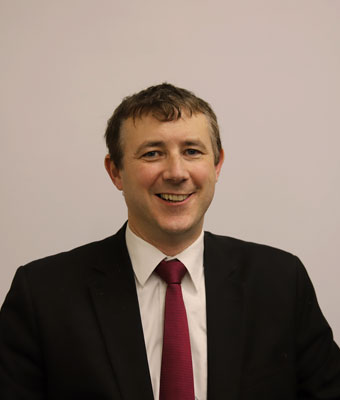
90. Deputy Aindrias Moynihan asked the Minister for Defence to confirm her engagement with the UN Security Council on the plan to withdraw UN peacekeeping troops from Lebanon, with recent accusations from Israel on alleged rearming of Hezbollah; the number of complaints UNIFIL has made to the IDF on its military fire on UN peacekeeping troops in Lebanon; and if she will make a statement on the matter. [71591/25]
I congratulate the Minister on her appointment and wish her every success in the role. Will she outline what engagements she has had with UNIFIL about the security of Defence Forces' personnel in Lebanon? Has she identified any additional security threats in view of the decision to end the mission there?
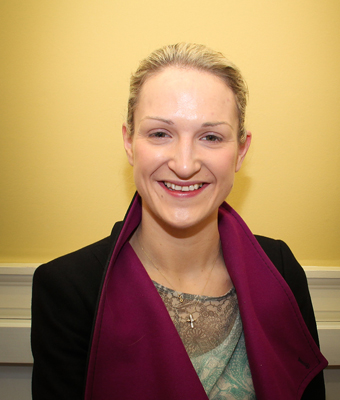
We have been absolutely committed to the UNIFIL mission for many years. Like, I think, many people, we would prefer not to see it come to an end towards the end of next year. Obviously, we will ensure that our troops who are there are able to carry out those missions. I hope we can look beyond 2026 and still have a presence on the ground because it is still very much needed. I had an opportunity yesterday to meet with my Lebanese colleague Youssef Rajji, who is the minister for foreign affairs, and speak to him about the situation on the ground, which is still extremely difficult and fragile. The security situation itself is feeding into an increased level of tension in certain areas, so we need to be vigilant.
The Irish Government remains firmly committed to assisting Lebanon in ensuring the return of its effective authority in southern Lebanon, and committed to UNIFIL, the UN peacekeeping mission in Lebanon, in support of this overall aim. In this regard, I can confirm that the Department of Defence maintains continuous and active engagement with the UN system, both bilaterally and via our permanent representation to the UN in New York, as well as with Security Council interlocutors, on the evolving situation in southern Lebanon, in particular, and on all matters relating to UNIFIL. At the end of October, senior officials in my Department met with the UN secretariat, including the Under-Secretary-General for peacekeeping, Mr. Jean-Pierre Lacroix, and the Under-Secretary-General for Operational Support, Mr. Atul Khare, to discuss operational issues relating to Ireland's participation in the UNIFIL mission.
Negotiations on the renewal of the UNIFIL mandate over the summer, led by France, as we all know, proved challenging, reflecting differing views among Security Council members. In the weeks leading up to the mandate renewal, the Tánaiste and then Minister for Defence closely engaged with our partners, including Lebanon, France, Italy, the US and the UN, in support of attaining a mandate extension. On 28 August the UN Security Council renewed the UNIFIL mandate to the end of 2026, with a period of drawdown and withdrawal to follow in 2027.
Yesterday, at the EU-Lebanon Association Council in Brussels, I underlined the pressing need for reconstruction supports for Lebanon, the very challenging humanitarian situation being faced there, and the ongoing need for the EU to assist Lebanon. I also highlighted to the Lebanese minister for foreign affairs, as I said, the need to make sure that not only civilians on the ground but also our peacekeeping troops are safe and that we engage extensively and closely with the Lebanese army in that regard.
Irish men and women have served with such distinction over many years in Lebanon. The Minister is right: it is such a regrettable decision that the mission would not continue. Nonetheless this decision of UNIFIL and the mission not going on leave a void once the force starts to scale down its numbers and the possibility of a scramble to fill that void, whether from one side or another there. That is a threat both to people locally there and to the troops themselves. Has the Minister identified particular threats in that regard? Are steps being taken to ensure that the Irish people who will be there as that scale-down occurs will remain safe and will be able to conduct a peacekeeping mission there? In addition, there have been incidents where the IDF has fired on them. Has the Minister complained to UNIFIL in that regard? If so, what has been the response?
In relation to the final question, not every incident is necessarily relayed or the subject of a complaint made in terms of overall complaints to UNIFIL and the Israel Defense Forces concerning military fire, whether on Irish personnel or otherwise. This information is not ordinarily provided by the UN. There are situations and scenarios where we have made complaints and have raised this. Again, that is something I highlighted with the Lebanese minister for foreign affairs yesterday as essential - not only that civilians are protected but also that those peacekeeping troops, our troops, who are doing fantastic work on the ground, are protected and that the Lebanese army as well is there to support them. I think the next couple of months will be challenging but I reassure the Deputy and everybody else that, as our troops scale back and scale down over the next year, they will continue their peacekeeping mission, they will continue doing the fantastic work they are trained to do and, at all stages, the situation will continue to be assessed. I have spoken to the Chief of Staff of the Defence Forces about this. He has been very clear that, as the mission scales back, our troops will be kept safe, and if changes need to be made in how they carry out their work, that will happen. However, we need to look beyond next year. I hope there will be a space for Irish peacekeeping troops as well as other troops to be able to fill that space in some way and to continue to have a presence on the ground, which, given the security situation, I think will still be needed.
I need to return to the original question. Has the Minister identified additional threats locally there, particularly in view of the changing situation and the reduction in the numbers of Irish troops there over the course of days, weeks, months or whatever length of time that will take? There is likely to be some level of additional threat there. Have any threats been identified from either side?
To return to the point about Irish troops having been fired on by the IDF and the challenges the Minister may have made to UNIFIL in that regard, how have they responded, what level of commitment will they give that people will be safe during the transition, and have they given any commitment thereafter?
I reiterate that this is a changing environment. It is most certainly a challenging environment, in particular the ongoing situation with Hezbollah in the south of Lebanon. The Lebanese Government is grappling with and trying to respond to this.
The decision has been taken to end UNIFIL. We need to ensure that while our troops are there, they are still engaged in the mission they are committed to and are kept safe.
I reaffirm the fact that the period of transition for any missions is challenging. It needs to be planned carefully and that is certainly what the Chief of Staff of the Defence Forces, working with his excellent team, is doing. They are making sure that the safety and security of our UNIFIL peacekeepers are front and centre in everything we do. Those considerations remain of paramount importance and will continue to be in the months ahead.
Defence Forces
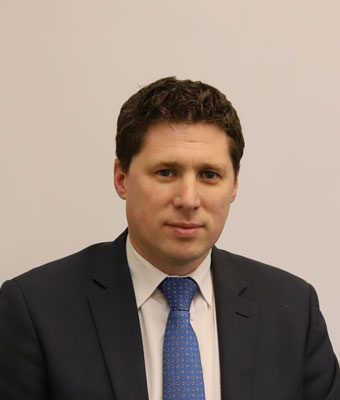
91. Deputy Matt Carthy asked the Minister for Defence the number of Defence Forces personnel required under level of ambition 2; the current establishment figure; and the current number within each service. [71896/25]
I would appreciate it if the Minister would inform the Dáil of the current numbers of personnel within each service of the Defence Forces, the current establishment figure and the number that will be required to meet level of ambition 2 under the commission on the future of the Defence Forces.
I thank the Deputy. As of 31 October 2025, the strength of the Permanent Defence Force stood at 7,760 personnel, consisting of 6,237 Army, 739 Air Corps and 784 Naval Service personnel, as well as over 400 civilian members.
On foot of the recommendations from the report of the Commission on the Defence Forces, the Government approved a move, over a six-year period, to a level of Permanent Defence Force capability equivalent to level of ambition 2. This will require an additional 2,000 personnel, including a civilian component, beyond the 9,500 establishment figure that was set at the time of the commission's report. The establishment figure for the Permanent Defence Force has increased incrementally since 2022 to 9,739 to facilitate the implementation of the recommendations of the report of the Commission on the Defence Forces.
Working towards the achievement of level of ambition 2, budget 2026 provided a record allocation of €1.49 billion for the defence sector, an increase of €145 million on the previous year. These funds include provision for the recruitment of a net 400 additional Permanent Defence Force members per annum. In order to meet Government targets, the Defence Forces are making concerted efforts to ramp up recruitment. Increased training capacity is being progressed. I recently visited the Joint Induction Training Centre which has been established in Gormanston camp in my constituency in Meath and provides initial training to recruits from all three branches of the Defence Forces. There is a huge amount of investment going into the accommodation, the gym area and the canteen to ensure we can increase the number of personnel who can go through Gormanston camp and be trained. The Defence Forces advise that when fully operational, the centre will facilitate the training of up to 900 recruits per annum.
Last year saw a stabilisation in numbers with 708 inductions to the Permanent Defence Force and the military authorities have advised that they are targeting over 750 inductions for 2025, which is expected to result in an increase in the total strength of the Permanent Defence Force. There continues, thankfully, to be very strong interest in a career in the Defence Forces.
We use the term "level of ambition" about the future of the Defence Forces. However, the level of ambition from the Government is absolutely pathetic considering where we are starting from and the situation we have as a result of Fianna Fáil and Fine Gael mismanagement. In December 2019, just prior to Fianna Fáil and Fine Gael coming together in the previous Government, the number of personnel in the Defence Forces was 8,700. We are supposed to celebrate that numbers are now a little over 7,700. There are 1,000 fewer personnel. This is at a time when the Government is planning to abandon the triple lock to send our Defence Forces to places it will not yet stipulate. The Minister tells us that we will have 750 inductions at best this year. Perhaps she could inform the Dáil how many discharges she expects within the Defence Forces this year because on average, it is approximately 750. Is she telling us that at the end of this year, we are effectively going to have no increase in the numbers of personnel in the Defence Forces?
We all agree that more needs to be done and I do not think the Government is saying anything to the contrary. It is clear that there continues to be a very strong interest in a career in the Defence Forces with further growth this year. Let us look at the figures. A total of 14,879 applications have been received this year, up to the end of October. The most important thing that I need to focus on now is making sure that as many of those as possible get into training and that we retain as many of them as possible.
We have introduced a range of key enabling measures to support and drive Defence Forces recruitment and retention, working closely with the Defence Forces. These include increases in the maximum ages of recruitment and retirement, the extension of private secondary healthcare to all personnel and the application of the provisions of the working time directive across the Defence Forces, subject to certain exemptions. The patrol duty allowance payable to Naval Service personnel at sea has been doubled after ten days at sea in a calendar year, while the Naval Service tax credit has been extended for a further five years. There has also been significant progress on pay with all personnel benefiting from a further pay award made in August of this year. Money has been provided through the capital budget.
Significant work has already been done to try to ensure that the terms and conditions are improving for our members. There is a plan that has been worked through with the Defence Forces and my Department to set out exactly how we are going to achieve those targets.
It is not going to be straightforward or easy. I accept that. I am absolutely committed to doing everything I can.
The difficulty is that the Minister's speech reflects, virtually verbatim, what we heard this time last year from the then Minister. There is no issue with applications or expressions of interest. We have seen that time and again. People are interested in the prospect of joining the Defence Forces. The difficulty is bringing them to the point when they are inducted and ensuring they are retained within the Defence Forces. Across the board, the Government does not have the ambition at the start or the policies at the end.
The difficulty is that the members of the Defence Forces have been telling us all, and specifically the Government, the measures that are required to actually address the retention and recruitment crisis we have been facing.
Has the Minister met with the Defence Forces' representative organisations? As a result of those meetings, if they took place, are there any new measures that the Minister now plans to bring forward?
While the measures have not changed, what has changed is that the numbers are increasing. I appreciate that might not be at the rate or in the numbers we all want, but numbers have now stabilised and are moving in the right direction. My intention and ambition are to work directly with the Defence Forces to ensure they have the right structure and the capacity and ability to increase the number of recruits. We will see an increase in the numbers of men and women we can train in Gormanston.
I have not yet met the representative organisations but I have made it clear that I will meet all of them in the new year. I have met them in various contexts and I will sit down with them in the new year. I know that my Department has worked closely and has had very good relationships with the representative organisations. A lot of progress has been made, much of which has come directly from the Defence Forces. I was looking recently at what has happened in the past number of years and much of it has been at the request of the representative organisations. When I meet them, I will, of course, be engaging on the concerns and issues they have and their potential requests. It is important that we bed down the work being done at the moment and make sure that the changes taking place have time to bed into the system so we can start to see those numbers increase.
Question No. 92 taken with Written Answers.
National Security
93. Deputy Aindrias Moynihan asked the Minister for Defence the defence measures being taken to address any threats posed by non-State drones violating Irish airspace; the risks that have been identified; the measures being advanced to combat risks posed by hybrid activities on the island of Ireland; and if she will make a statement on the matter. [71590/25]
The recent visit of President Zelenskyy highlighted the threat from drones and the gaps in our defences in respect of how we deal with drones. Will the Minister outline efforts to deal with drone threats and hybrid conflict?
As I outlined in an earlier response, a widely reported incident occurred on Monday, 1 December, regarding drones operating in the vicinity of a Naval Service vessel in the Irish Sea. Notwithstanding some suggestions, at no stage was the flight of President Zelenskyy compromised and the security operation led by An Garda Síochána was successfully deployed through multiple means, ultimately leading to a safe and successful visit to Ireland by President Zelenskyy. It was an opportunity for us to restate our absolute support and commitment to supporting Ukraine in the face of a brutal and illegal invasion by Russia. As previously mentioned, I ask Deputies to reflect on the ongoing speculation in respect of this incident. It is important that we show confidence in the capacity and ability of the Garda and the Defence Forces, both of which were involved in that hugely successful operation, to do their jobs effectively.
I have been fully briefed, in my capacity as Minister for Defence and as part of the national security committee, on the initial findings and I am reassured that both the Defence Forces and An Garda Síochána have examined and are examining this matter extensively. With any incident of this kind, we have to review what happened and how the operation was put in place, and consider whether something could have been done differently and whether something needs to be changed. That work is ongoing.
One of my key priorities as Minister is to ensure that Defence Forces capabilities are maintained, developed and enhanced so that the organisation can meet all Government-assigned roles, including those that may arise as a result of drone incursions. Certainly this is something we are seeing far more of right across Europe. As I mentioned earlier, in other countries we have seen hundreds of millions of euro in losses because of closed air space due to issues around airports. In the most part, that is probably part of the intention behind some of this activity. It is really important that we do everything we can to try to prevent these types of incursions.
The Office of Emergency Planning in my Department conducts the national risk assessment on a rolling three-year cycle, as part of our reporting commitments under Decision 1313/2013/EU. In the latest national risk assessment, the disruptive use of drones was identified for the first time as one of the State’s 22 key risks. This is certainly something we are taking with the utmost seriousness.
One of the issues that was highlighted arising from that incident was where the Irish vessel was not able or did not feel it could engage with the drone because there were no rules of engagement in place. Will that be dealt with? Will they be put in place and how quickly will that happen? There is a whole range of policies that would be needed to support dealing with the drones, I imagine. I understand the Minister is looking at the possibility of investing up to €1.6 billion in a radar system which would be in place by about quarter 2 of next year. In advance of that, I expect the Minister can be engaged in putting in place the various policies. Is there a timeline laid out for those? Is the Minister looking at the possibility of deploying our own drones?
On the overall response, at all times the Naval Service vessel the Deputy referred to operated within the standing operating procedures, the different rules of engagement and the law of the sea. They could have exercised the right to self-defence if that was what they decided was necessary or needed. These are all of the scenarios and decisions that have been taken that are under review. That is being conducted by the Garda working closely with the Defence Forces. I think there will always be lessons to be learned. If there are improvements or changes needing to be made, that will be taken under consideration. That information is not necessarily going to be made available or public either, given the security nature of it.
On our radar system, a significant amount of our €1.7 billion capital plan will be invested specifically in a new radar capacity. This will allow for long-range radar systems. There will be radar systems on our naval vessels and there will be a counter-drone technology. This is the specific piece we are bringing forward. I am hoping to have a contract signed very soon which would allow us to purchase these and have them in place and have personnel trained through the early part of next year so they will be live and operational and in use for the Presidency, which will start on 1 July.
Drone technology is typically used as part of hybrid warfare, where there are various techniques including online, physically on the ground or indeed under water. I have raised repeatedly the threat to the cables offshore and the danger there as well. It seems we do not have underwater capability so the view was to have wireless or remote-controlled visibility under the sea as well. Is the Minister advancing drone technology to defend the underwater cables as well? Is the drone defence entirely a radar of the skies? Is the Minister looking at a hybrid approach where there also would be a threat underwater? We have seen it again and again that the drones would be used as a type of hybrid weapon rather than one thing on its own.
We currently have our own drone capacities but they are generally used for surveillance, not trying to counter. There is work under way at the moment to develop a further or future strategy on the acquisition of different types of drones that could be used. That is at an early stage and is being developed. In terms of our subsea capabilities, as part of the NDP plan I mentioned last week, which was published, investment in our sonar capability, the towed sonar the Deputy referred to, is being prioritised as the first project. This will see the Naval Service acquire sonar capability that will be used to detect objects that would be near cables and pipelines within Irish territorial waters and within our exclusive economic zone, EEZ. This new acquisition will enhance awareness below the surface, which is absolutely vital for us as an island, contributing to the overall maritime picture available to the Naval Service and the wider Defence Forces. We are investing in our capacity in air, on land and under water.
Question No. 94 taken with Written Answers.
Defence Forces
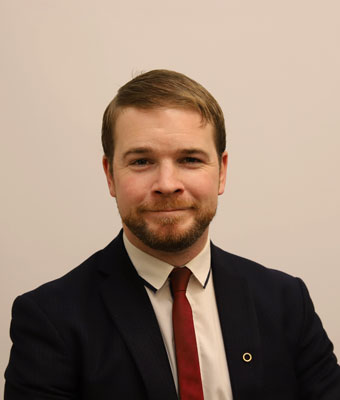
95. Deputy Donnchadh Ó Laoghaire asked the Minister for Defence her views on the matter of entry-level cadet pay; and if she will make a statement on the matter. [72046/25]
We had a discussion a short time ago about specialist staff. Connected to that is the whole issue of cadet training and their experience. There is the issue of entry-level cadet pay. It has been well flagged by RACO, including at the conference a few weeks ago, and the fact that it has not kept pace with some of the other increases in the system.
While I appreciate that more progress needs to be made, the Deputy is aware that there has been significant progress overall in terms of pay and conditions for Defence Forces personnel, particularly over the past six years. A school-leaver cadet, on commissioning, was paid €30,884 in January 2019. As of 1 August 2025 a school-leaver cadet, on commissioning to second lieutenant is paid €45,795, which is an increase of 49% or over €14,000 in the past six years. After two years in that rank they are promoted to lieutenant and their pay increases to €51,184. In May 2019, a newly qualified three-star private could have expected to earn €27,759 gross per annum on completion of their initial training. That has now increased to €41,880 per annum. Where a graduate joins, the pay rate on commissioning begins at €51,184. These rates all include a pensionable military service allowance, which is an allowance that is paid to all ranks up to and including the rank of colonel, for the unpredictable nature of the work encountered by the Defence Forces.
In the conversation surrounding the pay and conditions of members of the Defence Forces, it is important to point out that in addition to basic pay and military service allowance, certain positions in the Defence Forces also attract specialist and technical pay. Additionally there is scope for further income from duty allowances for specific duties carried out, on an ongoing basis, as well as the possibility of earning a tax-free duty allowance, starting at €15,000, for a six-month overseas deployment. As the Deputy is also aware, different pay scales also apply during the training period for both cadets and recruits.
The matter of cadet pay has been raised by the Representative Association of Commissioned Officers, RACO. I understand that a claim has been received from RACO, which is being dealt with specifically under the conciliation and arbitration scheme for members of the Permanent Defence Force and is the subject of correspondence between the Department and the representative association. The Deputy will appreciate that as discussions under the conciliation and arbitration scheme are confidential to the parties involved, it would not be appropriate for me to comment further on the specifics of the claim. I look forward to constructive engagement between the parties to the scheme.
Interest in a career in the Defence Forces continues to grow. There was a total of 13,348 applicants for entry into the Defence Forces in 2024, of which 1,795 were for the cadets.
The Minister said a while ago that she was going to meet all the representative organisations. I welcome that and hope that includes not only those for the Permanent Defence Force but also those for the Reserve Defence Force and the veterans' organisations. I am sure RACO will raise this issue with the Minister. The information she gave was in the longer run, when they are qualified and reach a certain rank. The issue here is at entry level. A cadet who joins - up to the age of 39 - earns €25,748 annually, or approximately €493 per week. A recruit in the enlisted ranks earns €540 per week in the first ten weeks, increasing to €617 for the following 16 weeks, and, after approximately six months, €860 per week. While it is obviously welcome that recruit pay has increased in general terms cadets' entry pay has not kept pace and they earn significantly less than their enlisted counterparts for the duration of a multiyear training programme. That anomaly needs to be considered.
Yes, I intend to meet them in the new year and really look forward to meeting them. I also had an opportunity to meet and speak with cadets who were quite literally mid-training when I was in the Curragh last week.
There were some who had completely changed their career paths because they were passionate about joining the Defence Forces. There were others whose siblings had been members as well and they wanted to join. It was wonderful to see the commitment and the fact that they were there because it was something they were passionate about.
I appreciate that the entry point for cadets in training is lower. They receive board and food. That is a cost that is taken away from them. It depends on the different cadetships; they are anywhere from 15 to 18 months long. Some may take longer, so there are implications more broadly. The process that is engaged in at the moment is an important step to try to make progress where we can specifically in relation to this level of pay scale. The overall improvements we have seen over the years have come about because of the need and commitment to invest in the men and women as they are training, but also as they rise through the ranks. I am committed to making further progress on that where we can and to working closely with the organisations and representative groups. They are now part of ICTU. With the public sector pay agreements, it gives the Defence Forces an opportunity to make sure that they are now represented at the table. That is a welcome development in recent years.
Question No. 96 taken with Written Answers.
Cybersecurity Policy
97. Deputy Donnchadh Ó Laoghaire asked the Minister for Defence the progress her Department has made regarding the establishment of a joint cybersecurity command and other actions related to cybersecurity contained in the Report of the Commission on the Defence Forces. [72045/25]
We have spoken about how potential defence and national security issues will not always be what we have traditionally imagined. Cybersecurity and hybrid threats are going to be significant features of that. The cybersecurity command has been established, which was called for in the Report of the Commission on the Defence Forces. That is very welcome, but progress in the implementation of its plans is what we now need. What is the current strength of the cybersecurity command? What will it be in 12 months’ time?
As recognised in the Report on the Commission on the Defence Forces and accepted by the Government, the Defence Forces need to be capable of delivering military effects across the cyber domain. To this end, my Department published the high-level action plan for the report, which included recommendations relating to the Defence Forces' cyberdefence functions. As a result, the Defence Forces have established the joint cyber defence command, which was established back in 2024. The command will be able to conduct full-spectrum cyberspace operations to robustly defend against cyber threats, support Defence Forces' operations at home and overseas, and enhance technicalities.
I will provide the exact figures. The Department has approved the assignment of 19 Defence Forces specialist posts to kick-start the operation of this unit, which is headed by an officer of general rank. My Department has engaged with the Public Appointments Service to recruit ten civilian cyber specialists who will be embedded in this new cyber unit. To date, the Public Appointments Service has completed a recruitment campaign for these civilian cyber specialist roles and appointments are in the process of being made, so we are well under way in making sure that this unit has the appropriate support. Additionally, to make sure that there is appropriate infrastructure, the development of the purpose-built communications and information services, CIS, office block in McKee Barracks has been approved and procurement of same will commence shortly so that we do not just have the personnel, but also the physical infrastructure that is needed.
To give effect to the strategy, the specialist units have been assigned. The new Defence Forces officer has been appointed to head up a specific unit at brigadier general level. In addition, my Department is engaging with the Public Appointments Service to recruit the various different specialists. I am satisfied that, from a defence perspective, we are developing a positive trajectory to ensure that the new cyber defence command unit is well positioned to meet the ambitious targets set out in the cyber strategy.
The Defence Forces will liaise and work with their counterparts in An Garda Síochána in addressing and countering cyber threats. The work that is being done through this specific unit is only specifically looking at the Defence Forces and making sure that they are protected from any type of cyber threat. As time goes on, though, and working with An Garda Síochána, there is more we can do to look beyond that. The funding that I announced last week of €300 million for this year, rising to a further €360 million by 2029, illustrates the investment we are making in the Defence Forces, our capability and modernising infrastructure. It is important when we are doing that and investing in so much technology and equipment that we make sure that we have the right types of response, resource and structure in place to protect all of the investment.
I appreciate that it was not specifically written in the question, but if the Minister has the figure to hand, what does she expect the strength to be by the end of next year? I would appreciate that.
The architecture around the whole area of cybersecurity is a little bit complicated in the sense that the National Cyber Security Centre is responsible for protecting the State broadly speaking, the Garda has responsibility as a major intelligence organisation, and the Defence Forces are responsible for protecting themselves. It is a combination to some degree of all three where there is a hybrid element and a kinetic element to it. With the development of this command, what are its priorities? How does it intend to develop? How advanced are protocols for those hybrid cyber threats that include a kinetic element and can include a cyber element? Part of that is the responsibility of the National Cyber Security Centre, but some of it potentially falls to the Defence Forces.
Relating to cybersecurity, the primary role of the Defence Forces is to defend and secure their networks and systems. The role of the Garda is to do the same and to look at other areas as well.
Specifically in relation to the joint cybersecurity command, there are three key pillars to it: the joint command centre, which is receiving investment and is being developed; the strategy itself; and the additional posts. I will have to come back to the Deputy on the figure as regards the overall objective. The focus of my Department now, working with the Defence Forces, is on working on the implementation of all of this. That is happening. I believe a meeting is taking place as soon as tomorrow between members of my Department and the Defence Forces to make sure that the elements of the strategy can be implemented. Key areas of the strategy include: to prevent and defend against cyberattacks on Defence Forces' networks; to develop a comprehensive programme of training and cyber-related subjects; to identity and protect critical defence infrastructure and increase resilience to cyber attacks; and to conduct ongoing risk assessments to evaluate the potential impact and likelihood of cyberattacks on Defence Forces' networks. That is our focus immediately when looking at the Defence Forces themselves. However, I have no doubt that, as this beds down and our capability and capacity increase, there will be more ways in which we will be able to work collectively and closely with An Garda Síochána on this issue.
It is very possible that future threats to our national security will potentially arise in a hybrid way. It is not inconceivable that we could have a kinetic or physical element to something, such as what we had with drones recently, as well as a co-ordinated cyberattack on Defence Forces' equipment, personnel and installations to hinder the ability of the Defence Forces to deal with the kinetic element of it, for example, drone interference with airports, infrastructure, visiting Heads of States and so on. The primary responsibility for the cyber element of that lies with the National Cyber Security Centre. Clearly, there need to be agreed protocols in relation to how that hybrid element or instances are dealt with. Is there such a protocol and how recently has it been concluded? Is there an agreed protocol between the National Cyber Security Centre, the Garda and the Defence Forces in terms of how they will respond? Is there a clear plan of action in those instances?
I agree with the Deputy that the changing nature of threats is clearly moving towards hybrid threats in a way that we have never dealt with before. I know from a previous role that the Garda has been investing significantly in its capabilities, capacity and workforce. That is why we are doing what we are doing here with the Defence Forces. There is an emergency group that I chair when it relates to specific defence matters. It is chaired by the Minister for the environment if there are natural disasters or other issues that need to be dealt with. This group brings together all of the relevant bodies to be able to respond to particular threats, be they hybrid threats, cyber threats or otherwise. That group meets as it needs to and there are protocols in place. We need to make that they are always up to date and that we are able to respond to the changing threats and environments that are there. I have no doubt that I will be chairing that meeting in the near future. In fact, I know that I will.
It is important that we make sure that we are alert and live to all types of threat and that the different arms of the State are working together and in close in communication. The Garda Commissioner and the head of the Defence Forces are working closely together, not just because of the EU Presidency, but because of the changing nature of the threats that we have both referenced.
Defence Forces
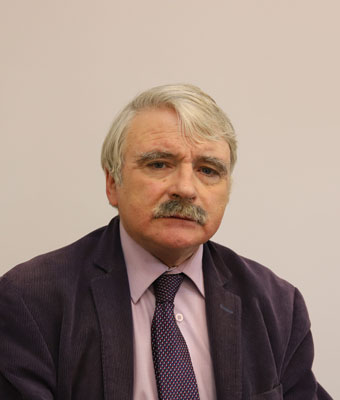
98. Deputy Willie O'Dea asked the Minister for Defence when the rank of lance corporal will be introduced in the Army; and if she will make a statement on the matter. [71653/25]
Will the Minister outline the progress that has been made on the introduction of the rank of lance corporal? When will it be introduced to the Army?
The Commission on the Defence Forces report recommended significant changes for the Defence Forces and defence provision in Ireland. It covered high-level Defence Forces structures, defence capabilities, organisation, culture and human resources, the Reserve Defence Force and funding. One of the recommendations in the report was the creation of a new enlisted rank of lance corporal in the Army and Air Corps.
The detailed implementation plan for the Report of the Commission on the Defence Forces has identified that this recommendation requires further evaluation. The further evaluation will be informed by work under way in the Defence Forces on force design, which is also a Commission on the Defence Forces recommendation. The report recommended, "The Chief of Defence to initiate an immediate force design process assisted by external experts with access to international military expertise." This is the same force design process I mentioned earlier, which will help us achieve our overall targets. The Defence Forces have established force design teams within the Army, the Naval Service and the Air Corps and an overarching strategic force design office. The force design teams are working with external expertise in designing a structure for a modern force of Ireland’s size taking into account the Defence Forces' roles and the capabilities required to deliver these roles. The outcome of the work on force design will inform further evaluation on the introduction of the rank of lance corporal. Such further evaluation will also require consultation with other key stakeholders, including the Department of Public Expenditure, Infrastructure, Public Service Reform and Digitalisation, regarding all aspects of the resource, policy, financial and legislative implications of introducing a new rank into the Defence Forces.
I also point out that the Government has implemented a range of measures aimed at addressing the recruitment and retention challenges in the Defence Forces. I have mentioned these already. They include the increase in the maximum recruitment age to 39 years for those roles that had a recruitment age below that and to 50 years for direct entry specialists. The mandatory retirement age has been increased to 62, private secondary healthcare has been rolled out to all PDF members, the patrol duty allowance has been doubled, the Naval Service tax credit has been extended for a further five years and there has also been significant progress on pay. There is more work that needs to be done. That work is happening at the moment. We will then be able to make a more informed decision on this rank.
As the Minister has said, the Commission on the Defence Forces recommended the creation of the new rank of lance corporal in the Army and the Air Corps. It also recommended that consideration be given to whether there is a need for an equivalent rank in the Naval Service. The qualification course for this rank should be of short duration and conducted in the home unit. The commission believes the creation of the rank of lance corporal would allow for earlier rank progression for enlisted personnel with leadership potential and that it would also offer unit commanders and senior NCOs the opportunity to assess the leadership ability of junior personnel before further advancement. The rank would also be useful for specialist trades as it could allow privates to advance and carry out supervisory functions without needing to complete the potential NCO course. I understand that work is being done in the background, as the Minister has outlined. Is there a projected timeline for this to be brought to fruition and for the rank of lance corporal to be introduced?
On the evaluation of the Commission on the Defence Forces recommendations, a number of factors have to be taken into consideration before a decision can be made. These include military management advice on the introduction of the rank, the potential benefits to individual personnel, the future role of personnel at this new rank, the impact on career progression for personnel, the impact of increasingly hierarchical structures, and the legislative and financial implications, which may not be to the fore. The report noted that this rank exists in a number of other militaries, specifically those of the UK and the US. It is provided between the ranks of private three star and corporal. All of these different situations and scenarios need to be taken into consideration before this is taken on board. I believe the main reason for this ask is that it would give privates the opportunity to do a shorter course but all of this has to be looked at in the overall context of force design. There is a lot of work under way as part of general force design. This is very much part of that overall review. Decisions will be taken in the new year as to whether we will move on this.
The first thing I take from the Minister's response is that a decision has not been made to put such a rank in place. When my colleagues and I had the opportunity to meet with PDFORRA recently, the association was very clear that this was needed. The Commission on the Defence Forces has also been very clear on it. Why is there uncertainty as to whether this rank would be created? Time can be spent trying to develop the course and bring it to fruition but the decision as to whether it should be introduced or not should surely be made at this stage. Will the Minister clarify why it has not been? What impediments need to be cleared? Why is the Minister not convinced of the need for this post? How quickly will a decision be made on it?
In recommending it, the commission was of the view that the creation of the rank of lance corporal would allow earlier rank progression for enlisted personnel with leadership potential and that it would offer unit commanders and senior NCOs the opportunity to assess the leadership ability of junior personnel before further advancement. The rank would also be useful for specialist trades, allowing privates to advance and carry out supervisory functions without the need to complete the full potential NCO course. These are some of the reasons the commission made the recommendation. However, different risks or challenges were identified when the recommendation was evaluated further. After examining the benefits and the opportunities, the evaluation process also considered these risks. While I do not want to pre-empt the outcome, some of the risks considered in this further evaluation included greater rigidity in the Defence Forces as a result of an increasingly hierarchical structure, a lack of differentiation between roles, slower progression through the ranks and lack of ambition or opportunities for advancement. This is all being looked at on both sides at the moment. The review being undertaken by the Defence Forces is under way. It will not be completed until next year. It is at that stage that these decisions will be taken.
Question No. 99 taken with Written Answers.
Military Honours

100. Deputy Louis O'Hara asked the Minister for Defence the process for the awarding of historical IRA medals to families of volunteers; and if she will make a statement on the matter. [71916/25]
What is the process for the awarding of historical IRA medals to families of volunteers? I raise the case of Patrick Morrissey from Athenry, County Galway, with the Minister. I will come back to that in my later contribution.
The Government decided in January 1941 that two medals should be struck in respect of service during the 1916-21 period, one for service during Easter week 1916 and the second for subsequent service up to the truce of 11 July 1921. In May 1942, the Government further decided that the second medal, the service medal, should be issued to two groups of people. The medal with bar was to be issued to persons in possession of a military service certificate entitling them to a pension under the Military Service Pensions Acts in respect of the period subsequent to 1916 and prior to 11 July 1921 and to those persons not in possession of a certificate who could satisfy the Minister for Defence that, had they applied for a pension, their service was such as would have merited the award of a pension. The medal without bar was to be issued to persons who were enrolled in the Irish Republican Army, Fianna Éireann, Cumann na mBan or the Irish Citizen Army not less than three months prior to 11 July 1921 but who did not qualify for a pension.
In certain exceptional situations, a medal can be posthumously awarded if no medal was previously issued. However, in order not to diminish the intrinsic value of such medals, this is only done in exceptional cases and only where there is incontrovertible verified evidence available that the criteria for the award of a medal have been met. The process by which applications and petitions or appeals under the Military Service Pensions Acts were investigated and verified was wound up in 1958 and, as the Deputy can appreciate, there are now no surviving members of the old IRA or related organisations who could verify membership. Given the time that has elapsed, there is no mechanism available now by which service and activities can be investigated or verified other than existing departmental records. It is therefore difficult to satisfy the requirements, although it is not impossible and, over the last number of years, there have been people who have satisfied the requirements and been awarded medals posthumously. All applications for a posthumous medal made to my Department are carefully considered. However, there are no plans to put in place wider arrangements or to lower the criteria in relation to the award of posthumous medals.
Certainly, if there is an individual the Deputy is referring to specifically, a request for applications can be addressed to the pensions administration section of my Department, which is based in Renmore in Galway. I can provide the Deputy with the full postal and email addresses.
The individual in question is Patrick Morrissey of Athenry. Patrick joined the Irish Republican Brotherhood in 1907. He later joined the Irish Volunteers in Athenry in 1914. Athenry was one of the main focal points of the 1916 Rising outside of Dublin. Patrick played a key role locally in that. He was subsequently imprisoned in Kilmainham and then in Wales. He was active once again during the War of Independence as part of the Derrydonnell brigade of the IRA. One of his relatives, Michael Morrissey, has conducted extensive research into the role Patrick played in the Rising, the 1918 election and the War of Independence. There is a lot of supporting documentation, books and different sources on his active role in the Army. Michael has attempted a number of times to apply for a medal with the evidence he has collated to date but, due mainly to the passing of time, this has not been accepted. Will the Department engage with Michael on this application and ensure that, in some way, Patrick's service can be recognised?
The Deputy outlined some of the details, but he will appreciate that without having all the information, it is hard to make a decision or to be able to respond effectively. While I said it is very difficult, it is certainly not impossible for medals to be awarded posthumously. In 2024, 15 posthumous medal applications and five medals were awarded. I do not know when Michael Morrissey applied initially or whether he was one of those 15. To date this year, 14 applications have been received and five medals awarded. Of the remaining nine, three were refused because they did not meet the criteria. Three were found to have been awarded previously, so there was obviously an overlap, and three applications are in progress. I advise that if the individual representing the person wants to make a further application, there is quite a stringent process in place. There are strict set criteria that need to be complied with but the matter can be looked at again if the person makes a further application.
While I appreciate the Minister's response, I find it frustrating because I know Michael Morrissey has submitted a number of applications. The evidence is clear that Patrick was a member of the Irish Volunteers and the IRA. It is very frustrating for the family. These medals are cherished possessions for the families who have them. It is really important to them that the efforts of their family member are properly recognised. Patrick Morrissey passed away in 1962. He had no direct next of kin. Michael Morrissey has made significant efforts in this regard. Will the Minister take a look at this case? I am happy to send on the full details submitted by Michael on a number of occasions. I feel he has been very hard done by in this case. It is really important to him that this is properly recognised. If at all possible, will the Minister take a look at this particular case and possibly engage with the Department on awarding the medal to this particular individual?
I support what Deputy O'Hara is asking for. I happened to be present at the presentation of a medal in 2019 to the family of Joe Murphy. It was presented to his nephew Henry Delaney and is a source of great pride to that family. If the evidence is there, these medals are very important to families and the local community.
A issue that was raised with me by Jim Hegarty, a nephew of John Joe Hegarty who was a member of the old IRA, is that the rank of the volunteers seems to have been in records recognised in relation to the pro-Treaty side but not for the anti-Treaty side. The rank of those who fought in the Tan War and the War of Independence should be restored to those who fought on the anti-Treaty side subsequently.
I thank Deputy Ó Laoghaire. If he writes to me directly on that matter, I will respond to him.
In response to Deputy O'Hara, I appreciate that this was highly specific prior to 1958 when many changes were made. Before 1958, applications were required to state the name of the unit, subunit, battalion company, former brigade, battalion and the company officers commanding. Given that this process was wound up in 1958 and that there are no surviving members alive to verify membership, and in light of the time that has elapsed, it is hard to investigate or verify information in terms of existing departmental records. That is why it is very difficult. It is also the reason that posthumous awards are applied in a small number of the applications made. All I can say is that another application can be made if there is further evidence or information that can be provided on behalf of the individual. If that is done, the Department can look at it again.
Question Nos. 101 and 102 taken with Written Answers.
National Security

103. Deputy Rose Conway-Walsh asked the Minister for Defence if all protocols were followed during the incident involving five drones endeavouring to intercept the plane carrying President Zelenskyy recently; if a C70 form was completed to ensure a Garda-Defence Forces co-ordinated response; and if she will make a statement on the matter. [72042/25]
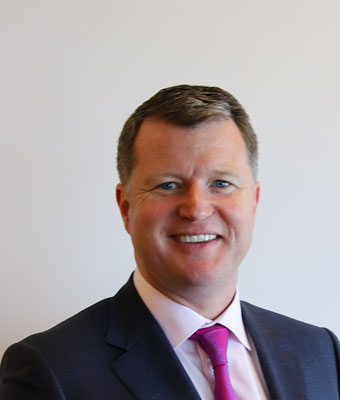
112. Deputy Malcolm Byrne asked the Minister for Defence Ireland's plans for the deployment of counter-unmanned aircraft systems; and if she will make a statement on the matter. [71588/25]
I wish the Minister well in her new role. It has probably never been so important.
I listened intently to the Minister's answers on the incident involving five drones endeavouring to intercept the plane of President Zelenskyy recently. Was a C70 form was completed to ensure there was a Garda-Defence Forces co-ordinated response? Were all protocols followed in the context of that incident?
I propose to take Questions No. 103 and 112 together.
Deputy Malcolm Byrne, who submitted Question No. 112, is not here. As I outlined in my earlier response, the widely reported incident regarding drones operating in the vicinity of the Naval Service vessel has been discussed here at length this evening. Notwithstanding some suggestions, President Zelenskyy's flight was not compromised and the security operation led by An Garda Síochána was successfully deployed through multiple means, ultimately leading to a safe and successful visit.
When we are speaking about these issues, we all need to ensure that we are speaking about the facts. I appreciate Deputy Conway-Walsh is asking for facts but in some instances only limited information can be provided given the security nature of what we are discussing. I have been fully briefed, in my capacity as Minister for Defence as part of the national security committee, on the initial findings and I am reassured by both the Defence Forces and An Garda Síochána that they have examined and are examining this matter extensively. While I can confirm a C70 was issued by An Garda Síochána to the Defence Forces seeking assistance in respect of the visit of President Zelenskyy, the Deputy will appreciate I cannot comment further because these are operational matters. However, a C70 form was issued by An Garda Síochána to the Defence Forces.
One of my key priorities as Minister for Defence is to ensure our Defence Forces capabilities are maintained, developed and enhanced so that the organisation can meet all Government-assigned roles, including those that may arise as a result of drone incursions. This is something we are seeing more and more of across Europe and the world. The work of the Defence Forces in this space aligns with broader national security planning that is ongoing. Work is well under way on the military radar programme I mentioned earlier, which is a significant capability enhancement. A dedicated project team of senior civil and military personnel has been advancing this programme, particularly in relation to the counter-drone element and it is being actively pursued by my officials. This morning, I brought to Cabinet the next stages of the new radar system. We have put forward the new preliminary business case. We are partnering with France and I hope early in the new year to be able to bring the final business, so that we can start what will be an extensive roll-out of our new radar capabilities.
I certainly welcome the increase in the radar capability. It is very important. I appreciate that the Minister cannot give every detail and has to be cautious in what she says but people want to know. They want reassurance that we are resilient enough and that our reliance is holding up and being improved all the time. One of the questions that has been asked of me a lot is on what protocol is in place when there is drone activity in our airspace. Are airlines notified? What happens when such incidents occur? I very much appreciate and welcome the fact that President Zelenskyy had a safe landing and take-off, and was safe while he was here. That tells us certain things but we need to know whether other incidents could have happened and whether all the protocols were followed in that incident. Will the Minister tell us what the protocol is in relation to drone activity?
I have confidence in our ability to defend ourselves and those who travel to this country. However, we all appreciate that there is more we need to do. We are no different from any other country in that regard.
There are, of course, standard operating procedures, SOPs, different rules of engagement and different laws depending on whether an incident occurs on sea, air or land. It is for those who are trained and who are operating on the ground to respond and make sure they comply with the different standard operating procedures.
At all times, whether it was the Naval Service or those responding, those involved in this incident operated within the SOPs. However, as there should be with any incident like this, a review is taking place and the Garda is working closely with the Defence Forces on that. If there are operating procedures that need to be enhanced, improved or changed and if better structures need to be put in place, that certainly should be done. I reiterate that there was not a closing of airspace and no significant issue arose.
Of course we need to be very serious about any type of threat and any types of drones in our airspace or within the vicinity of our vessels. This is something we are taking extremely seriously. It is why we are prioritising within the €1.7 billion budget the development of new radar capabilities and the expansion of our sonar, air fleet and ground fleet.
I reiterate that we need to have some transparency. That is why I asked that the remit of the defence and national security committee be revisited. Transparency and accountability are very important. I welcome the investment the Minister announced last week, which is badly needed to address the neglect there has been of our Defence Forces, but there must be oversight of how it is spent and accountability for it. People need to know we are resilient as a State. That is necessary not just for the public but also in terms of our competitiveness and the assurances we can give to foreign direct investors in this country. They need to be assured right across the board in terms of our cybersecurity and security generally. Those issues have gone way up the scale in terms of things that are important to multinational businesses and also to our indigenous businesses.
I commend the men and women of the Defence Forces on the fantastic work they do. In my time as Minister for Defence, my priority will be investing in them and their capabilities, including their ability to respond to emerging threats. It is also important to acknowledge the historic role our troops have played in peacekeeping. That will continue to be a focus and priority.
Regarding the changing environment and changing threats, so much has moved to cyber threats. It is an issue that is raised regularly with all of us by companies small and large and by our agencies as well. It is vitally important that we continually invest in all our abilities to respond to these types of threats. I mentioned in response to an earlier question the investment that is going into technologies within the Defence Forces to enable them to identify and reject these types of threats. There has been huge investment in recent years in An Garda Síochána. Through the Department of enterprise, working with IDA Ireland and Enterprise Ireland, there has also been huge investment to ensure businesses are alert to these types of threats, are able to respond to them and know exactly who to go when these types of incidents occur. We all need to work collectively on this issue. A huge amount of funding will be spent on the Defence Forces and, with that, we will make sure the right structures and resources are in place to protect that investment.
Questions Nos. 104 to 110, inclusive, taken with Written Answers.
Defence Forces
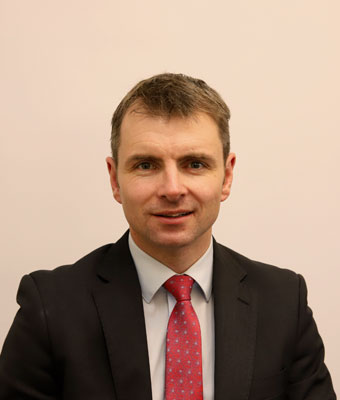
111. Deputy Ruairí Ó Murchú asked the Minister for Defence if she will outline any recent progress made in all the investigations into the death of a Defence Forces member who was killed on duty in the Lebanon, details supplied; and if she will make a statement on the matter. [71889/25]

As we are short of time, I ask the Deputy to keep things as tight as possible. I will allow a one-one-one exchange.
My question relates to the investigations into the tragedy of the loss of Private Seán Rooney, who was killed on 14 December 2022 while on active service in Lebanon. Trooper Shane Kearney and a number of others were injured in the incident. This shows us the reality of peacekeeping. It is absolutely vital that we engage with the Lebanese authorities on this matter. None of us could be happy with the lenient sentences for those responsible. I understand Mohammad Ayyad is still free. We must ensure the Lebanese authorities follow through on their promise of appealing the overly lenient sentences. We also must see publication of the investigation by Mr. Michael Delaney SC into operational protocols.
This is something I raised directly with my Lebanese counterpart, Youssef Rajji, when I met with him yesterday prior to the EU-Lebanon Association Council meeting. I referred to the trauma that has been inflicted on Private Rooney's family, the need for answers and the need to ensure we have the full co-operation and support of the Lebanese Government regarding the appeal. We will continue to engage with the Lebanese authorities in that regard. It is absolutely essential that we have answers and an appropriate response to what has happened to date. I have written to Private Rooney's mother and I hope to meet with his family in the new year and engage directly with them on this matter.
I really appreciate the Minister's answer. It is absolutely vital that we follow through on the promise that was made that no stone will be left unturned in delivering justice for Private Seán Rooney. It is essential that we look after the families of those who have made the ultimate sacrifice.
I understand the Tánaiste briefed the Minister on the issue, of which she may already have been aware, regarding John McNeela and the non-transfer of a pension to him on the death of his wife. His son Michael McNeela died in Lebanon while on peacekeeping duty. The Army Pensions Act is really unfair legislation that needs to be updated. I understand the Minister's Secretary General is looking at progressing legislation on the back of other legislation. Is there a timeline for that? I have asked previously whether an interim solution is possible and I have spoken about the need to ensure any provision is retrospective. It is vital the change happens as fast as possible.
For those who make the ultimate sacrifice on the missions they are committed to, we must ensure their families are supported. My colleague has given a commitment that no stone will be left unturned in ensuring there is justice and that we have all the answers. I reaffirm that commitment.
I will get back to the Deputy directly on the pension issue.
I ask that the Minister also get back to me on the timeline for the report by Mr. Micheal Delaney SC. It was intended to be published in quarter four of this year, which is now.
Is féidir teacht ar Cheisteanna Scríofa ar www.oireachtas.ie.
Written Answers are published on the Oireachtas website.