Saincheisteanna Tráthúla - Topical Issue Debate

The Minister, Deputy McEntee, is to reply to the first Topical Issue. She has indicated she needs to leave the Chamber briefly to obtain documentation. The Minister of State, Deputy Harkin, is in the Chamber and is willing to reply to Deputy Wall's matter if it is taken before the first Topical Issue. On second thoughts, we will not mess with a well-designed plan and will leave the order as is. We are two hours ahead of schedule. I will pause for a moment to give the Minister a chance to return.
Foreign Conflicts
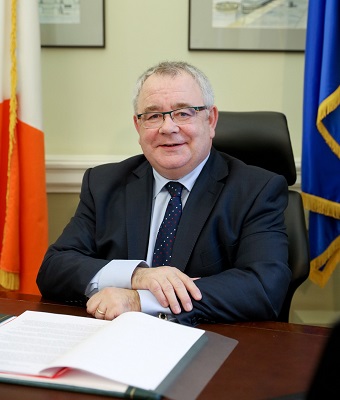
I am grateful to the Minister for being present to deal with this matter. I want to declare an interest in that, as the convener of the Ireland-Morocco Parliamentary Friendship Group, this is an issue in which I am keenly interested. Will the Minister provide an update on Ireland's stance on the question of Western Sahara in the context of the recent developments at United Nations level?
This 50-year-old dispute remains one of the longest standing issues on the agenda of the UN. Despite successive UN efforts to facilitate a negotiated settlement, the situation has continued to evolve, shaped by developments on the ground and by broader dynamics in the region. Since the 1991 ceasefire and the establishment of the United Nations Mission for the Referendum in Western Sahara, MINURSO - to which Ireland contributed peacekeeping personnel until 2021 - efforts to implement the original settlement plan, which consists in the organisation of a referendum, proved unworkable between 1991 and 2004 due to the inability to agree on an electorate. Recognising this impasse, the Security Council shifted course in 2004 and called instead for a political solution. In response, Morocco presented its autonomy initiative in 2007, a proposal that successive UN Secretaries General and Security Council resolutions have acknowledged as serious, credible and realistic.
Ireland has consistently demonstrated its commitment to multilateralism, the peaceful settlement of disputes and respect for international law, notably through its support for UN-led processes, peacekeeping operations and dialogue-based, negotiated solutions. On 31 October 2025, the Security Council adopted Resolution 2797 by 11 votes in favour, including three permanent members. The resolution takes note of the support expressed by many member states for Morocco's autonomy proposal, presented on 11 April 2007 to the UN Secretary General, as a basis for a just, lasting and mutually acceptable solution to the dispute. It affirms that genuine autonomy under Moroccan sovereignty could constitute a most feasible solution. It calls upon the parties, namely Morocco, Algeria, Polisario and Mauritania, to engage in negotiations without preconditions, taking as a basis Morocco's autonomy proposal. It recognises that genuine autonomy could represent a most feasible outcome and encourages the parties to submit ideas to support a final mutually acceptable solution. It expresses appreciation to the United States for its readiness to host negotiations in furtherance of the personal envoy's mission to achieve a solution for Western Sahara and the region.
In his written reply of 5 November on Resolution 2797, the Minister's predecessor stated, "Ireland is considering the implications of the mandate renewal." Given Ireland's long-standing support for UN-led political processes, our commitment to regional stability, and our interest in a strong partnership with a key EU neighbour and strategic partner in North Africa, clarity at this stage matters. In that context, will the Minister provide an update on Ireland's position on Western Sahara in light of the UN Security Council Resolution 2797? Will she clarify the Government's position on the Moroccan autonomy initiative, particularly in light of the growing international consensus explicitly mentioned in the last Security Council resolution? A clear Irish stance, aligned with the UN, consistent with our principles and attentive to regional security realities would strengthen the prospects for a realistic and durable resolution to this long-running conflict.

I apologise for delaying everybody. I thank Deputy Ó Fearghaíl for raising this important issue.
I welcome the opportunity to update the House on the subject of Western Sahara. As we have heard, the House is aware that since 1975, Western Sahara has been the subject of a territorial dispute between Morocco and the Polisario Front. The United Nations recognises Western Sahara as a non-self-governing territory under international law. In 1991, MINURSO was established by Security Council Resolution 690, in accordance with the United Nations and the Organisation of African Unity settlement proposals accepted by Morocco and the Polisario Front. The referendum has not taken place. However, MINURSO has continued to perform tasks entrusted to it by the UN Security Council.
In November 2020, the UN-mandated ceasefire collapsed and low-level hostilities resumed along the 2,700 km-long sand berm that separates Polisario and Morocco-controlled territory. Actual hostilities remain at a low level at the moment.
As the Deputy has pointed out, on 31 October, the UN Security Council adopted Resolution 2797, extending the MINURSO mandate for one year, until 31 October 2026. The resolution received 11 votes in favour and three Council members abstained. Ireland is not currently a member of the United Nations Security Council, although we have been in the past. As set out in the text of the resolution, the UN Security Council "expresses its full support for the Secretary-General and his Personal Envoy in facilitating and conducting negotiations taking as basis Morocco's Autonomy Proposal". It does so "with a view to achieving a just, lasting, and mutually acceptable resolution to the dispute, consistent with the UN Charter, and welcomes any constructive suggestions by the parties in response to the Autonomy Proposal;" Ireland is still considering the implications of the MINURSO mandate renewal following its adoption.
Our position on Western Sahara has been, and continues to be, guided by the aim of achieving a just and lasting political solution that will provide for the self-determination of the people of Western Sahara. Our engagement on this issue will also continue to take account of the role of and the insights provided by the personal envoy of the UN Secretary General for Western Sahara, Staffan de Mistura. Following the adoption by the Security Council of Resolution 2797, which the Deputy referenced, the personal envoy outlined that the Resolution provides a framework for negotiations. To quote the statement of the personal envoy, the resolution "does not prescribe an outcome ... which will, as always, in order to be sustainable, be the result of negotiations conducted in good faith." The personal envoy also stated that engaging in negotiations "does not mean automatically to accept an outcome." The personal envoy plans to call all parties to submit proposals and suggestions in order to allow the UN to develop a broad agenda for direct or indirect talks on the most relevant issues. In accordance with the resolution, the parties are Morocco, the Polisario Front, Algeria and Mauritania.
Officials at the headquarters of the Department of Foreign Affairs and Trade and in the mission network continue to be in contact with relevant parties in support of efforts to achieve a solution to this long-standing dispute.
As Ireland considers the implication of the mission mandate renewal and efforts to resolve this long-standing dispute, I assure the Deputy and this House that the Department of Foreign Affairs and Trade and I as Minister will continue to keep any relevant developments under review, including in the context of EU and UN discussions. I am happy to talk further with the Deputy on all of this.
I thank the Minister for that response. It has to be accepted that, I think, we are building an ever stronger relationship between Ireland and Morocco. We have opened our embassy there. Our ambassador, Helena Nolan, is doing a superb job for us in Rabat. We all know the Moroccan ambassador to Ireland because he is ever present in this House and never loses an opportunity to promote his country. We know that many Irish people travel there regularly, that business and trade are increasing and that Morocco is a developing, progressive country that represents for us in Europe the gateway to Africa.
I will put it to the Minister that she recognises that a process is under way. Over 100 countries have now committed themselves to the resolution as set out by the UN. We have a deep and fundamental commitment to the work of the UN and I would urge the Minister to conclude the review she is doing when possible and ensure that Ireland gets on board with the process. Most recently our EU neighbour, the Netherlands, has committed itself to this process. Many - I think over 20, in fact - of our EU colleagues have done likewise. We do not want to remain the odd one out. We want to be seen to be participating in the efforts to find a solution to a 50-year-old intractable problem that leaves everyone the winner, with a better opportunity for the future of the Sahrawi people and for progress in Algeria and Morocco.
On the Deputy's initial point, interestingly, today in Cabinet, we brought forward a review of Global Ireland 2025, which has been our strategy for a number of years. While the objective within that was to enhance, grow and double our footprint, within that, if you dig down into it, it is about enhancing and strengthening relationships, linking in with our Irish diaspora and seeing how we can grow those connections and use our own experience, expertise and knowledge to support other countries. Morocco is no different and there are many other countries as well.
As we look to our Global Ireland 2040 plan, which I hope can be published before the Presidency next year, we will build and grow on that huge amount of work that has been done. Of course, when it comes to the UN as an organisation, it has to be something that we look to, support, strengthen and enhance in the years ahead because there are many challenges. As an organisation, it faces many challenges in the very important work it does.
I would restate in regard to this issue that in our own engagement on this, we have to continue to take account of the role of the insights provided by the personal envoy of the UN Secretary General but it is very much our hope that the efforts of all involved here will help achieve a just and lasting political solution that will provide for the self-determination of the people of Western Sahara. Ireland's position continues to be guided by that aim. I know of the Deputy's interest and through the Joint Committee on Foreign Affairs and Trade and in other ways, my officials in the Department and I are happy to work with him and engage with him on this matter, as hopefully we can reach a solution and a conclusion that is suitable for everyone.
Special Educational Needs
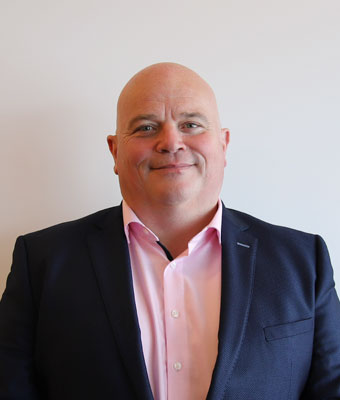
I want to talk the Minister of State about Scoil Bhríde, Lackagh, south Kildare. This is a beautiful rural school that currently has 101 students enrolled. The school, I am told, has 30 new children applying to the school in September 2026. Parents in Scoil Bhríde are currently fighting for an autism spectrum disorder, ASD, unit. There are a number of children who are struggling in mainstream classes in the school and who would benefit greatly from this new unit. Another child is also due to start in September of next year as their siblings are also currently going through the school.
There is an empty classroom in the school and a teacher available. The school just needs the National Council for Special Education, NCSE, and the Department to give the go-ahead and give parents the certainty of an appropriate classroom environment for their child. We just cannot continue the practice of taxiing children out of their local community when there is a local school like Scoil Bhríde in Lackagh available to them within their own local area. Scoil Bhríde can accommodate this unit as it has the space and, as I said, it has the staff member.
As always, I want to put on the record of the House some testimonials I have received from parents seeking this ASD unit. The first one states:
Our youngest boy is autistic and requires an autism class. His siblings have all attended our local school in Lackagh. Our lovely local school Lackagh is due to lose a teacher in Sept 26 due to falling enrolment, therefore we have the space and the teacher available. All we want for Xmas this year is for a school place for [our child] in... his local school. He deserves the same opportunities his siblings had and wear the Lackagh uniform with pride. Please give us that chance.
Another parent said:
My son is 9 years old and is currently facing significant challenges in the standard classroom environment due to his autism. A specialized class would provide the necessary resources, structure, and tailored educational approach to help him thrive academically and socially.
Implementing this class would not only benefit my child by offering him the appropriate setting for success but would also ensure that the school is meeting the diverse needs of all its students.
Finally,
My daughter is currently in Lackagh.
Her teachers and I have come to the realisation that although she is doing great now, she will most likely need a special class as she goes into older classes.
She absolutely loves going into school in Lackagh and we would be heartbroken to have to move her from her friends and teachers if Lackagh doesn’t get the special class they so... [deserve].
Tonight, I am asking the Minister of State to give these parents and their children the ASD unit that Scoil Bhríde so desperately needs. I hope the Minister will have a positive answer.
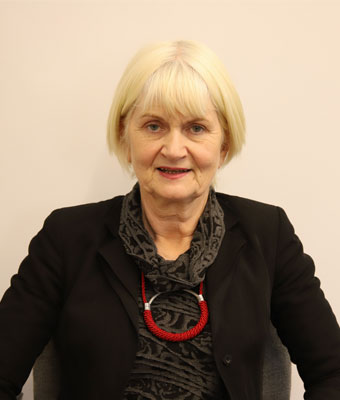
I thank Deputy Wall. I am taking this question on behalf of the Minister for Education and Youth.
First, the Minister is committed to the provision of additional special places for children with special educational needs. Budget 2026 has secured funding for 3,000 new specialist places and the NCSE is currently examining where these places are best located for the 2026-27 school year.
Over 2,700 new places have already been provided for the 2025-26 school year. This means there are now 3,742 special classes nationwide. We will build on this figure next year placing specialist provision where it can best meet existing and future demand. In County Kildare, 148 special classes are now in operation, providing capacity for 888 students. This includes 17 new special classes for this year. In addition, 16 new special schools have been established in recent years.
Special school capacity has also been expanded across a number of special schools nationwide. Six of these special schools are in County Kildare, educating approximately 359 students with the most complex of special educational needs. These schools are supported by the Department and the NCSE.
The NCSE will have a clear picture of local demand for special class places in the 2026-27 school year after it reviews and assesses all of the information that has been provided through the parents’ notification process, which closed on 1 October. The NCSE expects to start sanctioning new special classes for the 2026-27 school year shortly and the Department and the NCSE continue to consider options for increasing special school capacity.
This can be achieved either through the expansion of existing special schools or the establishment of new special schools. A key focus will be on establishing new special classes in schools without an existing special class such as the school referred to by the Deputy, Scoil Bhríde in Lackagh. I recognise the crucial importance of the matter raised by the Deputy having listened to many of the testimonials provided by him.
An earlier notification deadline was introduced this year to support forward planning and to equip the NCSE with timely local information on those students leaving school, transitioning to post-primary specialist places or seeking specialist placement and entering the education system for the first time. This information is critical when examining where provision needs to be placed to meet demand. The NCSE will also have due regard to any vacant places in existing special classes in an area and any places that will be become available through the normal movement of children leaving primary or post-primary school. I stress that the NCSE will continue to support all children made known to it after this date. However, it is critical that the NCSE has timely access to local knowledge to effectively plan future provision.
I thank the Minister of State for her comprehensive reply. We can both agree about the importance of allowing children to attend their local national school where possible. This is why I raised the needs of Scoil Bhríde in Lackagh tonight. This is a rural school that, unfortunately, has seen something of a decline in numbers but has a need for a special unit. All of us in this Chamber have spoken for a long period of time about the importance of keeping rural schools open. If we can publish that Scoil Bhríde has this unit, I have no doubt we will see the 30 children the school has increase. My office is inundated, as are I am sure the Minister of State's office and those of all Deputies, with parents looking for that special school place or that special school. The reason why it is so important that we keep children in their local school is because many of them are getting into a taxi early in the morning - 7 a.m. in some cases - and travelling 30 or 40 miles to get that special school place. I have spoken in this House previously about one parent who has had to ring over 40 different schools to get that school place. That is quite common in County Kildare given the demand for school places. Here we have a perfectly good school that has a great reputation. It is a rural school that has the accommodation and, most importantly, a staff member who can come into this unit straightaway in September 2026. I ask the Minister of State to bring this matter back. She has heard the testimonials tonight from parents. The school needs that ASD unit. It needs it for the children who need the unit and it needs it for the school community. It will develop as a school. It is an absolutely brilliant school. If we are serious about treating all children equally, we must give children the opportunity to take part in their own local school and as the parents have said to me, have pride in their local school uniform.
The Deputy did not just raise an important question, he did it so passionately as an advocate for the school he spoke of. I can fully understand his passion in this regard. All I can do is thank him for raising the matter and for giving me the opportunity to reassure the House that the Department of Education and Youth and the NCSE are committed to ensuring that all children can access an education that meets their needs. I heard what the Deputy said about local provision, which is hugely important. The Department continues to engage intensively with the NCSE regarding forward planning for new special provision to ensure every child has a place in an educational setting best fitting their educational need. It is important to remember that the vast majority of students with special educational needs are supported to attend school in mainstream classes with their peers. Central to this are the 15,000 special education teachers and 12,500 SNAs allocated to mainstream settings. For children with more complex needs, special classes or special school places are provided. This is in keeping with the policy on inclusive education, which advocates that children will be supported to receive an education in the most inclusive setting possible. The NCSE advises that a small number of special places remain in many counties for those seeking placement this year. While those places may not always be in a preferred school, vacancies do exist. The NCSE remains available to provide advice and support to all families seeking specialist placement and will continue to examine where provision is required for the 2026-27 school year.
Carer's Leave Eligibility

I want to raise qualification for carer's leave for teachers. Section 6(1) of the Carer's Leave Act 2001 makes provision for carer's leave for teachers and provides that they must be in continuous employment for 12 months before they are entitled to that leave. That makes perfect sense because it avoids a situation where a brand-new employee takes leave having just entered into a position, which would be very unfair on the school and all the circumstances around that. Section 3 of the Act also provides for the Minister to have the power to make regulations in this regard.
I want to talk about a teacher in my constituency who has been teaching in a school for ten years so she is not a new teacher. She is not a newly qualified or newly employed teacher. She is paid by the Department. She moved school in January and within a month of moving to that new school, she got the terrible news that her daughter was suffering from terminal cancer. By a bizarre and restrictive interpretation of the Act, she is now being told that she cannot qualify for carer's leave because she is in a new job for less than 12 months.
This is the most appalling interpretation of the law. The way the law is written makes perfect sense and it is entirely sensible to have the 12-month provision. This lady was a teacher for ten years. She is still employed by the Department and still has the same Teaching Council number. The only thing that has changed is the school in which she works. I find myself aghast at the fact that the Department has now made a decision that red tape is going to triumph over common sense and compassion. The last few months or however long her daughter has left will now be marred by the fact that her mother is not being given carer's leave to look after her.
We deal with hard cases in our jobs all the time and one would like to think that when we can solve problems, we would solve them. I have put down parliamentary questions about this and been told that section 6(1) prevents the Department from doing it. I do not necessarily accept that. I cannot see how that is the correct interpretation of the Act. It is surely open to the Minister or Department to say that this woman is with the same employer, has the same Teaching Council number and has been in the same job for over a decade. Can we not express the will and desire to stand by her at a time that is incredibly difficult for her and her family? It makes no sense that the Act is being interpreted in this way. We are allowing that awful red tape to triumph over the compassion that should be shown to this woman.
We put carer's leave in place for a very specific reason with specific parameters and now they are being interpreted to exclude somebody who by all logical consideration should be entitled to carer's leave and should be entitled to take the time she needs to with her daughter to ensure that she can look after and care for her at what must be an appallingly difficult time for that family.
Does the Minister of State agree that this is the only interpretation that can be made in respect of section 6(1)? If so, when are we going to change the law because that is the next step that has to take place? Alternatively, is it not the case that the Minister could make regulations to change this or to set out the parameters by which section 6(1) should be interpreted? Can we not allow common sense and compassion for once to triumph over bureaucracy? If it is not the case that we can and if all of the advice is that this is what the Act says and we cannot go beyond the legislation, when are we going to change it? Let us change that law quickly. Only a small change is required to allow for the interpretation regarding somebody who is continuing in the employment of the Department of Education and Youth, continuing in her role as a teacher and continuing to serve her community and students but is being let down by the system so let us change it if that is what we have to do.
While I am taking this question on behalf of the Minister for education, I hear very clearly what the Deputy is saying. As somebody who has championed carers' rights for many years, both at European Parliament level and at home, I fully hear the argument he is making. However, I have a response I will read to him and I will perhaps make one or two further comments.
As the Deputy said, the carer’s leave scheme is regulated by the Carer’s Leave Act 2001, as amended. The terms and conditions of the carer's leave scheme for teachers are outlined in chapter 6 of the Department of Education and Youth’s Circular 54/2019, Leave Schemes for Registered Teachers employed in Recognised Primary and Post-Primary Schools. Under the terms of the circular, a teacher may apply for carer’s leave when they have satisfactorily completed one year’s continuous service with their current employer. This requirement is waived where a teacher is compulsorily redeployed into a school or where a school is amalgamated, provided that they have worked at least one full year in their former school prior to redeployment or amalgamation.
Under section 24 of the Education Act 1998, as amended by the Education (Amendment) Act 2012, the board of management is the employer of teachers, SNAs and other staff of the school. In the case of community national schools, the ETB is the employer and not the board of management. Therefore, when a teacher moves to another school, they are changing employer. This is further confirmed by the contract of employment, which states that the employer is the board of management of the school. To reiterate, the Department of Education and Youth is not the employer.
I hear what the Deputy says, but as the scheme is regulated by the Carer’s Leave Act 2001, as amended, it is not within the remit of the Department of Education and Youth to amend the eligibility criteria set out in the Act. It should be noted that the eligibility criteria set out in the Carer’s Leave Act 2001 applies to all employees of the State. As I said to the Deputy, I cannot go beyond the response that is in front of me, but he makes the case very clearly and compassionately. That is what he is asking for. If it is any help, I am certainly willing to make sure that his message gets to the Minister and is delivered very clearly as to the specific circumstances of the case. Perhaps he is right. Perhaps we need to change the law or there are some other solutions. I honestly cannot say but I can say this much: I certainly hear what he says and I remain open in any way I can to seeing whether I can help to provide a solution to this extremely difficult case.
At the outset, I totally accept the Minister of State's bona fides on this issue. I know of her track record on leave for carers and carers' rights. I have a copy of the reply she read. I am really disappointed by it because in no part of it is there any expression of compassion or regret for the fact that our system has failed this teacher. This teacher is being unduly penalised for the fact that she changed position. Of course, technically and to the letter of the law, the response is correct that she is not an employee of the Department but of the school. When she changed school, she was with a different employer and, therefore, the clock reset on her entitlement to carer's leave but, when she changed, she did not know her daughter's diagnosis was coming. What the law states is wrong and what the Act does is wrong. The restrictions placed on this woman and family are wrong. That is why I say we need to change the law.
The Minister of State quoted Circular 54/2019. I understand why that is there and that it is the interpretation, but it is not correct in terms of the scheme put in place by these Houses 25 years ago to provide for exactly this type of situation. It was to provide backup, succour and care for those people in that situation who are being failed by the application of the Act in this way. The Department is entitled to make the statement that it is not entitled to go beyond the scheme. It is probably legally correct to do so, and I say that as a lawyer who respects the law, but I also think we cannot allow bureaucracy to hold sway always. We must look at people in situations. That is what this House is about. It is about recognising the fact that people need support. This family needs support. They are not getting it from the State and that is why we need to change the law.
I am grateful for what the Minister of State said about bringing the message back to the Minister, but it is really important she understands that this has to change. It is absolutely not fair or sustainable. It is something this House can do. It is within the power of the Legislature to change this. Let us get on and change it. I would be grateful if the Minister of State could convey that to the Minister.
I have a further response here reiterating all of what I said. To be honest with the Deputy, I know he does not want to hear it. Nonetheless, that is my role and responsibility this evening. The Deputy talked about bureaucracy, but it is also the law. He is an expert in this area where I am not, but perhaps the law is what needs changing and not so much the bureaucracy or how the law is implemented. As I said, the employer of all school staff is the individual school board or the board of management which manages the schools on behalf of patron bodies. The Department is not the employer. The carer's leave scheme is regulated by the Carer's Leave Act 2001, as amended. In line with the Act, the eligibility criteria for carer's leave includes the requirement for an employee to have been employed for a period of 12 months' continuous employment with their current employer.
The Deputy has made the specific circumstances in this case very clear. As I said, I will bring it to the attention of the Minister, if the Deputy wants to speak to me afterwards or tomorrow. I am not saying I can do anything, but I will make sure this message is clearly brought. I will not read any more of what I have in front of me. I do not think it would be helpful.
Covid-19 Pandemic Supports
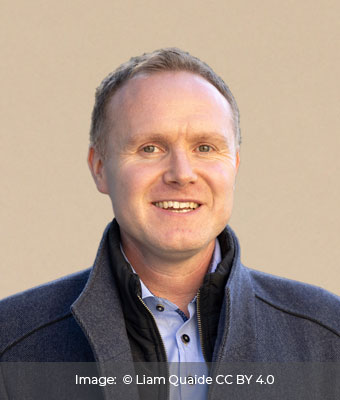
I raise a very important issue with the Minister of State. While I am grateful to her for being here, I am conscious that in her role she will not have decision-making capacity on it. It is disappointing not to see the Department of Health represented by either the senior Minister or a junior ministerial colleague.
A cohort of healthcare workers has been in receipt of special Covid leave with pay, which is essentially their basic salary, over the past four to five years in recognition of the fact that they contracted the virus at the peak of the pandemic in high-risk settings such as hospital wards, often without adequate PPE, when much of the rest of the workforce was protected by working from home directives. They have paid an enormous price in the form of persistent long Covid symptoms such as debilitating post-exertional malaise. That is a level of physical depletion the average person just cannot imagine, for instance, being unable to lift a cup of tea after what most people would consider mild exertion or having to go back to bed with exhaustion after dropping their children to school.
Long Covid typically involves a range of symptoms, including nerve pain, vertigo and brain fog, which have a major impact on a person’s capacity to work or carry out basic tasks. Treatments for long Covid are extremely limited and for some people their symptoms have not improved. I know this because I worked in such a clinic in Cork. The best we can hope for with treatments so far is, generally, the management of symptoms and not their alleviation or cure. Despite the sacrifices these healthcare workers made on all of our behalf, they have faced the loss of their financial security each year since becoming unwell as their unions have had to battle it out with the Department of Health in the WRC and the Labour Court. They have been on a cliff edge regarding their financial security as they approach the end of each term of the special Covid leave with pay. This has added a huge amount of additional stress to their lives.
These workers now face the loss of their income a few days after Christmas this year, when they will be placed on the standard public service sick leave scheme. What this means in practice is healthcare workers, mostly women, having to retire in their 40s or 50s on medical grounds and some not being able to pay their mortgage as a result.
This is huge financial stress on top of the many challenges they face every day just carrying out basic tasks. The Government keeps emphasising that it has extended the pay arrangement several times, as if the healthcare workers should be grateful, and that the hand of generosity can only extend so far instead of acknowledging that they sustained a serious workplace injury and should be compensated. Many were infected in early January 2021 following the so-called "meaningful Christmas" in which restrictions on movement were crudely lifted by the Government against public health expert advice. They were essentially cannon fodder in the context of that reckless decision, where many people died unnecessarily and these workers’ health and physical functioning suffered lasting damage. It is heartless of the Government to cast these healthcare workers aside and rip away the one basic financial security they had, with no clear reasoning. I am asking that special Covid leave with pay be extended for six months to give time for a proper consideration of long Covid as an occupational injury for this cohort of healthcare workers.
I thank the Deputy for raising this important matter. I am taking this question on behalf of the Minister for Health. The Minister once again acknowledges the extraordinary role our healthcare workers played during the pandemic, as do I. They went far beyond the call of duty working on the front line, treating Covid-positive patients, and doing so in the early days when the protections we now take for granted were not yet in place. Their courage and commitment can never be forgotten. The Deputy has described well the price some of those workers have paid for that.
In July 2022, a special scheme was introduced to provide support to eligible public health sector staff who developed long Covid. This was a temporary, exceptional measure, unique to the health sector, designed to acknowledge the risks faced by staff working in high-exposure environments before PPE, vaccination and widespread community transmission were established.
The Department has advised that there are approximately 159 employees still in the scheme. Most of these staff have been supported with full pay for almost five years. The Department of Health has consistently worked to ensure that these staff are looked after and has requested that the Department of Public Expenditure, Infrastructure, Public Service Reform and Digitalisation agree to extend the scheme several times, as the Deputy mentioned, since its introduction. Following a Labour Court hearing in June of this year, a final extension was recommended. The scheme will now run until 31 December 2025, when it will formally conclude. The Department wants to be clear that the conclusion of this scheme does not mean that supports will end. Staff who remain unfit to return to work will transition seamlessly into the public service sick leave scheme, ensuring continuity of care and financial protection. Under that scheme, staff will receive full pay for three months, followed by half pay for three months. They will then have the option to apply for temporary rehabilitative remuneration, which can provide up to a further 547 days of paid leave. In addition, the critical illness protocol may provide supports for up to three years.
Beyond financial supports, staff will also be entitled to reasonable accommodations to assist them in returning to work. This may include modified duties or adjusted work patterns while rehabilitating. These measures are designed to ensure that staff are supported not only financially but also practically as they recover and reintegrate into the workplace.
While some EU countries recognised Covid-19 as an occupational illness, this applied to Covid-19 itself, not long Covid. To the Department's knowledge, no country provided sustained full pay for long Covid comparable to Ireland’s special scheme. The Minister for Social Protection has reviewed the EU recommendation on recognising Covid-19 as an occupational illness. It has been determined that Covid-19 does not meet the criteria required for recognition under the Social Welfare Acts.
The Department wants to assure the House that, while the special scheme will conclude at the end of this year, the supports available to staff will continue under established public service arrangements.
It is despairing to receive that response. It is so completely out of touch with the reality of these workers' circumstances. There is no security that comes from being on standard sick leave. That is just a pathway to medical retirement. There is no rationale given as to why this basic financial support is being ripped away at this arbitrary cut-off date. The health condition of these workers has not changed. As social protection Minister in the previous Government, Heather Humphreys, according to reports from 2024, was vigorously opposed to making Covid an occupational illness, saying it would be impossible to determine whether someone had contracted the virus in the workplace. This was despite the fact that most European countries had done so, with the exception of Greece and Ireland, and despite the glaring contradiction of providing special Covid leave with pay to the cohort of workers I am speaking of on the basis that they contracted the virus at work. It was the then Minister's party leader at the time, Leo Varadkar, who dispensed with public health advice, opening the floodgates on the virus circulating through the community and infiltrating healthcare settings to an overwhelming degree in those dark weeks of late December 2020 and early January 2021. These workers are now living with the lasting impact of that.
There is no doubt that these workers contracted Covid in the workplace. They were caught up in clear outbreaks in healthcare settings while the rest of the country’s workers for the most part were able to work from home. There is a clear contradiction in the Government’s recognition of long Covid as occupationally acquired, demonstrated in its granting of special Covid leave with pay to date and its crude termination of that scheme at an arbitrary cut-off date of 31 December as these workers continue to experience significant disability arising from that condition.
It was utterly callous, miserly and incoherent of Heather Humphreys to deprive these workers of a basic level of financial security as she sailed off into retirement on a gold-plated pension. Her comments are part of an overall pattern of gaslighting that these workers have experienced in occupational health departments, as well as with some medical practitioners and now, unfortunately, this Government. It looks from this response like we cannot expect any degree of compassion or reason on this issue from the Minister of State's colleagues. I implore her to take this back to the Minister, Deputy Carroll MacNeill. There is no justification for what is being done here.
I hope the Deputy will understand that I will not comment on his remark regarding former Members of this House who are unable to explain their rationale or whatever. However, as he asked, I will bring this to the attention of the Minister for Health, as it has been. I just happen to be answering tonight on her behalf.
I again acknowledge the extraordinary service of our healthcare workers during the pandemic. The special scheme for long Covid was an exceptional measure introduced to recognise the unique risks faced by staff in those early days. It is important to say that it has provided sustained support for almost five years, a level of protection unmatched in any other sector. I personally agree that it is warranted. As the scheme concludes on 31 December, staff will not be left without support. They will transition automatically into the public service sick leave scheme with full access to the supports that provides, including temporary rehabilitative remuneration and the critical illness protocol. Reasonable accommodations will be available to assist all staff in returning to work. This approach at least tries to ensure fairness and equity across the public service while continuing to provide meaningful protection for those affected. Our priority remains to safeguard staff welfare, uphold the principle of equal treatment and ensure that those who gave so much during the pandemic are supported to recover. I reassure the House that the Department of Health will continue to work closely with the HSE, staff representatives and with colleagues across Government to ensure these supports are delivered effectively and compassionately.
Wastewater Treatment
Honestly, I cannot believe I am here in 2025 talking about this issue because 14 years ago, when I was standing for local elections, I raised this issue as one of the major issues within the Mulhuddart area. We talked on top of a hill beside Mulhuddart cemetery and that piece of land now has 800 homes on it. There are now in the region of 2,500 to 3,000 houses within the curtilage of this issue and stench coming from a pipe which comes from a pumping station in Kilbride and Hollystown in County Meath. It peaks at the area I just talked about, where there are vents that are emanating this horrendous smell.
For the past 20 years, we have constantly tried to get this issue resolved between Fingal County Council that originally had its water department and which then transferred over to Uisce Éireann. In fairness to Uisce Éireann, it has come back to us on numerous occasions and told us it has put new plant machinery in, new scenting machines, cleaned out the sewage pipes and sealed the shores along the road where this problem is. However, unfortunately, it keeps coming back. I have comments here from local residents. Even today, one resident said:
It has been there for years. They have built around it. It is rotten. It is like a rotten egg, a chemical smell or sulphur. They said it was cleared and flowing. It is back again. As long as I am living here, the smell has always been that way but recently it is worse.
It is comment after comment and it is hard to believe when you are there and drive through that area, you have to roll the windows up in your car. It is that bad at times; it is not all of the time but it is consistent enough. The reason I am raising it tonight is because in recent weeks it has got really bad. It has been raised at Fingal County Council and with Irish Water but it does not seem to be resolved at this stage. I appeal to the Minister to maybe sit down with us and Irish Water to try to figure out a long-term plan for this. In my opinion, the long-term plan is for that pipe to be moved.
As I said, we have a situation whereby Fingal County Council has built close to 1,000 houses. There are currently 800 or 900 houses there in a place called Church Fields. It is social, affordable and cost-rental housing. It is a lovely estate but we said at the time if this sewage smell was not resolved, then we will have huge problems. We were putting people literally next to it and I find that really frustrating.
At this stage, I am appealing Government for the sake of the residents. There are people who have lived in that estate and those areas for 40 years and in the past 20 years, they have been constantly told this is going to be resolved and unfortunately, it has not. As I said, in recent weeks it has got really bad.
I thank the Deputy for raising this issue. I am taking this question on behalf of the Minister for housing, Deputy O'Brien.
The Deputy will appreciate, and already knows, the supply of public water and provision of wastewater services in general are matters for Uisce Éireann in the first instance. Uisce Éireann has statutory responsibility for all aspects of water services planning, delivery and operation at national, regional and local level. Neither I nor Minister Browne have an operational function in the matter to which he refers. However, we have asked Uisce Éireann for an update on his behalf.
First, Uisce Éireann is committed to addressing odour issues and supporting communities impacted by public wastewater infrastructure. As the national water services provider, Uisce Éireann manages approximately 26,000 km of public sewers across Ireland. This extensive network is continually monitored and maintained to ensure it operates effectively and minimises any impact on local communities. In response to complaints relating to odour in the Mulhuddart area specifically, and I think the Deputy referred to this, Uisce Éireann recently undertook significant improvement works upstream to enhance flows from Kilbride, County Meath. These works involved diverting flows away from Church Road and directing them eastwards. This diversion has already delivered a noticeable reduction in odour impacts across the wider area, improving conditions for residents and businesses.
Does the Deputy know if this has had any impact? Some of what he has said is it seems to come and go. I am not sure what he is saying but certainly, if that is the case, that needs to be brought to the attention of Uisce Éireann because he is right, it is not good enough. However, further measures are planned for early in the new year to build on this progress, and I hope there has been some progress. These include sealing the old pipeline that is now disused following the diversion. Once sealed, the old manhole chambers will also be filled with concrete, eliminating potential sources of odour and further improving the local environment. While I personally know nothing about the specific situation, I believe that should be prioritised.
It is important to note Uisce Éireann is responsible for the public wastewater network only. Odours arising from private side dwellings or internal plumbing fall outside its remit. However, it remains committed to investigating any reported issues within the public network and implementing solutions where required. Uisce Éireann teams continually review the network to identify opportunities for improvement and ensure that communities experience the highest possible standard of service. Uisce Éireann has established a dedicated team to deal with representations and queries from public representatives. I do not need to tell the Deputy what the email is and there is also a dedicated telephone number. Finally, the Commission for Regulation of Utilities, CRU, also provides a free complaint resolution service for customers who have submitted a complaint to Uisce Éireann and are unhappy with the outcome. Again, I presume I am telling the Deputy what he already knows but it does provide solutions.
It is an interesting reply. In some ways, it probably makes sense in that the pipe is now disused and has been moved eastward. I assume it has moved eastward towards Damastown because there were recently major pipe works along that road. We are probably currently dealing with the last bits of it because if it is not being used and is empty, there maybe some residue leftover.
In the next couple of months, we will continue to monitor it and I look forward to it being sealed up and concreted over. That should hopefully get rid of that problem along Church Road and finally get a resolution to this. I welcome the response. The best thing we can do now is possibly just monitor this to make sure the works Uisce Éireann says are going to be carried out will be done as quickly as possible. We may finally see the end of this problem for the residents. Being honest, it is something that has really frustrated people over the past 20-odd years. As I said, I went back and checked my files and it was 14 years ago when I first raised it. Hopefully, this is the last time I do.
I appreciate the response and we will keep it under review and see how we get on.
I thank Deputy Donnelly. Again, without knowing any of the specifics, I agree with the Deputy and hopefully we are dealing with the final steps and that, as he said, it would be sealed up and concreted over. I agree nobody should have to live with that.
I will again refer to what is contained in the response I have here. I think I can say with sincerity that Uisce Éireann would like to assure customers that it is committed to addressing odour issues and supporting communities impacted by issues relating to public wastewater infrastructure. The networks are continually monitored and maintained to ensure that they operate effectively and that any impact on local communities is minimised. From what the Deputy said, it appears that progress is being made. What needs to be done now is to get to the end point-----
As quickly as possible.
-----in order that the Deputy will not have to raise this matter again and that nobody will have to respond to it again.
The updated national development plan has secured record levels of investment of €12.2 billion for the water sector, of which €11.7 billion will be invested by Uisce Éireann to support the delivery of key strategic projects in our cities and regions in order to deliver the additional water services capacity required for the new housing targets, while prioritising public health and safeguarding the environment. That reflects the issue the Deputy raised.
Cuireadh an Dáil ar athló ar 10.11 p.m. go dtí 9 a.m., Dé Ceadaoin, an 17 Nollaig 2025.
The Dáil adjourned at 10.11 p.m. until 9 a.m. on Wednesday, 17 December 2025.