Ceisteanna Eile - Other Questions
Question No. 6 taken with Written Answers.
Flood Relief Schemes
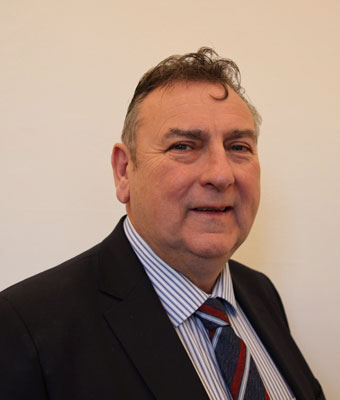
7. Deputy Noel McCarthy asked the Minister for Public Expenditure, Infrastructure, Public Service Reform and Digitalisation the progress made to date with respect to the Midleton flood relief scheme, and the introduction of flood protection measures in Rathcormac, Castlemartyr, Mogeely and Killeagh in east Cork; and if he will make a statement on the matter. [70396/25]
I ask the Minister for Public Expenditure, Infrastructure, Public Service Reform and Digitalisation what progress has been made to date with respect to the Midleton flood relief scheme and the introduction of flood protection measures in Rathcormac, Castlemartyr, Mogeely and Killeagh in east Cork, and if he will please make a statement on the matter.
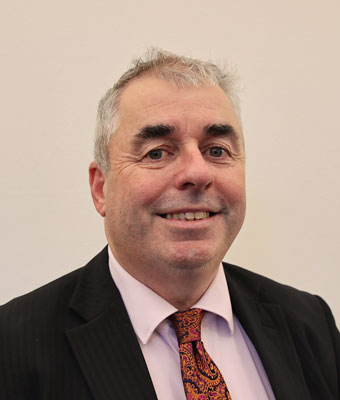
Across Cork, nine flood relief schemes are completed. The OPW is currently providing funding to Cork County Council for nine staff for the delivery of 15 additional flood relief schemes across the county, which are all funded by the Government’s commitment to support the delivery of flood relief schemes under the national development plan. Six of these are in tranche 1 schemes and are under way at this time, including Midleton.
The Midleton flood relief scheme is due to be submitted by Cork County Council to An Coimisiún Pleanála in quarter 3 of 2026 and be substantially complete by 2031, protecting up to 750 properties that flooded during Storm Babet. Cork County Council, in June 2025, submitted a marine area consent application to the Maritime Area Regulatory Authority.
Advance works of €5.8 million at Midleton were recently submitted for planning under Part 8 and a public information day was held on 23 October. Subject to planning consent, construction works to protect 135 properties are expected to commence in late summer or early autumn 2026. Castlemartyr, which includes Mogeely, Rathcormac and Youghal are not in the first tranche of schemes being designed at this time. The specialised nature of engineering required means having trebled the number of schemes at design and construction to 100, Ireland is constrained by availability of specialised resources to commence new schemes.
Cork County Council is rolling out a €5.8 million individual property protection scheme across Midleton and east Cork to some 725 homes and businesses affected by Storm Babet in October 2023. This forms part of the council’s emergency response to these areas.
The council and the OPW meet quarterly with the local elected representatives, businesses and the community to keep them updated on and provide input into the planned works on the Midleton flood relief scheme and other measures, including those across east Cork. The next meeting will be held on 22 January. Cork County Council, with funding from the OPW, is introducing localised flood mitigation measures for communities across east Cork.
I acknowledge the work the Minister of State has done so far and his visits to these areas already. I acknowledge that and thank him. On 18 October 2023, Storm Babet flooded roughly 600 homes and 300 businesses in east Cork, with damages estimated at almost €200 million. The storm on 9 December of this year showed again that people in east Cork feel genuine fear every time a severe weather warning is issued. These storms are not slowing down, yet the Midleton flood relief scheme is still not expected to reach planning until some point next year, as the Minister of State said. Completion is even further out. In the meantime, people's homes, livelihoods and local businesses remain at risk and the State is exposed to repeated multimillion euro damages and costs. Given the scale of impact on Midleton in particular, can the Minister of State commit to visiting the town and engaging directly with businesses and residents on this urgent matter? It would be a great relief and reassurance if he could visit again because of the fear they constantly have.
If my wife hears I am going to Cork again, she will think I am either running for the election down there or I am having an affair. I will visit Midleton again because I am very keen to drive on the scheme. I have my Department working with the local authorities and the Deputies. As the Deputy knows, I have visited Midleton and nearly all the areas he mentioned. I have been down there twice and I am trying to drive on the scheme but the Midleton scheme is very complex. There are four different sources of flooding that happen in the one area. I understand and read what people are saying about the frustrations they are feeling. I understand it; no one knows this more than myself. It is about trying to deliver a scheme. We get one chance to get it right; if we do not, it will flood. This takes time and it is complex. When we go in and start the job, yes, we will leave Midleton in a much better place. People want to see that happening now but the interim measures, and the changes we have made to the minor works scheme, is a huge help to the local authorities. I will continue to engage with the Deputy, as I will with the people of Midleton, but, in particular, I will be driving on these schemes through the local authorities. I need more push from the Deputies to drive that as well.
I again thank the Minister of State for his response and the reassurance that he will visit Midleton in 2026. I think that is very important for the people of Midleton and the whole of east Cork affected by this.
While long-term schemes are being developed, the communities affected are looking for reassurance in the short term. These towns have already endured repeated flooding events and are facing another winter feeling unprotected. Could the Minister of State outline what interim measures are being put in place to support these communities until the Midleton flood relief scheme is delivered and whether additional resources can be made available to ensure local authorities are equipped to respond quickly to future storms? Rathcormac, Mogeely, Killeagh and Castlemartyr are disappointed they are not in tranche 1. Could they also be included? I thank the Minister of State for the money that was given to Rathcormac but what the people of Rathcormac want to see is work to be progressed there when money is available. I thank the Minister of State for the work he has done so far.
Again, with regard to those areas mentioned, I changed the criteria in the minor works scheme, so it is up to the local authority now to look at interim measures. We have supplied it with nine staff so it is up to the local authority to look at those areas in question to see if we can help it to move on.
In regard to Midleton, as the Deputy knows, we have done individual property protections, IPPs, and business protection. I know it is low but it is the biggest scheme we have ever taken on with regard to how many houses are affected and need support. Putting in the floodgates at the homes and businesses has been rolled out, as the Deputy knows, and it is slow.
In fairness to it, the local authority has carried out other interim measures in Midleton and we are close to coming in with Part 8 planning in certain parts of the area. If we could get that over the line, it would be a huge plus for the local people in Midleton. I know it will not satisfy everyone because it is one section, but the changes I have made to the minor works scheme mean that Cork County Council, working with the Deputy and other public representatives, could move to drive more of the interim measures. I believe in interim measures. I believe that while we are waiting for a long-term solution, these are vital. That is why I made this choice.
Public Procurement Contracts

8. Deputy Barry Ward asked the Minister for Public Expenditure, Infrastructure, Public Service Reform and Digitalisation the position regarding the national public procurement strategy review and if he will make a statement on the matter. [69083/25]
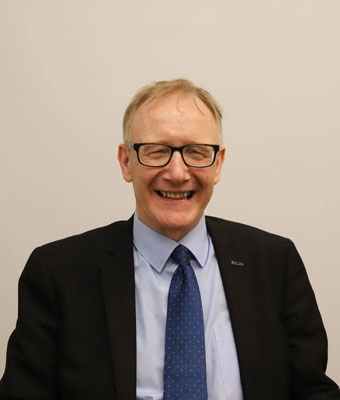
The programme for Government includes a commitment to reviewing the public procurement process to make it more transparent and encourage greater participation from SMEs. Working towards this aim, and to set out the strategic direction of public procurement for the next five years, my Department is developing a first national public procurement strategy.
The strategy has been subject to an extensive consultation process, which has been critical to understanding the primary challenges and opportunities for both public bodies and suppliers. My Department undertook the following as part of the consultation for this strategy: a public consultation to ensure that all those with an interest in the future direction of public procurement had an opportunity to inform the new strategy; regional workshops in Dublin, Cork and Athlone, which included public buyers and policy makers from across the public sector, representation from across the broad spectrum of Irish business, representatives from civil society, and members of the public; a dedicated webinar for suppliers so they could feed into the development of the strategy; and bilateral meetings with Departments and key stakeholders.
My officials are currently drafting the strategy in accordance with the feedback from the extensive consultation. Discussions with colleagues across Government and other key stakeholders will be held to agree desired outcomes and actions for inclusion in the strategy. Once finalised, the strategy will include objectives and cross-departmental actions to support the delivery of strategic, innovative, sustainable and transparent public procurement that promotes competition and value for money. I plan on bringing the strategy to the Government in quarter 1 of 2026.
I thank the Minister of State. I acknowledge the commitment in the programme for Government, which is very welcome. In order for public procurement to be effective, it needs to have the confidence of the people. The transparency committed to in the programme for Government is really important in that regard. Unfortunately, we are all aware of a number of projects that appeared to have lacked that transparency. I will not mention any projects on the Leinster House campus but even in my local authority area, there has recently been a bit of controversy around steps in Deer Park in Mount Merrion. The danger with that is that people feel public procurement is not effective or fair, which compromises the entire system.
The most important thing in the commitment in the programme for Government is the greater involvement of SMEs. Public procurement has become hugely complex and hugely cumbersome and more and more difficult for small businesses to get involved in because of the rules around it. Will the Minister of State address what specific elements may be in the strategy to make it more accessible and easier for SMEs to get involved in public procurement contracts?
I am very conscious of the critical role that public procurement can play in maintaining and building public trust in government. Billions of euro are spent on public contracts every year and the public needs to be confident that its money is being spent in a judicious and fair manner. Likewise, suppliers need to be able to trust the integrity of the procurement system if we are to drive participation. We have had workshops. I have met many SMEs and stakeholders to ensure that this is dealt with by whatever is in the new procurement strategy. I am dealing with that at the moment.
I acknowledge that as well. I know the Minister of State and his predecessor are committed to making it easier. Is there a way in which we can reduce the bureaucratic burden that comes with some of this because, as important as public procurement processes are, particularly when it comes to ensuring value for money for the taxpayer and cutting down on waste, from what I have been told by businesses in my constituency in particular, there is a wasteful burden on them from the point of view of engaging with procurement processes? Is there a way in which we can reduce that burden on them while maintaining transparency and safeguards that ensure public money is spent correctly? Is there a way in which we can tell small businesses that there is a route for them into this that is less bureaucratic and cumbersome and more streamlined and, therefore, allows businesses to get on with what they do rather than filling out forms, and instead of trying to justify a process, we let them get on with the business of providing whatever service, construction or so on they provide?
It would not be appropriate for me to speculate about and predetermine the outcome of the current cross-governmental engagements, but my officials are engaging with discussions with colleagues across Government and other key stakeholders to agree desired outcomes and actions to support the delivery of strategic, innovative, sustainable and transparent public procurement that promotes competition and value for money. I look forward to working with them.
Question No. 9 replied to with Written Answers.
Rail Network
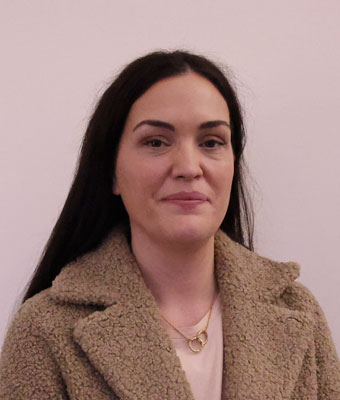
10. Deputy Aisling Dempsey asked the Minister for Public Expenditure, Infrastructure, Public Service Reform and Digitalisation the way in which the new infrastructure plan will accelerate the delivery of critical infrastructure in the mid-east region and if he will make a statement on the matter. [70504/25]
I welcome the new accelerated infrastructure legislation and ask that the Minister ensure it is applied to one of the most critical transport projects in Meath and wider mid-east region, namely, the Navan rail line. Navan is one of the largest towns in the country and is without a rail connection. Every day, thousands of Meath commuters face long unreliable journeys because their transport network has not kept pace with our population and economic growth. The route selection work is under way and public consultation will follow next year, but without targeted acceleration-----
I thank the Deputy. I call the Minister.

Last week, the Government published the accelerating infrastructure report and action plan. It is a comprehensive programme of actions designed to speed up the delivery of critical infrastructure across the State. This action plan responds to well-documented challenges of lengthy development timelines, fragmented processes and rising costs. These have all been identified as major barriers to achieving Ireland’s housing, energy and climate objectives.
The report is evidence-based. It is built on the research and analysis of my Department, the views received during the public consultation and stakeholder engagement undertaken by my Department over the summer, and expert input and advice from the members of the accelerating infrastructure task force.
The plan sets out 30 targeted actions grouped under four pillars, each addressing a key area of reform. The actions address the 12 barriers to the timely delivery of infrastructure that were highlighted in the report published by my Department in July. A four-week online and in-person public consultation last summer supported the preparation of that report published in July by providing an opportunity for stakeholders and the general public from across the country to feed into this work. I hosted events during this consultation period, including a regional event in Athlone.
The actions selected represent a transformative approach to streamlining development processes and significantly reducing delivery timelines, ensuring a more efficient and timely delivery of critical infrastructure nationwide. Together, these actions will ensure that the record investment under the national development plan translates into faster, more efficient delivery of housing, energy and transport infrastructure, supporting Ireland’s economic growth, climate commitments and Delivering Homes, Building Communities. This will benefit every county and region of Ireland, as infrastructure projects play an essential role in supporting Ireland’s balanced economic growth and meeting the demands of a rapidly expanding population.
There are considerable infrastructure projects under way in the mid-east region that will benefit from improvements in delivery, including for example the Louth 220 kV station refurbishment project and the proposed Slane and Ardee bypasses.
Realistically, under the current legislation and timelines, the Navan rail line will be delivered in 2036. Can we do better with than that this legislation? The purpose is to remove obstacles, streamline approvals, cut duplicated processes and ensure that key national projects like the Navan rail line move efficiently to delivery. In my very biased opinion, there is no project more deserving than the Navan rail line. Fast-tracking the rail line will ease the pressure on our roads, support housing and jobs, and give families in Meath the reliable and sustainable transport we have waited decades for. I am asking the Minister to apply the full force of this new acceleration framework to the Navan rail line and finally get this project moving at the pace our community deserves.
I appreciate the Deputy's advocacy for the Navan rail line. We have been there and have had extensive engagement with the Deputy's constituency on it.
The Minister, Deputy Darragh O'Brien, has published the transport sectoral plan, which sets out the funding allocations for the next five years. He is keen to advance a lot of the ambition we have in the regions on rail infrastructure in particular. We have an allocation of €24 billion in the next five years for capital investment in transport infrastructure and there has been a massive uplift over the last five years. That gives significant scope to drive delivery of improved public transport, develop our road network, enhance active travel and deliver many of the projects that have been on lists for multiple years. The Minister can respond on the direct timelines, but Irish Rail are also working on this.
Public Sector Pensions
11. Deputy Duncan Smith asked the Minister for Public Expenditure, Infrastructure, Public Service Reform and Digitalisation if the Government will commit to a reinstatement of the supplementary pension facility for uniformed services, to ensure that retention and recruitment can increase; and if he will make a statement on the matter. [60495/25]
I am taking this question on behalf of my colleague, Deputy Duncan Smith. This is something he and the Labour Party as a whole have championed for many years. Will the Government commit to the reinstatement of the supplementary pension facility for uniformed services to ensure that retention and recruitment can increase?
The Single Public Service Pension Scheme is a statutory public service career-average defined benefit pension scheme. It was established under the public service pensions Act 2012. The provisions of the scheme are clearly set out in law. All new-entrant public servants hired after 1 January 2013 are members of the single scheme. The introduction of the scheme is instrumental in ensuring the sustainability of public service pensions, particularly in the context of improved life expectancy and rising public service employee numbers. As the single scheme uses a career-averaging model, members' retirement benefits are based on a percentage of their pensionable earnings throughout their public service careers. For each pay period, members accrue amounts towards their retirement benefits. The total accrued at retirement, with adjustments for inflation, determines their final retirement benefits. This is payable in addition to any social welfare pension entitlement.
Uniformed members, including firefighters, prison officers, gardaí and members of the Defence Forces, have enhanced benefits that other single scheme members do not have. Uniformed staff can accrue more benefits over their expected shorter public service careers in recognition of their retirement age. When uniformed staff reach normal retirement age, they can retire and receive their retirement lump sum and occupational pension benefit payments. While single scheme pension benefits are integrated with the contributory State pension, these benefits are separate and additional to any entitlement they may have to the State pension, which is paid from the age of 66 by the Department of Social Protection.
In 2024, the Government enacted legislation to allow for an increase in the mandatory retirement age for uniformed staff to 62, if they wish to avail of it. It also allows uniformed staff to build up additional referrable amounts towards their single scheme pension for additional years worked, increasing its final value.
A supplementary pension was never a feature of the single scheme, nor was it planned to be. No commitment has been made by the Government in relation to supplementary pensions for single scheme fast accrual members.
On the face of it, that is a complete and utter "No". Do Fianna Fáil and Fine Gael, and the Government for many years now, not realise that the men and women in our Defence Forces, An Garda Síochána, fire services and Prison Service go above and beyond? What we have right now in all of our public service, but particularly in our uniformed services, is a retention and recruitment crisis. All of those groups I mentioned - gardaí, firefighters, Defence Forces personnel and Prison Service staff - have stated that, because of this pension scheme, more and more people are leaving early. If you are told at the age of 55 that you have to get a new job, why would you not do so now? You would because you do not know what condition you will be in at 55. That is no disrespect to anybody but it is a fact.
On the face of the Minister's reply, I am taking it as a complete "No".
The Single Public Service Pension Scheme, introduced in 2013, was one of the biggest ever pension reforms. Part of what we are trying to do is ensure we have sustainability of pension provision and can pay for this over the longer term. The work that has been undertaken to increase the mandatory retirement age for uniformed staff also helps in the context of workforce planning and to give certainty to uniformed staff, where they can build up additional referrable amounts towards their single scheme pension for any additional years worked, increasing its final value. Work is also ongoing in the context of the respective pay agreements we have to improve the pay and conditions of uniformed staff and as a retention measure for members across the public service. That work is ongoing, with direct engagement with the respective bodies. This was an important reform. It has been there for nearly 12 years. It is important in the context of sustainability of State pensions.
Mr. Karl Dalton, the Prison Officers Association general secretary, said, “If the last government believes that extending the retirement age alone addressed the concerns of Prison Officers, Gardai [sic], Firefighters and members of the Defence Forces, this survey [which was carried out] shows just how little they understand these services and the people who work in them.” I know the Minister does not want this to be his legacy within the Department of expenditure, but he and the rest of the Government have a decision to make. We have a retention and recruitment crisis. These are the men and women on the ground. If there is any storm across the country, or any crisis, we are all safe at home, but these people are on the front line. They are out there representing this country. That is the bottom line here. We do not want these people in a position where they feel, ultimately, that they are not wanted or respected.
The Minister referred to the reform of the pension scheme. That has completely failed. People are leaving these services, including An Garda Síochána, fire services, the Prison Service and the Defence Forces. It does not take anyone to see it. If you look at it from the outside in, they are leaving.
The increase in the mandatory retirement age helps and makes a difference. It is part of what we are trying to do. It improves the overall end pension in terms of referrable amounts towards the single scheme pension. Another issue raised during the engagement with workers was that of basic pay and conditions, which we engage on in the context of the respective pay agreements. There is well-documented evidence on the need to ensure we have a sustainable pension system we can pay for in the long term. That is why retaining this in the context of future reforms is critical to ensuring we can manage the long-term sustainability of it.
It is important to look at it in the round. We have strong engagement with trade unions in the context of the public service pay agreements. To fundamentally undermine and disrupt the Single Public Service Pension Scheme would have implications for paying for this in the long term. I am sure the Deputy has read the "Future Forty: A Fiscal and Economic Outlook to 2065" report published by the Department of Finance on the need to manage the inevitable demographic shift that will happen in the Irish economy in the long term.
Public Sector Pay
12. Deputy Michael Murphy asked the Minister for Public Expenditure, Infrastructure, Public Service Reform and Digitalisation if his Department has assessed the potential cost implications for public service pay and pension liabilities that would arise in the event of Irish unification. [62807/25]
To what extent has the Department assessed the potential cost implications for public sector pay and pension liabilities that would arise in the event of Irish unification? This is not a political question. It is a simple question of forward planning, good governance and having all the facts in the context of this important debate.
The gross Exchequer estimated pay bill for Ireland's public service is €30.4 billion for 2026. In terms of staffing, forecast numbers in 2026 are just under 439,400 full-time equivalent public servants. This is the highest ever level of employment in the public service. Overall, the pay bill is a function of public service numbers and the costs associated with public service pay agreements. The current agreement, Public Service Agreement 2024-2026, was agreed in January 2024 and ratified by public service unions and representative associations in March 2024. This agreement achieves a balanced approach to public service pay in the context of both the State's fiscal position and the broader economic environment. The agreement provides for general round increases totalling 9.25% and a provision for local bargaining of 1% of the basic pay cost. In total, the agreement will cost approximately €3.6 billion spread over four budget years.
There is a complex multiplicity of pension arrangements within the Irish public service, encompassing schemes with differing provisions that apply to staff recruited prior to 1995, post 1995 and post 2004, as well as the Single Public Service Pension Scheme introduced in 2013. The gross Exchequer pension bill in 2026 is estimated to be €4.9 billion, which will support a projected 200,700 public service pensioners.
The latest value of the State’s accrued-to-date liability in respect of public service retirement benefits for active employees, pensioners and deferred members has been calculated as €175.7 billion. This will fall to be paid over the next 70 years or so. Northern Ireland’s pay and pensions are subject to different arrangements, with different grades, pay scales, premium payments and superannuation payments. An assessment of pension costs requires individual member data along with detailed data on the varied pension scheme rules and entitlements by sector, for example, the civil service, health, education and local authority sectors. Such an exercise constitutes a complex and substantial analytical undertaking.
I support the long-term aspiration of Irish unity based on consent. However, if we are serious about this aspiration, we also need to be serious about the practicalities that come with it and the financial implications. Right now, there is little discussion about the fiscal implications of Irish unification, particularly disparities that exist in public sector pay and pensions, social protection systems, taxation, health and infrastructure. This is not a political question. It is simply a question of good governance and having all of the information. The Good Friday Agreement provides a democratic pathway for constitutional change, but that pathway requires facts, not assumptions. My question is simple. Has the Department assessed the potential cost implications for the State? If we want to be informed and want responsible debate, we must first establish a clear understanding of the potential financial landscape.
Such an exercise constitutes a complex and substantial analytical undertaking requiring access to detailed, contemporaneous micro-level data on the pay structures and pensions of both current and former employees in order to accurately assess the full costs. It also involves a range of assumptions in relation to the pay and pensions policy implications. My Department does not have access to the required level of detailed data relating to the remuneration and pension arrangements of public servants in Northern Ireland to set out that context. I have some macro data here. We know that the total size of the public service of Northern Ireland, inclusive of civil service, health, education, police and local government employees, is estimated to indicate approximately 227,500 in October 2025. The annual pay bill is estimated to be approximately 14.4 billion for core civil service and departmental staff. I have been told that this increases to approximately £18 billion when the wider public services are included. Total public expenditure for the Northern Ireland Executive is estimated at €32 billion in 2025. I have set out some high-level data from the team who assessed the Deputy's question. It would require a lot more specific and micro-level data to answer it, however.
I am sure the Minister agrees there are huge disparities between systems North and South in public sector pay structures, pension liabilities, welfare supports in particular, and broader public spending. Any future settlement, whenever it might arise, will have significant financial consequences for this State. Ignoring that reality does not make it go away. All I am seeking, and what the public deserves, is clarity on whether the State has even begun to model these implications. If unity is ever to happen, it must be built on facts and not on vague assumptions or political slogans. My question is really about sensible and prudent long-term planning, nothing more and certainly nothing less.
That is why I stated that to give an accurate picture would require a detailed analytical assessment. Pay and pension provisions are subject to different arrangements across different grades, pay scales, premium payments and superannuation payments. In the context of the Deputy's question, we have not been able to put a number beside the information he has requested. That would be an important consideration.
Regional Development
13. Deputy Mairéad Farrell asked the Minister for Public Expenditure, Infrastructure, Public Service Reform and Digitalisation the position regarding investment in critical infrastructure in the west of Ireland; and if he will make a statement on the matter. [70765/25]
It will come as no surprise to the Minister that I am raising the issue of critical infrastructure in the west. Thankfully, the storm this week did not hit Connemara in the way Storms Éowyn, Bert and Darragh did last year. However, we still have the aftermath and impact of those storms. The Minister knows Connemara well. If he travels around Connemara now, he will see there are still wires on the ground and poles hanging to one side. What is his plan for the west?
As part of the budgetary process each year, my Department sets out overall expenditure ceilings for each ministerial Vote group. These are laid out at Vote level in the budget day expenditure report published in October, with further detail provided in the Revised Estimates for Public Services published in December. Following the allocation of each ministerial expenditure ceiling, it is a matter for each Minister to assign funding as appropriate at programme and subhead level for their Departments and the agencies under their remit, accounting for the demands for services in different areas and regions, having regard to demographics and other relevant factors. Within this process, both current and capital expenditure are allocated on a departmental rather than geographic basis.
More broadly, the achievement of balanced regional development is a key priority of this Government in Project Ireland 2040, which includes the national planning framework and the national development plan. Since Project Ireland 2040 was launched in 2018, the Government has overseen the delivery of many impactful NDP projects across the country, including in the west of Ireland, for example, the enterprise centres in Boyle and Tulsk in County Roscommon and Belmullet and Swinford in County Mayo, the N59 Moycullen bypass, the Salmon Weir bridge in County Galway, the Killaloe bypass in County Clare, the heritage and tourism projects in Portumna, Galway and Aghleam, Mayo and many other capital projects.
The NDP review 2025 was published on 22 July 2025. It committed €275.4 billion up to 2035, the largest and most significant capital injection in our economy in the history of the State. Arising from this, €19.1 billion in Exchequer capital investment will be provided in 2026. On budget day, Ministers set out the capital projects and programmes that they will prioritise within their allocation in 2026. In recent weeks, Ministers have developed sectoral plans for priority investment programmes. Many of these projects relate to the west, including the Uisce Éireann upgrade of water and wastewater treatment plants in Lough Mask and Claremorris in County Mayo, 35 social and 310 affordable housing units in Crowne Square in Galway, new transport infrastructure with Bus Connects Galway and the Galway city ring road. I can list many more.
I understand what the Minister said about things not being done in an area-specific way but, rather, in terms of Departments. I also know that he is the Minister for infrastructure, and he has an understanding of the west of Ireland. He has links to the west and knows Connemara well from his time as Minister for the Gaeltacht. I know, and I am sure the Minister knows, the serious lack of basic critical infrastructure in Connemara in particular. Safe roads and safe bridges are lacking. We still have the repercussions from Storm Éowyn, and all of these things will worsen unless specific capital investment is made in the area now. I ask the Minister to look at what can be done through his Department to ensure the area has basic critical infrastructure so that people can live in and go about their daily lives in the area and jobs can be created in it.
I am familiar with those elements of the west of Ireland, in Galway, Mayo and elsewhere. The west is being prioritised in many of the projects set out in the sectoral investment plans. There is the social and affordable housing delivery we want to ramp up in the context of the housing sectoral plan that the Minister, Deputy Browne, has published. The transport sectoral plan will significantly enhance public transport and there address road infrastructure projects across the west, which have been waiting for years. There is also the resilience the Deputy mentioned in the context of storms and other issues. The Minister of State, Deputy Moran, through the work the OPW is doing, is front-loading a lot of the capital investment in flooding and other areas to make sure we build greater resilience. Similarly, there is work happening on other infrastructure across many Departments. This is agreed at a sectoral level. The wider funding arrangements are clear in Project Ireland 2040, as is ensuring balanced regional development.
When I look at infrastructure in the west I see it in two veins. There is obviously the serious capital investment needed for those bigger projects.
The Minister has outlined some of them. Any investment there is welcome but there are also thee basic things that need to be done immediately.
The Minister will remember the snow during Storm Bert, which had serious implications across Connemara. We then had Storm Darragh and when we had Storm Éowyn, Connemara did not have a chance. The impact of those storms on that basic infrastructure, which was already eroding, was devastating. We need to see some kind of plan from the Government - whichever Department sees fit but the Minister is obviously over infrastructure - to make sure we have those basics in order that this does not happen again. We still have wires on the ground as a result of Storm Darragh, not Storm Éowyn. That work needs to be done and a boost or push from the Government would really help in that regard.

Regarding wastewater infrastructure in Craughwell and Clarinbridge in County Galway, funding was announced three years ago for the provision of wastewater infrastructure in those villages. This was very important for the delivery of housing and I raised this before with the Minister at the infrastructure committee. Since then, that project has been at a standstill. In recent weeks, Government TDs welcomed an increase of several million euro in the allocation of funding for this project. However, the only reason this is needed is because the project has stood still and costs have increased in the meantime.
The greatest barrier to delivery of this project is the 15% co-funding allocation expected of local authorities for such projects. That means Galway County Council would be expected to make a contribution of approximately €5 million. The local authority does not have this money and has not budgeted for it. When we talked about accelerating delivery, this issue needs to be sorted. It is a major barrier and needs to be taken out of the way to ensure delivery. Can the Minister commit to removing this co-funding requirement to ensure these projects can be delivered in a timely manner?
On the latter point, I am following up on that with Irish Water in the context of wastewater treatment plants. There has been a funding increase. I can get a specific answer to the question for the Deputy. I am aware of the importance of the issue to local towns and villages in County Galway.
To the other point on resilience of critical infrastructure, a recent Cabinet committee meeting focused on the learnings from Storm Éowyn, the greater prevalence of storms and the impact this is having on basic infrastructure. It is a critical point of co-ordination across government on building better resilience into our basic infrastructure systems and also ensuring response in respect of community resilience. There is a strong focus on co-ordination in the work the Minister of State, Deputy Moran, is doing as well.
14. Deputy Tony McCormack asked the Minister for Public Expenditure, Infrastructure, Public Service Reform and Digitalisation the way in which the new infrastructure report will benefit County Offaly, particularly in terms of investment and regional development; and if he will make a statement on the matter. [70413/25]
I thank Deputy McCormack for his question. Last week, the Government published the accelerating infrastructure report and action plan. This is a comprehensive programme of actions designed to speed up the delivery of critical infrastructure across the State. This action plan responds to well-documented challenges of lengthy development timelines, fragmented processes and rising costs. These have all been identified as major barriers to achieving Ireland’s housing, energy and climate objectives. The report is evidence-based. It has been built on the research and analysis of my Department, the views received during the public consultation and stakeholder engagement undertaken by my Department over the summer and the expert input and advice from the members of the accelerating infrastructure task force. The plan sets out 30 targeted actions grouped under four pillars, each addressing a key area of reform. The actions address the 12 barriers to the timely delivery of infrastructure that were highlighted in the report published by my Department in July.
A four-week online and in-person public consultation last summer supported the preparation of that report published in July by providing an opportunity for stakeholders and the general public from across the country to feed into this work. I hosted events during this consultation period, including a regional event in Athlone.
The actions selected represent a transformative approach to streamlining development processes and significantly reducing delivery timelines, ensuring a more efficient and timely delivery of critical infrastructure nationwide. Together, these actions will ensure the record investment under the national development plan translates into faster, more efficient delivery of housing, energy and transport infrastructure, supporting Ireland’s economic growth, climate commitments and Delivering Homes, Building Communities. This will benefit every county and region of Ireland, as infrastructure projects play an essential role in supporting Ireland’s balanced economic growth and meeting the demands of a rapidly expanding population.
There are considerable infrastructure projects under way in County Offaly. I am sure the Deputy is aware of the Edenderry wastewater treatment plant, a number of regeneration projects and education and schools' projects across the county and the work being undertaken in the context of transport investment.
I thank the Minister. The accelerating infrastructure report and action plan outlines significant reforms aimed at improving delivery of major projects, including streamlining approval processes, a single decision pathway for water investment and stronger co-ordination across agencies. These reforms are welcome. For Offaly, infrastructure is key for future economic development, enterprise growth and balanced regional progress.
The water supply project for the eastern and midlands region is central to this and will cross Offaly, with Dunkerrin and Tullamore identified for future outtakes. However, the spur connections and local system upgrades required to utilise that supply are currently planned in later phases. If delivered sequentially, the benefit to Offaly could be realised an awful lot sooner. The cost of doing this work would be cheaper now than it would be if it is done in the future. We have seen from other projects previously, second phases sometimes do not proceed for many years. If we want balanced growth in the region, we need to do this now, rather than in a second phase. The key point is that Offaly needs that spur, those integration works and the wastewater upgrades delivered together as one co-ordinated package, not in separate phases.
We are keen to ensure all infrastructure in the State, including in County Offaly, is accelerated. At present, it takes 15 years to build a road and it can take up to ten years to deliver wastewater and water infrastructure and seven or eight years for electricity or energy infrastructure. These timelines are all too long to meet the growing demands of our population and economy.
As regards the eastern midlands water supply project, which is of interest to the Deputy, this is an issue on which we can engage with Irish Water. Obviously, it is critical that we advance the project for the east and midlands more generally. Irish Water is working through how it can accelerate the planning of the project and ensure it can commence. Whatever can be done to drive its delivery will be critical for the future development and growth of the east, as well as ensuring basic water supply. I will ask the project design team to respond directly to the Deputy on the issues with phasing or sequencing.
A core feature of the new infrastructure plan is to improve transparency and accountability. For Offaly, we need clear visibility that the Shannon pipeline spur and the wastewater upgrades are progressing together and not in staggered phases. Will the Minister commit to a county-level delivery reporting, so communities in Tullamore, Edenderry, Birr, Clara and Banagher can track progress and gain confidence that these projects will be delivered in one integrated programme, unlocking real regional development for Offaly?
I hope when we look at rural infrastructure that we also look at areas that have not been supported before. To take a template of Arklow, the town is blessed to have one of the finest wastewater treatment plants in Europe. The population of the town is about to explode, however. There is a new data centre, offshore wind farms and thousands of houses planned but we have only one bridge. The town will choke if the infrastructure development does not match other development. I am speaking about infrastructure in terms of roads and bridges, but also social infrastructure. I appeal to the Minister to ensure areas that have not been supported before are looked after in this new programme.
To respond first to Deputy McCormack, again, the whole focus is on driving delivery. I take his point on the role of that particular project in the east and midlands. We will engage with Irish Water on it. Obviously, we do not want to delay the current design, which could possibly hold back the project by a number of years. There is a need to accelerate its delivery because it is a critical project for the State.
To respond to Deputy Brennan, we have tried to complement the prioritisation we have given in the national development plan with social infrastructure.
We have record levels of investment in transport infrastructure in the State of €24 billion. The Minister for housing, Deputy Browne, has also set out proposals for an infrastructure fund to try to complement housing delivery to support the broader infrastructure where there is significant housing development and having that enabling infrastructure. If we look at the overall capital allocation for education, for example, it is €7.5 billion over the next five years. This is to ensure we continue development of critical education infrastructure across the State. We have had record funding, for example, on sports capital to ensure we have sports infrastructure built in communities. This is something we are continuing to commit to.
Heritage Sites
15. Deputy Louis O'Hara asked the Minister for Public Expenditure, Infrastructure, Public Service Reform and Digitalisation if public access can be facilitated at Athenry Dominican Priory; and if he will make a statement on the matter. [69834/25]
I want to ask the Minister if public access can be facilitated at the Dominican Priory in Athenry and also if consideration can be given to extending the opening season of Athenry Castle. It is closed now until March and it is a missed opportunity for the town.
The Athenry Dominican Priory is an important medieval monastic site and is a national monument in State care. The Office of Public Works, OPW, has statutory responsibility for its conservation, presentation and management. Protecting the fabric of this historically significant site while facilitating meaningful public access is a key priority for the OPW, and this balance guides all decisions around how the priory is operated.
While the priory is closed to unsupervised access, it continues to be made available to the public through guided tours and supervised visits, which are organised and delivered by OPW guide staff based at Athenry Castle. These visits allow members of the public to experience and engage with the monument while ensuring that the site is appropriately protected at all times.
During 2025, guided tours of the priory were held throughout the season from April to November. These scheduled visits have proven to be effective in allowing access while maintaining oversight of visitor movement within the monument. All access requests are managed through Athenry Castle, where OPW staff provide the necessary information, organise tours and co-ordinate visitor management.
At present, the priory is not open for general, unsupervised public access. This position is based on a combination of conservation, security, and health and safety considerations. Since 2019, following incidents of damage and graffiti, the OPW has had to restrict casual access in order to safeguard the structure and prevent further damage.
The OPW continuously monitors the condition of the monument and, as part of operational planning, it will review whether additional guided or supervised access can be scheduled more frequently throughout the year.
As I am sure the Minister of State knows, Athenry is a heritage town. Within the town, we have a lot of really iconic landmarks and attractions, including the castle and the priory, which are under the remit of the OPW, but also the likes of the heritage centre and the town walls. There is incredible history in the town, and I think it is fair to say that there is a lot of frustration locally that we are being undersold in terms of our status as a heritage town and our tourism potential. We definitely have not reached our full potential for a town with such great heritage and history. There is a lot of great work going on locally to try to address that and I will come back to that. However, that some of our greatest assets are closed to the public is a major challenge. As I mentioned, the castle is closed now for the winter season until March. While I understand that access can be facilitated to the priory, there is a need to give a lot of notice. Also, I do not think there is a broad awareness among people who are visiting Athenry that there is the option to visit the priory. I ask the Minister of State to engage with the OPW on the opening arrangements for these sites and the promotion of these sites more broadly, which is a challenge.
I agree with the Deputy in one sense but I would say that the OPW is very good and works very closely with all stakeholders in relation to the castle and the priory and all the other OPW sites. We promote all our sites very well. Last year alone, there were some 50 million visitors to OPW sites across the country, and no place more than the west of Ireland which got a lot of visitors. On the other hand, we have to supervise the priory. The Deputy knows the damage that has been caused. It would be a different situation if we were here this morning and we had not had the priory supervised and damage had been done. Then, the Deputy would be asking me what I was going to do about it. I will work closely with the Deputy, as I have on other things that he has raised.
In terms of tourism, my Department works closely with other Departments and Fáilte Ireland to try to promote tourism, where possible. I was the first Minister to allow kids under the age of 12 into all of our sites. I have also done a pilot scheme for under 18s, to improve the visitor numbers up and down the country, and it has proven to be very successful. In relation to the question the Deputy asked me about a longer opening schedule, it is something I will look at.
I want to acknowledge the work of the OPW locally as well. The Minister of State mentioned the number of visitors visiting the sites. I had a parliamentary question recently and the response told me that in the region of 15,000 people visit Athenry Castle every year. That paints an overall picture for the number of visitors coming to the town but the same number of people would visit Galway city or Connemara on one weekend. We can do a lot better in Athenry in terms of the number of people visiting. I take the Minister of State's point about safety and maintenance of the structure and so on. However, I would ask that a particular effort be made around the promotion of that service being available to people, in that they can access this site because it is an iconic landmark, as I mentioned.
I ask the Minister of State to comment on the opening season for the castle. It is a missed opportunity that from November to March it is closed. There is a lot of great work going on locally. Galway County Council has plans for a heritage trail, heritage event spaces and a River Clarin walkway. Great efforts are being made to enhance our tourism offering but we need all the stakeholders coming together to push this forward and the OPW is an important part of it.
As the Deputy outlined, it is important that all the stakeholders come together. Regarding anything that comes from the stakeholders, my Department has always reached out and been supportive. I will have to come back to the Deputy regarding the castle because it was not in the question. I am looking at the issue of sites that are not getting the numbers I would like to see them getting. I call these the smaller sites. I want to see if we can work in partnership with other tourism sectors, so we can deliver more numbers into those key areas. Tourism is what keeps the country going at certain times of the year. In my own town of Athlone, I note the large number of people who, when the castle closes, ask me when it is going to open again. I fully understand the Deputy's frustration but, as he said, the OPW is doing good work. We will work together with the stakeholders to deliver for people and tourism but we have to acknowledge all the local groups and the work they do. I thank them for their work because the work they do along with the voluntary groups, particularly in the area in question, is vital to the economy and to tourism.
Question No. 16 taken with Written Answers.
Housing Provision
17. Deputy Naoise Ó Muirí asked the Minister for Public Expenditure, Infrastructure, Public Service Reform and Digitalisation the reforms that will be introduced under the Accelerating Infrastructure Delivery plan to enable developer-led infrastructure; and if he will make a statement on the matter. [70468/25]
My question relates to the recently published Government infrastructure plan and the steps that will be taken by Government to work more closely with housing developers and builders, big and small, on essential infrastructure for housing. What reforms will be introduced under the accelerated infrastructure delivery plan to enable developer-led infrastructure?
The accelerating infrastructure report and action plan includes targeted reforms to certain types of developer-led infrastructure as set out under action 15. This action recognises that alongside record public investment under the national development plan, private sector delivery models may play a complementary role in certain circumstances. Specifically under action 15, the Government has committed to progressing regulatory reforms that allow developers to deliver certain types of electricity and water infrastructure, where this may result in faster or more efficient development with no degradation of standards.
In relation to electricity, this means advancing regulations to enable private wire electricity connections in line with the Government's private wires policy statement. In relation to water, it means bringing forward measures for developers to deliver new, stand-alone wastewater treatment plants to bolster the service provided by Uisce Éireann to support increased levels of housing. Both of these activities are planned for completion in quarter two of 2026. It is explicitly committed to that any developer-led infrastructure will comply with environmental and technical standards and integrate with public systems, where appropriate.
The Department of housing will lead on reforms relating to water infrastructure while the Department of Climate, Energy and Environment will lead on energy-based measures. Both Departments will work closely with utilities, local authorities, regulatory bodies and planning authorities to ensure that developer-led delivery is integrated effectively with statutory processes and national priorities.
I thank the Minister for that update. I welcome the progress the Government is making on accelerating this infrastructure, particularly from a wastewater perspective. Standards are essential, but this is a way for these housing estates and these developments to get on the blocks, get done and get moving quickly rather than having to wait for Uisce Éireann, local authorities, the ESB, etc., to get that work done. It is very important that standards are clear and, for that reason, that Uisce Éireann takes all that stuff on when the developer is finished and the work is built out to standard. Those standards are really important. I look forward to hearing a bit more about their development, alignment, monitoring and implementation.
The Deputy will have heard from the Minister, Deputy Browne, about wastewater treatment plants and the work on advancing that, which will be critical to improving overall housing supply. It will not be solely Irish Water but it will be something that will enhance wider water infrastructure across the State. Similarly, there is the work the Minister, Darragh O'Brien, is doing in respect of private wires, again ensuring we broaden and enable infrastructure development across the State, which will help. I am working with both Ministers in order that these reforms are advanced in 2026. Both will help in terms of overall housing supply but also in building greater investment in job opportunities across the State.
As Chair of the climate committee, I am acutely aware of this. We hear a lot at that committee about the pressures on the energy grid, its ability to move energy around the country and to take additional houses, and how important that is. I welcome private wires, investment in the grid and anything else that will help relieve that pressure and put capacity in place in the network to allow residential units to connect as quickly and as reliably as possible. With forthcoming regulations that will allow developers to deliver that electricity infrastructure independently, the deployment of renewable generation and storage can certainly be accelerated. A good co-ordinated approach across government will be essential to make that possible. I welcome the progress the Minister has made on the action plan. I know he has put a lot of time and effort into its delivery. The proof will be in the pudding in the delivery and its implementation.
I appreciate the Deputy's remarks. We can make a serious impact next year in terms of the legal reforms, the regulatory reforms, and the co-ordination and delivery changes we are making while also making the case for greater public acceptance of infrastructure across the State, in particular across those critical areas of water, energy and transport. Part of that is reflected in the questions the Deputy has asked in terms of enabling developer-led infrastructure as well. I look forward to working with him next year on driving delivery.
School Accommodation
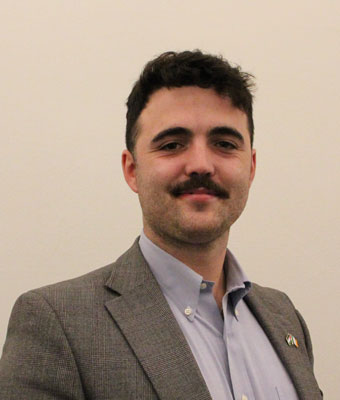
93. Deputy Barry Heneghan asked the Minister for Education and Youth to provide an update on post primary capacity planning for locations (details supplied), including the current assessment of projected enrolment pressure; the steps her Department is taking to ensure an adequate supply of secondary school places in the coming years; and if she will make a statement on the matter. [70838/25]
I ask for an update on post-primary capacity planning in Clontarf, Killester and Raheny, including the current assessment of projected enrolment pressure and the steps the Department is taking to ensure an adequate supply of secondary school places, particularly in co-educational schools as a survey has shown that 89% of parents in the area want co-educational education.
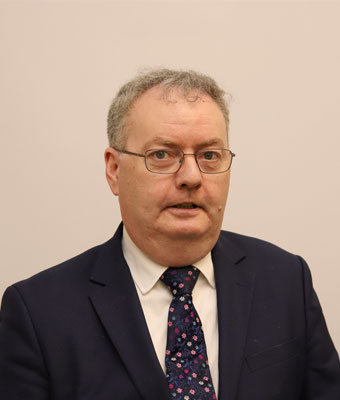
I am pleased to assure the House that there are more than sufficient places for all local children in the area referred to by the Deputy. While primary enrolments have been declining in the area since 2018, 16% of first year places at post-primary schools went unfilled for the last school year. This reflects an overall decline in post-primary enrolments for the area since 2023 and the fact that there are more first year places available than sixth class students in the area for the forthcoming school year. Enrolment pressures in an area may not always relate to capacity. They may instead relate to school choice and external draw factors. The Department’s responsibility is to ensure that schools in an area can collectively cater for local demand.
Under the national development plan, the Department of education has invested over €6 billion in our schools throughout the country, including in the area referred to by the Deputy, since 2020. This involves the completion of over 1,300 school building projects. There are four projects planned at post-primary schools in the area, including a large-scale major project which is at construction and which will cater for over 1,000 pupils. This will provide good additional capacity relative to the school’s current enrolment. This investment will ensure that all pupils will continue to have access to an appropriate education place.
Delivery of school building projects is underpinned by strong forward planning processes. Robust demographic analysis takes account of various data sources, including the census, child benefit data and school enrolments, and additional factors including planned residential development in each area. Furthermore, as with other areas, the Department will continue to liaise with the local authority in respect of its county development plan with a view to identifying any potential evolving long-term school accommodation requirements.
I appreciate that every child has a space but these spaces are not where parents desire to send their children. It is bananas. I was recently at an event with a load of up-and-coming parents, the new generation, and they were unanimously for this. The report submitted to the Minister's office shows a community that is ready for change and parents who are willing to support that change. Is there an indication of whether the Department is actively considering the establishment of new co-educational secondary schools in the area because there is clearly a demand?
I would appreciate clarity as to whether Education Equality will be included in the national convention on education. It has emailed the office but has not got a reply. It wishes to discuss the ongoing issues around children's rights and the need for schools to uphold freedom of religion and belief in practice. With the new generation of parents and the new generation coming up in Ireland, it is very important that we provide this option. We can see the statistics. We need to act on them.
There were a number of questions there, along with a number of grenades. The planning and building unit in the Department is very conscious that we need to ensure adequate capacity right across the system in primary schools, post-primary schools, special classes and special schools. We are working to that. Resources are not endless but it is important to work with what is available. The Deputy raised the issue of school choice and so forth. There is a lot of work and research going on behind the scenes in that regard. Co-educational schools are hugely important. It is very important that we embrace that right across the school spectrum. I will come back to the Deputy on the specific issues he raised.
The education convention is hugely important. This was set up by the previous senior Minister, Deputy McEntee, with whom I had the honour of working for the past number of months. I pay tribute to her and her team for the work they did. It is hugely important that the education convention is embraced because we will have to plan for education for the next 25 years and beyond.
I appreciate that. It is very important that Education Equality is invited to the national convention on education. It represents a large cohort of parents and a large cohort of the future generation. It needs to be replied to. We can be assured that representatives from State bodies and patrons will be there to fight their cases. It is important that Education Equality is there to show the other side on behalf of people who want change.
I thank the Minister of State on the record of the House for all the help he has given me in my work in Dublin Bay North with regard to Stapolin Educate Together National School in Baldoyle and for everything he has done in relation to special education. It is really appreciated. His visit was brilliant. Will he provide an update on the current assessment of projected enrolment figures for the area? Chris Joyce and all of the parents involved in the Killester Raheny Clontarf school campaign are working tirelessly to show the Department what is needed. They have submitted a report to the Department but feel they are not being listened to. I appreciate what the Minister of State said about the volume of work involved. I understand the number of enrolments is huge and that everything must be processed but the campaign has done the work.
Of 1,800 parents interviewed, 89% want co-education.
The information has been given to the Department and work is ongoing in relation to it.
Regarding the education convention, the Deputy reflected the truth in the phrase he used when he said that every sector would be there fighting its corner. However, I genuinely believe that this is a very serious attempt being made by the Department of education to engage with all the stakeholders in a meaningful way to embrace all the issues that are out there. We have to drop the sense that you either have to fight your corner to ensure something happens or surrender it. This is about having the best possible education system. We have prided ourselves the world over on our education system over the last 50 years, and on the outcomes it has delivered in any comparison. However, we have to make sure that everybody is in and everybody's voice is heard and that we bring forward an education that we can be proud of again into the next generation and beyond. It is also important that it is done in a cohesive way, that we come to agreement on it and that everyone can stand together on it.
Question No. 94 taken with Written Answers.
Special Educational Needs
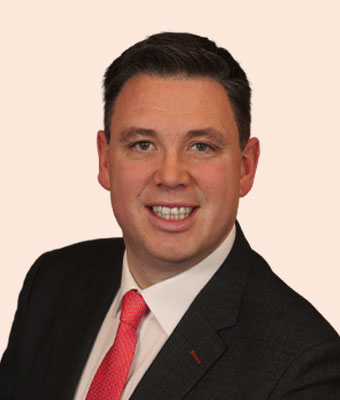
96. Deputy Paul McAuliffe asked the Minister for Education and Youth to provide an update and timeframe for the new ASD classes at a school (details supplied); and if she will make a statement on the matter. [70806/25]
I welcome the support the Minister of State and his Department have given in opening new ASD classes in my own constituency over the last number of years. I also welcome the recent visit he made to St. Michael's House Special National School when it was opening its new building on a great day for that community. I wish to ask the Minister of State about the Finglas Parochial National School and the provision of ASD classes at its location.
I thank the Deputy for his kind comments and also for his engagement on education. The opening of St. Michael's House Special National School was a wonderful day. I congratulate that community for the day and also for the work they do and the atmosphere that was within that school. We do not acknowledge enough the commitment to the work that school leadership and school teams do within special schools and right across schools.
I can confirm to the Deputy that the school to which he refers has been approved for accommodation to facilitate special class provision. Two new special classes were sanctioned at this school by the National Council for Special Education for the 2025-26 term. While accommodation for special classes can be provided within existing unused accommodation in many instances, modular accommodation can be installed under existing planning exemptions. In this case, a planning application was required. The planning application is to facilitate the provision of both special education and mainstream classrooms under the Department’s SEN reconfiguration and modular accommodation programme. There is provision for one special class within the planned modular accommodation. Additionally, the provision of modular classrooms will facilitate the repurposing of existing accommodation to facilitate the second special class. The school has been approved for grant funding to support these requirements for repurposing work. The local authority has made a request for further information in respect of the planning application for the required modular accommodation and a response to this is currently being finalised. Project management supports have been appointed to support the school in the delivery of this important project. Departmental officials and the project mangers will continue to work closely with the school authority to ensure that special class provision is made as soon as possible.
Where new special class accommodation is not in place at the start of a school year, the NCSE works closely with the schools and families to support the development of contingency arrangements for students enrolled in the new special classes. Teaching and special needs assistants have been allocated to schools that are opening new special classes this year and it is expected that these staff would work closely with the students enrolling in new special classes under any contingency arrangements that may be in place.
I thank the Minister of State. We welcomed the sanction of special classes in the Finglas national school. It is an incredibly historic school and one of the original model schools. The difficulty is that, in the meantime, there is a temporary provision in a local community hall where, only on a part-time basis, education is being provided. The difficulty with that is that many parents moved their children from full-time places either in other schools where they were not in an ASD class or from a preschool where there was dedicated special education. They have gone from a situation of being in full-time education to now being in reduced hours because the local community hall is being used for other purposes. I understand that there is a short period in terms of planning, building and so on, but where a child is on reduced hours for six or eight months, the impact, including on the parents, is very significant. I urge the Minister of State to make sure this project is completed as soon as possible.
I accept that totally. The school authority, together with the National Council for Special Education and the Department, came up with a contingency plan. I welcome that they put a contingency plan in place but there is a planning issue here that is outside the role of the Department. As of yesterday, my information is that the local authority has requested further information in respect of the planning application. It is important that this be responded to and we expedite it.
As we have populated these classes, the NCSE and the Department have been working with those families and have given temporary accommodation or reduced hours. That is not acceptable to us but it is the way we have had to do it for the last couple of months.
We are deeply committed to fully funding this project. Money is approved for it. The planning issue is delaying it somewhat. I give a commitment to the Deputy that we will work with the school authorities, the Department and the NCSE to make sure there is no delay on our side in making sure these classes are fully open and fully populated as a full-time school resource.
I thank the Minister of State, and particularly his office, which I have been in touch with many times on this issue. We do not control the planning process and it was unexpected that the additional information would be required. The difficulty is that parents like Marie, Leanne and others who have been in touch with me were effectively offered half a place. They were told they had to take it and they were not sure they would have it again. The building was not in place and even the solution was not there for a full-time place. Their children have gone from having full-time places in preschool and in other schools to part-time places. How they were locked into having to accept those places was unsatisfactory.
All that said, we want to now focus on the delivery of the project. I ask that the Minister of State's office keep an eye on this at a micro level, as I know it does on many other projects, because we want to make sure there is no further slippage for this school and that these part-time places can be converted very quickly into regular full-time provision.
I will certainly give the Deputy a commitment on that. He was spoken to me many times about this school in Finglas and the challenges that are faced by the parents. I commend him for working so closely with the parents and the school communities. I encourage all Deputies across the House to continue to liaise with their school communities because they are hugely vital and we should be constantly engaging with them.
We will work very closely with Deputy McAuliffe and the school community to make sure there are no delays. It is hoped that the planning issue can be resolved. Any help the Deputy can give in that would be greatly appreciated from our side.
It is important as well to reassure the parents and the students who are there. Last year, we were looking at an issue about need in this community. This school was identified as a place where we could put in special classes. The school community stood up to the plate and engaged very positively with the Department, and we thank it for that. It is important that we get this over the line and return the children's full-time education places.
95. Deputy Barry Ward asked the Minister for Education and Youth the position regarding the provision of SEN places in a school (details supplied); if she is conscious of the shortage of places in this area; and if she will make a statement on the matter. [68320/25]
My question is about special educational needs places and, specifically, the provision of them in St. Anne's National School on Stonebridge Road in Shankill.
Enabling students with special educational needs to receive an appropriate education is a priority for this Government. It is also a key priority for me, for the Department and for the National Council for Special Education. The vast majority of students with special educational needs are supported to attend mainstream classes with their peers. Where students with more complex needs require additional supports, special classes and special school places are provided. This is in keeping with policy on an inclusive education, which promotes students being supported to receive an education in the most inclusive setting possible.
The school referred to by the Deputy currently has one special class, which opened in 2024, dedicated to supporting students with autism. The NCSE sanctioned 407 special classes for the 2025-26 school year, bringing to 3,742 the number of special classes in our schools.
There are 103 new special classes sanctioned for the 2025-26 school year across Dublin, including 81 at primary and 22 at post-primary. An updated list of these classes is available on the NCSE website and I am also happy to share it with the Deputy.
For the 2026-27 school year, the NCSE is currently collating the data and information received by 1 October through the parent notification process and is engaging with schools on where specialist provision is best placed for the new school year. My Department and the NCSE have undertaken a significant amount of forward planning over recent months to identify medium and large primary schools and post-primary schools to prioritise in opening new special classes. A significant level of engagement has also occurred with school patron bodies and school management bodies in this regard.
The NCSE intends to commence sanctioning new special classes for the 2026-27 school year this week, which is several months ahead of last year. The council expects to sanction a significant number of classes across Dublin and will continue to keep Oireachtas Members and parents informed of decisions. I acknowledge the Deputy's point in regard to the school he mentioned.
I thank the Minister of State. I do not want to downgrade the level of investment in, and commitment to, this issue the Government has shown. I acknowledge his reference to the progress made in this area. However, all the announcements and good work will not benefit the children who do not have a place. I was contacted by the family of a young boy who does not have a place in St. Anne's National School in Shankill and has been told he will not have one next September. We know the value of special educational needs classes. They stop from falling behind those children who can keep up with a little extra accommodation and assistance. Such provision is hugely important and not providing it is myopic in the context of the damage it does to children's long-term educational prospects.
What do I say to the parents in Shankill I mentioned, who are now facing a situation where their son will not have a place in September? What can be done for them to ensure he gets the assistance he needs in the next academic year of 2026-27? What do I tell them they can do to move things along? They should not have to ring around every school in the area. There is no central point from which they can obtain that information.
Senior staff at the NCSE are working with the families who notified the council by 1 October this year. We are working through those figures at the moment. We want to identify the communities where the need is and match the places appropriately in order that we do not have students travelling long distances out of their communities. We want, as far as possible, to provide special classes and special schools within local communities. The family the Deputy mentioned should continue to liaise with the SENO.
This week, we started sanctioning the first of the new classes for quarter 1 of 2026, with further new classes to be sanctioned over the next number of weeks. That work is ongoing and it continues the huge amount of detailed work my Department and the NCSE have done since 1 October, which matches the huge commitment we have given on this issue. We are working to sanction special classes this week and into the new year. The SENOs should and will be liaising with parents who gave notification to the NCSE prior to 1 October.
I acknowledge what the Minister of State said. Am I to take it I may now say to the parents I mentioned that the fact they have been told their son will not have a place in September is not definitive? There is still work going on and I should tell them to continue to engage. There is a review continuing into special educational needs places in Shankill and there is still the possibility of a place for their son. We all recognise the importance of securing a place for that family and the impact it will have on them and on that child's growth and potential. I agree with everything the Minister of State said. Investment in this area is vital. These parents have been told a place will not be available but I understand from what he said that this is still under review and may change.
The previous Minister, Deputy Foley, put out the following statement: "The Department of Education and Youth will shortly agree a new process to remove the requirement for professional reports such as assessment of need reports from entry requirements for special schools and special classes." We have all been inundated with queries from people who are very worried about this. We have no clarity and no information as to who is going to be assessed. I have no issue with streamlining processes but people need to know there is a process and who will make the assessment. We must ensure children who need added supports get those supports and an appropriate place, whether in a special class, special school or with supports in a mainstream class. The Minister of State really needs to provide clarity. Educators and parents are very worried at the moment.
A huge body of work is ongoing between the Department and the NCSE on the provision of special class places right across the country. There are no definitive decisions made. A number of decisions will be made this week and into the new year as to where those special classes will be made available. When they become available, the NCSE will liaise directly with families.
I take Deputy Ward's point about the parents he mentioned not knowing if their child has a place. We brought in the deadline of 1 October to give families clarity earlier in the school year for next year. The deadline was 1 February last year. We brought it back by four months and we are now sanctioning classes before Christmas, which is the first time that has ever been done, and we will continue to do so. Families need just to wait to see what the review will show and then we will continue to work with them.
The announcement yesterday reflects a hugely important piece of work the Department and the NCSE have been engaged in for some time. We must have a very robust system in place in which families, educators and school communities can have faith in terms of who is making decisions and the clinical governance of those decisions. Work will be ongoing over the coming weeks and months to give clarity in that regard. I reassure teachers and school communities that the policy is not being developed on a wing and a prayer. We are developing this policy because it is best for students and school communities. We have a very cumbersome system at the moment. We want to do right by the children right across the country who have special educational needs. We are working extremely hard to bring serious clarity to the new process.
Youth Services
97. Deputy Darren O'Rourke asked the Minister for Education and Youth to provide an update on Oíche na hÓige; outline how she intends to build on the event through capital investment in youth facilities across the State; and if she will make a statement on the matter. [70748/25]
Will the Minister of State provide an update on Oíche na hÓige and outline how he intends to build on the event through capital investment in youth facilities across the State?
Arising from budget 2026, an additional €8 million in current and capital funding is being allocated to support the sustainability and development of youth services. This investment builds on recent increases. In 2025, €84.9 million was allocated for current and capital expenditure for the benefit of young people, which was an increase in funding of €7 million, or almost 9%, on the 2024 budget. Of this, €500,000 in capital funding was allocated to strengthen youth service infrastructure. Over the period from 2021 to 2025, the level of current Exchequer funding for youth services and programmes will have increased by more than 34%.
The 2026 allocation will further strengthen the foundation for inclusive, high-quality provision by ensuring continuity, expanding reach and enabling services to respond to the evolving needs of Ireland's diverse youth population. It will also allow us to deliver on the ambitions in the Opportunities for Youth strategy, which provides a platform for an effective, data-driven and joined-up approach to the delivery of youth work and related services. Further details on the 2026 allocations for the Department will be available after the 2026 Revised Estimates Volume, REV, process is complete.
Oíche na hÓige, a pilot initiative of the Department of Education and Youth, took place on Friday, 21 November 2025 and saw youth clubs and projects around the country open their doors to the wider community. Participants used the opportunity to showcase their diverse youth services and facilities and the value of youth work in their community. The main purpose of the initiative was to celebrate and build community awareness of youth work services and youth clubs. It aimed to show the value youth work can bring to young people and to create opportunities for the further integration of youth clubs into their communities. I was delighted to see more than 400 youth clubs across the country participating in the initiative.
Oíche na hÓige was a success. In my constituency of Meath East, I attended open nights held by Ratoath Foróige and 5th Meath Kells Scouts.
They do such good and important work in the community. In both of those projects, like so many, it is about youth leadership, with young people leading. Is it planned that Oíche na hÓige will be an annual event? Has that decision been made or is it under consideration? It is something I would support.
Are there plans to increase places for young people in youth work services? It is one thing to raise awareness and show people the good work being done but there are capacity issues in practically all these services because of a lack of investment over years.
It was a pilot event on 21 November. A number of short weeks later, the Department is currently evaluating the event. The Deputy is quite right and on the button that it was extremely successful. A lot of public representatives and community members attended the events and they were very successful. We are looking at how it can be improved. It has to be an annual event because of the benefit it brings to the communities. It also brings out our great resource, namely, young people. With Christmas fairs the length and breadth of the country in recent weekends, many young people have engaged in those. Some people involved in youth organisations have brought the expertise they developed in those organisations and the work they have done to the sales at the events. I have seen young people engaged in communities and it has been a success. We have to build upon it.
It needs to be matched with increased funding. I said to the Minister of State at committee that youth services are the poor relation within the Department and in government. The incredible work done in communities and the benefit for young people and the wider community are immeasurable. Maybe that is part of the difficulty. Investment is returned in spades. Please continue to invest in young people and youth services and increase that investment.
I want to ask about the implementation plan for the national strategy for youth work and related services 2024 to 2028. We are coming into 2026 and that plan has not been prepared. It is an indication of delay and a lack of prioritisation. Please focus on it, deliver on it and, importantly, engage with the stakeholders doing such great work in our communities.
We have seen an increase in funding in the section. Youth services have seen an increase of €8 million in current and capital funding. Looked at within the overall budget of the Department of education, it appears small, but it is dedicated funding and is being brought back into that Department. There was always a huge collaboration between the Department of Education and Youth and the youth section of the Department of children. It is in its right home.
We have to build the strategy into the coming years and it has to be clear. We have seen in communities in Ireland and across the world divergence and difference being exploited. It is hugely important that we have integration at youth club level and in organisations that benefit from funding from this Department. I see in organisations I work with the benefit all this brings. I take the Deputy's point but there is significant investment in it.
On the strategic development, I will report back to the Deputy.
Question No. 98 taken with Written Answers.
Schools Building Projects
99. Deputy Brian Brennan asked the Minister for Education and Youth the position regarding a school (details supplied); and if she will make a statement on the matter. [70576/25]
Deputy Timmins is taking this question.
For Deputy Brennan, yes. There are four schools in Wicklow under Project Dargle: St. Kevin's Community College, Dunlavin; Coláiste Bhríde, Carnew; Arklow CBS; and Avondale Community College in Rathdrum. These schools are all in need of the proposed development. The areas they serve are growing in population. With the new, hugely increased housing targets for County Wicklow, these developments are needed more than ever. What is the current status of these builds?
Since 2020, the Department of education has invested over €6 billion in school projects throughout the country under the national development plan, involving the completion of over 1,300 school building projects. Over €159 million has been invested in schools across County Westmeath and €234 million in schools across County Wicklow in that period.
Project Dargle, the project bundle referred to by the Deputy, comprises seven post-primary schools in Westmeath and Wicklow devolved for delivery to the National Development Finance Agency, NDFA. These school building projects are flagship projects and will provide new, modernised, high-quality, permanent facilities catering for almost 6,000 students. This will transform the education infrastructure for these school communities now and in the decades ahead, enabling students to benefit from purpose-built facilities.
All seven schools are at stage 2b of the architectural design process. This is an important stage which allows for detailed design and planning, obtaining necessary statutory permissions and preparation of tender documents. Stage 2b is being finalised at the moment. The length of time a project takes to go through each stage varies depending on a number of factors, including scale and complexity.
In July, the Government announced a capital allocation of €7.55 billion for the Department of Education and Youth for the period 2026 to 2030 under the national development plan. As part of this allocation, the Department will place a strong emphasis on provision for children with special educational needs, with a particular focus on meeting annual school place needs. In relation to the project's roll-out, the approach will be to continue to maximise the capacity of the existing school estate in the first instance and to provide necessary additional capacity through a targeted and prioritised project roll-out over the course of the 2026 to 2030 period to meet the most urgent and prioritised needs.
The Department will continue to provide guidance and practical support as required. The NDFA will engage directly with school authorities to keep them fully informed.
With the Minister of State's indulgence, I will go through each of the four schools.
First is St. Kevin's Community College, Dunlavin. Demand for places continues to grow. Planning has been in place for over two years. Dunlavin and its hinterland population continue to grow and the school serves east Kildare as well as west Wicklow. There is a plan for four rooms for special classes. The lack of suitable rooms in the current build means students' options are limited. The library is now a classroom. Computer rooms have been converted to general classrooms.
Second is Avondale Community College in Rathdrum. The new school campus will see capacity at the secondary school increase from 660 to 1,000 students. The school is far over capacity. Many rooms and spaces are no longer fit for purpose but the school cannot invest in upgrades or fixes to classrooms, practical rooms and laboratories. This is completely stalled. They are waiting on the new build.
I thank the Deputy for his ongoing interest in these projects across Wicklow. Wicklow is one of the major challenges we have in terms of school capacity each year. At post-primary level, there is always a challenge. The projects are at stage 2b, with full planning permission granted. I have had a number of conversations with Deputies this morning about projects where planning permission is awaited but in these cases it has been granted.
I take the points the Deputy made about capacity issues in Dunlavin, Rathdrum and across Wicklow. It is great to see there will be four additional special classrooms in St. Kevin's Community College. This is what we need for an integrated policy. It is at stage 2b and is being finalised at the moment. I will ensure the Department and everybody concerned works closely to finalise it as fast as possible.
Coláiste Bhríde, Carnew, is a special case. It seeks inclusion of a playing pitch with the building project. The new school will have a capacity for 1,000 students but there is no playing pitch included.
The school currently has the land required and planning permission but the key issue is the cost of levelling the site. It put a proposal to the NDFA for pitch groundworks, which was rejected, but it still hopes the Department will reconsider. The current building at Arklow CBS is simply unfit for purpose.
There is a project, for which we have been promised a sod-turning next May, in Blessington Community College in west Wicklow. That project has been put back on a number of occasions. The school is currently full of prefabs. It desperately needs a school building in what is a massively growing town just 19 miles from where we sit today. I ask that this project move to final tender stage and a contractor be appointed as soon as possible.
We know there is a particular issue in relation to planning for school builds. There is a lack of flexibility in the system and there needs to be a greater level of agility. I brought this issue up previously with regard to Ardee Educate Together National School. It is a national school and a great build but the problem is there are 21 parking spaces and double that number are needed. There are only two set-down places for minibuses for children with disabilities who are brought to the school and there is a need for five. There is a lot of space to do this but building is about to continue, which means that when the situation is eventually resolved, it will be a lot more costly. Engagement is needed between Louth County Council, the design team, contractors and the Department. If an official could come back to me with a response, we could get a solution for the school.
I would appreciate if Deputy Ó Murchú could pass me the roll number of the school. We will then take up the matter and I will see what we can do with it.
On the school in Blessington, I do not have the details to hand but we will come back to Deputy Timmins on it. I take his point in relation to the sod-turning and so forth. There is nothing more frustrating than commitments being given and deadlines being passed.
On the schools in Carnew and Arklow, these are parts of projects that have been delivered under the NDFA. With regard to the level of commitment by the Department to move these projects on under a new system, this will be very informative for the Department into the future.
Deputy Timmins asked about the project in Carnew. I will come back to him on that. The Department does not have a bottomless pot of money. There is a lot of pressure on the system, particularly in Wicklow, with regard to school places. I will endeavour to get a more detailed response for the Deputy on the issues he raised. Suffice to say, these projects are bundled together and we are committed to working through them.
Scéimeanna Oideachais
100. D'fhiafraigh Deputy John Connolly den Minister for Education and Youth cmaidir le Tionscadal na Scoileanna Beaga, cad iad na pleananna atá ag a Roinn chun cur le líon na gcnuasach scoile atá ann agus chun stádas buan a thabhairt don tionscadal; agus an ndéanfaidh sí ráiteas ina thaobh. [69894/25]
Mo cheist ná chun a fhiafraí den Aire Oideachais agus Óige maidir le tionscadal na scoileanna beaga. Cad iad na pleananna atá sa Roinn chun cur le líon na scoileanna atá sa scéim faoi láthair agus chun stádas buan a thabhairt don tionscadal?
This question relates to the small schools project. The Minister will be aware that her predecessor, the Minister, Deputy Foley, started a pilot project for clustering small schools in support of the schools and easing the administrative burden on the principals of those schools. She deserves great credit for that initiative. I would like to see the project put on a firm footing into the future.
The programme for Government provides for a number of measures to support small schools, including the introduction of new national small school projects and training in new administrative supports. The Government is very aware that small schools are an important part of local communities and glue a community together, not just for the students and the school community but for generations to come as well.
The current small schools action plan research, established in 2021, is due to conclude at the end of the next school year. The current small schools project is being implemented on a pilot basis to support collaboration and sharing of resources among small schools in rural areas. It also enables them to collaborate, identify common challenges and trial innovative solutions.
Between them, the six clusters of small schools - two in Galway and one each in Donegal, Kerry, Wicklow and Waterford, respectively - consist of five schools per cluster. The feedback from the schools has been extremely positive. This is reflected in the interim evaluation report published by the Department. The independent review identifies potential areas for closer collaboration and an analysis of the scalability of actions already undertaken. As the project proceeds, a further evalution will take place.
Learning from the crucial evaluation of this project will be invaluable and will form a strong basis to inform future policy directions in relation to all small schools, including how the programme for Government can be delivered.
The Minister of State has noted many of the positive elements of this scheme and how the schools, in the evaluation undertaken by the Department, reflected positively on it. As he said, there were two such clusters in County Galway, one in Gort agus ceann i gceantar Iorras Aithneach i gConamara. Bhí trí scoil sa scéim sin: Scoil na hAirde Móire, Scoil Mhuighnis agus Scoil an Aird Thiar. Other communities that have seen the benefit of the clustering project have contacted me pointing out that there are a number of similar small schools in their community and asking if the scheme can be expanded to include a new cluster in their community. That is a very fair call. The Minister of State noted that the administrative burden is reduced, the school staff get additional training and there is shared learning among the teachers and pupils. I request that this measure be extended and made permanent.
The importance of this project is that it will inform policy into the future in regard to small schools. In the first instance, I acknowledge the huge work that small schools do in every county in Ireland and in some city locations as well, due to having different demographics. These clusters are to understand the challenges small schools have. The Deputy is right that more schools are looking to get into the pilot scheme as fast as possible because they see the benefits of it. The evaluation of the pilot project will inform policy into the future in relation to schools. It is important that we understand them. Over the years, I have seen that, because of different dynamics or work practices, schools that were once struggling for numbers are now bursting at the seams and additional teachers are coming in. These small schools are hugely important for Ireland Inc. and the benefits of this project will inform policy.
One of the most positive attributes of this scheme, with which I have some experience, is that it enabled principals who also have responsibility for teaching a class or multiple classes to do two important things. The first was to cluster their release days, so that when the principal is on a release day for administrative duties in the school, the same substitute teacher is there every day. This provided great consistency and continuity for the school and pupils. The person covering the release days did so in every cluster, meaning that the release days almost gave rise to a full-time position. That was one benefit of the scheme.
In the review the Minister of State mentioned, two concluding remarks indicate that the scheme should form part of future policy, hopefully in the near future because, as the Minister of State said, it is included in the programme for Government. One concluding remark was that no one project can overcome the challenges faced by small schools in rural areas but this scheme is a small step in the right direction. That is accurate. The second comes directly from the cluster in Gort, where a cluster administrative officer was appointed. Everyone agreed that this should be expanded to all small schools.
The project is a step in the right direction. The previous Minister in the Department, the Minister, Deputy Norma Foley, moved the initiative on. It is a clear indication of the importance of small schools in communities. We have visited a number of schools over the past eight or nine months. Some city schools are small too, for different reasons.
On having an administrator within the cluster, there is huge collaboration within the schools that are part of the cluster. They can benefit from co-operation, not just in regard to teaching but also in understanding the challenges. We are very committed to evaluating the project and understanding how we can best support schools in the future. For principals who have multiple classes in small schools, having administrative days and a guarantee that the same teacher will come in every week are also hugely important.
School Facilities
101. Deputy Seán Crowe asked the Minister for Education and Youth if she is aware of the ongoing challenges regarding a school (details supplied) accessing a sports capital grant due to concerns of the archdiocese relating to financial costs incurred by primary schools when undertaking such a grant, if her departmental officials would be asked to mediate between the two parties in order to achieve a resolution that would provide a sports amenity for a socio-economically deprived area and if she will provide clarity to both parties. [70411/25]
This question concerns St. Thomas National School in Jobstown. I do not know if the Minister of State is aware of the challenges it is facing. There are a lot of moving parts. The latest challenge is coming from the archdiocese in looking for clarification on an undertaking from the Department about it. It relates to Jobstown Celtic Football Club at St. Thomas National School and the building of a astro pitch. The money is sitting there in an account but we cannot get agreement from the archdiocese, which is looking for clarification from the Department.
The school campus referred to by the Deputy comprises a junior school and a senior school. The junior school has a major project with the Department for a new school building on the existing site, which is currently at construction stage. This project will provide modern facilities for the school community, including provision for children with special educational needs. As part of this project substantial external play facilities such as three ball courts, two junior play areas, one secure hard and soft play area and one sensory garden are being provided.
My Department understands that there are ongoing discussions between the board of management, the patron and the trustees of the school regarding an application for a sports capital grant for an astro pitch facility. The trustees have direct responsibility for property matters at the schools.
The Department supports and encourages the use of school buildings and school sports facilities outside of school hours for community and recreational purposes where feasible, including childcare and after school uses. Over the past number of years, we developed a project that was one of the first where schools collaborated with the Department of sport in terms of building facilities. It was one of the first projects because we were refused a number of times before we designed it in Charleville in County Cork. It involved a facility between the sporting organisation and the school that would be open for the school during school time and open for the community afterwards. That is the right thing to do.
I understand that there are ongoing issues regarding the patron and trustees. Unfortunately, I do not have the imprimatur to make a decision on this. I would appreciate if the Deputy could give me any correspondence between the trustees and the Department and I can see whether there is any guidance we can give or whether guidance has been sought from the Department. Our experience regarding a number of projects involves the challenge of getting the required documents to the Department before draw down.
Additional information not given on the floor of the House.
A set of revised procedures on the use of school buildings and school sports facilities outside of school hours was published in June 2024. The purpose of these procedures is to provide assistance to schools that wish to make their school buildings and school sports facilities available to community or sporting clubs or organisations outside of school hours. The procedures outline the various scenarios and informs where consent of the Department of Education and Youth is required. These procedures are an important resource for schools and their trustees, including in considering sports capital grant applications or other arrangements with community groups. The procedures have been brought to the attention of the trustee of the school in question.
There are a lot of moving parts with regard to this. Everyone is in favour of it - the club, the school, the community, South Dublin County Council and political representatives. The challenge is that the archdiocese wants to know who will pay for the opening and closing of the premises after the school uses the facility and who will pay for insurance and cleaning. The club is going to do all that. I can get an affidavit. The archdiocese is saying the capitation grant does not cover it so it is looking for clarification from the Department regarding the archdiocese's demand for an increase in the capitation grant. Some of the things it is looking for are outside the scope of it. The ball is back in the court of the Department. The archdiocese is saying that it might look at it at a later stage and that when a sports capital grant is established to cover the running costs of the project, this proposal can be revisited. What it is looking for is madness. At the end of the day, common sense should apply. It is an area of high deprivation and this decision will hugely affect the children. An astro pitch is already there but it is safer to play on the road than it is on the actual pitch, given the state it is in. I am really frustrated about this.
I fully support Deputy Crowe on this. A solution has to be found. The Department has a role to play here, as have the school, the patron body and the religious authorities, but a solution must be found.
I accept the genuine frustration of the Deputies on this. The Department of Education and Youth is very committed. Many facilities paid for by the State and built up over the years close on Friday evening and do not open again until Monday morning. We do want to make sure every facility, be it in Jobstown or anywhere else, is used. I have considerable experience as a public representative over a number of years in trying to unwind the challenges faced by local communities. Forgive me if I do not have the exact details because it is not in my Department but if I can help, I will. A sports capital grant has been secured. The community is engaging to get approval to draw down the funding. The archdiocese or the patron body is looking for clarifications that are not available for the club to give. It is important that we look clinically at this. If the Deputy can give me those details, I will follow up on them. If our Department has a role to play, I will certainly look at it as a matter of urgency. It is important that we break down barriers because this is a model of funding that is available to communities.
It is a huge advantage to the area, the pupils in the school and the wider community. It is something that can be resolved. If an affidavit from the club stating that it would cover all the costs was given, that might be enough. The capitation grant is a problem but I might talk to the Minister of State afterwards. Perhaps we can put our heads together and, with the archdiocese, come up with a commonsense solution that will resolve this problem and provide an astro pitch for the kids in this area.
The capitation grant is specifically paid for costs relating to the running of the school, such as the cost of heating and lighting. We had debates earlier in the session regarding that. I do not think it should affect this issue. Is the archdiocese looking for some information? I find it difficult as well. We are dealing with a very protracted system across the patron bodies as well. I would have no difficulty in trying to bring clarity from our Department's point of view or maybe some advice I might have.
Schools Building Projects

102. Deputy Albert Dolan asked the Minister for Education and Youth when construction is expected to commence on approved school building projects (details supplied) in Galway East; if she will provide an update timeline for delivery of these projects; and if she will make a statement on the matter. [70757/25]
I submitted a question seeking an update on many building projects in Galway East such as Coláiste an Eachréidh, which is a fantastic Gael campus project; Kilcoona National School; St. Brigid's in Loughrea; Carrabane National School; Gort National School; and Gort Community School. If the Minister of State could provide me with an update on any of these projects, I would be grateful.
I thank the Deputy for his comprehensive list of school projects. I know that a significant amount of work is taking place. I compliment the Deputy on the work he does in engaging with schools because I believe public representatives should be constantly engaging with school communities. I thank him for his engagement on this and his engagement with us over the past number of months.
Since 2020, the Department has invested over €6 billion in school building projects under the national development plan involving the completion of over 1,300 school building projects. Over €227 million has been invested in schools across County Galway in this period, involving the completion of 79 school building projects.
The six building projects in Galway East referred to by the Deputy are part of the Department’s overall delivery pipeline. Three of the projects are additional school accommodation, ASA, projects devolved for delivery to the school authority or to Galway and Roscommon Education and Training Board. St. Brigid’s in Loughrea is at stage 2a while Kilcoona National School and Gort Community School are at stage 2b of the architectural design process.
The other three projects in Athenry and Carrabane and Gort National School are all large-scale capital projects and are at stage 3 tender action, evaluation and award stage. However, I am pleased to inform the Deputy that a letter of intent has recently issued to the successful contractor on the Gort National School project and it is expected that this project will progress to construction shortly.
In July, the Government announced a capital allocation of €7.55 billion for the Department of Education and Youth for the period 2026 to 2030 under the national development plan. In relation to project roll-out for large-scale projects and ASA scheme projects, the approach will be to continue to maximise the capacity of the existing school estate as much as possible in the first instance and provide necessary additional capacity through targeted and prioritised project roll-out over the course of 2026 to 2030 period.
I thank the Minister of State for the update on those schools. For the people of Galway East, these projects are absolutely vital but I will focus on Carrabane National School. I know this has been raised with the Minister of State multiple times and that progress is taking place but the school is in an absolutely dire state at the moment. It needs that large-scale investment to build a brand-new school to bring it into the 21st century and ensure the children in that area are not left behind but receive the standard of education that is required in what is ultimately a safe and healthy environment. That is what is really important.
In relation to the expected commencing of the construction of school buildings, I am aware the Minister of State recently visited Lakeview School, which is an important school on the east side of Galway city. As he will know, unfortunately, it is only able to place five students for the 2026-2027 school year. There is a waiting list of 11 children who cannot be accommodated due to space constraints. The school has the physical space but what it needs is complete refurbishment, which will allow more children to be able to use that fantastic school. This is the school's third year looking for more appropriate classroom space. I know the Minister of State is aware of this project and has been to this school. Will he progress this to ensure more children in Galway city can be accommodated in Lakeview?
I thank both Deputies. Deputy Dolan has raised Carrabane National School continuously with me and the Department. We visited the school in Galway and I know the challenges that are there. It was remiss of me not to say that I am very much looking forward to working with our new Minister for education, Deputy Hildegarde Naughton. We have had many lengthy discussions on education over the past number of weeks. I really look forward to engagement with her and her understanding. She held the role I have now, so she will have a huge understanding of it.
I will certainly raise these issues. We visited Lakeview School and saw the challenges. Like many schools that we visit, we see the challenges that are there. We are there to meet them as best we can into the future. We will certainly come back to the Deputies on it.
Further and Higher Education
204. Deputy Brendan Smith asked the Minister for Further and Higher Education, Research, Innovation and Science the way in which his Department is positioning Ireland’s education, research and skills system as the “economic Ministry” he often refers to and to that end driving national competitiveness, productivity and long-term prosperity. [67812/25]
As the title of the Minister's Department demonstrates, it has a very broad remit. Of course, education, research and innovation are the key elements in the bedrock of any economy. Importantly, I welcome the fact that the Minister is supporting further and higher education throughout the regions. When the late President Patrick Hillery, as a member of the Fianna Fáil Government in the 1960s, laid out the vision and strategy for the development of the regional technical colleges, it was always on the basis of bringing education to the regions and ensuring they would derive benefits and drive on the economy to eliminate the disparity in economic development that existed at national level at that time.
I thank the Deputy. I thank him also for the invitation to Cavan recently. I was delighted to be able to take that up. We visited the Cavan Institute, where we saw, among other things, the original equipment manufacturing, OEM, apprentices at work on the advanced manufacturing side. We also saw the students at Youthreach, which is a very critical intervention with youth. From there, I went to Monaghan Institute and finished the day in the Atlantic Technological University, ATU, in Letterkenny, where we launched the new vet school. That, as just a snapshot of a day visiting key sites, shows the activity and investment going on in the north west alone by Youthreach and interventions with disadvantaged learners - giving them an opportunity to succeed - right through to the new professionals being created by the vet school in ATU. It is very much a snapshot of the opportunity that is available through education.
Our future prosperity depends on our ability to compete globally and lead out as a small, advanced knowledge economy. We are a knowledge and skills economy. People are our greatest natural asset. I see my job, as Minister in this brief, as unlocking that potential. People have the talent, skills and knowledge, and they need to impart them. We need to nurture it and allow them to reach their full potential. That is key to our economic success, particularly in a changing world with trade, tariffs and a number of unknowns. What we do control and have as a known is our people and talent, and being able to nurture that.
Just last week, I launched the Infreastruchtúr don nuálaíocht, staidéir, páirtíocht, imscrúdú, rath eacnamaíochta agus eolaíocht, INSPIRE, programme, a €750 million commitment to research and innovation funding in the State. It is unprecedented in recent years. It is a successor programme to the PRTLI, which was successful at the start of the century in driving on our economic position as well. I want to acknowledge that Deputy Smith was a member of the Government in 2010 that committed to the PRTLI programme at a time when economic conditions were difficult, to say the least, and the wolf was at the door. That Government had the foresight and belief to commit to that again. Unfortunately, after that point, it lay fallow for some years until I came to office. It has now been relaunched with a €750 million fund to again drive on our economic prosperity and research and innovation commitment.
I was very glad that the Minister was able to accept my invitation to attend Cavan Institute and see it first hand, meeting the students, staff and board of management. There is a vibrancy to Cavan Institute and also Cavan Youthreach. Oftentimes, Youthreach does not get the attention it deserves. In Cavan and Monaghan, I see it as a pathway to further education and on to higher education as well.
I was delighted that day in Cavan that the Minister was able to state very clearly that he was very anxious to advance the proposal to provide major additional permanent accommodation at the institute's existing campus at Cathedral Road, Cavan. I have a particular affinity with Cavan Institute. I was involved from the beginning with its establishment and I was the chair of the first board of management. I have seen it go from strength to strength and, at all times, the institute has worked in partnership with local enterprise and the local community. It is about working together, and I want to see, as the Minister has heard me say before, more co-operation on an all-Ireland basis in relation to the provision of further education.
Absolutely. The opportunity that Cavan provides was very evident on the day of my visit. There is a great opportunity to continue to expand educational provision there on site at the Cavan Institute. That would be encompassed by the college of the future programme, which I am working out through the national development plan. I am examining progress on that at the moment but I would be confident that will be one of the projects that will do well from the fund.
On the all-island dimension, I was pleased to be able to announce the collaboration between Queen's University Belfast and Dundalk Institute of Technology very recently. I spoke to both colleges a number of times in relation to this and I am very keen that we advance that expeditiously.
There is ambitious programme shared by both colleges. It is fair to say that the reaction to the first all-island university has been extremely positive and strong across the board. That all-island dimension to education and our schools is so important.
I was delighted at the Oireachtas Committee on Further and Higher Education, Research, Innovation and Science a number of weeks ago when the Minister was able to tell us about the progress made in developing the strategic partnership between Dundalk Institute of Technology and Queen's University. The Minister was able to say the words, "We will have an all-Ireland university". Those of us, particularly from the Border region, who have advocated for this development were thrilled. Practical things are being done. We are not talking about waving flags and citizens' assemblies. We have the Minister doing practical things. In the past, a former president of Dundalk Institute of Technology, Dr. Michael Mulvey, along with the then chair of the board of governors Councillor Clifford Kelly put the idea forward of more collaboration with education institutions in Northern Ireland and identified Queen's University as a very worthwhile potential partner for Dundalk Institute of Technology. Those people did some preparatory work. As a former member of the board of governors of Dundalk Institute of Technology, Senator Diarmuid Wilson was very supportive of the work of Councillor Clifford Kelly and Dr. Michael Mulvey when they were advocating for that all-Ireland cross-Border co-operation when it was not as fashionable as it is today.
All-Ireland entities are always fashionable in my household. We can have all the citizens' assemblies and deliberate as much as we want to but doing it for real is what counts and that is what we are doing here. There is a very ambitious timetable to make that collaboration come together. I intend to bring legislation through the Houses in the new year to set out the mechanics of how it will be enabled. It is important that Dundalk Institute of Technology continues to enjoy strong autonomy as part of the HEA landscape while being a fully fledged university institute and college of Queen's University with all the powers to award degrees conferred by Queen's University as part of that. Both entities will benefit. Queen's University will also benefit significantly from the collaboration. There are specialties, disciplines and knowledge in each institution that can be shared and benefited from. I always say "ní neart go cur le chéile" - we are stronger together and that is evident in this all-Ireland collaboration.
Before I call on Deputy Connolly, I welcome to the Public Gallery the pupils from Kilberry National School in Athy. They are from our great county of Kildare. They are very welcome and I hope they enjoy their day.
Student Accommodation
205. Deputy John Connolly asked the Minister for Further and Higher Education, Research, Innovation and Science the position regarding the publication of his Department's strategy for the provision of student accommodation and if he will make a statement on the matter. [67831/25]
In a response to a previous question, the Minister outlined very well the supports available to students and families to assist in meeting the cost of accommodation and how he has increased those supports and made them available to a greater number of students. I wish to ask the Minister about the supply of student accommodation and the position of the Department regarding the publication of a new strategy for the provision of student accommodation.
I thank the Deputy for his continued advocacy, support and championing of ideas for this sector. The national student accommodation strategy 2025 to 2035 is due to be published in the coming weeks and will be considered and agreed by Government before being officially launched. It is at a very advanced stage. The strategy aims to make higher education more accessible by addressing both affordability to ensure students can afford rents and secure accommodation and also the viability of supply, which the Deputy's question goes to, to ensure the units come into being quickly and are built out to meet that demand that very evidently exists.
By providing targeted financial supports and accelerating the development of purpose-built student accommodation, PBSA, the strategy aims to remove barriers that prevent students from accessing college and pursuing their academic goals. The strategy builds on wider Government initiatives to support viability of student accommodation such as rental legislation reform where I am working closely with the Minister for Housing, Local Government and Heritage on how rent pressure zones might apply to student accommodation; the budget 2026 VAT reduction on the sale of new apartments, which will be very helpful; the rent-a-room tax relief, which is a key measure involving up to €14,000 per householder tax free; and the introduction of streamlined design standards under the Planning and Development (Amendment) Act 2025. This is a revised set of guidelines published in June 2025 setting out a blueprint for student accommodation that delivers maximum beds per block, uses clever use of space and shared facilities such as lounge rooms and laundry rooms and seeks an optimal return on available bed usage. They are some of the measures I am introducing.
I will say hello to the students from Athy as well while they are here today. It is good to have them in the audience.
It is very welcome that we would have a strategy over the coming weeks. We need it. The third level sector needs it. It is anxious to hear what will be included in it. The Minister gave some indication about how the strategy will use other policy areas or other departures in Government policy recently to make sure we can stimulate and incentivise the development and provision of student accommodation.
There are a number of options in terms of incentivising people to rent out spare capacity in their homes, incentivising the private sector to get involved and public-private partnerships. If they had the choice, most people would plump for purpose-built student accommodation with some association with the third level institution in close proximity to it. I hope the strategy can include some incentivisation in that area. Could the Minister address allowing technological universities to borrow and the framework for the preparation of that, which could help in meeting that goal of developing purpose-built student accommodation?
I have a question about the funding of Killarney Technology Innovation Centre. The Minister or one of his officials might engage with Conor O'Leary, Sean Counihan and the team there. I acknowledge the work of the Minister on the Pretty Polly site. I ask him to ensure that in the new year, Kerry Education and Training Board will progress the project. Could he also try to resolve the green cert issue in MTU in Tralee for the students?
If I may be a little cheeky, I wish the Cromane ladies team the very best in the all-Ireland final in Parnell Park on Sunday. I congratulate Ballymacelligott, An Ghaeltacht and Dingle on winning the junior, intermediate and senior Munster finals last weekend.
I have to wish Sallins the best of luck on Sunday in its own intermediate final, so we have to get that in as well on the day.
I will take Deputy Cahill's question first and then revert to Deputy Connolly. It was good to visit Killarney and Tralee recently along with Deputy Cahill, the Minister for Children, Disability and Equality, and the Minister of State, Deputy Michael Healy-Rae. It was a good visit. The Pretty Polly site is moving ahead. I know this is very important to Deputy Cahill. I was pleased to be able to confirm the progression of that site very recently, which I know was welcomed locally as well. There are still a number of steps to go through in terms of the different gates but the education and training board is progressing that project. I was delighted to visit the education and training board that day as well. The breadth of apprenticeships, in particular the wind turbine maintenance apprenticeship and the hospitality apprenticeships, and some of the other courses and skills on display that day were very strong. I thank Councillor Norma Moriarty, who is the chair of the education and training board, who gave a great tour that day. That was particularly interesting. Deputy Cahill mentioned Killarney Technology Innovation Centre. I might get one of my officials to come back to him with details on that. An issue was raised on my visit to the MTU campus in Tralee. It was mentioned that students were not receiving the green cert despite taking an agricultural course. I am engaged with discussions on that. I met the students that day and committed to coming back on that.
Given the liberty we have been shown, I have to wish Athenry ladies camogie team the best of luck in the all-Ireland final at the weekend.
I look forward to the publication of the strategy. I hope that we can see some incentivisation of the third level sector to provide accommodation in close proximity to the institutions and that it will be available to students at a reasonable cost. The Minister outlined very well the supports he has provided and the increased supports he has provided. Could the Minister tell me the borrowing framework for the technological universities? It could help a lot if we could get some clarity on it.
The Deputy made a number of points. I totally agree with him that the provision of serviced sites on or adjacent to campuses is key. There is a significant earmarked fund within the student strategy and my national development plan budget to allow for those sites to progress, and to be identified and serviced, with facilities where necessary. The local infrastructure housing activation fund, LIHAF, was used in the housing sector and the technological sector student accommodation programme is under way. The Deputy might be interested that in his own area, nine submissions are in for ATU Galway. Queen Street accommodation, with 345 beds, has been developed and is due to be completed in 2026. At the end of November 2025, over 4,000 rent-a-room, or digs, beds were made available across Galway. I presume that is positive news in the Deputy's area. It is just to apprise him of that.
On the borrowing framework, intense engagement is under way between my Department and the Departments of Finance and public expenditure with regard to a financial framework that will allow the technological universities partner with the private sector to deliver accommodation on or adjacent to the campuses. That will be very positive for the sector. I hope to unveil that very soon.
Questions Nos. 206 and 207 taken with Written Answers.
Apprenticeship Programmes
208. Deputy Barry Heneghan asked the Minister for Further and Higher Education, Research, Innovation and Science if he will outline current and planned measures to expand apprenticeship and trade-focused education opportunities in north Dublin given the significant demand for skilled workers Ireland will face through major housing delivery targets and offshore renewable energy developments over the next decade; and if he will make a statement on the matter. [67806/25]
I, too, wish the Athenry camogie team the best of luck.
We need to change the public perception of trades. I am aware that Jim Hargis, at the education and training hub in St. Andrew's Resource Centre, Dublin, is playing a key role in designing and running community-focused education. For the construction industry, the skills programme and the future of our offshore renewable energy, we need more trades and skilled workers. We need to change the public perception to show this is a very good option for people to go into.
I agree with the Deputy about Jim Hargis and the excellent work he is doing at St. Andrew's Resource Centre. I have been there twice. If anybody wants to see how to help to get young men and women into different sectors through traineeships and apprenticeships in a supportive and inclusive way, they need to look at what is happening there. It is an excellent example. I commend the Deputy on mentioning it.
The question is about expanding apprenticeships and trade-focused education. He specifically mentioned north Dublin. To meet our ambitious housing delivery targets and offshore renewable energy developments over the next decade will require a skilled workforce. Apprenticeships are central to supporting these demands in supplying skilled workers for housing developments, construction and the renewable energy sectors. The programme for Government sets an ambitious target of 12,500 annual apprentice registrations by 2030, with two thirds of those in craft and construction. This reflects the vital role construction plays in infrastructure and economic growth.
Significant investment underpins this commitment. Budget 2026 saw €79 million allocated to apprenticeship delivery nationally. In addition, my Department recently announced a further €20.5 million capital investment to expand training capacity in higher education institutions, including 39 additional training blocks in TU Dublin. Alongside this investment, my Department's Careers in Construction: Action Plan, launched in 2023, aims to make construction careers more accessible and attractive. That is what the Deputy is speaking about. These efforts are delivering results. We see that craft apprenticeships increased by 63% from 2020 to 2024 and construction-related apprenticeships grew by 50% from 2020 to 2025.
I am glad the Minister of State has visited the training board at St. Andrew's in Dublin. Having gone through the points race in the leaving certificate, apprenticeships were never really an option and were not discussed among my peers because we were not shown and educated about the trades route. I now see a lot of people going into it when they move abroad, or if they come up, but they need to be shown more. We need to do more advertising to show people because with the development of housing or offshore renewable energy, we will need these skilled workers. It would be much better if we had a native workforce that could be here to continue with any infrastructure project we have. We have a lot of projects to do.
On these skilled workers, it is important to mention that the system bottlenecks are holding the workforce back. I recently saw that some apprenticeship pathways can be designed to take 228 weeks, yet the mandatory eligibility period means apprenticeships at each phase take far longer than intended. That is something we need to look into. If the time is longer, it will deter people from apprenticeships.
Again, I agree with the Deputy. We are making real efforts to try to ensure that apprenticeships are seen as plan A, not plan B or C. They are not something students get involved in if something else does not work out. They are real, meaningful pathways and opportunities to employment. The Department is very actively involved in a number of programmes to highlight and showcase the attractiveness of apprenticeships. For example, one programme, Facts, Faces, Futures, uses female role models, specifically, to highlight the benefit aspects of apprenticeships. That is run by the national apprenticeship office. We have a large social media campaign, Building Heroes, which takes what is called a peer-to-peer approach to dispel some of the myths surrounding apprenticeships. I have met many of the young people involved in this. It is a really positive programme to show that apprenticeships are for everybody.
It is great to see that. I welcome the engagement the Minister of State has had with me so far. Especially for my constituency, and from speaking to young adults, it would be great if we could continue to see the investment she mentioned into more apprenticeship programmes. There are a lot of derelict sites in north Dublin that could be upgraded and used as an apprenticeship college. There are ones we could invest in. We need to show, north Dublin especially, that there are other options for these kids and future adults, as the Minister of State said, and that this is not a plan B or C. It should be considered a plan A. I welcome what she said about social media. We need to continue actively promoting apprenticeships as first-choice career routes. Centres such as St. Andrew's, as the Minister of State mentioned, demonstrate that when training is practical, supportive and connected it helps people succeed in their career going forward. I welcome its inclusive model. I hope it can be used as a blueprint across the country.
The Deputy and I are both in agreement. We recognise the need to increase the number of apprentices. Sometimes, we have to change people's minds before we do anything else. Certainly, a lot the programmes the Department is progressing are attempting to do that. I mentioned the Facts, Faces, Futures and Building Heroes programmes. We also have the Build Back Home programme, which is an international programme aimed at skilled Irish construction workers living abroad to try to entice them back, specifically from Canada and Australia. The Department is making real efforts to, first of all, entice workers back to Ireland but, equally, to get more and more students to take the apprenticeship pathway. One of the ways we are trying to do that is through modern methods of construction, MMC. We have a Skillnet MMC Accelerate platform, launched in May this year, which highlights MMC projects and how students can avail of what is available.
Question No. 209 taken with Written Answers.
Third Level Education
210. Deputy Colm Burke asked the Minister for Further and Higher Education, Research, Innovation and Science the action that will be taken to increase the percentage of places available on the dental training course in UCC given that less than half are currently occupied by Irish students given the need for more dentists to reduce public waiting list in the south-west region; and if he will make a statement on the matter. [67263/25]
I have raised this matter on a few occasions previously. Will the Minister outline what action is being taken to increase the percentage of places available on the dental training course in UCC, given that less than half the places on the current programme are occupied by Irish students, and that we need to increase the number of qualified dentists in this country?
This is a consistent theme of the Deputy's and an area he takes a significant interest in. I thank him for his ongoing advocacy.
The Government is committed to increasing healthcare training places more broadly, but very much including dentistry, in line with commitments in the programme for Government. I like to think I made some good inroads into that in the first ten months of the term. At present, University College Cork admits around 50 students annually to its dentistry programme, split evenly between Irish or EU students and non-EU students. In consultation with the Department of Health, which has advised that dentistry is an area requiring an additional supply of graduates, we are working to expand opportunities for Irish students, particularly given the demands for oral healthcare and the need to reduce waiting lists in the south west of the country.
My Department is actively engaging with UCC and the Department of Health on a proposal to establish a dental outreach centre in north Cork. This initiative will enable training and additional undergraduate dental students each year. My officials are engaging with UCC with a view to maximising the number of Irish and EU students this could support. It also supports a community-based model of education giving students earlier clinical exposure in primary care settings which enhances readiness to enter practice when they graduate. In parallel, UCC is refurbishing its dental school and hospital, co-funded by the Department of Health and UCC, to increase capacity for future growth. My officials are actively engaged in this process to examine all options to increase places there.
These developments complement the new BA in dental surgery programme at the Royal College of Surgeons in Ireland, which commenced in September with 20 places for EU students. The intake on that programme is projected to increase to 35 places annually by 2027. I recently visited and saw the wonderful new facilities and the great work being done to increase our dental graduate output. We remain committed to working with those stakeholders to increase the number of dental training places available to align with the Smile agus Sláinte oral health policy and to increase the number of healthcare places available across the State.
I appreciate the work that is being done. I was in the dental college in the past two weeks, and it was acknowledged that money is being provided to purchase equipment and upgrade the facilities. That is much appreciated by the dental college. The make-up in Cork is 25 Irish students and 31 non-European students. Part of the reason for that is that the college needs to get the funding in to support the system. I also visited the Blackpool facility where it is proposed to put in ten dental chairs. The cost of that is approximately €4.6 million. The submission for that was made in 2022. Between the Minister's Department and the Department of Health, can that programme be put in place so we can grow the number of training places for Irish and European students? It needs to be made a priority.
The planned intake in the current year is 78 Irish students, with 26 of those in UCC, 32 in Trinity College and 20 in RCSI. The UCC outreach proposal I mentioned has the potential to raise intake by another 35 student places. All those measures combined strengthen and increase the opportunities for domestic students. It is the case that a course like this cannot be ramped up overnight because it requires extensive practical training. That can limit capacity, but my Department and the Department of Health are helping UCC to refurbish its dental school and hospital, at a cost of €15 million, to support future growth. With all these measures, we are working hard to increase the number of dental places and dental graduates. There is also additional funding for UCC across a variety of projects. I might touch on those shortly.
We have a problem, not in the Minister's Department but in the Department of Health. We previously had over 1,250 dentists working privately and providing care for people who had medical cards. The number of dentists in that area is down to 600. Likewise, the number of dentists employed directly by the HSE has dropped from over 300 in 2014 to 250. That is in the context of a huge growth in population. We have huge challenges in the dental area. The other issue relates to schools. In the programme where dentists visit schools and provide advice to students, the number of students being seen has dropped dramatically. I had parents contact me in the past week whose children first saw a dentist in secondary school. We need to increase the numbers so we can deal with the growing demand.
I will leave my colleague the Minister for Health to answer more comprehensively on the issues the Deputy raised regarding public health provision in Cork and the south west and how dental places fit into that. My Department is working to increase the number of places and courses and invest in the equipment and facilities in UCC, RCSI, Trinity College and elsewhere to ensure there is a sufficient and expanded pipeline of dental graduates coming on stream. I expect many of those will feed into public sector provision and increase the quality and availability of dental care in Cork, which I know is a key issue for all families. That is something we are committed to doing.
Question No. 211 taken with Written Answers.
212. Deputy Edward Timmins asked the Minister for Further and Higher Education, Research, Innovation and Science if there are plans to vary, expand or deepen the Erasmus programme for third level students; and if he will make a statement on the matter. [67790/25]
As I am sure the Minister is aware, Erasmus is a wonderful programme that has brought students from all over Europe together and allowed them to experience other cultures. It has increased our understanding of other European countries and, thus, has given Irish people ideas and knowledge that have enriched our country. It has been a huge success and is mostly a positive experience for those who partake in it. Are there plans to vary, expand or deepen the Erasmus programme for third level students?
I am glad the Deputy raised this programme because it is extremely important. It has served us and our students and educational institutions well. I was in Europe on Tuesday at the Competitiveness Council. I attended the research and innovation meetings. I will be back in the near future attending the education Council at which Erasmus will be on the agenda. My colleague, the Minister of State, Deputy Harkin, recently attended a meeting of a similar nature, in Copenhagen I think, where some of these discussions took place.
The current Erasmus+ programme supports education, training, youth and sport and aligns closely with the objectives of the European Education Area as well as the ambitions set out in the European Commission's Union of Skills communications of March this year. The goal is to develop high-quality adaptable training and skills systems that strengthen the EU's competitiveness. When people travel the mind broadens, the experience is wider, people are generally richer for the experience and bring back an enhanced skill set as well as relationships and networking that stand to them in due course. It is part of our competitiveness as a Union and a Continent.
There are also measures such as the European universities alliances. I had the pleasure of opening the conference these had in UCC earlier this year. The alliances also create long-term partnerships and deepen collaboration across the sector. Erasmus+ remains one of the key European Union initiatives with significant impact. It has played a central role in promoting mobility, strengthening intercultural understanding and expanding exciting opportunities for learners. Last year, more than 6,200 Irish higher education students participated in Erasmus, with strong engagement across schools, vocational education and training, youth and sport. I expect that trend to continue in an upward direction as the programme evolves. There is an emerging shape of the new Erasmus programme from 2028 to 2034.
Ireland benefits more than any other European nation from this programme. Given our geographic location, it is so important that we develop contacts and understanding of mainland Europe. This enriches us culturally. Understanding another language leads us to better understand other peoples. It also helps us think in different ways and develop new ideas. Learning a European language is one of the most enriching experiences one can have. I speak as someone who spent a few years working and living in mainland Europe, in France, Germany and Switzerland. There are also economic benefits to these exchanges. As a small nation, we are hugely dependent on exports. We have a huge market of wealthy economies on our doorstep. There are opportunities for Irish businesses to export to these countries. They also represent economies we can rely on, which are stable and respect the rule of law.
This is an extremely important programme, and I welcome it. To take a slightly different angle, I am disappointed by the lack of joined-up thinking in our universities about offering joint courses at universities in Northern Ireland and in the South.
For instance, I remember when I was Lord Mayor of Cork I travelled to Shanghai to set up a link between UCC and two universities in Shanghai, but we do not seem to have that connection with the third level institutions in Northern Ireland. The Department of higher education should try to expand that. A student could do three years in UCD and one year in a university in Northern Ireland or three years in UCC and one year in Northern Ireland. I do not think we have done enough in that whole area and it is very important we develop it.
I will take Deputy Burke's question first and then come back to Deputy Timmins. Regarding the Northern Ireland dimension, I am glad the Deputy raised this important point. Unfortunately, with the UK leaving the European Union, Northern Ireland is not eligible for Erasmus programmes. However, the Government supports Northern Ireland students to allow them to continue to participate. Northern Ireland students are funded by the Republic to partake in Erasmus. We have done that repeatedly in recent years to ensure students there have the opportunities available to students elsewhere on the island. I am proud we are able to do that on an all-Ireland basis.
I take the Deputy's point about the potential for a placement in a Northern university and vice versa. I mentioned a few moments ago the Queen's University Belfast and Dundalk IT collaboration under which we will have the first all-island university very soon. The next question goes to that issue and I will speak more on it when we reach it. I will respond to Deputy Timmins shortly.
I note the current Erasmus+ programme ambitions include fostering stronger participation in democratic life, common values and civic engagement. This is more important than ever, given the threat democracy is experiencing in the western world. The ambition to expand well beyond Europe's borders is also commendable. Promoting our European values is a worthy cause. We often forget how fortunate we are to live in a peaceful, democratic and wealthy society, something our ancestors could only dream of and which people in many parts of the world today do not have.
Ireland was known as the island of saints and scholars back in the Dark Ages. We went to Europe, educated the natives and our legacy remains all over Europe. I urge the Minister to continue to support and develop this rich and positive programme that we call Erasmus.
The Deputy is absolutely right and I completely agree. The point is well made, particularly now, when we have the shadow of war on the Continent and tensions internationally. Perhaps, we do not have the same community of nations that we might traditionally have enjoyed. It is all the more important, therefore, that we better understand each other, communicate and exchange with one another, and have shared experiences, including the pan-European experience Erasmus can afford.
The shape of the new programme proposes to merge Erasmus with the European Solidarity Corps, which will create a new single integrated programme that will go beyond the university experience, viable though that is, to also incorporate volunteering and community activities. That would include learning opportunities across volunteering, youth and sport, as well as the purely educational aspects and promote co-operation between institutions. It will encourage institutions to engage in universities alliances and other European initiatives that bring universities together at European level. This is a positive development, which will deepen and strengthen the programme. I am very much committed to supporting it.
213. Deputy Ruairí Ó Murchú asked the Minister for Further and Higher Education, Research, Innovation and Science if he will provide an outline of the engagement there has been with his Department, Dundalk IT and Queen's University Belfast about their recent partnership to create Dundalk university college; the plans for the future development and enhancement of the partnership; and if he will make a statement on the matter. [67774/25]
I ask the Minister to outline all the engagements between his Department, Dundalk IT and Queen's University Belfast. We were all happy to see this recent partnership, which will result in greater provision of undergraduate and postgraduate programmes and the creation of an innovation hub, all of which is very positive. I commend Diarmuid O'Callaghan and his team on their work. We need to ensure this partnership is facilitated and enhanced.
I was delighted to recently announce this partnership and my support for it. I brought the proposal to the Government to receive all-of-government support and endorsement for it. It is a very exciting and historic proposal. This will be the first all-island university, which speaks to many of our aspirations about our shared island and all-island dimensions. It is a programme that will enhance both DkIT and Queen's University. The partnership will include an integration of DkIT within the academic framework of Queen's University, ensuring that students studying in Dundalk will graduate with a Queen's University award. It also envisages a joint research and innovation centre on the Dundalk campus, which will be a close collaboration with enterprise and industry as part of a research and industry foundational partnership.
It will further strengthen regional development in the north east and along the Dublin-Belfast corridor. It also places a full university education within reach of students in the north east, perhaps filling a gap that may have existed previously between Dublin and Belfast. With this partnership, university education will be accessible and available to students in Dundalk. Of course, student mobility skills development and shared learning are part of that as well.
It is worth noting that the proposal will see DkIT, while becoming a college of Queen's University, remain an autonomous, self-governing university college and retain its rights. It is part of a new model within the Irish higher education landscape. It is a slightly different model from other technological universities and my expectation is it will require legislation. I hope the Deputy and his party will support that, as I imagine they will, and that others in the House will support it too. There is a very exciting and ambitious timetable for it, which I certainly intend to do my best to work with.
We are all very supportive of this proposal, and why would we not be? Obviously, I want to see Dundalk university college, but the cross-Border aspects are fabulous, as is the research and innovation centre the Minister referred to. This is a world-class institute and a world-class university coming together to produce something better. We will be able to build on the great work done by the regional development centre that has spun out a number of impressive start-ups, some of which are incredibly well-known or world famous. We just need to see more of that.
This project could avail of shared island funding. As the Minister said, the timetable is tight enough, so we need to make sure we can facilitate it. Does the Minister have any idea of when this legislation will need to be delivered? I also think the naming process falls within the Minister's remit.
I thank the Deputy for that. Discussions are ongoing and intensifying between the two institutions. My Department and I remain in close contact with both institutions. From the early stages, I indicated my full and strong support and shared ambition to develop and progress this partnership. My understanding is the institutions intend to sign heads of agreement this month. This is happening now; it is not an abstract, down-the-road initiative. I am particularly pleased and supportive of this. I communicated to the colleges that it was my wish that this progress with pace. The engagement will continue into the new year in 2026.
There are a number of toll gates we will go through. I expect to be in a position to bring legislation before the House at that stage. There are some technical details that we need to work through. It is important to restate that DkIT will remain within the existing legal and governance frameworks, remaining an active part of our technological and higher education system. There are some alignments that need to be made there but the proposal is certainly moving in the right direction and going well.
I agree with the Minister. It is about making sure that happens, with the heads of agreement and then beyond that. Subject to all the caveats associated with setting deadlines, Dundalk university college could be up and running in 2026, possibly in September. As I said, it will be signed, sealed and delivered in respect of the relationship. We all welcome the fact that the college will be autonomous, rather than being subsumed into another outfit.
There is a huge body of work to do to achieve alignment. We know the issues, whether at third level or in relation to apprenticeships. Certification and recognition of awards has created a whole pile of issues. We need some sort of means by which we deal with those cross-Border issues. At some point, we have to get down to the real work of building a new Ireland but this is definitely a good start. I call on the shared island unit to do more on that than it is doing at the minute.
As I have said previously, the Deputy and I share those aspirations in every sense. The Deputy mentioned the mechanics of how we develop the working patterns between Dundalk IT and Queen's University, and referred more broadly to apprenticeships on the island.
On apprenticeships more broadly, I launched the first-ever all-island apprenticeship, namely, the accounting technician programme, along with the Minister of State, Deputy Harkin. We recently worked with the Minister for the Economy, Caoimhe Archibald MLA, in the Northern Ireland Executive, and I was very pleased to be able to do so. We have had a number of very positive engagements at the North-South Ministerial Council. Not so long ago, I also attended the British-Irish Parliamentary Assembly in Surrey, which I think the Deputy attended as well. We have had some really constructive conversations with stakeholders in the North and the UK on things like UCAS and the CAO, in respect of which there is some alignment, and in terms of A levels versus the leaving certificate and so on. There are a number of differences but I think differences can be overcome, and these are details that we can work through. I would not want that to stop and I know the Deputy is of the same mind. It is very important that we just work out how to make it work, and that we go on to make it work. That will be a good day's work when that happens.
Research Funding
214. Deputy Richard Boyd Barrett asked the Minister for Further and Higher Education, Research, Innovation and Science whether he will introduce a sectoral minimum wage of at least €30,000 for PhD researchers. [67836/25]
There are in the region of 10,000 PhD researchers in this country. It is accurate to say that much of the higher education system is run on the basis of their exploitation, because the vast majority of them are earning less than the minimum wage for teaching in our universities and institutions. Will the Minister commit to treating them as workers and to paying them a minimum wage of at least €30,000 a year?
Under budget 2025, additional funding was announced for Research Ireland in order to increase its PhD stipend level to €25,000, representing an increase of 31% in just two years. This announcement builds upon my Department's consistent focus and progression on this issue. That came into effect from 1 January this year and, given the significant growth in such a short space of time, I have no immediate plans to increase the figure further. The €25,000 was the ask very recently. It was a significant increase on what was there previously and we have done that now. As of this year, we have reached that €25,000 figure for PhD stipends.
My Department has also implemented the recommendations of the independent review of State supports for PhD researchers for an optimum stipend level of €25,000. This review exercise was the first time that PhD provision in Ireland was comprehensively reviewed. For those PhD students in receipt of stipends from national competitive funding agencies outside the remit of my Department, the level of stipend awarded is at the discretion of each funder and its parent Department. Put simply, those agencies under my remit and my Department and in receipt of funding from Research Ireland are providing the €25,000 stipend. There may be other funders outside the remit of my Department which have their own arrangements, but certainly they are all encouraged, at least, to reach that threshold. There are also institutional scholarship supports, sometimes provided by the higher education institution, primarily, and of course there are some private sector sponsorships, etc., as well.
In terms of the higher education institutions and universities, how they use and distribute their core funding is at their own discretion. They are autonomous institutions and those in the private sector will have their own arrangements they enter into with individuals freely. There is a degree of discretion on those but certainly the agencies I fund and control are required to meet the €25,000 stipend and I understand that they are doing so.
First of all, only 30% of the people in question get the Research Ireland €25,000. That increase happened because of a sustained campaign by postgraduate workers and PhD researchers, but huge numbers of them do not get it. It should be a minimum requirement and €25,000 is also, frankly, poverty wages. It is a stipend, of course, so those in receipt of it do not get any of the normal benefits associated with working even though they are workers. In fact, I met with AMLÉ and the Postgraduate Workers Association during the week and one of their biggest demands was to be treated as workers, as is the case in other countries. This Government often goes on about research and development but, compared with their international counterparts, including in Germany and the Netherlands and best practice in the rest of Europe, our researchers, the people who actually do the front-line research and teach people in our higher level education institutions and universities, are treated terribly. Is the Minister not going to change that?
One of the first things I changed was the equipment and infrastructure available to them. Just last month, I launched the new Inspire programme. This is a €750 million capital envelope to support research infrastructure and equipment across our higher education institutions. That was a very clear ask of me by the research community and it had long been sought. Coming into the role, it was something I was determined to address as soon as possible, and I was able to secure funding through the national development plan to do that. That is now live. That call is starting and will be opening in the new year. It has been welcomed almost universally across the research sector.
In terms of the PhD stipends, the statistics the Deputy mentioned are fair. I think 3,000 of the 10,000 students are supported by Research Ireland, 1,000 by other public funders, 2,000 by institutional scholarships from the universities directly, and then 4,000 are funded through the private sector or the employer. There are 4,000 supported by the private sector and 3,000 by Research Ireland and, for the 1,000 supported by other public funders, it is within the discretion of those public funders to choose how to use their funds.
The very best figure of €25,000 is poverty level. In a cost of living crisis and with the cost of accommodation, it is poverty level and they do not get any of the benefits because it is a stipend, even though in reality it is work. They do not get maternity leave, sick pay or any of the normal benefits workers would receive, even though their counterparts in the Netherlands and Germany get much higher wages and are treated as workers, with a sliding scale of wages. That is good treatment of researchers, whereas ours are living in poverty in the most precarious of situations. I contrast it with the fact that hundreds of millions of euro extra were given out in the research and development tax credit during the budget. The big winners were the big corporations. The research and development tax credit is now up to €1.4 billion, with most of that going to a small number of multinationals. A small portion of that money could lift our PhD researchers out of poverty. Will the Minister address the fact that these PhD researchers who keep our system going are living in poverty?
I fully support the research and development tax credit of 35%. In fact, I engaged with the then Minister, Paschal Donohoe, to seek it. I think it is really impactful for the research and innovation and advanced knowledge industries. That ultimately is what creates the resources, jobs and enterprise and, indeed, creates the tax intake that allows us to deliver the public good in other ways. Many of our PhD students may well aspire to work for those same institutions when they complete their education, and many of them may do so in actuality. I would not make any assumptions as to the recipients of that funding. I worked in the sector before I was in political life and a number of smaller institutions, including indigenous ones, also availed of those kinds of supports.
On the stipend itself, my understanding is that the ask was €25,000. The Deputy mentioned the campaign in that regard. A 31% increase was achieved in two years. That is quite a significant increase by any standard. Another point to note is that as the researchers not classed as workers, they do not pay any tax, PRSI or USC. It is entirely tax-free. That is a corollary to bear in mind on that.
Questions Nos. 215 to 253, inclusive, taken with Written Answers.
Third Level Education
254. Deputy Ruairí Ó Murchú asked the Minister for Further and Higher Education, Research, Innovation and Science if he will provide an update on the progress of the review of personal assistance services funded from the fund for students with disabilities across tertiary education settings; and if he will make a statement on the matter. [67773/25]
The Minister met personal assistants from the likes of Drogheda Institute of Further Education, DIFE, the Ó Fiaich Institute of Further Education and Cavan Institute who do huge work in relation to those with disabilities. Fórsa has a pay claim in with the WRC at the moment. Some issues were resolved but I think the biggest issue was the fact that there was the expectation of a review. We know there was going to be a review specifically of PA services but I think it became subsumed into a wider review of disability services. I ask for an update in that regard.
I am familiar with the issue. The Deputy has engaged with me on it on a number of occasions. He and I met a group of personal assistants during the summer. Supporting learners with disabilities is a core priority for my Department.
In the budget just gone I was pleased to be able to invest a further €3 million in support for the fund for students with disabilities as well as an additional €1 million for students with mental health challenges. That was along with many other targeted interventions to help address the cost of college and to support students in the different situations they face.
Last year, my Department hosted a national disability symposium in Dublin, bringing together students, families, educators, disabled persons' organisations and other stakeholders to share their experiences and consider further actions that would be appropriate.
Following that engagement, the Department commenced a project focused on better supporting students with disabilities. This project is to examine transitions into further and higher education, to map out the supports and services available to students with disabilities within the further and higher education systems and to develop new approaches to supporting students as they move into employment following college. The latter is perhaps a gap at the moment. That transition to the workforce is essential. I have met many groups both in my constituency and around the country, and the point is often made to me that, even with the additional supports and pathways through education, the transition to the workforce can be challenging. There is an intention to encompass further supports for people to make that transition. That is very much on my mind and the Department's mind as we role out this plan further.
A key element is to map out and identify the supports required and those that are available for students with disabilities across the education sector. This is the first step to ensure the right resources as regards that mapping exercise to see what is needed, what is there and what is missing. That is a sort of gap analysis that will help to map out where to go to, the next stage. That work is expected to commence in 2026, and it is a very important piece of work.
It is a vital piece of work. It will commence in 2026. I ask the Minister to give me a rough outline as to what he thinks this deadline is. I do not think anybody here would dispute that there has been a need to do this for a long time in relation to further and higher education and to find out how we best suit those with disabilities and ensure we can keep them within the educational process.
I am obviously disappointed - I have told the Minister this before - that the review in relation to personal assistants had not happened previously. That would have facilitated the WRC to look at the contracts and the other issues for the workers. They got a slight pay increase but they need to be on a similar rate, whether it is to an SNA or some other educator, and then there are those rights. They do not have a 52-week contract. At this point they will be looking at going back on a social welfare payment, with all the difficulties that occur in relation to this. We really have to facilitate them around that. I ask the Minister to come back with a timeline and a means by which we deal with this.
A couple of items arise there. I know personal assistance for students with disabilities is an area of interest the Deputy has raised here a number of times. National policy on personal assistance is being reviewed by the HSE-led personal assistance review group. My Department is not leading that particular aspect of the review. We are very much engaged with it and remain committed to ensuring that students with disabilities can have full access and participation in further and higher education. It is separate from the demonstration project. It is a separate project also looking at how personal assistance can be best utilised within the system. Personal supports are primarily facilitated through the fund for students with disabilities, which is administered by the Higher Education Authority. I have increased that by 10% this year with the additional €3 million funding I mentioned. Any recommendations that come from that review group that are pertinent to my Department will of course then be actioned.
It is also worth noting that personal assistants provide logistical support to learners with disabilities on PLC courses. As of February of this year, there were approximately 104 PAs employed at the ETBs providing those services.
I ask the Minister to expand on that and this review in relation to PA services. I think the biggest issue, as I said previously, was that the position was that the role of the PAs in supporting disabled students was to be considered as part of an interdepartmental review and no progress could be made until the review had concluded. They were unable to state with any certainty when the review would commence and finish. At this point it could be almost both those projects, but it is a timeline as to when that is dealt with in that we could support those people who are doing vital work in facilitating those with disabilities in the PLC set-up. Again, we need to look at the third level sector across the board. That is vital. I ask the Minister to expand on the project, the review and then the timelines for completion.
I will pick up on the WRC claim because the Deputy mentioned that as an item of interest. I think the Deputy is well familiar with it, but the position is that ETBs employ staff in some cases to deliver PA services, and the contractual relationship is between the employee and the ETB.
I understand that.
Personal assistants are employed usually under fixed-term contracts and, therefore, do not get paid outside of term time, nor do the public servants under section 19 of the ETB Act.
In early 2024 my officials embarked on a review of the hourly rate of pay of personal assistants employed by ETBs. That followed discussions between a representative group of personal assistants and one of my predecessors. I think the Deputy may have been involved in that at the time.
I was.
Subsequent to that, ministerial approval issued to SOLAS to increase the hourly rate of pay by 42%, which is very positive and I am sure was very welcome, bringing the rate up from nearly €15 per hour to €21 per hour, with 8% holiday pay included as well. I know there are other claims before the WRC subsequent to that, but I think it is fair to say that significant progress has been made, notwithstanding those other claims. I do not want to get into commentary on claims that remain before the WRC.
Is féidir teacht ar Cheisteanna Scríofa ar www.oireachtas.ie.
Written Answers are published on the Oireachtas website.