Ábhair Shaincheisteanna Tráthúla - Topical Issue Matters
I wish to advise the House of the following matters in respect of which notice has been given under Standing Order 39 and the name of the Member in each case:
Deputy Paul Murphy - To discuss appropriate funding and resources for the treatment of allergies.
Deputy Mark Wall - To discuss the need for an ASD class for Scoil Bhríde, Lackagh, County Kildare.
Deputy David Cullinane - To discuss investment in Waterford port as a hub for renewable energy generation.
Deputy Erin McGreehan - To discuss the forthcoming national volunteering strategy.
Deputy Louise O'Reilly - To discuss the need for funding for youth work in Balbriggan.
Deputy Jen Cummins - To discuss public transport improvements in Chapelizod.
Deputy Malcolm Byrne - To discuss ongoing human rights abuses against the Uyghurs.
Deputy Louis O'Hara - To discuss the need for a 24-hour rapid response vehicle at Tuam ambulance base.
Deputies Marie Sherlock and Richard Boyd Barrett - To discuss State support for arts spaces and cultural venues in Ireland and emergency funding for The Complex, Dublin 7; to discuss the planned closure of The Complex artists' space in Dublin city centre.
The matters raised by Deputies Marie Sherlock and Richard Boyd Barrett; Erin McGreehan; Jen Cummins; David Cullinane; and Louise O'Reilly have been selected for discussion.
Culture Policy
I think this is the third time this week that I have risen to talk about support for arts and cultural spaces, not only here in Dublin but across the country. Since I came into the Houses five years ago, and I am sure Deputy Boyd Barrett is the exact same, I have spoken out about the closure of arts spaces and studios, particularly here in Dublin, because the reality is that culture cannot compete with capitalism. We have seen a hollowing out of arts and culture spaces across our city over the past two decades. We have counted over 52 spaces that have been forced to close. The reality is that there is a lack of State support for these vital spaces that are intrinsic to the cultural fabric of our communities and our city. While the context for my question is about The Complex in Dublin 7, the heart of my constituency, a really important multidisciplinary space home to art studios and an arts or performance space, and the plea for help to keep that space open, there is a wider context as to how State policy supports these facilities across the country.
I said earlier to Deputy O'Donovan, the Minister with responsibility in this area, that he has made some very positive noises about wanting to support the development of arts spaces across the country, but I also note he talks about developing a scheme along the lines of the sports capital grants. That is great in some ways, but the reality, as any of us here in Dublin know, is that you need to be able to own the building or have a long-term lease on it in order to be able to access funding. The State needs to do more than that. It needs to step in and either ensure cultural mortgages or purchase or co-purchase of buildings with arts organisations.
I am a little disappointed we do not have the arts Minister in the House. With all due respect to Deputy Buttimer, he is a Minister of State at a Department that has nothing to do with this.
Our identity as a country, our history and our heritage are totally tied up with culture and the arts.
Probably more than most countries, our identity and reputation internationally are linked to the arts and music. We have an amazing pool of artists, poets, writers, musicians and dancers. You can go through the list. Nowhere exemplifies that more than an institution such as The Complex, which has been in the north inner city for 17 years. The north inner city, and the northside of Dublin city generally, does not have much by way of arts venues. As has been referenced by Deputy Sherlock, many of these spaces have closed down. There are 30 artists in residence in The Complex. Hundreds of musicians, artists and so on use it. There have been 180 events just this year in The Complex. There are staff and hundreds of people whose employment is linked to The Complex. They are going to be evicted and effectively closed down in early January for the want of €6 million. The Complex does not even need that money immediately. It will need it over four years. It needs a commitment from the Government to save this venue. That is a small amount of money for a Government that has a big budget surplus. The Complex is looking for a commitment. It does not want a game of pass-the-parcel between the Department of arts, the Department of Finance and the Office of Public Works, OPW. It wants a commitment to work with the other agencies, including Dublin City Council, the Department of arts and the other relevant Departments. It engaged with the former Deputy, Paschal Donohoe, when he was Minister for Finance, and the Minister for public expenditure, Deputy Chambers, and believed it was going to get the help it needed, but it is now facing D-day. A crisis meeting is happening tonight. It has huge local support. I ask the Minister of State to please intervene and save The Complex.
Gabhaim buíochas leis na Teachtaí Sherlock agus Boyd Barrett as an ábhar tábhachtach seo a thabhairt chun cinn.
I agree with Members that our identity and reputation are so inextricably linked. I am taking this matter on the behalf of the Minister, as the Deputies know. This Government places great value on culture and the arts sector. As outlined in the programme for Government, we recognise that they are essential to a well-rounded society, providing opportunities for education, expression and community engagement.
As the Deputies are aware, The Complex is a multidisciplinary arts and creative venue in Dublin's north inner city, governed by a not-for-profit company limited by guarantee. The Complex has been leasing its building, a former fruit warehouse off Capel Street, from a private landlord on a site ring-fenced for redevelopment. It is my understanding that the centre has been in negotiations with the developer for a partnership in which The Complex would be given the opportunity to buy back two floors. The Complex CLG has, in principle, secured a loan of €1.5 million towards the purchase. I understand that The Complex has stated that talks took place with the Department of Finance, the Department of public expenditure and reform and Dublin City Council to assist with the finance of this offer, after an initial business case was undertaken by Forvis Mazars. However, as Members will be aware, the Department of Culture, Communications and Sport was not part of this engagement. The Department provides grants as a contribution towards maintaining and enhancing existing arts and culture facilities but does not provide funding for the purchase of any property. The provision of local arts and cultural infrastructure is, as Deputy Sherlock heard this morning, a matter in the first instance for local authorities. Officials from the Department met with the chair of The Complex and other members of the team in December 2024 and advised them of this position. Further communication in June 2025 reiterated that position.
In any event, no funding was sought from this Department for the purchase of the building by The Complex. I am informed that any grant for refurbishment support would require chargeable title to be in place. It is my information that at present, The Complex has been given notice to quit in January 2026. As we have heard and as the Deputies have articulated quite eloquently, I am sure that this is a matter of huge distress not just for the staff and the board but for all of the artists who use The Complex on a regular basis and others.
While I understand that negotiations are still ongoing with the developer, I am informed that the CEO, Ms Vanessa Fielding, has written to the Department advising that they will be looking for a meaningful space to move into should there not be a positive outcome to those discussions. While the Department does not own any properties and is, therefore, not in a position to assist The Complex in this regard, it is my hope that Dublin City Council may be able to assist in this matter.
The Minister, Deputy O'Donovan, is acutely aware of the pressures that artists and creatives face in finding suitable workplaces and workspaces, especially here in our capital city. The lack of space has been a significant barrier for artists, limiting their ability to create and exhibit work. The Department recognises that local authorities can play a vital role in delivering the infrastructure necessary to provide a number of artists' workspaces nationwide. That was why, in 2023, the Department allocated €3 million in funding to Space to Create, an initiative that aims to provide up to 60 artist workspaces in Dublin city, in partnership with Dublin City Council.
In addition, the Department launched the artist workspaces scheme in June 2024. That is a €6 million pilot capital funding scheme for local authorities to increase the provision of artists' workspaces across Ireland. The primary focus of this pilot scheme is to provide funding to local authorities to enable them to provide additional capacity and availability of artist workspaces in their regions on a sustainable basis. Local authorities are invited to propose projects which can accommodate and address the demand for artist workspaces in their regions and produce workspaces that are fit for purpose, design-focused and accessible.
I hear what the Members are saying. I am taking this matter on behalf of the Minister and will articulate their views to him. I understand that the reply does not give them the answer they desire but I am aware that, as the Deputies know, the Department is genuinely looking for a satisfactory resolution. I hope there will be resolution. Mar fhocal scoir, gabhaim buíochas leis na Teachtaí as ucht an t-ábhar tábhachtach seo a chur chun cinn.
What screams back at me from this reply from the Department is that there are no ideas about how to support and secure the future of a place such as The Complex. There is a fobbing off or passing the buck to the local authority. A capital scheme was referenced in the reply. Anybody who has any notion about any of our communities across the country would know that €300,000 was totally insufficient to allow any local authority to go and purchase space.
There is certainly great frustration on my part. The Minister, Deputy O'Donovan, says he wants to develop arts spaces across the country but we see zero ideas coming forward and a pushing back to the local authority. The reality is that a bespoke solution would need to be found for The Complex, but we are not even hearing a willingness on the part of the Department to engage on the issue.
For the Department of arts to wash its hands of a vibrant and vital artistic and cultural space, home to hundreds of artists, is crazy. Whatever about the finer points of demarcation between the OPW, the Department of Finance and local authorities, for the Department of arts to be indifferent or to say, "It is nothing to do with us" is not good enough. It needs to be banging heads together. A crisis meeting is happening this evening in The Complex for artists and people from the local community. A marathon gig is planned for 17, 18 and 19 December, with 45 bands and performers. The Complex has 15,000 signatures behind it. This is a huge hit for the local, artistic, musical and theatrical communities. All that is required is a commitment of €6 million over four years. That is buttons compared with the surpluses and the money that is available to the Government. We can save this vital space.
If we are serious about a commitment to arts and culture, this is a very small amount of money to save a lot of artists and to do something for the north inner city and that community.
I hear what the Deputies are saying and will bring their contributions back to the Minister and the Department. It is fair to say that the Minister is supportive of investment in physical infrastructure for cultural and arts venues at a regional level and in regional locations to ensure support for vibrant local cultural life with high-quality programming. The Department has an extensive grant programme as a contribution to maintaining and enhancing arts and culture. However, as Deputy Sherlock heard this morning, it does not provide funding for the purchase of buildings. Perhaps that is a matter that needs to be considered in the wider context.
The Minister strengthened funding for arts capital in the budget and a €6 million allocation has been made available for a new funding programme for arts and cultural centres that he plans to launch next year. As previously stated, the Minister is acutely aware of the pressure that artists and creatives face in finding suitable workspaces, in particular here in our capital city. I agree that the lack of space has been a significant barrier and is a source of frustration as it limits the ability to create and exhibit work, in particular. The Department has two schemes to support local authorities across the country to provide for additional capacity and availability of artists' workspaces in the regions on a sustainable basis. In this instance, I am informed that the Department is not in a position to provide funding for the purchase of the property that has been mentioned. It is important, as Deputy Boyd Barrett said, that arising from tonight's meeting there is ongoing negotiation and consultation. I will bring the Deputies' views back to the Department and I thank them for raising the matter.
Voluntary Sector
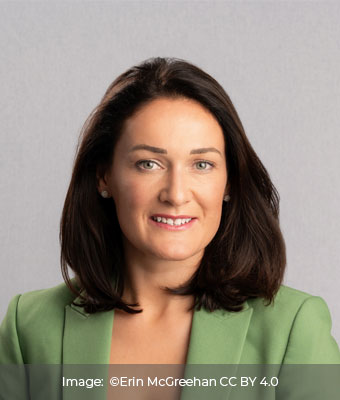
I appreciate the chance to raise an issue that deserves far more national attention. It is the future of volunteering in Ireland and the need for a national volunteering strategy that delivers for communities and for the country. I applaud my local volunteer centre in Louth. It does incredible work. Our volunteer centre recorded 40,000 volunteering hours last year, an equivalent of €1.2 million in economic value.
The team in Louth, like many across the country, is outperforming the investment the State provides. It is navigating staff absences for sickness, or whatever, rising operational pressures and a funding model that does not match the output. Some centres receive significantly higher allocations than others with the same or even fewer numbers of volunteers. This kind of disparity undermines the very idea of a national strategy.
Let us be honest, in that the last national volunteering strategy did leave a lot of gaps. We still do not have unified data tracking despite 29 centres independently collecting their own figures. We still do not have common key performance indicators, KPIs, making national comparisons impossible. We still have not invested in the kinds of modern system that would allow us to capture, measure and communicate the true value of volunteering. When proposals were made, like reviewing the national database or creating shared staffing supports, these did not progress. We need clarity because volunteer centres cannot plan on the basis of guesswork.
There have been positives. The Louth Volunteer Centre received €70,000 from the community recognition fund to purchase a minibus, which is something genuinely transformative for outreach and mobility. These are exactly the types of focused, practical support that work. Isolated wins, though, cannot replace structural reform. There is talk about innovation and volunteering is changing. People want flexible roles, skills-based roles, short-term opportunities and digital volunteering options. Centres are eager to pilot these ideas, but without a dedicated volunteering innovation fund, good ideas remain stuck in the "maybe someday" drawer. This is not how we future-proof a sector. Volunteering is not just a hobby for Ireland; it is a core pillar of community life. This applies to our festivals, sports clubs, Tidy Towns groups and local response organisations. Volunteering keeps people connected, develops skills and strengthens local cohesion at a time when this is badly needed.
I am asking the Minister of State to set out how the new national volunteering strategy will deliver fair and transparent resources across all volunteer centres, if it will introduce a standardised national reporting framework with common KPIs, if it will include a dedicated innovation fund to support modernisation, and how the Department intends to ensure staffing stability, including temporary cover, when absences arise. The people running these centres are doing phenomenal work with limited tools. I know the Minister of State has engaged heavily with them. They are delivering far more than their funding suggests. What they need from us now is ambition. This ambition needs to be backed by those resources, clarity and the new strategy that will be implemented. Ireland's volunteer sector is one of our greatest national assets. It is something we should be really very proud of and we should really treat it like it is a national asset.
I thank Deputy McGreehan for raising this very important matter. I thank her for speaking up, advocating on behalf of volunteering and referring to the forthcoming second national volunteering strategy. As the Deputy rightly said, in Irish society volunteering is part of who we are. It is woven into our communities, our culture and our sense of identity. From the GAA pitch to the soccer pitch to the parish hall and from community gardens to climate action, people living in Ireland have always understood that a strong society is built not only by Government or policy, but by people who look out for one another - our volunteers. The gift given by volunteers is priceless. It changes people’s lives for the better and makes our country and our communities, as the Deputy said, a haven and a place to call home. Volunteering keeps our communities resilient, compassionate and hopeful.
As Members will know, the first national volunteering strategy was launched in December 2020. It was developed in collaboration with stakeholders from the sector across the country. It is a whole-of-government framework to support volunteers, their representative groups and a range of not-for-profit organisations. It comprises five strategic objectives with 56 associated actions aimed at achieving its vision of "a society where volunteering is [not just] promoted, [but is] valued, facilitated and supported so that people can contribute to developing and maintaining vibrant, inclusive and sustainable communities". The Government has allocated increased funding each year to implement the strategy. Funding has risen from €3.1 million in 2020 to €7.3 million last year. This includes core funding for the network of volunteer centres across Ireland, and for Volunteer Ireland, a national advocacy body. Funding is also made available each year to support capacity building in volunteer-involving organisations, and to carry out research and projects to support the implementation of actions in that strategy. Additional supports for volunteering were provided during the Covid-19 pandemic and additional funding for the volunteering response to the Ukraine crisis, broadened to include integration generally, has been provided since 2022, with €1 million provided each year in 2023, 2024 and 2025.
As the first strategy comes to a close, and having engaged with the sector and met Volunteer Ireland, I note there is a commitment in the programme for Government to publishing a second national volunteering strategy. Our Department of Rural and Community Development and the Gaeltacht is currently working to develop that new strategy. A review of the approach taken in the first strategy has been commissioned from TASC, the Think-tank for Action on Social Change. That work is ongoing and is focused on consultation with the community and voluntary sector and other stakeholders. That is well under way. This continues the collaboration and co-operation that has characterised the current national volunteering strategy. I hope we will have a second one as well. I heard the remarks made by Deputy McGreehan and I will certainly feed them back into the review.
Our Department has supported volunteer centres across the country to consult with their volunteers and volunteer-led organisations and officials. We have seen officials from our Department travel across the country to receive feedback and input from each of the volunteer centres. Deputy McGreehan is right. She referred to County Louth, but the volume and value of what is being done by our volunteer centres across the country is extraordinary.
In addition to what I referred to already, meetings have also been held with national stakeholder organisations, including Volunteer Ireland, the Local Development Companies Network, Comhlámh and the Irish League of Credit Unions, among others, to hear their views. Officials are collaborating with The Wheel and Sport Ireland to consult with their many stakeholder groups on priorities for the new strategy. In conjunction with the Department of Children, Disability and Equality, young people involved in Comhairle na nÓg have also been consulted to gather their views on the issues. To ensure that the new strategy is a cross-governmental policy, a series of bilateral meetings will be held with Departments to ensure volunteering under each area is reflected.
In conclusion, while the process of consultation is still under way, I do not wish, as Minister of State with responsibility for volunteering, to anticipate the areas that may be focused on in the new strategy. I can guarantee to Deputy McGreehan, however, that the second strategy will build on the progress we have made through the first one, strengthening our long-established volunteering infrastructure and continuing to progress areas of best practice to ensure that support for and recognition of the value of volunteering is sustainable into the future.
I thank the Minister of State. I am glad to hear of the ongoing work and I appreciate he cannot pre-empt the second national strategy. I reiterate that we want to be ambitious about what volunteerism is and can be and to future-proof it. It is not just about standing in a gap, standing collecting money or standing ushering crowds. There are many different skills that we need now, including digital skills for community groups, sports clubs, etc. An incredible amount of intellectual capacity in our communities. If we provide the framework for people to be able to deliver those to community groups, sports clubs, etc., I think we can be hugely successful.
I reiterate the need for an innovation fund, for the KPIs and to ensure staffing stability, including temporary cover when absences arise. When people are out sick, that brings down the volunteering hours, and these things happen in organisations.
I thank the Minister of State for his engagement because this is hugely important. I say this constantly: if the volunteers in Ireland stopped working, the nation would be at a standstill. From Covid to flag days to looking after Ukrainian and other refugees across the country, it is volunteerism that brings us together and raises us up. It is a core pillar of our community life and brings people together. Every single cent is well spent. As I said, 40,000 volunteering hours were contributed in County Louth last year and this was the equivalent of €1.3 million of an investment. I am sure that not even a percentage of that amount was delivered by the Government to volunteering in Louth.
I thank Deputy McGreehan and I share her ambition in terms of recognising volunteering and its importance. We are ambitious. The Deputy is right that volunteering is the cornerstone of our society. Volunteers play a critical role and we are the better for it. It is articulated and reflected in the programme for Government commitment in terms of the second national volunteering strategy being published. As the Minister of State with responsibility in this area, I emphasise to the Deputy that we have a huge value in volunteering.
We are very much committed to supporting volunteers and to putting in place a programme of consultation to ensure that in the second iteration of the strategy as many voices as possible are heard. In that way, we will ensure that the objectives in the new policy will reflect the issues on the ground, as articulated by Deputy McGreehan today. Again, I express my appreciation, and that of everyone in the House, for the huge work and contribution being made by volunteers across the country. Deputy McGreehan mentioned County Louth in particular and it is the people from the wee county and across the country that are making our society a better place. For my part, as Minister of State with responsibility for this area, along with the Minister, Deputy Calleary, we are committed to supporting and celebrating volunteers and volunteering as an important part of who we are as a country. Volunteers are at the heart of the development of vibrant, sustainable and inclusive communities.
Bus Services
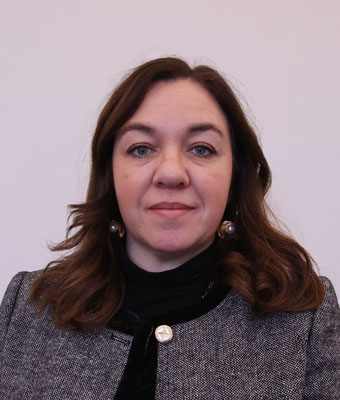
I am not sure if the Minister of State is aware of the issues with BusConnects in Chapelizod but that is what I want to raise today. It has made up a huge amount of my work over the last number of weeks. People in Chapelizod, Palmerstown and Islandbridge are absolutely at their wits' end with the 80 bus route that came into being in the middle of October. I have held two very large public meetings in that time. In fact, the first one was so large that I had to divide it into two groups. I took one group of people first while the other group waited outside and then I had the other meeting. There was a protest a few weeks later and then another meeting that was attended by over 100 people. This issue is affecting people's lives to a huge extent.
The former 26 bus service was the only bus route from Chapelizod into town. The bus used to go in all the way along the quays. I do not know whether the Minister of State is familiar with the area, but the bus used to go all the way along the quays to Bachelor's Walk and then cross over to Merrion Square. The route was changed and the bus now goes over to Palmerstown Park. As one person said, people do not want to go to Palmerstown Park because they live beside the Phoenix Park. Why would they want to go over there? There was so much pressure put on the NTA that there was a meeting with all public representatives in the area. The NTA said it would move the 130 service that comes from Clontarf and it could go out that way but people in Chapelizod, Islandbridge and Palmerstown do not want to go to Clontarf either. They want the route that they had that was working, albeit not perfectly, and meeting their needs. They had a huge protest a couple of Saturdays ago and are having another one this Saturday because they want the 26 back. They want it back because it worked although, as I said, it was not perfect.
I want to give the Minister of State an idea of what is happening for the people of Chapelizod. Mothers have been waiting for over an hour. One woman with a new baby and a toddler waited for an hour in lashing rain and then missed her GP appointment. There are children going in the opposite direction, out of town, who are getting detention because they are late for school so now parents are back in their cars, bringing them to school. There are people going to work who used to take 45 minutes to get in or to get home but it is now taking them over two hours. Quite frankly, they could walk from town to Chapelizod in less time if they were able to but the footpaths and cycle path are also a disgrace. My son goes to sports out in that direction and I had reason to cycle there to the protest recently and the footpaths and cycle paths are not fit for purpose and very dark. However, that is a side issue for today.
This is the Christmas period and I was speaking to a person earlier this week who told me that a number of people are missing out on Christmas activities and festivities because they just cannot get the bus back and forth. People with disabilities are being let down. It is an unmitigated disaster. The NTA told us at that recent meeting that the 80 route is still within the 2% margin for buses that do not turn up or are late but that is not the data that we have collected. It is 9% or 10% on a good day. When buses are not turning up and are not reliable, it affects people's lives. The previous contributor spoke about volunteers. All of these people have their busy, normal days and then they are in a situation where they have to spend their evenings and weekends protesting for a very simple public service that they pay for. It is not even that it is free; they are paying for it. They are so frustrated. I pay tribute to them because they have come out on dark, cold, rainy nights to public meetings and to protests. They have been mobilising and they should not have to do that. They had their Christmas tree lighting ceremony recently and the atmosphere was not as jolly as it could have been because their energies are going into the wrong things. They have a lovely community there and that is where their energies should be going.
What is are the NTA and the Minister for Transport going to do to reinstate the 26 bus route?
I thank Deputy Cummins for raising this very important matter. I hear her frustration. I am not particularly familiar with the area. The Minister for Transport, Deputy O'Brien, sends his apologies but he could not be here today. As the Deputy knows, the Minister is responsible for policy and overall funding but is not involved in the day-to-day operation of public transport services, for which the NTA is responsible. I heard the Deputy's articulation of engagement with the NTA, which has statutory responsibility for the provision of public passenger transport services nationally, as well as in Dublin. The NTA works with the public transport operators to deliver services and has day-to-day responsibility for same.
That being said, I assure the Deputy that the Government is strongly committed to providing all citizens with reliable, realistic and sustainable mobility options, and public transport plays a key role in the delivery of this goal. I agree with Deputy Cummins that residents and communities should not have to be protesting because it does sap energy. In order to support the Government's objective, the Department secured €940 million of funding for public service obligation, PSO, and TFI Local Link services in the recent budget, a 43% increase on last year's budget of €658.4 million.
Regarding Chapelizod and the issues of concern raised by the Deputy on behalf of residents regarding the performance of route 80 introduced under phase 7 of the BusConnects network redesign, I am informed that BusConnects, which I see in my own city of Cork as well as in Dublin, will be transformative. It is a significant level of investment in the bus system, with the aim of providing better bus services across our cities. It is the largest investment in the bus system in the history of the State.
On 28 November, following customer feedback and engagement with public representatives, the NTA announced a two-stage plan to revise route 80. I have heard everything Deputy Cummins said this afternoon and am aware that my reply may not give her and the residents the solace they seek. I am informed that from early 2026, route 80 will operate from Liffey Valley to Chapelizod on a revised alignment along the quays, crossing the Liffey at O'Connell Bridge rather than Bridge Street, and running through College Green to South Great George’s Street. This temporary measure will improve access to the city centre ahead of the planned pedestrianisation of College Green. Later, in quarter 2 of 2026, route 80 will link with route 130, continuing along the north quays and O’Connell Bridge to Eden Quay and northward through the city centre to Clontarf. This alignment will maintain a ten-minute peak frequency and provide new connectivity to the Luas green line at O’Connell Street and the DART at Connolly Station, offering passengers more options for onward travel. I am aware that the Luas green line is not operational today which is causing bother for commuters and I apologise to them. The NTA acknowledges that for a variety of reasons, including city centre congestion, route 80 did not meet expectations following its introduction. When rolling out phases of the BusConnects network, the NTA commits to monitoring new services, identifying issues, and implementing fixes where appropriate. These changes reflect that commitment.
In planning the redesigned network, the NTA considered Dublin City Council’s plans to transform College Green and Dame Street into a pedestrian-friendly plaza, which will restrict east-west bus movements through College Green. This was why route 80 was originally routed via Bridge Street. However, customer feedback indicated that continuing along the quays to O’Connell Bridge would provide greater benefits, including improved bus priority measures and enhanced connectivity to O’Connell Street and onward transport services. The NTA has reviewed this feedback and agrees that the changes make sense. While the NTA considered terminating route 80 at Merrion Square, replicating the former route 26, it concluded that linking routes 80 and 130 offers greater benefits, including improved interchange to bus, Luas, and rail services, and better access to the docklands and Connolly Station. Those travelling to Merrion Square will continue to have multiple onward connection options.
It is very positive that the bus is not going to go up Bridge Street because it can take so long to get up that hill. People are just waiting there and it is a complete and utter waste of time. However, the issue is that there was no public consultation about changing the route to include the 130. Part of the overall difficulty is the time at which consultations for BusConnects were held. Not many people engaged because they did not know how difficult the change was going to be.
Consultations happened during the Covid pandemic and it was very difficult to imagine a bus route when you were not exactly sure how that was going to go. I am very glad that the NTA is monitoring things and has admitted that this has not been what it expected and hoped it would be. That is also the experience of the people living in the area.
As the Minister of State has outlined, we had a meeting with the NTA. I asked whether there was something wrong with the route 130 that meant it had to be fixed. I did not get an answer to that. However, if a bus route is working, why not leave it? Why do we have to link things up? I disagree that going to Merrion Square would be a difficulty. I do not understand what the difficulty would be. It could go down Hawkins Street. I appreciate that the Minister of State's expertise will come into play when BusConnects starts in Cork but there is a possibility of getting to Merrion Square through Hawkins Street. There are ways around this.
The NTA may be experts on buses but I would argue that the people who have to use them every single day are experts, too. The NTA should be listening. I look forward to meeting the NTA in the next couple of days. I am thankful that it finally agreed to meet Deputy Gary Gannon and me; we are going to meet it next week. I will be bringing this issue up again because there is still frustration. I am not sure the solution the NTA has provided is going to be acceptable to the community. In fact, I know it will not be because they are out protesting again on Saturday.
I thank Deputy Cummins for raising this matter and for her co-ordination and engagement with residents. I understand her frustration. The NTA has announced that it will fast-track delivery of a planned walkway and steps from Chapelizod to bypass the Chapelizod Hill Road. That will make it easier for residents of Chapelizod village to access bus services, including C spine services. As the Deputy will know, the walkway forms part of the BusConnects Lucan to city centre scheme, which has received planning consent from An Coimisiún Pleanála. Construction is scheduled to commence next year.
In her reply, the Deputy said that she was going to engage with the NTA soon. It is important that there be engagement on the redesign of the network. It is critical that the NTA engage with people living in the area, commuters and public representatives. We will never all get what we want. The Deputy knows that herself.
I will keep trying, though.
As someone who has engaged on BusConnects in Cork, I genuinely appreciate where the Deputy is coming from. I will bring her views back to the NTA and the Minister, Deputy O'Brien. The issue she raises is that commuters have genuine concerns. The NTA has a duty and obligation to listen and to continue to engage. I will certainly convey the points the Deputy has raised here this afternoon because the whole point of BusConnects and investment in public transport is ultimately to make whatever redesigned network we get easier for people to use, to get more people onto public transport and to ensure there is connectivity providing direct links for residents, commuters and those working in the city centre and elsewhere.
I commend Deputy Cummins on her work. She has had a number of public meetings on this matter and has had active engagement. I hope the NTA will listen to and engage with us as public representatives. We are elected to speak on behalf of residents.
I hear what the Deputy has said about the residents and I will take her views back.
Ports Policy
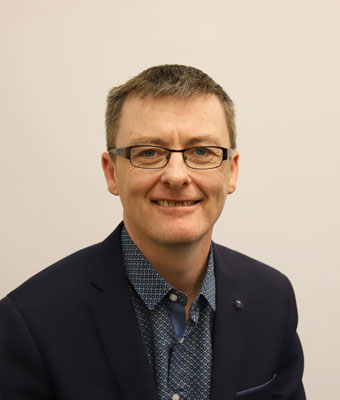
The Port of Waterford is a critical infrastructural asset and has very important potential to support Ireland's growing offshore renewable energy sector. This would obviously create jobs across the south east but it would also ensure the State can meet its climate action targets. I have met the chairman and representatives of the port several times over the last number of years. They have very ambitious targets and plans. They are looking for State support. Like Rosslare Europort, it is a very important asset for the south east. I know Rosslare Europort also has plans in respect of offshore renewable energy but the two ports complement each other because the Port of Waterford is seeking to support offshore wind turbine staging, assembly and maintenance operations. It is seeking to create a regional supply chain ecosystem for marine engineering, fabrication and component servicing. Investment in the port and in offshore renewable energy is important for job creation and skills development in renewable technologies and maritime logistics.
I have also spoken to the president of the South East Technological University, SETU. There is collaboration between a number of State agencies in relation to the Port of Waterford as well. If you have an offshore renewable energy terminal and offshore renewable energy potential, with Rosslare Europort and the Port of Waterford playing their different parts in that, there will also be huge potential for research and development. That is where the links to SETU come in. Courses there could lead to the creation of very high-quality jobs in the south east for graduates coming out of this regional university.
This is a no-brainer. When I met the port representatives, they were very enthusiastic about this. They want it to work. They know how important renewable energy is. Whether people like it or not, we all know that we are going to have to move away from dirty fuels. Renewable energy is the future. Smart countries, smart regions and smart investors are making those investments. The south east wants to be ahead of the curve and it wants to be part of that. The people I have spoken to in this area and in the port say that there is potential for hundreds of millions of euro of investment over a number of years if the right decisions are made.
I am a bit concerned that other ports seem to be ahead on the funding curve. I am not quite sure why that is the case. A lot of work has gone into plans. I have received PowerPoint presentations and other presentations from the board. Together with our MEP, Kathleen Funchion, my party leader and I visited the port and got a similar presentation. The port is certainly up and at it, lobbying and looking for funding, but it does not seem to be getting the funding that other ports have got. Will the Minister of State respond to that point and set out his perspective on the Government's plans to support the Port of Waterford and, indeed, Rosslare Europort? The Government should look at the whole region, those two ports and linkages with SETU as a really big opportunity for the south east to be a leader in offshore renewable energy. The ports and university could complement one another, create high-quality jobs and assist the State in meeting its crucial climate action targets.
I thank Deputy Cullinane for raising this very important issue. We both share an ambition with regard to offshore renewable energy, investment in job creation and collaboration with the South East Technological University. I am taking this matter on behalf of the Minister. I apologise that he is not here.
At the beginning, I will reaffirm that the Government is committed to facilitating the development of all commercial State ports, such as the Port of Waterford, to develop enabling port infrastructure for the offshore renewable energy industry. In 2021, the Government recognised the need for additional port infrastructure in a policy statement on the facilitation of offshore renewable energy, ORE, by commercial State ports in Ireland. This policy statement sets out that a number of ports will be required for deployment activity and a multiple will be required for operations and maintenance activities. The Government endorses a multiport approach to offshore renewable energy deployment on the basis that this will maximise the attractiveness of Ireland for offshore renewable energy industry stakeholders seeking to invest.
In September of this year, the Port of Waterford took a significant step in submitting its planning application for a development at Belview. Ministers and officials in the Department of Transport welcome the submission of the Port of Waterford’s planning application. If the port is successful in its planning application, it will enhance the port’s ability to start advance conversations with investors around the financing of the project.
The scale of the proposed development of infrastructure at Belview is significant. The project will consist of a 250 m quay wall extension with 2 ha of quayside space. The port will also provide new quayside operator support facilities with workshops and warehouses, berthing pontoons and two separate three-storey office and staff buildings for offshore renewable energy operators. This will allow the port to act in a supporting role for the construction of offshore wind farms, particularly through the storage of ancillary components for offshore wind, such as subsea cables. The marshalling and assembly of large-scale components, such as foundations, blades and tower sections, is expected to take place in other ports.
Along with the Port of Cork and Rosslare Europort, the Port of Waterford is strategically located to service the south coast designated maritime area plan approved by Government last year. The first auction for the south coast designated maritime area plan, SC-DMAP, for the Tonn Nua site took place in November. This auction successfully procured 900 MW of ORE capacity to be delivered by ESB and Ørsted, marking a significant milestone in Ireland's offshore renewable energy ambitions.
Subsequent auctions are due to take place in the coming years, providing a sufficient pipeline of projects for ports to service. This is expected to bolster the case for investment in ports infrastructure and enhance the viability of ORE port facilities such as those at the Port of Waterford.
The port is also ideally positioned to support phase 1 of offshore renewable energy development currently in the planning system. The national ORE DMAP, due by 2027, will further enhance the case for investment. The objective of the national DMAP is to designate sufficient maritime area to deliver a target of 20 GW of offshore renewable energy by 2040, inclusive of the 5 GW target for 2030.
Regarding investment in the Port of Waterford, the current national ports policy does not allow for direct Exchequer funding for ports. However, as Deputy Cullinane knows, this policy is currently under review. I am aware the Department plans to conduct a public consultation on a draft version of the revised national ports policy in quarter 4 of this year, subject to the completion of the relevant associated environmental assessment of the draft documentation. Once complete, it is hoped to bring the revised NPP to Government in the first quarter of next year. Again, I thank Deputy Cullinane for highlighting the importance of the Port of Waterford. As he rightly said, it is of strategic importance to the south east.
I thank the Minister of State for his response. I agree that the submission of a planning application is obviously a very important first step and is a very clear statement of intent by Waterford Port in this area. The Minister of State echoed some points I made earlier by saying that Waterford should work closely with Rosslare Europort, and, indeed, Cork Port, because the DMAP for that whole area obviously creates huge opportunities for offshore renewable energy.
While the planning application is going through, it is not a case then for the Department or Government to sit back. Now is the time to start planning. I have been calling, first, for the Government to designate Waterford Port as a regional ORE hub. That could be done and it would be important. Again, it would a statement of intent by Government and by the Department. There is a working group in place and I support and welcome that, but at this point it needs to be established into a much clearer multi-agency task force that can start to co-ordinate the planning, infrastructural investment and stakeholder engagement. It also needs to look at what will be needed down the road, which is a targeted funding stream for all of the upgrades and the buildings the Minister of State cited in his contribution. It also allows SETU to work with the port to invest in skills and training programmes for the south east. Therefore, there is a lot of potential, but the potential will only be realised if all of the stakeholders are working to a plan, which is why having a task force, with all of those stakeholders working to a strategy, makes sense.
My fear is that the Government will say there is a planning application submitted and it will wait and see what happens with that before it comes to look at it. We may lose time. From my perspective, now is the time to take the bull by the horns. Let us get the work done and make sure, if the planning application is successful, that we can then immediately secure the funding and start the works needed.
I thank Deputy Cullinane again. I reiterate that Government remains committed to supporting our commercial State ports, including the Port of Waterford, in their plans to build enabling infrastructure for ORE. It is my understanding that the Department of Transport has established the ORE ports co-ordination group to facilitate discussion with both the commercial State ports and other ports and updates in the ORE sector. This group provides a forum for the Department to provide both Government and industry with presentations on the sectors and on the ports and allows the ports to raise any issues that may be of interest or concern to them that they may be encountering in their projects in their ports. This is in addition to the Department's role as a key member of the offshore wind delivery task force, which is chaired by the Minister for Transport and the recently established ORE Government clearing house hub, which is chaired by an Taoiseach. The Department is actively engaged with industry stakeholders with a view to maximising all potential financing options for ports, which includes financing partners such as the European Investment Bank, the Ireland Strategic Investment Fund, and the Strategic Banking Corporation of Ireland.
Regarding our national ports policy, it is important to recognise that the draft is due for a second phase of public consultation very soon. I, as Minister of State, and all of my colleagues will welcome submissions from all interested parties on the development of a national ports policy during a second phase of the consultation. The point we are making is that the proposed developments at the Port of Waterford will build upon developments, for example, in the Port of Cork, link with the proposed developments in Rosslare Europort, and would provide us as a country with significant port infrastructure to allow us to meet our ambitious ORE targets. I assure the Deputy that we will be committed to this and Government will work with all the different interests. I thank him for raising the matter because it is a very important point.
Youth Services
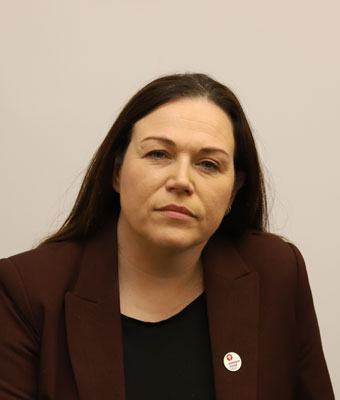
I thank the Minister of State for being here. This is not meant disrespectfully to him but I regret that the senior Minister is not here. This is a practice that I do not think is brilliant. Again, I thank the Minister of State for being here but it is not good practice for senior Ministers to never be in the House to take their Topical Issues, which frequently is my experience.
Some 33% of the population of Balbriggan is aged 17 years or under. We call it the youngest town in Ireland because the facts back us up. It is a town that is blessed, and I want to say blessed, with a very vibrant, young population. A report was conducted recently on the spaces and youth services in Balbriggan and young people themselves had an opportunity to tell us what they were thinking and what they needed. What they say they need and what they want are safe spaces, places where they can be and hang out. Not every young person plays sport. There is not always something but they do not want to hang around either. They want to have somewhere to be where they can be safe and where they can hang out.
I was in Foróige in Balbriggan recently for Oíche na hÓige and I spoke to Aisling O'Connell, Antoinette Kelly and Amanda Cullen about the work they are doing. I am a big fan of the work done by Foróige workers, as I sure the Minister of State is himself. I have seen what they do and the real difference they make in people's lives. I cannot understand why, in the youngest town in Ireland, funding for youth work and youth services is going entirely in the wrong direction. For example, we recently lost three youth workers. That is 100 to 150 young people who need services and support who will not now be in a position to get it. The funding for youth work in Dublin is barely meeting the baseline for existing levels of service. When you have a growing population, even maintaining existing levels of service means you are going to fall behind. The Government is not even doing that. That issue about underfunding for youth work is more acutely felt in towns like Balbriggan where we have a large population of young people. Looking at the NDP, we see that youth services could, at the very best, be described as the poor relation.
We say on the one hand that we do not want young people hanging around. If they hang around too much we tell them that is causing antisocial behaviour. They get lectured eight days a week by people like me and, with no disrespect to the Minister of State, like him about spending too much time on screens, but if we are not giving them a viable option, what other choice do they have? I recently had two graduates of the Leadership for Life programme run by Foróige doing work experience in my office and they blew me away. When I spoke to them, a lot of the confidence they had and the capacity to come into a place like this to spend a couple of days working came from the input from the people in Foróige. I am concerned that, in a town like Balbriggan, Foróige workers needs permanent places to be. They need multi-annual funding and they need to know when they start a programme, like the UBU programme that they can keep running it. Amanda needs to know, when she starts the UBU programme, that she is going to be able to run it again and keep running it. That requires a dedicated funding stream.
Will the Minister of State please ask the Minister, Deputy Naughton, to come to Balbriggan and visit Foróige? There is a new place going to be opening in Castlelands Community Centre, but if she could visit the existing premises, meet some of the young people and see the good work is being done, that would inform her work a bit better.
I thank Deputy O'Reilly for raising the matter. As a former teacher and director of adult education, I share a lot of what she says. Not everyone plays sport and some people need that safe space to be themselves and to be creative. As a citizen, I concur with the Deputy. As a Minister of State, I will certainly articulate the views she shared. I acknowledge the Minister, Deputy Naughton, is not here today.
I take this opportunity, on the her behalf, to set out the provision in respect of youth work in Balbriggan, which the Deputy articulated very eloquently. The Deputy made the important point that 33% of the population of Balbriggan is under the age of 17. That percentage is quite high.
Supporting youth services and youth work is an absolute priority for the Department of Education and Youth, which is committed to ensuring that young people in Balbriggan and across the Dublin and Dún Laoghaire Education and Training Board, ETB, area, and, indeed, across the country, have access to valuable resources and opportunities that enable them to thrive.
The Deputy mentioned the UBU Your Place Your Space scheme, which is the Department's largest funded youth scheme. It targets young people in the age group of ten to 24 years who are identified as marginalised, vulnerable and at risk of not flourishing. The scheme provides a foundation for local youth organisations to deliver tailored supports that meet the needs of their communities. Last year, €51 million was allocated to the scheme, with more than €9 million going to Dublin and Dún Laoghaire ETB for its delivery.
The Deputy rightly praised Foróige in Balbriggan. As Minister of State with responsibility for community development, I will happily visit the organisation with her. It is delivering the UBU project from the Castlemill Education Centre. Everyone here, including the Ceann Comhairle, will pay tribute and testify to the importance of Foróige. In the case of the Balbriggan branch, it delivers needs-based, targeted youth services that support young people in their social, personal and educational development.
For me, as Minister of State and as a former teacher, it is all about young people. The Deputy referenced screens but it is about more than just screens. It is about ensuring the safe spaces, positive relationships and meaningful opportunities young people deserve and need can be provided in order that they can grow, develop and flourish. The strength of the UBU project lies in having a place-based and needs-led approach. It is also about the tailoring of services, including in Balbriggan, to allow young people to be supported and empowered. We are all struck by the power of young people. I join the Deputy in praising and supporting the senior youth worker and the two other youth workers in Balbriggan for their engagement, commitment to inclusion, helping to give young people a sense of resilience and confidence and teaching them skills, not just for life but also to go on to work and further education.
To underpin that work, the Department allocated €142,560 in UBU funding to Foróige Balbriggan last year. Recognising that organisations often face additional pressures, the Department also operates the Resilience and Effectiveness initiative. This measure is designed to strengthen UBU-funded organisations by addressing specific challenges, whether financial or operational, and enabling them to expand service provision where demand is high. Last year, Foróige Balbriggan received an additional €60,417 under this initiative, following a recommendation from Dublin and Dún Laoghaire ETB. In addition to Foróige, the Department also funds Remember Us Balbriggan under the UBU scheme. Remember Us provides a vital service for young people aged ten to 24 in the north Dublin area.
The Deputy has a copy of my reply, so I will not use the time remaining to me to go through the rest of it. The point I want to make is that there is more that unites us than divides us on this important issue. I will convey the Deputy's views to the Minister. I hope the Department will actively continue to review and strengthen youth work services across the country to ensure they are responsive to the evolving needs of young people, including in Balbriggan, and that they are effectively resourced to enable them to provide the positive outcomes for young people that they deserve.
The Minister of State certainly can consider himself invited to Balbriggan. I would absolutely love to show him around and to show off. There is nothing we like more than showing off the good things in our constituency. This is a good thing in my constituency and I would like to show it off.
The Minister of State mentioned the numbers in his response and I can see those figures on the page in front of me. However, they do not match up with the growing need in the area. The Government says it wants young people to be able to access the services and all the rest of it but I do not know how it reconciles that with Balbriggan’s loss of three youth workers. That means 100 to 150 young people who need support will not get it.
The Minister of State referred to the UBU Your Place Your Space scheme, which is absolutely fantastic and does exactly what it says on the tin. It helps young people who are marginalised or vulnerable and at risk of not flourishing. That is a great phrase. That is the problem: these young people are at risk of not flourishing without this intervention.
I recently visited Remember Us and Foróige and heard from the young people there exactly how valuable the services are to them, how much they need and appreciate them and how much more could be done with more investment. That is the key here. We must ensure there are safe permanent spaces where young people can access services. We must ensure youth workers are properly funded. We also must ensure things like auto-enrolment are catered for in the funding because that is a right those workers have as much as everybody else. While I absolutely welcome the money that has been given to date, there is a growing need and the budget must grow with that need.
I thank the Deputy again for raising this important issue. I assure her that the Department officials will continue to actively engage with Dublin and Dún Laoghaire ETB, local youth services and young people themselves to ensure there is the appropriate provision for young people in Balbriggan. This commitment builds upon the significant work already undertaken through targeted funding, collaborative initiatives and the overarching efforts to strengthen youth services and expand opportunities for inclusion and development.
I will not lie to the Deputy and say there are no challenges; of course there are. The Department of Education and Youth is committed to remaining steadfast in its support for inclusive, needs-based youth work that empowers young people to thrive and contribute positively to their communities. The Department and the Government will maintain a proactive approach to ensure services in Balbriggan and across the country remain responsive, accessible and impactful for all young people.
If the Deputy sends me an invitation to Balbriggan by email, I will happily go there. I have huge admiration for the work being done by Foróige. As Minister of State with responsibility for community development, I recognise the need for and importance of engaging in a collaborative conversation, not just in a back-and-forth way in this House but locally as well. I look forward to visiting the services with the Deputy. I ask that she send me an email. I assure her I will go out there.
The Minister of State will have that email before day's end.
I will not make it out before Christmas. We will go after Christmas.
Would Members believe I was a member of Foróige back in my youth?
The Ceann Comhairle has not lost the skills.
It is not so long ago.
I thank Deputy Cullinane. How nice of him to say so.