Crime Prevention
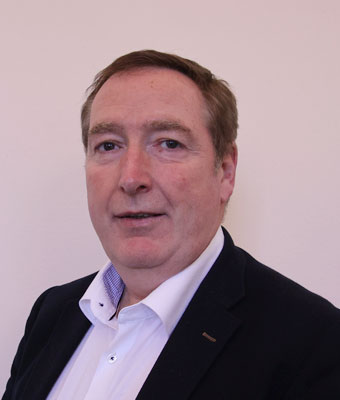
I rise deeply saddened by the horrific murders that occurred in Edenderry on Saturday evening. Two innocent lives were taken - Mary Holt, aged 60, and four-year-old Tadhg Farrell. I wish to pay my respects to Mary and Tadhg. May they both rest in peace and may their memory guide our response through this moment of darkness. I visited the scene and it is something I will never forget. A room recently alive with an excited young heart giddy with the joy of Christmas, toys imagined, stockings planned and innocence undisturbed now stands as a haunting reminder of a future robbed. The silence was heavy. The air felt cold carrying the memory of a terror no child should ever face.
The people of Edenderry are not just grieving, they are angry, heartbroken, traumatised and confused. I firmly believe the true weight of this tragedy will fall most painfully when the town sees a tiny white coffin - heartbreakingly small - carried to its final premature resting place. In that moment, the darkness of what has happened will become real in a way none of us ever wished to witness.
This did not come from nowhere. This is down to drugs and the drugs trade. It is glamorised in music, film, social media and entertainment. It is portrayed as fast money, status, power and designer labels. Hard working people see individuals who have never worked a day in their lives live with the trappings of wealth. They ask themselves, "What am I doing wrong?" Young people see this and believe it is success. However, the truth is not glamour. It is terror, drug debt, threats, children being groomed into criminality. It is soulless, selling misery, addiction and violence for profit. It destroys families, businesses, relationship and hope. It underpins so many of the issues we debate in this Chamber - housing, poverty, mental health, domestic abuse, crime and inequality. The raw reality of that world without filters or fantasy burnt a four-year-old child alive on Saturday. That is the cost; that is the truth.
While nothing can undo this tragedy, we can influence what happens next. I have complete confidence in the gardaí. They will find those responsible. When they do, the full weight of the law must land heavily on them. Justice must be seen, and justice must be felt. However, justice must also mean prevention. It must mean restoring confidence, protecting children and rebuilding peace.
I sincerely acknowledge the work the Minister for justice is doing in his Department in terms of gardaí recruitment. It matters and I thank him for that. However, given what has happened in Edenderry, I ask the Minister to request the Garda Commissioner to examine the establishment of a dedicated task force for Edenderry focused specifically on dismantling drug-driven criminality. I am not directing but I am respectfully asking that it be considered.
People deserve protection in life, not only in law. They deserve peace in their homes and on their streets. They deserve the right to enjoy the simple things like sitting in their own sitting room to watch television without fear. We owe that to Mary and little Tadhg. We owe that to every resident in Edenderry.
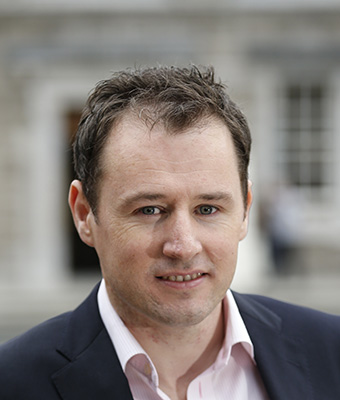
I thank the Deputy for raising this. On behalf of the Minister for Justice, Home Affairs and Migration, I thank him for addressing it on the floor of the Dáil. I join the Minister, Taoiseach and the Deputy in strongly condemning the deliberate callous attack on the house in Edenderry, County Offaly, over the weekend which tragically resulted in the loss of the lives of Mary Holt and young Tadhg Farrell. I join with the Deputy in extending my deepest sympathies to the family and friends of Mary and young Tadhg on this absolutely unacceptable travesty and loss of life. There is no place in a civilised society for such heinous violence.
An Garda Síochána has commenced a murder investigation into all the circumstances surrounding this fatal attack. I join An Garda Síochána in appealing to anyone with information to come forward. The gardaí have given assurances they will relentlessly pursue the violent and dangerous criminals for this murderous attack. They will be brought to justice. I appreciate that this incident will be shocking to people in the community in Edenderry and across the country and may naturally give them pause for concern about their own safety. I reassure them that the gardaí are following a direct line of inquiry and they have a strong record of bringing dangerous and violent criminals to justice.
It has been well reported that gardaí suspect criminals involved in the drugs trade in the midlands may be behind the most heinous act. Tackling the scourge of drug dealing and targeting the work of organised crime groups who inflict intimidation, violence and misery on families and communities across Ireland is a top priority for the Government and An Garda Síochána.
The Deputy mentioned Garda resources. The Government is investing record amounts in An Garda Síochána to ensure the Garda Commissioner has the resources he needs to tackle the illegal drugs trade. A Garda budget of €2.59 billion for next year will fund the recruitment of up to 1,000 new gardaí, 200 more Garda staff and a doubling of the Garda Reserve to over 600 next year. A total of 794 garda recruits entered the Garda College across 2025, the largest intake in a year since 2018. Significant numbers of gardaí have attested from the Garda college throughout this year and as more probationary gardaí attest across 2026, all communities will see a benefit as they are assigned out to their stations.
Ultimately, the Commissioner will make the decision on where Garda resources are assigned but the Minister is assured that a number of factors are taken into account, including crime trends in an area, demographics and local resourcing requirements. I assure Deputy McCormack that in relation to the heinous and murderous act we saw at the weekend that resulted in the tremendously tragic and unacceptable loss of lives, no stone will be left unturned. Every avenue will be explored to make sure that those responsible are brought to justice.
I want to acknowledge the wider trauma surrounding this event. Another woman remains in hospital with serious injuries. Her life has been changed forever and she will need support in ways we cannot measure yet. I also want to acknowledge the first responders, gardaí, paramedics and Offaly fire service officers who entered that scene. They faced what most people could not. They acted with courage and humanity and they deserve recognition and support for the trauma they now carry quietly on behalf of us all. Neighbouring families are shaken. Children in the estate are frightened. Homes that should be now filled with Christmas excitement are instead filled with fear and unanswered questions that no parent should ever have to answer.
Edenderry Garda station does not operate on a 24-hour basis. Edenderry now needs reassurance through action by way of a visible policing presence and strengthened Garda numbers. Criminals do not operate on office hours and safety should not either. I ask that Edenderry Garda station would operate 24 hours a day. Let this tragedy be the moment that confidence is rebuilt in Edenderry, not the moment when we simply mourn or move on.
I join Deputy McCormack in extending my thoughts and prayers to the lady who was injured in the attack. I wish her a speedy recovery. Deputy McCormack's point in relation to Garda resources in Edenderry and Offaly is massively important. I understand that at the end of October, there were 399 gardaí assigned to the Laois-Offaly Garda division, a 45% increase on ten years ago. They are also supported by 51 Garda staff who provide really important support to gardaí and free them up to focus on front-line policing duties. Eight probationary gardaí were assigned to the Laois-Offaly Garda division this year and 12 probationers were assigned last year. It is also worth noting that An Garda Síochána operates a divisional model which means that it uses all of the resources within the division, not just the Garda station within a particular community, to respond to local demands on the service it provides.
We can see throughout our communities the damage and devastation that organised drug crime groups heap on society, not least in Deputy McCormack's local community over this past weekend. Tackling the issue of drug-related intimidation is a high priority for An Garda Síochána. Nominated Garda inspectors are available throughout the country through the drug-related intimidation reporting programme to assist victims of intimidation. In addition, the drug-related intimidation and violence engagement, DRIVE, project, which launched earlier this year has established effective systems for assisting those affected by drug-related intimidation. There are over 400 publicly-funded drugs services, including family support services, across the country which can advise and support people affected by drug-related intimidation. Family support services are critical because drug-related violence nearly always becomes an issue for the whole family. There is more information available for anyone who needs support on the [driveproject.ie] website
I thank Deputy McCormack again for raising this today and assure him that the Minister for Justice and Home Affairs and the Garda Commissioner will do everything they can do bring the people responsible to justice.
Departmental Schemes

The warmer homes scheme is supposed to protect the most vulnerable households in our society, including older people, low-income families, people living alone and those wholly dependent on supports like the fuel allowance. Right now the scheme is failing them and it is about to get far worse. I will outline the current reality. On 4 November this year my office contacted the SEAI on behalf of a vulnerable client who applied for the warmer homes scheme in October 2024. Almost 14 months later she is still awaiting a survey or an allocation. The timelines are staggering. It is taking 14 months to get a survey, 26 months for works and another three months for post-works inspection. This is not a functioning scheme. We already have 20,000 homes on the waiting list. The Minister of State knows as well as I do that these are not discretionary upgrades. These are essential measures for people at risk of fuel poverty.
The critical point that I want to emphasise is that the number of people on the fuel allowance, the key qualifying criteria for the warmer homes scheme, is expanding dramatically. From next year those on the working family payment will be eligible. That is an additional 50,000 households, bringing the total number of fuel allowance recipients to more than 500,000. If nothing changes, the warmer homes scheme waiting list will surge even further because eligibility will expand faster than delivery capacity. This is not a projected problem; it is an inevitability. The SEAI currently has no action plan, no surge capacity, no backlog reduction strategy and no timeline for clearing the existing 20,000 cases. Money is not an issue but delivery is and telling people that we have increased funding is meaningless if funding does not translate into workers on roofs, contractors on the ground, insulation going into walls and people living in warmer homes.
When will a full, published action plan be produced to address the backlog of 20,000 homes? What contingency planning has been done for the additional 50,000 homes that will become eligible under the expanded fuel allowance scheme? Will the Government commit to a maximum six-month waiting time for a survey for any applicant on the fuel allowance? Will the Department intervene directly to ensure that the SEAI increases contractor and surveyor capacity immediately? We cannot keep telling vulnerable people to wait three winters for a warmer home. We cannot expand eligibility by 50,000 households while pretending the scheme can cope as it stands. This requires urgency, action and leadership now, not later.
I thank Deputy Murphy for raising this issue today. The climate action plan includes targets to retrofit the equivalent of 500,000 homes to a building energy rating, BER, of B2, cost optimal, and the installation of 400,000 heat pumps in existing homes to replace older, less efficient heating systems by the end of this decade. The national retrofit plan sets out the Government's approach to achieving those targets. The programme for Government 2025 contains a number of commitments in relation to retrofitting. They include delivering more B2 equivalent home retrofits each year from 2026 to 2030, with a focus on lower-income households, improving the provision of grants and financing models for home owners, including older people who wish to retrofit, enhancing energy efficiency and reducing costs, as well as supporting group retrofitting projects.
The warmer homes scheme aims to improve the energy efficiency and warmth of homes owned by people at risk of energy poverty by providing fully funded retrofits. The scheme is operated by the SEAI on behalf of the Department and is funded through carbon tax receipts and the European Regional Development fund, ERDF Last year saw a record spend of almost €230 million under the scheme.
As reported by the SEAI, this resulted in 7,743 upgrades being provided to lower-income households. This year's budget includes an allocation of €250 million for the scheme, which is a €50 million increase. That represents an elevenfold increase on the 2020 expenditure figure.
The scheme has been delivering a greater number of deeper and more complex upgrades in recent years, and this is reflected in the average cost of upgrades, which the SEAI indicates has increased from €2,600 in 2015 to over €29,000 this year. These deeper upgrades mean that more lower-income households are benefiting significantly from warmer, healthier and more comfortable homes with lower energy bills and reduced emissions.
With regard to waiting times, which I know are key to the point the Deputy is making, increased awareness of the multiple benefits of retrofit and improvement to the warmer homes scheme is driving increased levels of demand for the scheme, with just over 45,000 applications received over the period from January 2022 to the end of October 2025. Over the same period, more than 24,500 homes have been upgraded under the scheme. We had 45,000 applications and in the same period, 24,500 homes were upgraded.
For homes that have been allocated to a contractor for works under the scheme so far this year, the average waiting time was just under 15 months. Once a home is allocated to a contractor, the completion times can vary based on the types of works being undertaken at a home and the lead time for ordering and delivery of materials and products, such as windows, are factors. Homeowner availability for upgrades in their homes can also be a factor. The average waiting time from application to completion of upgrade works to date in 2025 has been 21 months for the worst performing homes and 22 months for better performing homes. It is important to note that these averages represent a significant reduction since the first half of 2022, when the average waiting time was 27.5 months.
The reduction in waiting times follows a range of measures introduced by the Department and the SEAI, including the allocation of additional staff to the warmer homes scheme, a significantly increased budget allocation and active contract engagement with management by the SEAI to increase contractor output, as well as actions to address ongoing supply chain pressures. A pilot delivering additional homes from the warmer homes scheme waiting list under the energy efficiency obligation scheme was introduced last year.
Importantly, the SEAI launched on 8 December a procurement process to establish a new €1.2 billion contractor panel to be in place by quarter 2 next year. This will support continued growth, with a focus on scale, quality and output under the scheme. Department officials continue to work with the SEAI to further accelerate and maximise the output of fully funded energy upgrades with the objective of minimising wait times.
I thank the Minister of State for his reply, which alluded to a 21-month waiting time. Correspondence sent to me directly by the SEAI confirmed that the waiting time is somewhere between 24 and 26 months. People came into my office in quarter 3 of 2024 and as of now, 14 months later, the SEAI cannot tell me when these homes will be surveyed. I have people in their 90s who applied in quarter 3 of 2024. They will not be alive when their house is due for a survey.
I appreciate the Minister of State's reply, but there is no concrete or time-bound plan. Nothing will change for people who are currently waiting for years for essential upgrades and insulation. I cannot understand why we cannot get the surveys done quicker. Not every house needs a heat pump or a new set of windows. Sometimes houses just need insulation. I cannot understand why we cannot deliver insulation upgrades within six months. The expansion of the fuel allowance to those on the working family payment would see a surge of 50,000 new houses qualifying for the warmer homes scheme. If we expand eligibility without expanding delivery capacity, we will simply deepen frustration, lengthen queues and worsen energy poverty.
There are, I say again, 20,000 homes on the waiting list. If nothing changes, these numbers will only go in one direction, which is upwards. I am telling the Minister of State that I will be here again next year and there will be 30,000 homes on the waiting list. It will take 16 or 18 months for a survey. It will take more than three years for full completion of works and vulnerable people cannot wait for three years. We need a backlog reduction task force, emergency procurement of surveyors and contractors and a fast-track system for the elderly and particularly high-risk households. This is about dignity, fairness and the basic right to a warm home. We need timelines, capacity and an action plan or the scheme will continue to fail the very people it was created to protect. People in their 90s who applied in quarter 3 of 2024 will not be alive when their houses are due for a survey.
I will relay the urgency of the need to increase the capacity to the Minister and the Department as a result of this debate. As I indicated in my previous contribution, we have seen a significant increase in the number of applicants. The number has gone from 3,000 homes in 2021 to 13,500 in 2024. There has been a massive increase in the number of applicants, which is obviously putting on pressure by way of demand. It is important that the capacity to deal with that and to deliver on this scheme matches the demand levels and the budget that has been allocated every year, which this year has increased, as I said earlier.
The other challenging factor that is influencing waiting time is the fact that deeper retrofits are taking place. That is reflected in the increase in cost from €2,500 ten years ago to €29,000 now. That is reflecting the fact that a lot more is happening whenever a retrofit is taking place.
The important piece, which will have a positive influence and will help to address the important point the Deputy is addressing, is the fact that the SEAI has put in place the procurement process for the new warmer homes contractor panel, which commenced in recent months. It is anticipated that it will attract additional capacity for the programme over the next four to five years. That tender carries an estimated value of €1.1 billion, representing a record programme of commitment for that five-year period. The SEAI expects to have the contractor panel in place for quarter 2. Its objective will be to support that continued growth with a focus on the scale, quality and output.
The SEAI also continuously monitors the performance of all contractors operating under the warmer homes scheme, including in relation to the quality, level of complaints, timelines and general administration.
I will certainly feed back the Deputy's key points to the Minister and the Department. I will emphasise the importance of ensuring that capacity continues to increase.
Hospital Facilities
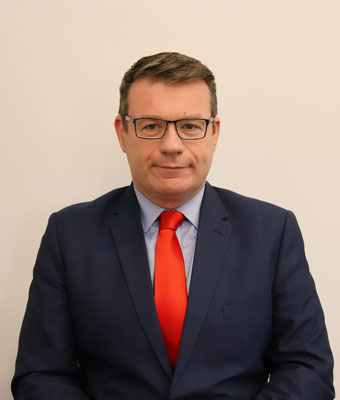
I thank the Minister of State from being here. She is from the relevant Department, and I appreciate it. That should be the norm in this House. It used to be.
An exceptional piece of journalism was published last week by the Limerick Leader. The front page article spoke about the catastrophic failures in University Hospital Limerick, UHL, which we have discussed in the House. No other topic have I discussed more in my political career. The picture on the front page shows four young women. I compliment the journalist, Ms Sandra Quinn, and the Limerick Leader for what they put out. Sometimes a visual says more than words. The story is about Ms Aoife Johnston and Ms Niamh McNally, both 16, Ms Eve Cleary, 21, and Ms Leona Cusack, who was 33. They all died because of what is going on in UHL.
I will say something of the Government with all the positivity I can. I know what I am talking about. I have spoken about my family in the Dáil on numerous occasions. I have spoken about my dad, the anniversary of whose passing was two days ago. He did not want to go into UHL. I have spoken about my neighbours and friends. I spoke recently about a situation where I had to ring and somebody in the HSE told me once I got on the motorway to go to Portlaoise hospital, which I did. That was an emergency and the patient got fantastic service. The Government has a huge decision to make. In fairness, the Minister, Deputy Carroll MacNeill, has said she will make that decision next week. She met mid-west Deputies and Senators two weeks ago. Unfortunately, for some reason, Deputy Sheehan and I were not invited so I must raise the issue on the floor of the Dáil.
The HIQA report was not necessary, but we have it because Mr. Gerry Burke, who was the former lead clinical consultant in UHL, did all the statistics ten years ago.
The situation has only got worse. Even in terms of the HIQA report, the census data is out of date. We are totally discriminated against.
If you look at the south east, which the Minister of State is very familiar with, there are three model 4 hospitals in Waterford, Wexford and Kilkenny. There is also one in south Tipperary. We have one. That is not sustainable. The idea that the people in Clare, Limerick and north Tipperary have only one accident and emergency for 450,000 people is insane. The only decision that can be made next week, along with option A of the 96-bed block and option B of building a 100-bed unit nearby, is to make the decision long term. We need ambition to have a model 3 or model 4 hospital in the mid-west. Anything else will continue this discrimination and I will not be part of another generation of politicians who stand up in this House and accept that.
It is discrimination. My phone was ringing all weekend about cases in Limerick. Despite the new 96-bed block, the numbers there are 110 on trolleys and 31,000 on waiting lists. We have a worrying situation where consultants, because of the working conditions, are leaving. I urge the Minister of State to give the Christmas news everybody in Tipperary, Limerick, Clare and even parts of north Cork want to hear and that is that we will do all the short- and medium-term planning and we will look again at the pathways regarding minor injury units and open them up as well as open up community services but for God's sake, we need another hospital in the mid-west. It is as plain as the nose on my face. Any other decision is discrimination and is totally wrong. I will be the first person to stand up and congratulate the Minister of State if she delivers it.
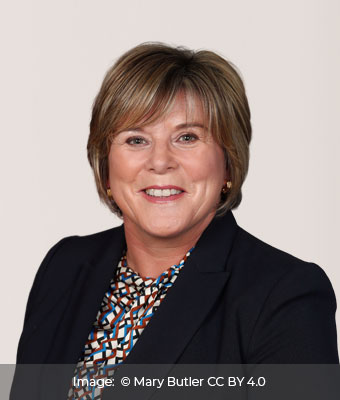
I thank Deputy Kelly for the opportunity to address the House on the discussion around the need for a new model 4 hospital in the mid-west region. I also thank him for his ongoing advocacy in relation to University Hospital Limerick. I have stood across the floor from him many times over the past five and half years discussing health matters, and he has been very consistent. I want to put that on the record.
In May 2024, HIQA was requested to conduct a review of urgent and emergency care in the mid-west region, with the primary objective of ensuring safe, quality, acute care. As part of this review, HIQA was requested to consider the case for a second emergency department in the context of the population changes in the region and with the ongoing pressures at UHL. HIQA submitted its final report to the Minister, and it was published on 30 September this year.
As the Deputy will appreciate, the reports and analysis supporting this review are extensive. There was substantial stakeholder engagement, regulatory inspections, a national policy review, data analysis review and international evidence reviews. The Minister and I acknowledge the substantial work undertaken by all those who both conducted and took part in this review, including the expert advisory group which included a wide representation of relevant experience.
In summary, HIQA’s analysis found the inpatient bed capacity in the region needed to be increased to meet current and projected demand for patients requiring more complex or specialist healthcare. I acknowledge UHL is still the busiest hospital, with a 10% increase in attendance this year compared to the last year. I had a conversation with senior management this morning and they are on track to receive 100,000 attendees to the emergency department this year. Mitigation pieces are in place regarding senior clinician decision-making and de-escalation of the emergency department, with a good length of stay averaging at four and half days. Thankfully, mortality is static and currently in line with every other hospital.
I recently visited the mid-west region to discuss mental health and I compliment the mental health teams. The CAMHS teams there have turned around the complete waiting list and are now operating much better. I also visited University Hospital Limerick and met with the regional executive officer, Sandra Broderick, and senior management. I visited the new 96-bed block and I am delighted to say it is open, which the Deputy has welcomed publicly. The second one will be up and running as soon as possible. However, this does not solve the short-term issues.
This morning there are 32 people on trolleys in UHL - three in the emergency department and 29 moved to wards. This is similar to other areas. In Galway, there are 51, in Cork, there are 39, and in the Mater, there are 27. Certainly, every focus has been put in place to try to reduce that.
Going back to the HIQA report, it presents three options, as the Deputy knows, with the expansion of capacity at UHL on the Dooradoyle site, which is option A; the extension of the UHL hospital campus to include a second site in close proximity, which is option B; and option C, which is the development of a model 3 hospital in HSE Mid West. The Minister has accepted the report and the advice from HIQA. Along with her officials, she is considering the comprehensive and detailed reports and advice provided by HIQA and will report back to Government before the end of the year.
The ESRI has projected the number of inpatient beds to meet the projected 2040 demand will need to increase from between 299 and 593 beds compared with 2023 capacity levels.
I thank the Minister of State for her response and I acknowledge the improvements that have happened in UHL in the past couple of years. However, we have serious issues when it comes to staffing and high-level consultants as regards attracting them, given the situation the hospital is in.
Politics has failed the people of the mid-west on this issue. I am not going to start blaming certain parties but politics has failed across this House. Consultants helped drive the agenda to close the units in Ennis, St. John's and Nenagh. Then, they disappeared off the face of the earth and were never found again. Politics now has to come back and fix it. This Chamber has to fix it; the Minister of State's Department has to fix it. We cannot fail the people of the mid-west continuously as we head into Christmas again, with people who live alongside me afraid. We cannot fail the families of these four poor women and others. I could give the Minister of State hundreds of examples of issues there.
The Minister of State spoke about the volume of beds required, which I absolutely accept but how in the name of God can we create those beds without creating a new hospital? I am not even arguing for Nenagh, Ennis or wherever; I just want a decision that we need a new hospital in the mid-west - an access point with beds and critical infrastructure. We cannot go on the way we are. We need that ambition and I am afraid this is being choreographed, that the decision being made next week will be options A and B but not C. I have no issue with option B as long as that decision to create another 100 beds has a hospital wrapped around it in years to come.
The Minister for public expenditure is from the Minister of State's party. I urge the Ministers for Health and public expenditure, Deputies Carroll MacNeill and Chambers, in the next week before the Cabinet decision is made - it has to be made because the Minister has promised it - that this decision will be long term and that we will create a new model 3 or 4 hospital in the mid-west to end the discrimination and fear. There are people who will not go into UHL because of the fear they have and the situation we have been left in.
I thank the Deputy for that. The Minister will update her Cabinet colleagues before Christmas on her considered response. I acknowledge the fact the Deputy appreciates there is work going on to increase capacity and additional funding has been provided. UHL's budget has increased from €265 million in 2019 to €507 million in 2024. I will also touch on the two rapid build 16-bed units opened in December 2024 and June 2025, respectively, and the 96-bed block that was opened in October 2025, which the Deputy spoke about, to provide an additional 128 beds in the region, since the ESRI assessment of capacity in 2023. This has already helped reduce the number of people waiting on trolleys, notwithstanding the pressures all hospitals are currently facing due to the increased presentations by people sick with the flu. A second new 96-bed block is in progress at UHL and a third 16-bed block is planned for 2026.
Bed capacity has been further expanded throughout the region, through the acute hospital inpatient bed capacity expansion plan, including 24 new beds at Nenagh Hospital, 48 new beds at Ennis Hospital and 42 new beds at St. John's Hospital.
It is expected that there will be at least an additional 420 beds in the region by 2031. Other initiatives for the region include the acute virtual ward for 25 patients, which went live in UHL in July 2024. I will also touch on the staff, especially those working in the emergency department with the constantly increasing presentations every day. They are the front line and do a phenomenal job.
However, I take on board every word the Deputy said. I know people are waiting in anticipation for the Minister's response. She has said she will bring it to the Cabinet before Christmas and I will speak to her after this debate to let her know about the Deputy's strength of feeling. Everyone accepts and acknowledges that there is not enough capacity of acute hospital beds in the region at the moment. I thank the Deputy again for his advocacy.
Schools Building Projects

I wish to raise the long delays in a rebuild project that three schools in my constituency are facing. They are St. John Bosco Junior Boys School, St. John Bosco Senior Boys School and Mary, Help of Christians Girls National School. These schools are just off the Navan Road in Dublin 7. They serve the communities of Ashtown, Navan Road and such new communities as Pelletstown. They are great schools. I have had the opportunity to visit them. I have met the student council of St. John Bosco school and I had the chance to see just how run-down those old buildings were. They are musty, prefabricated buildings with single-glazed windows and cold classrooms.
They are three distinct schools, but they have come together with a vision for an education campus on the site. The Minister of State will be aware that bringing three separate schools together under one project is a challenge, but such is the commitment of the school management teams that they have done it. They have a definitive plan for how the students would move out of sections of the old school, how those sections would be demolished and how the new school would be built across the site over a period. However, there has been a real blockage in the schools getting past the notorious stage 2a of the Department's processes. This was an election issue in the general election this time last year and, as soon as I was re-elected, I asked a parliamentary question of the then Minister in February this year. There was due to be a meeting between the schools and the Department back in March. That was cancelled quite abruptly.
The situation to date is that the Department requested a stage 2a addendum report from the school's design team, which advised the Department at least four weeks in advance of that report that it would come in on 30 October 2025. Despite having significant notice from the school design team, the Department did not allocate any time or resources to review the documentation when it was received. A meeting had been scheduled by the design team with the Department in anticipation of progressing the review, but again, the Department cancelled the meeting and informed the schools the documentation would now not be examined until after the new year. This is extremely disappointing, particularly given the three schools were explicitly assured that this project would move to the next phase in the first quarter of this year.
I acknowledge that the Department sought additional detail and amendments through the addendum, but the lack of preparation on the Department's side to review that documentation when it came in raises serious concerns. I know and the school knows that the Department school building team is under real pressure, but it is now more than a year that these schools have not been able to get past stage 2a. The school and its design team are working quickly and efficiently and are keeping the Department up to date on progress at every stage. However, the Department is not replicating that level of engagement. These three schools, St. John Bosco Junior Boys School, St. John Bosco Senior Boys School and Mary, Help of Christians Girls National School, need a firm date as early as possible from the Department on which to meet the design team, agree the addendum report and let these schools progress to the next stage. Can the Minister of State give me a firm date for when this meeting will take place?
I thank the Deputy. I am taking this Topical Issue matter on behalf of the Minister for Education and Youth, Deputy Naughton, to outline to the Dáil the current position of the joint school project for St. John Bosco Junior Boys School, St. John Bosco Senior Boys School and Mary, Help of Christians Girls National School in Dublin 7. The joint school building project the Deputy outlined the background of will deliver two new 16-classroom primary schools, with additional classrooms for children with special educational needs for the senior boys school and the girls school and a new 11-classroom primary school with additional classrooms for children with special educational needs for the junior boys school.
Initially, it was anticipated that this joint project would be delivered in the form of an extension and refurbishment. However, due to a scope change to include an increase of classrooms for children with special educational needs, it was decided that new school buildings would be provided. The design team submitted the initial stage 1 report in April 2023 and, following the submission of an addendum report in August of that year, the project was approved to move to the next stage.
The design team submitted its stage 2a submission report to the Department in January 2024 for review. Upon review, some key concerns were identified by departmental officials and the school authorities and design team were advised in advance that, in place of the stakeholders meeting, there would be a further interim stage 2a workshop to discuss and assist the design team in progressing its stage 2a submission in a positive manner. The design team was asked to complete a review and audit of the floor area schedules and to refine some design elements in order to meet the approved schedule of accommodation. A further interim workshop was held on 22 March 2024 between the Department and the design team architect, where further refinements and adjustment to floor area were discussed.
Upon receipt of the revised stage 2a report, departmental officials carried out an initial review and arranged an architectural workshop with the design team lead in May of this year to discuss it further. In early June 2025, a further meeting was held with the wider design team, school authorities and departmental officials in attendance. At that meeting, the school was provided with a progress update and advised that the design team was due to submit an addendum stage 2a report to the Department. The outstanding information for the addendum stage 2a report was received in the Department on 31 October 2025. Departmental officials will carry out a full review of the addendum report and the stakeholders' meeting will be scheduled once the review is completed.
In July, the Government announced a capital allocation of €7.55 billion for the Department of Education and Youth for the period 2026 to 2030 under the national development plan, NDP. As part of this NDP allocation, the Department will place a strong emphasis on provision for children with special educational needs, with a particular focus on meeting annual school place needs. The approach to project roll-out for large-scale projects and additional school accommodation scheme projects will be to continue to maximise the capacity of the existing school estate as much as possible in the first instance and provide necessary additional capacity through targeted and prioritised project roll-out over the course of the 2026-30 period to meet the most urgent and prioritised needs.
I thank the Minister of State for the update, but I am disappointed that he, or the Department of Education and Youth, is not in a position to give a clear date for when the schools' design team will meet the Department to, first, discuss the latest addendum report submitted by the schools and, second, give them permission to move past stage 2a. In the speech the Minister of State read, we see that the initial stage 1 report was submitted in April 2023 and it was followed by a stage 2a submission report in January 2024 and a workshop in March 2024, and then we jump to another workshop in May 2025. My concern is that this is not progressing with the degree of haste the situation in these schools requires. Let us remember - the Minister of State read it out just now - that the initial proposal, even before 2023, was for an expansion and refurbishment of prefabricated buildings.
The Department itself, however, identified that the condition of all these school buildings was so poor that a complete demolition and rebuild of all three schools was needed. The Department identified that, yet we see this delayed process taking place.
There was a commitment for a meeting prior to Christmas. That meeting was cancelled and now there is no firm date for when it is going to take place. I understand this is not the Minister of State’s Department, but I ask that he reflect back to the Department of education the absolute urgency of having a firm date for when this meeting can take place so that these three schools can move past the stage 2a process and the children in them can have a hope of seeing the rebuilding during their time in them.
I certainly will bring that back to the Department and to the Minister and the Deputy’s emphasis on the urgency of moving this project on. I know that whenever three schools are brought together for one project like this, it is a big commitment on behalf of all three schools. It is not easy to keep everybody on the one page and it is important the project keeps moving. I will reflect back to the Department and the Minister the full content of what the Deputy has been saying.
As I said in my previous response, the Department asked the design team in early June this year to submit an addendum stage 2a report to the Department. This was received on 31 October 2025, some five or six weeks ago. The departmental officials will be carrying out a full review of that addendum report. They are committing to a stakeholders meeting being scheduled once that review is complete. This is where the process is at now. I take on board the points made by the Deputy in terms of the urgency of completing that review and giving clarity in terms of when the meeting will happen and having it happen so that the process can then move forward.
On a wider note, to summarise where we are at generally and where this situation sits within the wider overall investment plans, which are going to be important in terms of moving this and other projects forward, €6 billion has been invested since 2020, as the Deputy knows. This has seen 1,300 school projects completed. In 2025 to 2026, 80% of new special classes are being facilitated in repurposed classroom accommodation, so there is particular pressure in respect of addressing that need. Departments, including the Department of education, are currently in the process of publishing their sectoral NDP implementation plans. The sectoral plan for the Department of Education and Youth will be published next week and the first tranche of projects to progress to construction will be published in January 2026. This NDP implementation plan will optimise outputs from the national development plan allocations, with a strong focus on maximising existing school capacity, progressing priority projects where local capacity across schools and areas is insufficient and ensuring delivery that is affordable, offers value for money and meets functional needs.
I certainly will feed back the full content of the Deputy’s contribution and the need for the prioritisation of this project.
Cuireadh an Dáil ar fionraí ar 9.54 a.m. agus cuireadh tús leis arís ar 9.59 a.m.
Sitting suspended at 9.54 a.m. and resumed at 9.59 a.m.